
An honest guide to picking the best cruise route for families in the Galapagos Islands. Everything you need to know, including when to go, choosing the right ship, and how to plan.
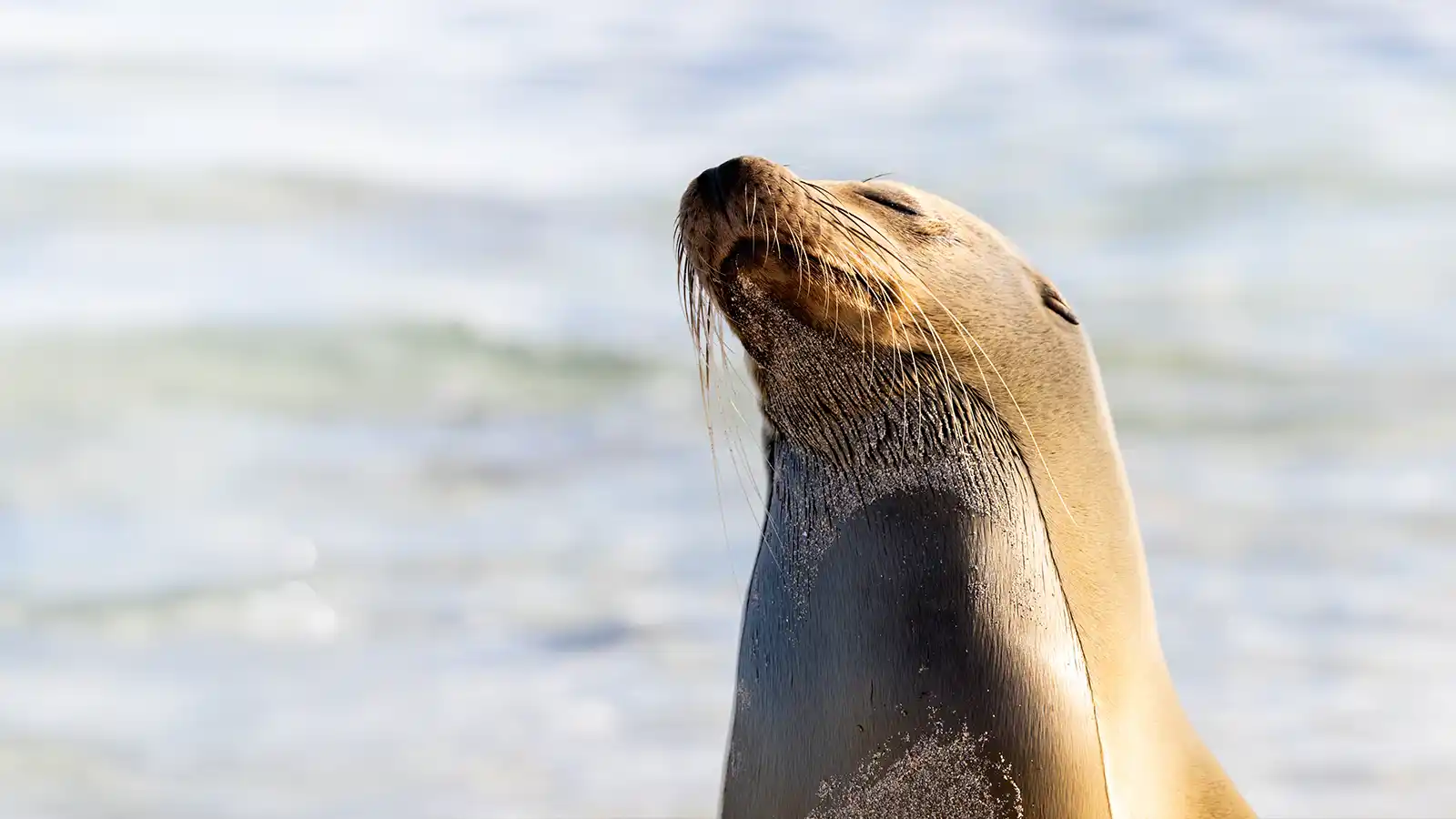
There is no travel experience that is quite like a family cruise in the Galapagos Islands. 600 miles off the mainland of Ecuador, in a world where time seems to have taken a dramatic pause about 50,000 years ago, is a world of adventure and inspiration.
The truth of cruising the Galapagos with kids, though, is that there is a lot to consider. For many parents, there’s a moment when they simply hit a wall. You know you want to go, you’ve even decided you want to do it by boat rather than a land-based tour. And then you open a guide or a booking site and get buried under an avalanche of names, star ratings, deck plans, and itineraries labeled “Western A,” “Eastern B,” and “Northern Loop,” that offer no clear sense of what might actually work for your family.
I know, because Christina and I were those parents. We spent the better part of a year planning a multi-generational cruise through the islands. Traveling together was me, my wife Christina, our two boys, Cohen and Dylan, and Christina’s mom, Maria. The single hardest part about planning the family cruise to the Galapagos wasn’t the budget or the flights. It was choosing the right cruise.
So consider this the guide I wish I’d had before my family went. This isn’t a list of ships or tours that I’m trying to sell you, but a clear breakdown of how Galapagos cruise routes actually differ from each other, how choosing the right ship size changes the experience, and how to match all of it to the ages, stamina, and sea-legs of the people that you’re traveling with.
If you want the full story of what our days at sea actually looked like during our cruise, the orca off the stern, the hammerhead sharks bumping into us, the seasickness, that lives in my complete guide to cruising the Galapagos with kids. This piece is about helping you choose the right cruise for your family.
Why a Galapagos Cruise Beats a Land-Based Tour for Most Families
Table of Contents
Exploring the Galapagos Islands from a home on Santa Cruz or San Cristobal is incredible. There’s a magic to being among locals every day. Dining in the restaurants, experiencing the cafes, and the culture of the unique life of those few islanders who actually call the Galapagos home.
Land-based cruises in the Galapagos involve taking day trips out to nearby sites and islands. For families with toddlers, small children, or anyone who turns green at the mere mention of open water, it can be a smart and safe choice.
Cruises to the Galapagos Islands are expensive. Land-based tours aren’t cheap, but are definitely more affordable for those on a budget. But here’s the blunt truth that I learned first-hand: the islands that make the Galapagos the magical place you’ve seen in all of those David Attenborough documentaries, the raw, remote ones where penguins dive-bomb the surf and the landscape looks freshly poured from a volcanic caldera, are simply out of reach on a day trip.
Cruises travel the long distances between islands overnight. This way, you wake up somewhere new every morning instead of burning daylight on boat transfers. You unpack once. Meals and guides are included. And, depending on the length and Galapagos cruise route that you choose, you’ll have the chance to experience places that a land-based tour could never reach.
If you’re still weighing a Galapagos cruise vs a land-based tour, I cover the cruise-versus-land question in my Galapagos with kids guide. For the rest of this article, I’m going to assume you’ve chosen to cruise the Galapagos, and now you need to choose which route and which ship.
Galapagos Cruise Routes Explained (This Is The Most Important Decision)
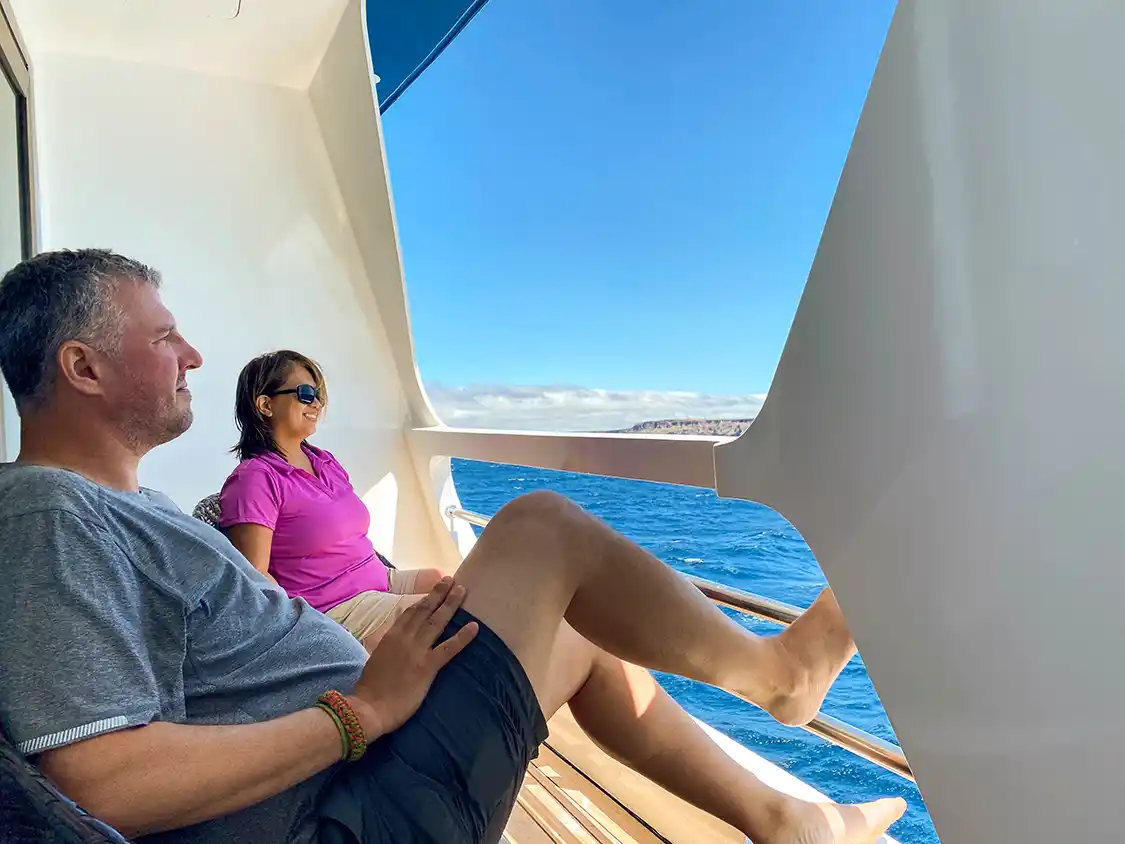
Cruise tours in the Galapagos aren’t like other places. You don’t get to choose your route, you don’t get to decide what you’re going to see. The Galapagos National Park is one of the most regulated national parks in the world. The conservationists behind the park set fixed itineraries for every ship in an effort to spread visitors out and protect the wildlife and the sensitive landscapes and flora of the islands.
Each vessel is assigned a specific route, and most cruisees cover either the western islands or the eastern and southern islands, rarely both. There are only a small number of eight-day cruises that manage to combine them.
Choosing a Galapagos cruise really means choosing which region, or set of islands, you want to explore. Once you’ve made your decision, everything else just falls into place. Here is how the main Galapagos cruise routes are laid out.
The Western Route (Isabela Island & Fernandina Island)
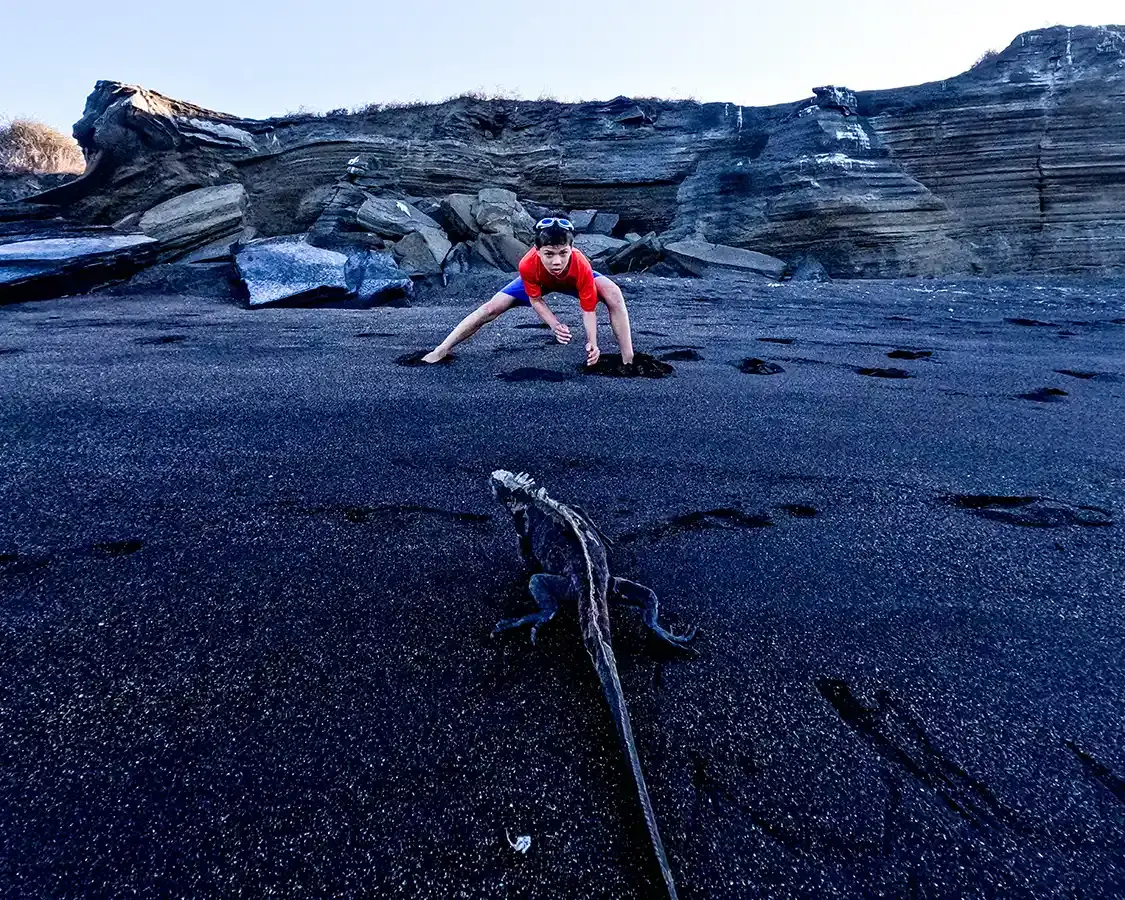
This is the wild one, the route that my family took. The western islands are the youngest and most volcanically active in the Galapagos archipelago. Picture black lava fields that look like they just finished steaming, calderas that look like they could blow at any moment, and some of the most dramatic landscapes on Earth.
The Western Route also where you’ll find the greatest concentration of iconic wildlife like flightless cormorants, Galapagos penguins, enormous colonies of marine iguanas, and frequent sightings of whales and dolphins swimming through the nutrient-rich channels fed by the unique convergence of the Humboldt Current, the Cromwell Current, and the Panama Current.
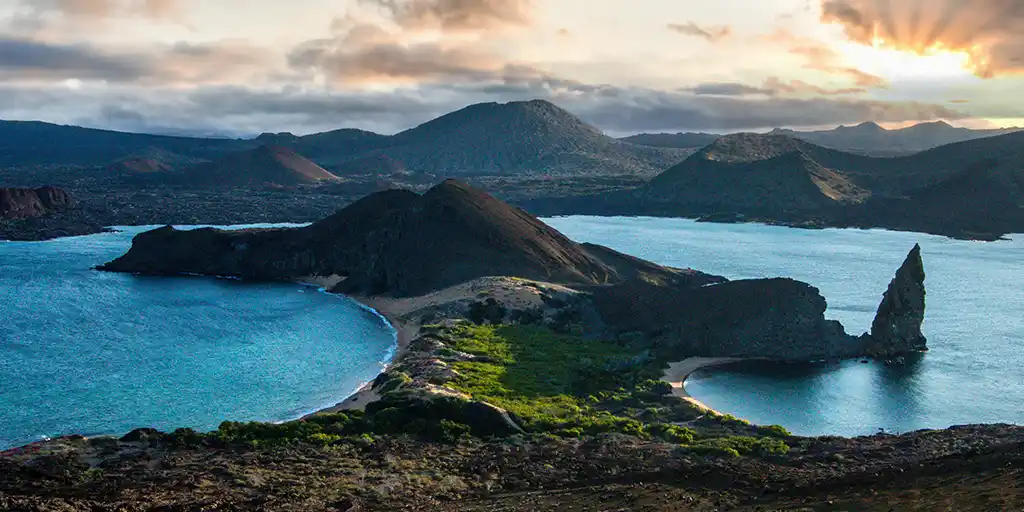
The Western Loop isn’t a gentle cruise. The crossings between western islands are longer than many other routes, which means that there’s a potential for rougher seas and the occasional queasy night (which we experienced). But the payoff is a side of the Galapagos Islands that many visitors never get the chance to see. This is where my boys snorkeled with hammerhead sharks off Genovesa Island, swam with penguins off Bartolomé Island, and hiked across lava flows that created alien-like landscapes at Sullivan Bay.
The Western Loop Is Best For:
- Families with older kids and teens
- Confident swimmers
- Wildlife-obsessed households
- Anyone who treats “a bit of a rough crossing” as part of the adventure rather than a dealbreaker.
The Eastern & Southern Itinerary (San Cristobal Island, Española Island, Floreana Island)
The western route is for the adventurous, and the eastern and southern routes are the crowd-pleasers. This route cruises through older, more eroded islands that are lined with gorgeous white-sand beaches, calmer waters, and shorter, gentler crossings. The wildlife that can be seen along the Eastern and Southern loop is no less spectacular.
Española Island is home to the waved albatross ( they can usually be found between April and December), and the beaches are packed with curious sea lions that may even pop in for a visit while your kids are out snorkeling.
Because the crossings in the Eastern and Southern routes are usually smoother and the landings are easier, this region tends to be a friendlier introduction for younger children and first-time cruisers. You’ll still get to see blue-footed boobies, giant tortoises, and experience world-class snorkeling, but you won’t have to pop as much Dramamine when you’re at sea.
Best for: Families with younger or first-time-cruising kids, multi-generational groups with grandparents aboard, and anyone who prioritizes calm water and beach time over rugged remoteness.
The Eastern and Southern Loop Is Best For:
- First-time cruisers
- Families with younger children
- Multi-generational groups
- Older travelers
- Anyone who prioritizes calm water and beach time over rugged remoteness
The Central Islands (Santa Cruz Island, North Seymour Island, Bartolomé Island, Santiago Island)
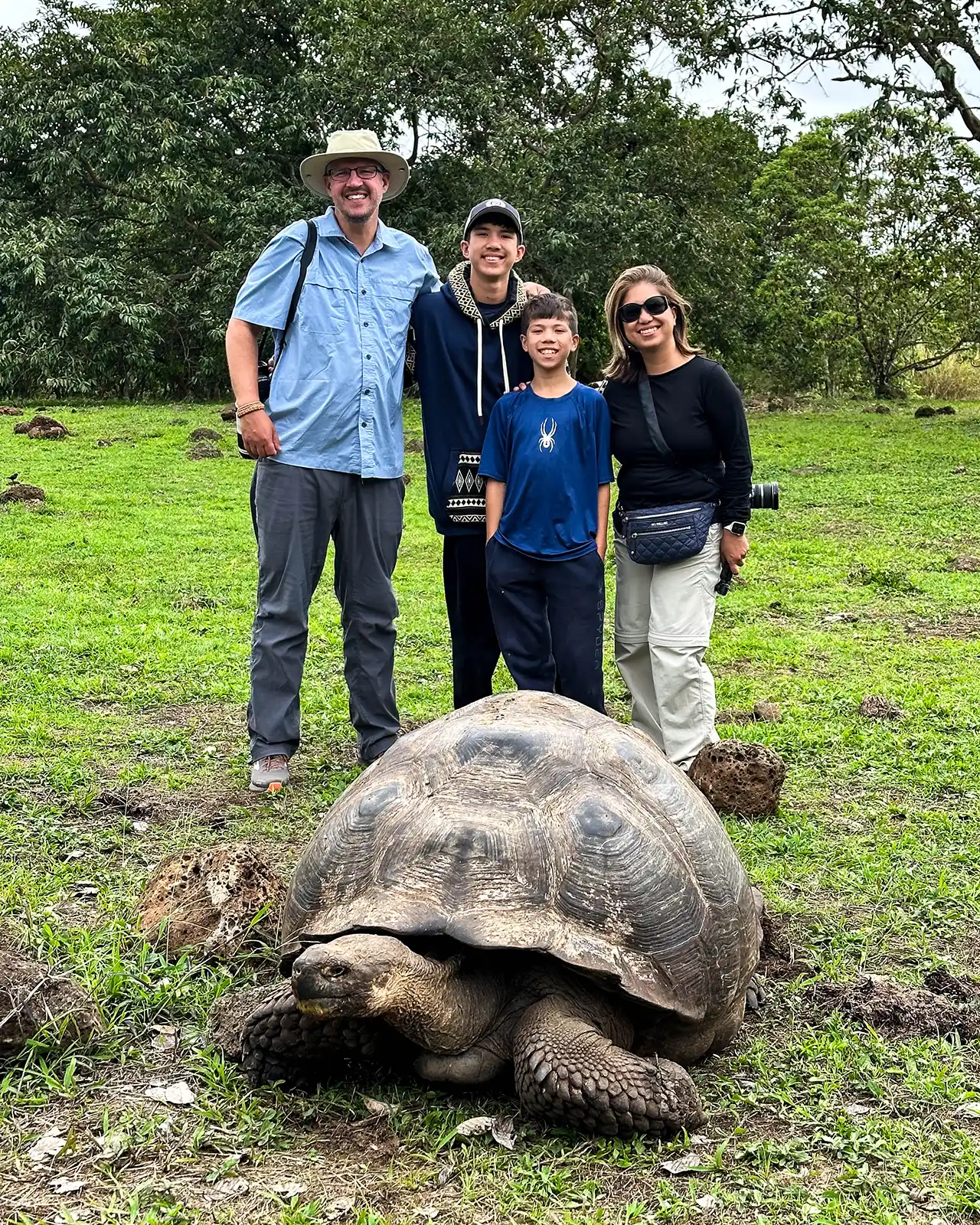
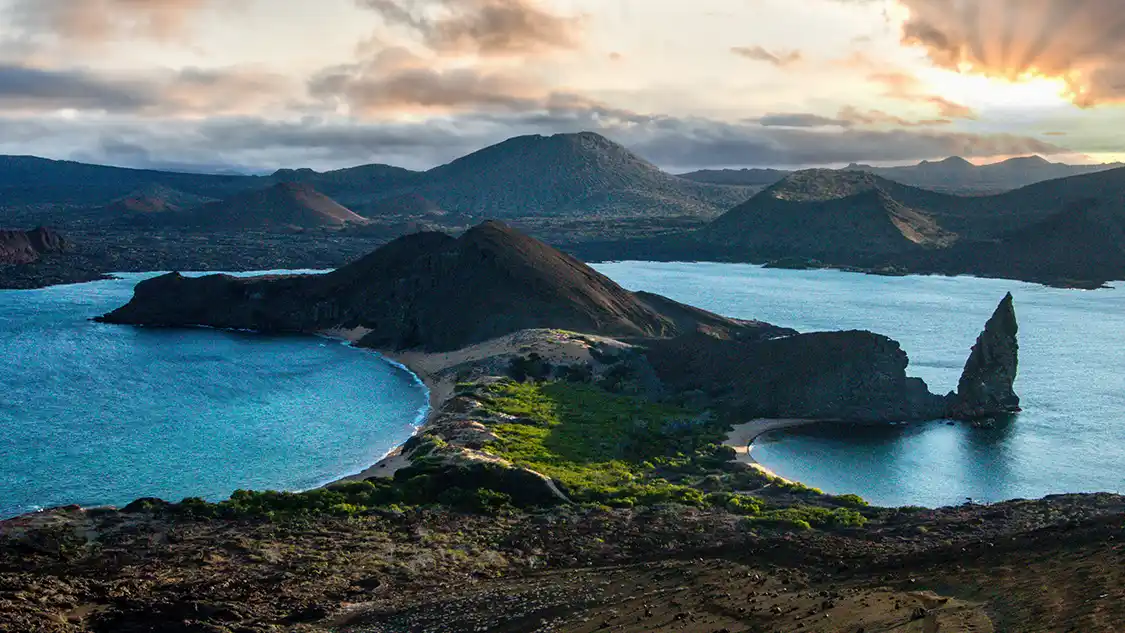
The central islands sit in the calm heart of the Galapagos archipelago. They’re home to many of the most iconic sites in the islands, including the Charles Darwin Research Station and countless giant tortoises, the absurd wildlife traffic jam of North Seymour Island, and the postcard-perfect viewpoint from Bartolomé Summit. Because these islands are so accessible, the central islands are often included in longer 7 and eight day Galapagos Cruises or act as the sole focus of shorter four- and five-day cruise itineraries.
The Central Islands Loop Is Best For:
- Families with only a few days on the island
- Families looking for a budget-friendly Galapagos cruise
- Those nervous about long, open-water crossings
- Anyone wanting to dip their toes into the Galapagos experience before committing to a longer voyage
*Many of these sites also appear on longer western and eastern itineraries, so you rarely miss them entirely.
The Northern Itinerary (Genovesa Island)
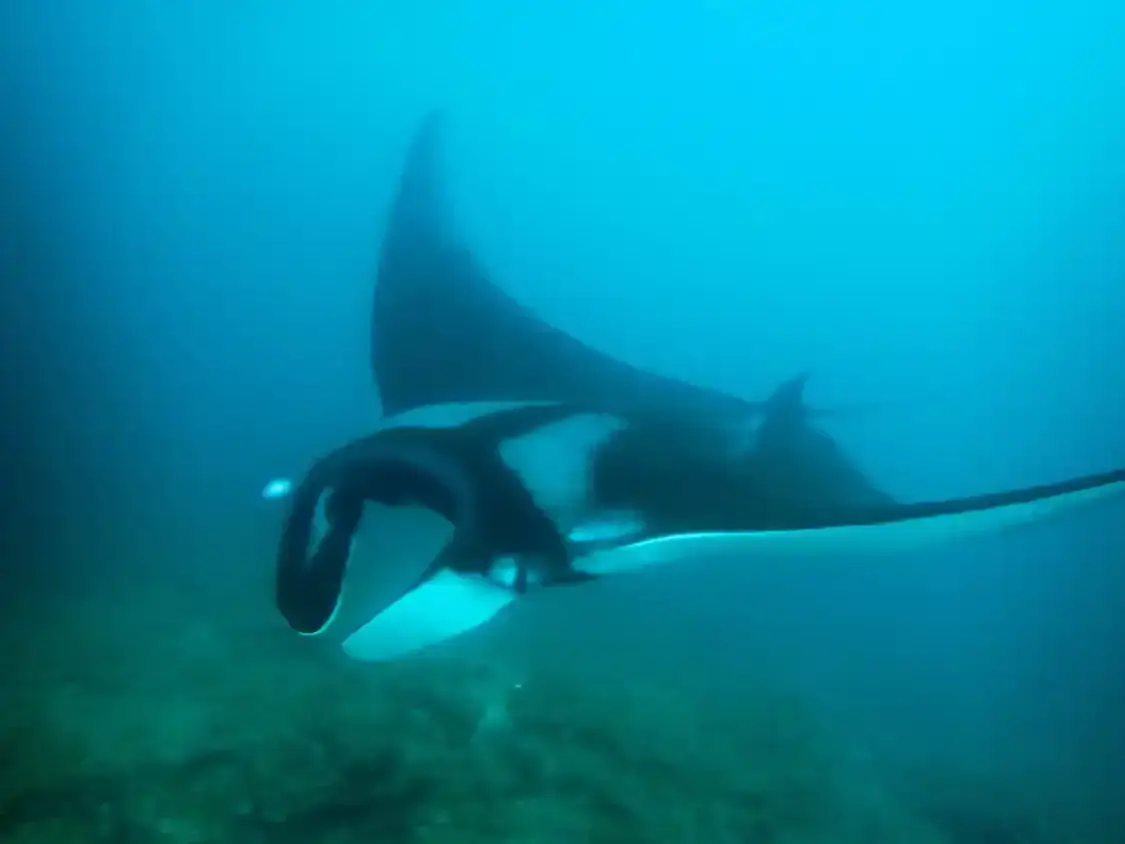
Genovesa Island, nicknamed “bird island” by many visitors, sits well to the north of the Galapagos archipelago. This remote island is usually folded into a longer itinerary rather than visited on its own. It was part of our eight-day Western loop itinerary rather than handled as a route of its own.
Above the waves, Genovesa is a birdwatcher’s paradise; teeming with Red-footed Boobies, Storm Petrels, Galapagos Short-eared Owl, and Nazca Boobies. Below the water, we swam with hammerhead sharks that got so close, one actually bumped right into me. It’s remote, which again means a longer crossing to reach it.
The Genovesa Island Add-On Is Best For:
- Birdwatchers
- Confident snorkelers
- Experienced cruisers who don’t mind a long, rough, overnight on open water
- Anyone who wants a unique extension to a longer western or combined route
How Long Should a Family Galapagos Cruise Be?
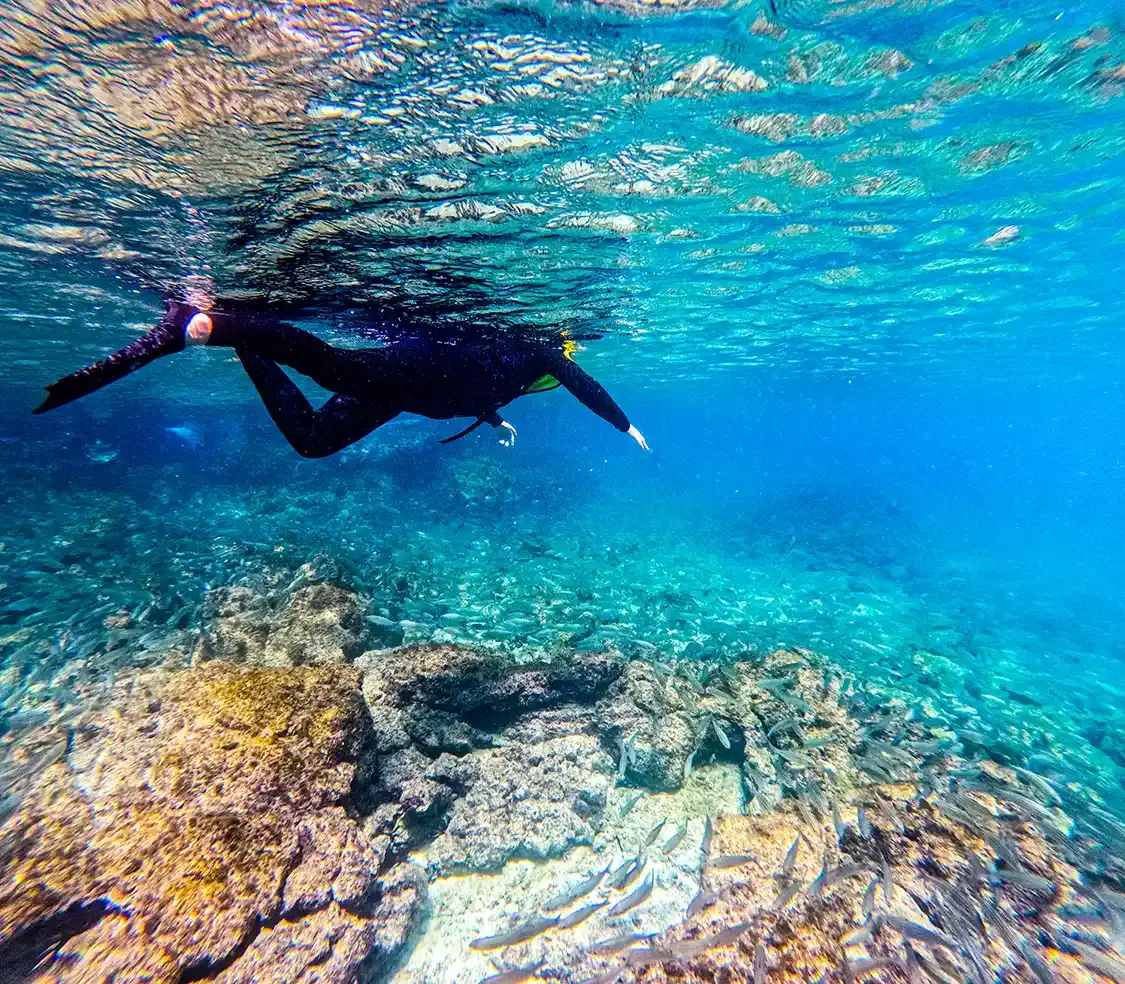
Deciding how much time to set aside for a Galapagos family cruise is one of the most important factors in your cruise experience. Typically, Galapagos cruises run four, five, or eight days (with a few six- and seven-day options on offer by some companies).
Here’s how I look at Galapagos itineraries as a parent:
Four to Five-Day Galapagos Cruises
Four to five-day cruises are Ideal for families with younger kids, those on tighter budgets, or those who have to manage limited vacation time. These cruises allow families to focus on the central and accessible islands and still come home having seen some of the most spectacular wildlife on the planet.
The downside is that the Galapagos Islands have a tendency to draw you in and make epic expeditions seem like a normal, everyday experience. On shorter cruises like this, it’s time to disembark just as everyone finds their sea legs.
Eight-Day Galapagos Cruises
This is where the deeper Galapagos experience becomes real. By day two, our kids knew the crew by name. By day four, they’d stopped asking “what’s next” and started just living in the moment. Longer Galapagos itineraries give families the opportunity to reach the truly remote islands, and the slower pace suits families far better than a rushed itinerary.
A longer itinerary is also the only realistic way to combine Western and Eastern regions. If your family (and your budget) can handle it, the longer trip is the one we’d recommend without hesitation. It’s worth mentioning that extending one trip is a lot less expensive than having to fly out to the Galapagos for multiple journeys.
Choosing the Right Ship Size for Your Family Cruise in the Galapagos
Ship size matters almost as much as the route when it comes to cruising in the Galapagos. Whether “bigger is better” is better looked at as a tradeoff rather than a one-size-fits-all.
Small Yachts (Roughly 10–20 Passengers)
The ship that my family took through the Galapagos Islands was a small, 16-passenger yacht. We chose this option because of time. Fewer passengers means more time ashore and faster, more personal wildlife encounters.
Because the Galapagos National Park system limits how many people can be on a shore excursion at any given time, larger ships have to send guests ashore in waves. This means their allotted time onshore has to be split among groups.
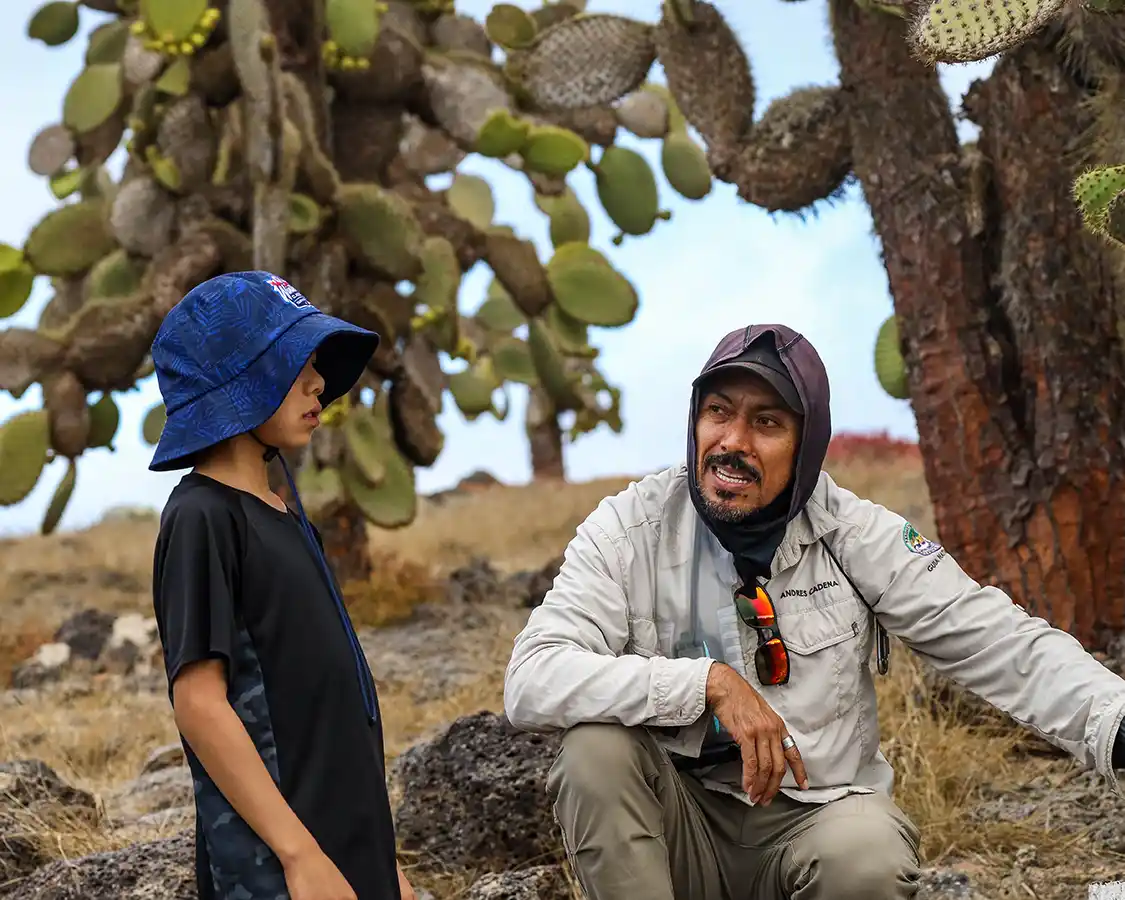
There’s also the personal feel of a small ship cruise. On smaller ships, the guides and the passengers have the chance to form a deep connection. Our guide, Andres, helped to transform Cohen and Dylan into budding naturalists and photographers over the course of a week, something that’s difficult to achieve when you’re jostling for space with 100 other travelers.
Large Expedition Ships (Roughly 40 to 100 Passengers)
Large ships in the Galapagos aren’t like the big cruise ships in the Mediterranean and the Caribbean. You won’t find a ship with thousands of passengers; the biggest ships in the Galapagos top out at about 100 passengers. You won’t find waterslides, go-karts, and multi-restaurant dining. Families who travel to the Galapagos Islands are typically more interested in nature and wildlife than booze cruises.
For families who want to trade intimacy and accessibility for stability and amenities, larger ship cruises in the Galapagos might be the right choice. Larger ships are more stable and comfortable on rough crossings, which is no small thing when you’re adding in remote islands like Genovesa. The larger the ship, the more likely that there will be other families aboard for your children to socialize with.
My honest take: for most families chasing the wildlife experience, a small ship in the 16–20 passenger range is the sweet spot. But if you have younger kids who’ll thrive on having playmates and structured activities, or anyone with a serious sensitivity to motion, a larger vessel might be the smarter choice.
Choosing The Best Galapagos Tour Based On Your Children’s Age
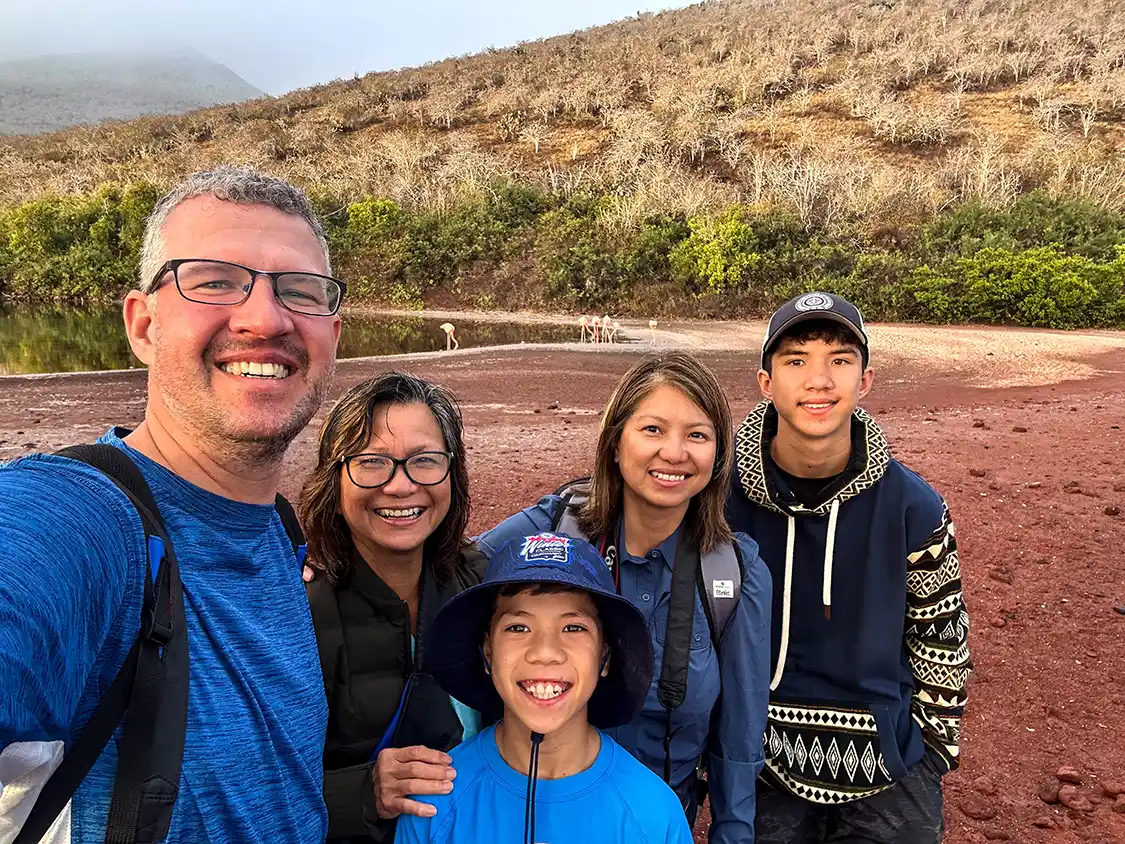
As a parent or caregiver (which I’ll assume you are based on your interest in family cruises to the Galapagos), you know your children better than anyone. My kids have traveled to more than 40 countries across five continents. They’ve climbed mountains, swam with sharks, and come face-to-face with polar bears. Adventure for us is a lifestyle, so we tend to lean into that whenever we travel.
Your experience level and the age of your children might dictate which Galapagos family cruise makes sense for your family. Here are my thoughts on the best Galapagos cruises based on your children’s age.
- Toddlers and very young kids: Consider a land-based stay or a shorter central-island cruise on a larger, more stable ship. It’s worth noting that some operators set minimum age requirements (often 6-8 years old), so confirm with the cruise company before you fall in love with a particular vessel.
- Elementary-age kids: A four-to-five-day eastern or central itinerary on a comfortable mid-size ship hits the sweet spot of wonder without overwhelming everyone.
- Older kids and teens: This age group is the sweet spot for the western loop. Most kids this age can handle the longer crossings and the intensity of the snorkeling. The remoteness of the cruise becomes a feature rather than a hardship.
- Multi-generational groups: If grandparents are joining your family vacation (ours did, and it transformed the trip), lean toward calmer routes, request central cabins where motion is gentlest, and prioritize a ship with easy water access for less-mobile travelers.
When to Travel to the Galapagos
The Galapagos is a year-round destination, but the experience changes with the seasons:
- Dry Season (June to November): Cooler water, nutrient-rich currents, better for spotting big marine life like whales and sharks. But you’ll want wetsuits for snorkeling.
- Wet Season (December to May): Warmer seas, calmer waters, lush landscapes. This is the sweet spot for snorkeling if you don’t enjoy cold water.
We visited during the warmer season, which meant we spent half the time underwater and half the time trying to get Dylan out of it. Something that, at one point, we thought we’d never have to worry about. You can read about his struggles with open water here.
The Ethics of Cruising the Galapagos (And How to Do It Responsibly)
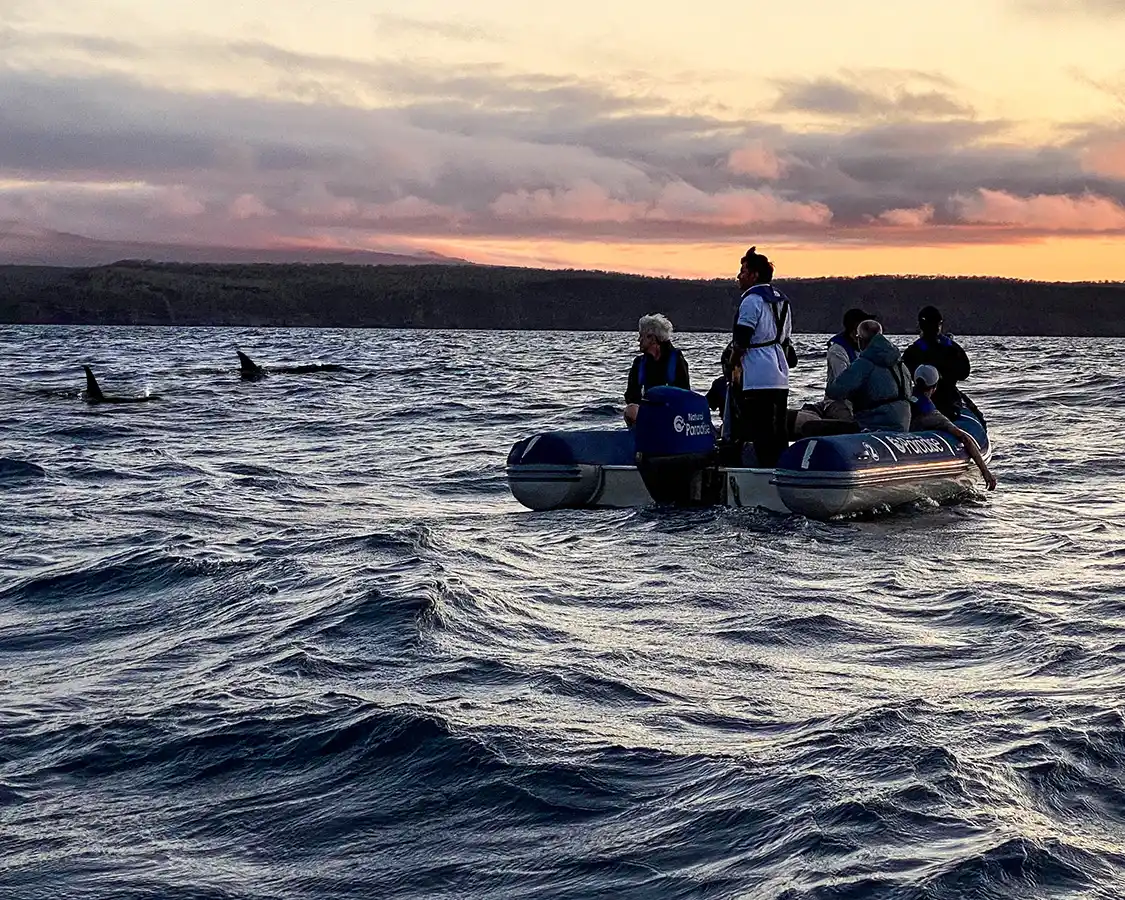
I’d be doing you a disservice if I talked about planning your Galapagos cruise without being honest about the tension at the heart of it: tourism is both the island chain’s greatest protector and one of its biggest threats.
Visitor numbers in the Galapagos Islands climbed from around 11,000 a year in the late 1970s to more than 270,000 by 2019. In 2007, the strain caused by a booming local population, overfishing, and invasive species hitching rides on boats and luggage was big enough that UNESCO placed the Galapagos on its list of endangered World Heritage sites. Ecuador responded with real action that included capping boat sizes and shore time, and the islands were removed from the danger list in 2010.
Here’s the uncomfortable irony for cruisers: large cruise ships were once sold as the eco-friendly answer, floating hotels that kept tourists off the fragile land. In practice, however, the numbers didn’t add up, and the crowds on land became more of a problem than the park system could manage. Today, the national park caps cruise vessels at 100 passengers, and the most sensitive islands, like Genovesa, are limited to boats carrying no more than 40. There’s an ongoing push to discourage the big high-end ships from cruising the islands altogether.
The responsible choice for a family cruise in the Galapagos pairs with the best family experience. A small, well-run ship isn’t just more intimate; it’s a lower impact on the natural paradise that your family is visiting. So as you choose the best Galapagos cruise for your family, here’s what to look for:
- Pick a smaller vessel with a certified operator. Look for companies that hold their boats to real standards on waste, fuel, fresh water, and crew working conditions, not just greenwashed marketing language.
- Choose an operator that’s transparent about giving back. The best ones explain how they support local conservation and research, source seafood from Galapagueño fishermen, and crew their boats with local islanders.
- Follow the wildlife rules as they matter, because they do. Stay at least two meters from animals, never touch or feed them, skip the flash photography, and don’t pocket “souvenirs” like shells, coral, or volcanic rocks. Your trained, licensed local guide enforces these for a reason.
- Consider mixing in some land-based time. Staying a few nights on Santa Cruz or San Cristobal supports local family-run businesses directly and is often gentler on younger kids — worth weighing if a full cruise feels like a lot.
None of this makes a cruise a guilt-free choice; there’s no such thing as zero-impact travel, especially when it comes to one of the most fragile ecosystems on Earth. But a thoughtfully chosen small-ship cruise, with a certified operator and a family that takes the rules seriously, is one of the most controlled and lowest-impact ways to actually experience these islands. And in our experience, traveling this way made the conservation story land harder for our kids than any documentary could.
How to Actually Choose and Book A Galapagos Family Cruise (Without Losing Your Mind)
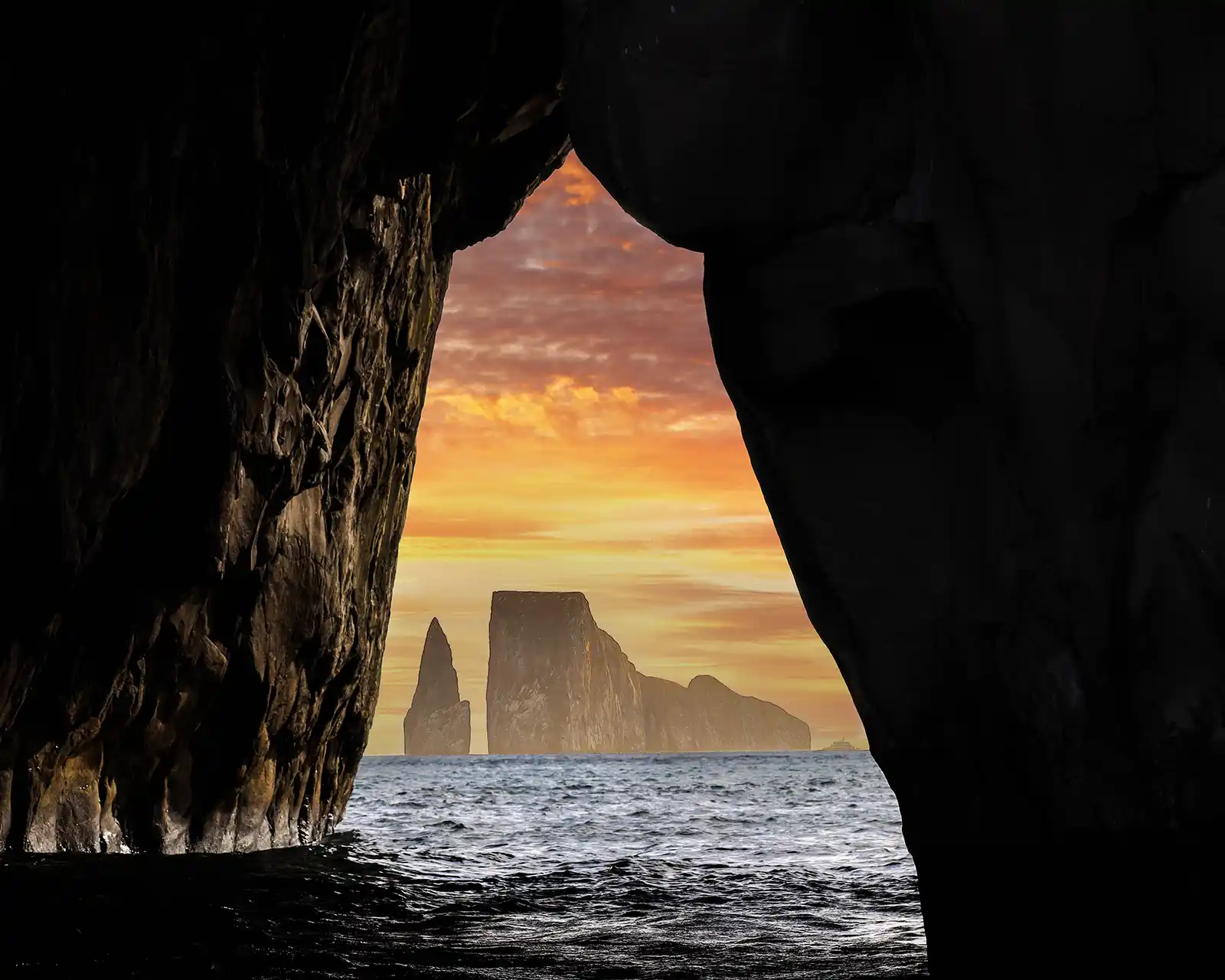
So you’ve got the four key points of your family cruise sorted out. The region, length, ship size, and season are decided on. Here’s how to put them together into one of the most memorable travel experiences your family will ever have.
- Start with your kids’ ages and tolerance to sea travel. This will help you choose the best cruise loop and ship size.
- Set your trip length against budget and the number of days you have available to you.
- Pick the region or cruise loop that matches what your family most wants to see and do.
- Choose the ship last, once the first three have shrunk the field.
The wrinkle is that ships are assigned fixed park routes. Availability on Galapagos cruise ships shifts constantly, and family-friendly cabins (things such as interconnecting rooms, triples, roll-out beds) book up early. Cross-referencing all of that on your own can be tedious. This was the most exhausting part of our family planning.
This is where working with a Galapagos cruise specialist who can match a responsible, right-fit ship and itinerary to your family’s ages, dates, and appetite for adventure earns its keep. A good one will steer you away from the wrong-fit ship before you’ve put money down, which is worth more than any discount brochure.
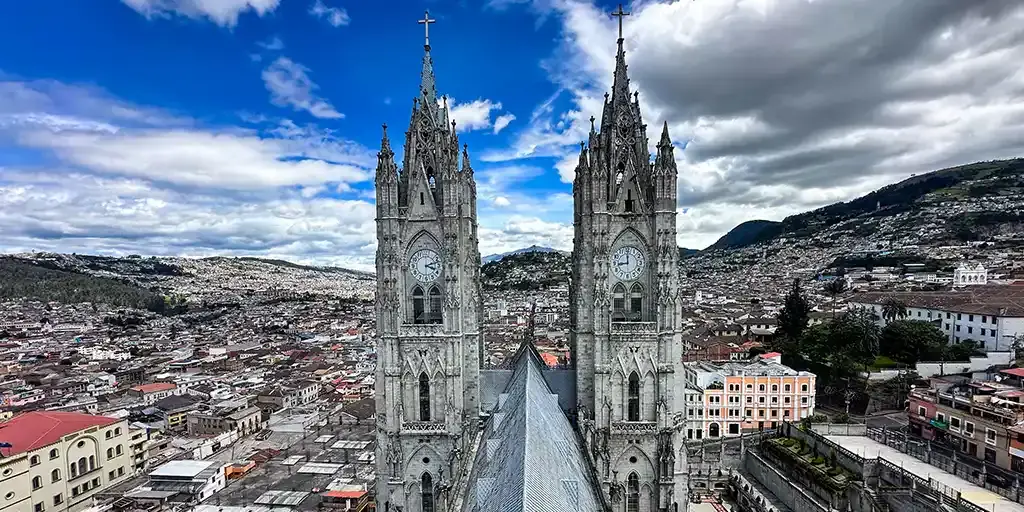
And before you book anything, get the rest of your Ecuador logistics sorted. Most Galapagos trips run through Quito or Guayaquil on the mainland, and a little prep there goes a long way. Our Ecuador family travel tips cover what we wish we’d known before we arrived.
Travel Resources for Families Visiting Ecuador
For practical planning, safety considerations, and logistics, these dedicated guides provide deeper support:

Frequently Asked Questions
There’s no single best ship — the right one depends on your kids’ ages, your tolerance for rough seas, your trip length, and your budget. Broadly, small yachts in the 16–20 passenger range offer the most intimate, wildlife-rich (and lowest-impact) experience and easy access to engaged guides, while larger expedition ships offer more stability, amenities, and kids’ programming. Match the route and ship to your family rather than chasing a “best” label.
For younger or first-time-cruising kids, the eastern and southern itinerary (San Cristobal, Española, Floreana) offers calmer seas, easier landings, and gorgeous beaches. For older kids and teens who can handle longer crossings, the western itinerary (Isabela and Fernandina) delivers the most dramatic landscapes and intense wildlife encounters.
Four to five days suits younger kids, tighter budgets, and limited time. Eight days is ideal if your family can manage it — the longer pace actually suits children better, and it’s the only realistic way to reach the most remote islands or combine regions.
School-age children and teens tend to get the most out of it, since they can snorkel confidently, follow the guides’ lessons, and handle full days of activity. Families with toddlers can still go, but may prefer a land-based stay or a shorter central-island cruise on a larger, more stable ship. Always check the minimum age requirement for your chosen vessel.
In my experience, absolutely — it was one of the most extraordinary family trips we’ve ever taken. It’s not a resort vacation, and it asks for time, budget, and a tolerance for the occasional rough night at sea. But the payoff is a kind of wonder you simply can’t manufacture anywhere else.
The Bottom Line About Choosing A Galapagos Family Cruise
The “best” cruise to the Galapagos isn’t a ship, it’s a fit. Get the region right for your family’s travel style, your taste for adventure, your tolerance for open water, and your calendar, and the ship size right for the experience you’re after (and the islands you’re visiting), and the rest tends to take care of itself.
We came home with sunburns, full memory cards refilled twice over, and a teenager who now considers swimming with sharks a personal flex. Whichever route you choose, that kind of trip is waiting. The hard part is just deciding. Hopefully, I’ve helped to make that part a little easier.
Ready for the full story? See exactly what eight days aboard a small ship looked like for our family in our complete guide to cruising the Galapagos Islands with kids. This page is updated as new regional guides and planning resources are published. Looking beyond Ecuador? Explore my International Family Travel Guide.