
Jordan surprises every family that visits. Practical tips on visas, the Jordan Pass, Petra, Wadi Rum, the Dead Sea, and traveling safely with kids.
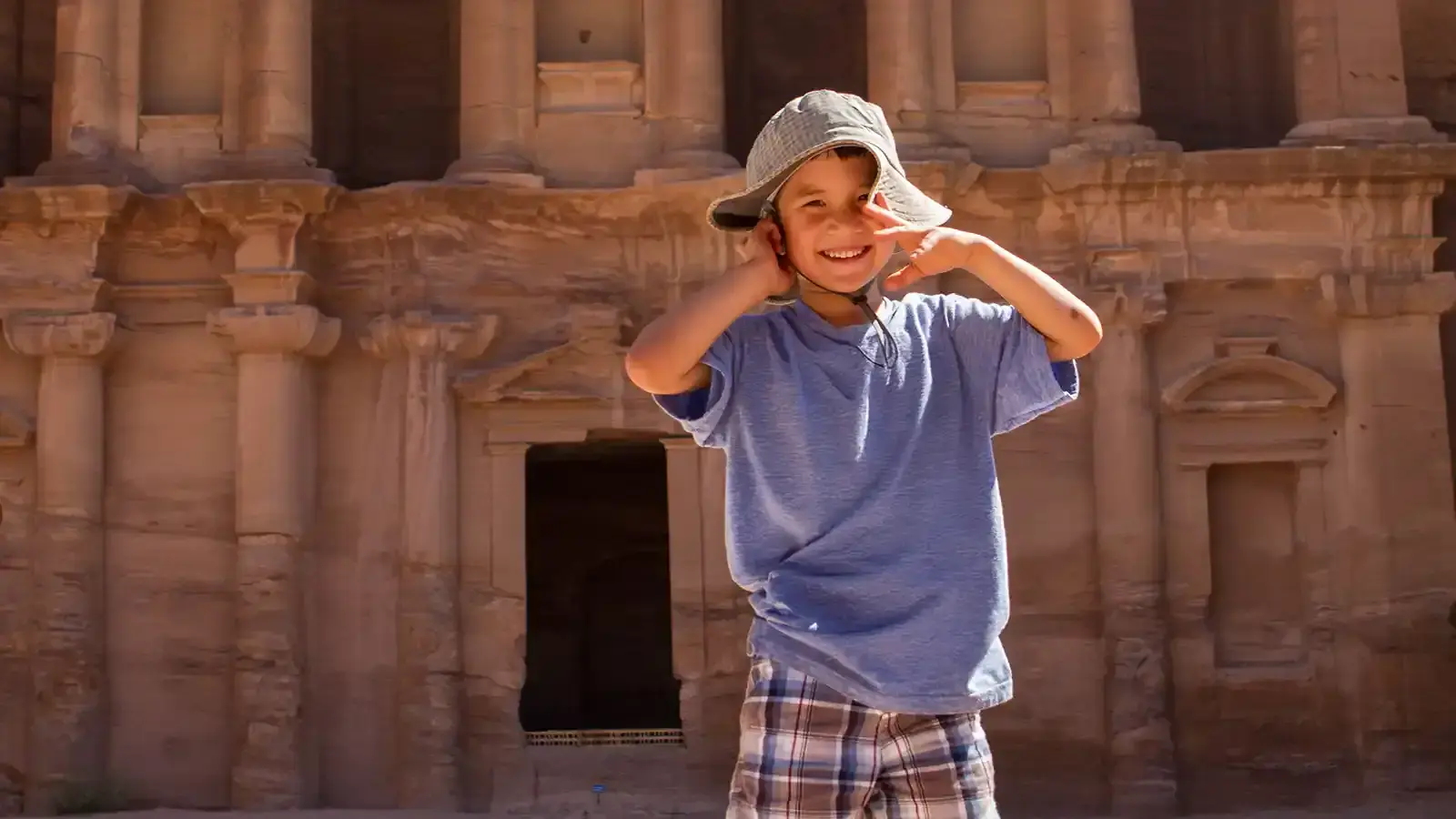
Our flight from Toronto had taken eleven and a half hours, and our luggage had gone missing somewhere between Chicago and Amman. The Royal Jordanian agent had made it his personal mission to find it, and in a moment I still think about, he came running to the gate just as we were boarding to tell us it had been located and loaded on the plane. We landed exhausted, found our driver, Qais, waiting outside arrivals with our names on a sign, and within an hour, we were in a hotel in Amman with two small boys asleep before their heads hit the pillows. That was the difficult part of our Jordan trip. Everything after that was extraordinary.
Jordan reframed my assumptions about the Middle East. This country borders Syria, Iraq, Israel, and Saudi Arabia, and the name alone gives some families pause. Before Christina and I traveled to Jordan with a two-year-old and a five-year-old, we were subject to countless queries of “Is it safe?” “Isn’t it dangerous?” and so on. I won’t lie, those questions were on our minds as well.
What we found once we began our family travels in Jordan was a country of extraordinary stability, warmth, and historical richness that has been welcoming family travelers for decades. The Jordanian people treat children with a generosity and openness that changes the entire character of our preconceptions. And it was a warmth that was reflected in many Muslim-majority countries that we’ve visited, including Egypt, Morocco, and Tanzania.
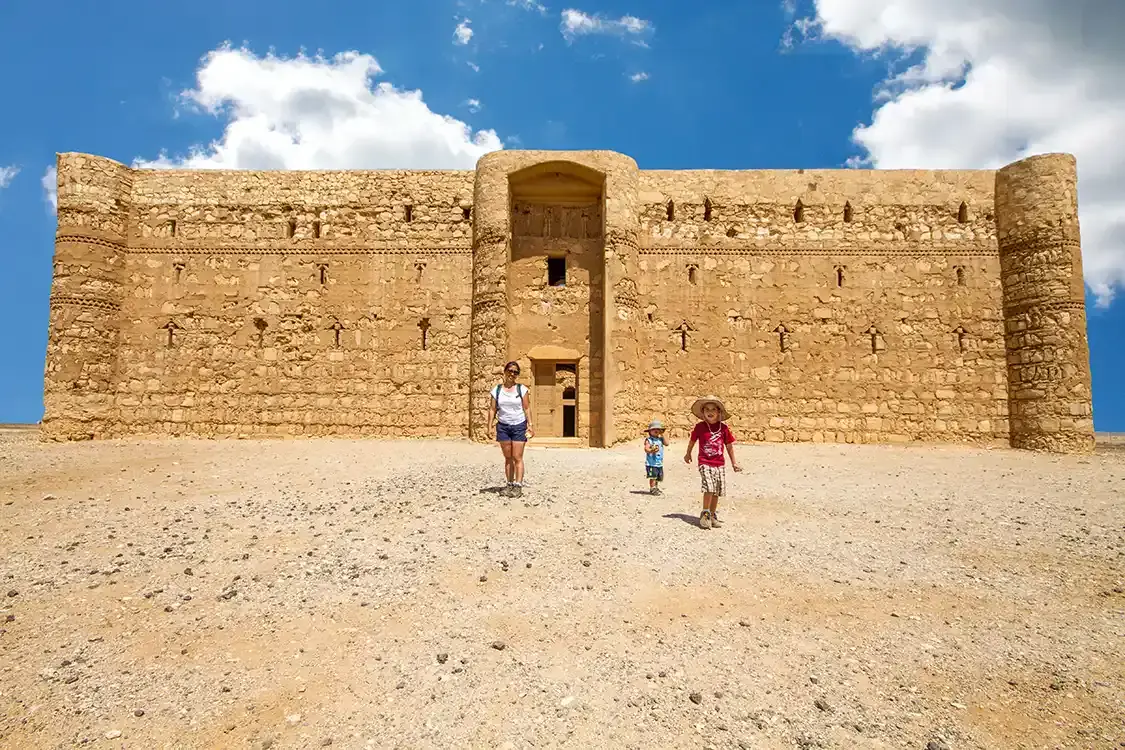
I have not been to many countries where a local who has been living on the edge of Petra for twenty years will stop his walk because one of your kids asked a question, and then invite your whole family to his house for tea so he can give you that child a proper answer.
The people of Jordan are among the friendliest I’ve ever met while traveling with children. That being said, however, the US State Department elevated Jordan to a Level 3 Reconsider Travel advisory in March 2026 due to regional security concerns, ordering the departure of non-emergency government personnel. The Canadian government maintains a lower advisory.
I am not in a position to tell you how to weigh that against your own family’s circumstances. What I can tell you is what the Jordan travel experience was for my family, and what the practical picture looks like as of the time this was written. Check the current advisory from your own government before you book, and check it again before you travel.
At a Glance: Quick Facts for Family Travel in Jordan
🗣️ Language: Arabic is the official language. English is widely spoken in tourist areas and by most guides and hotel staff.
💰 Currency: Jordanian Dinar (JOD). Credit cards are accepted at most hotels and larger restaurants. Carry cash for markets, small restaurants, and smaller tourist sites.
🚗 Driving: Right-hand drive. Having an International Driving Permit is recommended. Roads are generally in good repair, border zones are often in poor condition, and are sometimes blocked by military or police.
🔌 Power Adapter: Type B and D (2 and 3-round pin). 230V. North Americans need an adapter and a voltage converter (Get one here).
🆘 Emergency: Police: 911 | Ambulance: 911 | Tourist Police (Amman): +962 6 560 0802
💧 Tap Water: Not recommended for drinking. Bottled water is widely available and inexpensive. Consider a filtered water bottle to reduce waste.
🌤️ Best Time to Visit: March to May and September to November. Summer is hot; winter can be cold and wet.
Visas and Entry Requirements for Family Travel in Jordan
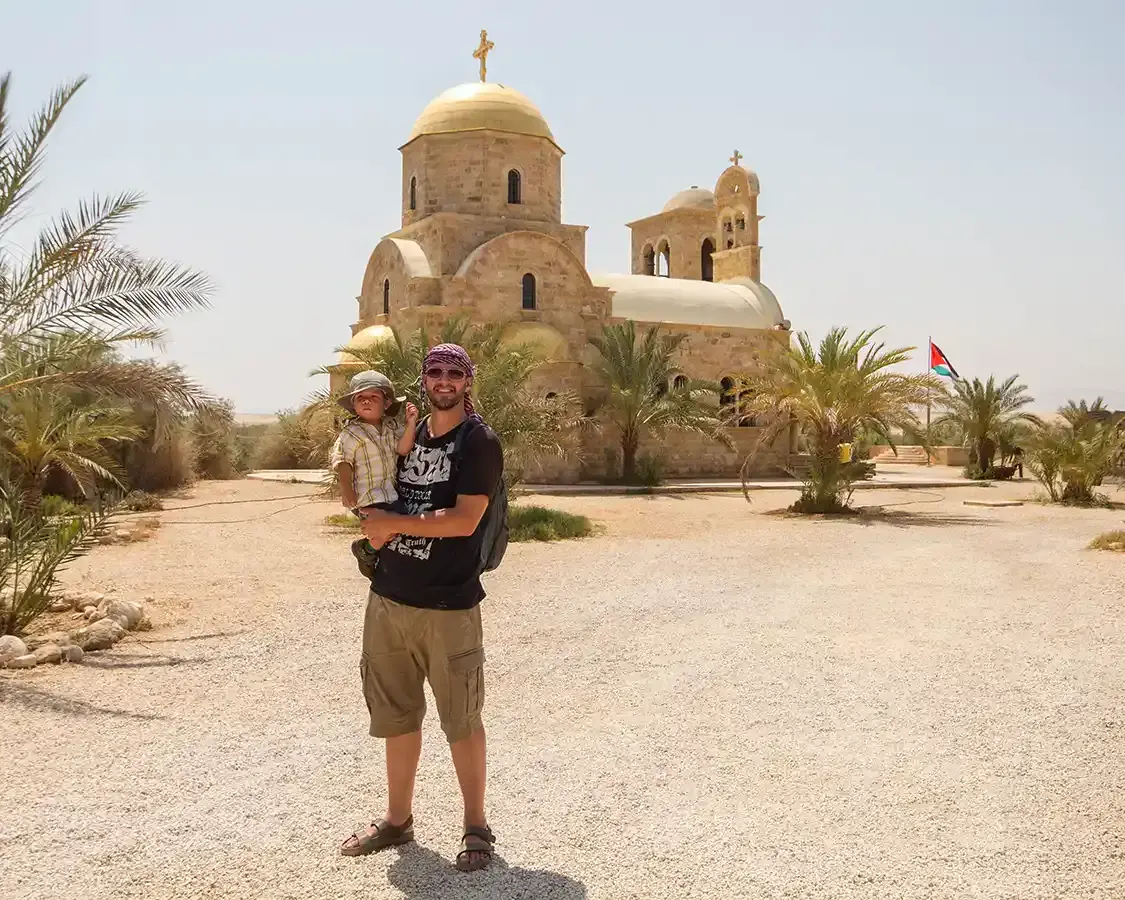
Travel in Jordan requires a visa for most visitors, but getting one is straightforward for families from Canada, the US, the UK, Australia, and those living in most EU countries. Visas on arrival are available at Queen Alia International Airport in Amman, the Sheik Hussein Bridge, and the Wadi Araba border crossing near Aqaba. The standard visa costs around 40 Jordanian dinars, which is roughly 56 USD. Your passport must be valid for at least six months from your date of entry.
The easier option for most families planning a proper trip through the country is the Jordan Pass, or Jordan eVisa. This is purchased online before your arrival in the country. You can access that here on the official government website.
Those looking for an even better option should choose the Jordan Pass. This route waives the visa fee entirely, provided you stay a minimum of three consecutive nights in Jordan. It also grants prepaid entry to more than 40 sites across the country, including Petra, Jerash, Wadi Rum, and most of the desert castles. Petra alone costs 50 JOD per person per day as a standalone ticket. For a family spending a week or more in Jordan and visiting multiple sites, the Jordan Pass pays for itself quickly and removes a great deal of ticketing friction at each site.
Note that Jordan does not issue visas at the King Hussein Bridge crossing between Jordan and the West Bank. If your itinerary involves entering from Israel at that border, you must obtain your visa online or at a Jordanian embassy in advance.
💡 PRO TIP: Buy the Jordan Pass Before You Leave Home
Purchase the Jordan Pass online at jordanpass.jo before departure. It waives the visa fee for stays of three or more nights and covers entry to over 40 sites, including Petra, Jerash, and most castles.
Getting Around Jordan with Kids
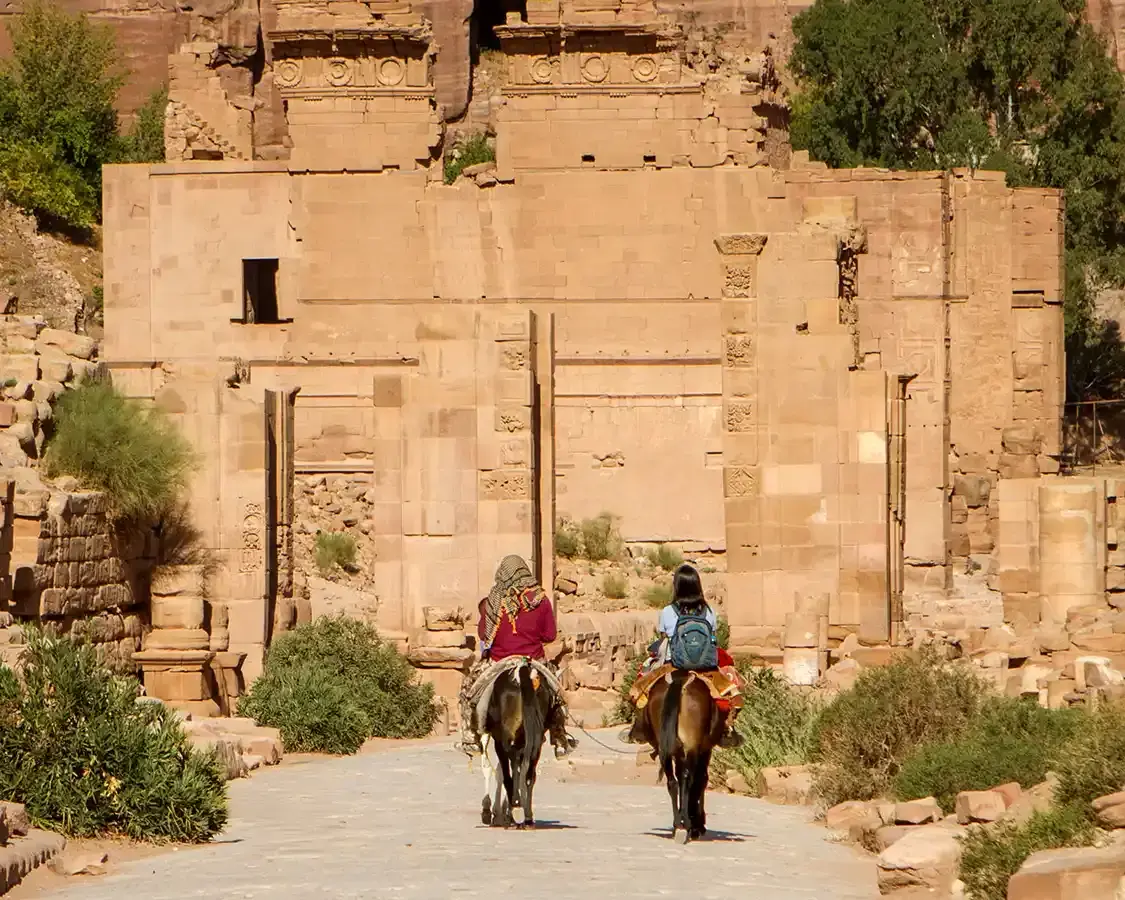
Jordan is not a large country, but the best places to visit in Jordan are quite spaced out. If you want to make the best of your family’s travels in Jordan, plan your route ahead of time.
Renting a Car
Jordan is a small country, and self-driving in the country is genuinely manageable for confident drivers. The main highway network connecting Amman, Petra, Wadi Rum, and Aqaba is paved, well-maintained, and clearly signposted. If you’re interested in renting a car in Jordan, an International Driving Permit is recommended alongside your home license, particularly for non-English alphabet licenses. Traffic drives on the right. The minimum rental age at most companies is 21, and a credit card is required for the deposit.
A few things to know before you drive. The Desert Highway between Amman and Aqaba is the fastest route south, but has a poor accident record and is not the most rewarding drive. The King’s Highway, which runs through the mountains and passes popular sites such as Madaba, Mt. Nebo, and the Crusader castles, is slower but significantly safer and far more scenic.
Stray animals, unmarked roadworks, and aggressive driving habits are common enough to warrant proper attention, particularly at night. Avoid driving after dark where possible.
That said, my family used a private driver and guide for the full trip, and I would make the same choice without hesitation. Having someone who knows the roads, the sites, and exactly where to stop transforms the logistics into part of the experience. Jordan Select Tours was our operator, and Qais, our driver, was exceptional. For families who want to maximize their time at each destination without the mental overhead of navigation, a private driver is money very well spent. Note that private drivers cannot act as guides.
Taxis and Rideshare
Taxis are plentiful in Amman and in larger cities and towns throughout the country. Yellow taxis use meters in the city. Ask your hotel to recommend a reliable company or driver for airport transfers and longer journeys rather than hailing unmarked street taxis, particularly after dark. Careem is the regional rideshare app (and multi-purpose app). It works throughout Jordan and provides a cleaner metered option for families who prefer knowing the fare before they get in.
Intercity Buses
JETT, the Jordan Express Tourist Transport company, operates comfortable air-conditioned coaches on the main routes between Amman, Aqaba, and Petra. It is the most reliable public bus option for families covering longer distances.
Tickets can be booked in advance, and prices are reasonable. Local minibusses, known as servis, connect smaller towns and are used widely by locals but involve more navigational complexity and are less practical for families with luggage and young children.
Domestic Flights
Jordan is a small country, and domestic flights are limited. Royal Jordanian operates a route between Amman’s Queen Alia International Airport and King Hussein International Airport in Aqaba, which can be a useful time-saver if your itinerary involves getting from the north of the country to the south quickly.
For most families doing a standard circuit of the main sites, ground transport is the practical and more rewarding option. I use the SkyScanner app to get the best deals on domestic flights in Jordan.
Getting Around Amman
Amman is a large, hilly city and is not easily walkable between districts. Taxis and Careem are the most practical options for families moving between the old city, Abdoun, Rainbow Street, and the Citadel. Amman does not have a metro or tram system. In Petra, Wadi Rum, and the resort areas at the Dead Sea and Aqaba, almost all movement is organized through your accommodation or guide.
Staying Connected While Traveling in Jordan
Mobile coverage in Jordan is good throughout Amman, Petra, Aqaba, and along the main highways. It thins out, though, in more remote desert areas such as much of Wadi Rum, and some stretches of the King’s Highway. An eSIM purchased through a provider like Airalo and installed before departure gives reliable coverage on local Jordanian networks at a fraction of roaming costs. Coverage within the Wadi Rum desert camp is limited, and, honestly, the experience is better without it.
Download Google Maps offline for Jordan before you travel. Also, download Google Translate with Arabic enabled for offline use. While English is spoken in tourist areas, having offline translation available for markets, smaller towns, and any situation away from the main circuit is genuinely useful.
You can read more about how my family simplifies our data and phone access while traveling here.
Language and Communication in Jordan
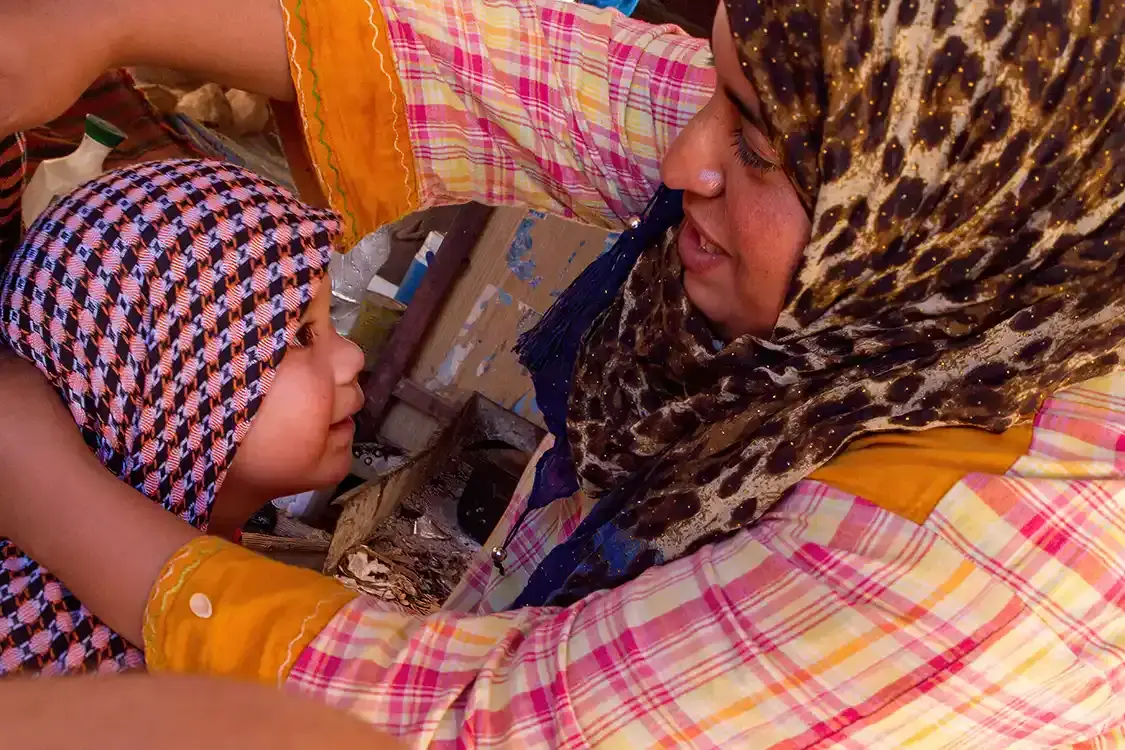
Arabic is the official language of Jordan. In tourist areas, hotels, restaurants at major sites, and with professional guides, English is widely spoken, and communication is rarely a problem. Step away from the main circuit, and it becomes more limited, though Jordanians are patient and communicative even through the language barrier.
Making any effort to speak Arabic to locals is received warmly. The phrase ‘Ahlan wa sahlan‘ (you are welcome, or welcome to you) that Jordanians use constantly with visitors reflects a genuine connection with the local culture. A few words go a long way.
Phrase | Arabic | Pronounciation |
|---|---|---|
Hello | Marhaba | mar-HA-ba |
Thank you | Shukran | SHOO-kran |
Please | Min fadlak | min FAD-lak |
Where is…? | Wein…? | WAYN |
How much? | Addaysh? | ah-DAY-sh |
My child is sick | Ibni/binti mareed | IB-nee / BIN-tee ma-REED |
Help! | Musaada! | moo-SAH-dah |
Bathroom | Hamaam | ha-MAh-M |
Yes | Naeam | nah-EEM |
No | La | l-AH |
Power Adapters
Jordan uses Type B and D sockets with round pins, running at 230V. This is different from North American outlets on both plug shape and voltage. Travelers from Canada and the US need both a plug adapter and a voltage converter for any device that is not dual voltage. Check the label on your chargers.
Most modern phones, laptops, and tablets handle both voltages and need only the adapter. A multi-port USB charging hub with dual voltage capability handles the whole family from a single outlet and is worth packing.
Family Safety in Jordan
In March 2026, the US State Department elevated Jordan to a Level 3 Reconsider Travel advisory and ordered the departure of non-emergency government personnel, citing terrorism and armed conflict concerns driven by regional instability. The Canadian government maintains a lower advisory, advising general caution for those traveling in the country. The UK government advises against travel to specific zones near the Syrian and Iraqi borders, but not to Jordan as a whole.
Governmental travel advisories do not all say the same thing, and families traveling from different countries should check their own government’s current guidance before making any booking.
What these have in common is a shared distinction between the border regions and the main tourist destinations. Petra, Wadi Rum, the Dead Sea, Aqaba, Amman, and Jerash are not in areas flagged as high-risk by any of these advisories. Stay well clear of the Syrian and Iraqi border zones, follow current advisories at the time of your travel, and register with your country’s embassy before you go.
Within the tourist circuit, Jordan has historically been one of the safest countries in the Middle East for family travel. Crime rates in tourist areas are low. The Jordanian tourist police have a visible presence at major sites. The people are famously hospitable. None of that changes the obligation to check current advisories and make an informed decision for your own family.
👀 HEADS UP: Check Current Travel Advisories Before You Book
The US State Department issued a Level 3 Reconsider Travel advisory for Jordan in March 2026. The Canadian and UK governments maintain lower-level advisories with specific border zone warnings. Advisories change and the situation in the region is dynamic.
Check the current advisory from your own government before booking and again before travel. Register with your embassy before departure. Avoid all areas near the Syrian and Iraqi borders.
Health and Vaccination Requirements for Family Travel in Jordan
There are no vaccinations required for entry into Jordan, but several are recommended. Consult a travel health clinic before departure and make sure the whole family is current on the following:
- Routine vaccinations, including MMR, DTaP, and polio.
- Hepatitis A is recommended for all travelers given the risks of food and water exposure.
- Hepatitis B is recommended especially for longer stays.
- Typhoid, particularly relevant if your itinerary includes local markets and street food.
Tap water in Jordan is technically treated but not recommended for drinking. Use bottled water, which is inexpensive and available everywhere, or bring a filtered water bottle that cuts down on waste and means you’ll always have access to clean water. Exercise standard food safety judgment in smaller establishments. The food in Jordan is exceptional, and most families eat very well throughout the trip with no issues.
Medical care in Amman is reasonable by regional standards. Outside the capital, facilities are more limited. Travel insurance with emergency evacuation coverage is essential. I typically use Safetywing and World Nomads for my family travel insurance. Pack a thorough family medical kit, including children’s pain relief, antihistamines, rehydration sachets, sunscreen, and any prescription medications in generous supply.
Regions of Jordan: What Families Need to Know
Amman
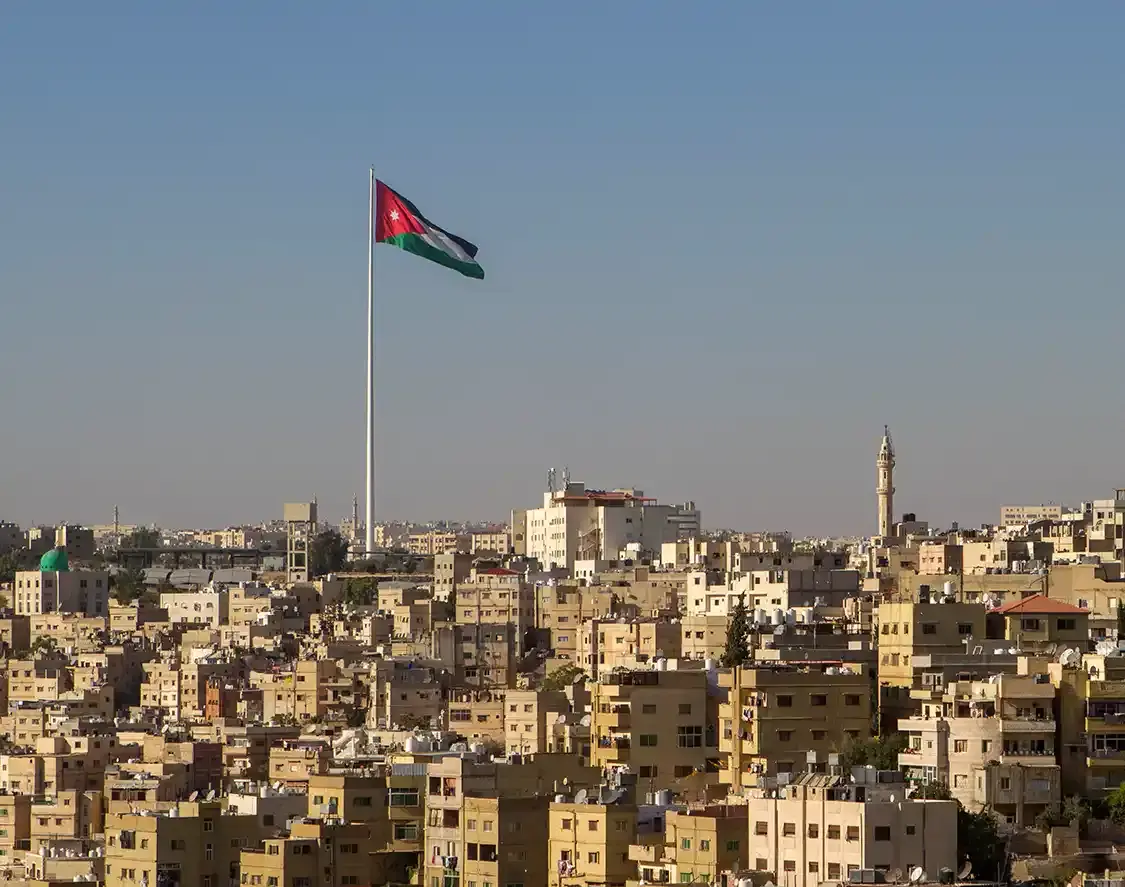
Amman is the capital of Jordan. This large, modern city is built across a series of hills, and most families treat it as an arrival and departure point rather than a destination in itself. That itinerary strategy sells this incredible city short.
The Amman Citadel on Jebel al-Qala’a offers sweeping views over the city and contains the Temple of Hercules, a Byzantine church, and a Umayyad palace in one single archaeological site that takes no more than two hours to explore. The Roman Theatre in the city center is one of the best-preserved in the Middle East and is free to walk through. The King Abdullah Mosque is open to non-Muslim visitors outside of prayer times and is genuinely impressive inside.
The downtown market area around Al-Hashimi Street is one of the most atmospheric places to take children shopping and street food tasting in the country. Knafeh, the hot cheese and shredded pastry sweet that Jordan is famous for, can be found here in its finest form, and my kids still talk about it. My good friend Lindsay runs an Amman food tour, and if you want to dive into Jordanian food, it’s perfect for families.
Allow at least one full day in Amman on either end of your trip to explore Amman properly.
Jerash and the Northwest
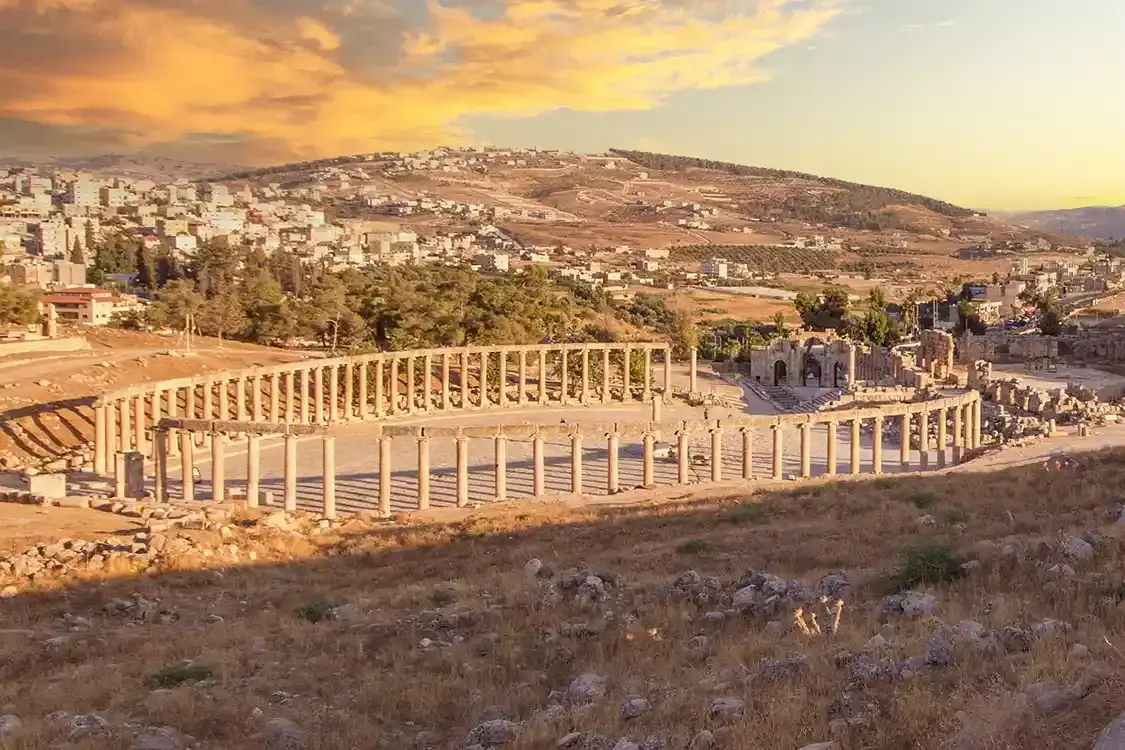
Jerash is the best-preserved Roman city outside of Italy, and it is not a well-kept secret. That being said, it remains far less visited than it deserves. The colonnaded street, the oval plaza, the two theatres, the temples of Zeus and Artemis, and the triumphal arch. The scale of preservation here is extraordinary, and the site allows a level of access to the ruins that would be unthinkable in Europe.
Children can run across the ancient stones and play hide and seek among the columns. My kids were more engaged here than at almost any other archaeological site we visited on the trip, partly because it looked like the ruins they had imagined from stories and partly because there was simply so much to explore.
Jerash is about 48 km north of Amman and is easily combined with famous sites like Umm Qais, the ruins of the ancient Greco-Roman city of Gadara in the northwest corner of the country, which offers views across the Sea of Galilee into Israel and Syria from one dramatic hilltop vantage point. Both sites are included with the Jordan Pass.
The King’s Highway
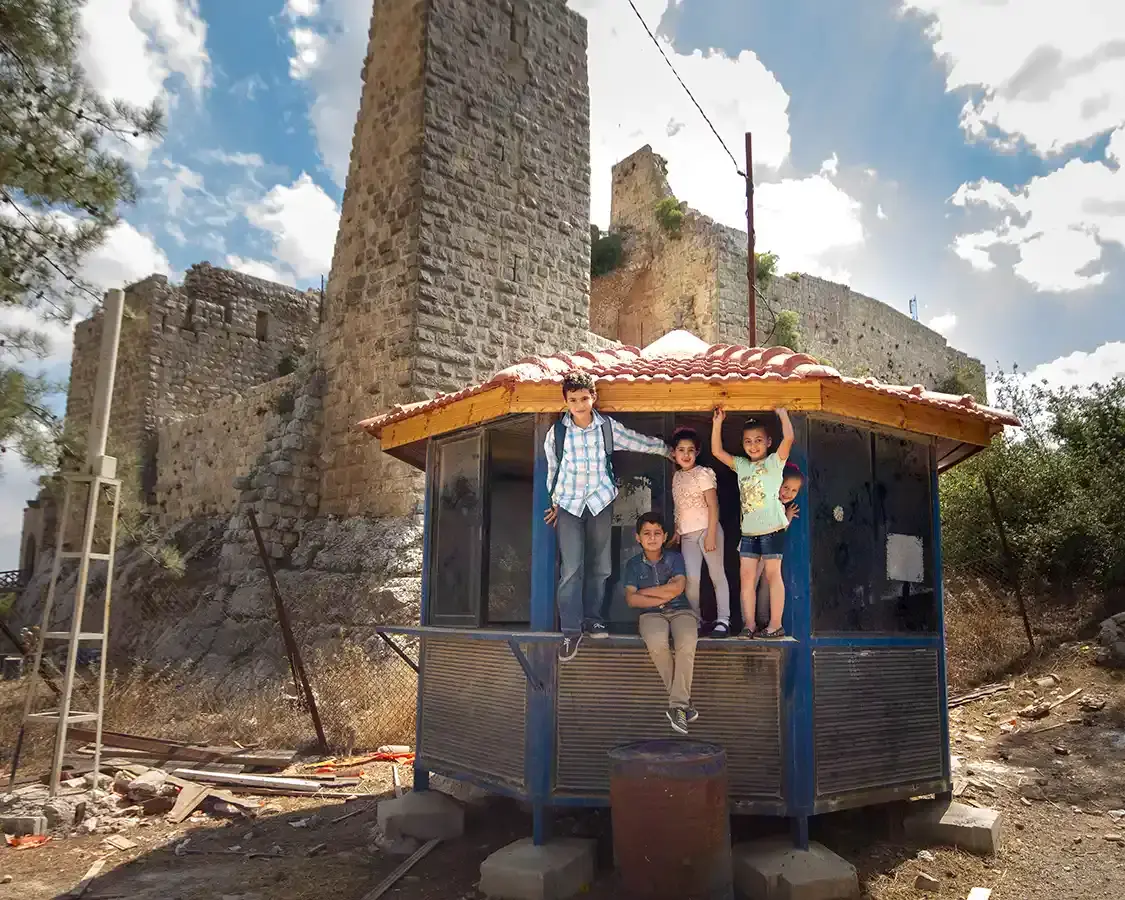
The road south from Amman to Petra via the mountains of the Jordanian Highlands is one of the great road trips in the Middle East. Mt. Nebo, where Moses is said to have looked out over the Promised Land he would never enter, has a simple modern church and a striking memorial that children respond to differently depending on their age and background.
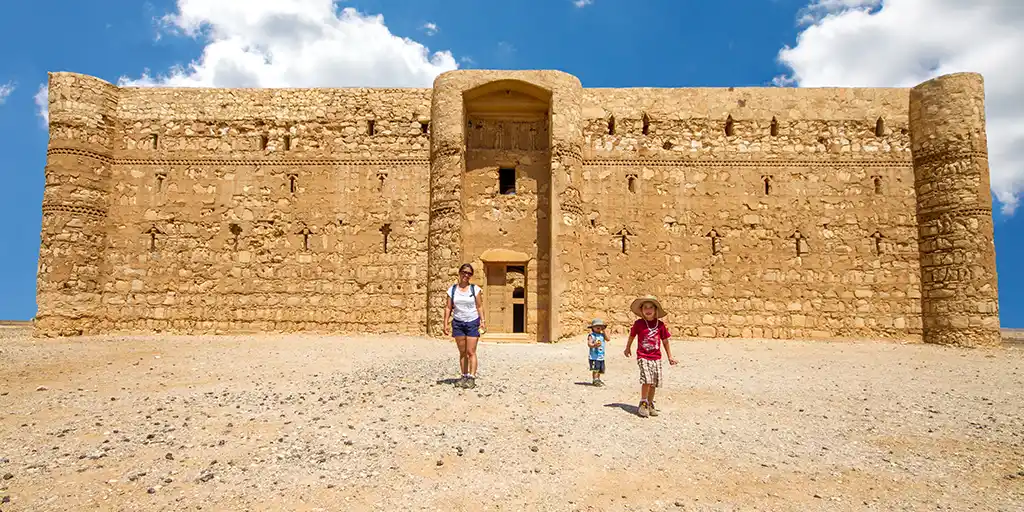
The mosaic map in Madaba, the oldest surviving cartographic depiction of the Holy Land, is genuinely astonishing up close. The Crusader castle at Karak sits on a towering ridge above the town and is large enough to spend several hours exploring its corridors, towers, and underground passages. My kids treated the whole thing as an adventure playground, which it practically is.
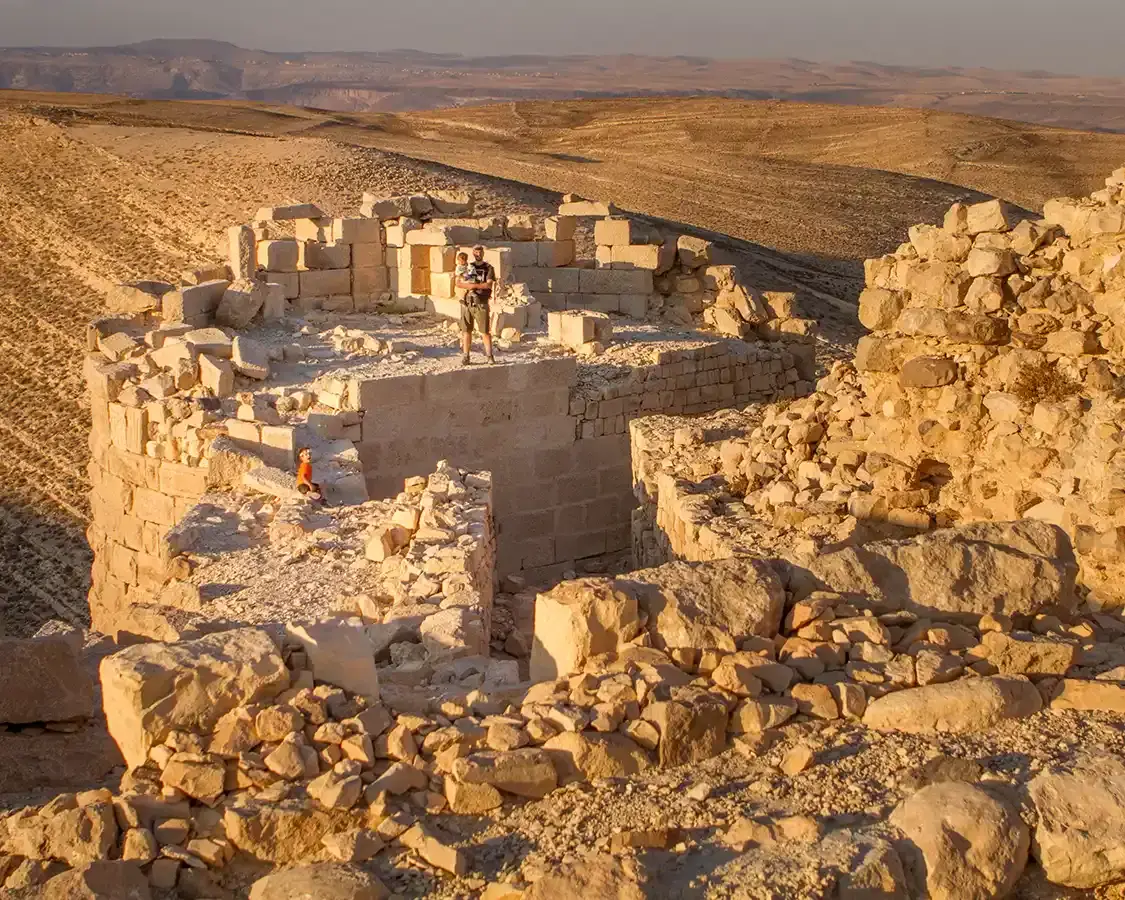
Shobak, a smaller and less visited Crusader castle further south, is worth the short detour from the highway if time allows. The atmosphere there is quieter, and the views are exceptional. Driving the King’s Highway with children requires a full day and patience with the winding mountain roads, but it consistently produces the kind of travel stories that survive for years.
Petra
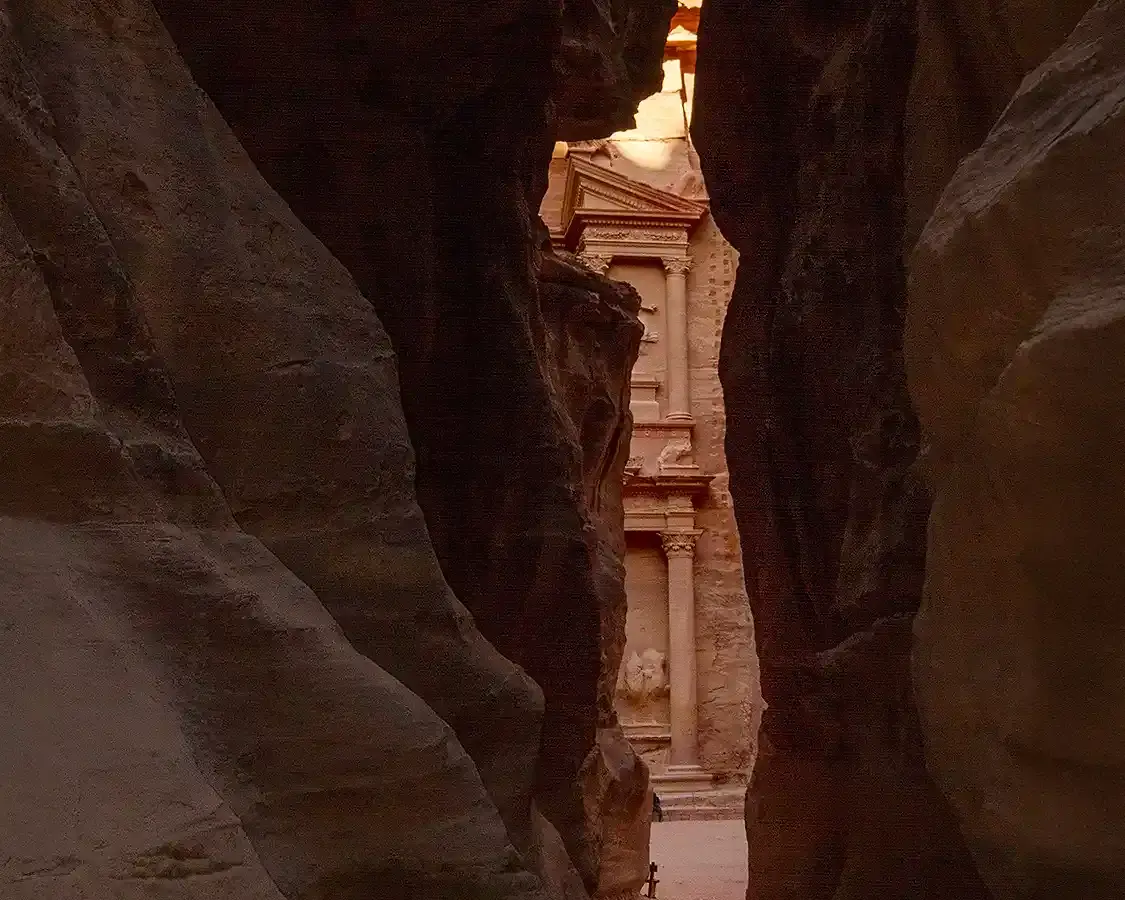
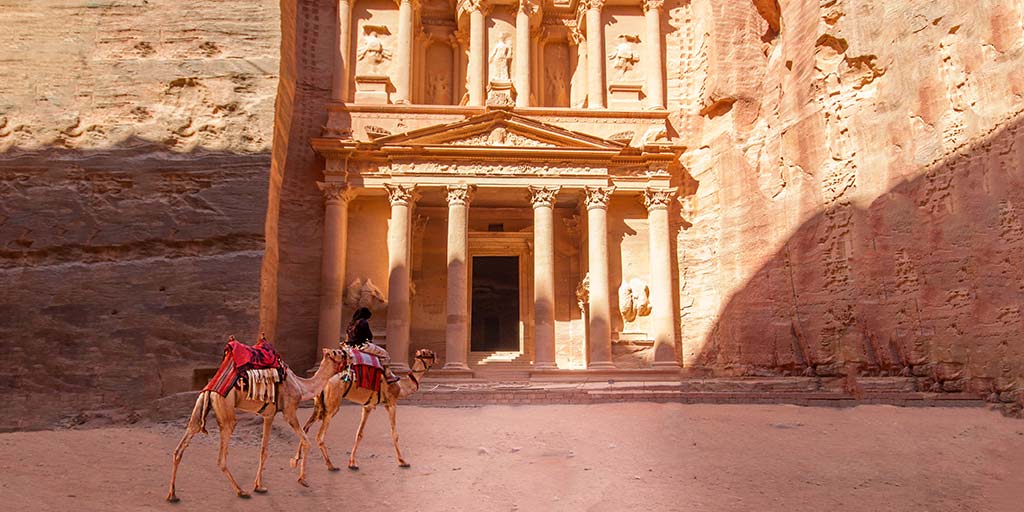
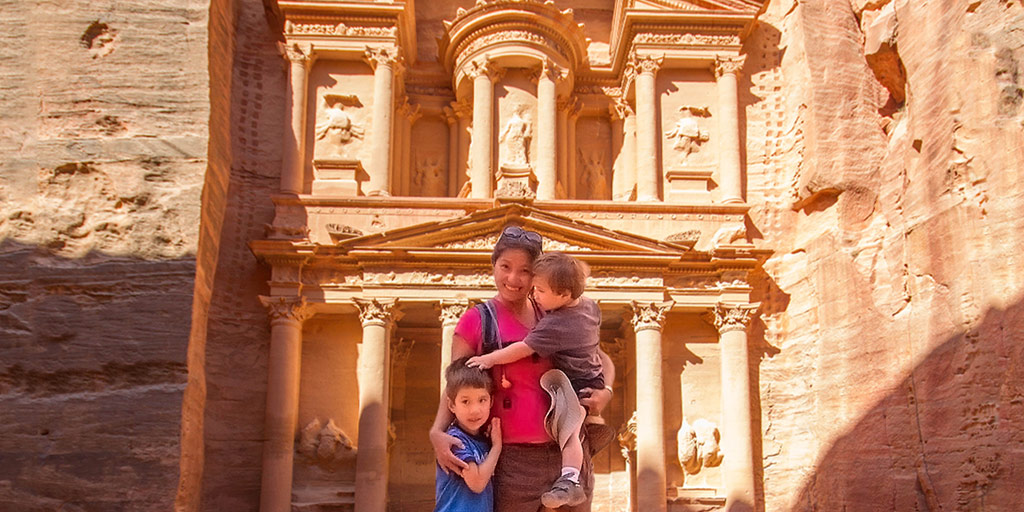
There is a moment walking through the Siq, the narrow gorge of towering red sandstone that leads into Petra, when the Treasury appears at the end of the passage. The first glimpse stops people every single time, regardless of how many photographs they have seen.
My two-year-old was in a carrier on my back that evening as we made our way to the Petra by Night experience. He was busy blowing raspberries on his arm and entirely indifferent to the UNESCO World Heritage site and Wonder of the Modern World that was unveiling itself around him. Cohen, his older brother, understood enough to be quiet and drink it all in. The candles in paper bags lining the route, the stars overhead, the Treasury lit by candlelight at the end. That is a night I will not forget.
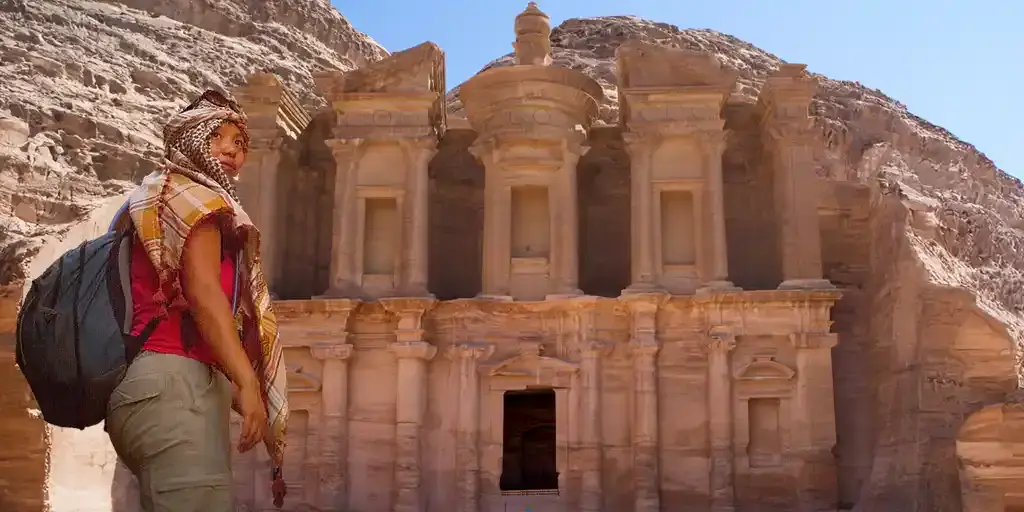
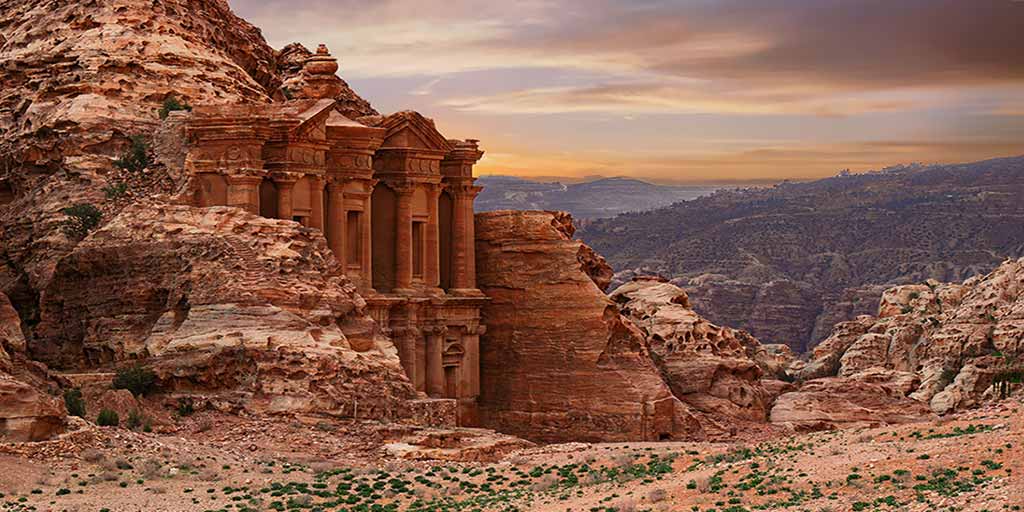
Plan a minimum of two full days at Petra. The site is enormous. The Lower Petra circuit, covering the Siq, the Treasury, the Royal Tombs, and the colonnaded street, fills one day comfortably. The Monastery, reached by 800 steps carved into the sandstone, is a full morning on its own and delivers a view that rivals anything in the city below. Our guide, Mohammed, had a gold tooth and thirty years of Petra inside his head. He mentioned in passing that the cave above the second level of a cliff face had been his home until the Jordanian government relocated the Bedouin families living inside Petra to a village nearby. That single sentence changed how I looked at the entire site.
Horses, donkeys, and camels are available for hire throughout the site. Multi-day tickets are cheaper per day than single-entry tickets. The site is included with the Jordan Pass. Read the full guide to visiting Petra with kids here.
Wadi Rum
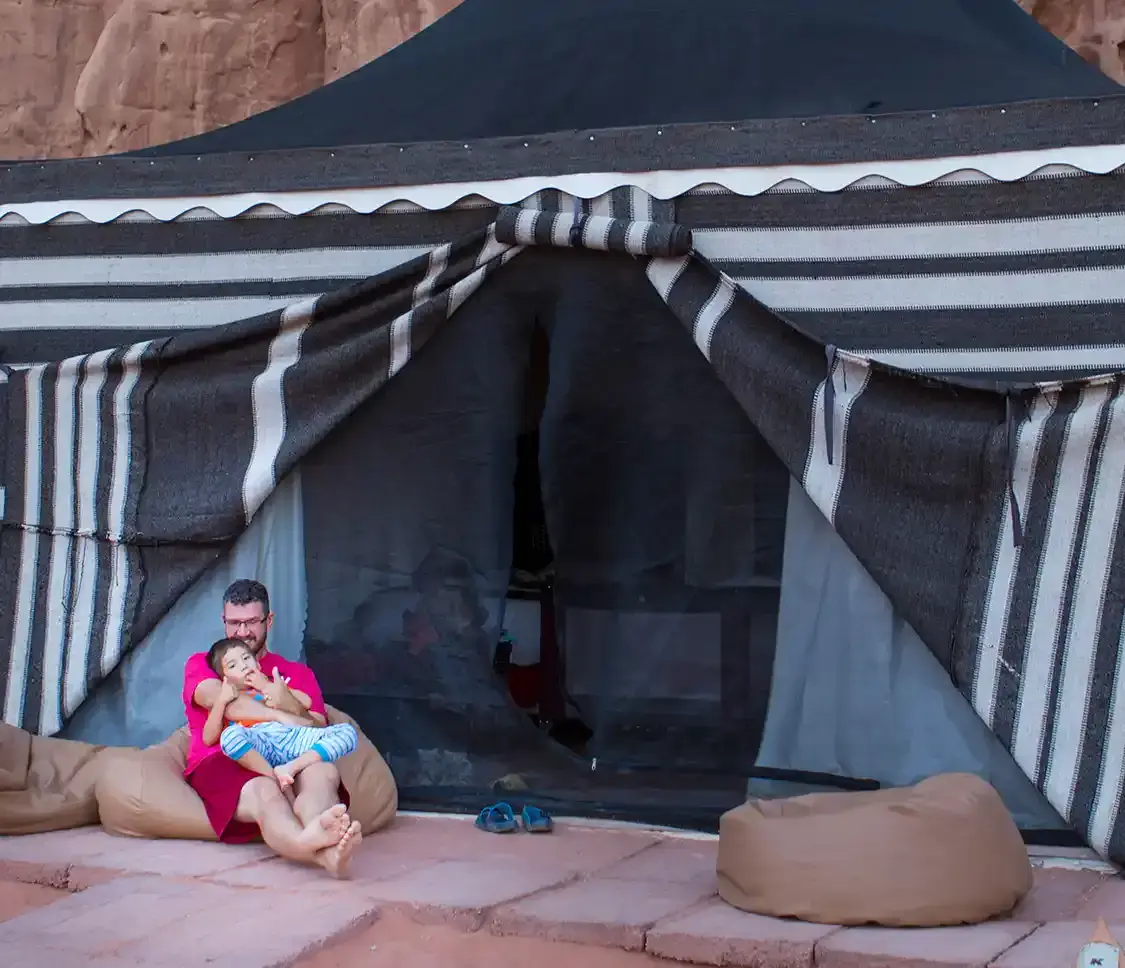
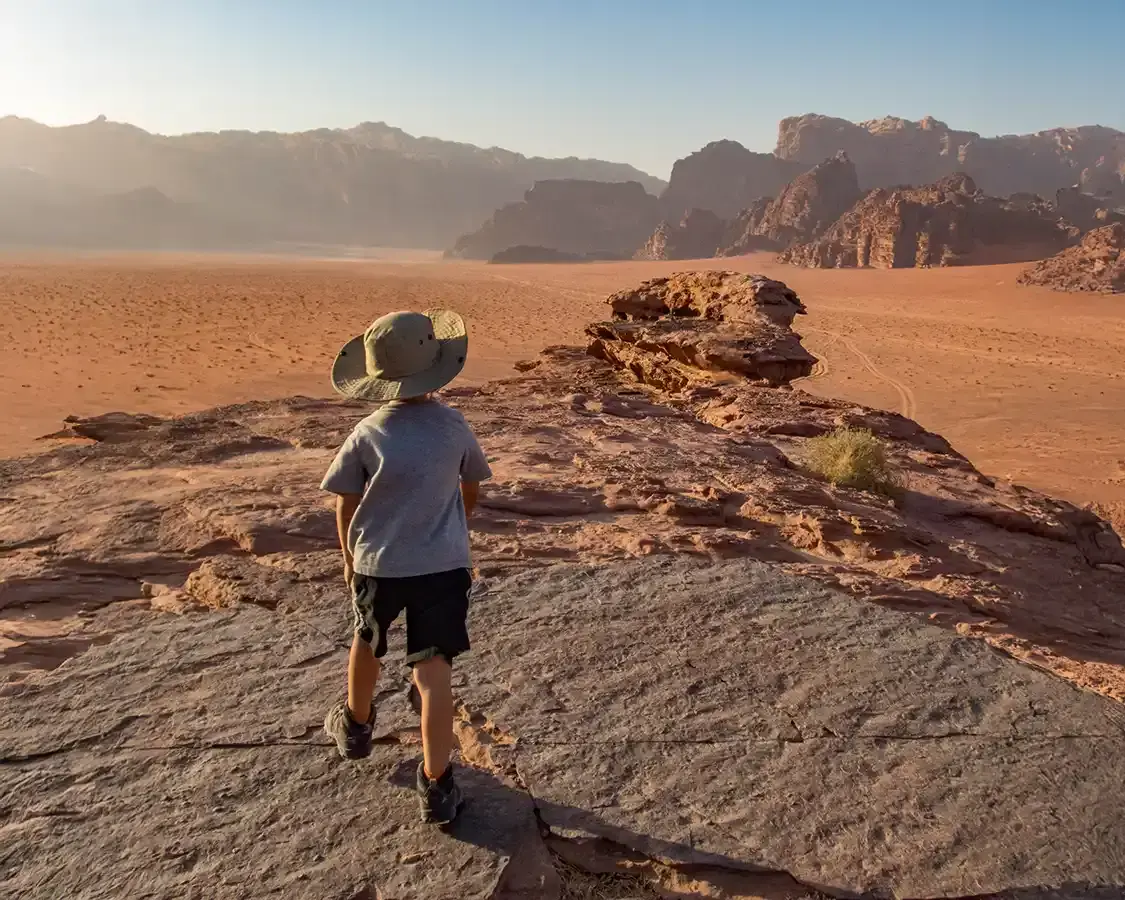
Wadi Rum is the desert that Lawrence of Arabia described as vast, echoing, and god-like, and he was not wrong. The red sand and sculpted sandstone mountains of the Rum Protected Area are among the most dramatic landscapes on earth, and the experience of spending a night in a Bedouin camp under that sky with your kids is one of those things that is difficult to describe to someone who has not done it.
Wadi Rum desert camp experiences range from basic tented camps to fully glamped-out bubble domes with private bathrooms and climate control. For families with young children, the more comfortable end of the spectrum makes the experience more sustainable, but even a modest camp delivers what matters most: the silence of the desert, the cooking over an open fire, and the night sky without light pollution doing things to your children’s sense of the world that no amount of National Geographic can replicate.
Jeep tours through the desert depart from most camps and are the best way to see the valley’s formations, arches, and rock inscriptions. Read the full Wadi Rum glamping guide here.
The Dead Sea
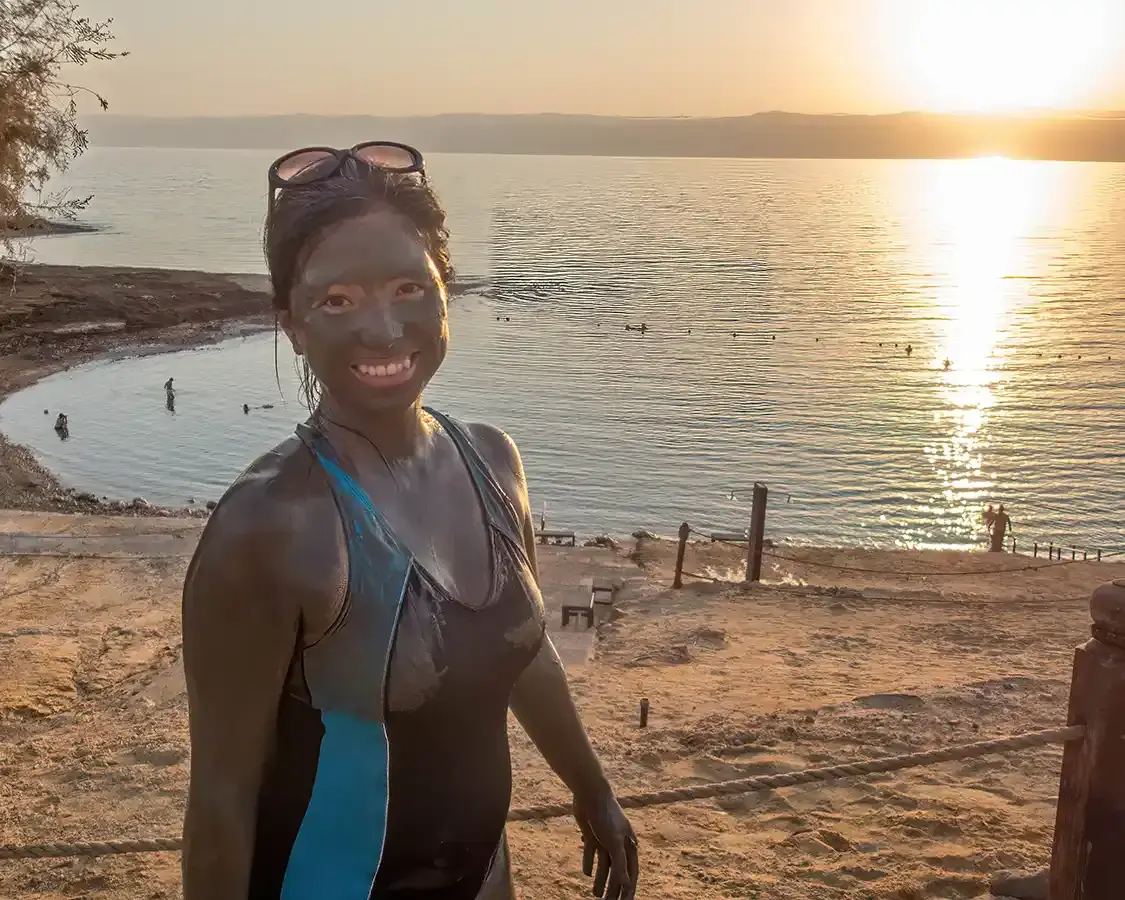
The Dead Sea sits 430 meters below sea level. It is the lowest point on the surface of the earth, and the water here is so saturated with salt that you cannot sink in it. You float, whether you know how to swim or not. When you’re floating in the Dead Sea, it doesn’t matter what your body type, fitness level, or swimming ability is.
The mineral-rich mud that lines the Dead Sea shore is the other attraction here. You coat yourself in it, let it dry in the sun, and wash it off in the water. It is one of those activities that children require zero convincing to participate in. The Kempinski Hotel Ishtar on the Jordanian side of the Dead Sea is exceptional and was our base for the Dead Sea leg of the trip. The pools, the service, and the setting made it genuinely difficult to pull the kids away on our final morning there. We were an hour late meeting our driver that day. He was, as usual, more than accommodating. Read the full Dead Sea guide here.
Aqaba and the Red Sea
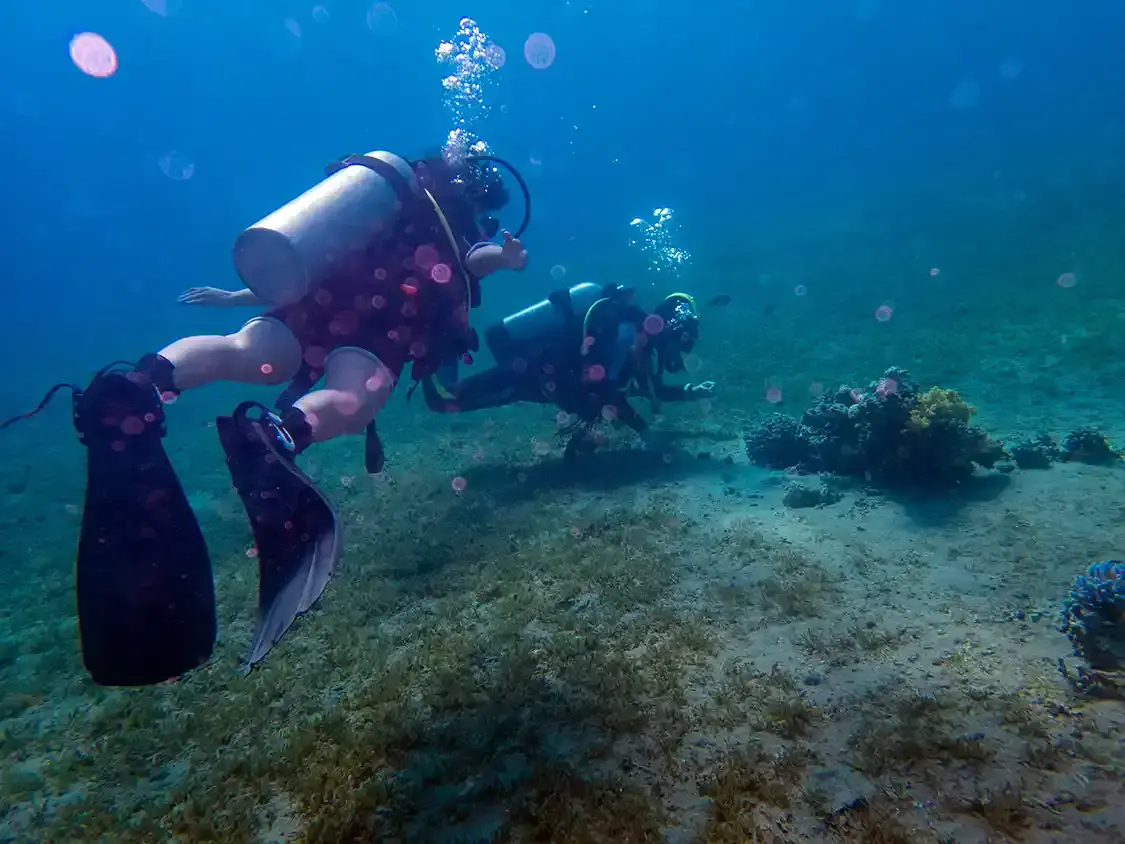
Aqaba is Jordan’s only coastal city. It sits at the northern tip of the Red Sea, sharing the water with Israel, Egypt, and Saudi Arabia. Aqaba functions as a special economic zone with reduced taxes, which makes it noticeably cheaper for shopping and dining than the rest of the country. The city has a warm, relaxed resort atmosphere that feels more Western than anywhere else in Jordan.
The Red Sea diving here is among the most accessible in the world for families. The coral reefs near Aqaba begin just offshore, water visibility is exceptional, and the marine life is extraordinary. While my kids were too young for scuba on our visit, the nanny at the Grand Tala Bay Resort kept them happily occupied at the pool while Christina and I went diving in one of the most colorful underwater environments I have ever seen.
Aqaba makes an excellent final night before flying home, and the Red Sea snorkeling from the public beach is free and requires nothing more than a mask.
Money and Budgeting for Family Travel in Jordan
Jordan uses the Jordanian Dinar, which is pegged to the US dollar at a fixed rate. Credit and debit cards are accepted at hotels, larger restaurants, and established tourist facilities. Cash is essential for markets, smaller sites, tips, and any transactions away from the main tourist infrastructure. Keep a supply of small denominations.
Jordan is not a cheap destination by regional standards. Hotel prices at quality hotels in Petra, the Dead Sea, and Aqaba are priced for an international market. Site entry fees, without the Jordan Pass, add up quickly for a family. Food at local restaurants, though, is very affordable. Transportation costs depend heavily on whether you use a private driver or self-drive.
Build the Jordan Pass into your budget from the start, and the price of travel in Jordan becomes much more manageable.
Tipping is expected and appreciated throughout Jordan. For restaurant service, 10 percent is the standard. For guides and drivers, tip according to the quality of their work and how well they looked after your family. Qais, our driver and guide, was worth every dinar and then some. Good local guides make an enormous difference in the Jordan family travel experience. Budget accordingly.
What to Pack for Jordan
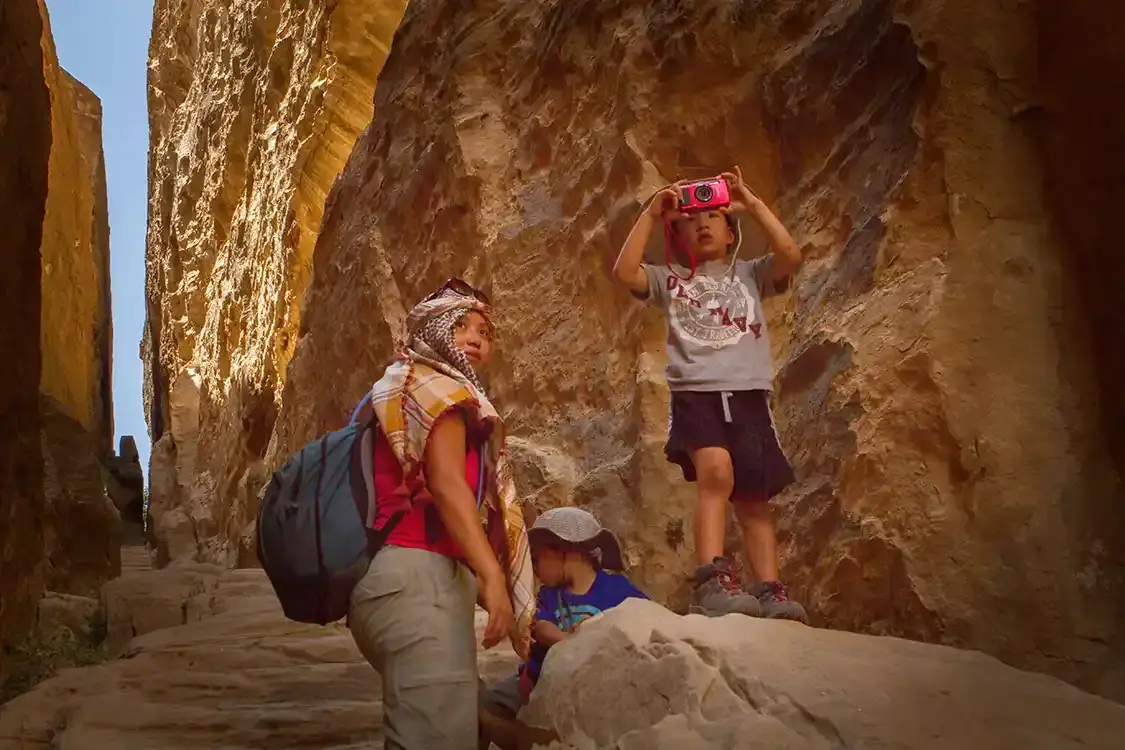
Jordan’s climate varies considerably by season and region. Spring and autumn are the most comfortable for families. Summer is very hot throughout the country. Winter in the highlands can be genuinely cold and wet, with occasional snow in Amman and Petra. The Dead Sea and Aqaba stay warm year-round.
- Modest clothing for the whole family. Jordan is a progressive country by Middle Eastern standards. It is a Muslim-majority country, and modest dress is welcomed in most areas outside of resort pools. Shoulders and knees are covered in cities, religious sites, and conservative areas. Lightweight fabrics that cover work well in summer heat.
- Comfortable walking shoes. Petra involves a minimum of several kilometers of uneven terrain. The King’s Highway castle sites require scrambling and climbing. Sandals are insufficient.
- A hat and high-factor sunscreen. The sun in Jordan is strong, particularly at desert sites and at midday. Kids burn faster than expected.
- A light layer for desert nights. Wadi Rum in particular gets cold after dark regardless of daytime temperatures. Pack a fleece or light jacket for the evening.
- Power adapter and voltage converter. Type B and D, 230V. North Americans need both.
- eSIM, installed before departure. Airalo provides reliable coverage on Jordanian networks.
- Copies of all documents. Passports, Jordan Pass confirmation, travel insurance details, and embassy contacts kept separate from originals.
- Family medical kit. Children’s pain relief, antihistamines, rehydration sachets, antidiarrheal medication, and any prescription medications in generous supply.
- Cash in Jordanian Dinar. Withdraw at a bank ATM on arrival. Small denominations for markets, tips, and smaller sites.
Travel Resources for Families Visiting Jordan
For practical planning, safety considerations, and logistics, these dedicated guides provide deeper support for families interested in travel to Jordan.
What Jordan Will Teach Your Family
Jordan will recalibrate your family’s sense of history. The Roman city at Jerash is 2,000 years old. Petra is older. The mosaic in Madaba has been on the floor since the 6th century. Children who encounter these things in person, who can touch the column drums and walk the ancient streets, come away with a relationship to history that is impossible to replicate from a textbook. Jordan is one of the densest concentrations of that kind of history in the world.
The hospitality here is not a tourism product. It is cultural and genuine. Jordanian people have a deep, instinctive warmth toward children and toward guests that shapes every interaction. Our guide, Mohammed, in Petra, who had walked those stones for decades and whose family had lived inside them until a generation ago, answered my son’s questions with the same care he gave to explaining the Nabataean trade routes. That is not service. That is character.
Jordan is small enough to see properly. The country is roughly the size of Portugal, and the main circuit from Amman to Jerash, down the King’s Highway to Petra, across to Wadi Rum, up to the Dead Sea, and then back to Amman, covers most of what a family needs in eight to ten days. You do not need to choose between the highlights. An eight-day itinerary reaches all of them with room to breathe. Read the full Jordan itinerary guide here.
The desert at night is one of the best things you can show a child. Wadi Rum, without light pollution, is the sky as it looked before electricity. The Milky Way is not a faint smear but a physical presence above you. My boys lay on their backs outside the camp for an hour that night, asking questions I could not answer. That is exactly the right outcome.
Final Thoughts on Family Travel in Jordan
Jordan family travel rewards preparation, patience, and curiosity. The destination guides on this site cover the details for each region, while the practical information above is designed to help your family move through the country with confidence. Check the current travel advisory from your government before you book. Then look carefully at what Jordan actually is: a country of extraordinary historical depth, genuine hospitality, and landscapes that do not exist anywhere else on earth.
You will come home with photographs that look like film stills. The Treasury at dawn. The red sand of Wadi Rum under a full moon. Your child is floating on the Dead Sea with an expression of pure bewildered delight. But what stays is the guide who answered every question as if it mattered. The driver who ran to the gate to tell you your luggage had been found. The country that welcomed your family, chaos, and exhaustion, and two small boys included, and made you feel like you had arrived somewhere worth arriving.
This page is updated as new regional guides and planning resources are published. Looking beyond Jordan? Explore the International Family Travel Guide.