
From the Serengeti to Zanzibar’s spice-scented streets, these are the best places to visit in Tanzania for families ready for Africa’s greatest adventure.
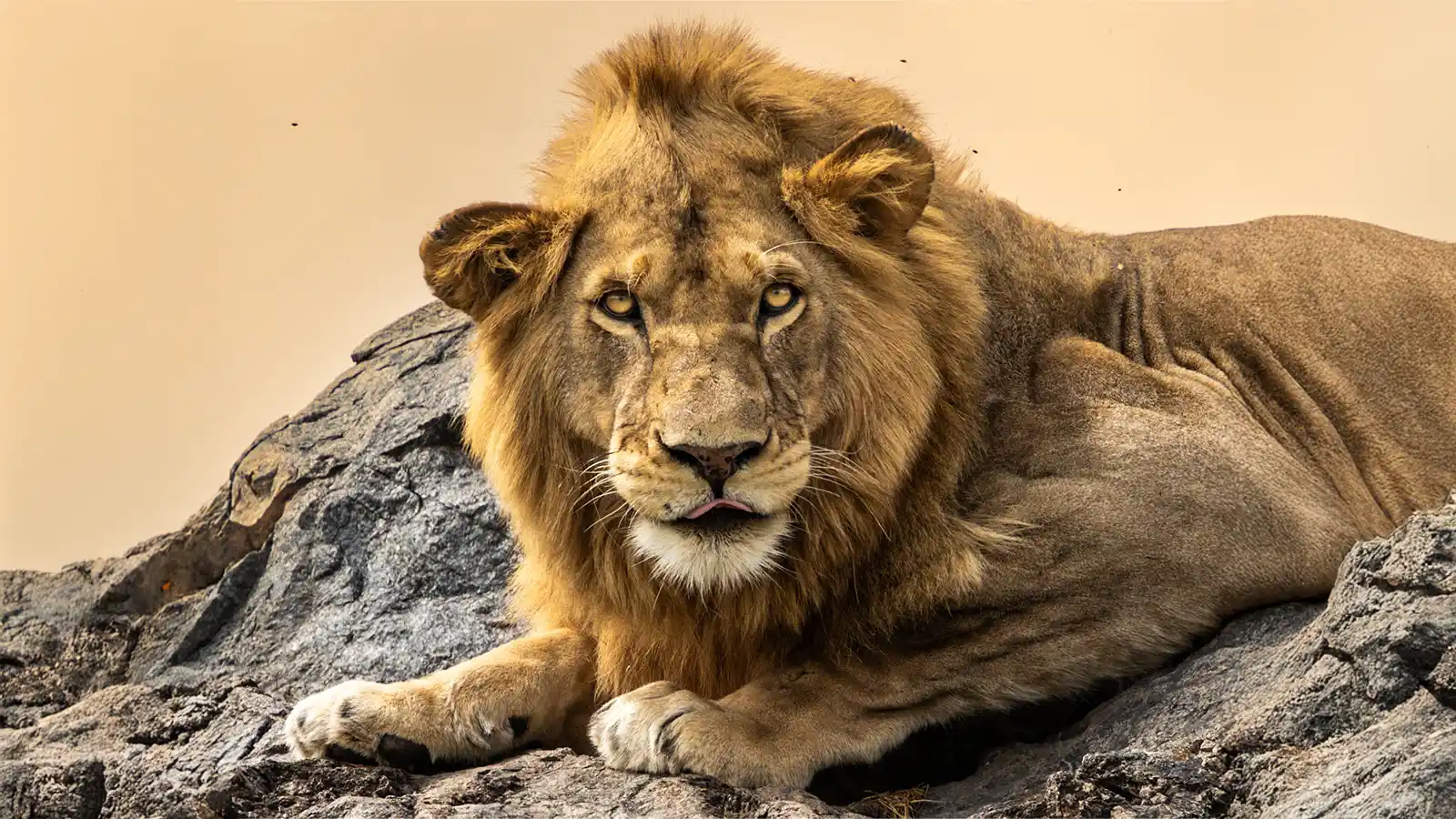
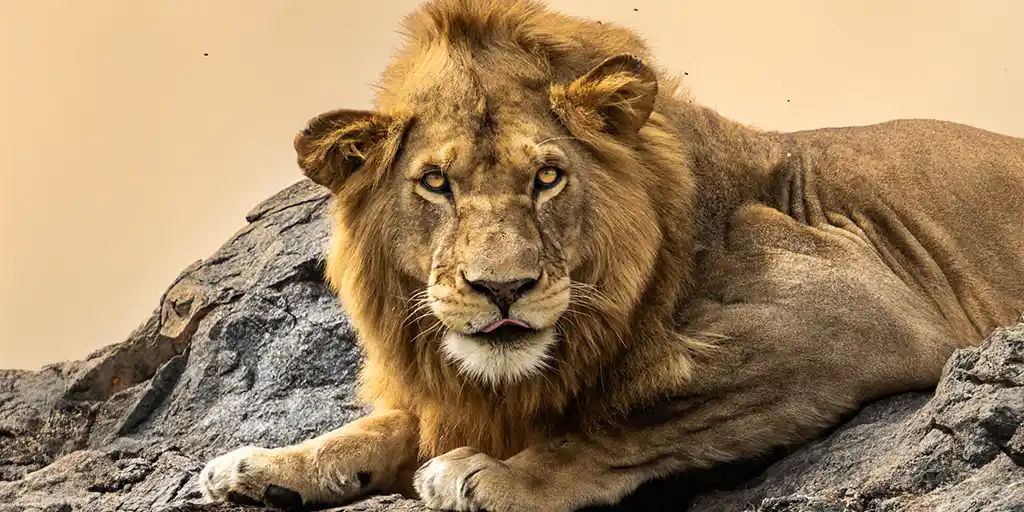
It was about two in the morning when we heard the grunts. Low, deep, and rough. Lions shuffling around not far from our canvas tent, pitched somewhere in the middle of Serengeti National Park. The kids didn’t move, Dylan’s hands still grasping his camera strap, even after long days on safari. The rough roads and epic days had taught them to sleep through anything.
But in the dark, Christina and I heard them from our bed. A low-pitched, guttural huff that we could feel more than we could hear. We smiled at each other and lay back down. Neither of us was planning to go outside the tent to check it out. This was just day two of our epic week-long safari through Tanzania, but it felt like we had been here our whole lives.
This is Tanzania. It doesn’t ease you in gently. It drops you straight into the wild and dares you to pay attention.
Why Families Should Choose Tanzania as a Safari Destination
Table of Contents
There’s no lack of safari destinations in Africa. Kenya’s Masai Mara, Botswana with its Okavango Delta & Chobe, and of course, South Africa’s Kruger National Park. But Tanzania holds itself to a completely different standard.
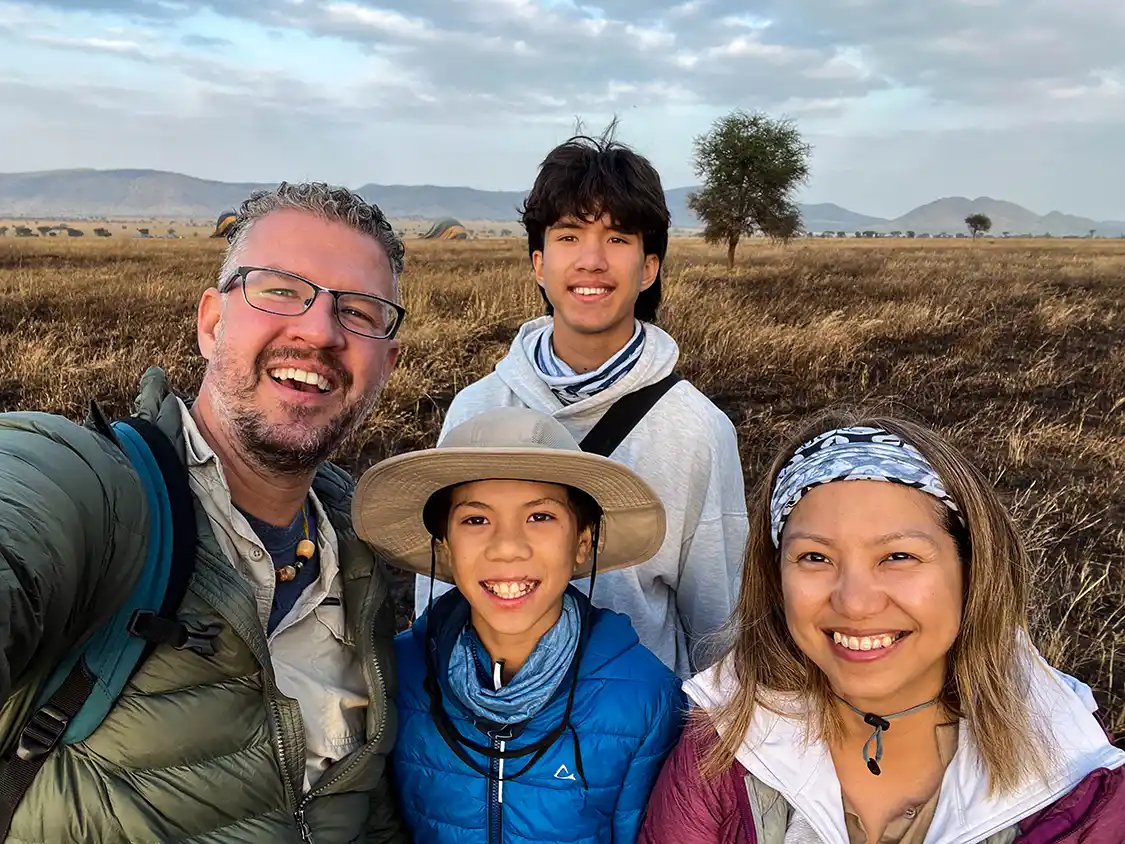
My family has been chasing the world’s most epic wildlife experiences for more than a decade. We chose Tanzania as our family’s first African safari destination because we wanted something unfiltered. No glass. No barriers. No trainers hovering at the edge of the frame. Just wildlife living as it always has, in spaces so vast they make you rethink your understanding of the word ‘big.’
The experience that we had in Tanzania was all of that, and then some. We discovered a country that is simultaneously one of the most accessible adventure travel destinations for families and one of the last genuinely wild places on earth.
Tanzania is home to the Serengeti, the largest terrestrial wildlife migration route on the planet. It has Mount Kilimanjaro, the highest peak in Africa. It has the Ngorongoro Crater, a volcanic caldera so vast it has its own ecosystem and is home to one of the largest concentrations of wildlife on the planet. It has Zanzibar, where the Indian Ocean meets centuries of Swahili, Arab, and spice-trade history. And woven through all of those landscapes are more than 120 distinct ethnic groups, including the Maasai, whose presence on these plains predates every map ever drawn of them.
For families who use adventure, education, and culture as their compass, Tanzania is not just an epic travel destination. It is the destination. Here are the best places to visit in Tanzania for families who want to find out what this country is actually made of.
Serengeti National Park
Best for: The Great Migration, big cats, sunrise hot air balloons, and experiencing the full-scale of the African safari experience
Circuit: Northern | Difficulty: Easy | Best time to visit: July through October for the migration; January through February for calving season in the south
The Serengeti is staggeringly vast. 9,165 square miles (14,750 square kilometers) of open savannah, acacia woodland, and kopje-studded plains that support the largest concentration of large mammals on earth. Whatever you think you know about Serengeti National Park from David Attenborough documentaries and National Geographic magazines, the reality is bigger, dustier, and more alive than any screen or magazine spread can ever truly capture.
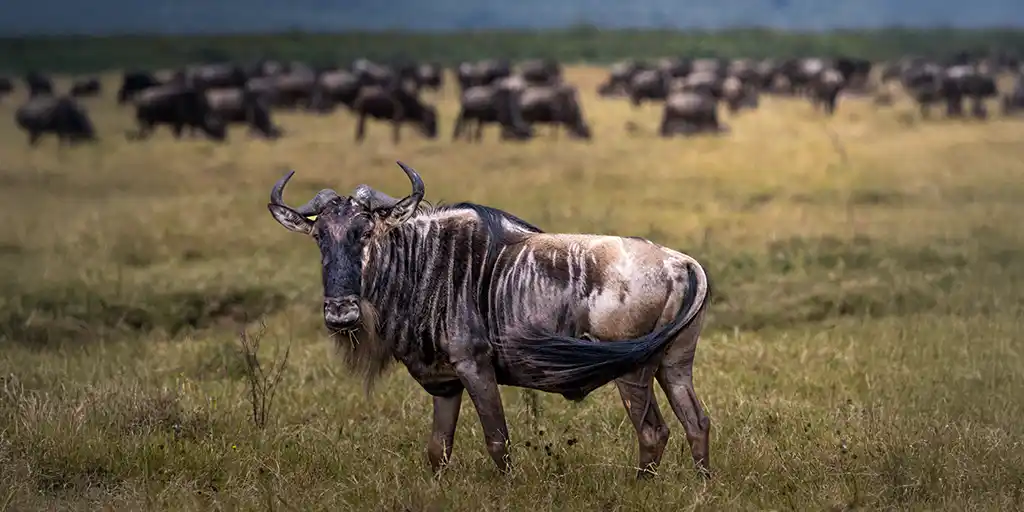
The Great Migration is the headline draw for most people visiting Serengeti National Park. The non-stop cycle of 1.5 million wildebeest and hundreds of thousands of zebras moving in a continuous loop between the Serengeti and Kenya’s Masai Mara, in search of rainfall and fresh grass.
River crossings, where massive animal herds plunge into the Mara River while crocodiles wait below, are among the most extraordinary spectacles in the natural world. They happen between July and October in the northern Serengeti and are worth planning an entire itinerary around.
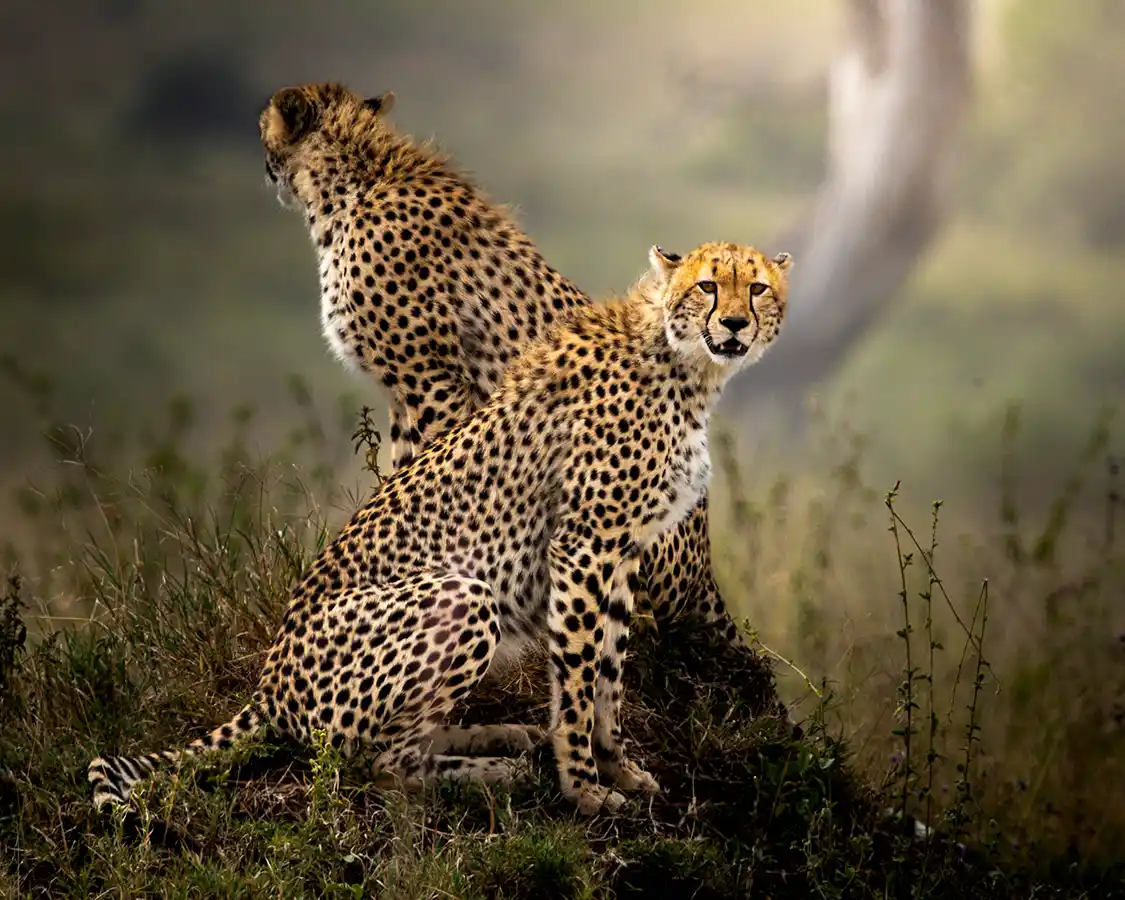
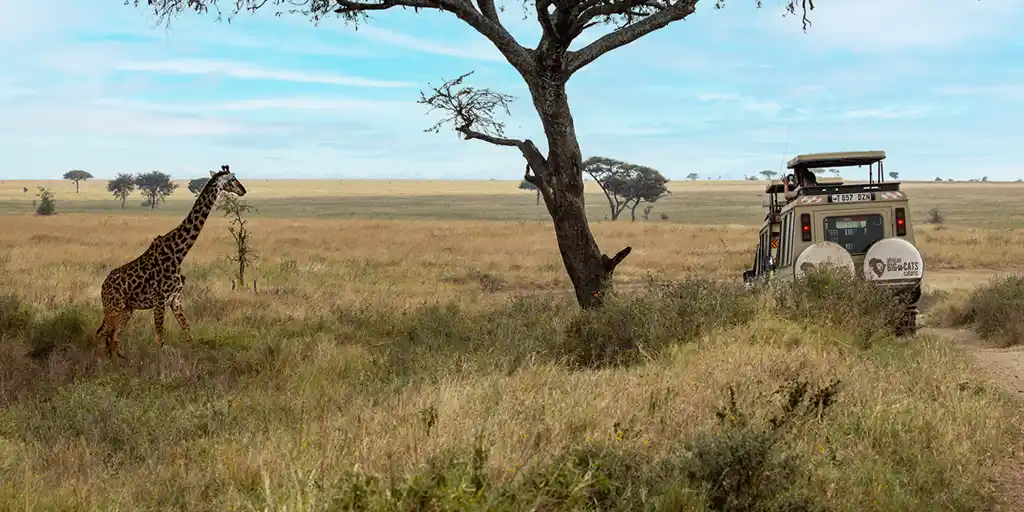
But the Serengeti delivers safari wonder year-round, even though the experience changes with the season. The central plains hold prides of lions, families of cheetahs, and leopards hidden in the grassy plains or draped across acacia branches. I remember watching in awe as a cheetah mother patiently watched her three cubs practicing their stalking technique on each other. It reminded me of my boys’ constant wrestling matches in our living room. While this went down, my boys, Cohen and Dylan, didn’t move or speak for twenty minutes. That is Tanzania doing its job.
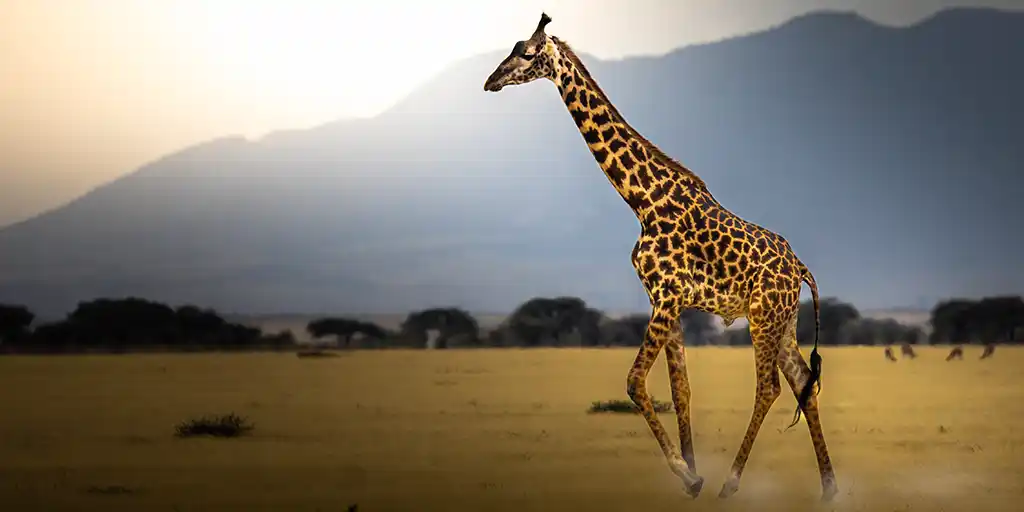
One of the highlights of a family trip to Serengeti National Park is the sunrise hot air balloon ride. My family has taken hot air balloon rides over Luxor in Egypt and the Fairy Chimneys of Cappadocia, Turkey. If the hot air balloon safari is in your budget, it stands out as one of the most incredible experiences on Earth. Rising before dawn to float silently over the plains at sunrise, watching the herds of elephants, zebras, giraffes, and wildebeest move below is one of the most memorable things you can do as a family. Dylan was still talking about it a month after we got home.
You can read my complete guide to family safaris in Serengeti National Park here.
Serengeti National Park Highlights for Families
- Great Migration river crossings (July to October)
- Big cat sightings year-round (lions, cheetah, leopard)
- Hot air balloon safaris
- Central Plains game drives
- Seronera area for year-round wildlife
- Calving season (January to February)
Ngorongoro Conservation Area
Best for: Crater safari, Maasai culture, Olduvai Gorge, and wildlife density, relatively close to Arusha
Circuit: Northern | Difficulty: Easy | Best time to visit: Year-round; June through October offers the best game viewing conditions
Standing at the edge of the Ngorongoro Crater, I was at a rare loss for words. Watching clouds spill over the rim like a waterfall into a lush, green valley was astounding. Cohen looked at me and asked, “So, this was one big mountain, and it just blew its top?” In a nutshell, that’s what the crater is. A volcano that experienced an unfathomably huge eruption that led to the birth of one of the greatest natural wonderlands on the planet.
Ngorongoro Crater is a collapsed volcano. The last eruption occurred roughly two million years ago. What was once one of Africa’s highest peaks caved in on itself and created a caldera 11 miles (19 kilometers) wide and 1,969 feet (600 meters) deep. Today, the crater has evolved into a self-contained ecosystem that’s home to around 25,000 animals, including black rhinos, lions, leopards, elephants, and the largest concentration of predators anywhere on earth. The walls of the crater are visible from anywhere on the crater floor, which gives game drives a sense of epic drama you don’t get in the open plains of the Serengeti.
For families traveling in Tanzania, Ngorongoro is a big draw. The density and compact accessibility of the wildlife mean that even a half-day on the crater floor will yield animal sightings that would be exceptional elsewhere. The rhinos, critically endangered and rarely seen on safari, are a genuine possibility here. And the landscape itself, the steep crater walls ringed in forest giving way to open grassland and the soda lake shimmering at the center, is one of the most striking natural landscapes in Africa.
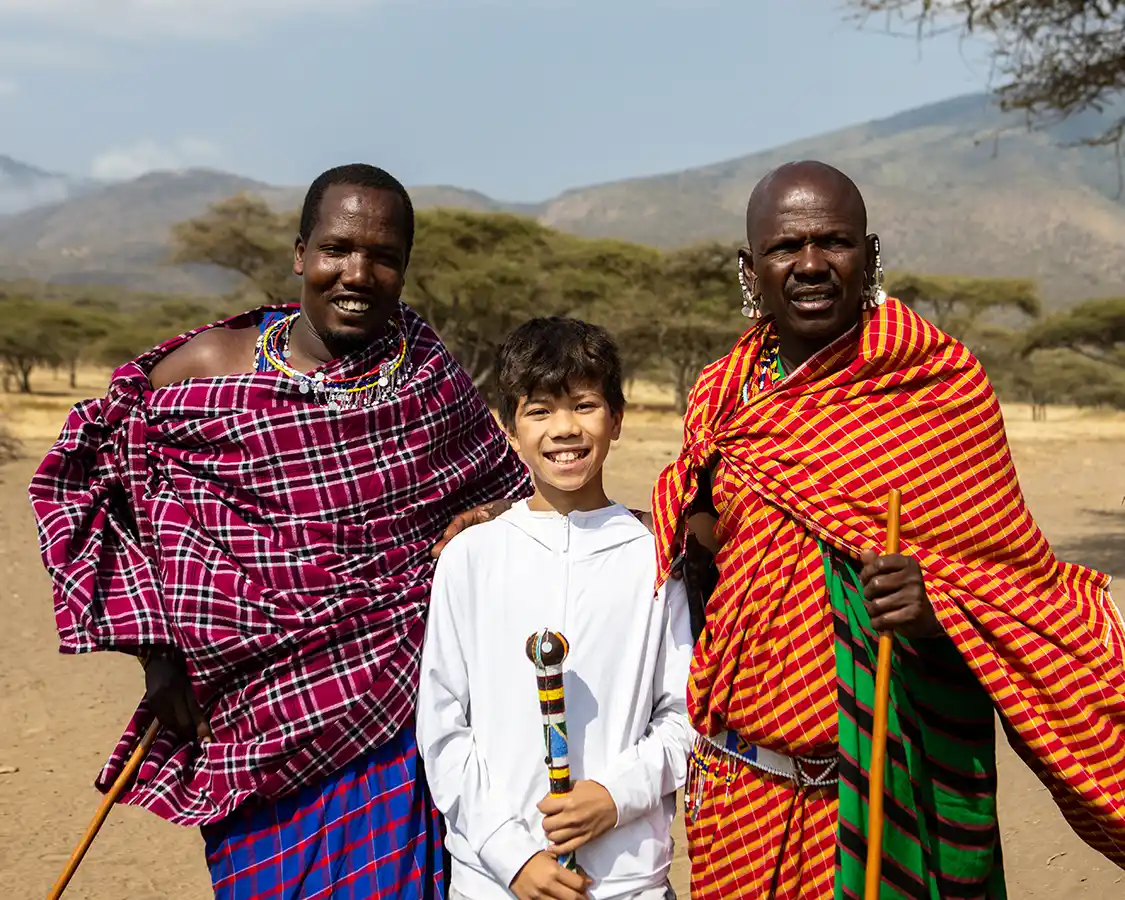
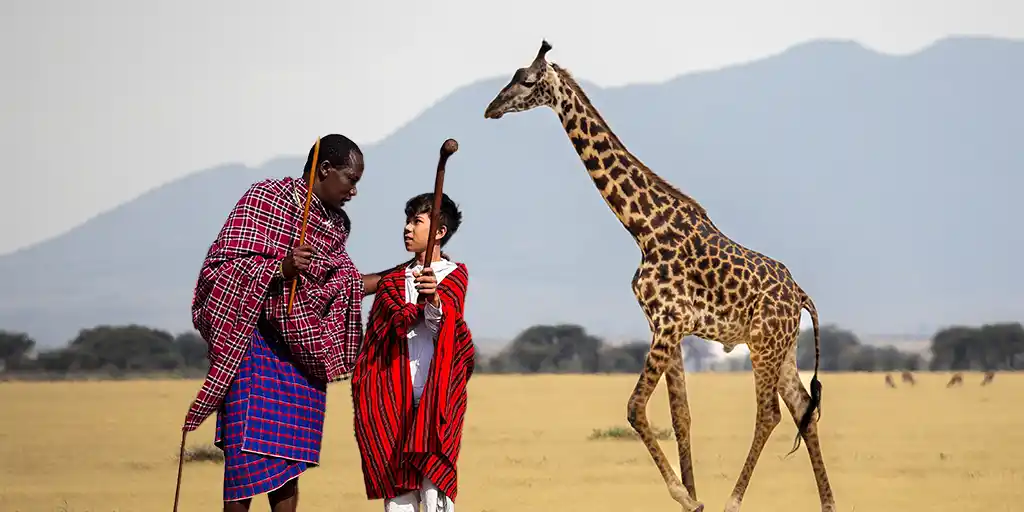
Above the crater rim, the broader Ngorongoro Conservation Area is home to significant Maasai communities who have coexisted with the wildlife for generations. A visit to a Maasai village is not a zoo exhibit; it is a genuine cultural exchange. Dylan sat with two Maasai elders and held a talking stick while they explained their traditions and history. He was quiet for the rest of the afternoon, which for him is extraordinary.
Olduvai Gorge, also within the conservation area, is where Louis and Mary Leakey discovered some of the oldest human remains ever found. Walking that ground with children, explaining that this is quite literally where the human species began, is the kind of experience that stays with a family for a long time.
One advantage that Ngorongoro has over many of the top places to visit in Tanzania is accessibility. The park is about two and a half hours from Arusha, making it accessible as a day tour for those who are using the city as a home base while traveling in Tanzania.
You can read my complete guide to planning a family safari in Ngorongoro Crater Conservation Area here.
Ngorongoro Conservation Area Highlights for Families
- Crater floor game drives (black rhino, lions, flamingos)
- Maasai villages
- Olduvai Gorge
- Crater rim viewpoints at sunrise
Tarangire National Park
Best for: Elephants, ancient baobab trees, and a quieter, greener alternative to the Serengeti
Circuit: Northern | Difficulty: Easy | Best time to visit: June through October, when the elephant herds congregate around the Tarangire River
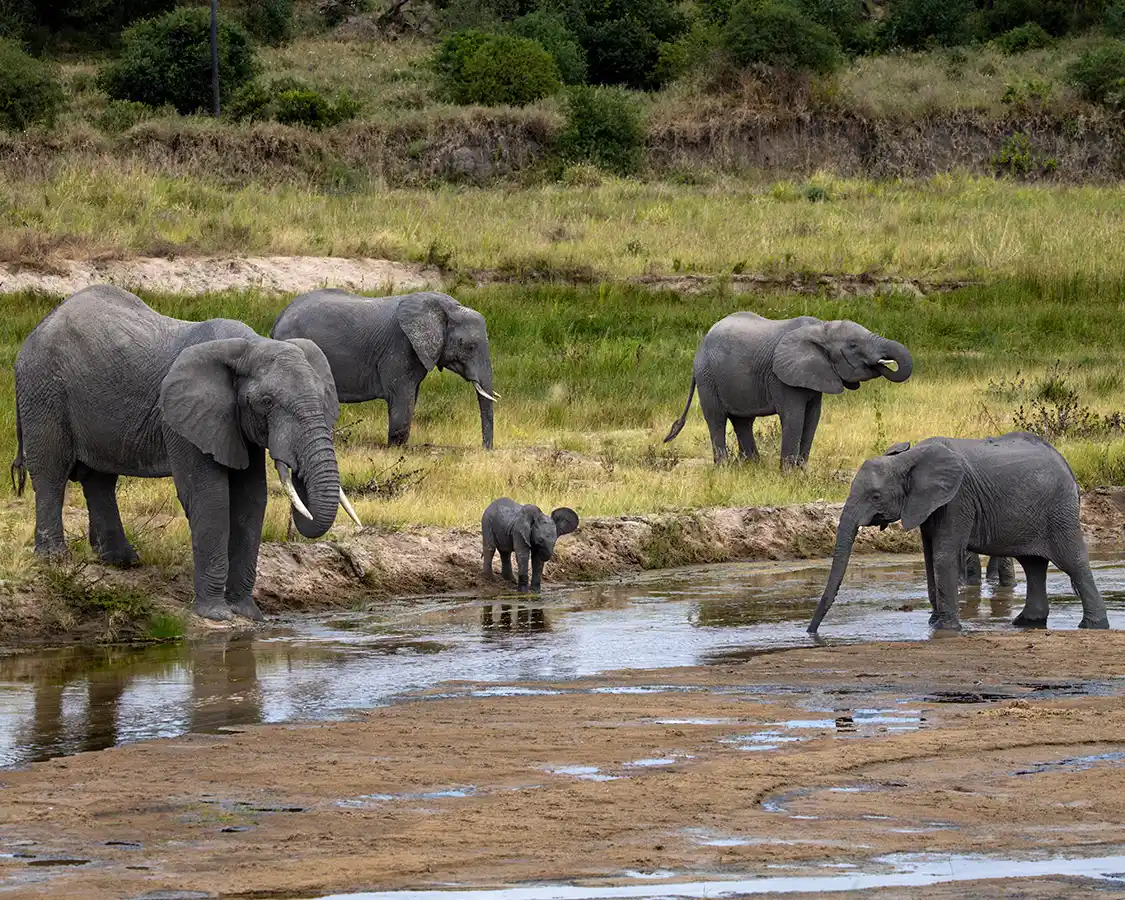
Our Northern Circuit safari guide, Omary, said that “if you want to understand elephants, you must come to Tarangire.”
Tarangire is the Tanzanian destination that most surprises people. It sits in the shadow of the great Serengeti and often gets treated as a warm-up safari. As someone who has been to Tarangire and fell deeply in love with the park, I find that genuinely unfair.
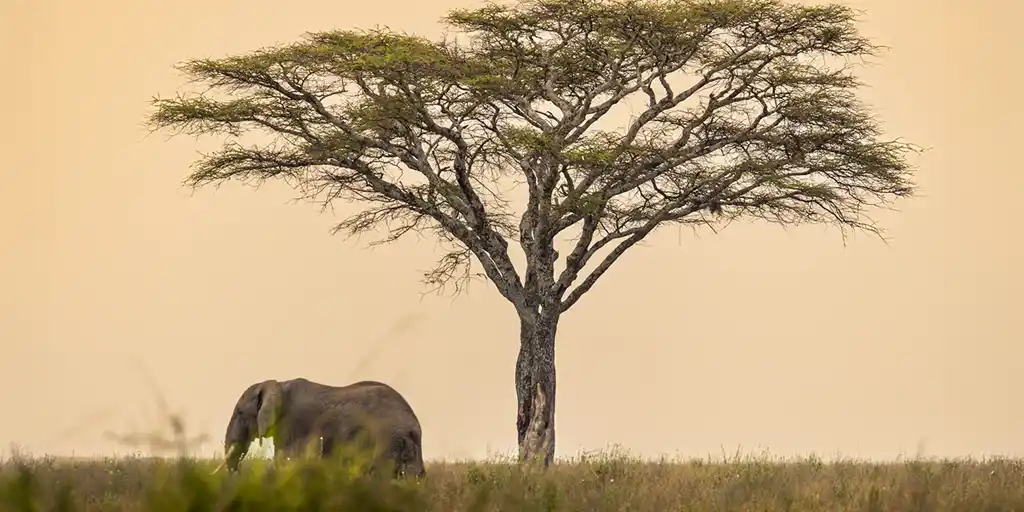
During the dry season, the Tarangire River is one of the few reliable water sources for miles in every direction. The result is an absolutely staggering concentration of elephants. We counted over 200 in a single afternoon on our first game drive. The park was our introduction to wildlife in Tanzania, and the experience has lived in my memory ever since.
The landscape of Tarangire is distinct from the Serengeti’s open plains. Ancient baobab trees, some of them thousands of years old, rise from the savannah like monuments. Termite mounds tower above the grass. Families with any interest in photography, amateur or otherwise, will find Tarangire endlessly generous.
The elephant herds are the main draw, but the park also holds large numbers of zebras, wildebeest, giraffes, and lions, plus species rarely seen elsewhere, including the fringe-eared oryx and the gerenuk, and the dik-dik, the world’s smallest species of antelope. The variety of birdlife in Tarangire is exceptional, with over 550 species recorded. Much of that variety is due to the fact that Tarangire is naturally forested rather than empty plains.
Tarangire tends to be less crowded than the Serengeti and Ngorongoro, which means more space, fewer clusters of vehicles around sightings, and a more intimate feel on game drives.
You can read my complete guide to planning a family safari in Tarangire National Park here.
Tarangire National Park Highlights for Families
- Massive elephant herds (dry season from June through October)
- Ancient baobab forests
- Excellent birdwatching
- Fringe-eared oryx
- Quieter game drives
Lake Manyara National Park
Best for: Tree-climbing lions, flamingos, dense groundwater forest, and an easy half-day safari
Circuit: Northern | Difficulty: Easy | Best time to visit: November through June for flamingo flocks; July through October for overall game viewing
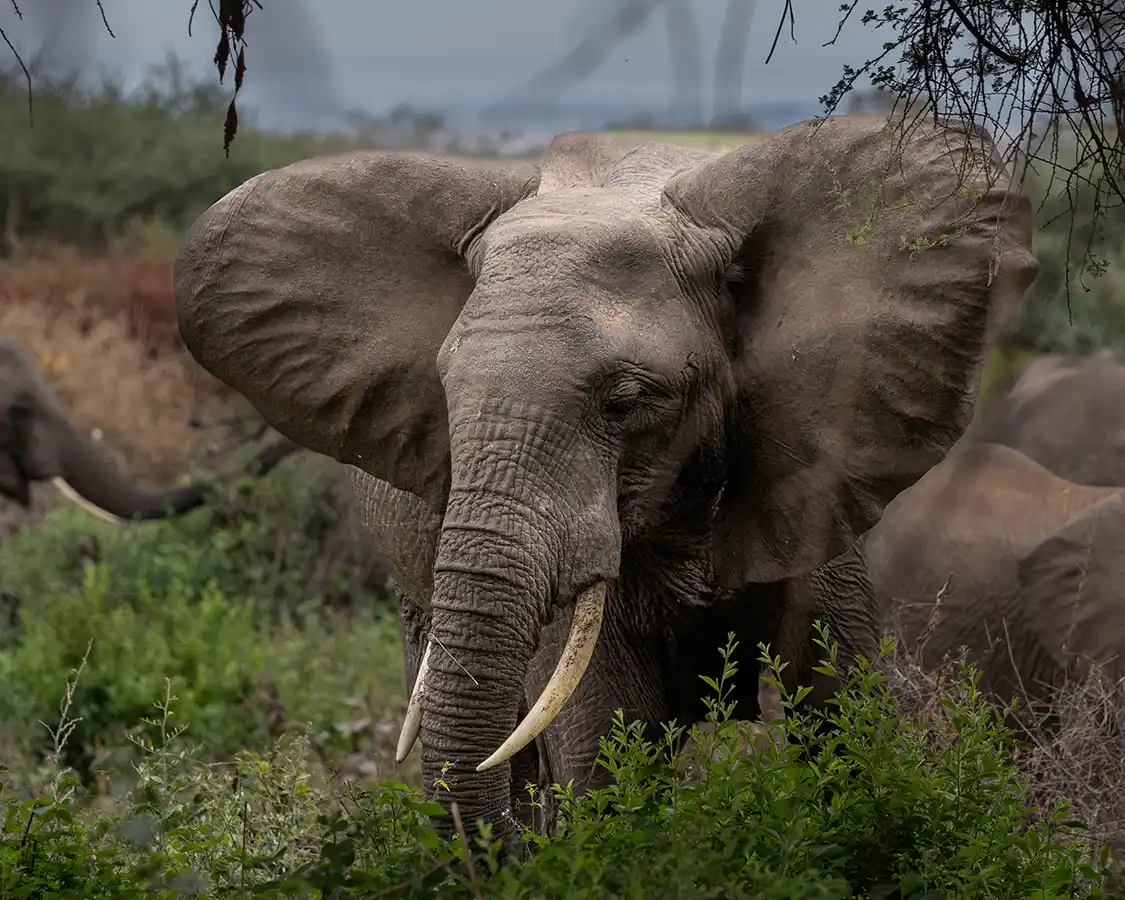
Lake Manyara is compact, which some people mistake for small. It is not small. Within its borders are groundwater forest, acacia woodland, open floodplains, and the alkaline Lake Manyara itself, stretches of which turn pink when the flamingos arrive in significant numbers. All of these ecosystems are crammed into a relatively tight space that makes it one of the most diverse parks along Tanzania’s Northern Circuit.
The tree-climbing lions are the most famous attraction. But as Omary mentioned to us, this is not a behavior unique to this population. “All lions can climb trees,” he said. “Lake Manyara simply has more trees for them to climb.”
We didn’t see any lions in trees while in Lake Manyara. In fact, we didn’t see any lions at all. But the unique jungle-like atmosphere of the park stood out dramatically from every other place that we visited while traveling in Tanzania.
The lake, for which the park gets its name, draws hippos, pelicans, herons, and, in season, enormous flocks of lesser and greater flamingos that feast on tiny shrimp that turn the water pink. Driving through the forest, we found troops of baboons and blue monkeys moving through the canopy while elephants pushed through the undergrowth below.
Lake Manyara acts as the differentiating factor of this park. This is a lake with no outlets, so its life depends entirely on rainfall. During wet years, the waters rise and swallow trees, roads, and game trails. During drier years, the water levels drop, opening up beaches, marshes, and forests of dead trees. No two visits to the park are ever the same, making Lake Manyara one of the most unique places to see in Tanzania.
You can read my complete guide to planning a family safari in Lake Manyara National Park here.
Lake Manyara National Park Highlights for Families
- Tree-climbing lions
- Flamingos
- Groundwater forest
- Hippo pools
- Excellent birdwatching
- Ever-changing landscapes
Arusha: Safari Launch Point and Cultural Hub
Best for: Acclimatization, local culture, coffee farming, and Mount Meru
Circuit: Northern | Difficulty: Easy to Moderate | Best time to visit: Year-round; Arusha is a practical base regardless of season
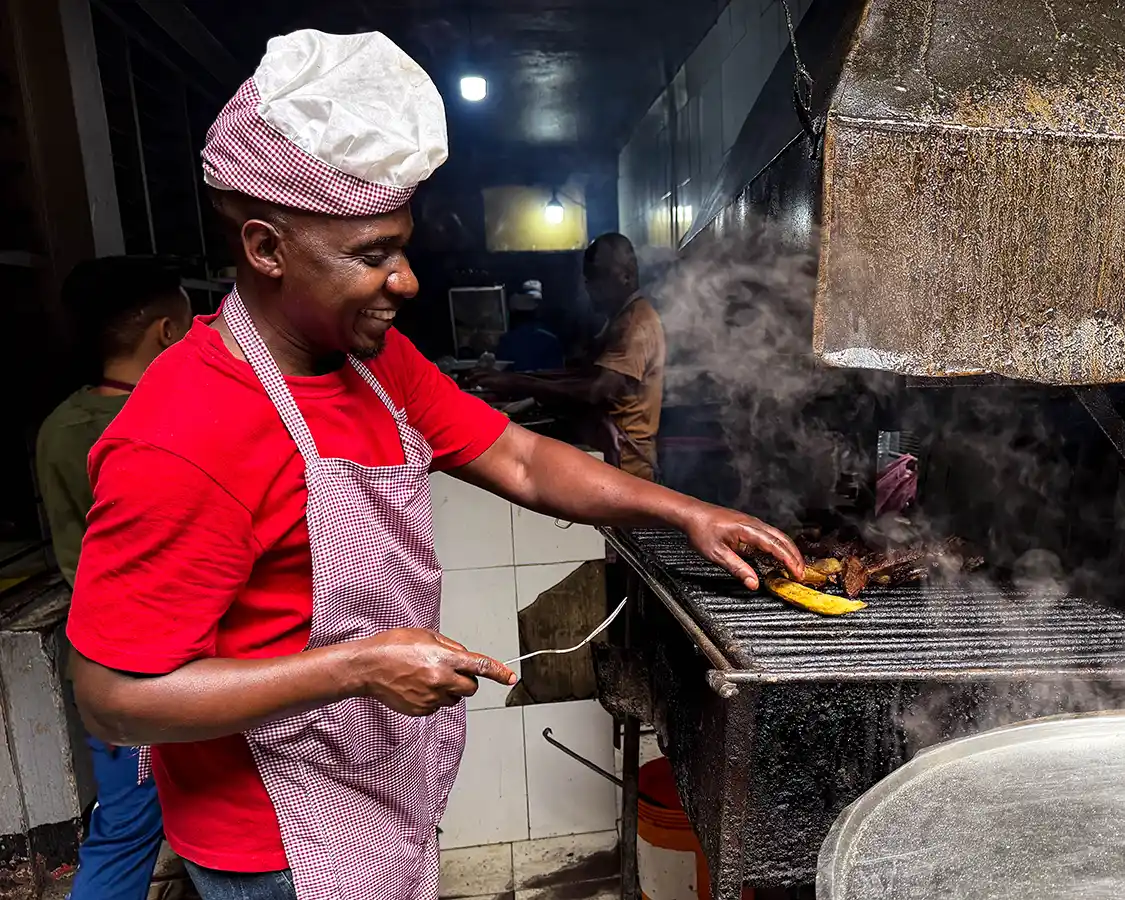
Most families arrive in Arusha, spend the night, and then leave as quickly as possible, treating the city as a logistics stop before heading into the parks. I get it, everyone visiting Tanzania wants to get to the animals as quickly as possible. And when you’re planning your family’s Tanzania itinerary, it’s hard to set aside precious time for an urban experience. But not visiting Arusha is a missed opportunity.
Arusha sits at the base of Mount Meru, Tanzania’s second-highest peak, surrounded by coffee and banana plantations. It has a lively town center that offers a unique introduction to everyday Tanzanian life just outside the safari bubble.
We started our Northern Circuit itinerary with a morning on a working coffee farm outside Arusha Town. Next to safaris, coffee drives the economy of local life in Arusha. Coffee tours, where farmers explain each step, provide a tangible connection to the local culture. The markets, the museums, and the Maasai market are all part of the local Arusha experience. And it offers a fascinating bit of context on local Tanzanian life.
Arusha National Park, just 25 kilometers from town, is consistently overlooked and quite good. Mount Meru dominates the landscape, and the park offers walking safaris with armed rangers that get families onto the ground in a way that vehicle-based game drives don’t. Giraffes, zebras, warthogs, and colobus monkeys are common; buffaloes and hippos are present too.
For families whose children are old enough for a genuine Kilimanjaro trek, Mount Meru’s summit is a three- to four-day ascent that serves as excellent acclimatization for Kilimanjaro.
You can read my complete guide on things to do in Arusha here.
Arusha City Highlights for Families
- Coffee farm tours
- Arusha National Park (walking safaris, giraffes, Mount Meru)
- Cultural Heritage Center
- Natural History Museum
- Local markets like Masaai Market, Flower Market, and Arusha Center Market
Zanzibar Archipelago
Best for: Beaches, Stone Town’s history, spice tours, snorkeling, and a post-safari decompression
Circuit: Coast | Difficulty: Easy | Best time to visit: June through October and December through February (avoid March through May rainy season)
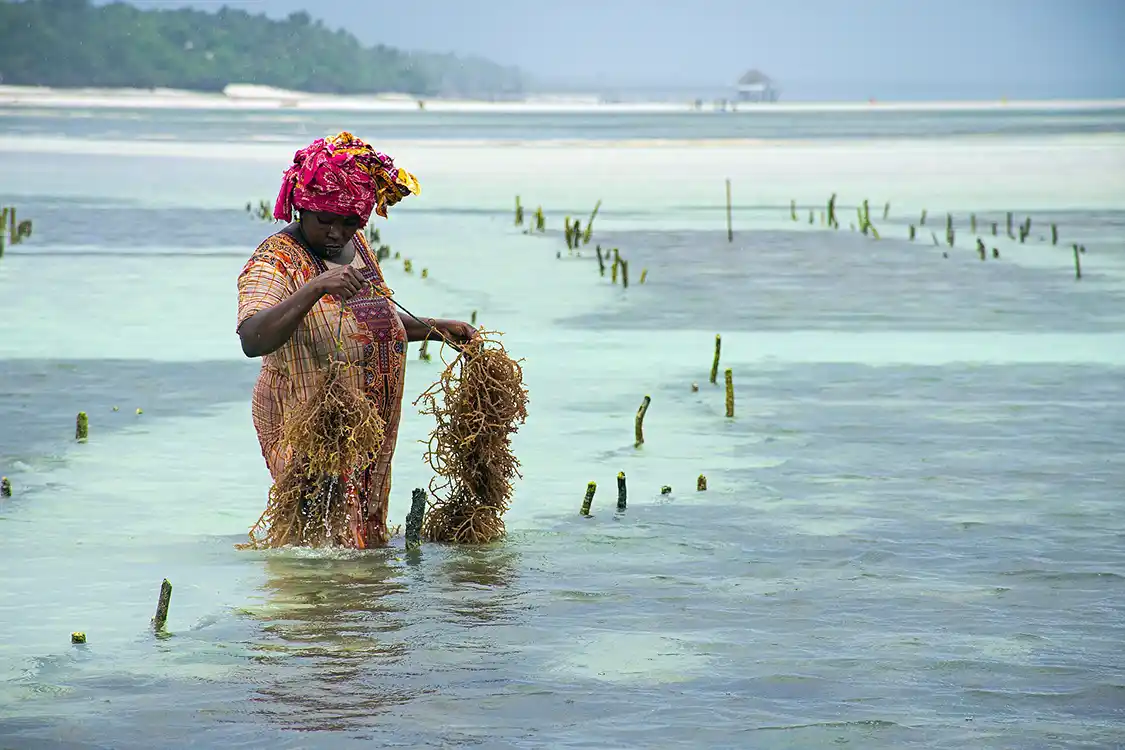
Zanzibar is where Tanzania pivots from savannah to ocean, from dusty plains to spice-scented air, from predators and prey to dhows drifting across turquoise water at sunset. The coastal life in Zanzibar feels like a completely different country from the vast interior, and it works beautifully as the second half of a Tanzania travel itinerary for families who want to pair epic safaris with a relaxing beach vacation.
Stone Town, the archipelago’s historic heart and a UNESCO World Heritage Site, is a maze of narrow streets, ornate carved doors, Arab and Indian merchant houses, and mosques that tell six centuries of spice-trade history. Walking through it with children is a genuine living history lesson.
The slave trade memorial at the former slave market is a sobering, important stop for families who are willing to engage the weight of what happened there. Similar to anthropogenic events like the Death Railway in Thailand, the gas chambers of Auschwitz, Poland, and the Chornobyl disaster in Ukraine, the experience is not comfortable. It shouldn’t be.
The beaches on the north and northeast coasts of Zanzibar, particularly Nungwi and Kendwa, are exceptional: white sand, warm Indian Ocean water, and good snorkeling on the fringing reef. The spice tours, where guides lead families through working plantations identifying cloves, vanilla, cinnamon, and nutmeg by sight and smell, are an underrated experience that kids engage with more than you’d expect. Zanzibar also has a strong dolphin-watching culture in Kizimkazi on the south coast, where spinner and bottlenose dolphins are regularly spotted.
Zanzibar Highlights for Families
- Stone Town (UNESCO, slave trade memorial, spice market)
- Nungwi and Kendwa beaches
- Spice farm tours
- Snorkeling and diving
Mount Kilimanjaro
Best for: Teens and fit families seeking Africa’s ultimate summit challenge
Circuit: Northern | Difficulty: Difficult | Best time to visit: January through March and June through October (avoid April, May, and November)
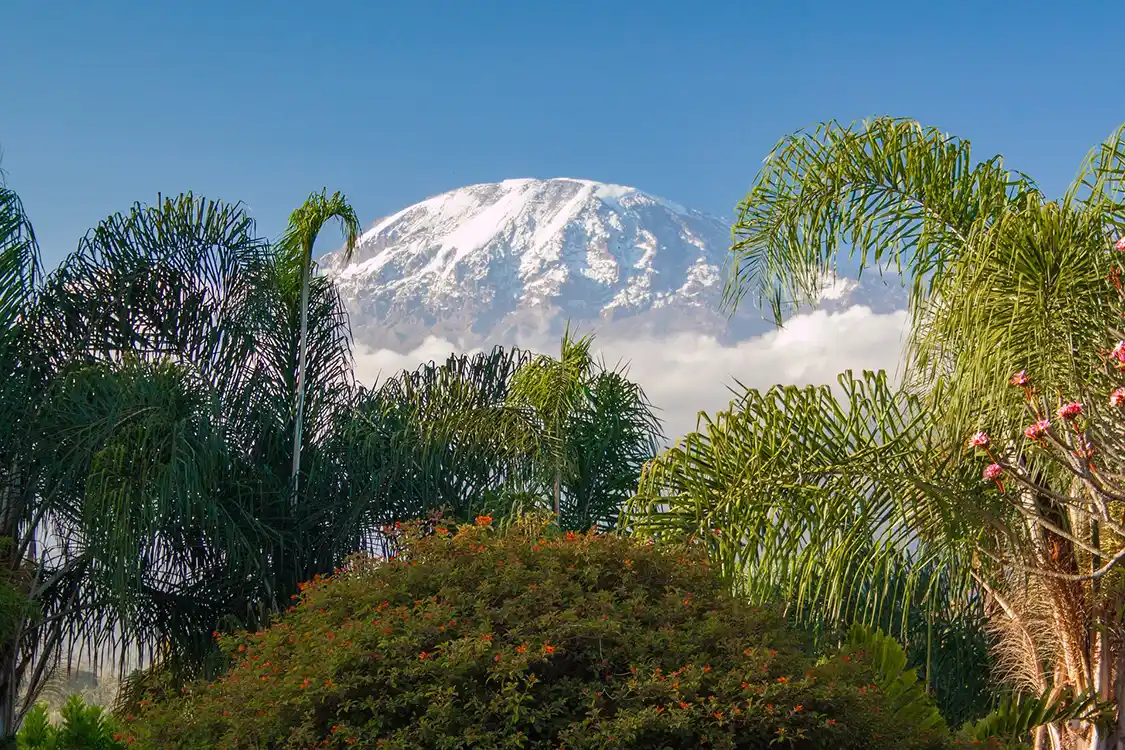
At 19,341 feet (5,895 meters), Mount Kilimanjaro is the highest peak on the continent of Africa. Unlike many mountains, Kilimanjaro isn’t a technically complicated climb. To ascend, you don’t need ropes, specialized gear, nor do you need to contend with vertical ice surfaces. But that doesn’t mean it’s an easy climb.
Climbing Mount Kilimanjaro is still a six-to-eight-day trek that takes climbers into zones where altitude sickness is a concern and fitness and fortitude are a necessity. The climb requires patience and a willingness to be uncomfortable and exhausted for several days in a row.
I had a goal of climbing Kilimanjaro with Dylan back in 2020. One that would have led to him being the youngest climber to conquer the summit. Unfortunately, the pandemic scuttled our plans. Now I’m aiming to return to climb the peak with both of the boys in the next couple of years. Most reputable Kilimanjaro trekking operators set a minimum age of around 10 for summit attempts, though the practical reality is that the high-altitude conditions make it more suitable for teenagers and physically fit adults.
The Lemosho and Machame routes are the recommended options for families, offering the best acclimatization routes and the most varied and scenic terrain. Both take seven to eight days for a proper ascent.
Even without a summit attempt, the lower slopes of Kilimanjaro offer extraordinary hiking through rainforest and moorland zones that are accessible to younger children. The mountain’s profile, visible from much of northern Tanzania, is also a constant companion on safari that makes everything feel appropriately epic.
You can read about why Kilimanjaro is one of the top family hiking destinations in the world here.
Mount Kilimanjaro Highlights for Families
- Summit attempt via the Lemosho or Machame route
- Rainforest and moorland day hikes
- Views across the plains from high-altitude
- Sunrise from Uhuru Peak
Ruaha National Park
Best for: Families ready for a remote, unfiltered wilderness experience off the beaten circuit
Circuit: Southern | Difficulty: Easy (access is the challenge) | Best time to visit: June through October (dry season; the river attracts wildlife, roads are passable)
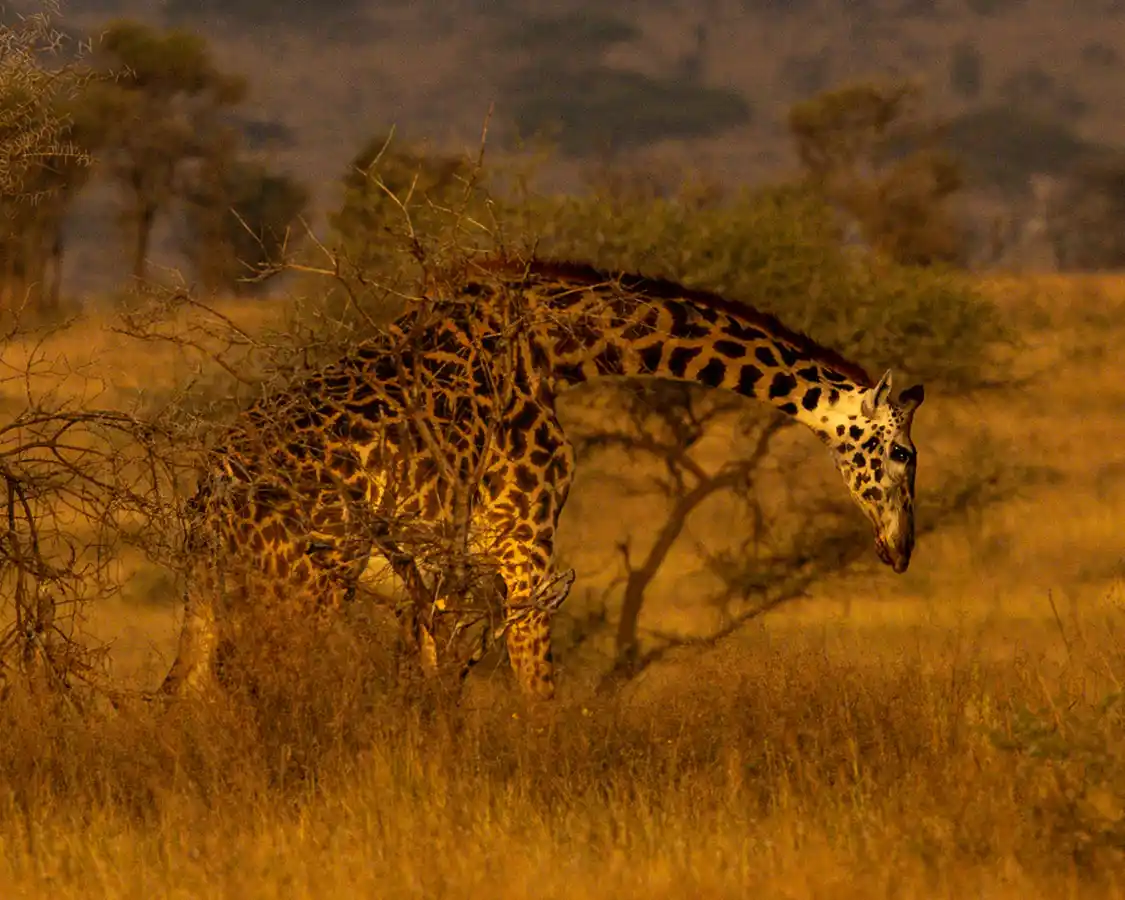
Ruaha is Tanzania’s largest national park and one of the least visited, even with the park’s size and wildlife quality. Getting to Ruaha requires a flight into Msembe airstrip, which adds cost and removes any semblance of convenience. For those willing to make the effort to get to this remote region of Tanzania, Ruaha delivers a wildlife experience that feels genuinely untouched in a way that the busy Northern Circuit increasingly cannot.
The park is in Tanzania’s central highlands, dominated by the Great Ruaha River and its tributaries. The landscape is rugged and semi-arid, with baobab trees and combretum thickets replacing the Serengeti’s open plains.
Elephant populations here are among the largest in East Africa, with some estimates putting the park’s herd at over 12,000. Lion prides are large and active. Ruaha also holds wild dogs, one of Africa’s most endangered predators, and an animal rarely seen on the Northern Circuit. Kudu, sable antelope, and roan antelope are common too, species that simply don’t appear on the more trodden routes.
The lack of crowds is the defining feature here. Game drives here frequently feel like private expeditions. It is wilder, rawer, and less polished than the Northern Circuit, which is precisely its appeal for families who have done the headline parks and want to understand what Tanzania looks like without the infrastructure.
Ruaha Highlights for Families
- Elephant herds
- Wild dog sightings
- Large lion prides
- Lesser kudu and sable antelope
- Uncrowded game drives
Nyerere National Park (formerly Selous Game Reserve)
Best for: Boat safaris, walking safaris, and a completely different kind of wildlife experience
Circuit: Southern | Difficulty: Easy | Best time to visit: June through October; avoid March through May when roads become impassable
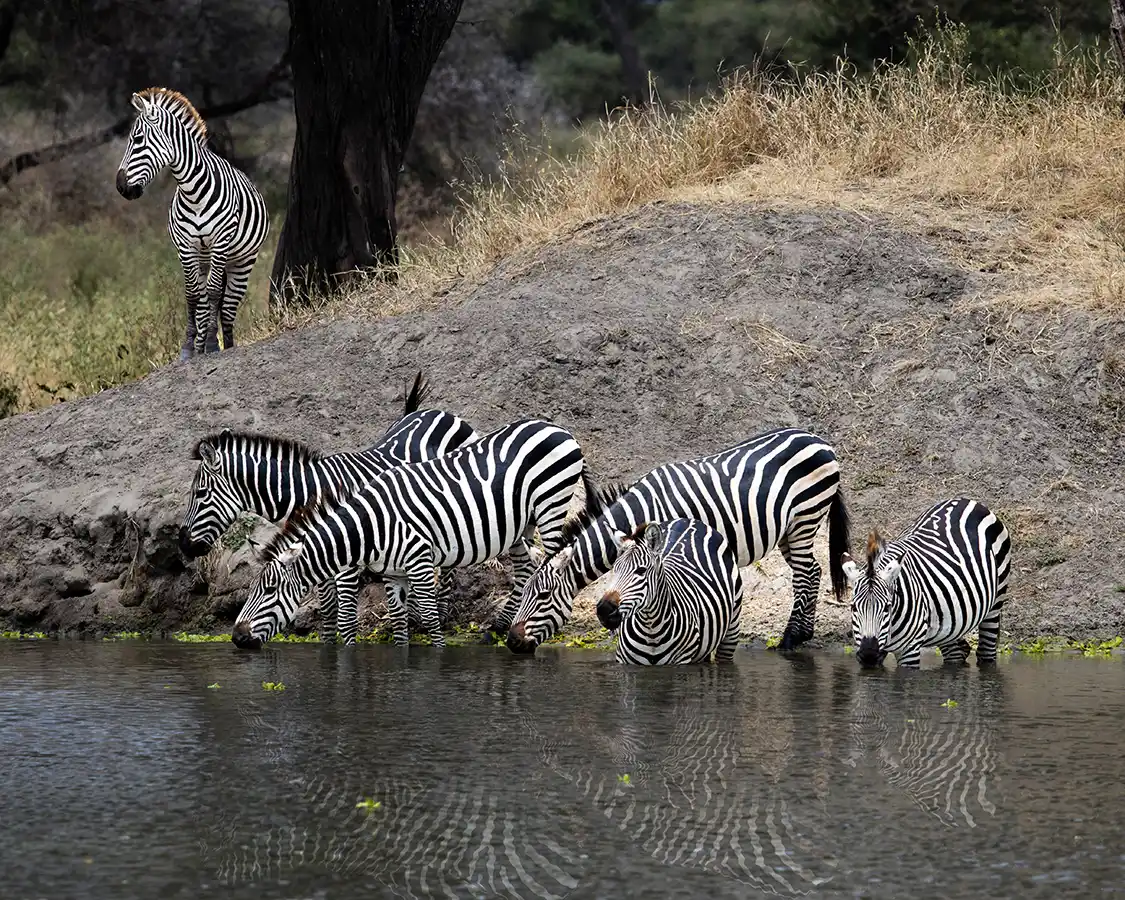
Selous Game Reserve was named a Tanzanian national park and renamed Nyerere in 2019 after Tanzania’s founding president, Julius Nyerere. It is one of Africa’s largest protected areas and is almost entirely ignored by the mass safari market. That is either a problem or an opportunity, depending on your family’s thirst for adventure.
The Rufiji River system transits through the park, and it will change what your view of a safari looks like. Boat safaris on the Rufiji, drifting past hippo pools, crocodiles sunning on sandbars, and elephants drinking at the water’s edge, offer a unique perspective that no land-based game drive can mimic.
Walking safaris are another option here, putting families on the ground with an armed ranger and a completely different relationship to the bush. When you’re walking rather than riding, the scale of everything seems to change. Putting your foot into the track of a hippo on a muddy track offers a very different perspective than seeing one from the safety of a Land Cruiser.
Lion and wild dog populations in Nyerere National Park are strong, and the park’s sheer size means animal behavior tends to be less influenced by human presence than in the busier northern parks. Fly-in camps along the Rufiji offer a taste of exclusivity and remoteness that makes Nyerere feel like a proper expedition rather than a safari vacation.
Nyerere Highlights for Families
- Rufiji River boat safaris
- Walking safaris
- Hippo and crocodile viewing
- Wild dogs
- Fly-in bush camps
Mahale Mountains National Park
Best for: Chimpanzee trekking and one of Africa’s most extraordinary wilderness experiences
Circuit: Western | Difficulty: Moderate to Strenuous | Best time to visit: June through October; avoid the rainy season when trekking becomes extremely difficult
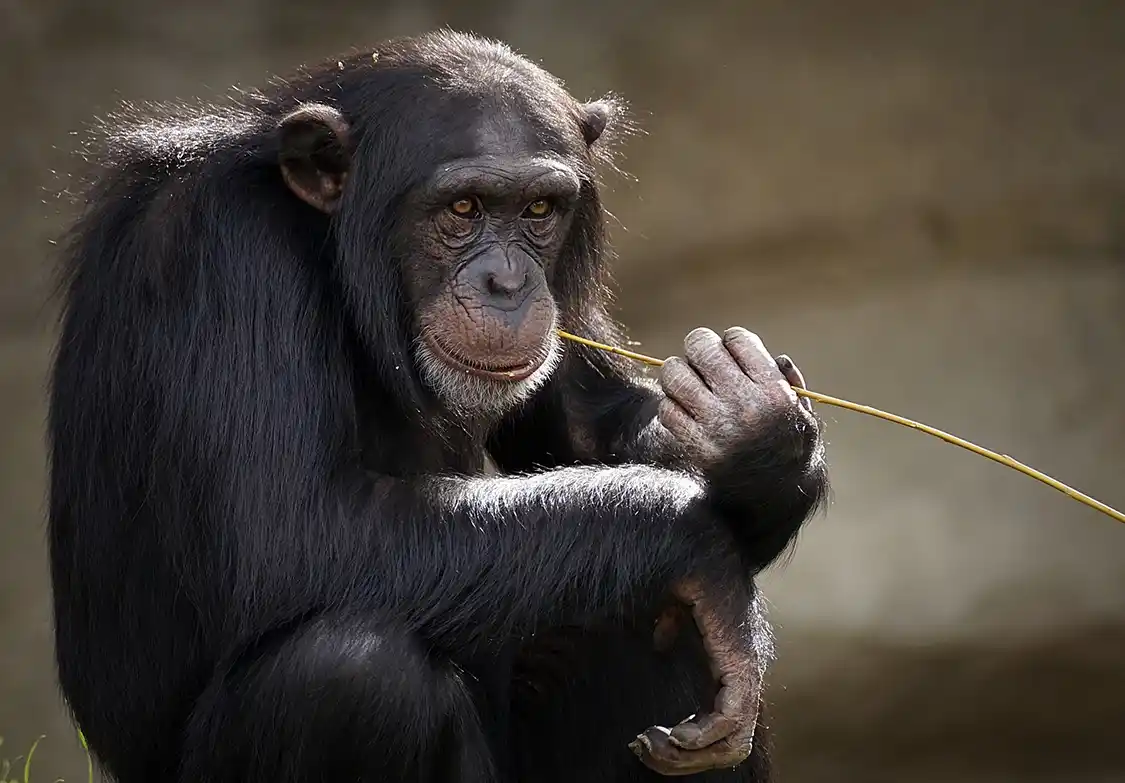
Mahale Mountains National Park is beyond the end of the road in Tanzania. Literally. There is no road to the park. You can only reach it by light aircraft, then by boat across Lake Tanganyika, the world’s second-deepest lake, with the Congolese mountains visible on the far side. I love it because it’s about as far from the average family holiday itinerary as it is possible to get while still staying in Tanzania, which is exactly why it belongs on this list.
The park protects one of the last remaining wild chimpanzee populations in Tanzania. Trekking through dense mountain forest to find and sit with a chimpanzee community that has been habituated over decades to human presence is a wildlife experience in a completely different category from the vehicle-based safaris of the north.
You are on foot, moving through the chimps’ own environment on their terms, watching social behavior, family dynamics, and individual personalities unfold in real time. The intelligence in those faces is confronting in a way that stays with you. Because of this, visiting Mahale Mountains National Park is best reserved for those traveling with teenagers or young adults. The treks can be challenging, wet, and maintaining self-control in actions and voice volume is crucial to the animal experience.
Lake Tanganyika itself offers swimming and snorkeling over cichlid-rich waters. There is also kayaking in water so clear it looks like glass. The bush camp options here are small and genuinely luxurious, making Mahale an exceptional option for families who want to combine serious wildlife experience with something approaching a beach holiday, just a very long way from any beach most people have heard of.
Mahale Mountains Highlights for Families
- Chimpanzee trekking
- Lake Tanganyika (swimming, snorkeling, kayaking)
- Remote forest hiking
- Extraordinary isolation
Pemba Island
Best for: Serious snorkeling and SCUBA diving, endemic wildlife, and a genuine off-the-radar Indian Ocean experience
Circuit: Coastal | Difficulty: Easy | Best time to visit: June through October; September is particularly good for wildlife in Ngezi and diving conditions in the channel
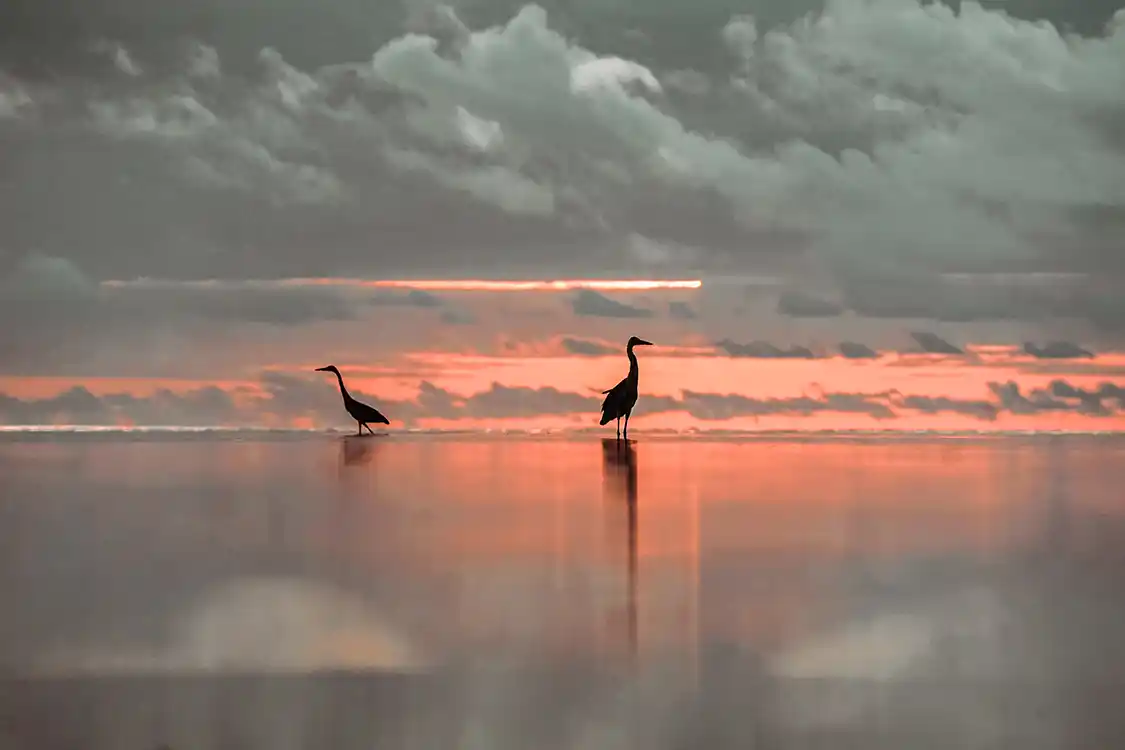
Most people who visit Tanzania’s islands go to Zanzibar. A smaller number make it to Mafia Island. Almost nobody makes it to Pemba, which sits about 60 kilometers from the mainland, north of Zanzibar, and operates in near-complete obscurity. For families who want to say they went to one of the most unique places to visit in Tanzania, Pemba is that place.
The Pemba Channel Conservation Area is the island’s draw. The reefs here are among the most pristine in the western Indian Ocean, with over 350 species of fish, 40 species of coral, wall dives that drop hundreds of meters into the channel, and visibility that makes everything look like it’s being lit from below.
Unlike the more trafficked dive sites around Zanzibar, Pemba’s reefs haven’t been damaged by the pressures of heavy tourism. The snorkeling, even without any experience, is exceptional: warm, clear water, gentle currents, and a reef community that includes sea turtles, reef sharks, barracuda, dolphins, and more varieties of reef fish than most families will have names for.
Misali Island, a short boat ride offshore, is a marine protected area with sandbanks that appear and disappear with the tide and beaches that look genuinely unreal. It is the kind of place children remember not because something dramatic happened, but because it was simply the most beautiful water they had ever been in.
On land, the Ngezi Forest Reserve in the north of the island protects a dense coastal forest home to several species found nowhere else on earth. The Pemba flying fox, one of the world’s largest bat species, takes to the air at dusk in numbers that have to be seen to be believed. The Pemba scops owl, Pemba blue duiker, and Zanzibar red colobus also live here. Pemba is one of the world’s largest clove producers, and the spice farm experience has an authenticity that the more polished Zanzibar versions lack.
Getting there requires a short flight from Dar es Salaam, Zanzibar, or Tanga. Accommodation is limited and intentionally small-scale, which is both the point and the appeal. This is not a destination for families who need options. It is a destination for families who have decided that fewer options, in the right place, is exactly what they are looking for.
Pemba Island Highlights for Families
- Pemba Channel diving and snorkeling
- Misali Island beaches and marine reserve
- Ngezi Forest Reserve (Pemba flying fox, endemic species)
- Clove farm tours
- Tidal sandbanks
Visiting Tanzania With Kids
Tanzania is a well-organized destination for families who do their research. A few things worth knowing before you go:
Getting to Tanzania
Kilimanjaro International Airport (JRO) is the main entry point for the Northern Circuit. Dar es Salaam (DAR) serves the south and coast. Most international routes connect through Nairobi, Addis Ababa, Amsterdam, or Doha.
Getting Around in Tanzania
Internal charter flights between parks and destinations are the standard approach for itineraries covering multiple areas. Road transfers between Northern Circuit parks are an option and allow you to take in the landscape, but the journey times are significant on corrugated gravel roads.
Visas
Most nationalities require a visa to enter Tanzania. These can be obtained in advance online through the Tanzania e-visa portal, which is strongly recommended over attempting to arrange them on arrival.
Travel Resources for Families Visiting Tanzania
For packing, planning, and the details that determine whether your kids are comfortable or miserable in a vehicle for six hours, these guides go deeper.
Are You Ready to Visit These Incredible Places in Tanzania?
Tanzania is not a country that eases you in and lets you observe from a comfortable distance. It puts you inside the experience and expects you to show up for it. The lion calls at two in the morning are real. The dust on your face by day two is real. The moment when your kid whispers Did you see that?’ about something you almost missed is real.
These are the places in Tanzania that deliver that. Not all of them will be right for every family on every trip. The Northern Circuit is the logical starting point for most, and it is extraordinary enough to justify an entire itinerary on its own. But Zanzibar, Ruaha, Nyerere, and Mahale are out there for the families who want to go further.
This page is updated as new regional guides and planning resources are published. Looking beyond Tanzania? Explore my International Family Travel Guide.