
From the fairy-tale palaces of Sintra to the sea caves of the Algarve and the medieval streets of Évora, find family travel guides, regional overviews, and practical planning resources for every corner of Portugal.
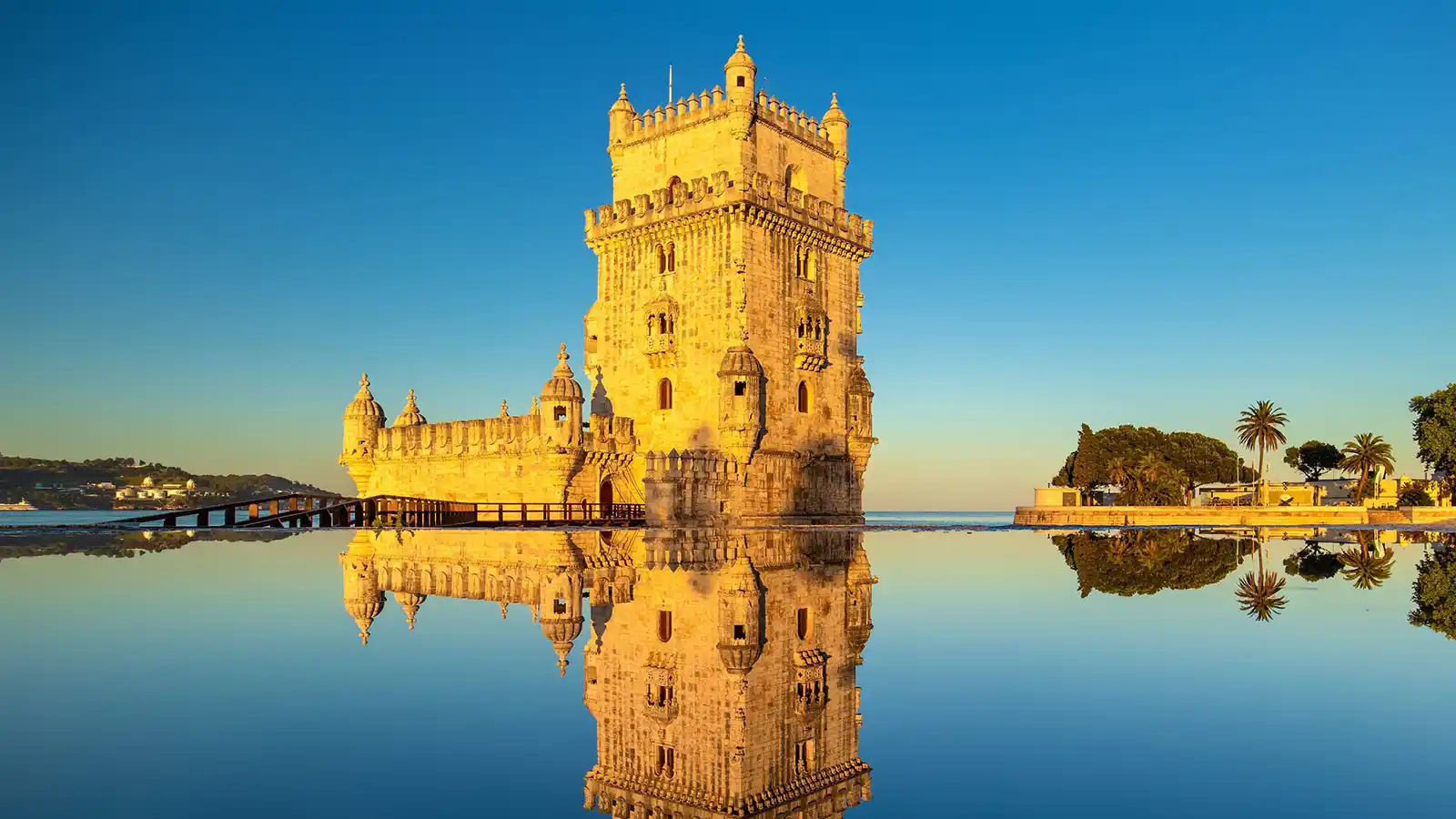
The first time I flew my family to Portugal, my eldest son, Cohen, was just five months old. Christina and I were new to the concept of family travel, and the truth is, we had no idea what we were doing. Christina and I had spent years talking about Portugal the way people talk about things they are never actually going to book. Castles, cobblestones, beaches that looked like they had come straight out of a fantasy novel. Then our son arrived, and instead of shelving the whole idea like sensible adults, we booked two weeks in the country, rented a car, and flew to a country neither of us had ever set foot in, with a baby who just learned to hold up his own head.
It worked. Not in the way that Instagram influencers usually mean when they say something worked. Those curated feeds where every day is magic, and nobody cries. Somebody cried most days, and on at least one occasion it was me, in a parking lot in Sintra, at a machine that would not accept any of the four cards I owned. But Portugal turned out to be the most forgiving country in Europe for a family that does not yet know what it is doing, and it has stayed that way through every trip since.
Since our first visit to Portugal back in 2011, I’ve traveled to nearly 50 different countries. And I’ve traveled to more than 40 of those with my kids. To say that Portugal was the catalyst for the entire Wandering Wagars – Adventure Family Travel stories is putting it lightly. This is where it began. Portugal is the launchpad for a lifetime of family travel adventures.
This page is the map to all of it. Every guide I have written about Portugal lives here, sorted by the way you will actually use them. Start wherever you want your trip to begin.
Why Portugal Is the Best First Trip You Can Give Your Family
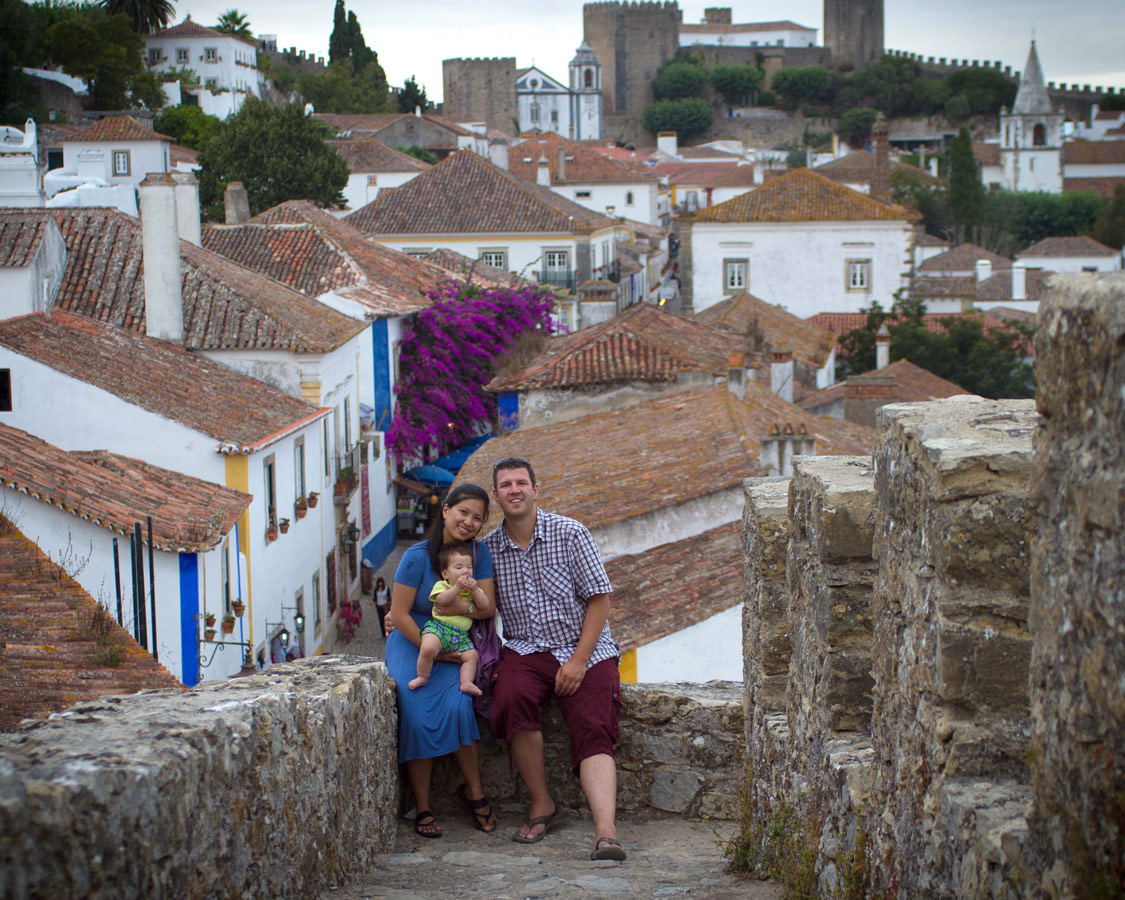
Here is the pitch, and I will keep it short because I’m sure that you’ve heard countries oversold before. Portugal is small, cheap by Western European standards, ludicrously safe, and populated by people who look at a toddler having a meltdown in a restaurant and respond by bringing them a cookie or launching into a magic act that you never saw coming. That last part is not a small thing. In a lot of Europe, arriving at dinner with small children feels like arriving at a funeral with a kazoo. In Portugal it feels like you’re being welcomed home.
The geography does most of the heavy lifting. You can base yourself in one place and reach an absurd amount of the country from one location. From Lisbon or Cascais, within a two-hour drive, you have got five UNESCO palaces, three UNESCO monasteries, a walled medieval town, a Roman temple standing in a modern city square, a quarry full of dinosaur footprints, and a coastline with caves you can paddle into.
Try assembling that itinerary in France without a second mortgage and a divorce lawyer on retainer.
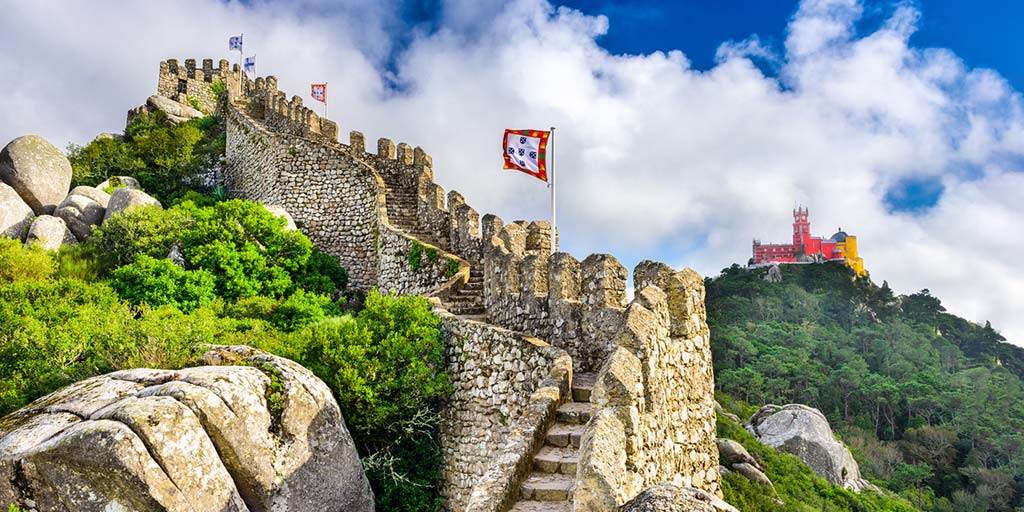
And the history here is the kind you can wrap hands around. Not roped off, not behind glass, not narrated by a man in a headset. You walk the thousand-year-old ramparts. You go down the well. Your kid runs across a battlement that has been standing since the Moors held the ridge. That access is what Portugal does better than almost anywhere else in Western Europe, and it is why children who visit come home actually knowing something and caring about what they saw.
New to Family Travel in Portugal?
Start with my Portugal family travel tips guide, which covers visas, the new EES biometric system, driving, tolls, eSIMs, and the safety stuff nobody puts in the brochure. It is the piece I wish someone had handed me before my first visit.
Castles, Palaces, and History Your Kids Can Actually Touch
Portugal’s history is not filed away in a museum. It is standing in the middle of town, holding up a hillside, or sitting in a cloister that has been in continuous use since the 1200s. This is the part of the country that turns a vacation into something your children will still be talking about in ten years.
Sintra and the Palace Problem
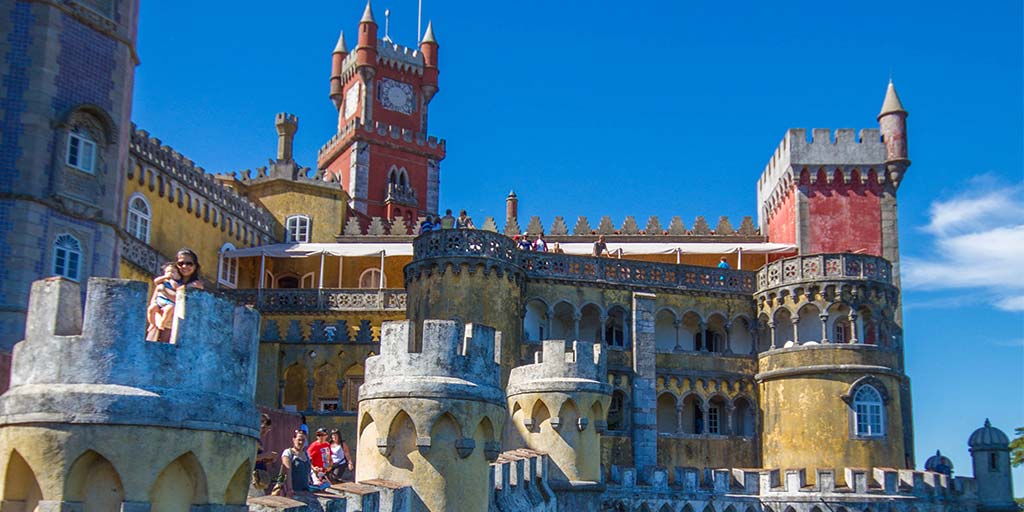
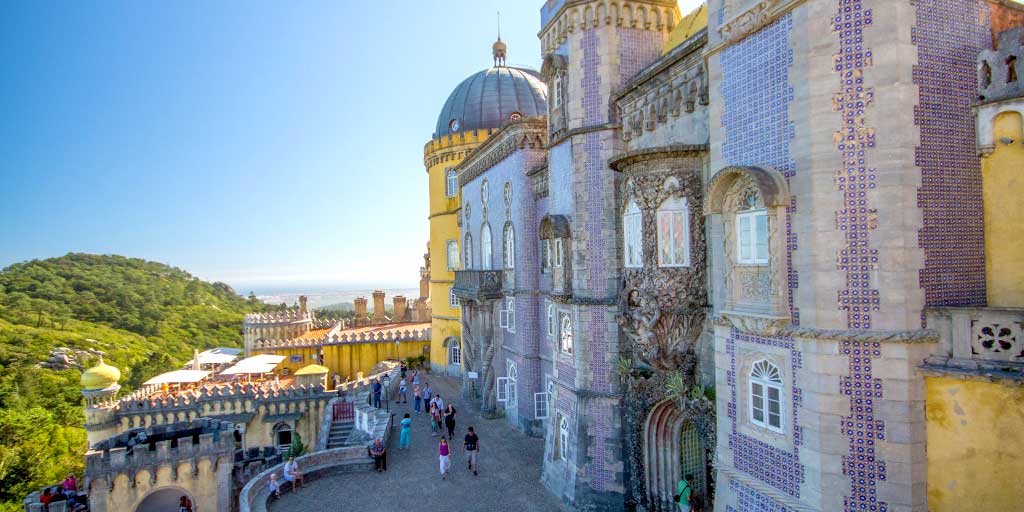
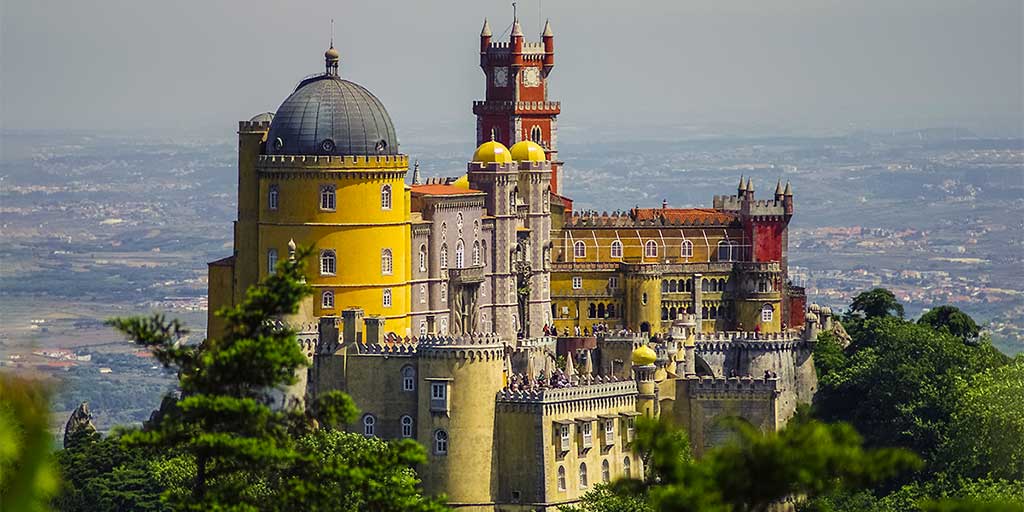
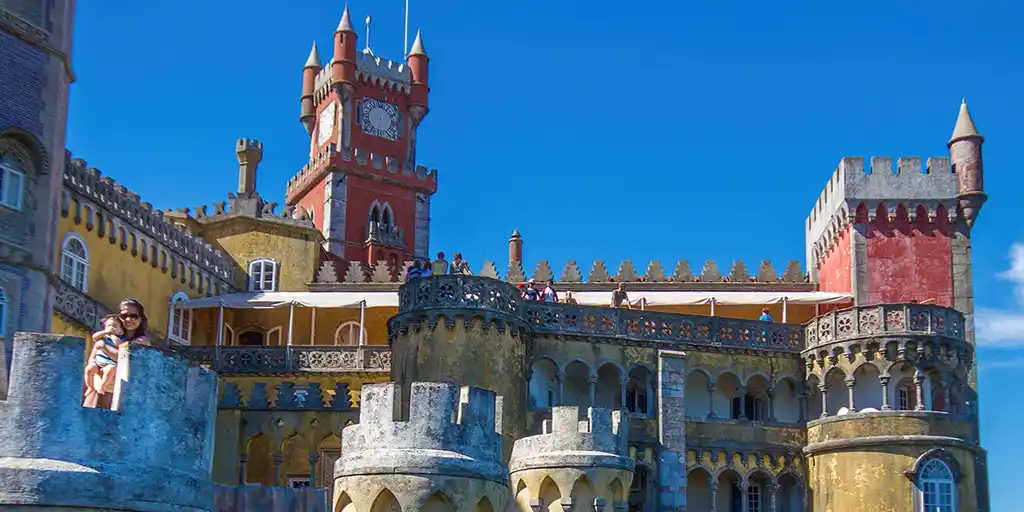
Drive up into the hills above Cascais and a palace appears above the treeline, painted in yellow and red and blue, and it looks exactly like what a six-year-old draws when you ask them to draw a castle. That is Pena Palace, and it is every bit as unhinged up close as it looks from the road.
The problem with Sintra is that there are five of these things, all within walking distance of each other, and every family that arrives tries to see all five. I have watched it happen. The results are always the same: eight hours of forced marching, one increasingly feral child, and a parent googling “taxi Sintra” at 4 pm. Pick two. Three if everyone slept well. My guide to the castles of Sintra breaks down which ones are worth your limited hours with kids in tow, and which one everybody skips that they absolutely should not.
The Monastery Route
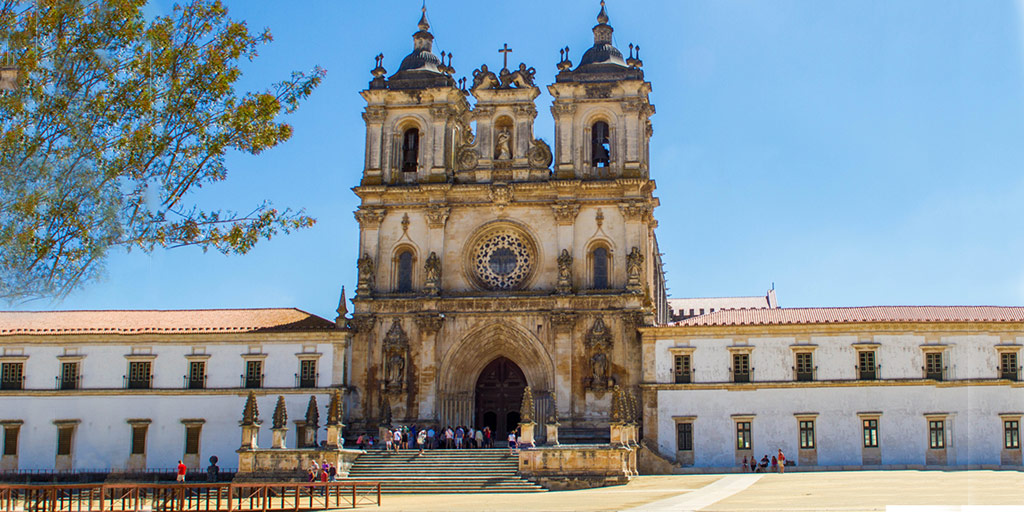
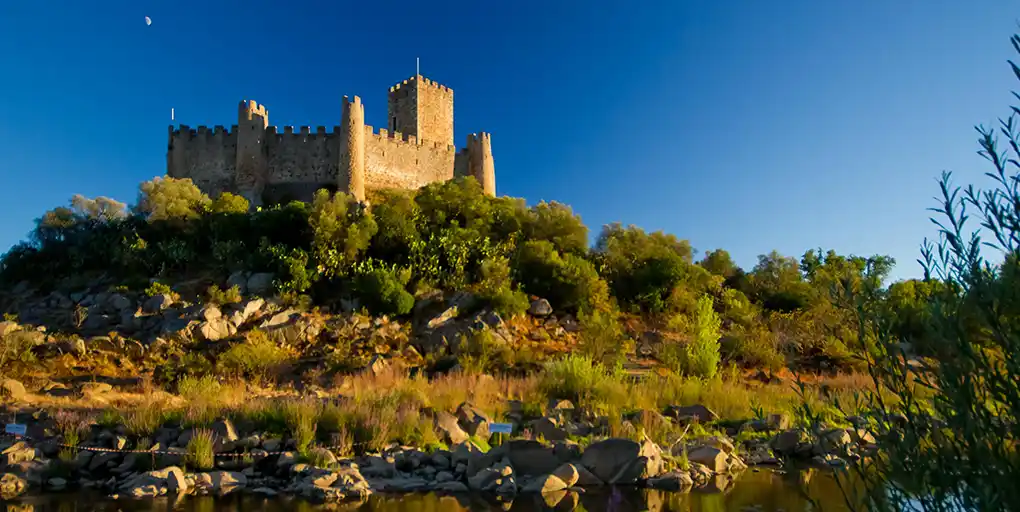
I am aware that “three medieval monasteries in one day” reads like a threat to some families. I’m going to ask you to take that leap anyway. Alcobaca, Batalha, and Tomar sit close enough together to do in a single long drive; they are all UNESCO World Heritage Sites, and together they are the finest concentration of medieval religious architecture in Europe that nobody outside Portugal talks about.
Tomar was built by the Knights Templar. Actual Templars, not the History Channel kind. There is a round church inside modeled on the Holy Sepulcher, and you walk into it, and the high room might put a kink in your neck. Alcobaca holds the tombs of Pedro and Ines, which is the most gruesome and romantic story in Portuguese history and one your kids will absolutely want the full version of. I tell it in the full monasteries guide, along with how to sequence the drive so nobody revolts by the third stop.
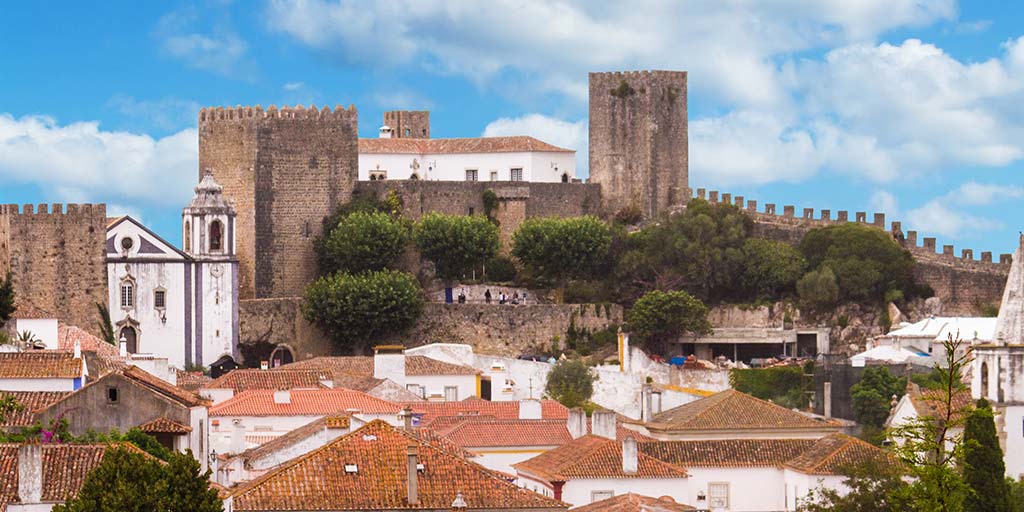
And on that second one: there is a quarry near Ourem containing sauropod tracks among the largest ever found anywhere on the planet. Enormous Cretaceous footprints going up a limestone slope, and almost nobody visits. Cohen was too small to understand it the first time; Christina and I definitely weren’t. The full guide to Fatima, Ourem, and Obidos covers how to work all three into one loop.
Lisbon and Evora: The Two Cities That No One Should Miss
North Americans planning a European trip default to Paris and Rome, and Lisbon quietly gets left off the list. I do not understand it, and I have stopped trying to. Lisbon is built across seven hills above a river, wrapped in tile, wired together by trams that predate everyone reading this, and it has one of the best and least expensive food scenes in Europe.
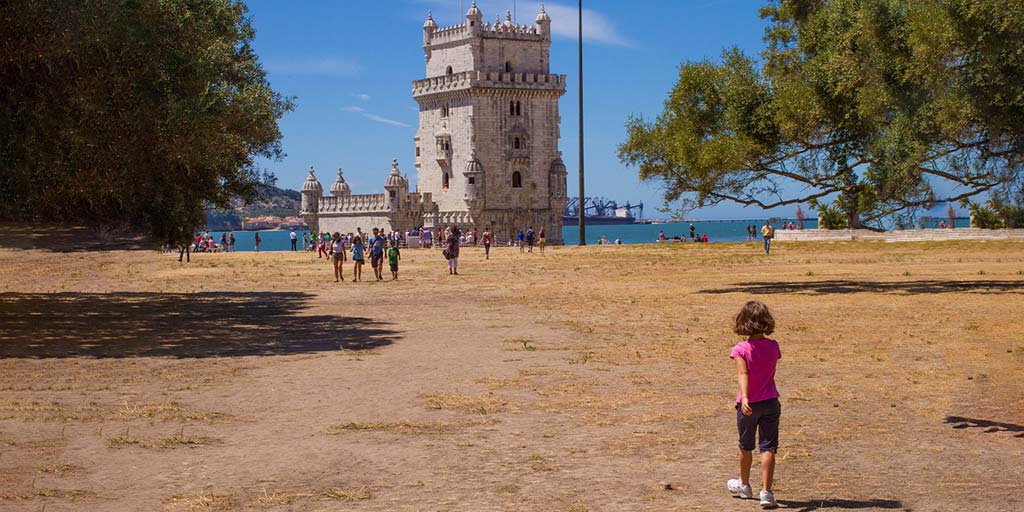
Tram 28 is famous, crowded, and worth it anyway. The Castelo de São Jorge is a hilltop Moorish castle where children are essentially free to run at battlements. And in Belem you can eat a pastel de nata warm from the bakery that has been making them from the same recipe since 1837, which will permanently ruin every custard tart your children eat for the rest of their lives. I consider this a gift. Everything worth doing with kids is in my Lisbon with kids guide.
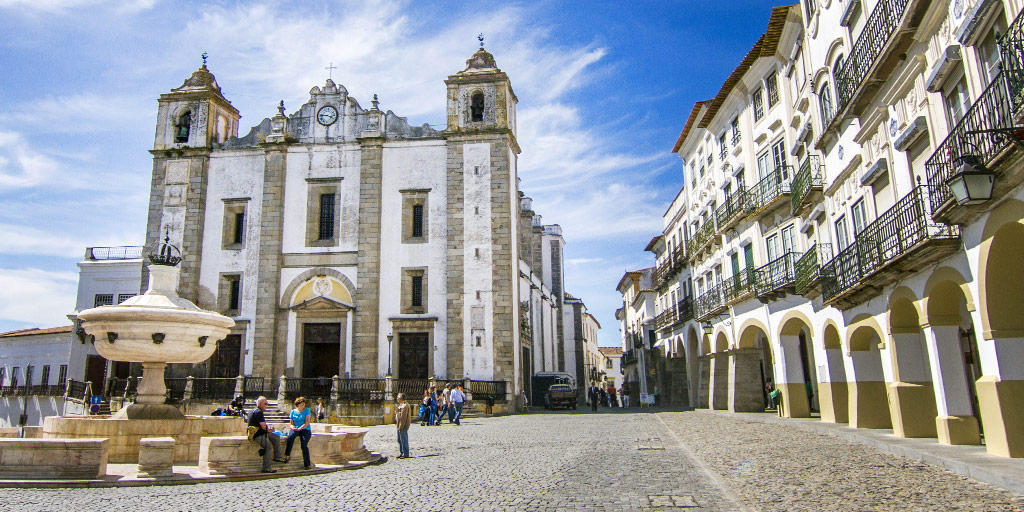
Now Evora, where I got it wrong. We drove out from Cascais on our last day, gave the city about seven hours, and flew home the next morning convinced we had seen it. We had not. Evora has a Roman temple standing intact in the middle of town, the largest medieval cathedral in the country, one of the finest main squares in Portugal, and a chapel whose walls and ceiling are lined with the bones of several thousand monks. Children either refuse to go in or refuse to leave. There is no third category.
The one piece of advice I give everyone:
Do not day trip Evora. Stay the night. The city changes completely once the tour buses leave, the restaurants are excellent at every price point, and the Alentejo countryside around it, full of cork oaks and prehistoric stone circles, needs a morning of its own. I explain exactly how to structure it in the Evora guide.
The Algarve: Sea Caves, Cliffs, and Water
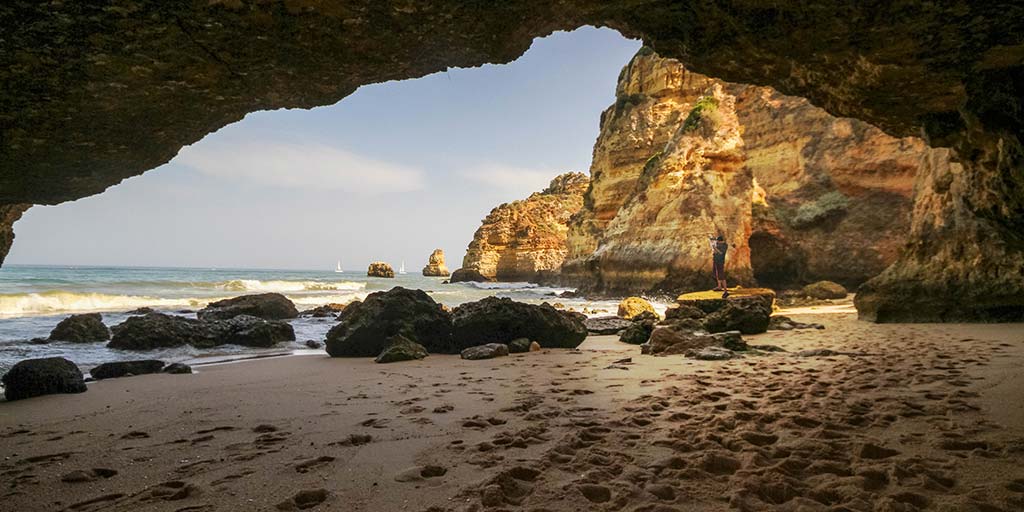
The Algarve is where Portugal goes to the beach, and the coastline between Lagos and Tavira is honestly among the best on earth. Golden limestone cliffs, sea arches, coves you can only reach by boat, and caves you paddle into with the light coming down through holes in the roof. We went at the end of our first trip as a deliberate decompression, mostly to find out whether an infant had opinions about sand. He did not, at the time. The beaches set a standard he has been unfairly measuring every other beach against ever since.
Two honest notes. The Atlantic-facing west coast beaches have powerful swell and currents that kill people every year, and that is not me being dramatic; it is the flag system telling you something you should listen to. The south-facing beaches between Lagos and Faro are calmer and far better with small children. And the east Algarve around Tavira is quieter and less commercial if the resort strip is not your thing. All of it is in the Algarve guide, including how to find the coves that are not on the postcards.
On packing, and I say this as a man who has watched a wheeled suitcase die on Alfama cobblestones: bring real walking shoes, bring water shoes for the rock pools, and bring a plug adapter that works, because the one in your drawer probably does not. The packing list is short, and it is the stuff that actually matters.
Where to Go in Portugal
You do not need to see the whole country. Pick a base, work outward, and leave something for next time. Here is how the regions break down.
- Lisbon and Cascais Trams, hills, tarts, and the best base in the country
- Sintra Five palaces, one day, pick two of them
- Central Portugal Walled towns, pilgrims, and giant dinosaur tracks
- The Monastery Route Templars, tombs, and three UNESCO sites in a day
- Evora and the Alentejo Roman temple, bone chapel, cork oak country
- The Algarve Sea caves, cliffs, and the beaches worth the drive
Travel Resources For Families Visiting Portugal
For practical planning, safety considerations, and logistics, these dedicated guides provide all of the resources you need for family travel in Portugal.
Before You Go
Buy your Pena Palace tickets online before you leave home. The gate queue in July is long enough to eat the entire morning, and there is no version of that day where it improves. Stay the night in Evora. Take the coastal train from Lisbon to Cascais at least once and sit on the left side. And eat the pastel de nata while it is still warm, standing up, with cinnamon on it, because eating one cold later is a completely different and much sadder experience.
If you are still at the stage where none of this feels real yet, start with the Portugal family travel tips guide. If you already have your flights and you are trying to build the actual days, go to the day trips from Lisbon guide and work out from there.
Portugal was the trip that proved to me that traveling with kids was not something we would have to survive. It was the thing that made it better. Ten years and four continents later, that has held up.
This page is updated as new Portugal guides go live. Looking further afield? Head to the Europe family travel guide.