
The complete family packing list for Portugal, covering men, women, teens, and kids for summer, shoulder season, and winter travel. Built from firsthand family travel experience.
Portugal has a way of catching families off guard, and not in a bad way.
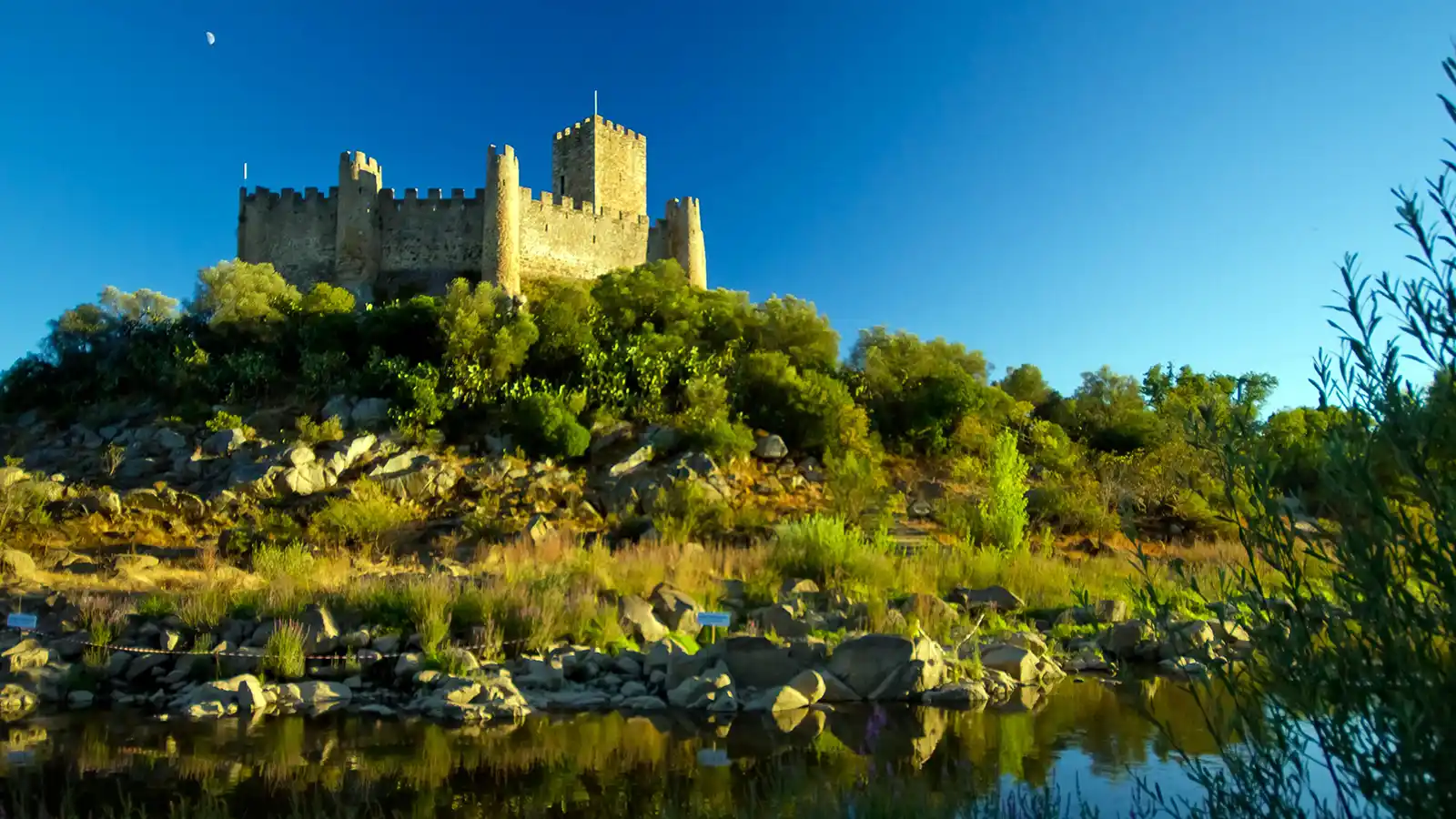
Lisbon is built across seven hills connected by winding cobblestone streets that are as beautiful as they are hard on the feet. The Algarve in summer combines golden cliffs, sea caves, and long Atlantic beaches that call for light layers, sun protection, and a great swimsuit. Sintra sits in a forested hilltop that is often cool and misty even when Lisbon is sunny and hot. Porto in the north is green, rainy, and worth every puddle. The Douro Valley unfolds in terraced vineyards above the river. The Alentejo spreads wide and dry and unhurried, full of cork trees and whitewashed villages and Roman ruins.
Each part of Portugal asks for something slightly different from your luggage. This Portugal packing guide is designed for families. And it covers all of it.
What You’ll Find in This Family Packing Guide for Portugal
Table of Contents
Portugal is, for the most part, a wonderfully easy travel destination for families. The food is excellent, the people are warm and inviting, the cities are safe, and the distances between the most popular places to visit in the country are manageable by car and transit. But creating a Portugal packing list for your family means keeping in mind a few things that most guides skip over:
- Lisbon’s hills and cobblestone streets pose a real challenge for feet and ankles. While the streets of Lisbon are beautiful, it’s not the place for high heels or thin soles. Good traction (especially in the wetter season) is important, and so is ankle support.
- While most postcards show Portugal as sunny and warm all of the time, the truth is that Portugal’s climate varies significantly by season and region. The Algarve in August is very hot, dry Mediterranean beach weather. Lisbon in November is mild but damp and can feel genuinely cool. The hilltops of Sintra can be misty and breezy on a day that is warm and sunny in Lisbon, thirty minutes away. This packing guide covers summer, shoulder season, and winter travel in Portugal.
- The Atlantic coast adds UV and wind to beach days that feel milder than they are. Rash guards and reef-safe sunscreen belong in every family beach bag.
- Portugal has no significant dress code requirements outside of churches and religious sites, where covered shoulders and knees are expected. It is one of the most relaxed European destinations for families, and packing for Portugal family travel is simpler than destinations like Morocco or Turkey.
- Choosing quick-dry fabrics is a game-changer when packing for family travel in Portugal. The country’s summer is reliably warm and dry. The shoulder seasons and Lisbon’s Atlantic climate mean unexpected rain is always possible. Fabrics that dry overnight handle both sweat and rain.
This Portugal packing guide is organized by season with specific callouts for men, women, teens, and kids.
Before You Pack: Understanding Portugal’s Climate
Portugal is small by European standards. It might not be a big country, but the Portuguese climate varies noticeably between the north and south and between the Atlantic coast and the interior. Here’s what the weather of each major region of the country actually looks like.
Lisbon and Central Portugal
Lisbon has a pleasant Mediterranean climate influenced by the Atlantic currents. Summer runs from June through September, and it’s typically warm and dry, with temperatures regularly reaching 86 to 95 degrees Fahrenheit (30 to 35°C) in July and August.
The Atlantic breeze keeps the summer heat from becoming oppressive, but expect hot temperatures in August. Spring and autumn are mild and comfortable, with temperatures in the comfortable 60s to low 70s Fahrenheit (16 to 23°C) and the occasional rain shower. Winter, from December through February, is mild by European standards, with temperatures in the mid-50s Fahrenheit (12 to 14°C), regular rainfall, and occasional cold spells.
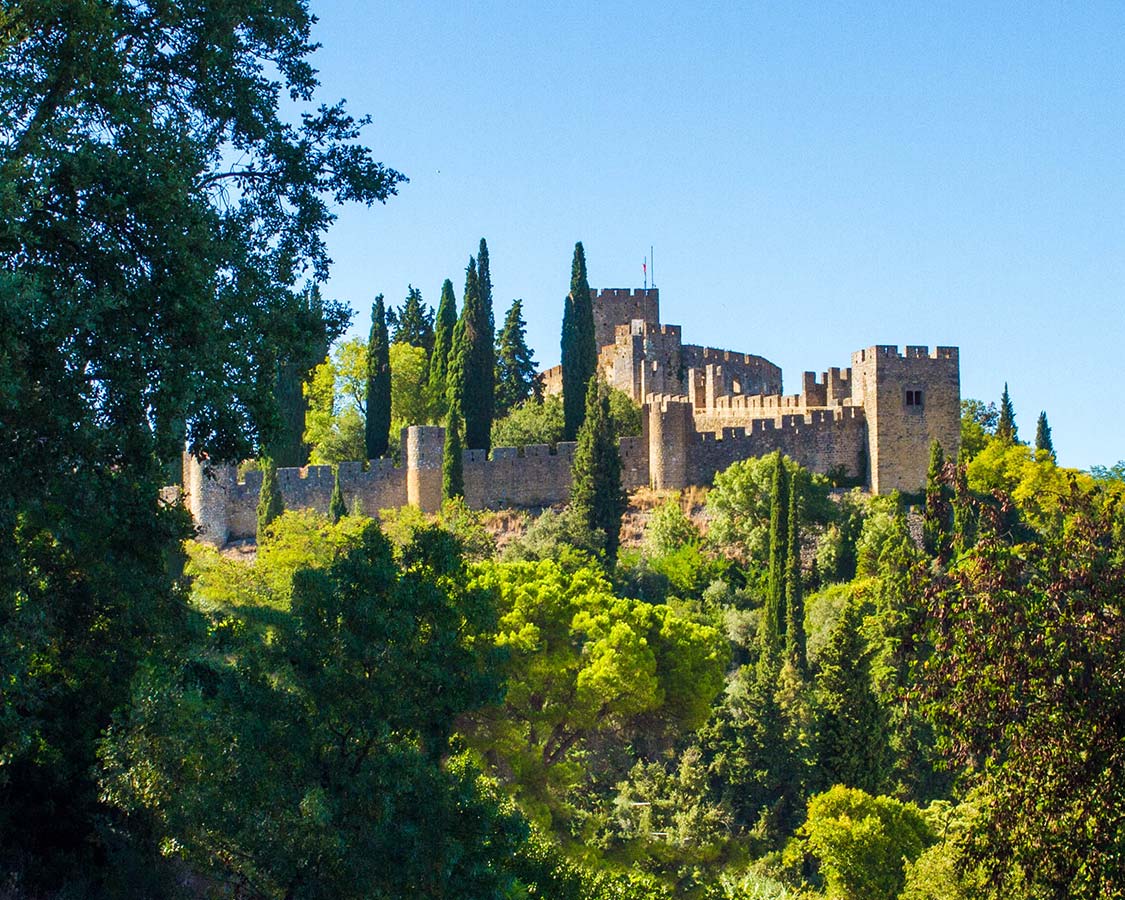
The historic towns of central Portugal, including Evora, Obidos, Alcobaca, and Fatima, are similar, from a weather standpoint, but with slightly hotter summers and cooler winters than the coast.
Sintra
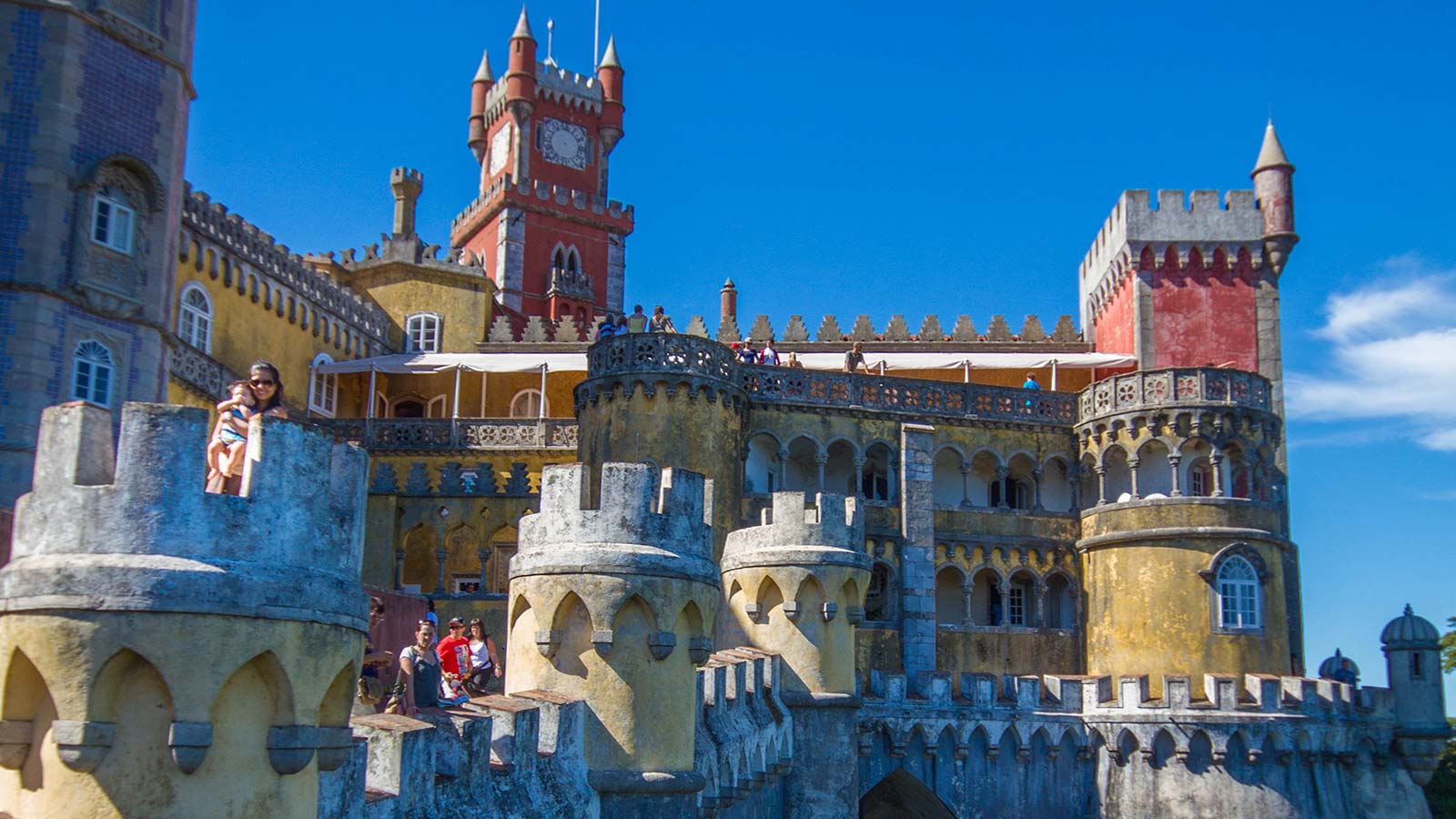
The beautiful city of Sintra sits in the hills of the Serra de Sintra and has its own microclimate that has a tendency to surprise families traveling to the city from the sunny streets of Lisbon. Even in summer, the hilltop is frequently cooler, windier, and mistier than the surrounding region.
This is part of what makes it such a beautiful, distinctively atmospheric destination. It is also why including a light layer in your daypack is important.
The Algarve
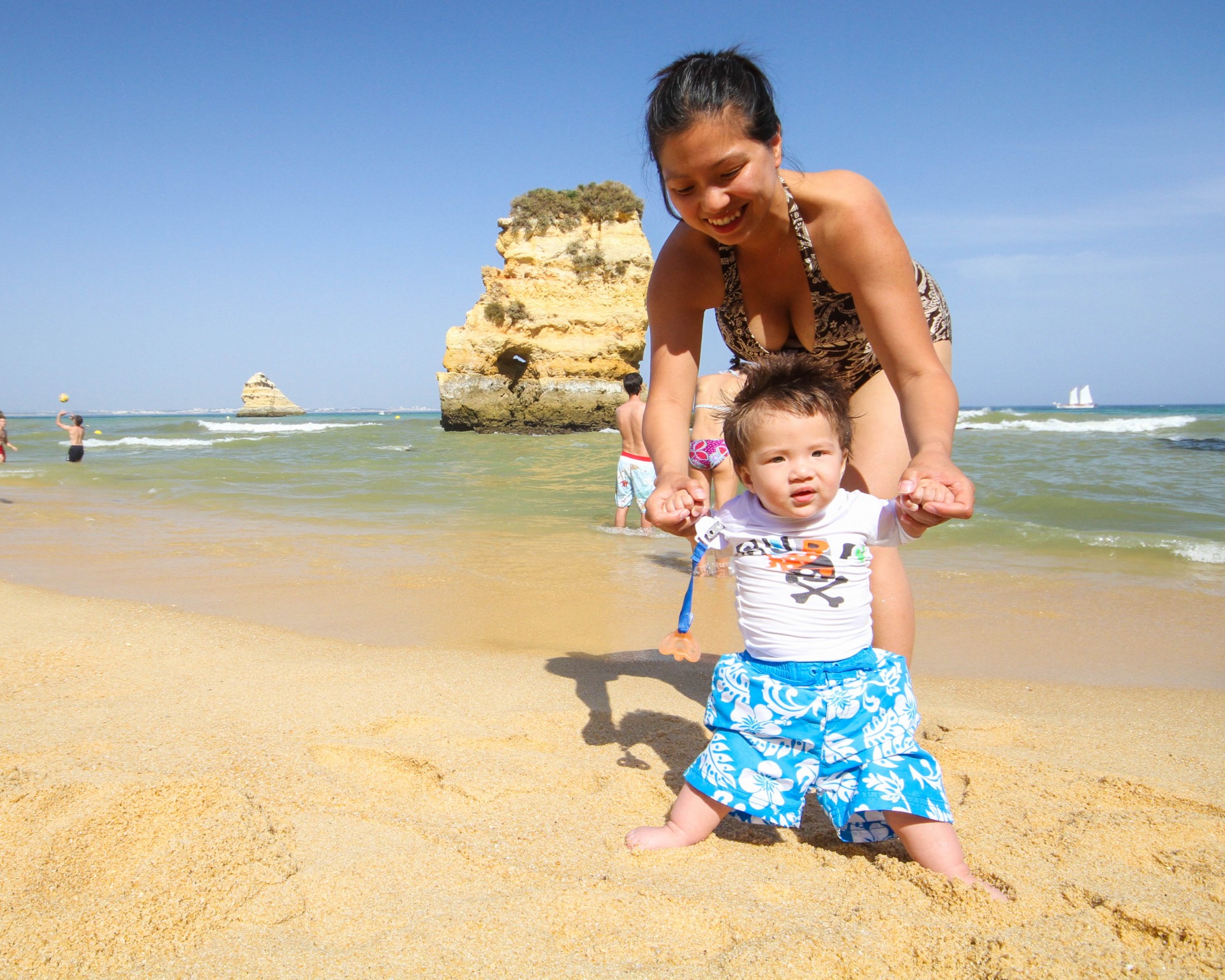
The Algarve in the south is the warmest and sunniest part of mainland Portugal. Summer runs from June through September and delivers hot, reliably dry weather with temperatures of 86 to 95 degrees Fahrenheit (30 to 35°C) and a steady dose of sunshine. The beaches fill up from late June through August, and accommodations in the region book out early.
Shoulder season from April through May and October through November is truly the best time to visit the Algarve for families, with warm but not brutal temperatures, calm seas, and much thinner crowds. The cliffs and sea caves of the western Algarve around Lagos and Ponta da Piedade are best explored in these calmer months.
Porto and Northern Portugal
Porto and the north of Portugal are greener and rainier than the south, particularly in autumn and winter. Summer in Porto is warm but shorter and less intense than in Lisbon or the Algarve. If your trip includes Porto, pack a light rain jacket regardless of the season.
Portugal Summer Packing List for Families (June through September)
Portuguese summers are typically warm, dry, and brilliant for families. The Algarve is at its busiest. The Lisbon nightlife is bumping. The historic towns of central Portugal bake in the sun in a way that makes every stone and tile glow.
Pack light, pack breathable, and do not forget that Lisbon’s hills mean you will be working harder physically than the temperature suggests.
Summer Packing For Portugal for Men and Teens
Portugal is a stylish country, and the residents of Lisbon, in particular, dress well. Smart casual is the right style for the city: a linen shirt and light pants will take you from a morning visit to the Belem Tower to a rooftop restaurant in the evening.
- 3 to 4 lightweight short-sleeve shirts in linen or a light moisture-wicking fabric. A shirt like this dries overnight, does not wrinkle in a bag, and handles the full range from Lisbon sightseeing to Algarve beach towns.
- 1 to 2 lightweight long-sleeve shirts for cooler Sintra visits, church interiors, and Atlantic coast evenings. A shirt similar to this is good for visits to churches and monasteries without any additional thought.
- 2 pairs of lightweight linen or cotton travel pants like these are a great fit for days out in Lisbon, exploring the monasteries and visits to Alcobaca and Batalha, and anywhere something more than beach shorts is called for.
- 1 to 2 pairs of light shorts for hot days and casual walks in the Algarve. This is what I usually pack, but any comfortable shorts will do.
- 1 to 2 swimsuits for the Algarve, the Cascais coast, and hotel pools.
- 2 rash guards with UPF 50 or higher for Atlantic coast beach days and sea cave boat trips. A rash guard like this is good for the Atlantic sun, which is stronger than it feels. A rash guard does the work that sunscreen alone cannot sustain on a full day at the Algarve.
- 1 light packable jacket for Sintra’s mist, cooler evenings, and air-conditioned restaurants. A packable jacket like this doesn’t take up much room and is a great choice for Sintra, ferry crossings, or late evenings on a Lisbon rooftop terrace.
- Underwear x7 in lightweight, quick-dry fabrics.
- Socks x7 in lightweight merino wool or wool-blend. Merino handles both the Lisbon heat and the cooler coastal evenings better than cotton, and resists the odor that builds up on long cobblestone days.
Summer Packing For Portugal for Women and Teens
Christina’s Portugal packing style focuses on: a good maxi dress, what she calls “the most versatile item in her travel bag.” It covers a visit to historic churches, a Lisbon rooftop dinner, and a warm evening in the Algarve.
- 3 to 4 lightweight linen or cotton tops like this for days out exploring monasteries and towns.
- 2 pairs of lightweight travel pants like these are versatile and breathable.
- 1 to 2 midi or maxi dresses are the most versatile summer items for Portugal. These are good for churches and monasteries; they work for walking through cities and evening restaurants.
- 1 to 2 pairs of shorts like these for casual travel through the Algarve beach and rural regions.
- 1 lightweight cardigan for Sintra, cool evenings, and covering up during visits to churches and monasteries.
- 1 long skirt or wide-leg trousers
- 2 swimsuits for the Algarve and coastal beach days.
- 2 rash guards with UPF 50 or higher for Algarve beach and boat days: Kanu Surf Women’s Rash Guard
- Underwear x7 in lightweight, quick-dry fabrics.
- Socks x7 in lightweight merino wool or wool-blend.
Summer Packing For Portugal for Kids Under 12
- 4 to 5 lightweight t-shirts in quick-dry fabrics with light to mid-range colors. White shows the dust of Sintra’s forest trails and Evora’s sun-baked streets within an hour.
- 2 to 3 pairs of shorts for warm days.
- 2 pairs of light pants for monasteries, churches, and the cool weather of Sintra.
- Bring 1 to 2 pairs of lightweight pants or joggers for city days and cooler evenings.
- 2 swimsuits.
- 2 rash guards with UPF 50 or higher. Kids on Algarve boat tours and long days at the beach are in direct sunlight for hours. A UPF layer is the simplest sun protection decision you can make.
- 1 light packable jacket for Sintra and cooler evenings.
- Underwear x7 to 8
- Socks x7 to 8.
Portugal Shoulder Season Packing List (April to November)

Shoulder season in Portugal is one of the best times to visit the country. The crowds that pack the streets of Sintra and the Algarve during the summer slow to a steady stream. Prices are lower, and the weather is usually warm and comfortable without the oppressive heat of the summer. The hills of Lisbon are lined with wildflowers, and the sea is still warm enough for swimming straight through to October in the Algarve.
The summer packing list is the foundation. These are the adjustments I recommend for the shoulder season in Portugal:
- Upgrade the light packable layer to a proper midlayer fleece (Here are my suggestions for men’s, women’s, and kids) or a heavier cardigan. Sintra in October and November requires proper warmth, not just a thin jacket, and Lisbon evenings from October onward are cool enough to need a thicker layer.
- Add a waterproof rain shell for everyone (here are my suggestions for men, women, and kids). Lisbon’s Atlantic climate brings short, sharp rain showers in autumn. Porto is wet for much of the year. A proper waterproof shell is the most useful addition for shoulder season travel.
- Swap at least half of the shorts for lightweight pants (Here are my suggestions for men, women, and kids). Shorts still work on warm Algarve afternoons in October, but pants carry more of the load from Lisbon northward in the shoulder months.
Portugal Winter Packing List for Families (December to March)
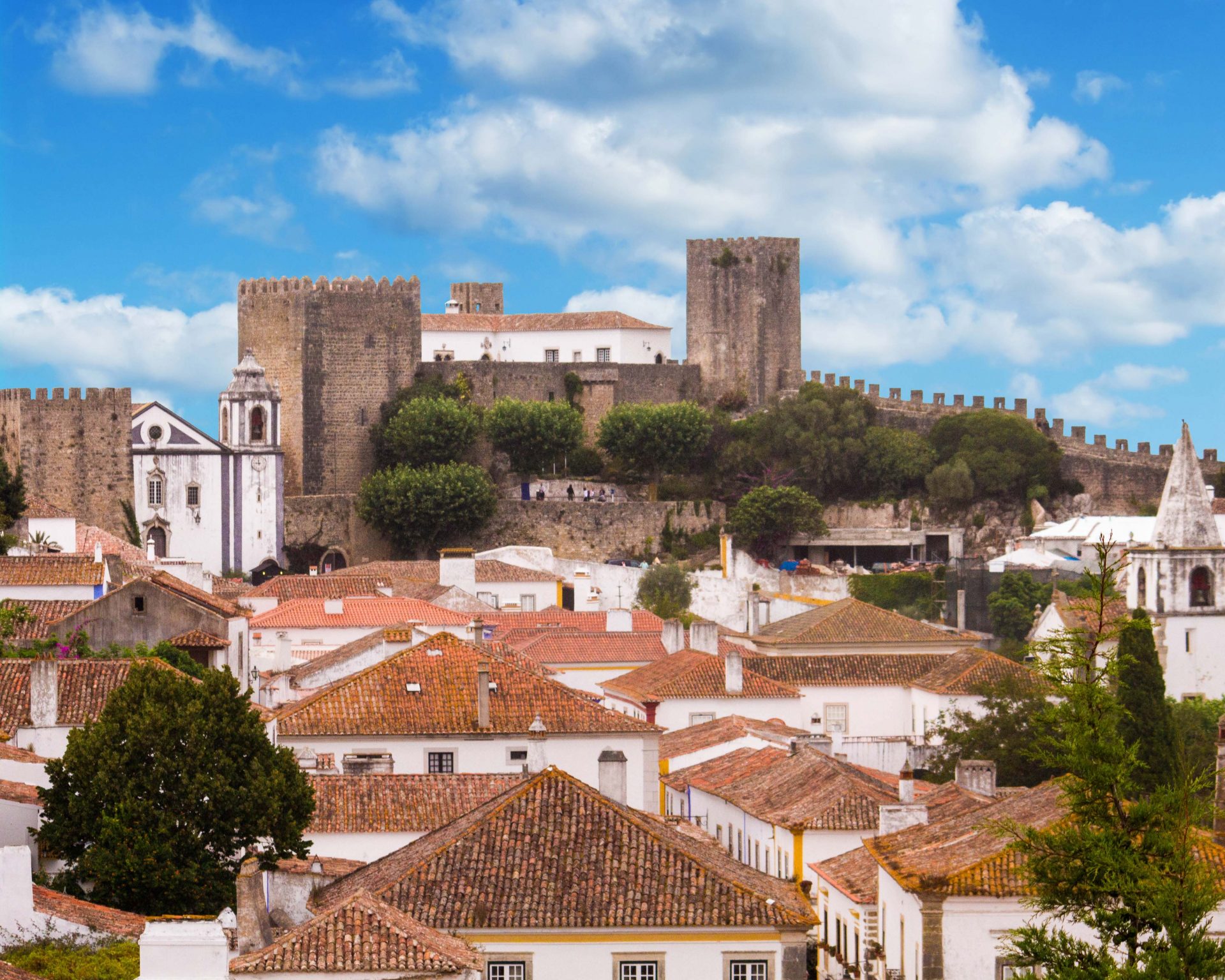
Winter in Portugal is mild by Northern European or North American standards, but it is not warm. Lisbon in January sits in the mid-50s Fahrenheit (12 to 14°C) with regular rain. The Algarve stays warmer, regularly reaching the low 60s Fahrenheit (16 to 18°C) and remaining one of the sunniest places in Europe even in winter. The historic inland towns can be genuinely cold on winter mornings.
Portugal in winter is quiet, affordable, and beautiful in a different way from summer. The queues at Sintra are short. The monasteries are yours to explore without the peak season crowds. Pack for actual winter, not for mild European beach weather.
- Replace linen shirts with heavier cotton or flannel shirts as the primary tops. Linen is too light for Portuguese winter temperatures.
- Add a heavyweight fleece or knit midlayer for men and kids.
- Add a heavyweight cardigan or heavy fleece sweater for women.
- Add merino base layers for colder inland days and visits to Sintra. This is the one I recommend for men, women, and kids.
- Add heavier socks and consider a wool hat and light gloves for colder days in the Alentejo interior and at elevation in Sintra.
Choosing the Right Footwear for Family Travel in Portugal
Footwear is the most important packing decision for any family trip to Portugal and one that many families get wrong. Lisbon’s cobblestone hills are beautiful, but they are relentlessly rough. A full day in the city involves significant elevation change on uneven stone surfaces that will destroy unsupportive feet that rely on bad shoes.
- Pack a good pair of trail runners or supportive walking shoes with proper grip as your primary footwear in Portugal. This is the pair I use. This is the one Christina relies on, and this is the one I recommend for kids under 12.
- Bring a comfortable pair of sandals with decent arch support for warm days and casual exploring. The Teva Hurricane Drift comes in men’s, women’s, and kids’ sizes and are my go-to for cities and beaches.
- Bring one pair of flip-flops for hotel and beach use.
- For winter travel, bring a waterproof hiking boot or walking shoe for wet city days and cold inland visits.
Sun Protection for Portugal Travel
Portugal’s Atlantic position does not make the sun any less serious. The Algarve in summer has some of the highest UV readings in continental Europe. The open clifftops above the sea caves, the long beach days, and the exposed ancient sites in the Alentejo interior all involve sustained direct sun with very little shade. Sun protection is not background logistics here. It is one of the things that determines whether the afternoon is comfortable or not.
- Bring reef-safe or broad-spectrum SPF 50+ sunscreen, and bring enough for the whole trip. Portuguese pharmacies are well-stocked in cities. At Algarve beach resorts in peak season, quality sunscreen sells out. Check out my guide to the best reef-safe sunscreen here.
- Bring polarized sunglasses for all family members. The Atlantic glare off the Algarve water and the reflected light from Lisbon’s white azulejo tiles and limestone buildings is sustained and intense.
- Pack a wide-brim sun hat with UPF 50+ for men. I like the Tilley LTM6 Broad Brim Hat. A full afternoon at Evora’s Roman ruins or walking the Algarve clifftops without a hat is the kind of decision that earns you a very red neck.
Gear and Accessories for Travel in Portugal
Bags
- 1 packable daypack for city days and site visits. A packable bag like this compresses to nothing in your main bag. Essential for Sintra days, where you need to carry layers, water, and sunscreen across multiple palace visits, and for Algarve boat tours, where you want your hands free.
- I like to pack a small crossbody or sling bag for days in the city. Something like this helps me keep both hands free. The Alfama and Mouraria districts, in particular, are narrow, crowded, and much easier to navigate without a backpack pulling you off-balance.
- My family never leaves home without packing cubes to organize across Portugal’s varied accommodations.
Tech and Power
- Bring a portable power bank like this one. Long days at Sintra and the Algarve clifftops drain phones fast when you are navigating, photographing, and keeping kids entertained between sites.
- Portugal uses Type F two-pin European outlets at 230V (50Hz). North American travelers need a universal adapter. Most modern electronics handle dual voltage with just an adapter.
- Bring a compact camera for Portugal’s extraordinary light and architecture. This one is shockproof, waterproof, and takes excellent photos. The azulejo tiles of Lisbon, the palaces of Sintra, the golden cliffs of the Algarve at sunset. Portugal is one of the most photogenic countries in Europe, and a pocket camera with real zoom captures it better than a phone in the challenging light conditions of the late afternoon Atlantic coast.
- Bring an eSIM for connectivity: Airalo Europe eSIM. Pre-load before departure. Coverage is excellent throughout mainland Portugal, including in the Algarve and the rural interior.
Packable Quick-Dry Towels
Bring one packable, quick-dry towel per person. Towels like this are useful for Algarve beach days where the beach towel from the hotel did not make it into the daypack, and for sea cave boat tours where getting wet is more or less the point.
Toiletries
- Insect repellent. Portugal is not a high-risk destination for insect-borne illness, but mosquitoes are present in the Alentejo and Algarve interior in summer evenings. Worth having.
- Prescription medications with a doctor’s note for anything controlled.
- Children’s paracetamol and ibuprofen in familiar brands.
- Allergy medications. Portugal’s spring wildflower season in March and April produces significant pollen across the country.
- Basic first aid supplies. Blister plasters are the most-used item after a full Lisbon cobblestone day, particularly early in the trip before feet have adjusted.
- Hand sanitizer x2.
Documents, Money, and Admin Needs for Family Travel in Portugal
- Bring valid passports for all family members. Portugal is part of the Schengen Area. EU passport holders need only a national ID card.
- Carry a card with no foreign transaction fees as your primary payment method. Portugal is largely cashless, and cards are accepted virtually everywhere, including small cafes, market stalls, and taxis in cities. Carry a small amount of euros for very small purchases, parking meters, and the occasional rural cafe that still prefers cash.
- Bring travel insurance documents, printed and digital. Medical care in Portugal is good, and EU citizens have reciprocal healthcare rights. Non-EU visitors should carry comprehensive travel insurance. I usually use Safetywing or World Nomads as my family travel insurance provider.
- Bring printed and digital copies of accommodation confirmations and emergency contacts.
Quick Reference: Clothing Quantities per Person
Based on a ten-day Portugal trip covering Lisbon, Sintra, one or two historic inland towns, and the Algarve in summer or shoulder season.
Item | Men | Women | Kids |
|---|---|---|---|
Lightweight t-shirts | 3-4 | 3-4 | 4-5 |
Long-sleeve shirts | 2 | 2 | 2 |
Lightweight travel pants | 2 | 2 | 2 |
Shorts | 2 | 2 | 2 |
Dress/Skirt | – | 2 | 2 |
Insulating mid-layer | 1 | 1 | 1 |
Rain shell | 1 | 1 | 1 |
Rash guard | 2 | 2 | 2 |
Swimsuit | 2 | 2 | 2 |
Underwear | 7 | 7 | 8 |
Socks | 7 | 7 | 8 |
Frequently Asked Questions
May, June, and September are the sweet spots for most families. The weather is warm and reliable, the sea is swimmable in the Algarve, the crowds at Sintra are manageable, and Lisbon is at its most pleasant. July and August are the busiest and hottest months. The Algarve in August is genuinely packed, and accommodation books out far in advance. October and November are excellent for the interior towns and Lisbon, with beautiful light and thin crowds, though the sea cools noticeably in October.
Yes, particularly with young children in pushchairs or strollers. The cobblestone streets of the historic neighborhoods, especially the Alfama, Graca, and Mouraria, are steep, uneven, and largely inaccessible to wheeled transport. A child carrier is far more practical than a pushchair in Lisbon. For adults and older kids, the right footwear makes it very manageable. The wrong footwear makes it a very long day. The flat Belem waterfront area and the modern Parque das Nacoes are both much easier for families with very young children.
Portugal is one of the safest countries in Europe and consistently ranks among the safest in the world. Lisbon’s tourist areas have the petty theft common to any popular European city, particularly on the famous Tram 28 route and in crowded viewpoints. Keep phones and wallets in front pockets or a crossbody bag in these areas, and it is a non-issue. The rest of the country, including the Algarve, Sintra, and the historic inland towns, is genuinely relaxed and low-risk.
Portugal’s religious sites require covered shoulders and knees for both men and women. This applies to the Monastery of the Jeronimos at Belem, the monasteries at Alcobaca, Batalha, and Tomar, the cathedral at Evora, and all active churches. The dress code is consistently enforced, and entry is refused to those who do not meet it. A lightweight scarf or cardigan in the daypack handles this for women. A long-sleeve shirt or lightweight trousers handle it for men. None of it requires dedicated specific clothing, just the right items already in the bag from the main packing list.
It depends on your itinerary. Lisbon itself is best explored on foot and by public transport, which is excellent. Day trips to Sintra are easy by train from Rossio station. The Algarve is more car-friendly, particularly if you want to explore the western Algarve cliffs and sea caves beyond the main resort towns. The inland historic towns of Evora, Obidos, Alcobaca, and Batalha are most efficiently visited by car. For a trip that combines Lisbon and the Algarve by train and bus, a car is not necessary. For a trip that adds the historic interior, it makes life significantly easier.
Yes. Lisbon has excellent shopping, including large supermarkets, Farmacia pharmacies, and a good range of clothing and outdoor shops in the Chiado and Baixa neighborhoods. El Corte Inglés on Avenida Antonio Augusto de Aguiar is a large department store with everything from clothing to electronics. In the Algarve, the larger towns of Faro, Lagos, and Albufeira all have supermarkets and basic gear shops. Buy anything you are uncertain about in Lisbon before heading south or inland.
Final Word on Packing for Portugal
Portugal has a way of exceeding family travel expectations. You arrive expecting the postcards, the azulejo tiles, the pasteis de nata, and the golden evening light, and they are all even better than you had hoped. But then you find the sea cave that the boat just fits through. The view from the Pena Palace terrace with the clouds below you. The empty monastery at Batalha on a grey November morning.
The families who show up in Portugal with the right shoes for Lisbon’s cobblestone streets, the right layer for Sintra’s mist, and enough sunscreen for a full day in the Algarve get to be fully present for all of it. The ones who do not spend the first afternoon in Belem looking for a pharmacy that stocks blister plasters.
Pack smart. Pack light. Leave room in the bag for the ceramics you are definitely going to buy in Obidos and the wine you are going to pick up somewhere in the Alentejo.
This page is updated as new regional guides and planning resources are published. Looking beyond Portugal? Explore my International Family Travel Guide.