
Planning a family safari to Ngorongoro Conservation Area? From the crater rim to a black rhino sighting, here’s everything families need to know before they go.
As I walked to the rim of the Ngorongoro Crater, my family stopped dead in our tracks
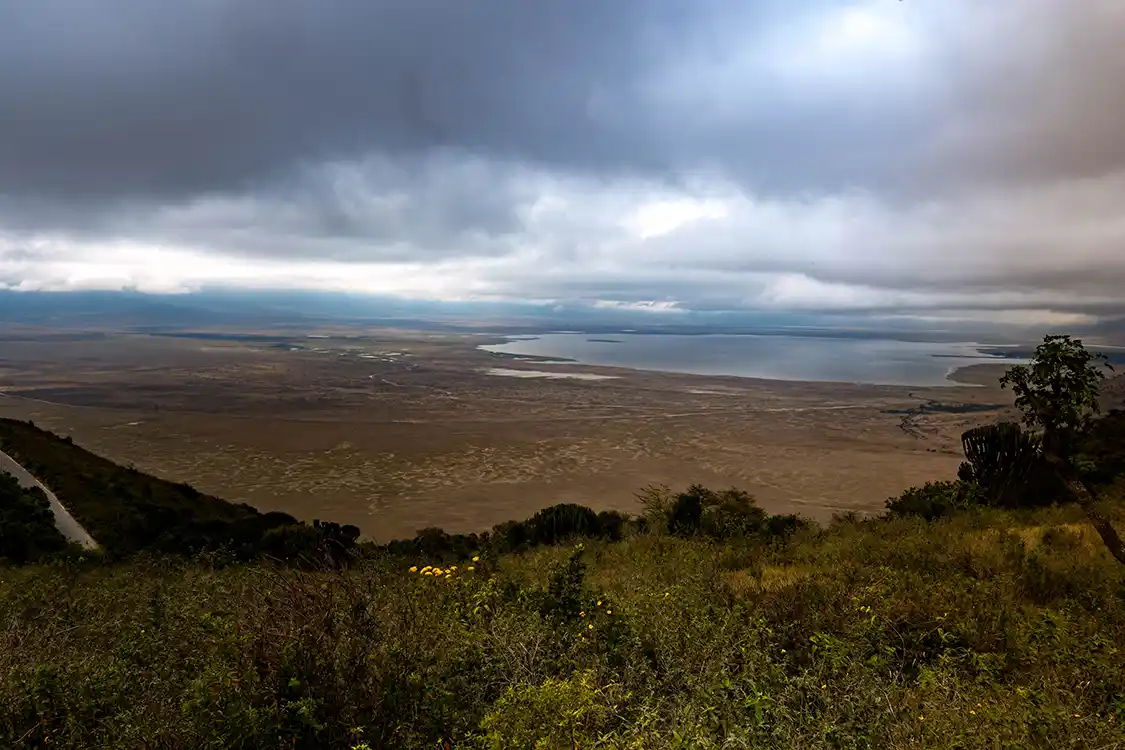
The land ahead of us dropped away into something so vast and beautiful that it took our brains a moment to catch up with us. In the distance, clouds spilled like waterfalls over 2,000-foot (610-meter) walls in their best imitation of Victoria Falls. They poured out into a lush, green valley floor that held lakes, rivers, and tens of thousands of lions, wildebeest, elephants, hyenas, rhinos, and more.
One of the greatest concentrations of life anywhere on Earth.
My son, Cohen, already 14 years old and on the edge of his first year in high school, looked at me with eyes like I hadn’t seen since he was eight and exclaimed: “It’s just like Land Before Time!” Harkening back to a famous setting of one of his favorite movies from when he was just a little boy.
This is Ngorongoro Crater in Ngorongoro Conservation Area. We were on a week-long family safari exploring Tanzania’s Northern Circuit, which included some of the country’s most epic natural attractions. Having just come from three days of family safari in Serengeti National Park, we weren’t expecting our jaws to hit the floor so quickly. But here we were, right on the edge of one of the world’s most famous craters, and we could barely speak.
Dylan stared, with his mouth gaping, and whispered: “So, this was once one big mountain, and it just blew its top?”
That’s more or less accurate.
The Ngorongoro Crater is the collapsed caldera of a volcano that erupted and caved in on itself around two to three million years ago. What remained is a natural enclosure 19 kilometers wide and 600 meters deep, home to approximately 25,000 large mammals and one of the densest concentrations of predators on the planet. Ngorongoro is a UNESCO World Heritage Site, one of the Seven Natural Wonders of Africa, and a place that, even after three days in the Serengeti, managed to stop my family in our tracks.
We had come to the Ngorongoro Conservation Area expecting something extraordinary. What we found was something that felt genuinely ancient and tremendously approachable, in a way that the Serengeti, for all its vast scale, is not. The Serengeti is wild, rough, and on a scale that’s hard to comprehend. Ngorongoro is something older than wild, and contained in a package that, at least at first glance, seems approachable and digestible.
Standing on the rim, we could take in the entire 10-12 miles (16-19 km) stretch from one side of the crater to the other. It felt, standing on that rim with the clouds rolling in below us, like the planet itself had built a sacred cathedral and had forgotten to tell anyone.
Planning the full Northern Circuit? Read my 7-day Tanzania family safari itinerary. Start with the big picture in my Tanzania family travel guide.
What Is the Ngorongoro Conservation Area? (And Why It’s Much More Than Just the Crater)
Table of Contents
When most families who visit Tanzania think of Ngorongoro, they think of the famous crater. That’s understandable, because Ngorongoro Crater is the most famous part of the conservation area. But the Ngorongoro Conservation Area is epically more vast and diverse than just the crater itself. The entire park covers 5152 square miles (8,292 square kilometers) of highland forest, open savannah, volcanic craters, and ancient gorges. And dotted across the plains throughout the park are countless Maasai communities where families continue to live a traditional lifestyle that has been in existence long before this park ever had a name.
Ngorongoro Crater is the centerpiece, the big draw. But families who visit quickly realize that there are far more things to see in Ngorongo Conservation Area than they previously thought. The park also contains Olduvai Gorge, one of the most important paleoanthropological sites on earth. It contains Empakai Crater, a second caldera that holds a deep crater lake fringed by flamingos. It contains the Ngorongoro Highlands, where mist-shrouded forest rises above the crater rim, and Maasai communities herd cattle along ancient paths. And it contains Shifting Sands, a volcanic-ash dune that moves several meters each year, driven by the prevailing wind, slowly traversing the landscape like something out of a film that takes itself too seriously.
Approaching Ngorongoro Conservation Area with the understanding that it’s a multi-layered destination rather than a single attraction will help you to plan your visit. It’s especially important for families who have set aside more than just one day here.
The crater alone is worth the visit. But don’t think that it’s all that the Ngorongoro Conservation Area has to offer.
Why Ngorongoro Conservation Area is an Unforgettable Safari Destination for Families
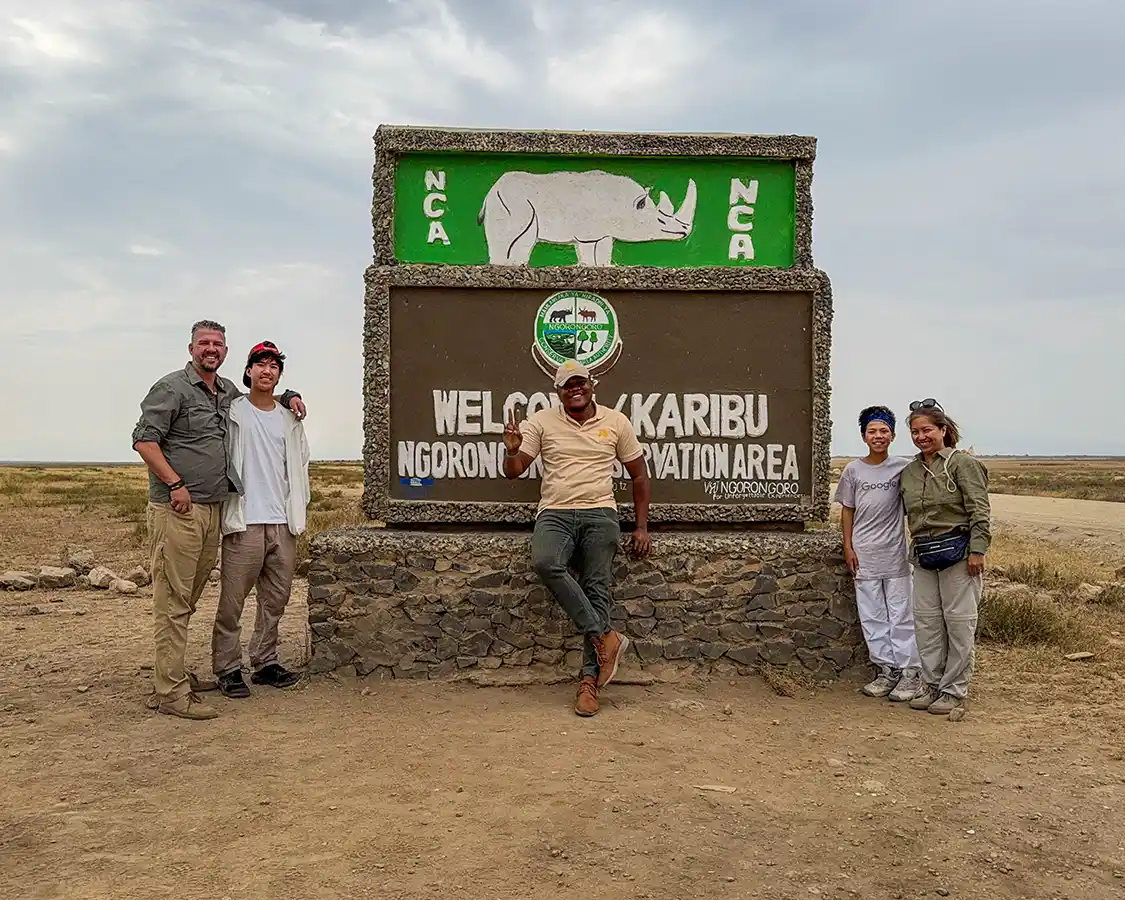
The Serengeti is vast and diverse, Lake Manyara is small, intimate, and ever-changing; Tarangire has elephants in numbers that seem impossible, but Ngorongoro has something that none of those parks can match: concentration and context.
When the volcano upon which the Ngorongoro Conservation Area sits erupted, it shot nearly straight up. As a result, it created a nearly perfect crater with towering walls on all sides. The nutrient-rich soil attracted lush plant life. The herbivores followed, and the predators discovered a buffet like nowhere else on Earth.
The effort it takes to get in means that animals stick around. The wildlife density in the crater is extraordinary because animals don’t migrate in and out the way they do across the open Serengeti. Lions, elephants, black rhinos, hippos, flamingos, zebras, and wildebeest are all present within a 260 square kilometer area. For families, particularly those with younger children whose patience for long, bumpy road trips across vast stretches of empty savannah has limits, Ngorongoro offers an accessibility found in very few places across Africa. Rather than hours of waiting, here, something is almost always happening, and it’s almost always within a reasonable distance.
Beyond the accessibility of the wildlife, Ngorongoro Conservation Area adds an educational depth that no other park on the Northern Circuit comes close to matching.
Olduvai Gorge brings the story of human evolution to families in a way that connects the animals on the crater floor to their own species, who learned to walk upright, built cities, and eventually landed on the moon. Maasai communities throughout the conservation area offer the chance for a personal cultural exchange, not staged performances. The combination of wildlife, deep history, and living culture makes the Ngorongoro Conservation Area one of the richest family travel experiences on the continent.
Family safaris, in general, reward calm observation. It’s unlike most traditional family vacations. Because the Serengeti was so vast and the time between sightings was longer, our whole family could get a little squirrelly in the spaces in between. Ngorongoro felt very different to me. The experience was quieter and more reflective. Maybe it was the four days of safari experience that we’d already accumulated, or maybe it was the isolation of the crater. Or, maybe it was the shared realization that Christina and I had that the towering walls surrounding us had been standing for two million years and would be standing long after we’d left. Either way, our kids felt it too.
The energy in that vehicle changed when we descended into the crater.
The Best Time to Visit Ngorongoro Conservation Area
June to October: Dry Season
The dry season is the most popular time to visit the Ngorongoro Conservation Area, and for a very good reason. As the rainfall stops and rivers and waterholes shrink, so does vegetation. The crater floor, with its low elevation, is where much of that remaining water pools. This has been the case for more than a million years, and the animals know this, too. Huge concentrations converge on the crater floor to gather as much food as possible.
During the dry season, the crater floor is at its most productive for game viewing. Black rhinos, which are notoriously difficult to spot in dense cover, are more visible during this period. The rough roads within and around the conservation area are at their most forgiving. June through October is also when the Serengeti’s Great Migration is at its most dramatic in the north, making this the peak window for the broader Northern Circuit.
Book your accommodation near the park well in advance during the dry season. The crater rim lodges fill quickly, particularly in July and August.
January to February: The Short Dry Season
January and February offer a quieter and often overlooked window for an Ngorongoro family safari. The short grass plains of the conservation area are a lush green from the short rains, wildlife is present and active, and visitor numbers are lower than they are during the park’s peak season.
For families with budget constraints or school schedule restrictions that rule out the main dry season, January and February offer an excellent alternative.
March to May: The Long Rains
Ngorongoro’s highland roads can become notoriously rough and washed out between March and May when the long rains flood the landscape. Some roads along the crater rim are impassable without a seriously capable four-wheel drive vehicle. The crater floor itself tends to remain accessible, and the landscape is spectacularly lush.
During the long rains, animals are still present in the park, although they can be more difficult to see. For adventurous families willing to accept some logistical uncertainty, the green season in Ngorongoro is beautiful and almost completely crowd-free. Prices drop significantly. The trade-off in road conditions is real.
Year-Round Considerations
The crater rim sits at around 2,300 meters above sea level. It is cold at night and in the early morning, regardless of what season you choose to visit. Plan your Tanzania packing list accordingly. The crater floor, 600 meters below, is warmer. The temperature shift between the rim at dawn and the floor by midday is significant and catches many first-time visitors unprepared.
How to Get to Ngorongoro Conservation Area
Ngorongoro Conservation Area is around two and a half hours by road from the safari hub of Northern Tanzania, Arusha, making it the most accessible major park on the Northern Circuit. Most families visit the park as part of a wider Northern Circuit itinerary, entering after Tarangire National Park or Lake Manyara National Park and before or after the Serengeti, depending on route direction. On our itinerary, we actually did a little of both, driving through the park with stops near Olduvai Gorge and the Maasai villages before heading to Serengeti National Park and returning to visit the crater before heading to Lake Manyara.
The main road from Arusha passes through the town of Karatu. Karatu offers a practical home base for families who prefer to stay outside the conservation area and drive in for day visits. Beyond Karatu, the road climbs into the Ngorongoro highlands before reaching the crater rim. The drive through the highlands, passing Maasai herders, charcoal fires, and cattle on steep roadside tracks, is part of the experience and worth slowing down for.
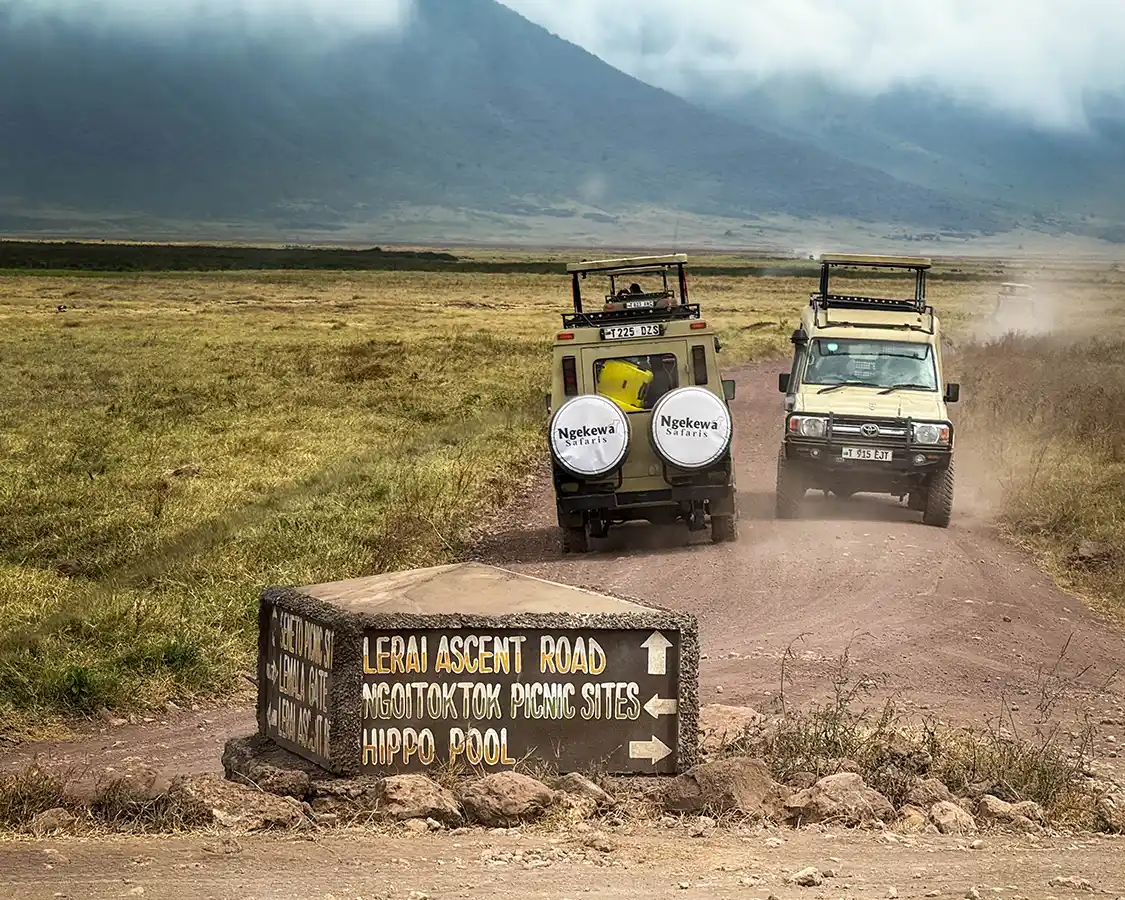
A self-drive safari in Ngorongoro Conservation Area is possible but not recommended for first-time visitors. The park’s radio network, which guides users to share wildlife sighting information, is not available to independent visitors. We booked local operator Luna Safari for our week-long safari. Hiring a guide with local knowledge makes the difference between a good day on the crater floor and a great one.
What Families Will See Within The Ngorongoro Crater
The descent into Ngorongoro Crater is not a gentle slope. The road drops sharply from the crater rim through highland forest before the crater floor opens up around you. The epic scale of the caldera doesn’t really register until you’re inside it, with the crater walls rising on all sides and the soda lake shimmering at the center.
If you’ve ever seen the movie, The Land Before Time, that Cohen mentioned when we were on the crater rim, that’s where the similarity will hit you.
Lions
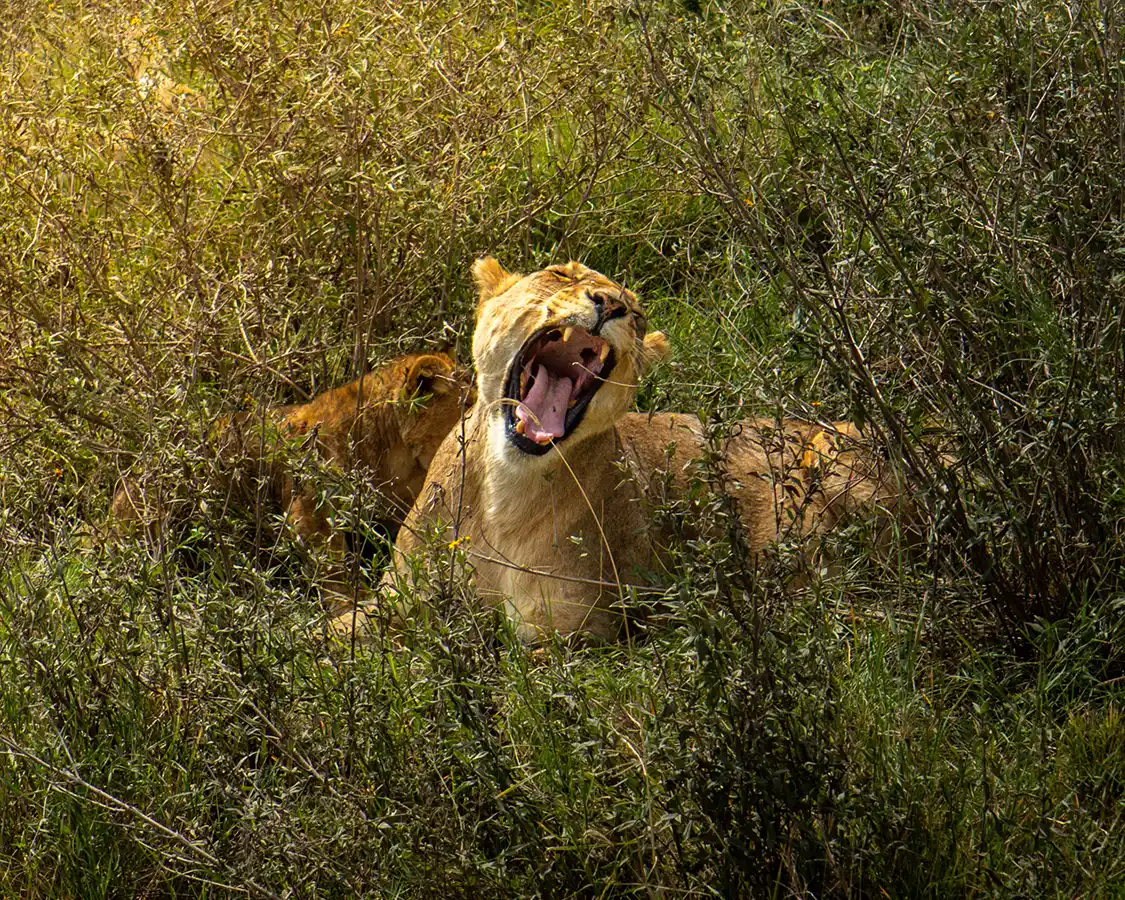
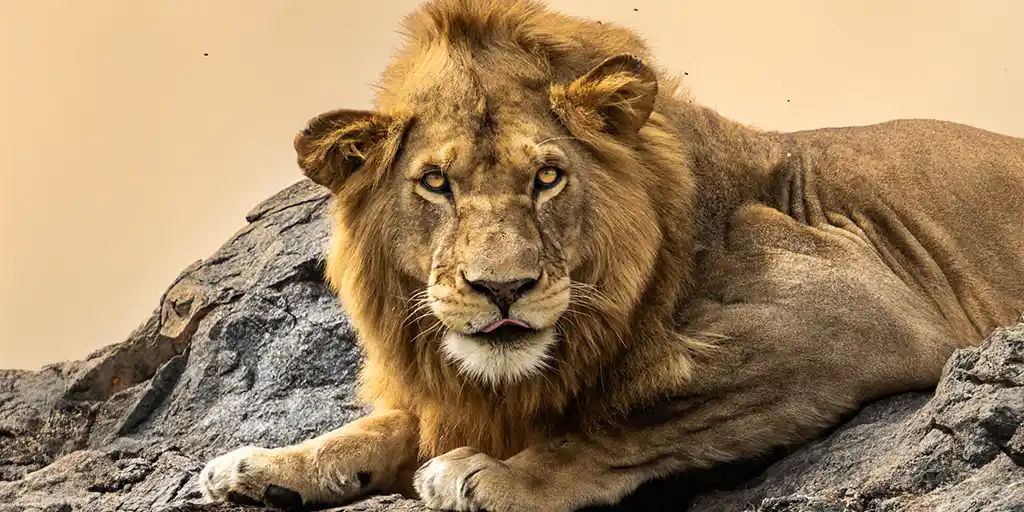
Ngorongoro Crater holds one of the highest densities of lions anywhere on Earth. Unlike the Serengeti’s wide-roaming prides, the lions in Ngorongoro are largely resident within the crater year-round. Their territories have been shaped by the crater walls. Morning game drives regularly produce lion sightings within the first thirty minutes on the floor. The cats are here in numbers that make encounters feel inevitable. I had yet to meet anyone who had never seen at least one pride.
At least until my family got there and didn’t even see a single lion. Not that we were upset. We saw plenty of wildlife, including one animal that we had yet to tick off on our Tanzania Big Five list.
Ngorongoro Crater’s lion population has faced genetic challenges due to its relative isolation. Conservationists monitor the local residents closely. The populations living here create a unique educational experience for families. After all, these are not just your average pride of lions. They are a population of apex predators navigating a very unique set of natural pressures, and watching them, your kids can begin to understand what conservation actually means in practice.
Elephants
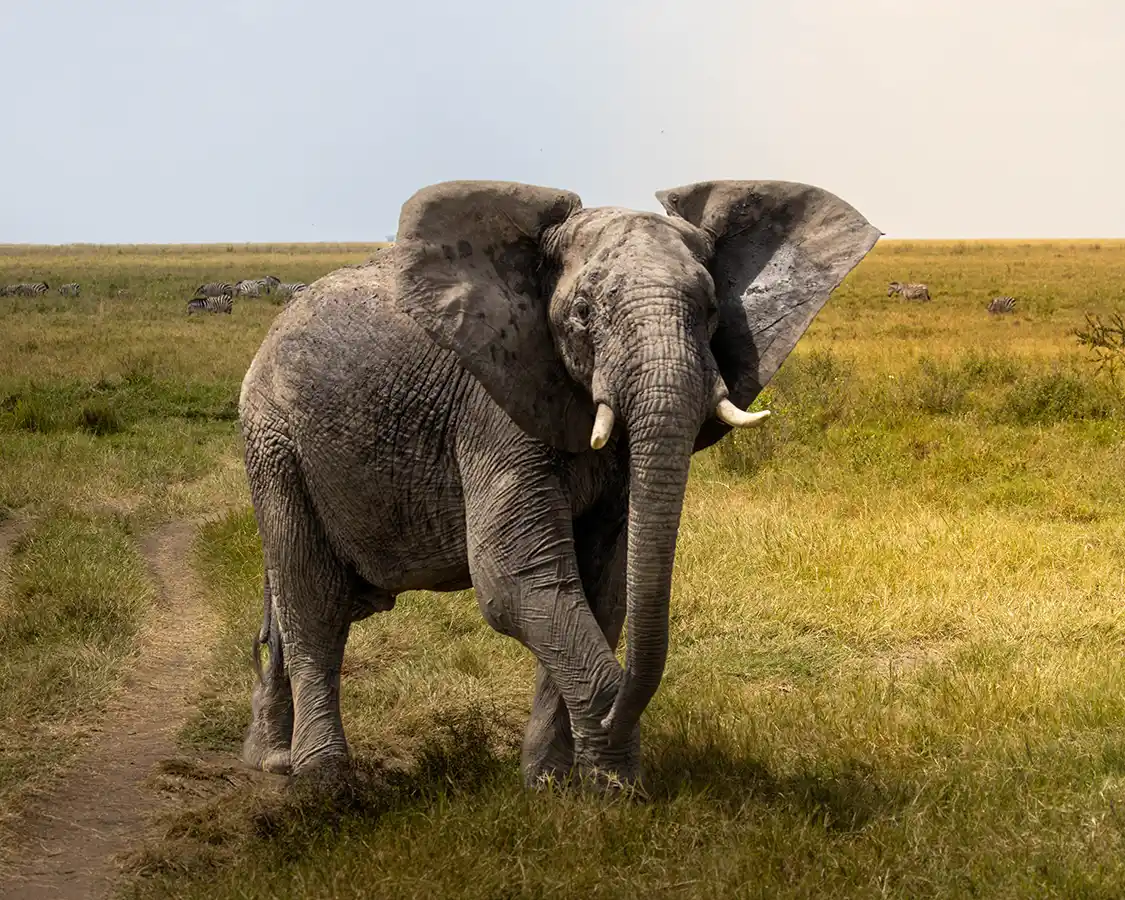
The elephant population in Ngorongoro Crater is predominantly older bulls. Elephants move in and out of the crater along specific routes, and the individuals who spend most of their time on the floor tend to be large, experienced males with impressive tusks.
One of the things that my family quickly found was that the encounters with these animals felt very different from the herd of elephants that we came across in Tarangire and Serengeti. Older bulls move with a confident purpose, and at close range, the sense of age and intelligence in them is something we all became acutely aware of. Rather than a casual indifference, these animals seemed to be watching us as much as we were watching them.
The Black Rhino
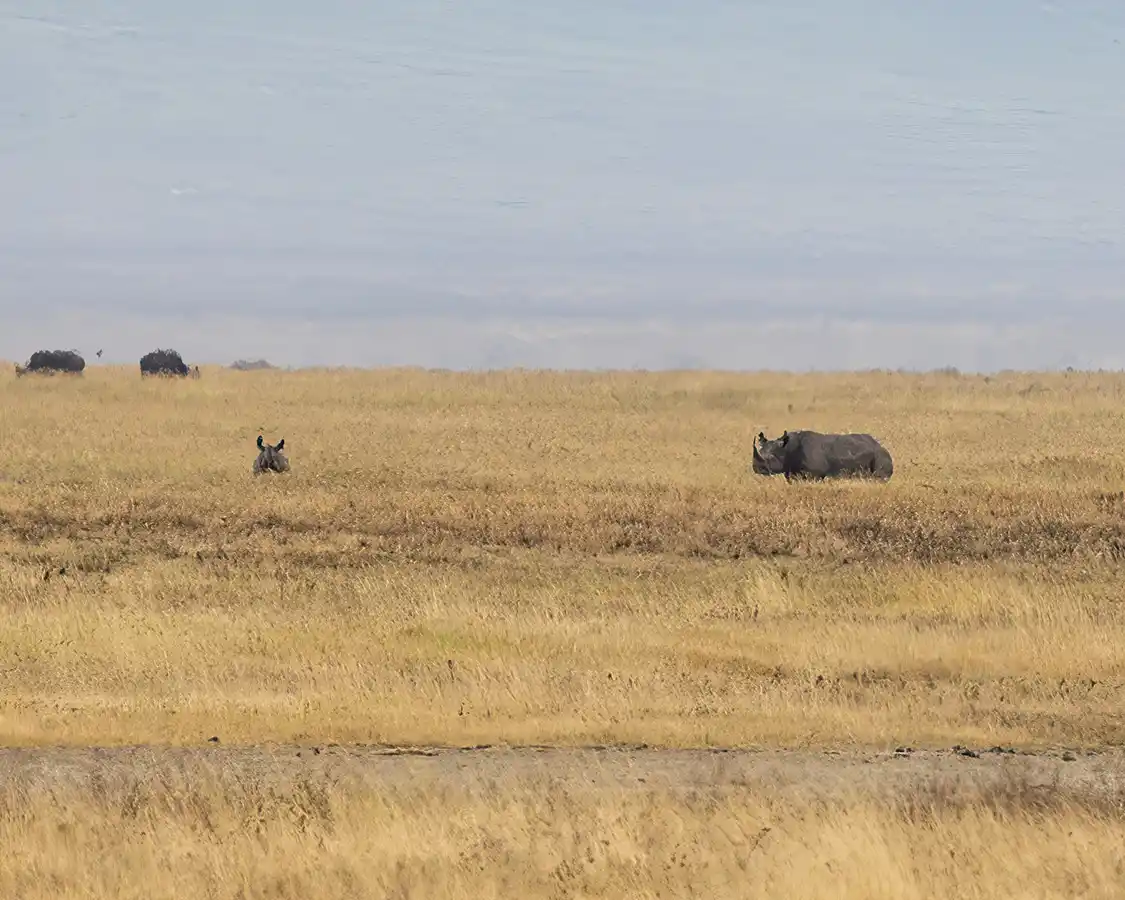
The Black Rhino is an almost legendary sight in Tanzania. There are only around 250 black rhinos remaining in all of Tanzania. Around 25-35 members of that population live within the borders of the Ngorongoro Conservation Area. They are critically endangered, naturally reclusive, and not inclined to make viewing easy. Spotting animals like the black rhino is where experienced guides truly show their value.
When we arrived, our incredible guide, Omary, went straight to the highest point in the crater. He knew that we were hoping to see the rhino, and he was determined to make it happen. He spotted it in the distance. None of us believed him. A speck of dust that even my long 500mm camera lens could barely spot. But when we zoomed in, sure enough, there it was, standing alone on the far side of the soda lake.
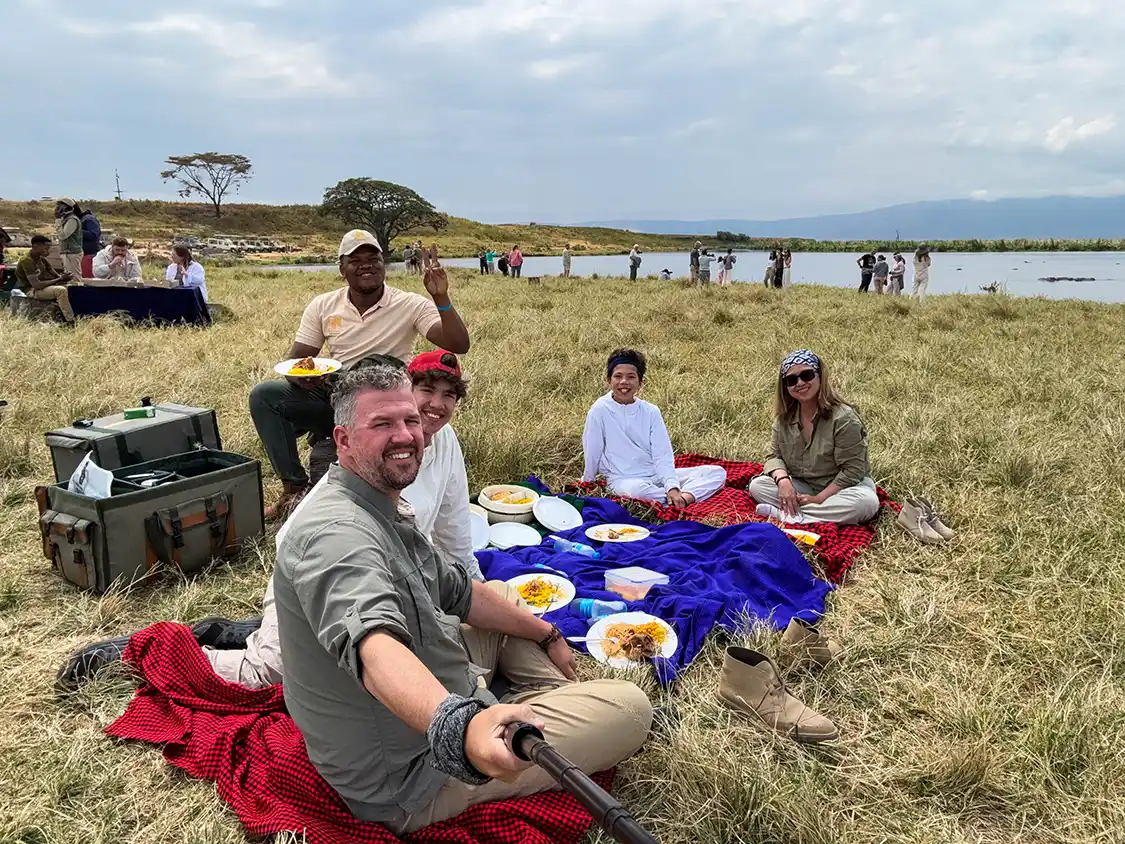
We spent hours on the crater floor without another sighting. We saw lots of wildebeest, hyena, ostrich, and massive bull elephants. We finished a picnic lunch beside a small lake dotted with lazy hippos, and were almost ready to accept that a good rhino sighting would remain an untold story.
Then, as we rounded to the far side of the lake, Cohen pointed at the tall grass in the distance. A mother and her calf, grazing quietly a few hundred meters away. Neither moving fast nor looking particularly concerned about us. We watched them for a long time without speaking.
Two of roughly 250 animals are left in the entire country. That number hits hard when you’re looking at it with your own eyes. We’d end up getting an even closer look at the black rhino on our safari in Zambia’s Mosi-oa-Tunya National Park near Victoria Falls, but this experience was wilder, more natural, and definitely more unforgettable.
Flamingos and Lake Magadi
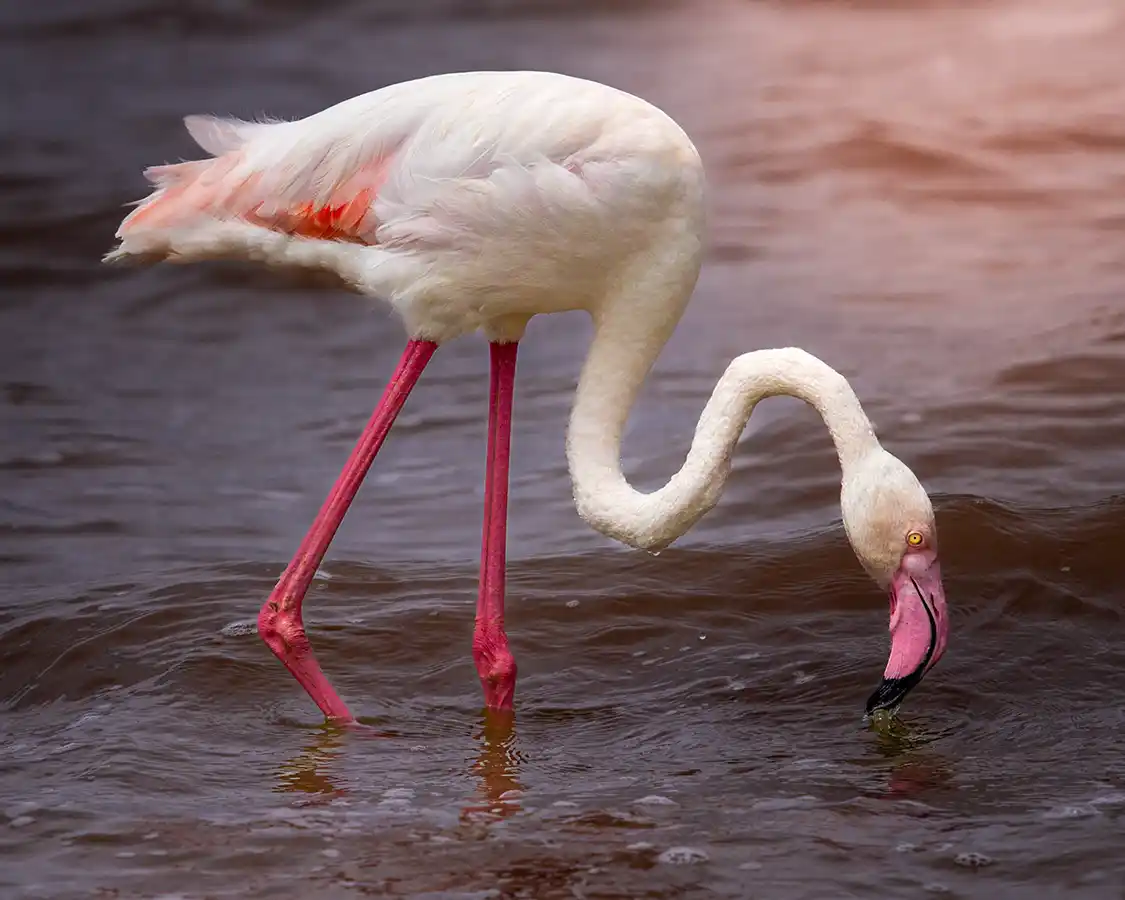
Lake Magadi, the alkaline soda lake at the center of the Ngorongoro Crater floor, turns pink. This color change is from microscopic algae (specifically Dunaliella salina) and brine shrimp that flourish in the salty water. When they bloom, flamingos arrive in huge numbers to feed.
Both lesser and greater flamingos feed in the shallows of Lake Magadi, their color deepening from the carotenoids in the algae and crustaceans they consume. If you arrive at the right time (usually from June to October and January to February), from a distance, the lake can look like it’s been stained. Up close, the noise and movement of thousands of birds feeding is quite a spectacle.
The Supporting Cast of Animals in Ngorongoro Crater
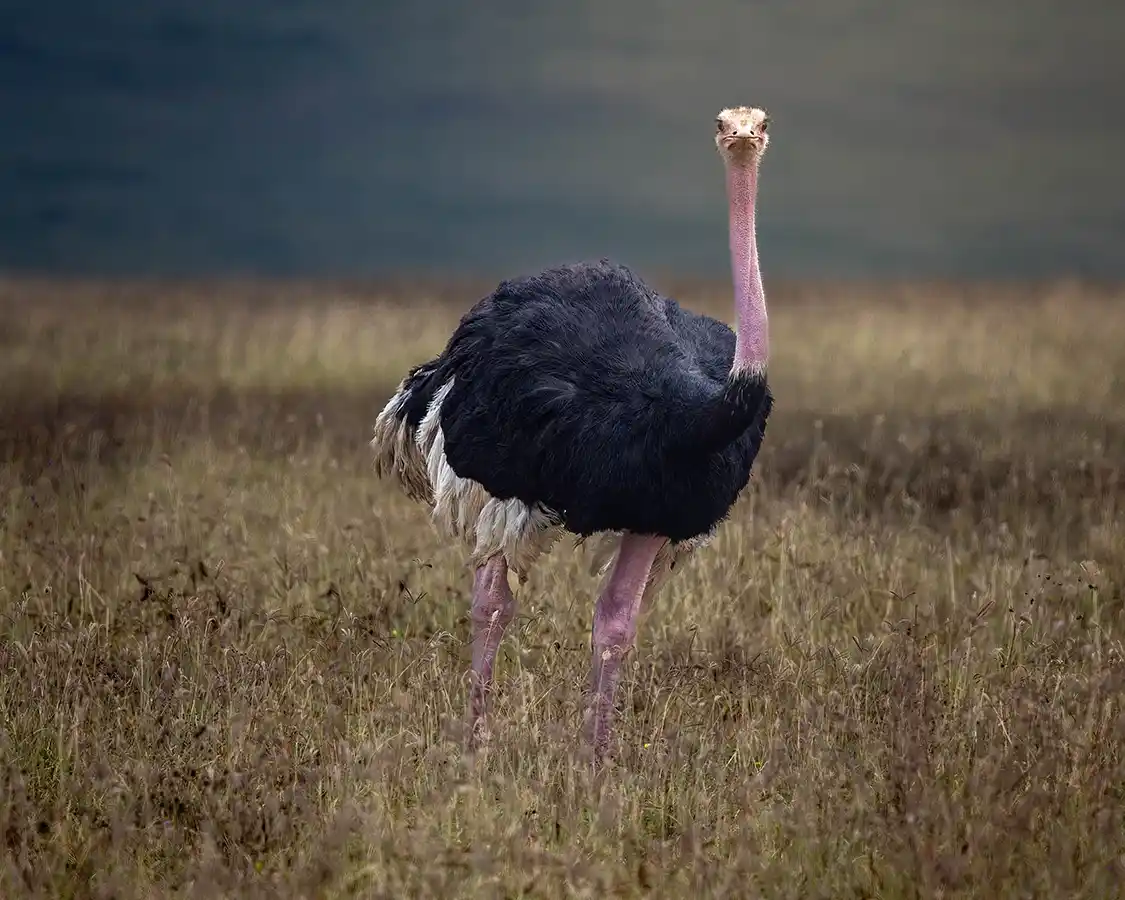
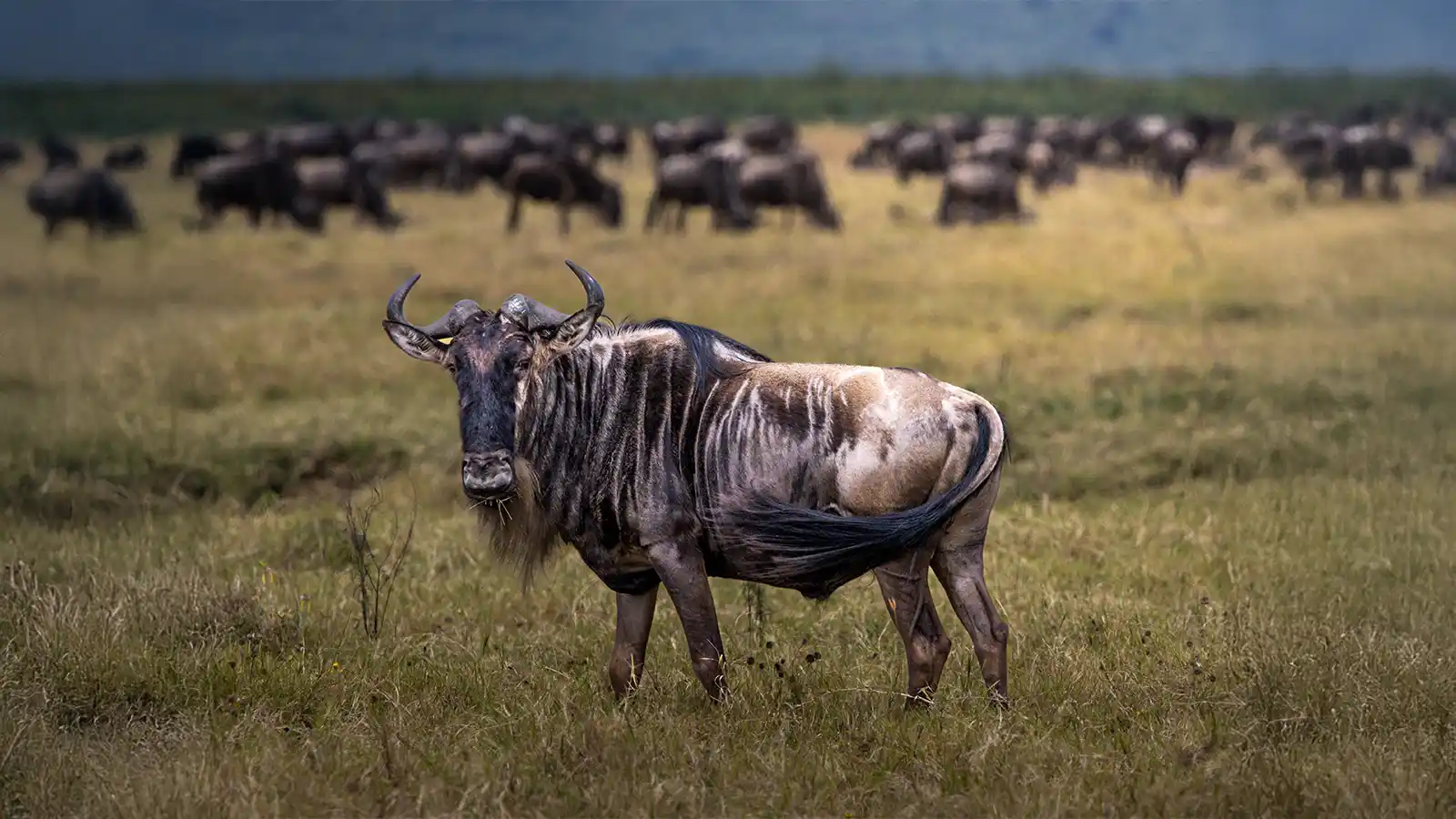
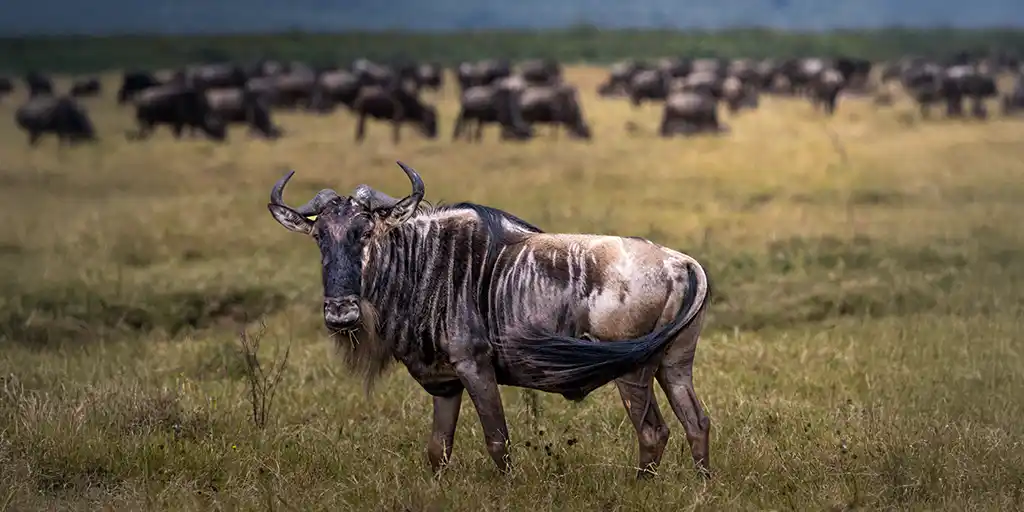
Beyond the headline species, the Ngorongoro Crater floor is alive with zebra and wildebeest herds, jackals trotting purposefully between sightings, hyenas whose laziness conceals one of the planet’s most effective predators, and warthogs who waddle around with a sense of dignity entirely that the kids found to be a hilarious contrast to the looks.
Spotted hyena clans are particularly active around dawn and dusk. Birds are everywhere: crowned cranes, kori bustards, secretary birds, and dozens of raptor species working the thermals above the rim.
Olduvai Gorge: Where the Human Story Begins
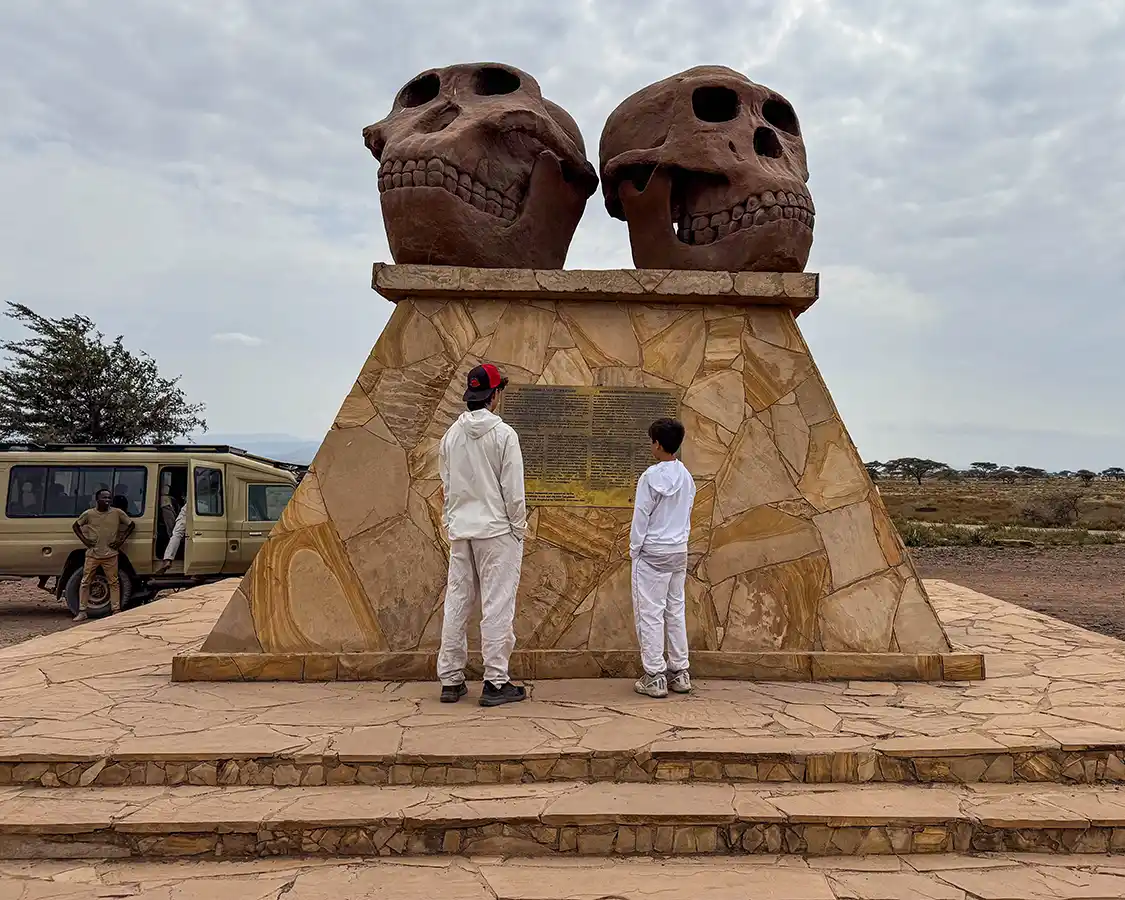
Olduvai Gorge sits within the Ngorongoro Conservation Area, about an hour’s drive from the crater on the road that takes travelers toward Serengeti National Park. Olduvai Gorge is often overlooked by visitors, yet it’s one of the most important archaeological sites on the planet. Here’s why Olduvai Gorge belongs on your family’s Ngorongoro itinerary.
The gorge itself cuts through layers of volcanic sediment that preserve a remarkably complete record of time. Within those rocky layers, paleoanthropologists Mary and Louis Leakey discovered fossils spanning nearly two million years of human evolution, including Homo habilis, Australopithecus boisei, and early Homo erectus. The site also produced the famous Laetoli footprints, fossilized tracks left by three early hominids walking upright across volcanic ash approximately 3.6 million years ago.
They are the oldest known footprints of the human lineage. We were able to walk through a copy of them during our visit to the National History Museum in Arusha, which holds a large number of relics from Olduvai Gorge.
A small on-site museum, the discoveries were laid out in a way that was quite accessible for all ages. There are casts of skulls, footprints, and tools arranged to show the progression of human development over millennia. Standing at the gorge viewpoint and looking down into the rock layers, knowing that each stratum represents thousands of years of accumulation, produces a particular kind of quiet in people.
For families visiting NCA, Olduvai Gorge is worth the detour. The combination of wildlife on the crater floor and the human origin story at Olduvai is the kind of layered experience that a trip to northern Tanzania offers and that no other safari destination quite replicates. A half-day is sufficient for the site visit, and many families combine it with a crater game drive on the same day.
Maasai Communities in the Ngorongoro Conservation Area
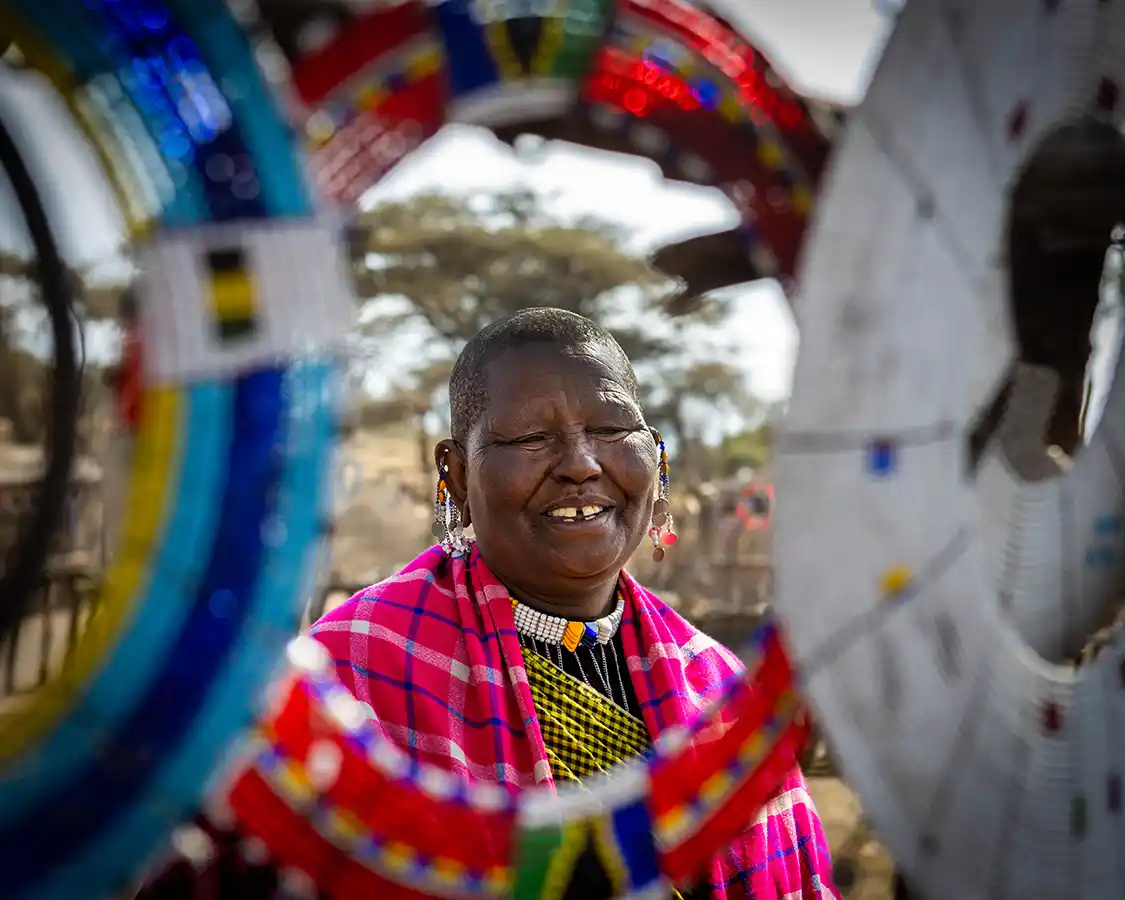
Ngorongoro Conservation Area is one of the few protected areas in Africa where a traditional human community coexists alongside wildlife within the park borders. Around 100,000 Maasai people live within Ngorongoro Conservation Area, herding cattle across the highlands and along the crater rim as they have for generations. Their presence here is not a tourist attraction. It is a living relationship between a community and a landscape that predates the founding of the conservation area.
Around 400,000 Maasai live across northern Tanzania today, and the NCA is one of the places where their presence is most visible and their traditional culture is most intact. This isn’t a culture that has been preserved behind glass for education and amusement. It is a living community that has chosen, on its own terms, to maintain a way of life that modern pressure has eroded almost everywhere else.
A visit to a Maasai community within Ngorongoro Conservation Area is among the most genuinely educational cultural experiences the Northern Circuit offers. For my family, this is how the experience unfolded:
Omary slowed the Land Cruiser somewhere near the edge of the conservation area, looked at the cluster of circular huts made of acacia wood and dried cow dung ahead of us, and said simply, ‘Let’s see if anyone’s home.‘
That is how it works here. No stage shows, no scheduled performances, no entrance fees paid to a middleman. If the community is home and welcoming visitors, you are welcome to come in. If not, you drive on. We were welcomed in. We greeted the elders first. That is the protocol among the Maasai, and it matters. We bowed, and from that point we were guests rather than visitors.
Before long, Cohen and Dylan both had shukas draped over their shoulders. The warriors performed the adumu, a deep, resonant chant that bound us as guests. The jumping is what makes the highlight reels. Nearly unimaginable verticals, the higher the jump, the more attractive the man. The singing is what made us go quiet, at least until a young Maasai ducked out of one of the huts and began playing a game of hide-and-seek with Dylan.
We watched a fire made from two pieces of wood and centuries of knowledge, as they still do while roaming with their herds today.
We were ushered into the boma, the family home built entirely by the local women. It was cool and low-ceilinged, with cattle sleeping nearby. In Maasai belief, God entrusted all cattle to the Maasai. They are sacred to them. The home reflected that: the cattle are not separate from family life. They are part of it.
The beadwork worn by the women is not decoration; each color has its own symbolism. Red for courage. White for peace. Blue for sky and water. Every pattern communicates exactly who a person is and where they belong within the community’s structure. We bought more than we planned to and spent more than we should have. But after being welcomed into a home and shown such kindness, we weren’t about to haggle.
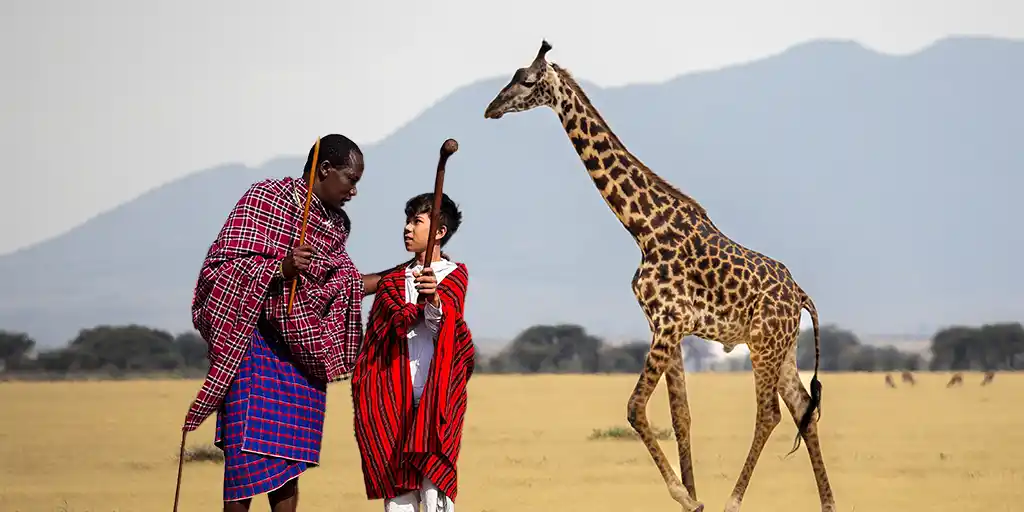
The Maasai women were as curious about our family as we were about them. Christina came home wearing a beaded necklace that they had placed around her neck. The chief’s son handed Dylan his talking stick to hold, not for a photo, but because a boy had spent the afternoon listening and showing up with genuine respect. Dylan was quiet for the rest of that afternoon. That is not a small thing for an eleven-year-old.
A note on choosing a Maasai community visit:
Ask your guide how they work with local Maasai communities and confirm that the relationship is genuinely reciprocal. The best visits are the ones where the community has control over who comes in and when, and where the income from visitors flows directly to the community rather than through an operator’s margin. Buy the handicrafts. That is the most direct economic support you can offer.
Beyond the Crater: More Things to See In Ngorongoro Conservation Area
Empakai Crater
Empakai is the NCA’s other major caldera, smaller than Ngorongoro but arguably more dramatic in its own way. Located in the northeastern highlands, it requires a long drive through moorland and forest to reach it. The crater holds a deep lake that sits 300 meters below the rim, fringed by dense vegetation and in season by large numbers of flamingos.
Unlike the main crater, you can’t reach the floor of Empakai Crater by road. A hiking trail descends to the lake shore, making Empakai one of the few places in the broader NCA where families can actually get out of the vehicle and walk among the animals rather than simply observe them from inside one. The trail is manageable for children who are comfortable with moderately challenging terrain.
Empakai is less visited than the main Ngorongoro Crater, which means the experience tends to be quieter. For families who have already seen the Ngorongoro floor and want something that feels genuinely off the usual path, Empakai is the answer.
The Ngorongoro Highlands and Karatu
The highland road between the town of Karatu and the Ngorongoro Crater rim passes through some of the most fertile and visually striking country in northern Tanzania. At altitude, the air cools, and the landscape turns a deep green that contrasts sharply with the dust of the lower parks.
Coffee and wheat farms line the road. Maasai herders move cattle across misty hillsides. The town of Karatu itself has good accommodation options at significantly lower prices than the lodges that dot the crater rim, and there are many walking farm tours offered as well as community visits that don’t require paying the Ngorongoro Conservation Area entry fee. You can find a great list of those local tours here.
For families staying multiple nights in the area, the Ngorongoro Highlands are worth a morning or afternoon dedicated entirely to slower travel. The landscape between Karatu and the rim is genuinely beautiful, and most itineraries drive through it too quickly to appreciate it.
Shifting Sands
Shifting Sands is a barchan dune, a crescent-shaped mound of volcanic ash about 330 feet (100 meters ) long and 32 feet (10 meters) high that ambles slowly across the plains of Ngorongoro Conservation Area, driven by the prevailing wind. It advances dozens of feet each year, consuming the grass around it and depositing ash behind it. The dune is thought to have originated from the volcanic activity of Ol Doinyo Lengai, an active volcano to the north.
A visit to the shifting sands is one of the most unique and unexpected things to see in Ngorongoro Conservation Area, which is precisely why it belongs on a family itinerary, if time allows for it. The science behind how and why it moves the way it does is the kind of thing that engages children’s curiosity in a way that most conventional sights don’t, and standing beside it while a guide explains barchan dynamics and the role of volcanic ash in its composition produces a conversation that carries over into the evening.
Where to Stay in the Ngorongoro Conservation Area with Kids
Crater Rim Lodges
Accommodation on the crater rim puts you closest to the action and offers the most dramatic arrival experience. Waking before dawn with the crater below you, descending into it for a morning game drive before most visitors have arrived from Karatu, is the best way to experience the floor. Rim lodges come at a premium, but the positioning justifies the cost for families who can manage it.
Options range from mid-range tented camps to high-end properties with full facilities. Look for family rooms or interconnected tents, and confirm that the property has good all-weather vehicle access since rim roads can become difficult after rain. One of the best crater rim lodges for families is Ngorongoro Serena Lodge. It’s about 37 miles (60 km) from Lake Manyara Airport and overlooks the crater.
Karatu-Based Accommodation
Staying in Karatu rather than on the crater rim reduces the nightly accommodation rate considerably and gives families access to the broader highland area without being committed to the more expensive crater-side properties.
The drive from Karatu to the crater takes around 45 minutes, which adds up across multiple game drives but is manageable. Several well-regarded mid-range lodges operate in and around Karatu, many with good family facilities and gardens that children can actually use between drives. Here are some of Karatu’s top-rated lodges and farm stays.
Mobile Camps Within the Ngorongoro Conservation Area
A small number of mobile and semi-permanent camps operate within the conservation area itself, positioning families closer to wildlife movement patterns than any fixed property can. These are typically at the higher end of the price range and book well in advance.
For families returning to Tanzania or wanting a deeper wilderness immersion than a crater rim lodge provides, they represent the most intimate way to experience the park. They are typically booked through local safari guides.
Practical Tips for Visiting the Ngorongoro Conservation Area as a Family
- Dress in layers for the rim and the floor. The crater rim at dawn can be genuinely cold, particularly between June and October. The temperature on the floor, 600 meters below, is considerably warmer by mid-morning. Bring a proper warm layer for early departures and a place to stow it once you’re down. This sounds obvious and is consistently underestimated.
- Factor in the descent time. The road down to the crater floor is steep, single-lane in places, and takes around 30 minutes. Entry and exit times are regulated, and the floor must be cleared by 6 pm. Build these logistics into the day’s planning rather than discovering them at 5:30 pm. We had to stop another safari vehicle that had broken down about halfway up the narrow, one-lane roadway, which took about an hour to sort out.
- Don’t rush Olduvai Gorge. If the itinerary includes Olduvai, give it at least two hours. The gorge viewpoint itself takes fifteen minutes. The museum and a proper conversation with the site guides takes longer and is worth considerably more than the viewpoint alone. Families who brief their children about what Olduvai is before arriving get exponentially more out of the visit than those who encounter it cold.
- A picnic lunch on the crater floor is the right call. Lodges and camps prepare packed lunches for crater game drives. Eating on the floor, beside a hippo pool or under an acacia with a kite circling overhead, is a better use of the day than leaving the crater for a midday break. Ask your camp to pack it the night before.
- The black rhino is not guaranteed. Tell your children before the game drive that the rhino may not appear. Frame it honestly: these are critically endangered animals living wild, not animals on a schedule. The sighting is extraordinary when it happens precisely because it isn’t guaranteed. If the rhino doesn’t show, the day still holds lions, elephants, hippos, flamingos, and the crater itself. That is not a consolation prize.
- Maasai community visits require the right guide. The best community visits in the NCA are not organized through a booking platform. They happen through a guide who has genuine relationships with local communities and knows when a village is open to visitors. Ask your guide how they approach community visits and whether income from the visit reaches the community directly.
- Ngorongoro Conservation Area entry fees are separate from Serengeti fees. Tanzania’s national park fees are per person per day and among the highest in Africa. The NCA fees are charged separately from other parks and include both a conservation levy and a crater service fee on days you drive on the floor. Verify current fees with your operator before traveling, as they are updated periodically.
You can read more of my Tanzania family travel tips here.
Travel Resources for Families Visiting Tanzania
For packing, planning, and the details that determine whether your kids are comfortable or miserable in a vehicle for six hours, these guides go deeper.
Frequently Asked Questions About Visiting Ngorongoro with Kids
Yes. Game drives in the crater are conducted from enclosed safari vehicles, and the risks are managed by your guide. The main practical consideration for very young children is the length of the drive day, which can run eight to ten hours, including the descent, floor time, and ascent. For children under five or six, a half-day on the floor followed by a return to camp tends to work better than a full day.
A full day gives significantly more opportunity for wildlife encounters and allows the morning and afternoon light shifts that change what’s visible and what’s active. A half-day is better than nothing and is a reasonable choice for families with very young children or significant time constraints. If you have a full day available, use it.
For families with children aged roughly eight and above who have been briefed on what they’re going to see, yes, without question. Younger children may find the museum interesting, but they won’t have the context to make the deeper connection. The site visit, combined with a good guide’s explanation of human evolution in the landscape where it happened, is genuinely one of the most educational experiences available anywhere on this itinerary.
The dry season (June through October) offers the best conditions for rhino sightings, as reduced vegetation makes spotting easier and rhinos concentrate around water sources. That said, rhinos are present in the crater year-round, and sightings have happened in every month. A guide with strong crater knowledge and active radio contact with other vehicles maximizes the chances regardless of the season.
Technically, yes, though it makes for a very long day. The drive from Arusha to the crater rim takes around two and a half hours each way, which leaves limited time on the floor if you’re aiming to be back in Arusha by evening. An overnight stay in Karatu or on the rim is a much better use of the journey. Most families combine Ngorongoro with one or two other Northern Circuit parks rather than treating it as a standalone day trip.
They are different experiences that complement each other well. The Serengeti offers scale, open plains, the Great Migration, and the full expanse of wild Africa. Ngorongoro offers concentration, containment, and a layered depth of experience that includes human history and culture alongside the wildlife. Most families who do both find Ngorongoro stays with them differently: not bigger, not better, but quieter and somehow more complete. If the itinerary only allows for one, the Serengeti is the classic first choice. If it allows for both, do both.
Is Ngorongoro Conservation Area Worth It for Families?
There is a moment, somewhere on the crater floor, when the landscape clicks into focus in a way that the photographs and the documentaries and the descriptions never quite managed to convey. The crater walls rise around you. The ripples on the lake catch the light. An elephant moves through the grass at a lazy pace. And you realize that you’re no longer an outside observer. You’re part of the landscape.
That feeling is what families chase at Ngorongoro. It is available to anyone willing to make the drive, descend into the crater, and give the place enough time to unveil itself.
Three million years of geology. A hundred thousand years of Maasai culture. Fossils that rewrite the timeline of the human story. Lions that have never left the crater their ancestors were born into. And a mother black rhino and her calf, grazing quietly in the tall grass, while Cohen points and nobody says anything for a very long time.
Worth it doesn’t begin to cover it.
This page is updated as new regional guides and planning resources are published. Looking beyond Tanzania? Explore my International Family Travel Guide.