
Tanzania’s most underrated park, and the place where my kids fell in love with the wild. Here is everything families need to know before they go.
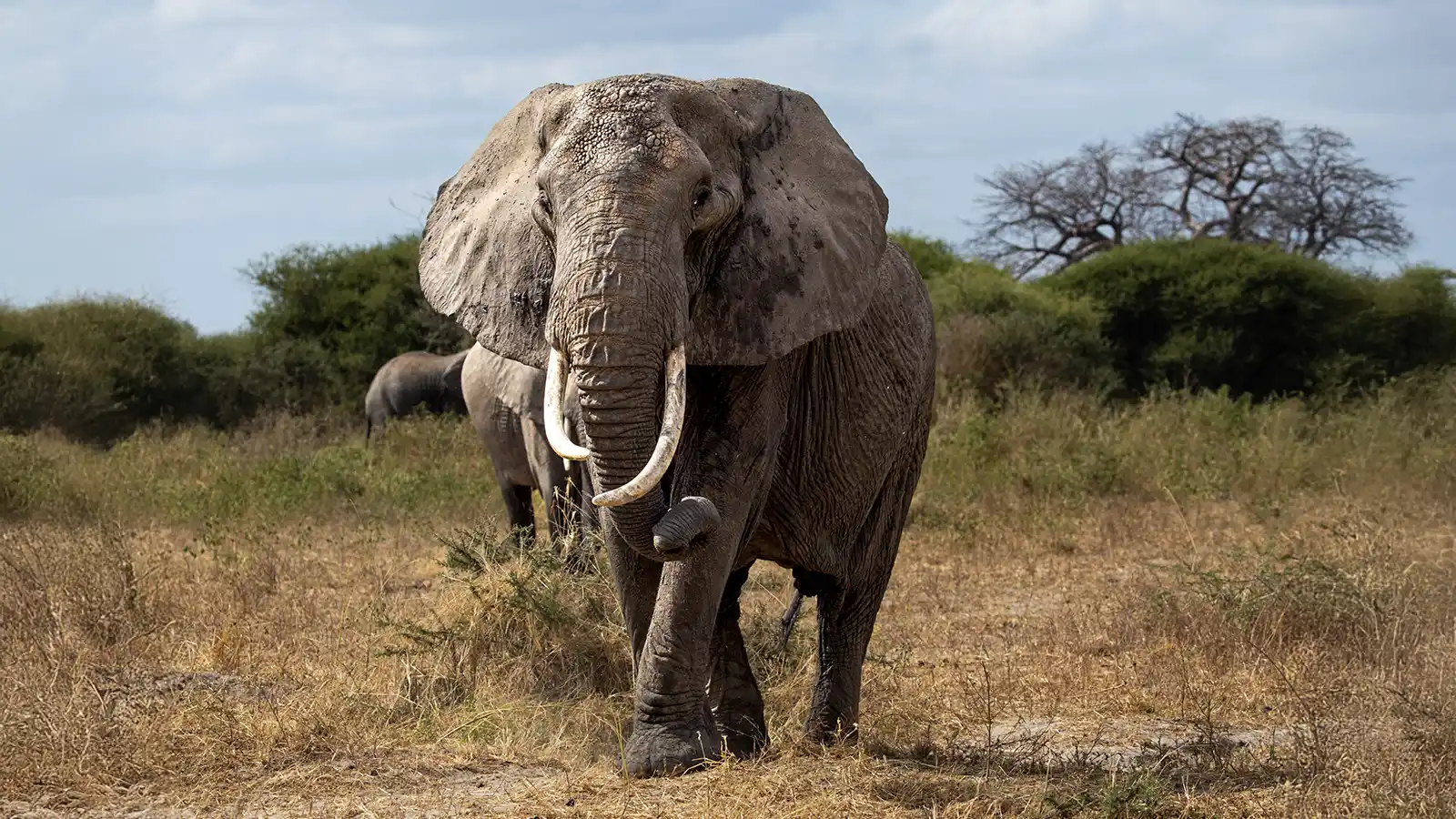
Our guide, Omary, said as we entered through the park gates. “If you want to understand elephants. You come to Tarangire.” My son, Dylan, had counted 58 elephants within our first hour in the park.
He was eleven, and he had stepped into Tarangire National Park with a notebook held tightly in his hand, with every intention of tallying the entire day’s wildlife like a proper field scientist. He made it to 58 elephants before he put his notebook down, picked up my camera, and decided that photographing these incredible creatures was more exciting than counting them.
I didn’t mind at all.
That was day two of our family’s week-long safari through Tanzania’s Northern Circuit, and it was our first proper game drive of the trip. We really had no idea what we were walking into. Within minutes of rolling through the park gates, we were surrounded by elephants. Not in the distance. Not as tiny specks through binoculars. Surrounding the vehicle, close enough that at one point a herd crossed the track so close that I instinctively pulled my elbows back into the safety of our Land Cruiser.
Tarangire is the park that most safari itineraries treat as a warm-up act. A quick stop on the way to Serengeti National Park. A box to tick off a list before heading to the main event. After spending a day inside Tarangire National Park with my family, what I found was a park that has incredible character, an approachable feel, and one that is, without a doubt, one of the most unique family safaris in Tanzania. Tarangire is not a warm-up. It is one of the best family safari destinations in Tanzania, and for some families, it might be the best one of all.
Here is everything you need to know about visiting Tarangire National Park with kids.
Planning the full route? Read my 7-Day Tanzania Northern Circuit Safari itinerary here. Or start with the big picture with my Tanzania family travel guide.
About Tarangire National Park
Table of Contents
Tarangire National Park covers around 1771 square miles (2,850 square kilometers) in northern Tanzania, making it the sixth largest national park in the country. It sits roughly two hours southwest of the safari capital, Arusha, which places it within easy reach of the Northern Circuit’s main hub and makes it one of the most accessible parks in Tanzania for families.
The park is named for the Tarangire River, which winds its way through it and acts as the lifeblood of the park’s entire ecosystem. During the dry season, when water sources across the north of Tanzania disappear, the Tarangire River becomes one of the only reliable places to drink for miles in every direction. As a result, during that time, there is a concentration of wildlife, particularly elephants, that rivals anywhere in Africa.
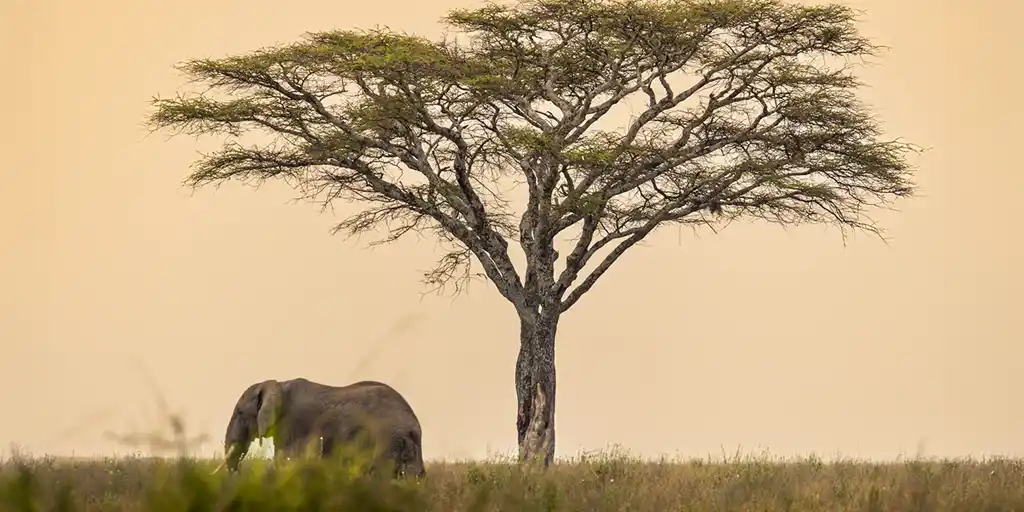
Tarangire is defined by two things above all else: its elephants and its baobab trees. The elephant herds here are among the largest in Tanzania. The baobabs, ancient and enormous, rise from the savannah like Makoma’s Giants sent to watch over the land. In my own naivety, I had genuinely believed baobabs only existed in Madagascar until I stood beneath one in Tarangire. That moment shifted my entire understanding of how little I knew about Central and Southern Africa at the time.
One thing that I love about the park, and something that’s important for families, is how Tarangire is far less crowded than the Serengeti or the Ngorongoro Crater. Game drives in Tarangire feel more private, more intimate, and much less like a Land Cruiser parking lot.
Why Tarangire National Park Is Excellent for Families
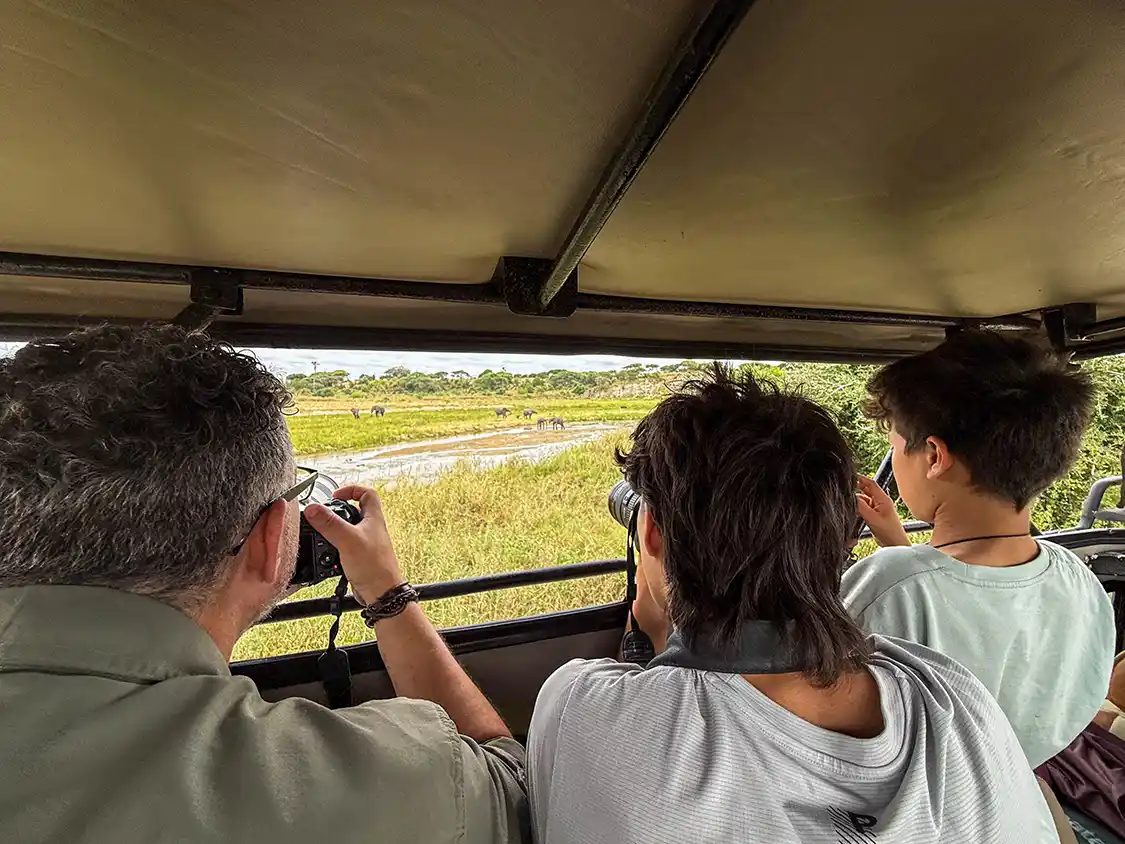
If I were designing a first safari for a family with kids, I would model it after this park. Here’s why a family safari in Tarangire works so well.
The Wildlife Density Is Nearly Unmatched
After more than 40 countries of family travel, I’ve learned a few things along the way. Children don’t have infinite patience for empty landscapes. Sure, it gets better as kids get older, but even now that my kids are 12 and 15, keeping them engaged can still be a struggle on long days.
The great fear of any parent who takes their kids on safari is the long stretches of nothingness, the hour of driving through grass, dust, and country while kids ask how much longer. Tarangire practically eliminates that wait. The wildlife, particularly in the dry season, is dense, and every turn seems to offer a new and unique wildlife experience.
We were surrounded by elephants within minutes of entering the park. There was rarely a moment of nothing. And we saw animals here that we never saw anywhere else during our week-long safari. For young kids with short attention spans, that engrossing experience matters, and it becomes a training ground for deeper dives into some of Tanzania’s most incredible places to visit, like the Serengeti.
The Drive Times Are Manageable
Tarangire National Park is large but navigable, and the distances between major wildlife regions within it aren’t as epic as those in other parks on the Northern Circuit, with the exception of Lake Manyara National Park. In fact, most of them are quite short by comparison.
A day safari in Tarangire doesn’t mean committing to ten to twelve-hour marathons bouncing across endless plains to track down a leopard or rhino. This makes it far gentler on elderly travelers and younger children than the vast scale of the Serengeti, where the rewards are extraordinary, but days are epically long, and the driving distances are vastly longer.
There Is No Place Where Elephants Are More Accessible
There is something about elephant family structure that resonates with kids in a way other wildlife doesn’t.
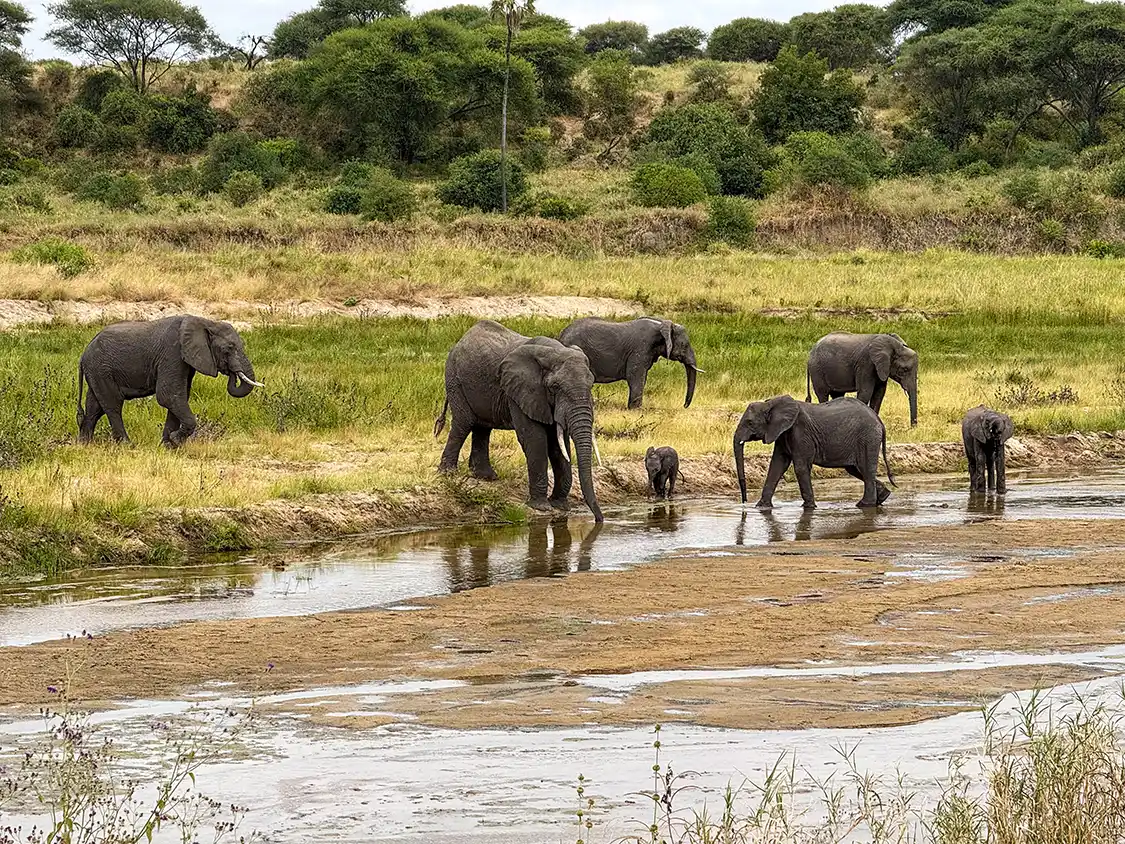
Watching a matriarch lead her herd across the riverbed, the older juveniles hanging back, the tiny calves stumbling to keep up, felt like watching a family reunion complete with stubborn teenagers and carefree toddlers. My boys saw their own family reflected in a herd we saw drinking in the river.
It’s an Ideal Introduction to a Family Safari
Tarangire eased us into the safari experience before the overwhelming scale of the Serengeti and the density of the Ngorongoro Crater. It taught us how to look, how to be patient, how to read the landscape. By the time we reached the bigger parks, we knew how to be on safari. Tarangire is where we learned. For first-time safari families, that progression is genuinely valuable.
The Elephants of Tarangire
You can’t write about a family safari in Tarangire National Park without putting the elephants at the center, because they are the reason that Tarangire has received so much interest in the hearts of travelers to Tanzania. And I’m betting it’s of great interest to you as well.
Tarangire holds one of the largest elephant populations in northern Tanzania, estimated at around 2,500 animals, and that number has been climbing in recent years. During the dry season, these elephants converge on the Tarangire River in extraordinary numbers. Herds can be enormous. Encounters are not occasional. They are the texture of the entire day.
Omary, our guide, had a line about it that stuck with me. ‘If you want to understand elephants,’ he said, ‘you start in Tarangire.’ He was right. He steered us down a winding dirt road toward the river, and it was there that we felt the genuine pulse of the park: elephants bathing in the shallows, buffalo waiting their turn at the water, baboons causing trouble in every direction. The whole ecosystem was compressed onto those riverbanks, and the elephants were unmistakably in charge of it.
For kids, the proximity is the thing. These are not distant grey shapes. They are enormous, intelligent, emotionally complex animals moving past your vehicle close enough that you can see the texture of their skin and the individual lashes around their eyes. Dylan abandoned his elephant tally at 58, not because he ran out of elephants, but because no notebook could keep up with what was in front of him.
Other Wildlife Families Can See in Tarangire
The elephants dominate the Tarangire experience, but they are far from the whole story. Tarangire holds a diverse range of wildlife, and the park’s mix of riverine forest, swamp, and open woodland supports species you won’t reliably find on the open plains.
Predators
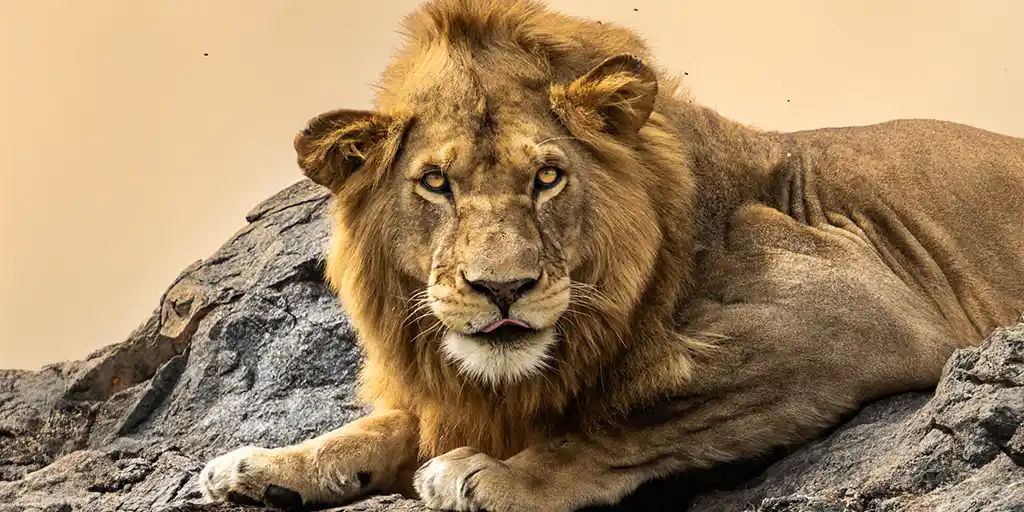
Lions are resident in Tarangire and are regularly seen on safari, often near the river where the prey concentrates. The park also holds leopards, cheetahs, and spotted hyenas, though, as everywhere, these sightings require patience and a measure of luck, which my family did not have during our visit.
Tarangire’s tree-climbing pythons are a genuine local curiosity, an unusual behavior for the species, and one that most guides are in a great position to explain.
Plains Game and Browsers
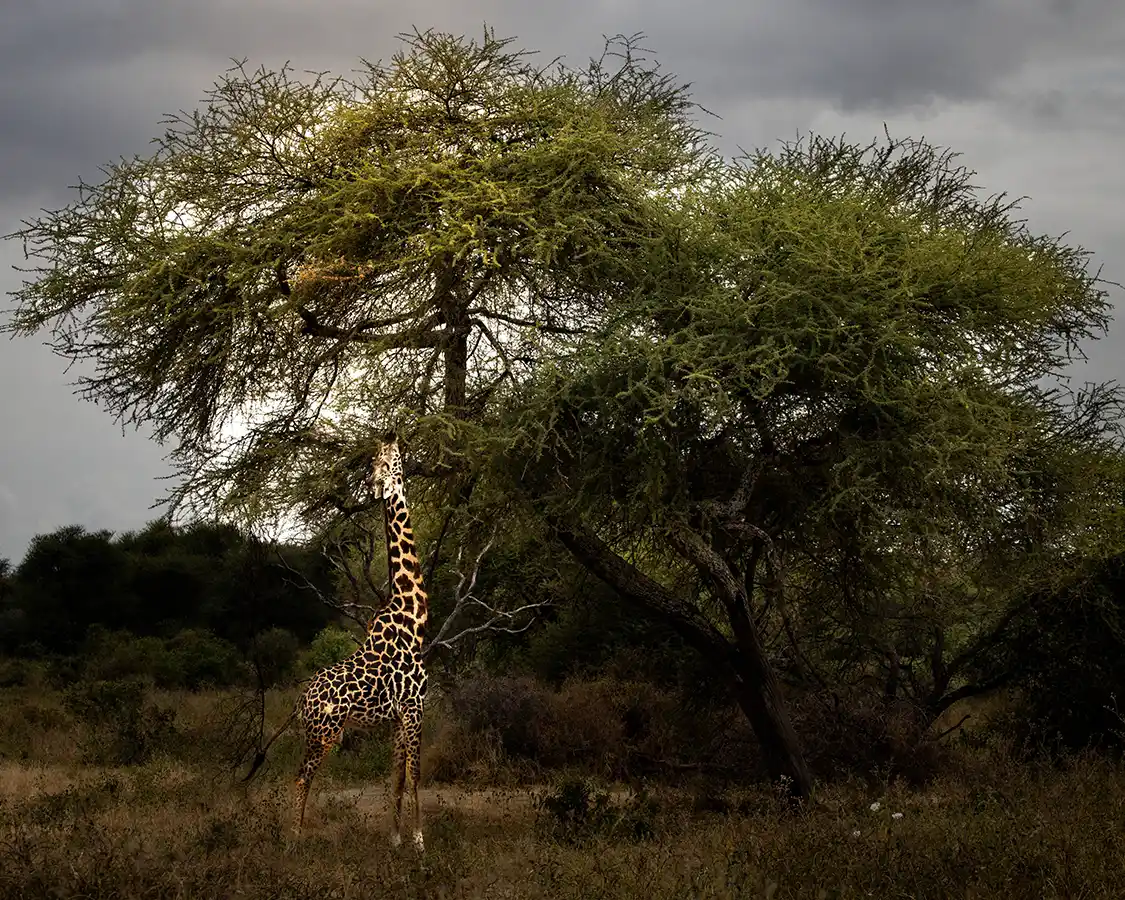
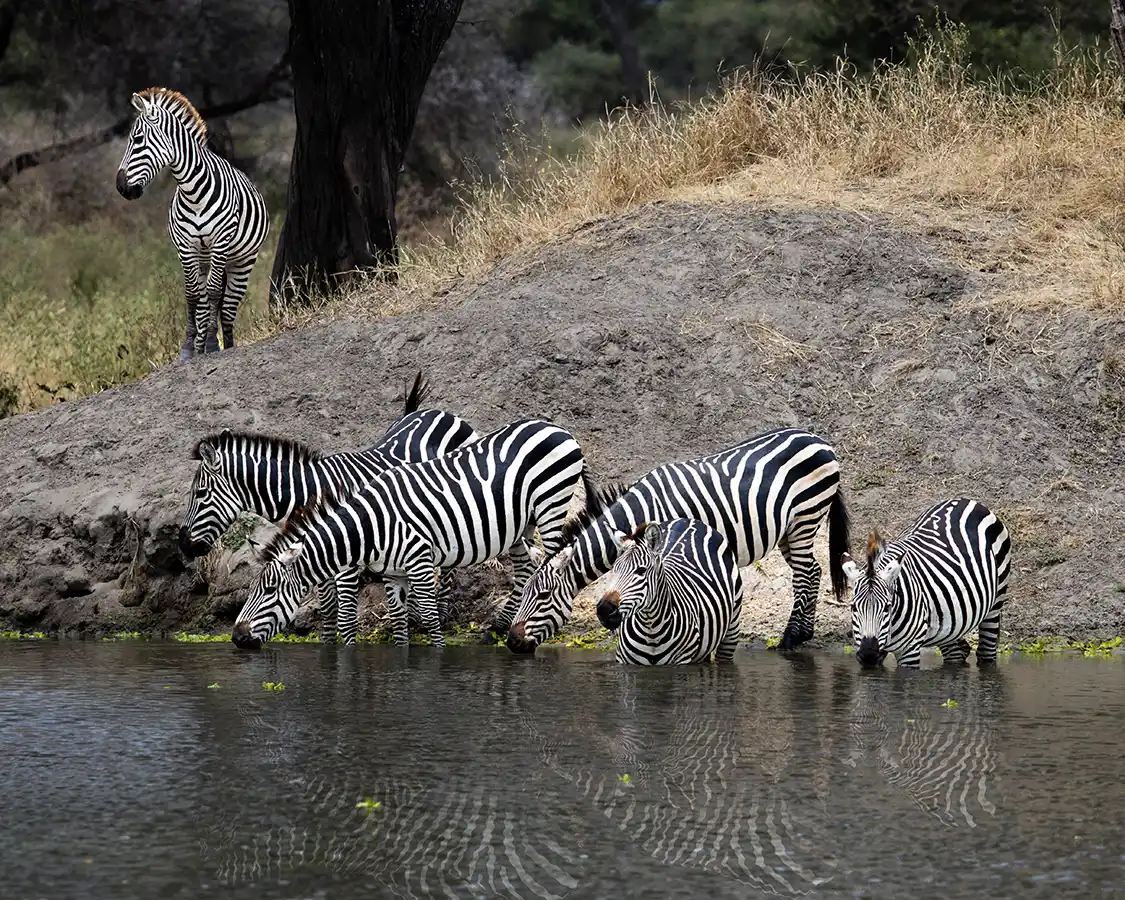
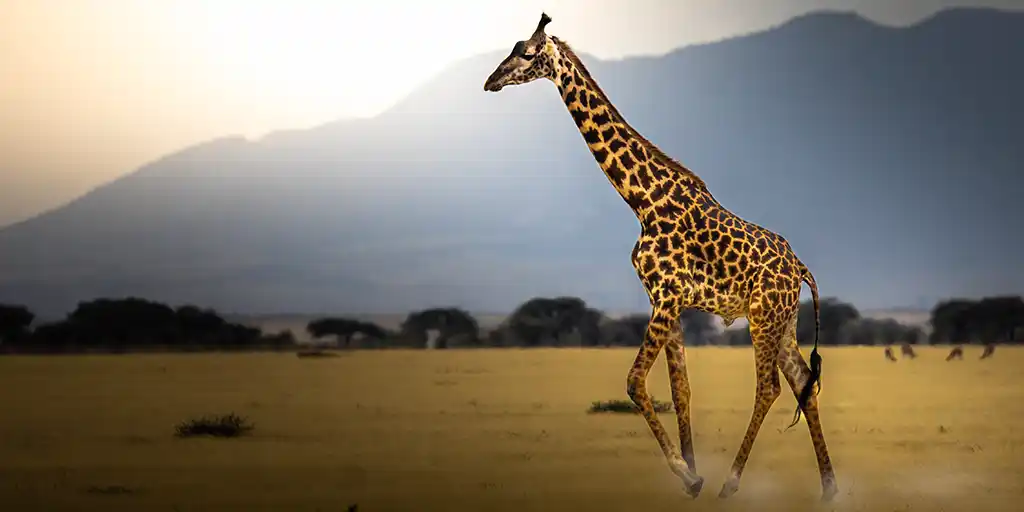
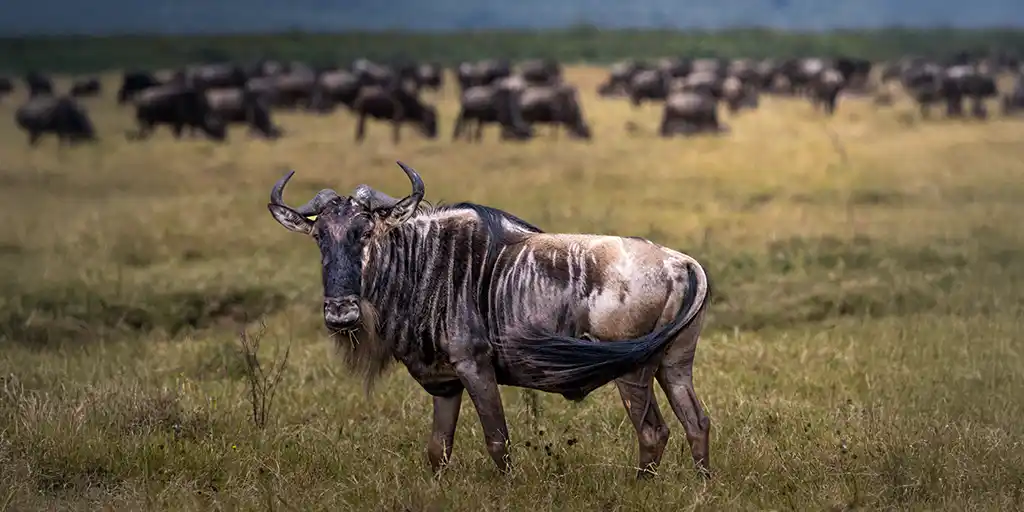
Giraffes move through the woodland with slow-motion grace. Zebras, wildebeest, buffalo, and impala are abundant, particularly in the dry season. Tarangire is also a good place to spot some less common species, including the fringe-eared oryx, the long-necked gerenuk, the greater and lesser kudu, and the dik-dik, the smallest antelope in the world, and a guaranteed hit with younger children who cannot believe something so tiny counts as wildlife.
I’ll be honest, though, our first glimpse of a dik-dik also became the base of a joke that my kids brought up at every possible opportunity. If you’ve got boys, you’ll probably pick up on it very quickly.
Smaller Creatures
One of the most incredible architectural wonders of Tarangire National Park is the abandoned termite mounds that dot the landscape. These are often home to families of dwarf mongoose, and watching them pop in and out of their towers is great entertainment.
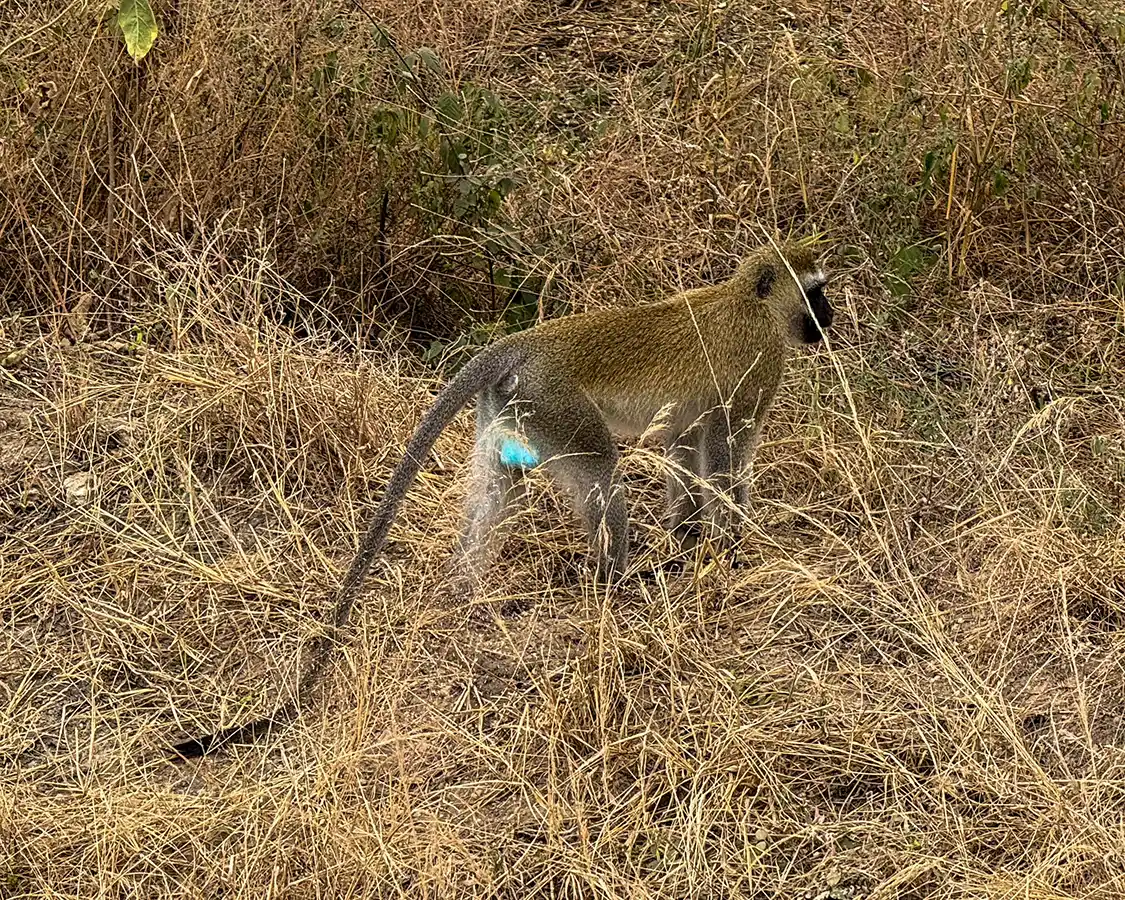
Baboons and vervet monkeys are everywhere, and they are endlessly watchable, if occasionally up to no good. Dylan was particularly proud of a photograph he captured of a vervet monkey. I’ll let you imagine why an eleven-year-old insisted that I process that photo and put it in this article.
Birds
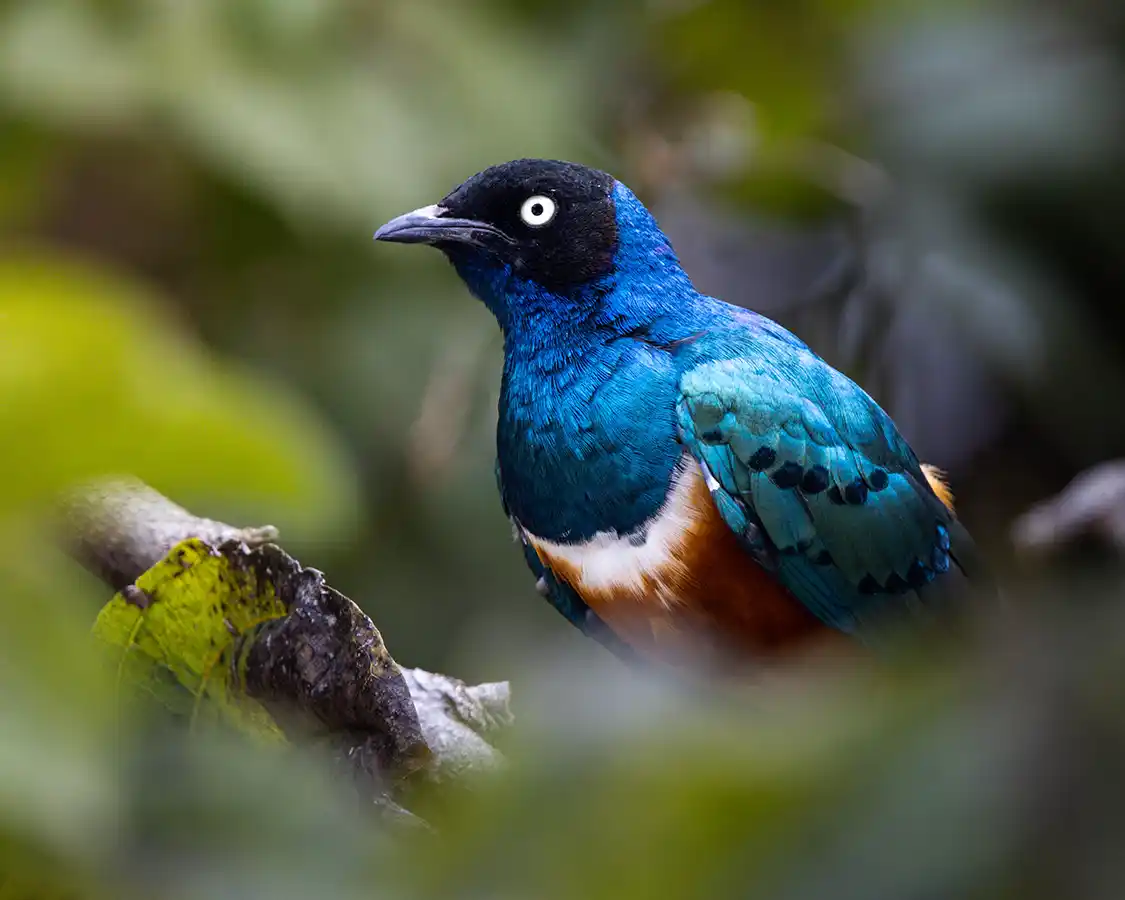
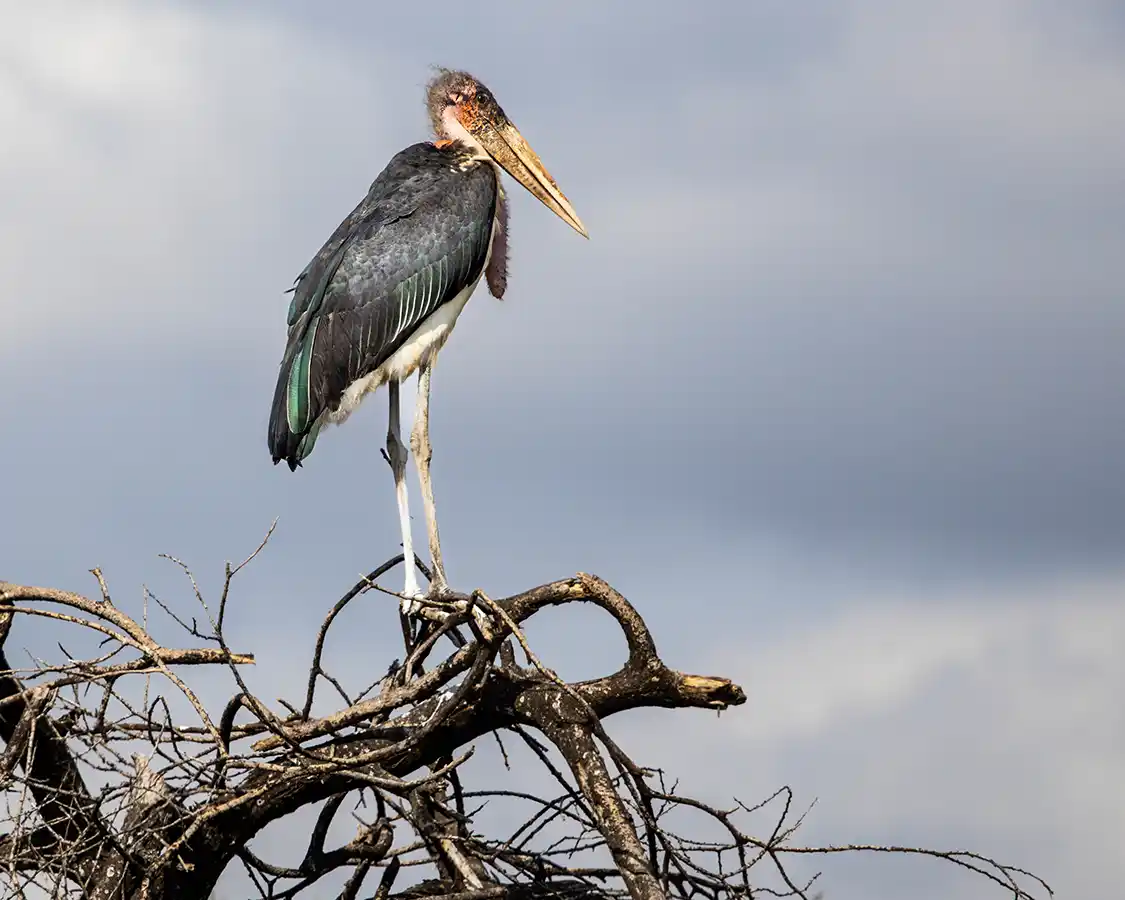
Tarangire’s abundance of trees helps to make it one of the best birding parks in Tanzania, with over 550 species recorded. Even children who think they don’t care about birds tend to be won over by the kori bustard (the heaviest flying bird in the world), the comically large ostrich, the jewel-toned yellow-collared lovebirds, the electric flash of a lilac-breasted roller or a kingfisher, and the hilariously ugly maribou stork.
Bring a bird book for the whole family. It turns the quieter moments into a scavenger hunt.
The Baobab Trees: Tarangire’s Other Icon
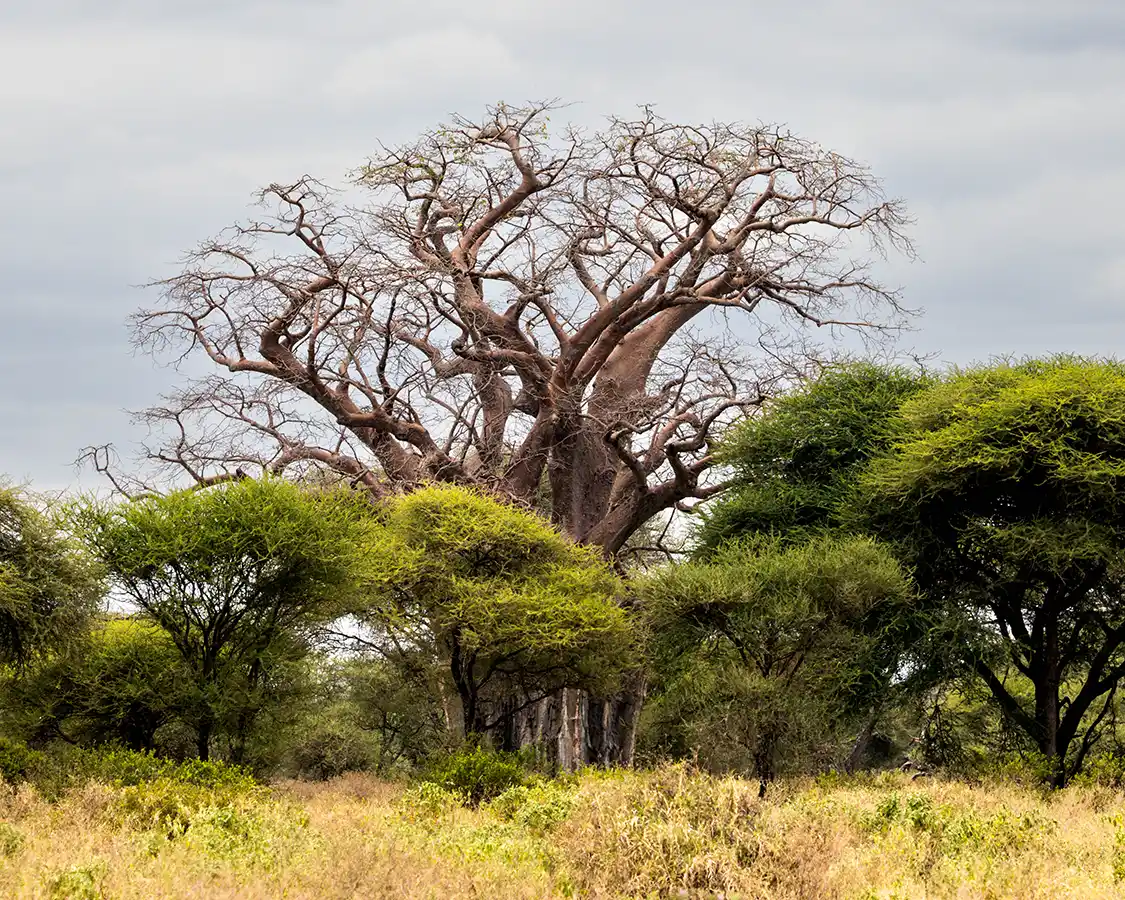
If the elephants are Tarangire’s headline, the baobabs are its signature. These ancient trees, some of them well over a thousand years old, rise from the savannah with trunks so massive that several adults linking arms can’t always encircle them. They look prehistoric because, in a sense, they are.
Baobabs are sometimes called upside-down trees because their bare branches resemble roots reaching into the sky. Local legend holds that a god, irritated with the tree, plucked it up and replanted it upside down. Standing beneath one, that explanation feels about as plausible as any other.
For families, the baobabs are a natural focal point: kids can learn how the trees store thousands of liters of water in their trunks, how elephants gouge the bark to get at the moisture, and how a single tree can live for over two thousand years. They are also, simply, spectacular to photograph, and they give the entire park its distinctive, otherworldly character.
Best Time for a Family Safari in Tarangire
Dry Season (June to October): The Best Time for Families
The dry season is, without question, the prime window for a family visit to Tarangire. As water sources across the wider region dry up, wildlife converges on the Tarangire River in massive numbers. Elephant sightings are at their peak, predators follow the prey, and the concentration of animals means kids are rarely waiting long between sightings. The weather is pleasant, the skies are clear, and the photography conditions are excellent. We visited in July, and the density of wildlife was staggering.
This is also the busiest season, but Tarangire’s relative obscurity means even peak season here feels quieter than the Serengeti or Ngorongoro at any time of year.
Green Season (November to May)
The short rains in November and December bring the landscape to life, and the park sprouts tender green growth. Many animals give birth between January and March, timing their calving to the abundant vegetation, which makes for wonderful sightings of young animals. The green season brings fewer tourists, lower accommodation prices, and exceptional birding as migratory species arrive.
The trade-off is that as the long rains arrive in April, much of the grazing wildlife migrates out of the park toward Lake Manyara and beyond, in search of fresh grass and water elsewhere. The elephants and other resident species remain, but the sheer density of the dry season disperses. For families whose priority is volume of wildlife, the dry season is the clear winner. For families who value green landscapes, baby animals, fewer crowds, and lower prices, the green season has a genuine case.
Getting to Tarangire National Park
Tarangire is one of the most accessible parks on the Northern Circuit. It sits approximately two hours by road southwest of Arusha, the safari capital of Tanzania, which means most families reach it on the first or second day of a wider Northern Circuit itinerary.
Many families combine Tarangire with Lake Manyara, which is nearby, or use it as the opening act before heading deeper into the circuit toward the Serengeti and Ngorongoro. Its proximity to Arusha also makes it feasible as a long day trip from the city, though staying overnight in the area around Karatu or near the park gate lets you catch the prime early-morning and late-afternoon wildlife activity that day-trippers miss.
As with everywhere on the Northern Circuit, a knowledgeable guide makes an enormous difference. Our guide Omary knew exactly which dirt roads led to the river crossings where the wildlife concentrated, and the radio network guides use to share sightings is invisible to independent visitors.
This was our first full day with Omary, and by the end of it, he had already started to feel less like a guide and more like part of the family. A few months after we got home, he and his wife welcomed a baby boy and named him Dylan, after our youngest. That is the kind of connection a great guide builds. It is worth every penny.
Where to Stay in and Around Tarangire with Kids
Accommodation for Tarangire falls into a few broad categories, and the right choice depends on your budget, your kids’ ages, and how much time you want inside the park versus in the surrounding highlands.
Farm of Dreams Lodge (Where We Stayed)
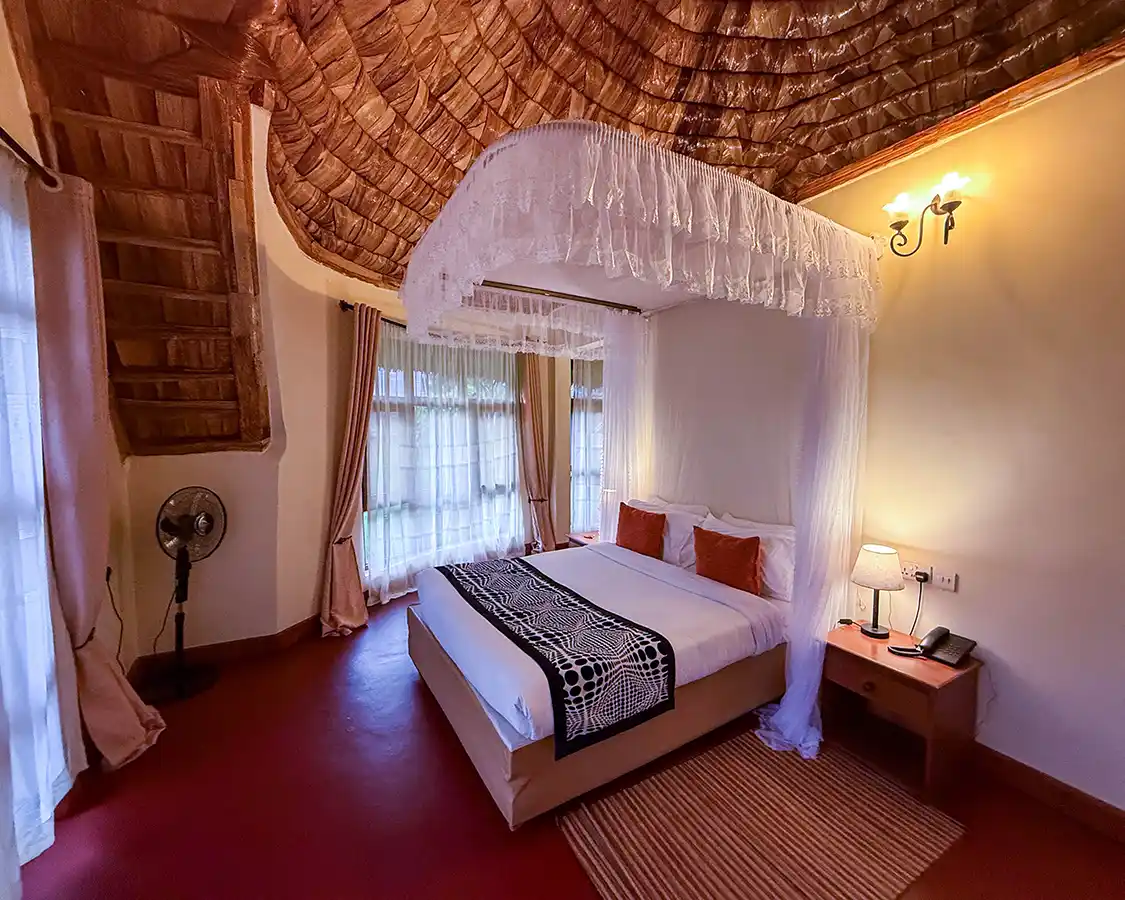
We stayed at Farm of Dreams Lodge, a sprawling property tucked into the hills near Karatu, the highland town that serves as a gateway for both Tarangire and the Ngorongoro Highlands. It wasn’t our original first choice, a reminder that family-friendly safari accommodation books up fast and you should reserve early, but it turned out to be lovely. When we were escorted to our room, my attention went straight up to the intricately carved ceilings and layered woodwork. The attention to detail throughout the property was genuine.
Dinner came with a surprise: a fire-breathing acrobatic show erupted beside the pool as we walked toward the main lodge, and we applauded wildly before the tip jars appeared, which is its own small lesson in how tourism economies work. The kids loved it. It was a memorable, slightly theatrical end to our first full day of safari.
Lodges Inside the Park
Several lodges and tented camps operate within Tarangire’s boundaries. Staying inside the park puts you closest to the wildlife and allows early-morning game drives before day visitors arrive from Arusha and Karatu.
These range from mid-range tented camps to higher-end lodges, and the premium buys you proximity and the immersive experience of being in the bush overnight, with the sounds of the park around you after dark.
Karatu and Gateway Accommodation
Basing yourself in or around Karatu, as we did, is a practical and often more affordable option, particularly if you’re combining Tarangire with Lake Manyara and the Ngorongoro Crater. Karatu has a good range of family-friendly lodges with gardens, pools, and space for kids to decompress between game drives. The trade-off is the drive time to the park gate each morning, but for many families, the savings and the comfort are worth it.
Here are some of the most popular places to stay in Karatu for families.
Practical Tips for Visiting Tarangire with Kids

- Make Tarangire your first park if you can. Its manageable scale and immediate wildlife density make it the ideal introduction to safari for kids. It builds the skills and the patience that pay off in the bigger, more demanding parks later in the itinerary.
- Hand the kids a camera. Tarangire is where both my boys became wildlife photographers, and it happened spontaneously the moment the elephants appeared. If your children show any flicker of interest, give them a real camera or at least a phone with a decent zoom. The engagement it produces across a full day in the vehicle is worth any risk to your gear. Dylan claimed my camera on day two, and the arrangement became permanent.
- Bring a bird guide and a checklist. With 550-plus species, Tarangire turns birding into a game. A simple spotting checklist keeps younger kids engaged during the quieter stretches between big mammal sightings. This is one of the most popular birding books for Eastern and Southern Africa.
- Pack for dust and temperature swings. The park roads are dry and red, and everything will be coated by midday. Lightweight buffs, sunglasses, and quick-dry clothing help. Mornings can be cool, particularly in the highlands around Karatu, so pack a light layer for early departures even though you’ll shed it by mid-morning.
- Time your drives around the heat. Wildlife is most active in the cooler hours of early morning and late afternoon, which also happen to be the most comfortable times for kids to be in the vehicle. Build the day around those windows and consider a midday break for younger children.
- Carry cash for tips. Tips for guides, lodge staff, and the occasional poolside fire-breather come up regularly and are usually expected in cash. Keep small US dollar denominations accessible.
- Book accommodation early. Family-friendly safari lodges fill quickly, as we learned when our first choice was unavailable. Reserve well ahead, especially for dry-season travel.
You can find my complete list of tips and suggestions for family travel in Tanzania here.
Travel Resources for Families Visiting Tanzania
For packing, planning, and the details that determine whether your kids are comfortable or miserable in a vehicle for six hours, these guides go deeper.
Frequently Asked Questions About Visiting Tarangire with Kids
Yes. Its manageable size, shorter game drives, and immediate wildlife density make it one of the most child-friendly parks on the Northern Circuit. Children are rarely waiting long between sightings, which suits shorter attention spans far better than the vast open plains of the Serengeti.
Most families spend one full day or one night and two days in Tarangire as part of a wider Northern Circuit itinerary. A single full day is enough to experience the park’s signature elephants and baobabs, though an overnight stay lets you catch the prime early-morning and late-afternoon wildlife activity and slow the experience down.
Tarangire is famous above all for its elephants, holding one of the largest populations in northern Tanzania, and for its ancient baobab trees. It is also known for being far less crowded than the Serengeti and Ngorongoro Crater, and for exceptional birding with over 550 recorded species.
The dry season, from June to October, is the best time for elephant sightings. As water sources across the region dry up, elephants and other wildlife converge on the permanent Tarangire River in large numbers, making this the peak window for density and proximity.
Yes. Tarangire is roughly two hours from Arusha, making it feasible as a long day trip. That said, staying overnight near the park lets you experience the early-morning and late-afternoon wildlife activity that day visitors miss, and reduces the amount of time spent driving back and forth.
They offer different experiences. The Serengeti delivers vast scale, the Great Migration, and the full sweep of wild Africa, but requires longer drives. Tarangire is more compact, more immediately rewarding, and far less crowded, with elephants and baobabs as its signature draws. For a first safari day with kids, Tarangire is often the gentler and more accessible introduction. Many families find the ideal itinerary includes both.
Is Tarangire National Park Worth It for Families?
Tarangire is the park people underestimate, and I understand why. It doesn’t have the mythical name recognition of the Serengeti or the geological drama of the Ngorongoro Crater. It sits quietly between Arusha and the headline acts, and most itineraries give it a single day on the way to somewhere more famous.
But that single day was the one where my kids fell in love with the wild. It was where Dylan counted 58 elephants and then traded his notebook for a camera he never gave back. It was where we learned how to be on safari, where a matriarch led her herd across a riverbed, and my boys saw their own family in the procession, where the baobabs rewired what I thought a tree could be, and where Omary first started to become part of our family story.
Don’t treat Tarangire as a warm-up. Give it the time and attention it deserves, and it will give your family the day that the rest of the safari is measured against.
This page is updated as new regional guides and planning resources are published. Looking beyond Tanzania? Explore my International Family Travel Guide.