Planning a Serengeti family safari? Here’s what to expect, where to stay, what you’ll see, and why three days is the minimum for families who want to do this properly.
It was around two in the morning when the grunting started.
It was low, deep, and coming from somewhere just outside the canvas cover of our tent in Serengeti National Park. The sound was close enough that Christina and I could feel it as much as hear it. A low, guttural vibration that hit us right in the chest. We lay still in the dark, listening intently. Christina looked at me as if to say, “Maybe you should check it out.” I returned the look with my own that clearly conveyed: “not a chance.”
We had assumed the noise on the first night was baboons. We were corrected in the morning. It was not baboons, it was lions.
The Serengeti is one of the last, truly wild places on Earth. It’s not a place that you can schedule. It’s not a place that you can control. And, it doesn’t let you set the narrative of your family’s safari experience. You show up, you pay attention, you stay quiet, and the Serengeti decides what happens next. For families used to controlling their travel experience, this is either deeply unsettling or the best thing that has ever happened to them.
For my family, it was the best thing.
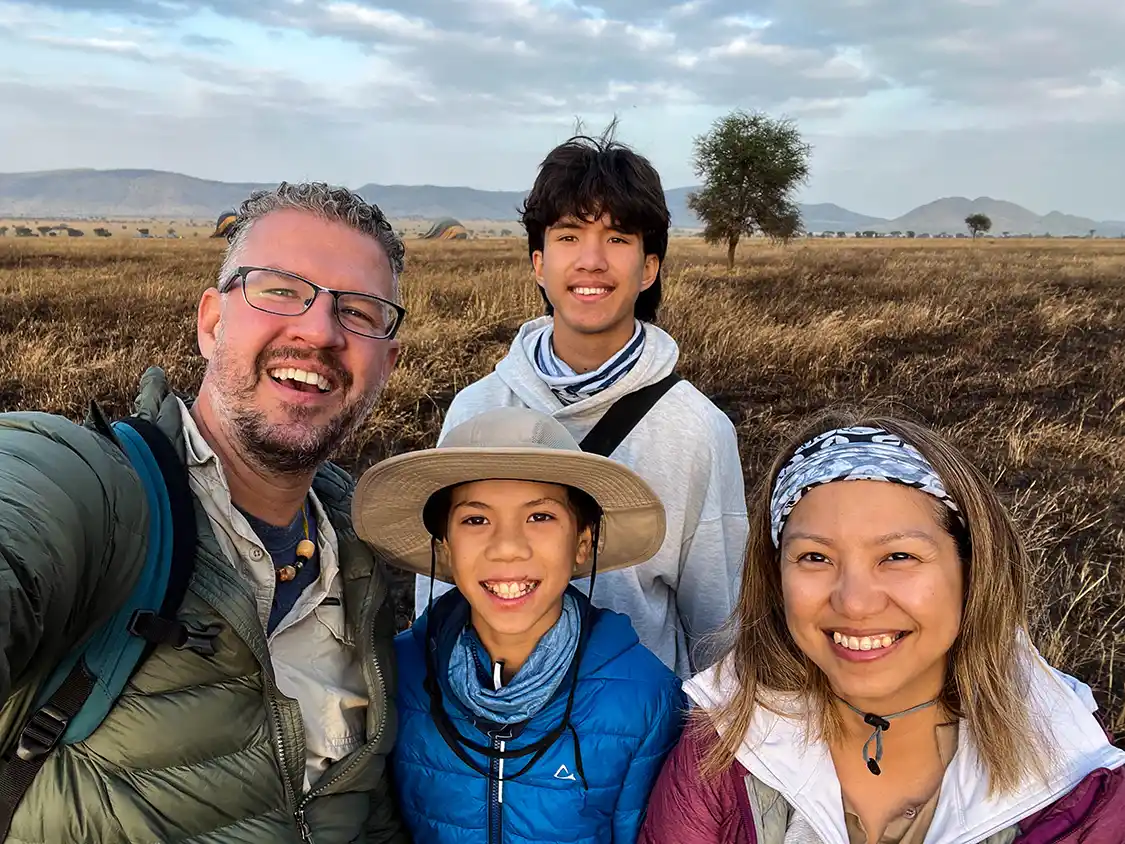
We spent three days and two nights in the Serengeti as part of a week-long Northern Circuit safari through Tanzania with our boys, Cohen and Dylan. What I can tell you, having done it, is that three days is the minimum a family should give this place. Two days will show you what the Serengeti looks like. Three days start to show you what it is.
This is everything we learned from our Serengeti family safari, everything we’d do differently, and everything families need to know before they go.
Already planning a longer Tanzania trip? Read our full Northern Circuit safari itinerary with kids. You can also start with the big picture in my Tanzania family travel guide.
Why the Serengeti is so Incredible for Adventurous Families
On paper, a Serengeti family safari sounds awful. Long days stuck in a tin can with bad suspension, bouncing down washed-out trails to sit and wait for something without being able to speak above a whisper for most of it. It’s true, game drives are long. The roads in the Serengeti are rough and dusty. Wake-up times can be punishing, especially if you want to do a hot air balloon safari. You can spend two hours sitting beneath the sun waiting for a predator to do something interesting, and then another hour trying to find a bathroom. By any reasonable measure, taking a Serengeti safari with kids is not a comfortable family travel experience.
And yet, in more than a decade of traveling with kids across 40-plus countries, I have rarely seen my boys more engaged, more patient, or more in-the-moment than they were during those three days in the Serengeti.
Part of it is the scale. The Serengeti covers 14,750 square kilometers of open savannah, acacia woodland, and ancient granite kopjes. There is nothing in the picture except wild Africa. No fences, no handlers, no interpretive panels. Wildlife is simply living its life on its own terms. Our job, as a family, was to watch it closely enough to understand what we were actually looking at.
The truth is, the kids figured that out faster than Christina and I did. They stopped performing, stopped the jokes and the wrestling, and started observing. As the days went on, the questions got better, deeper, and more meaningful. The silences got longer and more comfortable. By day two, they were reading animal behavior and predicting patterns rather than just pointing at the animals that our guide, Omary, saw first.
That is what three days in the Serengeti does to a family.
How Many Days Should Families Spend in the Serengeti?
The Serengeti is one of the greatest places to visit in all of Tanzania. There are one-day, two-day, three-day, and longer family safaris in Serengeti National Park. Choosing how many days to give to the park is a hard choice that, honestly, comes down to how long you plan to spend in Tanzania, and what, if any, other safaris you’re planning on experiencing while traveling in the country.
Three days, two nights is my recommendation, and the reason is pretty straightforward. The more days you spend in the Serengeti, the more chances for the wildlife to do something extraordinary.
Two days here is not a lesser version of three days. The experience is the same. The Serengeti doesn’t change quality based on how long you stay. What changes is probability. The leopard we waited for on day two might have stayed hidden if we’d left on day two. The cheetah and her cubs on day three might have been resting somewhere that we could not have seen them. Three days doesn’t give you a different Serengeti. It gives you more chances to come home with memories, photographs, and stories to tell.
The wildlife in Serengeti National Park is unpredictable. No itinerary can account for where the lion prides choose to rest or where the elephants decide to roam that day. A slow morning can be followed by an afternoon that blows away all of your expectations. Extending your stay is simply extending the number of opportunities you offer the Serengeti to deliver something you’ll never forget. Two days in the Serengeti is great. Three days is more.
The Best Time to Visit the Serengeti with Kids
July to October: The Great Migration and the River Crossings
July through October is peak season for Serengeti safaris for a reason. The Great Migration brings roughly 1.5 million wildebeest and hundreds of thousands of zebras through the northern Serengeti during these months. The animals, following rainfall and fresh grass in a continuous loop between Tanzania and Kenya’s Masai Mara, are at their most plentiful. The Mara River crossings, where the herds plunge into crocodile-infested water in desperate surging masses, are among the most dramatic wildlife experiences in the world. If this is on your family’s bucket list, plan your visit to Tanzania around this window.
This is also the busiest and most expensive time to visit Serengeti National Park. Accommodation books out months in advance, so book early. Expect more vehicles at popular animal hangouts. And expect longer waits to get that “perfect shot.” The trade-off is worth it for most families, but plan your trip knowing what you’re getting yourself into.
January to February: Calving Season
The southern Serengeti undergoes calving season in January and February. This is when wildebeest give birth to their young in extraordinary numbers across the plains. Predators, like hyenas, lions, cheetahs, and leopards, converge where the prey is at their most vulnerable, which means hunting activity is at its height.
Watching a hunt is not a gentle spectacle, but it is one of the most honest demonstrations of how an ecosystem like the Serengeti actually works. Children who can fully understand the predator/prey relationship and how vital it is to the health of nature will be thrilled. Those who can’t might find it distressing. Know your audience.
My family did not see a hunt. Well, nothing that National Geographic would want to cover. We were in the town of Arusha, visiting the Natural History Museum, when we saw an epic battle between a small tortoise and a slug. It was slow-moving, but somehow still thrilling. You can read my full guide to visiting Arusha here.
This window is also a quieter and less expensive window for a family safari in the Serengeti than the peak dry season.
June: The Shoulder Season Sweet Spot
June is the beginning of the Serengeti dry season. Migration herds gather in the western corridor and start their journey north. As the rivers dry up, wildlife density around water sources starts to build up. Prices and crowds are lower than in July through October. For families who aren’t able to travel during school season, June is worth a serious look.
March to May: The Long Rains
Between the beginning of March and the end of May, the Serengeti is green, lush, and largely empty of tourists. During the rainy season, roads can become impassable, and some safari camps close for the season. This is also the most challenging time of the year to see the large mammals, as the abundance of fresh grass and water means that they don’t converge on shrinking watering holes.
That said, if your family is flexible and adventurous, the Serengeti during green is beautiful in a completely different way. Birdlife is exceptional. The light is extraordinary. And you will have game drives largely to yourselves.
How to Get to the Serengeti National Park
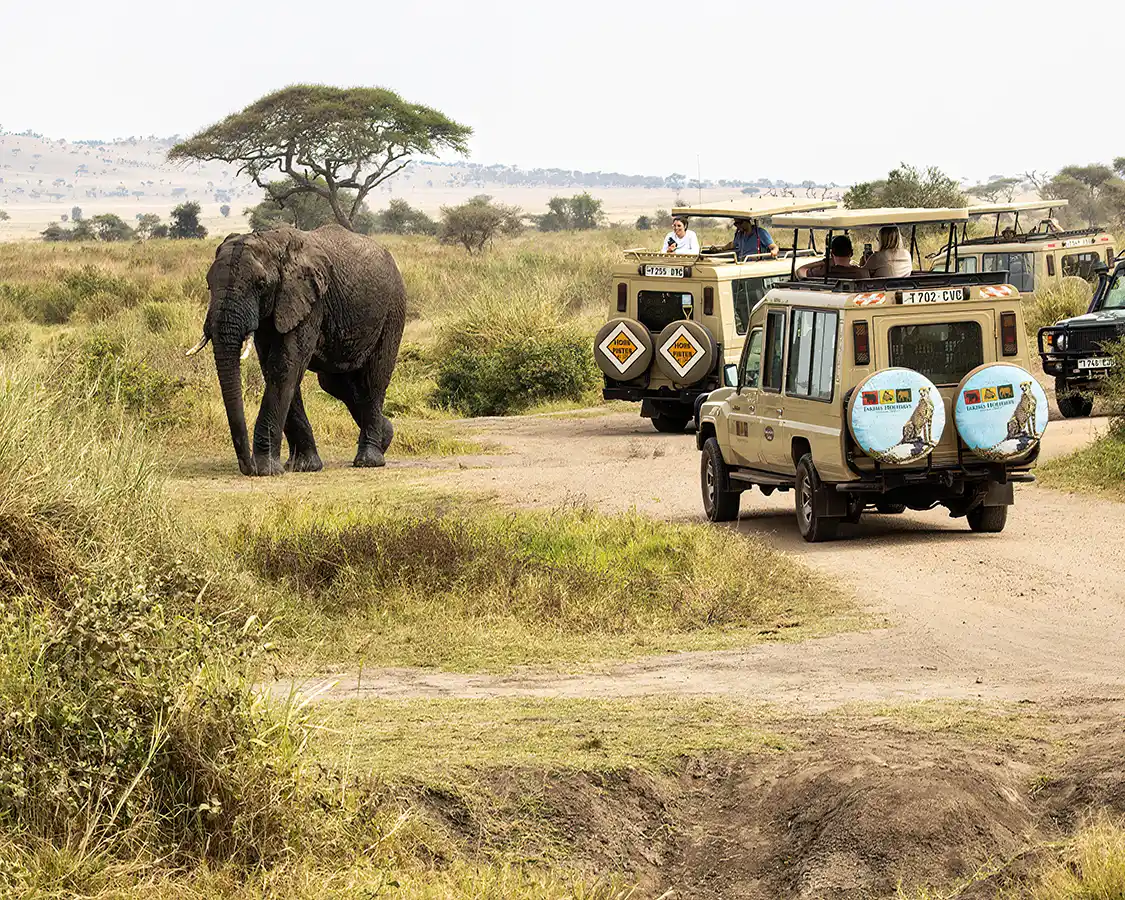
The Serengeti sits within Tanzania’s Northern Circuit, which means most families arrive via Arusha after flying into Kilimanjaro International Airport (JRO). From there, you have two realistic options.
Reaching Serengeti National Park by Road (with a guide):
The overland route from Arusha to the Serengeti takes around six to eight hours, depending on which gate you enter through, with stops at other Northern Circuit parks along the way. My family was picked up at Kilimanjaro International Airport by our guide, Omary, from the tour company, Luna Safari.
After spending the night at Karuma Coffee Plantation Lodge, we did a half-day safari in Tarangire and drove through Ngorongoro Conservation Area, stopping at a Maasai village along the way. It was two days before we entered the Serengeti, which is the typical Northern Circuit approach. You can check out my full guide to Ngorongoro Conservation Area here.
The drives between parks are long, and the roads can be rough, especially in the wet season. Pack neck pillows, audiobooks, and accept that everyone will be coated in a thick film of red dust by the end of the day.
By Charter Flight:
Several small airstrips serve Serengeti National Park, including Seronera, the Grumeti, and Kogatende in the north. Charter flights from Arusha, Kilimanjaro, or other Northern Circuit parks take 45 minutes to an hour and a half, depending on where you’re coming from.
If your budget allows and your time in Tanzania is short, flying directly into the park cuts the drive time dramatically. For families with younger children who struggle with long drives, this is worth the premium cost.
On a Guided Safari:
Attempting a Serengeti self-drive safari is technically possible but practically inadvisable.
The park is enormous, the wildlife requires knowing where to look and when, and the radio network that the professional guides use to track animal movement isn’t available to self-guided visitors.
The expertise and knowledge of our local guide, Omary, allowed us to see animals that we would have otherwise missed entirely. One of the big ones was our only leopard spotting. We had almost given up looking for the last of the Big Five, but Omary received an alert over his radio that gave us the chance to finally see one hiding in the long grass.
Find a good safari company paired with a reputable guide. It is the single best decision you will make for a family safari in Tanzania.
What to Expect from your Serengeti Family Safari
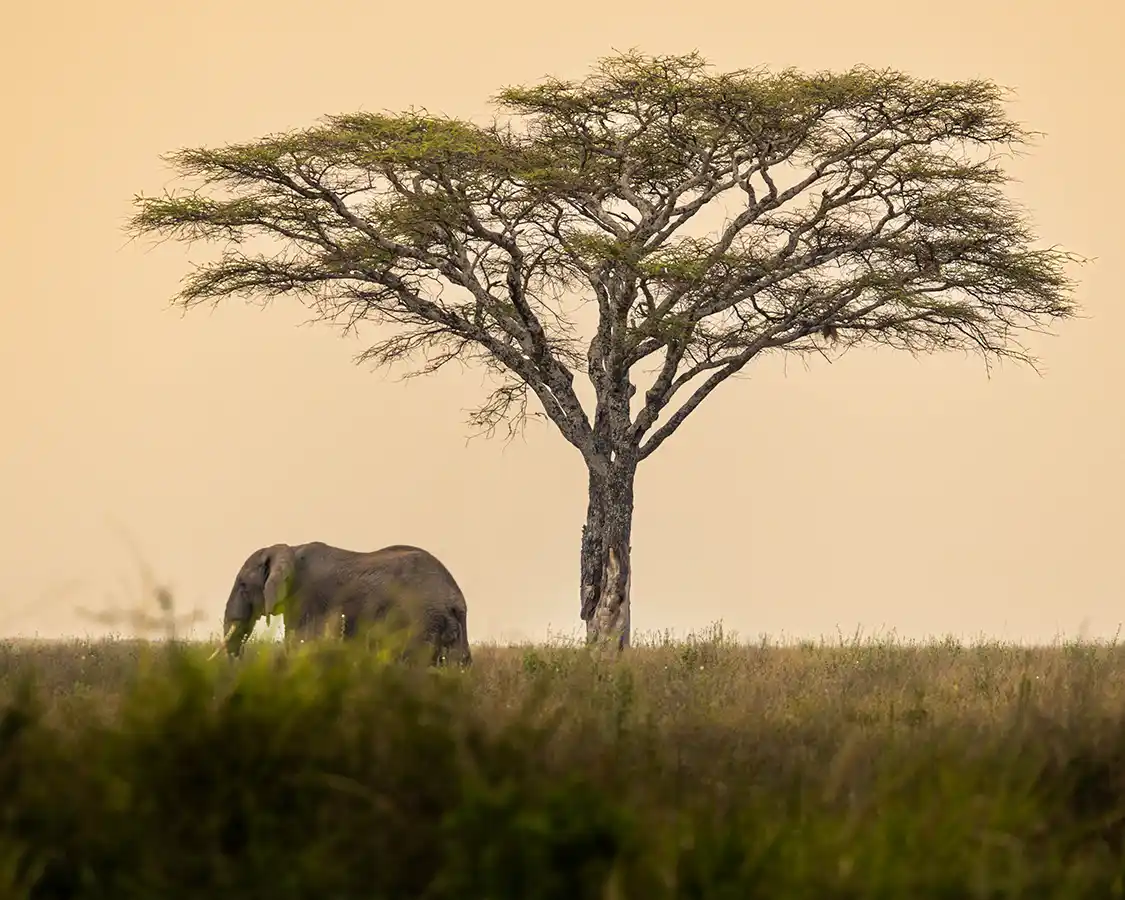
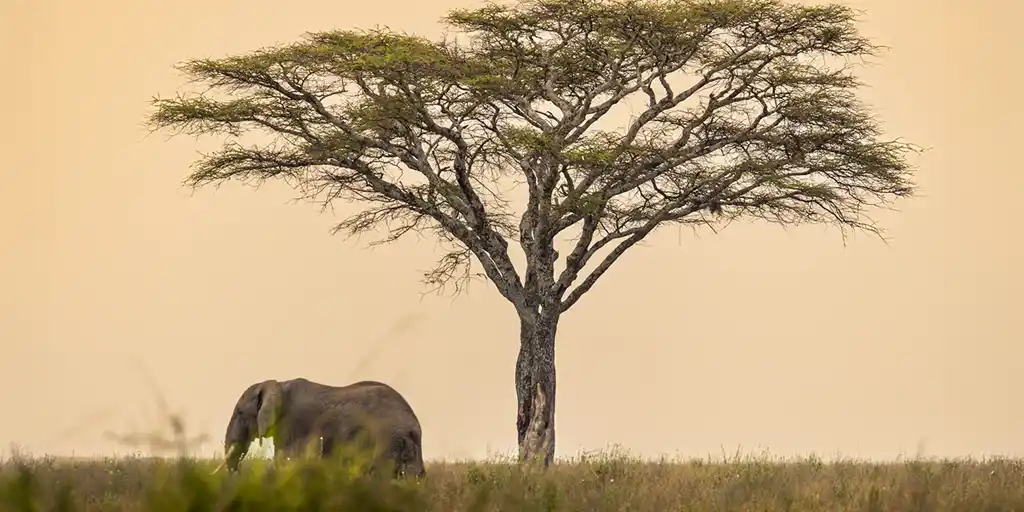
The Serengeti is not one vast landscape. My impressions before I arrived were of an endless flat plain of golden grass dotted with acacia trees under which lazy elephants were capturing shade while prides of lions lurked nearby.
That landscape exists; take the photo above as an example.
But spend three days driving through the park with your kids, and you’ll transit through open savannah, dense acacia woodland, ancient kopjes (granite outcrops that rise from the plains and serve as lion lookouts, leopard haunts, and serval cat hiding spots), forest along the riverbeds, and the reed-fringed edges of seasonal wetlands where hippos wade by the hundreds.
Each unique ecosystem holds a different combination of wildlife, each with its own behaviors. Understanding which parts of the park you’re in, and why your guide is heading where they’re heading, is part of the education that a longer stay in the park offers. By day three, the boys had stopped asking ‘where are we going’ and started asking ‘what are you expecting to find here.’
The roads inside Serengeti National Park are unpaved and range from reasonably smooth to aggressively washed out. A morning drive immediately after rainfall is the worst. By the dry season, most main tracks are manageable in a standard safari Land Cruiser (which seems to have been sold by the thousands at clearance sales).
By the end, your spine will have compressed two inches. Everyone’s will. Consider this chiropractic realignment to be a part of the safari experience.
What Wildlife Can You See On A Serengeti Family Safari?
I want you to read this next section with an understanding that nothing in Serengeti National Park is a guarantee. Wild is the very first part of wildlife, and anyone who promises specific animals in advance is selling you a dream. Instead, what a Serengeti safari offers is the highest probability of encountering the broadest range of species of any park in Tanzania. This is what I experienced, and I’ve visited a lot of parks within the country.
The Big Cats
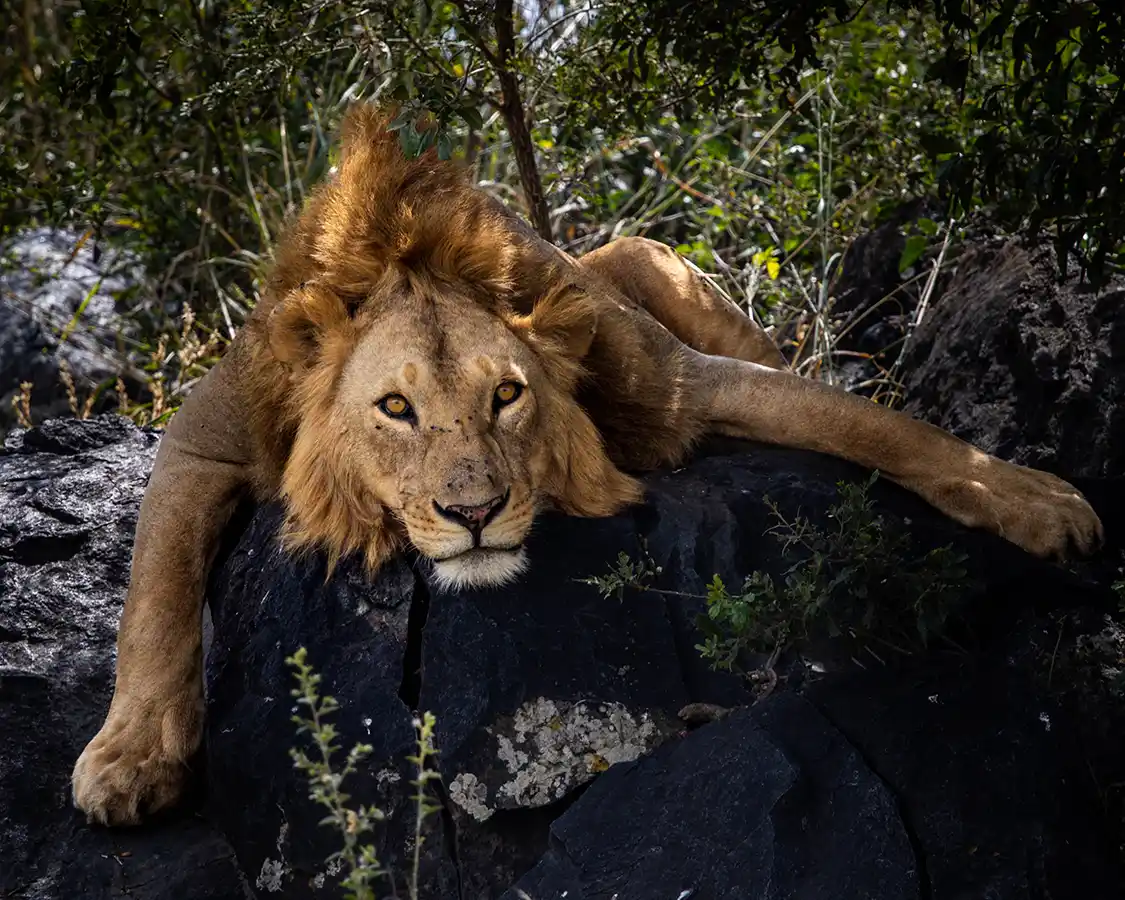
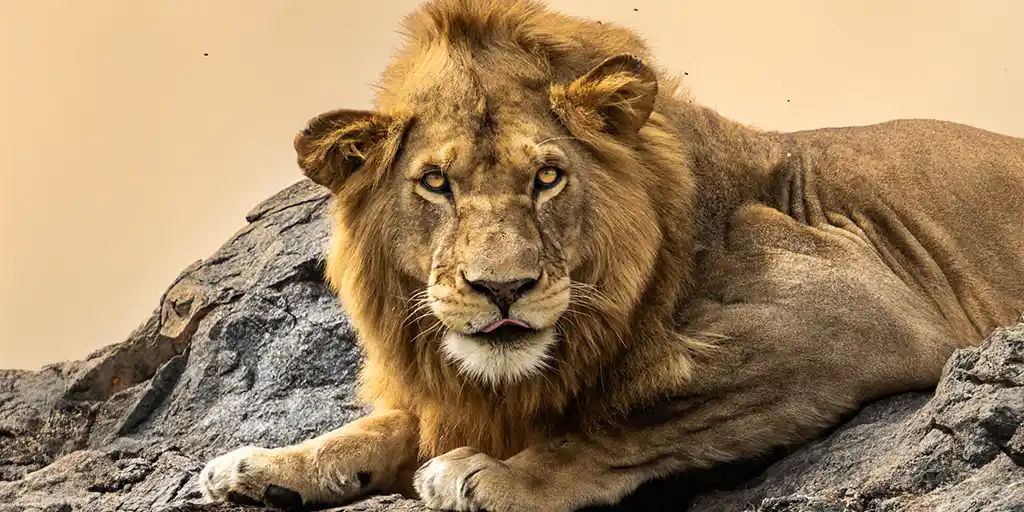
In the Serengeti, lions are the most commonly seen of the big cats and the most reliably present year-round. The Serengeti is home to around 3,000 lions, the largest population in Africa. Pride territories overlap many of the main road networks that wind throughout the park. We saw lions on every single game drive. They are often sleeping, which is less dramatic than you’d expect until you’re thirty meters from a pride of eight and the dominant male decides he’s done napping.
One of the prides that we saw, lazily drifting in and out of sleep amongst a tussock of long grass, were the descendants of the park’s most famous lions, Bob and Ziggy, once part of the greatest pride the park had ever known.
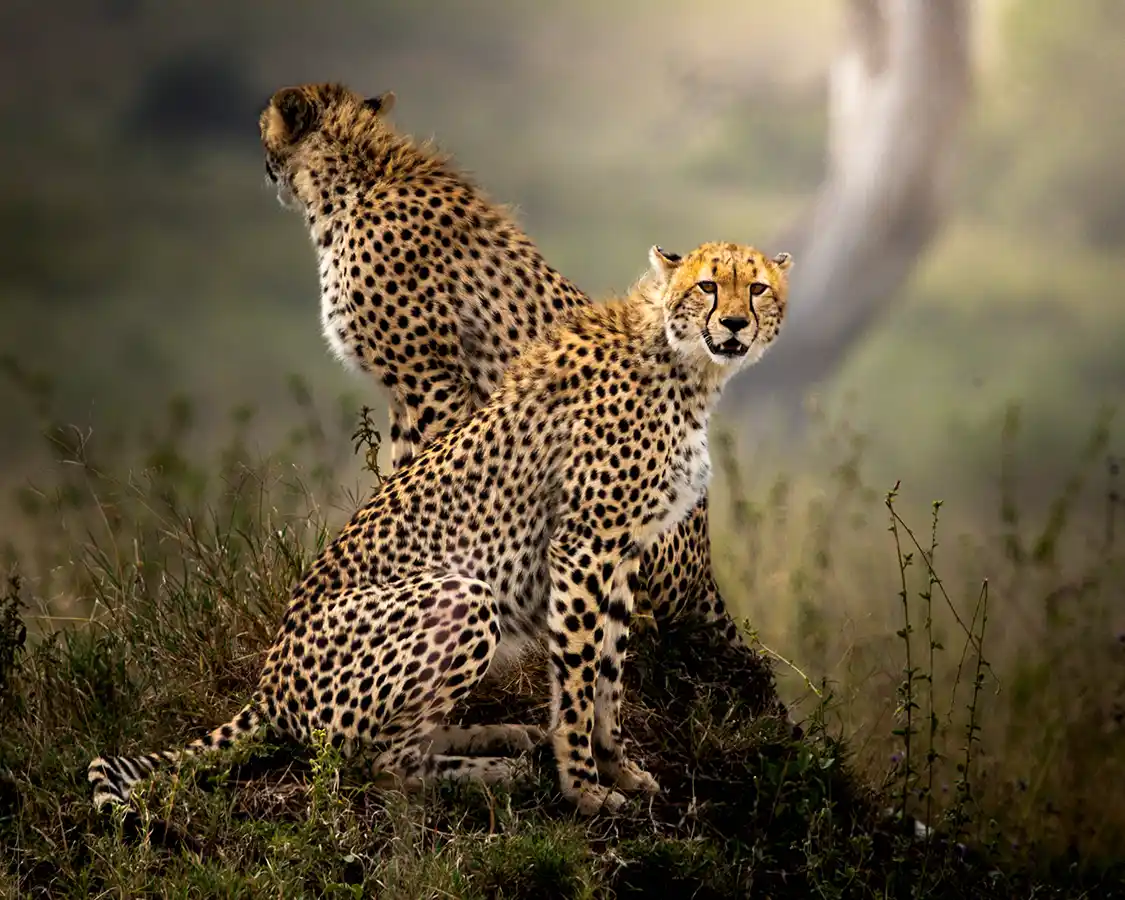
Cheetahs are regularly spotted on the open plains, particularly in the central and southern Serengeti. We watched a mother with three cubs practicing their stalking technique on each other from about thirty meters. Another pair sat patiently on top of a termite mound, watching intently for vulnerable prey. While we watched them, Cohen and Dylan didn’t speak for about 30 minutes, which may be a new record.
Leopards are present but harder to find. They are most commonly seen draped on the low branches of acacia trees, often at dusk, and often discovered via the radio network your guide uses to share sightings with other vehicles. We waited more than two hours for our leopard to emerge. Eventually giving up and driving off. As we were leaving, Omary got a call over the radio, hit the gas, and we bounced fast across the plains as the light faded. Golden eyes sparkling in the tall grass were about all we could see, but we did see them.
Elephants, Giraffes, and the Supporting Cast
Elephants move through the Serengeti in family groups, and encounters with them feel different here than in the smaller confines of Tarangire National Park. In the Serengeti, we often found them in ones and threes and tens, emerging from tree lines and grass thickets. I remember one moment when Cohen just couldn’t comprehend how a group of animals as massive as elephants could just appear out of nowhere.
We would find elephants crossing open plains, bathing in rivers, or standing in the middle of the roadway, almost daring the safari vehicles to pass.
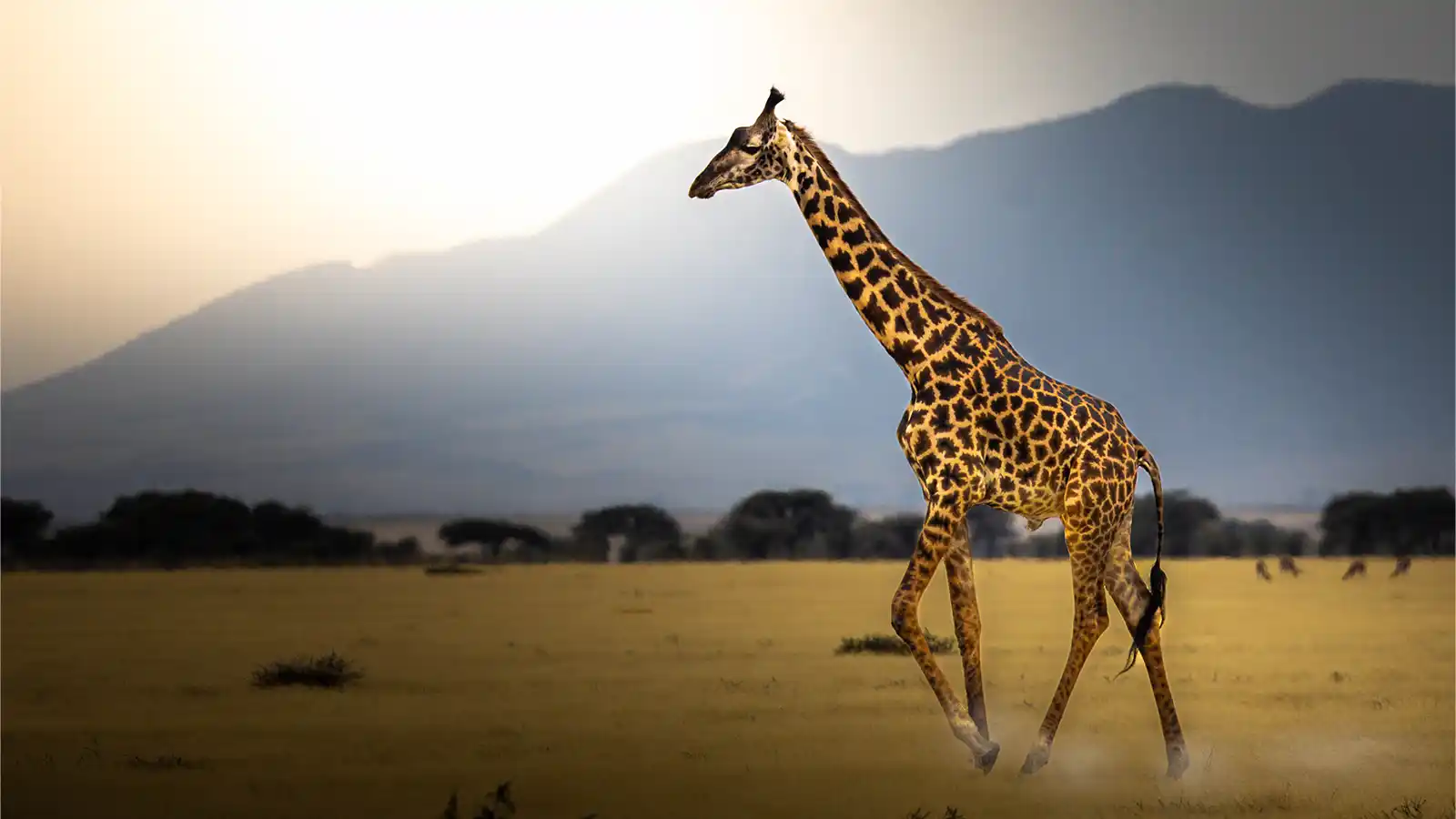
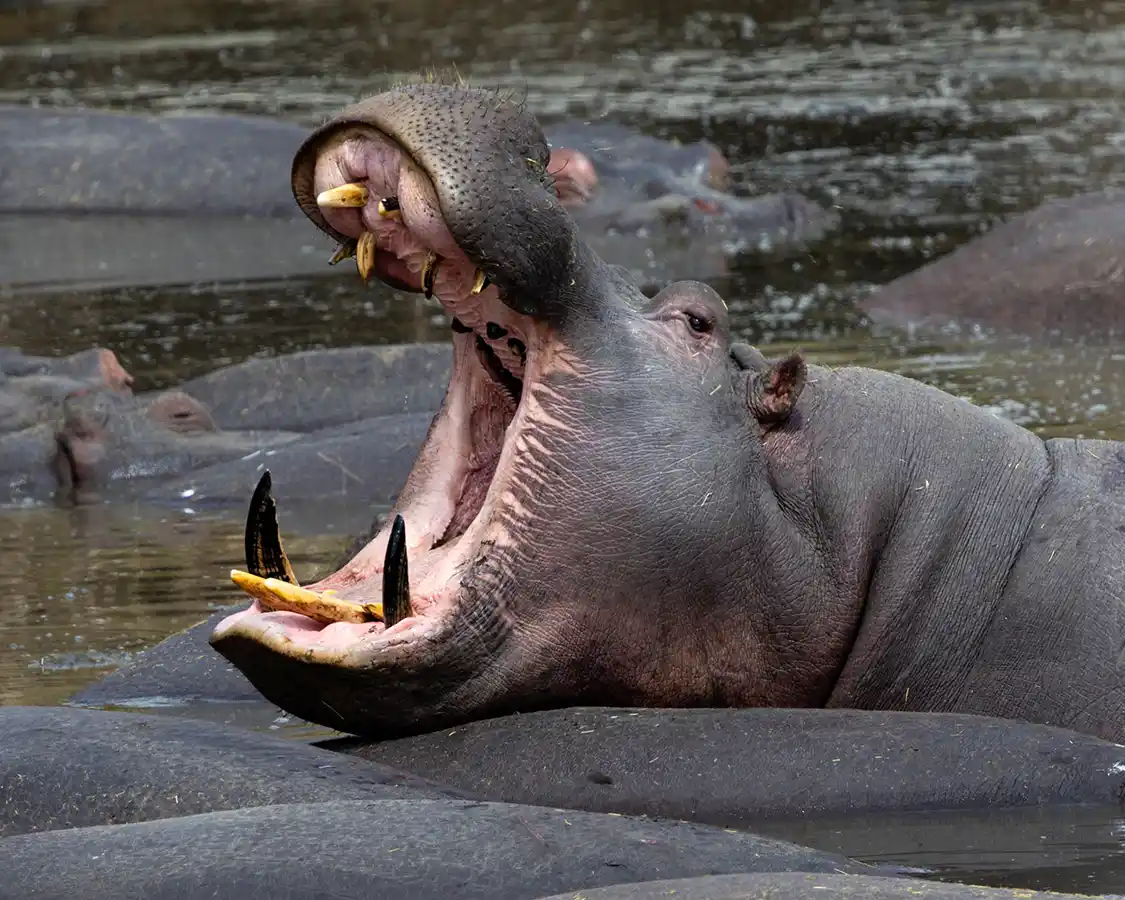
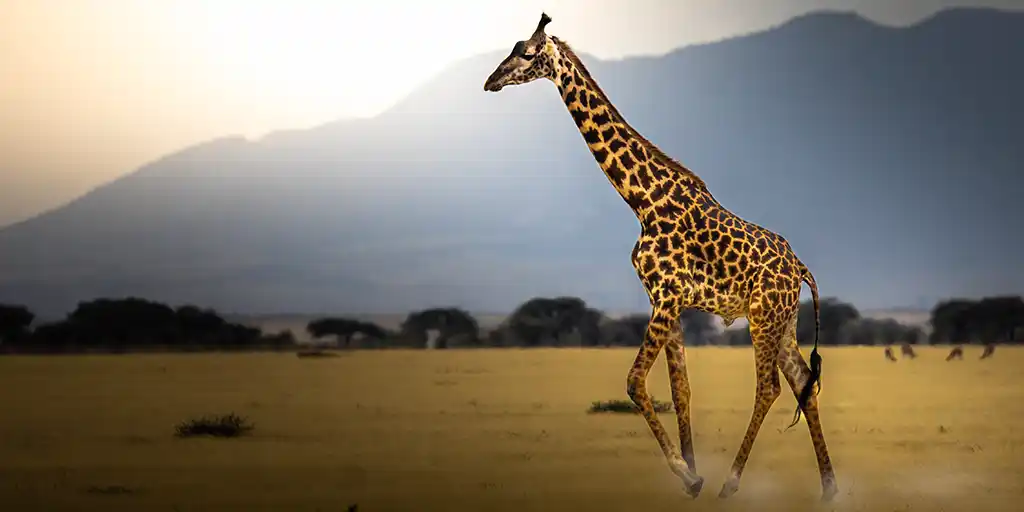
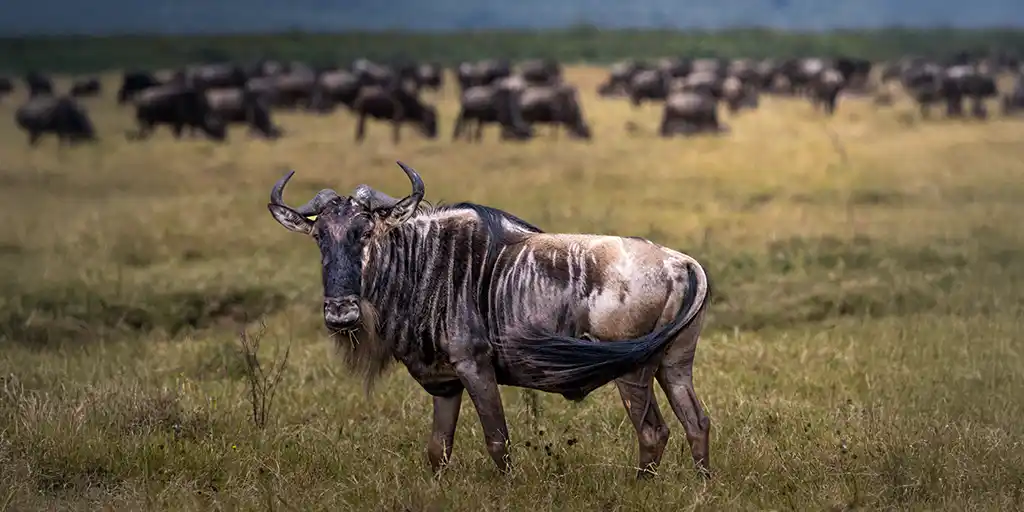
Giraffes are everywhere and are among the most reliably cooperative and photographic animals in the park, slow-moving and largely indifferent to our presence. Zebras and wildebeest are everywhere, particularly in migration season. Hippos concentrate around the Seronera River and a handful of waterholes.
We found a particularly packed waterhole that smelled exactly as bad as you might expect a small hole full of 100 hippos to smell like.
Birds, Small Creatures, and the Things You Almost Miss
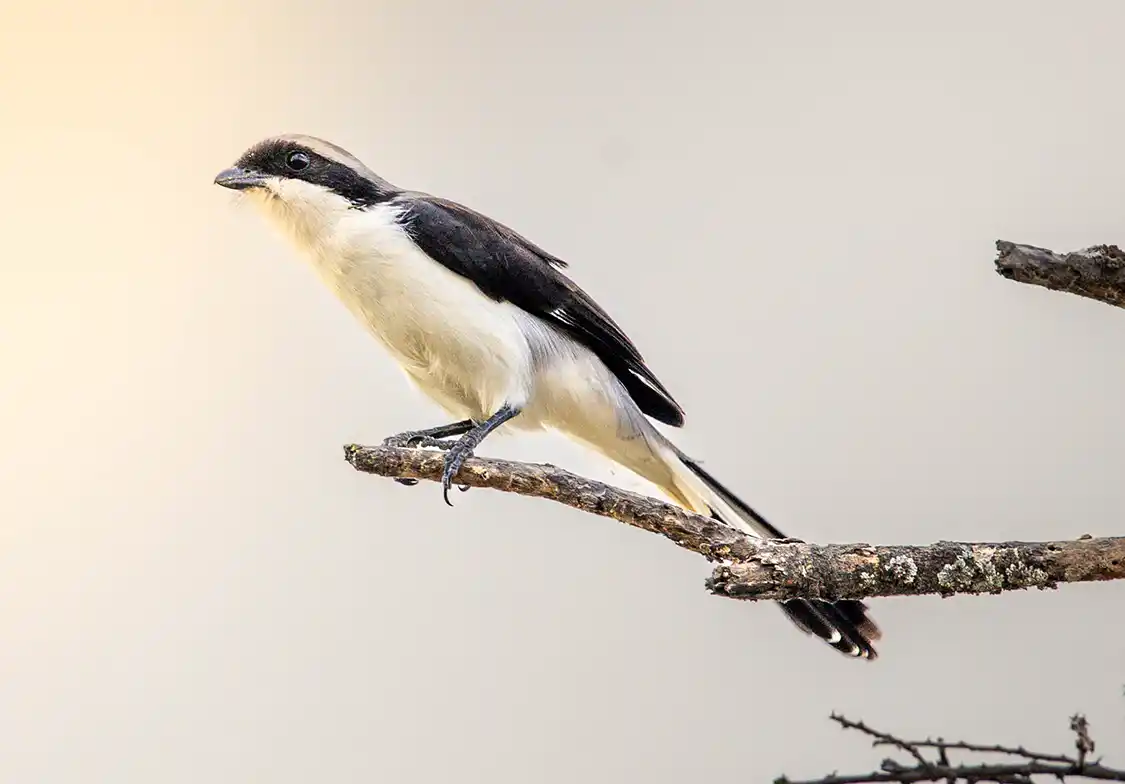
The Serengeti’s abundance of birdlife is not talked about enough. With over 500 species recorded in the park, it’s one of the greatest places in the world for birdwatching. Secretary birds, lilac-breasted rollers, Kori bustards, the heaviest flying birds in the world, and many more. One of the highlights for us was the Marabou Stork, one of Tanzania’s famed “Ugly Five,” which we became obsessed with tracking down.
From the hot air balloon, floating silently above the Serengeti at sunrise, we spotted two bat-eared foxes chasing each other through the brush like small children. One of those small moments I carry with me since I returned home.
The Great Migration: What Families Should Know
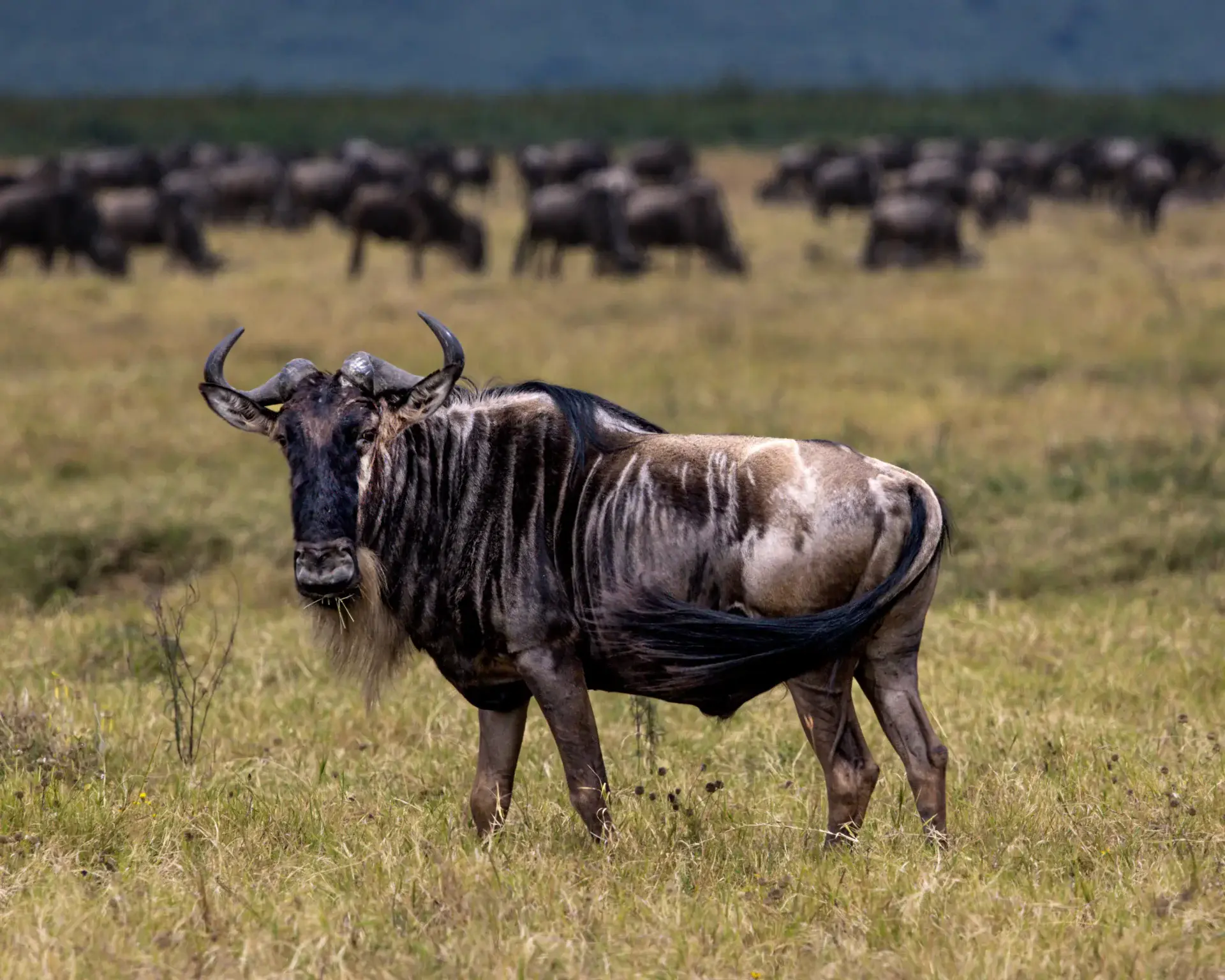
The Great Migration is often described as the world’s greatest wildlife spectacle, and that is not something that’s said lightly. Roughly 1.5 million wildebeest plus hundreds of thousands of zebras and gazelles move in a continuous annual loop between Tanzania’s Serengeti and Kenya’s Masai Mara, following rainfall and the fresh grass it produces. Throughout the loop, they’re constantly on the move.
For families visiting during the best season for river crossings (July through October in the northern Serengeti), the experience is primal. Herds of thousands gather at the riverbank, paralyzed by the crocodiles they can see waiting below. They know that some of them won’t make it and just wait for one animal to lead the charge. Then, one animal suddenly surges forward, and like a dam breaking, thousands follow.
Kids who can appreciate the raw reality of the predator-prey dynamic will find it unforgettable. It is not for everyone, and it’s not something you can sanitize.
For those visiting outside the July to October window, migration herds are present in other parts of the Serengeti depending on the season. The southern and eastern plains hold herds during the calving season (January to February). The western corridor sees the herds in May and June. Understanding where the migration is at any given time is something a good guide will know and factor into your game drive planning.
Game Drives in the Serengeti: A Practical Guide for Families
Morning Drives
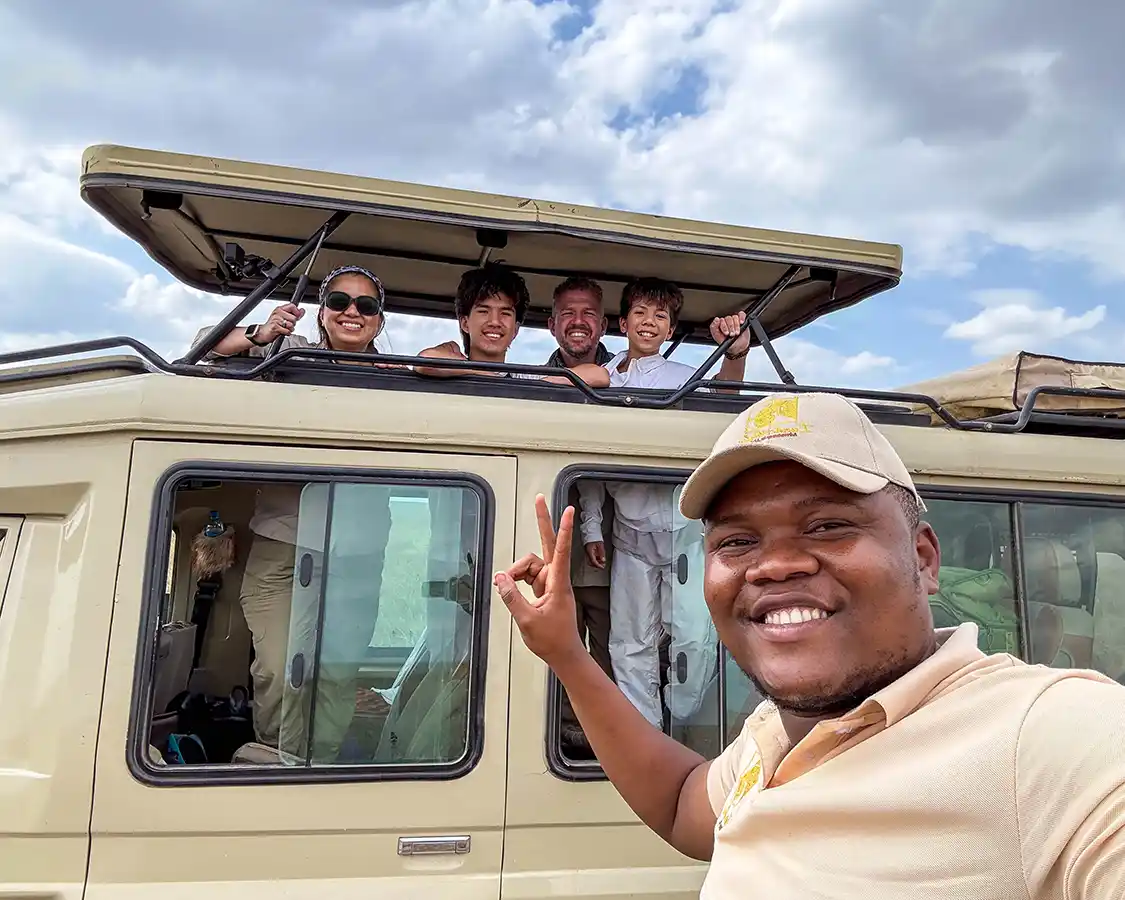
Morning drives are the best time for wildlife spotting. Animals are active in the cool weather, predators are on the move or finishing up their hunts, and the golden sunlight in the first hour after dawn is extraordinary for photography. Morning game drives typically begin at first light, around 6 am or earlier, depending on the season, and run until midday.
For families with young children, the early wake-up can be the hardest part. We framed it for the boys as ‘expedition time’ rather than morning, which sounds small and actually works. By the time you’re in the vehicle with the pre-dawn cold on your face and the first animals appearing out of the dark, nobody is complaining about the time
Afternoon and Sunset Drives
Afternoon drives begin around 3:30 pm and run until the light fails. Predators are active again as temperatures drop. The golden hour light is ideal for photography. We had our leopard sighting in the late afternoon, and our sundowner stop, where Christina danced in the rain to Toto’s Africa while the kids laughed and I tried to decide whether to be embarrassed, happened at the end of one.
Most camps include a sundowner stop: During these stops, the vehicle pulls up somewhere with a view, your guide sets out drinks (usually champagne for the adults and juice for the kids), and you watch the sun drop below the acacia trees while standing in the middle of it. It is exactly as incredible as it sounds.
Full-Day Drives
Full-day drives were what we did every single day that we were in the Serengeti. A full-day game drive includes a packed lunch from your camp, eaten in the vehicle or at a designated picnic site. Picnic sites are the best, because they give you the chance to actually exit the vehicle and stretch your legs.
These long drives are best suited to families with older children who can manage the hours, the dust, and the heat. For families with younger kids, breaking the day with a midday return to camp for a nap and lunch works better. Plan your game drive strategy with your guide before you go out.
Safari Photography and Kids
I’m a photographer by training. I got into this whole travel writing thing more as a way to show off my photos than from a passion for writing. That’s changed, and now sharing these stories is just as much a part of my identity as my camera bag.
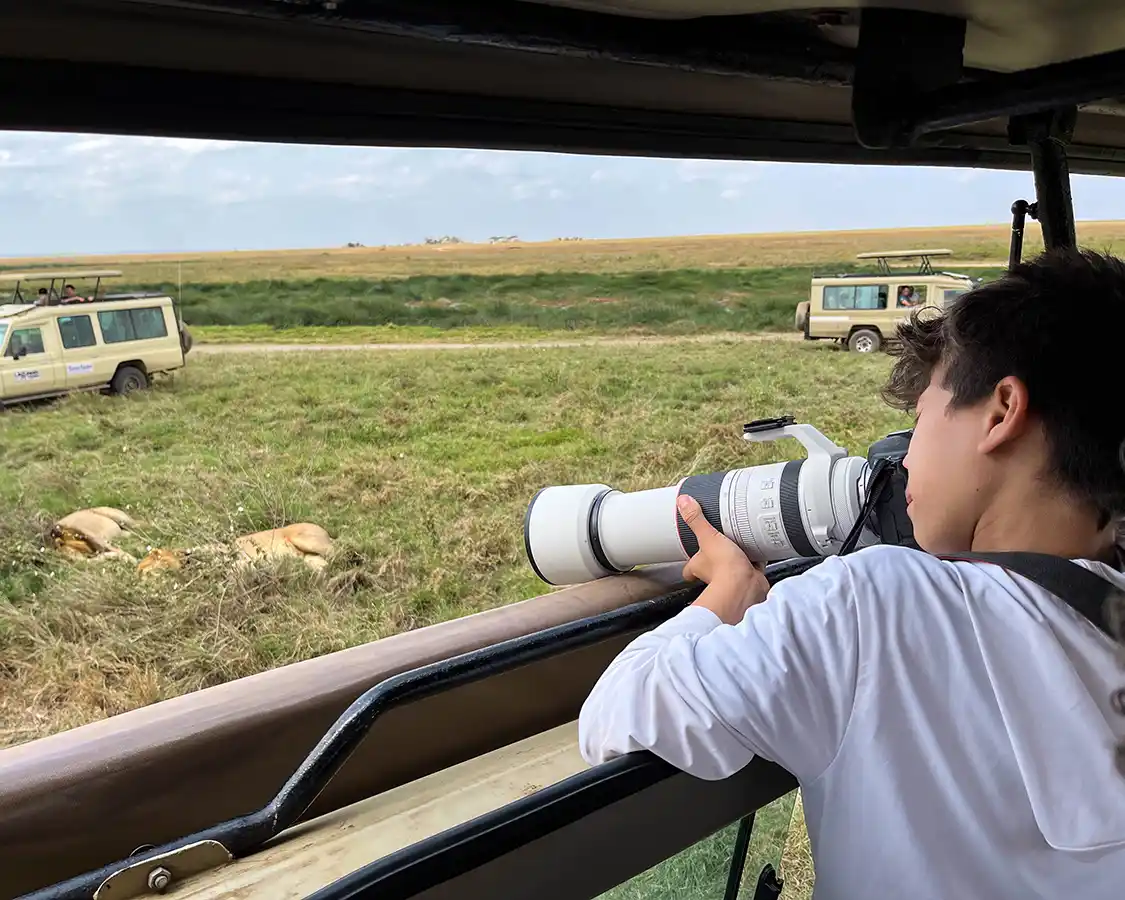
I’ve always been the main photographer in the family. But between my family’s trip to the Galapagos Islands the year prior and our Tanzanian safari, I learned something about handing over my camera to my kids. And it’s changed the way we travel. If you’re willing to give up control of your camera to your kids, you’ll find that the Serengeti converts children into photographers with remarkable efficiency.
For us, it started with the elephants in Tarangire National Park. By our second day in the Serengeti, Cohen and Dylan had claimed both my long lens and my main camera body as their own, and I had made peace with this arrangement. A long telephoto lens changes the photography experience dramatically: animals that look distant to the naked eye fill a frame and feel like you could reach out and touch them.
If your children show any interest in photography, let them use real camera gear. The images they capture will surprise you. For families without dedicated camera equipment, a pair of quality binoculars per person and a smartphone with a good zoom is a workable combination. The Serengeti’s light is generally good for phone cameras during the golden hours.
The Serengeti Hot Air Balloon Safari: Is It Worth It for Families?
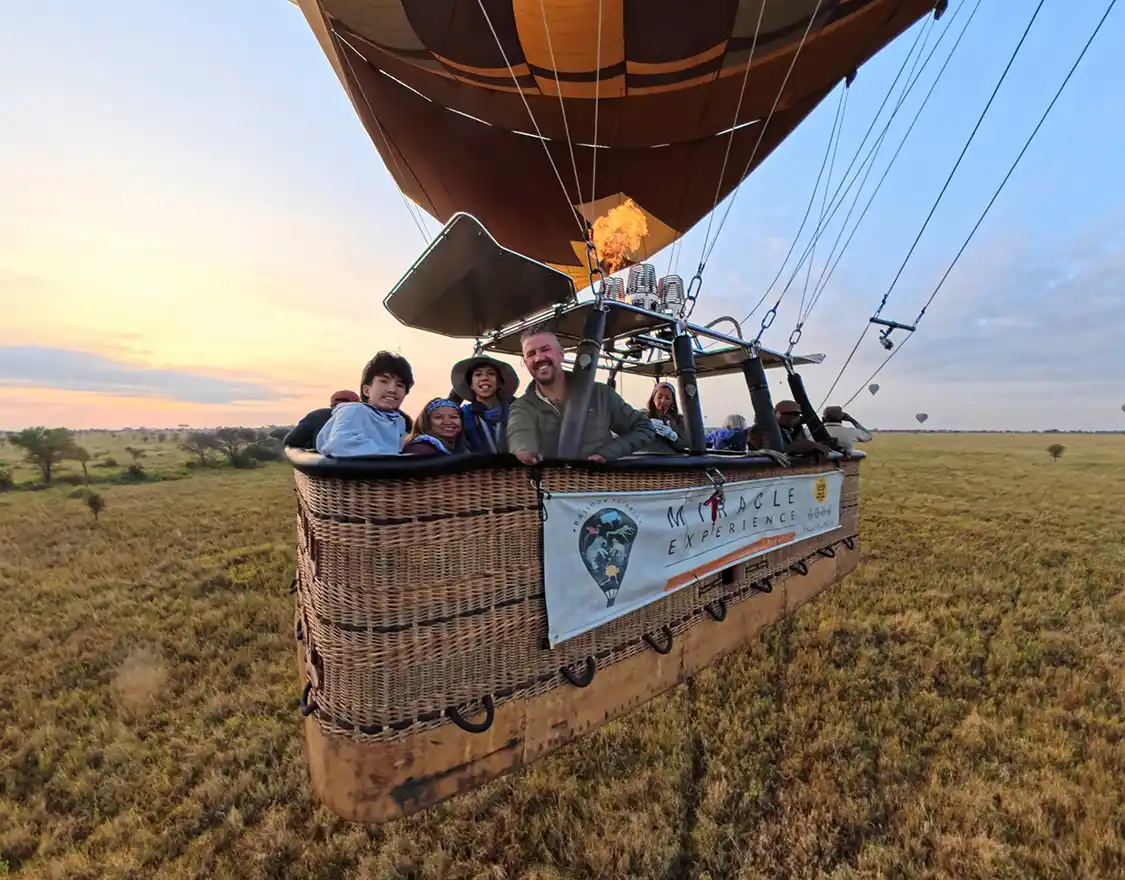
My family has been lucky enough to have experienced hot air balloon rides in some of the world’s most incredible places. We soared over the temples of Luxor during our travels in Egypt, and glided between the fairy chimneys in Cappadocia during our month-long travels in Turkey. You’d think that it would all seem second nature. But somehow, each experience ends up better than the last.
We woke at 3:30 am. Which might seem like an unreasonably early hour for a family vacation. The driver from the balloon company that we chose, Miracle Experience, picked us up from our safari camp, and we dozed off while we bounced down rutted roads for half an hour to the balloon launch site.
Once we arrived, we groggily dragged ourselves out of the land cruiser and drank hot chocolate in the pre-dawn dark at the launch site while the balloon pilot, a Spanish woman named Rosa, set the burners alight. As we watched in the darkness, the balloon inflated, and the sky turned from jet black to deep violet. The balloon didn’t lift until after sunrise, which we were not expecting, but the delay became irrelevant the moment we were airborne.
Floating above the Serengeti in silence, with only the occasional burst of the burner above and the soft soundtrack of the plains below, is an experience in a completely different category from a game drive. We could see patterns from the air that are invisible from the ground: animal trails worn into the grass, the curve of a dry riverbed, the way an elephant herd moves as a unit across open space. Giraffes darted between trees. Elephants carved paths through the grass.
Below us, two bat-eared foxes chased each other in circles like children playing, and we were the only people in the world who could see them.
Tips for the Serengeti Hot Air Balloon Safari
Most balloon operators require a minimum age of 7 years old, though some set it higher. Confirm these details with your hot air balloon operator prior to booking. Flights typically last around an hour and are followed by a champagne breakfast in the bush.
The entire experience, from pre-dawn departure to return to camp, takes around four hours. Book well in advance, particularly during peak season. We used Miracle Experience, which is one of the most established hot air balloon companies operating in Serengeti National Park.
Where to Stay in the Serengeti with Kids
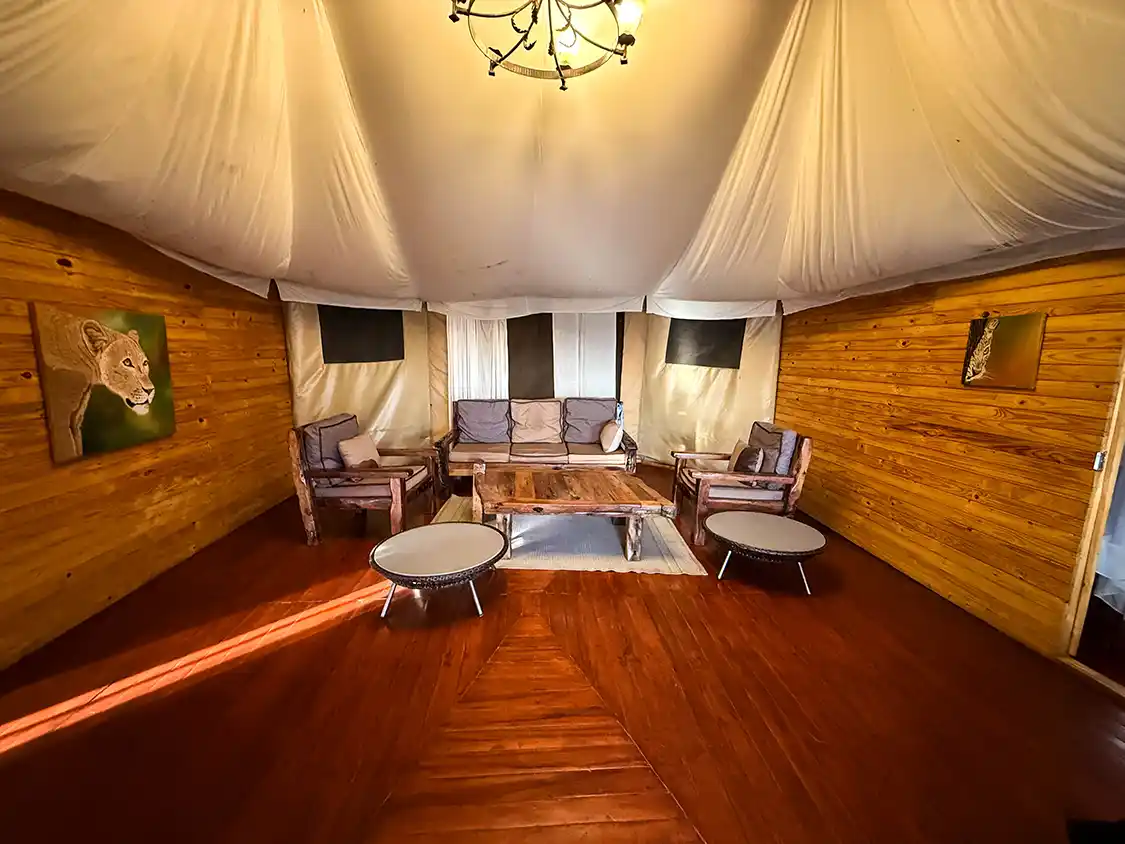
Accommodation inside the Serengeti ranges from permanent luxury lodges to mobile tented camps that follow the migration, and from mid-range campsites to budget-friendly public campsites for families doing a DIY experience. What you choose shapes the entire trip, not just your sleeping arrangements.
Olkarien Lodge (Our Choice)
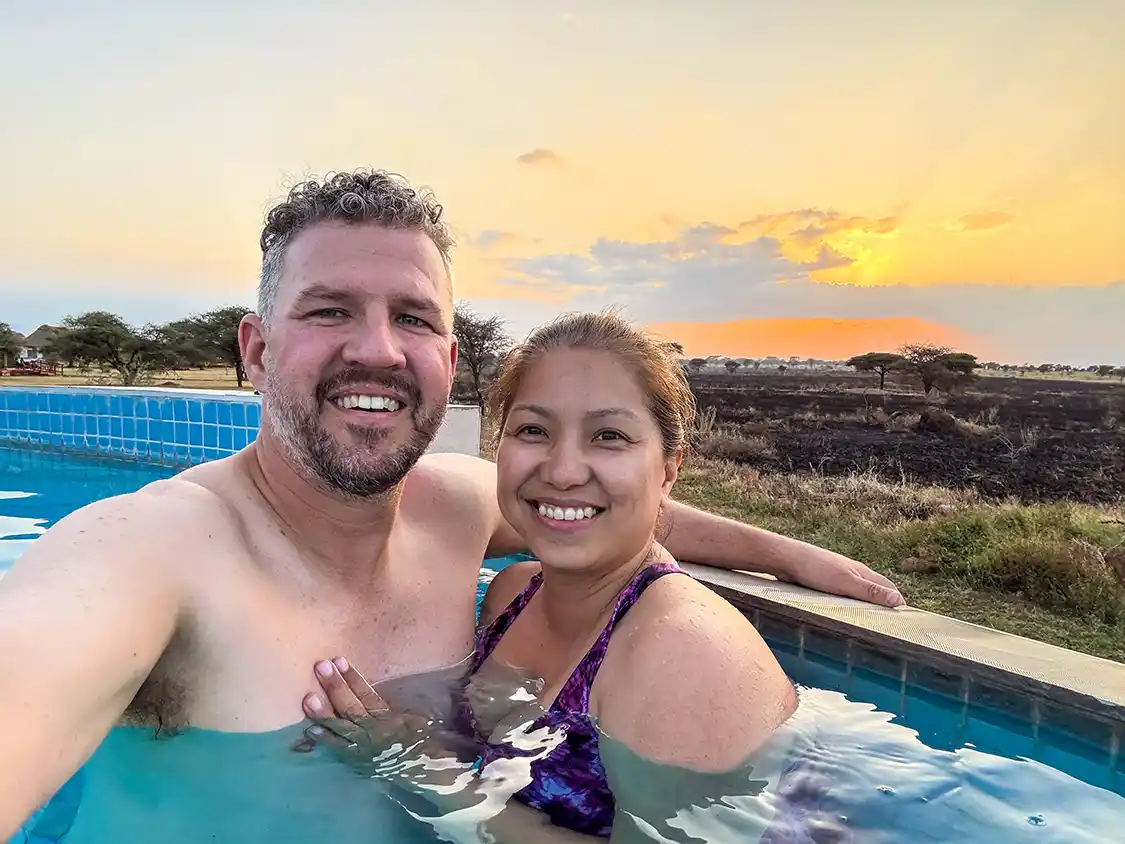
We stayed at Olkarien Lodge, one of the many eco-lodges within the Serengeti National Park boundaries. The central location meant we were in the bush from the moment we arrived, which is the point. On our first evening, we floated in the lodge’s heart-shaped pool at sunset, watching a giraffe move across the plains just a short distance away. The food was good, the staff was excellent, and the feeling of being genuinely inside the Serengeti rather than adjacent to it was consistent throughout.
As with most Serengeti accommodation, the sounds at night are part of the experience. The lions that circled our tent were not a selling point in the brochure. They were, however, one of the things that my family has talked about most since we got home.
You can find their current rates and availability here.
Budget and Mid-Range Options
Seronera, in the central Serengeti, is the most accessible area and has the broadest range of accommodation options at different price points. The public campsites here are basic but well-located for game drives, and mid-range tented camps in this zone offer a genuine bush experience at a more manageable cost than the high-end lodges.
For families on a tighter budget, staying in accommodation just outside the park boundary and driving in for game drives is a workable option that reduces nightly rates considerably. The trade-off is that you miss the early morning and late evening activity that happens only when you’re actually sleeping inside the park.
Mobile and Migration Camps
Migration-following mobile camps move approximately every six weeks to position themselves where the herds are. They offer an extraordinary level of exclusivity and immediacy. They are also expensive and book up a long time in advance. For families who are returning to the Serengeti and want a deeper experience, a mobile camp is worth the investment. For a first visit, a well-located permanent camp delivers everything you need.
Our 3-Day Serengeti Family Safari Itinerary
Day 1: Arrival, the Pool, and the Lions We Blamed on Baboons
We arrived in Serengeti National Park at the end of an afternoon that had included an immersive visit to a Maasai village in the Ngorongoro Highlands and a long drive through the conservation area. By the time the highlands dwindled down into open savannah and the Serengeti emerged in the late afternoon light, we had been in vehicles for most of the day.
We stopped at the entrance, bordering both Serengeti and Ngorongoro, so that Omary could get us registered to access the park. The area had bathrooms, a few small shops, and a little cafe. Christina and Cohen were exhausted from the long drive. Dylan and I were curious. So we climbed one of the nearby kopjes and drank in our very first views of the Serengeti.
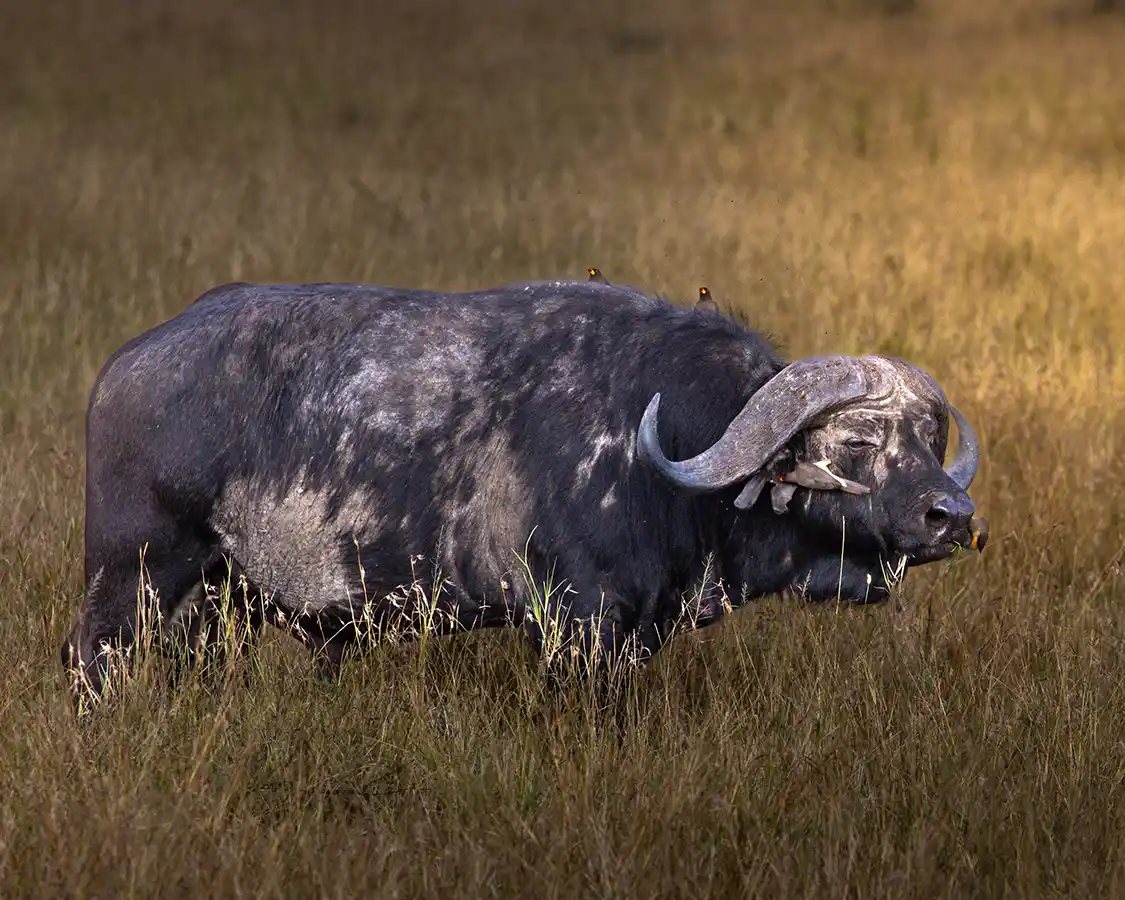
There was still enough light for an evening game drive, so we opted for that before heading to the lodge. The drive yielded ostriches running across the plains, buffalo roaming, cheetahs gazing across the grasslands for prey, and a pride of lions lying lazily in the long grass. At the lodge, we all swam in the pool while a giraffe crossed the plains fifty meters from the fence line, moving with that slow-motion elegance that makes the animal look perpetually unbothered by its own improbability.
After dinner, we heard sounds outside the tent. Deep, rhythmic grunting. We decided it was baboons and went back to sleep. In the morning, we were corrected. It was not baboons.
Day 2: The Balloon, the Hippos, and the Leopard at Last Light
The 3:30 am alarm for our hot air balloon safari was jarring. Hot chocolate and the distant roar of balloon burners in the dark made it better. We lifted off into the brightening sky above the Serengeti as the first colors of dawn spread across the horizon, and for the next hour, the park revealed itself from above in a way that no land-based game drive can imitate.
The rest of the day unfolded across the central plains of the Serengeti: a hippo waterhole that was full of life as our noses were full of its stench, our first of many herds of elephants somehow appearing out of nowhere, hatabeest, wildebeest, antelope by the dozen, and hours of scanning through binoculars as Omary worked the radio with other drivers trying to locate the big five..
As the sun began to drop low on the horizon, we were tired. We had spent the last two hours at a leopard haunt, peering through the grass and trees with no luck. Omary could sense our frustration and steered us across the plains for something more lively. Just then, the radio crackled. Omary hit the gas. We drove fast, bouncing through the ruts, dust rising, the light going golden and then amber.
In tall grass about sixty meters from the road, its eyes reflecting the last of the afternoon light, there was a leopard lying flat in the grass, watching something in the middle distance with focused patience. We only had a few moments with the animal. But it was enough.
The afternoon sundowner brought a brilliant mix of rain and sunshine. A single cloud opened up over us while we stood, champagne flutes in hand, the sun dipped behind a perfectly-placed acacia tree. The moment the drops started, Christina danced in the rain, singing Toto’s iconic song “Africa.” It was the most perfect thing that has ever happened on a safari.
The kids laughed. I stood very still, drinking it all in. Our Tanzanian safari had stopped being about ticking animals off a list and started being about being in the present. And that’s what family travel is all about.
Day 3: The Cheetah, The Balloons, and the Zebra
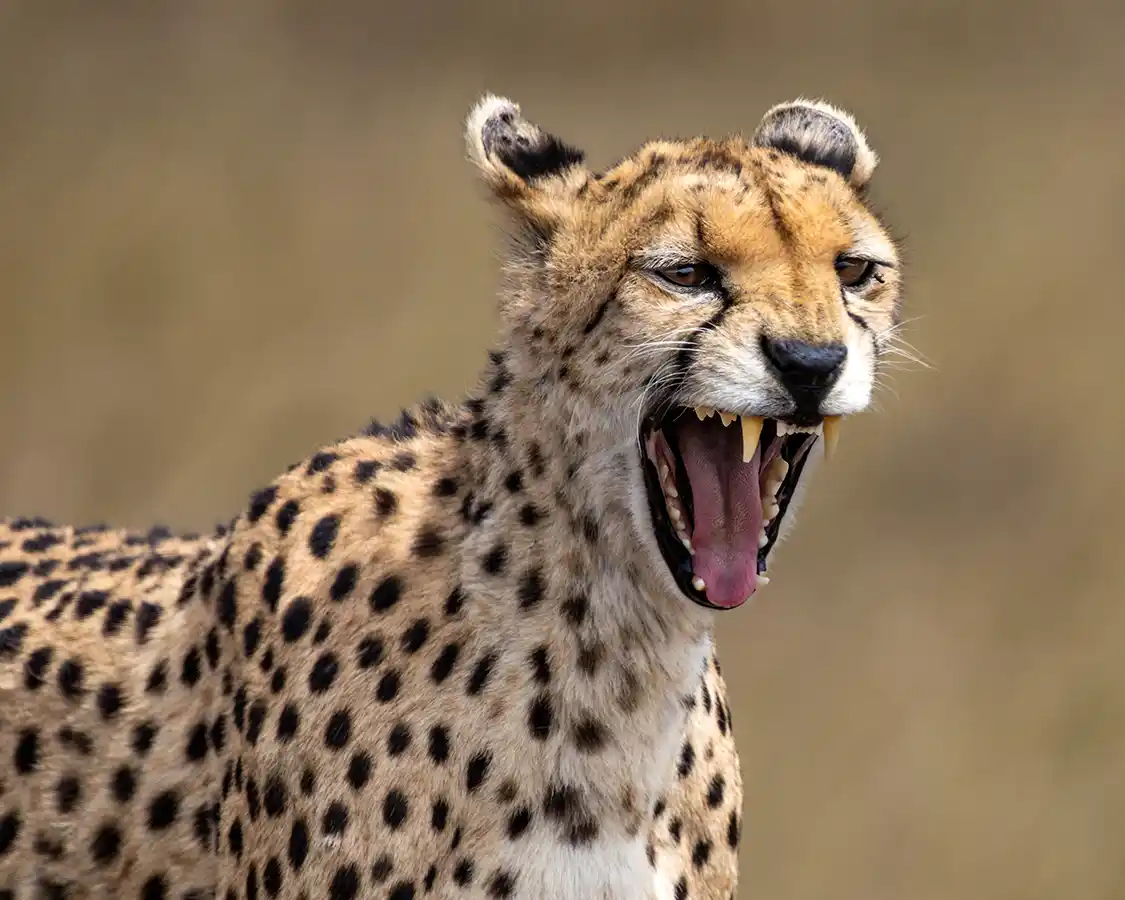
Our final morning in the Serengeti was one of our best sightings. We began the long drive out of Serengeti National Park.al Park toward Ngorongoro. In the distance, Omary spotted a cheetah mother with three cubs beneath a tree, the cubs practicing their stalking technique on each other in the grass while she watched intently. Christina and I had a moment with that mother, harkening back to watching my own boys’ wrestling matches in the living room, was an interspecies parallel that was lost on us.
Cohen and Dylan had long since taken over my camera equipment. Dylan had the long lens. Cohen had the body with the wide-angle lens. I was photographing on my phone whenever I couldn’t wrestle the big camera back from them, and finding, to my surprise, that I didn’t mind at all. Watching them frame shots, argue about settings, and occasionally produce something genuinely excellent is a different kind of satisfaction than doing it yourself.
Practical Tips for Visiting the Serengeti with Kids
- Take the early morning seriously. The best game drives start at first light. Frame this as ‘expedition time’ rather than an early morning, bring hot drinks from your lodge, and get your kids invested in what they might find before the vehicle even leaves camp. The cold and the dark disappear quickly once the first animal appears.
- A long lens changes everything. Binoculars are useful. A telephoto lens is transformative. If your kids show any interest in photography, hand over your gear. The images they take are better than you’d expect, and the engagement it produces in them through the long drives is worth every scratch risk.
- Let your guide drive the decisions. A good safari guide uses a radio network of other vehicles to track animal movement across the park. Let them use it. Some of our best sightings came because Omary abandoned the plan and drove fast toward a radio call. Itinerary rigidity is the enemy of great game drives.
- Dust will get everywhere. Pack lightweight buffs or neck gaiters, sunglasses that actually seal around the eyes, and quick-dry clothing in neutral colors. Everything will be covered in a light red dust by day two. Fighting it is futile and also kind of misses the point.
- Carry US dollars for tips. Tips for lodge staff, camp workers, and your guide are genuinely important here and are often expected in cash. Small USD denominations work everywhere. Keep them accessible rather than buried in a bag.
- Manage expectations around connectivity. There is no Wi-Fi in the Serengeti outside of the safari lodges. Tell your kids before you go. Within twelve hours, most children stop asking. Within forty-eight, they’ve forgotten they own phones. This is worth every minute of the argument before departure.
- Morning cold is real. Open-air game drive vehicles at 6 am in the Serengeti can be properly cold, particularly in the dry season. Pack a light down jacket for every member of the family. It will be shedding layers by 9 am. Bring the jacket anyway.
Travel Resources for Families Visiting Tanzania
For packing, planning, and the details that determine whether your kids are comfortable or miserable in a vehicle for six hours, these guides go deeper.
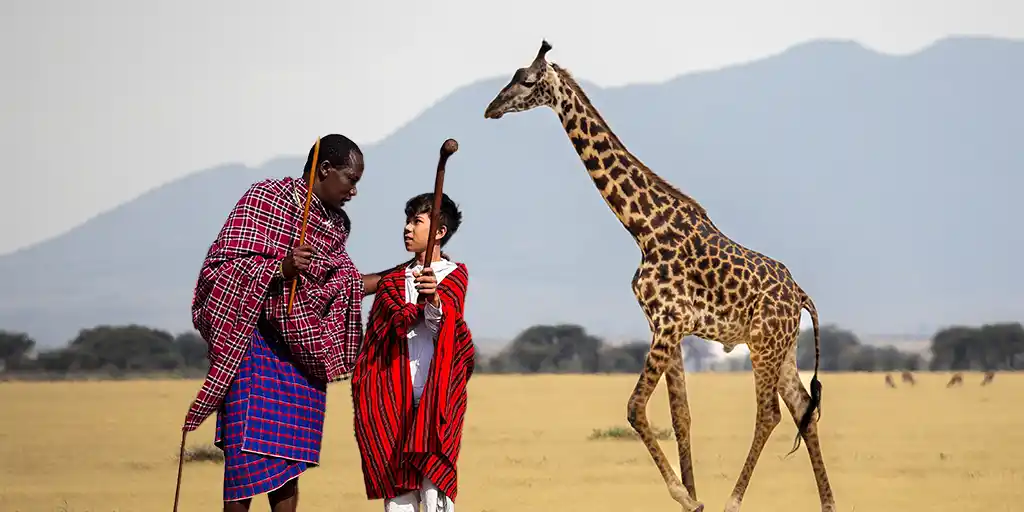
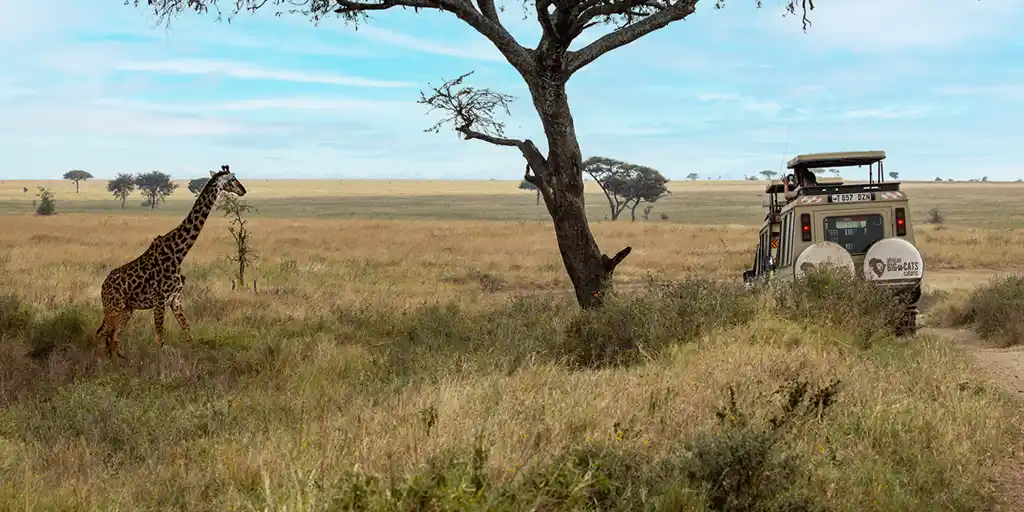
Frequently Asked Questions About Visiting the Serengeti with Kids
Most camps and lodges inside the Serengeti accept children of all ages, though a handful of high-end properties set minimum ages of around 5 or 6. Check with specific camps when booking. Hot air balloon operators typically set a minimum of around 7, though this varies by company.
Yes, with sensible precautions. You are in a vehicle for the vast majority of game drives. Lodge perimeters are secured, and staff are experienced at operating alongside wildlife. The rules around not leaving tents at night are serious and should be followed. The lions outside our tent on two consecutive nights were not a crisis precisely because we stayed inside and followed the protocols.
Self-driving is technically permitted in Serengeti National Park, but practically inadvisable for families on a first visit. The park is enormous, the wildlife is spread across it, and the radio network your guide uses to find animals is unavailable to independent visitors. A good guide will consistently put you in the right place at the right time in ways that are impossible to replicate without their knowledge and connections. We used Omary from Luna Safari, and the experience was not comparable to what a self-drive would have produced.
For most families on a first visit, the central Serengeti around Seronera offers the best balance of year-round wildlife density, road quality, and accommodation variety. During migration season (July to October), the northern Serengeti around Kogatende is worth the extra travel time for the river crossings.
Safari costs vary significantly by season, accommodation level, and how you book. Tanzania National Park fees for the Serengeti are among the highest on the continent, currently around USD 70 per adult per day and USD 35 per child under 16 (fees subject to change; verify before booking). Mid-range tented camps run roughly USD 300 to 500 per person per night, all-inclusive. Luxury lodges and migration camps can reach USD 1,000 per person per night or above. A hot air balloon safari adds approximately USD 500 to 600 per adult and USD 350 to 450 per child. Build the budget honestly, including tips, park fees, and transfers.
Migration herds are present somewhere in the Serengeti ecosystem year-round. The famous Mara River crossings happen in the northern Serengeti between July and October. Calving season in the southern Serengeti runs from January through February. The western corridor sees herds in May and June. Where the migration depends entirely on when you visit.
Is the Serengeti Worth It for Families?
The question I get asked most often about my family trip to Tanzania is whether the Serengeti is worth the cost and the effort for a family with kids. The honest answer is that it depends entirely on what kind of family travel you enjoy.
If your version of a successful holiday involves predictability, comfortable driving distances, and certainty about what each day will look like, the Serengeti will frustrate you. Animals don’t follow itineraries. Dust doesn’t respect high-end clothing. The road to the northern reaches is long and rough, and detours happen often.
If your version of a successful trip involves your children being genuinely gobsmacked by something they’ve never seen before, a guide who becomes part of your family story, lions outside your tent in the dark, and a hot air balloon at dawn over a landscape that has looked essentially the same for a million years, then the Serengeti is not worth it. It is necessary.
This page is updated as new regional guides and planning resources are published. Looking beyond Tanzania? Explore my International Family Travel Guide.
You May Also Like To Read: