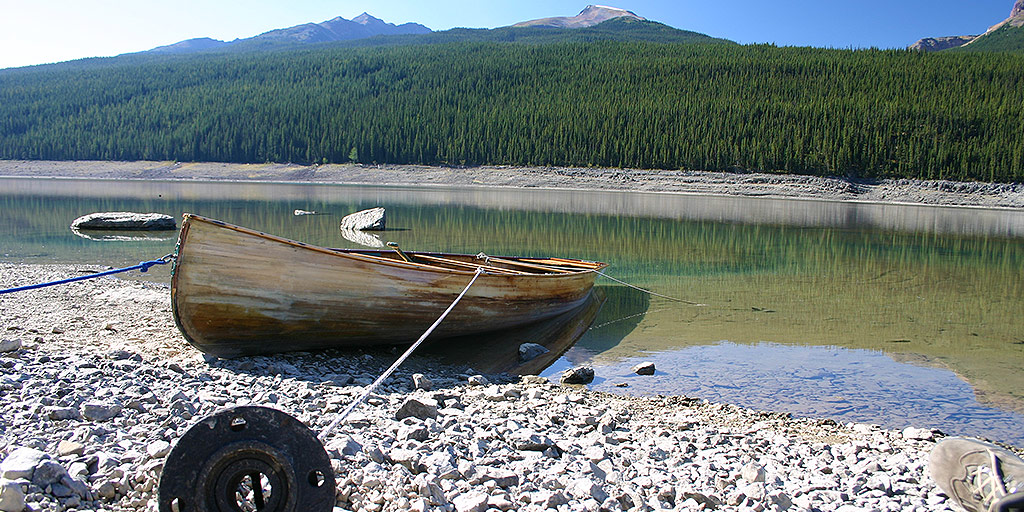
Looking for the best wildlife viewing in the Canadian Rockies? Here’s a guide to every major animal you can see between Banff and Jasper, where to find them, when to look, and how to watch safely, from someone who has driven these mountains more times than I can count.
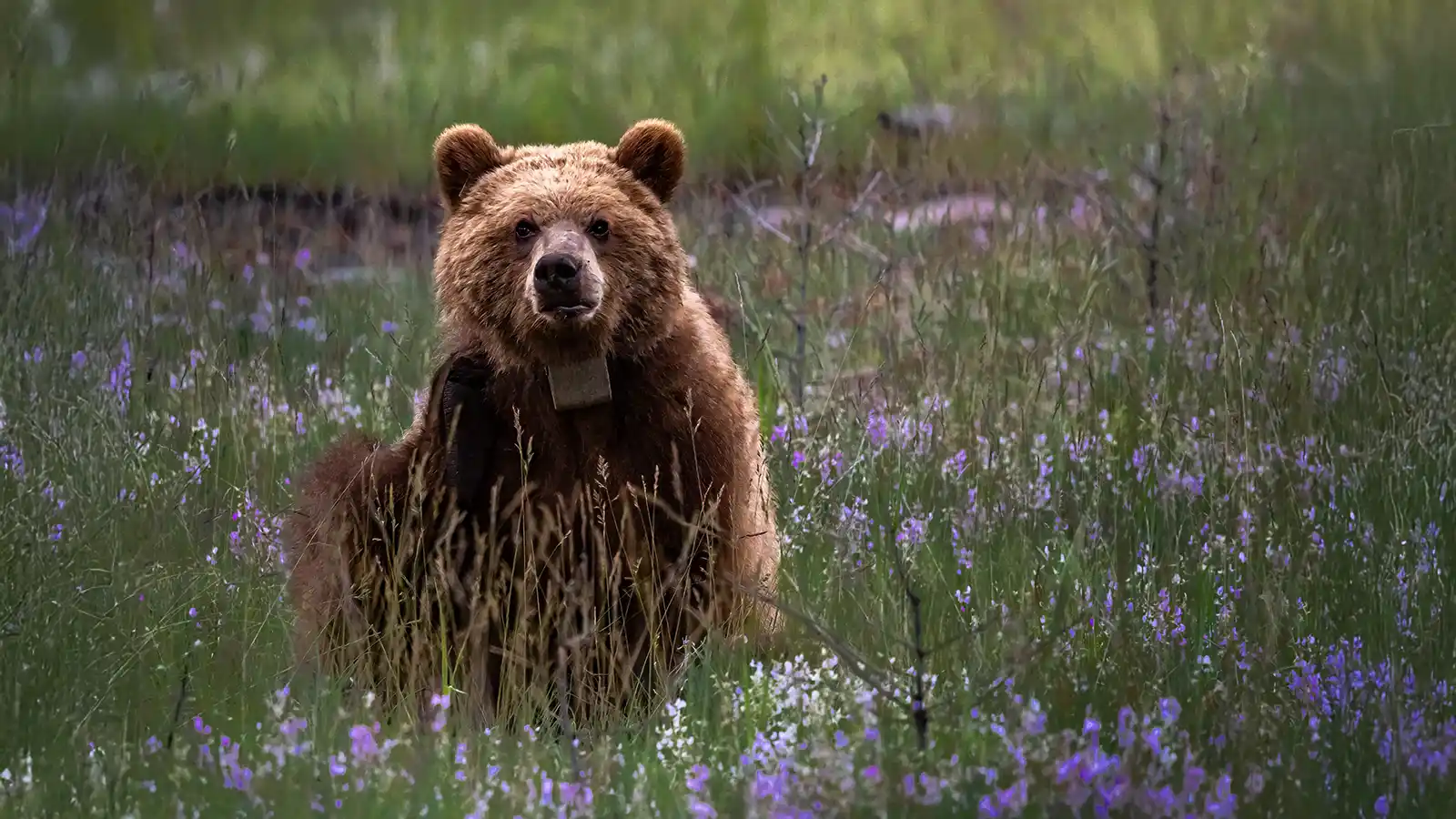
When you’re in a car full of people and a bear steps out of the trees, two things can happen. Either a hush falls over the car, and everyone stares in awe, or, and this one is usually more likely, panic erupts as everyone shouts “BEAR!” and reaches for their phones, cameras, or the closest person to them to make sure that they also see it.
For my family’s latest trip to the Rockies, it was mostly the latter. Luckily, the bears in the Rocky Mountains are pretty relaxed. And as long as you’re not too close to them or too loud, they mostly don’t care that you’re there. It was the end of June when we saw our first grizzlies. We were just down the road from the Fairmont Hotel in Jasper when two brown bears ambled into view. By then, we were four days into our Rocky Mountain road trip, and we’d learned to chill out when the animals appeared.
But when the two bears reared up on their hind leg, bared their teeth, and started swatting each other over territory rights for a small raspberry bush, all of our composure left the car. All of us were talking at the same time, stumbling and trying to get our phones and cameras at the ready. My kids, Cohen and Dylan, had their faces pressed up against the glass. My in-laws, Maria and Felix, who had never seen a brown bear in the wild, simply stared. I reached for the camera, and Christina locked the doors. Not so the bears couldn’t get in, but to make sure that I kept my butt in the car.
That’s one of the most important things to know about wildlife spotting in the Canadian Rockies. You can plan the route and read every guide on the internet, but the animals decide where and when you’re going to see them. I’ve driven these mountains many times over the years, and no two trips have ever produced the same wildlife sightings. What I can offer, after all those trips, is the next best thing to a guarantee: knowing what lives here, exactly where to look, and how to give yourself the best possible odds to have one of the most epic Canadian wildlife experiences.
This is a complete guide to the wildlife of the Canadian Rockies, focused on Banff and Jasper National Parks and the legendary Icefields Parkway that connects the two. I’ll cover every major species you might encounter, the specific places to find each one, and the best seasons and times of day to see them. You’ll learn how to tell confusing lookalikes apart, and how to watch it all without endangering yourself or the animals. If you’re looking to do some wildlife spotting in the Canadian Rockies, here is where we had the best sightings, and what I’d tell any road trippers hoping to do the same.
The stories I’m telling you in this guide are from my most recent trip to the Rockies. But it wasn’t my first, and it won’t be my last. Our route to the Canadian Rockies was simple: fly into Calgary, spend a few days in the city, then drive west. Two nights in Banff, heading north, stopping at Sunwapta Falls Lodge and on to Jasper for two more, and back again.
If you have the chance, don’t miss spending a few days in Calgary. Most people skip the city and head straight to the mountains. It’s, quite honestly, one of the coolest cities in Canada and I highly recommend a visit to anyone who can spare the time. Here are some of the top hotels in Calgary to help you plan.
This Canadian wildlife in the Rockies guide is about everything with fur, feathers, and hooves that you can see once the Trans Canada Highway turns toward the mountains.
The Canadian Rockies: One of North America’s Great Wildlife Regions
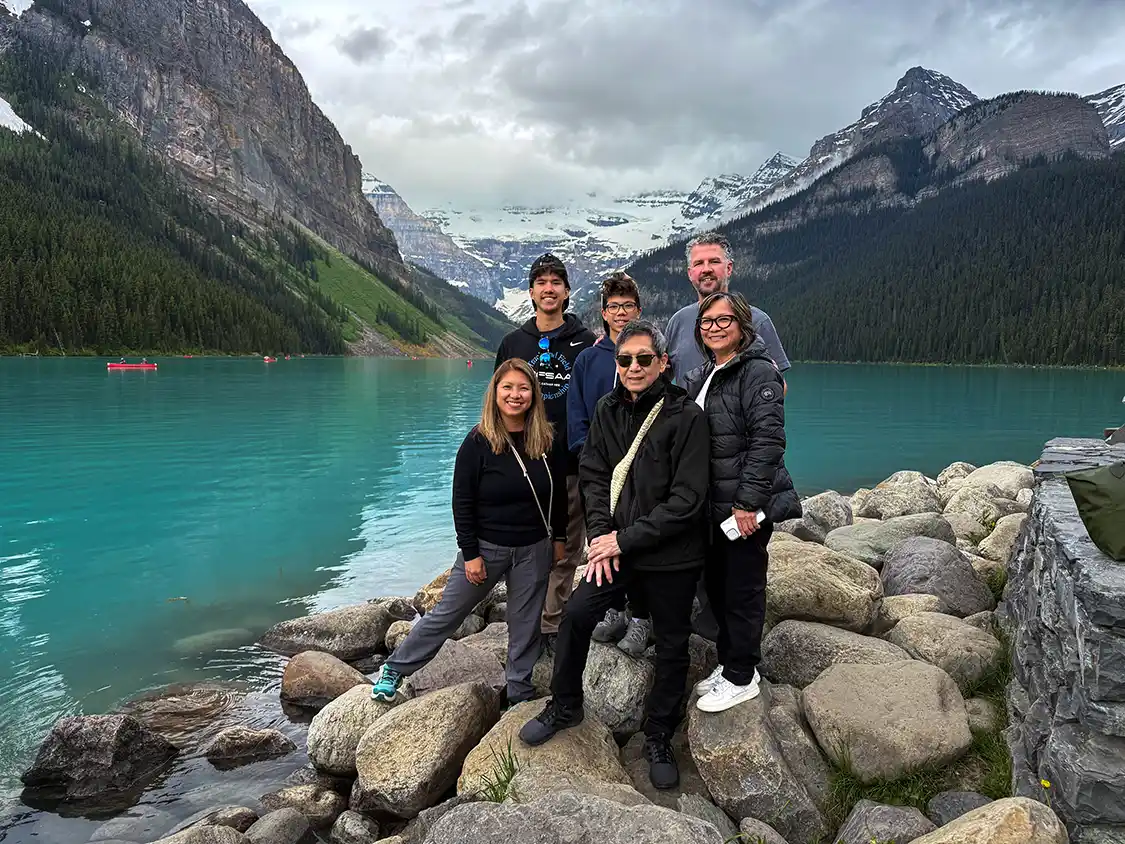
The Canadian Rockies are one of the most popular places to visit in Canada. The snow-capped mountains and remote highways stand out as one of the most iconic emblems of the Canadian experience. Beyond its jaw-dropping natural beauty, the Rockies also support one of the most intact large-mammal ecosystems left on the North American continent. Banff National Park alone is home to more than 50 species of mammals and over 280 species of birds. Jasper, the largest national park in the Canadian Rockies, adds more than 11,228 square kilometers of habitat and wilderness to the picture. Crucially, unlike so many wild places, the animals here still range across the same valleys, rivers, and alpine slopes they always have, and much of that habitat runs right alongside the roads and highways connecting the two towns.
That accessibility is what makes the Canadian Rockies such a special place for families. You don’t need to mount an expedition to see a grizzly or a bull elk. A slow drive along the right road at the right hour, with patient eyes, will often lead to incredible wildlife spotting. The region is sometimes called the Canadian equivalent of an African safari. Now, I’ve done a seven-day safari in Tanzania with my kids. Reading about that might seem like the Rockies oversells just how easy it is to see wildlife. The comparison, though, holds in one sense: this is a place where some of the largest and most iconic Canadian wildlife can be seen in their wild, natural surroundings. You may not see thousands, like in the wilds of the Serengeti, but I’ve never heard of someone visiting and not seeing any animals.
One important note on that word, wild. Everything in this guide is a wild animal living an unmanaged life. Wild animal sightings are never guaranteed. Heck, I’ve been to managed wildlife sanctuaries and not seen caged animals. Animals are just like that, completely unpredictable. That unpredictability isn’t a flaw. It’s the entire point of the natural experience. When the mountains decide to show you something, it makes it that much more special. Because you’ll be having an experience that is completely unique and your own.
The Big Animals: Bears, Elk, Moose, Big-Horned Sheep, and Mountain Goats in the Canadian Rockies
Grizzly Bears
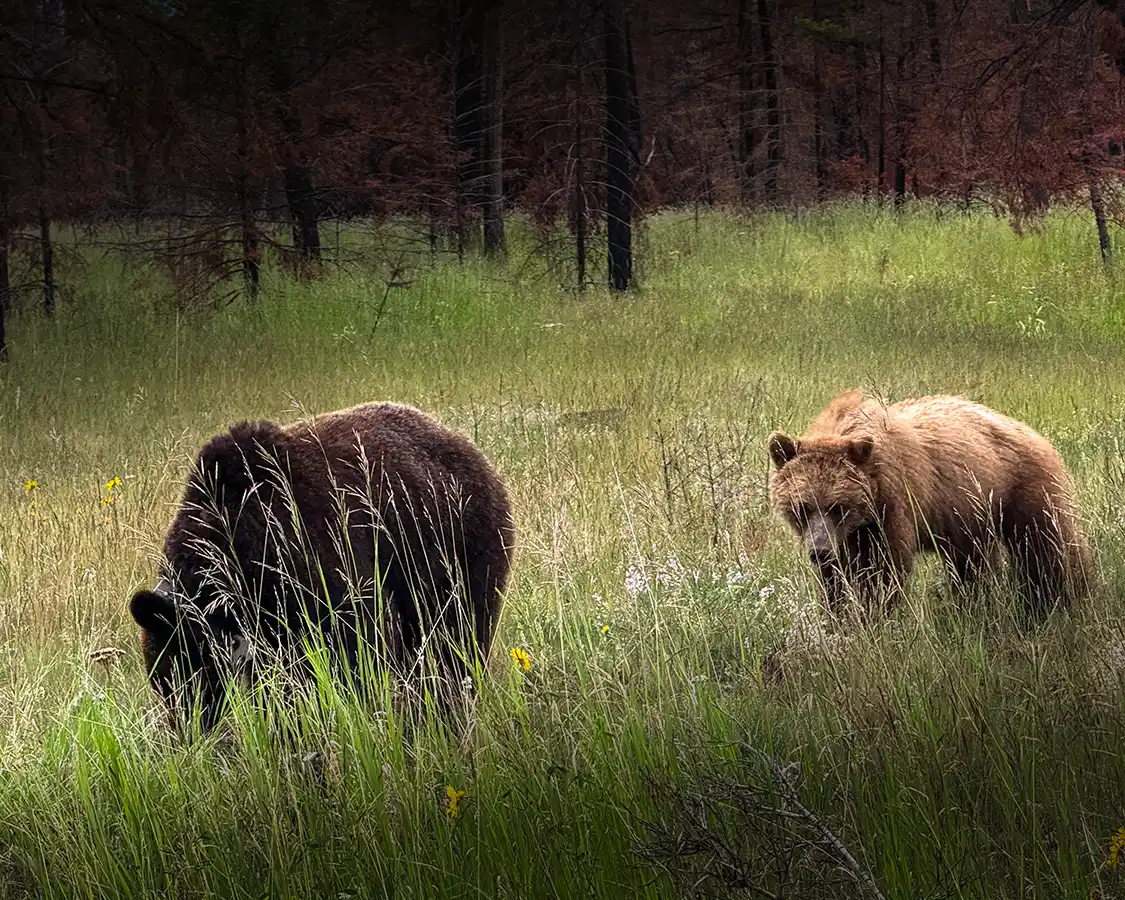
The brown bear, or ‘grizzly bear’, as it’s often referred to, is the animal most people hope to see. Canada’s Rocky Mountains hold a healthy population of the world’s third-largest species of bear (the number one spot goes to the polar bear, which can be found in numbers up in Churchill, Manitoba). Interestingly, in Banff there are actually more grizzlies than black bears, though grizzlies remain a threatened species and are carefully protected.
You’ll recognize a grizzly by its color and distinctive muscular hump over its shoulders, its dished facial profile, and its long front claws (although hopefully you never get close enough to see them). Contrary to what their name may suggest, color is not a reliable differentiator: grizzlies range from near-blond to dark brown, and black bears can be brown. In fact, when my family saw the two bears facing off in Jasper, they were likely related, but were also completely different colors. Shape and the shoulder hump are what to look for.
Where to See Grizzly Bears in the Canadian Rockies
Brown bears are most commonly seen on the open avalanche slopes and meadows along the Icefields Parkway, which runs between Lake Louise and the town of Jasper. Prime grizzly habitat is where you can scan hillsides at a distance. In Banff, the Lake Louise area and the surrounding backcountry are known to be grizzly country, although I haven’t seen any there personally.
Keep a special watch during the spring and early summer. During this time of year, bears come down to valley bottoms and roadsides to graze on fresh green vegetation and dandelions, which is when roadside sightings peak. Our sparring pair near the Fairmont in Jasper were doing exactly that: fighting over a berry bush in early summer.
Best Time of Year and Time of Day to see Grizzly Bears in the Rockies
For your best chances at seeing Grizzlies in the Rockies, aim your travels between May and early July. This is when the bears are at the height of roadside grazing that makes spotting them quite easy. During late summer, they move from the forest to the open fields to scrounge the ripe berry patches.
The best time of day for spotting grizzly bears in the Rockies is around dawn and dusk. Brown bears are naturally most active during these twilight hours when they roam to feed and travel while avoiding the heat of the day and heavy human disturbances.
Black Bears
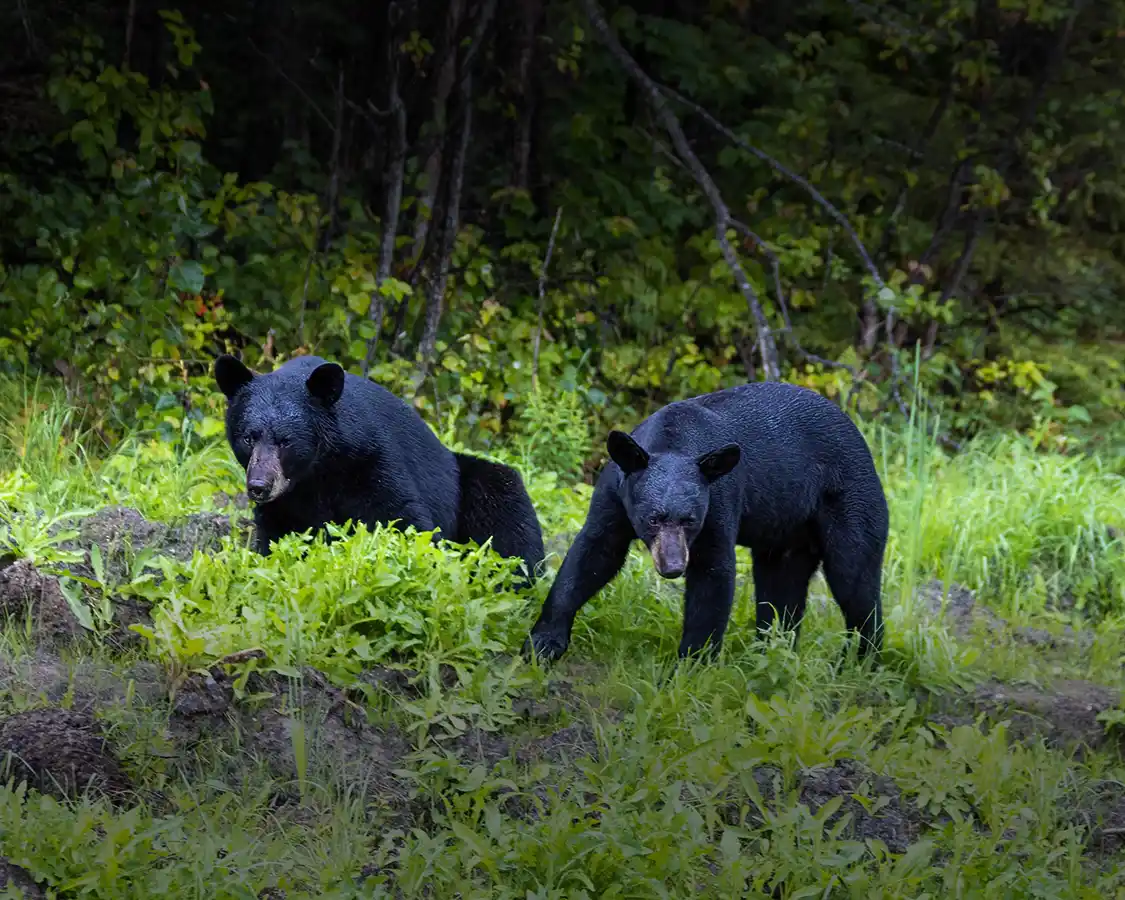
Black bears are smaller than their grizzly cousins. They also lack the noticeable shoulder hump, have a straighter facial profile, and sport taller, more pointed ears. Despite the name, their coloring can range through brown, cinnamon, or even blond. They tend to favor forested areas and forest edges more than the open slopes grizzlies use, which is a useful behavioral clue when you’re trying to tell a distant bear apart.
Where to See Black Bears in the Canadian Rockies
The Bow Valley Parkway (Highway 1A) between Banff and Lake Louise is the single best bear-viewing road in Banff. In fact, I have (so far) never driven the Bow Valley Parkway and not seen at least one black bear scrounging for greens at the edge of the forest.
Animal sightings are so prevalent along the Bow Valley Parkway that the speed limit here drops and sections close seasonally at dawn and dusk in order to avoid dangerous human/animal encounters. I’ve had some of our most reliable black bear sightings here, working the edges of the forests for dandelions. Roadsides along the Icefields Parkway also sport good black bear viewing, although my personal results there have not been as consistent.
Best Time of Year and Time of Day to see Black Bears in the Rockies
Springtime through the fall offers consistently good black bear viewing in the Canadian Rocky Mountains. Black Bears (like their brown bear cousins) hibernate through most of the winter. The spring offers the best chances as the bears emerge from their dens and forage along the roadsides for fresh greens.
Like brown bears, black bears are most active between dawn and dusk when the cooler temperatures make traveling for food more comfortable. Aim your wildlife viewing for about an hour before and after dawn and dusk for the best results.
Elk
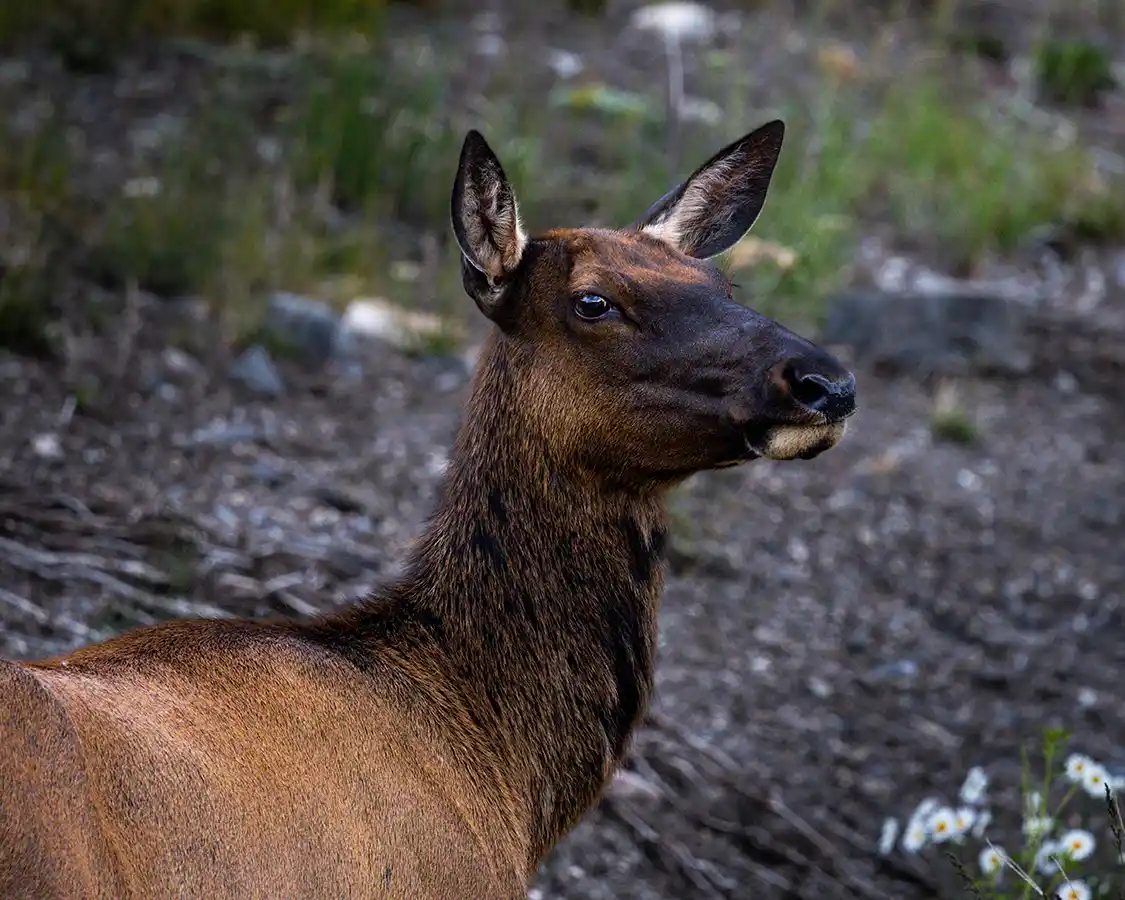
Most people think that bears are the most dangerous animal in the Canadian Rockies. It’s not even close. Each year, about one to three people are injured by bears. Each year, elk outdo them and injure dozens, if not hundreds, of people. During the fall rut (September to mid-October), bull elk are very aggressive and territorial. During spring calving (May to June), cows are fiercely protective of their young.
Elk have a generally tame nature. They wander through the streets of Banff and Jasper alone or in groups, casually mowing residents’ lawns at no charge. It’s this tame nature that causes tourists and visitors to underestimate their strength and aggression. Keep 30 yards (30 m) minimum, and 55 yards (50 m) or more during the rut for both your safety and the safety of the animal.
Elk are the animal that you’re most likely to see in the Canadian Rockies. Large, tan-bodied with a pale rump and, on the bulls, spectacular branching antlers, they’re common enough that they graze on the outskirts of both Banff and Jasper townsites as though they own the place. In Jasper, they’re known to hang out on the main street.
Where to See Elk in the Canadian Rockies
The Vermilion Lakes, just outside Banff townsite, offer the most reliable elk viewing in the park, with herds grazing year-round. The animals frequent both Banff and Jasper, and the Bow Valley Parkway.
Best Time of Year and Time of Day to see Elk in the Rockies
Elk can be seen year-round in the Canadian Rockies. They don’t migrate completely out of the region, frequently staying in lower valley bottoms and around mountain towns like Banff and Jasper during all four seasons. The fall rut is the most dramatic time to see elk in the Rockies. During this time, you might see bulls bugling, an unforgettable sound, but keep your distance; this is the time of year that elk are at their most aggressive and when most dangerous human/elk encounters occur.
Moose
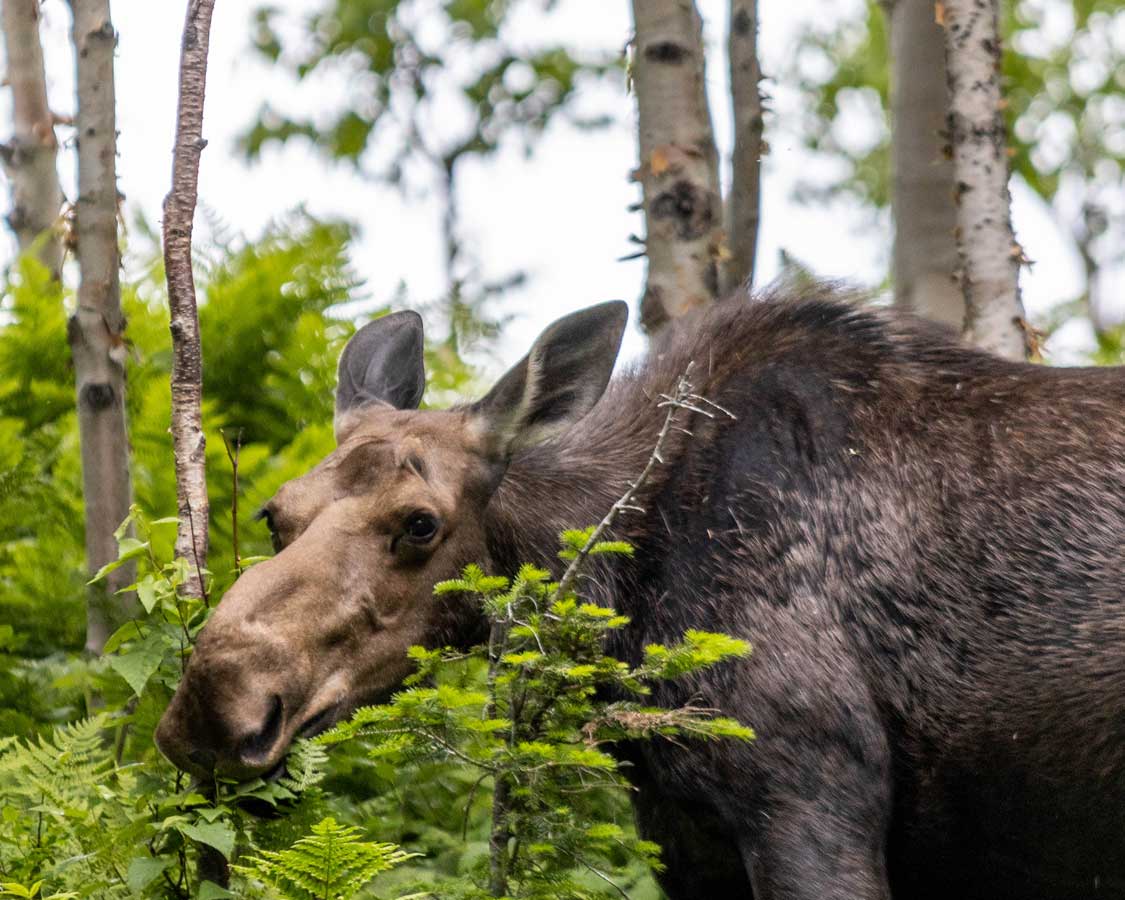
Moose are one of the most iconic Canadian large mammals. While most visitors to the Canadian Rockies think that moose are everywhere, this is actually one of the toughest places in Canada for moose viewing. Famous Canadian moose-spotting locations like Algonquin Provincial Park in Ontario and the Viking Trail in Newfoundland offer much more reliable moose viewing than the Canadian Rockies.
Moose are the largest member of the deer family and one of the most sought-after animals in the Canadian Rockies. The animals are surprisingly hard to find in the region. Jasper has only around 150 moose in the region, so if you see one, it’s a genuinely special occasion.
To identify a moose, look for the enormous dark body, the long snout, the shoulder hump, and, on bulls, the broad palmate antlers. Moose are enormous, reaching up to seven feet tall (2.1 meters) at the shoulders. They’re also deceptively fast and can be aggressive, particularly cows who are traveling with their calves. Watch for flattened ears and raised hackles, which signal a warning, and remember to keep that 30-yard (30 m) minimum distance.
Where to See Moose in the Canadian Rockies
In Jasper, Maligne Lake Road, Medicine Lake, and the marshy flats along the upper Athabasca River are your best bets for spotting moose in the Rockies. They favor anywhere the water is slow and the aquatic plants are thick. Beaver ponds and wetland edges throughout both parks are worth scanning. Because their numbers are low, moose take patience and a bit of luck, but the wetland habitat narrows the search considerably.
Best Time of Year and Time of Day to see Moose in the Rockies
Dawn is the prime time to see moose, when they come to the water’s edge to feed before the day warms and human activity picks up. Late spring through early fall is the best stretch of the year, with the September rut making bulls more active and more visible, though also considerably more dangerous. During the rutting season, moose sightings require extra caution and distance.
Bighorn Sheep
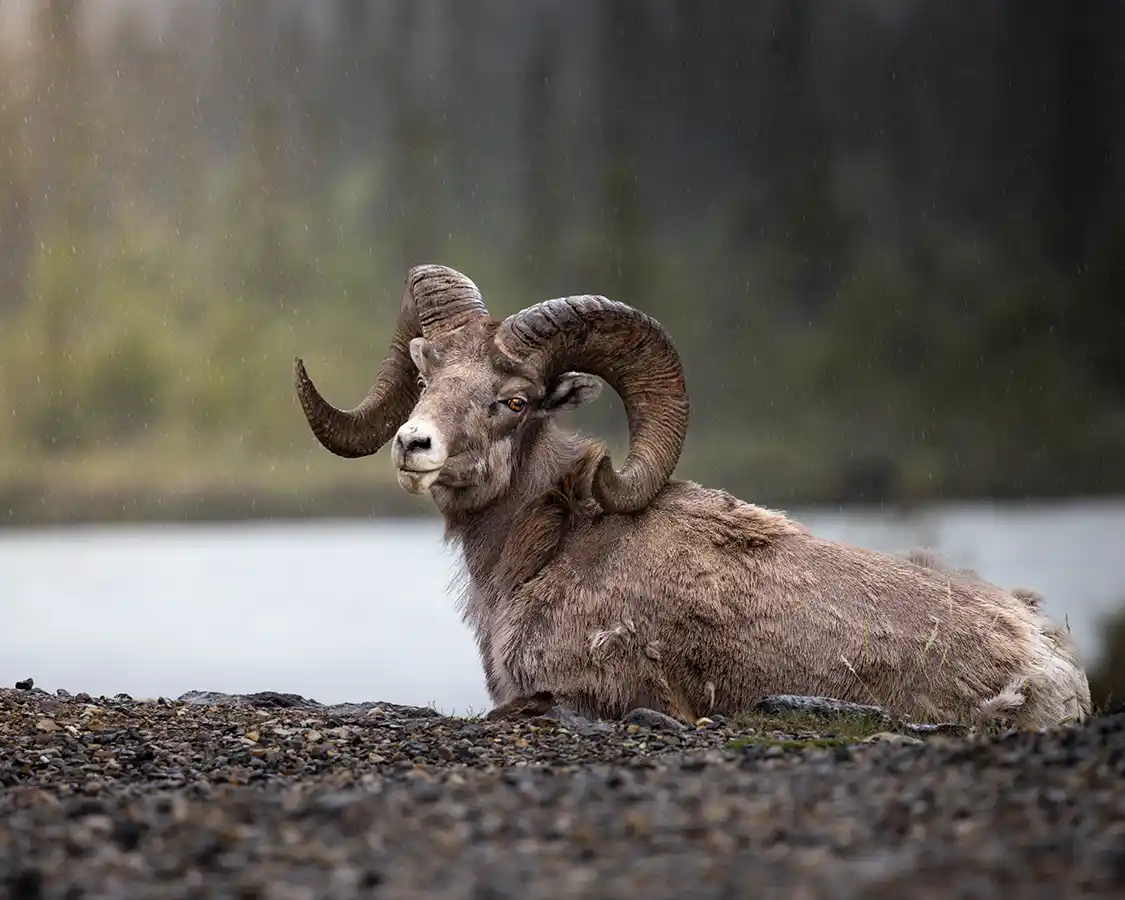
Bighorn sheep are one of the Rockies’ most reliable and rewarding animal sightings, which makes them a favorite for families. Both sexes are brown with a distinctive white rump patch; the rams carry the massive curled horns that give the species its name, while the ewes have shorter, slimmer horns. They’re relatively relaxed around people and vehicles, which makes them easy and safe to watch, though relaxed never means tame, and the same 30-yard (30 m) minimum applies.
Where to See Bighorn Sheep in the Canadian Rockies
In Banff, the road to Lake Minnewanka is your best bet. Sulfur Mountain and the Mount Norquay road are reliable by Rockies standards as well. In Jasper, the mineral licks near Disaster Point on Highway 16, the road to the Overlander, and, most famously, the parking lot near the mineral springs in Miette draw sheep in for the salt and minerals, sometimes licking it right off the parked cars. On our last trip, the boys’ favorite sighting of the whole week was a group of rams at the Miette mineral spring, doing exactly that.
Best Time of Year and Time of Day to see Bighorn Sheep in the Rockies
Bighorn sheep can be seen year-round in the Canadian Rockies. The winter is surprisingly one of the best times, as the sheep migrate down from the alpine to lower, snow-free grassy slopes and roadsides where they’re easy to spot. The rams clash horns in dramatic head-to-head collisions during the rut in November and early December. Sheep are less strictly tied to dawn and dusk than the big grazers, so you have a reasonable chance throughout the day, particularly at the mineral licks they return to again and again.
Mountain Goats
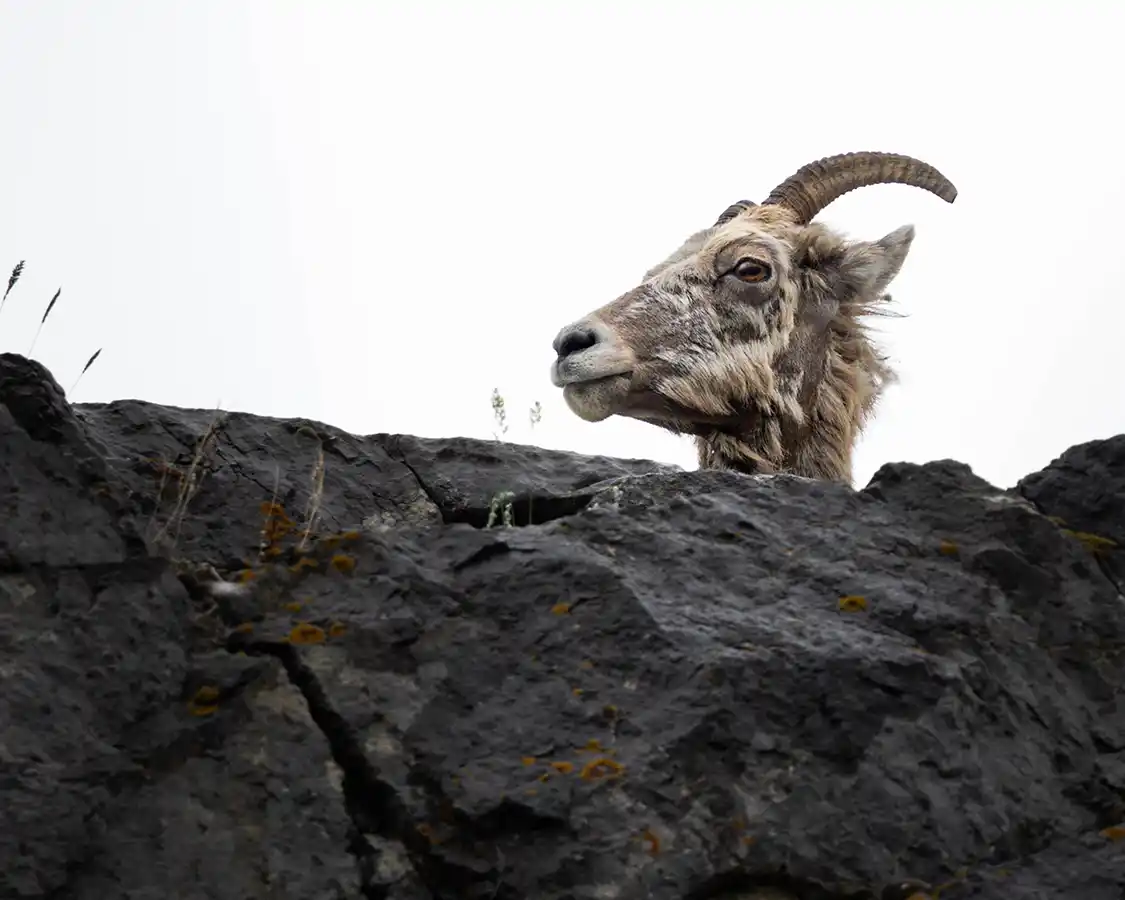
Often confused with bighorn sheep, mountain goats are a different animal entirely: they have short black horns, a distinctive beard, and a shaggy white coat. They’re built for the most vertical terrain in the Rockies, and you’ll most often spot them as white dots high on sheer cliff faces, though they descend to mineral licks near the roads. The quickest way to tell them from sheep: goats are white with straight black horns; sheep are brown with heavy curled horns.
If you visit during the late spring and early summer, mountain goats in the Canadian Rockies can look like they’ve just wandered out of a zombie movie. Their shaggy winter coats are shedding off in place of their sleek, light summer cover. While this is happening, they can look shaggy, unkempt, and much less majestic than they do during July through September.
Where to See Mountain Goats in the Canadian Rockies
The Icefields Parkway is the best place to find them, and the Goats and Glaciers Lookout is one of the most reliable. This viewpoint is roughly halfway along the Icefields Parkway between Lake Louise and Jasper. It’s a natural mineral lick beside the Athabasca River where goats regularly gather (there weren’t any on my last visit, but we saw many up near Miette. Bring binoculars, because even when they’ve come down for the minerals, they’re often across the river or partway up a slope rather than right at the roadside.
Best Time of Year and Time of Day to see Mountain Goats in the Rockies
Spring is the best season for roadside goat sightings, when they come down to the mineral licks; in summer they head for the high alpine meadows, where hikers on high-elevation trails encounter them. In winter they stay high on rocky, wind-scoured slopes where the sun and wind keep vegetation clear of snow. Goats are less dependent on the dawn and dusk pattern than the big grazers, so midday viewing is perfectly viable, especially at the licks.
Spotting the Small Animals of the Canadian Rockies: Marmots, Pikas, and Martens
Some of my family’s favorite wildlife moments in the Rockies have come from seeing some of the region’s smallest residents. For kids, especially, these pint-sized critters can be more thrilling than the big animals simply because finding them takes real effort and a sharp eye.
Hoary Marmots
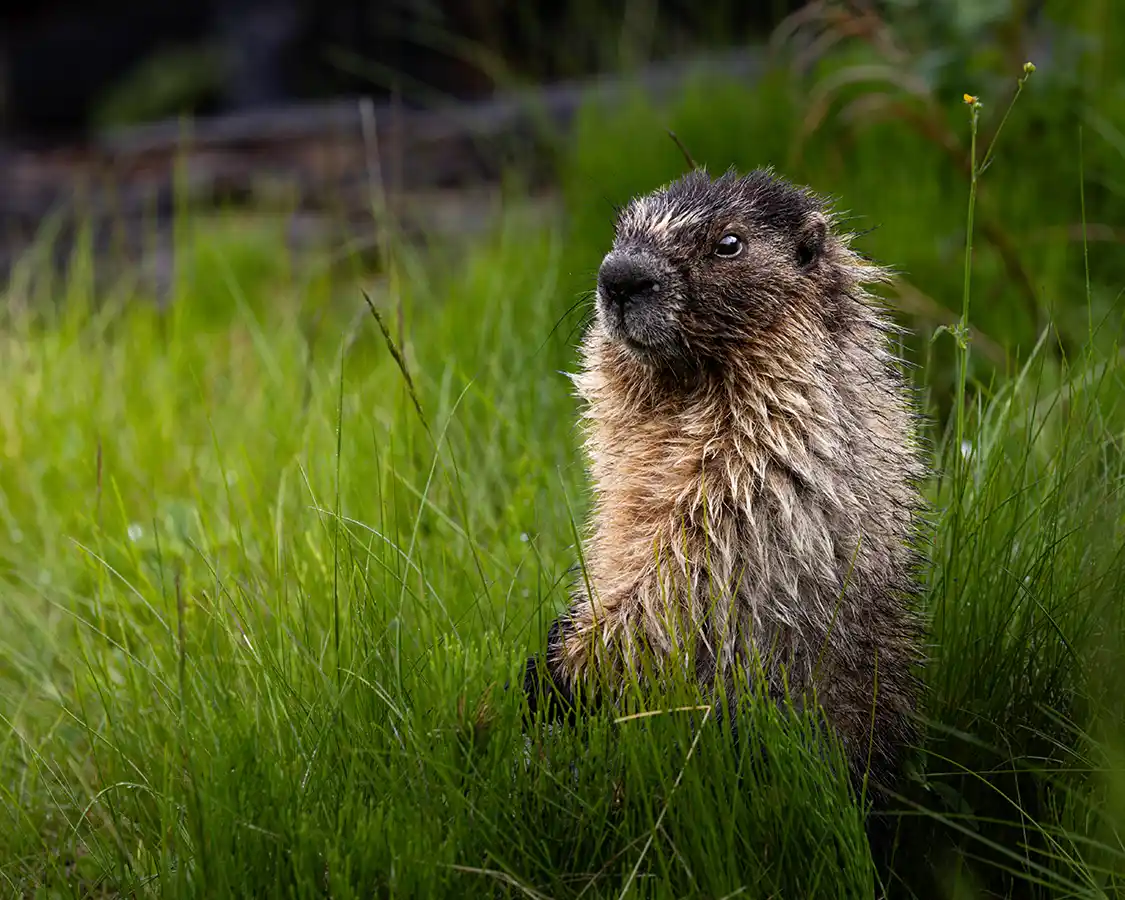
The rotund, cat-sized rodents of the alpine are known as hoary marmots. They often bask, splayed out flat on sun-warmed boulders, and can let out a piercing whistle that earns them the nickname ‘whistle pig’. Hoary marmots most often live in the rocky slopes and scree fields above the treeline, and you’ll frequently hear that shrill alarm call echoing across a slope before you manage to pick out the animal itself.
Where to See Hoary Marmots in the Canadian Rockies
Hoary marmots can often be found basking on the alpine trails throughout Banff and Jasper National Parks. The Bald Hills trail in Jasper and the high meadows and boulder fields around Maligne Lake and Lake Louise are good bets. Any rocky alpine slope on a sunny day is worth scanning and listening for them. Dylan and I found lots of them at the end of Edith Lake near the Maligne Lake Lookout on our last road trip through the Rockies.
Best Time of Year and Time of Day to see Hoary Marmots in the Rockies
Marmots are most active in the summer months, when the alpine is free of snow, and they’re undergoing a feeding frenzy prior to their long winter hibernation. They love to bask on warm rocks during sunny daytime hours, making midday on a clear summer day one of the easier times to spot them out in the open.
Pikas
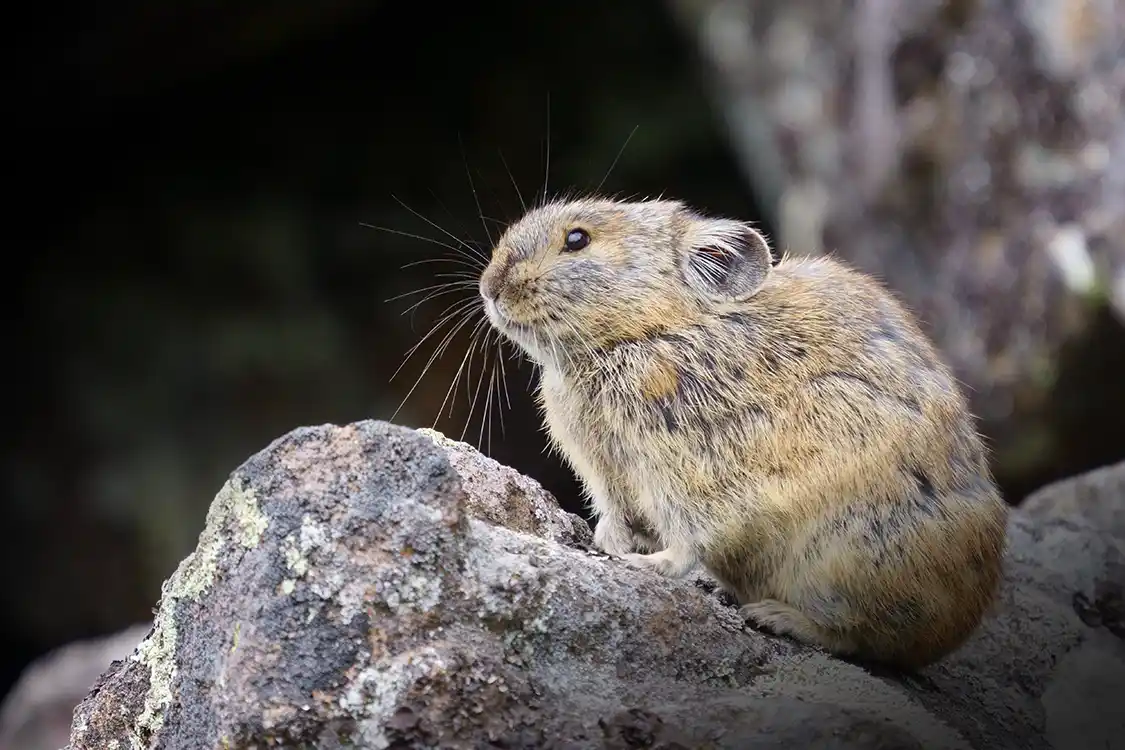
Pikas are tiny, round-eared relatives of the rabbit. They’re tiny and absolutely adorable. They’re also the inspiration for Pokémon’s famous character Pikachu. Pikas share the marmots’ rocky alpine habitat and dart between boulders with mouthfuls of grass, letting out a high, squeaky eeep. They’re small, fast, and superbly camouflaged against the rock, so spotting one is a victory you should celebrate.
The first time I saw one was during my first visit to the Rocky Mountains on the rockpile at Moraine Lake. Hearing them is far easier than seeing them. Turning the search into a listening game is a brilliant way to keep kids engaged on an alpine hike.
Where to See Pikas in the Canadian Rockies
Talus slopes and boulder fields above the treeline. The same trails that produce marmots, Bald Hills, the Tonquin Valley, and the alpine sections around Lake Louise and the Icefields Parkway are home to pikas. Look for movement in the rock rather than the animal itself.
Best Time of Year and Time of Day to see Pikas in the Rockies
Unlike marmots, pikas don’t hibernate, so they’re active year-round, but summer and early fall are when they’re most visible, busily gathering and storing grass for winter. They work through the day rather than concentrating at dawn and dusk, so any daylight hike through their rocky habitat gives you a chance.
Pine Martens and Other Small Mammals
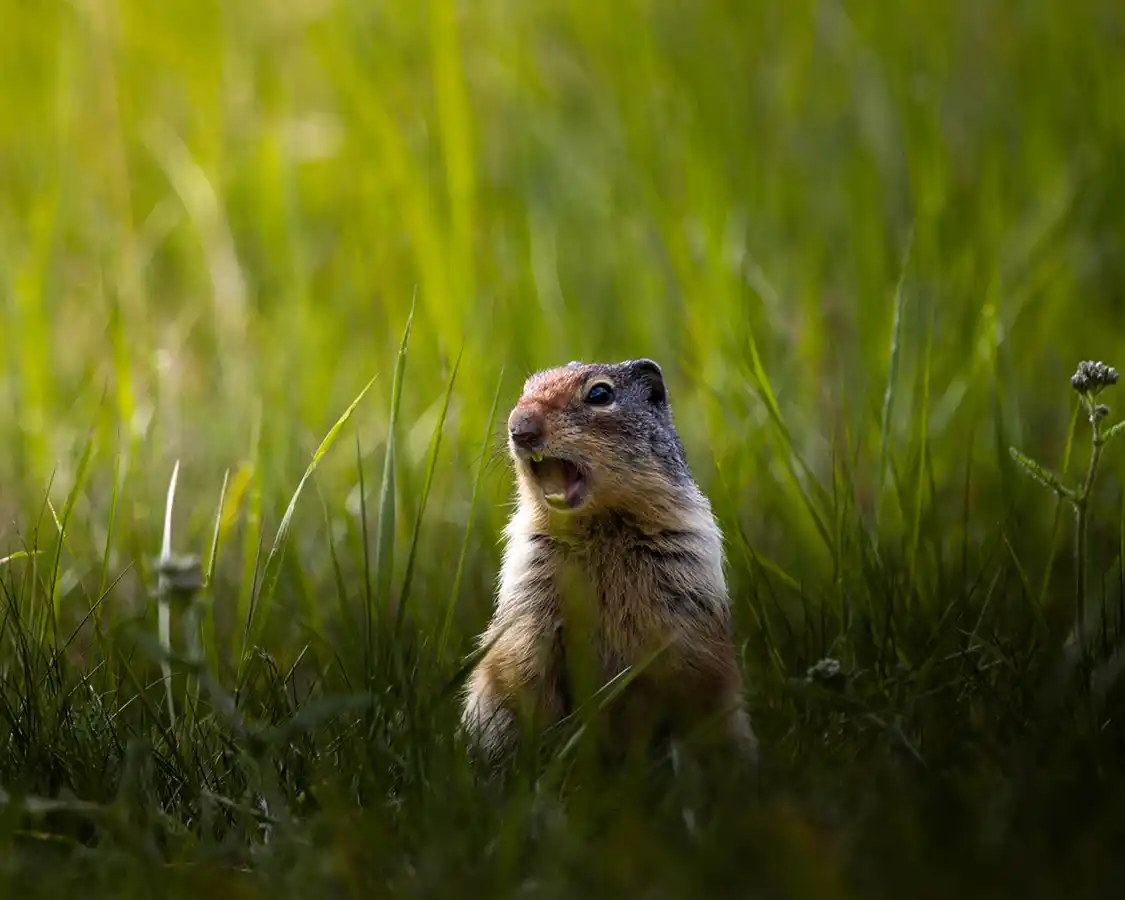
Pine martens are sleek relatives of the weasel. These long, slender animals move through the subalpine forest and are a lucky spot rather than a reliable one. I was lucky enough to see my first pine marten on my most recent visit to Lake Louise. My family had wandered down the trail toward the Fairmont Lake Louise when one scrambled right through my legs while crossing a small bridge before disappearing into the brush.
During your tour through the Rockies, you’re likely to encounter Columbian ground squirrels, golden-mantled ground squirrels (often mistaken for oversized chipmunks), least chipmunks, red squirrels announcing you with their rattling call, and snowshoe hares. Maligne Canyon in Jasper is a reliable spot for red squirrels and chipmunks, and these small, active animals help keep younger kids entertained between the bigger sightings.
The Most Elusive Animals in the Canadian Rockies: Wolves, Cougars, Coyotes, and Lynx
Some of the Rockies’ most exciting and fascinating residents are the ones that you’re almost certainly not going to see. That is, unless you’re truly dedicating yourself to the task through specialized tours and expert wildlife guides. Regardless, it’s worth understanding them because their rarity is part of what makes the wilderness of the Canadian Rockies feel wild and mysterious.
Wolves
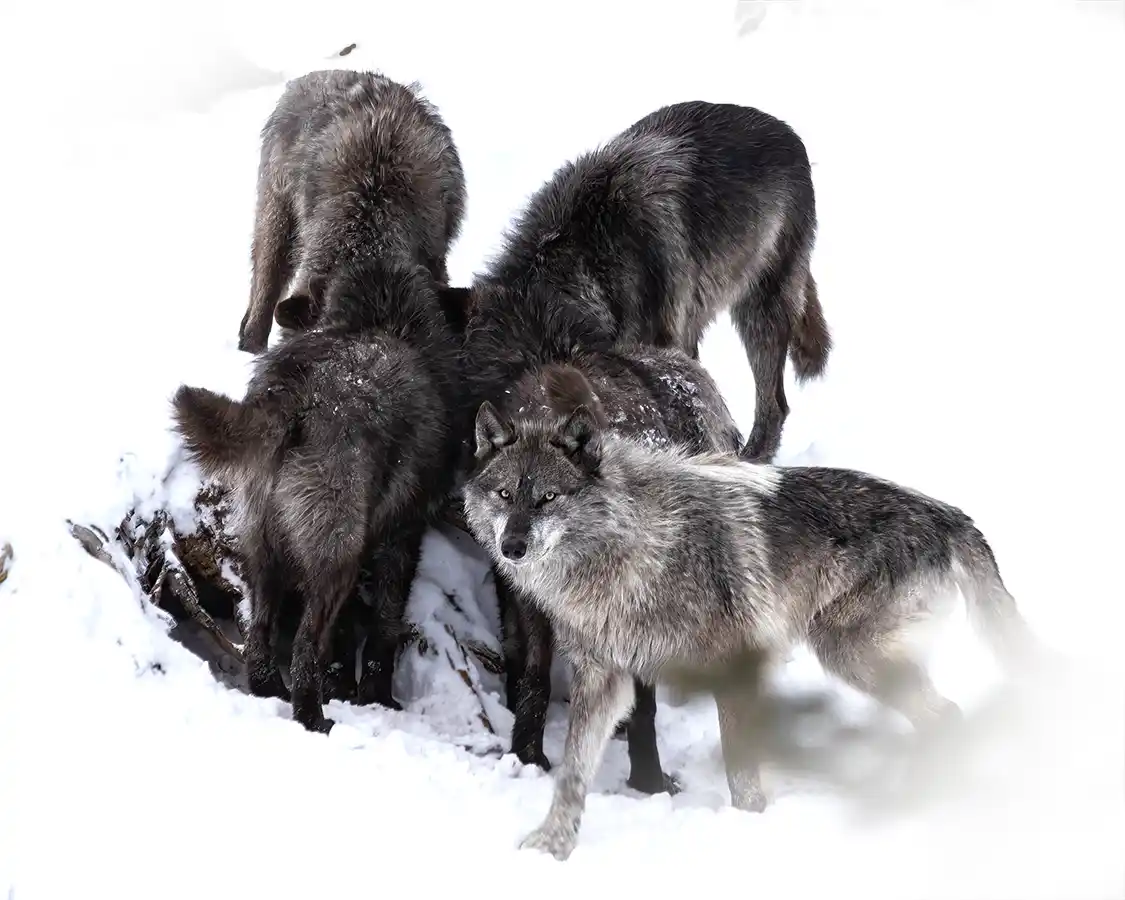
The Rockies support a small but stable wolf population. Overall, there are between 4-7,000 wolves in Alberta. That might seem like a lot, but these animals are reclusive, roam massive territories, and as a result, sightings are rare and unforgettable. Wolves are much larger than their coyote cousins. They are roughly the size of a large German Shepherd, with a broad face and coats that range from grey to black to white to brown.
The Bow Valley is the most reliable wolf territory, and the Icefields Parkway occasionally produces a sighting. Mostly, though, you’ll be lucky to hear one. Your best bet is to listen for them. Those camping along the Bow Valley Parkway, in the Johnston Canyon Campground or Protection Mountain Campground might get lucky enough to hear their community howls. These often occur in the late night to early morning, as I learned when staying overnight at the Parc Omega wolf habitat in Outaouais, Quebec.
Cougars
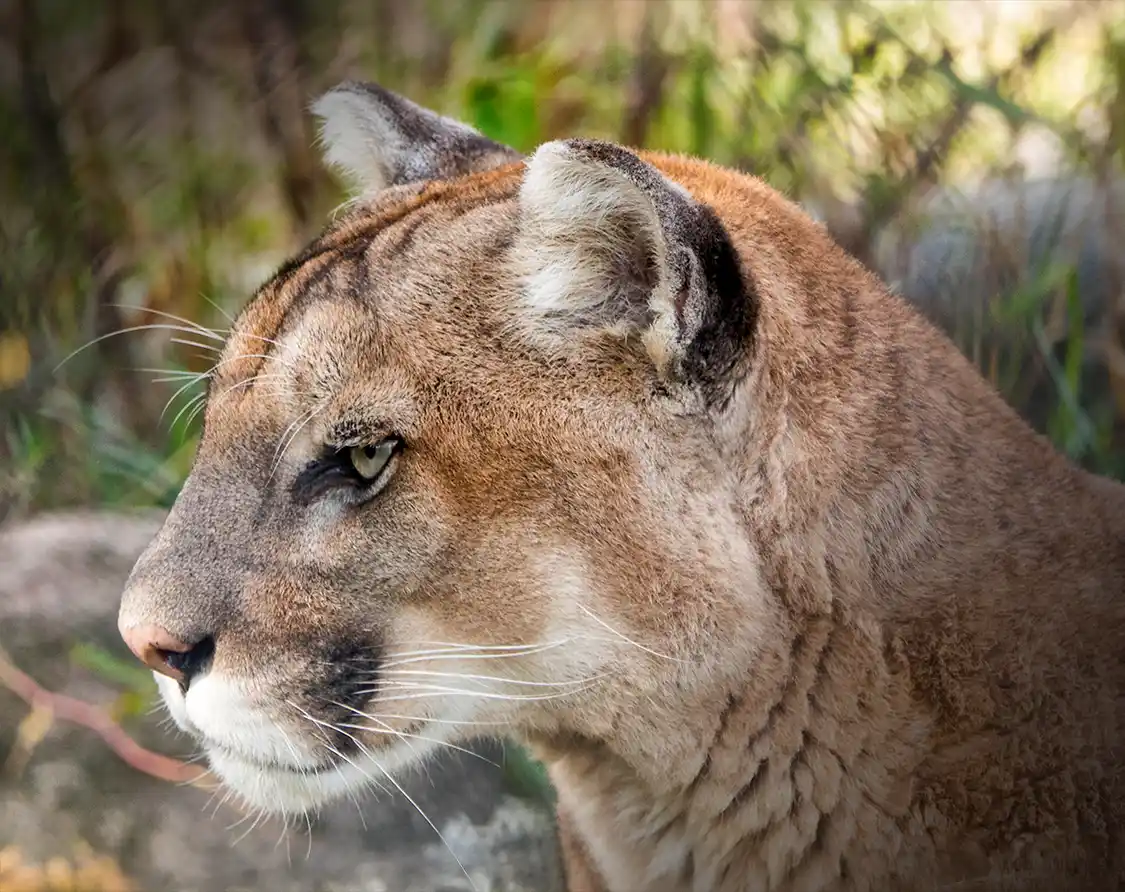
Cougars (also called mountain lions) roam the entire region of the Canadian Rockies and prey on deer, sheep, and elk. They are very rarely seen outside of those who spend a tremendous amount of time outdoors in the Mountains. These solitary, elusive cats keep so thoroughly out of sight that even lifelong locals and wildlife researchers can go decades without a glimpse.
In winter, their tracks are sometimes found in the Mount Norquay and Sunshine Road areas, and up Spray Lakes Road near Canmore. Realistically, treat a cougar sighting as a once-in-a-lifetime stroke of luck rather than something to plan for. Their presence, seen or not, is one of those facts that makes these mountains feel genuinely wild.
Coyotes and Lynx
Coyotes are a far more common sight than wolves and are often seen in open meadows and their traditional hunting grounds: the Vermilion Lakes Road, the Bow Valley Parkway, and Highway 93 South are all good options. They’re a single greyish-brown shade with a narrow, fox-like muzzle, which distinguishes them from wolves. Cohen spotted a few ambling along the edge of the Vermilion Lakes on our last morning in Banff.
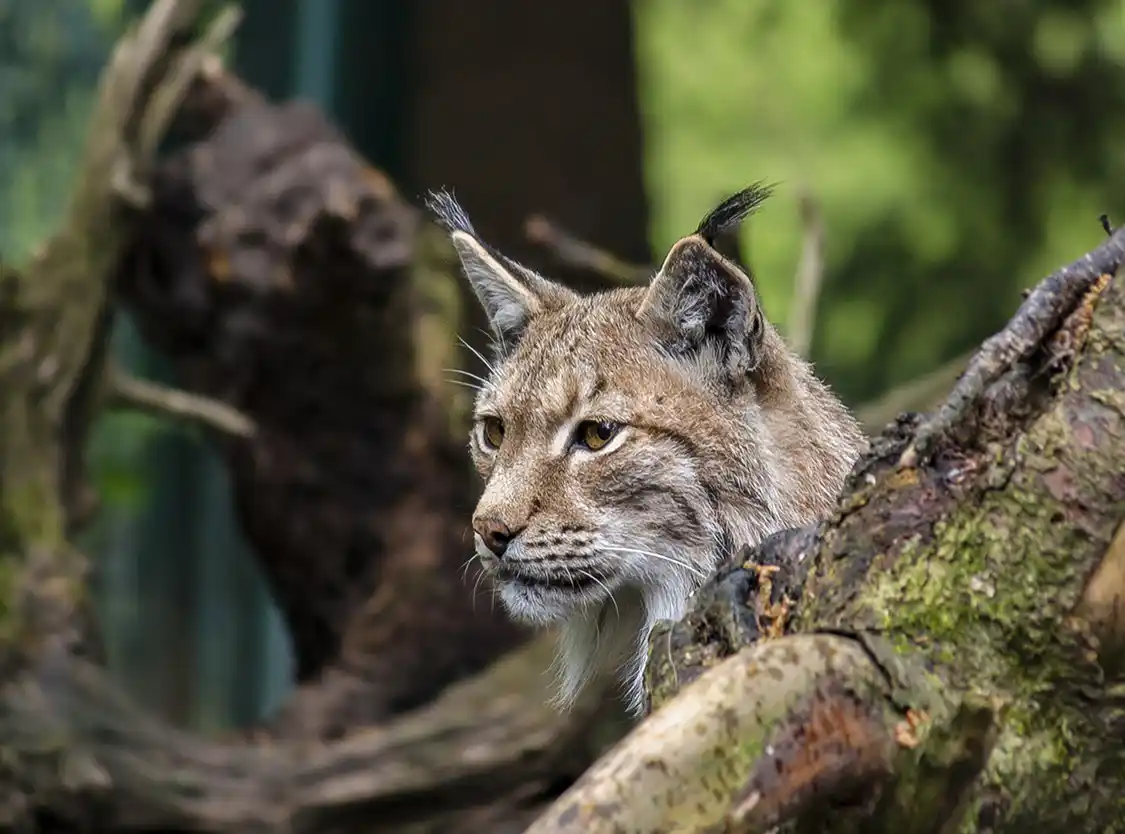
The Canada lynx, one of the country’s most iconic big cats, is known for its tufted ears and huge snowshoe paws. The lynx is another rare and elusive resident of the Rockies, occasionally seen in quieter, forested areas but never reliably.
Birds of the Canadian Rockies
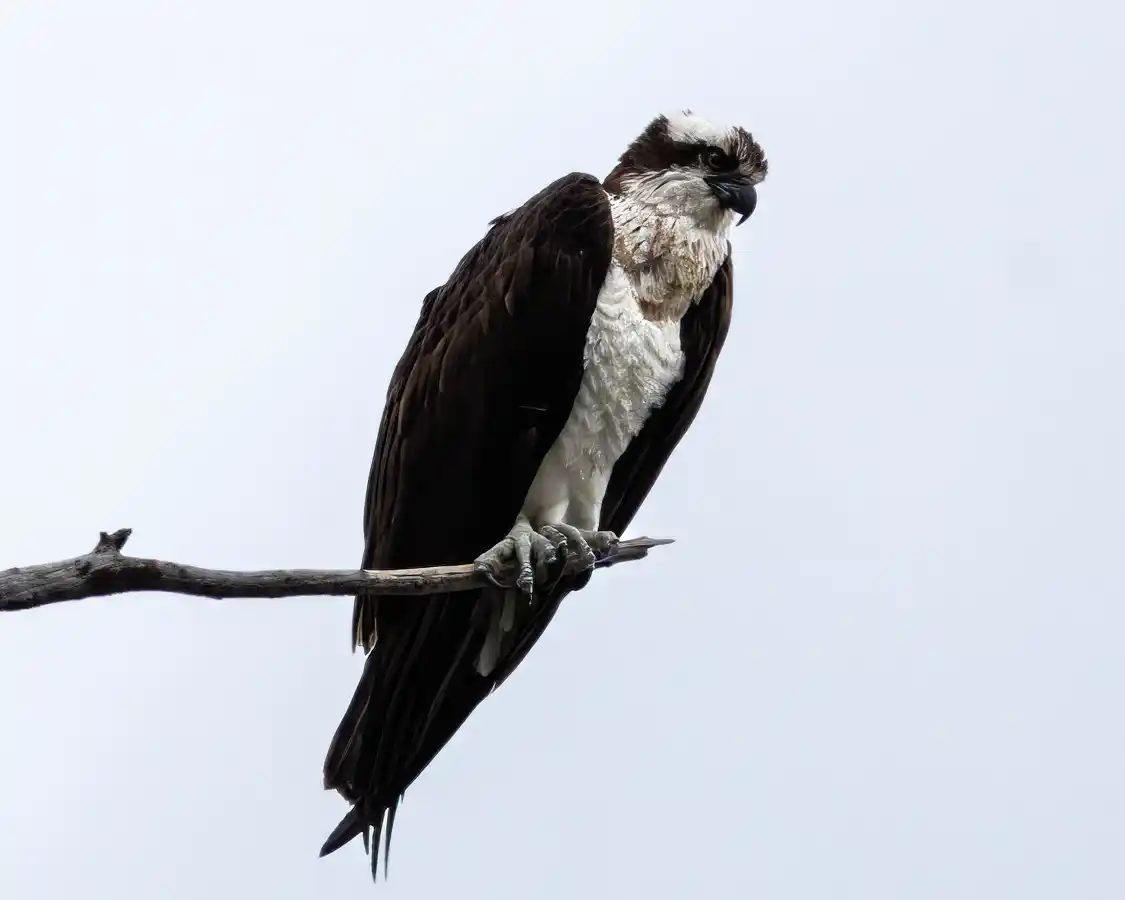
Packed with more than 280 unique species of birds in Banff alone, the Canadian Rockies is a paradise for bird lovers. Unlike some of the larger mammals, many of the birds can be found throughout the Banff and Jasper regions, making them some of the most reliable wildlife spotting in the region.
The most charismatic large birds in the region are the raptors. Bald Eagles, hawks, and ospreys can be found near the lakes and rivers, particularly around the Vermilion Lakes near Banff, where ospreys nest throughout the summer. For something special, during the spring and fall, look out for golden eagles, which migrate through the region during those seasons.
If you’re making your way up to Maligne Lake in the Jasper region, there is no stopping point along the road passing Medicine Lake. There is an eagle that has reliably been nesting here for years, drawing so many crowds that it became a traffic hazard. You can sometimes catch a glimpse of it on the Maligne Lake webcam.
There are loads of picnic sites and alpine trails throughout the Banff and Jasper regions, and if you visit them, you’re almost guaranteed to run into the bold grey jay (also called the whisky jack or Canada jay), Clark’s nutcracker, and the black-and-white Stellar’s jay.
Waterfowl are also a common sighting on the lakes and wetlands throughout the region. For families, the birds are a reliable, active presence even when the big mammals are hiding, and a simple spotting checklist turns them into a scavenger hunt that keeps kids scanning.
The Best Places to See Wildlife in the Canadian Rockies:
If you’d rather plan your Rocky Mountains wildlife spotting by place than by animal, here are the most productive wildlife-viewing locations across the region, built from experience through the mountains.
Bow Valley Parkway (Highway 1A), Banff
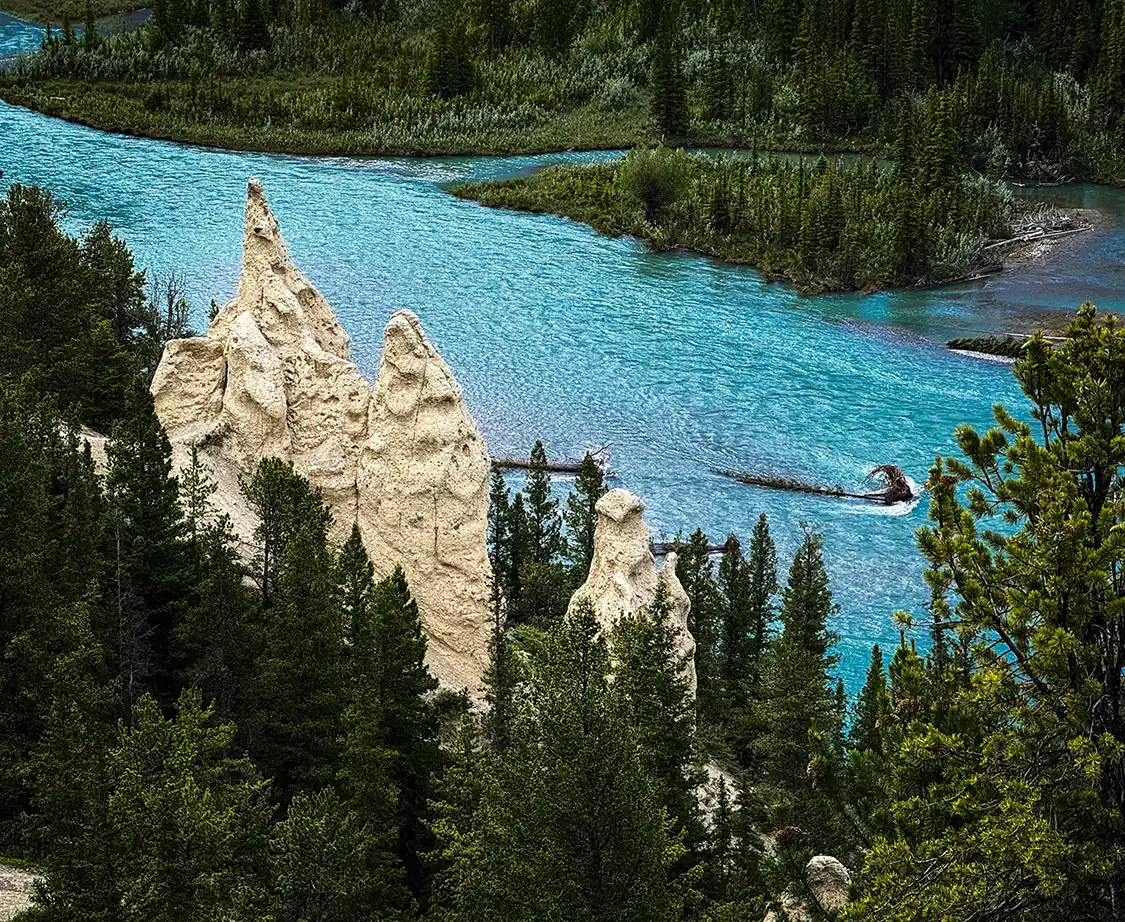
The Bow Valley Parkway (Highway 1A) offers the best wildlife-sighting opportunities in Banff. What makes this route so productive is its design and its pace. Built as the original, slower road between Banff and Lake Louise, it runs parallel to the Trans-Canada Highway but without the speed, the traffic, or the wildlife fencing that lines the main corridor.
That fencing on the Trans-Canada deliberately funnels animals away from the highway, while the Bow Valley Parkway leaves them free to move along the rich valley bottom it passes through. The road winds between dense forest and open meadow along the Bow River, and it’s exactly this patchwork of cover, water, and grazing, combined with low speeds and light traffic, that gives it the highest bear-sighting density in the park.
Beyond black and grizzly bears working the roadside vegetation, the Parkway reliably produces elk and deer, and, occasionally, the wolves that hunt the valley. Drive it slowly at dawn or dusk for your best opportunities, when the animals are most active, and the road is quietest.
One important note: parts of the Bow Valley Parkway are subject to seasonal dawn/dusk travel restrictions, which are in place to give the animals space to move through this critical habitat undisturbed. Please respect the rules. They’re a large part of why the wildlife viewing here stays so good. You can find out more about safety and closures in the region on the Bow Valley Biosphere website here.
Vermilion Lakes, Banff
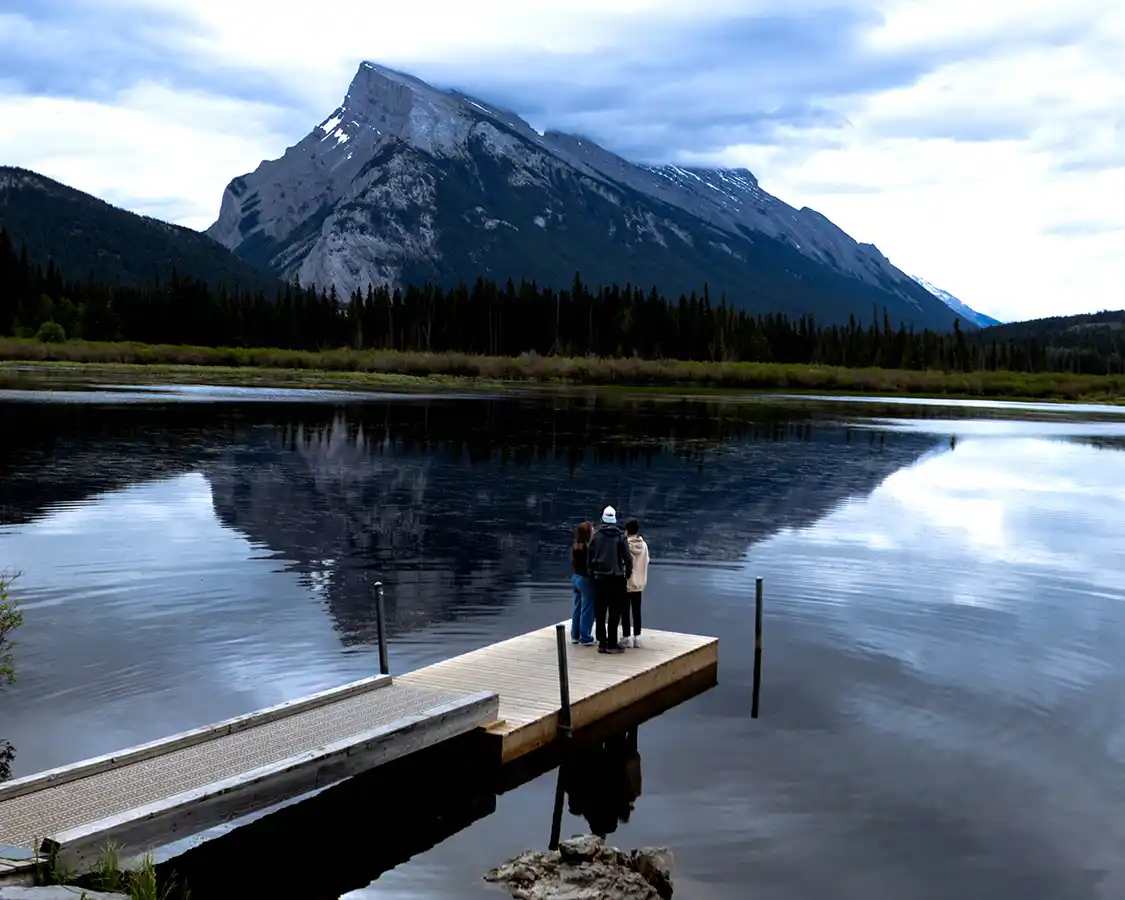
The Vermilion Lakes are a chain of three shallow, spring-fed lakes strung along the floor of the Bow Valley, and they punch well above their size for wildlife. What makes them special is the mix of habitats packed into one small, accessible place: open water, marshy wetlands, reedy shallows, and grassy shoreline all sit side by side, and that variety is exactly what draws such a range of animals. The warm springs that feed the lakes keep sections of water open even in the depths of winter, concentrating birds and wildlife when the rest of the valley freezes over.
That richness makes the Vermilion Lakes the most reliable wildlife viewing near Banff townsite. Elk graze the shoreline year-round, beavers are active at dusk (look for their lodges and the V-shaped ripples on the water), ospreys nest here in the summer and hunt the shallows, and grizzly bears, muskrat, otter, and mink all turn up from time to time. Waterfowl and songbirds are constant company. Add a backdrop of Mount Rundle mirrored in the still water, and the Vermilion Lakes are minutes from town and ideal for an easy family outing, especially at dawn or dusk when the animals are most active, and the light is at its best.
Lake Minnewanka Road, Banff
Lake Minnewanka, the largest lake in Banff National Park, is one of the most reliable spots in the Rockies to see bighorn sheep. What draws them is the terrain around the lake: the road cuts through open, rocky, south-facing slopes that catch the sun and stay relatively snow-free, giving the sheep both the grassy grazing and the steep, rocky escape terrain they favor. Natural mineral deposits in the area add to the appeal, drawing sheep down to the roadside for the salt and minerals they crave. The rams here are often remarkably relaxed around vehicles and visitors, which makes for excellent, safe viewing.
Bighorn sheep are the headline draw, but elk and deer are common visitors to the shores of the lake as well, grazing the open slopes and shoreline. Just 15 minutes from Banff townsite, Lake Minnewanka pairs its wildlife with some of the best lake scenery in the park, making it an easy and rewarding family outing.
The Icefields Parkway (Highway 93)
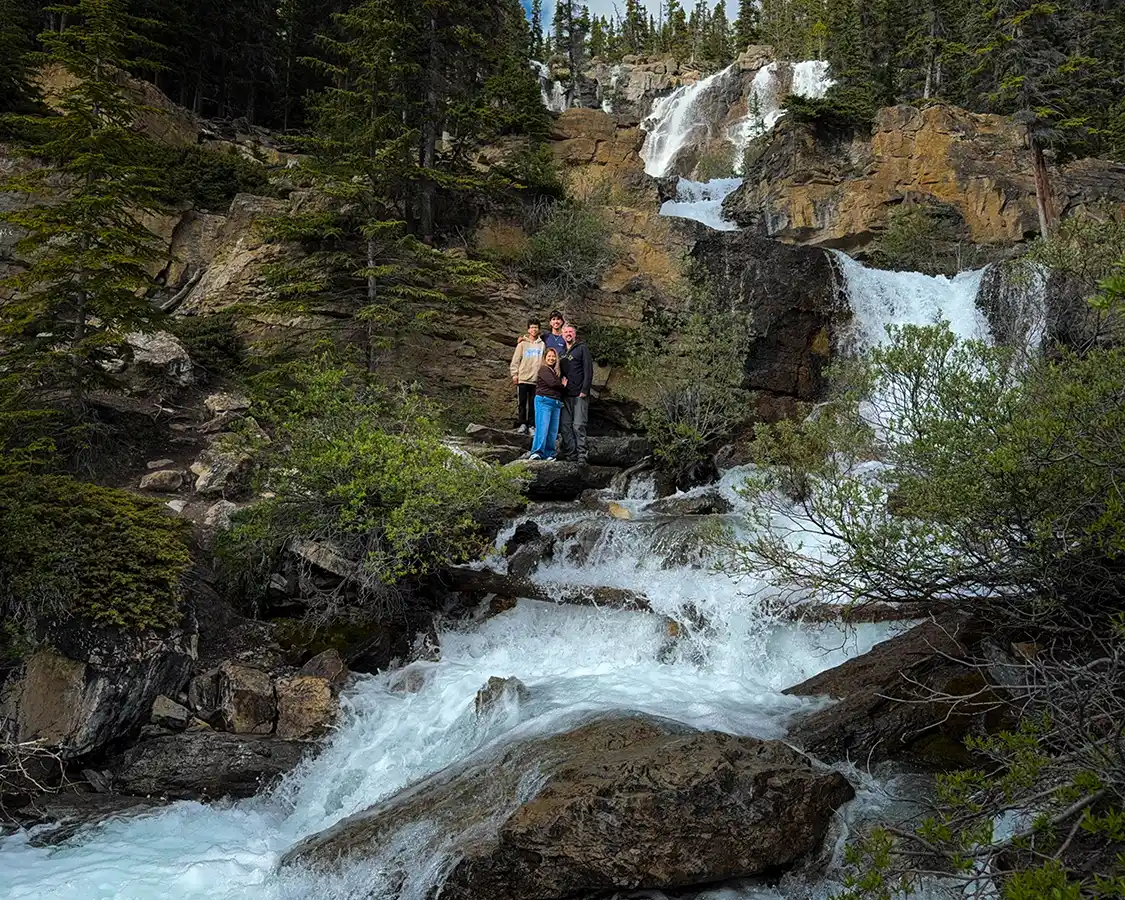
The 144-mile (232 km) drive between Lake Louise and Jasper is the region’s wildlife showpiece. What makes it so extraordinary is the sheer sweep of habitat it passes through: the Parkway runs along a high mountain valley flanked by glaciers, avalanche slopes, alpine meadows, river flats, and dense subalpine forest, climbing through several ecological zones in a single day.
Those avalanche slopes are the key to the bear viewing. Each winter’s snowslides clear the trees and fertilize the ground, producing the lush green vegetation and berry patches that draw grizzlies and black bears out into the open where they can be seen from a distance. The natural mineral licks along the route pull sheep and goats down from the heights, and the rivers and wetlands feed everything else.
The result is a genuine wildlife corridor: bighorn sheep, mountain goats (especially at the Goats and Glaciers Lookout, a mineral lick named for exactly this reason), black and grizzly bears on the avalanche slopes, and, with luck, moose, wolves, and the rare and threatened woodland caribou. Give it a full unhurried day and use the pullouts, which is where most sightings happen, since they let you stop safely and scan the slopes. Breaking the drive partway, as we did with an overnight at Sunwapta Falls Rocky Mountain Lodge roughly halfway along, puts you out on the road at dawn without a long push from either end, right when the animals are most active.
Maligne Lake Road, Jasper
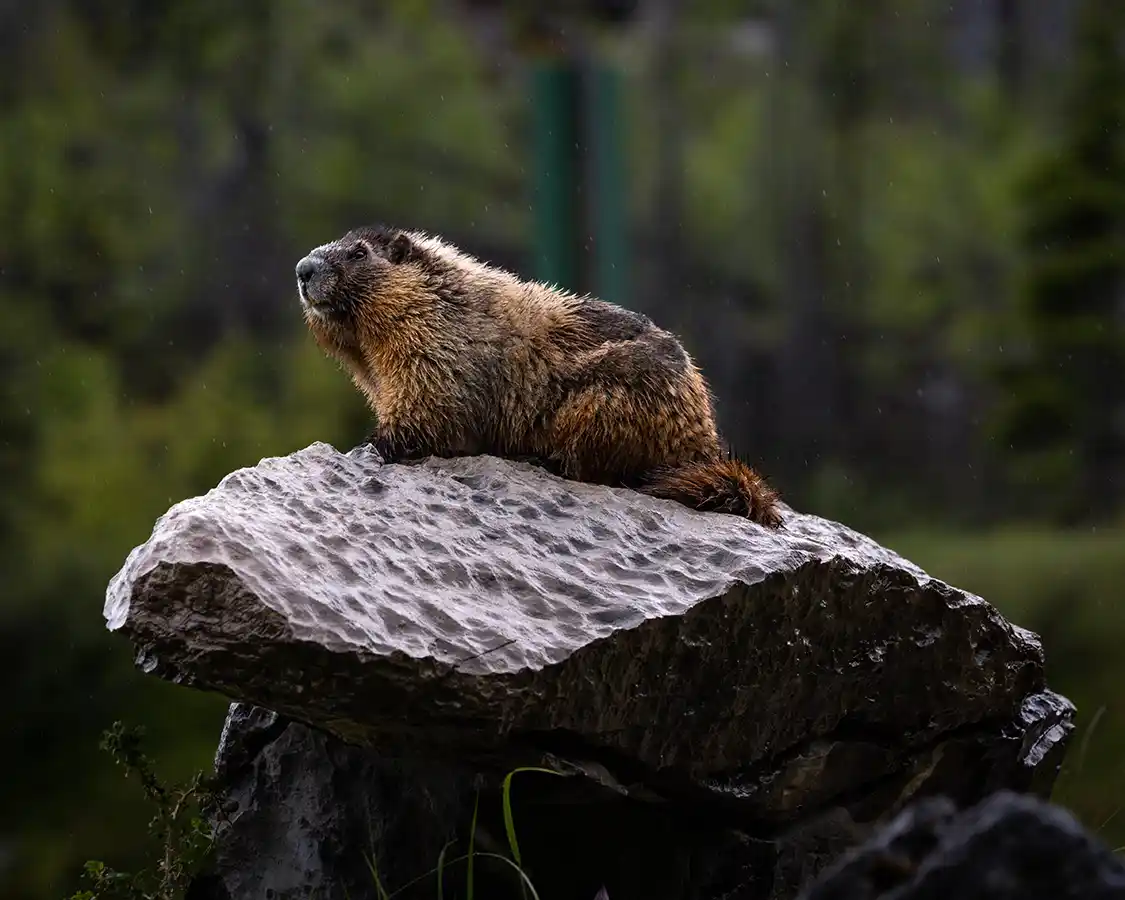
Maligne Lake Road is Jasper’s premier wildlife drive. The road climbs from the Athabasca Valley up into the Maligne Valley, and what makes it so productive is the string of wetlands, lakes, and marshy flats it passes along the way, exactly the slow-water, aquatic-vegetation habitat that the valley’s wildlife depends on. Medicine Lake, which famously rises and drains through an underground cave system over the course of the year, leaves behind rich exposed flats and shallows that draw feeding animals. The mix of valley-bottom wetland, forest, and open slope along the route supports an unusually broad range of species in a single drive.
Moose are the marquee sighting here, sometimes feeding at Medicine Lake and the marshy flats where they wade in for aquatic plants, and the road also reliably produces mule deer, bighorn sheep, bears, and bald eagles working the water. Because the sightings are so frequent, this is also the most notorious spot in Jasper for “wildlife jams,” where traffic grinds to a halt, and people abandon all road sense the moment an animal appears. Read the safety section below, and whatever you do, don’t add to the problem: pull completely off the road, stay in your vehicle, and keep your distance.
Highway 16 and the Miette Area, Jasper
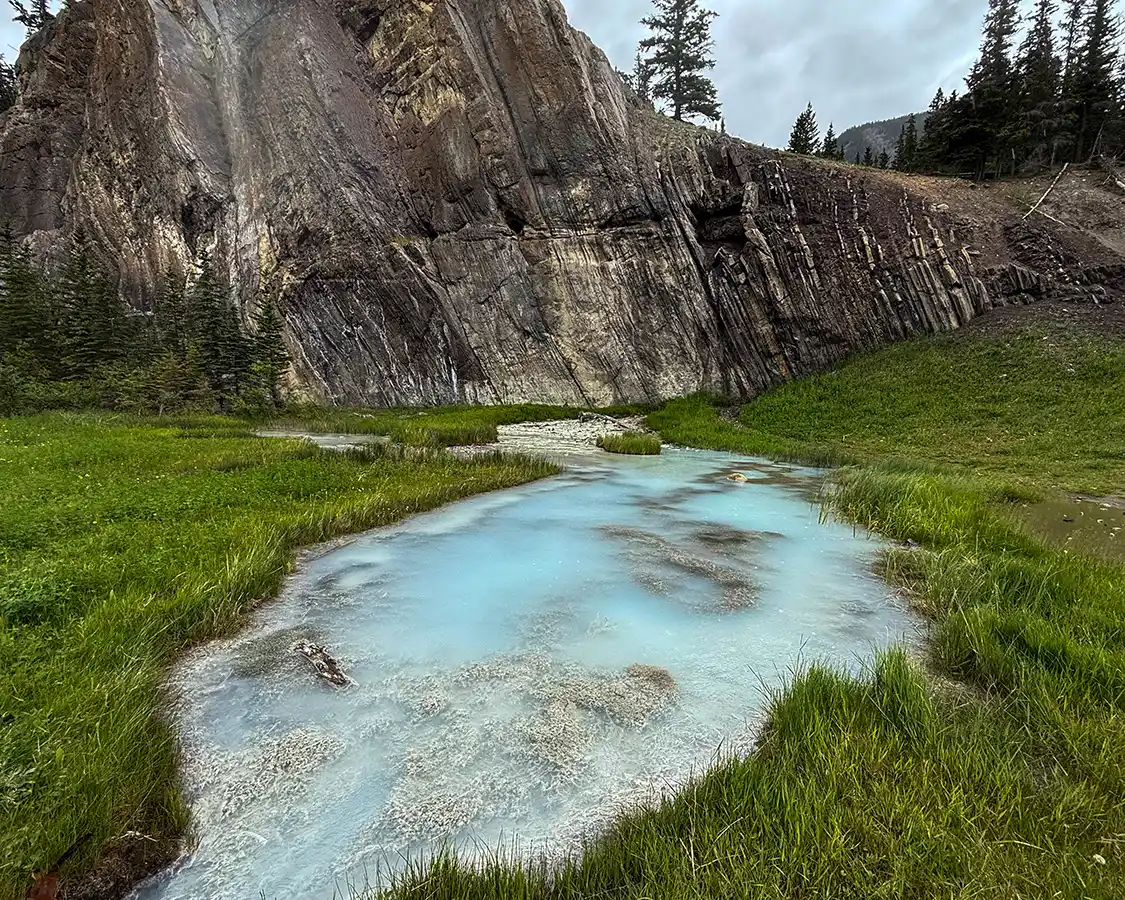
The Miette area, in the northeast corner of Jasper, is one of the most dependable places in the park to see bighorn sheep, and it comes down to one thing: minerals. The natural mineral licks near Disaster Point, where the road squeezes between the mountains and the Athabasca River, draw sheep down out of the surrounding slopes to feed on the salt and minerals exposed in the soil and rock. It’s a craving strong enough that the sheep return again and again, and they’ll happily lick mineral residue off the road surface and even the parked cars. The Miette Hot Springs road and its parking lot are famous for exactly this, with sheep often grazing and loitering right among the vehicles.
That reliability makes the whole Miette corridor a strong bet, and Highway 16 through this stretch produces roadside sheep regularly, especially in winter, when they migrate down from the high country to the lower, snow-free slopes and valley bottoms. Keep your distance even though the sheep here are famously relaxed, and watch your speed. Where there’s one sheep on the road, there are usually more.
How to See the Wildlife in the Canadian Rockies: Self-Driving vs. a Guided Tour
The Banff to Jasper corridor is one of the most incredible road trips in Canada. One thing that makes it such a big draw is that you don’t need a guide to see most of the wildlife. The main roads pass directly through prime habitat, and a patient family in their own vehicle, driving slowly at the right hours, will likely see a remarkable amount. Self-driving also lets you set your own pace, linger at a sighting, and be out at dawn when the animals are moving. It’s how my family has always done it.
That said, a guided Canada tour of the Rocky Mountains has real advantages for some families. Professional wildlife guides communicate with each other and know where animals have been seen that week. They read seasonal movements, carry spotting scopes, and take you to lesser-known areas away from the roadside crowds.
For those not comfortable driving, or who’d rather not navigate windy mountain highways, or first-time visitors who want the animals found for them, or for anyone who prefers to simply watch the scenery roll by, handing over the logistics makes sense. If you’d rather not self-drive, you can always book a guided tour.
Tips for Spotting Animals in the Canadian Rockies
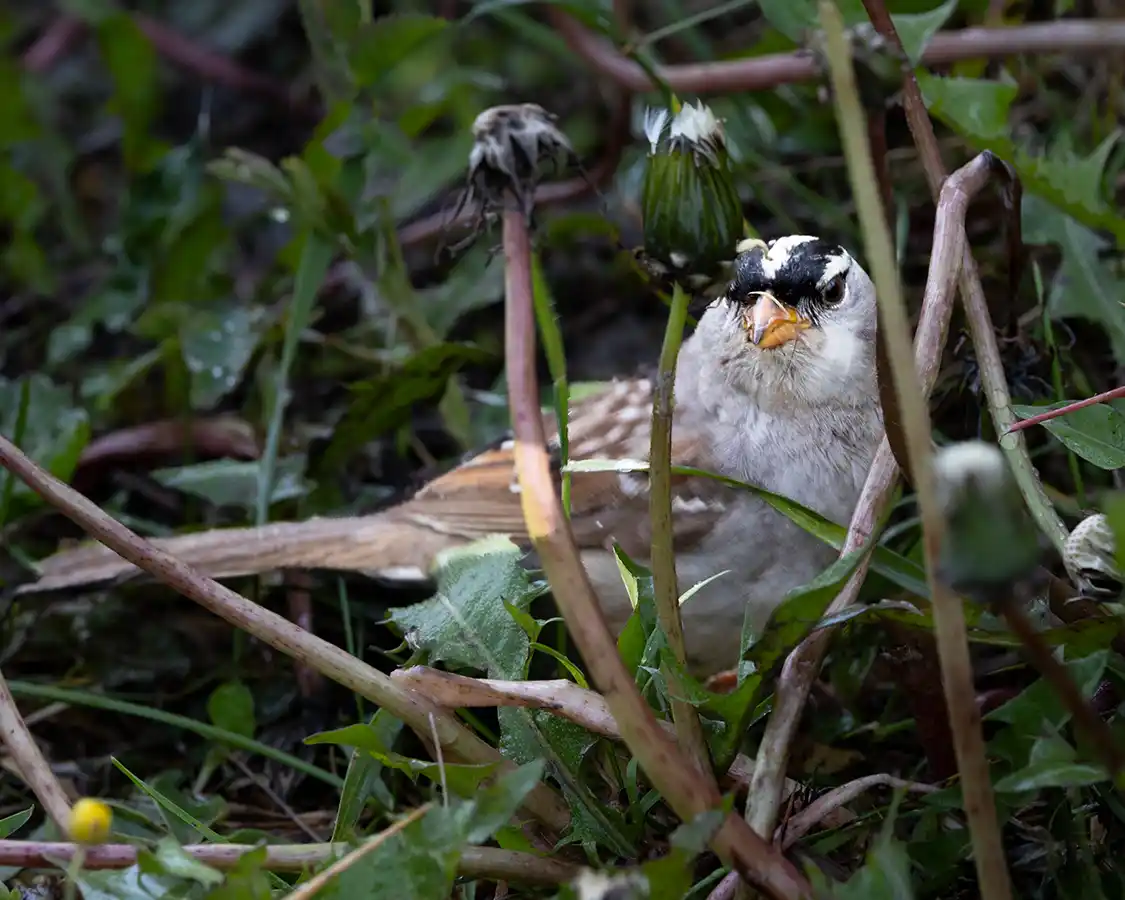
After many trips to the Canadian Rockies, these are the habits that consistently make the difference between a drive full of sightings and a drive full of scenery.
- Go at dawn and dusk. This is the single most important tip. The large mammals are most active in the cool hours around sunrise and sunset, and largely rest out of sight during the heat of midday. If you do one thing differently, be on the road at first light.
- Drive slowly and scan the edges of the forest. Wildlife often appear at the forest edge, on avalanche slopes, and along grassy verges. Slow down, and have every passenger watching a different area: the roadside, the middle distance, the cliffs above. Movement and shape against the terrain are what give an animal away, more than color.
- Use the other cars, carefully. A cluster of vehicles on the side of the road usually means that there’s been an animal sighting. Approach these ‘wildlife jams’ responsibly: pull completely off the road, never stop in a driving lane. And it goes without saying – stay in your vehicle.
- Bring binoculars and a zoom lens. Many wildlife sightings- goats on cliffs, sheep across a river, a distant grizzly on a slope- are too far for the naked eye to enjoy with the drama that most people hope for. A pair of binoculars or a camera with a long zoom lens lets you watch closely while keeping a safe, legal, respectful distance. Give the kids their own binoculars and the whole day changes.
- Choose overcast days and shoulder seasons. Animals are often more active under cloud cover than in the bright sun. Spring and fall frequently outperform peak summer for sightings, with the bonus of fewer people.
- Look for the right habitat. Match the animal to the terrain: wetlands and pond edges at dawn for moose, avalanche slopes for grizzlies, forest edges for black bears, mineral licks for sheep and goats, alpine boulder fields for marmots and pikas. Knowing what lives where focuses your search enormously.
Wild Animal Safety and Ethics: How To Watch Wildlife Responsibly
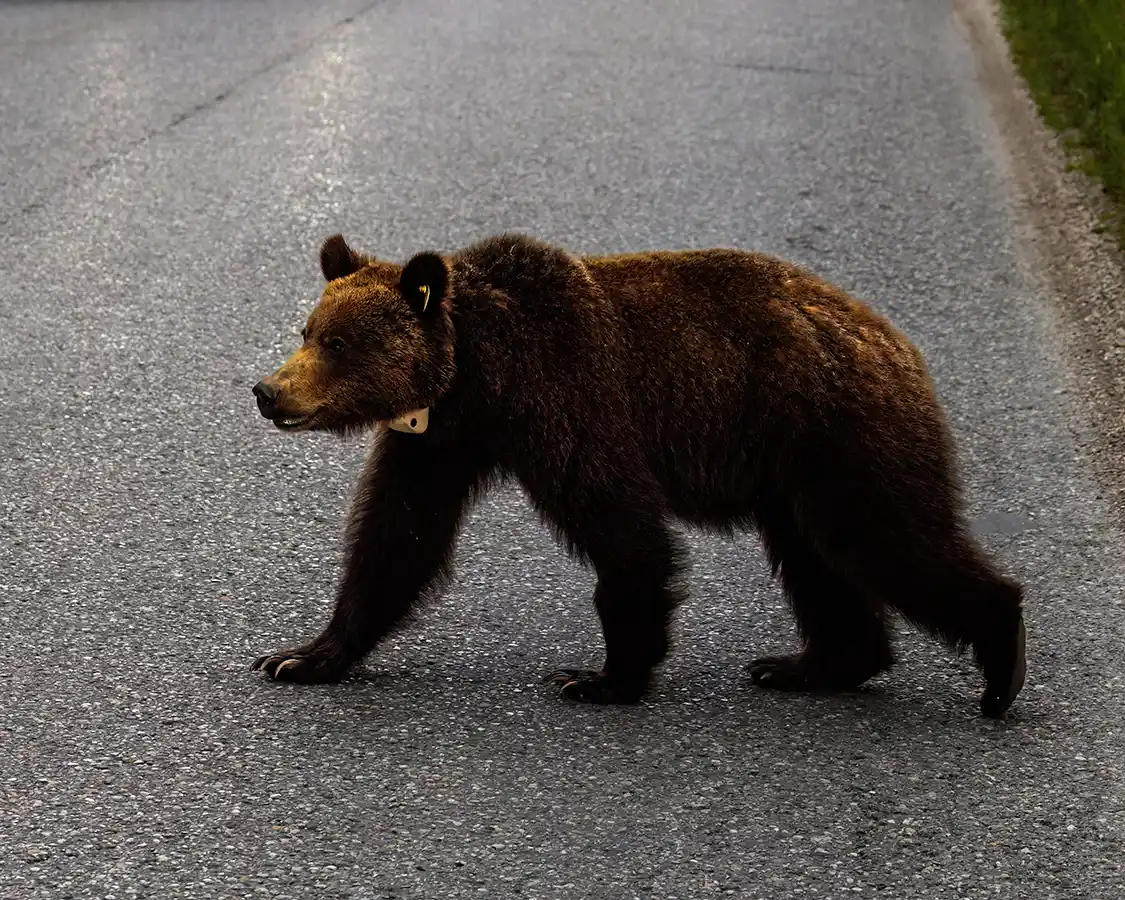
The animals you’ll see in the Canadian Rockies are wild, powerful, and easily stressed by human presence. Watching them responsibly protects both your family and the animals, and it’s a legal requirement in the national parks, not just a courtesy.
- Keep the legal minimum distances. Under the Canada National Parks Act, you must stay at least 100 yards (100 m) from bears, cougars, and wolves, and at least 30 yards (30 m) from elk, moose, caribou, bighorn sheep, and mountain goats. These are legal minimums, not suggestions. During the elk rut, extend that to 55 yards (50 m) or more.
- If you’re hiking in the Rockies, carry bear spray and know how to use it. I say this lightly, but with some importance. I hike a lot. I have never had to use bear spray. That being said, if the need ever arose, I would be incredibly happy that I had it. Anytime you’re hiking, carry a high-quality bear spray, keep it accessible (not buried in a pack), and know how to deploy it. The best deterrent is to make noise (sing a song, whistle, carry bear bells) on the trail so you never surprise a bear, and hike in groups.
- Never feed wildlife, ever. A human-fed animal often becomes a dead animal, habituated to people, then destroyed as a safety risk. Never feed anything, never leave food accessible, and never bait an animal closer for a photo.
- Manage wildlife jams responsibly. If you stop for an animal, pull completely off the road, stay in your vehicle when it’s close, and don’t block traffic. Never get out and approach an animal on foot. The photo is never worth it.
- Stay in the car when appropriate. If a large animal is close to the road, the safest place to watch is from inside your vehicle with the windows up. This is exactly why Christina locked the doors on that grizzly encounter, to keep me from doing anything foolish for a photograph.
- Teach kids the ethics early. Part of the gift of a trip like this is teaching children to observe wildlife respectfully: quietly, from a distance, on the animal’s terms. It’s the difference between visiting a wild place and merely consuming it.
Best Time of Year for Wildlife Viewing in the Canadian Rockies
Spring (April to June)
Spring is, arguably, the best overall wildlife season. Bears emerge from hibernation hungry and forage on roadside vegetation, making them highly visible. Elk and moose are active, and elk calving begins (keep your distance from protective cows). Mountain goats and sheep come to mineral licks. The landscape is greening, and the crowds haven’t peaked.
While spring is the best season for viewing wildlife, it’s also the most aggressive for insects, especially blackflies and mosquitoes. Make sure you have high-quality insect repellent and maybe even a bug net.
Summer (July to August)
Summer is peak visitor season in the Rockies. The crowds are at their heaviest, but it’s still excellent for wildlife if you work the dawn and dusk windows. Moose and elk are active, bears move to higher berry patches as summer progresses, and the high alpine opens up for marmots, pikas, and goats. Expect company at the popular pullouts.
Both Banff and Jasper are incredible in the winter. They both have exceptional skiing and winter sports that are worth the journey alone. Banff in winter is packed with great festivals, restaurants, and might even be a more exciting town during the winter months than it is in the summer.
Fall (September to October)
Fall is my favorite wildlife season in the Rockies. With the addition of the colorful foliage, everything becomes more spectacular and dramatic. The elk rut fills the valleys with bugling bulls (and demands extra caution), bears feed intensively before hibernation, and the larches turn gold. Another huge benefit is that during the fall there are fewer crowds and far fewer bugs.
Winter (November to March)
Winter is underrated for wildlife viewing in the Rockies. Bighorn sheep and mountain goats descend to lower, snow-free slopes and roadsides, making them easier to see than in summer. The bighorn rut in November and early December brings dramatic horn-clashing. The bears are hibernating, but the sheer accessibility of sheep, goats, deer, and elk, against a backdrop of snow, makes winter genuinely rewarding.
Has The Jasper Fire Affected Wildlife Viewing in the Canadian Rockies?
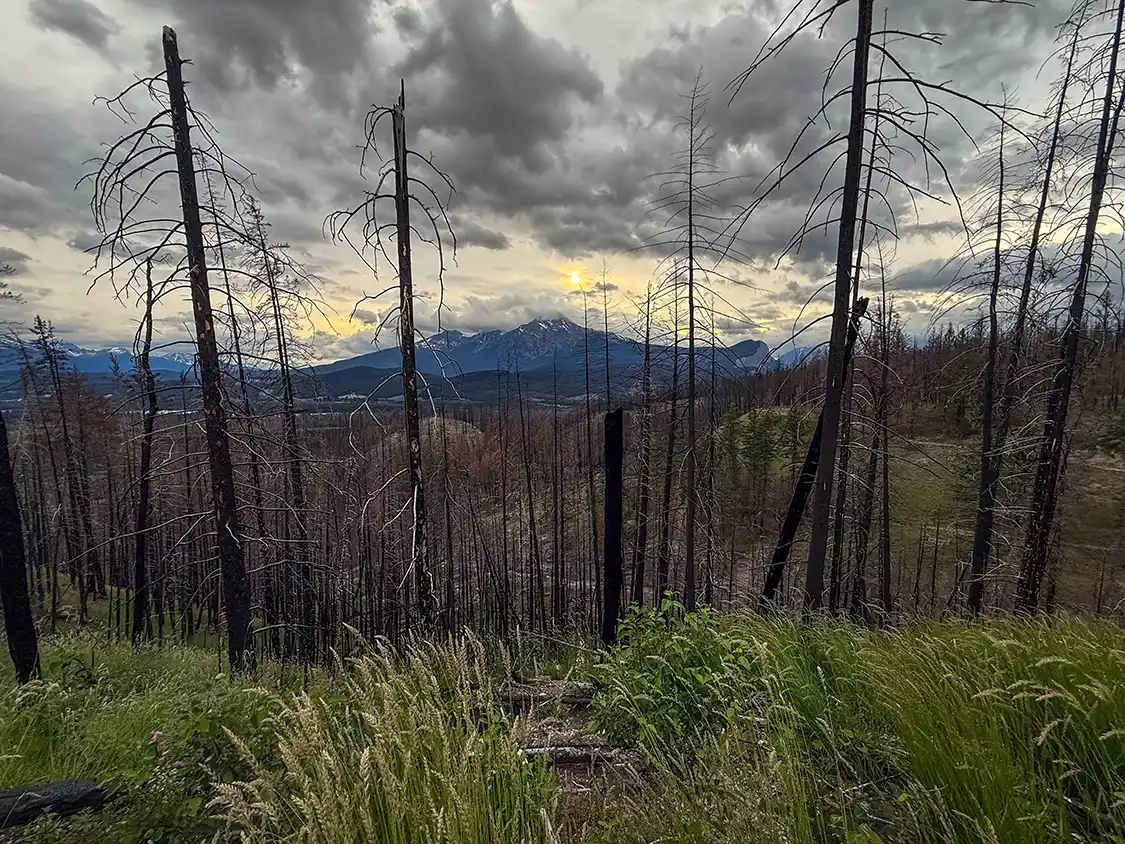
It’s impossible to write about Jasper right now, though, without acknowledging what the town and park have been through in the last couple of years. The 2024 Jasper wildfire tore through parts of the town of Jasper and much of the surrounding area, and the recovery is still visibly underway. Driving in, we passed stands of blackened trees and active rebuilding of homes and businesses in the town itself.
What struck me, and what I found moving to show my kids, was the resilience of it all. At Athabasca Falls, where the Athabasca River thunders through a narrow limestone gorge, the water roared past the blackened landscape like it has for millennia. Along the burnt river banks, green shoots and wildflowers were already pushing up through the scorched ground, a circle of life that has been part of the Canadian landscape for as long as there have been trees.
Fire is a natural part of this landscape’s life cycle, not the end of it, and the Rockies are proving that in real time. Nature here isn’t just surviving. It’s rebuilding, and there’s something quietly inspiring about witnessing that as a family. The vast majority of the park is open and undisturbed, and the animals, of course, never left.
Those two sparring grizzlies near the Fairmont were the headline sighting, but Jasper kept giving. The road toward Maligne Lake and the wetlands around Pyramid Lake are known for moose, the giants of the deer family, which browse near water at dawn and are as shy as they are enormous. We consider ourselves lucky to have seen one at all. Deer and mountain goats, by contrast, were everywhere.
The highlight for Cohen and Dylan was a stop at the mineral spring near Miette, where the Athabasca River crosses under the Yellowhead Highway. Here, a group of bighorn sheep had gathered at the roadside, licking at the mineral deposits. We watched the heavy-horned rams from the car for a long while, close enough to see the detail in those enormous curled horns but never so close as to crowd them. Miette Hot Springs reopened after the fire, and it was wonderful to see wildlife using the spot as though nothing had changed.
Planning Your Trip: Where to Stay in Banff and Jasper for Wildlife Viewing
Where you set up your home base has a real effect on how much wildlife you see. The best wildlife viewing happens at dawn and dusk, when day-trippers are still at home in bed or getting ready for a night on the town. Staying close to the prime wildlife viewing areas puts you on the road at first light, which is exactly when the animals are out and about. Here’s how I’d plan accommodations for a Banff-to-Jasper road trip for the best possible odds.
Some of the links in this article are affiliate links. If you book through them, I may earn a small commission at no extra cost to you, which helps to keep our adventures going. Thank you for using them and helping to support my family.
Calgary
Most trips to the Canadian Rockies begin in Calgary, home to the nearest major international airport. The city is about 90 minutes east of Banff, and the drive from the prairies to the mountains is one of the most spectacular and dramatic scenery changes I have ever experienced.
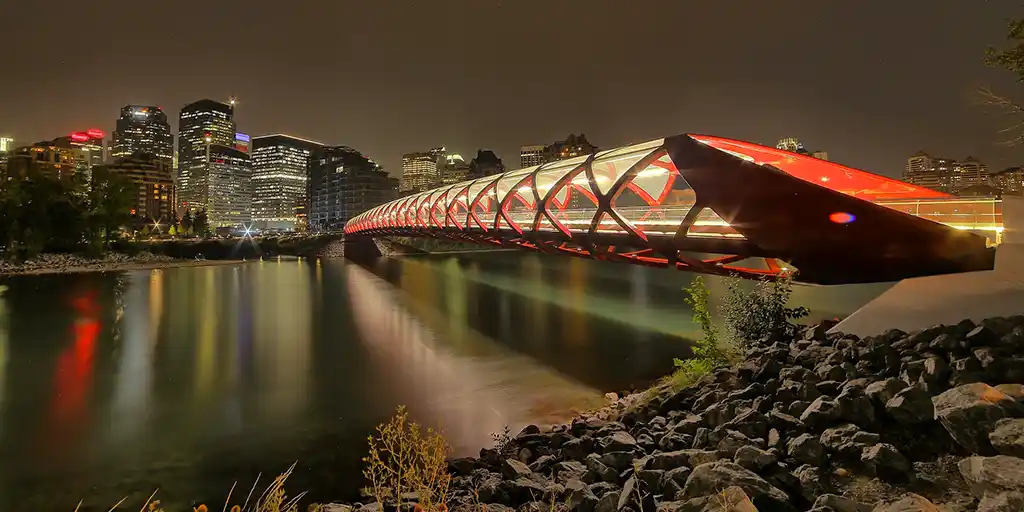
If you land late or fly out early, spending a night near the airport saves the mountain drive in the dark. The Best Western Plus Port O’Call Hotel is the go-to for avid road trippers. It has a convenient airport option that makes the first or last night painless. If you have a day or two on either end of your trip, Calgary is well worth the time, and I’ve written a full guide to making the most of it.

Banff
Banff townsite is the ideal base for the southern parks. Setting up a home base here for a few days puts you minutes from the Vermilion Lakes, the Bow Valley Parkway, and the Lake Minnewanka road, three of the best wildlife drives in the region. We stayed at Tunnel Mountain Resort, which sits just above town with plenty of space for families and easy access to the valley’s dawn viewing spots. For a splurge, the iconic Fairmont Chateau Lake Louise is a popular choice. This famous lakeside hotel is set right on Canada’s most iconic lakeshore in prime grizzly country and is hard to beat for pure scenery.
Along the Icefields Parkway
One of the biggest mistakes that many people make while driving from Banff to Jasper is to do it all in one day. Some even try to make the return journey the same day. Those who do rarely have great wildlife encounters and are missing the whole point of taking one of the world’s most beautiful drives. Breaking the Icefields Parkway drive into sections is one of the best decisions you can make for wildlife viewing. There aren’t many places to stay along the Icefields Parkway, and it helps to book early.
Sunwapta Falls Rocky Mountain Lodge is where I usually stay. It features simple accommodations set roughly halfway along the route and is within walking distance of the beautiful Sunwapta Falls. Staying here puts you out on the Parkway at dawn without the long push from Banff or Jasper, right when the bears, sheep, and goats are most active. It’s a genuine wildlife strategy disguised as a convenient overnight stop.
Other highly-rated accommodation stops along the route include:
- The Lodge at Bow Lake, which is located right on Bow Lake near the start of the parkway from Lake Louise, offering stunning alpine views and historic charm.
- The Crossing, located right at the Saskatchewan River Crossing about halfway between Lake Louise and Jasper townsite.
Jasper
Jasper is the base for the northern wildlife drives: Maligne Lake Road, the Miette mineral licks, and Highway 16. We stayed at Miette Mountain Cabins, out toward the Miette Hot Springs road and its famous roadside bighorn sheep. For a more central and upscale option, the Fairmont Jasper Park Lodge is a popular and excellent wildlife-viewing base in its own right, set on the shore of Lac Beauvert where elk, deer, and the occasional bear wander the grounds.
Tips for Planning Your Travels in the Canadian Rockies
A few things worth knowing before you go.
- Book accommodation early, especially for summer travel (June through September) and especially inside the National Parks. The best-located lodges fill up months ahead, and even campsites and motels can get very busy if not completely booked.
- You’ll need a Parks Canada pass for both Banff and Jasper, or you can pick up the Discovery Pass, which gives you unlimited access to all National Parks and Historic Sites for one full year. You can save time and buy it in advance online or at the park gates.
- Fuel up whenever you can, since there are long stretches, particularly along the Icefields Parkway, with no gas stations or cell service. Download offline maps before you set out. Give yourself far more time than the raw driving distances suggest, because wildlife stops, photo pullouts, and sheer scenery will slow you down in the best way. Pack for every season regardless of when you visit; mountain weather turns fast, and even summer mornings in an open valley can be cold.
- Always keep an eye on current Parks Canada conditions, since Jasper’s fire recovery means some areas remain under phased reopening.
Banff and Jasper: The Wild Heart of the Canadian Rockies
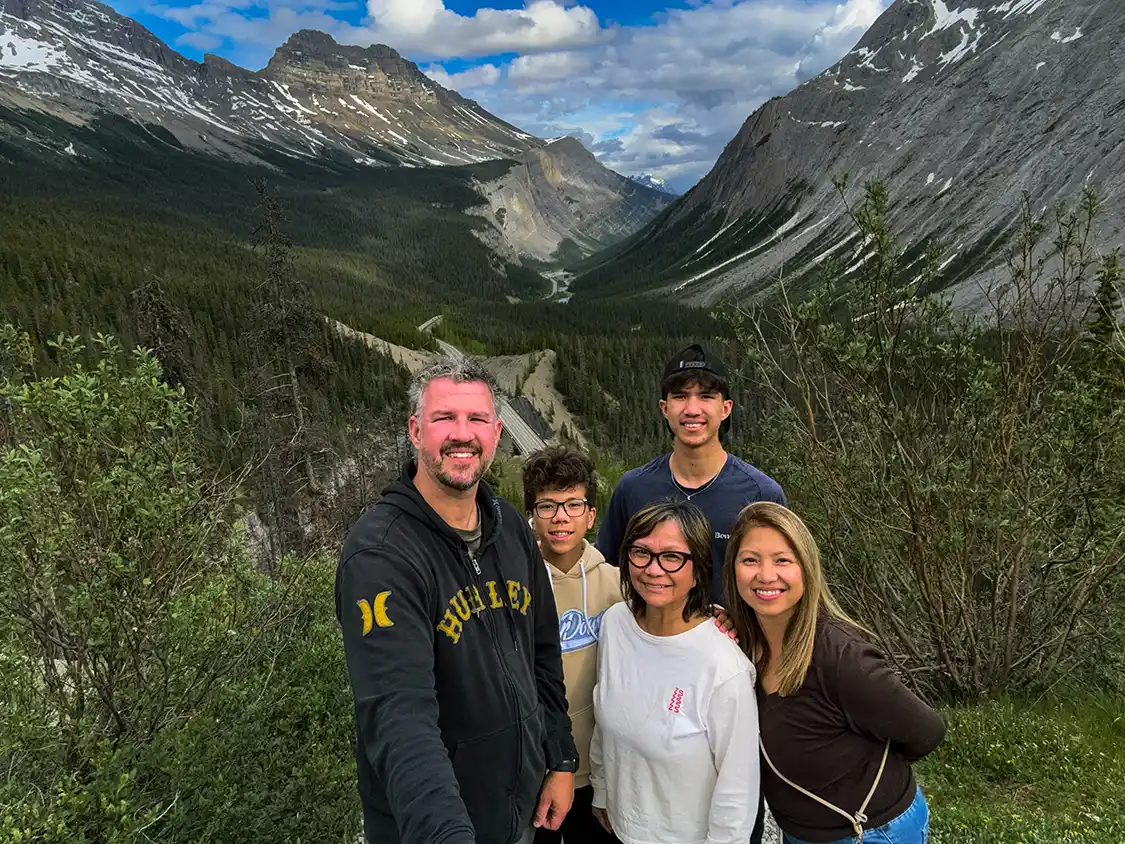
From the sparring grizzlies that emptied every ounce of our composure near the Fairmont, to the bighorn rams licking salt at Miette, to the pikas that turned an alpine hike into a treasure hunt, the wildlife of the Canadian Rockies has given my family and me memories across many trips that none of us will forget. And the beauty of it is that the animals are still out there right now, grazing the avalanche slopes, wading the beaver ponds, and whistling from the boulder fields, waiting for the families patient enough to look.
Learn what lives here. Know where to look. Go at dawn, drive slowly, keep your distance, and let the mountains decide the rest. They rarely disappoint the families who show up ready to pay attention.
You May Also Like To Read: