
Visiting Lake Manyara National Park with kids? Tree-climbing lions, forest game drives, huge elephant herds, and flamingos. Here’s the complete family guide.
I was drawn to Lake Manyara National Park by stories of its fantastic tree-climbing lions. I did not see a single tree-climbing lion. I did not, in fact, see a single lion of any kind. Still, this was one of the most unique safaris on my family’s week-long Northern Circuit tour.
When I asked Omary, our guide, about the park’s famous arboreal cats, he laughed. “All lions can climb trees,” he said. “The ones here just have more trees to practice.”
That line tells you almost everything you need to know about Lake Manyara National Park. It is a park that trades on a reputation it cannot guarantee, that sits quietly in the shadow of Tanzania’s headline acts, and that rewards you for paying attention rather than chasing a checklist. Lake Manyara was the final park of a week-long Northern Circuit safari, and something in me had shifted. I was no longer counting species. I was just watching.
Lake Manyara is compact, which some people mistake for minor. It is not minor. Crammed into its relatively small footprint is a groundwater forest, an open floodplain, rocky streams running out of the Rift Valley escarpment, and the vast alkaline lake that gives the park its name and controls its entire destiny. Compared to the endless plains of Serengeti National Park and the grandeur of Ngorongoro Conservation Area, Lake Manyara felt intimate, like the forest was keeping its secrets close, only showing you a taste of a fraction of what it was hiding beneath its dense foliage. It is one of the most distinctive parks in Tanzania, and for families, it offers something none of the bigger parks can.
Here is everything you need to know about embarking on a family safari in Lake Manyara National Park.
Planning the full route? Read my 7-day Tanzania Northern Circuit safari itinerary with kids here. Or start with the big picture in my Tanzania family travel guide here.
About Lake Manyara National Park
Lake Manyara National Park sits at the base of the Great Rift Valley escarpment in northern Tanzania, about a 90-minute drive from the northern safari capital of Arusha. It is one of the smaller parks on the Northern Circuit, covering around 125 square miles (325 km²), but a significant portion of that is the lake itself, a shallow alkaline body of water that expands and contracts dramatically with the seasons.
That lake is the key to understanding the entire park experience. Lake Manyara has no outlet. Water flows in from the streams and springs of the surrounding highlands, but it has nowhere to drain, so the lake’s water level is governed entirely by rainfall and evaporation. In wet years, the water rises and swallows roads, trees, and grazing land. In dry years, it retreats, exposing beaches, marshes, and mudflats. The park is constantly reinventing itself, and everything that lives within it has to adapt to a landscape that refuses to stay the same.
The result is a park of remarkable diversity packed into a small area. As you enter, you pass through a lush groundwater forest fed by springs from the escarpment, where fig and mahogany trees tower overhead, and baboons and blue monkeys move through the canopy. Beyond the forest, the landscape opens into acacia woodland and floodplain before reaching the lakeshore itself, where flamingos and pelicans gather in season. The Rift Valley wall rises behind it all, a dramatic backdrop that gives the park a sense of being held in the palm of something much larger.
Why Lake Manyara National Park Is An Excellent Safari for Families
It’s Compact and Manageable
Lake Manyara’s small size is its greatest asset for families. You are not committed to ten-hour game drives across endless plains. The park can be meaningfully experienced in a half-day or a full day, which suits younger children and shorter attention spans. The variety of landscapes packed into that small area means the scenery changes constantly, and changing scenery is what keeps kids engaged.
The Landscape Is Genuinely Different
After the open savannah of the Serengeti and Tarangire National Park, Lake Manyara feels like another country. Driving through the dense groundwater forest, crossing rocky streams running out of the hills, with the forest canopy closing overhead, was unlike anything else we experienced in Tanzania. For families doing a multi-park circuit, that contrast is valuable. It stops the parks from blurring together and gives kids a tangible sense of how different ecosystems produce different wildlife.
The Lake That Controls Everything
You cannot understand Lake Manyara National Park without understanding Lake Manyara itself, and the best way I can explain its power over the park is to tell you what happened when we visited.
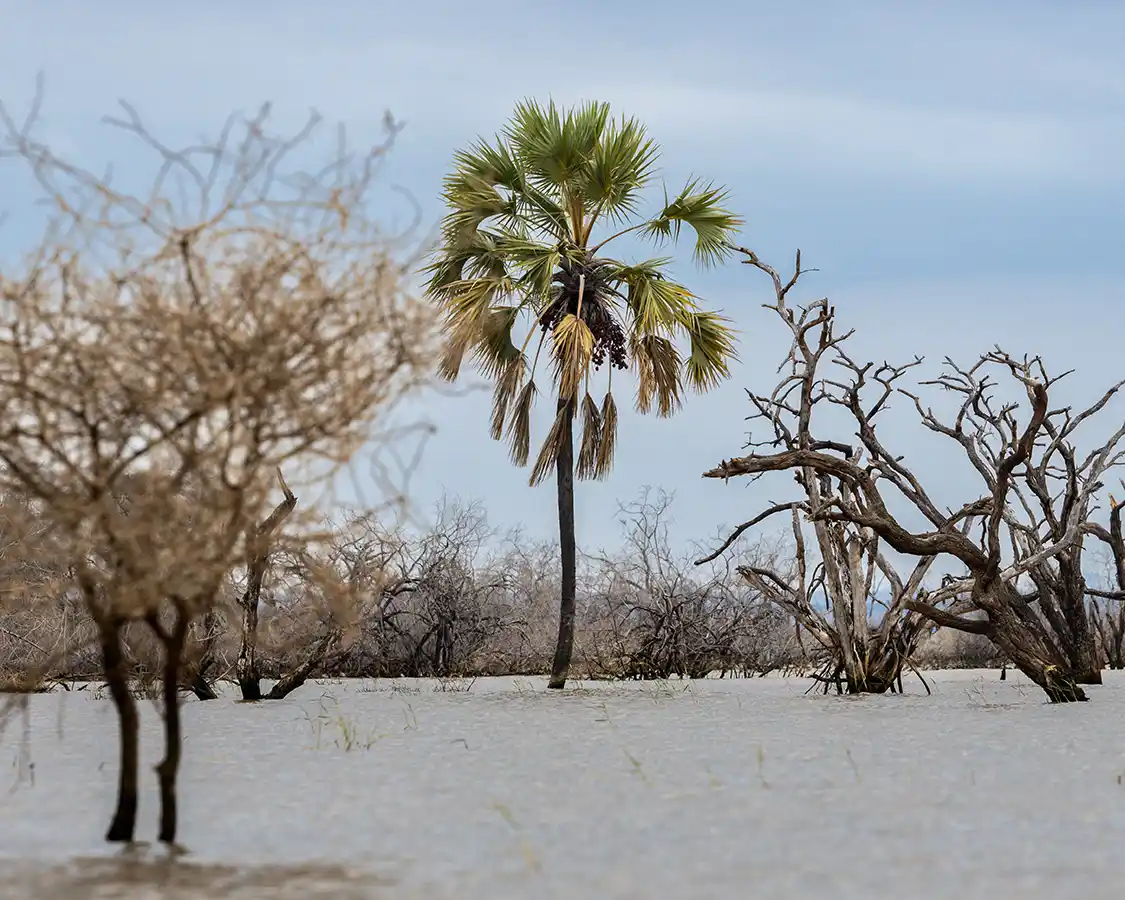
Flooding had blocked access to much of the traditional picnic and waterfront areas. The roads that normally carry safari vehicles down toward the lakeshore had simply vanished beneath the water. As we drove, we never quite knew where a road would end up. At times, the road simply disappeared beneath the muddy water, forcing us to turn back.
Not always, though. Because sometimes, that road led to something fantastic, like a troop of baboons traipsing along the forest floor. Sometimes, a change in direction allowed us to pause long enough to see a giraffe drift like a ghost in the deep foliage, disappearing and reappearing right before our eyes. In places, the tops of trees stuck up out of the water, marking where dry ground had been not long before. It was a strange and beautiful thing to witness, an entire landscape in the slow process of being rewritten by water.
This is Lake Manyara’s defining characteristic, and it is worth explaining to kids before you go. Because the lake has no outlet, its size is entirely at the mercy of the rains. A wet season can raise the water dramatically, drowning roads and forcing the wildlife to higher ground. A dry season can shrink it to a fraction of its size, opening up vast mudflats and beaches. No two visits are ever the same. The park your family sees will be specific to the moment in which you arrive, shaped by months of weather you had no part in. For children learning about ecosystems, water cycles, and the way climate shapes a landscape, there are few better living classrooms.
When the lake is full, and the flamingos arrive, the shallows can turn pink with tens of thousands of birds. When it is low, the exposed flats draw different species entirely. The lake is the park’s heartbeat, and it never beats the same way twice.
Wildlife Families Can See in Lake Manyara
The Tree-Climbing Lions
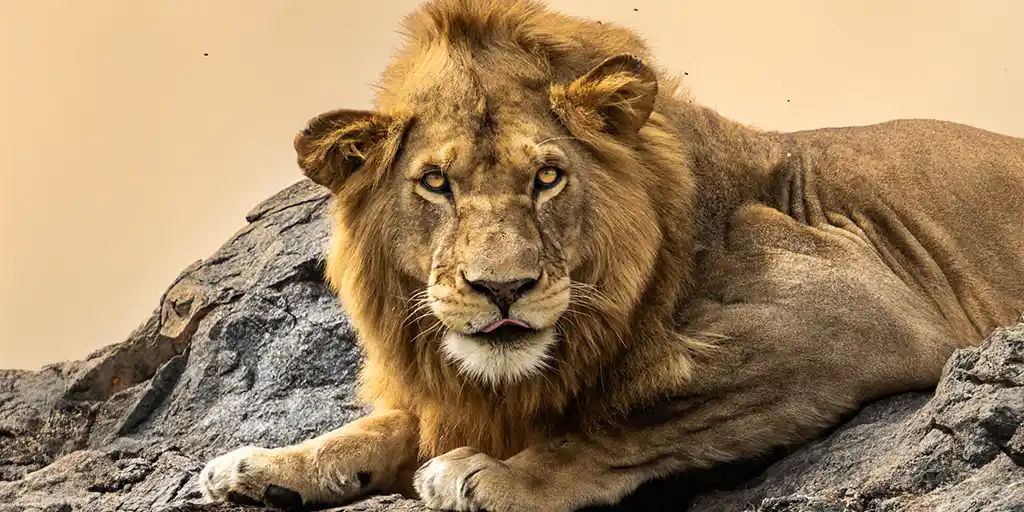
Let’s address the headline act, even if it declined to appear for us. Lake Manyara is famous for its tree-climbing lions, which spend their days draped across the branches of acacia and fig trees rather than lying in the grass like lions everywhere else. The behavior is unusual, and theories vary as to why they do it: escaping the heat, avoiding biting insects on the ground, or simply getting a better vantage point over the floodplain.
As Omary pointed out, the behavior isn’t truly unique to Lake Manyara. Lions elsewhere climb trees, too. But Lake Manyara’s combination of the right trees and a resident population that has made a habit of it means this is one of the best places in Africa to potentially see it. Potentially. These are wild animals, and they make no promises. We didn’t see them, and by the final day of our trip, I had made enough peace with safari’s unpredictability that it really didn’t matter. Set your kids’ expectations accordingly: the tree-climbing lions are a wonderful possibility, not a guarantee.
Elephants
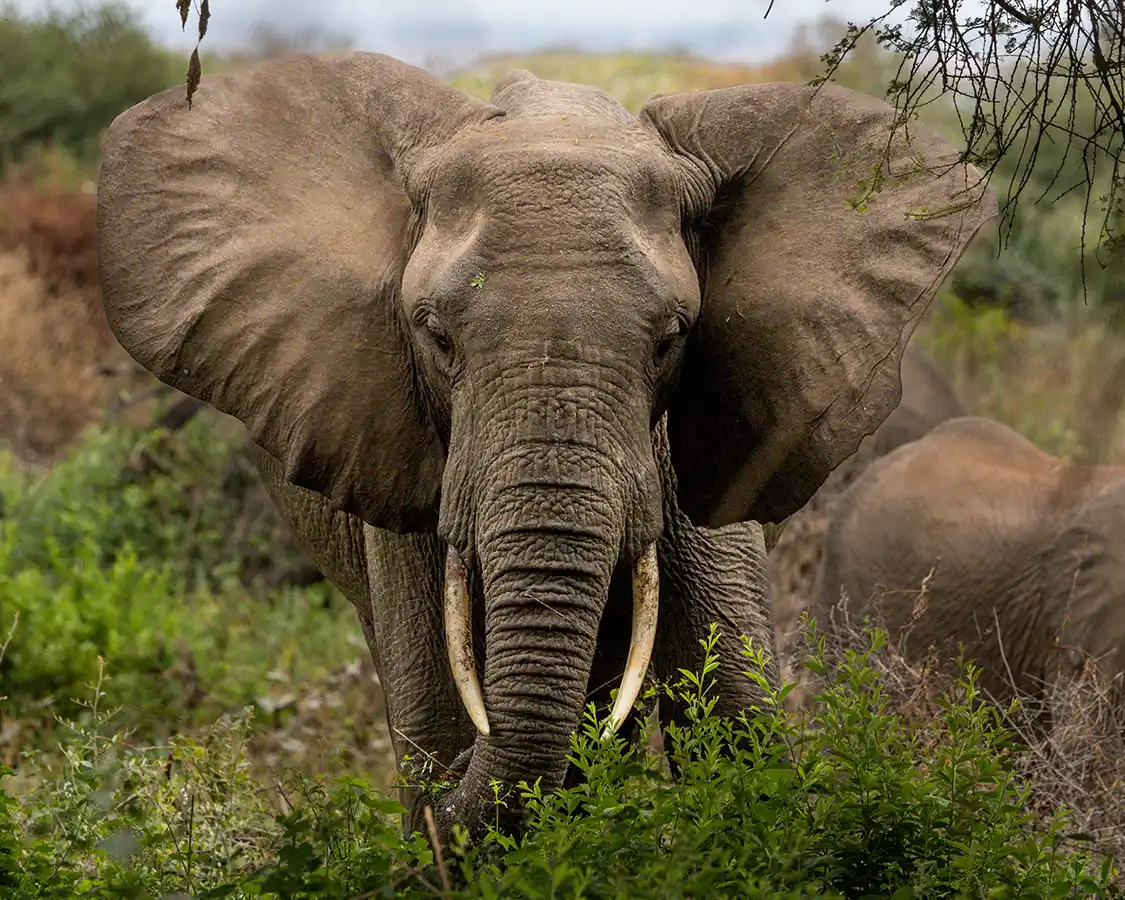
Elephants, on the other hand, we saw many. In fact, we saw them very, very close up.
Lake Manyara’s elephants are a highlight, and the forest setting makes encounters with them feel quite intimate. In the dense groundwater forest, an animal as enormous as an elephant can emerge from the trees and be swallowed up again within just a few paces, like a ghost. We had several extremely close encounters here, closer than anywhere else on our trip, even closer than the elephant paradise, Tarangire National Park.
One moment in particular has stayed with me ever since. We had pulled up near a large bull who was feeding quietly, less than ten feet from the vehicle. Maybe closer. Someone made a sudden movement with a camera, and the elephant reacted instantly, spreading his ears wide in a clear warning display. Omary didn’t ease the vehicle back. He knew the animal was bluffing, and he told us all, quietly and firmly, to stay still and silent. We did. The elephant watched us closely for a short while, ears out, assessing. Then, satisfied that we were no threat, he folded his ears back and returned to his eating.
That moment taught my kids more about wildlife and about the value of an experienced guide than any number of distant sightings could have. Omary’s calm came from genuine knowledge. He could read the difference between a bluff and a real threat, and his confidence kept a tense moment from becoming a dangerous one. It is exactly the kind of thing you are paying a great guide for.
Primates
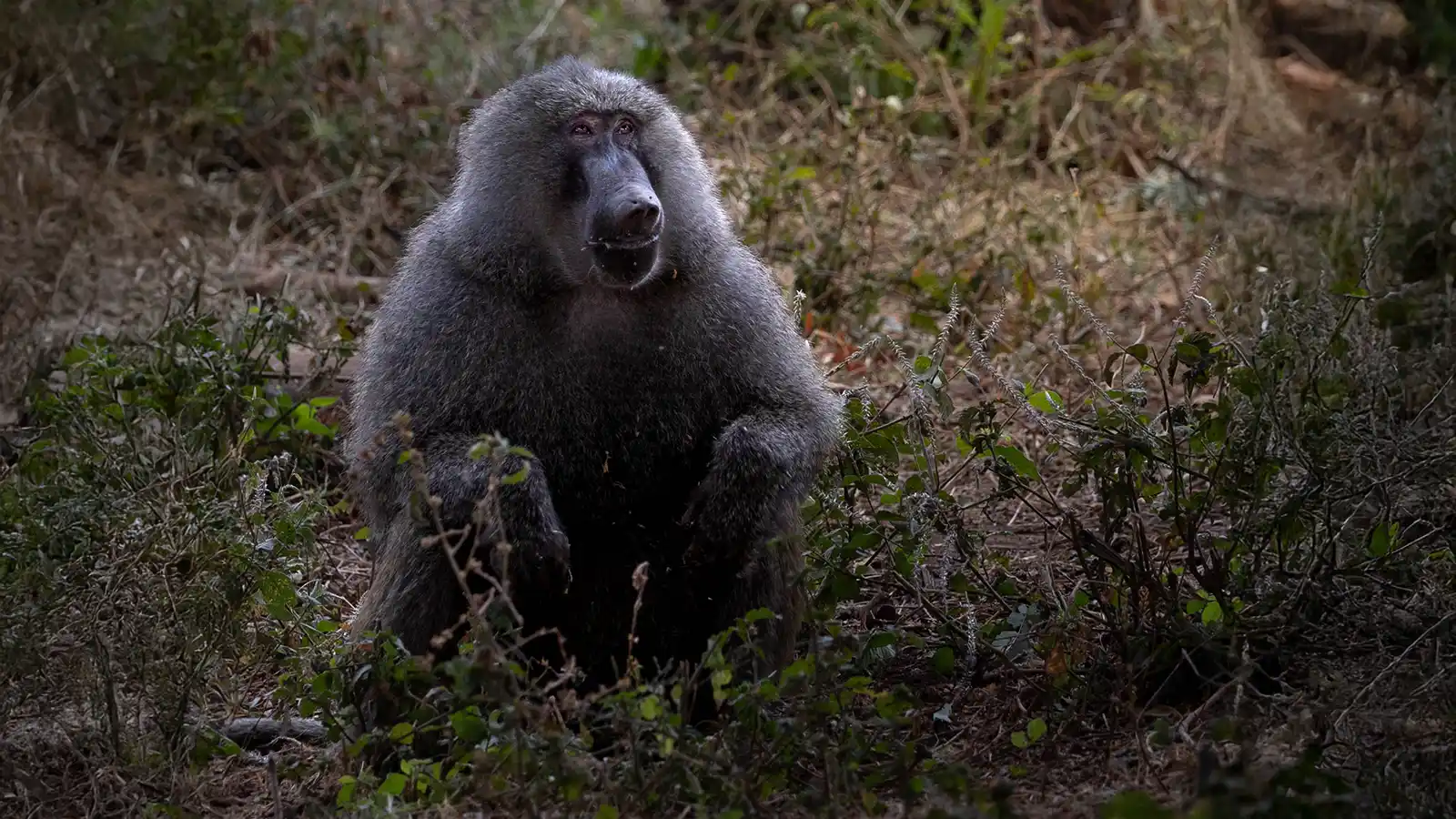
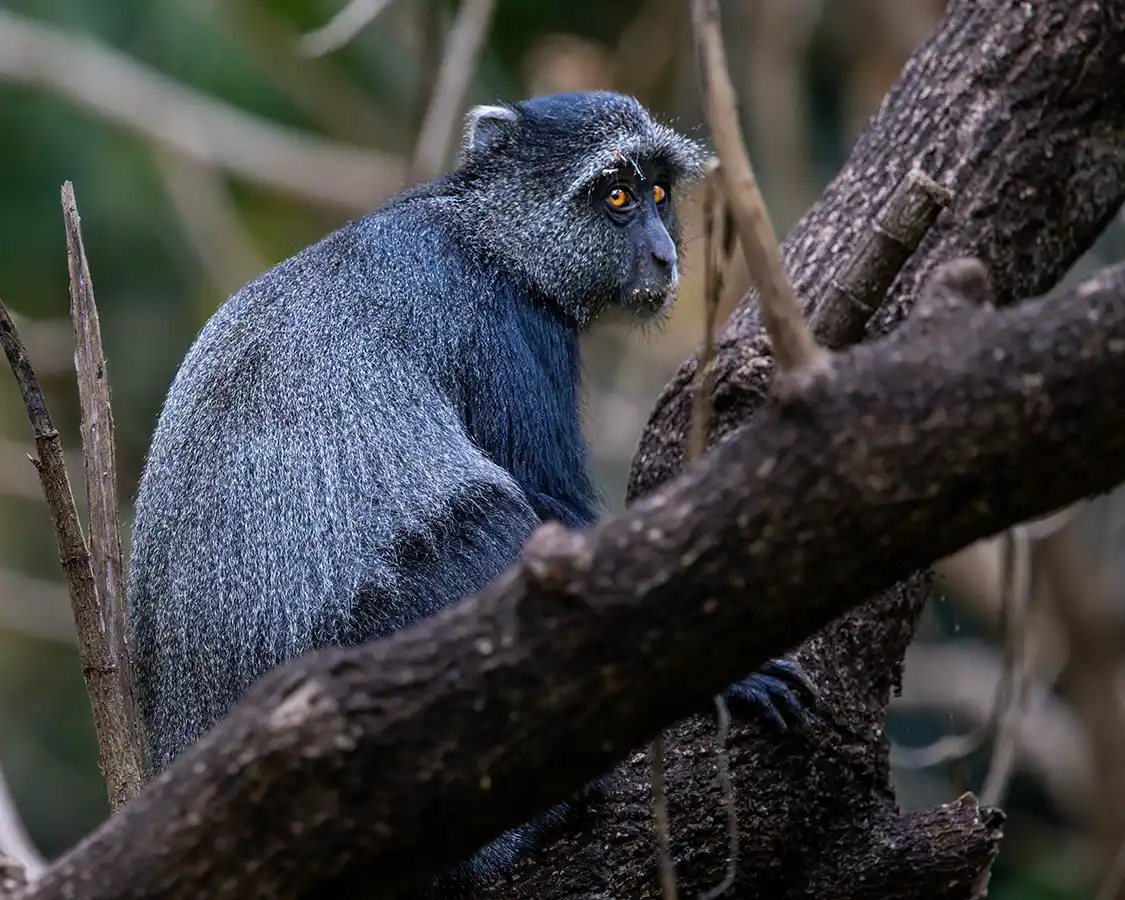
Lake Manyara is an exceptional park for primates. The groundwater forest is home to large troops of olive baboons, one of the densest baboon populations in Africa, and they are a constant, entertaining presence. At one point, a troop chased our vehicle down the track, which delighted the boys (and Christina and me, too). Blue monkeys move more shyly through the canopy, and if you’re lucky, you may spot them among the branches. For families, the primates are a reliable source of action and comedy, and they’re active even when the bigger game is hiding.
Hippos, Birds, and the Supporting Cast
The park has a hippo pool where you can usually find these enormous animals wallowing and grunting, often viewable from a designated area where it’s safe to be out of the vehicle. The birdlife is world-class: beyond the seasonal flamingos, the park records over 400 species, including pelicans, storks, herons, and a dazzling array of smaller birds. Giraffes, zebras, impala, buffalo, wildebeest, and warthogs all move through the woodland and floodplain. Lake Manyara may be small, but the list of wildlife is long.
The Forest, the Streams, and the Escarpment
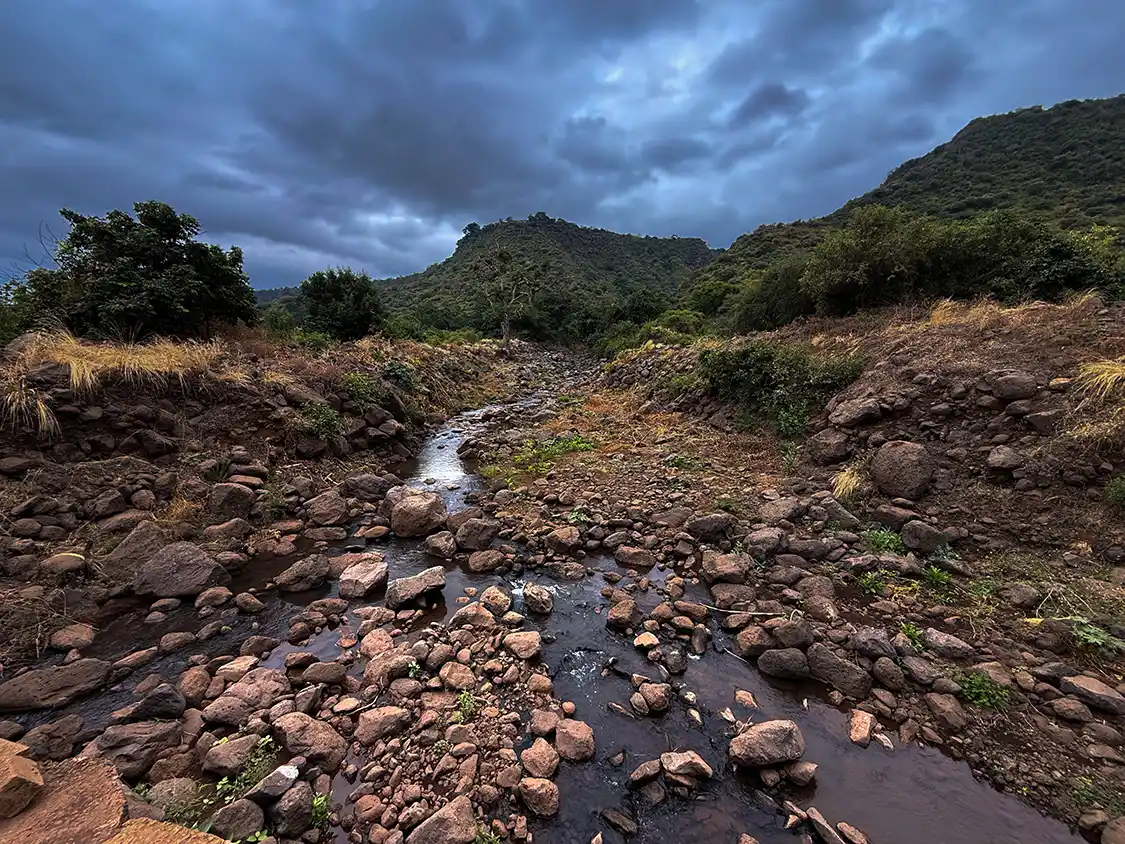
One of the things that surprised me most about Lake Manyara was the terrain. I had come expecting a lake and a floodplain. I had not expected to spend part of the drive winding through dense forest and crossing rocky streams running clear out of the surrounding hills.
The groundwater forest at the park’s entrance is fed by springs and streams flowing down from the Rift Valley escarpment that rises dramatically behind the park. This is not the dusty, open Africa of the safari posters. It’s green, shaded, and alive with the sound of running water and birdsong, a genuinely different sensory experience from anything else on the Northern Circuit. Driving over those rocky streambeds with the canopy overhead, it was easy to forget we were in the same country as the sunbaked plains of the Serengeti.
That escarpment backdrop also makes Lake Manyara one of the more visually striking parks in Tanzania. The Rift Valley wall rises hundreds of feet behind the lake, and the contrast between the forested base, the open floodplain, and the dramatic cliff face gives the whole park a layered, contained beauty. It’s worth pointing out to kids: they’re looking at one of the great geological features of the planet, the same Rift Valley that runs thousands of miles down the spine of Africa.
Cultural Experiences Near Lake Manyara: Mto wa Mbu
Just outside the park gates sits the town of Mto wa Mbu, one of the most culturally remarkable communities in Tanzania and a worthwhile addition to a family safari in Lake Manyara National Park. The town is unusual in that people from more than 120 of Tanzania’s ethnic groups live here, drawn by reliable water and fertile farmland. It’s often described as a microcosm of the entire country.
A guided walking tour of Mto wa Mbu takes families through rice fields and banana plantations, past local farms and craft workshops, and into the everyday rhythm of a working Tanzanian town. For families who want their children to connect with people rather than just watch wildlife, it’s an excellent counterpoint to the game drives. Children tend to gravitate toward the local kids, and those unscripted interactions, a shared soccer ball, a wave across a field, are often what stay with them longest. If you have time to add a cultural component to your Lake Manyara visit, this is the one to choose.
Night Safaris in Lake Manyara
Lake Manyara is one of the few national parks in Tanzania that permits night game drives, and it’s a totally unique experience for families looking for something beyond the standard daytime safari. Conducted with a guide and a spotlight, a night drive reveals an entirely different cast of animals: nocturnal species that stay hidden during the day, including bushbabies, civets, genets, white-tailed mongoose, and, if you’re fortunate, the predators that do their hunting after dark.
For kids old enough to stay up and stay quiet, a night safari is a thrilling, slightly spooky adventure that adds a whole new dimension to the park. It’s worth confirming availability and any age restrictions with your operator or lodge in advance, as night drives require special arrangements and aren’t offered everywhere.
Best Time to Visit Lake Manyara with Kids
Dry Season (June to October)
The dry season offers the best general game viewing, as wildlife concentrates around the remaining water sources and the lower lake level opens up more of the park to vehicles. Roads are more reliable, and the dense forest and woodland make animals easier to spot when they come to drink. This is also peak season for the wider Northern Circuit, so pairing Lake Manyara with the other parks during these months makes logistical sense.
Wet Season (November to May)
The wet season transforms Lake Manyara. The forest is lush, the waterfalls along the escarpment run full, and the birdlife is at its absolute peak as migratory species arrive and the flamingos gather on the rising lake. This is the best time for birding and for dramatic, green scenery. The trade-off, as we experienced firsthand, is that high water can flood roads and block access to parts of the park. The wet season is beautiful and rewarding, but it comes with a degree of unpredictability that is, in fairness, entirely in keeping with the character of the park.
A Note on Flamingos
The brine shrimp that turn the lake pink and the flamingoes that feed on them are at their most numerous when water levels are high, typically during and after the wet season, from around November through June. Their numbers vary enormously year to year depending on conditions, so while they’re a wonderful possibility, they’re another of Lake Manyara’s many things best treated as a bonus rather than a guarantee
Where to Stay at Lake Manyara with Kids
Manyara’s Secret (Where We Stayed)
We stayed at Manyara’s Secret, a boutique lodge perched on the escarpment above the lake, and it was one of the most quietly special places we stayed in all of Tanzania. It’s the kind of property where the staff greets you by name before you’ve checked in, and where everyone is welcome to wander into the kitchen. Our boys spent more time talking to the cooks than we expected. It felt human in a way that luxury accommodation rarely manages.
What makes Manyara’s Secret genuinely worth highlighting, though, is the way it’s woven into the surrounding community. The lodge was built using local builders and local materials. It employs people from the nearby villages. It provides meals to a local school, and it constructed a water pipeline that brings clean water to the surrounding communities. None of this was announced loudly or used as a marketing hook. It was simply the way the place operated, a model of tourism that gives back to the place that hosts it rather than extracting from it.
For families who care about traveling responsibly and who want to show their kids what ethical tourism actually looks like in practice, it’s a lodge worth seeking out. Christina and I walked the grounds above the lake while the kids interrogated the kitchen staff about dinner, and it felt like exactly the right way to end our trip. You can find their current rates and availability here.
Other Accommodations Near Lake Manyara National Park
Accommodation around Lake Manyara ranges from lodges perched on the escarpment with sweeping views over the lake, to tented camps closer to the park, to more budget-friendly options in and around the town of Mto wa Mbu. Many families base themselves in the Lake Manyara area to visit both the park and nearby Tarangire, or use it as a stop on the way to or from the Ngorongoro Crater. Look for family rooms, a pool for downtime between drives, and ideally a setting that takes advantage of the dramatic escarpment views. You can find a list of family-friendly accommodations here.
Practical Tips for Lake Manyara Family Safaris
- Treat the highlights as bonuses, not guarantees. The tree-climbing lions, the flamingos, and the exact state of the lake are all unpredictable. Tell your kids before you go that they may or may not see these things, and frame the uncertainty as part of the adventure. Lake Manyara rewards families who come to experience the park rather than to tick boxes.
- A half-day is often enough. Lake Manyara is compact and can be thoroughly enjoyed in a half-day or full-day drive. This makes it ideal for younger children and easy to combine with a cultural tour of Mto wa Mbu or a stop at nearby Tarangire.
- Add the Mto wa Mbu cultural tour. If you want to balance wildlife with human connection, the Mto wa Mbu walking tour just outside the park is one of the most authentic and rewarding cultural experiences on the Northern Circuit, and a natural pairing with a Lake Manyara game drive.
- Consider a night safari. Lake Manyara is one of the few Tanzanian parks that allows night drives. For kids old enough to handle a later night, it’s a genuinely different and exciting experience. Arrange it in advance.
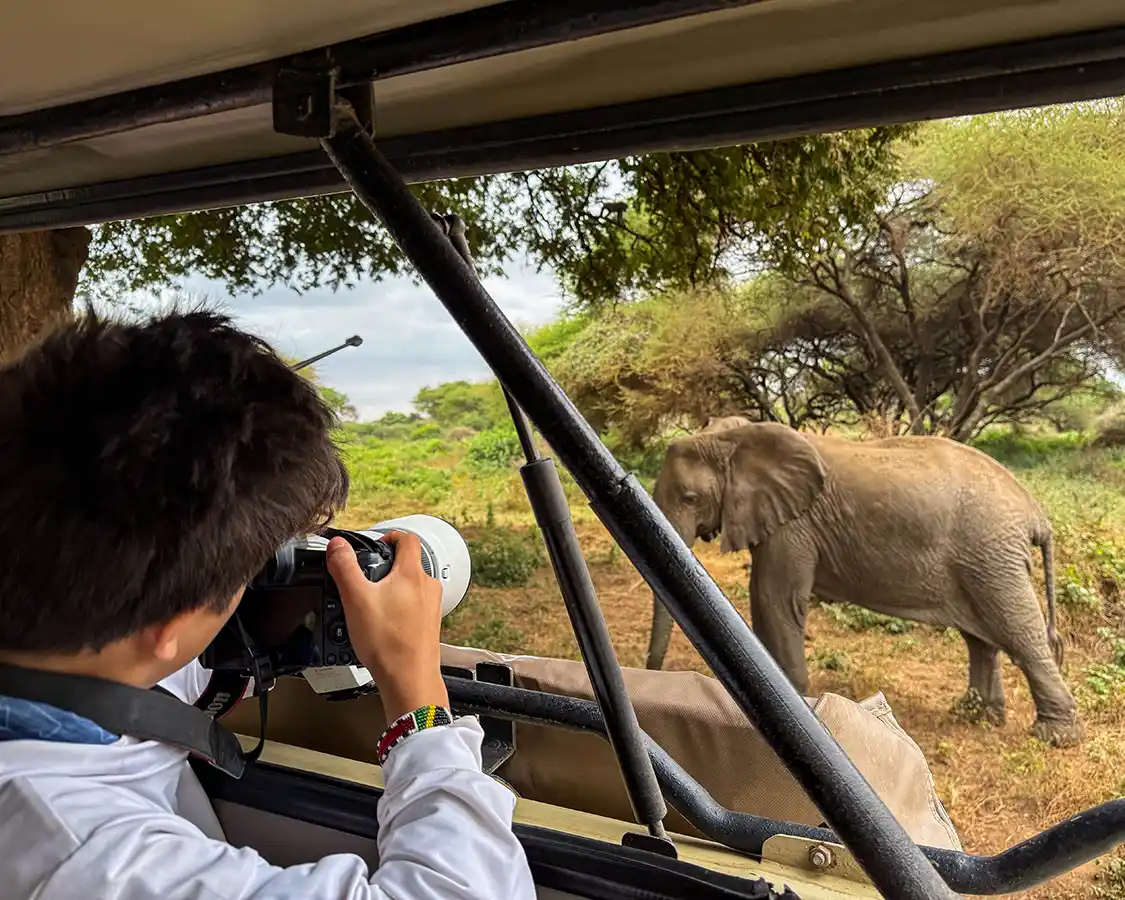
- Stay still around elephants, and trust your guide. The forest setting brings you remarkably close to elephants. Sudden movements, especially raising a camera quickly, can spook them. Keep movements slow and calm, keep your voice down, and follow your guide’s instructions immediately. A good guide can read an animal’s behavior and knows when to hold and when to withdraw.
- Pack for a different climate. Unlike the dusty open parks, Lake Manyara’s forest is humid and shaded, and the wet season can be genuinely wet. Bring layers and a light rain jacket, particularly outside the dry season, and expect the forest to feel cooler and damper than you might anticipate for Africa.
You can read my complete list of tips for family travel to Tanzania here.
Travel Resources for Families Visiting Tanzania
For packing, planning, and the details that determine whether your kids are comfortable or miserable in a vehicle for six hours, these guides go deeper.
Frequently Asked Questions About Family Safaris in Lake Manyara National Park
No. The tree-climbing lions are Lake Manyara’s most famous attraction, but they are wild animals, and sightings are never guaranteed. We didn’t see them at all. Treat them as a wonderful possibility rather than a certainty, and set your children’s expectations accordingly so a no-show doesn’t disappoint them.
Most families spend a half-day or a single full day in Lake Manyara, often as part of a wider Northern Circuit itinerary. The park’s compact size means you can experience its key landscapes and wildlife without a lengthy commitment, which makes it well-suited to families with younger children.
Yes. Its small size, shorter drives, varied landscapes, and abundant, active primate populations make it engaging and manageable for young kids. The constantly changing scenery, from forest to floodplain to lakeshore, helps hold their attention better than long stretches of open plain.
Lake Manyara is defined by its lake, which has no outlet and constantly changes size with the rains, reshaping the park year to year. It also offers a dense groundwater forest, rocky streams, and a dramatic Rift Valley escarpment backdrop, giving it a lush, intimate character very different from the open savannah of the Serengeti and Tarangire.
Yes. Lake Manyara is one of the few national parks in Tanzania that permits night game drives, offering the chance to see nocturnal animals not visible during the day. Night drives require advance arrangement and may have age restrictions, so check with your operator or lodge.
They offer quite different experiences. Tarangire is known for huge elephant herds and baobab trees on open savannah; Lake Manyara is a compact, forested park defined by its lake, primates, and escarpment scenery. If your priority is sheer volume of wildlife, lean toward Tarangire. If you want landscape variety and a gentler, more intimate park, Lake Manyara is excellent. Many families visit both, as they sit close together.
Is Lake Manyara National Park Worth It for Families?
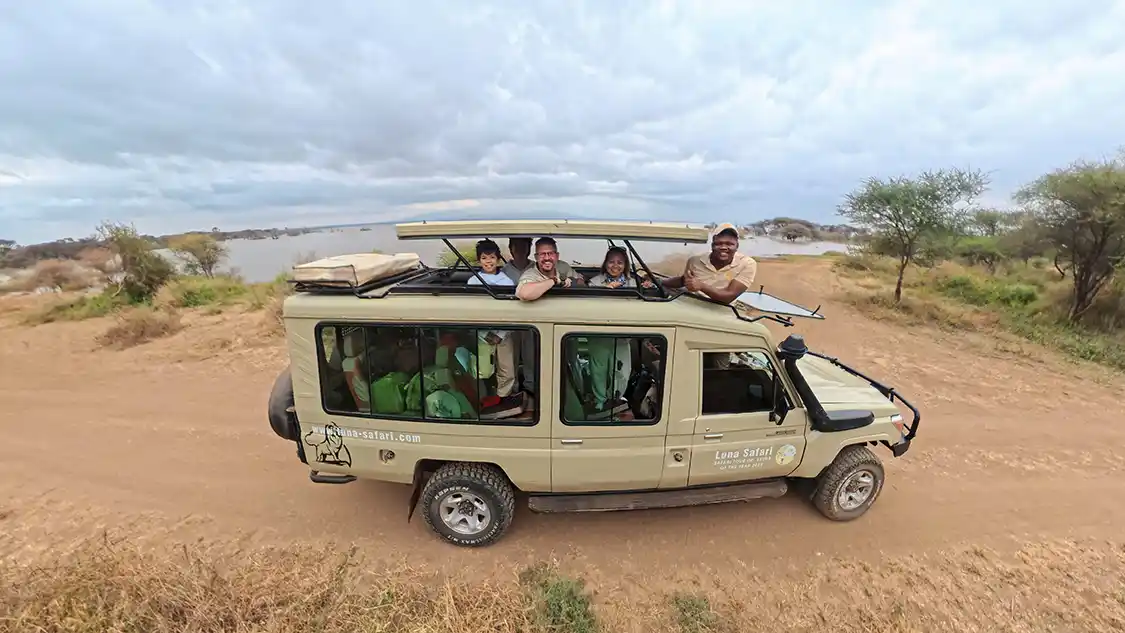
Lake Manyara was the last park of our Tanzania safari, and it was the right place to end. After the overwhelming scale of the Serengeti and the geological drama of the Ngorongoro Crater, Manyara asked something different of us. It asked us to slow down and pay attention to the smaller, stranger details: the tops of trees poking through floodwater, a bull elephant deciding whether we were worth worrying about, a troop of baboons chasing the vehicle through a forest that felt nothing like the rest of Tanzania.
We never did see the tree-climbing lions. By the end, I understood that this wasn’t the point. Lake Manyara isn’t a park you conquer by collecting sightings. It’s a park you experience, shaped by a lake that rewrites it every year and a forest that keeps its secrets close. For families willing to embrace that unpredictability, it offers something the bigger parks can’t: intimacy, variety, and a reminder that the best travel moments are rarely the ones you can plan for.
Don’t skip Lake Manyara on the way to somewhere more famous. Give it an afternoon, keep your expectations loose, and let it surprise you. It will.
This page is updated as new regional guides and planning resources are published. Looking beyond Tanzania? Explore my International Family Travel Guide.