
Peer beyond the postcard-perfect waterfront and the crowds at Peggy’s Cove, and you’ll discover a different side of Halifax: Nova Scotia’s Eastern Shore, with a coast of cold surf, granite ridges, empty beaches, and small towns that feel like a secret.
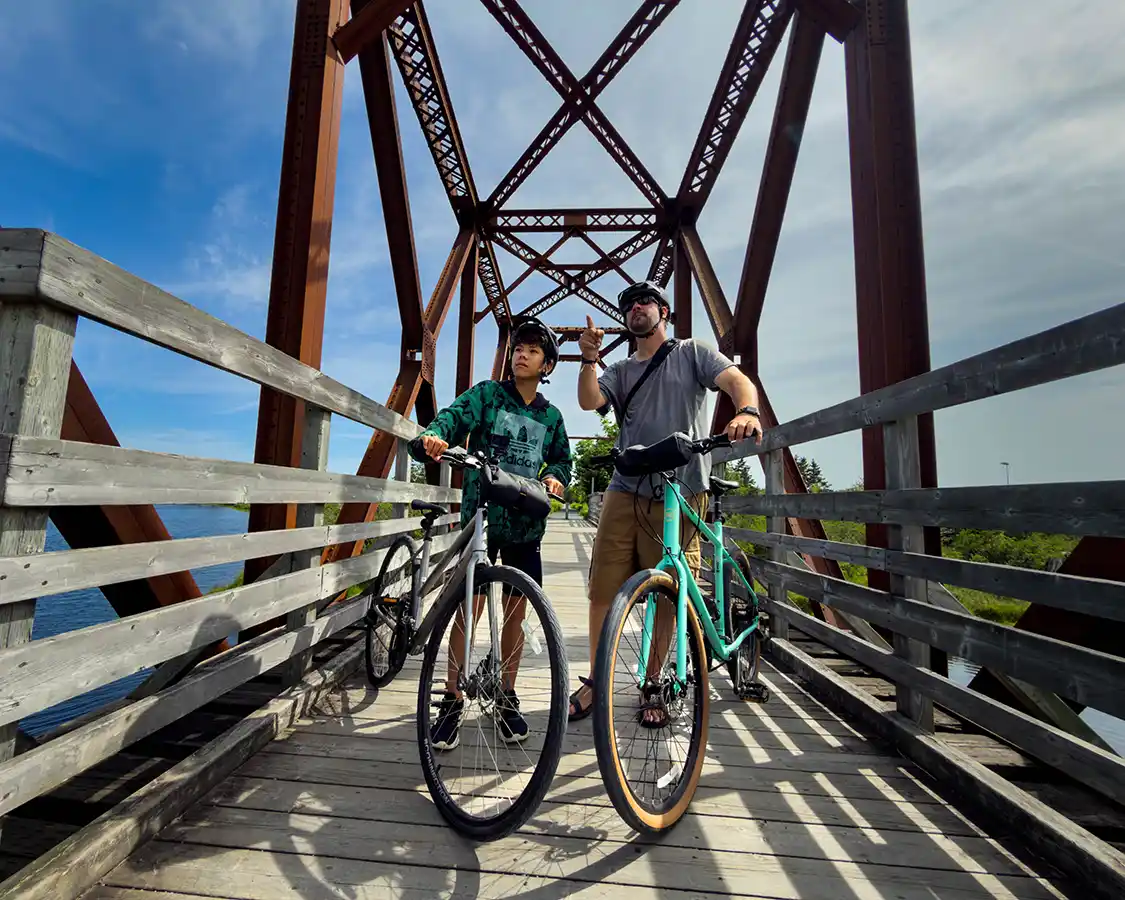
Pedaling along the Musquodoboit Trailway, where a former rail bed threads a narrow gap between a towering wall of granite and the still water of Bayer Lake, my son, Dylan, and I found a small adventure. It’s the kind of adventure that Nova Scotia’s Eastern Shore delivers with a casual ‘let’s go!’ or “Allons-y,” as the Acadians would say.
These aren’t the big, bucket-list hits of the province’s iconic stops like the Cabot Trail, the Halifax waterfront, or Peggy’s Cove. They’re micro-doses of adventure, delivered in a way that adds up to an experience that’s every bit as epic as the province’s heavy hitters. Each bend in the road throughout the Eastern Shore was a hit of beauty, excitement, and discovery. Before long, Dylan and I were far more interested in whatever this quiet stretch of coastline would hand us next than a solitary lighthouse standing majestically on the rocks.
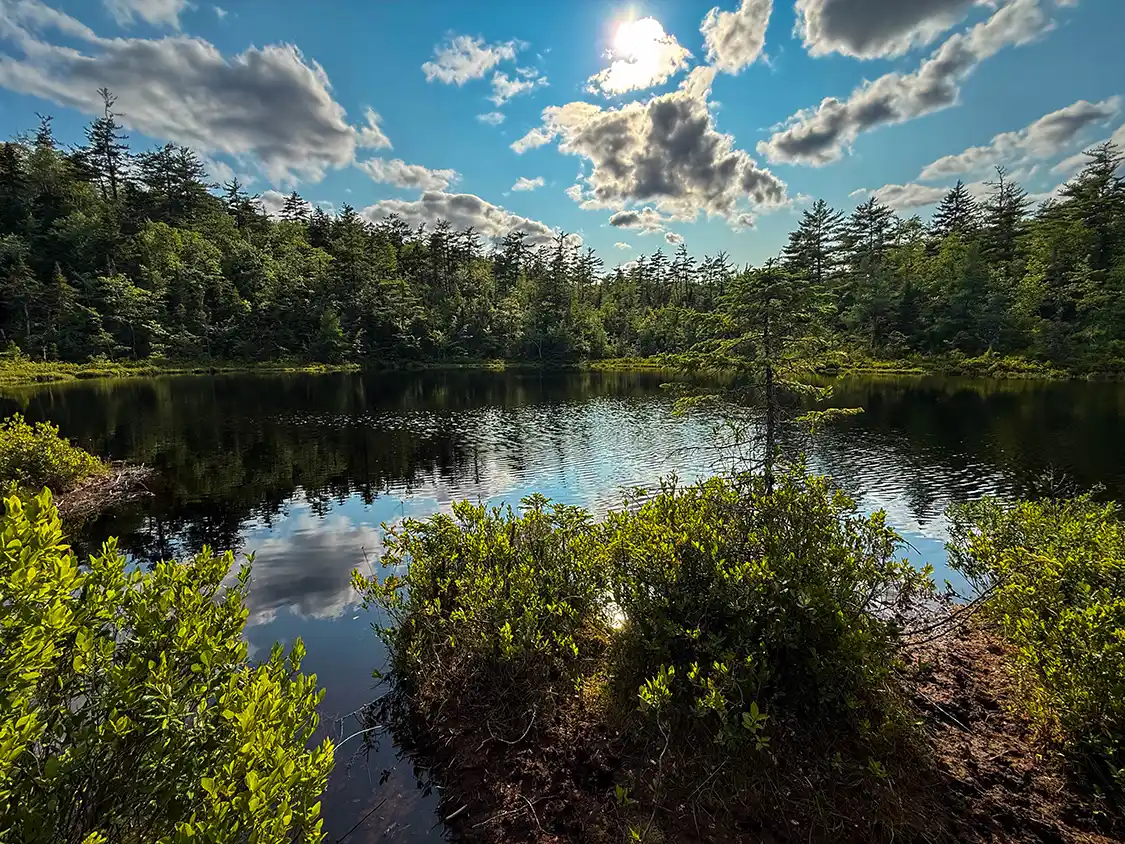
The cliffs along the Musquodoboit Trailway rise straight up on one side, some of them a hundred meters (328 feet) tall, streaked grey and rusty red and streaked green with lichen. The lake sits flat and dark on the other, crystal clear and dotted with flower-topped lily pads. And on that afternoon my son and I rolled our rented bikes to a stop at that point.
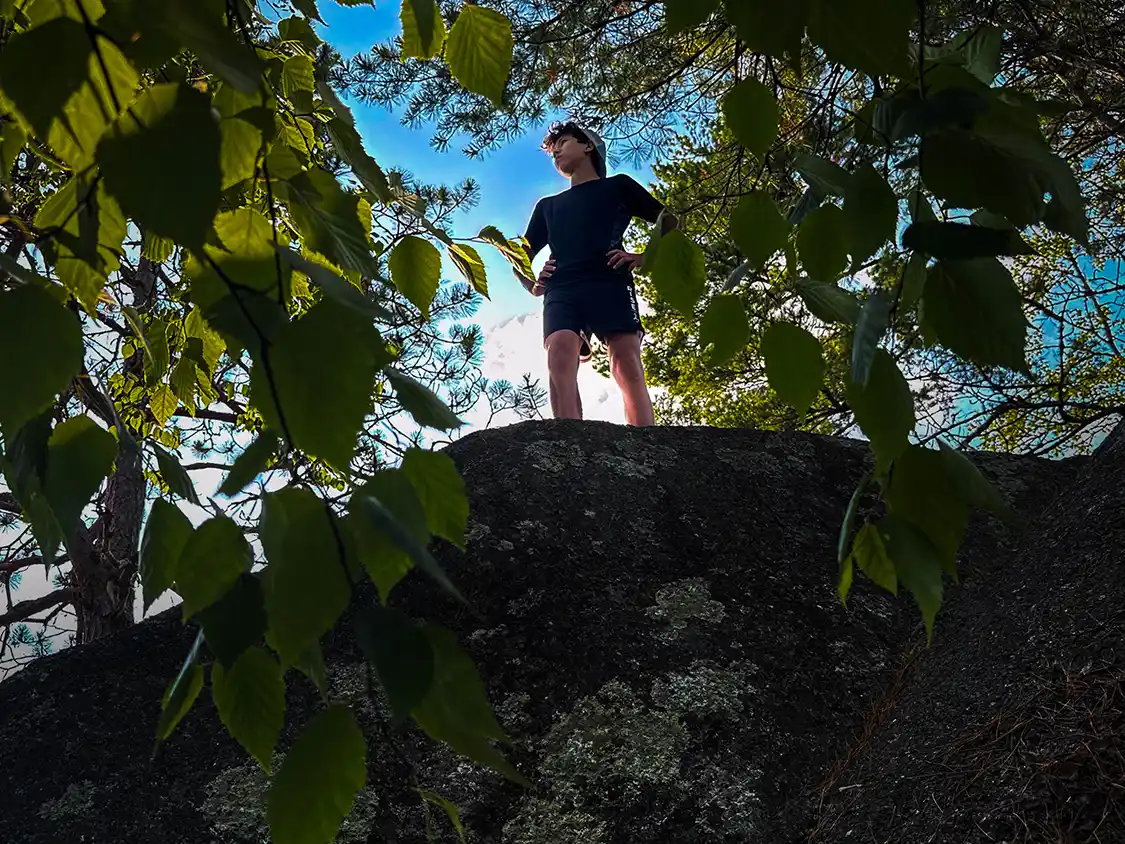
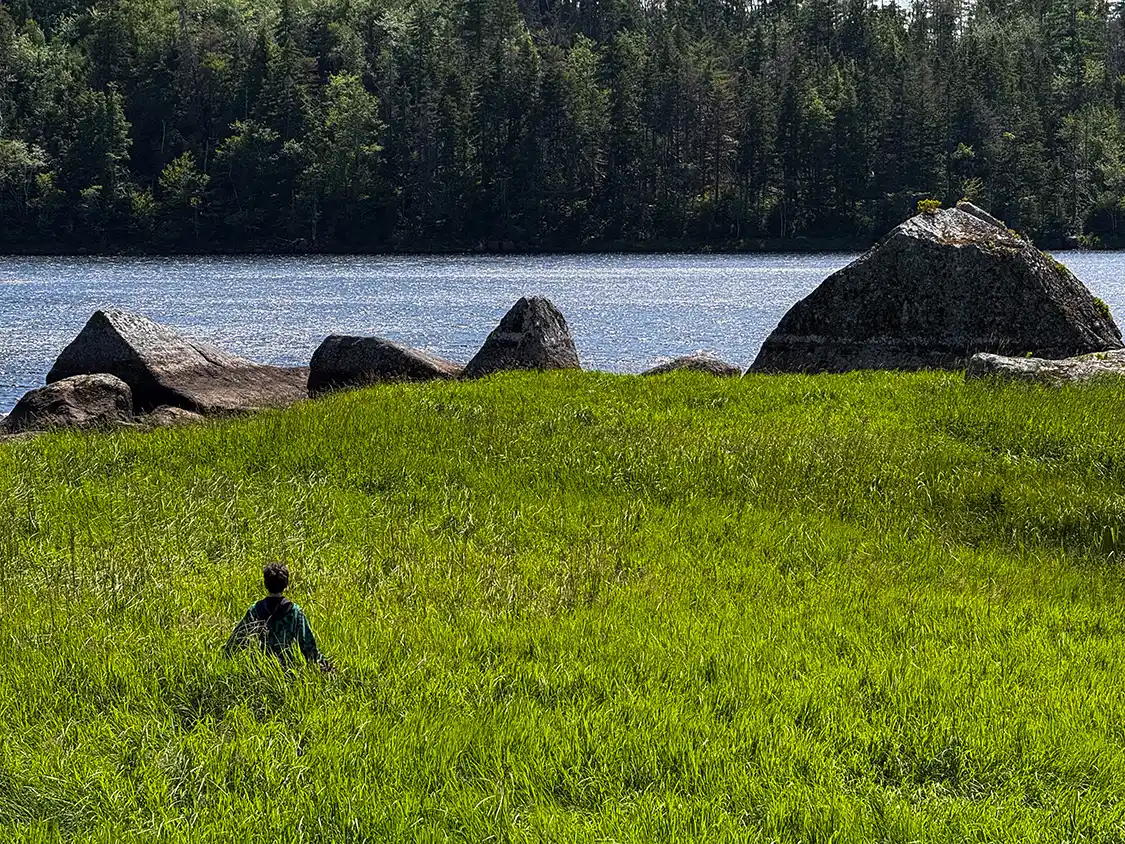
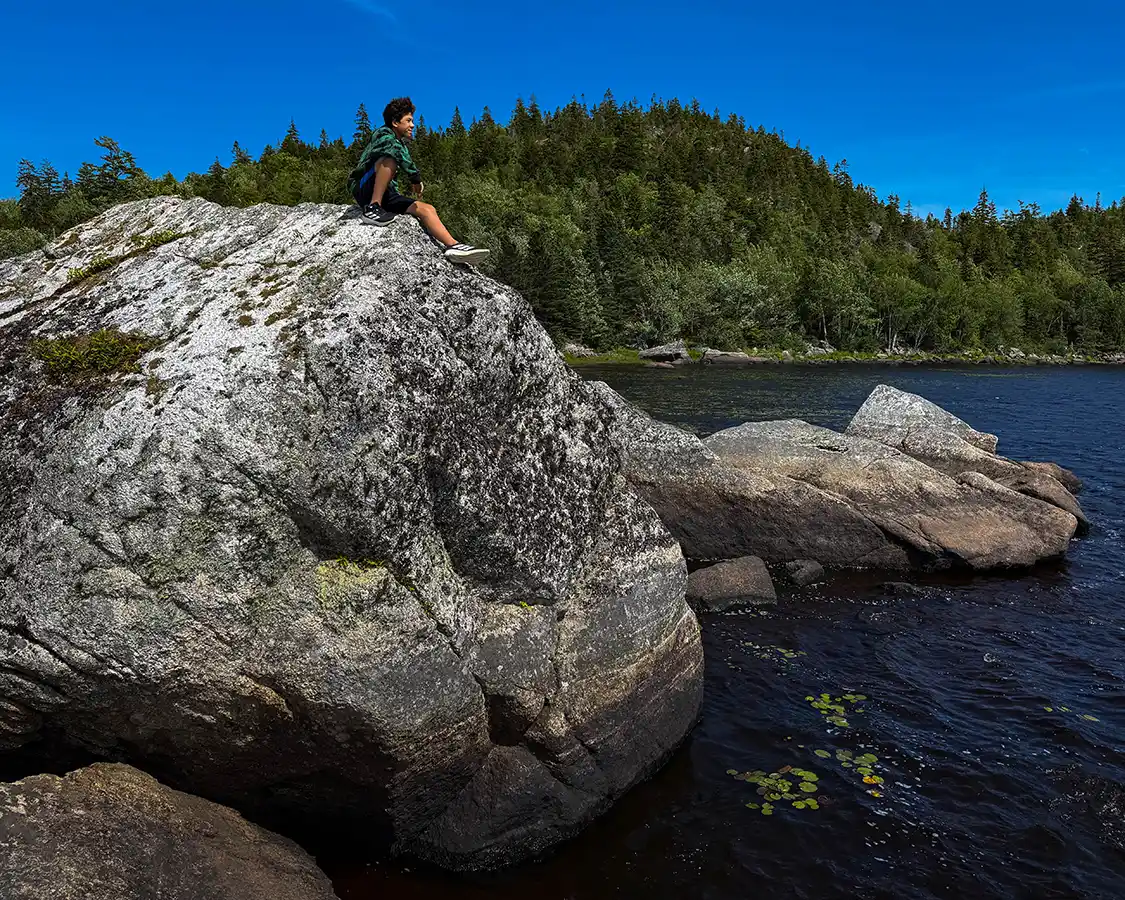
Dylan spotted the boulders first. A cluster of massive stones incongruously lying at the edge of the flat water, half-swallowed by tall marsh grass, looking for all the world as if nobody had ever set foot on them. He was absolutely certain that he would be the first human being ever to climb them. So we ditched the bikes, waded through waist-high grass, and hauled ourselves up onto the warm rocks. Then we just sat there. For the better part of an hour, we said almost nothing, two travel-weary souls letting the maritime sun wash the jet lag away, looking out over a beautiful lake whose name most people in Halifax have likely never heard.
That hour is the whole reason I’m writing this ode to the Eastern Shore. Because that moment, and the three crazy days that surrounded it, showed me a side of Nova Scotia that most visitors never see, and a place less than an hour from downtown Halifax that I think far more of them should.
The Eastern Shore: A Different Kind of Halifax
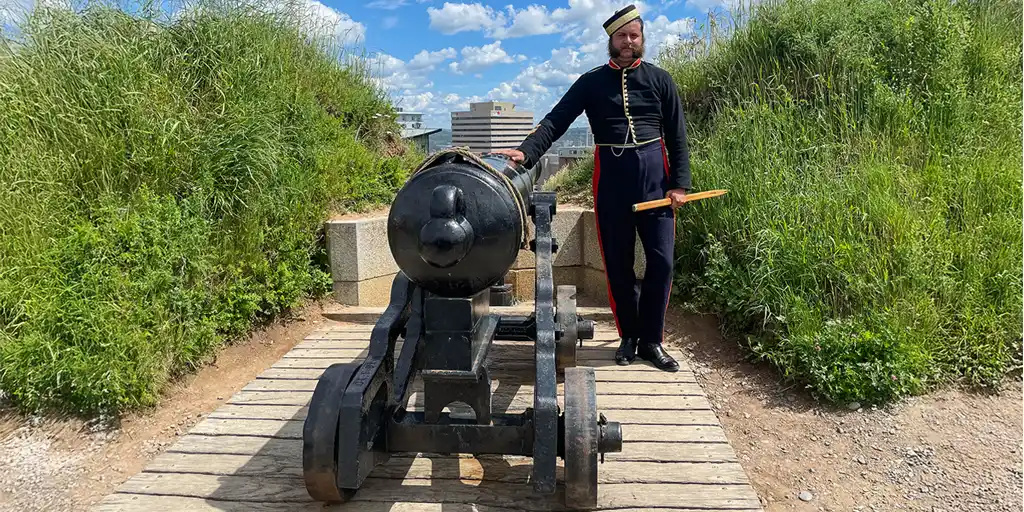
Most people who travel to Halifax dive right into the city’s most famous sights. The famous stops that the guidebooks showcase and that are featured in all of the posters in the Halifax Stanfield International Airport. They walk the boardwalk downtown, stopping to grab a Beavertail or stop to watch their kids climb the Wave. They take a tour of the historic Citadel to catch the views overlooking George’s Island and listen to the cannons roar. They eat a lobster roll on the pier, and drive out to Peggy’s Cove to snap a picture of the most photographed lighthouse in Canada alongside several hundred other people there to do exactly the same thing.
Don’t get me wrong. Halifax is a beautiful city. It is, without a doubt, one of my favorite cities in all of the Canadian Maritimes, and a place I’ve loved visiting every single time I’ve traveled here alone or with my family over the years.
But those famous stops don’t tell the whole story of the Halifax region. Run your finger east along a map from the city, past Dartmouth, and the coastline begins to fray into something much wilder and less curated. The mouth of the Halifax Harbour expands into a ragged edge of inlets, granite ridges, salt marshes, surf beaches, and tiny Acadian communities strung along a thin spiderweb of single-lane roads with more cracks and potholes than houses. This is Nova Scotia’s Eastern Shore, and it’s about as far from the cruise ships and postcards of the province as you can get.
The Eastern Shore is a region of Nova Scotia where hiking, surfing, and biking blend seamlessly with unique places to stay and exceptional local food, all of it tied together by natural beauty that competes with anything on Cape Breton Island. And yet it’s just 45 minutes from downtown Halifax, and just as close to the Halifax Stanfield International Airport. This is a place where world-class surf breaks sit within a lunch break away from the provincial capital, and where you can go a whole day trading waves, trails, and empty beaches without ever once waiting in line behind a tour bus.
That mix of wild and quiet is exactly why Dylan and I made the journey to Halifax. We’d just flown home to Toronto from a month of travel across Western Canada and Southeast Asia. A whirlwind month that took us through the Rocky Mountains, South Korea, Malaysia, Indonesia, and Singapore. Rather than settle back into the calm routine of mid-summer, the two of us stayed home exactly long enough to pop in a load of laundry and take a shower before peeling off for one more summer adventure. My wife, Christina, took our older son, Cohen, to a summer camp job near Ottawa, so this was going to be a father-son trip, kind of like one we had taken to Niagara Falls the year before.
We wanted to experience Halifax’s adventurous side. Small towns, empty trails, cold water, no crowds. And, if I’m honest, we wanted to spend some time together. Dylan and I have nearly identical personalities, a wild mix of sarcasm, restlessness, and shaky impulse control that sometimes has us clashing like flint on steel. But put us on a trail or in the surf, chasing the same thing, and we click. The Eastern Shore felt like the kind of place that would give us that. It did not disappoint.
Here’s how three days on Nova Scotia’s Eastern Shore unfolded, and why I think it deserves a place on your Halifax itinerary, whether it’s your first visit or your fifth.
Where We Stayed on the Eastern Shore: A Glamping Dome Above Porters Lake
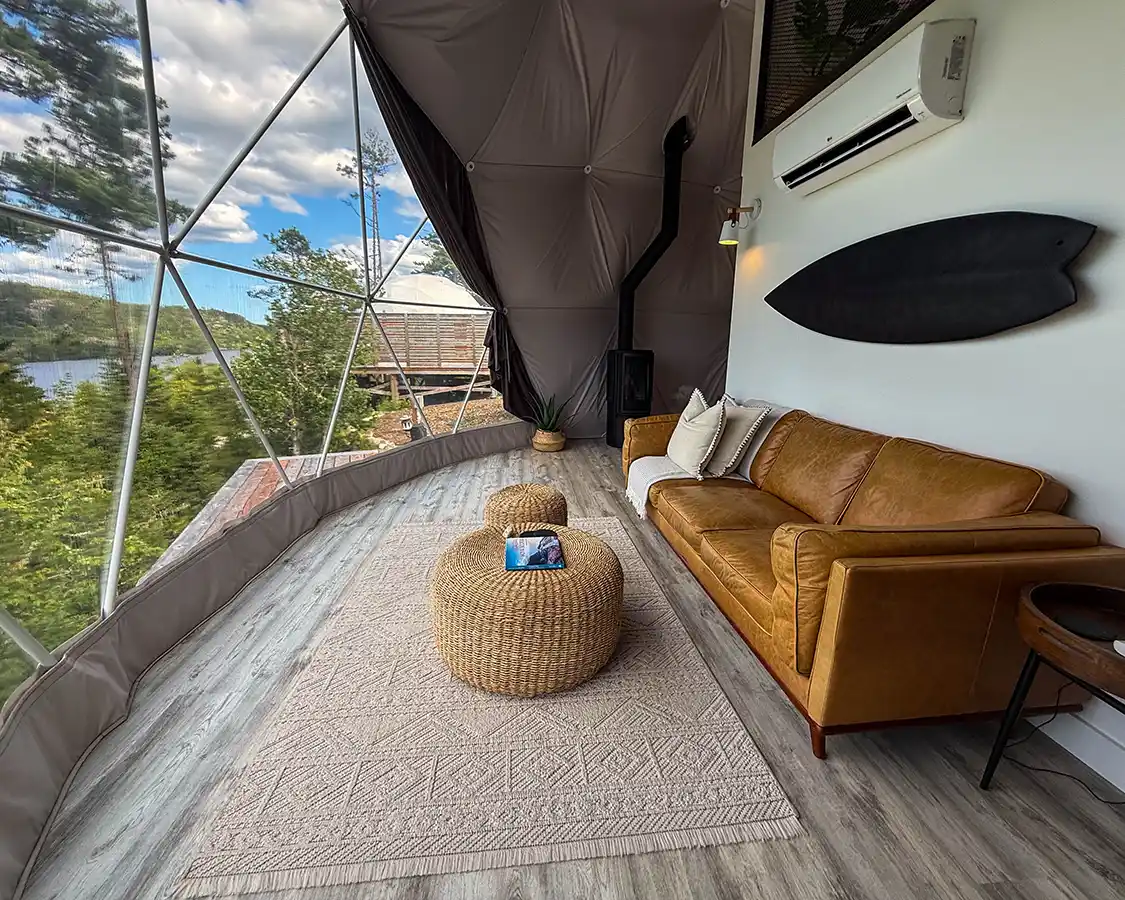
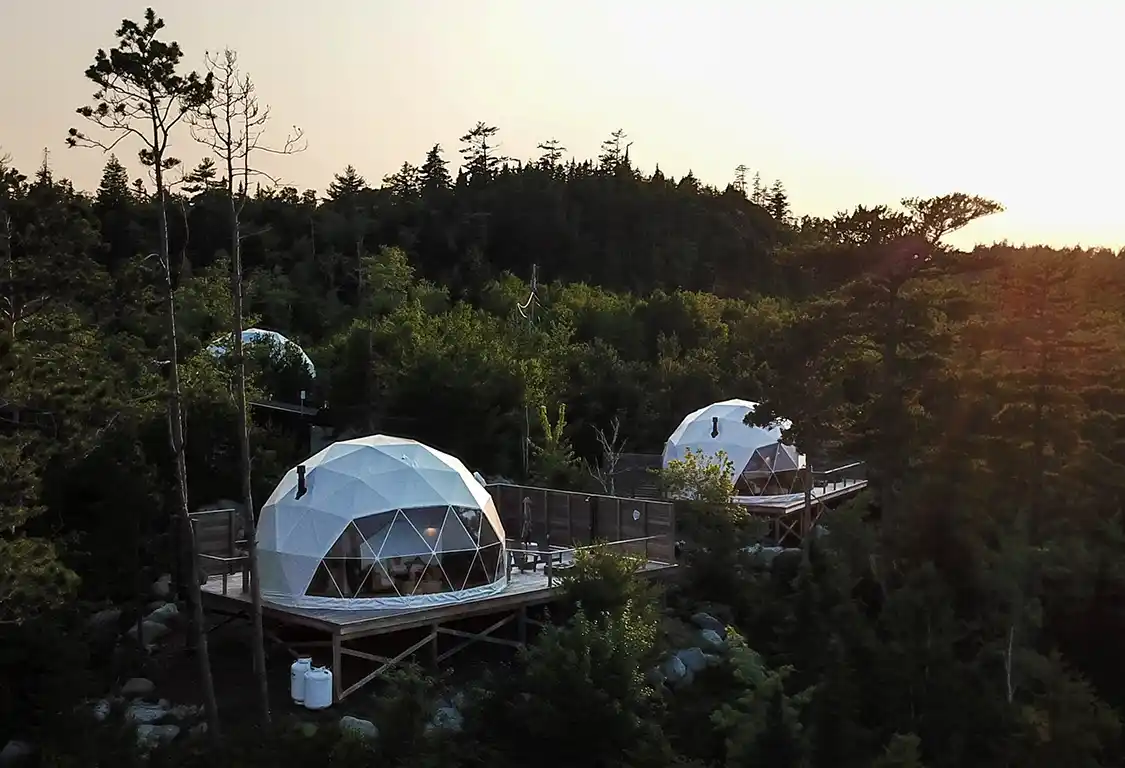
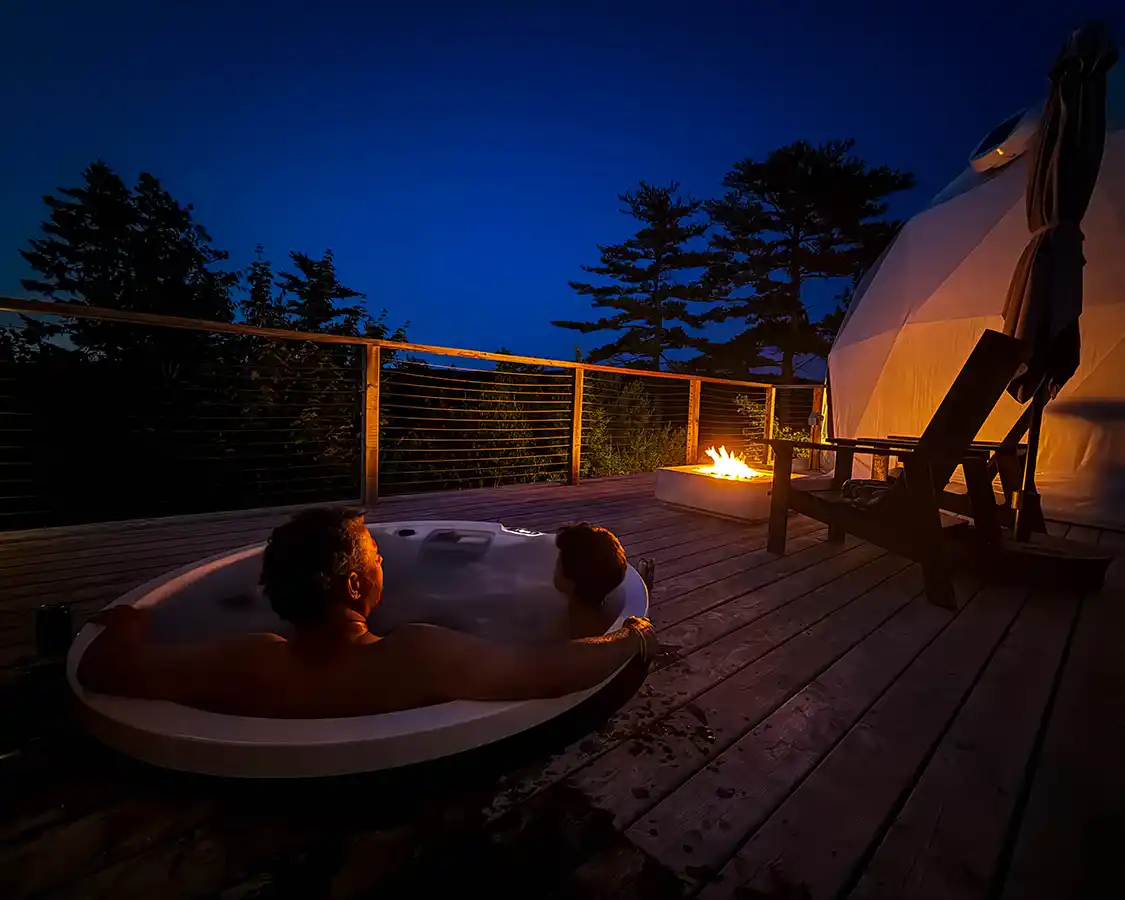
We set up a home base in a geodesic dome perched on a rocky escarpment above Porters Lake. Nalu Retreat was the name, and it was gorgeous. Porters Lake is a 19 km (12 mi) crescent of water that runs almost to the sea, and our dome looked out over a wide sweep of the water and forested hillsides. Inside was a king-sized bed, a couch, a small kitchenette, and a stargazing loft up top. Outside, on a private deck, sat a hot tub, a barbecue, and a propane fire that we kept crackling into the night.
A note for families: Nalu Retreat leans toward couples and wellness retreats more than it caters to families, so it’s worth checking current policies if you’re traveling with younger children. For the two of us, though, with a bed, a couch, and a 12-year-old happy to claim either, it was a great fit. After nearly a month of hotels and airports across Asia, that first evening in the dome, soaking in the hot tub while the fire snapped beside us and the stars sprinkled the sky above us, was a moment of quiet comfort that we both never knew we needed.
Day One: Dipping Our Toes in the Atlantic, and a Hiking Trail With Character
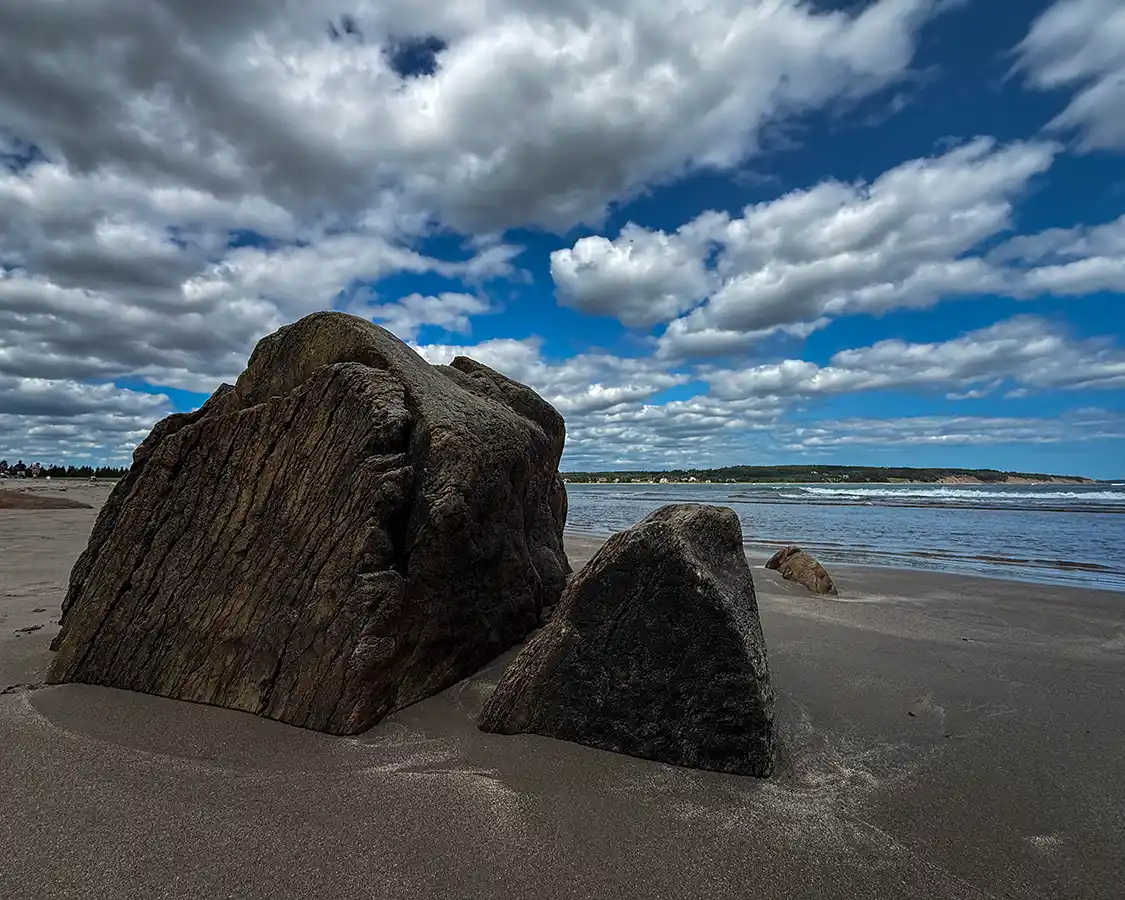
We drove straight from the airport to the water, because after that much travel there’s nothing like the shock of the cold North Atlantic to reset your system. Rainbow Haven Beach, a supervised stretch of sand and boardwalk where Cole Harbour meets the sea, was the perfect place to do it. We kicked off our shoes, waded into water cold enough to make us both yelp and jump back, and felt the jet lag rinse away in the surf.
After checking into Nalu Retreat and dropping off our bags, we went looking for the Crowbar Lake hiking trails, a network right next door to the glamping pods that a friend in the area had told me was something truly special. They weren’t wrong, but they may have undersold the level of challenge. The Crowbar Lake Trails are not gentle; they climb over rugged granite, skirt wetlands, and need some creative footwork in a few places. That effort, though, is exactly what we both love. And this section of trail rewarded that effort with backcountry views that feel like they’re a hundred miles from any major city. Not a mere 40 kilometers. We were both in our element. We hiked a couple of the shorter loops as the light softened, working out the last of our travel stiffness on real, unforgiving Nova Scotia rock, and it was exactly the release we both needed.
Dinner was everything we needed. Back at the dome, we heated up a meal that local Chef Kim at Lupin Dining, in West Petpeswick, had prepared: lobster macaroni and cheese, followed by a blueberry swirl cheesecake. We ate it on the deck as the sky went dark, then climbed into the hot tub to watch the stars pop into the sky one by one. The Eastern Shore already had us in its grasp, but we were ready for more.
Day Two: Surfing, Stories, and the Boulders on Bayer Lake
If day one was about shaking off a month of travel, day two was about diving in headfirst back into it. Literally. We started with a quick breakfast sandwich and a coffee at the Lawrencetown Beach Cafe. And then we got ready to take a ride in a washing machine.
Surfing at Lawrencetown Beach
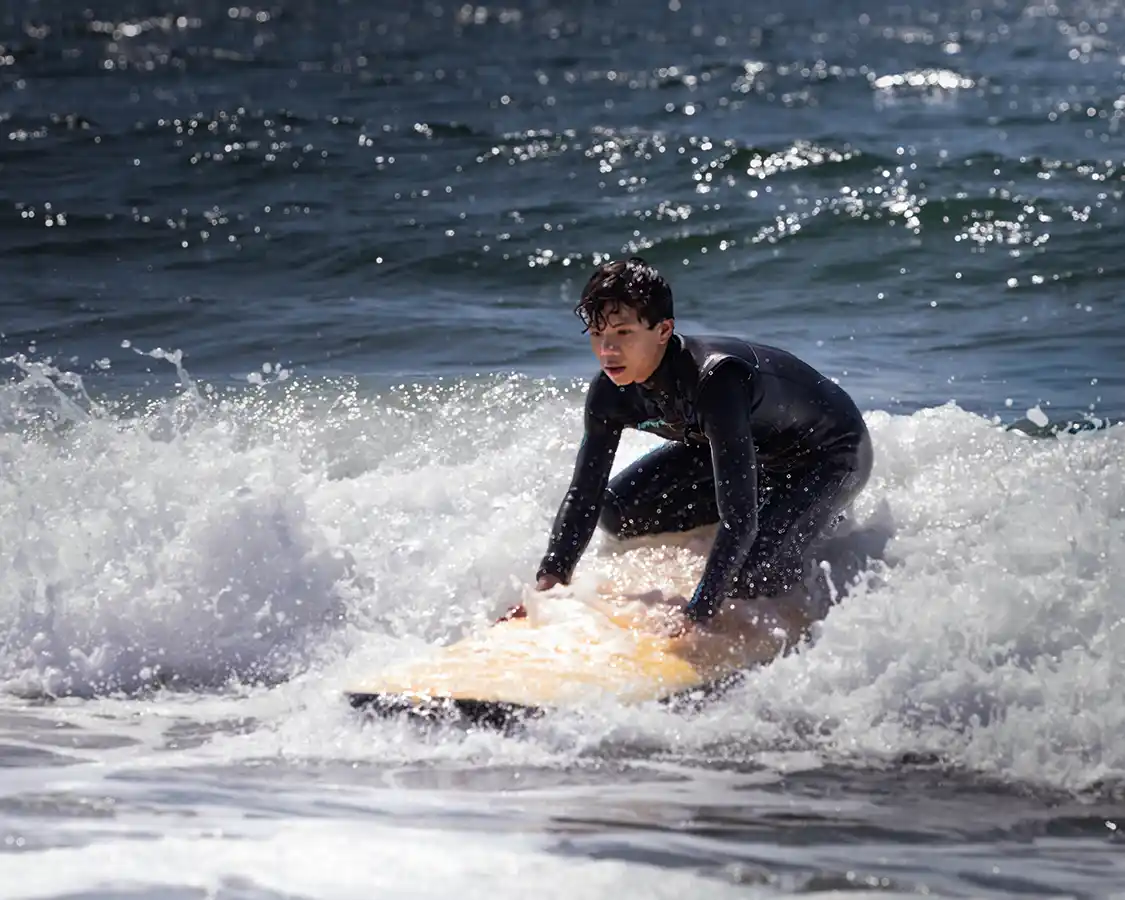
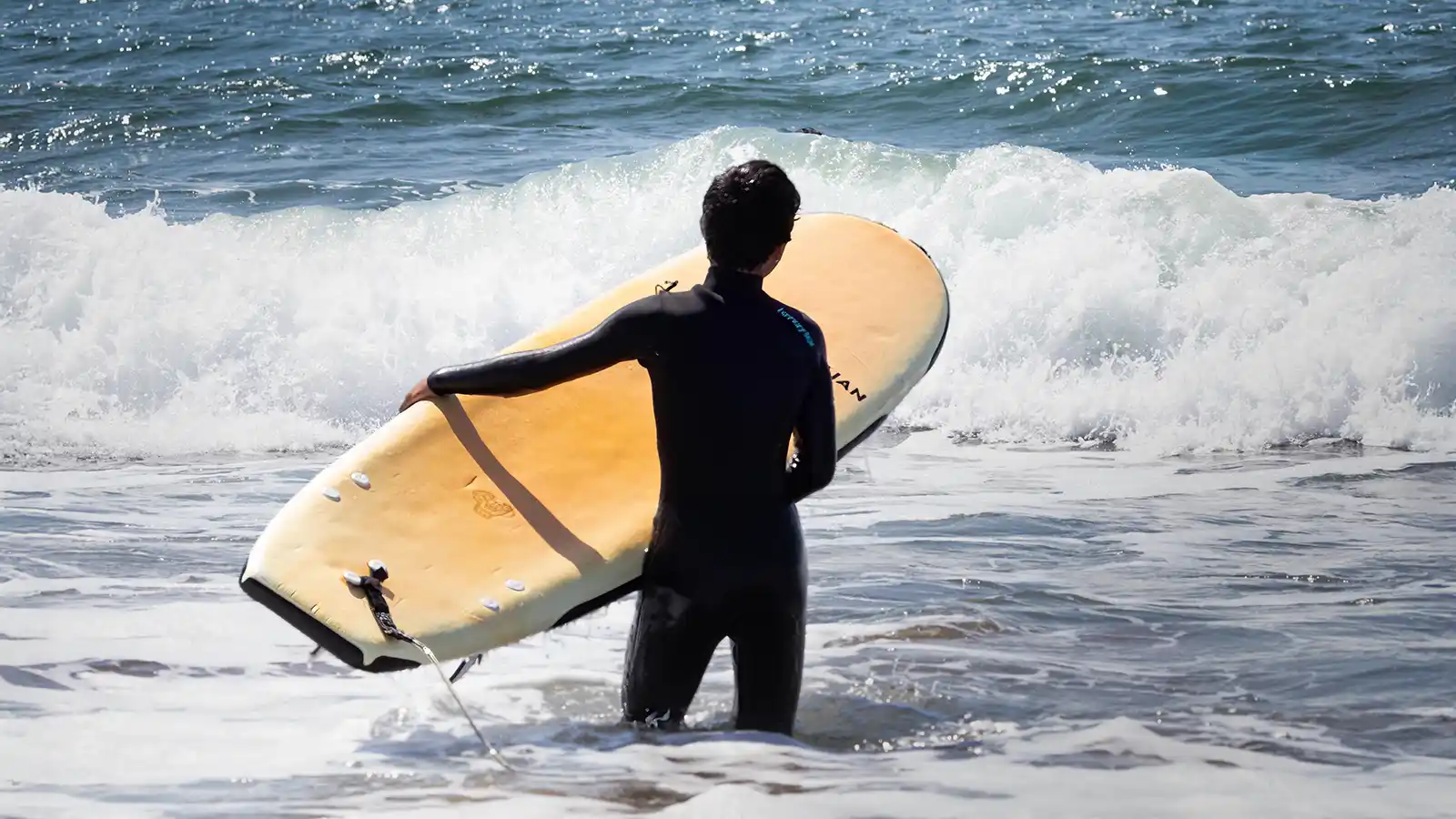
I’ve been writing about adventure travel in Canada for more than 10 years. It wasn’t until I was pulling on a wetsuit that hardly flatters my nearly 50-year-old figure that I truly understood how big the surf scene is in Nova Scotia. In fact, it’s on every Halifax travel guide and somehow isn’t. Because some of the best surfing in Canada is happening 30 minutes from the downtown Halifax waterfront. Real, epic, cold-water surf, breaking on a beach most visitors to the city never even think about.
That beach is Lawrencetown, a 1.7 km (1 mi) arc of sand guarded by a cobblestone barrier, and it’s the beating heart of Nova Scotia’s surf scene. The fall and winter storms here serve up waves that draw serious surfers from across the country, while the summer swell is friendly enough for a first-timer like Dylan and me to learn how to catch a wave. I still can’t quite wrap my head around a break this good, hiding in plain sight so close to a major Canadian city.
We had booked a lesson with East Coast Surf School, run by local surfers Jill and Nico Manos, who’ve been getting first-timers up on waves at Lawrencetown for years. Our teacher was a man from New Zealand who was chasing the breaks in Canada on a work visa. He kitted us out with boards and wetsuits right there on the sand and spent two hours in the water with us. The results were lopsided. Dylan, all twelve years of light, athletic frame, popped up and rode a wave within the first 30 minutes. I managed, mostly, to wipe out dramatically. Watching my son ride a wave off a Nova Scotia beach while I flailed in the whitewater beside him is a memory I’ll hold onto for a very long time.
The Eastern Shores Acadian Heritage

Salt-crusted and starving, we drove inland to Uprooted Market & Café in Musquodoboit Harbour, a bright little community food hub founded by local Emma Murphy, who had a goal of making fresh, local food accessible to the Eastern Shore. We ordered a pair of sandwiches, Dylan got a hot chocolate, and for me, a good cappuccino. There, sitting on antique wooden chairs in a small side room, was where the Eastern Shore revealed its other great asset: its people.
I fell into conversation with an elderly Acadian gentleman who, as far as I could tell, had lived on this shore since it was under French control. He regaled me with stories of the communities and the families, of how the region had changed across his lifetime, and, most of all, of how he wished more people would come and discover what a special corner of the province this is. I’ve thought about that conversation many times since.
In a way, writing this is me trying to grant his wish.
That Acadian history runs deep along the Eastern Shore. The nearby villages of West Chezzetcook and Grand Desert were settled by Acadians who returned to the region after the Expulsion. That culture still colors this whole stretch of coast, in the place names, the surnames, and the quiet pride of the people who call it home. The Acadian flag can be seen everywhere, proudly swaying right next to that proud and powerful red maple leaf.
Biking The Musquodoboit Trailway
Fuelled up, we headed to Musquodoboit Harbour for the day’s main event: biking the Musquodoboit Trailway. We had time to kill before our rental, so we did the only responsible thing and got ice cream at Polar Bear Express, a beloved local scoop shop (cash only, and worth it) on the grounds of the Musquodoboit Harbour Railway Museum, a restored 1918 railway station with old rolling stock parked outside. We ate our cones among the trains, which is a very Eastern Shore way to pass twenty minutes.
Then, we hit up the Musquodoboit Trailway. This is one of the finest rail-trails in Nova Scotia: a roughly 15 km (9 mi) former railway line that’s now part of the Trans Canada Trail. The rail line, which was once called the “Blueberry Express,” runs along the Musquodoboit River and serves as the spine for a network of rugged backcountry hiking loops through the surrounding granite wilderness. We rented bikes from At Your Own Pace Bike Rentals at the railway museum and rode about 25 km (15.5 mi) out and back, coasting through the shade of the old rail corridor, over trestle bridges, past the floodplains of the river and the towering cliffs of the Eastern Shore Granite Ridge. It’s flat, easy, and truly spectacular. Compared to the kind of cycling we’d be doing the following week in Fredericton, New Brunswick, this landscape did all the work for us, giving us the chance to settle in and enjoy the scenery.
And it was out here, where the trail pinches between those granite walls and Bayer Lake, that we found the boulders. I told you about that hour already. It remains the single best hour of the trip, and one of the best of our year. No app, no admission, no crowd. Just a father, a son, a warm rock, and a lake that most people just breeze by.
Martinique Beach Provincial Park
All that pedaling built a serious appetite, which we took to Harbor Fish ‘N’ Fries, a roadside spot in Musquodoboit Harbor so packed that it seemed like the entire community had turned out for dinner. We shared a seafood platter, a paper plate buckling under a mountain of fried clams, shrimp, haddock, and scallops, and it hit exactly the way fried seafood should after a day in the sun and salt water.
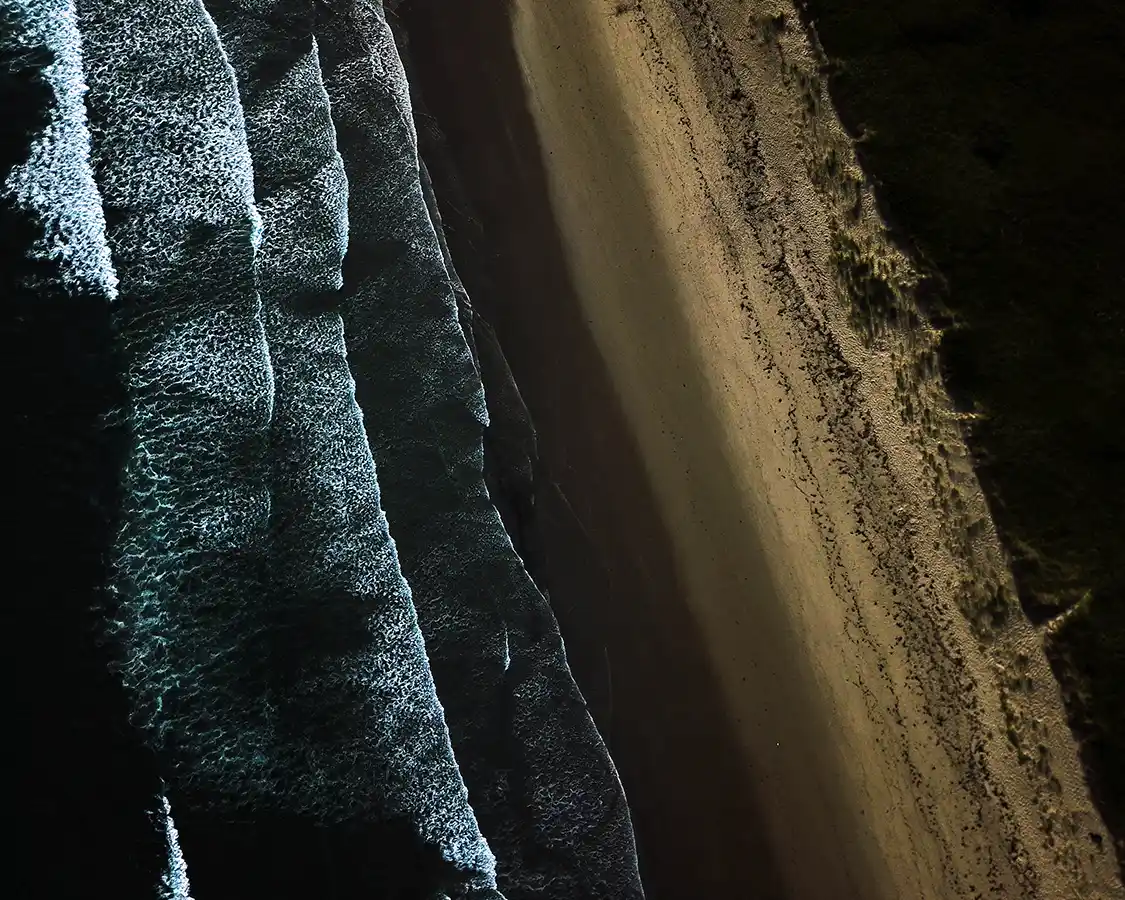
The sun was dropping, so we chased it to Martinique Beach Provincial Park, the longest sandy beach in Nova Scotia. It’s a 5 km (3 mi) crescent of white sand and rolling Atlantic surf, backed by dunes that shelter nesting piping plovers. We had the enormous beach nearly to ourselves as the light turned gold and then pink, the waves rolling in one after another. After a day of surfing, biking, and boulder-climbing, standing barefoot on that endless empty beach at sunset was the perfect, quiet full stop. We didn’t say much; we just strolled along the edge of where the ocean meets the land and skipped stones across the surface of the water.
Day Three: When the Rain Comes, Follow It

We woke on our final morning in the Eastern Shore to a clap of thunder that shook the canvas walls of our dome at Nalu Retreat. The sky had torn open overnight and was hammering the dome with rain. This heavy downpour put an end to any plans involving trails or surf for that day. But travel has taught me that a washout isn’t the end of an adventure. It’s just an excuse for redirection. And so we did the thing we’d been saving anyway: we pointed the car toward Halifax proper.
On the way, we stopped at Rose & Rooster in the tiny Acadian village of Grand Desert, on the scenic coastal Highway 207. It looked, from the road, like a classic little Eastern Shore café, covered grey with wooden tiles and a tiny sign that nobody really needed to read because the locals all know it’s there.
We opened the menu and found a Korean influence running through it. Barely four weeks earlier, Dylan and I, along with Christina and Cohen, were eating our way through Seoul. This felt like the universe giving us a little nod. We devoured kimchi breakfast sandwiches and rice and beans with eggs. There was something uniquely Canadian about sitting in a tiny Acadian village in Nova Scotia, munching on a Korean-inspired breakfast on a rainy morning on the way out of the wild and into the city. The Eastern Shore kept us guessing right to the end.
From there, we drove into the Halifax that everyone knows. A visit to the harbor, the Maritime Museum, chasing history, the hum of the city, and an anchored rainy visit to Peggy’s Cove were all still ahead of us (yes, you should still visit Peggy’s Cove in the Rain). But those are stories for another day. Because the Halifax that stuck with me on this trip wasn’t the one from the postcard. It was the coast we’d just left behind.
Why You Should Give the Eastern Shore Your Time
Here’s the thing about traveling with a kid who is basically a smaller, faster version of yourself: the good moments and the friction come from the same place. Dylan and I are too alike to always get along. But the Eastern Shore gave us three days of the thing we do share, an appetite for the active, the outdoors, the slightly-off-the-map, and it turned that shared appetite into the kind of connection that a resort pool or a guided bus tour never could. We surfed, we hiked, we biked, we climbed rocks nobody wanted, and we talked, and didn’t talk, in exactly the right proportion.
That’s what this coast offers that the Halifax waterfront can’t. Not better scenery, though the scenery is superb, but space. Space to move, space to breathe, space to actually be with the person you came with. The Eastern Shore isn’t polished, and it isn’t trying to be. It’s a working coast of small towns and big granite and cold, world-class surf, held together by people who love it and quietly wish you’d come see why.
So the next time you plan a trip to Halifax, or if you’ve already ticked off the waterfront and Peggy’s Cove and you’re wondering what’s next, point your car east. Give the Eastern Shore three days. Climb something. Surf something. Talk to the person at the next table. I suspect you’ll come home the way we did: a little windburned, a little saltier, and convinced you found the real Nova Scotia hiding just past the edge of the map.
Planning more Canadian adventures? Don’t miss our guide to the most unforgettable road trips in Canada and our roundup of 10 must-see destinations in Canada. Stay tuned. This is just the beginning of a whole lot more Nova Scotia storytelling to come, including exploring the city of Halifax with my son and a very foggy, very memorable visit to Peggy’s Cove.
You May Also Like To Read:
Disclosure: Some of these activities were done in partnership with Tourism New Brunswick and Visit Moncton-Dieppe. All opinions remain my own.