
Squamish is famous for climbing and mountain biking. I went for the other side of it: floating saunas, rainforest boardwalks, and a mountain town you can enjoy without technical gear.
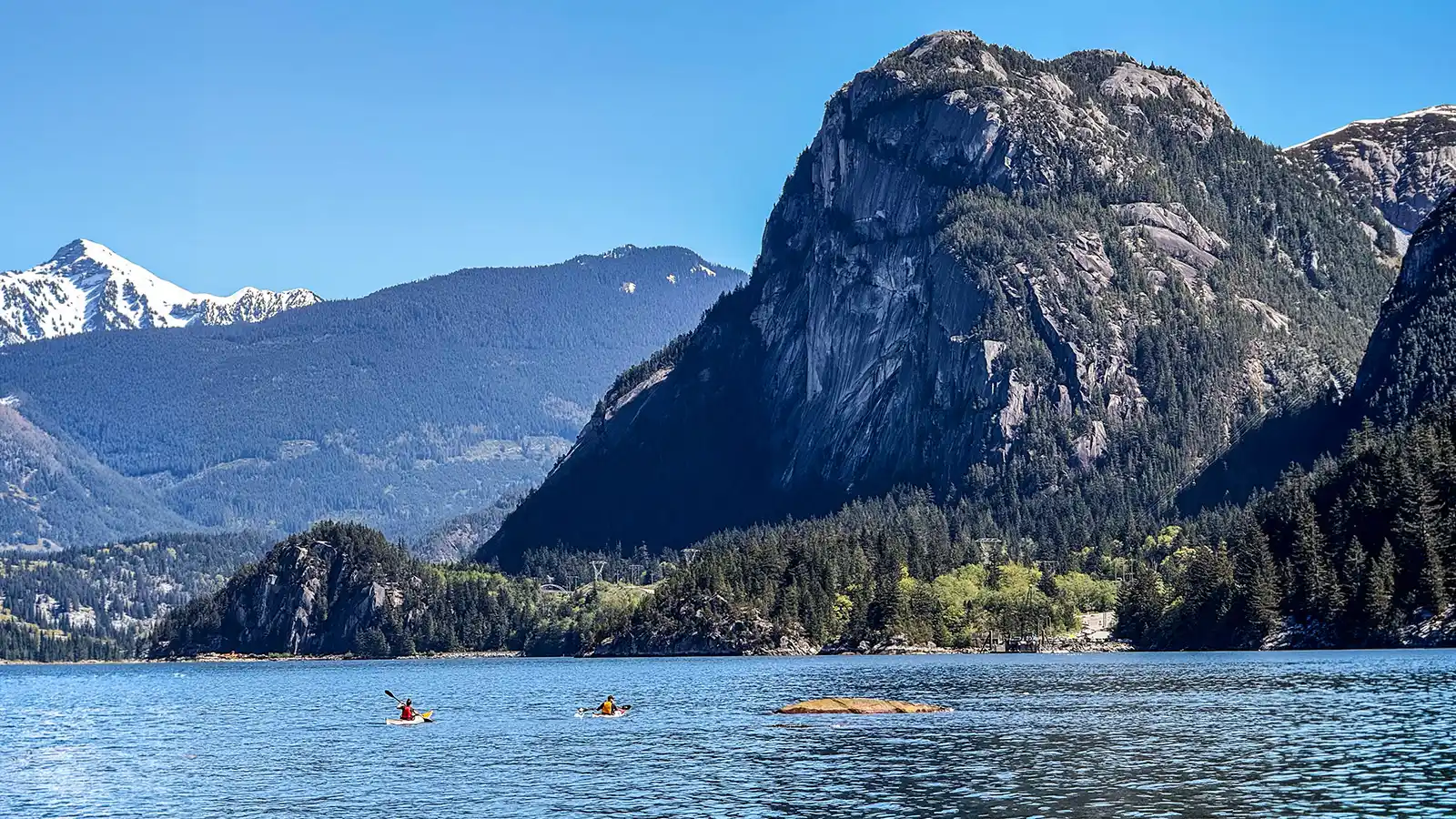
The first thing that hit me was the smell.
I was standing on a boardwalk at Squamish Canyon, under trees tall enough that I had to crane my neck just to find the tops of them; moss was hanging off each branch, lichen covering the boulders scattered on the ground below them. Everything about the scene said this should smell musty and stale, like a basement that has not been opened in a decade. Instead, it was clean. Sharp. It was air that seemed to cleanse my body as I took each breath. I wasn’t prepared to be energized by standing still in a wet rainforest, yet that is exactly how I felt.
That feeling stayed with me as I walked through the canyon, and the wellness that it brought turned out to be the theme of my whole visit to Squamish, British Columbia.
What Squamish Is Famous For (And What I Did Instead)
Squamish has a reputation, and it is a loud one that would normally draw me in like a fly to a bug zapper. This is the town with 3,500 rock climbing routes, more than 200 kilometers of mountain bike singletrack tucked beneath a granite monolith that people from across the world travel for days just to climb. Almost everything written about Squamish is written for people like me. Adventure-seekers, adrenaline-junkies, those who live life on the far side of their comfort zone. Search for things to do in Squamish, and you’ll be presented with great ideas like hiking the Chief, riding the gondola, sending a 5.11 on the Grand Wall.
On my first visit to Squamish, I didn’t do any of that. I spent two days doing the other thing this town has quietly become a destination for: health and wellness. Instead of wrecking my mind and body, I came to Squamish to take care of them.
Squamish Is Built For More Than Adventure
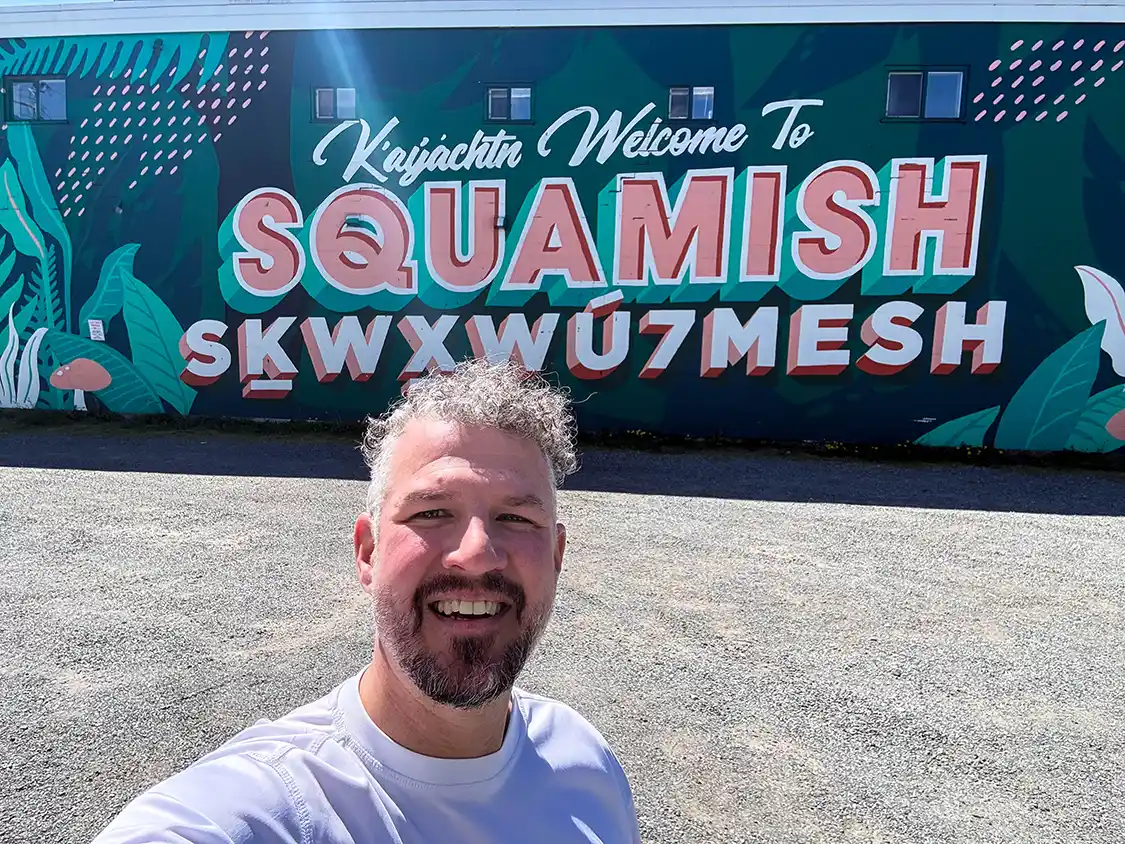
If you visited my website before, you know that is not my usual move. My family is more at home overlanding through deserts and searching for the Big Five in the Serengeti than forest bathing and hot yoga (well, my wife, Christina, might disagree with that, but hey, I’m the one writing this). But one of the things that I preach in adventurous travel, especially adventurous travel for families, is getting out of your comfort zone. That area on the edge of comfort isn’t always filled with adrenaline and dirt. For someone like my kids and me, it can look like a massage, a Pilates class, and hugging a tree.
Squamish is an adventure destination at its heart, but more and more visitors are pairing that adrenaline rush with inner peace, contemplation, and relaxation. And there may not be a better place in British Columbia to do it.
A floating sauna anchored in a quiet bay in Howe Sound. A forest bathing session with a guide who speaks with trees like they’re going to answer back. A Pilates class at seven thirty in the morning that left me feeling more broken than healed. A brewery on reclaimed industrial land that backs onto a brand new oceanfront park. A rainforest boardwalk that smells like the inside of a cedar.
There’s a second thread running under all of this, and it’s the one I kept coming back to as I walked around. Squamish didn’t choose to reinvent itself. It had to. This was a blue-collar town that lost the industry it was built on, and what grew back in its place isn’t just one of Canada’s great adventure destinations. It’s something deeper and stranger than that. I wrote this guide to Squamish to cover both sides of what makes the town special. The slow side, because that is what I actually did and because nobody else is writing about it. And the famous side, because you should know what is there in case you want to stay a while.
Squamish Trip Planner
Where it is: On the ocean at the head of the Howe Sound fjord in southwestern British Columbia, roughly halfway between Vancouver and Whistler on Highway 99, the Sea to Sky Highway. It is one of the most spectacular drives in Canada, and it is worth building time into your day for the pullouts.
How to get there: Set aside 45 to 60 minutes from Vancouver and about 45 minutes from Whistler Village. You will see 40 minutes from Vancouver quoted in tourism material. That is optimistic unless the highway is empty and you are in a hurry, and you should not be in a hurry on that road.
Getting there without a car: This is the thing most Squamish guides skip. The Squamish Connector runs a scheduled van service through the Sea to Sky corridor. It is family-owned, has been operating since 2014, and the entire premise is cutting single-occupancy vehicles out of the corridor. We used it as our transport for two full days, and it worked. YVR Skylynx also runs airport coaches, and BC Transit covers the town itself. A car-free Squamish weekend is genuinely possible, which you would not learn from most articles about this place.
How long to stay: Two nights is the honest minimum, and two nights is what I had. One night gets you a single activity and a dinner. Two nights gets you a slow day and an active day. Three or more if you want to climb, bike seriously, or hike into Garibaldi.
Population: 23,819 as of the 2021 census, up 22.2 percent from 2016. That growth rate matters more than the number, and it explains most of what has changed here.
When to go: June through September is the reliable window for hiking, biking, and paddling. May and October are shoulder: quieter, cheaper, greener, and wetter. Winter is for the gondola, snowshoeing, and eagles. April, when I visited, is a genuine gamble on weather and a genuine bargain on everything else.
About the rain: Squamish receives more than 2,200 millimeters of precipitation a year, which makes it one of the wettest inhabited places in Canada. Most Squamish guides treat weather as a footnote. Plan for it instead. The good news is that the slow side of this town is almost entirely weatherproof, and I will come back to that below.
Who it suits: Climbers and mountain bikers obviously, but also anyone who wants mountains and ocean in the same view without a resort town’s prices or crowds. Families do well here. So do couples looking for a two-night reset. It is less suited to travelers who want nightlife or a dense restaurant scene.
Where it fits in a bigger trip: Squamish is the natural stop between Vancouver and Whistler, and it is a far better overnight than most people realize. If you are building a wider British Columbia itinerary, I have more of the province in my British Columbia travel guide.
How A Mill Town Became A Wellness Destination
It’s tough to wrap your head around why Squamish is so special without knowing where it came from. This was a forestry town. It had a pulp mill operated by Western Forest Products, which was the largest employer in the district until its operations permanently ceased on January 26, 2006. Interfor’s sawmill and logging operation had closed a few years before that. Within a handful of years, the industry that the town was built upon simply vanished.
Behind the scenes, Squamish had already begun drawing in rock climbers. Those climbers often had other hobbies, like mountain biking. So they began to build trails. Then Vancouver got expensive. Between 2016 and 2021, the town’s population jumped 22.2 percent, an extraordinary rate for a community this size, and a lot of those arrivals were people who moved here for the lifestyle rather than the work. They came with young families, and the town changed shape around them.
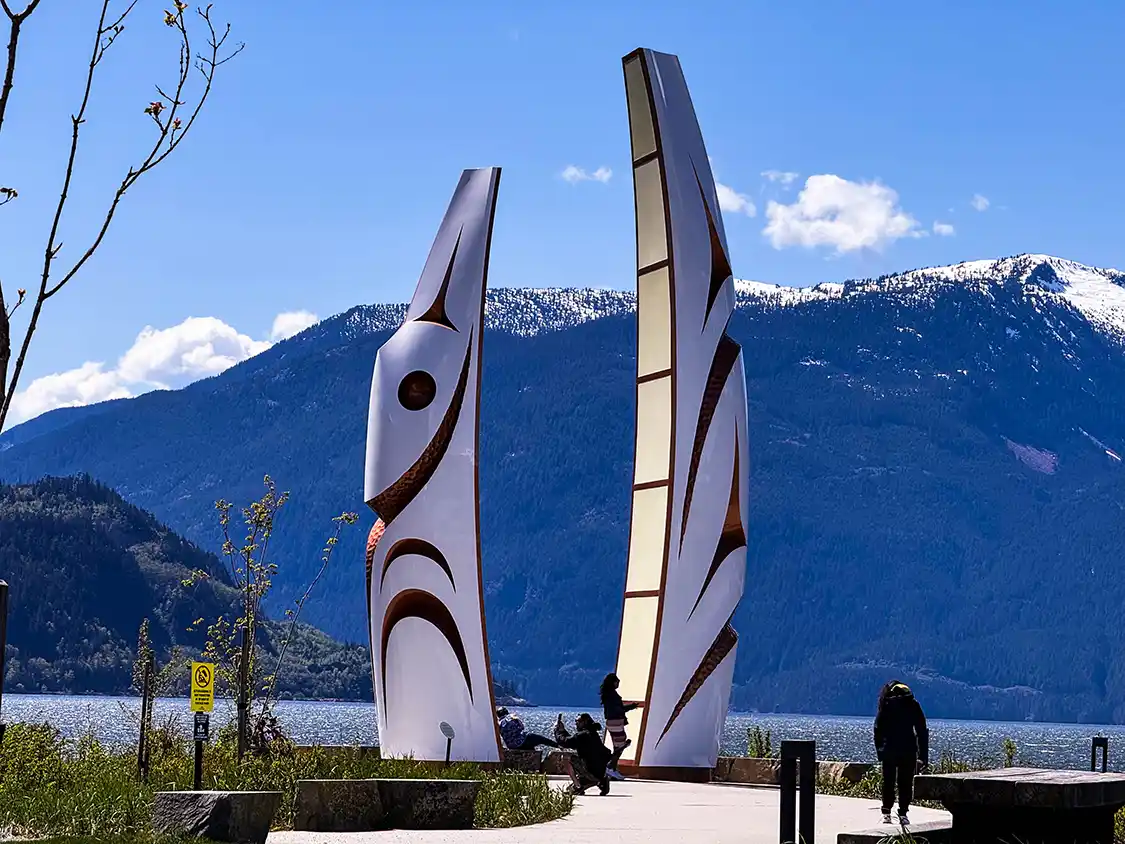
Walk to the oceanfront on the south side of downtown, and you’re standing on what used to be a chemical plant. The Nexen site contaminated the soil badly enough for it to need a major remediation effort, and the beach was known locally as Nexen Beach for years. That land is now Sp’akw’us Feather Park, an eleven-acre oceanfront park with a public beach, a boardwalk, intertidal habitat restoration, cultural gardens, and public art. The name mixes English and Sḵwx̱wú7mesh and was chosen by the developer in collaboration with members of the Squamish Nation to signify unity between Indigenous and non-Indigenous cultures.
It wasn’t done overnight. Roughly twenty years of planning went into that park. But good things take time, and a town that rebuilt itself from the mill up already knew that.
Whose land this is
Squamish sits on the unceded, traditional, and ancestral territory of the Sḵwx̱wú7mesh (Squamish) Nation, who have lived in this region for more than 10,000 years. The traditional name for the downtown site is Keh Kait. The Stawamus Chief, the granite wall everyone photographs, is Siy̓ám̓ Smánit, and Squamish tradition holds that it is a longhouse turned to stone by the Transformer Brothers.
Since 2021, the wider region has also carried a second designation. Átl’ḵa7tsem / Howe Sound was named a UNESCO Biosphere Region that year, the nineteenth in Canada and the third in British Columbia, recognizing both its ecological significance and its recovery from nearly a century of industrial damage. The watershed supports more than 5,000 known marine and terrestrial species, and around 50,000 people live along its shoreline.
The UNESCO designation is explicitly a recognition of rejuvenation, not of something untouched. Howe Sound was wrecked by the town’s industry and came back. Herring returned. Whales returned. The park on the old chemical site is that same story at a smaller scale. If there is a reason the slow version of Squamish feels meaningful rather than merely pleasant, it is that the landscape you are relaxing in is itself in recovery.
Two Day Squamish Itinerary: Living On The Slow Side
I traveled to Squamish from Vancouver on a Saturday in late April as part of a small group of friends. We were on the tail end of a travel writing conference and were being hosted by Tourism Squamish. Here’s what we got up to.
Day One
A Rainforest Where Every Breath Feels Fresh
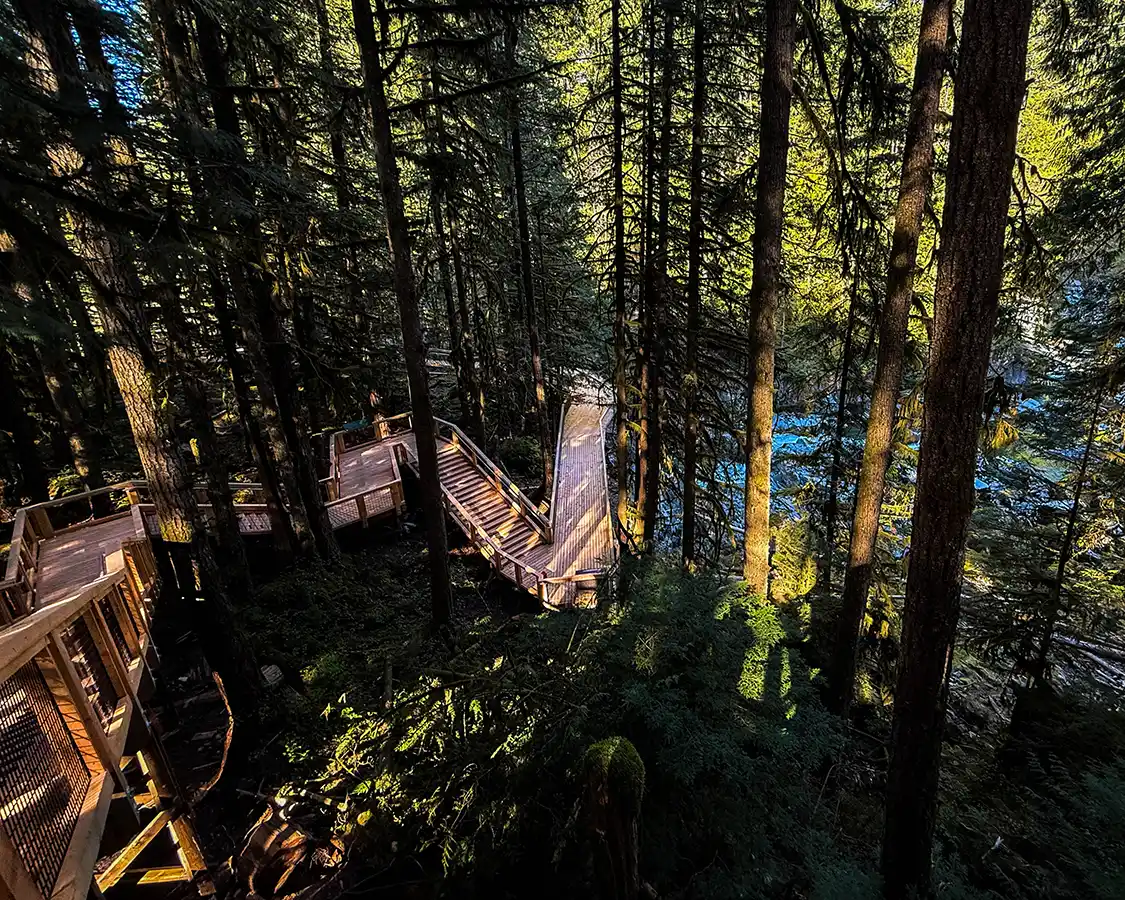
We drove from Vancouver up the scenic Sea-to-Sky and were at Squamish Canyon by early afternoon. The Mamquam River has been using glacier-fed meltwater to carve through mountain rock for thousands of years. On each side, walls rose up on both sides of me, and I was carried along the elevated walkways by a series of cantilevered platforms that hang over the Mamquam Falls with nothing but air beneath my feet.
The 1.5 kilometers of boardwalk thread through old-growth coastal rainforest before dropping into the canyon. These walkways have been built by the Squamish Canyon team deliberately, raised above the forest floor so the ground underneath remains undisturbed. Walking down through the trees toward the water, I found storytelling stations along the route that share information about the rainforest, the river, the wildlife, and the people whose history is tied to this land. It ends at the Forest Lounge, a covered space under the canopy with a cafe and one of the best nature-focused playgrounds I’ve ever seen, which gives kids a place to climb and let loose while the adults sit down for a fresh brew.
One of the great things about Squamish Canyon is that it offers access to this lush and mysterious B.C. rainforest without a trailhead, a map, or a need to get muddy. It’s accessible in a way that much of Canada’s wild western landscapes are not. That being said, it’s not completely accessible; there are a lot of stairs, and neither the boardwalk nor the waterfall viewing platform is wheelchair-friendly.
As I mentioned earlier, it’s the smell of Squamish Canyon that hit me the hardest. Tall trees draped in moss, lichen over everything, water dripping constantly. It was fresh and clean in a way that you just can’t find anywhere near my home in Ontario’s Greater Toronto Area.
Learning to Breathe, and Not Liking It
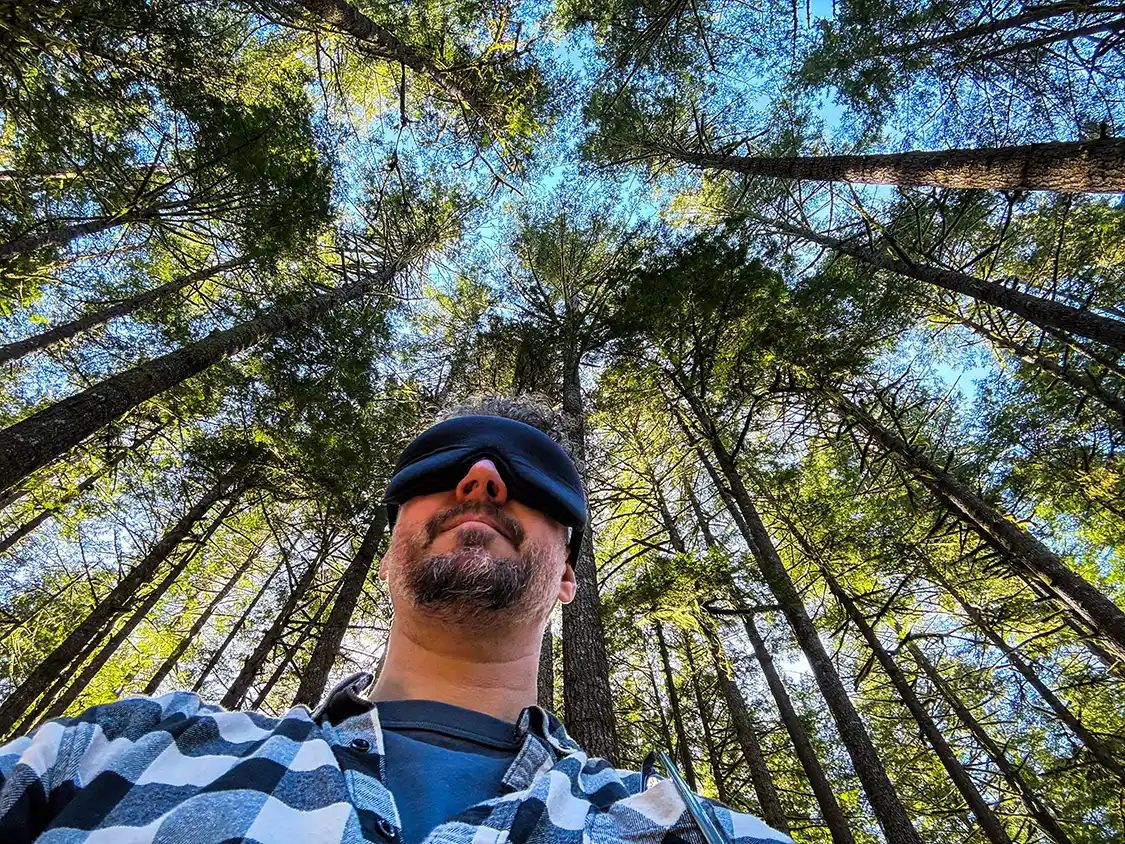
Partway along the boardwalk, our group was led through a series of forest bathing exercises by Loretta Cella, who founded BreathWorks Studio in Squamish and has spent more than twenty years working in meditation, breathwork, and nervous system regulation.
I’ll be honest with you, this kind of thing is not really my jam. Anybody who has followed me on Instagram or YouTube will know that my version of relaxing is a cold beer by a fire pit. As soon as somebody tells me to focus on my breathing, I end up stressing about whether my breathing feels calm enough, which, according to Loretta, kind of defeats the purpose of the whole exercise.
But as I stood there, braced against the handrail of the boardwalk, my eyes closed amid the realization that I didn’t seem to be able to breathe as deeply as I wanted to, one part landed. Closing my eyes long enough to actually listen helped me attune to some of the things about Squamish Canyon that I might never have noticed before. Water dripping from the trees, small animals skittering among the fallen branches on the forest floor, and underneath all of it, the soft, constant rumble of Mamquam Falls. The honest truth about forest bathing is that I wouldn’t have heard any of that while walking around with my eyes open.
Lunch at the Forest Lounge
Lunch was at the Forest Lounge, the Canyon’s own eatery, which sits under the tree canopy overlooking the Little Cedars Playground. Think of the menu here as elevated picnic food paired with a full bar, and a deck in the trees. The food was great. The atmosphere was splendid.
Hotel With A View
Then we checked in to Executive Suites Hotel and Resort up in Garibaldi Highlands. The views from this hotel are ridiculous. Better than that, there are hiking trails leading directly off the back patio, so you can walk straight out into the mountains and be back in front of a propane fireplace with a cold beer inside an hour. That combination, at the time, I thought was rare. But then I realized that I was in Squamish and practically every building had a view that would take my breath away.
Dinner at The Broken Seal
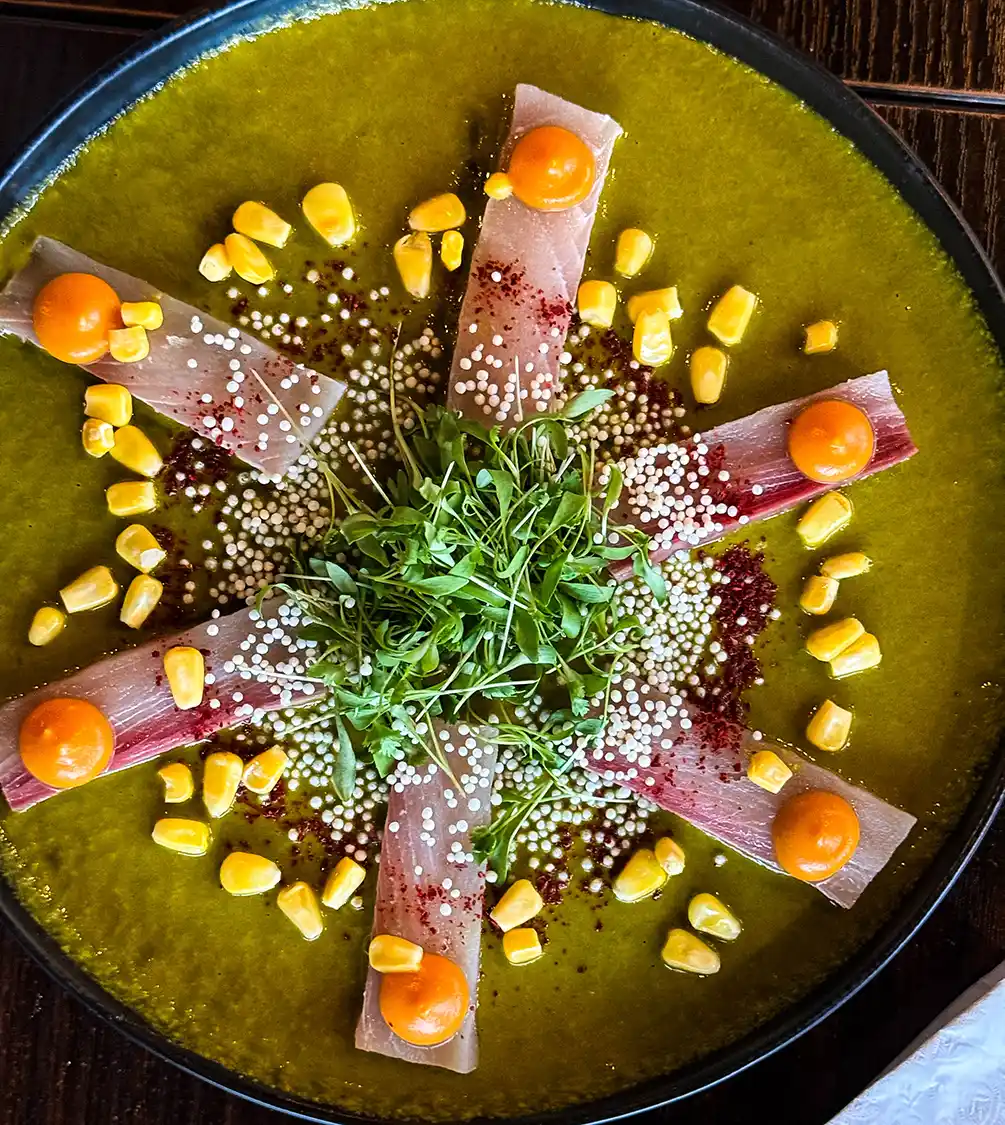
Dinner was at The Broken Seal on Loggers Lane, tucked in on the riverside of the street. As I strolled up to the building, it looked, at first glance, like a place actively trying not to be noticed. Then, as I was about to open the patio door, I turned around.
Broken Seal looks straight out at the Chief. When I squinted, I could pick out the portaledges of climbers camped halfway up a sheer granite face while I was standing in a parking lot thinking about appetizers. I can’t think of a view that sums up the adventure-side of Squamish any better.
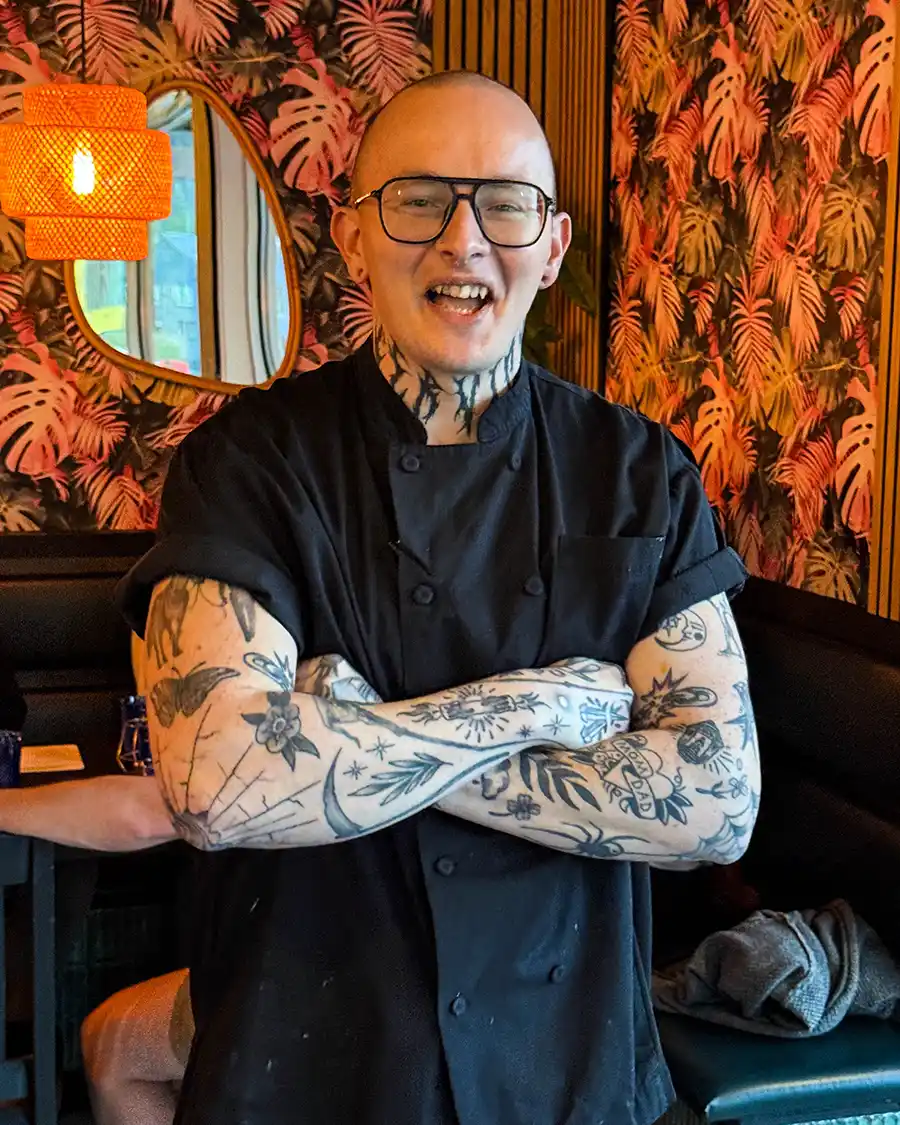
The restaurant is owned and run by chefs Matthew Upton and Jérémy Beaulieu, who goes by Jay. Jay, who was working that night and kindly came out to greet us, was an ambitiously tattooed gent who clearly loves what he gets to create every single day. The menu is seasonal, local, broadly Asian-inspired and then twisted somewhere else, and it is plated beautifully for what is fundamentally elevated casual fare. The cocktails are excellent.
After chatting with people around town, Broken Seal is the place that everyone blurts out, “I love that place,” whenever you mention it. Order the bao buns. I am considering driving my kids across the country for those alone.
Day Two
Broken By Pilates
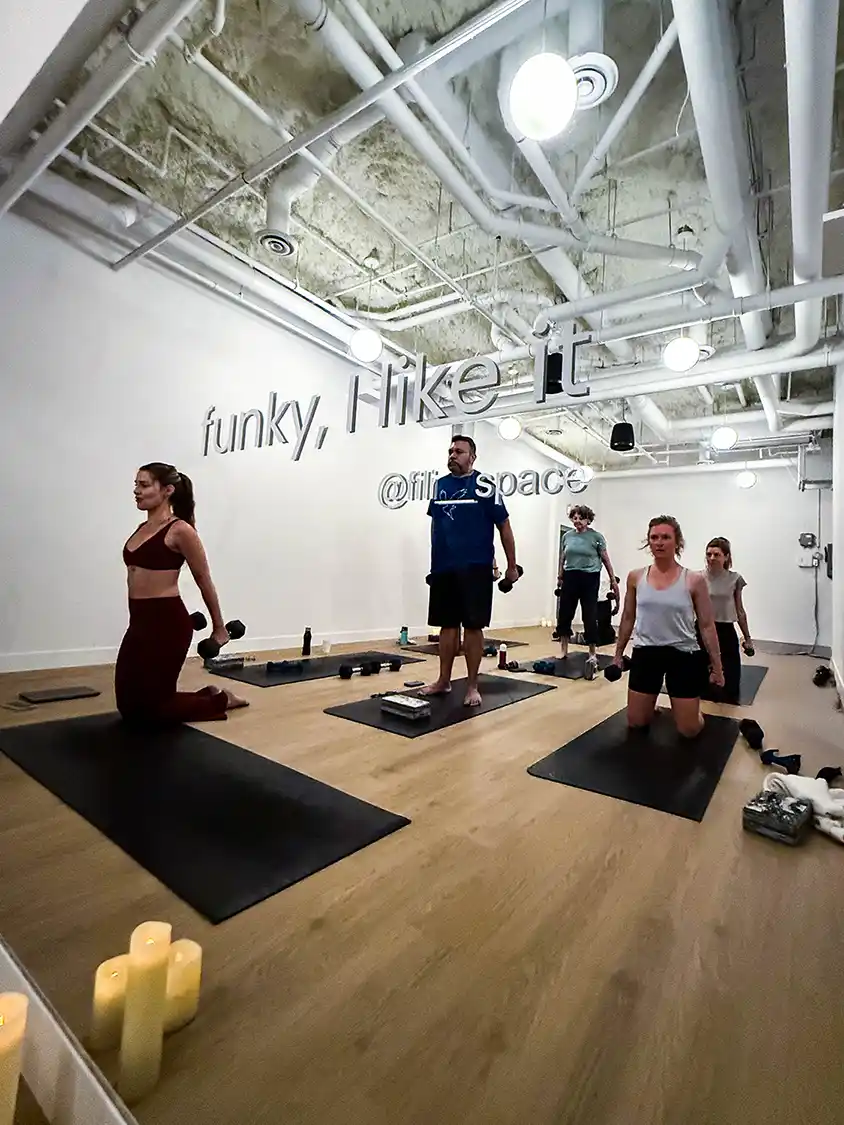
Our hosts had a surprise for the morning, and the surprise was a workout. It started innocuously enough with breakfast smoothies at Fili Space, the town’s newest coffee shop and smoothie bar, followed immediately by an hour of yoga and Pilates in the cafe’s back-door studio. My hat is off to the owners for the innovation here. The space, pronounced “philly”, is a proper three-in-one morning hit: coffee, smoothies, and a fitness studio, all within a strong breath of each other.
The smoothies were fantastic, healthy, and filling without lacking any flavor. I felt it was fitting to have “The Chief,” which combined protein powder, banana, dates, cocoa powder, peanut butter, and almond milk. The coffee was strong enough to get the morning off right. The Pilates, however, nearly broke me.
Pushing 50, seven thirty in the morning is an aggressive time to learn which of your muscles have been dormant since your early thirties. I went in expecting a gentle stretch and came out walking like a man who had just gone through
Repaired By A Floating Sauna
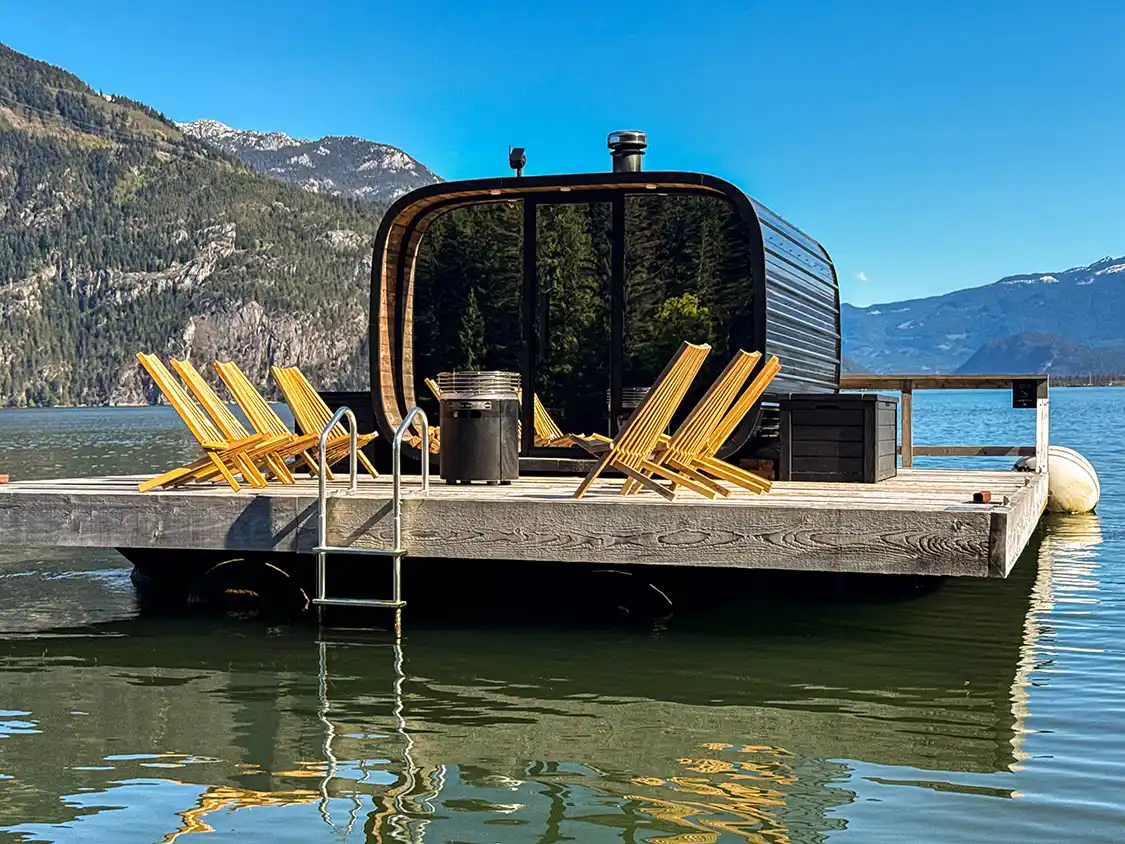
Then we got in a boat, and everything changed.
Inflow Adventures runs a floating sauna in Howe Sound. We took a 20-minute boat ride out into the fjord from Squamish Marina, and arrived at a remote, quiet bay where a wood-fired sauna sits on a dock in the middle of the water. Mountains on every side. It sounds almost too simple to be worth describing. A sauna, on a dock, away from the marina traffic and the jet skis. And it works completely. And
I was sore and stiff from the morning class, and that disappeared within about fifteen minutes. What replaced it was the most casually relaxing two hours I have had all year. There was no program. Nobody was guiding me through anything. I sat in the heat, got out, took deep breaths with views of mountains coming straight out of the ocean, and got back in. The cold water is right there too. I dipped in, swam around for a bit, and treated it like a Nordic Spa.
If you want to spend time simply being, with no agenda attached, I can’t think of a better place in British Columbia to do just that. It’s a perfect escape for friends, a couple, or even a family like mine with a hectic schedule who just needs to stop for a little while.
Lunch at House of Lager
After drying off from our last swim, we headed back to shore to the House of Lager on the Squamish waterfront. They don’t mess around with their name. This is a brewery dedicated to lagers, which in a province drowning in hazy IPAs is close to an act of rebellion.
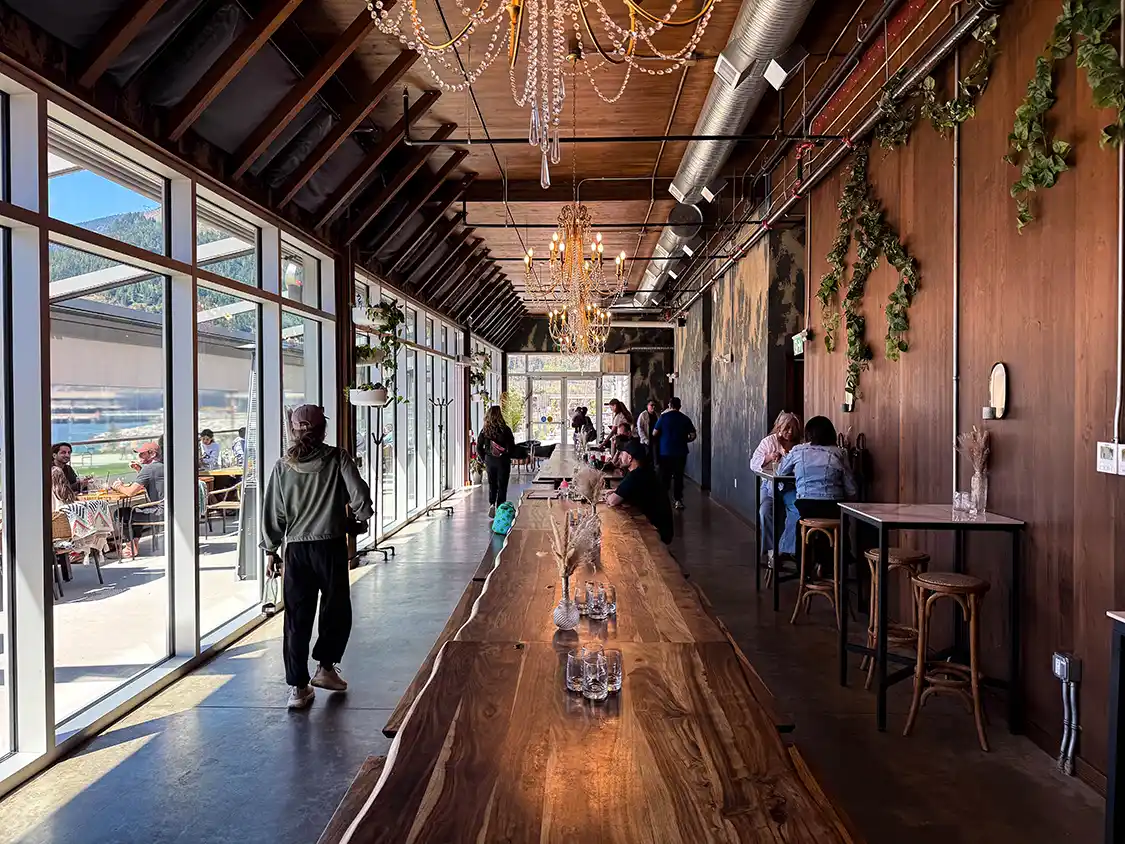
I loved the interior. All wood and rustic timber with massive chandeliers hanging over the hall-style space, landing somewhere between mountain cottage and beer hall. Big windows looking out onto Howe Sound, with Shannon Falls visible in the distance. The food was great and seasonal. It’s already changed since I visited and had the kimchi porchetta.
Sp’akw’us Feather Park
But the best part is what lies just out the back door. House of Lager backs directly onto Sp’akw’us Feather Park, the eleven-acre oceanfront park situated on the old Nexen site. Walk out of lunch, and you are on a public beach at the tip of a peninsula, with a boardwalk, a Land’s End monument, slackline posts, cultural gardens, and public art by James Harry and Maskull Lassere. The playground was designed in collaboration with Indigenous youth and retells Sḵwx̱wú7mesh Úxwumixw stories of the land.
Beer, ocean, mountains, and a park built on remediated industrial ground. If you only have time to stand in one place in Squamish, stand there.
That was my visit to Squamish. A car came to take us north to Whistler, which is a story I’ll share later.
Wellness In Squamish: Here’s Where To Relax, Repair, and Rejuvenate
Everything above is what I actually did during my two days in Squamish. But if you want to dive deeper into the town’s wellness scene, here are the many things I had to walk past, because a sauna on a boat is not the only way to do this town slowly.
One honest piece of framing before the list. Squamish has no day spa and no hotel spa. If you are picturing robes, a relaxation lounge, and a treatment menu on heavy card stock, that is Whistler, 45 minutes north. What Squamish has instead is better suited to the atmosphere of the place: wood-fired saunas in the forest, cold water you get into on purpose, drop-in studios full of locals, and a surprising density of hands-on clinics. It is wellness with the resort sanded off.
Sauna And Cold Plunge
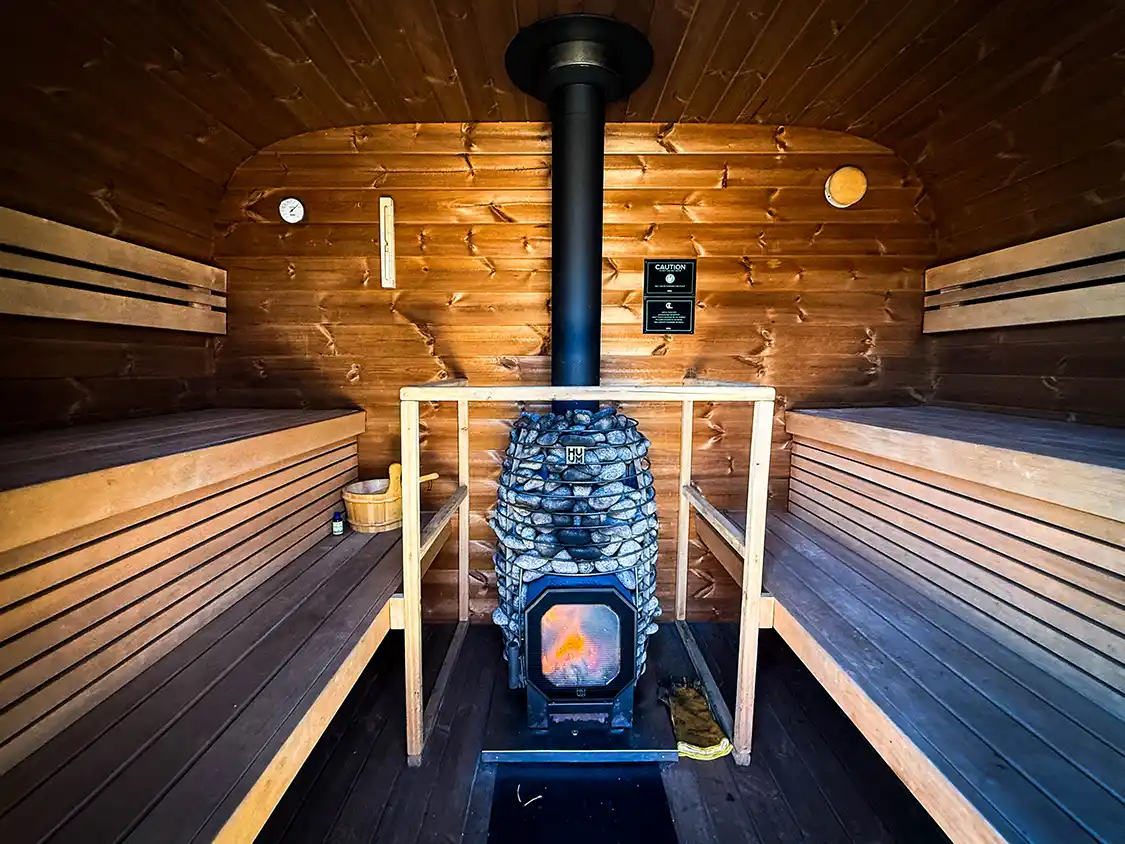
This is where Squamish truly shines, and there are four very different experiences within 20 minutes of downtown.
InFlow Floating Sauna
A wood-fired cedar sauna on a floating dock in a quiet bay of Howe Sound, reached by a 20-minute boat ride from Squamish Marina. Private sessions take up to eight people; a crew member stays on site, and the cold water is right there whenever you want it. Nothing at all is required of you once you arrive.
- Book ahead: Yes, and early. Departures are limited, and the boat is small.
- Session length: Three hours in September and October, two and a half hours from November through February, running Wednesday through Sunday with morning and afternoon departures.
- Bring: Swimwear, a towel, water, warm layers, and footwear that works on a dock and a boat. The sound runs colder than the town.
- Weather: A sauna in the rain is arguably better than a sauna in the sun, which makes this the strongest wet-weather booking in Squamish.
Cheekye Sauna, by The Finnish Sauna
Out at Cheekye Ranch in Brackendale, on the bank of the Cheakamus River: an off-grid wood-fired sauna with outdoor walkways, rest areas with open fires under a canopy, and a cold plunge that is simply the river. Sessions run two hours.
This is the only sauna in Squamish I could confirm offers social drop-in sessions as well as private bookings, so you don’t need a group of eight and a plan made three weeks ago. If you are traveling solo or as a couple and want this experience without chartering the whole thing, this is your option.
AIKA Spa
Twenty minutes up the Squamish Valley Road, deep in the forest: hand-built wood-fired saunas, cold plunges, and an outdoor relaxation area, bookable privately seven days a week for up to ten people. Two formats: a three-hour experience or a six-hour private day retreat. They also run community sessions they call Self-Care Socials and Wellness Wednesdays.
This is the one to book if you are traveling as a group and want the place to yourselves, or if six hours in a forest with no agenda sounds like the correct use of a day. It is also the most remote of the four, so build in the drive.
Plunge Wellness Studio
The indoor, downtown, year-round Squamish sauna, and the first of its kind in town. An eight-person sauna running in the high eighties to low nineties Celsius, four cold tubs sitting around six to eight degrees, and a rest area they call the Plunge Lounge. The suggested protocol is ten to fifteen minutes of heat, then the plunge, then ten to fifteen minutes in the lounge, repeated. There is a small retail shop at the front.
This place is appointment only, booked at least twelve hours ahead, with intro passes available. Choose this one when the weather has killed your boat plans, when you want contrast therapy done properly rather than casually, or when you only have an hour between other things. It is on Pioneer Way downtown, so you can walk to it. The last I heard, Plunge was for sale, but was still operating. I’d recommend calling ahead to ensure that they’re open when you’re in town.
Yoga And Pilates
Squamish is a town where ridiculously fit and attractive people seem to outnumber people like me. Perhaps that’s because this town has more studios than a town of 24,000 has any business supporting.
Vitality Lab
The best drop-in option in town, and the one that is strangely absent from the tourism listings. Yoga, fmat pilates, and strength work, all fifty-minute classes, all levels, on Pioneer Way downtown. Drop-in is openly priced at twenty-five dollars, with a ten-dollar rate for your first class, which is the lowest barrier in town for a visitor who wants one session and no commitment. Woman-owned, and the only studio in Squamish I found offering supervised childcare on site, which matters if you are traveling with kids. They also run a crystal bowl sound bath class.
Shala Yoga
Offering the broadest yoga timetable in town, on Tantalus Road, running from early morning to late evening on weekdays. Styles range across hatha, vinyasa, power, yin, prenatal, bhakti, kirtan, shamanic, and a combined yin and sound class. Single classes are bookable online, though they publish an intro package rather than a posted drop-in rate, so call ahead if you want one session.
Fili Space
Coffee shop, smoothie bar, and fitness studio in one room. Foundational form and core work alongside dynamic reformer classes, small groups, and programming aimed squarely at hikers, climbers, cyclists, and runners, which is a sensible thing for a Squamish studio to specialize in. Eat breakfast in the same room afterward without changing out of your gear.
As a traveler, this format solves a real problem: wanting a workout in an unfamiliar town without committing to a gym day pass and a separate breakfast hunt. The smoothies are the standout. The seven thirty class is not for the uncommitted.
Yoga on the mountain
Through the summer, the Sea to Sky Gondola runs yoga and Pilates classes at the summit, which is the only item on this list that combines the slow side of Squamish with the famous one. All levels. Bring a mat, water, and a layer, because the breeze at 885 meters is not the breeze in the parking lot.
Breathwork, Sound, And Nature Immersion
BreathWorks Studio
Loretta Cella founded what she describes as the first boutique nature-infused wellness studio in Squamish. She is a senior Professional Certified Coach and a meditation and yin yoga teacher with more than twenty years behind her, running breathwork, yin, meditation, and sound healing sessions most days of the week, plus private sessions, outdoor guided experiences, and seasonal retreats.
My honest take is that I’m a tough customer for this and still got something real out of it. If you are more open to it than I am, you will get considerably more. If you are exactly as skeptical as I am, go anyway and treat the listening as the point.
Sound baths
Not a standing daily offering in Squamish, but findable if you time it. Vitality Lab runs a crystal bowl sound bath as part of its regular schedule, Shala folds sound into its yin classes, and BreathWorks includes sound healing in its rotation. Visiting organizers also book one-off sessions into local studios, so check what is on the week you arrive rather than assuming.
Massage And Spas
For all of its wellness, Squamish doesn’t seem to be a big destination for day spas. What the town has instead is an unusually dense cluster of registered massage therapists and multidisciplinary clinics, built for a population that spends its weekends climbing up and down cliffs. For a visitor with a sore back after the Chief, that is arguably more useful than a spa menu.
Cedar Rock Wellness on Dowad Drive is the easiest entry point: a single clinic combining physiotherapy, massage therapy, chiropractic, acupuncture, kinesiology, personal training, and nutrition, with vinyasa and kids’ yoga classes alongside, open from seven in the morning to eight at night on weekdays and welcoming walk-ins. Beyond that, LivWell Integrated Health, Shift Wellness, and Peak Integrated Health are all central, and all take appointments, and there are a dozen more independent RMTs in a town this size.
Rainforest, Shoreline, And One Field Of Horses
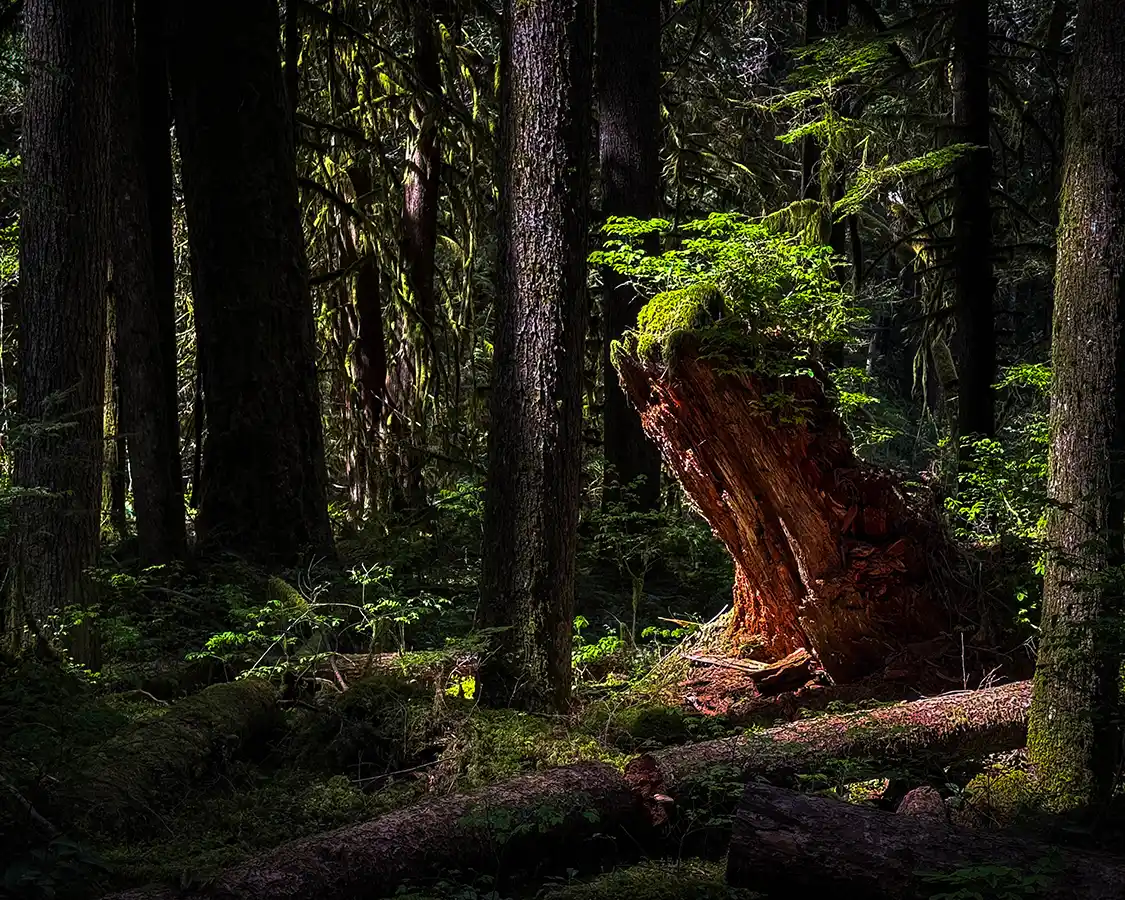
Squamish Canyon
A purpose-built rainforest and canyon attraction about 20 minutes from downtown Squamish, and the place I’d send any first-time visitor to before anything else. An elevated walkway runs 1.5 kilometers through old-growth coastal rainforest and into the Mamquam Canyon, with cantilevered platforms out over the falls and the river, interpretive stations on the ecology and the human history of the valley, a covered cafe called the Forest Lounge, and a nature-built playground. Seasonal events run through the year, and leashed dogs are welcome during posted Doggie Happy Days hours.
Accessibility, honestly: the route has a lot of stairs, and the boardwalk and waterfall viewing platform are not wheelchair accessible. Certified service and guide dogs are welcome. If anyone in your group has mobility needs, contact them ahead and they will talk through what is possible. Accessible parking sits near the washrooms.
- Book ahead: Encouraged, and they discount tickets booked by the night before. Tickets are non-refundable, though they will move your date by email.
- Time needed: Allow two hours with lunch, more if you take a guided experience.
- Parking: Free on-site but limited. Bike parking available, no EV charging yet, and oversized vehicles should email for directions.
Sp’akw’us Feather Park
Eleven acres on the oceanfront peninsula, on the remediated site of the former Nexen chemical plant. A public beach for water sports, a recreation beach, meadow and dune grass, crushed rock and paved pathways, a boardwalk, a Land’s End monument, shoreline planting and intertidal habitat, slackline posts, a lawn built to host a sound stage, and cultural gardens with space for outdoor classes.
The public art includes work by James Harry and Maskull Lassere, and the playground was designed in collaboration with Indigenous youth to retell Sḵwx̱wú7mesh Úxwumixw stories of the land. It is free, it is central, and it is the single best short walk in Squamish. Be aware that it is exposed and the wind here is serious, which is precisely why the kiteboarders love this stretch of shoreline.
Cheekye Ranch
Sixty-plus acres of coastal forest on the Cheakamus River in Brackendale, and the home of Second Chance Cheekye Ranch, a registered charity that rescues, rehabilitates, and re-homes horses, many of them pulled from slaughter pipelines. Visitors can tour the property to meet the horses and farm animals, and there are riverside yurts, a cabin, and campsites if you want to stay. It is also where the Cheekye Sauna sits.
Two things to know. Guests need to be guided through the working areas because the animals roam freely, and this is a functioning rescue rather than a petting zoo. And there is no lifeguard, so the river is at your own risk.
As a slow morning, it is hard to beat: an hour with rescued horses and then two hours in a sauna on the riverbank, forty minutes from a granite wall people fly across the world to climb.
The Famous Side: Squamish’s Big-Ticket Adventure
I didn’t get up to much adventure on this trip to Squamish, but a guide to Squamish that ignores them wouldn’t be much good to most people who visit the town. Knowing what’s here will help you decide how much to spend. I will definitely be back to experience the wild side of it.
The Stawamus Chief
The granite wall that defines the skyline, and the reason a lot of people come. Siy̓ám̓ Smánit in Sḵwx̱wú7mesh, and in Squamish tradition, a longhouse turned to stone by the Transformer Brothers.
It rises 702 meters above Howe Sound and is one of the largest granite monoliths in the world. There are three summits: First Peak at 610 meters, Second at 655, and Third at 702, with Third being the quietest and most remote. Stawamus Chief Provincial Park was established in 1997 and covers more than five square kilometers, including the neighboring dome Slhanay and a walk-in campground.
The hike to First and Second Peak runs roughly 6 to 7 kilometers round trip with 600 to 700 meters of gain, and it involves stairs, ladders, and chains rather than a gentle grade. Budget four to five hours, start early because the parking lot fills, and leave the dog at home. Check current trail and day-use pass requirements with BC Parks before you go, because the access rules here have changed more than once. If you are weighing whether your crew is ready for it, I have gone through what makes a hike work for families in my guide to the best hiking destinations for families.
For climbers, the Chief holds traditional, sport, aid, and bouldering routes. The Grand Wall was first climbed in 1961 by Ed Cooper and Jim Baldwin. Sonnie Trotter’s Cobra Crack, established in 2006 and graded 5.14b, was considered the hardest traditional route in North America and possibly anywhere at the time.
Sea to Sky Gondola
The headline attraction for anyone who wants the view without the 700-meter climb. The gondola lifts you to a summit lodge at 885 meters, where there is a suspension bridge, viewing platforms, and a network of walking trails of varying difficulty, including Panorama Trail and the harder Al’s Habrich Ridge.
You can also hike up the Sea to Summit Trail, around 6.5 kilometers and four to five hours, and ride down. In winter, the summit runs snowshoeing and tubing. Book online, and check the last upload time before you plan a sunset.
Shannon Falls
At 335 meters, the third-tallest waterfall in British Columbia, and about as easy as a waterfall of that size ever gets: a roughly one-kilometer round trip from the parking lot on a maintained path, with picnic tables and washrooms. It is immediately off Highway 99 just south of town.
The catch is the parking lot, which fills by early afternoon in summer. Go first thing or go late.
Smoke Bluffs Park
The climbing area right in town, and the best place in Squamish to try rock climbing for the first time. Short approaches, a large concentration of beginner-friendly routes, and guiding companies in town who will take you up on a half-day basis. The Smoke Bluffs Loop Trail is about 2.7 kilometers and climbs a couple of hundred meters above town, which makes it a decent walk even if you never touch the rock.
Alice Lake and Brohm Lake
The two swimming lakes. Alice Lake Provincial Park is about 15 minutes from town and has four lakes, a 6-kilometer Four Lakes Trail, a campground, and beaches that get genuinely busy on summer weekends. Brohm Lake is smaller, quieter, has a loop trail of roughly 3.5 kilometers, and has a much smaller parking lot that fills accordingly.
Mountain biking
More than 200 kilometers of singletrack across several zones, from Diamond Head and Garibaldi Highlands to Valleycliffe and Brackendale. Wonderland is the usual recommendation for beginners. Rentals and trail advice are easy to come by in town, and Trailforks is the tool locals actually use.
Kiteboarding and windsurfing at the Spit
Squamish is one of the best wind sport destinations in North America, and the Squamish Spit is where it happens. The wind builds through the late morning and holds until evening through the summer. First-timers should take a lesson rather than improvising, and the local wind sports society manages access.
Brackendale and the eagles
Through the winter, bald eagles gather along the Squamish River at Brackendale in significant numbers, feeding on spawned-out salmon. Viewing is done from the Eagle Run shelter on the dyke rather than from inside the protected park area, and the season runs roughly November through February, with mornings being the best time. It is one of the more remarkable wildlife gatherings in the country, and if that is your thing, I have written more about wildlife across Canada.
Garibaldi Provincial Park
The big one, and the reason serious hikers come. Garibaldi Lake, Panorama Ridge, Black Tusk, and Elfin Lakes are all long days or overnights rather than casual outings, with Garibaldi Lake around 18 kilometers round trip and Elfin Lakes around 22. Day-use passes and backcountry reservations apply in season, and the system changes, so check BC Parks directly rather than trusting any article, including this one.
Where To Eat And Drink In Squamish
The Broken Seal
38038 Loggers Lane.
My pick of the trip. Casual, seasonal, local, loosely Asian-inspired and then taken somewhere of its own, beautifully plated, with very good cocktails. Owners Matthew Upton and Jérémy Beaulieu are usually around. Get the bao buns and the Ahi tuna, and turn around in the parking lot to look at the Chief before you go in.
House of Lager
37020 Village Crescent.
A waterfront brewery built specifically for lagering, which in a province drowning in hazy IPAs counts as a position. Darren Hollett and Stuart Ballard started it in 2020 as a side project of House of Funk Brewing, and it has since gone standalone. The ground floor is a brew hall and taproom open seven days with outdoor patios, two upper floors handle private events, and the timber interior with its oversized chandeliers lands somewhere between mountain cottage and beer hall. Big windows onto Howe Sound with Shannon Falls in the distance. Look for Tracks from Helles, brewed with Squamish Bikes, which sends a dollar from every stein and six-pack to the local trail society. Best feature: it opens straight onto Sp’akw’us Feather Park.
Fili Space
1870 Dowad Drive, Unit 105.
Coffee, smoothies, and a fitness studio in one space. The smoothies are the reason to go even if you skip the class.
Forest Lounge at Squamish Canyon
Elevated comfort food under the forest canopy, with a full bar and good non-alcoholic options. Worth building into a Canyon visit rather than treating as a separate trip.
More Places To Eat in Squamish
Squamish has a brewery scene well out of proportion to its size, and I only scratched it.
Backcountry Brewing, Howe Sound Brewing, and A-Frame Brewing all come up repeatedly from locals and from every other guide to this town. Fergie’s Cafe, out toward Brackendale on the river, is the most consistently recommended breakfast in the area and takes no reservations. The Watershed Grill, The Salted Vine, and Free Bird Table and Oyster Bar round out the list I am carrying into my next visit.
Where To Stay In Squamish
Executive Suites Hotel and Resort
Where I stayed, up in Garibaldi Highlands at 40900 Tantalus Road. All-suite, all-season, with mountain views that justify the drive up from downtown and hiking trails running directly off the back patio. Propane fireplaces, full kitchens in the suites, and the sort of place that works equally for a couple and a family. The trade-off is that you are a short drive from downtown rather than walking distance. Check their rates and availability here.
Sandman Hotel and Suites Squamish
The reliable mid-range option, with an indoor pool and waterslide that makes it an easy choice with kids. Central, straightforward, well located for getting on the highway. Check their rates and availability here.
Squamish Adventure Inn
The budget pick, and genuinely well regarded. A hostel-style property with private rooms as well as dorms, popular with climbers and bikers, and the cheapest way to put yourself in Squamish for a few nights. Check their rates and availability here.
Camping
Alice Lake Provincial Park and the Stawamus Chief walk-in campground are the two obvious choices, and both book out well ahead through the provincial reservation system in summer. Klahanie, Paradise Valley, and Mamquam River are the other established options in the valley. Reserve early or do not count on anything being available if you roll into town last minute.
What To Do In Squamish When It Rains
With over 2,200 millimeters of rain a year, this makes it one of the wettest inhabited places in Canada, and yet nearly every guide to Squamish writes as though the sun is a given. Here is what the weather and the experiences in Squamish actually mean.
- The floating sauna. Rain on the water while you are sitting in a wood-fired sauna is an upgrade, not a compromise.
- Squamish Canyon. It is a rainforest. It is supposed to be wet; the boardwalk embraces it, and the Forest Lounge is covered.
- A class at Fili Space, followed by sitting in the same room with a smoothie.
- The breweries. Squamish has an unreasonable number for a town of 24,000, and a wet afternoon is the correct time to work through them.
- The Britannia Mine Museum, 15 minutes south at Britannia Beach, is entirely indoors and better than it sounds.
- The Railway Museum of BC, though check hours, which are limited outside summer.
What not to do in heavy rain: the Chief, which turns its granite slabs into a genuine hazard, and anything in the alpine, where rain down here is often snow up there well into June.
Frequently Asked Questions About Travel in Squamish
Roughly 45 to 60 minutes by car on Highway 99, the Sea to Sky Highway. You will see 40 minutes quoted in tourism material, which assumes clear traffic and no stops. Build in extra time regardless, because the pullouts along that stretch are worth it.
About 45 minutes north on the same highway, which makes Squamish a practical base for a Whistler trip if resort-village prices are not for you.
Yes, more easily than most guides suggest. The Squamish Connector runs scheduled van service through the Sea to Sky corridor, YVR Skylynx runs airport coaches, and BC Transit covers the town. Downtown Squamish is walkable, and most of the slow-side activities in this guide are in or near it. You will want a car or a shuttle for Alice Lake, Garibaldi, and the Gondola.
Two nights is the realistic minimum to see the place rather than pass through it. Two nights give you one slow day and one active day. Add a third if you want to climb, ride seriously, or get into Garibaldi.
June through September for reliable weather and full access to hiking, biking, and paddling. May and October for lower prices and fewer people at the cost of wetter conditions. November through February for the eagles at Brackendale. April and early May are a weather gamble but very good value.
Different, not better. Whistler is a purpose-built resort with the dining, nightlife, and polish that come with it, and the prices to match. Squamish is a working town with better access to raw outdoors, far lower costs, and nothing like the same evening scene. Plenty of people stay in Squamish and drive up to Whistler for the day, which is the value play.
No, and this is the misconception the town’s reputation creates. The Sea to Sky Gondola, Squamish Canyon’s boardwalk, Shannon Falls, Sp’akw’us Feather Park, the floating sauna, and the entire brewery and restaurant scene require no particular fitness. The hard stuff is optional and conspicuous, so it dominates the coverage.
702 meters above Howe Sound at its highest of three summits. It is one of the largest granite monoliths in the world, though the commonly repeated claim that it is the second-largest anywhere does not stand up to scrutiny.
Very. Squamish Canyon has a nature-built playground and a cafe at the end of the walkway, though be warned it involves a lot of stairs and is not stroller or wheelchair friendly. Sp’akw’us Feather Park has a playground built around Sḵwx̱wú7mesh stories, Alice Lake is a proper swimming day, the Gondola handles all ages, and the Sandman’s waterslide solves one rainy evening. It is one of the stronger family destinations in BC, which I have written about more broadly in my roundup of amazing places in Canada.
Booking your accommodations during the high season is very important. In terms of activities and experiences, the floating sauna, without question, because departures are limited. Squamish Canyon in summer. Sea to Sky Gondola tickets online. A table at The Broken Seal. Campgrounds months out. Everything else can wait until you are there.
Is Squamish Worth Visiting?
Squamish is definitely worth visiting, and for a much bigger set of reasons than its reputation might have you believe.
Squamish has spent twenty years being described as the Outdoor Recreation Capital of Canada, which is good branding and has had the side effect of convincing a lot of non-adrenaline junkies that it is not a place for them. If you can’t lead a 5.11, if you have no interest in 700 meters of ladders and chains, if your relationship with a mountain bike ended in the nineties, most guides tell you to keep driving past Squamish to Whistler.
That would be a mistake. What I found after two days in Squamish was a town that is quietly excellent at the opposite of extremity. A sauna floating in a fjord. A rainforest you can walk through in street shoes. A brewery on a healed chemical site, opening onto a park named in a language that was spoken here for ten thousand years before the mill arrived and that outlasted it.
The adventure is there, and I fully intend to come back for it. But the thing worth knowing about Squamish right now is that you do not have to earn the view. British Columbia is full of places that make you work for the payoff. This one will let you sit down.
Disclosure: I visited Squamish as part of a hosted media trip organized by Tourism Squamish and Destination B.C. All opinions remain my own. This article also contains affiliate links: if you book accommodation through one of them, Wandering Wagars may earn a small commission at no extra cost to you.