
Ten countries. Thousands of kilometers of trail. Here are the best hiking destinations for families who want more than a leisurely stroll.
There are two kinds of family vacations. There’s the kind where everyone gets a wristband, stands in a line for forty-five minutes for three minutes of action, eats something deep-fried, and goes home sunburned. Fine. Nobody’s judging you. Those vacations have their place.
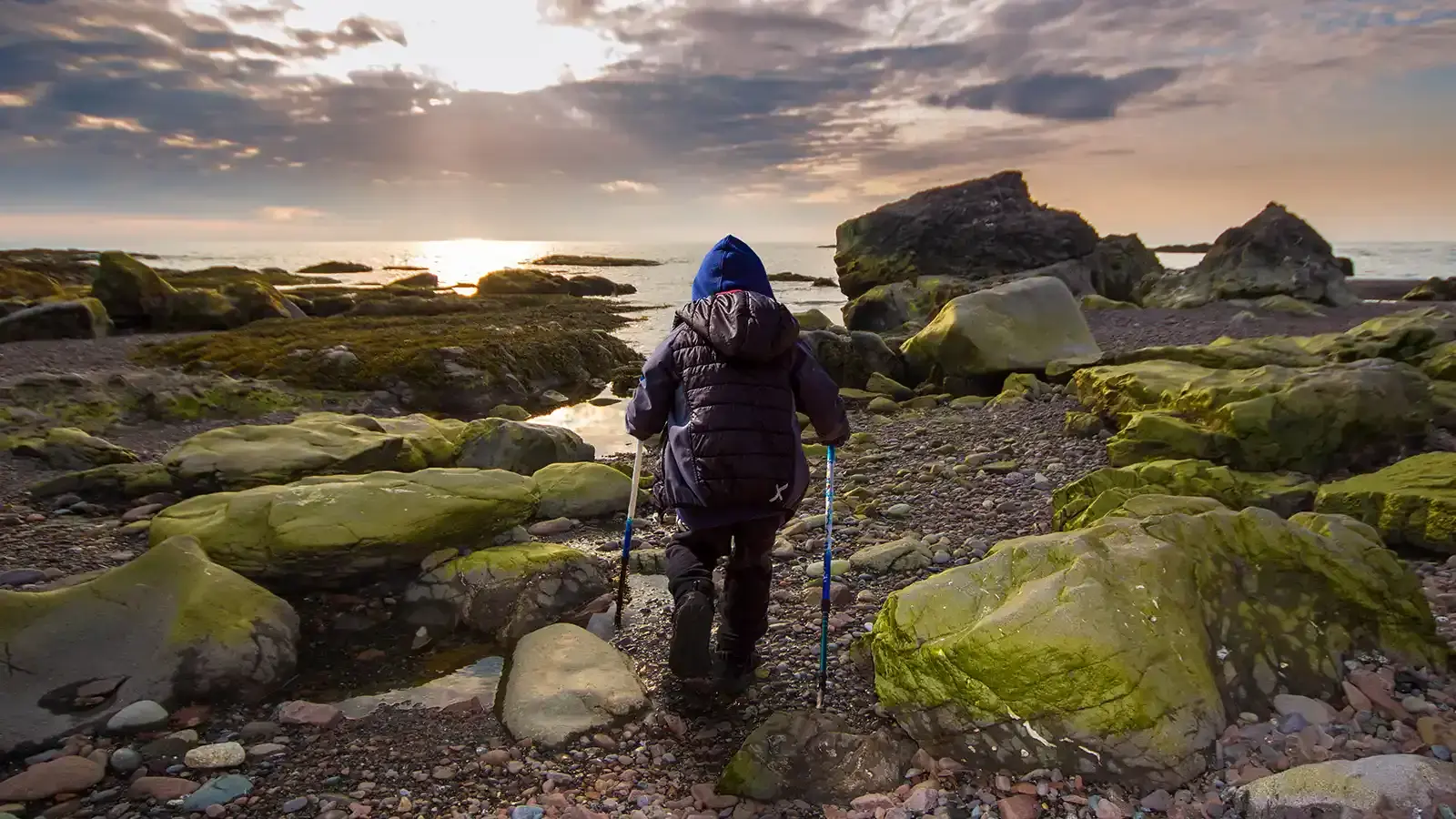
And then there’s the kind where you’re an hour into a hiking trail and your kid, who dramatically announced he was “too tired to walk” before you even left the parking lot, is now 100 feet ahead of you, scrambling up a boulder, trying to get a better view of the nearby mountains. Nobody told him to. Nobody bribed him. The mountain invited them in, and they took the offer.
That’s what hiking does to families. It strips away the noise, the screens, and the complaints, and somewhere between the trailhead and the viewpoint, something shifts. The conversations change on the trail. Children see the world differently. They surprise themselves, and they can surprise you.
My family has been chasing that feeling across more than 40 countries. Setting out on hiking trails ranging from easy coastal walks to epic mountain treks that tested every single one of us. Some days were genuinely hard. Some were transcendent. The best offer a little bit of both.
For families looking for the best hiking destinations to help create these memories, this list comes from experience. These are the countries that delivered hiking magic. Ten hiking destinations where the trails are worth your family’s time, the wear on your boots, and the inevitable argument about who gets to carry the snacks.
1. Iceland: Where Every Trail Feels Like Another Planet
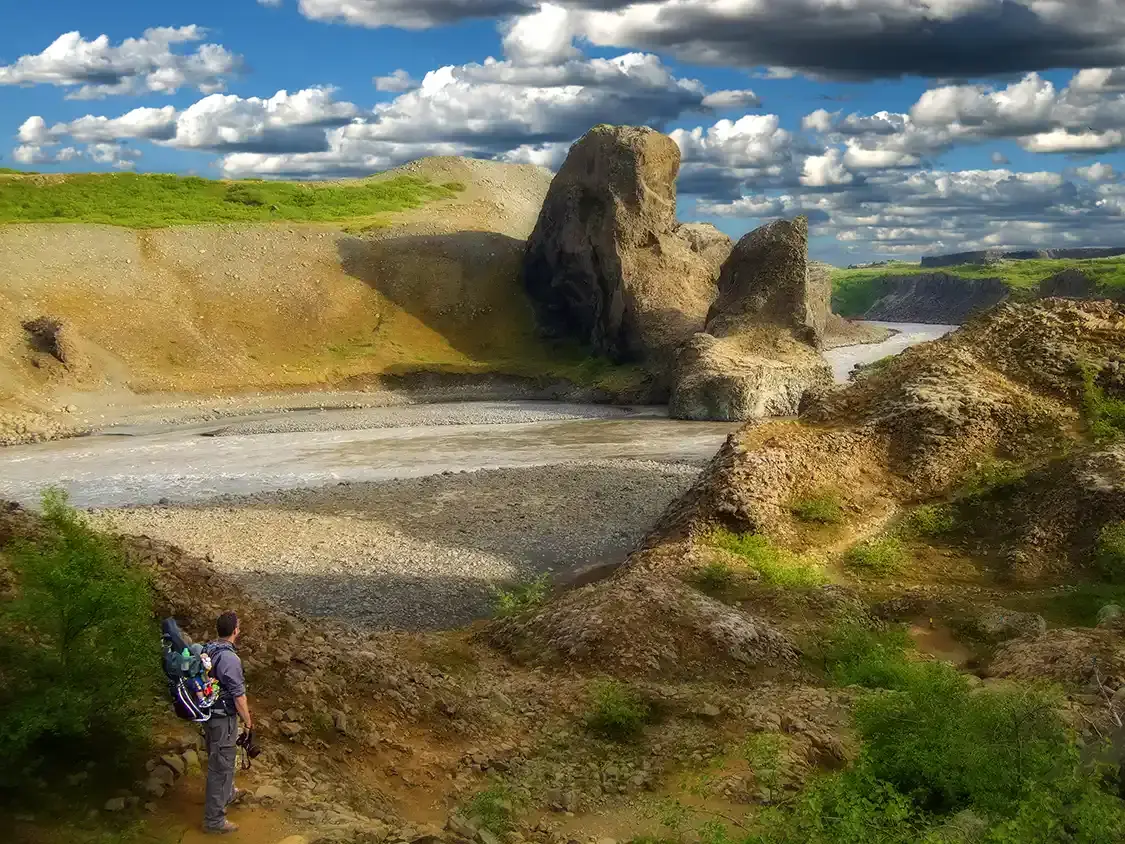
The quality of hiking in Iceland is almost unfair to the rest of the world. This is a small island that has somehow crammed in volcanoes, glaciers, geysers, black sand beaches, hot springs, and sea cliffs teeming with puffins. Walking almost anywhere in Iceland feels like exploring another world.
My family has hiked a good stretch of Iceland’s trails, from the coastal cliffs of the Snæfellsnes Peninsula to the otherworldly colored rhyolite hills of Landmannalaugar in the Highlands. The walk between Arnarstapi and Hellnar is one of the best family hikes on the island: just 2.5 km of coastal elegance along cliff tops threaded with basalt columns, sea grottoes, and Arctic terns who have absolutely no interest in sharing the path with you. It’s the kind of short hike that takes hours, simply because there are way too many things that catch your attention along the way
Þingvellir National Park is where the North American and Eurasian tectonic plates meet, which means you can literally walk between two continents as they tear apart from each other. Explain that to a ten-year-old and watch them try to do the mental math.
After a long day on the trail, the natural hot springs near Myvatn and Reykjavik are waiting. If that doesn’t motivate children to keep moving, nothing will.
Read my full guide to family-friendly hikes in Iceland here.
Iceland Hiking Tips
Difficulty Range: Easy to Difficult
Best For: Families who want dramatic, otherworldly landscapes with trails suitable for all ages.
Best time to visit: June through August for midnight sun hiking; September for the northern lights
Family hikes in Iceland to check out:
- Arnarstapi to Hellnar – Easy
- Þingvellir Rift Valley – Easy
- Landmannalaugar area trails – Moderate to Difficult
- Bird cliffs at Latrabjarg – Moderate
2. Peru: Mystical Mountains and the Magic of Machu Picchu
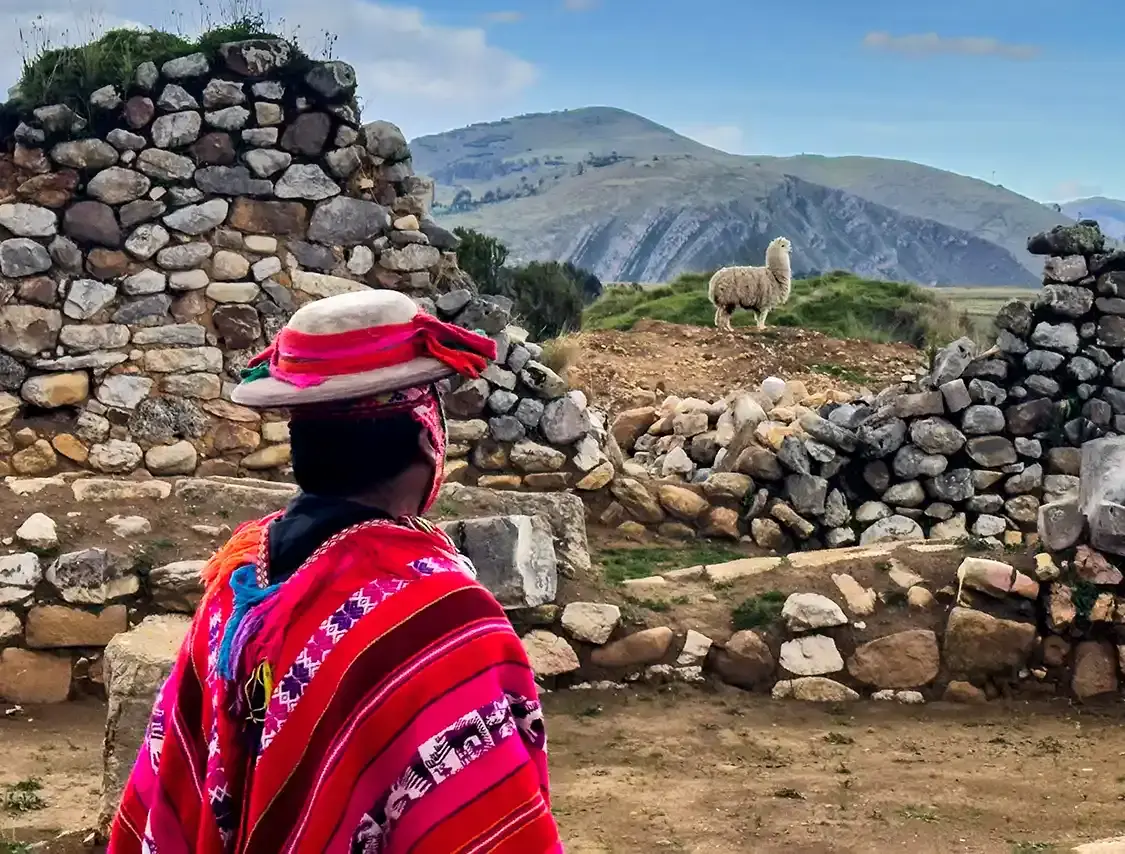
Peru recalibrates a family’s sense of what culture really means. You arrive thinking you’re going to see some ruins and take some photos, and you leave having walked through cloud forest guided by a Quechua native and her trusty llama, took a reed boat to an island on Lake Titicaca, only to find an elderly Taquileano knitting a vest, and stood in the mist above an ancient city that looks like it shouldn’t even exist in the real world while a young Quechua boy climbs up an impossibly steep stone cliff to offer his guiding services. This type of diversity causes a switch in your brain.
The Inca Trail is one of the world’s iconic multi-day hikes: a journey through cloud forest and mountain passes that ends at the Sun Gate overlooking Machu Picchu. For families with younger kids, the Lares Trek is the smarter call. Less crowded, more culturally rich, winding through traditional Quechua villages where children still herd alpacas across high-altitude pastures. The reveal of Machu Picchu at the end is the same either way, and it is every bit as staggering as the photographs suggest.
Don’t stop at Machu Picchu, though. It’s beautiful and worth the journey, but so many visitors to Peru come here and skip everything else. That’s a mistake.
Colca Canyon, the deepest canyon on earth, is out there. The Andean condor, with a wingspan that seems anatomically implausible, rides thermals overhead while you hike the rim. These are the moments that end up in your kid’s school essay five years later.
Explore all of my Peru family travel adventures here.
Peru Hiking Tips
Difficulty Range: Easy to Difficult
Best For: History-loving families seeking a genuinely epic adventure and cultural connections with locals.
Best time to visit: May through October (dry season)
Family hikes in Peru to check out:
- Lares Trek to Machu Picchu – Moderate
- Inca Trail – Moderate to Difficult
- Colca Canyon rim hikes – Moderate
- Rainbow Mountain (Vinicunca) – Difficult
3. Norway: Fjords, Pulpit Rocks, and the Midnight Sun
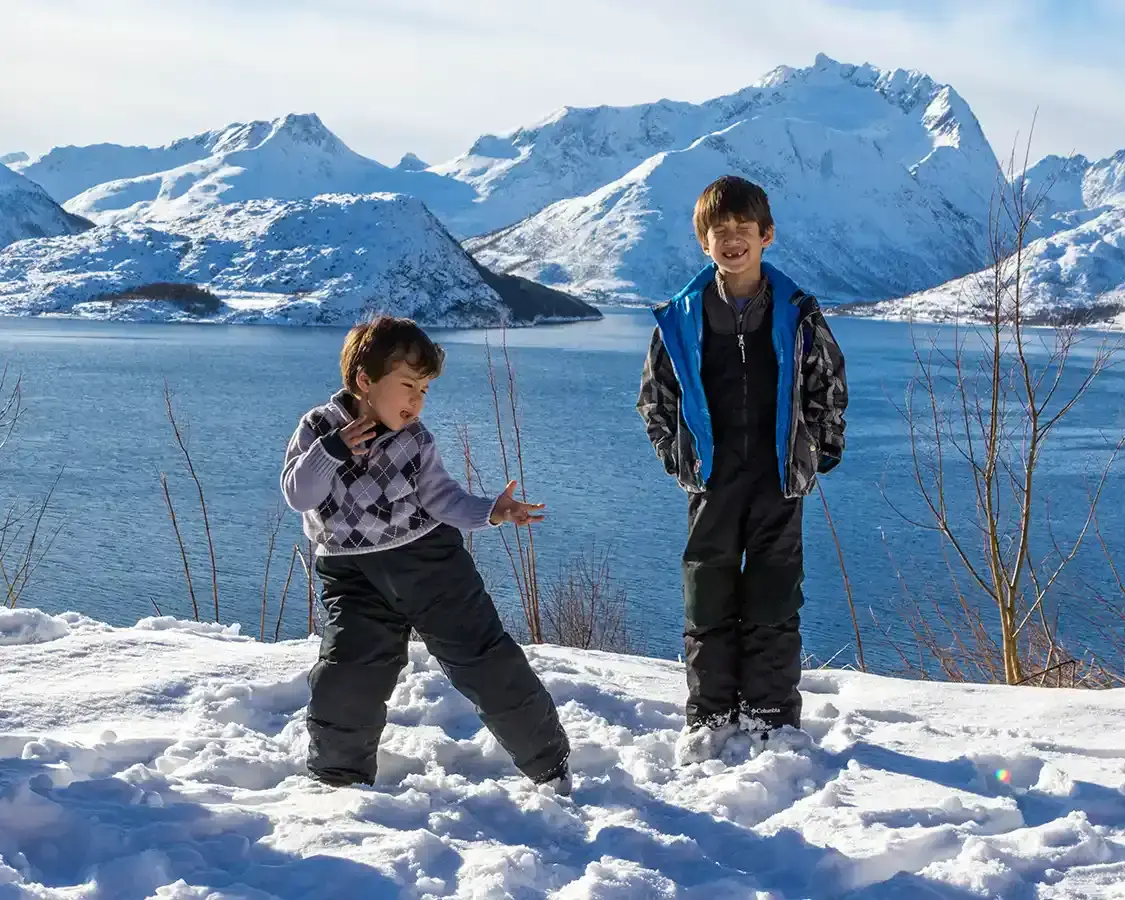
Norway has a way of making you feel genuinely, usefully small. The fjords cut so deeply into the landscape, and the mountains rise so steeply from the water, that the first time my family visited, all we could do was just stop and stare. There is nothing subtle about Norway. It is not a country that is trying to be modest.
Pulpit Rock (Preikestolen), in the south of Norway, is one of the country’s most iconic hikes. This hike is easier to reach than most photographs suggest. The 8 km round-trip trail climbs about 1150 feet (350 meters) to a flat-topped cliff that juts 1980 feet (604 meters) above Lysefjord. The view is not something you find words for immediately. You stand there for a while first.
For families with younger children, the Flam Valley near Bergen offers easier trails with waterfalls and mountain panoramas that require considerably less elevation gain and considerably less convincing of small people. The Lofoten Islands, further north, are for families ready to go properly wild: rugged peaks rising straight from the sea, remote beaches wedged between mountains, and the kind of silence that cities have forgotten entirely.
Read my Norway family travel guide here.
Norway Hiking Tips
Difficulty Range: Easy to Difficult
Best For: Families who want dramatic fjord scenery and bucket-list summit views
Best time to visit: June through August for midnight sun; February through March for northern lights
Family hikes in Norway to check out:
- Preikestolen (Pulpit Rock) – Moderate
- Flam Valley trails – Easy to Moderate
- Lofoten Islands routes – Easy to Moderate
- Trolltunga (for teens and fit adults) – Difficult
4. Canada: Wilderness, Wildlife, and Trails for Every Level
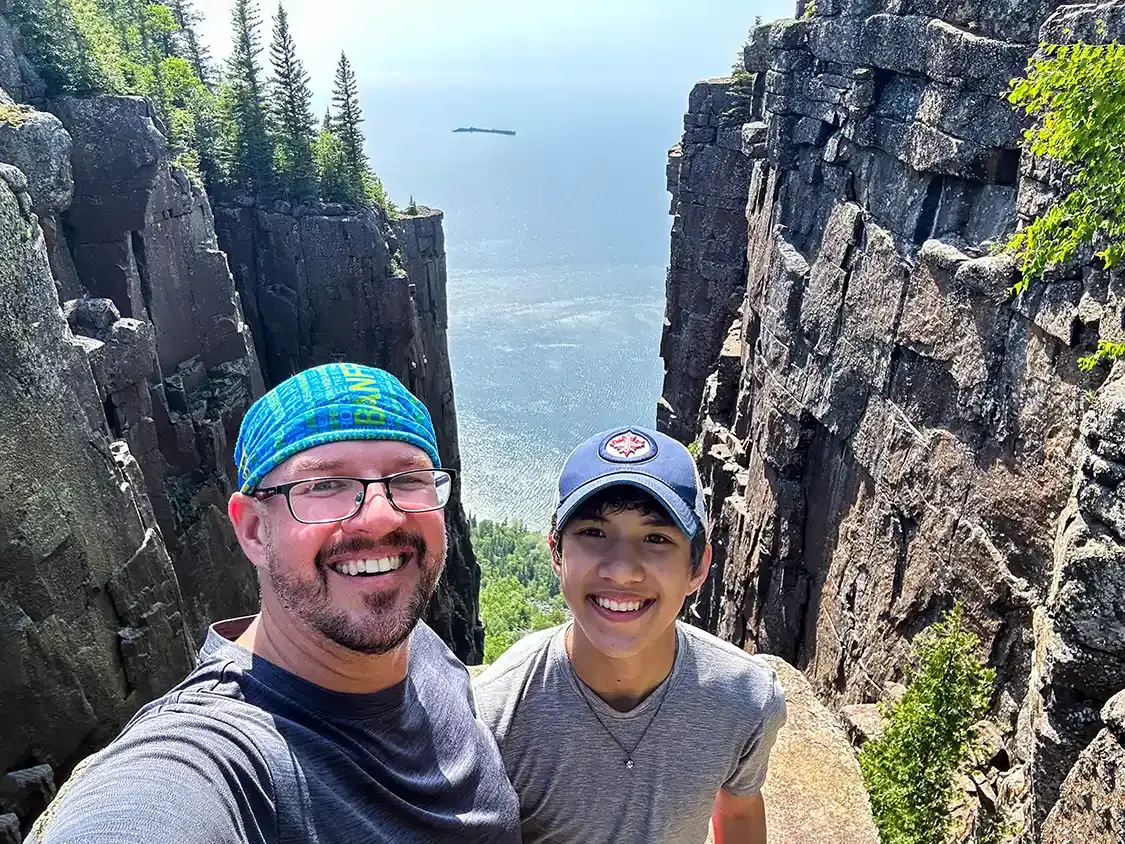
The breadth of hiking in Canada is ridiculous. This country has more lakes than the rest of the world combined, two of the planet’s most spectacular mountain ranges, coastlines on three oceans, and the boreal forests that stretch further than most countries are wide.
In Alberta, Banff National Park is a rite of passage. Lake Louise, Moraine Lake, the turquoise glacial water that looks photoshopped even when you’re standing directly in front of it. Elk wander across trails with complete indifference to the humans gawking at them. It is spectacular, and it knows it. But be warned ahead of time. The rest of the world knows about this region, and it gets incredibly busy. For similar views with a quieter atmosphere, look at Yoho National Park and Waterton Lakes National Park.
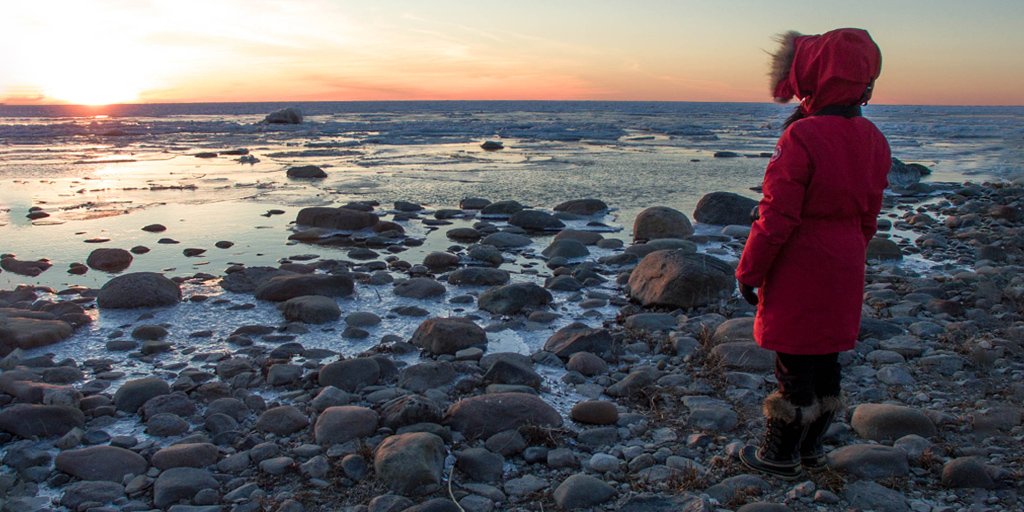
Our personal favorite Canadian hiking, though, is in Newfoundland. Gros Morne National Park is one of the country’s best-kept secrets, which is remarkable given that it is a UNESCO World Heritage Site. We’ve hiked the Green Gardens trail to volcanic sea stacks and coastal cliffs, walked across the Tablelands (one of the only places on earth where the mantle has been exposed at the surface), and watched the light fall across Western Brook Pond in the kind of silence that genuinely restores something in you.
In Ontario, the Cup and Saucer Trail on Manitoulin Island is a family hiking gem: towering Niagara Escarpment cliffs, sweeping views, multiple difficulty levels, and we’ve done it with kids as young as two. For something truly remarkable, head to Thunder Bay at the top of Lake Superior and take on the challenge of the Top of the Giant in Sleeping Giant Provincial Park.
Explore all of my Canada family travel guides here.
Canada Hiking Tips
Difficulty Range: Easy to Difficult
Best For: Families who want world-class hiking without a twelve-hour flight
Best time to visit: June through October. Fall colours in Banff and Gros Morne are worth planning around
Family hikes in Canada to check out:
- Newfoundland – Gros Morne National Park – Easy to Moderate
- Ontario – Cup and Saucer Trail – Moderate
- Alberta – Banff trail network – Easy to Difficult
- British Columbia – Garibaldi Provincial Park – Moderate to Difficult
5. Ecuador: Volcanoes, Crater Lakes, and the Avenue of the Volcanoes
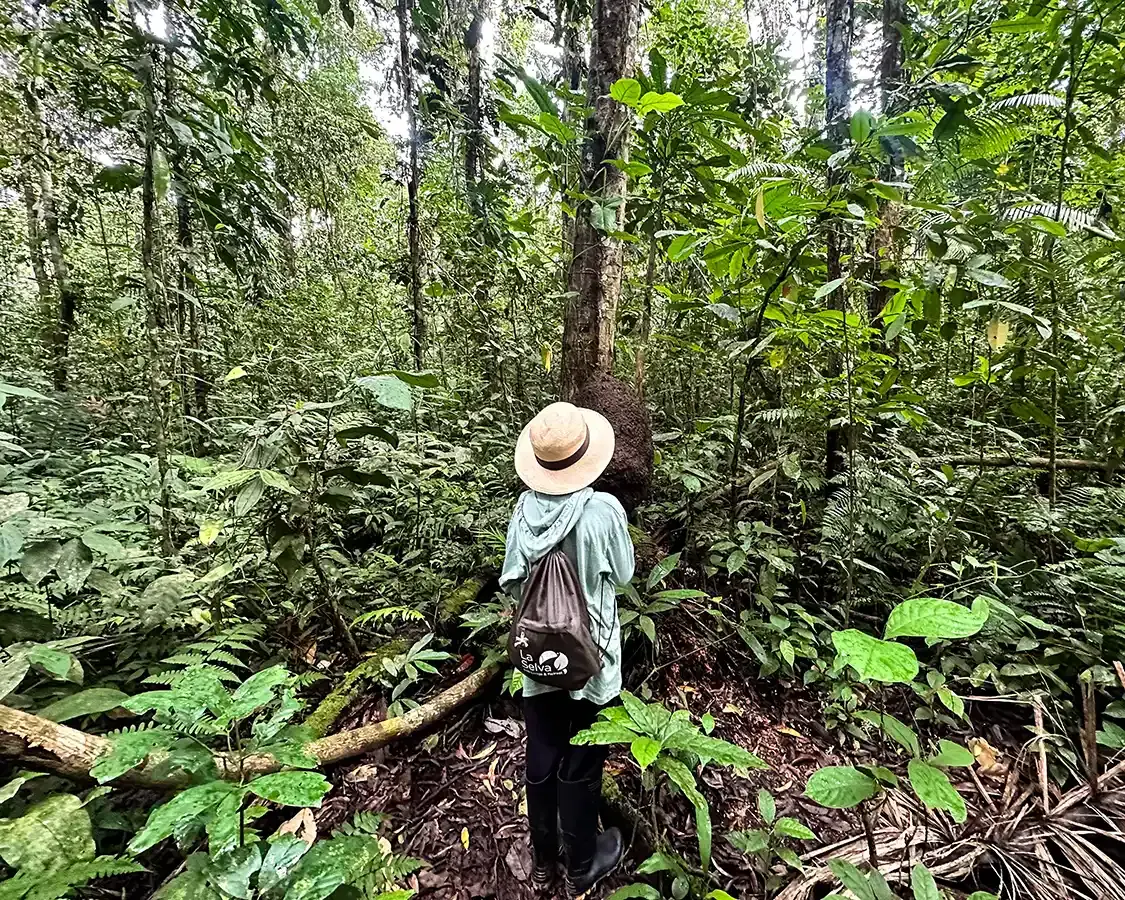
Ecuador doesn’t get the credit it deserves as a hiking destination, and that is largely because everyone is distracted by the Galapagos Islands. Fair enough, they’re incredible and worth the journey. But the mainland Andes offer some of the most dramatic and accessible high-altitude hiking in South America, and most families walk straight past them on their way to the airport.
Cotopaxi National Park is the place that rewires your sense of adventure. The volcano itself, a near-perfect glaciated cone rising to 19,347 feet (5,897 meters), is one of the most beautiful on earth. Most tour operators won’t take anyone under 16 on a summit attempt, which is the right call. But the park below the summit is extraordinary on its own terms.
The Laguna Limpiopungo trail is a flat, easy boardwalk loop around a high-altitude lagoon with Cotopaxi reflected in the water and more than fifteen species of birds making noise above you. Wild horses roam the open paramo with complete disregard for anyone watching them.
We based ourselves at Tambopaxi Lodge, the only accommodation inside the park, and spent 24 hours hiking, riding horses across the Andean highlands with that volcano looming behind us, and feeling genuinely far from everything familiar. It was exactly what we came for.
Quilotoa is where the trip tilts toward something harder to explain. This tiny Andean town sits on the rim of a volcanic crater lake that shifts between green, turquoise, and electric blue depending on the light and your mood. The hike down to the lakeshore is steep and unrelenting in both directions.
Cohen and I did it. We kayaked on the crater lake at altitude while Christina and Dylan recovered from a stomach situation at one of the rim restaurants over alpaca steaks and hot chocolate. That is family travel. Not every day goes to plan, and the good ones rarely do.
Otavalo, a couple of hours north of Quito, adds a different texture to the hiking. The Cascada de Paguche waterfall sits inside an Indigenous-run eco park just outside town, a genuinely beautiful trail through forest to a waterfall that most day-trippers never find because they stay too long at the textile market. The market is worth your time, too, the largest Indigenous market in Latin America. But the waterfall is the one that stays with you.
Explore my Ecuador family travel guide here.
Ecuador Hiking Tips
Difficulty Range: Easy to Difficult
Best For: Families who want high-altitude Andean adventure without the crowds of Peru
Best time to visit: June through September (dry season in the Andes)
Family hikes to check out:
- Laguna Limpiopungo (Cotopaxi) – Easy
- Quilotoa crater rim and descent to the lake – Moderate to Difficult
- Cascada de Paguche (Otavalo) – Easy
- Pichincha Volcano trails near Quito – Moderate
6. Morocco: Desert Dunes, Mountain Passes, and Canyon Walls
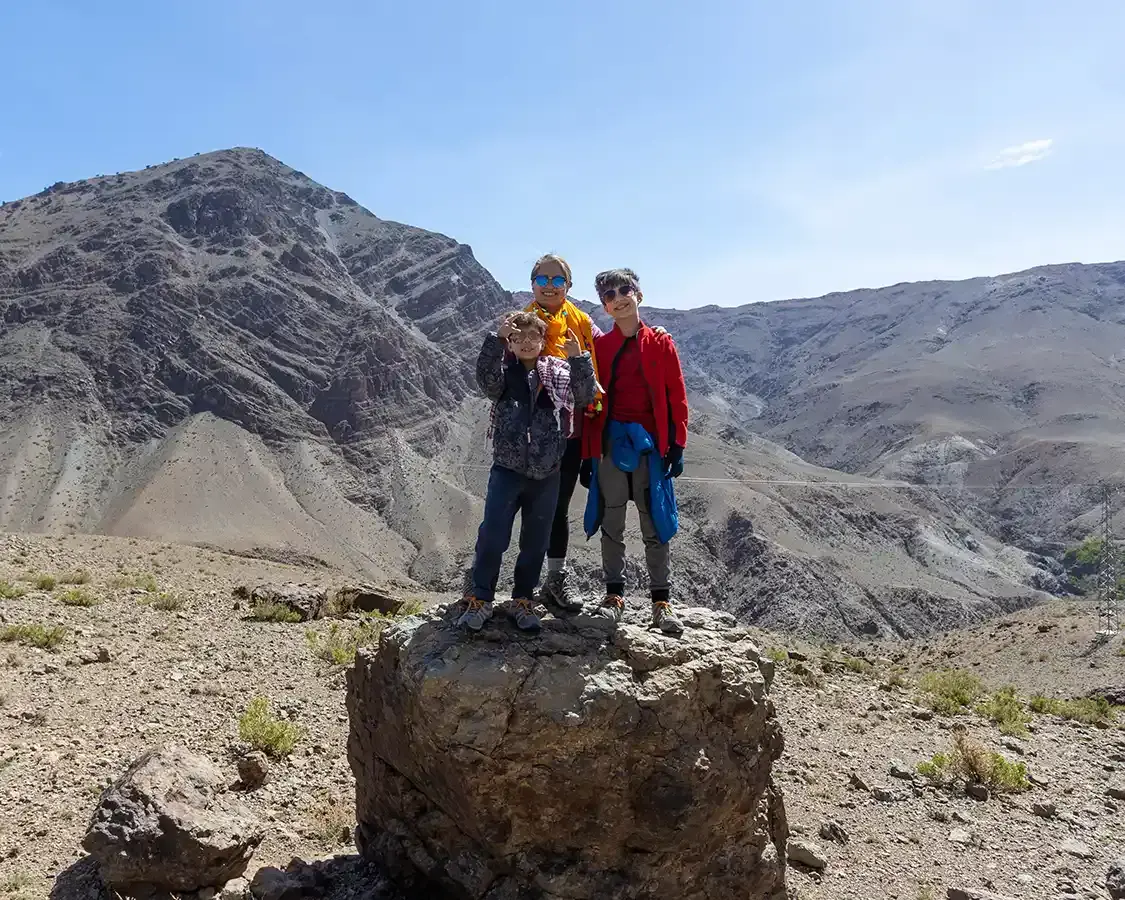
Very few parents put Morocco on a family hiking list. That’s a mistake. We went twice. Once in 2022 and again in 2025. We were expecting the souks and the food and the sensory overload of Marrakech, which is all very real. What we didn’t expect was how much the hiking would stay with us.
The Atlas Mountains offer trails through Berber villages where the pace of life is a direct rebuke to the one you left at home. The Toubkal region, south of Marrakech, ranges from easy valley walks to serious climbs, and the views from the higher elevations are the kind that make you forget what you were worried about before you left.
The Todra Gorge is something else entirely: 300-meter canyon walls that narrow to just a few meters wide at their deepest point, with light shifting through in ways that make it look like a film set. And then there’s the Sahara. Walking into the dunes near Merzouga, then onto a camel, then making camp in the desert as the stars come out: kids don’t forget that. Adults don’t either.
Read my full Morocco family travel guide here.
Ecuador Hiking Tips
Difficulty Range: Easy to Difficult
Best for: Families craving a hiking experience that is genuinely unlike anything else
Best time to visit: March through May or September through November (the summer heat is not a joke)
Family hikes in Morocco to check out:
- Toubkal region (Atlas Mountains) – Moderate to Difficult
- Todra Gorge – Easy to Difficult
- Sahara dune walks – Easy to Moderate
- Trails around Ait Benhaddou – Easy to Moderate
7. Greece: Ancient Paths and Landscapes That Demand Your Attention
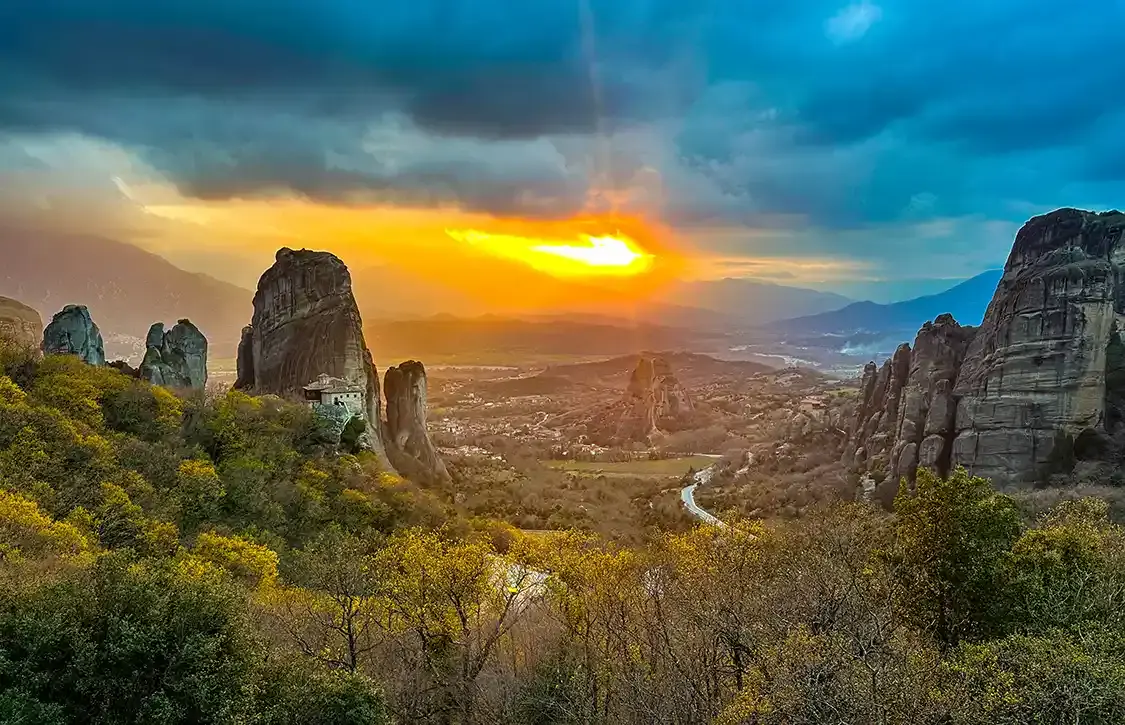
Greece surprises people. Most visitors arrive for the islands and the ruins, both of which are excellent, and leave having never considered that the hiking in Greece is genuinely extraordinary.
Meteora is where you go when you want the world to feel properly mystical. Ancient Orthodox monasteries perched on top of sheer rock pillars in central Greece, reachable by trails that wind up through forest and across open ridgelines. The hike to Sunset Point leaves you looking out at a landscape that looks like it was designed by someone with very ambitious ideas about what a view should be. It’s the sort of place that ushers a silence in children who previously seemed incapable of not talking.
Crete has the Samaria Gorge. It’s one of Europe’s longest, and it is a serious piece of hiking. For younger families, the entrance and exit sections offer a real taste of adventure without the full 16 km commitment. The smaller islands have their own rewards: coastal paths above turquoise water, easy walking that feels less like exercise and more like the world inviting you to pay attention.
Read our Greece family travel guide here.
Greece Hiking Tips
Difficulty Range: Easy to Moderate
Best for: Families who want hiking that threads its way through history and myth
Difficulty Range: Easy to Moderate
Best time to visit: April through June or September through October
Family hikes in Greece to check out:
- Meteora (Sunset Point, monastery routes) – Moderate to Difficult
- Samaria Gorge (Crete) – Easy to Moderate
- Imbros Gorge (Crete) – Moderate
- Mountain trails on Naxos – Easy to Difficult
8. Jordan: Rose-Red Canyons and the Ancient City You Have to Earn
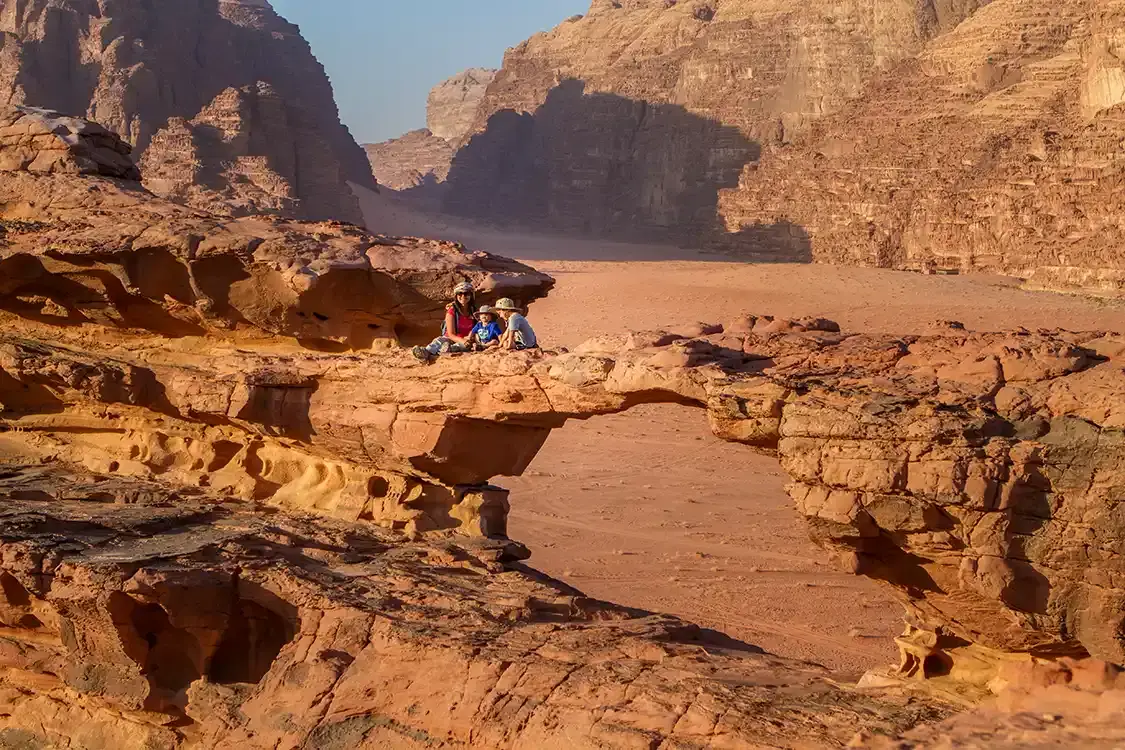
Jordan is consistently underestimated both as a hiking destination and as a family travel destination. That is fine by me because it means the trails are quieter than they deserve to be. The country is compact enough to cover meaningfully in a week, and the range it packs in is genuinely startling.
The wonder of Petra is the obvious draw, and it earns all of the hype that it receives. But most people walk through the Siq, photograph the Treasury, and leave. That is like flying to Paris and only seeing the Eiffel Tower. The real magic of Petra is deeper in: royal tombs, Byzantine churches, and the Monastery (Ad Deir), reached by 800 steps carved directly into that spectacular rose-red rock. It is achievable for kids willing to put in the effort. The view from the top is one of the best payoffs we’ve encountered anywhere on Earth.
Wadi Rum is a different universe entirely. Sweeping red sandstone desert, canyons that swallow sound, Bedouin camps where the hospitality is as genuine as the silence is deep. Walking into the dunes and then sleeping under Wadi Rum’s stars is an experience that reorders things a little.
Explore our Jordan family travel guide here.
Jordan Hiking Tips
Difficulty Range: Easy to Moderate
Best for: Families who want to combine serious hiking with serious history
Best time to visit: March through May or September through November
Family hikes in Jordan to check out:
- Petra (Treasury to Monastery route) – Moderate
- Wadi Rum desert walks – Easy to Moderate
- Dana Biosphere Reserve – Easy to Moderate
- Wadi Mujib (for older kids) – Moderate to Difficult
9. Patagonia (Chile and Argentina): The Place That Puts Everything in Perspective
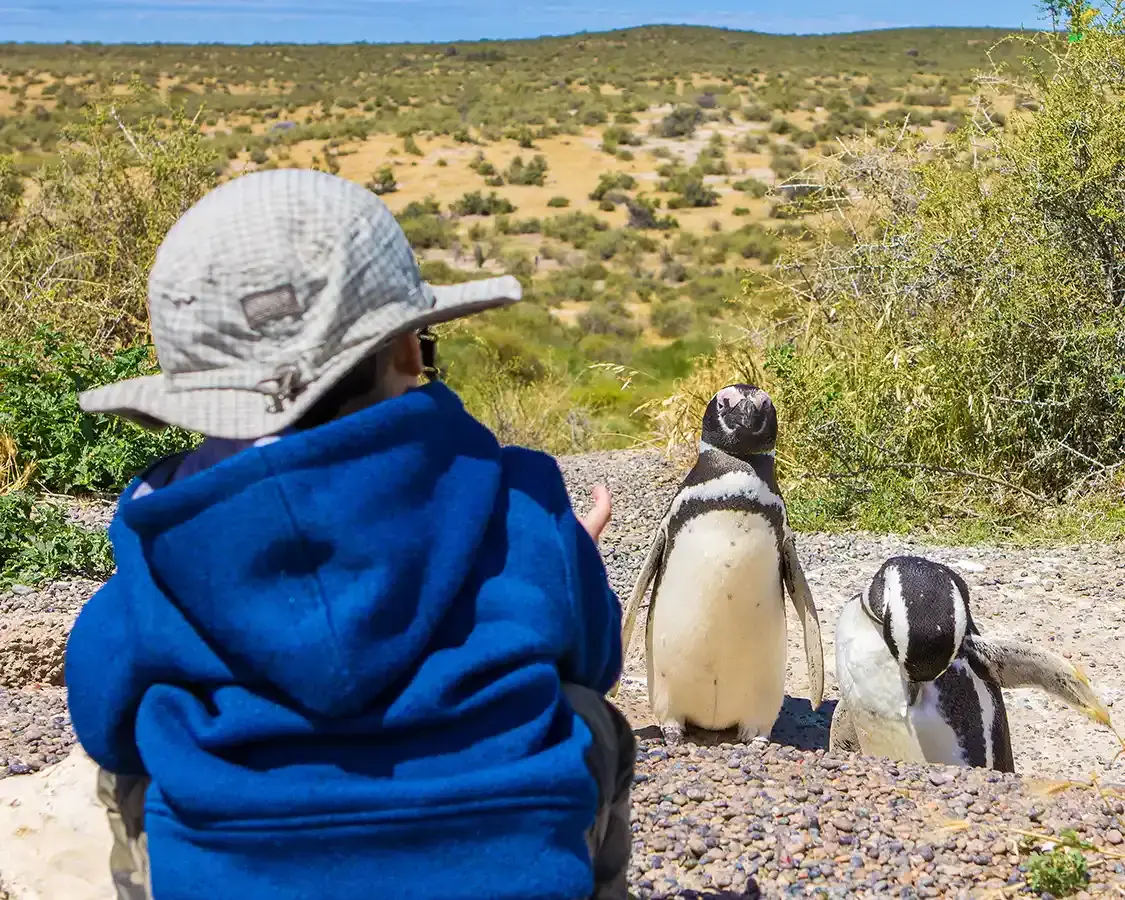
Patagonia is where you take your family when you want them to understand, viscerally, that the world is vast and wild and not particularly concerned with their comfort. The landscapes at the southern tip of South America are on a scale that doesn’t compute until you’re standing inside them: granite towers rising thousands of meters from ancient forest, glaciers calving into water so blue it looks impossible, condors circling on thermals overhead with a wingspan that seems anatomically implausible.
Torres del Paine National Park in Chile is one of the world’s greatest hiking destinations, full stop. The “W” Circuit covers the highlights over four or five days. Individual day hikes to the Mirador Las Torres viewpoint and through the Valle del Frances are accessible for families with older, motivated kids. In Argentina, El Chaltén offers trails with views of Cerro Fitz Roy, one of the most photographed mountains on earth, and for good reason.
Patagonia will test your family. The weather is genuinely unpredictable in ways that go beyond inconvenient. The trails are not always easy. None of that is a reason not to go. The payoff, standing at the foot of a glacier or watching the first light hit the Torres peaks, is the kind of thing your family will be talking about in twenty years.
Explore my Argentina family travel guide here.
Patagonia Hiking Tips
Difficulty Range: Easy to Difficult
Best for: Adventurous families ready for wilderness hiking on a serious scale
Best time to visit: November through March (Southern Hemisphere summer)
Family hikes in Patagonia to check out:
- Mirador Las Torres (Torres del Paine) – Moderate to Difficult
- Valle del Frances – Moderate to Difficult
- Laguna de los Tres (El Chaltén) – Easy to Moderate
- Perito Moreno Glacier boardwalks – Easy to Moderate
10. Tanzania: Hiking at the Roof of Africa
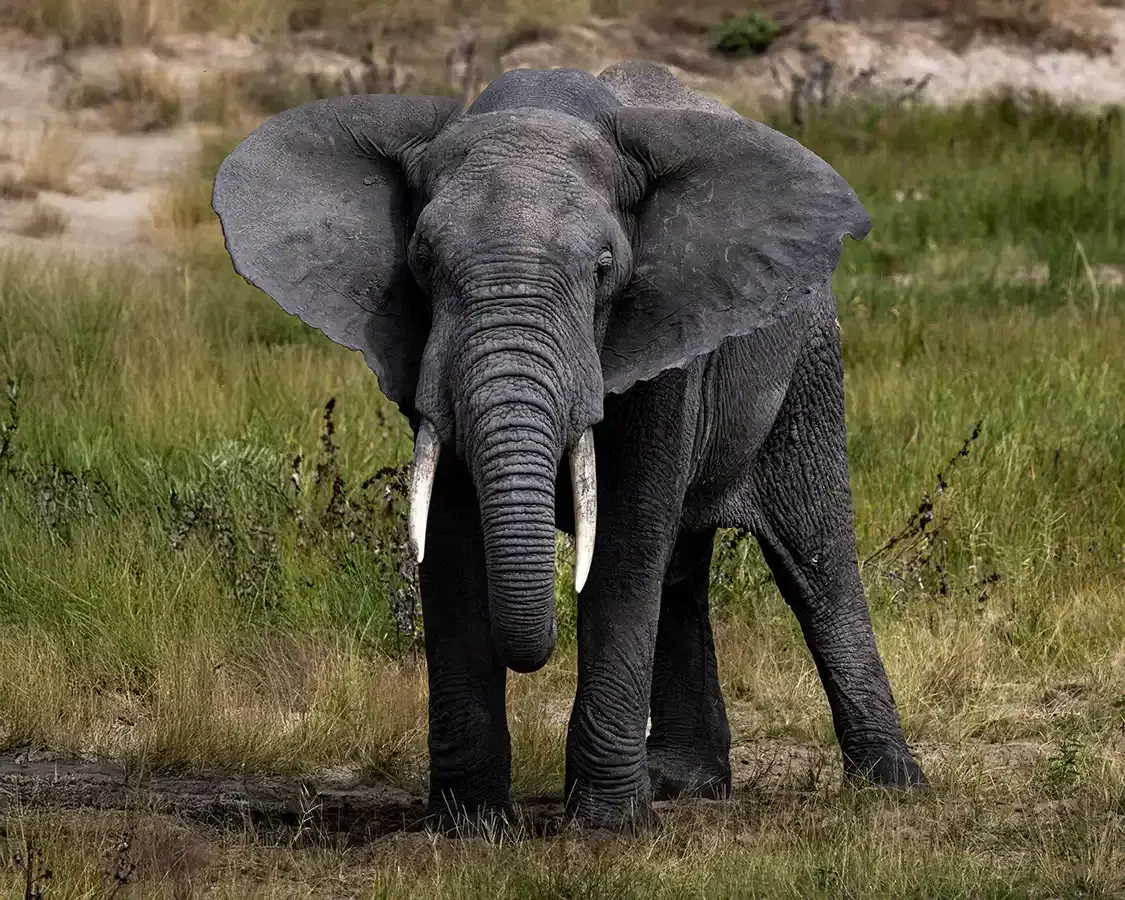
Tanzania is famous for its wildlife, and the northern safari circuit is everything you’ve heard it is. But Tanzania is also home to the highest peak in Africa, and it belongs on this list because it is the kind of goal that changes how a teenager sees themselves.
Kilimanjaro sits at 5,895 meters. It requires no technical climbing gear, no ropes, no specialist skills. What it requires is fitness, patience, and the willingness to acclimatize properly. The Lemosho and Machame routes are the best options for families, offering the most sensible acclimatization profiles and some of the mountain’s most striking scenery. Teens who reach the summit carry that with them. We’ve seen it happen. The person who comes down is not quite the same as the one who went up.
For families with younger children, the lower elevation zones of Kilimanjaro through rainforest and moorland are spectacular on their own terms. The Ngorongoro Crater rim walks and walking safaris through the Northern Circuit add a dimension that no other hiking destination offers: the chance to share a trail with wildlife that reminds you where humans actually sit in the order of things.
Read my Tanzania family travel guide here.
Tanzania Hiking Tips
Difficulty Range: Moderate to Very Strenuous (Kilimanjaro); Easy to Moderate (safari walks)
Best for: Adventurous families with older teens ready for a genuine challenge
Best time to visit: January through March or June through October for summit attempts
Family hikes in Tanzania to check out:
- Kilimanjaro (Lemosho or Machame routes) – Moderate to Difficult
- Ngorongoro Crater rim – Easy to Moderate
- Arusha National Park forest hikes – Easy to Moderate
- Northern Circuit walking safaris – Easy to Moderate
A Few Things Worth Knowing Before You Choose Your Family Hiking Destination
Understand Your Family’s Honest Capabilities, Not Just Aspirations
There’s a real difference between a family that enjoys nature walks and one ready for a multi-day backcountry trekking adventure. Neither is better. Families need to be honest with themselves before committing to a route that requires preparation and fitness.
Kids Are More Capable Than Most Parents Believe
We’ve watched children who swore they couldn’t take another step cover ten kilometers because something interesting kept appearing around the next corner. The hiking trail creates motivation that no parent’s pep talk ever could. Check out our full guide to hiking with kids for everything we’ve learned from hundreds of trails across dozens of countries.
Research the Trail, Not Just the Destination.
World-class scenery becomes miserable if the trail is the wrong choice for your group. Difficulty rating, elevation gain, surface conditions, weather, and family-friendliness all matter as much as the view at the end.
Hand over some control.
Some of our best days happened when we let the kids pick the trail, set the pace, or decide what was worth stopping for. When children have ownership over the adventure, they find reserves of energy and resilience that surprise everyone, themselves most of all.
Useful Tools For Family Hiking
Here are a few resources that will help you plan your next family hiking adventure.
What Will Your Next Family Hiking Destination Be?
The trails are out there. Pick one, book the flights, pack the boots, and stop waiting for conditions to be perfect. They never are. Go anyway.
If you’re still figuring out where to start, explore our destination guides linked above, and read our complete guide to hiking with kids [LINK] for the practical side of making it all work on the trail.
Drop a comment below. We want to know where your family is headed.