Explore the beauty of Saklikent Gorge, Turkey’s longest canyon. Here’s everything you need to know before you go, from the icy river walk and the boardwalk to tubing, mud baths, what to wear, and how to visit with kids.
The moment I stepped off the boardwalk and into the Esen River, I understood why this has become one of the most popular places to visit in Turkey. The water hit my feet with a cold so intense that it stung. The canyon walls soared hundreds of feet above me, and the sky shrank to a narrow blue ribbon overhead. My family and I rolled into Saklikent Gorge in early August, at the absolute peak of the region’s high season. Even standing shoulder to shoulder with the crowds, it was one of the most memorable stops on our road trip through the Turquoise Coast.
Saklikent means “hidden city,” and that’s a name that really hits once you’re deep inside the canyon. The gorge is the centerpiece of Saklikent National Park, tucked into the Taurus Mountains between the cities of Fethiye and Kas in southwest Turkey. The gorge stretches deep into the mountains for around 11 miles (18 km) and reaches up to 984 feet (300 m) deep, which makes it one of the deepest canyons anywhere in the world, and the best way to see it properly is from the bottom, where the towering walls launch epically into the sky.
Quick Planner: Saklikent Gorge
Where: Saklikent National Park in the Taurus Mountains, about 45 to 60 minutes inland from Fethiye, and roughly 30 to 40 minutes from Patara and Kalkan.
Getting there: Easiest by rental car. In high season, dolmuş minibusses also run from Fethiye’s otogar (bus station) every half hour or so.
Season: April to October is the sweet spot. Deeper sections can be impassable in winter and after heavy rain.
How long: Three nested hikes: a 200-meter boardwalk, a 1 km wade to the waterfall, and technical canyoning beyond it. Most families do the first two in two to three hours.
Entry: A modest national park entrance fee, payable by cash or card, with a reduced student rate.
Wear: Grippy water shoes (not flip-flops), quick-dry clothes, and bring a change of clothes and a towel.
Plan-ahead alert: The water sits at about 5°C to 8°C (41°F to 46°F) year-round. It is genuinely, breathtakingly cold.
Don’t miss: Lunch at one of the platform restaurants over the stream, with your feet dangling in the water.
About Saklikent Gorge
Table of Contents
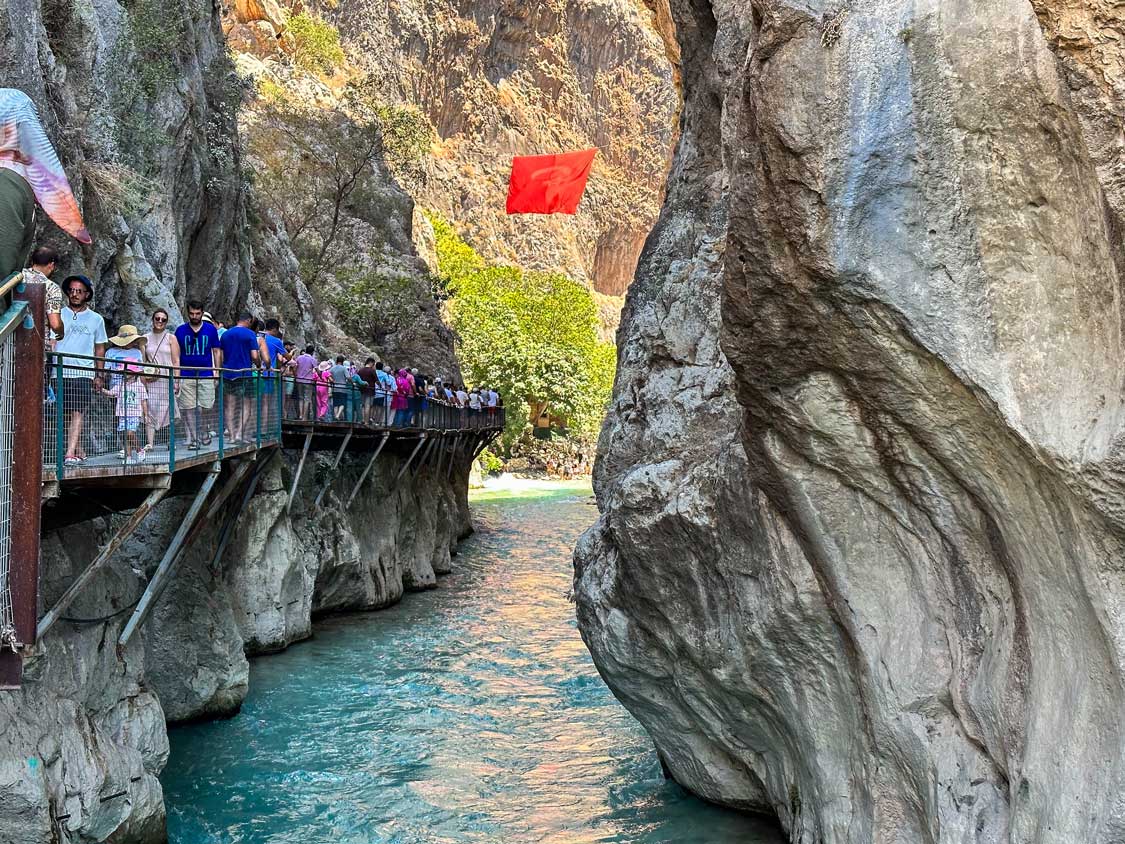
Saklikent Gorge was carved over millennia by ice-cold water pouring out of natural springs in the Taurus Mountains. It’s been protected as a national park since the 1990s. The canyon is around 11 miles (18 km) long in total, but almost all of that is the preserve of technical canyoning teams. Most visitors come for its dramatic lower end, where the gorge narrows to a slot, and the Esen (Dargaz) River comes rushing out of the rock.
The gorge has become so popular that the entrance area has become a veritable circus. Restaurants, shops, tours, wild photo experiences with the gorge as a backdrop, river tubing, and much more are all on offer here. I’ll get to that later, though, because the most important thing about Saklikent National Park is the gorge itself.
You enter by crossing a pedestrian bridge over the river, then follow a boardwalk bolted to the cliff face, suspended above the rushing water. It’s a short walk, about 200 meters, and it ends at the point where a spring gushes out of the mountainside into a pool below a small waterfall. For a lot of visitors, that’s the whole visit, and it’s worth knowing that most tours advertising a “hike” in the gorge mean only this boardwalk stretch.
The real adventure, though, starts where the boardwalk ends.
My Fethiye and Saklikent Gorge Travel Video
Hiking Saklikent Gorge: The Three Stages
The single most confusing thing about Saklikent is the question of “how long is the Saklikent Gorge hike,” because there isn’t one hike. There are three, and each is an extension of the last. You can stop at the end of any of them, and plenty of people stop at the first.
A word on the cold. The spring water sits at roughly 5°C to 8°C (41°F to 46°F) all year. Your feet will ache within minutes, and kids feel it faster than adults. That’s not a reason to skip it, but plan on shorter stints in the water with breaks on the warm rocks and sandbanks.
Stage One: The Boardwalk
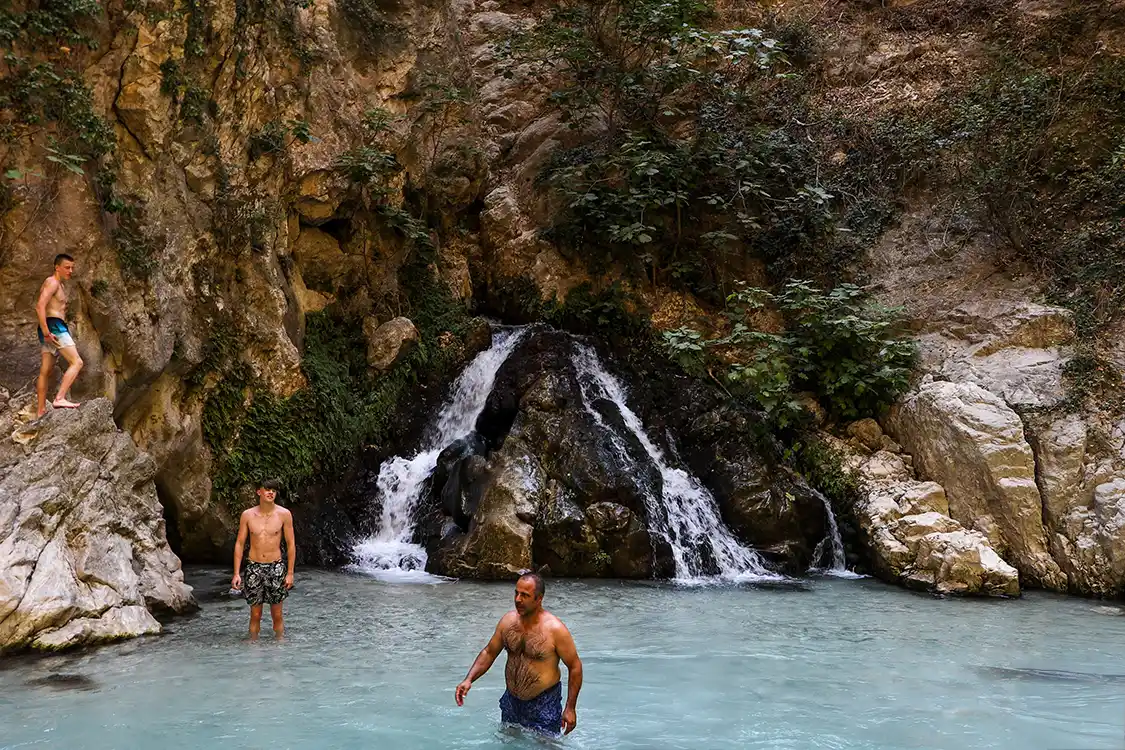
The gorge begins with a wooden boardwalk bolted to the cliff face, suspended above the rushing river. It runs roughly 200 meters to the mouth of the canyon, where a spring bursts out of the mountainside into a pool below. It’s flat, dry, railed, and fine for all ages and mobility levels, including strollers at a push.
This is the stage most people mean when they say they’ve “done” Saklikent, and it’s worth knowing that most organized tours advertising a gorge hike include only this. It’s genuinely spectacular, but it’s also just the appetizer.
- Distance: About 200 meters each way.
- Difficulty: Easy. No water crossing.
- Time: 20 to 30 minutes with photo stops.
Stage Two: The River Crossing And The Walk To The Waterfall
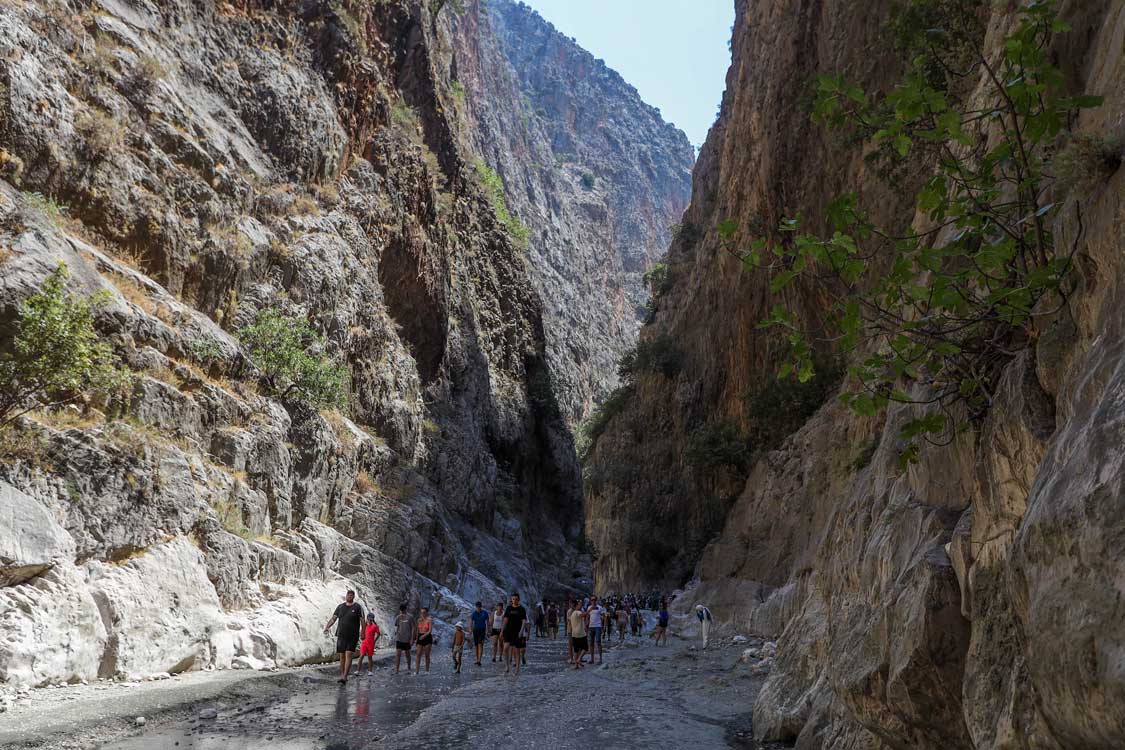
To go further, you wade across the river where it pours out of the canyon. This crossing is the part that stops most people. The current is strong, the water runs from knee-deep to waist-deep depending on the season, and it is shockingly cold. There’s usually a rope strung across to hold onto, and I’d strongly recommend using it.
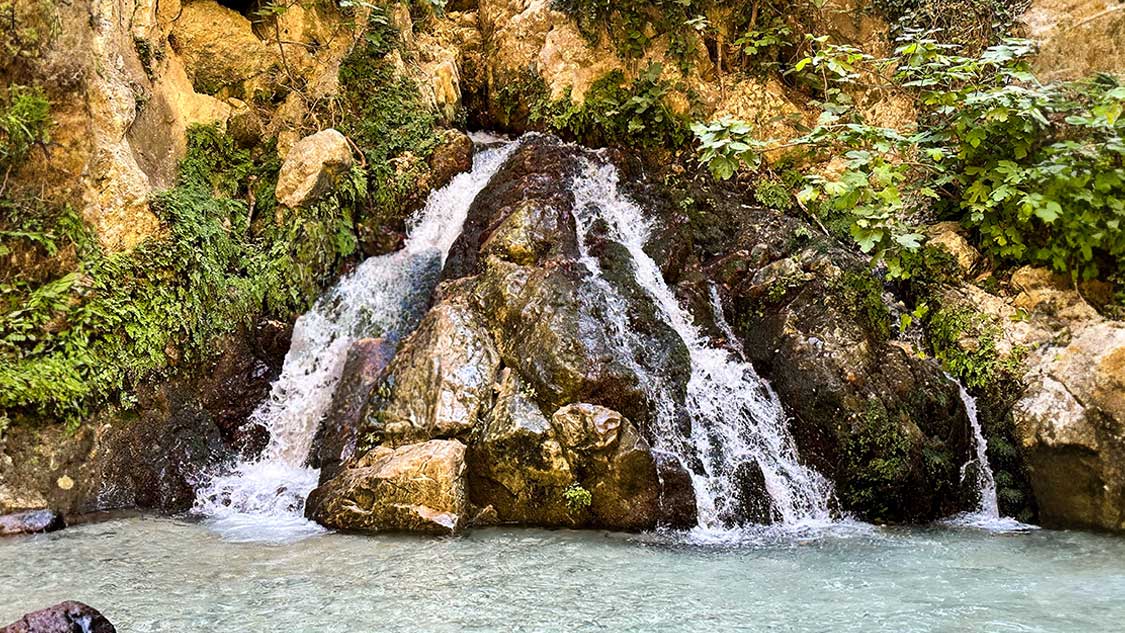
Once across, you walk up the gorge bed itself, over slippery river stones between canyon walls that soar hundreds of feet on either side. The route alternates between wide gravel banks and narrow sections where you clamber over boulders, with pockets of warm sand, natural mud, and small waterfalls you can stand under. It runs roughly a kilometer up to the main waterfall, which is where the great majority of independent visitors turn around.
Because so little sunlight reaches the canyon floor, the water stays deliciously icy even in August, which is exactly why this is such a glorious thing to do in the heat of summer.
- Distance: Roughly 1 km each way beyond the boardwalk.
- Difficulty: Moderate. Cold water, strong current at the crossing, slippery, uneven footing.
- Time: 1.5 to 2 hours return, including stops.
- You’ll need: Grippy water shoes, quick-dry clothes, and a willingness to get properly wet.
Stage Three: Beyond The Waterfall
Past the waterfall, the canyon keeps going, and this is where Saklikent turns from a fun family wading hike into a proper adventure. The walls close in, the pools deepen (in places the water goes well over your head), and progress means scrambling, climbing, and swimming through sections that are cold, dark, and committing. More than a dozen caves have been found in the rock along the way.
Very few visitors go far up here, and you shouldn’t attempt it without a guide. Beyond a certain point, it becomes technical canyoning, requiring a registered guide, ropes, harnesses, and helmets, and even well-equipped teams can’t always reach the far end of the canyon. If this appeals, book with a licensed local canyoning operator rather than improvising.
- Distance: As far as conditions and your equipment allow. The full canyon runs about 11 miles (18 km), with a 700-meter elevation difference from end to end.
- Difficulty: Strenuous to technical.
- You’ll need: A registered guide and proper canyoning equipment.
The Other Things To Do At Saklikent National Park
Saklikent Gorge is a place where you can stop by to enjoy an hour of beauty and relaxation or spend an entire day experiencing all of the things to do in Saklikent National Park. How much time you spend there really depends on how deep you want your adventure to take you. Here are some of the top attractions at Saklikent Gorge that might make you want to extend your visit.
River Tubing
Local operators run tube floats on the gentler stretch of the Esen River below the gorge, charged separately from park entry. You sit in an inner tube and bump down easy rapids for roughly 30 to 40 minutes, with a guide going along with each group and the water generally knee-deep. It’s a hit with kids (operators typically set a minimum age of around five), and the run finishes near the natural mud pools.
Natural Mud Baths
Geothermal mud pools sit along the river and inside parts of the gorge. Slathering on the grey mud, letting it bake dry in the sun, then rinsing it off in the freezing river is exactly the sort of thing children will talk about for the rest of the trip.
Riverside Dining
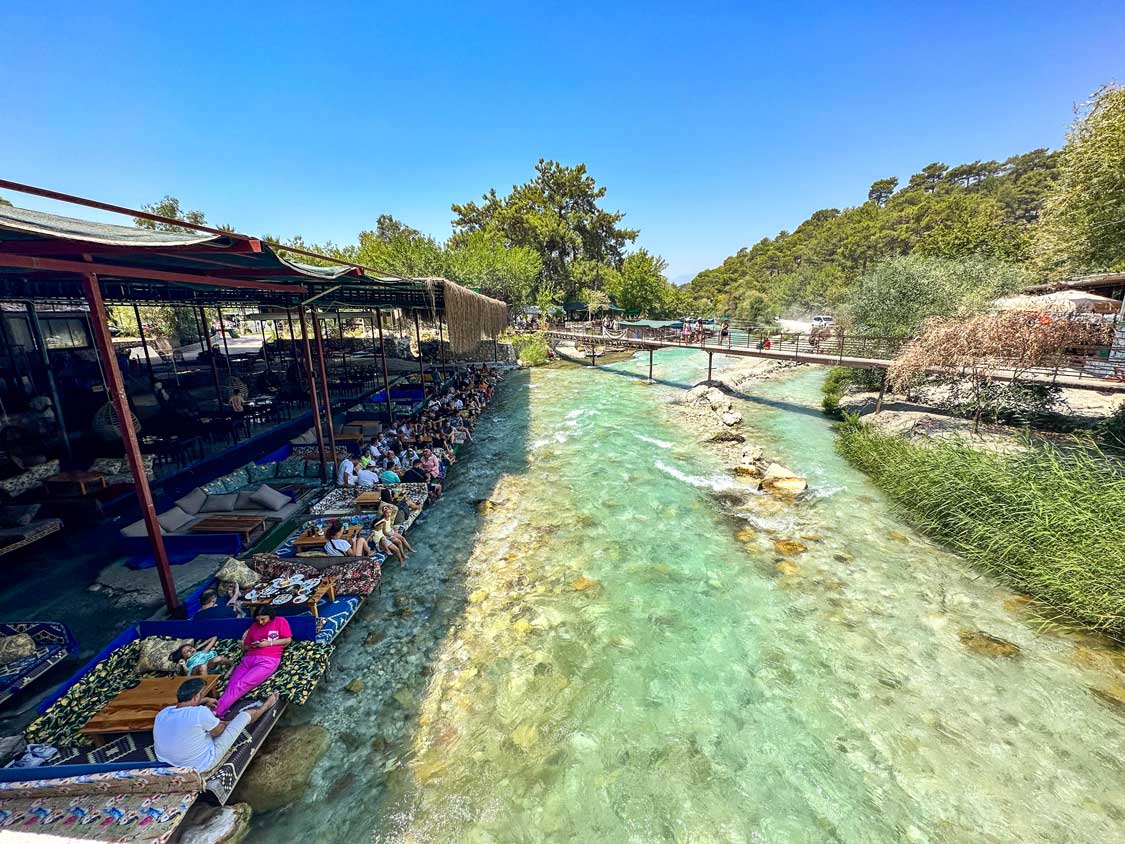
This was my family’s favorite part. A cluster of restaurants lines the Esen River just outside the gorge entrance, with wooden platforms and cushioned seating built out over the water. Grab a table at the edge, dangle your feet in the stream, and order gözleme, mantı, or kebabs with tea or coffee. It was one of the most relaxing meals of our very busy itinerary, and it’s the perfect way to warm up after the water.
Hiking Dumanlıdağ
If you want more than the gorge, the wider national park includes Dumanlıdağ mountain, with hiking routes shaded by cedar and pine, climbing routes, and viewpoints. The Aklar and Girdev plateaus are the standout stops for anyone making a day of it.
Is Saklikent Gorge Safe? What To Know Before You Go
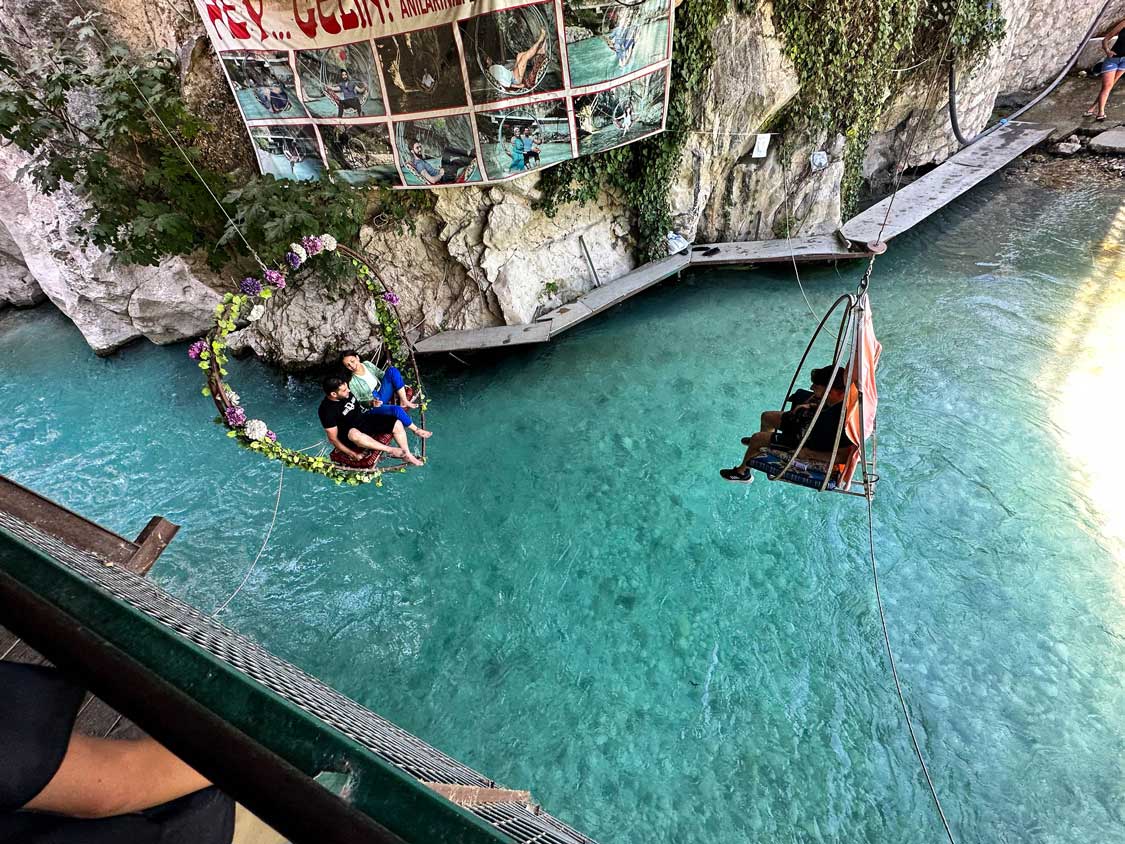
Saklikent Gorge is safe for families when you respect the conditions, but it’s an active river canyon, not a theme park, and a few things genuinely matter.
- Water levels change fast. Spring snowmelt and heavy rain in spring and autumn can raise the river to the point where the crossing and the upper sections are closed. The gorge can also shut temporarily after a heavy downpour because of flash-flood risk. Always check conditions at the ticket office and obey closure signs and staff instructions.
- The cold is real. At 5°C to 8°C, the water causes aching feet and numbness quickly. Keep an eye on kids for shivering, and get out and warm up regularly.
- The footing is treacherous. The riverbed is uneven with sharp, slick stones. Water shoes with real grip are essential; flip-flops and bare feet are a recipe for a twisted ankle. You can rent jelly shoes at the entrance if you forget yours, but a proper pair like these water shoes makes the day far more comfortable.
- Watch your gear. Phones and cameras take a beating from spray and falls on wet rock. A waterproof phone case is well worth packing.
- Not ideal for the very young. Toddlers and preschoolers will struggle with the river crossing and the cold. Older kids who are steady on their feet do brilliantly.
When Is The Best Time To Visit Saklikent Gorge?
The park’s prime season runs April to October, with the gorge at its most accessible in summer, when the river is lowest and that icy water becomes a blessing in the coastal heat. July and August are also peak crowds, so aim for early morning or late afternoon to escape both the tour buses and the midday sun.
Late spring and early autumn are the sweet spot: pleasant temperatures, thinner crowds, and usually manageable water. Be aware that April and May snowmelt, and October and November rains, can restrict access to the deeper sections. In winter, the boardwalk area remains the main draw, while the river route is frequently impassable.
Entrance Fees, Hours, And Facilities
There’s a modest entrance fee for Saklikent National Park, with a reduced rate for students and locals, and both cash and card are generally accepted. The park typically opens in the morning, around a quarter to nine, and stays open into the evening in summer, with last entry an hour or two before closing. Tubing, mud experiences, and shoe or helmet rentals are all charged separately by local operators.
At the entrance you’ll find parking, ticket booths, souvenir stalls, shoe rental, cafés, and the riverside restaurants. Facilities inside the gorge itself are nonexistent, so sort out washrooms and water before you head in.
How To Get To Saklikent Gorge
Saklikent National Park sits inland from the Turquoise Coast, roughly 45 to 60 minutes from Fethiye, about 30 to 40 minutes from Patara Beach and Kalkan, and a longer but scenic run from Kas.
- By car is easiest, and there’s ample parking across from the entrance. We explored this whole stretch of coast by rental car, and it gave us the freedom to pair the gorge with ruins and beaches in the same day.
- The dolmuş is the budget option. In high season, shared minibusses run from Fethiye’s otogar (main bus station) roughly every half hour, taking about an hour and a quarter. Check the time of the last return bus before you set out, since services thin out in the early evening.
- By tour is common, and many coastal day tours bundle the gorge with Tlos and a trout lunch. This Saklikent Gorge tour from Kas also includes Patara Beach, which is a fantastic stop. Just remember that the “hike” in most tour descriptions is only the boardwalk.
Where To Stay Near Saklikent Gorge
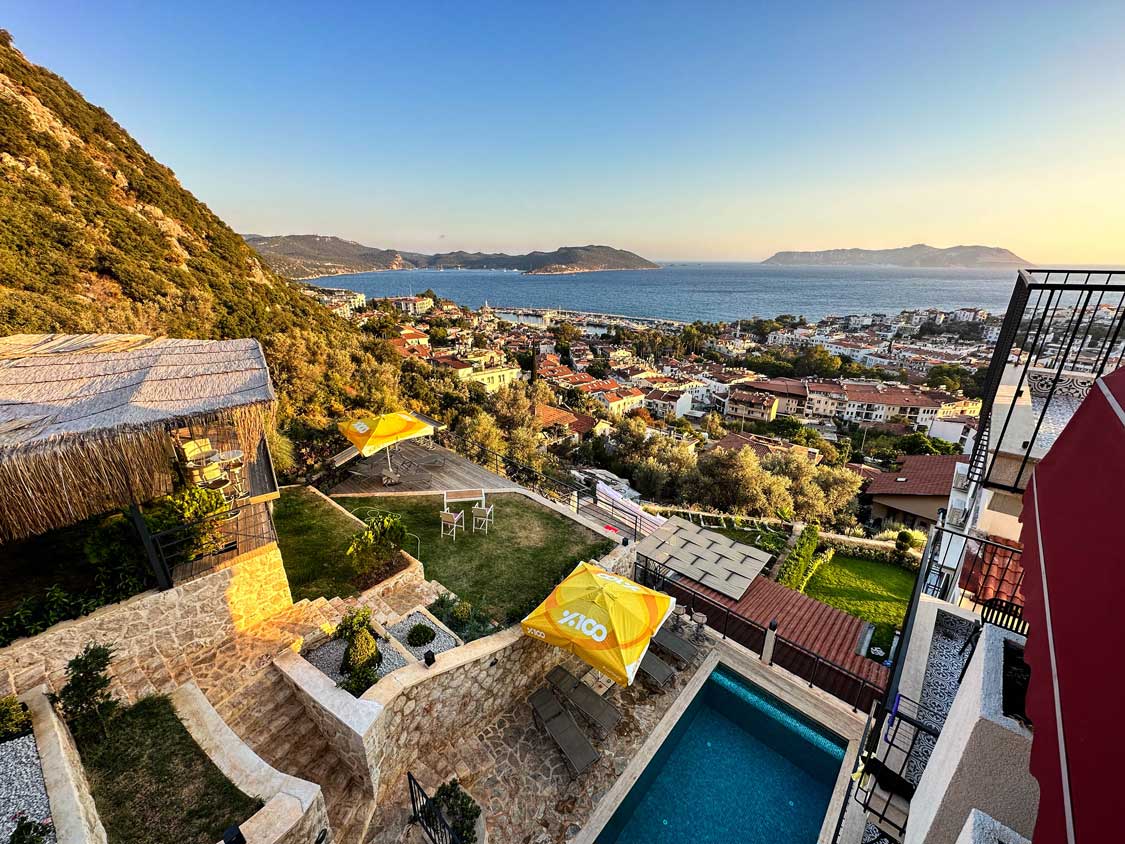
There’s no need to stay at the gorge itself; it’s an easy day trip from anywhere along this stretch of Turkey’s southern coast. But if you’re looking for places to stay nearby, here are three that I recommend:
- Ten Apart Hotel, Fethiye. This is where we stayed, and it suited us perfectly. We wanted something simple, affordable, and comfortable with a kitchen so we could make our own meals, and this delivered apartment-style rooms, a lovely pool, and an on-site restaurant. You can check prices and availability for the Ten Apart Hotel here.
- Granda Apart, Kas. An apartment-style hotel with beautiful views over the town of Kas and the Mediterranean, and a good base for exploring the eastern end of the coast. You can check prices and availability for Granda Apart here.
- Apollon Hotel, Patara. A family-friendly option about 30 minutes from the gorge and minutes from Patara Beach. You can check prices and availability for the Apollon Hotel here.
Things To Do Near Saklikent Gorge
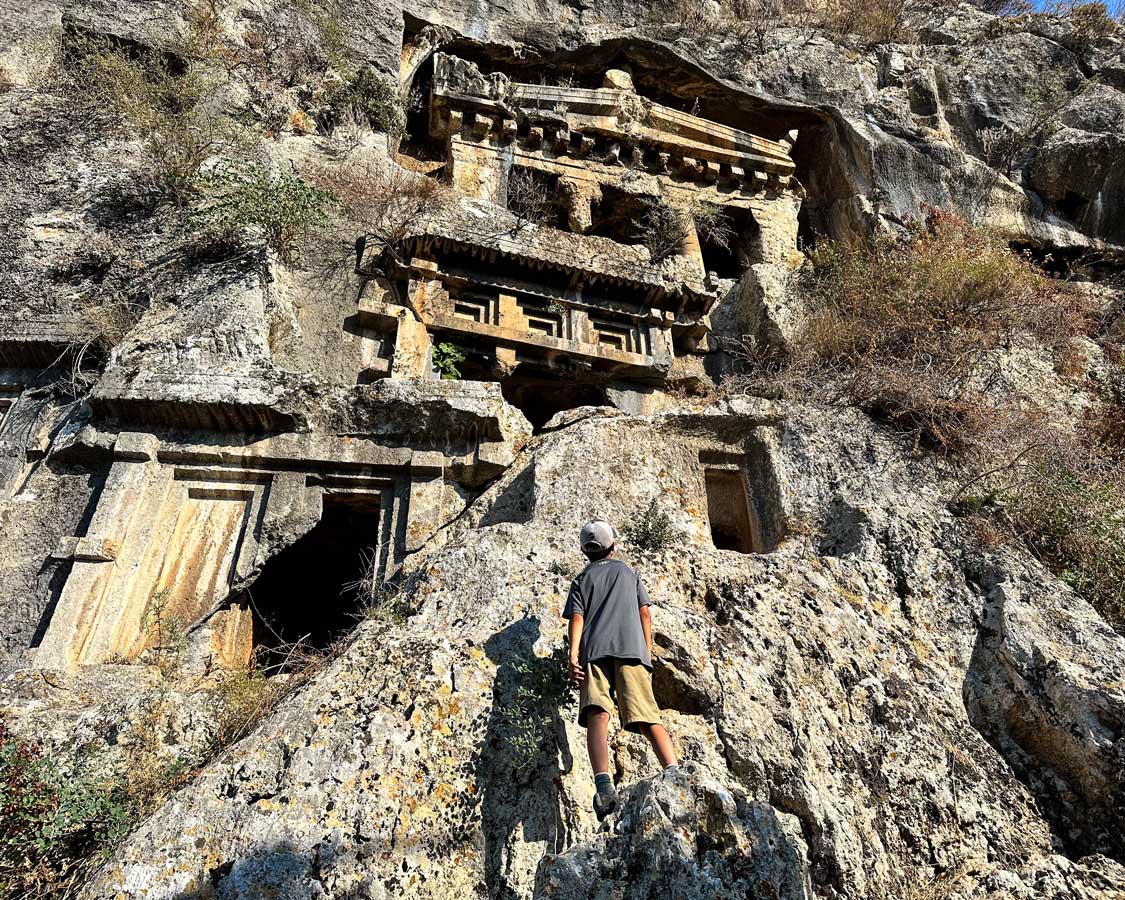
Saklikent pairs beautifully with the rest of the Turquoise Coast. The Lycian ruins of Tlos, perched on a hillside with rock-cut tombs, are minutes away and often combined with the gorge on the same day. Patara Beach, Turkey’s longest beach and the birthplace of St. Nicholas, is a short drive southwest. And the harbor towns of Fethiye and Kas both make excellent bases, with the haunting ghost town of Kayakoy and the blue lagoon of Ölüdeniz close at hand.
Tips For Visiting Saklikent Gorge
Saklikent Gorge and Saklikent National Park make for an easy day trip from many places in Southwest Turkey. But there are a few things that it helps to know before you go.
- If you plan on walking past the boardwalk or in the water at Saklikent Gorge, make sure to pack water shoes. The cold water mixed with the large, round river stones can make your feet ache pretty quickly.
- While there’s some shade at the beginning of the gorge, once you pass the first waterfall, it opens up quite a bit. Wear a hat and sunscreen to avoid getting a nasty sunburn.
- During the spring and after rainfall, the depth of the water can vary significantly. Follow the rules of the park to stay safe.
- If you want to take photos with your phone inside the gorge, I recommend bringing a waterproof phone case. All it takes is a drop into the water onto the hard stones, and your phone could be bricked.
Travel Resources for Families Visiting Turkey
For practical planning, safety considerations, and logistics, these dedicated guides provide deeper support:
Frequently Asked Questions About Saklikent Gorge
In Saklikent National Park in the Taurus Mountains of southwest Turkey, about 45 to 60 minutes inland from Fethiye and roughly 30 to 40 minutes from Patara and Kalkan.
The canyon runs about 11 miles (18 km) and reaches depths of up to 984 feet (300 m). Only the lower end is open to general visitors; the rest requires technical canyoning.
There are three nested stages. The boardwalk runs about 200 meters and needs no water crossing. Beyond it, you wade the river and walk roughly a kilometer up the canyon bed to the main waterfall, which is where most independent visitors turn back. Past the waterfall, the canyon becomes technical canyoning that requires a registered guide and proper equipment.
Yes, for children who are steady on their feet. The river crossing and the 5°C to 8°C water are tough on toddlers, but older kids love the wading, mud, and tubing.
Roughly 5°C to 8°C (41°F to 46°F) year-round, straight from mountain springs. Your feet will ache quickly, so plan breaks on the warm rocks.
Grippy water shoes rather than flip-flops, quick-dry clothing or swimwear, a hat and sunscreen, plus a towel and a change of clothes. Jelly shoes can be rented at the entrance.
Yes, a modest national park fee with a student discount, payable by cash or card. Tubing, mud experiences, and equipment rental cost extra.
April to October, with summer offering the lowest water levels and early morning or late afternoon giving you the thinnest crowds. Heavy rain and spring snowmelt can close the deeper sections.
Yes. Dolmuş minibusses run from Fethiye’s otogar in high season, taking about an hour and a quarter. Confirm the last return departure before you go.
Tips For Family Travel In Turkey
Family travel in Turkey, especially in places like Sanliurfa and the Southeast, requires some planning and a little bit of luck. Some areas of this country can be closed due to political unrest, so it’s always a good idea to check out current travel advisories and stay informed of the current travel status.
Check out our Turkiye Family Travel hub for everything that you need to know about family travel in Turkiye, and watch our Tips for Family Travel in Turkiye video below to help you plan an unforgettable visit to this mesmerizing and wonderful country.
You’d be doing us a huge favor if you could hit the like and subscribe buttons.
Enjoy Your Visit To Saklikent Gorge
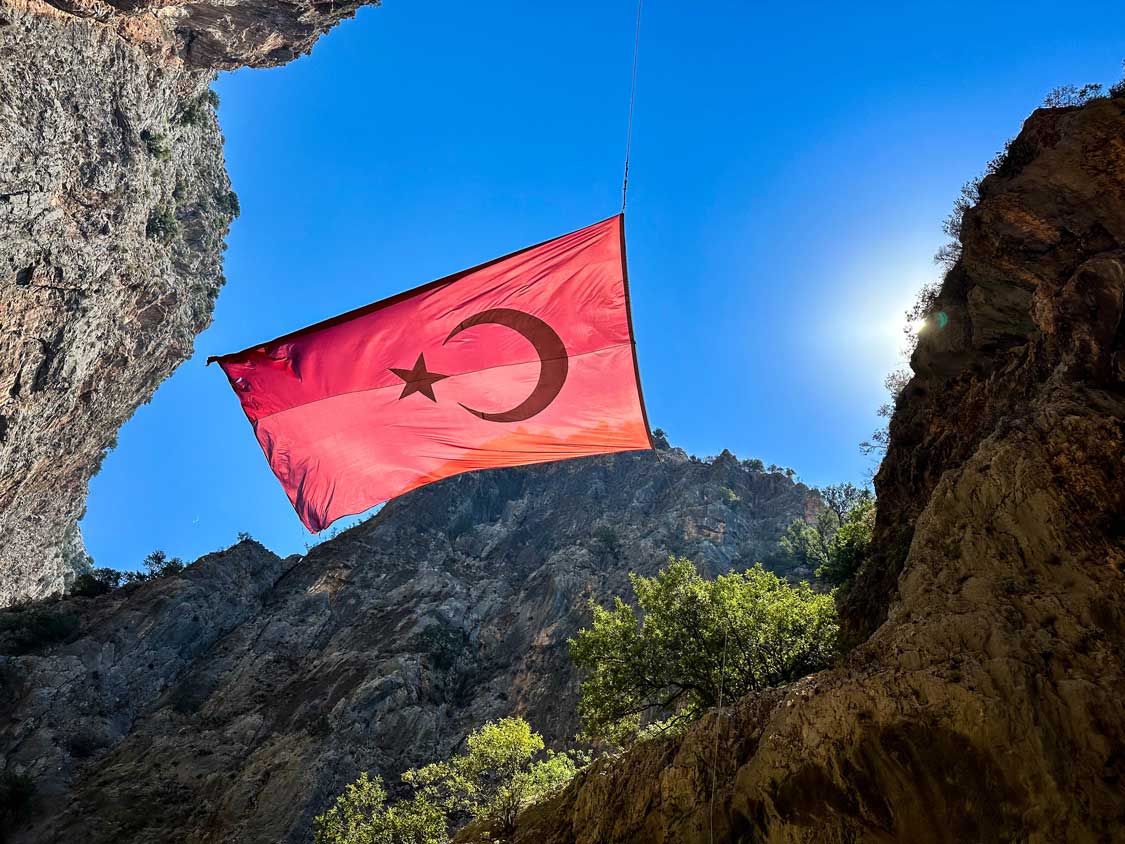
Saklikent has become a genuine tourist hotspot, and its popularity has taken a little of the wildness out of it. But that’s easy to forgive once you’re standing in the shade of those enormous walls with the icy river rushing around your ankles. The shade, the cold water, and the relaxed, slightly carnival atmosphere are infectious, and a long lunch over the stream afterward is one of the great simple pleasures of the Turquoise Coast.
For more inspiration, see my roundup of the best places to visit in Turkey, and come join the Family Travel Support Group on Facebook.
Wandering Wagars is a participant in the Amazon Services LLC Associates Program, an affiliate advertising program designed to provide a means for sites to earn advertising fees by advertising and linking to amazon.com, amazon.co.uk, amazon.ca. Amazon and the Amazon logo are trademarks of Amazon.com, Inc. or its affiliates
You May Also Like To Read: