
Everything your family needs to pack for Greece and nothing you don’t. Covers summer islands, shoulder season ruins days, and winter mainland travel, organized by season.
I’ll tell you the moment when I understood what packing for travel in Greece actually required.
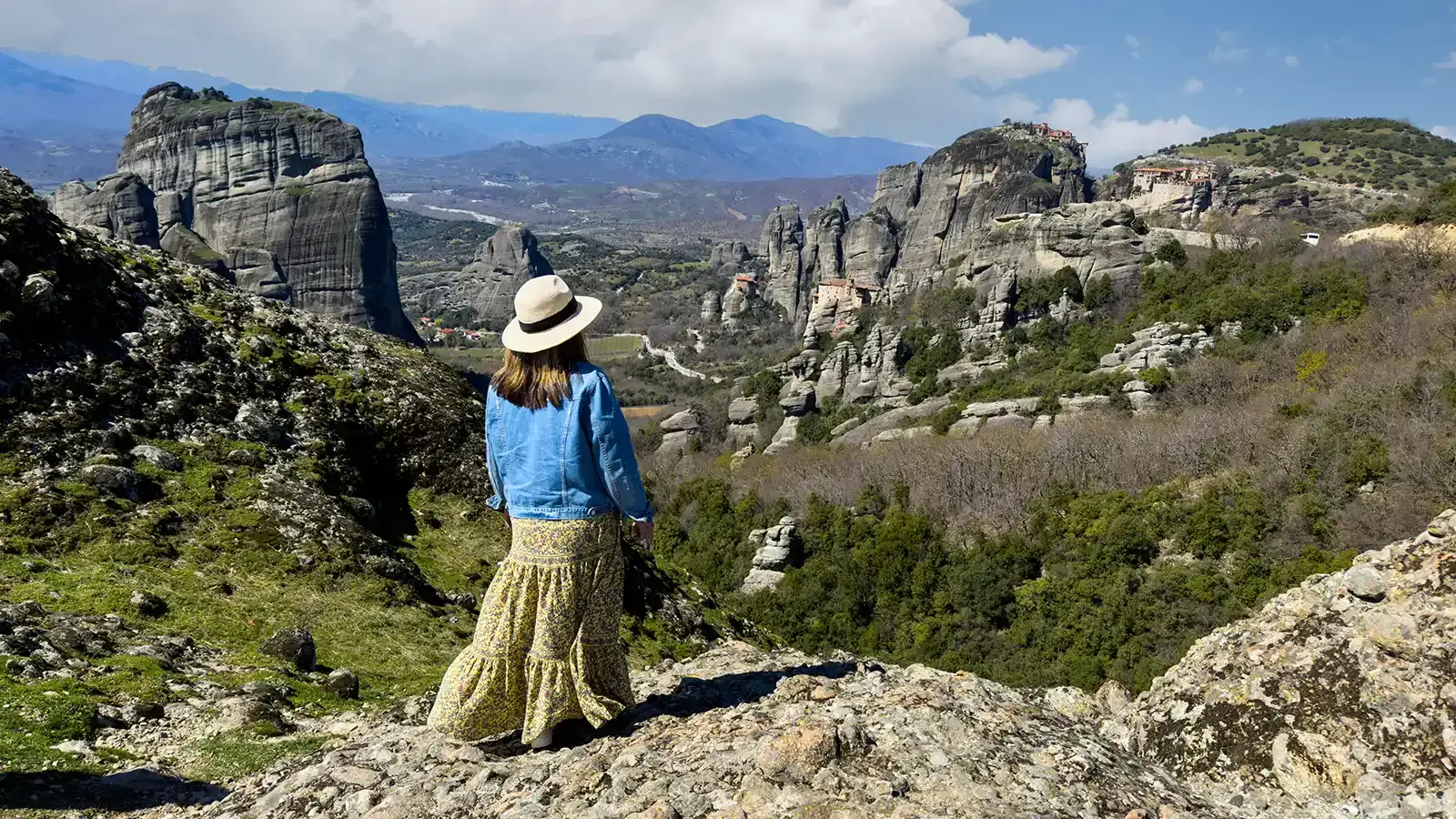
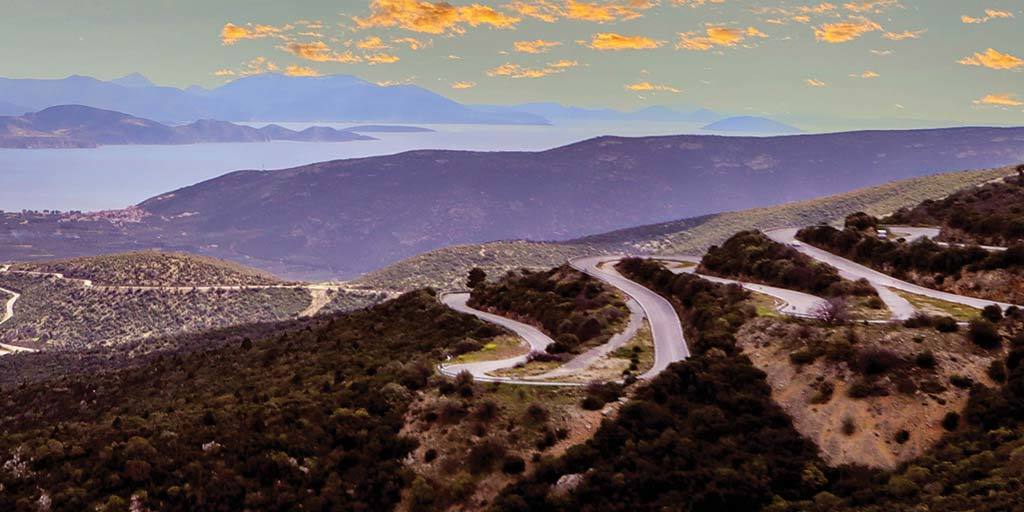
We were four days into our Greek road trip through the Pelopponnese, somewhere on a mountain pass in central Greece between Delphi and Meteora. The temperature had dropped fifteen degrees since we left the coast. Cohen was fine. Dylan was fine. Christina was fine. I was wearing a thin, linen shirt and quietly reconsidering my entire approach to travel planning.
Greece has a reputation as a hot, sunny, postcard-perfect Mediterranean destination. And from June through August on the islands, that reputation is mostly earned. But Greece is also a country filled with towering mountains, ancient ruins on wind-scoured hilltops, and winters cold enough to dust the peaks around Delphi with snow. The Cyclades in October are a completely different proposition than Santorini in July. Thessaloniki in February is a different experience from Mykonos in August.
I have explored Greece with my family across multiple trips: the Peloponnese road trip through Nafplio, Mycenae, Epidaurus, and Monemvasia, island days on Milos, Santorini, and Mykonos, the monasteries of Meteora, the ruins of Delphi, and the backstreets of Thessaloniki. This Greek travel packing list is built from all of that experience
Here is exactly what your family needs in the bag, and what to leave at home when traveling through Greece.
What You’ll Find in This Packing Guide for Greece
Greece throws a specific set of packing challenges at traveling families that most guides flatten into one generic Mediterranean list:
- Serious climate variation by season. Peak summer on the Aegean islands regularly hits 95 to 104 degrees Fahrenheit. The shoulder seasons bring cooler temperatures, wind, and rain. Winter in the mainland mountains can produce genuinely cold conditions. This guide covers all three.
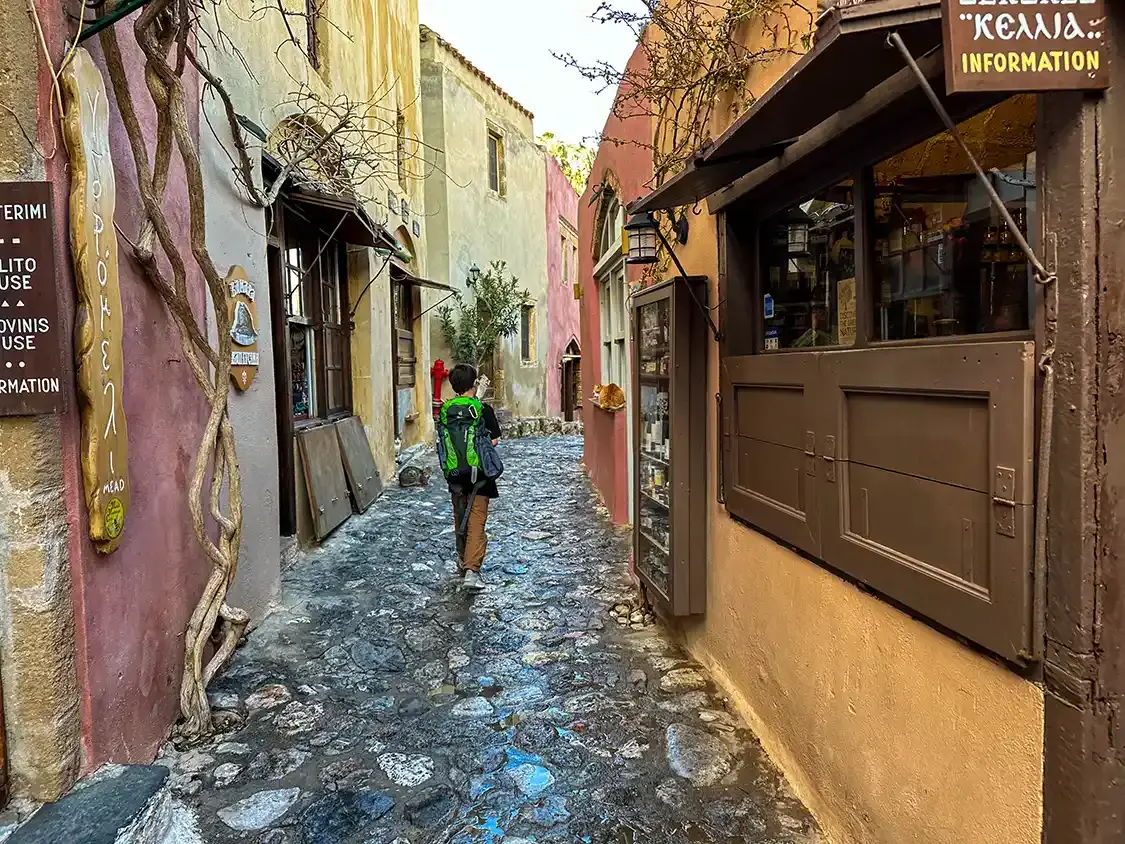
- Terrain variety. Cobblestone streets in island villages, ancient ruins on uneven rocky hillsides, marble temple steps worn smooth by three thousand years of feet, and long stretches of pebbly beach. Footwear is one of the most important decisions you will make for a Greece trip.
- Island logistics. Ferry travel, small boats to beaches, days where your bag sits in a locker or on a boat deck in direct sun. What you pack and how you organize it changes on island itineraries.
- Family logistics. What works for adults on a Greek island is often completely inappropriate for kids, particularly on ancient site days, where they need grip, coverage, and hydration. This guide accounts for both.
This Greece packing guide is organized by season first, then by category within each season, with specific callouts for men, women, teens, and kids throughout.
Before You Pack: Understanding Greece’s Climate
Greece is a smaller country than many people expect. The climate is more varied than the stereotypical island-and-sunshine postcards suggest. Where you are going and when you are going to Greece matter significantly when organizing your packing.
The Islands: Cyclades, Dodecanese, Crete
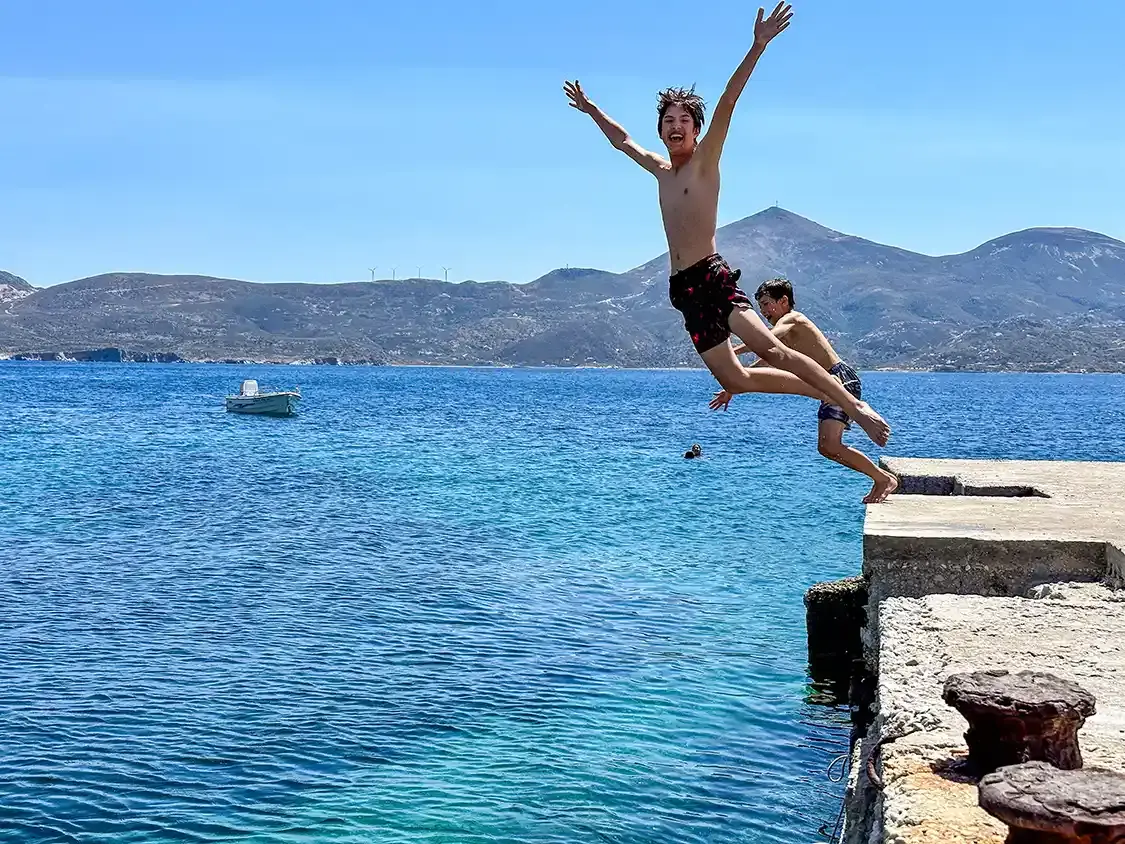
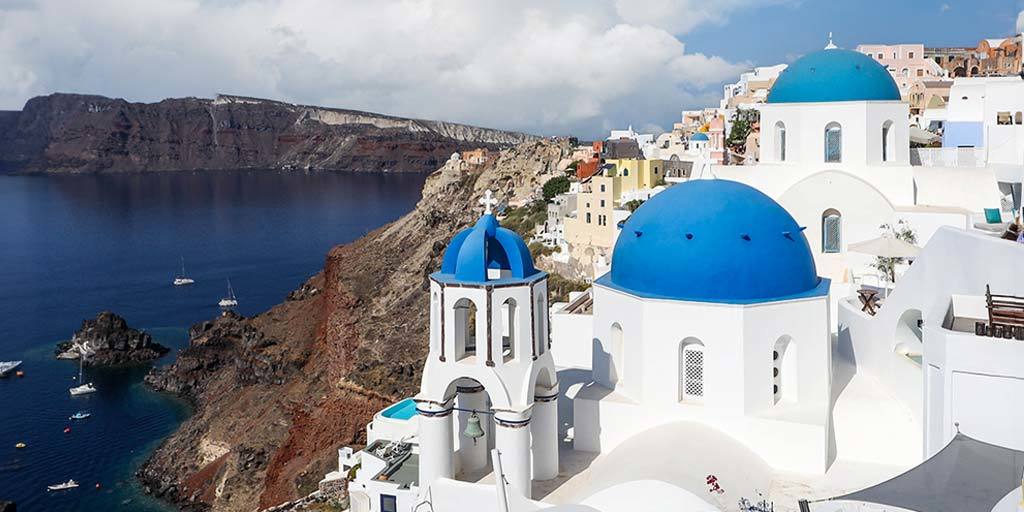
Santorini, Mykonos, Milos, Rhodes, Crete. The Aegean island summers run hot and dry from June through August, with temperatures regularly reaching 90 to 104 degrees Fahrenheit (32 to 40 degrees Celsius) and the Meltemi wind providing relief that can range from pleasant to seriously disruptive to ferry schedules and small boat plans. July and August are peak season throughout the islands. Expect peak crowds and peak heat. September and October are genuinely quite lovely: the water is still warm from summer, the crowds thin out, and temperatures settle into the mid-70s to low 80s Fahrenheit (23 to 29 degrees Celsius).
From November through March, the islands are quiet and considerably cooler. Temperatures sit in the mid-50s to low 60s Fahrenheit (13 to 17 degrees Celsius), rain arrives regularly, and many hotels and restaurants close entirely. If you are traveling off-season, pack for it.
Athens and the Mainland
Athens runs hot in summer, the weather is dry and intense, with July and August regularly hitting 95 to 100 degrees Fahrenheit (32 to 38 degrees Celsius). The ancient sites can feel like ovens in the middle of the day during peak summer. Early morning and early evening visits are a survival strategy, not a preference.
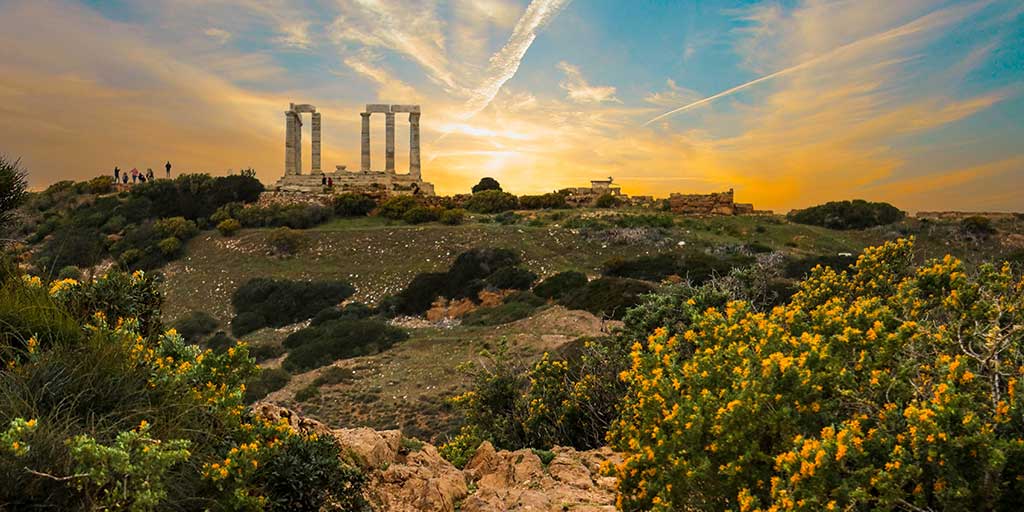
Spring, from March through May, is genuinely one of the best times to visit Athens and the mainland. This is when my family took our multi-generational road trip. Temperatures sit comfortably in the 60s to low 70s Fahrenheit (16 to 22 degrees Celsius), wildflowers cover the hillsides around sites like Delphi and the Temple of Poseidon at Sounion, and the crowds are manageable. October and November offer similar conditions.
Winter brings real cold to Athens. December through February sees temperatures regularly in the low 40s to mid-50s Fahrenheit. It rains. Occasionally, it snows. Pack accordingly if you are visiting in winter.
The Peloponnese
Nafplio, Mycenae, Epidaurus, Monemvasia, Mystras. The Peloponnese mirrors mainland Greece seasonally, with one key difference: the mountains in the interior can be dramatically colder than the coast.
When we drove through the Peloponnese in spring, the road between Sparta and Monemvasia passed through mountain passes that were cold enough to require a proper jacket even in late April. The coastal towns were thirty minutes away and were perfect T-shirt weather. Layer accordingly.
Northern Greece and Thessaloniki
Thessaloniki and northern Greece have a more continental climate than that in the south and the islands. Summers are hot but shorter. Winters are genuinely cold, with temperatures regularly dropping below freezing and snowfall in the mountains.
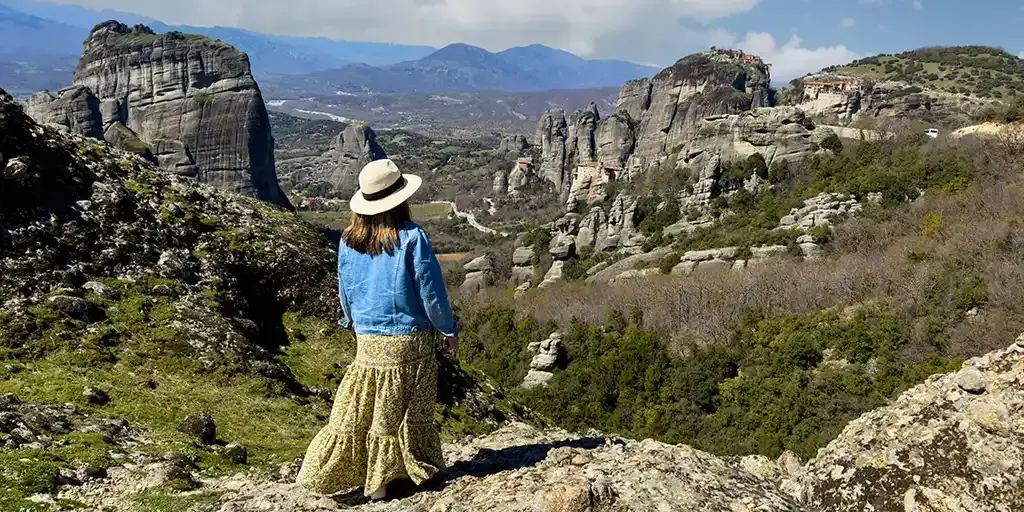
Meteora in winter is extraordinary to look at, but requires a proper winter coat and cold-weather gear.
The One Thing Most Families Get Wrong About Packing for Greece
Greece is not uniformly hot. Ancient ruins and historical sites, in particular, can be brutal during the summer: direct sun, zero shade, uneven stone terrain, and no shelter are often the norm.
During the shoulder season, ruins visits, particularly at places like Meteora, Delphi, and the Peloponnese, require proper layering. Pack for the ruins, not just the resort.
Greece Summer Packing List (June through August)
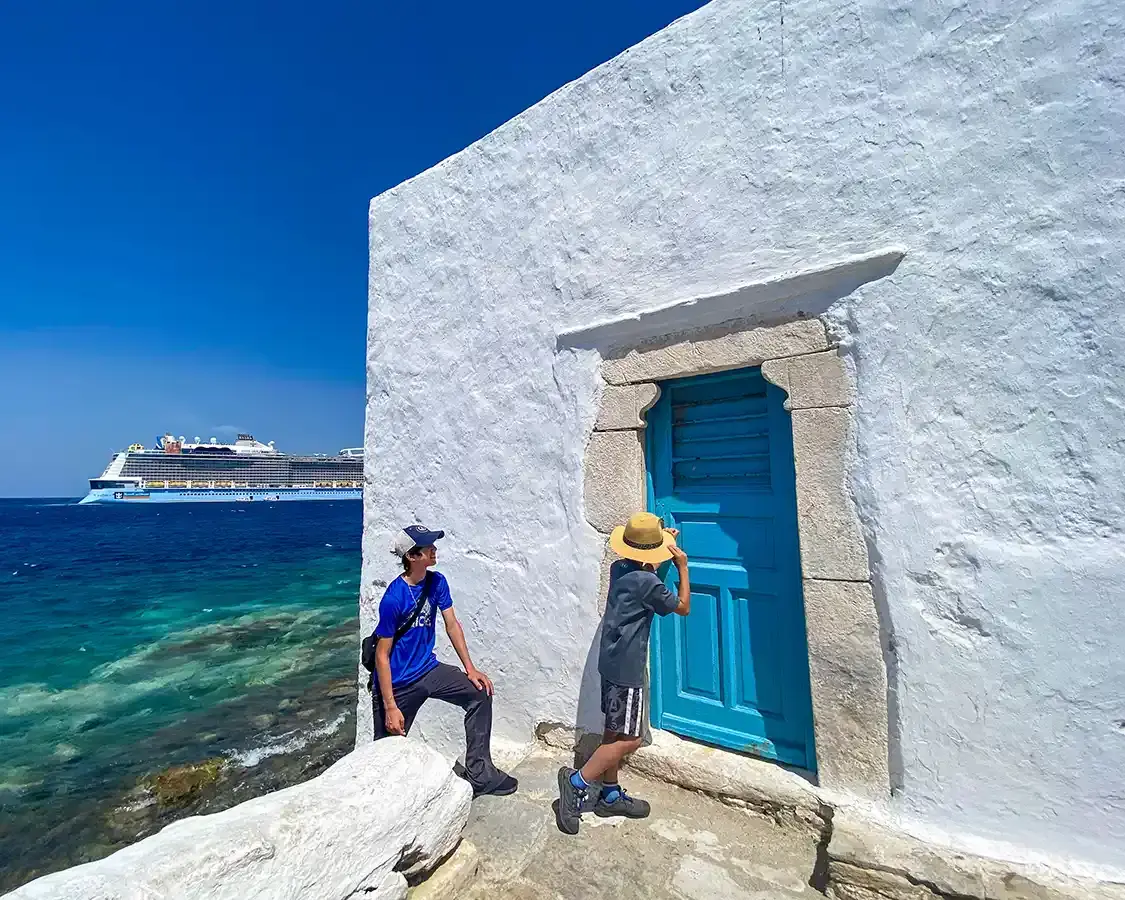
Summer in Greece can mean serious heat. The Aegean islands regularly hit 95 to 104 degrees Fahrenheit (35 to 41 degrees Celsius) in July and August. Your packing goal should be lightweight, breathable, and versatile clothing, suitable to take you from a morning at the Acropolis, to a ferry deck out to the islands, to a patio at a taverna dinner without missing a beat. Think linens, light cotton, quick-dry fabrics.
Quick-Dry Matters More Than You Think in Greece
Many Greek island guesthouses and smaller hotels do not have dryers. Anything that cannot be hand-washed and air-dried overnight becomes a logistical nightmare by day three on a Greek itinerary.
Linen, travel nylon, and moisture-wicking fabrics are your friends. Denim is not. It’s heavy, slow to dry, and holds your body heat in.
Summer: Clothing for Men and Teens
Greek men dress with a certain effortless style that leans toward fitted linen shirts, light trousers, and clean footwear. You do not need to match them, but it is worth knowing that the standard at a good taverna or a rooftop bar in Santorini is higher than cargo shorts and a baseball cap.
- 3 to 4 lightweight short-sleeve shirts (linen or moisture-wicking): Columbia Utilizer Short Sleeve Shirt. Dries overnight, packs small, does not wrinkle. Earns its place on every trip we take.
- 1 to 2 lightweight long-sleeve shirts for cooler evenings and ruins days with exposed hilltops: PJ Paul Jones Long Sleeve Linen Shirt. The wind on Santorini’s caldera rim in September is a different creature from July on the beach.
- 2 pairs of lightweight linen or cotton travel pants. Leave the jeans at home: Sailwind Men’s Linen Pants. Jeans are heavy, slow to dry, and brutal in 95-degree heat.
- 1 to 2 pairs of light shorts, knee-length or close to it: Columbia Silver Ridge Shorts. Useful for beach days and casual island exploring. Greek island cafes and restaurants are casual about shorts for tourists.
- 1 to 2 swimsuits or board shorts. Bring two if you are doing significant beach time, so you are not pulling on a wet pair every morning.
- 2 rash guards (UPF 50+) for beach days, boat trips, and snorkeling: Amazon Essentials Men’s Rash Guard. The Greek sun on open water is intense. A rash guard is better sun protection than any amount of sunscreen reapplication.
- 1 packable insulating layer for Meteora mornings, Delphi evenings, and ferry decks in the wind: Columbia Men’s Delta Ridge Down Jacket. This is the layer that catches most families off guard. It earns its place even in August.
- Decent pair of hiking shoes
- Underwear x7: lightweight, quick-dry.
- Socks x7: lightweight merino wool or wool-blend. Merino handles both the heat of the ruins in summer and the cooler evenings in the mountains better than cotton.
Summer: Clothing for Women and Teens
Christina’s take on Greek island packing: flowy, layered, and versatile. The maxi dress does more work per gram than anything else in a Greece travel suitcase. One good linen maxi covers sightseeing, dinner, beach cover-up, and cool evenings in a single item.
- 3 to 4 lightweight linen or cotton tops: Amazon Essentials Women’s Linen Blend Top
- 2 pairs of lightweight travel trousers or linen pants: Rekucci Women’s Wide-Leg Linen Pants
- 1 to 2 midi or maxi dresses. The single most versatile item for a Greece trip: Women’s Maxi Travel Dress. Works for island sightseeing, taverna dinners, casual beach cover-up, and cooler evenings in one item.
- 1 pair of shorts for beach days and casual resort exploring: Women’s Everyday Shorts
- 1 lightweight cardigan. Greece in summer still has cool ferry crossings, aggressively air-conditioned restaurants, and September evenings that drop faster than expected: Amazon Essentials Women’s Lightweight Cardigan
- 1 pair of wide-leg trousers or a long skirt for monastery and church visits: Women’s Wide-Leg Travel Trousers. Greece’s Orthodox monasteries, including Meteora, require covered shoulders and knees. A lightweight scarf doubles as a shoulder cover.
- 2 swimsuits with cover-up or sarong: Women’s Swimsuit with Sarong Combo
- 2 rash guards (UPF 50+): Kanu Surf Women’s Rash Guard
- 1 packable puffer or rain jacket for ferry crossings, Meteora, Delphi, and evenings: Columbia Women’s Heavenly Long Hooded Jacket
- Good hiking shoes
- Underwear x7: lightweight, quick-dry.
- Socks x7: lightweight merino wool or wool-blend.
Summer: Clothing for Kids Under 12
- 4 to 5 lightweight t-shirts. Light colors for sun-protection benefits on long days wandering through historical sites.
- 2 pairs of shorts.
- 2 pairs of lightweight pants or joggers for cooler mornings and evening travel.
- 2 swimsuits.
- 2 rash guards (UPF 50+): Columbia Kids’ Tamiami Short Sleeve Shirt (UPF 40+). Kids spend more time in direct sun on days exploring ruins and historic sites than anyone plans for. Rash guards and UPF shirts are the most practical solution.
- 1 packable light puffer jacket.
- Good hiking shoes.
- Underwear x8
- Socks x8.
Greece Shoulder Season Packing List (April, May, September, October)
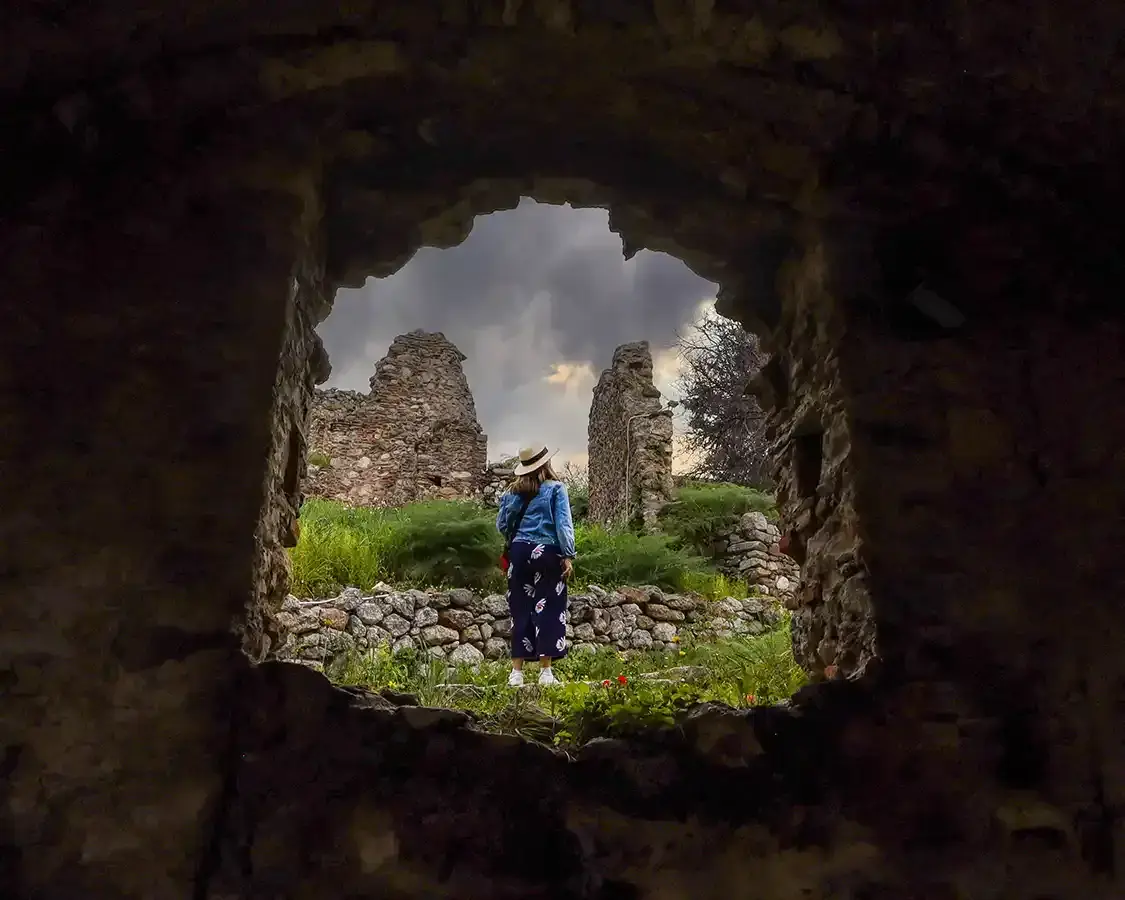
Shoulder season in Greece genuinely provides excellent weather for families traveling in Greece. Smaller crowds, lower prices, comfortable temperatures for ruins visits and hiking, and seas still warm enough for swimming in September and October. The packing adjustments from summer are modest but important.
April and May: Athens and the mainland are in the mid-60s to low 70s Fahrenheit (17 to 22 degrees Celsius). Wildflowers everywhere. The islands are quieter and cooler, with occasional rain. Pack a proper midlayer and a rain shell.
September and October: The islands are still warm, and the sea is at its best swimming temperature, but evenings cool noticeably in October. Meteora and Delphi in autumn are outstanding. Bring proper layers to deal with the temperature changes.
What Changes for Shoulder Season
The summer list is the foundation. These are the adjustments and additions for shoulder season travel:
- Swap the packable puffer for a proper mid-weight fleece or upgrade to a fleece-lined jacket. Delphi and Meteora in October are not beach weather. An evening in Thessaloniki in April requires proper warmth.
- Add a lightweight waterproof rain shell if not already packed. Shoulder season rain arrives without much warning, particularly on the mainland and northern islands. We experienced this firsthand when we were chased out of Meteora due to a sudden rainstorm.
- Swap at least half your shorts for an additional pair of lightweight trousers. Shorts are still useful on warm island days in September, but trousers carry more of the load in shoulder season.
- Add a light wool or merino base layer for morning ruins visits at higher elevation sites. Delphi sits at about 1,800 feet. Meteora sits at roughly 1,000 feet in a valley that funnels cold air in the mornings. Both feel colder than you expect on an October morning.
- For kids, add a warm fleece layer and an extra set of long pants. Kids lose heat faster than adults on exposed ruins sites in the wind.
Shoulder Season on the Peloponnese: A Specific Note
Our family road trip through Nafplio, Mycenae, Monemvasia, and Mystras was in the spring. The coastal towns were warm and lovely. The mountain roads between Sparta and Monemvasia had us reaching for our heaviest layers.
Mornings and evenings in the Peloponnese interior during spring and autumn require a proper jacket, not just a cardigan. The coast and the mountains are different worlds here, sometimes within the same hour of driving.
Greece Winter Packing List (November through March)
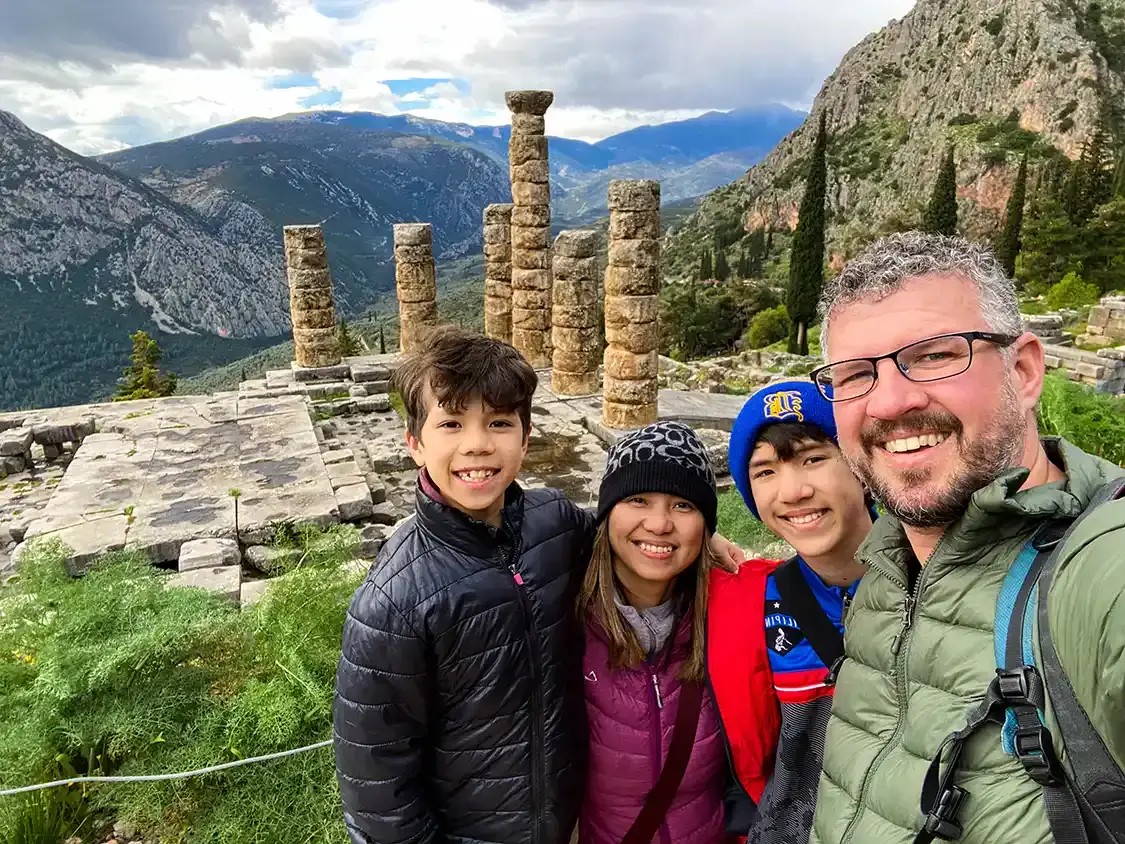
Winter Greece is an entirely different experience from summer Greece. Athens in January averages in the low to mid-50s Fahrenheit (13 degrees Celsius) with regular rain. Thessaloniki sits in the low 40s (5 degrees Celsius). Meteora in winter can drop below freezing. The islands that remain open are quiet, moody, and genuinely beautiful in a way that peak season never is. But you need to pack for the cold weather.
Winter: Clothing for Men and Teens
- 2 to 3 medium-weight long-sleeve shirts or heavy linen shirts.
- 1 heavyweight fleece midlayer: Columbia Men’s Steens Mountain Fleece. The layer that does the actual work in winter in Greece.
- 1 packable puffer or insulated jacket: Columbia Men’s Delta Ridge Down Jacket. Layer it under or over the fleece depending on conditions.
- 1 waterproof outer shell or rain jacket. Greek winter rain is frequent and persistent.
- 2 to 3 pairs of heavier travel trousers. Jeans are acceptable in winter, given the cold, but quick-dry still matters for rainy days.
- Merino wool base layers for northern Greece and mountain sites: Danish Endurance Classic All-Season Merino Base Layer
- Decent pair of hiking shoes
- Underwear x7
- Socks x7, heavier weight.
Winter: Clothing for Women and Teens
- 2 to 3 medium-weight long-sleeve tops and layering pieces.
- 1 to 2 heavier cardigans or knit sweaters. What Greece’s Orthodox monasteries and December streets actually call for.
- 1 mid-weight insulating jacket: Columbia Women’s Heavenly Long Hooded Jacket. The full-length version earns its place in winter.
- 1 waterproof rain shell or rain jacket.
- 2 to 3 pairs of heavier travel trousers or jeans, if preferred.
- Merino base layers for colder days: Spyder Women’s Merino Base Layer
- Good hiking shoes
- Underwear x7
- Socks x7 heavier weight.
Winter: Clothing for Kids under 12
- 2 to 3 long-sleeve shirts each.
- 1 to 2 heavyweight fleece layers each.
- 1 insulated jacket each. A packable puffer is fine for the islands. For Meteora, Thessaloniki, or Delphi in winter, a proper insulated winter coat is a better call.
- 1 waterproof rain shell each.
- 2 to 3 pairs of warm trousers each.
- Merino or wool base layers for the coldest days: Smartwool Kids’ Merino Base Layer
- Good hiking shoes.
- Underwear x 8
- Socks x8 heavier weight.
Footwear for Greece
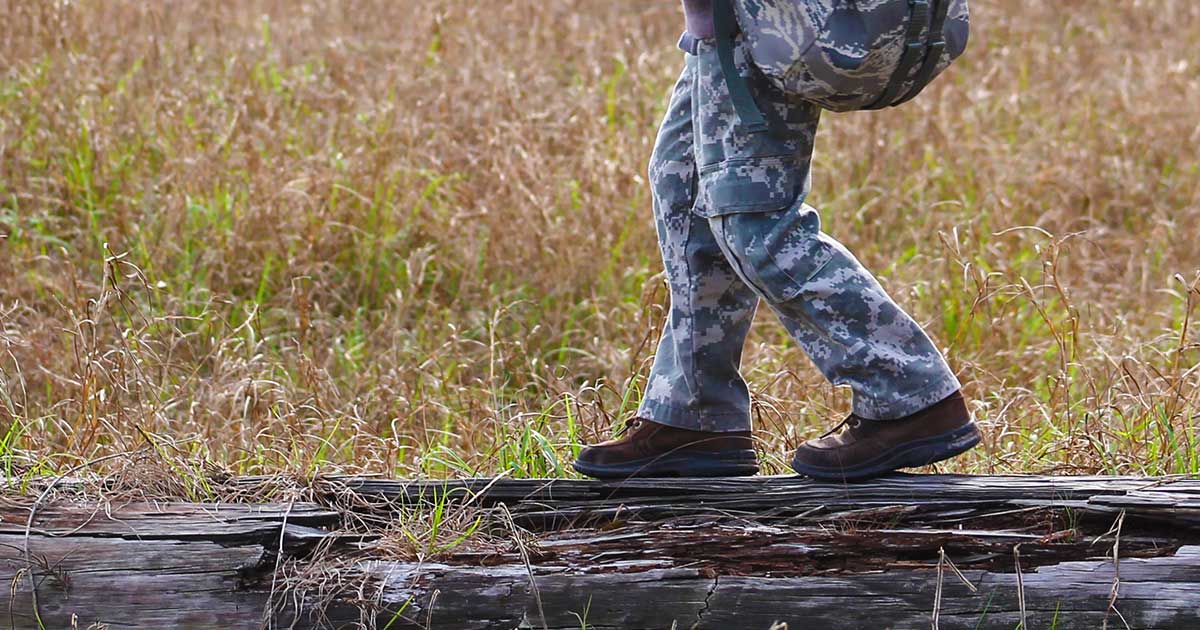
Footwear is the single most impactful packing decision for a Greece trip, and the one most families get wrong. Greek ruins are among the most terrain-demanding sites in the world: uneven stone, slippery marble polished by centuries of feet, steep hillside paths with loose gravel, and long distances with zero shade. The wrong shoes will ruin a day.
At the same time, Greek island villages demand something that does not look like hiking gear at a taverna dinner. The ideal Greece shoe is supportive enough for Mycenae, comfortable enough for six hours of cobblestone walking in Nafplio, and decent enough to sit at a restaurant in Santorini without looking like you came from a trail race.
Men, Women, and Teens
- Supportive walking sandals with an ankle strap and a real sole grip: Teva Hurricane Drift. The primary Greece-friendly sandal for warm-weather itineraries. Works on cobblestones, rugged paths, boat decks, and beach days. Dries immediately after a wet ferry landing. The ones linked above are for men; here is the link to the women’s version.
- Trail runners or sturdy walking shoes with a solid grip for major ruins days. The Acropolis, Mycenae, Delphi, and Meteora all involve steep, uneven, and in some cases slippery stone. A supportive shoe with grip handles all four comfortably. For men, I recommend these. For women, these are Christina’s go-to trail runners.
- Flip-flops or slip-ons for beach days, pool days, and guesthouse use.
- Closed-toe waterproof boots for winter travel and shoulder season mainland trips. A lightweight hiking boot handles Meteora in October or Mystras in winter without being excessive.
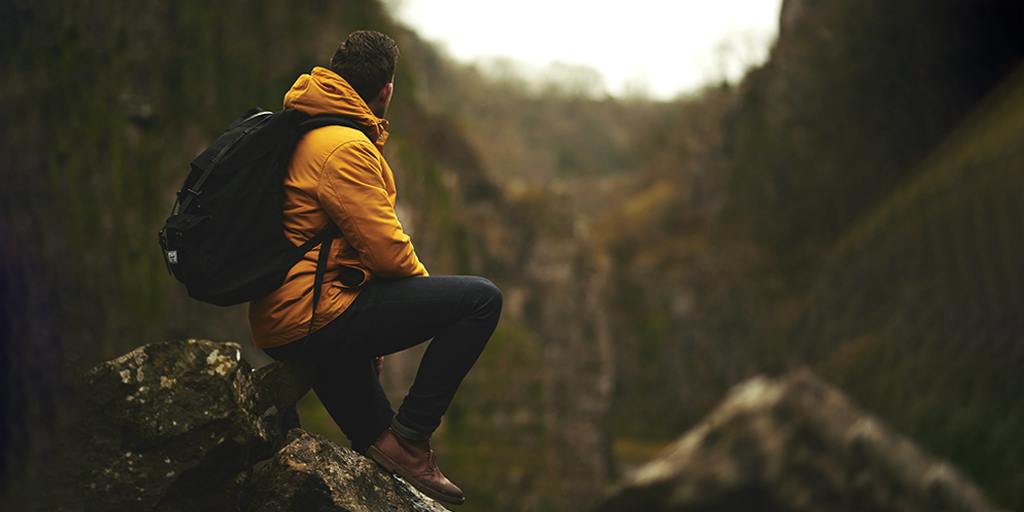
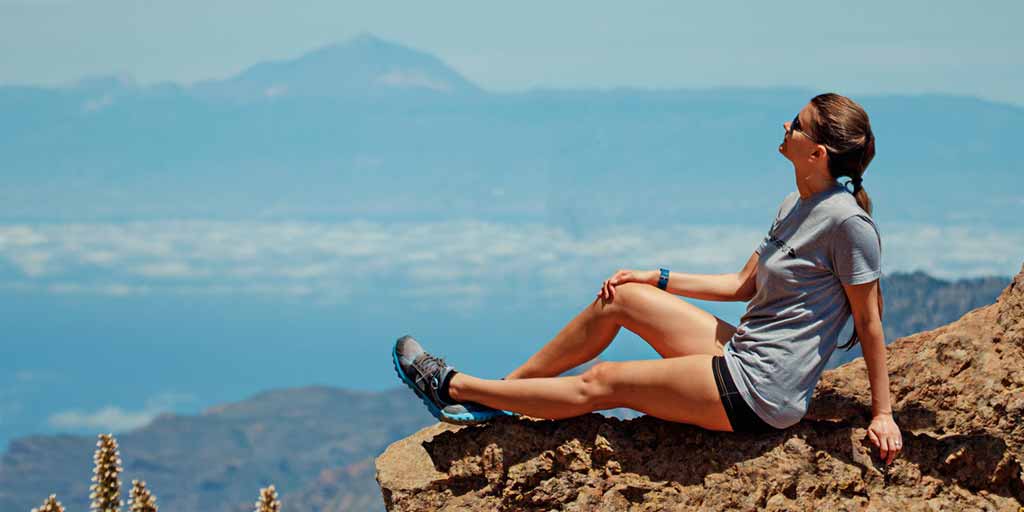
Sun Protection
The Greek sun in summer is ferocious, and historic sites offer almost no shade. You will be standing on exposed hilltops and open ruins in direct midday sun for hours. Sun protection is not optional.
- Reef-safe or broad-spectrum sunscreen SPF 50+, and bring more than you think you need: ThinkSport Everyday SPF 50+. Greece has excellent pharmacies in cities, but smaller island pharmacies have limited stock in peak season. Bring enough.
- Wide-brim sun hat (UPF 50+) for men: Tilley LTM6 Broad Brim Hat. Ventilated and packable. The Acropolis in July without a hat is a test of character.
- Wide-brim sun hat (UPF 50+) for women: Dorfman Pacific Women’s Sun Hat
- Kids’ sun hat (UPF 50+): Outdoor Research Kids’ Helios Sun Hat. Kids burn on the back of the neck before they feel it coming. The neck flap is the part that matters.
- Polarized sunglasses for all family members. The Aegean sun reflected off white marble and white-washed walls is genuinely blinding.
- Babiators Polarized Kids’ Sunglasses. Choose a pair that will actually stay on kids’ faces.
Gear and Accessories
Bags
- Packable daypack: Sea to Summit Ultra Sil Pack. Compresses to nothing in your main bag, essential for city days, ferry crossings, and island excursions where you do not want to carry your full luggage.
- Sling bag for city days: Alpaka Metro Sling Bag. Both hands free through Athens’ Plaka, the narrow lanes of Monemvasia, or the market streets of Thessaloniki.
- Packing cubes to organize by trip segment: Shacke Peak Packing Cubes. When you are moving between islands and the mainland on a Greek trip, organized bags save serious time and frustration.

Tech and Power
- Portable power bank: Nitecore NB10000 Power Bank. Lightweight, two full charges per device. Long ruins days drain phones fast when you are navigating, photographing, and looking things up.
- Universal travel adapter: BESTEK Universal Travel Adapter
- Compact camera for ruins and landscape: Sony RX100 VII. Greece rewards a proper camera. The light on the Aegean in the late afternoon and the detail in ancient stonework at Mycenae and Delphi are worth capturing well. If you need something more durable and waterproof, consider the Olympus Tough series.
Packable Quick-Dry Towels
- One per person: Sea to Summit DryLite Towel. Greek island guesthouses often have limited towel supply for beach use. One in every daypack solves this immediately.
Reusable Water Bottles
Greece can be hot, and days exploring the historic sites can be long. Dehydration on a travel day in July is the thing that ends the afternoon. One reusable bottle per person, minimum.
- Grayl GeoPress: Grayl GeoPress Water Purifier Bottle. Greece has good tap water in most cities, but smaller island systems vary. A filter bottle removes any doubt.
Toiletries
Bring From Home
- Sunscreen SPF 50+, and bring enough for the trip: ThinkSport Everyday SPF 50+. Athens pharmacies are well-stocked. Smaller island pharmacies in peak season are not. Stock up at home or in Athens.
- Insect repellent for adults and kids: Sawyer Premium Picaridin Spray (20%). Greece has mosquitoes, particularly in wooded mainland areas and after rain. Not as aggressive as the Amazon, but worth having.
- Prescription medications with a doctor’s note for anything controlled.
- Children’s paracetamol and ibuprofen in familiar brands.
- Allergy medications.
- Basic first aid: blister plasters are the most-used item after a full day in new footwear.
- Hand sanitizer x2.
Buy in Greece
- Shampoo, conditioner, body wash, toothpaste. Greek pharmacies and supermarkets (Sklavenitis, AB Vassilopoulos) are excellent and widely available in cities. Smaller islands have limited selection, so stock up in Athens or Thessaloniki.
- Basic medications. Greek pharmacies are very good, and pharmacists are helpful and often speak English.
Documents, Money, and Admin
- Valid passports for all family members. EU/Schengen passport holders do not need a separate visa.
- No visa required for US, Canadian, UK, and Australian citizens for stays up to 90 days within the Schengen Zone.
- Euros in cash. Greece is largely a cashless card economy in cities, but smaller island tavernas, village markets, and some ferries still prefer cash. Carry some.
- Ferry tickets printed or downloaded to your phone. Greek ferry boarding can be chaotic in peak season. Have your confirmation accessible offline.
- Travel insurance documents, printed and digital. Greece is generally safe, but medical costs without insurance are significant.
- Printed and digital copies of accommodation confirmations and emergency contacts.
- eSIM for connectivity throughout Greece: Airalo Europe eSIM. Pre-load before departure. EU roaming rules help if you have a European plan, but an eSIM is the simplest option for North American travelers.
What to Leave at Home
- Denim jeans for summer travel. Heavy, slow to dry, and genuinely miserable in 95-degree heat on a marble hilltop. Fine for winter trips.
- Impractical shoes. Heels on Santorini’s volcanic cobblestones or at Mycenae’s sloped entry path are a liability. The street surfaces throughout most of Greece’s island towns and ancient sites are uneven enough to turn a sprained ankle into a trip-ending event.
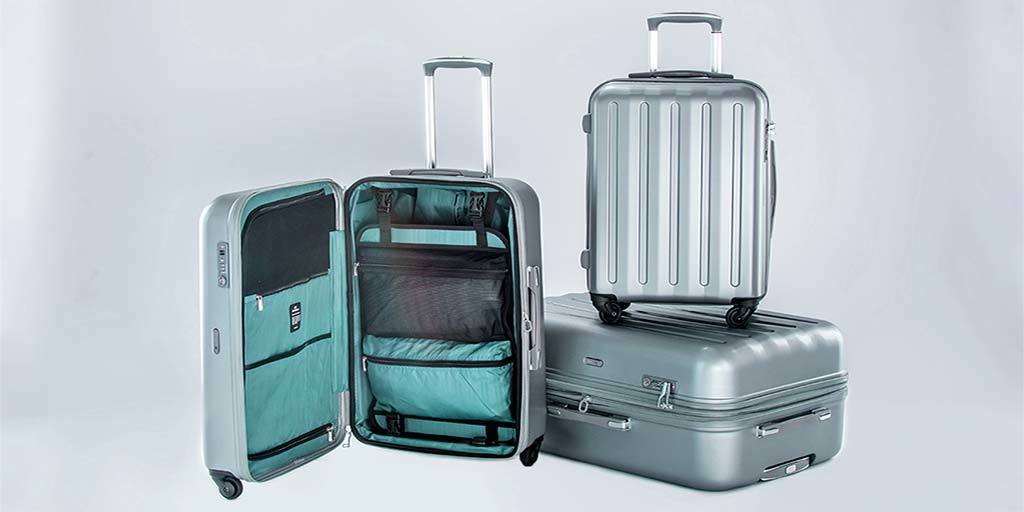
- Large heavy suitcases for island-hopping itineraries. Ferries, small boat transfers, and narrow island accommodation stairways all punish oversized luggage. A soft-sided mid-size bag per person is the right call.
- All your good camera gear for beach and boat days without dry-bag protection. Salt spray and electronics do not get along.
- Expensive jewelry. Greece is safe, but crowded tourist areas are pickpocket territory, particularly in Athens’ Monastiraki and island port towns in peak season.
- Full-size toiletries for summer island itineraries. Athens has excellent pharmacies and supermarkets. Stock up there and travel light.
Quick Reference: Clothing Quantities per Person
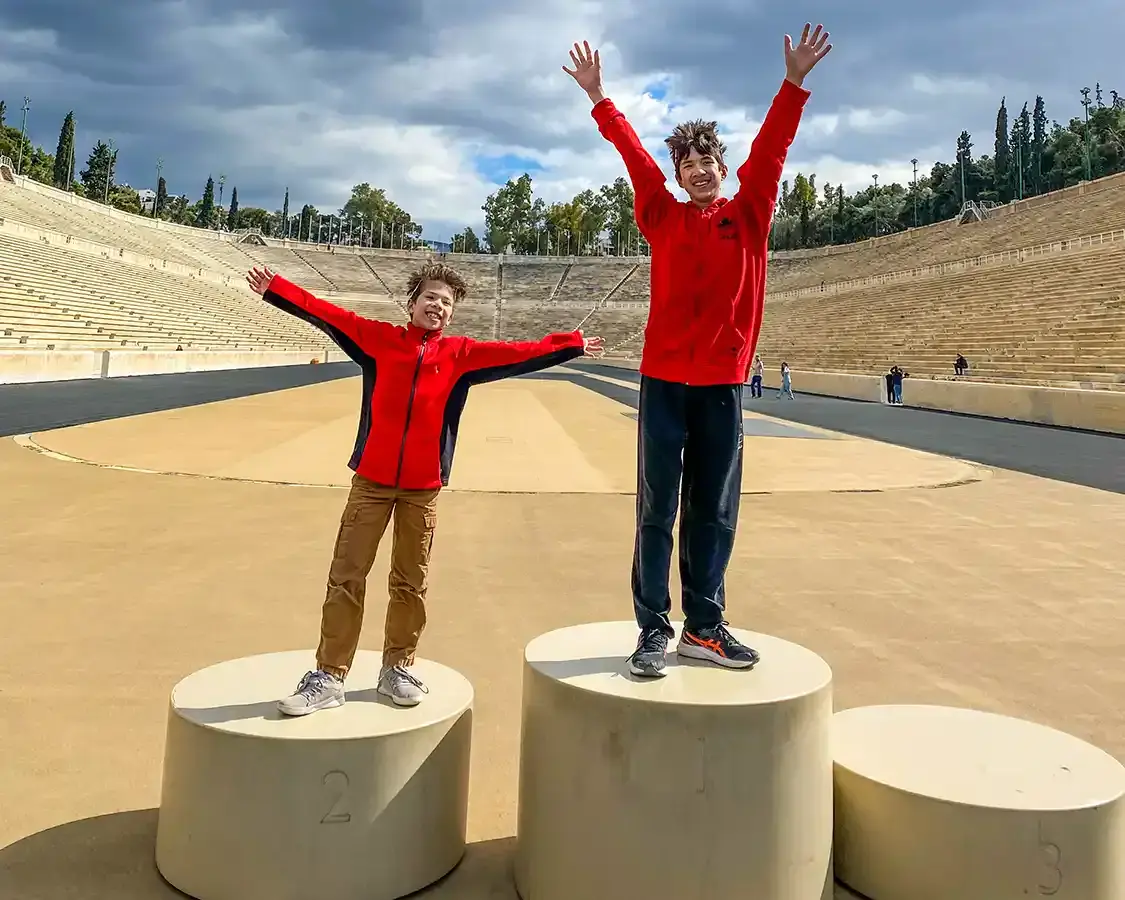
Based on a two-week Greece trip covering Athens, the Peloponnese, and two or three islands in summer or shoulder season.
Item | Men | Women | Kids |
|---|---|---|---|
Lightweight t-shirts/tops | 3-4 | 3-4 | 4-5 |
Long-sleeve t-shirts/tops | 2 | 2 | 2 |
Lightweight travel pants | 2 | 2 | 2 |
Shorts | 2 | 2 | 2 |
Dress/Skirt | Software Engineer | 2 | 2 |
Insulating mid-layer | 1 | 1 | 1 |
Rain shell | 1 | 1 | 1 |
Rash guard | 2 | 2 | 2 |
Swimsuit | 2 | 2 | 2 |
Underwear | 7 | 7 | 8 |
Socks | 7 | 7 | 8 |
Frequently Asked Questions
Greek ancient sites have no formal dress code, though you will be more comfortable in lightweight, breathable clothing and practical footwear. Orthodox monasteries and churches, particularly Meteora, require covered shoulders and knees for both men and women. Women are typically asked to wear skirts rather than trousers at some monasteries, though this is inconsistently enforced. A lightweight scarf or wrap packed in your daypack handles this quickly when you arrive.
Late May, early June, and September are the sweet spots for families. Temperatures are warm but not brutal, the sea is swimmable from June onward, and the crowds at major sites like the Acropolis are significantly more manageable than in July and August. October is excellent for the mainland and the Peloponnese. Peak summer works well for island-focused trips where beach time outweighs ruins days.
A supportive walking shoe or trail runner with good grip is the practical choice. The Acropolis, Mycenae, Delphi, and Meteora all involve uneven stone, sloped marble, and loose gravel. Sandals with good ankle support, like the Teva Hurricane Drift, work for most warm-weather ruins days, though a closed-toe shoe gives more confidence on steep sections. Heels are a serious hazard at every major Greek site.
Greece uses Type C and F European two-pin plugs at 220V/50Hz. North American travelers need a universal travel adapter. Most modern electronics (laptops, phone chargers, camera batteries) are dual voltage and work fine with just an adapter. Check your device labels before plugging anything in.
Pack one mid-size soft-sided bag per adult and a smaller bag for teens. Wheeled luggage works fine for mainland road trips but is awkward on ferries, island staircases, and small accommodations in island villages. A soft duffel or backpack-style bag handles both contexts better. If you are island-hopping on ferries, lighter is always better.
Greece is a very safe family destination. The main issues are petty theft in crowded tourist areas, particularly Athens’ Monastiraki Square and port areas in peak season. Keep phones and wallets secure in busy markets and on the metro. The ancient sites, islands, and mainland are relaxed and family-friendly.
Travel Resources For Families Visiting Greece
For practical planning, safety considerations, and logistics, these dedicated guides provide all of the resources you need for family travel in Greece
Final Word on Packing for Greece
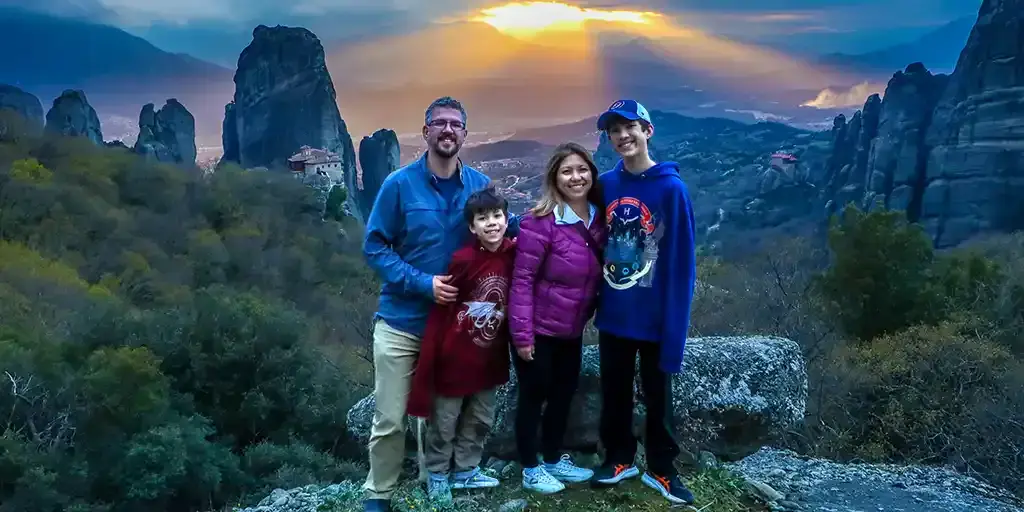
Greece does something for families. It was a Percy Jackson obsession that sent us there the first time, the promise of standing where the myths actually happened. And then it turned into something else entirely. Cohen standing in the Lion Gate at Mycenae, genuinely awed by the scale of a civilization that built this three thousand years ago. Dylan at the Temple of Poseidon, watching the sun sink into the Aegean, asking how long ago someone else stood in exactly this spot and watched the same thing happen.
The families who show up with the right shoes for the ruins, the right layers for the mountain road between Sparta and Monemvasia, and enough sunscreen for a July morning at the Acropolis get to be fully present for all of it. The families who do not spend the afternoon looking for a pharmacy.
Pack for the ruins. Pack for the unexpected cold on a hilltop in the wind. Pack light enough to carry your bag up the staircase of an island guesthouse without reconsidering your life choices.
Greece will do the rest.
Affiliate Disclosure: Some links in this article are affiliate links. If you purchase through these links, we may earn a small commission at no extra cost to you. We only recommend products we have used, tested, or researched thoroughly. Quality always comes before commission.
Sarah Kaya
Wednesday 22nd of April 2026
Güzel bir yazı olmuş, teşekkürler. Özellikle thorough approach hoşuma gitti.
Kevin Wagar
Wednesday 22nd of April 2026
Teşekkür ederim. İyi yolculuklar!