
Greece with kids doesn’t have to be overwhelming. Here are the Greece family travel tips you need: Visas, transportation, road trips, islands, safety, and where to go first.
I have never traveled anywhere quite like Greece. This country has shaped so much of the culture that we embrace today. It’s a place where history is baked into everyday life like a sweet slice of Baklava, yet still maintains an air of modernity and progressive living.
Family travel in Greece is wondrous, like embarking on an odyssey, without the risk. It’s a place where myth and marble and blue-domed sea views collide in a way that stops experienced travelers dead in their tracks.
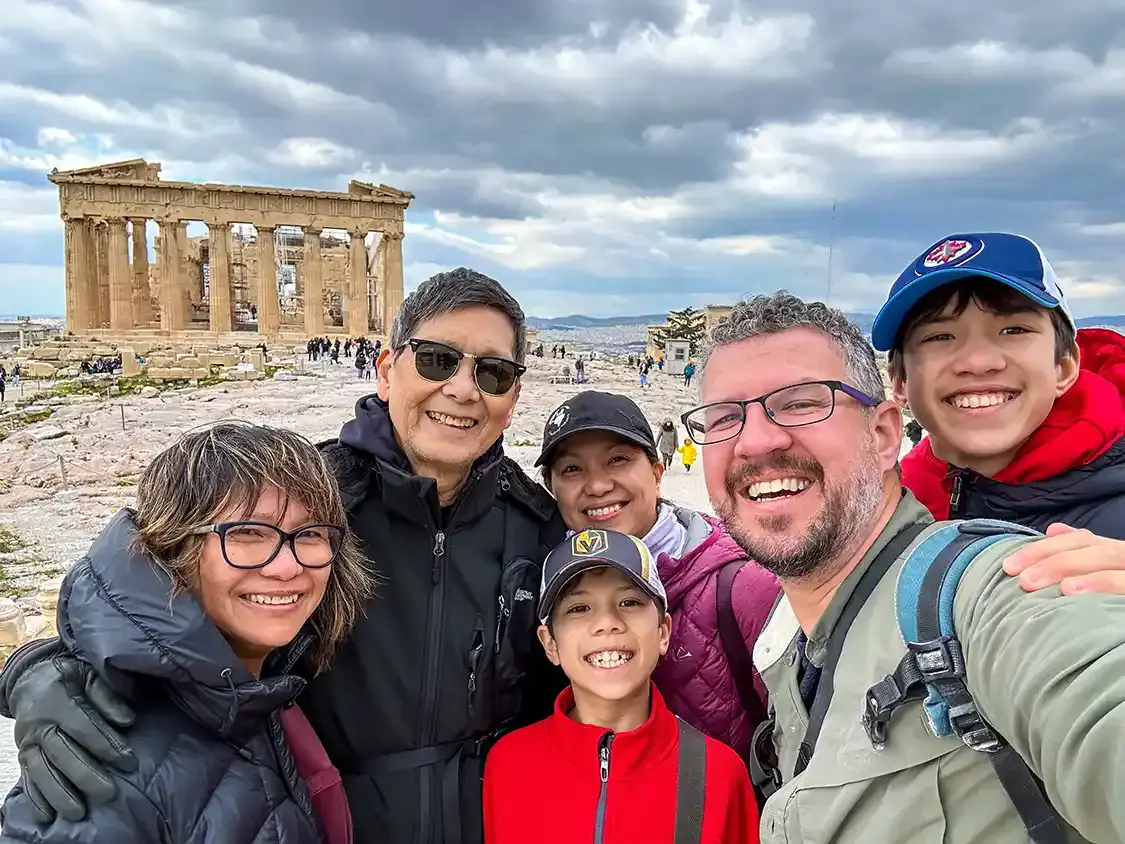
My family has traveled to more than 40 countries together. Greece is the only one we went back to twice in the same year. Once for a nine-day road trip through the mainland with three generations and a rented minivan. Once for a week-long Celestyal cruise through the Greek islands of the Aegean. Both times, Greece delivered sheer amazement.
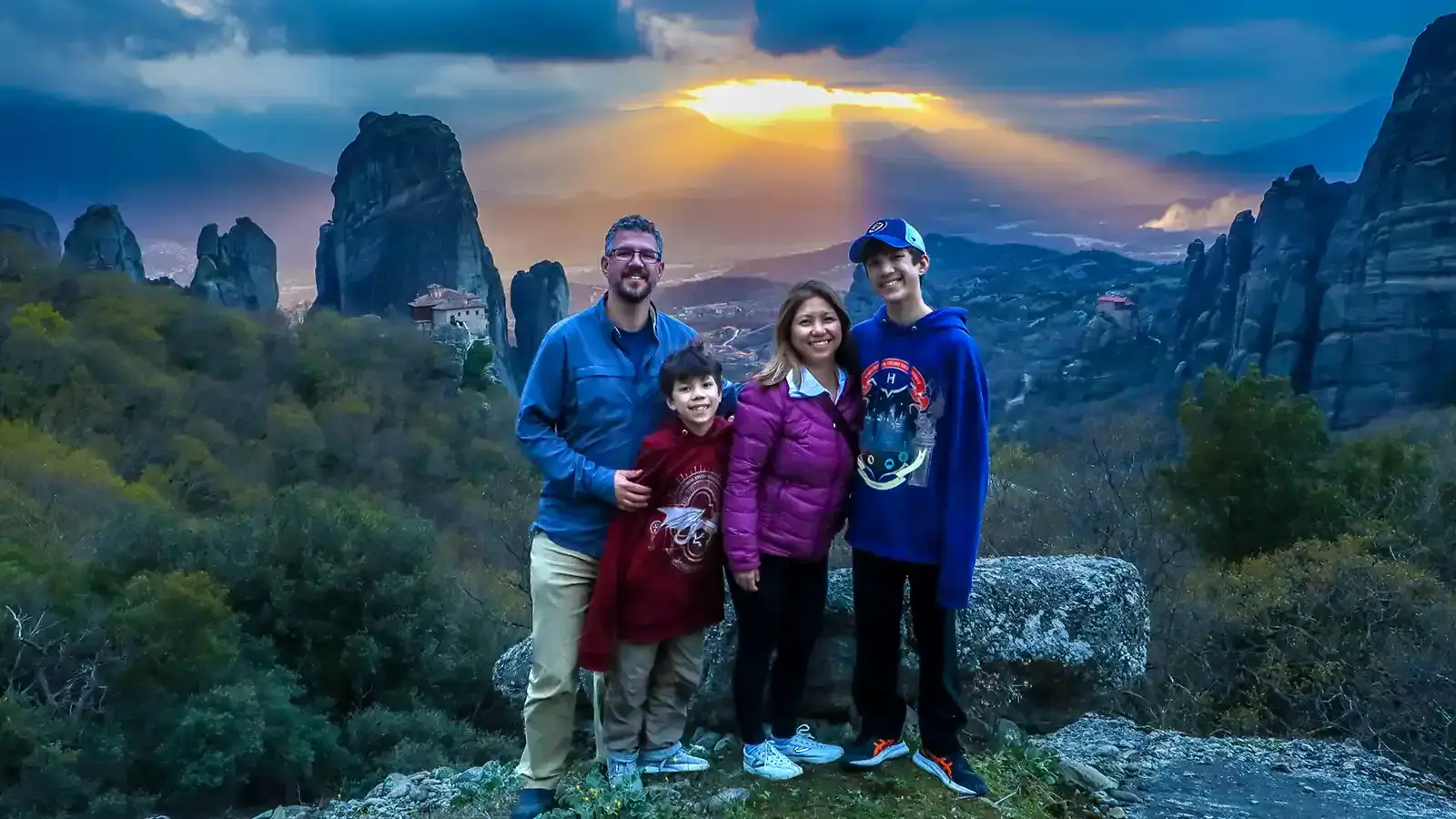
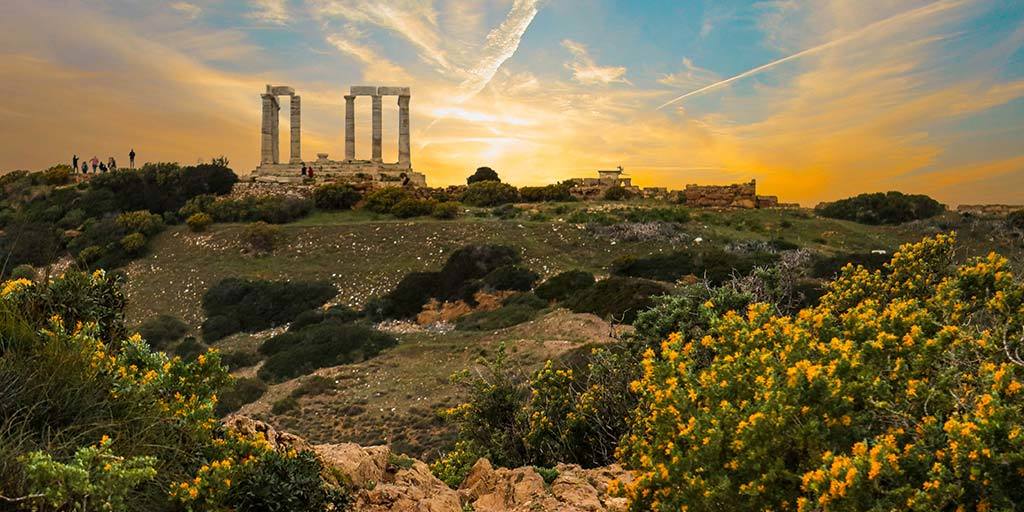
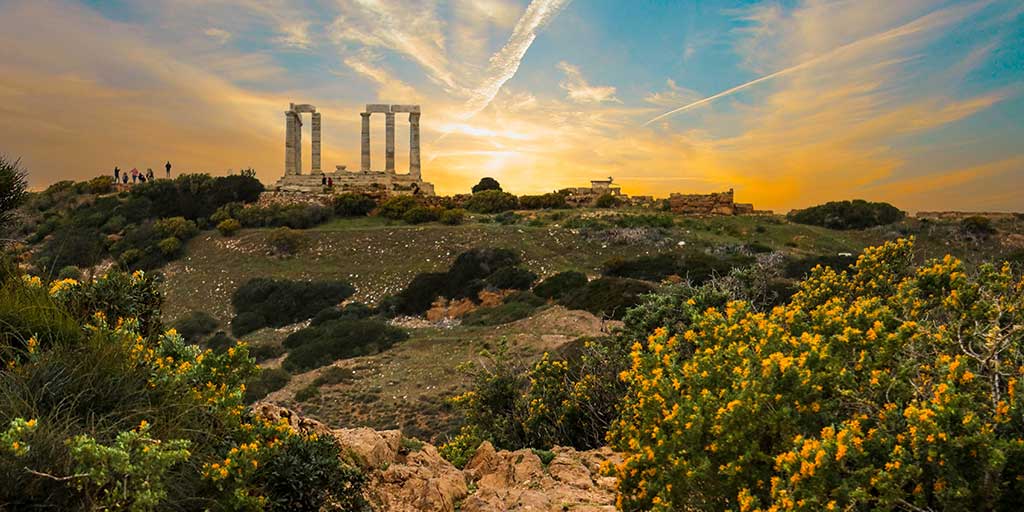
From the moment we stood at the Temple of Poseidon at Cape Sounion and watched the bright blue waters of the Aegean swallow the sun, to the morning in Meteora when a tear in the clouds flooded mountain top monasteries in gold, to the afternoon our cruise ship rounded the caldera at Santorini and every person on deck went quiet at the same moment. Greece has spent 3,000 years making visitors feel like they’ve arrived somewhere important.
Because they have.
I have traveled through Greece with my family across multiple trips, covering Athens and the Peloponnese by rental car, the northern mainland from Delphi to Thessaloniki, and the Greek islands from Mykonos to Milos by cruise ship. I have eaten at roadside tavernas where the yiayia cooks everything, and the menu is whatever she decides to make that morning.
I have also watched my boys argue about whether the Percy Jackson books, movie, or TV shows seem more accurate. I have gotten genuinely lost on a medieval Venetian island and been completely enthralled that I had no idea where I was.
So, if you’re looking to explore family travel in Greece, here is what you actually need to know before you visit Greece with kids.
At a Glance: Quick Facts for Family Travel in Greece
🗣 Language: Greek. English is widely spoken in tourist areas and on the islands; less common in rural villages
💰 Currency: Euro (EUR). Credit cards are accepted in cities and hotels; carry cash for markets, rural areas, and ferries
🚗 Driving: Left-hand drive. Generally straightforward driving on major highways.
🔌 Power Adapter: Type C and F (European standard). 230V (Get one here)
🆘 Emergency: European standard: 112 (all services) | Police: 100 | Ambulance: 166 | Fire: 199
💧 Tap Water: Generally safe to drink in major Greek cities, such as Athens and Thessaloniki, as well as on the mainland, where it meets European Union safety standards. Some islands import water, and the taste can vary. Bottled water is cheap and everywhere.
⛵ Islands: Served by ferry from Piraeus port in Athens or by domestic flight. The ferries are an experience worth having.
Do You Need a Visa to Visit Greece?
Greece is a member of the European Union and the Schengen Area, which makes entry straightforward for most Western families. Citizens of the United States, Canada, the United Kingdom, and Australia can enter visa-free for stays of up to 90 days within any 180-day period. No pre-registration, no paperwork. You arrive, you get stamped, and you go find somewhere to eat.
Your passport must be valid for at least three months beyond your intended departure date and must have at least one blank page for stamps. Schengen rules apply. Greece counts toward your 90-day Schengen allowance if you are also visiting other EU countries on the same trip.
If you are traveling as a solo parent or a non-biological guardian, carry notarized proof of guardianship and copies of birth certificates for all children. Immigration officers do not always ask for these. The ones who do are not interested in hearing that you left them at home. Have them ready.
If your nationality requires a Schengen visa, applications are submitted through the Greek consulate or embassy in your home country well before departure. Allow adequate time. Processing can take several weeks during peak season.
Getting Connected: Mobile and Data in Greece
Greece has solid mobile infrastructure across its major cities, popular islands, and main highways. Athens, Thessaloniki, Santorini, Mykonos, and Crete all have reliable 4G coverage. More remote stretches of the mainland, particularly the mountain routes through central Greece, and smaller, less-visited islands can see service drop off significantly.
If your phone supports eSIM, install one before you leave home. I use the Airalo eSIM app for international travel, and it has worked without trouble throughout Greece. A European regional plan covers Greece alongside any other Schengen countries you are combining into the trip. A 10 to 15 GB plan covers a family running one phone as a hotspot across a ten-day trip on the mainland and islands.
If you are road tripping through the more rural stretches of the Peloponnese or northern mainland, a local eSIM from a Greek carrier will outperform international eSIM plans in those areas. Cosmote, Vodafone Greece, and Wind are the dominant operators. All available at airports and phone shops in Athens.
👀 HEADS UP: Connectivity on the Islands
Coverage varies significantly between islands. Santorini, Mykonos, and Crete have a reliable signal. Smaller or less-developed islands can have very limited coverage or dead zones entirely. If you are cruising, the ship’s WiFi is typically available but priced separately and is usually slow.
Download offline maps, restaurant research, and anything else you need before you leave each port. The time you spend scrambling for data while everyone else is exploring is time you are not getting back.
Getting Around Greece with Kids
Greece is not a single mode-of-transportation destination. The mainland and the islands operate on completely different logistical transportation frameworks, and trying to navigate both without a plan is how families can end up frustrated, standing at Piraeus port with luggage and no idea which terminal they need to be at.
Here is how transportation in Greece works.
Renting a Car on the Mainland
A rental car is the right call for exploring the Greek mainland. Full stop. A road trip through the Peloponnese is one of the finest family travel experiences available anywhere in Europe, and I say that having driven across a reasonable portion of the continent.
We loaded six people (three generations, one very patient minivan) and spent nine days driving from Athens south through Nafplio, Mycenae, Epidaurus, Mystras, and Monemvasia, then north through Delphi and up into Meteora. I would do it again without hesitation. The roads are well-maintained, the distances are manageable, and the scenery between sites is enough to make you want to pull over purely just to stare.
Roads on the major national highway network are clearly signed in both Greek and Latin alphabets. The toll road system (marked with an E prefix) is fast and modern. Collect your toll receipts at entry, as some sections charge on exit based on distance.
Driving in historic city centers is a different matter entirely.
Historic sections of Athens, Nafplio, and Thessaloniki were built for feet and donkeys, not cars. Navigation apps help, but narrow one-way streets and pedestrianized zones in the old town areas will test your patience in ways you did not anticipate. Park on the outskirts of any historic center and walk in. It is almost always the better plan, and parking fees inside historic areas are punishing.
Car seats are legally required for children under 12 years old or under 135 cm in height. Rental companies are inconsistent about the quality and availability of child seats, particularly during the peak summer season. Bring your own compact booster if at all possible, or confirm what is available in writing before you commit to a booking.
💡 PRO TIP: Greece’s Mountain Roads
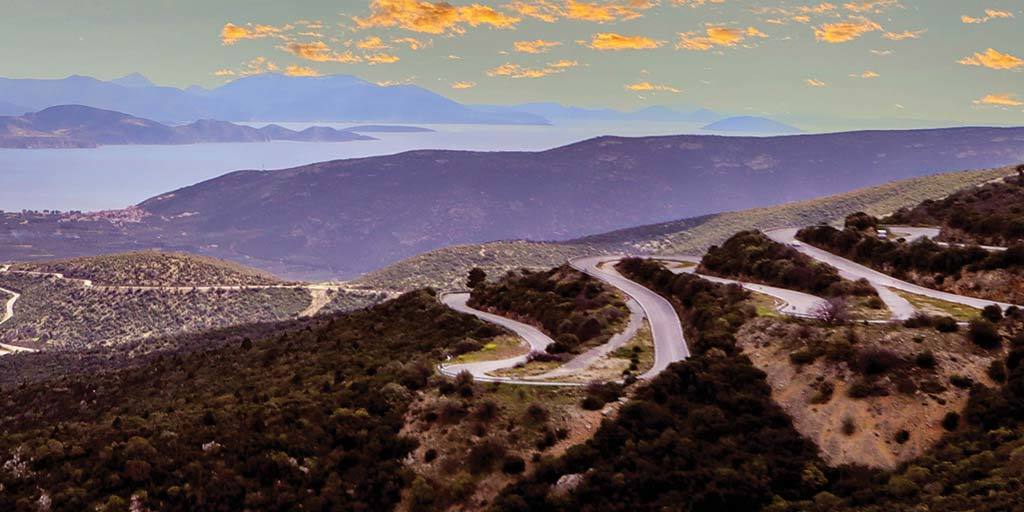
The road between Delphi and Meteora passes through the Pindus Mountains on routes that are scenic, winding, and occasionally narrow. They are not dangerous in reasonable conditions, but sustained switchbacks with significant drops on one side can be daunting.
Know your family’s comfort level with mountain driving before you commit to these routes. Our kids found it absolutely thrilling. Christina’s parents had a different opinion. Both reactions are entirely valid.
Ferries and Island Transport
The Greek islands are served by ferry service from Piraeus port in Athens and from other mainland ports throughout Greece. The network is extensive, and on longer routes (overnight ferries to Crete or Rhodes in particular), there is a genuine romance to arriving on a Greek island by sea. Book your tickets in advance for summer sailings. Popular routes sell out.
Piraeus port is large and can be genuinely disorienting on your first visit. Each ferry company operates from a different terminal, and they are not always close to each other. Research your specific departure terminal before you arrive. Not when you are standing there with three bags and two kids in the August heat, wondering which direction to walk.
Greek Islands Cruise
A Greek Islands cruise is something families should seriously consider. It is something we can speak to from direct experience. Our week aboard Celestyal Cruises through the Aegean gave us Mykonos, Santorini, Milos, and Heraklion in Crete without the logistical overhead of booking ferries, accommodation, and transfers for each individual island.
The ship becomes your hotel. You wake up in a new port every morning. For families with younger children, multigenerational groups, or anyone who wants the range of island experiences without coordinating every moving piece independently, a cruise removes an enormous amount of planning friction. It is genuinely one of the smarter ways to see the islands as a family.
Just be aware that cruise experiences vary tremendously across different companies. Our Celestyal Cruise was a relatively small boat with limited on-board attractions. It was focused on the destination, not the boat. Other boats are floating amusement parks with slides, go-karts, and 100 restaurants. Pick wisely, because the experience can help shape the trip.
Domestic Flights
For families visiting Crete, Rhodes, or other major islands, domestic flights from Athens International Airport are frequent and affordable on Aegean Airlines and Sky Express. A flight to Heraklion takes 45 minutes versus a seven-to-eight-hour overnight ferry. Both options have real merit. The flight is efficient. The ferry is an experience.
Taxis and Rideshare
The FreeNow app (formerly Beat, formerly TaxiBeat) works reliably in Athens and other larger Greek cities, and is generally safer and more transparent than hailing a street taxi. Uber also operates in Athens.
When using a standard taxi anywhere in Greece, confirm the rate before the car moves or insist the meter is running. Agree on a fare in advance for any airport run or longer transfer. Overcharging tourists is not universal, but it is common enough that the conversation is worth having upfront.
💡 PRO TIP: The Athens Airport Transfer
Athens International Airport sits about 45 minutes from the city center by metro (Line 3, direct) and considerably longer by taxi in rush hour. The metro is clean, air-conditioned, and inexpensive. It runs directly to Syntagma Square, which is where most visitors want to be.
For a family arriving with luggage after a long-haul flight, a pre-booked transfer through your hotel may be worth the premium. Arriving in a new city and then trying to navigate public transport while exhausted with children and bags is not the start to a trip that you want.
Language in Greece
Greek is the official language, written in the Greek alphabet. It looks impenetrable at first glance and becomes surprisingly readable once you spend a day with it. Road signs, restaurant menus, and most public signage in tourist areas are bilingual in Greek and Latin script.
English is widely spoken in Athens, Thessaloniki, the major islands, and anywhere that sees regular tourist traffic (which is most of the country). In smaller mainland villages, rural areas, and the lesser-visited corners of the Peloponnese, English becomes considerably less common. Download Google Translate with the Greek language pack for offline use before you leave home. You will need it.
Greek people are genuinely warm, and they respond with visible pleasure when visitors make any effort with the language at all. Even a badly pronounced efharisto lands well. A few words go a very long way.
Phrase | Greek | Pronounciation |
|---|---|---|
Hello | Γεια σας (formal) / Γεια σου | YAH-sas / YAH-soo |
Thank you | Ευχαριστώ | ef-hah-ree-STOH |
Please | Παρακαλώ | pah-rah-kah-LOH |
Where is…? | Πού είναι…? | POO EE-neh |
How much? | Πόσο κοστίζει; | POH-so kos-TEE-zee |
My child is sick | Το παιδί μου είναι άρρωστο | to peh-THEE moo EE-neh AH-ro-sto |
Help! | Βοήθεια! | voh-EE-thia |
Bathroom | Τουαλέτα | too-ah-LEH-tah |
Yes | Ναι | Neh |
No | Όχι | OH-hee |
What Power Adapter Do You Need for Travel in Greece?
Greece uses Type C and F sockets running at 230V/50Hz, the same standard as most of continental Europe. Travelers from North America (110V/60Hz) need both a plug adapter and either dual-voltage devices or a voltage converter. Travelers from the UK need a plug adapter and should confirm voltage compatibility on older devices.
Check the label on your charger. Most modern phones, tablets, and laptops state 100 to 240V and handle both voltages without issue. A multi-port USB charging hub is one of the most practical things you can pack when traveling with a family of four. We link to the travel adapter we use on every trip in our gear guide.
Family Safety in Greece
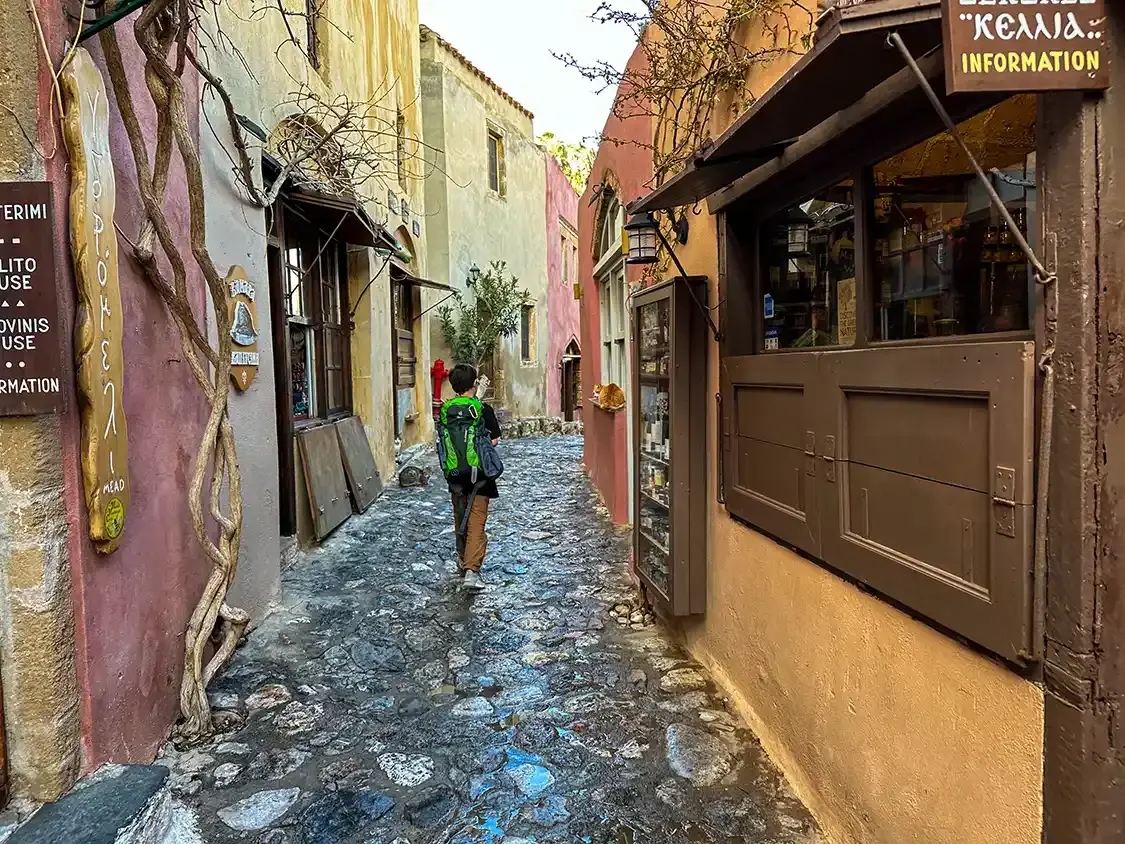
Greece is one of the safest countries in Europe for family travel and one of the most consistently welcoming toward children. Violent crime is rare. Tourist areas are well-policed during peak season. We traveled through the Peloponnese with three generations (including a grandmother navigating steep ancient ruins) and felt safe and well looked after at every single stop.
Standard urban common sense applies in Athens, particularly around Monastiraki and Omonia, and at Piraeus port, where pickpocketing can occur in crowded spaces. Keep bags close in busy markets and on public transport. Ferry terminals, with their particular combination of crowds, luggage, and general chaos, are worth paying attention to.
The major tourist islands are heavily visited and correspondingly well set up for visitor safety. Smaller, less-visited islands present no particular safety concerns, simply fewer services if something goes wrong.
Check your government’s current travel advisory before you book and read it carefully, rather than scanning the headline. Greece is politically stable and does not present meaningful security risks for families traveling the main tourist circuit.
🚫 DON’T OVERLOOK: The Summer Heat
The safety issue that catches most families off guard in Greece in July and August is not crime. It is the heat. Athens in peak summer regularly exceeds 38 degrees Celsius (100 degrees Fahrenheit), and archaeological sites like the Acropolis, Mycenae, and Delphi have almost no shade. Marble reflects heat with genuine enthusiasm.
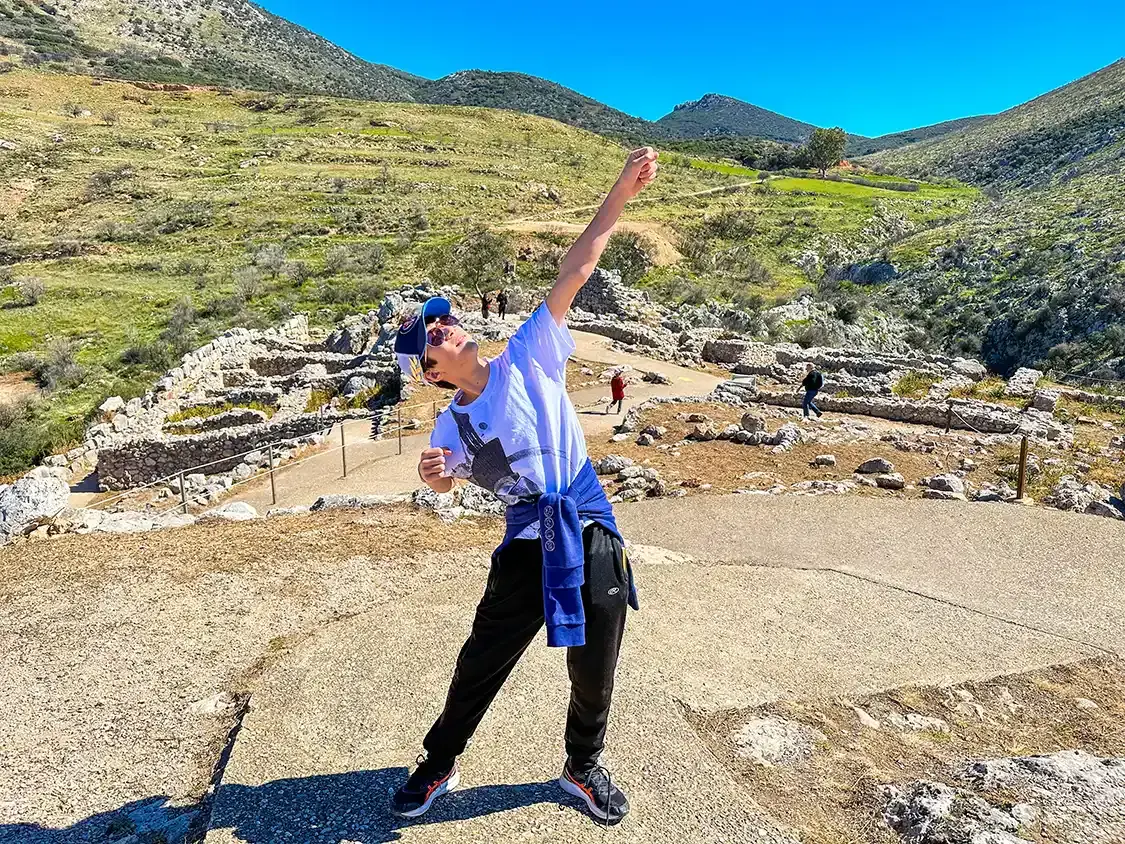
Get to major outdoor sites when they open, typically 8 am. Have a plan for the midday hours. Carry water for every family member and refill constantly. Dehydration sneaks up on adults and children both. High-SPF sunscreen and wide-brim hats per person are not optional. They are survival equipment. We learned this at Mycenae on day one of our road trip. We adjusted every site visit after that. Learn from us.
Health and Vaccinations for Greece Travel
No vaccinations are required to enter Greece. Routine vaccines (MMR, DTaP, polio) are all that are typically recommended for family travel here. See your family doctor or a travel health clinic before departure if you have specific concerns.
Tap water is generally safe to drink in Athens and most major mainland cities. On some islands, particularly smaller ones, water is imported by tanker and can taste heavily chlorinated. Bottled water is inexpensive and available everywhere. A filtered water bottle reduces plastic waste and works well for the mainland portions of your trip.
Greece has solid public and private hospitals in Athens and the larger cities. Medical facilities become progressively more limited on smaller islands. Travel insurance that covers medical care and emergency evacuation is strongly advised, not because Greece is dangerous, but because evacuation from a remote island is expensive without it. We typically use SafetyWing or World Nomads for our family travel insurance.
Pack a small family medical kit: children’s pain relief, antihistamines, rehydration sachets (essential in the summer heat), high-SPF sunscreen, and any prescription medications in quantities generous enough to cover unexpected delays. Pharmacies, marked with a green cross, are widespread in cities and towns. Greek pharmacists are generally knowledgeable and genuinely willing to help.
- Routine vaccinations: MMR, DTaP, polio. Keep the whole family current.
- Hepatitis A: Recommended for all travelers to Greece, particularly those eating adventurously or spending time in rural areas.
- Travel insurance: Include emergency medical evacuation coverage, particularly if your itinerary includes remote islands or time offshore.
- Sun protection: High-SPF sunscreen, wide-brim hats, and UV-protective clothing for anyone spending significant time at outdoor archaeological sites.
- Rehydration sachets: Essential for summer travel. Pack more than you think you need.
Regions of Greece: What Families Need to Know
Athens
If you’re visiting Athens on a cruise, you likely only have one day to visit. But if you can give Athens at least two full days, you’ll have a much richer experience. Consider three if your itinerary allows. The city repays time in a way that single-day visits miss entirely. This is the birthplace of democracy, philosophy, and arguably the best olives on the planet, and it carries that history with a modern energy and streetwise personality that surprises most first-time visitors. Athens is not polished. It is raw and real
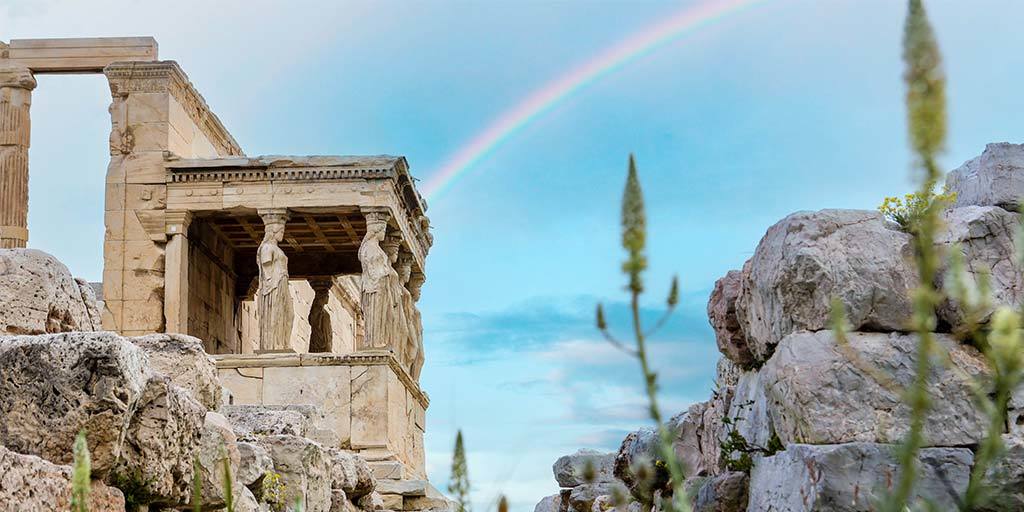
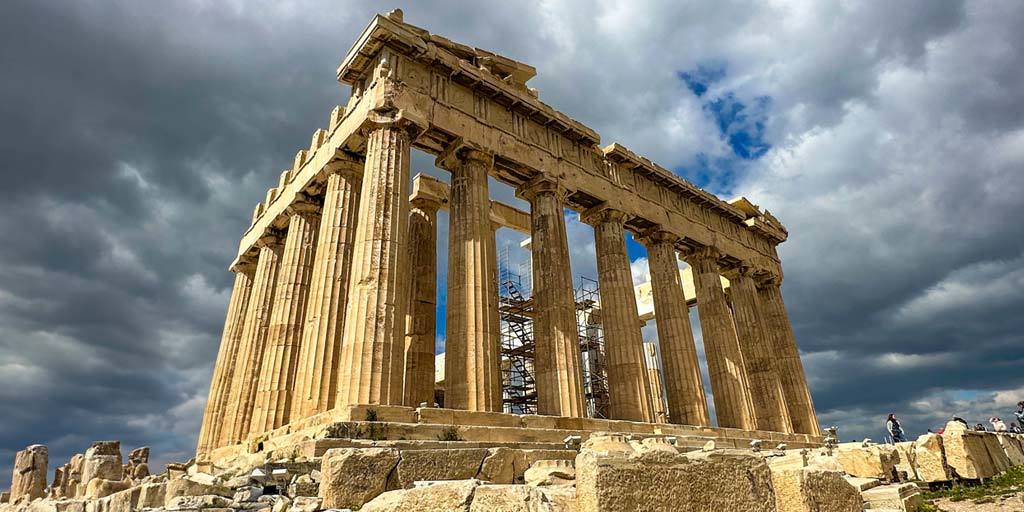
The Acropolis is the anchor of Athens, and it earns every superlative thrown at it. Standing below the Parthenon, which has presided over this hill for 2,500 years, is one of those experiences that no photograph adequately prepares you for. Book your tickets or tour in advance. The queue without them in summer can consume hours of your day that you will not get back.
Below the Acropolis, the Monastiraki neighborhood is where you eat, explore the markets, and watch Athens do what it does best: exist loudly and confidently at the intersection of the historic and the modern. The National Archaeological Museum, a 20-minute walk from the city center, is one of the finest museums in the world. Families with any interest in mythology or ancient history should not skip it.
A note on the heat: Athens in July and August is genuinely brutal. Get to the Acropolis when it opens at 8 am. Build long, cool lunches into your midday schedule. The city genuinely rewards this rhythm.
The Peloponnese
The Peloponnese is the beating heart of Greek mythology and the single most underrated family road trip in Europe. A peninsula south of Athens connected to the mainland by the narrow Isthmus of Corinth, it packs an extraordinary density of ancient history, medieval architecture, and Aegean coastline into a region that most tourists drive straight past on their way to the islands. That is their loss and your gain.
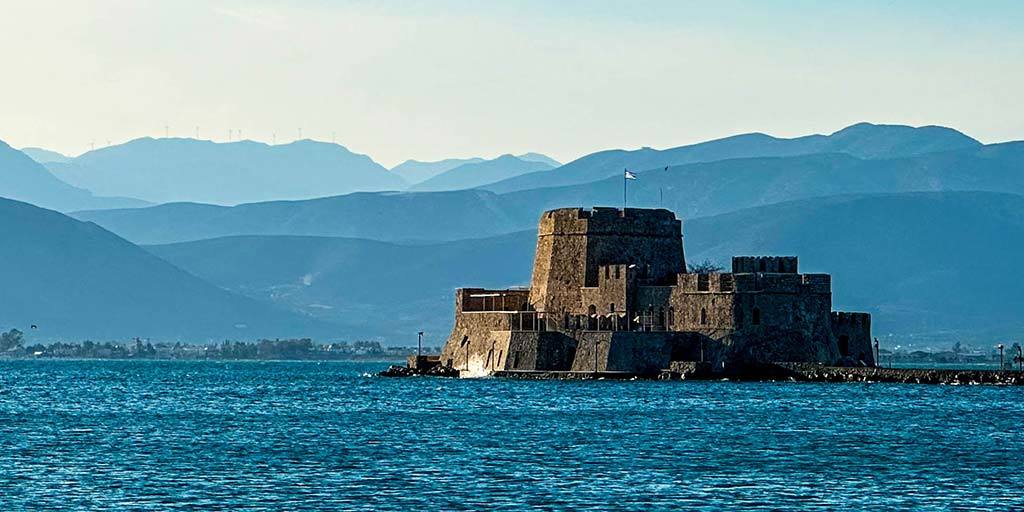
Nafplio is the ideal base for the region. A former capital of Greece with a Venetian old town, a fortress-topped hill, and a waterfront where you can sit with a coffee and watch the Argolic Gulf in the morning light. It is one of the most underrated small cities in all of Greece.
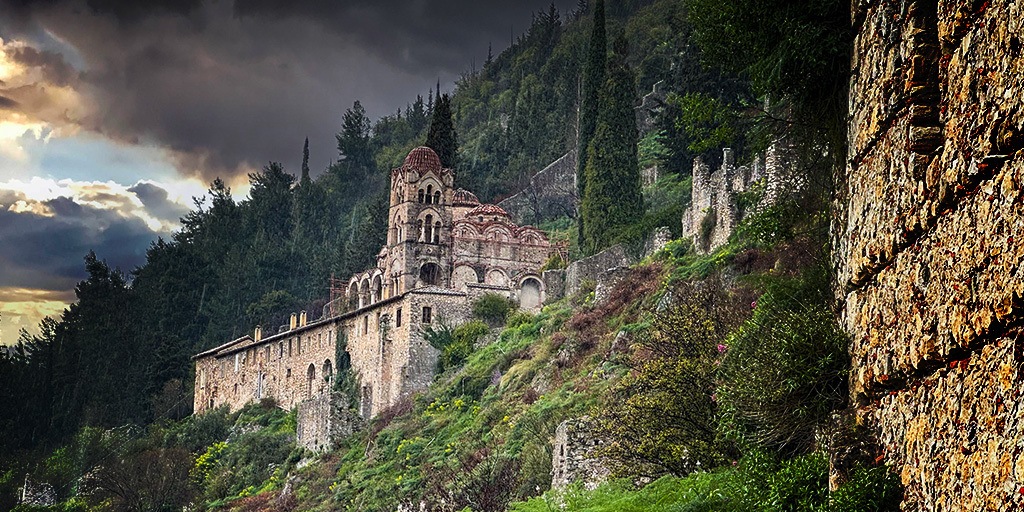
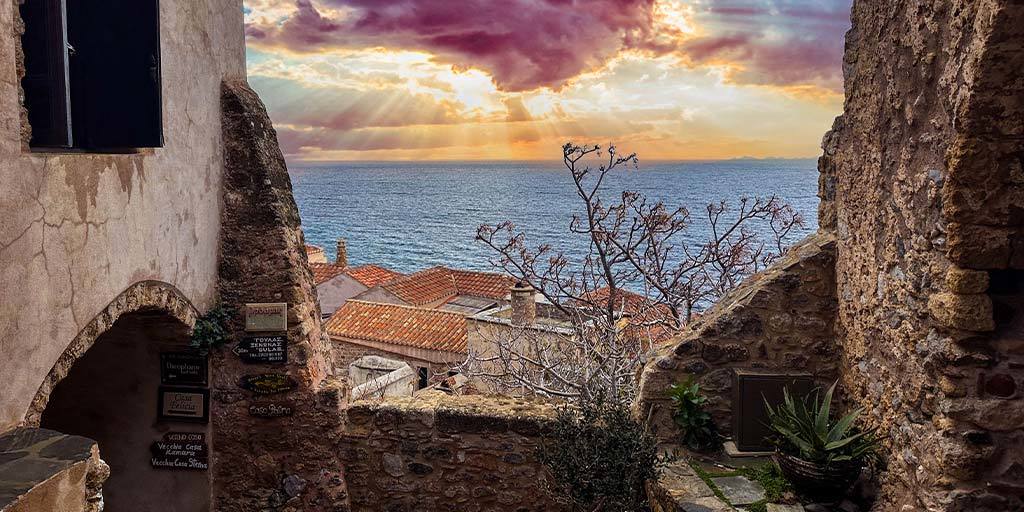
From Nafplio, the Peloponnese unfolds in every direction. The Lion Gate at Mycenae (the entrance to Agamemnon’s legendary citadel, carved 3,300 years ago) sits 45 minutes away. The ancient theatre at Epidaurus, still acoustically perfect and still hosting live performances, is 30 minutes in the other direction. Drive south through the Mani Peninsula, and the medieval ghost town of Mystras rises above the valley in a state of spectacular, half-ruined grandeur. And at the very tip of the peninsula, connected to the mainland by a single causeway, the Venetian fortress town of Monemvasia is the kind of place that makes you feel like you have genuinely stepped out of time.
Delphi
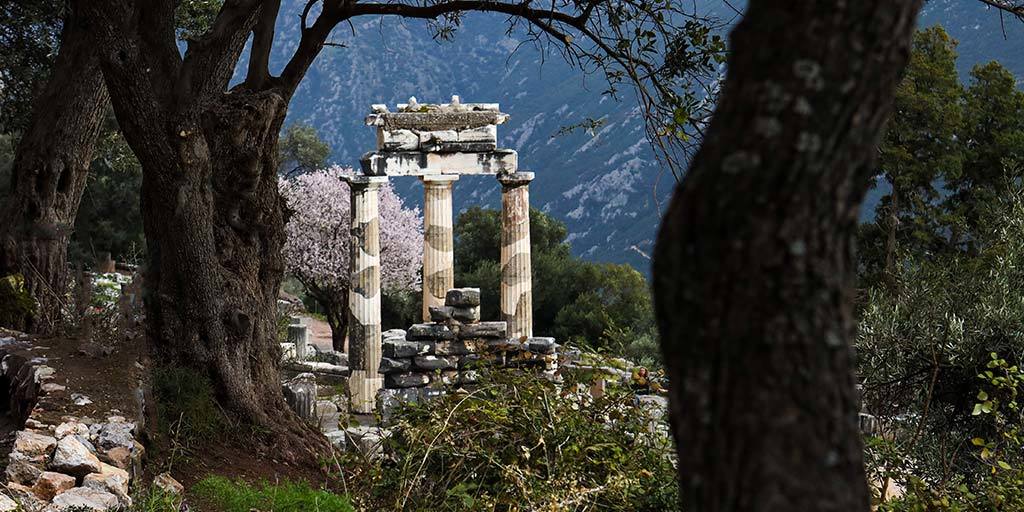
Delphi sits on the slopes of Mount Parnassus, 112 miles (180 km) northwest of Athens, and it hits harder in person than any photograph or description can prepare you for. For centuries, this was the most important religious site in the ancient world. The seat of the Oracle, where kings and generals and citizens trekked to ask the gods for their advice. The fact that the Oracle’s answers were famously ambiguous did not slow the traffic one bit.
The Sacred Way winds up through the ruins of treasuries and temples to the Temple of Apollo at the top, with views over the valley below that immediately explain why the ancients considered this the center of the world. The site museum, directly adjacent, houses some of the finest ancient Greek sculpture in existence and is worth every minute inside.
Delphi works well as a road trip stop in its own right. It sits roughly halfway between Athens and Meteora, making it a natural overnight or extended day stop in either direction.
Meteora
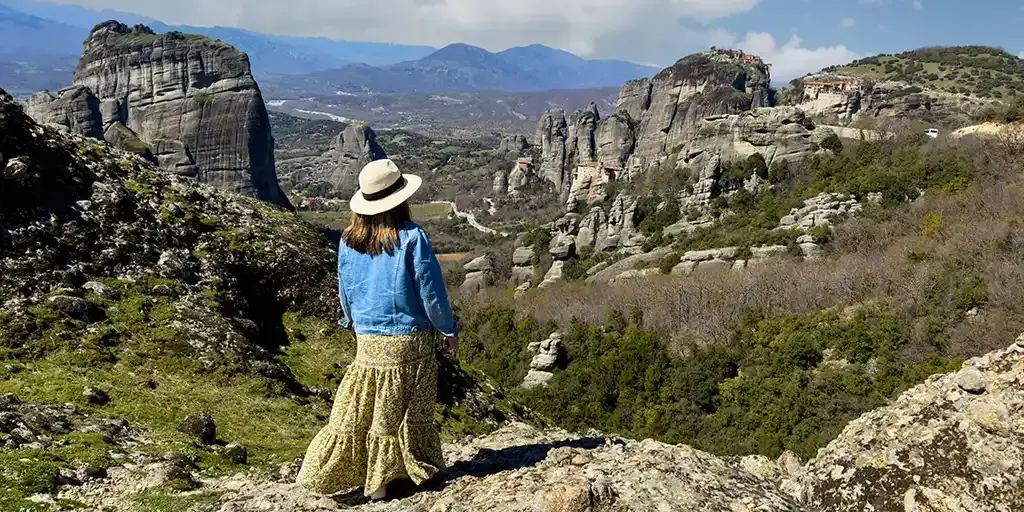
Meteora was a sight that nothing could have prepared me for. Towering sandstone pillars erupt from the Thessaly plain in central Greece, and on top of them, perched there somehow impossibly, are medieval monasteries built by Orthodox monks who clearly had a different relationship with the concept of ‘accessible location’ than the rest of us. The name Meteora means “suspended in the air”. Standing among them for the first time, you understand immediately why they chose it.
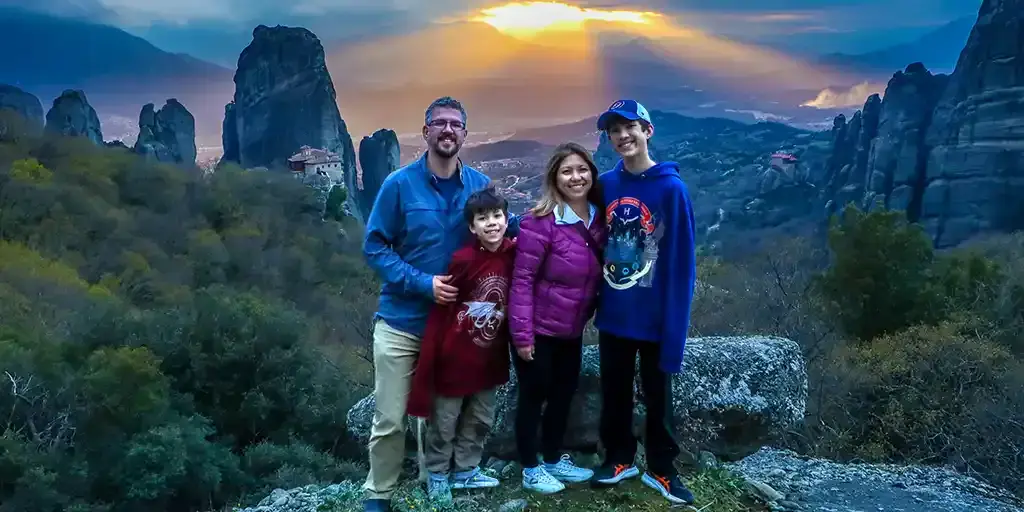
We had two days in Meteora, and it remains two of the most visually extraordinary days of any trip our family has ever taken. The clouds were heavy when we arrived at Sunset Point, overlooking the valley. Then Dylan spotted the break in the grey, and the late afternoon gold flooded through and lit up those monasteries, and I completely ran out of words. Six active monasteries and a nunnery are open to visitors, and the hikes between them range from easy walks along paved paths to steeper trails for families with more capable hikers.
Dress modestly for monastery visits. Shoulders and knees need to be covered for everyone. Modesty wraps are sometimes available at entrances, but carrying your own is more comfortable and more reliable.

Thessaloniki
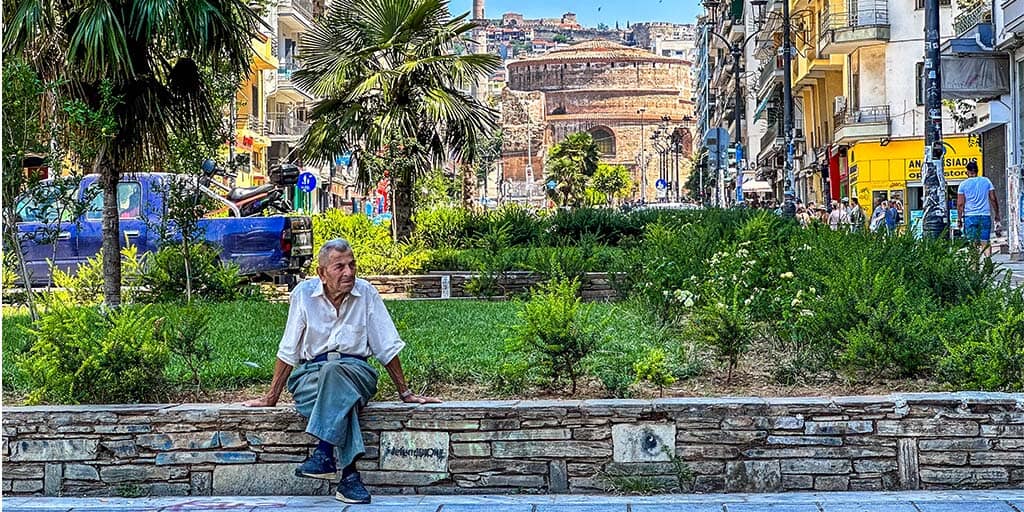
Greece’s second-largest city is frequently overlooked by families locked onto Athens and the islands, which means it rewards the families who make the detour. Thessaloniki is a university city with a street-food culture that gives Athens a genuine run for its money, a Byzantine heritage that includes some of the finest mosaics outside Istanbul, and a waterfront promenade built for long, unhurried evenings. It is the kind of city that gets better the longer you stay.
As the northern gateway to Meteora and the Greek interior, Thessaloniki works well as a bookend to a mainland road trip that begins in Athens and works its way north.
The Greek Islands
The islands are where Greece delivers its most iconic visual language, the one that has been living in your imagination long before you arrive. Each island has its own personality, its own geology, its own pace. Here is what families need to know about the ones we have experienced directly.
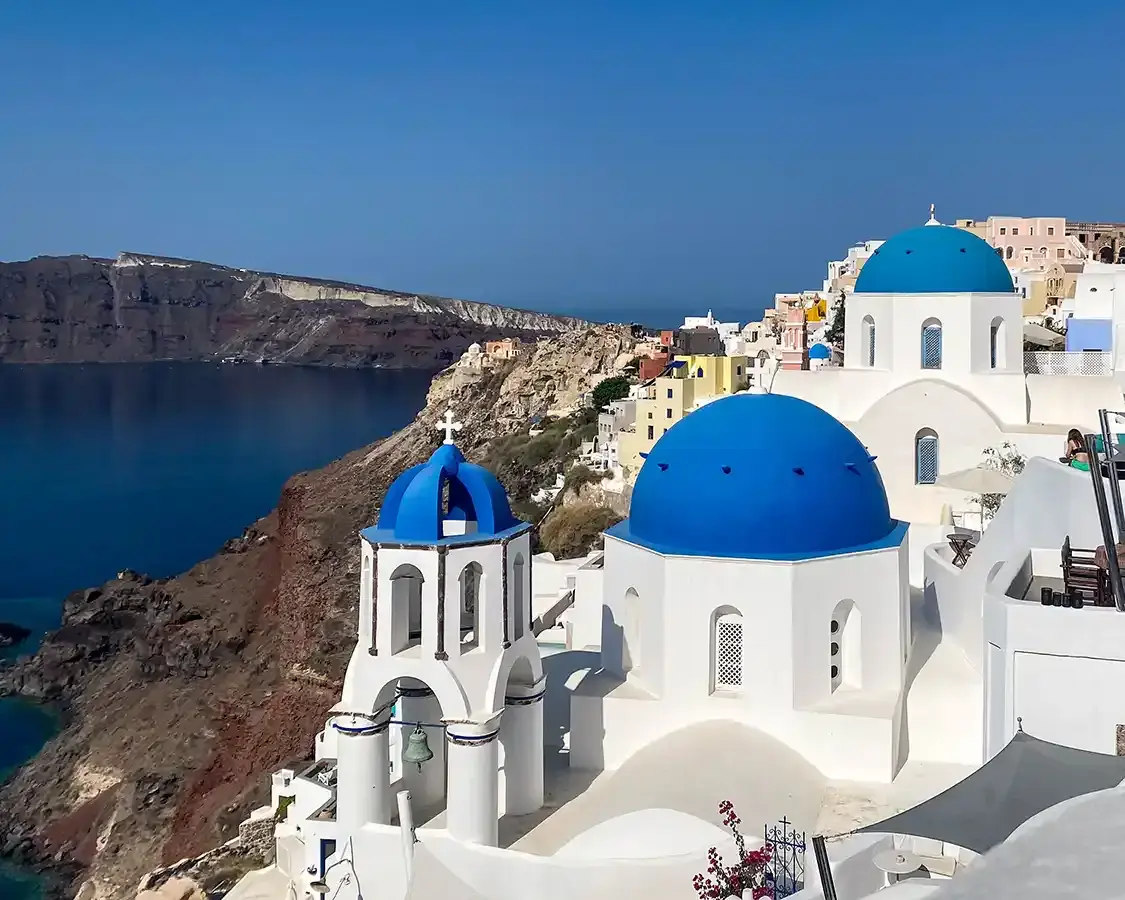
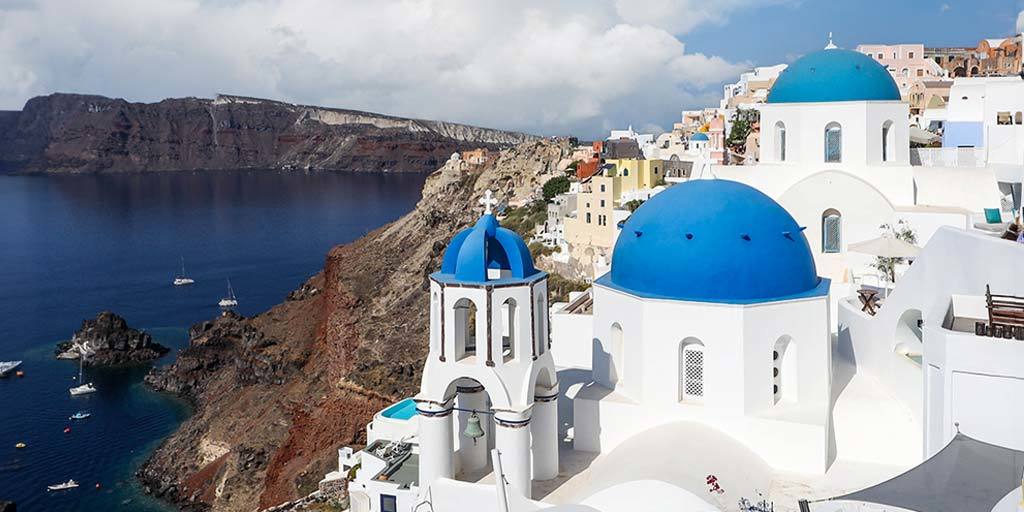
Santorini is everything the photographs promise and more crowded than most people expect. The caldera views from Oia are genuinely extraordinary, and the streets of the island’s village in July are genuinely relentless. Santorini rewards families who either stay overnight (after the day-trippers leave, the island changes completely) or arrive early and leave before the midday crowds peak. As a cruise stop, a guided excursion is the smart play. Navigating the cable car from the port and the caldera bus loop without help in high summer is not the best use of a limited day ashore. Read about our visit to Santorini here.
Mykonos is best experienced by families as a half-day of windmills, whitewashed streets, and a seafood lunch at the port before the island’s evening personality takes over entirely. The beaches are excellent for older kids. Little Venice, the row of colorful buildings cantilevered directly over the sea, is exactly as good as every photo you have ever seen of it. Read about our visit to Mykonos here.
Milos was our favorite island of the entire cruise and one of the most beautiful places we have visited anywhere on earth. A volcanic island shaped by geology into a coastline of coloured rock formations, sea caves, and beaches in colors that don’t look real until you are actually standing in front of them. Sarakiniko beach, white pumice stone shaped like a moonscape dropping into electric-blue water, is one of the most memorable things our family has ever seen. Fewer tourists than Santorini or Mykonos. Worth it entirely. Read about our visit to Milos here.
Crete is the largest Greek island and a destination unto itself. Heraklion, its capital, is home to the Minoan Palace of Knossos, one of the most significant archaeological sites in Europe and, for children with any knowledge of the Minotaur myth, a genuinely exciting place to stand. Crete has enough variety to support a week or more of family exploration on its own. Read about our visit to Heraklion, Crete here.
💡 PRO TIP: Cruise vs. Island Hopping
The choice between a Greek Islands cruise and independent island hopping comes down to one question: do you want flexibility or simplicity?
A cruise gives you multiple islands in one trip with a single check-in and no ferry logistics. Our Celestyal cruise through the Aegean delivered Mykonos, Santorini, Milos, and Crete in seven days with zero transfer stress. The ship is your hotel, and it moves while you sleep.
Independent island hopping gives you more time per island and the freedom to linger. For families staying two or more nights per island, a self-directed trip is worth the planning effort. For families who want to see multiple islands in a single trip without coordinating ferries and accommodation at each stop, a cruise is the clear call.
Money and Budgeting for Family Travel in Greece
Greece uses the Euro, which is advantageous for travelers coming from the EU or the UK and requires a straightforward currency exchange for North Americans. Credit cards are accepted in hotels, larger restaurants, shops, and most tourist services. For everything else (smaller tavernas, village markets, ferry tickets at smaller ports, entrance fees at some archaeological sites), assume cash.
Keep small denominations on hand. A 50-euro note for a 6-euro lunch bill starts a negotiation that nobody wants to have. Markets and smaller family tavernas frequently cannot make change for large bills, particularly earlier in the day. Stock up at an ATM before heading into the more rural stretches of the Peloponnese or the northern mainland. ATMs become less frequent outside city centers.
Notify your bank before you travel. An international transaction flagged and blocked on your first ATM attempt is an avoidable inconvenience that always seems to happen at the worst possible moment.
The honest financial picture: Greece is genuinely good value by Western European standards, particularly outside the major tourist islands. Local tavernas, domestic transport, and most cultural experiences are affordable. The islands, Santorini in particular, operate at a significant premium in accommodation and dining during peak season. If budget management matters, shoulder season travel in May or September cuts both prices and crowds substantially.
What to Pack for Greece
Greece presents packing challenges that most travel guides underestimate. A family moving between the mainland and the islands in a single trip can go from a mountain road in central Greece at 10 degrees to a July beach at 38 degrees within 48 hours. Packing light and packing right across those conditions takes deliberate thought. The complete Greece family packing list covers every season and region in detail. At a minimum, make sure you have:
- Sun protection: High-SPF sunscreen and wide-brim hats per person. Non-negotiable in summer. Archaeological sites have almost no shade, and marble reflects heat aggressively.
- Comfortable walking shoes: Cobblestones are everywhere in Greece. Sandals are for the beach. Everywhere else, closed-toe shoes with a solid grip are the right call.
- A light layer for evenings: Island evenings and mountain mornings can be cool even in high summer. One mid-weight layer per person prevents the scramble.
- Modest cover-ups: Shoulders and knees must be covered for monastery and church visits. A lightweight scarf or sarong packs flat and solves the problem immediately.
- Rehydration sachets: Essential for summer travel. Pack more than you think you need.
- A dry bag or waterproof pouch: For boat activities, beach days, and island excursions involving water taxis.
- Seasickness medication: The open-water crossings between some Greek islands can be rough, particularly in the Aegean in summer, with the Meltemi wind running. Have it. You will thank yourself.
- Plug adapter: Type C/F European standard. North American travelers need both an adapter and a dual-voltage confirmation on their devices.
- eSIM, installed before departure: Airalo or a European regional plan. Install it at home. Do not rely on airport WiFi to sort it out on arrival.
Document copies: Passports, travel insurance, and any children’s birth certificates, stored separately from the originals and backed up to the cloud.
A Few Things Greece Will Teach Your Family
Mythology stops being a subject and becomes a place
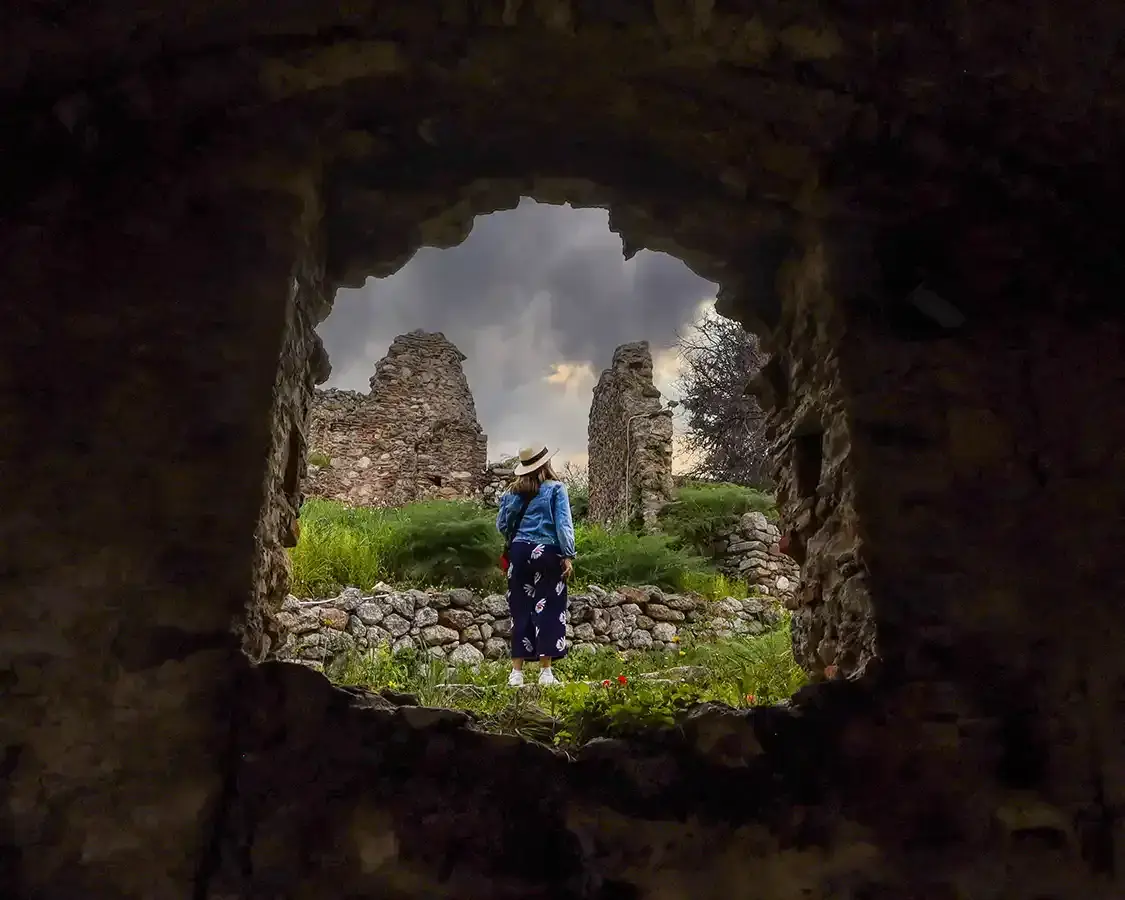
There is a version of Greek mythology that you read in books and a version that you stand inside. Standing at the Lion Gate of Mycenae, looking at the actual 3,300-year-old stone that Agamemnon’s army marched through, is not the same as reading about it. Not even close.
Children who have been primed with the stories understand this viscerally. The Percy Jackson series is, unironically, one of the best pieces of trip preparation you can do for a Greece road trip with kids. Give them the stories before you give them the ruins, and the ruins will give back an education that nothing else can.
The Greek sense of time is contagious
Greece runs on a schedule that has more in common with the sun than with efficiency, and fighting it is a waste of everyone’s energy. Dinners often begin at 9 pm. The afternoon heat demands a long, unhurried lunch. The best conversations happen at taverna tables that nobody is rushing to clear.
Families who arrive with aggressive itineraries and are willing to let them breathe will have a fundamentally better time than those who try to run Greece like a project.
Every island feels like a different country
Santorini and Milos are separated by 50 miles (80 km) of Aegean and may as well be different worlds. One is volcanic drama, iconic architecture, and a million tourists. The other is geological surrealism, fishing villages, and a beach that looks like the surface of the moon. Mykonos runs on nightlife and fashion. Crete runs on Minoan history and mountain villages, and the most food you have ever eaten at one table. Do not assume you know one Greek island from having seen another.
The food will be one of the most discussed topics of the entire trip
This sounds like an overstatement. It is not. Greek food, at its best, at a family taverna where the octopus dried on the line that morning and the feta came from the village, is one of the world’s great culinary traditions. Your kids will request tzatziki and saganaki at home. You will find yourself explaining to other parents, months later, that there is a difference between Greek food at home and Greek food in Greece, and the difference is significant. That being said, if you want to try your hand at cooking Greek food at home with your kids, check out my easy Greek recipes right here.
💡 PRO TIP: Bring the Books
If your kids are between the ages of 10 and 14 and have not read Rick Riordan’s Percy Jackson series, start before you leave (you can bring the audiobooks with you). The books follow a young demigod navigating a world where the Greek gods are still very much alive and very much in charge.
Watching your children recognize the gods in ancient sculpture, argue about which version of a myth is ‘correct’ at an archaeological site, or demand to stand exactly where Percy fought the Minotaur (Crete, naturally) is the kind of engagement that money cannot buy and that no other destination on earth quite delivers in the same way. We worked through the series before our road trip. It turned every ruin from a collection of old stones into a story our kids were already living inside.
Travel Resources For Families Visiting Greece
For practical planning, safety considerations, and logistics, these dedicated guides provide all of the resources you need for family travel in Greece
Final Thoughts on Family Travel in Greece
Greece rewards the families who arrive prepared and stay curious. The destination guides on this site cover the on-the-ground details for every region, from navigating Athens in a single day to hiking between Meteora’s monasteries to finding the best beach on Milos, and the practical information here is designed to help you move through the country with confidence.
You will come home with the usual things. Photographs of impossible blue water. A piece of hand-painted pottery from a market in Nafplio. A bottle of local olive oil that will ruin every other olive oil for the next two years. But the thing that stays, the thing your kids carry forward, is harder to pack up.
It is the moment the sun broke through the clouds over Meteora and turned those ancient monasteries to gold. It is the first glimpse of the Santorini caldera from the ship’s deck, when everyone on board went quiet at exactly the same moment. It is standing at the Lion Gate of Mycenae and watching your child realize that they are standing inside a story they have been reading for months.