
Bring Greece home with 5 easy Greek recipes: souvlaki with tzatziki, saganaki, koulouri, moussaka, and honey-soaked baklava, plus where we ate each one.
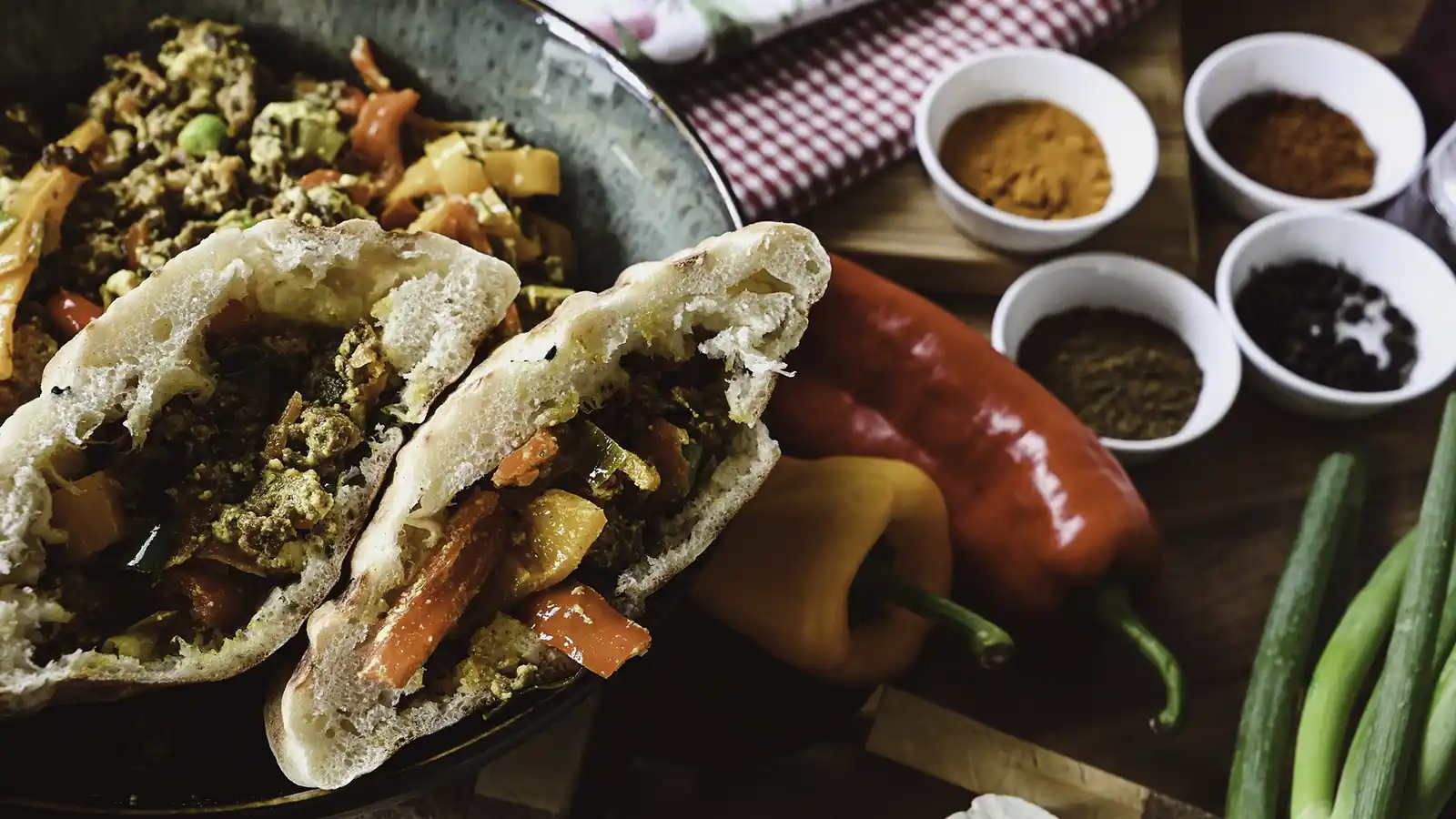
I have eaten at family-run roadside tavernas where the yiayia (grandmother) runs the kitchen, and the menu is whatever she decides to make that morning. You don’t order. You arrive, and she tells you what’s on the menu. After nearly a month of eating my way through Greece, from the lamb-scented alleys of Monemvasia to the souvlaki smoke of Nafplio, I can confidently say that if you’re ever in the same position, deferring your decision to a Greek grandmother will be one of the best culinary decisions you can possibly make.
Greek food, for the most part, focuses on simplicity and good ingredients. It’s easy to fake, but it’s not easy to fake well. Greek recipes focus on olive oil, lemon, oregano, and garlic. But it’s not just about using the right ingredients; it’s about using quality ingredients. In Greece, these ingredients are swung around with a swagger that comes from generations of using them in a way that is passed down from generation to generation for thousands of years.
The five easy Greek recipes below are the ones that my family can actually pull off at home: pork souvlaki with tzatziki, pan-fried saganaki cheese, sesame koulouri bread rings, a no-fry moussaka, and walnut and honey baklava. None of them requires a culinary degree. A couple needs patience. One involves setting cheese on fire, which is optional but strongly encouraged.
I wrote this recipe guide for two kinds of cooks. If you’ve just come home from travel in Greece (or you’re counting the days until you go for the first time), these are the flavors that will drag you straight back to a taverna table by the sea. And if you grew up with a yiayia who never wrote anything down, whose moussaka you’ve been chasing ever since childhood, this is a place to start. You won’t get her recipe. Nobody gets her recipe. But you’ll get close enough to argue about it at the next family dinner, which is its own proud Greek tradition.
Every recipe here is kid-approved by my two toughest critics, Dylan and Cohen, who came home demanding tzatziki and saganaki like they had a standing reservation.
Easy Greek Recipes at a Glance
- The five dishes: Souvlaki with tzatziki, saganaki, koulouri, moussaka, and baklava.
- Easiest win: Saganaki. Ten minutes, one pan, zero regrets.
- Weekend project: Moussaka. Plan on about 2.5 hours, much of it hands-off.
- Hardest ingredient to find: Kefalograviera cheese. Kasseri, halloumi, or pecorino will stand in.
- Where to shop: A Greek or Mediterranean grocer (Toronto’s Danforth and Chicago’s Greektown are packed with them), or the international and freezer aisles for phyllo, Greek yogurt, and good dried oregano.
- Plan-ahead alert: Baklava needs to rest at least 6 hours (overnight is better), and souvlaki wants an hour in its marinade.
- Where I ate them: Monemvasia, Athens, Delphi, and a smoky kebab stall at the Corinth Canal.
What Is Greek Food Like?
Greek food is Mediterranean cooking at its most honest: great olive oil, ripe tomatoes, lemon, wild oregano, lamb, pork, seafood, feta, and bread, prepared simply and shared generously. It was shaped by mountains that suit sheep and goats better than cows, a coastline that seems to go on forever, and three thousand years of empires, traders, and occupiers passing through the kitchen.
The foundation is olive oil, and Greeks pour it like it’s free. Greece has long had one of the highest per-person olive oil consumption rates on the planet, and after one taste of the local product you’ll understand why. I came home with a bottle of local olive oil that ruined every other olive oil for the next two years. I regret nothing.
Then there’s meze culture. This is a Mediterranean eating style that I learned about in Greece, but fell in love with in Turkey. A Greek meal isn’t a plate. It’s a table. Small dishes arrive whenever they’re ready: smoked eggplant dip, spicy sausage, salty olives, grilled octopus with a char that’ll make you weep, fried cheese, and bread to mop it all up. At Oinomelo in Monemvasia, the plates kept coming until our table looked like a game of Tetris that nobody was winning.
Greek food also changes as you move around the country. In Crete, where we spent a day in Heraklion wandering the 1866 Street market past Cretan cheeses, thyme honey, herbs, and raki, the cooking is rustic and built on rusks, wild greens, and slow-cooked lamb. Thessaloniki in the north carries the flavors of the Ottoman and Balkan world and runs on bougatsa for breakfast. The islands live on whatever came off the boat that morning. On Milos, Christina and I paired squid ink orzo with ouzo at Astakas Cafe, close enough to the Klima Beach to count the fishing boats.
Another aspect of Greek food culture is timing. And this is one I, as a morning person, always struggle with. Greeks eat late and long. Dinner often starts around 9 pm, and the best conversations happen at taverna tables long after the plates are cleared. Kids are welcome everywhere, which is one of the reasons Greece tops my list of tips for visiting Greece with kids.
Here Are My Favorite Easy Greek Recipes To Make At Home
1. Pork Souvlaki With Tzatziki Recipe
Greek: σουβλάκι (soo-VLAH-kee)
The smell of souvlaki always hits me first. In Nafplio, it was fresh orange blossom tangled up with grilled souvlaki drifting through the old town. In Kalambaka, below the monasteries of Meteora, the aroma pouring out of Ladokolla Gyros stopped our whole family mid-stride. At the Corinth Canal, roadside stalls sent smoke billowing off skewers of marinated meat, and we fueled up there before driving on to Mycenae. By the end of my family’s first visit to Greece, I could find a souvlaki grill with my eyes closed.
Where did souvlaki come from? Souvlaki means “little skewer,” from souvla, the big spit Greek families still use to roast whole lambs at Easter. And Greeks have been doing this for a very, very long time. Archaeologists studying finds from Mycenae and Pylos identified ceramic trays from the Late Bronze Age (roughly 1700 to 1200 BC) that held hot coals beneath skewers of meat. Researchers nicknamed them souvlaki trays and think they worked as portable grills, possibly for picnics. So when I stood at the Mycenae Lion Gate an hour after my canal-side kebab, I was digesting a meal 3,500 years in the making.
Why Greeks love Souvlaki: Modern souvlaki is equal parts Greek fast food and a national institution. It’s quick, cheap, and eaten standing up, either straight off the stick or wrapped in a warm pita with tomato, onion, tzatziki, and a few French fries tucked inside for good measure. In Athens, Bairaktaris in Monastiraki has been grilling it under the same family since 1879, and it’s one of my top food stops when spending a few days in Athens. But my favorite plate came at Oinomelo in Monemvasia, where we devoured souvlaki, saganaki, and grilled squid inside the walls of a Byzantine fortress town while the setting sun sparkled off the sea.
The cool yogurt, cucumber, and garlic sauce on the side is tzatziki, a cousin of Turkish cacık. The name came from Turkish too. I’d advise against pointing that out at a Greek dinner table.
If you grew up Greek: Souvlaki is the everyday version of the Easter souvla. If your family roasted a lamb in the backyard every spring while the uncles argued about the coals, these skewers are that same fire-grilled specialty in bite-sized form.
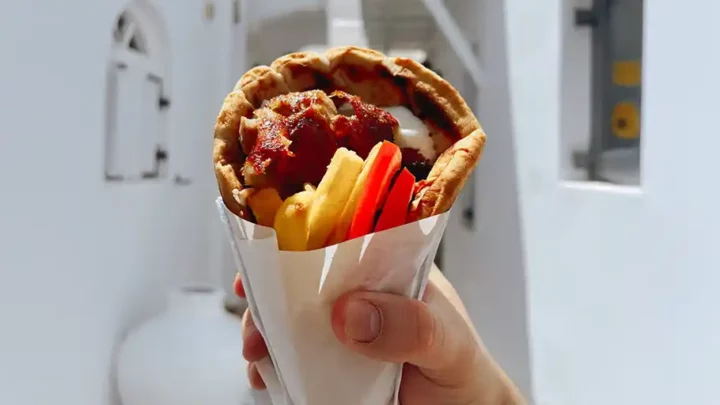
Easy Greek Pork Souvlaki With Tzatziki
Juicy lemon and oregano pork skewers with thick, garlicky homemadetzatziki, ready to stuff into warm pita.
Ingredients
- 2 lb boneless pork shoulder or pork loin , cut into 1-inch (2.5 cm) cubes
- 1/4 cups extra virgin olive oil
- 3 tbsp fresh lemon juice
- 3 cloves garlic , minced
- 2 tsp dried oregano
- 1 tsp sweet paprika
- 1 tsp salt
- 1/2 tsp black pepper
- 8 wooden skewers , soaked in water for 30 minutes
Tzatziki
- 1 English cucumber , grated
- 1 1/2 cups full-fat Greek yogurt
- 1 clove garlic , finely grated
- 1 tbsp extra virgin olive oil
- 1 tbsp red wine vinegar or lemon juice
- 1 tsp fresh dill , finely chopped
- 1/2 tsp salt
To serve
- 4 pita breads , warm
- 1 tomato , sliced or chopped
- 1 red onion , finely-sliced or chopped
- 16 french fries , optional, but very Gre
Instructions
1. In a large bowl, whisk together the olive oil, lemon juice, garlic, oregano, paprika, salt, and pepper. Add the pork and toss to coat. Cover and refrigerate for at least 1 hour, or up to 8 hours.
2. While the pork marinates, make the tzatziki.
- Grate the cucumber on the large holes of a box grater
- Squeeze it hard in a clean kitchen towel to remove as much water as possible
- Stir the squeezed cucumber, yogurt, garlic, olive oil, vinegar, dill, and salt together.
- Refrigerate for at least 30 minutes so the garlic can settle in.
4. Thread the pork onto skewers, leaving a little space between the pieces so they char instead of steam.
5. Heat a grill, grill pan, or broiler to medium-high. Cook the skewers for 10 to 12 minutes, turning every few minutes, until charred at the edges and cooked through. (145°F / 63°C inside).
6. Rest the skewers for 5 minutes. Serve on warm pita with tomato, onion, fries, a big spoonful of tzatziki, and a squeeze of lemon.
Nutrition Information:
Yield:
4Serving Size:
1Amount Per Serving: Calories: 960Total Fat: 63gSaturated Fat: 20gCholesterol: 173mgSodium: 1386mgCarbohydrates: 44gFiber: 3gSugar: 7gProtein: 53g
2. Cheese Saganaki Recipe (Pan-Fried Greek Cheese)
Greek: σαγανάκι (sah-gah-NAH-kee)
My first taste of Saganaki arrived at our table in Nafpaktos, still crackling in its pan, a golden slab of cheese with a crust like a well-toasted sandwich and a molten, salty middle. The dapper-looking waiter squeezed a lemon over it, the steam hissed, and four forks went in at once. Dylan and Cohen fought over the last corner like two hockey players fighting for a puck in the corner. By the time we got home to Canada, saganaki had become the most requested dish in our house. Don’t tell my friend in Greece, but one of my favorite Saganaki dishes was at a small Greek restaurant in Sudbury, Ontario.
Where it came from: Saganaki is named after the sagani, a small two-handled frying pan that it’s cooked and served in. In Greece, it’s a humble meze: a firm sheep or goat milk cheese like kefalograviera, kefalotyri, or graviera, dusted in flour, fried in olive oil, and finished with lemon. That’s it. No theatrics.
The fire came later, and it came from Chicago. In 1968, brothers Chris and Bill Liakouras opened The Parthenon in Chicago’s Greektown. When a customer suggested they light the cheese on fire, they doused battered kasseri with brandy, set it ablaze tableside, and had the server shout “Opa!” The Parthenon closed in 2016, but flaming saganaki spread to Greek restaurants across North America. So one of the most famous Greek dishes on this continent was born in Illinois, a dish the diaspora gave back to the family.
Why Greeks love it: Because it’s salty, hot, cheap, and made to be shared with a cold drink before the real food arrives. It’s the ultimate taverna opener.
If you grew up Greek: If your family’s big night out was at a Greektown restaurant where the waiter yelled “Opa!” and your eyebrows felt the heat, this is how to bring that moment home. Just keep a lid nearby.
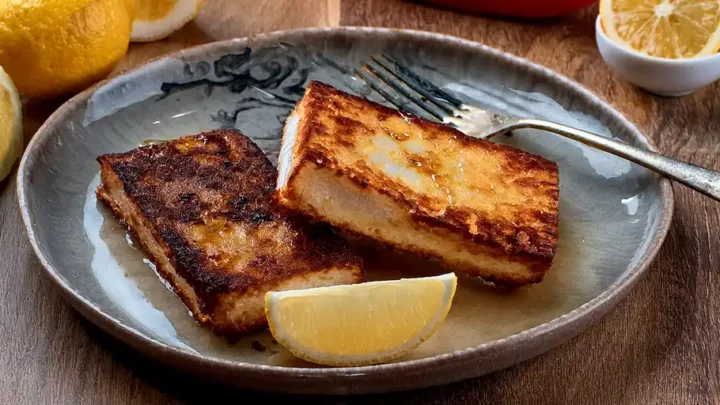
Easy Greek Cheese Saganaki
A crispy,golden, pan-fried slab of Greek cheese with a molten center and a n aromatic squeeze of lemon served with a firey flare.
Ingredients
- 8 oz kefalograviera, kefalotyri, or kasseri cheese , cut into one or two slabs about 1/2 inch (1.25 cm) thick
- 1/4 cups all-purpose flour
- 3 tbsp olive oil
- 1 lemon , cut into wedges
- 1 pinch dried oregano
- 1 pinch black pepper
- 1 tbsp ouzo or brandy
- 4 slices crusty bread , for serving
Instructions
- Run the cheese under cold water, then shake off the excess. The damp surface helps the flour stick.
- Dredge the cheese in the flour on all sides and tap off the extra.
- Heat the olive oil in a small, heavy frying pan over medium-high heat until it shimmers.
- Fry the cheese for 1 to 2 minutes per side, until deeply golden and crisp. Don't move it around while it browns.
- Transfer to a warm plate, squeeze lemon over the top, and sprinkle with oregano and pepper. Serve immediately with bread.
- To flame it (adults only): Leave the cheese in the pan and take the pan off the heat. Pour in the brandy or ouzo, stand back, and light it carefully with a long lighter, away from your face and anything flammable. Shout "Opa!", then squeeze lemon over the cheese to put out the flames.
Notes
Tip: Halloumi works if you can't find a Greek frying cheese. It's squeakier and milder, but it holds its shape beautifully.
Nutrition Information:
Yield:
4Serving Size:
1Amount Per Serving: Calories: 297Total Fat: 23gSaturated Fat: 13gCholesterol: 51mgSodium: 619mgCarbohydrates: 7gFiber: 0gSugar: 0gProtein: 15g
3. Koulouri Thessalonikis Recipe (Greek Sesame Bread Rings)
Greek: κουλούρι (koo-LOO-ree)
On our second morning in Athens, we walked into To Koulouri tou Psirri while the neighborhood was still waking up and the air smelled like toasted sesame. We walked out with a paper bag of koulouri, thin rings of bread that can best be described as lying somewhere between a pretzel and a bagel: crunchy outside, chewy inside, and covered in so many sesame seeds that you’ll be finding them in your jacket pockets for a week. They were an instant hit with the boys, who ate theirs before we’d reached the end of the block and then started haggling for mine.
Bread is sacred in Greece. On Mykonos, we followed the smell of fresh bread to Gioras Bakery, the oldest bakery on the island, where they still bake bread and rusks the old way in wood-fired ovens. And before our visit to Ancient Epidaurus, a crusty loaf, some local cheese, and a bag of olives made for the best picnic of the trip.
Where it came from: Ring-shaped breads have been sold on Greek streets for more than a thousand years. Byzantine writers described small bread rings sold in the streets of Constantinople, and the name koulouri likely traces back to the Byzantine kollikion or ancient Greek kollyra. The thin, crunchy, heavily seeded style is called koulouri Thessalonikis, after the northern city that made it famous. Its cousins include the Turkish simit and the bagel, but don’t tell a koulouri that.
Why Greeks love it: It’s the original Greek grab-and-go breakfast. Vendors sell them from carts on street corners all over Athens and Thessaloniki every morning, and commuters eat them on the walk to work with a coffee. Because the classic recipe has no eggs, dairy, or butter, it’s also a favorite during Orthodox fasting periods like Lent.
If you grew up Greek: If you remember a parent coming home with a string of koulouria, or eating one in the car on the way to church during Lent, this recipe is your time machine.
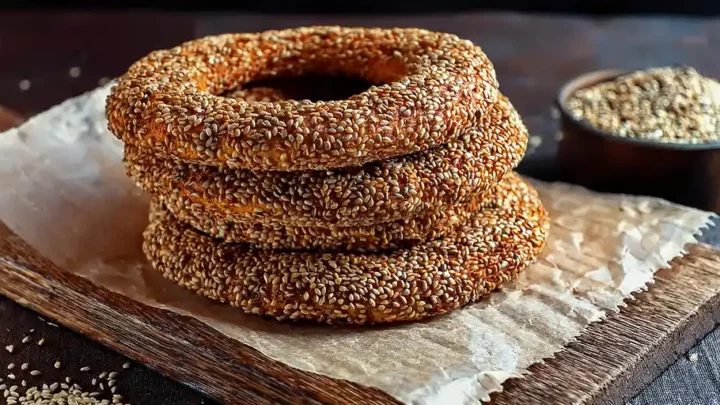
Easy Greek Koulouri Thessalonikis
Crunchy,chewy Greek sesame bread rings, the classic street breakfast of Thessalonikiand Athens.
Ingredients
For the dough
- 4 cups bread flour or all-purpose flour
- 2 1/4 tsp instant yeast
- 1 tbsp white sugar
- 1 1/2 tsp salt
- 1 1/3 cups warm water, about 105°F (40°C)
- 2 tbsp olive oil
For the coating
- 1/2 cups water
- 2 tbsp honey or petimezi (Greek grape molasses)
- 1 1/2 cups sesame seeds
Instructions
- In a large bowl, mix the flour, yeast, sugar, and salt. Add the warm water and olive oil and stir until a shaggy dough forms.
- Knead on a lightly floured counter (or in a stand mixer with a dough hook) for 8 to 10 minutes, until smooth and springy.
- Place the dough in an oiled bowl, cover, and let it rise in a warm spot for about 1 hour, until doubled.
- Preheat the oven to 400°F (200°C) and line two baking sheets with parchment paper.
- Stir the honey into the 1/2 cup of water in a shallow bowl. Pour the sesame seeds onto a plate.
- Divide the dough into 8 equal pieces. Roll each into a rope about 20 inches (50 cm) long, then bring the ends together and pinch them firmly to form a ring.
- Dip each ring into the honey water, then press it into the sesame seeds on all sides. Be generous. Place on the baking sheets.
- Let the rings rest for 15 minutes, then bake for 18 to 22 minutes, rotating the pans halfway through, until deep golden brown.
- Cool on a rack for 10 minutes. Koulouri are best the day they're made, but they freeze well for up to a month.
Nutrition Information:
Yield:
8Serving Size:
1Amount Per Serving: Calories: 387Total Fat: 14gSaturated Fat: 2gCholesterol: 0mgSodium: 440mgCarbohydrates: 54gFiber: 4gSugar: 4gProtein: 11g
4. Easy Moussaka Recipe
Greek: μουσακάς (moo-sah-KAHS)
My first taste of Moussaka was one that I earned. After a full day of climbing through Delphi, up past the Temple of Apollo to the ancient stadium with Christina’s parents in tow, we staggered into Epikouros Taverna with the appetite of a Spartan army. Out came the moussaka: a thick, trembling square of silky eggplant and cinnamon-spiced meat sauce under a custardy golden crown of béchamel, blistered brown on top. The steam smelled like nutmeg and Sunday dinner. Dylan, who had spent most of his life suspicious of the odd color and texture of eggplant, cleaned his plate and asked if there was more. It is, to this day, the best moussaka I’ve ever tasted.
Where it came from: Versions of moussaka exist all across the Balkans and the Middle East, and the name comes from the Arabic musaqqa’a. But the Greek moussaka most of the world knows, the one with the thick béchamel top, was shaped by one man: Nikolaos Tselementes. Born on the island of Sifnos in 1878, he trained as a chef in Vienna and cooked in New York before returning to Greece. In 1930, he published the first complete cookbook in the Greek language, and his French-influenced moussaka, crowned with béchamel, became the national standard. His cookbook was so influential that in Greece, the word tselementes still means “cookbook.” Some Greeks call him the man who modernized their cooking. Others call him the man who let the French into yiayia’s kitchen.
Why Greeks love it: Moussaka is a celebration dish, made in huge pans for Sundays, holidays, and any gathering big enough to require extra chairs. It’s also famously better the next day, which makes it a gift that keeps giving.
If you grew up Greek: There’s a good chance your family’s moussaka traces straight back to a stained, dog-eared copy of Tselementes. This version skips the traditional frying step for the eggplant and roasts it instead. It’s lighter, easier, and I’ve never had anyone notice.
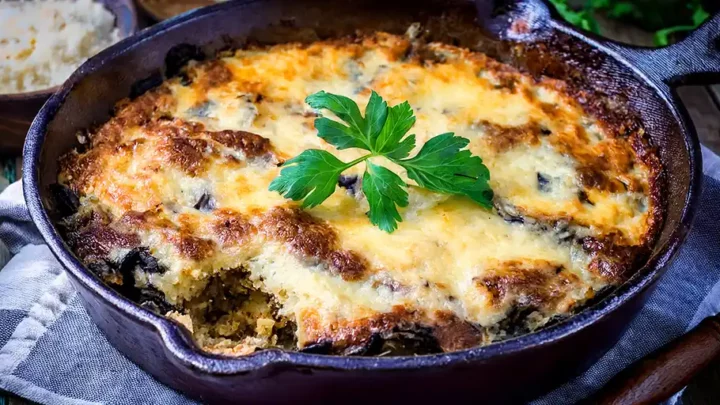
Easy Greek Moussaka Recipe (No-Fry Eggplant)
Layers ofroasted eggplant and potato, cinnamon-spiced meat sauce, and a thick, goldenbéchamel, all without frying a thing.
Ingredients
For the vegetables
- 3 large eggplants
- 2 Yukon Gold potatoes , peeled and sliced 1/4 inch (6 mm) thick
- 1/3 cups olive oil
- 1 tsp salt
For the meat sauce
- 2 tsp olive oil
- 1 large onion , finely chopped
- 3 cloves garlic , minced
- 1 1/2 lbs ground lamb, ground beef, or a mix
- 1/2 cups dry red wine
- 1 can crushed tomatoes
- 2 tbsp tomato paste
- 1 tsp ground cinnamon
- 1/4 tsp ground allspice
- 1 tsp dried oregano
- 1 bay leaf
- 1 tsp salt
- 1/2 tsp black pepper
- 2 tbsp fresh parsley , chopped
For the béchamel
- 1/2 cups butter
- 1/2 cups all-purpose flour
- 3 cups whole milk , warmed
- 1/4 tsp ground nutmeg
- 1/2 tsp salt
- 2 egg yolks
- 1/2 cups grated kefalotyri or Parmesan, plus 2 tbsp for the top
Instructions
- Preheat the oven to 425°F (220°C). Brush the eggplant and potato slices with olive oil,
sprinkle with salt, and spread them on two or three baking sheets. Roast for 20 to 25 minutes, flipping halfway, until soft and golden. Lower the oven to 350°F (175°C). - While the vegetables roast, make the meat sauce. Heat the olive oil in a large skillet over medium heat and cook the onion for 5 minutes until soft. Add the garlic for 1 minute.
- Add the ground meat and cook for 6 to 8 minutes, breaking it up, until browned. Drain off any excess fat. Pour in the wine and let it bubble for 2 minutes.
- Stir in the tomatoes, tomato paste, cinnamon, allspice, oregano, bay leaf, salt, and pepper. Simmer uncovered for 20 minutes, until thick and not watery. Remove the bay leaf and stir in the parsley.
- For the béchamel, melt the butter in a saucepan over medium heat. Whisk in the flour and cook for 1 to 2 minutes. Slowly whisk in the warm milk and keep whisking for 5 to 7 minutes, until thick enough to coat a spoon heavily.
- Take the béchamel off the heat and stir in the nutmeg, salt, and 1/2 cup of cheese. Let it cool for 5 minutes, then whisk in the egg yolks.
- In a 9 x 13-inch (23 x 33 cm) baking dish, layer the potatoes, then half the eggplant, then all of the meat sauce, then the remaining eggplant. Pour the béchamel over the top, spread it to the edges, and sprinkle with the remaining cheese.
- Bake for 45 to 50 minutes, until the top is deep golden brown in spots.
- Let the moussaka rest for at least 30 minutes before cutting. This is not optional. Cut it too early and it collapses into delicious soup.
Notes
Tip: Make it a day ahead, refrigerate, and reheat. The layers set beautifully and the flavor deepens overnight.
Nutrition Information:
Yield:
8Serving Size:
1Amount Per Serving: Calories: 692Total Fat: 49gSaturated Fat: 20gCholesterol: 152mgSodium: 1032mgCarbohydrates: 37gFiber: 8gSugar: 15gProtein: 26g
Greek Baklava With Walnuts and Honey
Greek: μπακλαβάς (bah-klah-VAHS)
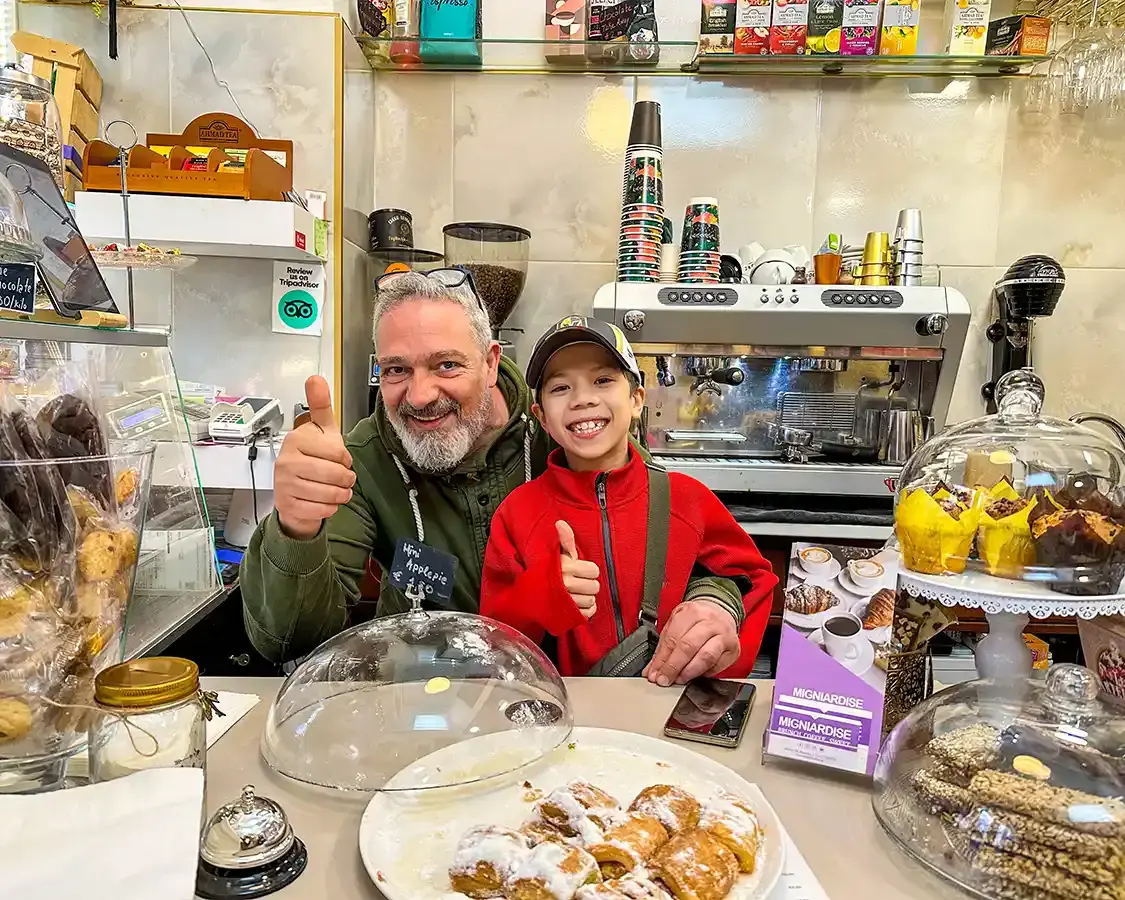
In Greece, history is baked into everyday life like a sweet slice of baklava, and nobody taught us that better than Thanos. No, this isn’t the Infinity Gauntlet-wielding Titan from the Avengers movies; Thanos runs Mignardise, a tiny café on Veikou Street in Athens, and the boys could not get over the fact that a man named Thanos was serving them breakfast after feasting on a steady diet of Marvel movies on our flight to the city from Toronto. He showed off his favorite Greek treats like a proud father, then slid a plate of baklava across the counter, still glistening, and told the boys there were 33 layers of phyllo inside. Cohen started counting. He got to eleven before he gave up and ate it. The phyllo shattered, the honey ran down his chin and wrist, and the whole café smelled like cinnamon and cloves.
Where it came from: Nobody agrees, and people have been arguing about it for centuries. The layered pastry we know today was refined in the kitchens of the Ottoman sultans at Topkapı Palace in Istanbul, where the sultan sent trays of baklava to his elite Janissary soldiers during Ramadan. But Greeks will point out that the Byzantines had a layered nut-and-honey pastry of their own, and some food historians trace the idea back even further, to ancient layered cakes. The Greek version has its own identity: walnuts instead of pistachios, warm spices like cinnamon and clove, and a syrup sweetened with honey and brightened with lemon. Tradition says a proper Greek baklava has 33 sheets of phyllo, one for each year of Christ’s life.
Why Greeks love it: Baklava shows up at every milestone: Christmas, Easter, name days, weddings, and baptisms. It’s what you offer a guest, and many tavernas send a piece out after dinner on the house. Its cousins are loved all over the Middle East too, as you’ll see in our Jordanian recipes and Egyptian recipes.
If you grew up Greek: You probably remember a massive tray of baklava appearing at every family celebration, cut into perfect diamonds by someone who would not let you help. Now it’s your turn to hold the knife.
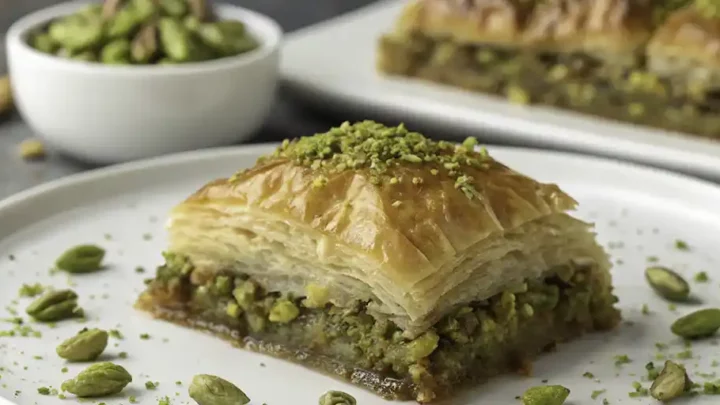
Easy Greek Baklava Recipe With Walnuts and Honey
Crisp,buttery layers of phyllo and cinnamon-spiced walnuts, soaked in a honey andlemon syrup.
Ingredients
For the Syrup
- 1 cup white sugar
- 1 cup water
- 1/2 cups honey
- 1 stick cinnamon
- 1 strip lemon peel
- 1 tbsp fresh lemon juice
For the filling
- 3 cups walnuts , finely chopped (can substitute half walnuts and half almonds)
- 1/4 cups white sugar
- 1/2 tsp cinnamon , ground
- 1/4 tsp cloves , ground
For the assembly
- 1 lb phyllo dough , thawed overnight in the refrigerator
- 1 cup unsalted butter , melted
Instructions
- ombine the sugar, water, cinnamon stick, and lemon peel in a saucepan and bring to a boil.
- Simmer for 10 minutes, then remove from the heat and stir in the honey and lemon juice.
- Remove from heat and let it cool completely.
- Preheat the oven to 350°F (175°C).
- Mix the walnuts, sugar, cinnamon, and cloves in a bowl.
- Brush a 9 x 13-inch (23 x 33 cm) baking pan with melted butter.
- Unroll the phyllo, trim it to fit the pan if needed, and keep it covered with a damp towel so it doesn't dry out.
- Lay down 8 sheets of phyllo, brushing each one with butter.
- Sprinkle one third of the nut mixture evenly over the phyllo.
- Top with 4 more sheets, brushing each with butter.
- Repeat with another third of the nuts and 4 more buttered sheets, then the last of the nuts.
- Finish with the remaining 8 to 10 sheets, brushing each with butter and giving the top sheet a generous coat. (Try adding the ideal 33 layers of phylo to your baklava recipe. The number has been a Christian Greek tradition in honor of the 33 years of Jesus' life.)
- With a sharp knife, cut all the way through into diamonds or squares before baking. You can't cut it cleanly afterward.
- Bake for 45 to 55 minutes, until deep golden and crisp.
- As soon as the baklava comes out of the oven, slowly ladle the cooled syrup over the hot pastry. Listen for the sizzle.
- Let it rest uncovered at room temperature for least 6 hours, or overnight, so the syrup soaks in. Don't refrigerate it, or the phyllo loses its crunch. It keeps, loosely covered, for up to a week.
Make the syrup first so it has time to cool.
Nutrition Information:
Yield:
30Serving Size:
1Amount Per Serving: Calories: 223Total Fat: 14gSaturated Fat: 5gCholesterol: 16mgSodium: 74mgCarbohydrates: 23gFiber: 1gSugar: 3gProtein: 3g
Cooking Your Way Back to Greece
If you’re the child or grandchild of Greek immigrants, you already know that these Greek recipes are about more than just food. They’re Sunday afternoons at yiayia’s, Easter lambs turning on the souvla, trays of baklava at every name day, and a kitchen where nobody measured anything and everything came out perfect.
A few things that help when you’re trying to recreate those flavors:
- Ask now, and watch closely. If you still have a parent or grandparent who cooks, stand next to them with a notebook. “A little of this” becomes a real measurement once you see how big her little is.
- Buy the good oregano. Greek oregano, sold dried on the stem at Greek grocers, tastes nothing like the dusty stuff in the supermarket jar. It’s the fastest way to make your kitchen smell like Greece.
- Shop where Greeks shop. Greek neighborhoods like Toronto’s Danforth, Chicago’s Greektown, and Astoria in New York have grocers stocked with kefalograviera, real feta in brine, phyllo, and petimezi.
- Then go. Cooking the food is one way to reconnect. Eating it at a taverna in your family’s home region, with the people who still live there, is another entirely. Our Greece family travel guide and list of the best places to visit in Greece are a good place to start planning.
Frequently Asked Questions About Greek Cooking
Greece has no official national dish. Fasolada, a humble white bean and tomato soup, is often called the national food of Greece, while moussaka is the most famous Greek dish outside the country. Souvlaki and gyros are what Greeks eat most often on the go. Ask five Greeks, and you’ll get six answers.
Souvlaki is chunks of marinated meat grilled on a skewer. Gyros is seasoned meat stacked on a vertical rotisserie and shaved off in thin slices. Both are usually wrapped in warm pita with tzatziki, tomato, onion, and French fries, and both are Greek fast food royalty. Order one of each. It’s research.
Kefalograviera is the most common cheese for saganaki in Greece, followed by kefalotyri, graviera, and kasseri, which is the cheese used for flaming saganaki in Chicago. Look for a firm, salty cheese that browns without melting into a puddle. Halloumi and pecorino are good substitutes if you can’t find Greek cheese.
Traditional Greek food is a cornerstone of the Mediterranean diet, built on olive oil, vegetables, legumes, fish, herbs, and yogurt, and it’s widely considered one of the healthiest ways to eat. That said, this list also includes fried cheese and honey-soaked pastry. Balance is also a Greek tradition.
Greek breakfasts are usually quick and eaten on the move: a sesame koulouri from a street cart, a slice of bougatsa (custard or cheese pie in phyllo), or a spanakopita or tiropita, with a strong coffee. In Thessaloniki, bougatsa for breakfast is practically a local religion.
Greek and Mediterranean grocery stores carry everything in these recipes, including kefalograviera, Greek oregano, feta in brine, and petimezi. Most large supermarkets stock Greek yogurt, and phyllo is in the freezer section. If you have no Greek grocer nearby, many specialty Greek food shops sell online.
Yes. Moussaka is better made a day ahead, baklava keeps for a week at room temperature, and tzatziki tastes best after a few hours in the fridge. Souvlaki can marinate up to 8 hours. Koulouri freeze well. Only saganaki has to be made right before serving, and it takes ten minutes.
Travel Resources For Families Visiting Greece
For practical planning, safety considerations, and logistics, these dedicated guides provide all of the resources you need for family travel in Greece






Bring Greece Home With You
Which of these easy Greek recipes are you making first? And if you grew up with a yiayia who made one of these dishes better than anyone alive, tell us her secret in the comments. We promise not to tell her.
Once you’ve conquered Greece, keep cooking your way around the world with our easy Egyptian recipes, Jordanian recipes, easy Colombian recipes, and easy Icelandic recipes.
You May Also Like To Read: