Here’s the honest Ecuador family travel guide nobody else is writing. We spent 18 days traveling through Ecuador with kids. Quito, Volcano Alley, the Galápagos Islands, the Amazon.
There is no country quite like Ecuador. The smallest nation in South America, smaller than the state of Colorado, may not stand out on a map. Yet this country contains four of the most extraordinary ecosystems on the planet: the snow-capped Andean highlands, the Pacific coast, the world’s most biodiverse rainforest, and a remote volcanic archipelago that Charles Darwin sailed through in 1835 and stumbled upon ideas that changed everything that we knew about life on Earth.
I spent two weeks here with my family and experienced things that most families only encounter in nature documentaries. We walked through a UNESCO-listed colonial capital at nearly 10,000 feet, where our lungs burned from the altitude. We hiked the flanks of one of the world’s most beautiful volcanoes while wild horses sprinted through the surrounding grasslands. We stumbled down the banks of a volcanic crater lake that looks like someone filled it with turquoise paint. And then, we were lucky enough to get out to the Galápagos Islands, where a sea lion fell asleep two feet from my children on a beach. The Amazon, the Otavalo markets, and the Equator Museum. All of it was something that neither my kids nor Christina and I will ever forget.
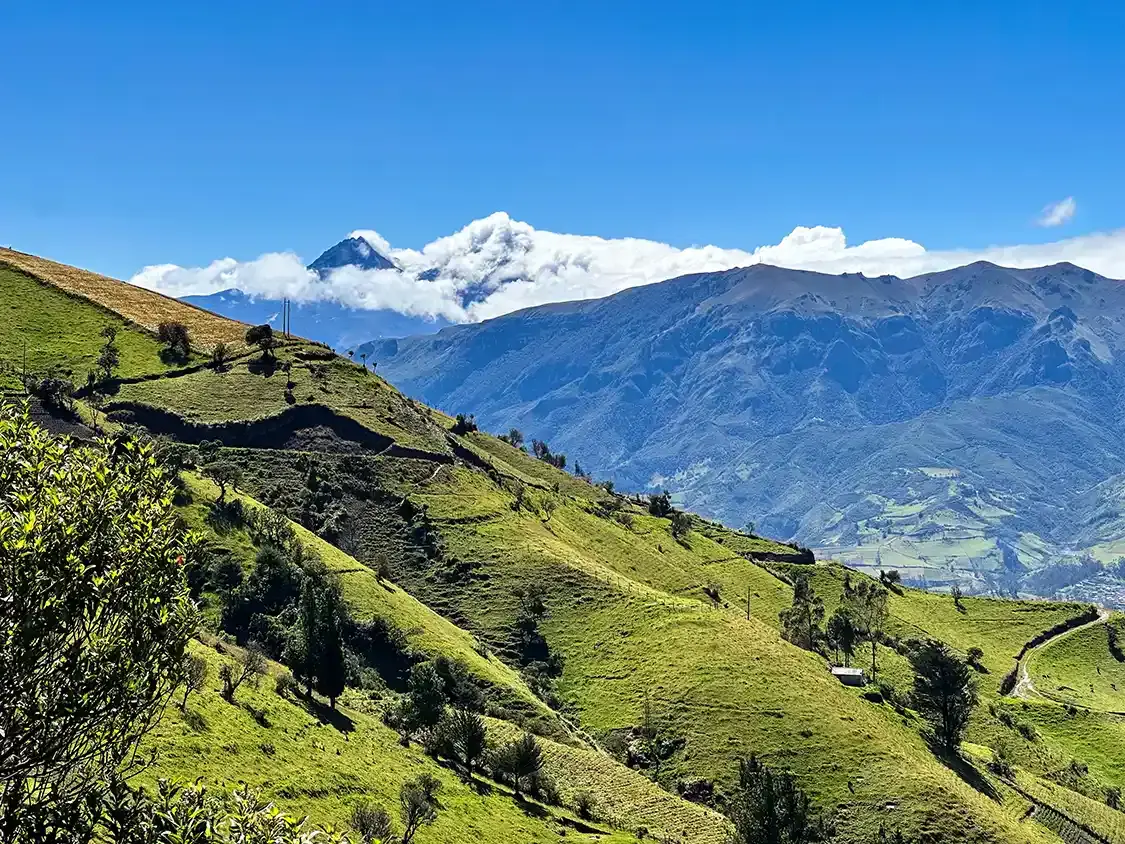
I have experienced multigenerational travel throughout Ecuador. Although Christina and I have traveled with our kids to more than 43 countries across five continents, we still feel that Ecuador is one of the most underrated and awe-inspiring destinations that we have ever been to. I’ve planned it, experienced it, and lived to tell about it. So if you’re planning a family trip to Ecuador, here is what you actually need to know before you travel to Ecuador with kids. These Ecuador travel tips for families come from real, lived experiences.
At a Glance: Quick Facts for Family Travel in Ecuador
🗣 Language: Spanish. English is spoken in hotels and tour agencies; rarely in rural areas or markets.
💰 Currency: US Dollar (USD). Cards work in cities; carry cash for markets, rural areas, and smaller towns.
🔌 Power Adapter: Type A and B (North American standard). 110V Adapter needed for non-US/Canadian travelers.
🚗 Driving: Right-hand side. Manageable on main routes; mountain roads are best left to locals or a hired driver.
🆘 Emergency: ECU-911 (unified national emergency number — police, ambulance, and fire)
💧 Tap Water: Don’t drink it. Bottled water is cheap and available everywhere. Better yet, bring a filtered water bottle to save money and the environment.
⛰️ Altitude: Quito sits at 9,350 ft. Cotopaxi and Quilotoa go higher. Plan for acclimatization. This matters.
Do You Need Visas To Visit Ecuador? And Other Entry Requirements
Table of Contents
Entry into Ecuador is straightforward for most Western families. Citizens of the United States, Canada, the United Kingdom, and most EU countries can enter visa-free for stays of up to 90 days. No paperwork, no pre-arrival registration. You show up, you get a stamp.
Your passport must be valid for at least 6 months from your date of entry and have at least 1 blank page for stamps. Entry and exit stamps are both recorded. Losing track of your entry stamp or failing to exit the country correctly creates friction on future visits.
If you are traveling as a solo parent or non-biological guardian, carry notarized proof of guardianship and copies of birth certificates for all children. Immigration officers do not always ask for these. The ones who do ask are not interested in hearing that you didn’t bring them. Have them ready.
Ecuador operates as a visa-on-arrival country for most nationalities. If yours requires advance authorization, the process is handled through the Ministry of Foreign Affairs and is worth completing well before you travel. A quick check of your specific situation before booking saves the kind of stress that airport immigration desks are very good at producing.
Getting Connected: Mobile and Data in Ecuador
Ecuador’s major cities, Quito, Cuenca, and Guayaquil, have solid mobile infrastructure, and coverage holds up reasonably well along the main highland routes. The Galápagos has limited coverage on the populated islands (Santa Cruz, San Cristóbal, Isabela, and Floreana). Once you get into the deep Andes or the Amazon Basin, the signal disappears, and that is entirely by design.
If your phone supports eSIM, install one before you leave home. I use the Airalo eSIM app for international travel, and it has never failed me. Ecuador-specific and regional South America plans are available, and activating before you board means that when you land in Quito, you’ll have data running rather than having to hunt for a SIM card after a long-haul flight. A 10–15 GB plan covers a family running one phone as a hotspot for a two-week trip through the highlands and Galápagos.
If you want the strongest possible coverage in rural Andean communities or smaller towns, a local SIM from Claro or Movistar, Ecuador’s dominant carriers, will outperform international eSIM plans in those areas. Both are available at airports and phone shops throughout Quito. My suggestion is to use an Airalo eSIM for your arrival and purchase a local SIM or eSIM once you’re settled in Ecuador.
👀 HEADS UP: The Amazon is a Digital Detox
Lodges deep in the Ecuadorian Amazon, including La Selva Lodge, where we stayed, offer intentionally limited connectivity as part of the experience. There is no reliable signal on the Napo River. No meaningful WiFi in the jungle. Plan for this. Tell the people at home. And then put your phone away and pay attention to what’s happening around you. The Amazon will give you more to look at than your social media feed ever will.
Getting Around Ecuador with Kids
Ecuador is compact by South American standards. It’s a fraction of the size of countries like Brazil, Argentina, and Peru. But its geography makes getting between regions a more deliberate exercise than it looks on a map. The Andes run straight through the middle of the country, and the distances between the highlands, the coast, the Galápagos, and the Amazon are not driving distances; they are flying distances. Build this into your planning from the start.
Domestic Flights
To travel to the Galápagos, you fly. Full stop. Baltra Island (for Santa Cruz) and San Cristóbal both have airports, and LATAM and Avianca operate daily flights from Quito (UIO) and Guayaquil (GYE). Budget for these as a significant line item in your trip. Flights to the Galápagos are not cheap, and they are frequently full during peak season. Book as early as possible.
For the Amazon, the gateway is the city of Coca (Francisco de Orellana Airport), served by short domestic flights from Quito. From Coca, local lodges like La Selva arrange transfers by motorized canoe — an hour or more down the Napo River. The canoe is part of the journey. The kids will love it.
Private Drivers and Rental Cars
The highlands loop, which consists of Quito to Otavalo, south through Cotopaxi, Quilotoa, and back, is manageable by rental car for confident drivers who are comfortable with winding mountain roads and the occasional steep hillside lacking guardrails.
That said, we hired a private driver for the mainland portion of our trip, and I would make the same call again. The mountain roads between Cotopaxi and Quilotoa are genuinely demanding, and having someone local behind the wheel meant we were watching the scenery instead of gripping the steering wheel. Booking.com’s car rental aggregator is a useful tool for comparing options if you do want to self-drive.
Car seats are required by law for children under 12 or under 145 cm in height. Rental companies in Ecuador are inconsistent about the quality of seats available, particularly during peak season. If at all possible, bring your own compact booster or confirm availability in writing before you commit.
Taxis and Rideshare
InDrive is the rideshare app that works reliably in Quito and other Ecuadorian cities. It’s closer to a bidding platform than a fixed-rate app, but it is safer and more transparent than hailing a street taxi. When using a standard taxi, insist that the meter is running before the car moves. Agree on a fare in advance for any airport run or longer transfer. Overcharging tourists is not universal, but it is common enough to warrant a conversation up front.
💡 PRO TIP: The Quito Airport Transfer
Quito’s Mariscal Sucre International Airport sits about 45 minutes from the city center under normal traffic conditions, and considerably longer in rush hour. Book your airport transfer in advance through your hotel or a vetted service. Arriving in a new city at altitude, in the dark, with kids and luggage, is not the moment to negotiate transport.
Language in Ecuador
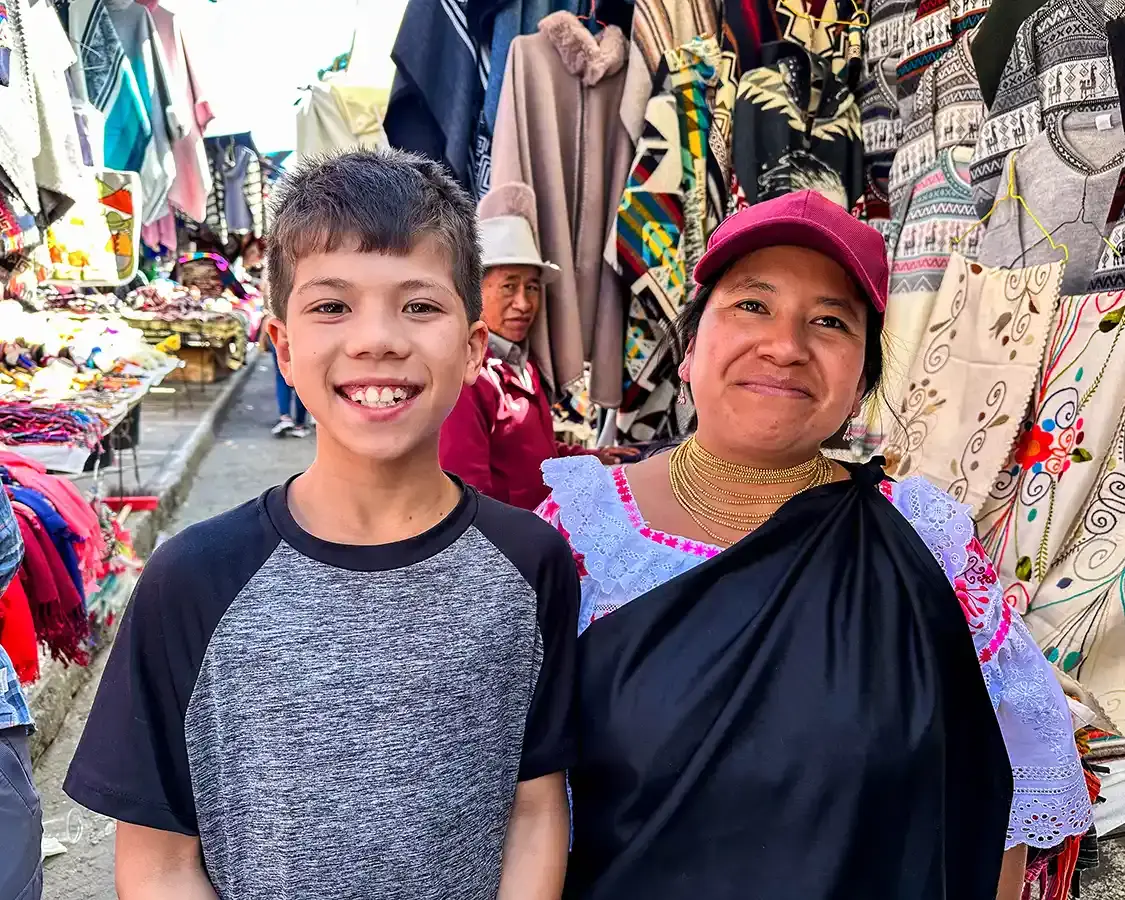
Ecuador’s official language is Spanish, and Ecuadorian Spanish has a reputation, generally well-deserved, for being among the clearest and most neutral in Latin America. Accents are relatively flat, speech is unhurried, and the vocabulary doesn’t contain a lot of slang. If you learned Spanish anywhere, this is a good place to use it.
In the Andean highlands, Kichwa, a Quechuan language that’s common throughout much of South America, is widely spoken in Indigenous communities, particularly around Otavalo. You will hear it in the markets and see it on signs. It is not something you need to learn, but recognizing it adds a layer to the experience.
English is spoken in hotels, tour agencies, and restaurants in Quito and the Galápagos. Outside of those areas, in markets, in smaller Andean towns, in the Amazon, you are far less likely to find people comfortable enough with English to communicate easily. Download Google Translate with the Spanish language pack for offline use before you leave. And make an effort. Locals in Ecuador respond to the effort in a way that changes the whole interaction.
Phrase | Spanish | Pronounciation |
|---|---|---|
Hello | Hola | Oh-la |
Thank you | Gracias | GRAH-see-ahs |
Please | Por favor | Por fah-VOR |
Where is…? | ¿Dónde está…? | DON-day es-TAH |
How much? | ¿Cuánto cuesta? | KWAN-toh KWES-tah |
My child is sick | Mi hijo/a está enfermo | Mee EE-ho es-TAH en-FER-mo |
Help! | ¡Ayuda! | ah-YOO-dah |
Bathroom | Baño | BAN-yo |
Yes | Sí | See |
No | No | No |
What Power Adapter Do You Need for Travel in Ecuador?
Ecuador uses Type A and B sockets running at 110V/60Hz. This is exactly the same standard as the United States and Canada. If you are traveling from North America, every plug you own works here without an adapter, without a converter, without a second thought.
Travelers from the UK, Europe, or Australia will need a plug adapter and should check whether their devices are dual-voltage before plugging anything in. Most modern phones, laptops, and tablets handle both voltages; the label on your charger will confirm.
A multi-port USB charging hub is one of the most practical things you can pack for a family trip. This is the travel adapter we use; it handles multiple plug types and includes both USB and USB-C ports for the whole family.
Family Safety in Ecuador
Many people wonder if Ecuador is safe for families. That concern isn’t without its reason for those visiting Ecuador with children. Ecuador went through a turbulent security period around 2023–2024, and that period is reflected in travel advisories that, for some nationalities, still read more dramatically than the on-the-ground reality in the main tourist regions. Check your government’s current travel advisory before you book, and read it carefully rather than just scanning the headline level.
The historic center and Mariscal district of Quito are generally safe for families when you apply normal big-city judgment: keep bags close, don’t display expensive cameras or jewelry, use InDriver or pre-booked transfers rather than street taxis at night, and stay in well-reviewed neighborhoods. We arrived in Quito with our guard up after hearing plenty of warnings and found a beautiful, welcoming, and energetic city. We never felt unsafe.
The Galápagos Islands are among the safest tourist destinations on the planet. Cotopaxi National Park, Otavalo, Quilotoa, and the Ecuadorian Amazon are not places where security is a meaningful concern for most families.
A few practical ground rules worth establishing before you arrive: dress modestly when visiting churches and in conservative Andean communities. Keep children close in busy markets like Otavalo, where crowds get dense on weekend mornings. At road crossings in cities, hold young children firmly; pedestrian right-of-way is a more theoretical concept in Ecuador than it may be at home.
🚫 DON’T OVERLOOK: The Altitude
The safety issue that catches most families off guard in Ecuador has nothing to do with crime. It’s the altitude. Quito sits at 9,350 feet. Cotopaxi’s base is over 12,000. Quilotoa is at 12,800. Altitude sickness, locally called soroche, does not care how fit you are or how old you are.
Plan 1–2 slow days in Quito on arrival. Hydrate aggressively. Avoid alcohol for the first 48 hours. Talk to your doctor before you go about altitude medication. And if someone in your family is hit hard, respect it. The itinerary can wait. The view will still be there tomorrow.
Health & Vaccination Recommendations for Travel in Ecuador
See a travel health clinic or your family doctor well before departure. Leave enough lead time; some vaccines require multiple doses spread over weeks. Here is what is typically recommended for family travel in Ecuador:
- Routine vaccinations: MMR, DTaP, polio. Keep the whole family current.
- Hepatitis A: Food and water-borne. Recommended for all travelers to Ecuador.
- Hepatitis B: Recommended especially for longer stays or adventure travel.
- Typhoid: Particularly relevant if you are eating adventurously or going rural.
- Yellow Fever: Required documentation for entry into the Amazon Basin and strongly advised before visiting the Galápagos. Get vaccinated at least 10 days before departure. Carry your yellow card.
- Malaria: Discuss prophylaxis with your doctor if the Amazon is on your itinerary. Risk exists in rural lowland areas.
- Altitude sickness (soroche): Not a vaccine, but worth a serious conversation with your doctor. Diamox (acetazolamide) is commonly prescribed for high-altitude travel. Discuss whether it is right for your family before you go.
Tap water is not safe for drinking anywhere in Ecuador. Bottled water is inexpensive and available everywhere. A filtered water bottle is a smarter long-term option that also reduces plastic waste. At smaller restaurants and rural stops, be cautious with ice and raw salads.
Ecuador’s private hospitals in Quito are well-equipped and often staffed by English-speaking professionals. Medical facilities become progressively more limited as you move into the highlands and the Amazon. Travel insurance that covers emergency medical evacuation is not optional on a trip that includes the Amazon or remote Andean regions. It is something you buy before you need it. I use SafetyWing or World Nomads for family travel insurance.
Pack a proper family medical kit that includes children’s pain relief, antihistamines, rehydration sachets (essential at altitude and in the Amazon heat), high-SPF sunscreen, insect repellent with DEET, and anti-nausea medication for the Galápagos crossing. Any prescription medications should be brought in quantities generous enough to cover unexpected delays. See the complete Ecuador family packing list for the full breakdown.
The Regions of Ecuador: What Families Need to Know
Quito
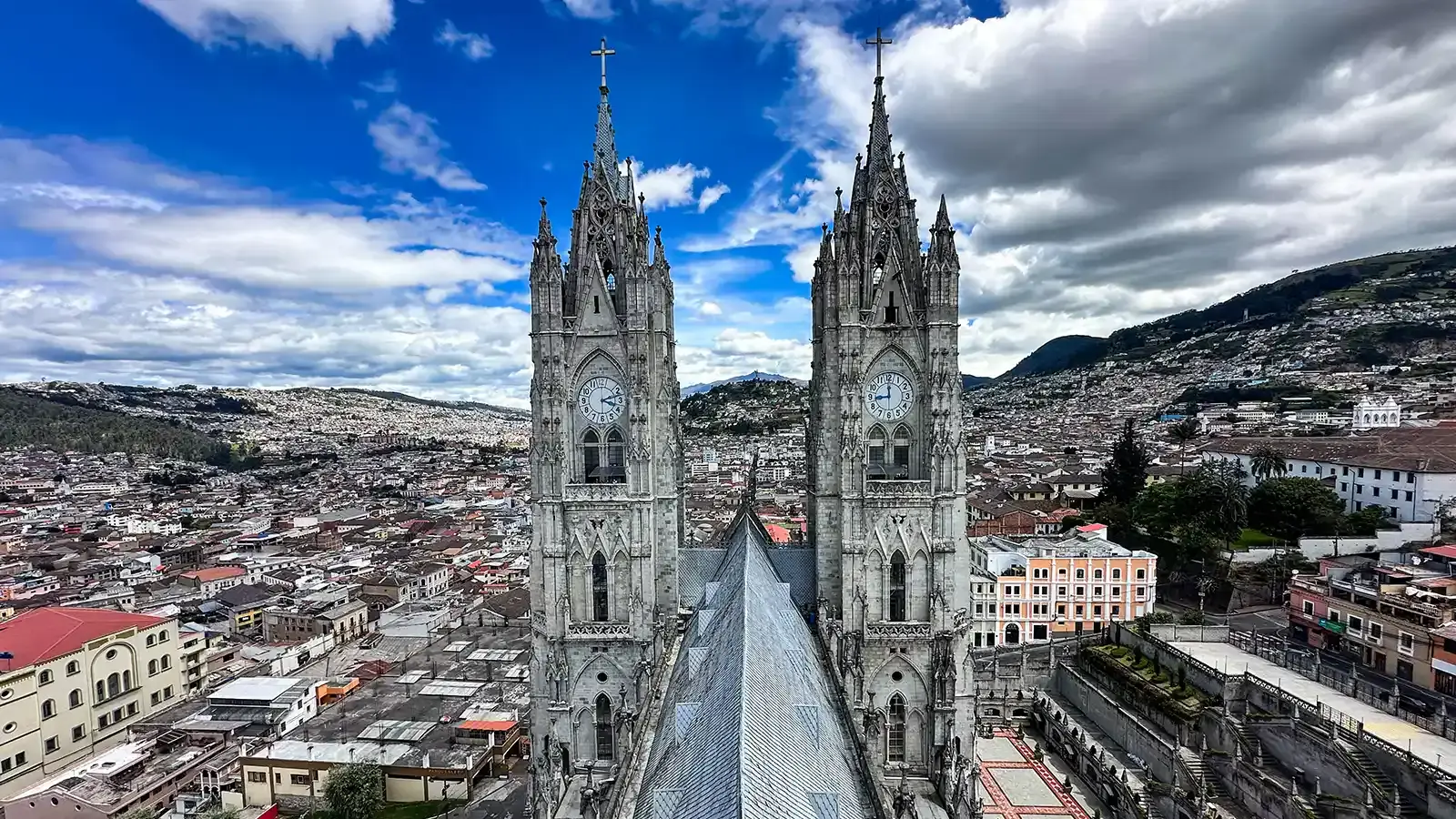
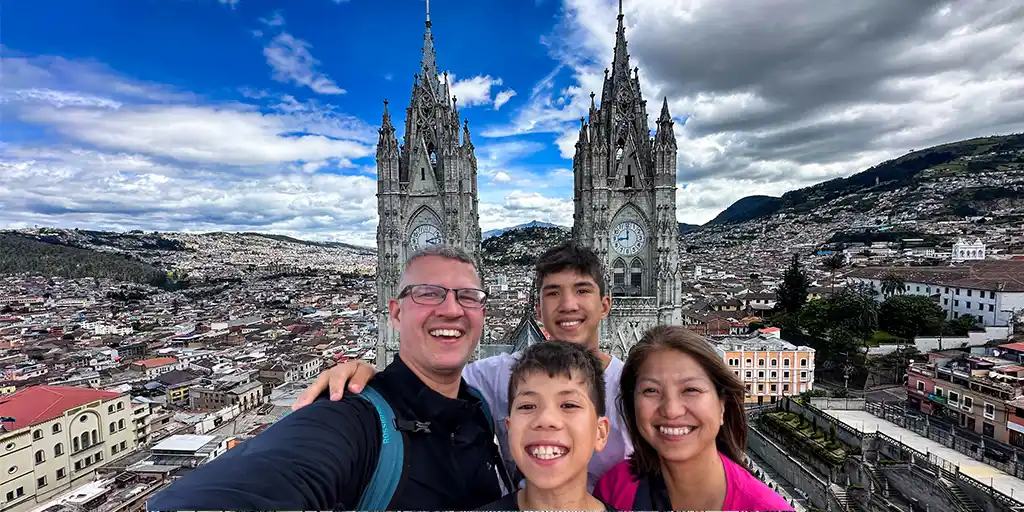
Give Quito at least two full days, and consider three if you have the itinerary to spare. The city repays time in a way that day-trip visits miss entirely. The UNESCO-listed Old Town is one of the best-preserved colonial city centers in South America, cathedral-dense and steep-hilled, and painted in colors that make no architectural sense and somehow work completely. The Basilica del Voto Nacional alone, with all its neo-Gothic stone towers and gargoyles that look like Ecuadorian wildlife, is worth an hour.
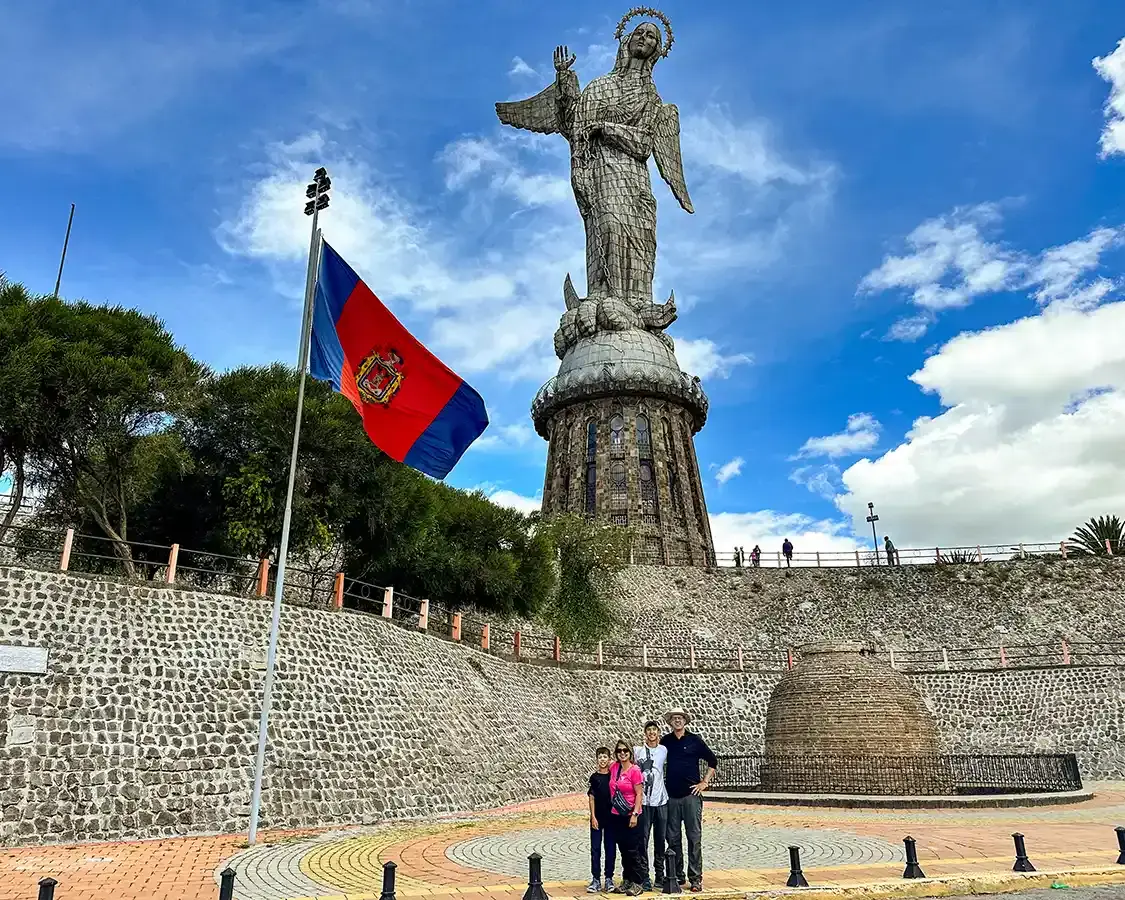
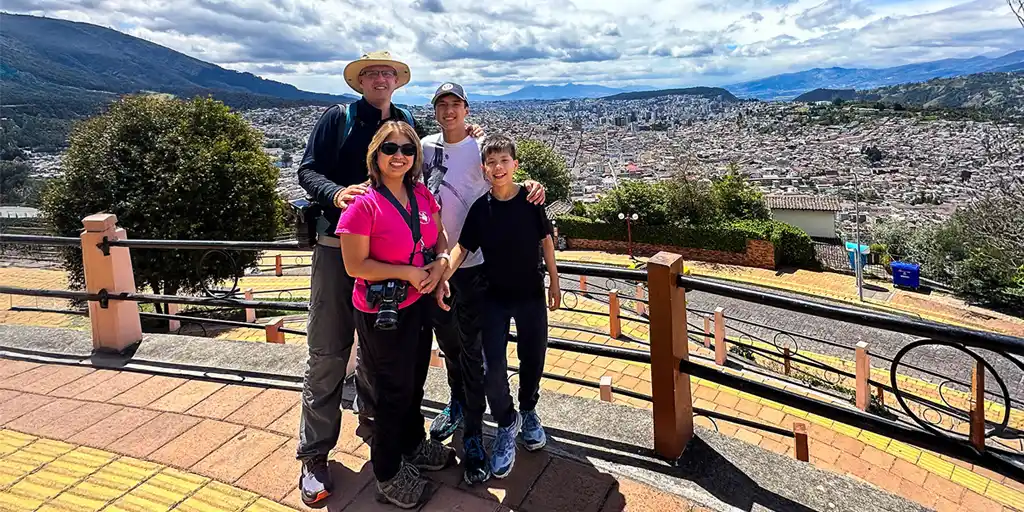
Start your first morning at the Virgin of El Panecillo, the huge metal statue on the hill overlooking the city. The views over the rooftops and into the Andean valley are spectacular and give you a sense of the city’s geography before you walk into it. From there, descend into the Old Town and move at whatever pace your family sets.
A note on altitude: most families start in Quito and feel the altitude immediately. Mild headaches, slightly labored breathing on stairs, and unusual fatigue are common. This usually passes within 24–48 hours for most people. Build a gentle first day rather than trying to cover the whole city at speed.
The Equator
Ecuador is, quite literally, named after it. The equator runs through the country just north of Quito, and you will find two competing sites claiming to mark the exact line. Mitad del Mundo is the monument that most people visit. It is photogenic and historically significant, and also about 240 meters away from the actual equator, which wasn’t something 18th-century surveyors could have known without GPS.
The Intiñan Museum, a short walk away, sits on the corrected coordinates. It is kitschy and fun and has exhibits that include real shrunken heads from Amazonian tribes, which will either fascinate or disturb your kids, depending entirely on the individual child. We visited both. The boys discussed the shrunken heads for three days afterward.
Otavalo & the Northern Highlands
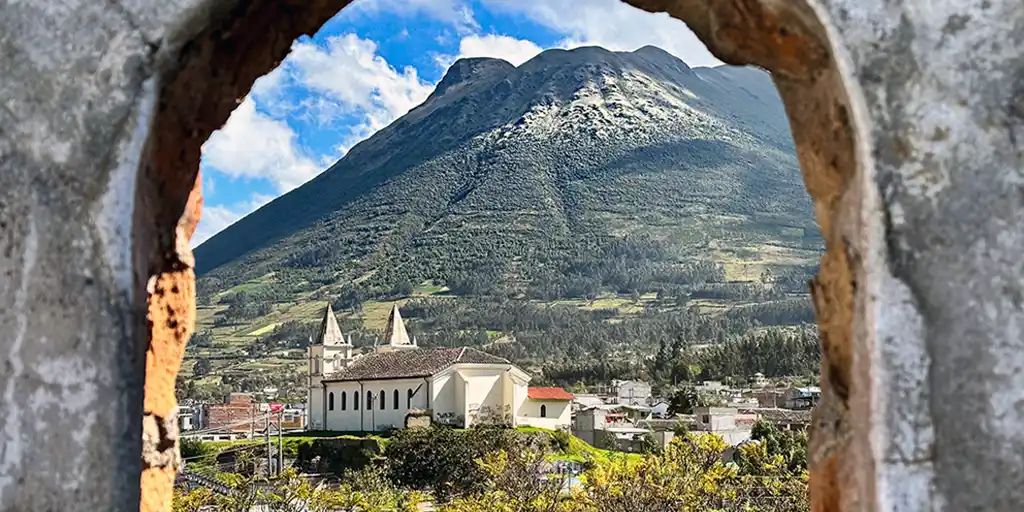
Two hours north of Quito, Otavalo is usually described as a market town, which is accurate and also wildly incomplete. The Saturday textile market, one of the largest Indigenous markets in South America, is extraordinary: color and sound and textile art and produce and livestock all competing for space in a town that somehow absorbs it all with grace. Go on a Saturday morning, get there early, and let the kids loose among the stalls.
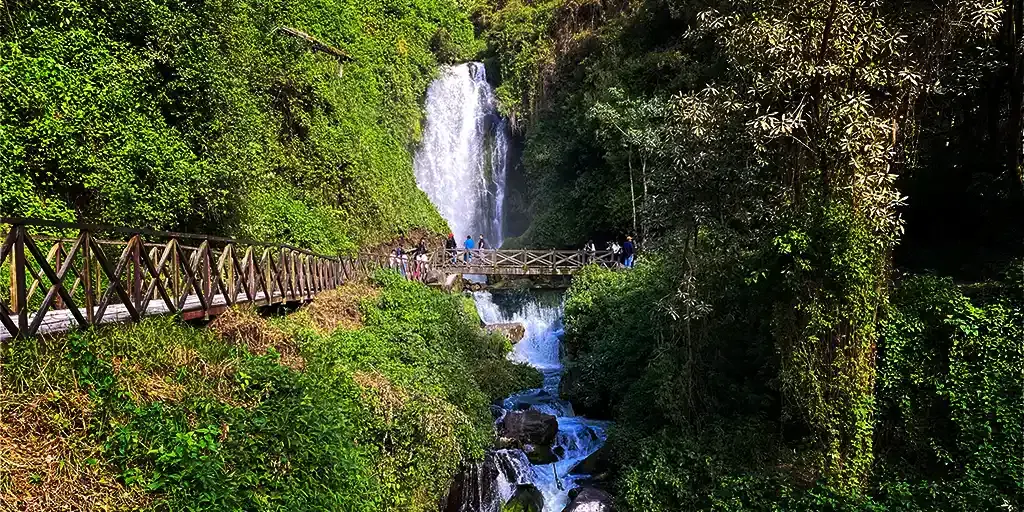
But Otavalo’s depth lies beyond the market. We found an Indigenous-run eco park above the town with a waterfall that felt entirely private. We spent an evening with a family of traveling musicians who crafted every instrument they played by hand. And we stayed at a 400-year-old former monastery, the kind of place that makes you feel slightly absurd about ever complaining about a hotel.
Cotopaxi National Park
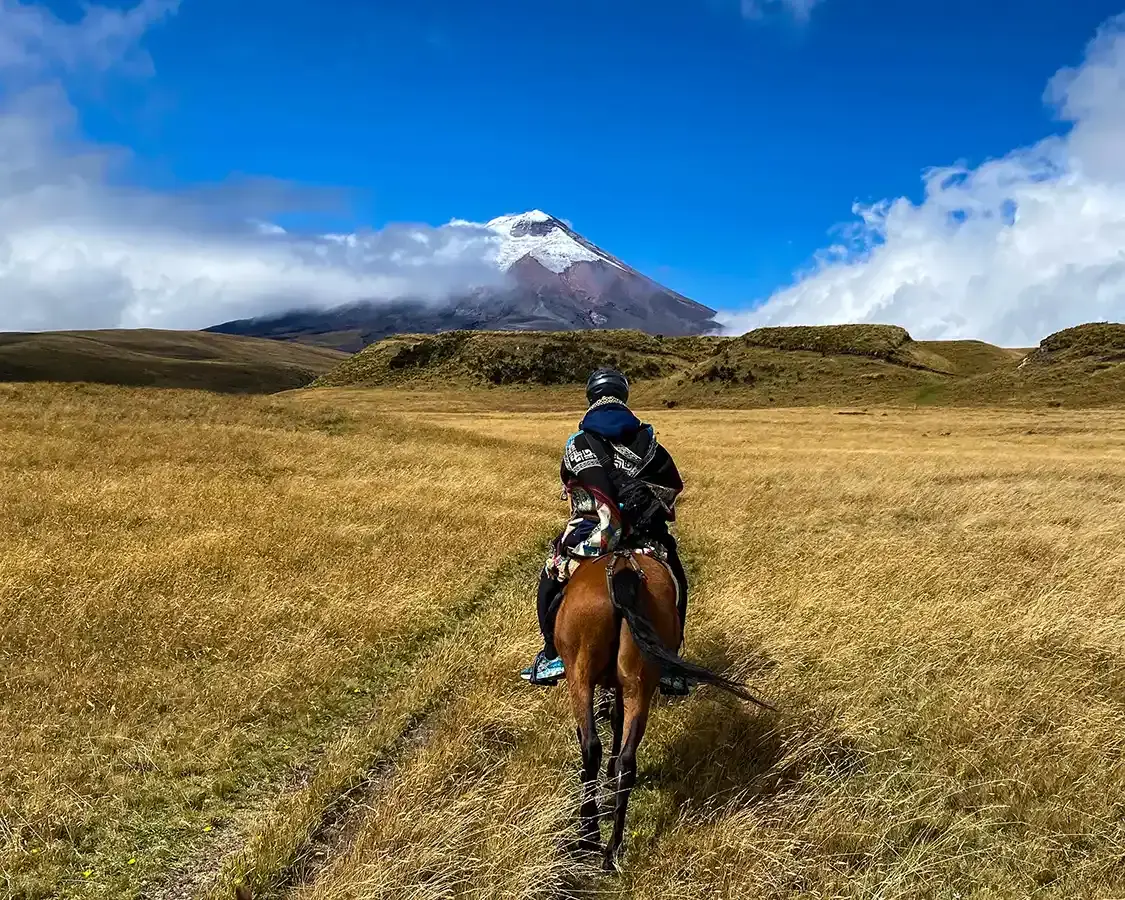
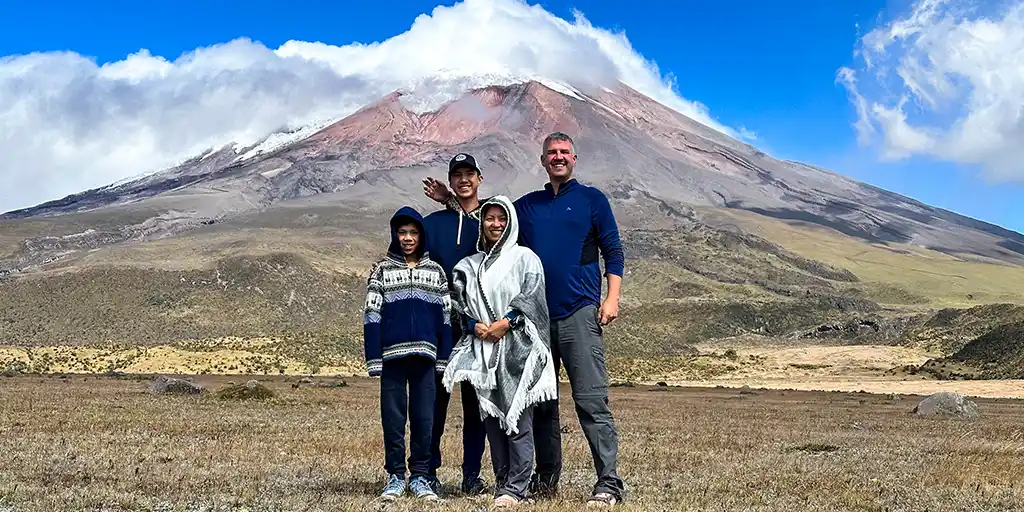
Cotopaxi National Park makes you feel small in the best possible way. One of the world’s highest active volcanoes, its near-perfect glacier-capped cone rises to nearly 20,000 feet and has loomed over Incan rituals, Spanish conquistadors, and generations of mountaineering attempts. The summit climbs are not available to anyone under 16. What is available to families with younger children, though, is still extraordinary enough.
The páramo, the high-altitude grassland surrounding the volcano, has wild horses sprinting across open fields in the morning cold with a glacier in the background. The Limpiopungo lagoon trail is manageable with children of most ages. Horseback riding is available through the park and is the best way to see it at the right pace.
We based ourselves at Tambopaxi Lodge, the only accommodation inside Cotopaxi National Park for those not prepared for camping, and one of the finest family travel decisions we made in Ecuador. Waking up at altitude with that volcano outside the window is not something you easily forget.
Quilotoa and the Crater Lake
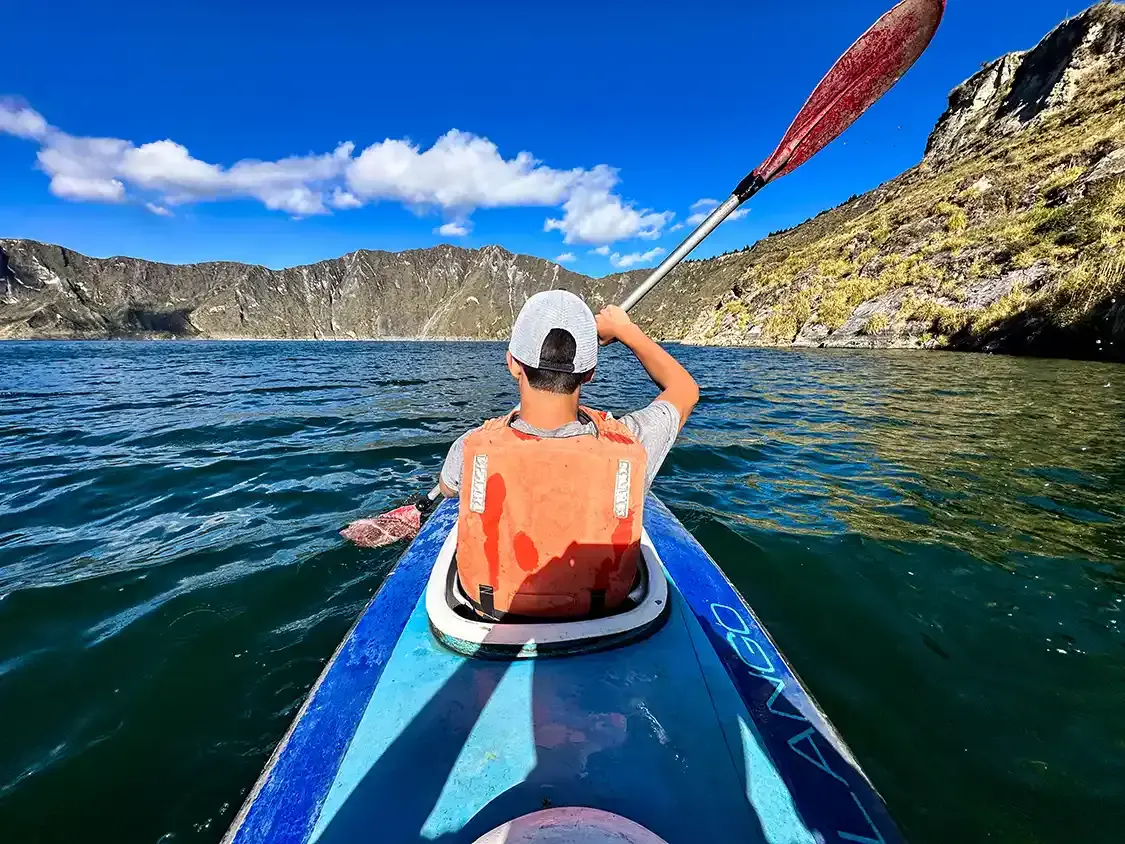
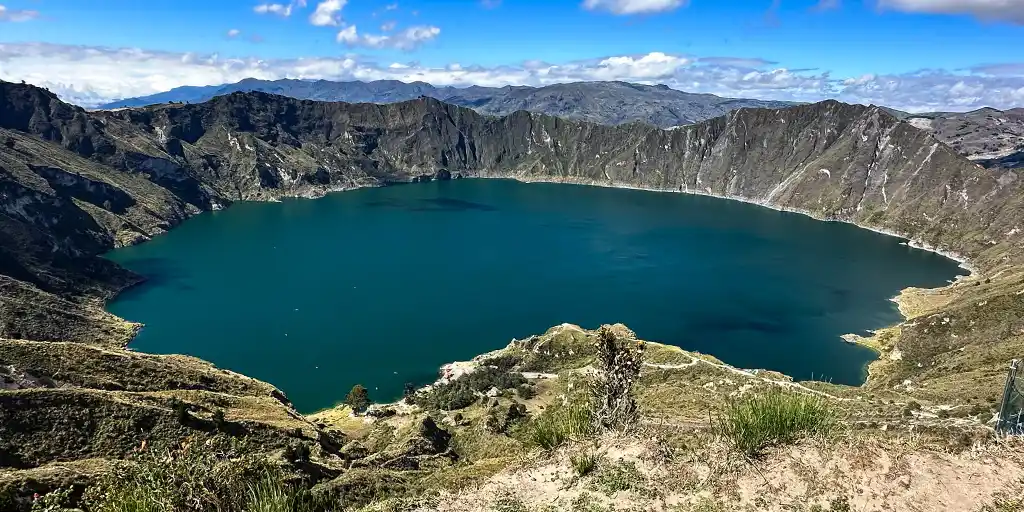
The region of Quilotoa is 12,800 feet above sea level, two and a half hours from Quito, and well off the main tourist circuit. The main draw here is a collapsed volcanic crater filled with water that is genuinely, impossibly turquoise. The descent into the crater takes about 45 minutes on a steep path. The ascent back up is harder, and at altitude, it is significantly harder than it looks, trust me on this.
This was the stop where illness took my son Dylan down hard, pale, nauseous, horizontal in the car before we had even started the descent. Christina stayed with him while Cohen and I went down alone. The lake was extraordinary. We hiked, we kayaked, and then we made the arduous climb back up to the crater rim. The lesson about altitude preparation was expensive. Read the honest version of both in the guide below.
The Galápagos Islands
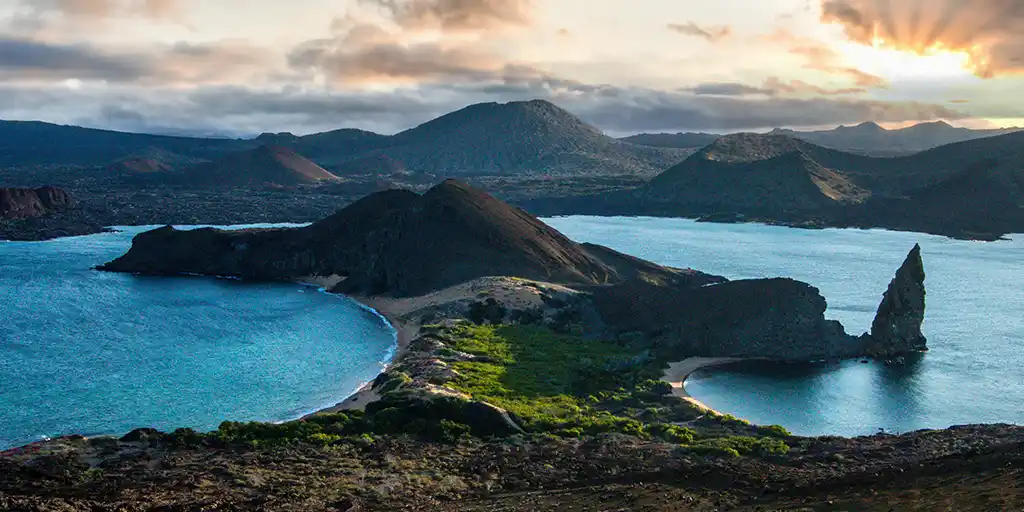
The Galápagos Islands are unlike any other travel destination that I’ve been to. It is a remote, tightly regulated, logistically involved archipelago that operates on its own rules. Those rules are the only reason it hasn’t been destroyed by the volume of people who want to see it. Planning a Galápagos family trip requires more deliberate work than most family travel destinations, but the formula, once understood, is achievable.
The central question is cruise versus land-based travel. A cruise moves you between the outlying islands, where the most significant wildlife encounters happen, and handles the logistics of getting there. Land-based travel (usually out of Santa Cruz) is easier to organize and more flexible, but limits you to the islands accessible by day trips. For families who are serious about the experience, a cruise is the right call.
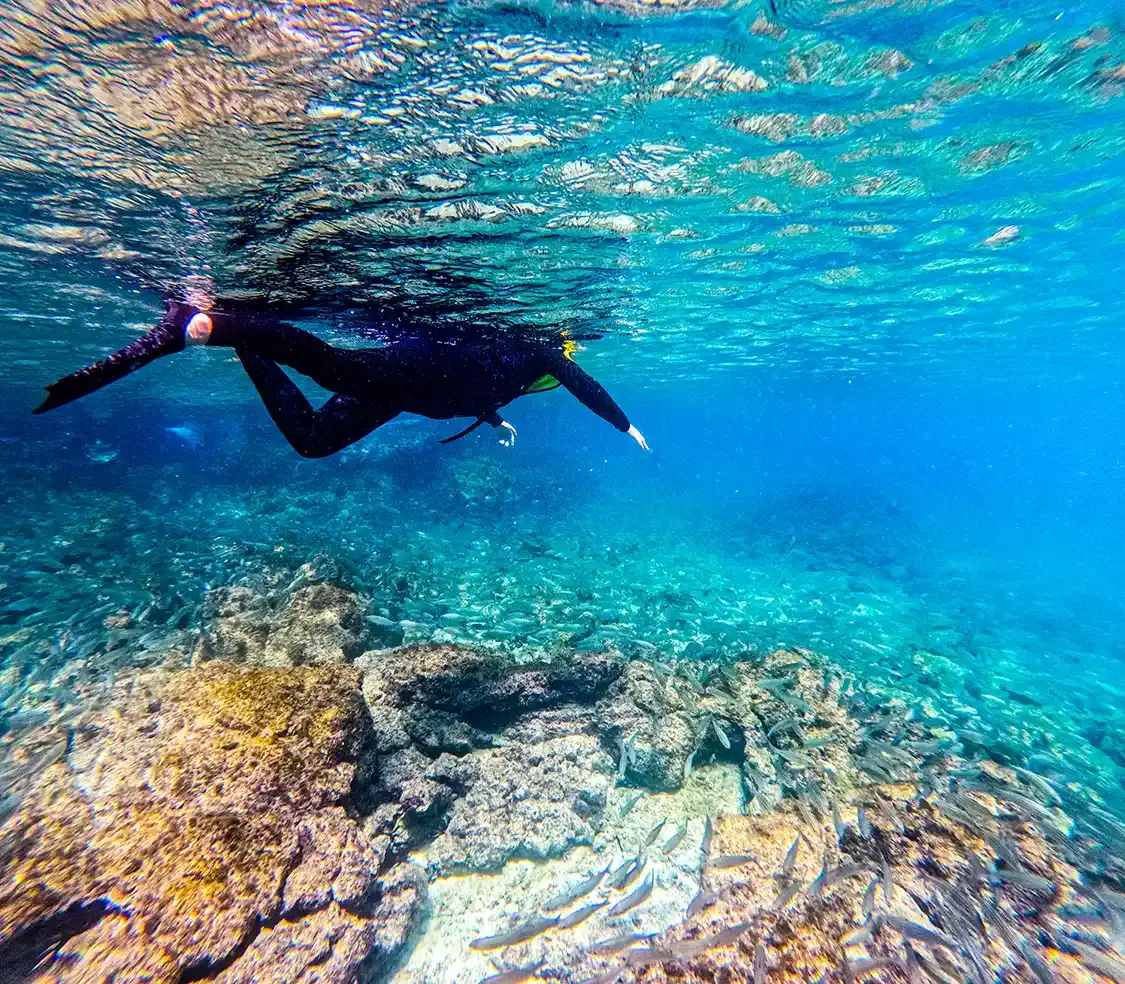
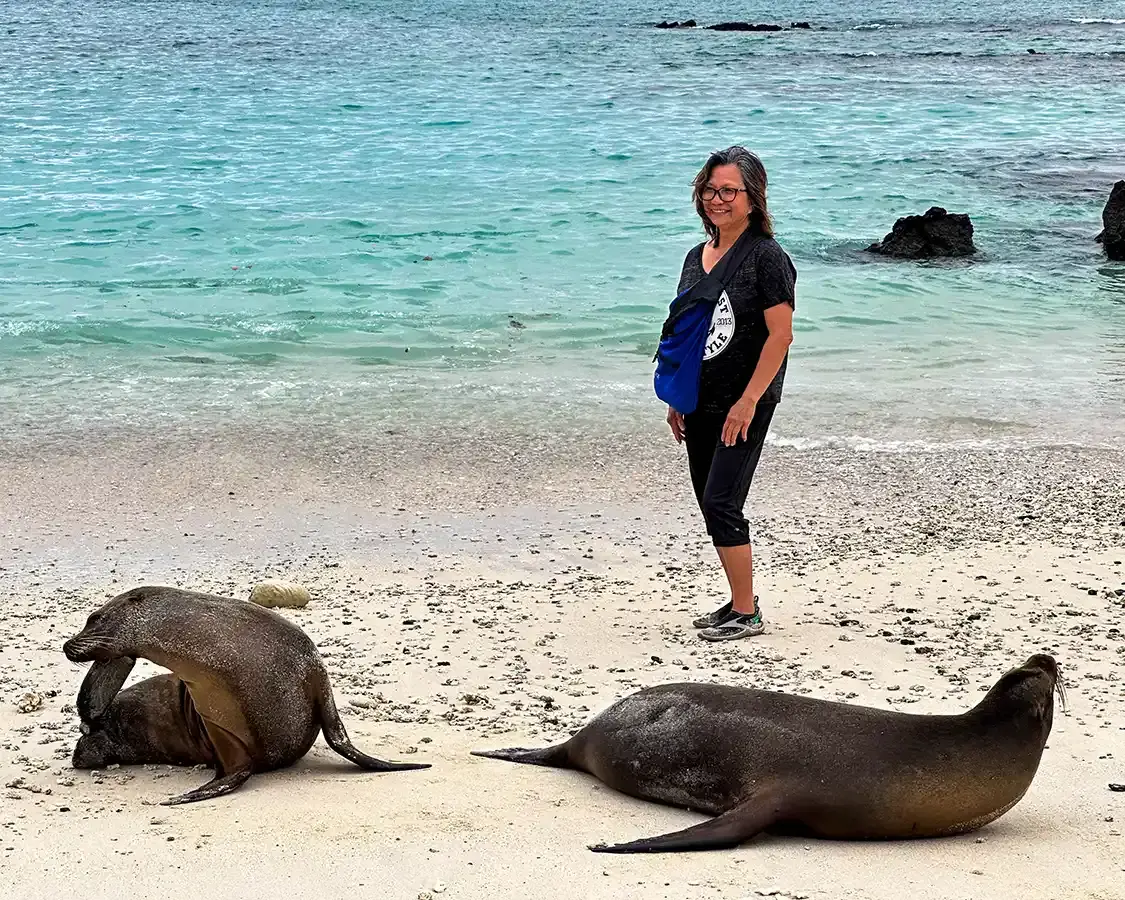
What you will encounter out there: Galápagos sea lions that genuinely don’t move out of your way. Marine iguanas that look like something from Jurassic Park, and who ignore you completely. Penguins swimming underneath you as you snorkel. Giant tortoises the size of coffee tables trudging through highland farms with infinite patience. Darwin’s finches are sitting on your hat. Oh, and the wildlife in the water. Galapagos sharks, Hammerhead sharks, and Manta Rays the size of an SUV. None of them are running away from you.
The wildlife in the Galapagos behave this way because they have no learned fear of humans. It is the single most powerful nature experience that I have ever had, and I have been doing this for twenty years. The full guide, covering how to choose a cruise, what ship works for families, what to pack, and what the days actually feel like, is in our Galápagos Islands with kids guide. We also put together a dedicated Galápagos family cruise video on YouTube if you want to see the full eight days on the water before you decide.
💡 PRO TIP: The Galápagos Is Worth the Investment
The Galápagos is not cheap. Flights, cruise fees, and the national park entrance fee (currently $200 USD per adult) add up to a significant portion of a family trip budget. Book as early as possible. Choose reputable ships with family-friendly configurations.
Be aware that these can fill up well in advance of the season, sometimes a year out for peak season travel in the Galapagos. The cost and complexity keep crowds manageable and the ecosystem intact. This is the trade-off, and it is the right one. Pay it. It is one of the few travel experiences that fully earns the word extraordinary.
The Ecuadorian Amazon
After three weeks crossing the Andes and cruising through the Galápagos, the Amazon was supposed to be a wind-down. It was not. It was the hardest thing to describe and the most disorienting experience of the whole Ecuador travel experience. Disorienting in the sense that the jungle is so complete, so alive, so densely itself, that arriving in it genuinely recalibrated our sense of scale.
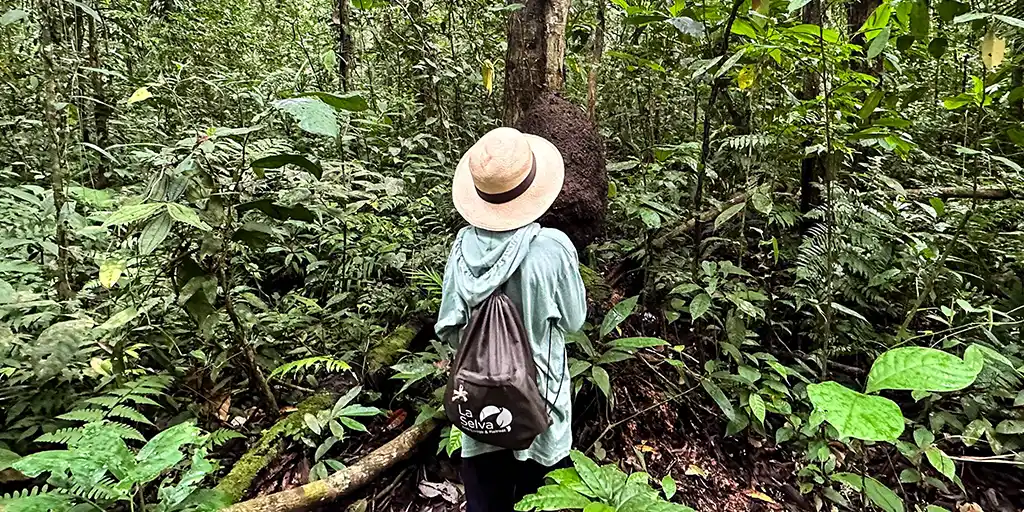
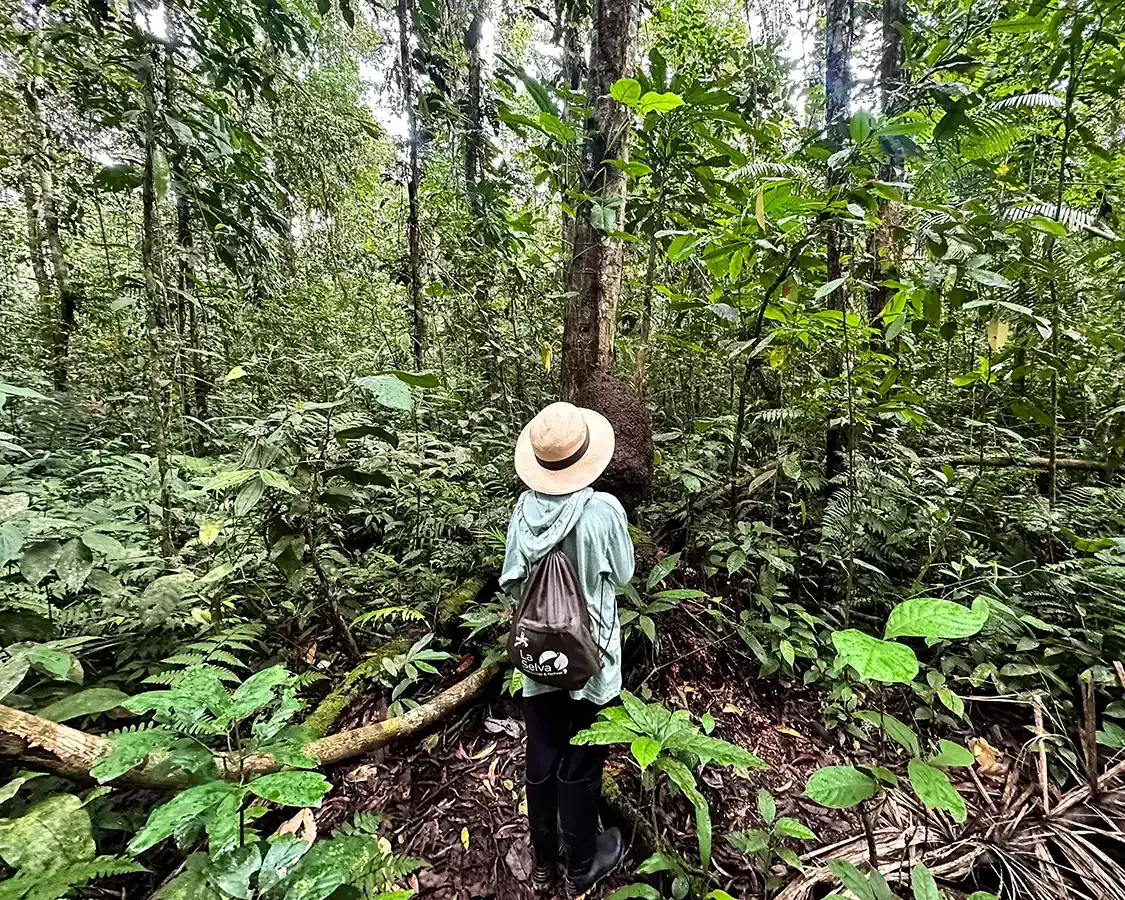
We flew to Coca, officially Puerto Francisco de Orellana, on the Napo River, and traveled from there by motorized canoe to La Selva Lodge, about two hours downriver. The lodge is best described as old-school in the best possible way: wooden platforms over the water, screens instead of glass, the sounds of the jungle from the moment you arrive. But it was also a visual and culinary delight.
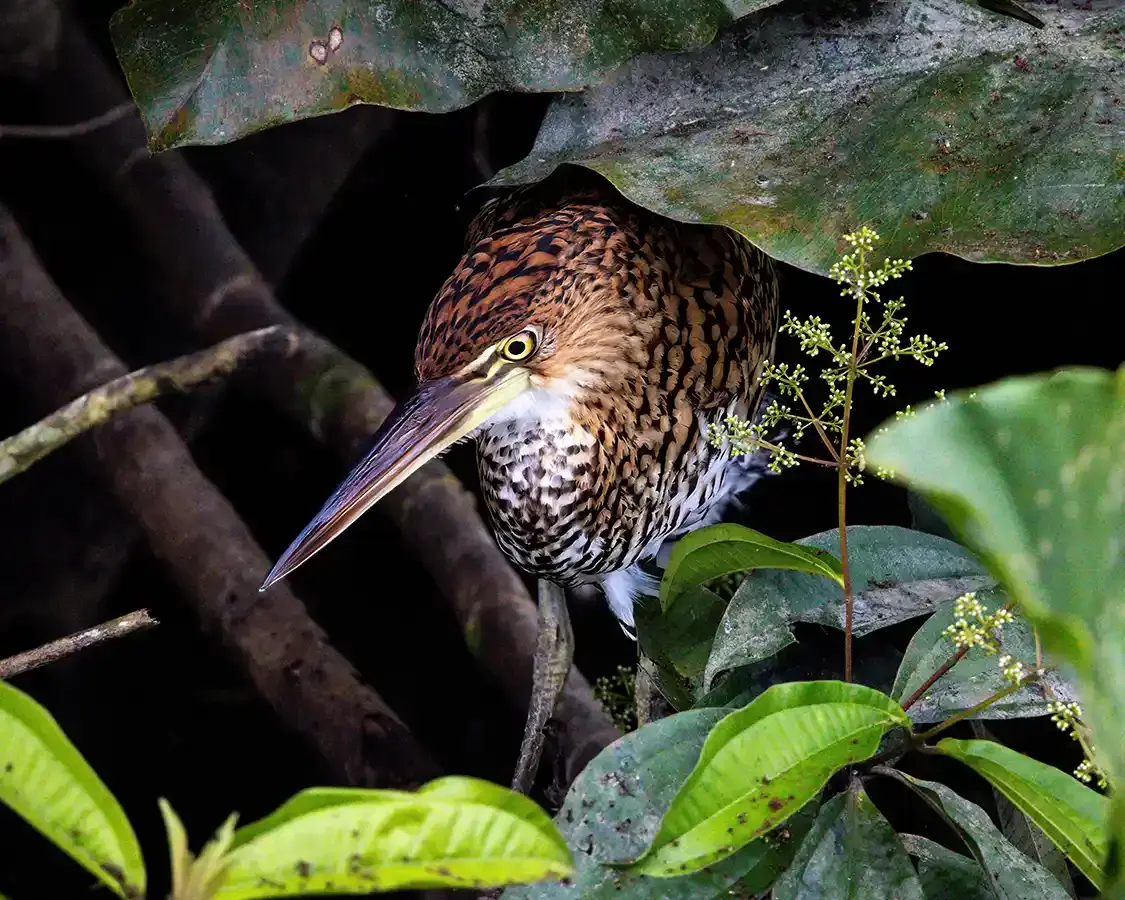
Three days of night canoe tours through the flooded jungle. Fishing for piranhas with a rod and a piece of fish, which sounds more dramatic than it is and is somehow still completely dramatic. A dawn walk with a naturalist who identified 40 species of birds before breakfast. An afternoon spent in a local Kichwa community where the kids learned to make a blow dart from scratch and shot it at a target they actually hit, which remains one of the proudest moments of the whole trip.
The full account, from the logistics of getting in and out to what the days actually look like with kids, is in our three-day Amazon itinerary.
💡 PRO TIP: Finish in the Amazon
There is a temptation to front-load the Amazon early in a multi-region Ecuador trip and build toward the Galápagos as the finale. Resist it. The Amazon is, logistically and emotionally, the heaviest region of the trip. The Galápagos is a wonder, but it is also fresh air, blue water, and relatively comfortable ship life. End in the jungle and you end on something genuinely wild. We did it this way, and it was the right order entirely.
Money & Budgeting for Family Travel in Ecuador
Ecuador uses the US dollar, which it adopted in 2000. For North American families, this removes one of the most persistent low-grade stresses of international travel. You always know exactly what you are spending, and you arrive with usable currency already in your pocket.
Credit cards are accepted in most hotels, larger restaurants, and most tour operators in Quito and the Galápagos. For everything else, such as markets like Otavalo, taxis, smaller restaurants, entrance fees, and anything in rural areas, assume you’ll need cash on hand. The Otavalo textile market, specifically, is almost entirely cash. ATMs are reliable in Quito; progressively less so as you move into the highlands or the Amazon. Stock up before you leave the city.
Keep small denominations on hand. A $20 bill for a $4 taxi fare starts negotiations that nobody wants to have. Vendors in markets and smaller towns often cannot (or say they cannot) make change for anything larger than a $10 bill.
Notify your bank before you travel. An international transaction flagged and blocked on your first ATM attempt in a foreign country is an avoidable problem.
The honest financial picture: Ecuador is an excellent value by Western standards. Local restaurants, domestic transport, and most cultural experiences are relatively inexpensive. The Galápagos is the major exception; it is legitimately expensive, and there is no budget alternative that gives you the equivalent experience (the closest that I can think of is Poor Man’s Galapagos, Islas Ballestas in Paracas National Park Reserve in Peru, but even that wild experience doesn’t come close). Everything else on the trip is affordable in a way that gives you room to do it properly.
What to Pack for Ecuador
Ecuador presents packing challenges that most travel guides underestimate. You can move in a single week from near-freezing Andean mornings to equatorial jungle heat to the cold, windy Pacific swells of a Galápagos crossing. Packing light and packing right for all four conditions simultaneously requires some thought. The complete Ecuador family packing list covers every region in detail. At a minimum, make sure you have:
- Layers for the Andes: A mid-weight fleece and a wind/rain shell are non-negotiable. Cotopaxi and Quilotoa are cold, and Andean afternoons change fast.
- Sun protection: High-SPF sunscreen and hats for every family member. You are at the equator, often at altitude. UV exposure is extreme.
- Insect repellent with DEET: Essential in the Amazon. Useful everywhere in the evenings.
- Waterproof bag or dry sack: For the Amazon canoe transfer and any boat activity in the Galápagos.
- Sea-sickness medication: The Galápagos open-water crossings between islands can be rough. Have it. You will thank yourself.
- Rehydration sachets: For altitude days and the Amazon heat. Pack more than you think you need.
- Yellow fever certificate: Required for entry into the Amazon. Carry the physical card.
- eSIM, installed before departure: Airalo or a South America regional plan.
- Document copies: Passports, birth certificates, insurance details, yellow fever card — separate from originals.
- Family medical kit: Children’s pain relief, antihistamines, rehydration sachets, altitude medication if prescribed, and any prescription medicines in generous supply.
A Few Things Ecuador Will Teach Your Family
The wildlife in the Galapagos does not run from you. In most of the world, animals understand that humans are dangerous. We have a bad reputation. In the Galápagos, they haven’t learned this, and the result is encounters that no zoo or safari can replicate. A sea lion will approach your child and fall asleep at their feet. A Galápagos hawk will sit on a rock two feet away and watch you with complete indifference. This lack of fear and mutual curiosity changes something in a child. It changes something in adults, too.
Altitude will humble you regardless of preparation. No matter how much you plan for it, there’s no way to know. Altitude affects every person differently. Some get hit hard, others hardly find themselves breathing harder. It is not a planning failure. It is physics. Have the conversation with your kids before you go: some days you push through, some days the mountain wins, and both outcomes are fine.
Four ecosystems in two weeks is not a catchphrase. Every few days in Ecuador, you land in a completely different world. The colonial stone streets of Quito give way to Andean grasslands, which give way to volcanic craters, which give way to the most biodiverse ocean on earth. Your kids will learn the true meaning of biodiversity because they will have felt the differences between places rather than read about them in a textbook. This is what travel does that nothing else does.
The Amazon still feels genuinely wild, but that’s disappearing. After decades of travel, I have a rough taxonomy of ‘wild.’ Most of it is managed, photographed, accessible, and somewhere beneath it, a bit tame. The Amazon is not. The jungle opens around you and closes behind you, and the sounds at night border on the alien. This is one of the finest things you can give a child who has grown up in a world where most things are explained: a place that is still, in every meaningful sense, beyond explaining.
But as you cruise down the rivers toward your lodge, you’ll see clear-cutting, and you’ll witness oil and gas exploitation. And you’ll gaze into the eyes of Indigenous children bathing in the river in a lifestyle completely foreign to what their parents experienced as children. Don’t shy away from these conversations. They’re important to have.
💡 PRO TIP: Layer the Ecuador Travel For Every Age
A Galápagos cruise gives teenagers something they will describe to people twenty years from now. The piranha fishing and blow darts of the Amazon will hold an eight-year-old spellbound without any parental effort required. Quilotoa is hard enough to feel like a genuine achievement for a ten-year-old who makes it to the bottom and back up. Ecuador is one of the rare destinations where you genuinely don’t have to choose between what works for your youngest and what excites your oldest. Build an itinerary that reaches both ends.
Final Thoughts on Family Travel in Ecuador
Family travel in Ecuador rewards those who arrive prepared and curious. The Ecuador vacation tips on this site cover the on-the-ground details for every region, and the practical information here is designed to help you move through the country with confidence, and with enough respect for the altitude, the logistics, and the genuine wildness of some of what you are going into.
You will come home with the usual things. Woven textiles from Otavalo, a photograph of your child standing next to a sea lion, a blurry video of a piranha that doesn’t quite capture the moment. But the thing that stays with you, the thing your whole family carries forward, is harder to pack up in a suitcase. The moment the sun came through the clouds on Cotopaxi and lit up that glacier. Snorkeling in the cold waters of the Galapagos, when a Manta Ray emerges from the murky water. The silence of the Amazon at four in the morning, when the jungle is completely alive, and you are very, very small inside it.
This page is updated as new regional guides and planning resources are published. Looking beyond Ecuador? Explore the International Family Travel Guide.