Traveling to Argentina with kids? Everything families need: visas, the peso, Buenos Aires, Patagonia wildlife, and Iguazu Falls.
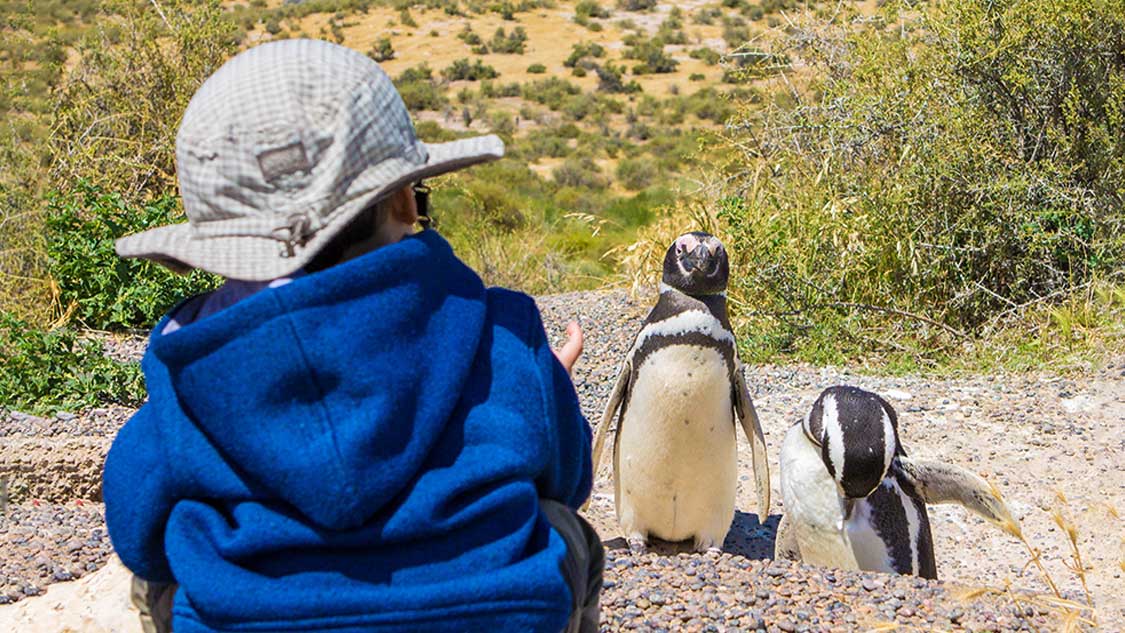
My oldest son is fanatical about penguins. Not interested in penguins. Fanatical. The kind of obsession where he could tell you the difference between a Magallanes and a Humboldt penguin at four years old and had strong feelings about the values of both. So when the question came around for our annual family wildlife trip, there was only one right answer.
Penguins.
Argentina is home to the world’s largest continental penguin colony. So we started planning.
What I didn’t fully anticipate was that my family’s travels in Argentina would turn out to be much more than a penguin safari. The country is enormous. It runs from the subtropical jungle of Misiones in the north, where Iguazu Falls splits the border with Brazil, to the cold Patagonian steppe in the south, where the Atlantic throws elephant seals and whales onto the same peninsula as a colony of a million Magallanes penguins.
In between is Buenos Aires, one of the great cities of the Americas. Mendoza and its vineyards. Bariloche and its lakes. The salt flats and colonial churches of Salta in the northwest. Argentina is the kind of country that catches you trying to leave and gives you ten reasons to stay.
It also has a monetary system that has historically required a travel guide all its own. That picture has simplified considerably since the Milei government lifted currency controls in April 2025, but Argentina’s economy rewards families who pay attention before they travel. There is a full section on money below, and it is worth reading before you book your trip. Here is everything else you need to know.
At a Glance: Quick Facts for Family Travel in Argentina
🗣️ Language: Spanish. English is spoken at most tourist hotels and popular travel sites. English is limited outside major cities.
💰 Currency: Argentine Peso (ARS). Credit cards have historically been a challenge, but they work well in most cities since the April 2025 reforms. Carry some USD or EUR cash as backup.
🚗 Driving: Right-hand side. Driving in Argentina is relatively easy compared to many South American destinations. Even outside Buenos Aires, highways are typically well-maintained, and driving rules are respected. An International Driving Permit is recommended if you rent a car.
🔌 Power Adapter: The plug type in Argentina is type C and I (round pin and flat angled pin). 220V. North Americans need an adapter and a voltage converter (Get one here).
🆘 Emergency: 911 | Ambulance: 107 | Fire: 100 | Tourist police (Buenos Aires): 0800-999-5000
💧Tap Water: Safe to drink in Buenos Aires and all major cities. Exercise caution in smaller towns and rural areas. Consider a filtered water bottle to reduce waste.
🌤️ Best Time to Visit: October to April for Buenos Aires. November to March for Patagonia (Austral summer).
🛂 Visa: Visa-free for Canadian, US, UK, Australian, and most EU citizens for up to 90 days.
Visas and Entry
Table of Contents
Canadian, US, UK, Australian, and most EU passport holders do not need a visa to enter Argentina. The permitted stay on arrival is up to 90 days, which is generous for a family trip. Your passport must be valid for the full intended duration of your stay, not the standard six months from entry that some countries require, but your airline may have more stringent requirements, so check before you fly.
Entry is straightforward: present your passport at immigration, receive your stamp, and you are in. Extensions for an additional 90 days are possible at the Dirección Nacional de Migraciones office in Buenos Aires, though the process is time-consuming enough that crossing briefly to Uruguay or Chile and re-entering is the practical alternative most long-stay visitors use (the quick stop in Colonia del Sacramento in Uruguay is a popular one).
Families, solo parents, or non-biological guardians should carry notarized proof of guardianship and birth certificates for all children traveling with them. Argentine immigration officers do ask, particularly at land borders.
Getting Around Argentina with Kids
Domestic Flights in Argentina
Argentina is the eighth-largest country in the world. Domestic flights are the only practical way to cover any serious distance on an Argentine travel itinerary. Aerolíneas Argentinas is the main carrier and covers the principal routes between Buenos Aires, Bariloche, Mendoza, Salta, Puerto Iguazu, and the Patagonian gateway cities, including Trelew and Comodoro Rivadavia.
LATAM and Flybondi also operate domestic routes at competitive prices. Flights to popular places to visit in Argentina book quickly. I recommend booking early and using a tool like Skyscanner to track down the best prices. Domestic flights in Argentina can be significantly more expensive when purchased close to the date, and Patagonia routes in particular fill quickly in the November to March summer season.
Our flight from Buenos Aires to Puerto Iguazu with SayHueque, our local tour operator, was around an hour and fifty minutes. The alternative by bus is around fifteen hours. With kids, that investment sells itself.
Long-Distance Buses
Argentina has one of the best intercity bus networks in South America, and for routes that do not justify the cost of a domestic flight, the long-distance coaches are a genuinely comfortable option.
Companies like Andesmar, Flecha Bus, and Via Bariloche operate modern double-decker coaches with fully reclining seats, meals, and onboard entertainment on overnight routes. Buenos Aires to Mendoza is around thirteen hours. Buenos Aires to Bariloche is around nineteen hours.
For families who enjoy the journey as part of the experience and have flexible schedules, overnight buses save a hotel night and cover ground while everyone sleeps.
Renting a Car
Self-driving in Argentina is practical outside the busy streets of Buenos Aires and opens up regions of the country that are difficult to reach otherwise. The main highways are generally in good condition. Patagonia in particular rewards families who drive, because the Valdés Peninsula, Punta Tombo, and the coastline around Puerto Madryn are all best explored at your own pace with a car.
An International Driving Permit is recommended alongside your home license. Be aware that fuel stations become sparse in more remote Patagonian areas, and filling up whenever the gauge drops below half is a sensible rule.
Driving in Buenos Aires itself is a different experience. The city is large, traffic is aggressive by any reasonable standard, and parking is a kind of chaos that adds no value to anyone’s family holiday. Use taxis or rideshare within the city and reserve the rental car for when you leave the city.
Taxis and Rideshare
Taxis are plentiful in Buenos Aires and major cities. The Cabify and Uber apps both operate in Argentina and are the cleaner option for families who prefer knowing the fare in advance. In Buenos Aires, pre-booked app rides are significantly preferable to hailing street taxis, where meter manipulation has been a documented issue. Ask your hotel to recommend a trusted radio taxi company for airport transfers.
eSIMs, Data, and Staying Connected in Argentina
Mobile coverage in Buenos Aires, Mendoza, Córdoba, Salta, and along the main tourist routes is generally reliable. It drops off significantly in rural Patagonia, parts of the Valdés Peninsula, and anywhere more than a short distance from a major town. An eSIM from a provider like Airalo, installed before departure, gives solid coverage on local Argentine networks at a fraction of roaming costs.
Download Google Maps offline for navigating in Argentina before you travel, particularly for any Patagonian driving itinerary where you will be well outside consistent mobile coverage. In remote areas, having offline maps is not a convenience. It is a necessity.
Language and Communicating in Argentina
Spanish is the official language, and Argentine Spanish has a character all its own. The accent, particularly in Buenos Aires, carries a strong Italian influence from the waves of European immigration in the late nineteenth and early twentieth centuries, and it sounds noticeably different from the Spanish spoken elsewhere in Latin America. In tourist areas and at hotels throughout the country, English is spoken well enough to navigate. Step off the main circuit, and the English accessibility drops off quickly.
Phrase | Spanish | Pronounciation |
|---|---|---|
Hello | Hola | OH-lah |
Thank you | Gracias | GRAH-see-ahs |
Please | Por favor | por fah-VOR |
Where is…? | ¿Dónde está…? | DON-deh es-TAH |
How much? | ¿Cuánto cuesta? | KWAN-toh KWES-tah |
My child is sick | Mi hijo/a está enfermo/a | mee EE-hoh es-TAH en-FAIR-moh |
Help! | ¡Auxilio! | owk-SEE-lyoh |
Bathroom | El baño | el BAH-nyoh |
Yes | Sí | SEE |
No | No | NOH |
Power Adapters
Argentina uses Type C and Type I outlets running at 220V. Type I is the three flat-pin angled socket specific to Argentina and Australia. North Americans traveling from Canada or the US need both a plug adapter and a voltage converter for any device that is not rated for dual voltage.
Check the label on every charger before you travel. Most modern phones, laptops, and camera batteries handle 220V without issue. A multi-port USB charging hub with dual voltage covers the whole family from a single outlet and is worth the space in the bag.
Family Travel Safety in Argentina
Argentina is a well-traveled family destination, and the main tourist circuit, including Buenos Aires, Mendoza, Bariloche, Salta, and the Patagonian gateway cities, is safe for international visitors exercising standard precautions. Petty theft, including bag snatching and phone theft in crowded urban areas, is the most common issue families encounter.
Keep bags closed and in front of you in markets and on public transport. Do not use your phone while walking in less familiar neighborhoods. Keep a photocopy of your passport separate from the original, which Argentine police can legally request to see.
Buenos Aires has specific areas that reward attention. The tourist neighborhoods of Palermo, San Telmo, and Recoleta are generally safe in daylight. La Boca, where the famous Caminito street art district is located, is safe along the main tourist strip and less so in the surrounding streets. Stay on the main drag there. The Microcentro downtown area has improved considerably, but remains worth attention in the evenings.
Express kidnapping, where a victim is briefly held and forced to make ATM withdrawals before being released, does occur in Buenos Aires and is worth being aware of without being alarmed by it. Use ATMs inside bank branches or shopping centers rather than street machines, and withdraw money during daylight hours. The practical risk to families on a standard tourist itinerary is low.
Health and Vaccinations for Family Travel in Argentina
There are no vaccination requirements to enter Argentina. The following are recommended by most travel health clinics for visitors:
- Routine vaccinations, including MMR, DTaP, and polio.
- Hepatitis A is recommended for all travelers.
- Hepatitis B is recommended for longer stays.
- Typhoid is particularly relevant if your itinerary includes smaller towns, markets, and street food.
- Yellow fever vaccination and certificate are required if your itinerary includes travel to or from the Iguazu and northeastern Misiones region, which sits within the yellow fever risk zone. Carry the certificate with your travel documents.
Tap water is safe to drink in Buenos Aires and major cities. In smaller provincial towns and rural areas, bottled water is the safer choice.
Medical care in Buenos Aires is excellent by South American standards. The city has multiple private hospitals and clinics accustomed to treating international visitors. Outside the capital, quality falls off in proportion to distance from a major city. In remote Patagonia, serious medical emergencies may require transport to the nearest urban center. Travel insurance with emergency evacuation coverage is essential for any itinerary that takes your family into the more remote parts of the country. I typically use SafetyWing or World Nomads for my family’s travel insurance.
Pack a thorough family medical kit: children’s pain relief, antihistamines, rehydration sachets, motion sickness medication for long drives and boat tours, antidiarrheal medication, sunscreen, and insect repellent. Patagonian sun on open coastal terrain is strong and deceptive. Kids burn faster than parents expect, particularly at sites like Punta Tombo, where there is essentially no shade for the duration of the visit.
Regions of Argentina: What Families Need to Know
Buenos Aires
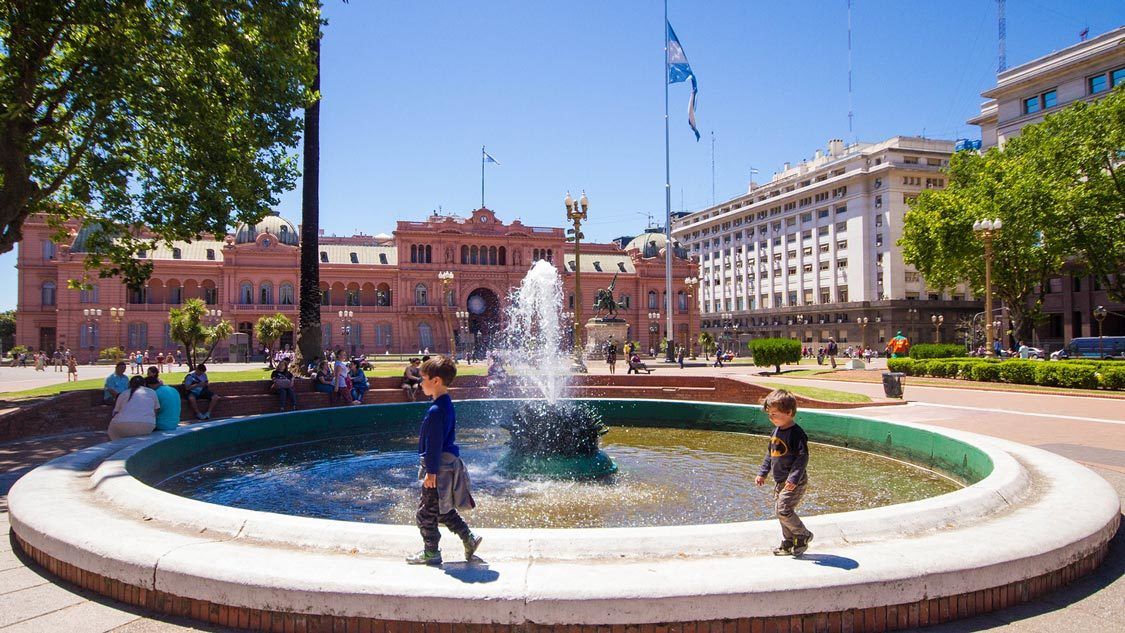
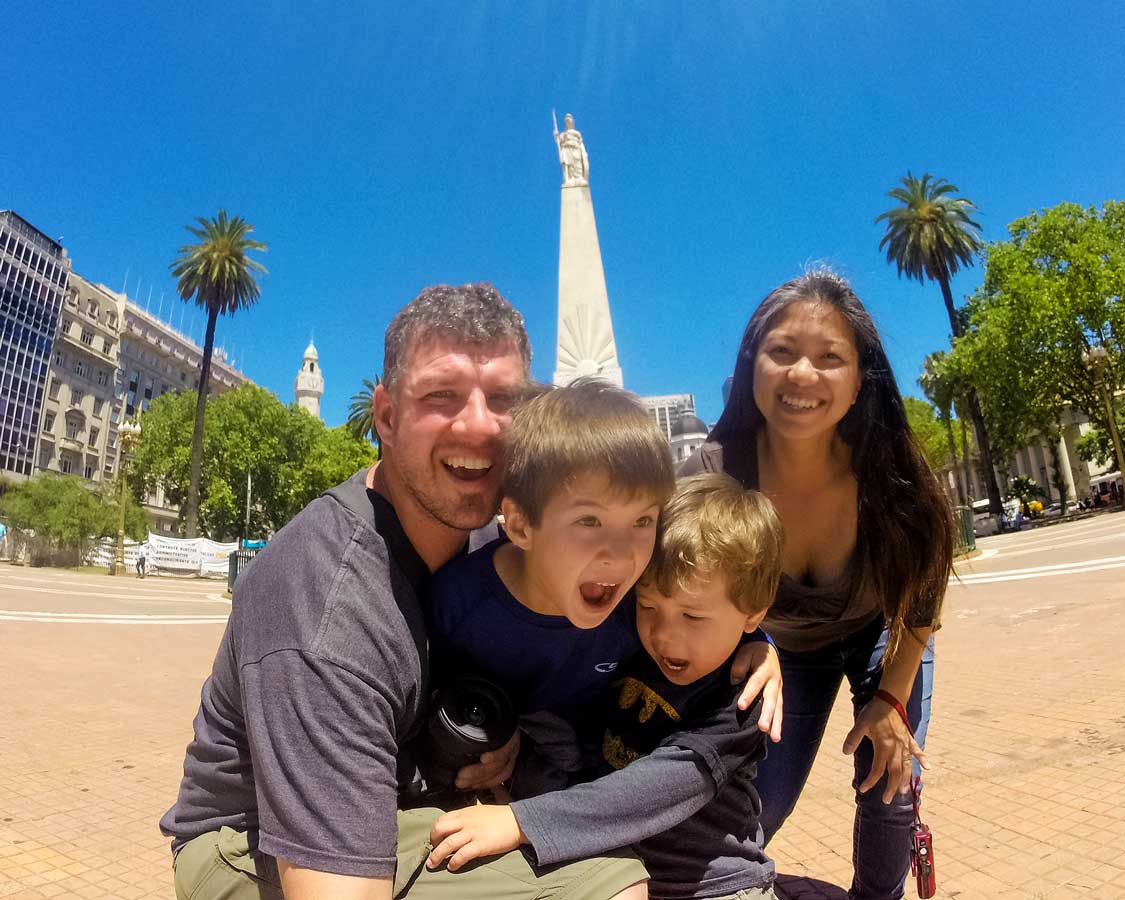
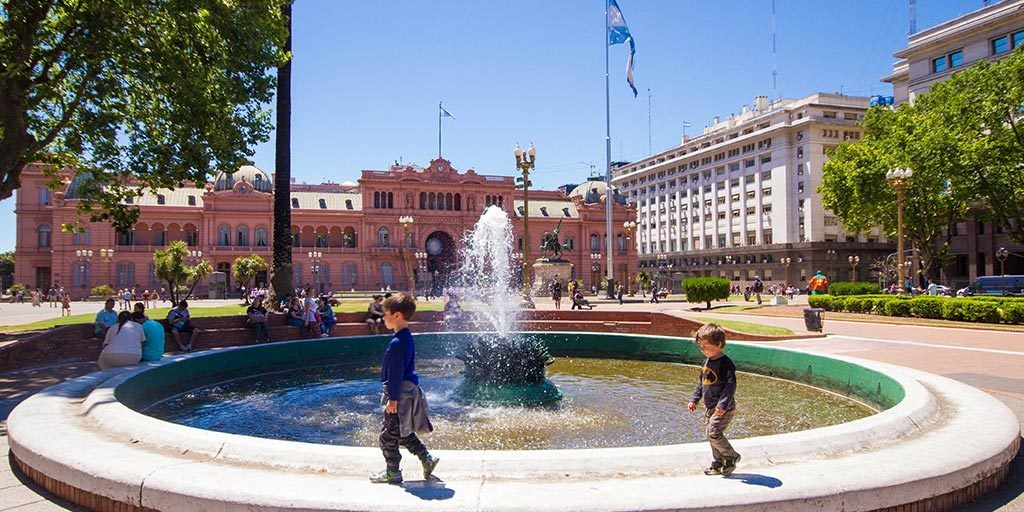
Buenos Aires is one of the great cities of the Americas, and the experience can vary dramatically depending on how long you stay. Two days, which is what my family had on our first visit, offers the chance for a Buenos Aires highlights reel. A week produces something closer to understanding. The city is organized into distinct barrios, each with its own character, and the contrast between them is part of what makes it interesting.
La Boca is where most families start, and its reputation as a creative capital is on full display. The Caminito, the narrow pedestrian street filled with brightly painted corrugated iron buildings decorated with murals and tango performances, is genuinely spectacular and completely unlike anything else in the city. This is one of the cities where it pays to stay on the main tourist strip. San Telmo, the oldest neighborhood in Buenos Aires, has a Sunday antiques market that spreads across the entire barrio and is one of the best markets in South America for browsing, street food, and the specific pleasure of watching your children discover they are interested in things you did not know they cared about.
Palermo is where the best restaurants in the city are. Recoleta has the world-famous cemetery, where Evita is buried in a mausoleum that is considerably more modest than its neighbors, and the MALBA contemporary art museum, which has an excellent children’s program.
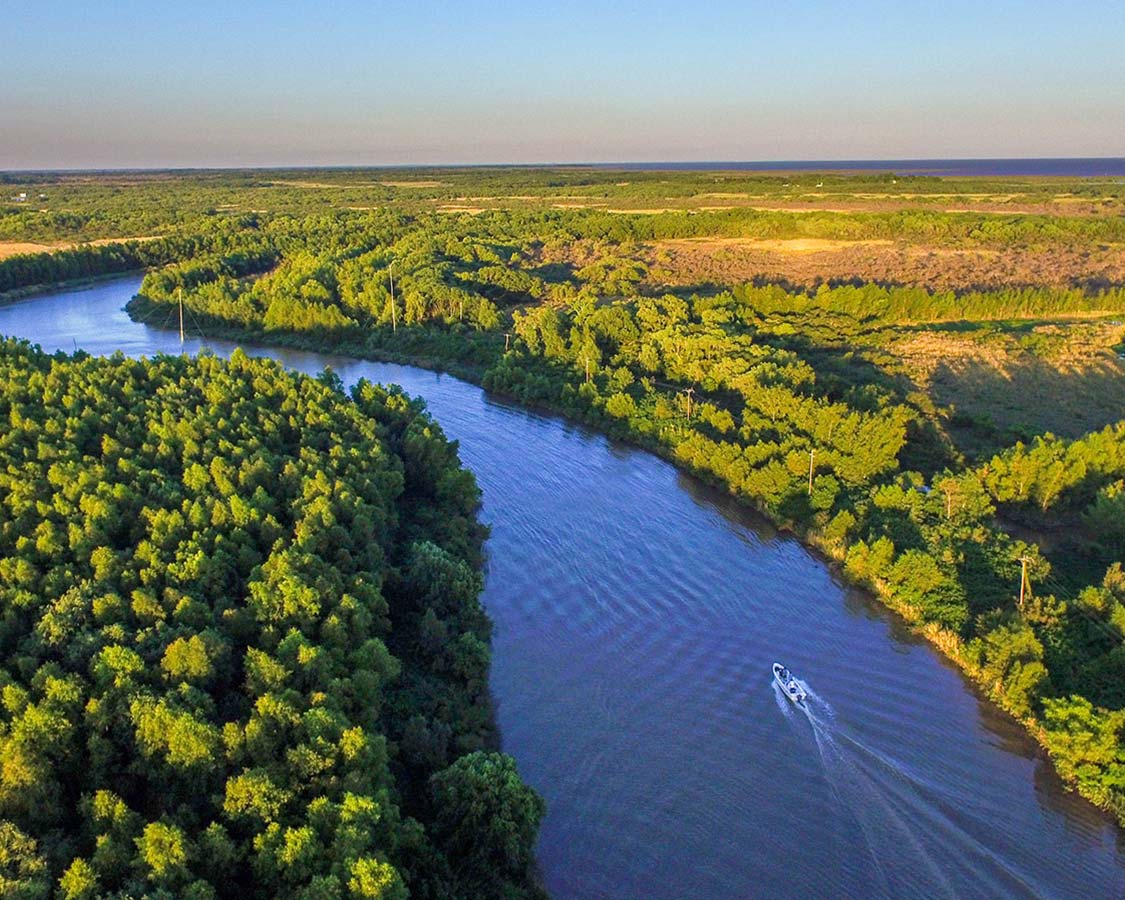
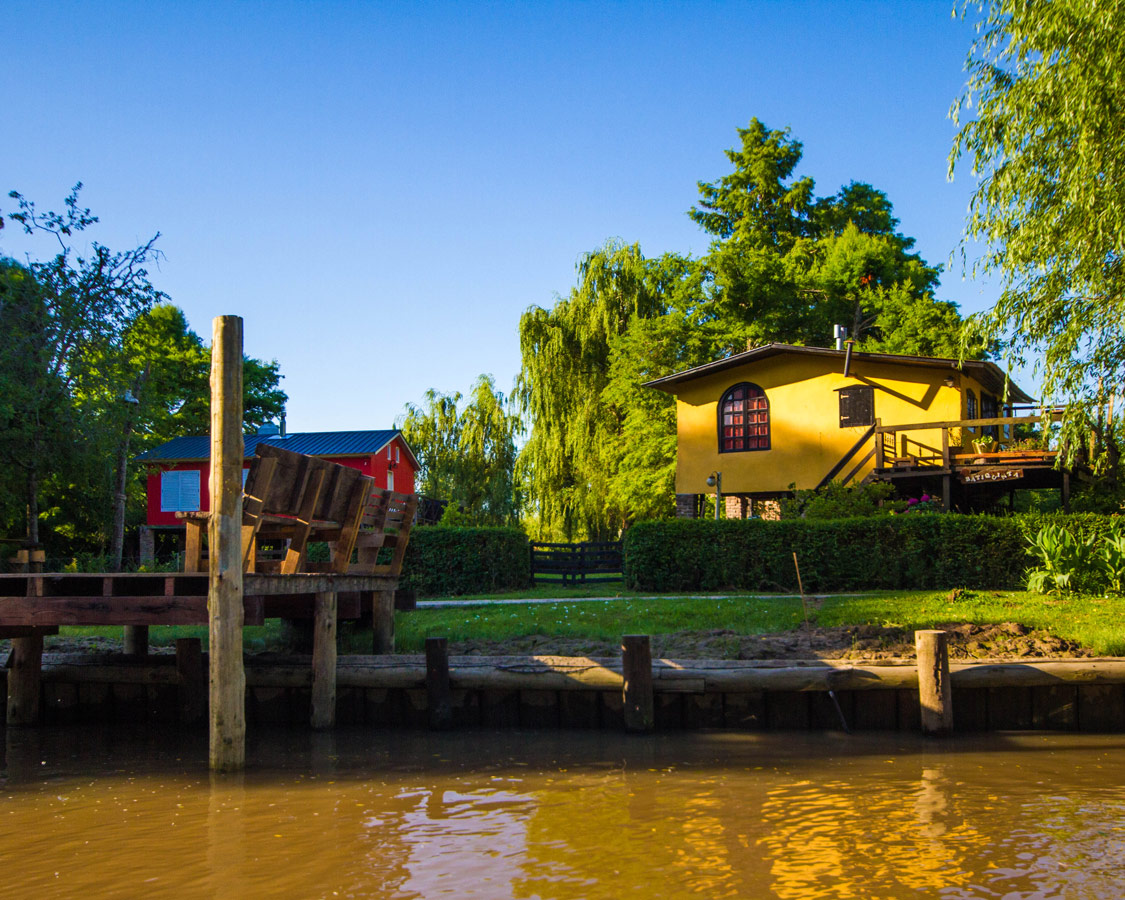
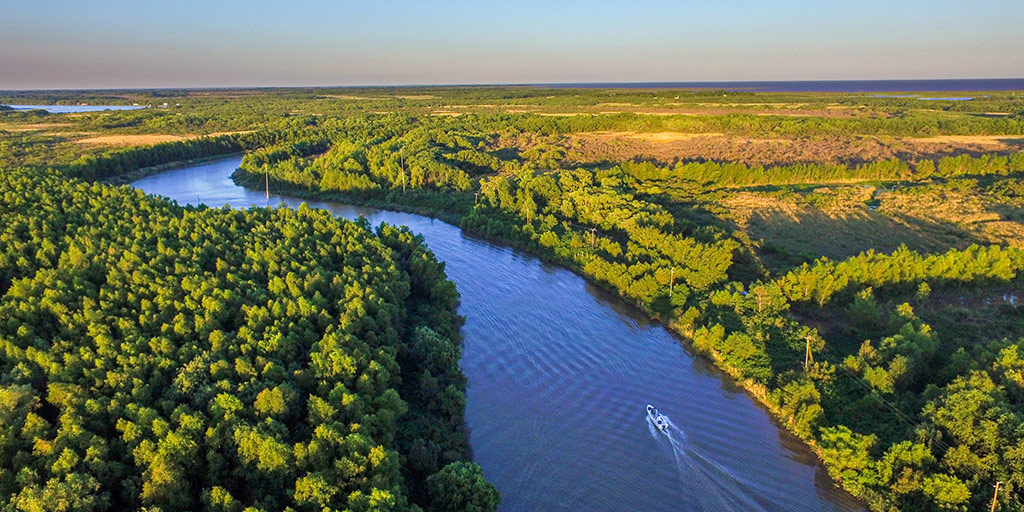
The Delta Paraná at Tigre, 27 km from the city center, is one of the most underrated day trips from Buenos Aires and one of the best things my family did in the country. The Tigre delta is a place where rivers are roads. There are no streets. Houses, restaurants, schools, and sports clubs are all accessed by boat. Taking a launch tour through the channels with children who have never encountered a place where the basic organizing logic of a town has been replaced by water is an experience that holds their attention completely. You can read the full Delta Paraná guide here.
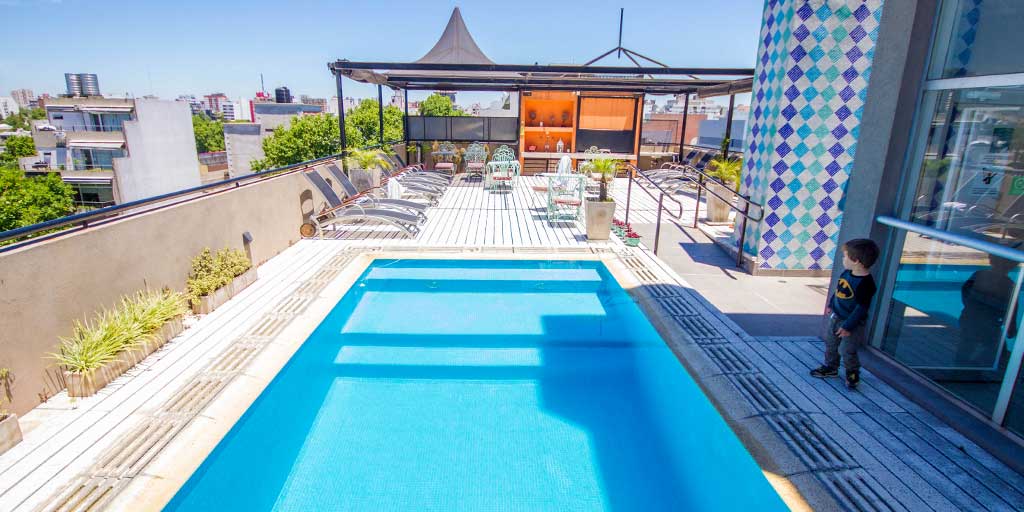
For excellent family accommodation in Buenos Aires, the Palermo and Recoleta neighborhoods offer the best combination of safety, walkability, and access to good restaurants. You can read the full Buenos Aires where to stay guide here, and the full things to do in Buenos Aires with kids guide here.
These two sections combine naturally since Punta Tombo is accessed from Puerto Madryn as a day trip. Here is a merged version:
Patagonia: Puerto Madryn and the Wildlife Coast
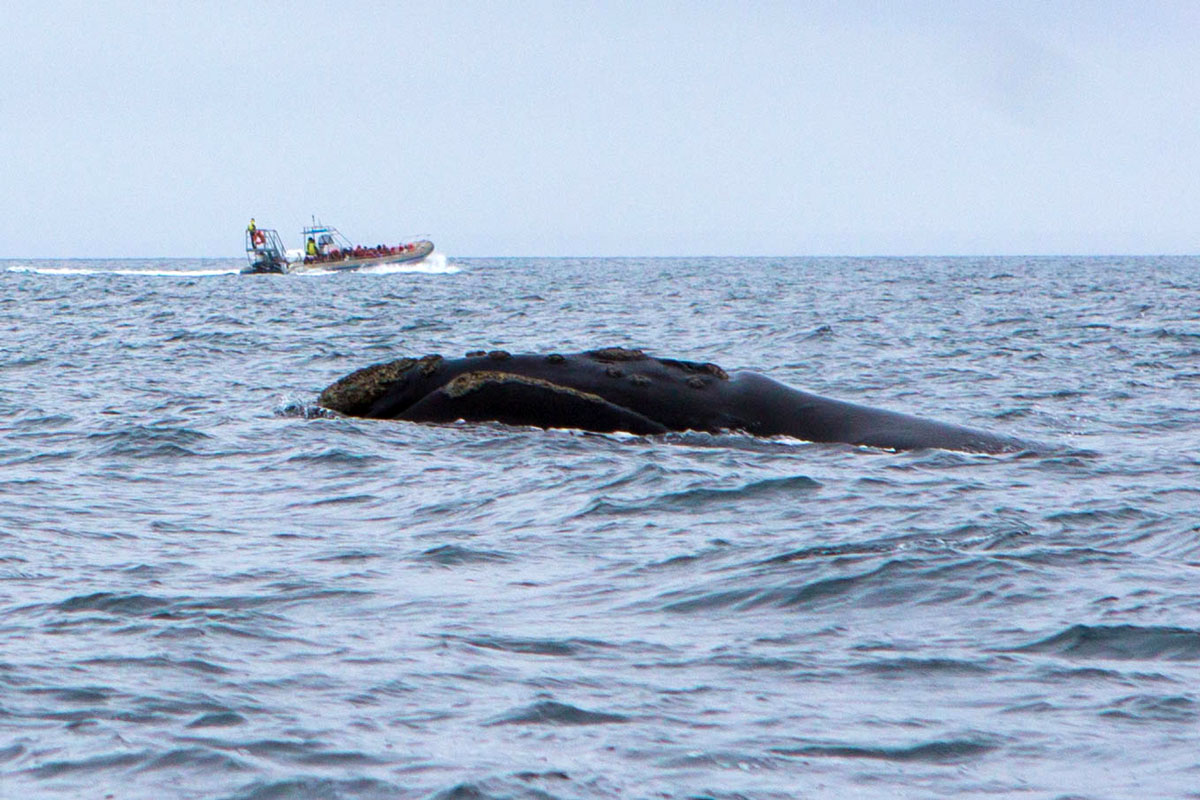
Patagonia is a word that is as much a geographic description as it is a state of mind. The Argentinian Patagonia covers roughly a third of the country, and most of it is flat, windy steppe interrupted by extraordinary things: glaciers, granite peaks, penguin colonies, and a peninsula that concentrates more wildlife per square kilometer than almost anywhere else on the Atlantic coast.
Puerto Madryn is the gateway to all of it. The Valdés Peninsula, a UNESCO World Heritage Site just north of the city, is where southern right whales give birth in the sheltered bays between June and December, elephant seals haul out on the beaches at Punta Cantor and Caleta Valdés, and Magallanic penguins nest in the cliffs at Punta Ninfas.
My family spent four days here, and it was not enough. The city itself is a pleasant coastal town with a great beach, a reasonable restaurant scene, and the kind of quiet that comes as a relief after exploring the busy streets of Buenos Aires.
South of the city, the Punta Tombo reserve is the largest Magallanes penguin colony outside Antarctica and the reason my family went to Argentina in the first place. More than a million penguins return to this stretch of rocky Patagonian coast each year between September and April. The reserve has boardwalks and sandy tracks where visitors walk among the colony. Not past it. Among them.
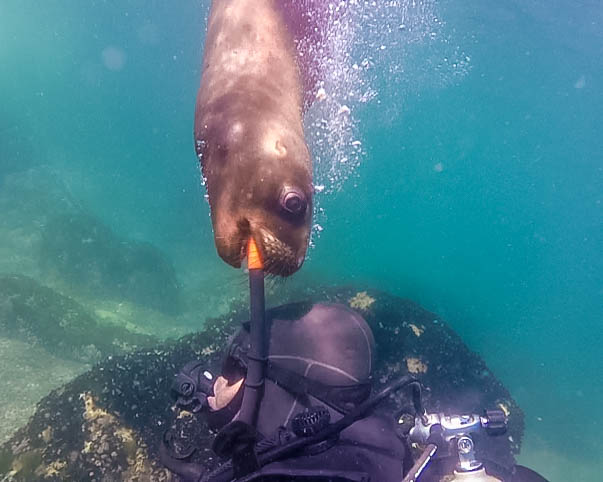
The SCUBA diving at Punta Loma, just outside the city, is among the most unique experiences in Argentina. A colony of South American sea lions inhabits the rocky islets there, and the sea lions come into the water with you. Not near you. With you. They torpedo past at close range, turn on a fin, and come back for another look. My kids watched from shore while I did the dive with Master Divers. It requires nothing more than an open-water certification, and it is one of the best dives of my life. You can read the full sea lion diving guide here.
🚫 DON’T MISS: Time Punta Tombo Right
The Magellanic penguins are present at Punta Tombo from September through April. Peak nesting activity is in October and November when the adults are brooding eggs, and the colony is at maximum activity.
Peak chick season is December through January. Plan your Patagonia leg around the wildlife calendar, not the other way around.
Iguazu Falls and the Northeast
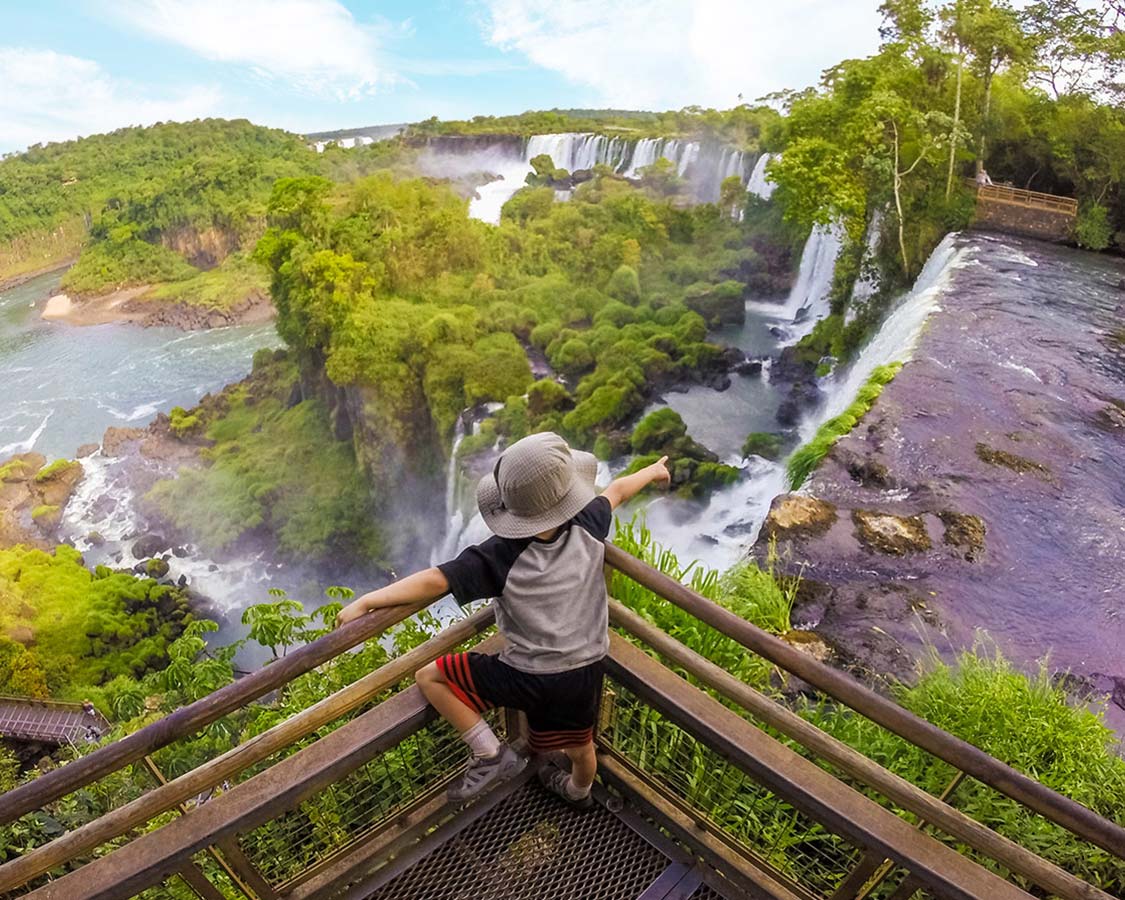
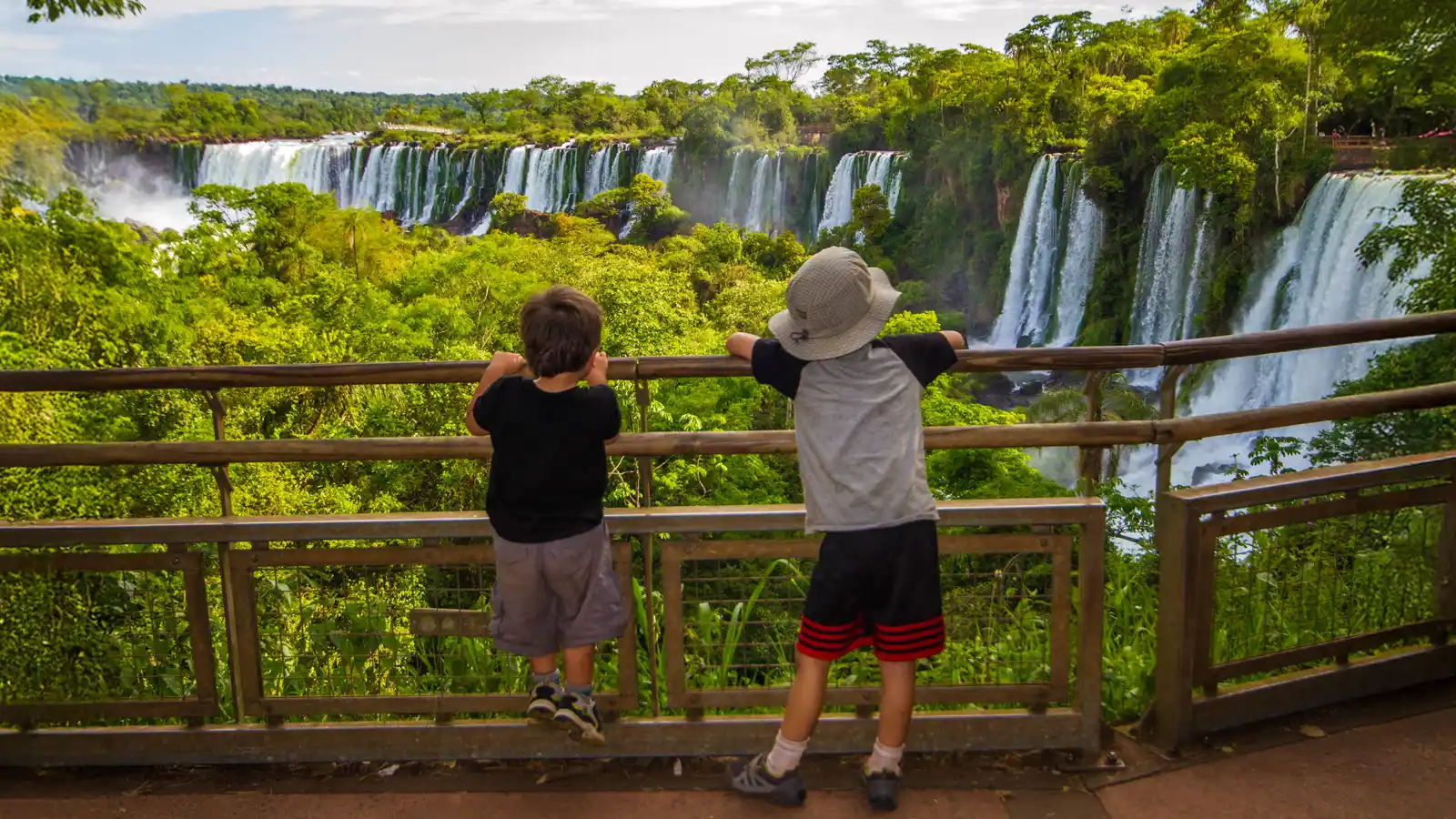
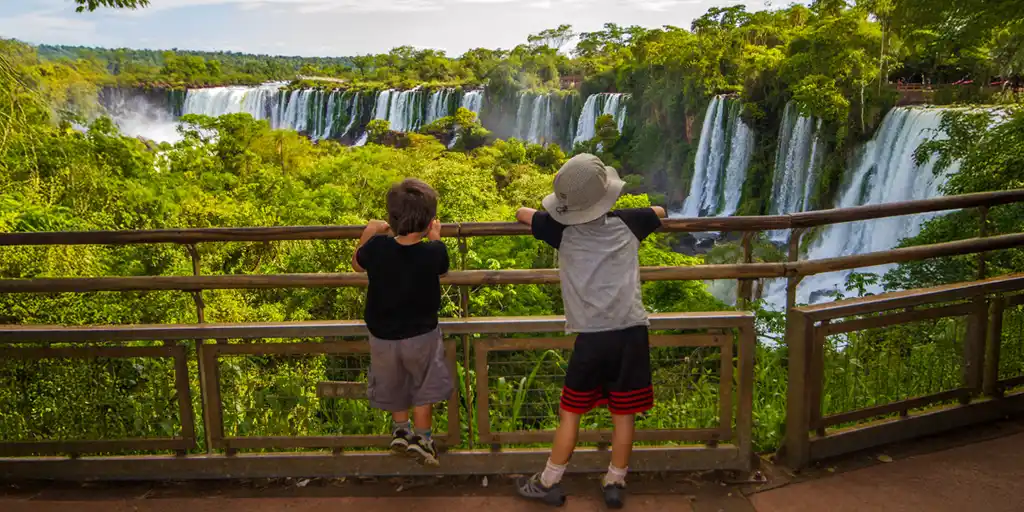
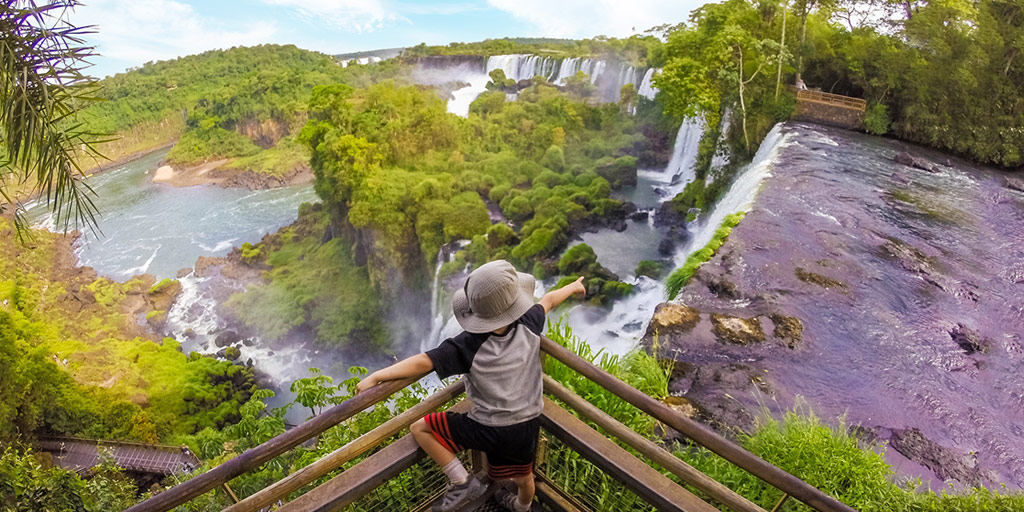
Iguazu is a place that lives on the bucket list of countless travelers. When you actually stand in front of it, the experience is far more dramatic than any photograph you may have seen. The Iguazu Falls are a collection of 275 individual waterfalls spread across 3 km of the Paraná plateau on the border between Argentina and Brazil. The Argentine side gets you closer. The Brazilian side gives you the full panoramic view. Both are worth doing if your itinerary allows it.
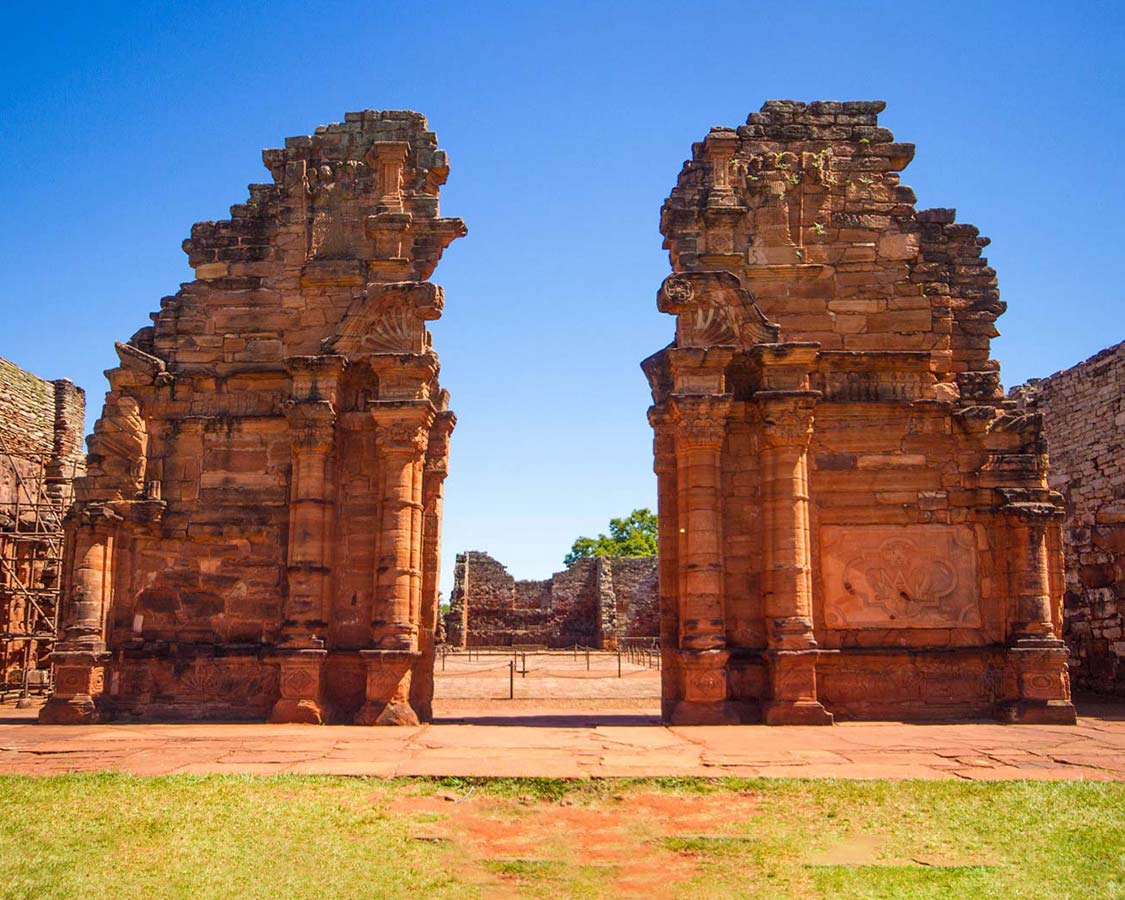
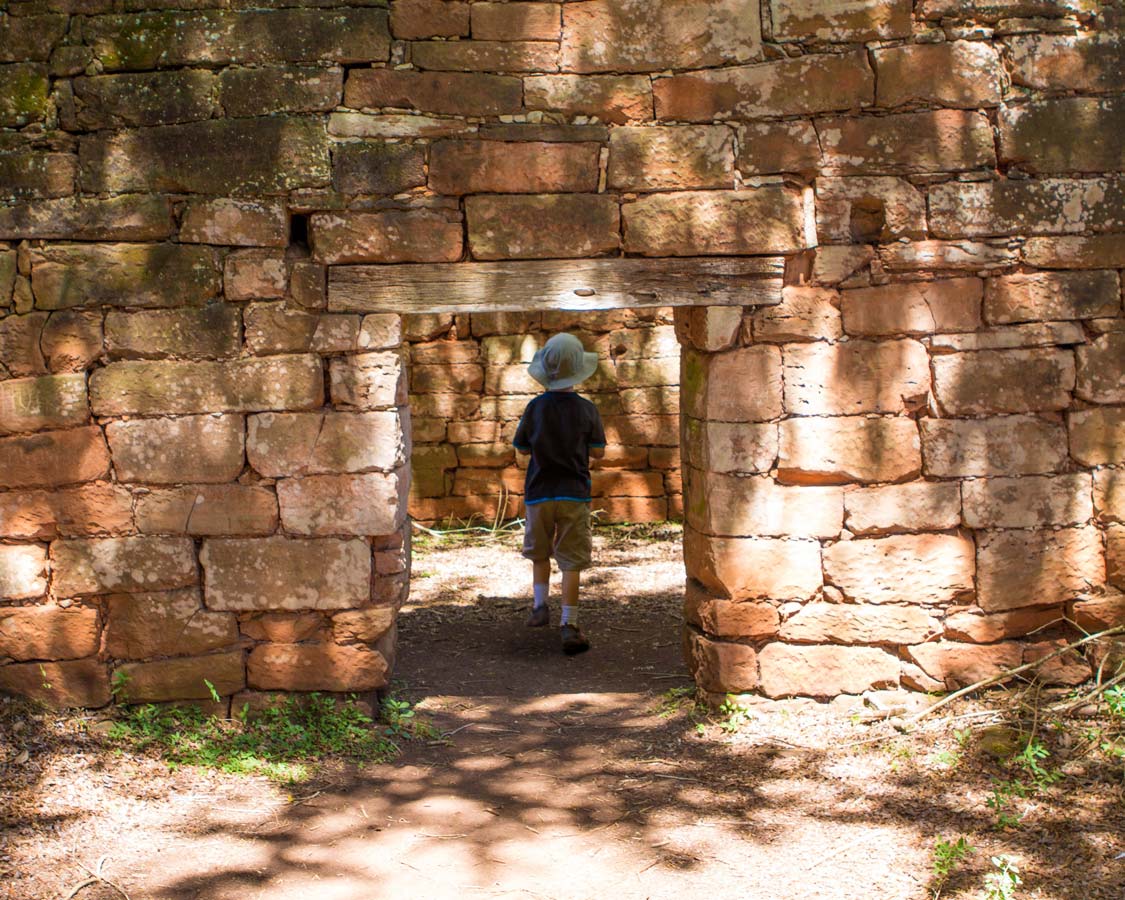
Three hours south of Puerto Iguazu by road into the Misiones province, the Jesuit ruins of San Ignacio Miní are one of the most historically significant and least visited sites in Argentina. The Jesuits established this reduction, a community built to Christianize the indigenous Guaraní people, in the early seventeenth century. What remains are the extraordinary red sandstone walls of the church, the residential quarters, and the public spaces of a community that functioned for over a century before the Jesuits were expelled from South America in 1767.
For a truly unique experience, Misiones makes for a great jump-off point for travel in Paraguay, including the incredible collection of Jesuit ruins located just across the river.
Mendoza, Salta, and Bariloche
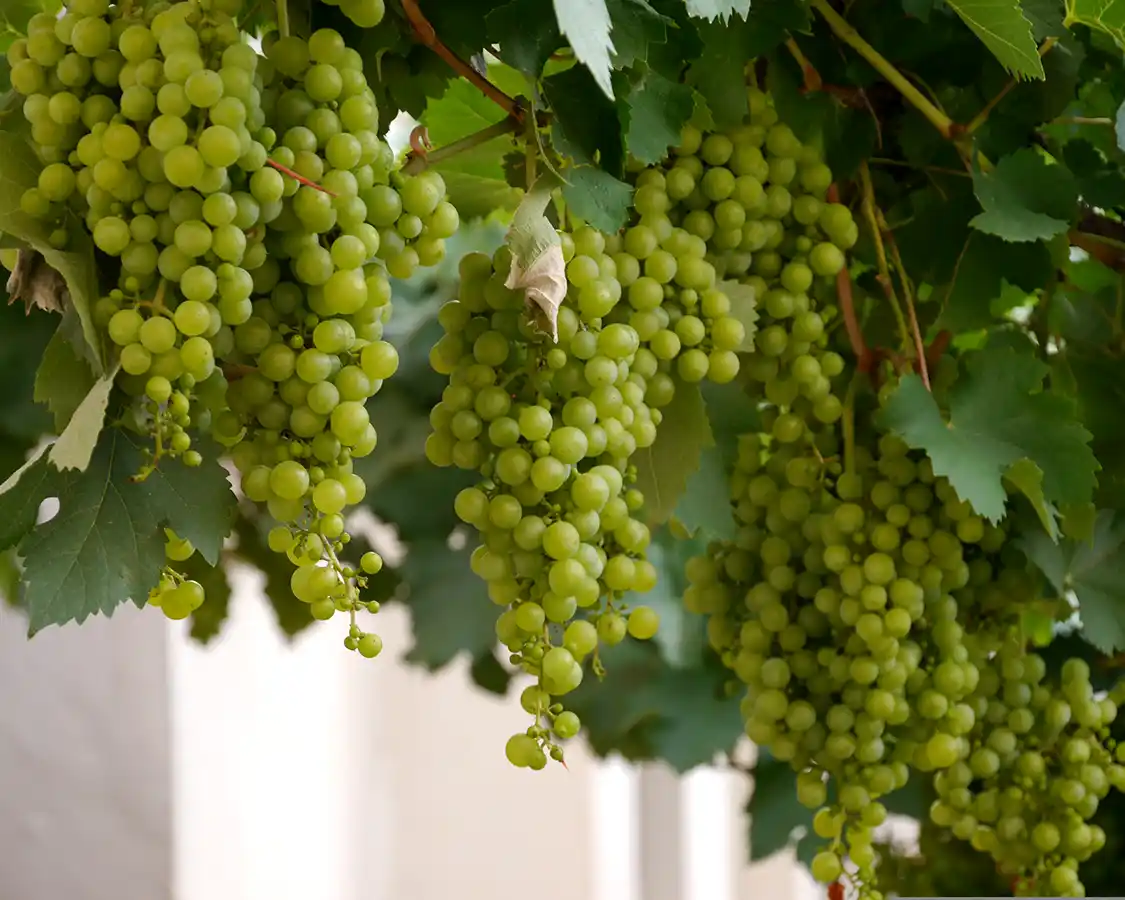
I have not personally traveled to Mendoza, Salta, or Bariloche with my family, so I will lay that out clearly here rather than write about them as if I have. What I can tell you from research and from the accounts of families who have is the following.
Mendoza is Argentina’s wine country, two hours by plane from Buenos Aires, and it works as a family destination primarily because the outdoor activities beyond the vineyards are excellent. The Andes foothills offer great hiking and whitewater rafting. In winter, the region offers some of the best skiing in South America at the Las Leñas and Vallecitos resorts. Families who enjoy active itineraries and do not mind that the wine tasting is the headline attraction for adults will find it rewarding.
Salta in the northwest is a colonial city with extraordinary surrounding landscapes. The train journey to the Clouds, which climbs to 4,220 meters through the Andean altiplano, is comparable to Peru’s scenic rail journeys in its ambition and its views. The Quebrada de Humahuaca, a UNESCO-listed valley of colored hills north of the city, is one of the most visually distinctive landscapes in South America. Altitude is a relevant consideration here, as it is in Peru: Salta sits at 1,187 meters, which is manageable, but excursions into the altiplano go considerably higher.
Bariloche in the Lake District is Argentina’s outdoor adventure capital. The combination of Andean lakes, forests, and peaks produces a landscape that Argentines compare to Switzerland, and that works well for active families across every season. Summer is hiking and lake swimming. Winter is for skiing at the Cerro Catedral resort, which is one of the largest ski areas in the Southern Hemisphere.
Money and Budgeting for Travel in Argentina
Argentina’s currency situation deserves honest attention before you travel, even though it has simplified considerably since the major reforms of April 2025.
For years, Argentina maintained a complex web of official and unofficial exchange rates that meant tourists who carried US dollars and exchanged them on the informal market, known as the Blue Dollar market, could get dramatically more pesos than those who used bank rates or cards. The Milei government lifted most currency controls in April 2025, following a substantial IMF agreement, and the various exchange rates have largely converged. As of early 2026, the official rate, the card rate, and the Blue Dollar rate are all within a few percentage points of each other, at roughly 1,430 to 1,460 pesos per US dollar.
The practical implication for families traveling now is that using your credit card works as usual and offers a fair rate. The drama of the multi-rate era has substantially passed. What has not passed is the consequence: Argentina is no longer the dramatically cheap destination it was for foreign travelers during the peak distortion years. It is now priced more in line with other South American destinations. Still good value compared to Western Europe or North America. No longer a place where your dollars feel like superpowers.
Two things worth knowing. First, paying for hotels with a foreign credit card automatically exempts you from the 21 percent Argentine VAT on accommodation. This is applied automatically and requires no action on your part beyond using an international card rather than cash. Do not pay for hotels in cash if you can avoid it. Second, carry some US dollars or euros in clean, undamaged bills as backup. In rural Patagonia and smaller provincial towns, card acceptance is inconsistent, and having cash available is practical insurance.
Check the current exchange rate situation before you travel. Argentina’s economy has a documented history of changing faster than travel guides can update.
💡 PRO TIP: Pay Hotels by Card, Always
Foreign tourists automatically receive an exemption from Argentina’s 21% VAT on hotel accommodation when paying with an international credit or debit card. The exemption is applied automatically by the hotel system. Over a week of accommodation, this saving is substantial. Never pay for hotels in cash.
What to Pack for Argentina
Argentina’s range of weather is extreme. Buenos Aires in January is hot and humid. Patagonia in the same month is cool and windy regardless of the sun. The northwest in summer is dry and intense. Packing for a multi-region Argentine itinerary requires layering and versatility.
- Layering system for Patagonia. Wind is the defining condition at Punta Tombo, Puerto Madryn, and the Valdés Peninsula regardless of season. A windproof outer layer, a mid-layer fleece, and moisture-wicking base layers cover the range. Patagonian wind is persistent and cold even in summer.
- Comfortable walking shoes. Buenos Aires involves significant amounts of walking on uneven colonial paving. The wildlife sites in Patagonia involve sandy and rocky coastal terrain. Sandals are inadequate for either.
- High-factor sunscreen. Patagonian coastal sites have almost no shade. The penguin colony at Punta Tombo is flat, exposed terrain where you will spend several hours with nothing between you and the southern hemisphere sun.
- Insect repellent. Relevant in the Iguazu and Misiones region in the northeast, where the subtropical environment supports biting insects year-round.
- Yellow fever vaccination certificate. Required for travel to and from the Iguazu region. Carry it with your travel documents.
- Power adapter and voltage converter. Type C and I outlets, 220V. North Americans need both for non-dual-voltage devices.
- eSIM, installed before departure. Airalo provides reliable coverage on Argentine networks in urban areas and along the main highways.
- Offline maps for Patagonia. Download Google Maps offline before you leave mobile coverage. Do not assume connectivity in the Valdés Peninsula or between Patagonian towns.
- Cash in US dollars or euros. Clean, undamaged bills in larger denominations. Useful in rural areas where cards are not accepted and as a backup throughout the country.
- Family medical kit. Children’s pain relief, antihistamines, rehydration sachets, motion sickness medication for long drives and boat tours, and any prescription medications in generous supply.
What Argentina Will Teach Your Family
Argentina is a country where wildlife encounters change how children understand the wild. My son knew everything there was to know about penguins from books and documentaries. None of it captured the specific reality of a Magellanic penguin crossing the path in front of him at knee height, ignoring him completely, and waddling on about its day.
The sea lions at Punta Loma treated my presence in their water as mildly noteworthy and then forgot about it. The whale we watched from a zodiac at Puerto Pirámides was the length of the boat and surfaced close enough that we could hear it breathe. There is a category of understanding that only comes from physical proximity, and Argentina delivers it.
Buenos Aires is one of those cities that teaches children that European history did not stay in Europe. The architecture of the Microcentro and the wide boulevards of Palermo are unmistakably influenced by the massive wave of Italian and Spanish immigration in the late nineteenth and early twentieth centuries. The cemetery in Recoleta, where elaborate mausoleums compete for grandeur across several city blocks, is one of the more unusual places I have taken children and one of the more interesting conversations it has produced. The city has a layered, complicated history, and it wears it visibly.
The food in Argentina will cause a specific problem that I should warn you about in advance. Argentine beef is the best I have eaten anywhere in the world, and I say that as someone who has eaten steak on four continents. The parrilla, the traditional wood-fired grill, produces cuts of beef that ruin ordinary steakhouses for years afterward.
Travel Resources For Families Visiting Argentina
For practical planning, safety considerations, and logistics, these dedicated guides provide all of the resources you need for family travel in Argentina.
Final Thoughts
Argentina family travel rewards preparation, curiosity, and a willingness to cover distance. The destination guides on this site cover the details for each region, while the practical information above is designed to help your family move through the country with confidence.
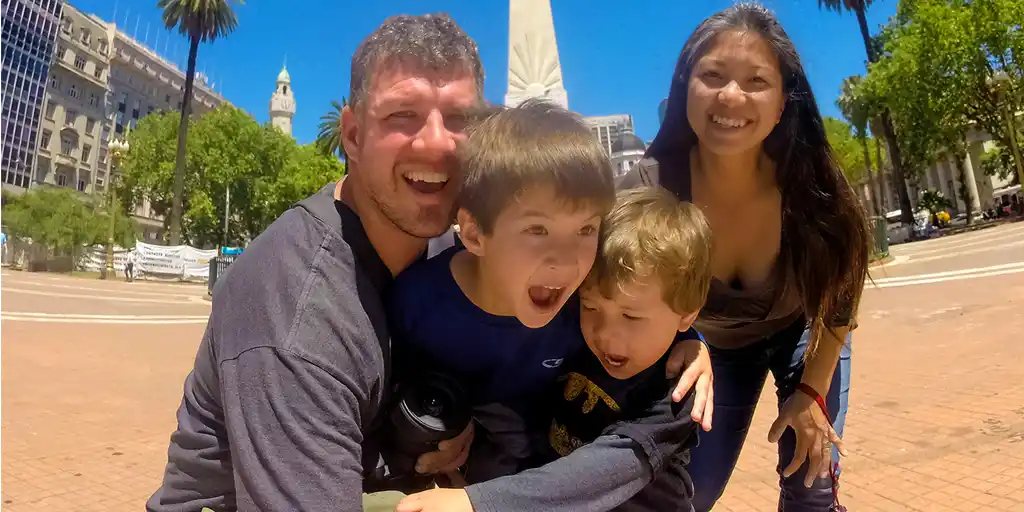
You will come home with a photo of a million penguins crossing a path at knee height in the flat Patagonian light. The sound of Iguazu Falls roaring in the early morning light before the tourist coaches arrive. Your kids at the rail above the Devil’s Throat, faces misted, completely still. A sea lion turning three feet from your mask and looking directly at you with an expression that communicates, clearly, that it has more interesting things to do. Argentina is a large country. You will not run out of it.
This page is updated as new regional guides and planning resources are published. Looking beyond Argentina? Explore my International Family Travel Guide.