
The complete family packing list for Norway in winter, covering men, women, teens, and kids. Built from firsthand family travel experience from Kirkenes in the Arctic north to Bergen and Oslo in the south. Layered, waterproof, and ready for the Northern Lights.
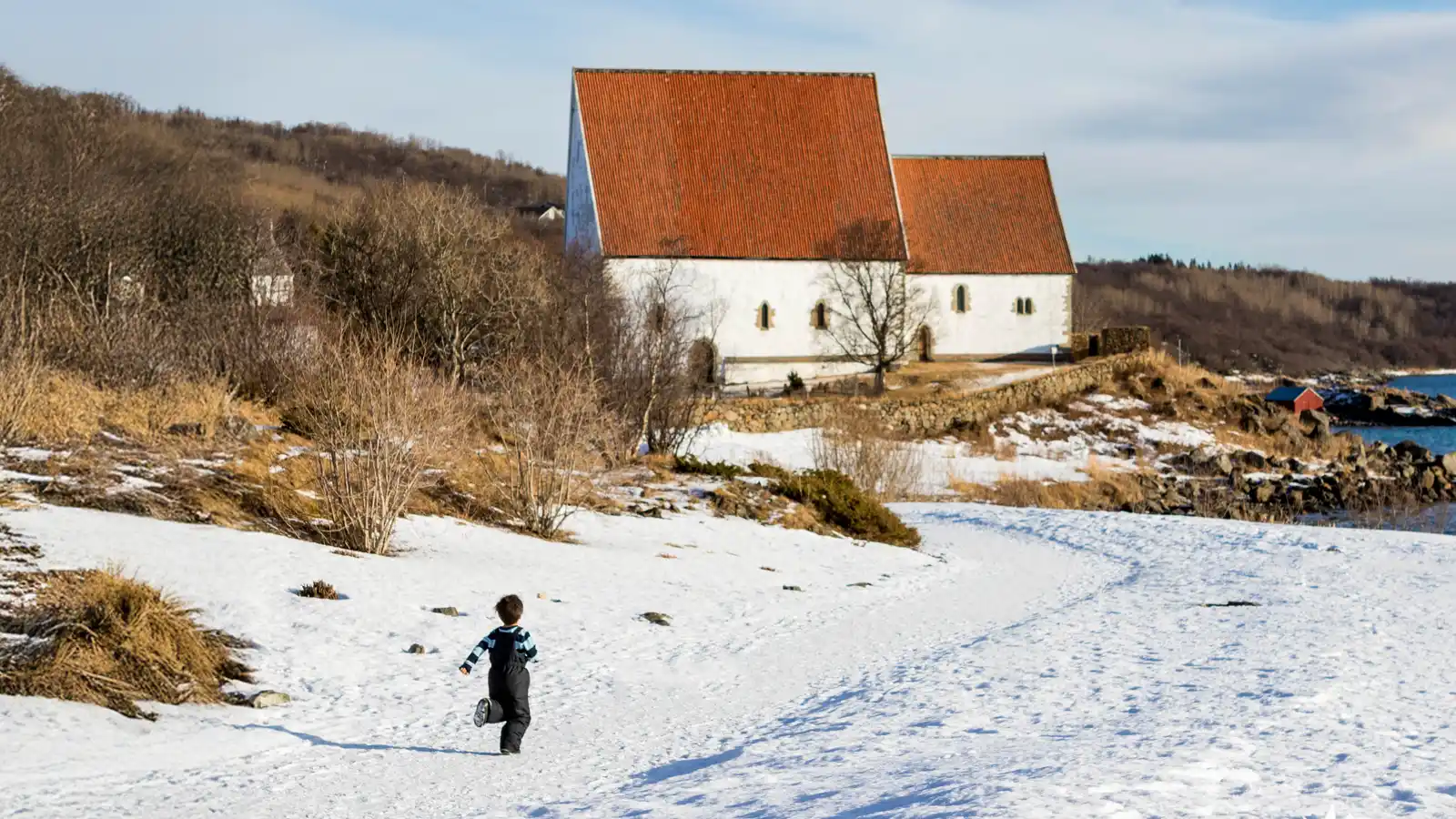
March is the best-kept secret in Norwegian winter travel.
The Northern Lights are still out. The snow is still deep. The dog sledding, snowmobiling, and ice fishing are all still very much happening. The Hurtigruten is still sailing the coastal shores. But the sun is back for real, the days are getting long again, and the temperature has lifted enough that a family can be outside comfortably for hours without it feeling like a survival exercise. It is winter without the worst of winter.
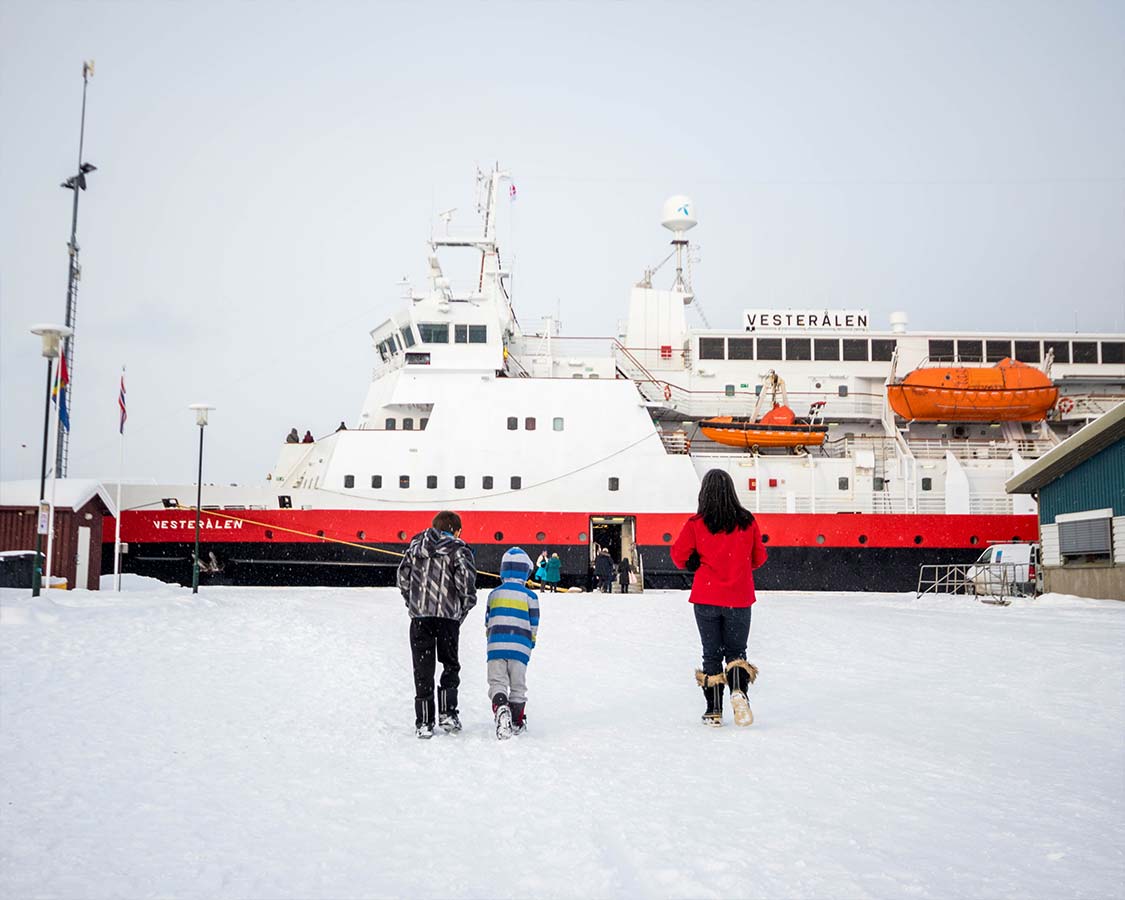
My family traveled to Norway in March, starting in Kirkenes near the top of continental Europe before boarding the Hurtigruten southbound along the coast, then crossing the country from Bergen to Oslo on the Norway in a Nutshell route through Flam. We went snowmobiling on a frozen fjord, ice fishing in Kirkenes, and stood on the deck of a ship at 2 am watching the Aurora dance across the sky above the Lofoten Islands.
The wind, the rain, the snow, from the north to the south. We packed for all of it.
Norway in winter is not uniquely cold like many people expect. Kirkenes in March averages around minus 8 degrees Celsius (18 degrees Fahrenheit), which is similar to winter in Toronto or Chicago. What Norway in winter demands, though, is the right layering system. You’ll want to pack waterproof everything and good, comfortable, warm boots. Get those three things right, and the cold doesn’t get in the way of the scenery.
This is the Norway winter packing guide for families that covers exactly that.
What You’ll Find in This Norway Winter Travel Packing Guide
Table of Contents
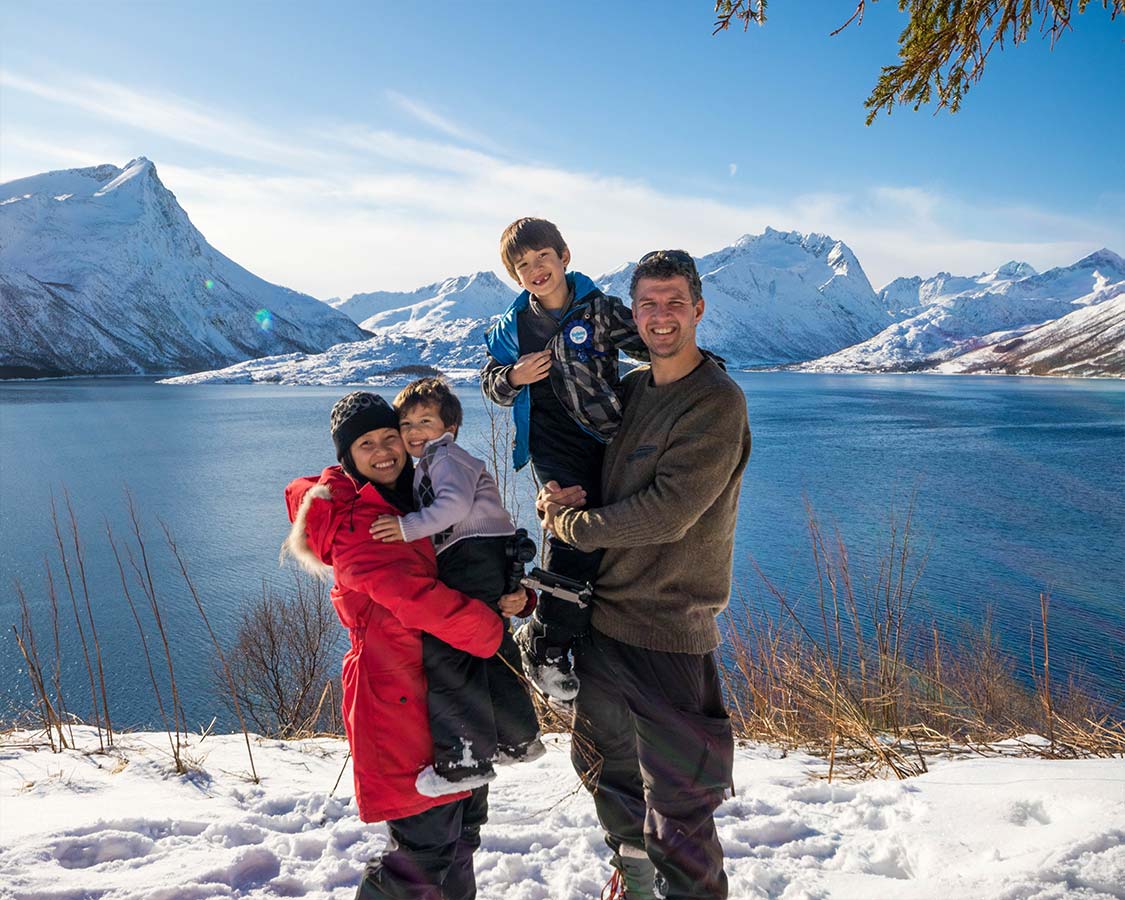
Norway winter travel throws a few specific packing challenges at families that most guides either overstate or simply get completely wrong:
- Layering is everything. One expensive parka, no matter how stylish, won’t keep you comfortable. Three well-chosen layers that work together are what every traveler needs. The base layer manages moisture. The midlayer traps heat. The outer shell blocks wind and water. Plan it right, and you are warm in any weather that Norway throws at you.
- Norway is a north/south country, and conditions vary dramatically depending on where you’re visiting. The coastal shores of Kirkenes in the Arctic north are far different from Bergen on the west coast, which is wet and mild by Norwegian standards. Oslo, in the south, sits in a cold continental climate. If your trip covers more than one region, your gear needs to handle each of them.
- Tour operators sometimes provide winter travel clothing and gear. Many Norwegian winter activity operators, including Hurtigruten excursion partners, supply waterproof outerwear for outdoor activities such as snowmobiling and dog sledding. Check with your specific operator before packing. It can save you from packing unnecessary clothing in an already overloaded suitcase.
- Pack carry-on where possible for the critical layers. We learned this one the hard way. Our bags did not arrive in Kirkenes when we did. Every winter layer we owned was checked in. We spent the first Arctic day in borrowed gear lent by a friendly local. Never again. Base layers, socks, and hats travel in a carry-on.
- Norway is expensive. Everything is expensive. Gear, clothing, and equipment cost significantly more in Norway than in North America or the rest of Europe. Buy everything you need at home and bring it with you.
This Norway winter packing guide covers the needs for families traveling across Norway, organized by category with specific callouts for men, women, teens, and kids throughout.
Before You Pack: Norway’s Winter Conditions by Region
Norway stretches from roughly the latitude of Scotland in the south to well above the Arctic Circle in the north. The conditions across that vast region vary enough that where you are traveling to matters as much as what time of year you are there.
The Arctic North: Kirkenes, Hammerfest, and Finnmark
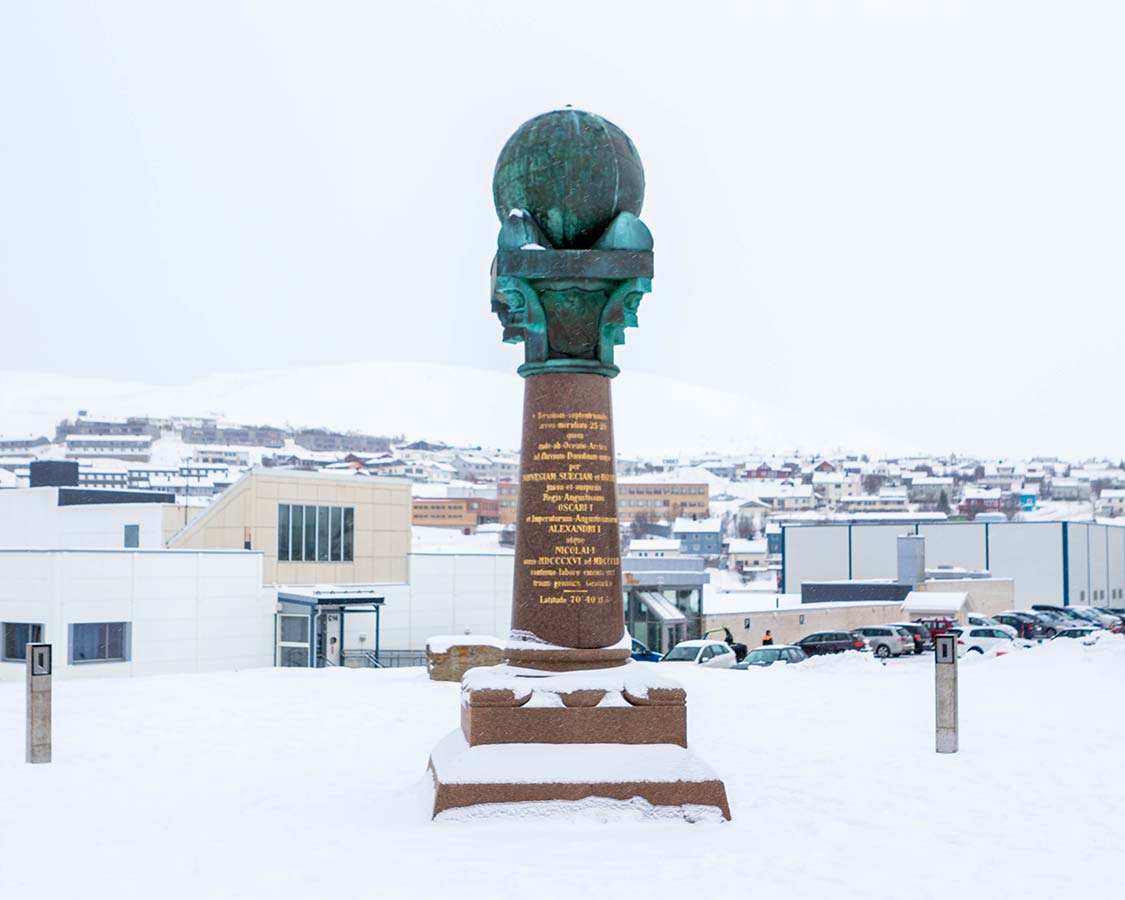
This is the real far north, the Norway that most families imagine when they picture Arctic winter travel. Kirkenes sits near the Norwegian-Russian border at roughly 70 degrees north latitude, and from late November through late January, the sun does not rise above the horizon at all.
This is polar night, one of the most extraordinary things a family can experience, a complete absence of daylight that turns the world into something between dusk and full dark for weeks at a time. February brings the first sliver of sun back, and by March, the Arctic light is spectacular.
Temperatures range from around 23 degrees Fahrenheit (minus 5 degrees Celsius) in milder stretches to minus 4 degrees Fahrenheit (minus 20 degrees Celsius) or lower during cold snaps. Snow is deep and reliable from November through April.
This is where the classic Arctic winter activities live: snowmobiling across frozen fjords, dog sledding through birch forest, ice fishing, and reindeer safaris with the Sami people. The Northern Lights are active here on clear nights throughout the winter season. It’s also one of the area’s best-served by the famous Hurtigruten coastal route.
Northern Coastal Norway and the Lofoten Islands: Tromso, Lofoten, Bodo
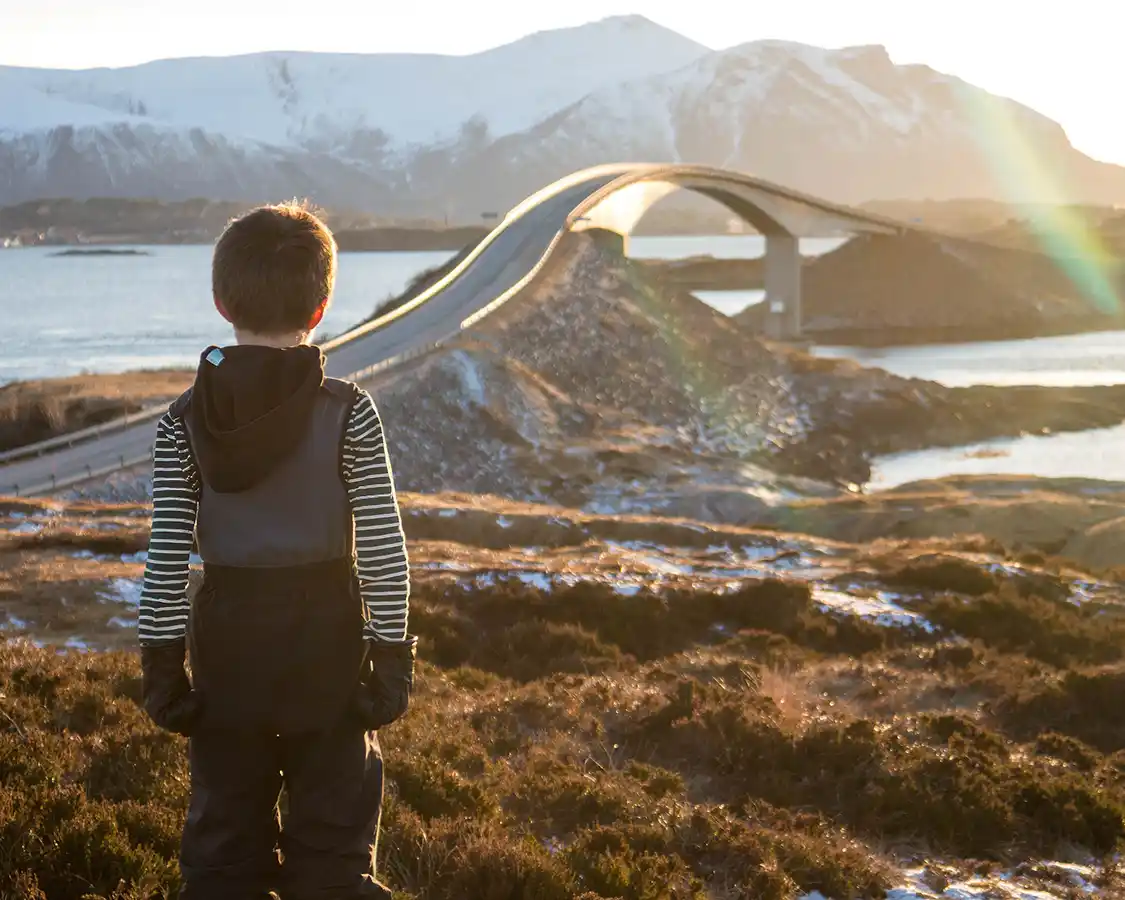
Northern Coastal Norway is where the country’s most dramatic landscapes and genuine Arctic conditions combine with more accessible infrastructure than the very far north.
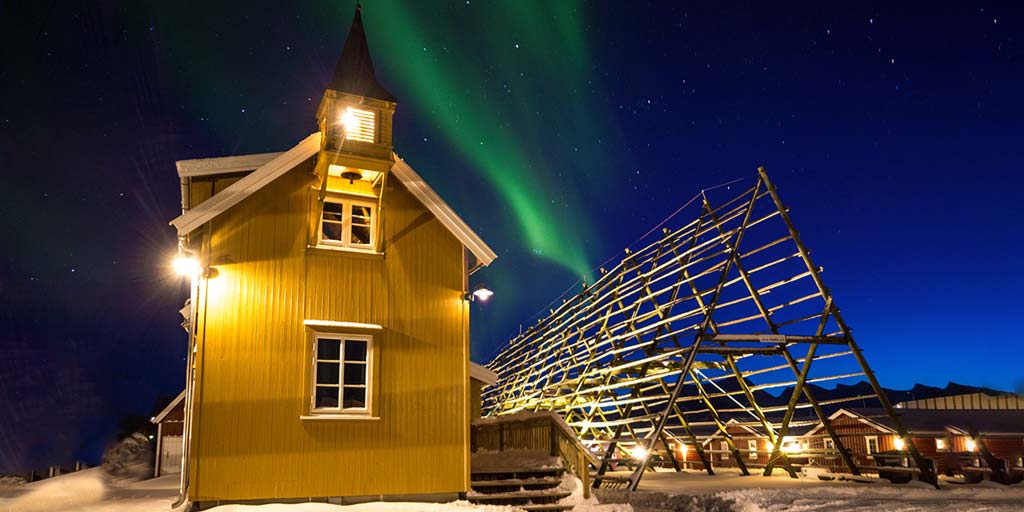
Tromso is the largest city in the region and one of the best places on earth to see the Northern Lights, with a full range of winter activities and a lively city to return to when the day ends. The Lofoten Islands sit at the same latitude as Alaska but are kept surprisingly mild by the currents of the Gulf Stream, with winter temperatures typically around minus 28 to 23 degrees Fahrenheit (2 to minus 5 degrees Celsius). In winter, the mountains rise snow-covered directly from the dark sea, and the fishing villages glow with warm light against the blue dusk.
Wind is the defining variable in weather throughout northern Norway and on the Lofoten Islands specifically. The Norwegian Sea pushes cold air across exposed coastal terrain with very little to slow it down. Temperature numbers here are misleading without accounting for wind chill. A proper windproof outer shell is the most important single piece of gear for this region.
Central and Western Norway: Bergen, the Fjords, and Flam
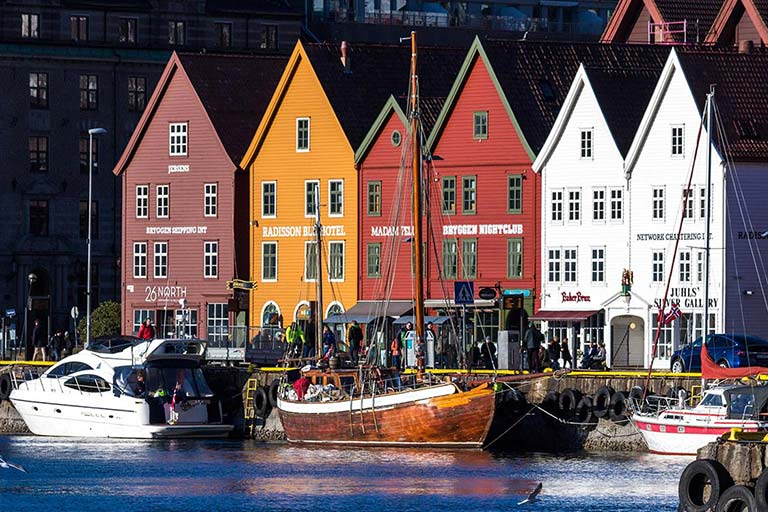
Central and Western Norway is where the classic Norwegian fjord lives up to expectations. In winter, it is breathtaking in a completely different way from the Arctic north. Bergen sits on the western coast and is the natural gateway to the fjord country. It is one of the wettest cities in Europe, mild by Norwegian standards with temperatures rarely dropping far below freezing, but persistently wet and grey through much of the winter.
In Bergen, a waterproof outer shell matters more than heavy insulation.
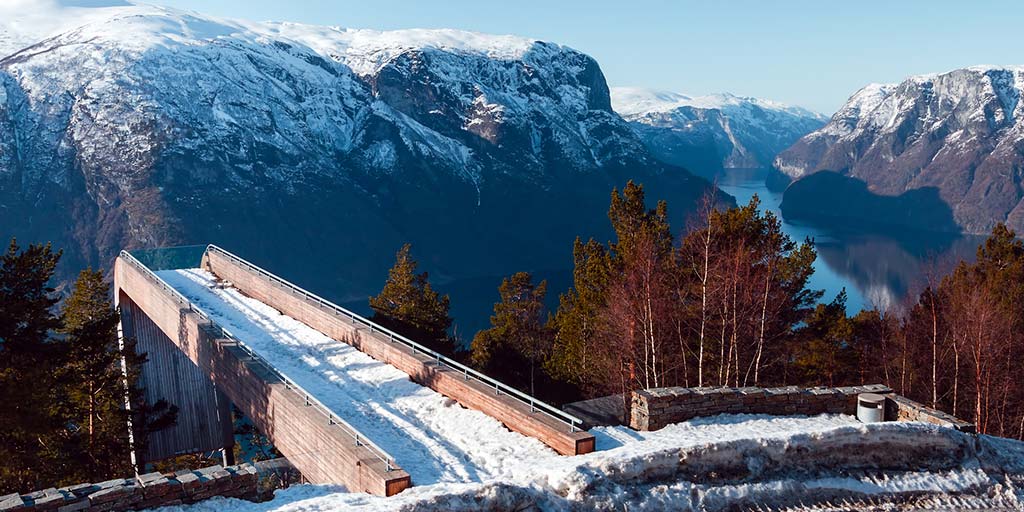
Inland from Bergen, the fjords and the villages along them tell a different story. Flam, at the end of the Aurlandsfjord, is blanketed in snow in winter with frozen waterfalls on the surrounding cliff faces.
The Norway in a Nutshell route through this region covers the Flam Railway, ferry crossings through the fjords, and the mountain train across to Oslo, and all of these involve significant time outdoors in cold and often windy conditions. The ferry crossings, in particular, are exposed regardless of what the thermometer shows.
Oslo and Eastern Norway
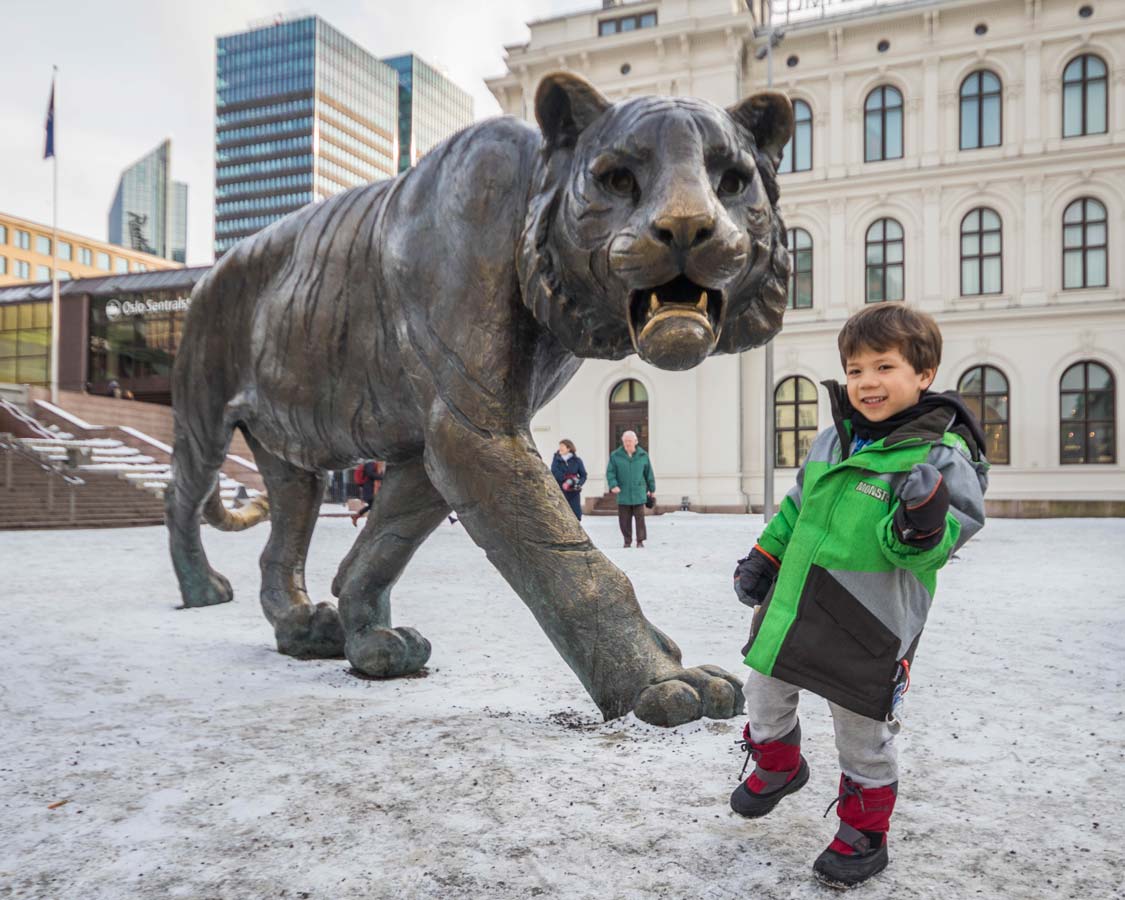
Oslo is the cultural and practical anchor of most Norwegian itineraries. The city gets a proper cold continental winter, with temperatures ranging from around 14 to 36 degrees Fahrenheit (minus 10 to 2 degrees Celsius) across the season and reliable snow cover through the core winter months.
The city is fully functional and well-adapted to winter. Museums, restaurants, and transport all run normally, and the forested hills surrounding the city turn into cross-country skiing terrain that Norwegians use as casually as a park.
Proper Layering for Winter Travel in Norway
The key to staying warm in cold climates is not having the warmest winter jacket. It is layering. Each layer you wear has a job. The base layer moves sweat away from your skin, keeping you dry. The midlayer traps warm air close to your body. The outer shell blocks wind and water.
All three layers together handle the cold temperatures that winter in Norway will throw at you. Missing any one of them means the system falls apart. Also critical: do not overheat. If you sweat in cold weather, the moisture chills you fast once you stop moving. Add and remove layers before you start sweating, not after.
The Complete Norway Winter Packing List For Families
The Base Layer
The base layer is the most important item in your Norway packing list. It sits next to your skin, and its job is to pull sweat away from your body before it can chill you. Cotton does the opposite of this. A soaked cotton base layer in Norwegian winter cold is actively dangerous on a long outdoor day. Buy merino wool or a quality synthetic. There is no third option that works.
This is the base layer I recommend for men, women, and kids under 12.
The base layer is the clothing Norwegians always wear. Inside, it’s not rare to find locals stripped down to just this layer in order to keep from sweating. It’s not a fashion thing; it’s just practical.
Pack 2 sets of merino wool base layers, tops, and bottoms. Merino base layers like this regulate temperature, manage moisture, and resist odor. Merino isn’t itchy, so it’s comfortable enough to wear all day. Bring two sets minimum, so you always have a dry one.
Pack at least one set of base layers in your carry-on luggage. I cannot stress this enough. If your checked bag does not arrive in Kirkenes (as happened to us), having your base layers with you can mean the difference between a manageable situation and a very cold, very expensive problem.
The Mid Layer
The midlayer traps warm air close to your body. It goes over the base layer and under the outer shell. On milder days, it can be worn without the outer shell.
The best midlayer for Norway in winter is a heavyweight fleece. Fleece breathes better during active days spent hiking the fjords or wandering the cities.
This is the fleece I recommend for men, women, and kids under 12.
The Outer Shell
The outer shell is your defense against wind and water. During winter in Norway, this means a waterproof, windproof jacket with a proper membrane and taped seams. The Bergen coast and the Hurtigruten deck in particular test everything your outer shell claims to do. A water-resistant shell that eventually soaks through is not adequate.
For most Norwegian winter activities, your outer shell is a jacket only. Snow or rain pants handle the bottom half separately. If you are doing serious outdoor activities like snowmobiling, check with your tour operator first. Many provide full waterproof suits as part of the excursion.
This is the outer shell top I use, this is the one Christina uses, and this is the one I recommend for kids under 12.
An outer shell is important for your bottoms as well. A waterproof bottom will help keep you warm and comfortable in almost every weather. This is the one I recommend for men, this is the one I recommend for women, and this is what I recommend for kids under 12.
Wool Sweaters and Warm Shirts
Between the base layer and the outer shell, a wool sweater or heavy flannel shirt earns its place on days exploring cities like Bergen and Oslo. During these days, full outdoor layering is often overkill. It also looks right. Norwegians dress well, and a good wool sweater fits the setting in a way a fleece jacket does not.
This wool sweater for men and teens is stylish and comfortable. Great for exploring the city or heading out to dinner.
For women and teens, Christina recommends a heavy knit cardigan or wool sweater like this one that does the same job and works equally well for city exploring and fjord-side walks. For kids under 12, keep it comfortable and cozy. Their favorite heavy sweater or hoodie from home will go over well. For dinners out, something like this works well.
Footwear for Norway in Winter
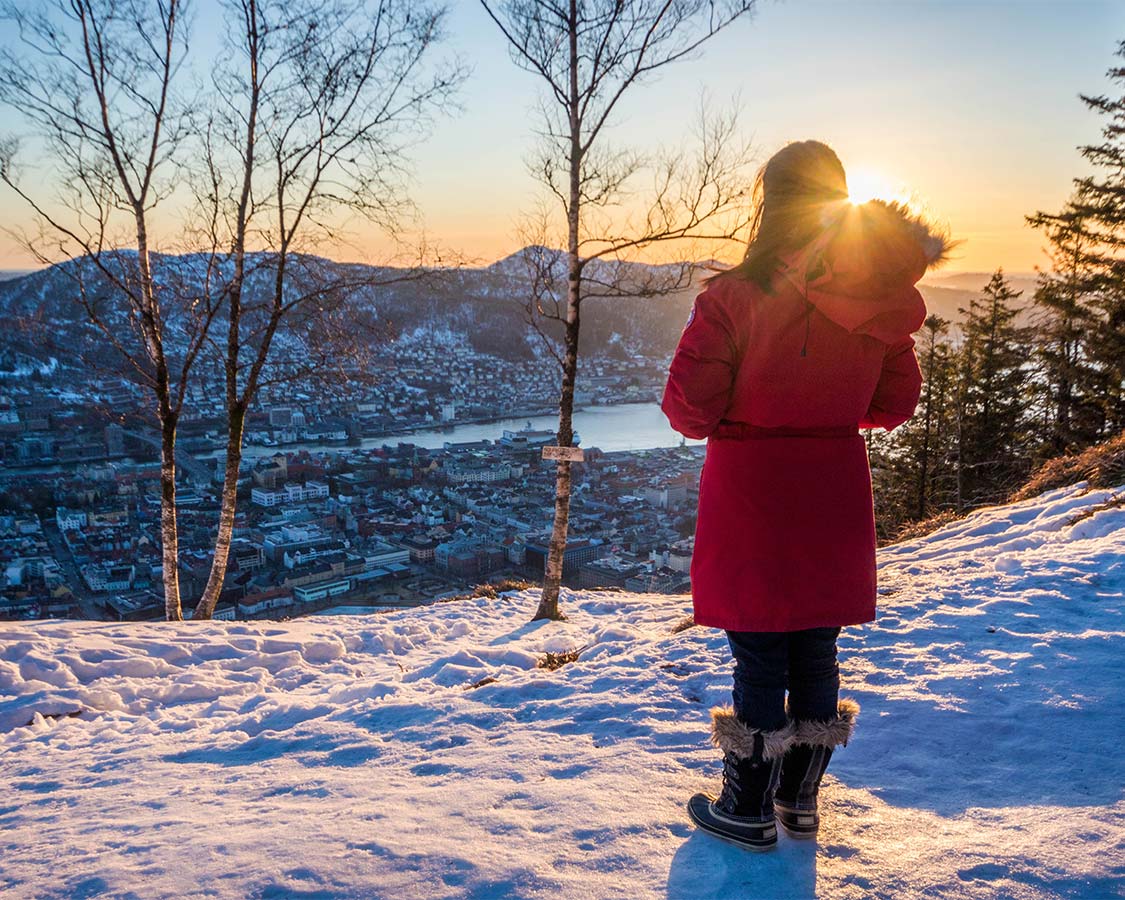
Footwear is the thing most families get wrong for Norway in winter, and the consequences are immediate and unpleasant. Cold, wet feet end outdoor exploring quickly. Norwegian streets and trails in winter are a mix of packed snow, ice, slush, and wet pavement, depending on the day and the region. You need good-quality winter boots that are waterproof, insulated, and have serious grip.
This is a great pair for men. Comfortable, waterproof, and good for just about any situation you might find yourself in. This is a similar boot for women that Christina loves for just about every adventure. They have great non-slip soles as well. This is a great pair of winter boots for kids. Warm, comfortable, and they don’t get in the way of running around.
If you’re planning on exploring outdoors or winter hiking, one easily overlooked packing item for winter in Norway is traction cleats or microspikes. These slip over your boots and provide grip in icy conditions. They pack up nice and small, so they don’t fill up your luggage, but they can mean the difference between a great hike and a hill that you never manage to actually climb. This set is great for adults, and these are fantastic for kids.
Cold Weather Accessories for Norway Travel
These are the items that sit between a comfortable day and a miserable one in a Norwegian winter. None of them is dramatic, but they all matter.
Hats, Gloves, and Face Cover
- Bring a warm wool or fleece hat for every family member. The boys and I use this hat (we call them toques here in Canada). Christina loves this one. Pull it over your ears; do not leave it behind.
- Bring a balaclava or neck gaiter for the coldest days. The wind on the ship deck at speed in Arctic Norway is a different level of cold from standing on shore. A balaclava that covers the face makes a genuine difference on those nights.
- Bring insulated gloves with touchscreen-compatible fingertips for city use: Carhartt Men’s Insulated Touchscreen Gloves. You will want to use your phone. Putting gloves on and off in minus 10 degrees Celsius gets old very quickly.
- Bring proper gloves or mittens for the coldest outdoor activities. This is what I use, this is what Christina uses, and this is what we bring for the kids. I use gloves because they help with my photography. Fingers together in a mitten are significantly warmer than fingers separated in a glove. On a long snowmobile ride or an ice fishing session, mittens are the right call over gloves.
- Bring a warm knit scarf or heavy neck gaiter for each family member. Something like this for men, something like this is what Christina loves, and this is what we bring for the kids. Pull it up over your nose in the wind. Wrap it around the neck in milder conditions.
Socks
Socks may seem inconsequential, but for winter travel, they’re one of the most important items in your packing list. On the very coldest days, wear two pairs of wool socks inside your winter boots. The layering principle applies to feet as much as to your torso.
Bring 7-8 pairs of heavyweight merino wool socks like these. Merino wool or wool-blend socks are warm without being bulky, which matters inside winter boots. Wool stays warm even when slightly damp and resists odor across multi-day stretches. We have used these across multiple northern trips. This is what I pack for the kids.
Hand and Foot Warmers
Pack a set of disposable hand warmers and foot warmers. These came in very useful during ice fishing in Kirkenes. Slip one into each mitten, and your hands stay warm through hours of sitting still in the cold. Also useful for kids who run out of body heat faster than adults.
Travel Gear and Accessories for Winter in Norway
Bags
- Bring a packable daypack for city days and shore excursions. This one never lets me down. It compresses to nothing in your main bag. This is an easily overlooked item that I find essential for Hurtigruten shore excursions, Days exploring the museums in Oslo, and Bergen walking tours, where you need to carry extra layers but do not want a full backpack.
- Bring a set of packing cubes to keep wet and dry gear separate. A Norwegian winter trip moves between very different accommodation types, including ship cabins, city hotels, and guesthouses. Organized bags make the constant repacking manageable.
Tech and Power
- Bring a portable power bank or two. Cold weather reduces battery life significantly. Your phone will drain faster in Norwegian winter temperatures than it does at home. This one has enough power for about two full charges per device.
- Norway uses Type C and Type F two-pin European outlets at 230V (50Hz). North American travelers need a universal power adapter. Most modern electronics handle dual voltage with just an adapter, but check your specific devices before plugging in.
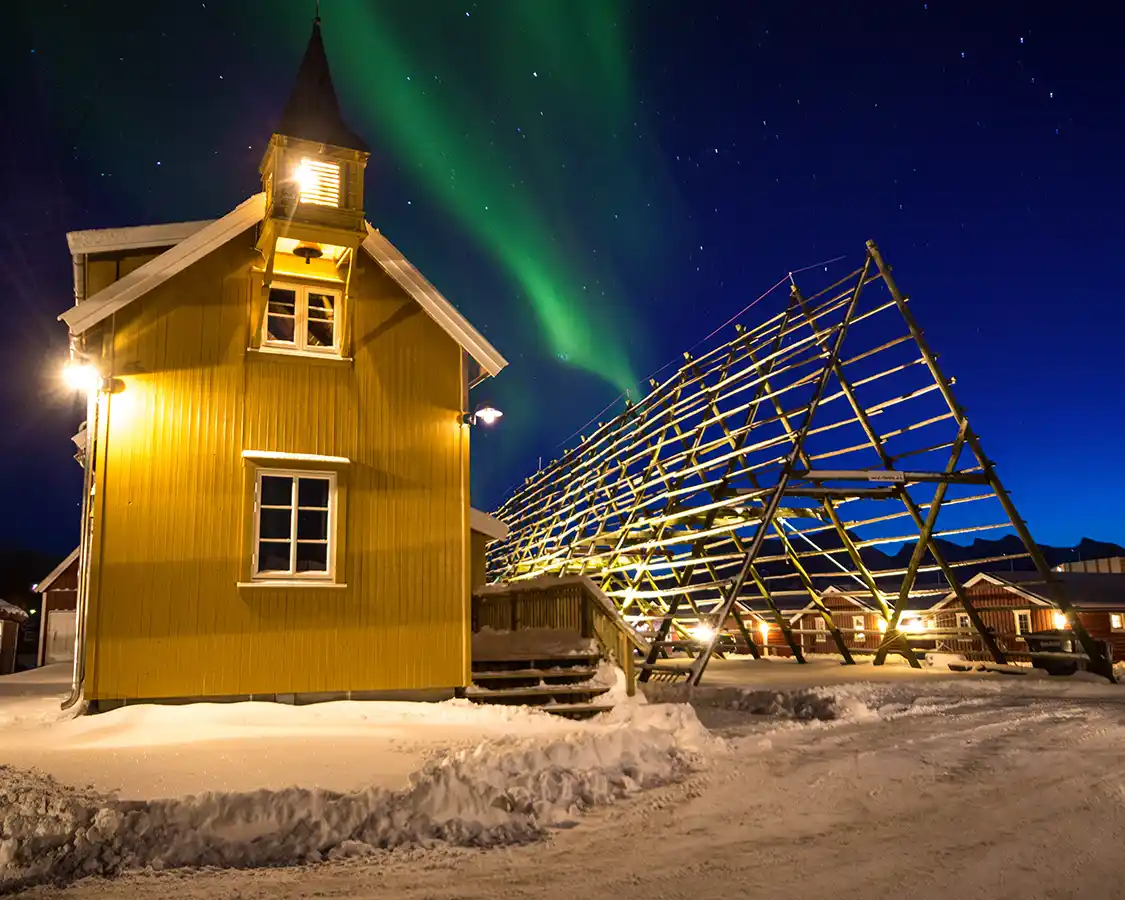
- Pack a camera that handles cold temperatures well. The Olympus TG-5 Tough is waterproof, shockproof, and good for any weather condition. Norway in winter is one of the most photogenic destinations on earth. The Northern Lights over the Lofoten Islands, the snow-covered fjords at Flam, the fishing huts at Svolvaer lit from within. A compact camera that works in the cold beats a phone every time for this kind of photography. Keep it inside your jacket between shots to preserve battery life.
- Bring an eSIM loaded before you leave home: Airalo Europe eSIM. Coverage is good in Norwegian cities and along the main Hurtigruten route. In more remote fjord areas and between smaller ports, the signal drops. Download offline maps before leaving any town with reliable connectivity.
Toiletries for Family Travel in Iceland
Bring From Home
- SPF 50+ sunscreen even for winter travel. Snow in Norway reflects UV radiation at levels that cause sunburn much faster than you expect, especially at elevation, on open fjords, and on the Hurtigruten deck. Snow reflection combined with clear winter skies is a real and consistent burn risk throughout the season.
- Lip balm with SPF protection. Cold, dry Norwegian air and wind are very hard on the lips. Apply before going outside and reapply throughout the day. This is the toiletry item used most consistently across a Norwegian winter trip.
- A good moisturizer for the whole family. Cold air is dry air, and heated Norwegian hotel rooms make it drier still. Skin dries and chaps fast in these conditions, particularly for children.
- Prescription medications with a doctor’s note for anything controlled.
- Children’s paracetamol and ibuprofen in familiar brands.
- Hand sanitizer x2.
Buy in Norway
- Buy shampoo, conditioner, body wash, and toothpaste in Oslo or Bergen before heading north. Norwegian pharmacies (Apotek) and supermarkets (Rema 1000, Kiwi, Meny) are excellent and well-stocked in cities. In smaller northern towns, the selection thins and the prices, already high in Norway, rise further. Stock up in the south before heading north.
- Norwegian sunscreen and skin care products are available in cities. Buying them at home is cheaper.
Documents, Money, and Administrative Needs For Family Travel in Norway
- Make sure to pack valid passports for all family members with a minimum of 6 months’ validity beyond your travel dates.
- Norway is part of the Schengen Area. There are no visa requirements for US, Canadian, UK, EU, and Australian passport holders for stays up to 90 days.
- Carry a debit or credit card with no foreign transaction fees rather than cash as your primary payment method. Norway is one of the most cashless societies in the world. Credit cards are accepted virtually everywhere, including small guesthouses and remote fuel stations. Carry a small amount of Norwegian Krone as a backup, but you will use it rarely.
- Bring excursion tickets and confirmations printed or downloaded to your phone. Ship boarding can be fast, and you want your documents accessible offline.
- Bring travel insurance documents, printed and digital. Medical care in Norway is excellent, but costs for visitors without coverage are high. I recommend Safetywing or World Nomads for family travel insurance.
- Bring printed and digital copies of accommodation confirmations and emergency contacts.
- Download the yr.no weather app before you travel. It is the Norwegian Meteorological Service, and gives the most accurate local forecasts, particularly for fjord and coastal areas where conditions change quickly.
What to Leave at Home When Traveling During Winter in Norway
- Leave cotton base layers at home. Cotton holds moisture against your skin and chills you in cold weather. It is actively wrong for Norwegian winter outdoor activities. Bring merino wool or quality synthetics only.
- Leave footwear without a proper winter rating at home. Regular waterproof boots that are rated to 0 degrees Celsius (32 degrees Fahrenheit) are not adequate for ice fishing in Kirkenes or a predawn Northern Lights watch on a Hurtigruten deck. Bring boots rated to at least minus 20 degrees Celsius (minus 4 degrees Fahrenheit).
- Leave expensive electronics without cold-weather battery management strategies at home, or keep them inside your jacket between uses. Lithium batteries lose charge fast in the cold. A phone that shows 40 percent battery at room temperature may show 5 percent after twenty minutes outside in minus 10 degrees Celsius.
Travel Resources For Families Visiting Norway
For practical planning, safety considerations, and logistics, these dedicated guides provide all of the resources you need for family travel in Norway.
Quick Reference: Clothing Quantities per Person
Based on a 10 to 14-day Norway winter trip covering Kirkenes, the Hurtigruten coastal route, Flam, Bergen, and Oslo.
| Item | Men | Women | Teens | Kids |
| Merino base layer set (top and bottom) | 2-3 | 2-3 | 2-3 | 2-3 |
| Heavyweight mid-layer | 1-2 | 1-2 | 1-2 | 1-2 |
| Waterproof shell | 1 | 1 | 1 | 1 |
| Insulated jacket | 1 | 1 | 1 | 1 |
| Snow/Rain pants | 1 | 1 | 1 | 1 |
| Pants | 2-3 | 2-3 | 2-3 | 2-3 |
| Wool sweater | 1 | 1 | 1 | 1 |
| Neck gaiter (buff) | 1 | 1 | 1 | 1 |
| Heavy wool socks | 7-8 | 7-8 | 7-8 | 7-8 |
| Underwear | 7 | 7 | 7 | 8-9 |
Frequently Asked Questions
It depends on where you are and when. Oslo in December and January averages around minus 5 to minus 8 degrees Celsius (17 to 23 degrees Fahrenheit), warming slightly through February and March. Bergen on the west coast is milder and wetter, hovering close to freezing but rarely much below it. Kirkenes in the far north averages minus 8 to minus 15 degrees Celsius (18 to 5 degrees Fahrenheit) through the core winter months, with cold snaps pushing well beyond that. Wind chill drops the effective temperature further everywhere, particularly on open fjords and on the Hurtigruten deck. Pack for the coldest likely conditions in your itinerary, not the average temperature on a website.
Many do, at least for outer layers on specific activities. Hurtigruten shore excursion partners, including snowmobile and dog sled operators, typically provide insulated waterproof suits for their activities, which means you do not need to pack snow pants and a heavy parka specifically for those experiences. Check with your specific operator before you travel. The ones who provide suits will tell you. Base layers and socks are almost never provided. Bring those regardless.
Norway is among the safest countries in the world and extremely family-friendly. The main practical considerations for families with young children in winter are keeping them warm and managing the light, or lack of it. Deep winter in the far north means polar night, a complete absence of daylight that can disorient children’s sleep rhythms and affect mood after a few days. Most families find it atmospheric rather than difficult, and Norwegian towns are fully set up for normal life through the polar night. Later in the winter season, lengthening days bring back normal light patterns. The icy pavements in northern cities are the main physical hazard throughout the season. Traction devices on boots solve this. Norwegians are experienced in managing winter conditions, and facilities, including restaurants, museums, and transport, are all well-adapted for children.
The Northern Lights require darkness, clear skies, and solar activity. The aurora season runs from roughly September through March. Peak darkness falls from November through January, which gives the best conditions for sightings. The far north around Kirkenes and Tromso offers the best odds because it is furthest from light pollution and has the most darkness hours. Hurtigruten cruises are specifically marketed for Northern Lights viewing because the ship can move to find clearer skies when clouds cover one area. No trip guarantees a sighting, but the odds are genuinely good on a clear night anywhere in northern Norway through the winter season.
Norway’s domestic flight network connects Oslo to Kirkenes and other northern cities in roughly two hours. The Norway in a Nutshell route from Bergen to Oslo via Flam is a famous scenic rail and ferry journey that takes a full day and is spectacular in winter. The Hurtigruten coastal ferry runs the full length of the Norwegian coast between Bergen and Kirkenes, stopping at dozens of ports. The full one-way voyage takes around five and a half days. Most families book a section of the Hurtigruten rather than the full route.
Yes, and the gear available in Norway is excellent. Norwegian outdoor brands, including Helly Hansen, Norrona, and Bergans, are world-class and widely available. The problem is price. Norwegian outdoor gear costs significantly more than the same or equivalent items in North America or the rest of Europe. Buy everything you need at home and bring it with you. If you forget something, Oslo and Bergen have good outdoor shops. In smaller northern towns, options are limited, and prices are high. This is a buy-at-home destination more than almost any other in this guide series.
Final Word on Family Packing for Norway in Winter
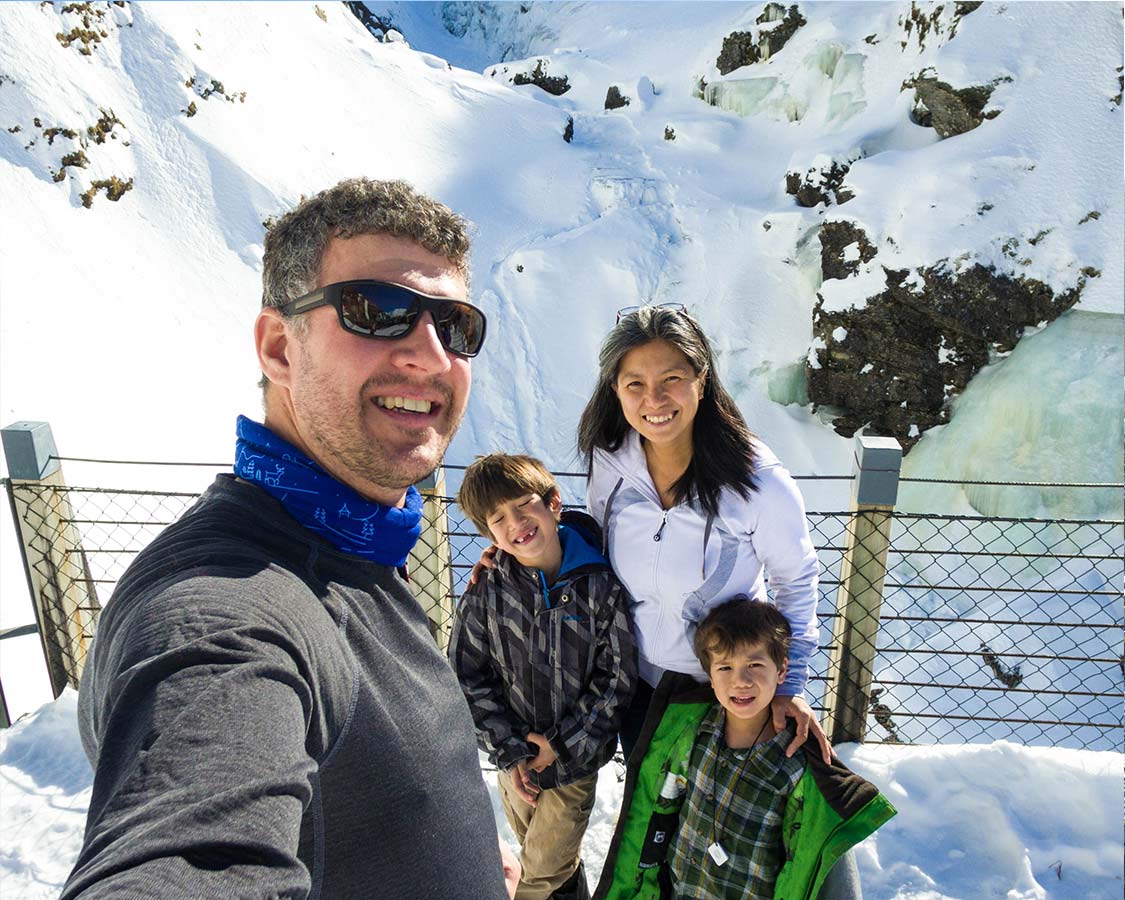
We were on the deck of the Hurtigruten at around 2 am somewhere off the Lofoten Islands when the Northern Lights started properly. Not a faint green shimmer on the horizon. A proper display that moved across the whole sky, shifting color and shape for about forty minutes while the ship held position and everyone on deck went quiet.
The boys were in full base layer, fleece, insulated jacket, and outer shell, hats pulled down, and neck gaiters up, and they were fine. They stood there for the full forty minutes. Nobody mentioned being cold.
That is what the right gear does for a Norwegian winter trip. It stops the cold from being the thing you are thinking about, so the Northern Lights can be the thing you are thinking about instead.
Pack the base layers in your carry-on. Bring the traction devices. Do not skip the mittens. Leave room in the bag for whatever you buy in Bergen. You will buy something in Bergen.
This page is updated as new regional guides and planning resources are published. Looking beyond Norway? Explore my International Family Travel Guide.