
The Mingan Archipelago is one of Canada’s most extraordinary and least-visited national parks: a string of wild islands carved into giant stone monoliths, ringed by puffins and whales. Here’s exactly how to visit, island by island.
I fell asleep to the sound of whales. It wasn’t the deep whale songs that the storybooks tell you about, but the breathing. It was far in the distance, but the unmistakable explosive rushing sound echoed through the island forest that surrounded my family and me.
We were all tucked into our little Parks Canada OASIS cabin perched on stilts above the high tide line on Grande Île. Cohen and Dylan curled into the hammock nook above, and Christina and I lay flat out beneath them. That distinctive “Phooooosh” was the last thing we heard before we drifted off into a heavy slumber. The wet exhale was made by a pod of Minke whales spouting somewhere out in the dark Gulf of St. Lawrence. As magical as it was, all we could think of after a long day of hiking and exploring in Mingan Archipelago National Park Reserve, one of the most remote gems of Canada’s incredible Parks Canada locations, was sleep.
In the morning, our campsite was covered in a thick, pea soup fog that blanketed everything around us. But as the sun rose and the temperature rose along with it, that mist lifted off the water to reveal a shoreline studded with limestone giants. That was the moment the Mingan Archipelago stopped being a place on a map and became one of the most memorable Canadian national park visits that my family has ever experienced.
The Mingan Archipelago National Park Reserve protects more than 40 islands and islets scattered along Quebec’s Côte-Nord, in the Gulf of St. Lawrence off the town of Havre-Saint-Pierre. It holds the largest concentration of erosion monoliths in Canada: towering sea stacks that thousands of years of waves and ice have sculpted into flowerpots, mushrooms, and crumbling castles. Add Atlantic puffins, thirteen species of whale, rare Arctic-alpine plants, and some of the emptiest hiking trails in the country, and you have a park that offers those willing to make the long journey to the easternmost reaches of Quebec a trip of a lifetime.
This Mingan Archipelago National Park Reserve guide breaks down every island worth visiting, how the boat tours work, where to camp, what it costs, and when to go. For a guide to the town that anchors it all (where to eat, sleep, and how to get to the region), start with my complete Havre-Saint-Pierre guide.
Quick Planner: Mingan Archipelago National Park Reserve
Where: The Gulf of St. Lawrence off Havre-Saint-Pierre and Longue-Pointe-de-Mingan, on Quebec’s North Shore.
The draw: Limestone monoliths, Atlantic puffins, whales, seals, seabirds, and quiet boreal hiking.
Best time to visit: June to September only. Boat tours, puffins, and whales all peak in July and August.
Getting to the islands: By boat with Parks Canada-recognized operators, departing from Havre-Saint-Pierre (eastern islands), Longue-Pointe-de-Mingan (western islands and puffins), or Rivière-Saint-Jean.
How long: Three to five days to do the eastern and western islands justice.
Don’t miss: The puffins of Île aux Perroquets, the monolith walk on Île Nue de Mingan, and a night camping on the islands.
What Makes The Mingan Archipelago Special
When I told friends and family that I was heading to the Mingan Archipelago, I was mostly greeted with blank stares. This is a part of Canada that most people have never heard of, and that’s exactly the kind of place I love traveling to. While regions like Banff and Jasper groan under the strain of millions of visitors, the Mingan Archipelago sees a tiny fraction of that, only around 40,000 visitors per year, despite being one of the most unique places to visit in Canada.
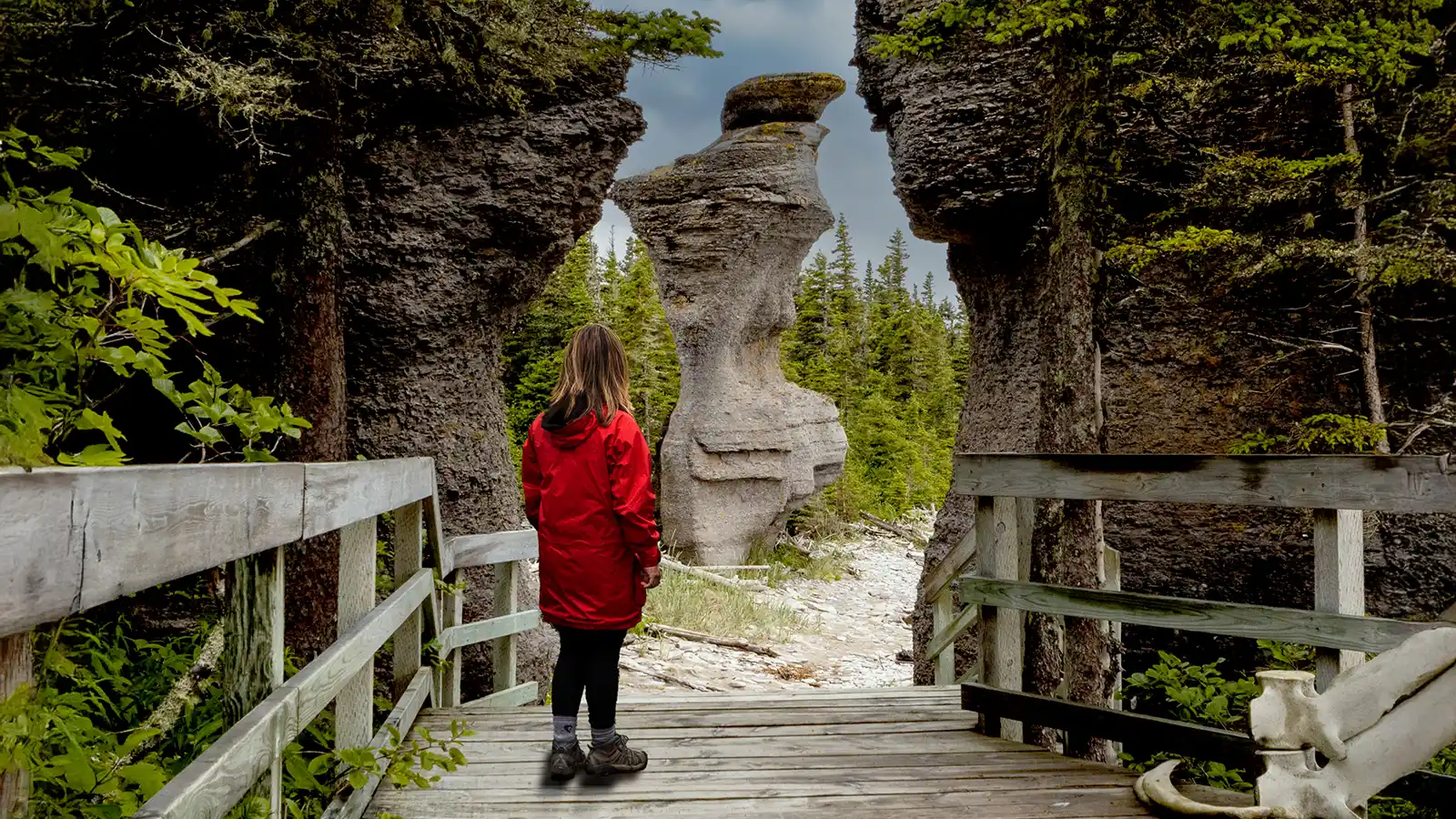
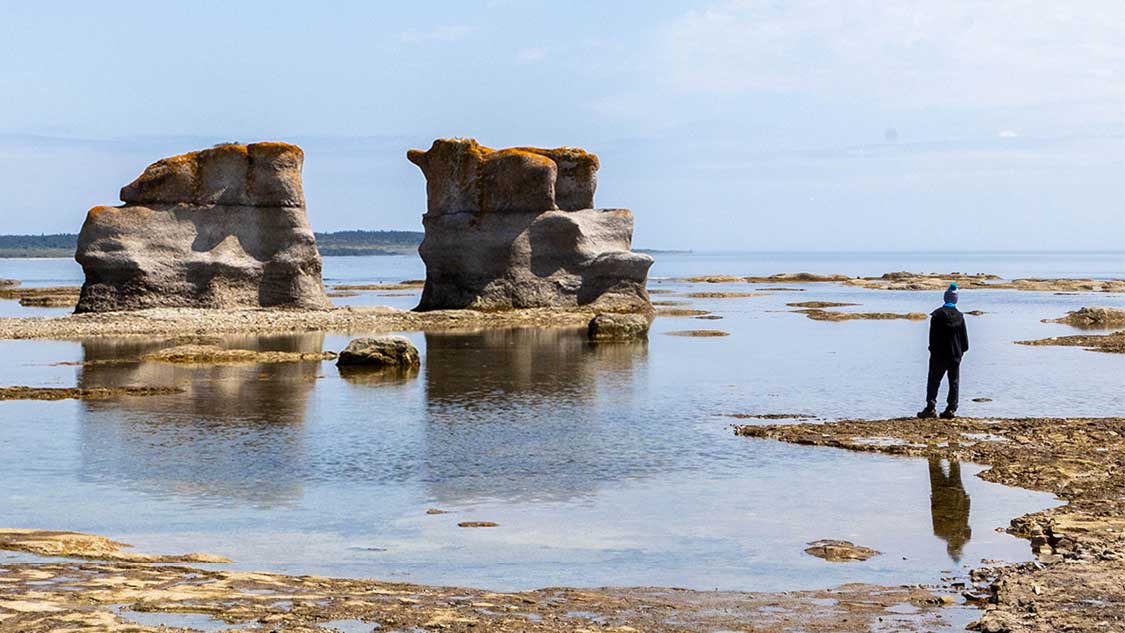
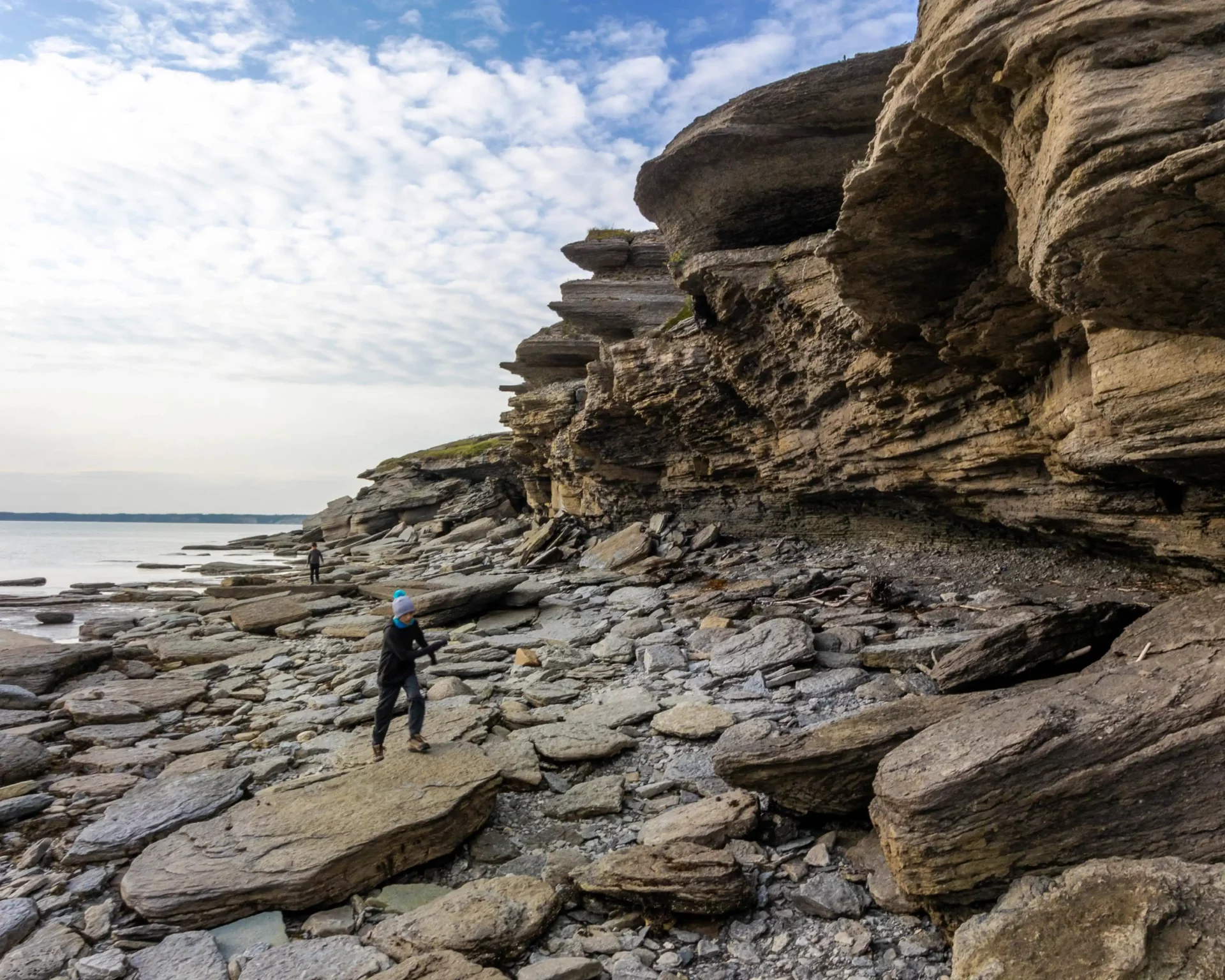
The flowerpots are the headline act in the park. Formed from limestone laid down roughly 450 million years ago, then sculpted by the relentless freeze, thaw, and pounding of the Gulf of St. Lawrence, these sea stacks stand along the islands’ shores like a gallery of stone sculptures. Some are taller than a house. Hoodoos, flowerpots, mushroom rocks- whatever you want to call them- they’re a surreal quirk of rock, weather, and time. My family has been around the world and seen similar formations in places like Cappadocia, Turkey, Egypt’s Western Desert, and, of course, Alberta’s badlands. But there’s something about the rock formations in Mingan Archipelago National Park Reserve that makes them stand out from all the rest.
These formations are just one small draw of this island archipelago, and rocks are barely scratching the surface of why this is one of the most incredible national parks in Canada.
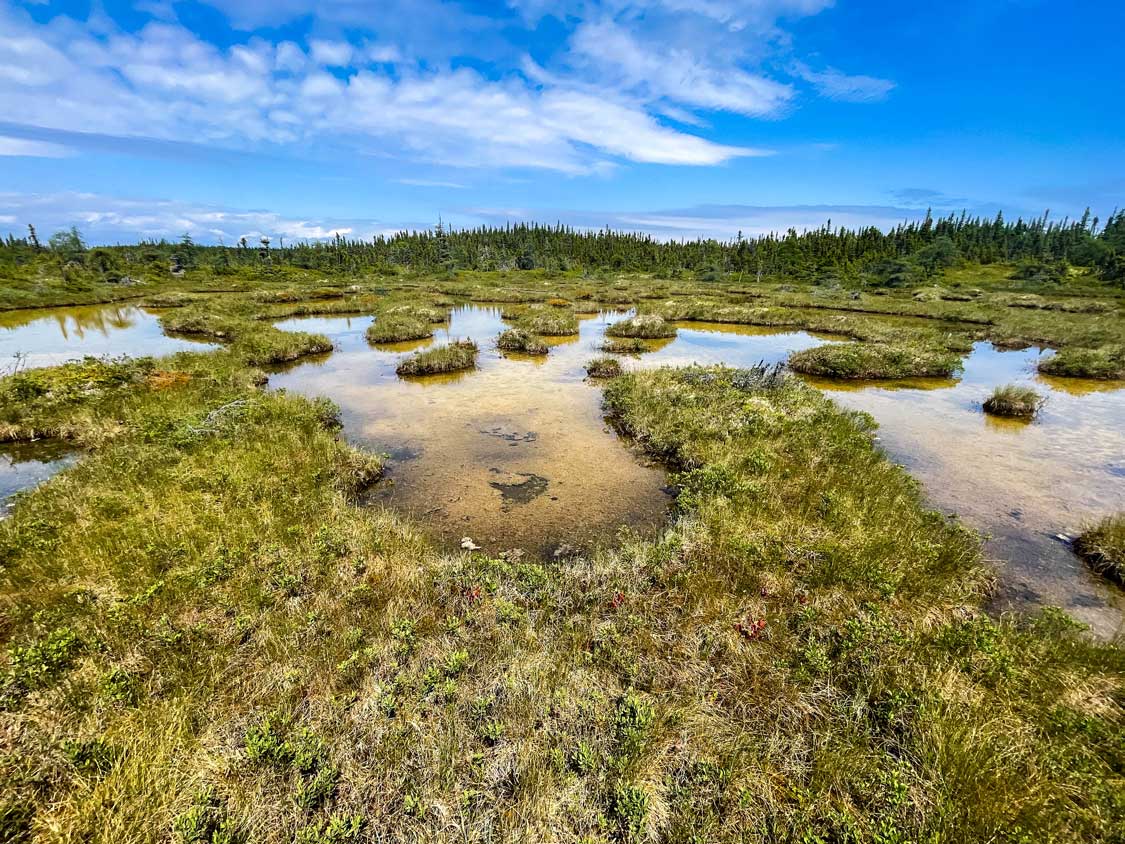
The Mingan Archipelago sits at a biological crossroads where Arctic and southern species overlap. The region is home to rare plants (including the endemic Mingan thistle), lush peat bogs, black-spruce taiga, and boardwalk trails that criss-cross through it all. Offshore, the cold, food-rich waters draw thirteen species of whale and rafts of harbor seals. And on one small western island, over a thousand pairs of Atlantic puffins raise their young each summer. It is, in short, one of the most rewarding wildlife-and-landscape combinations anywhere in Canada.
Our Visit To The Mingan Archipelago
I drove to Havre-Saint-Pierre, the town that acts as the adventure hub for Mingan Archipelago National Park Reserve, at the halfway point on an epic road trip from Halifax, Nova Scotia. I was traveling with my wife, Christina, and my two boys, Cohen and Dylan. We had already spent the better part of a week road-tripping through Moncton and Fredericton, and camping in Gaspesie National Park on Quebec’s south shore.
The Mingan Archipelago was not a shore detour on that trip. To get there, we had to take the ferry across the width of the St. Lawrence River from Matane to Godbout and make the four-and-a-half-hour drive to Havre-Saint-Pierre. We gave the region about four days, and I’d urge you to do the same. Getting to the Mingan Archipelago isn’t a short trip, and rushing this place is a mistake.
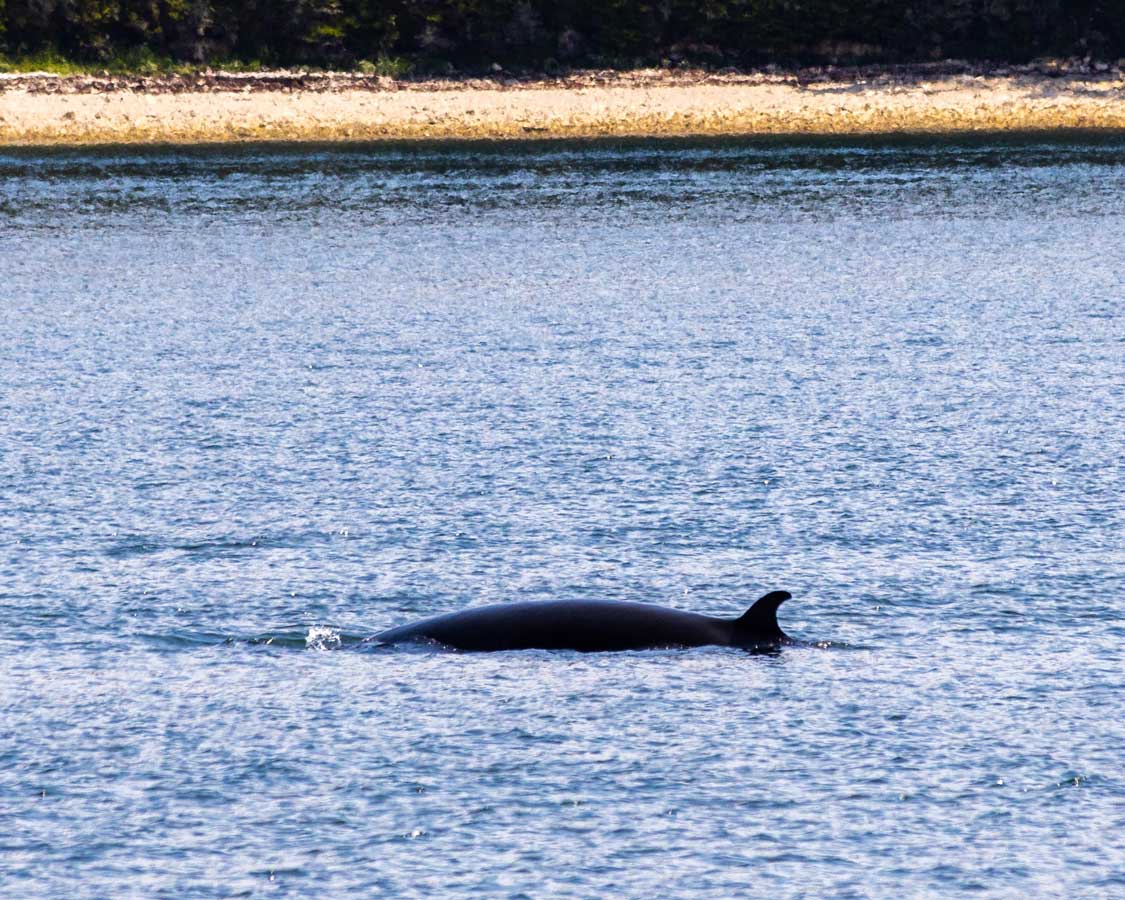
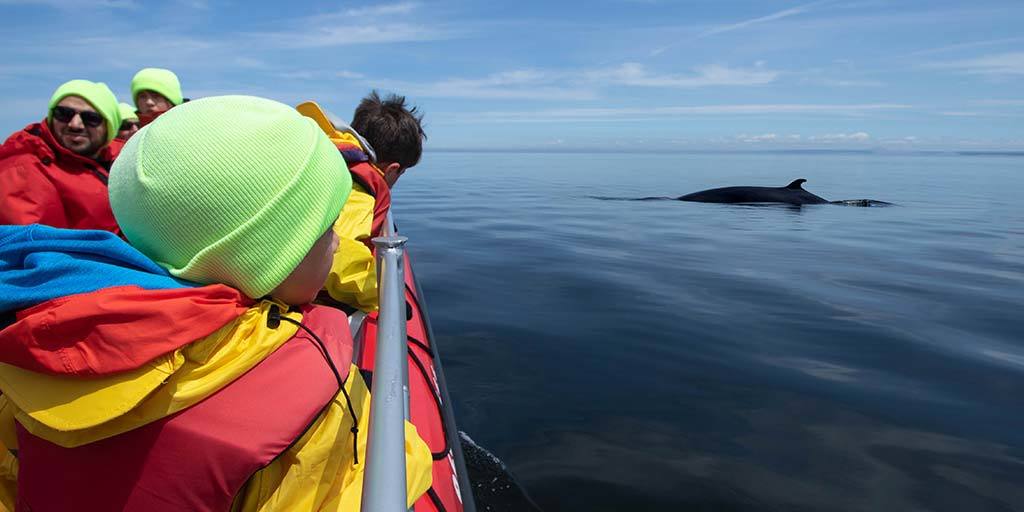
Our first taste of how special this region is came before we’d even boarded a boat. Within fifteen minutes of arriving at the reception area of Services Maritimes Boreal, standing near the water, we watched three Minke whales roll and surface just offshore, close enough that the boys thought that they could touch them.
Out on the islands, the experience became even grander. On misty mornings they whales emerged from the fog one by one, and the kids invented names and backstories for each stone monument we discovered. We hiked boreal trails where we passed maybe two other people all day. We spent a night in one of the unique Parks Canada OASIS pods on Grande Île, cooking a meal over the campfire as the sky turned gold and the whales blew their misty breath offshore. And on the western side, out of Longue-Pointe-de-Mingan, we took the Loiselle family’s boat to Île aux Perroquets and sat, spellbound, as puffins came whirring back to their burrows at high tide with beaks crammed full of silver fish.
So if you’re planning a visit to Mingan Archipelago National Park Reserve, here’s everything we learned so you can plan your own trip.
The Islands Of The Mingan Archipelago
The islands that make up Mingan Archipelago National Park Reserve split naturally into two clusters: the eastern islands, best reached from Havre-Saint-Pierre, and the western islands (including the puffins), best reached from Longue-Pointe-de-Mingan, about 45 minutes west.
Île Quarry (Île du Havre)
The most popular and most accessible of the eastern islands, Île Quarry (also known as Île du Havre) features the park’s largest network of hiking trails. This collection of trails winds through dense boreal forest to dramatic monoliths along the shore. The Baie Quarry shore trail is relatively easy and family-friendly, and there are picnic shelters and facilities. If you only have time for one eastern island, this is a great choice.
Île Niapiskau
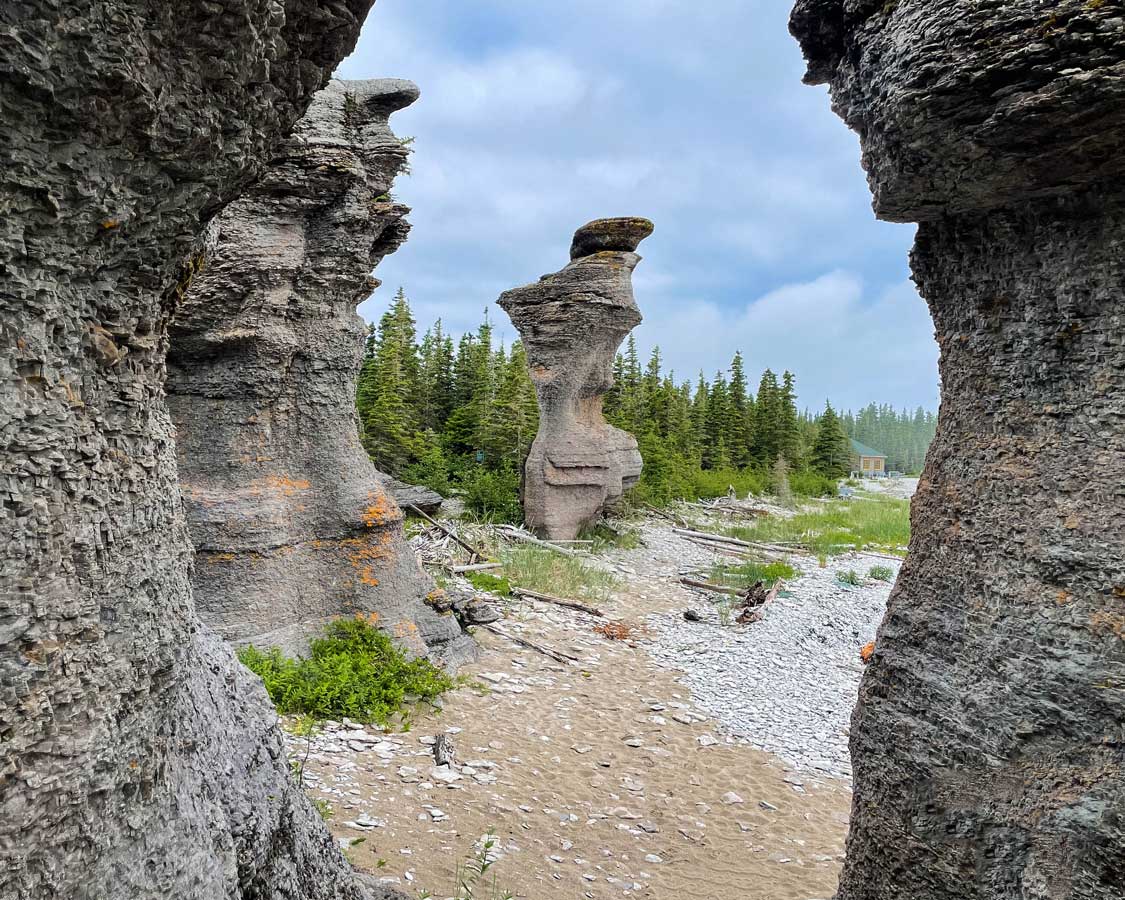
Famous for its large collection of flowrpots, including the beloved “Bonne Femme” (the Old Lady), a stack that genuinely looks like a hunched figure gazing out toward the sea. The Samuel Trail runs about 4.1 km and is rated at intermediate difficulty. It winds through thick forest and salt marsh to the most famous rock formations. It’s one of the most photogenic islands in the park.
Île du Fantôme (Ghost Island)
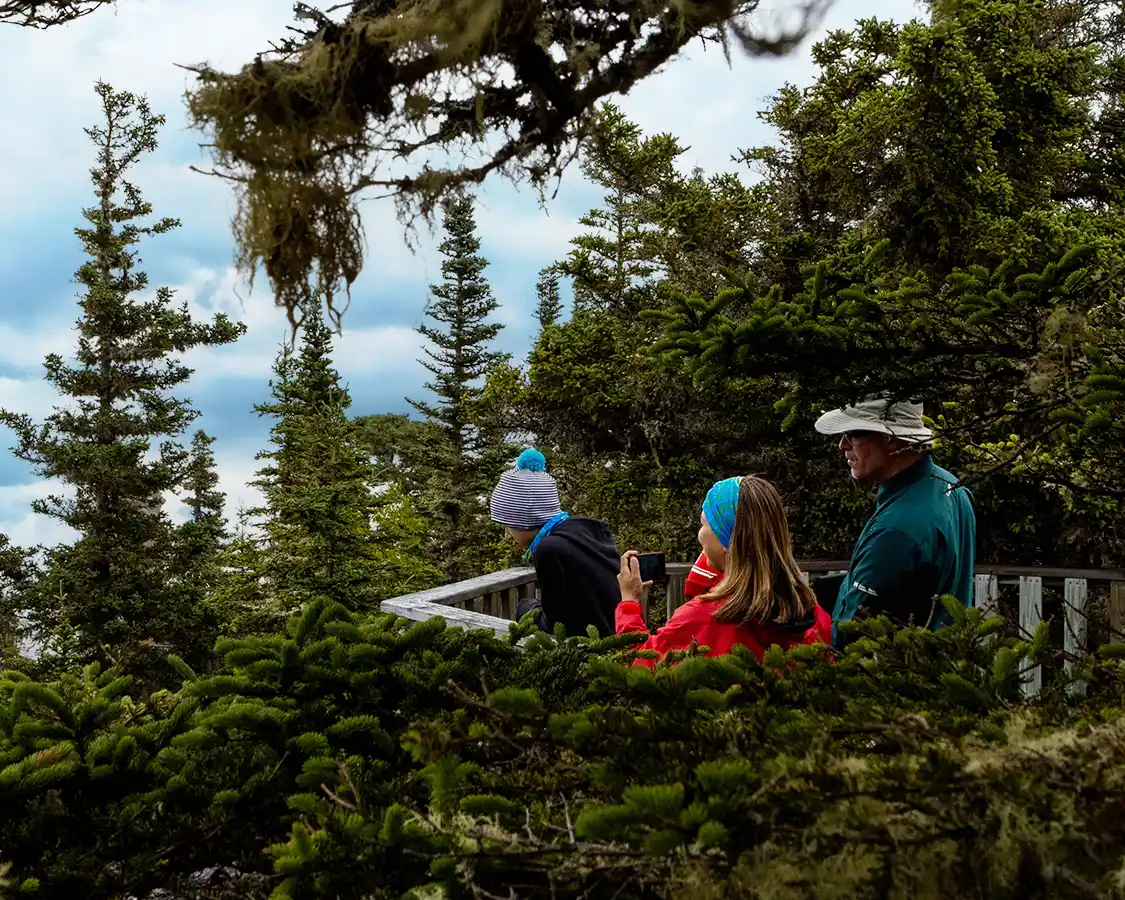
Named for a schooner wrecked here in 1862, this smaller island rewards early risers. When we first reached the shores here, it lived up to its name. A thick fog engulfed the island, causing the flowerpots along the shore to look like ghosts rising from the rocky beaches.
The island’s most famous features are its rounded monoliths and checkerboard wave-cut limestone platforms, which are eerily beautiful in the morning mist- exactly the scene that had our boys spinning ghost stories. Access is more limited (roughly late June to early September), so confirm you can reach it before booking your trip.
Île Nue de Mingan
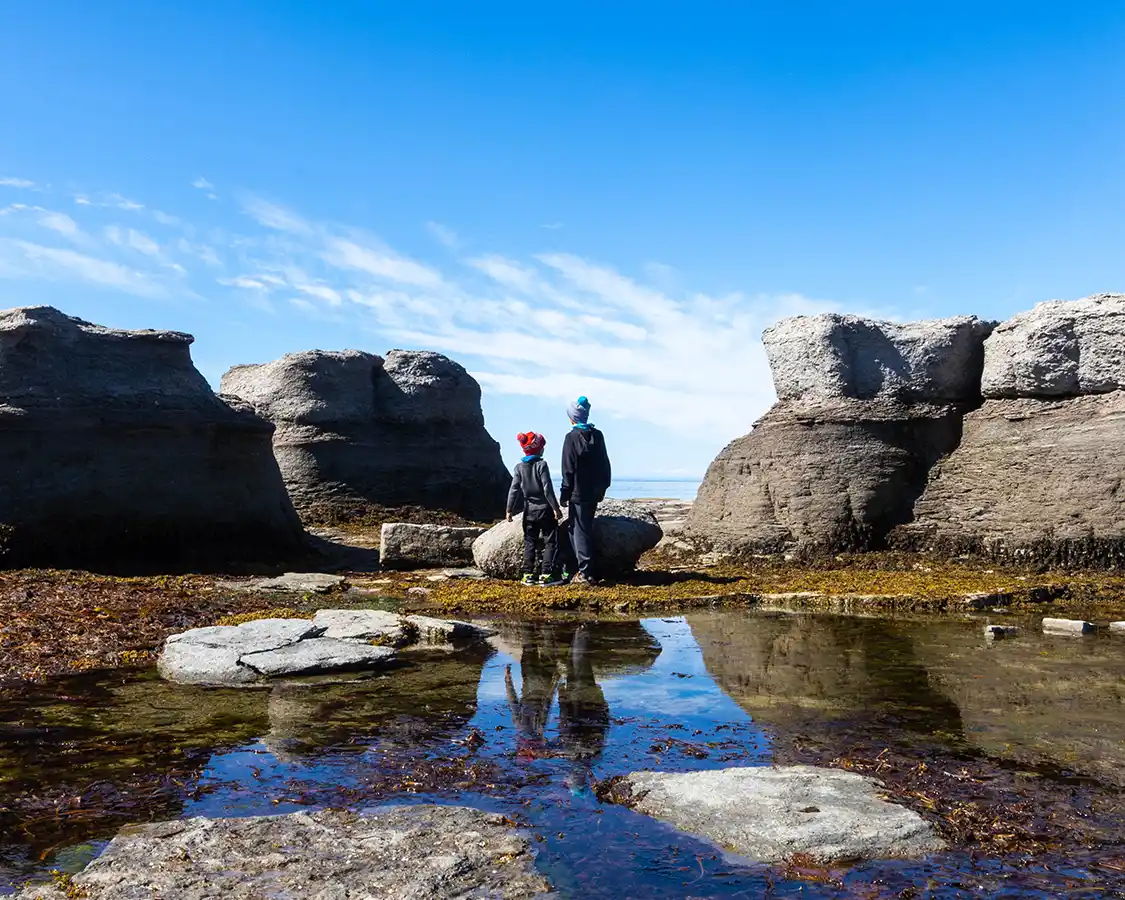
My kids laughed at the name of this one. The “naked island,” so-called for its near-treeless, wind-scoured landscape. Île Nue de Mingan is a highlight of the western tours out of Longue-Pointe-de-Mingan. Here you walk directly among a dense concentration of monoliths, an experience visitors often compare to Utah’s Arches. Tours typically give you around an hour ashore. There’s not much in the way of services here, but there is a small shelter on the island. Bring your camera.
Île aux Perroquets (Puffin Island)
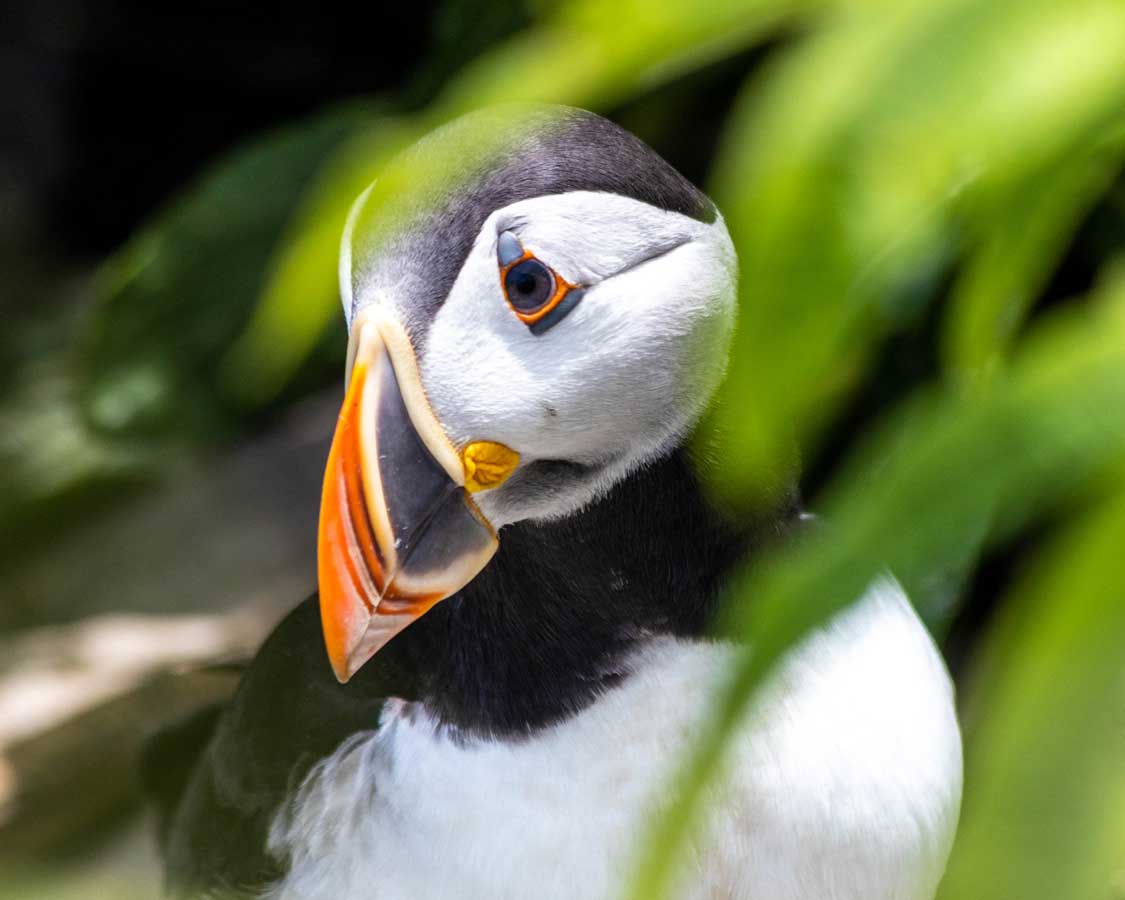
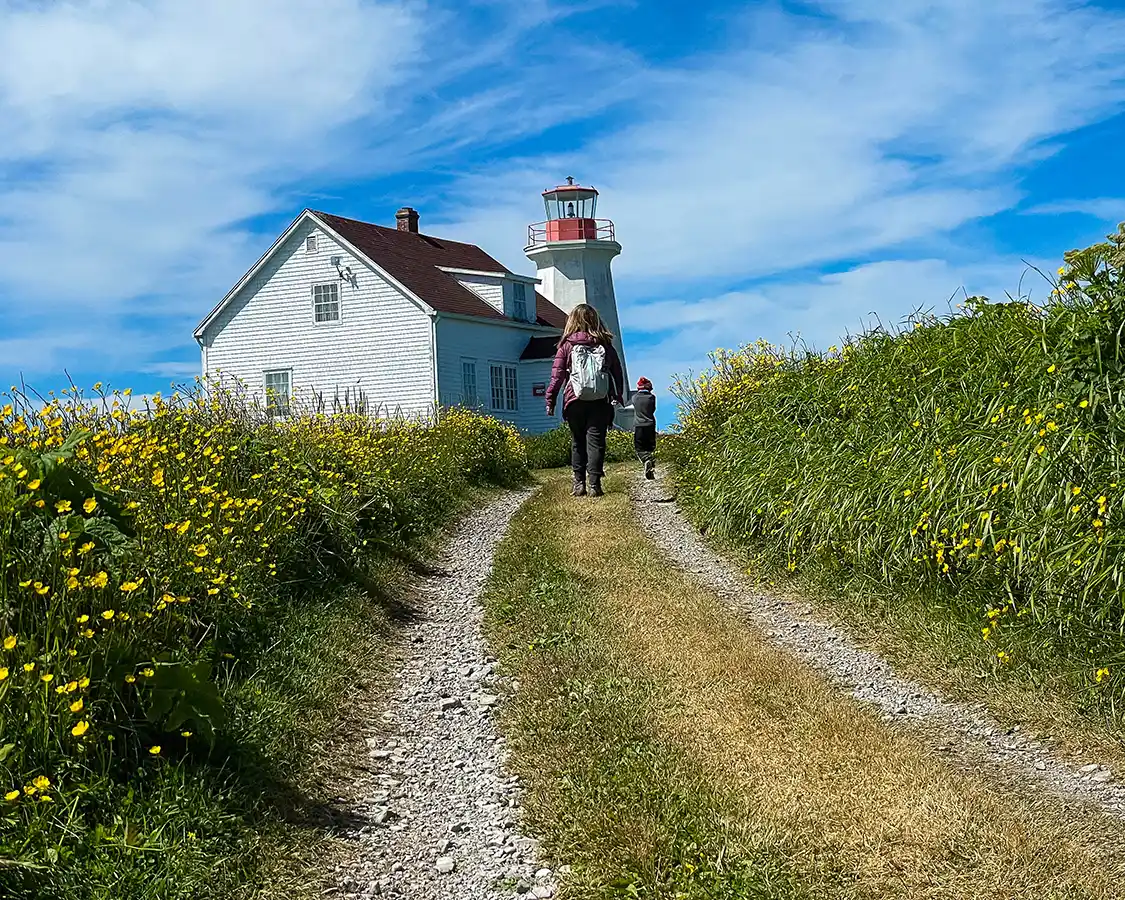
The star of the western islands is Île aux Perroquets, or Puffin Island. Over 1,200 pairs of Atlantic puffins breed here each summer, alongside razorbills, black guillemots, and kittiwakes, all beneath a photogenic cliff-top lighthouse.
It’s a small island, and there are no monoliths or major hikes here; you come for the birds, and they do not disappoint. You can even stay overnight in the restored lighthouse-keeper’s accommodations for a truly special experience. Puffin season runs roughly from early June to mid-September.
Grande Île
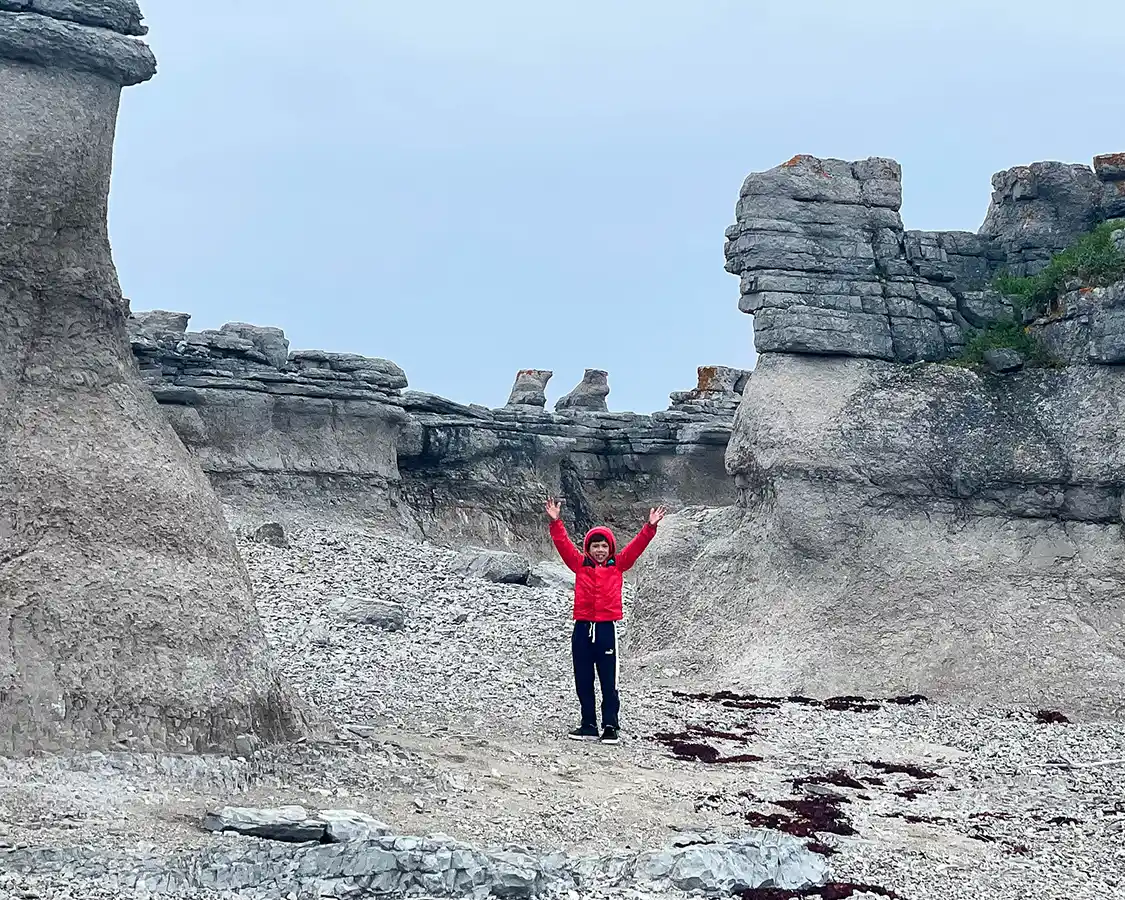
The largest island, pairing coastal hiking with Parks Canada’s stilt-mounted OASIS accommodations (where we stayed). It’s a wonderful place to slow down, hike, and settle in for a night with whales for a soundtrack. There are some long hikes here that are properly spectacular, with very few crowds.
How The Mingan Archipelago Boat Tours Work (And Which Operator To Choose)
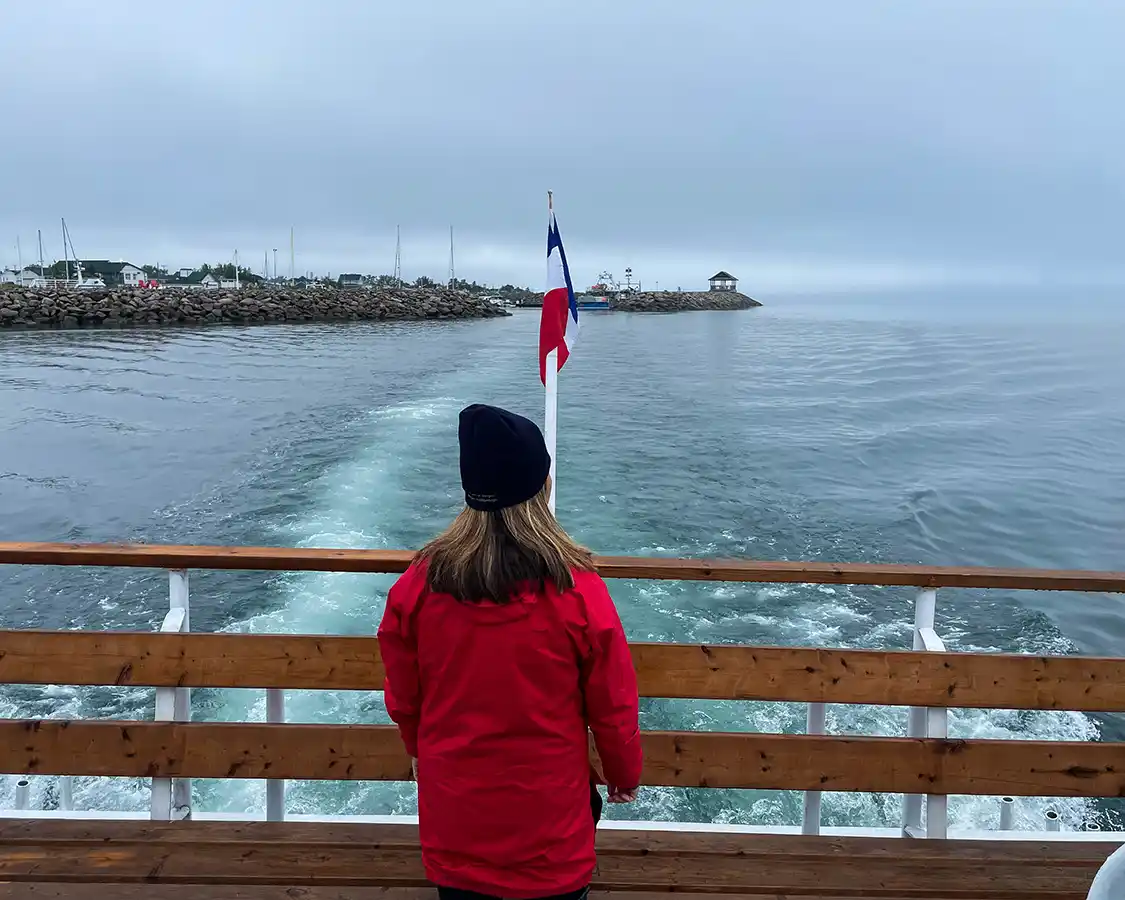
You cannot reach the islands of the Mingan Archipelago on your own; marine transport with a Parks Canada-recognized operator is required. Boats depart from three towns along the coast, and which one you choose depends on which islands you want to see.
From Havre-Saint-Pierre: Services Maritimes Boréale.
The main operator for the eastern islands (Quarry, Niapiskau, Fantôme, and others), running guided island cruises and drop-offs through the summer. This is your choice for the classic monolith-and-hiking day.
From Longue-Pointe-de-Mingan: Excursions du Phare and Les Entreprises Touristiques Loiselle (Tourisme Loiselle)
Two family-run operators serve the western islands, including the monoliths of Île Nue de Mingan and the puffins of Île aux Perroquets. The Loiselle family also runs the excellent Camping de Mingan.
From Rivière-Saint-Jean
This village, further west along Route 138, is another island departure point, handy if you’re based along that stretch of coast.
Prefer to travel under your own power? Licensed sea-kayak and stand-up-paddleboard outfitters run guided island trips to the islands. Among them are Noryak Aventures, Quatre Natures, and Les Vagues (which also offers snorkeling and yoga).
Important planning note: Mingan Archipelago tours are weather- and tide-dependent, and sailings can be canceled or shifted when the Gulf of St. Lawrence kicks up, so build flexibility into your schedule and book the earliest days of your stay when you can. Some tours are guided cruises; others drop you on an island to hike and pick you up later. Whatever you choose, reserve well ahead, as the short season fills fast.
Wildlife In The Mingan Archipelago, And When To See It
- Puffins: Early June to mid-September, on Île aux Perroquets. Best viewing is often at high tide, when adults return to feed their chicks. This is the single most reliable puffin encounter in the region.
- Whales: Thirteen species pass through, with Minke whales the most commonly seen, plus harbor porpoises and, if you’re lucky, larger species offshore. July and August are prime. You may well spot them from shore, but a boat improves your odds.
- Seals: Harbor seals haul out on the rocky foreshores in good numbers; pods of thirty or more are not unusual.
- Seabirds: Beyond puffins, look for razorbills, black guillemots, black-legged kittiwakes, and many more across the islands. Over 200 bird species have been recorded in the region.
Make sure to bring binoculars for everyone you’re traveling with. Between the puffins, the whales, and the seals, they earn their place in your travel bag every single day here.
Camping And Staying On The Islands of the Mingan Archipelago
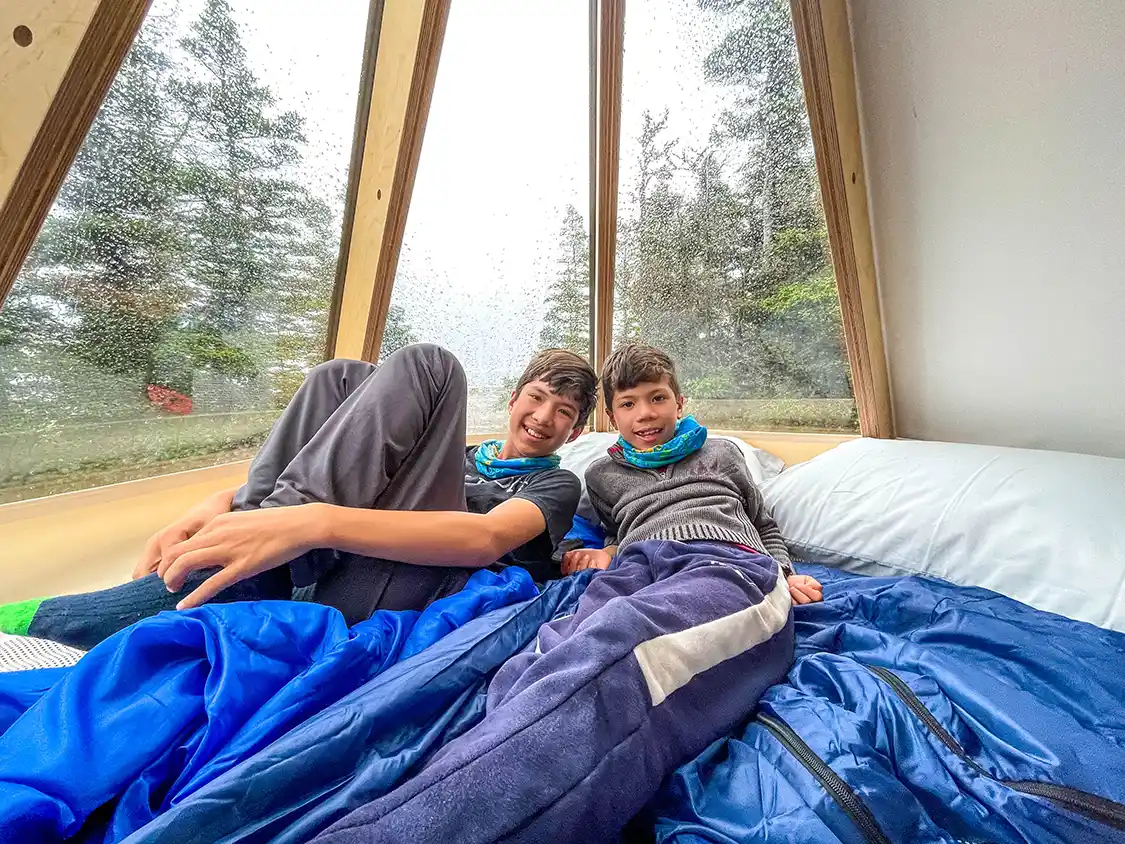
One of the park’s rare joys is that you can actually spend the night out among the monoliths and whales. Parks Canada offers a few options, all reservable through the Parks Canada reservation service (and all snapped up early):
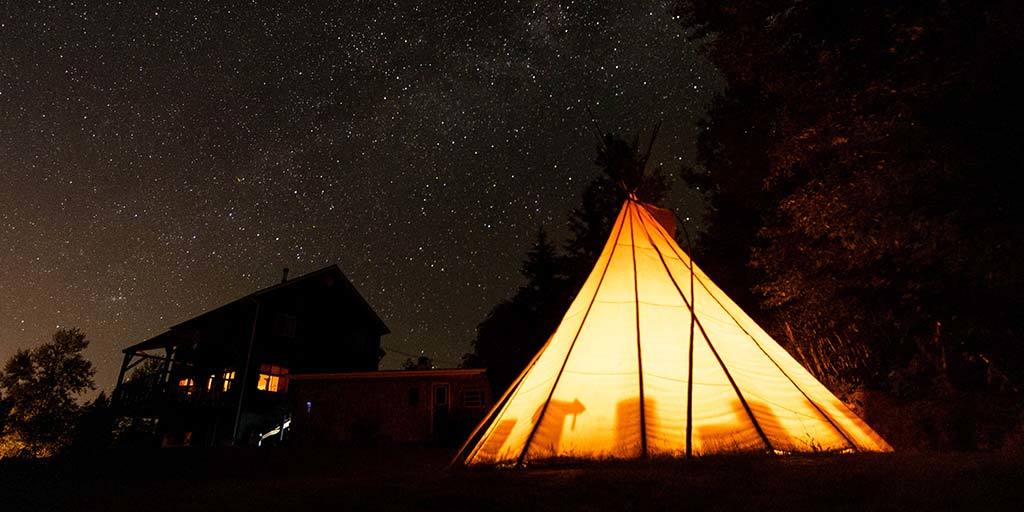
- oTENTik: Soft-sided A-frame glamping units that blend a tent and a cabin, sleeping up to six. The comfortable, low-effort way to camp on the islands.
- OASIS: Small, clever stilt-mounted units on Grande Île with a table that converts to a bed and a hammock sleeping nook above for kids. This is where we stayed, and it’s magic.
- Wild camping: For the self-sufficient, designated primitive sites on several islands deliver epic night skies and the sound of whales offshore, with none of the crowds.
- Lighthouse stay: On Île aux Perroquets, the restored keeper’s houses offer a bookable overnight beside the puffin colony.
If you’d rather sleep on the mainland, my Havre-Saint-Pierre guide covers the town’s hotels, gîtes, and the shoreside RV rentals at Camping de Mingan in Longue-Pointe-de-Mingan.
Park Fees, Season, And How To Plan Your Visit
- Season: The park is open June to September. Outside that window, boat service stops and the islands close to visitors.
- Entry fees (2026 planning figures): Daily admission runs about $7.25 per adult and $6.25 per senior, and youth 17 and under enter free. A family or group of up to seven pays roughly $15.00 per day. If you’re touring multiple national parks, the Parks Canada Discovery Pass (around $83.50 adult / $167.50 family) can pay for itself. Note that admission is separate from boat-tour fares and camping fees, and that “youth free” applies to entry, not to guided tours or camping. Fees change periodically, so confirm current rates when you book.
- Reception and Interpretation Center: Start at 1010 promenade des Anciens in Havre-Saint-Pierre to register, get oriented, and check conditions. Marine transport departs from Havre-Saint-Pierre (eastern islands) or Longue-Pointe-de-Mingan (western islands).
- How many days: Give it three to five. A rough plan: two days on the eastern islands out of Havre-Saint-Pierre (Quarry plus Niapiskau or Fantôme), one to two days on the western side out of Longue-Pointe-de-Mingan (Île Nue and the Île aux Perroquets puffins), and at least one night camping on the islands if you possibly can.
How To Get To The Mingan Archipelago
Mingan Archipelago National Park Reserve sits off Havre-Saint-Pierre on Quebec’s Côte-Nord, roughly an 870-kilometer, or ten-hour, drive from Quebec City along Route 138, the famous Whale Route that takes you through Tadoussac and past the Saguenay Fjord.
You can also reach the region on the seasonal Bella Desgagnés coastal ferry or by flying into Havre-Saint-Pierre Airport (YGV). Once you’re in town, the island boats leave from Havre-Saint-Pierre and from Longue-Pointe-de-Mingan, about 45 minutes to the west. My Havre-Saint-Pierre guide has the full getting-there breakdown, including the long, radio-free stretch you’ll want to prepare for.
What To Pack For The Mingan Archipelago
The waters of the Gulf of St. Lawrence are cold. The coastal temperatures and the weather can turn on a dime, even in July. Pack as if you’re spending a day on a mountain rather than a beach vacation.
- Layers: A moisture-wicking base, a warm fleece or light puffy, and a waterproof, windproof shell. Bring these even in midsummer (rain jackets for women and for men).
- Sturdy footwear: Trails can be wet, rooty, and uneven. Pack a good pair of hiking boots with warm socks beat sneakers.
- Hat and gloves: Yes, in summer. Boat spray plus wind is genuinely cold.
- Binoculars and a zoom lens for spotting puffins and whales.
- Sun and bug protection: Sunscreen and insect repellent; the bogs breed mosquitoes and blackflies.
- Water and snacks: Island facilities are minimal. Pack in and out what you’ll need for the day.
Frequently Asked Questions About The Mingan Archipelago
It protects the largest concentration of erosion monoliths in Canada, alongside Atlantic puffins, whales, seals, rare plants, and quiet boreal hiking, all across more than 40 islands in the Gulf of St. Lawrence.
By boat only, with a Parks Canada-recognized operator, departing from Havre-Saint-Pierre for the eastern islands or Longue-Pointe-de-Mingan for the western islands and the puffins. There is no bridge or public shuttle you can drive to.
June to September, with July and August the peak for boat tours, puffins, and whales. Puffins are present roughly from early June to mid-September.
On Île aux Perroquets, reached by boat from Longue-Pointe-de-Mingan, where over 1,200 pairs of Atlantic puffins nest each summer beneath a cliff-top lighthouse.
Three to five days let you explore both the eastern and western islands and ideally camp a night on the islands. A single day only scratches the surface.
es. Parks Canada offers oTENTik glamping, stilt-mounted OASIS units on Grande Île, primitive wild-camping sites, and a lighthouse stay on Île aux Perroquets, all reservable and all very popular.
Absolutely. Between puffins, whales, seals, monoliths to clamber near, boat rides, and glamping on the islands, it’s a superb, if remote, family adventure.
Is The Mingan Archipelago Worth The Trip?
Without question. Reaching it takes real commitment, but the payoff is a national park that feels like a secret: monoliths you’ll have nearly to yourself, puffins close enough to count the fish in their beaks, whales for a bedtime soundtrack, and the kind of quiet that’s getting harder to find. Of everything we did on a three-week Maritimes road trip, the nights we spent out among these islands are the ones our whole family still talks about.
For everything you need in town that anchors a visit, read our complete guide to Havre-Saint-Pierre, and for more of our Quebec adventures, see our Quebec travel guide and our Tadoussac whale-watching guide.
You May Also Like To Read:
Disclosure: Wandering Wagars is a participant in the Amazon Services LLC Associates Program, an affiliate advertising program designed to provide a means for sites to earn advertising fees by advertising and linking to amazon.com, amazon.co.uk, and amazon.ca. Some links in this article are affiliate links, and we may earn a small commission at no extra cost to you.