
Traveling abroad with kids? Learn how to stay connected, avoid roaming charges, and choose the right eSIM for seamless arrival anywhere.

When you travel with kids,the priority behind staying connected isn’t posting stories or answering emails. It’s about removing uncertainty and erasing friction.
The relief of being connected the moment those airplane wheels hit the ground provides comfort and assurance. Knowing your ride is waiting. Finding dinner nearby before hunger mutates into mutiny. Pulling up a map when the hiking trail forks and the sun starts to dip below the horizon.
With more than 40 countries of family travel in our passports, Christina and I have learned this: the smoother your connectivity, the more adventurous your trip can be. And nothing has reduced friction for us more than having easy access to quality SIMs and eSIMs.
Do You Really Need an eSIM for Travel?
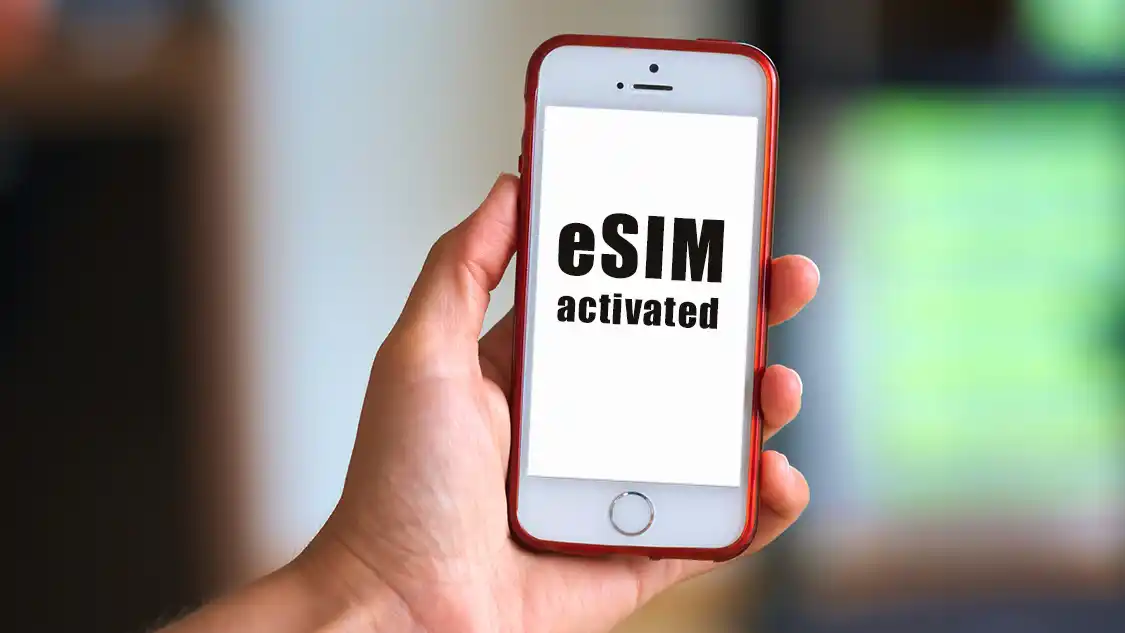
If you’re traveling internationally as a family, especially across borders and between continents, the honest answer is yes, you need an eSIM while traveling internationally.
An eSIM gives you access to working data the moment you land, without having to navigate airport counters or SIM tools. That matters when you’re tired, your kids are overstimulated, and you just want to get to the hotel or drop off your bags. And it usually does this at a fraction of the cost of roaming using your local, home cellular service.
Sure, there are other options, such as physical SIMs, using available WiFi, and purchasing hotspots. But each one of those options adds a level of complexity to the travel equation. And when you’re on the go, especially as a family, complexity equals risk.
What Is an eSIM (and Why Families Love Them)?

In order to connect to cellular networks, phones require a Subscriber Identity Module, or SIM. Until about 2016, these were solely available as a physical chip (or SIM) that was installed in a cell phone or inserted into a slot within the phone.
An eSIM is a digital SIM card installed via software into your cellular phone or tablet. You install a data plan via an app or a service, activate it, and you’re online. By doing this prior to your trip abroad, you can have access to data and, in some cases, voice services the moment you arrive in a new country. No plastic cards, no losing your home SIM, no standing in line while your carry-on spills Lego pieces across the floor.
eSIM vs Physical SIM vs Roaming: A Clear Comparison
There are three main ways to get cellular data and voice abroad. eSIM, Physical SIMs, and roaming using your home cellular service’s network of partners. There are advantages and disadvantages to each of these services. Choosing the one that works best for you can make easing into travel much smoother.
Connectivity Options Compared
| Feature | eSIM | Physical SIM | Roaming (Home Plan) |
|---|---|---|---|
| Works immediately on arrival | ✅ Yes | ❌ No | ✅ Yes |
| Setup time | 2–5 minutes | 20–60 minutes | None |
| Keep home number active | ❌ No | ❌ No | ✅ Yes |
| Country-hopping friendly | ✅ Yes | ❌ Usually no | ⚠️ Expensive |
| Risk of surprise charges | ❌ Low | ❌ Low | ⚠️ High |
| Family-friendly | ✅ Very | ⚠️ Mixed | ❌ No |
Bottom line:
- Roaming is convenient but can be exorbitantly expensive.
- Physical SIMs can be cheaper, but cost you time and flexibility.
- eSIMs strike the best balance for traveling families.
Why I Use Airalo (And Keep Using It)

I’ve tested multiple eSIM providers. I keep coming back to Airalo for one reason: It works quietly and consistently.
Across Europe, South America, Africa, and Asia, Airalo has done exactly what I needed it to do: Connect fast, stay stable, and not demand attention.
Check out their plans here:
What Makes Airalo Work for Families
| Feature | Why It Matters |
|---|---|
| Country, regional & global plans | Choose only what you need (and pay less) |
| Regional eSIMs | Seamless border crossings |
| App-based setup | No tech stress at arrival |
| Competitive pricing | Often cheaper than roaming in 1–2 days |
| Reliable coverage | No “dead on arrival” surprises |
I especially recommend regional eSIMs for families visiting multiple countries. Install once. Travel freely. I’ve used this on several multi-country trips, including this past summer during a trip to Egypt, Morocco, Tanzania, Mozambique, Zambia, and Zimbabwe.
One regional eSIM, no hassle.
➡️ Check current Airalo eSIM plans for your destination
Where eSIMs Make the Biggest Difference

While this guide is country-agnostic, some regions make the eSIM choice even clearer:
Canada (and the U.S.A.)
North American roaming charges are infamously high. One day of roaming can cost more than a week of an eSIM. You can check the current rates for Airalo North America eSIMs here.
Europe
Physical SIMs are easy to use, but eSIMs win if you’re visiting more than one country. You can check the rates for Airalo Europe eSIMs here.
Asia & Southeast Asia
Connectivity is excellent. eSIMs save time and eliminate language barriers at kiosks. You can check the rates of the Airalo Asia eSIMs here.
Africa & South America
Coverage varies. An eSIM gives you dependable data in cities while letting you naturally disconnect in remote areas. You can check out the Airalo Africa eSIMs here and the Airalo South America eSIMs here.
How Much Data Do Families Actually Need?
Most families greatly overestimate or underestimate the amount of eSIM data they need. Here’s a practical guide to help you choose the right plan:
| Trip Style | Recommended Data |
|---|---|
| City trip (maps, messages, bookings) | 3–5 GB |
| Road trip or multi-country travel | 5–10 GB |
| Longer adventure (2–4 weeks) | 10–20 GB |
You can always top up, but starting with enough data avoids friction mid-trip. It also helps to avoid sometimes higher top-up fees.
How We Use Data (Without Letting Phones Take Over)

Everyone in my family has a device. They can be sanity savers on long international flights and on those countless delays that just kind of happen when you’re country-hopping. Once we’re on the ground, though, our phone rules are simple:
- When we’re on the go, data is for logistics, learning, and safety
- Games and YouTube are for break times
- We download maps to access them offline. This keeps things safe if we lose service.
- Our kids’ screen time stays limited. We experience every place as we may never have the chance to visit again
This way, connection enables adventure; it doesn’t replace it.
Common eSIM Questions (Answered Quickly)
Do eSIMs work on most phones?
Most modern iPhones and many Android devices support eSIMs. But you should always check compatibility before buying. Airalo actually has a check box to ensure you double-check.
Can I install it before I leave?
Yes, and you should. Activation happens on arrival.
What if I run out of data?
Top-ups take seconds in the app. Just make sure to do it before you run out of data, not after.
Final Takeaway: eSIM Connectivity Buys You Freedom
An eSIM won’t make your trip memorable; your experiences will. But it removes the friction that keeps families from saying yes to the detour, the hike, and the unexpected adventures. For my family, using an eSIM has meant fewer logistical headaches and more space for curiosity, patience, and adventure.
And that’s a trade I’ll make every time.
You May Also Like To Read: