
The complete family packing list for Ecuador, covering men, women, teens, and kids across three wildly different environments: the high-altitude Andes, the Amazon rainforest, and the Galapagos Islands.
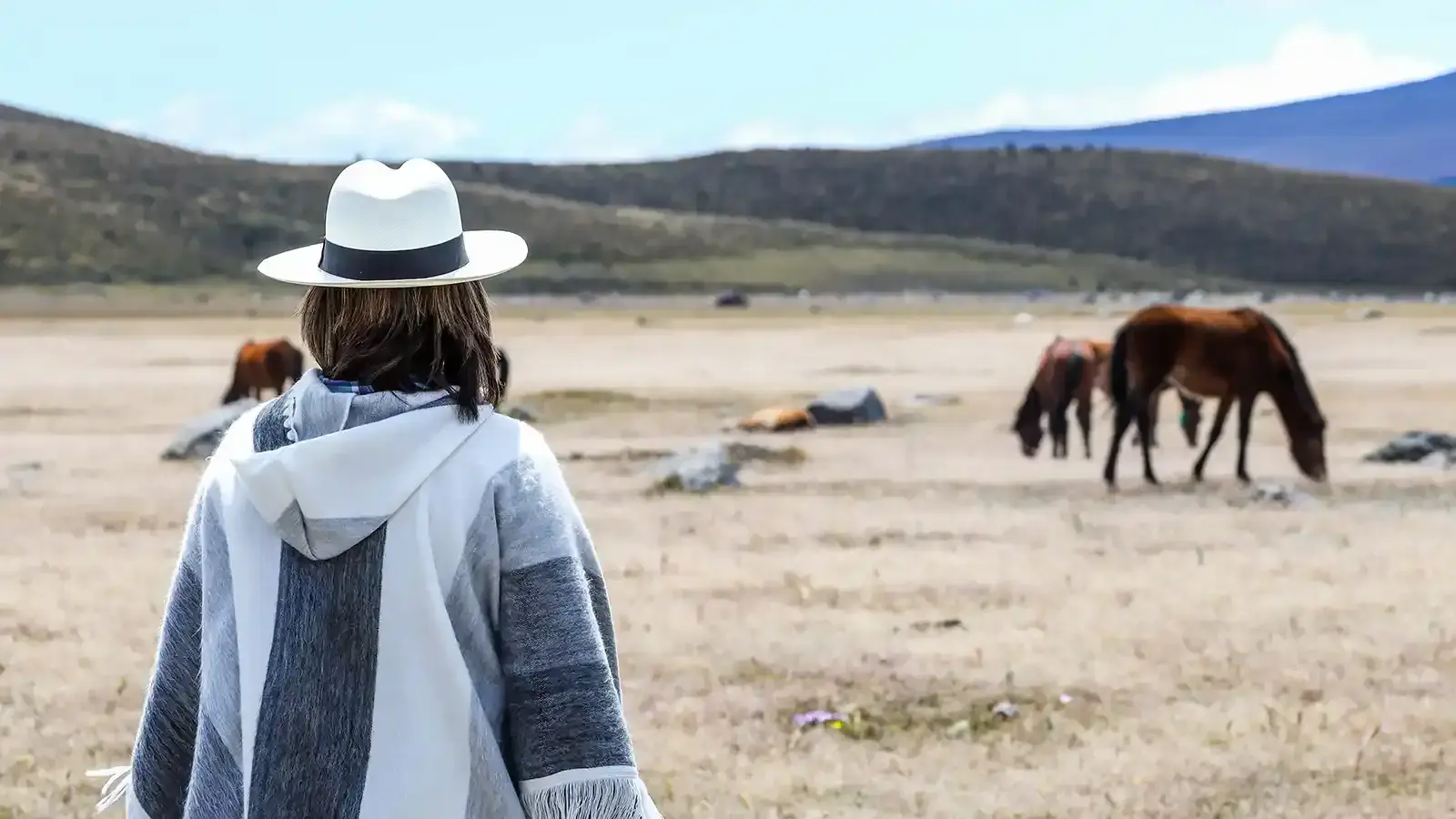
Here is the thing about packing for family travel in Ecuador that nobody warns you about before you go. It is not one trip. It is three.
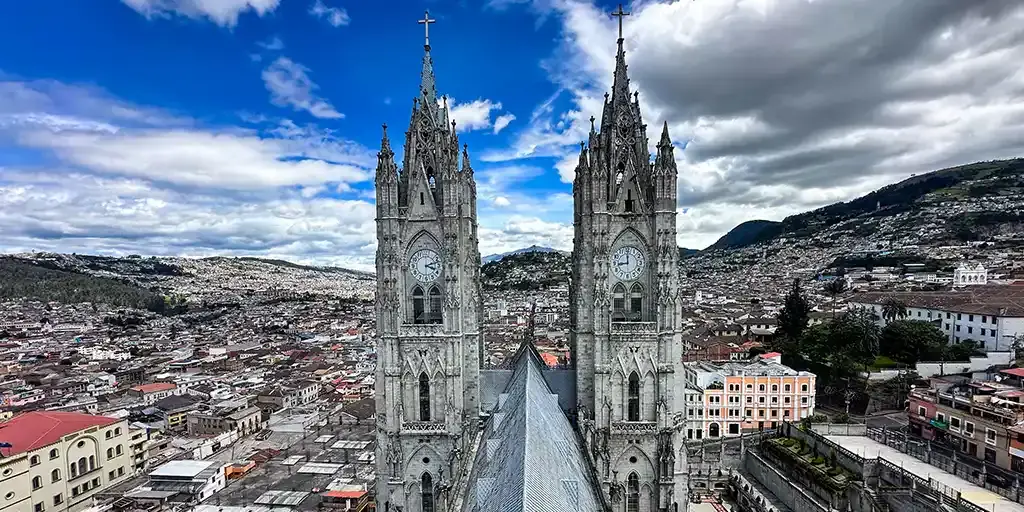
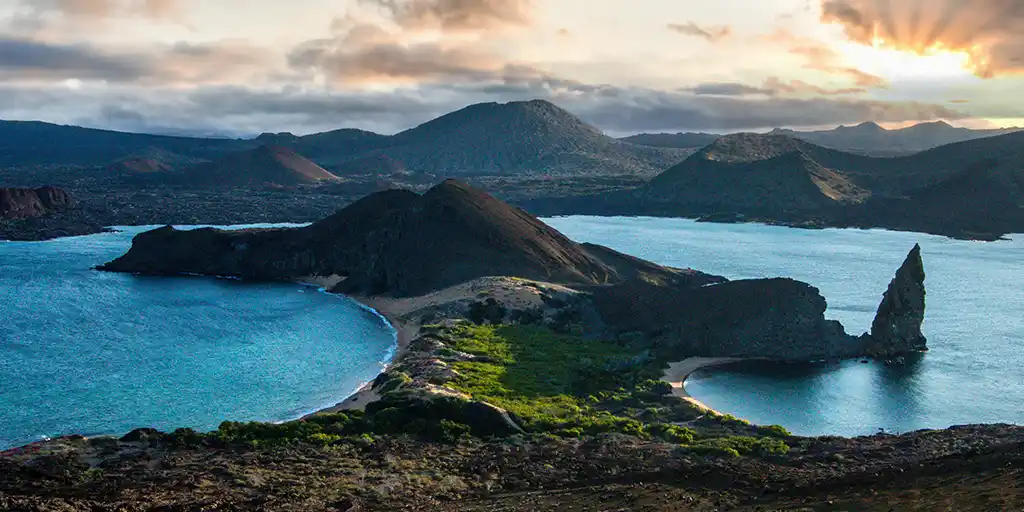
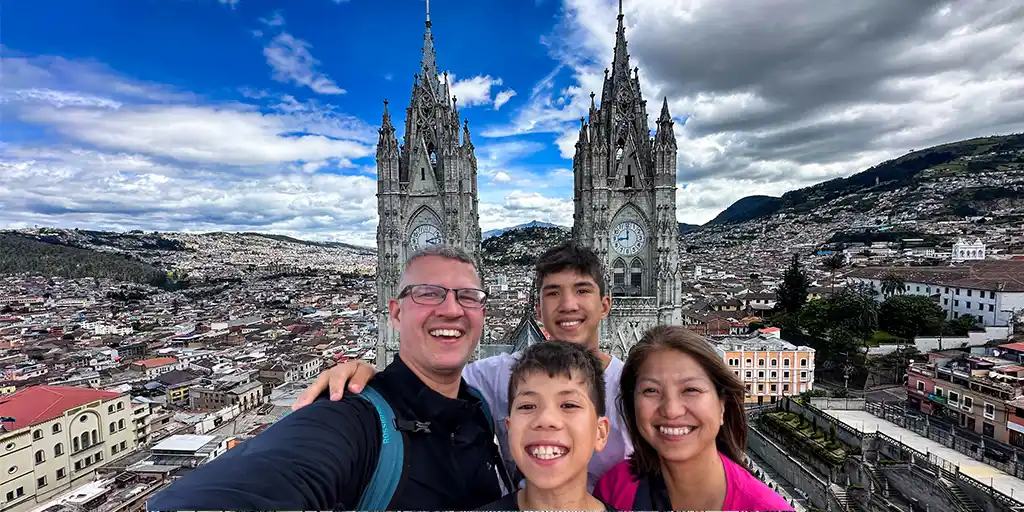
In the span of two weeks, you can stand at 9,350 feet above sea level in Quito, sucking in air as you climb the steps of a colonial cathedral and wondering whether that light-headedness is the altitude or the fact that you skipped breakfast. Then drop into the Amazon Basin, where the air is so thick with humidity that your linen shirt becomes essentially a wet towel within twenty minutes of stepping off the river boat. Then board a small plane and land on the volcanic shores of one of the Galapagos Islands in the middle of the Pacific, where sea lions lounge on the beach like they own the place.
Because frankly, they do.
Three ecosystems. Three completely different packing requirements. One family suitcase.
Ecuador is one of the most geographically extreme countries on earth. In a nation roughly the size of Colorado, you get the Andes, the Amazon, the Pacific Coast, and the Galapagos, all within a few hours of each other. That is an extraordinary gift for traveling families. It is also a logistical puzzle when it comes to packing.
After traveling through Ecuador as a family, from the cobblestone streets of Quito’s historic center and the Indigenous markets of Otavalo, to the lodges of the Amazon Basin and the wildlife-crammed shores of the Galapagos, I can tell you exactly what you need, what to leave behind, and what Ecuador will quietly demand from your suitcase that you never saw coming.
This is that guide.
What You’ll Find in This Packing Guide for Ecuador
This is not a generic packing list. Ecuador throws a specific set of curveballs at traveling families that most guides either ignore or underestimate:
- Extreme altitude variation. Quito sits at 9,350 feet above sea level. Day hikes in the high Andes can push well past 10,000 feet. The Amazon and Galapagos sit at sea level. Your body and your wardrobe need to handle the full range.
- Amazon-specific gear rules. The jungle has its own terms: long sleeves after dark, natural colors to avoid attracting insects, rubber boots (usually provided by your lodge) for trail walks, and moisture-wicking socks you absolutely need to bring yourself.
- Galapagos biosecurity requirements. The islands enforce some of the strictest entry rules of any destination on earth. Know what you cannot bring before you pack, not when you are standing at the airport inspection counter with a bag full of granola bars.
- Domestic flight luggage limits. Flights from Quito or Guayaquil to the Galapagos and Amazon gateway cities often cap checked bags at 15kg (33 lbs). This is not a soft suggestion. Pack accordingly.
- Family logistics. What works for adults is often completely wrong for kids, and this guide accounts for both.
This Ecuador packing guide is organized by region first, then by category within each region, with specific callouts for men, women, teens, and kids throughout.
One Bag or One Bag Each? How to Pack for Ecuador
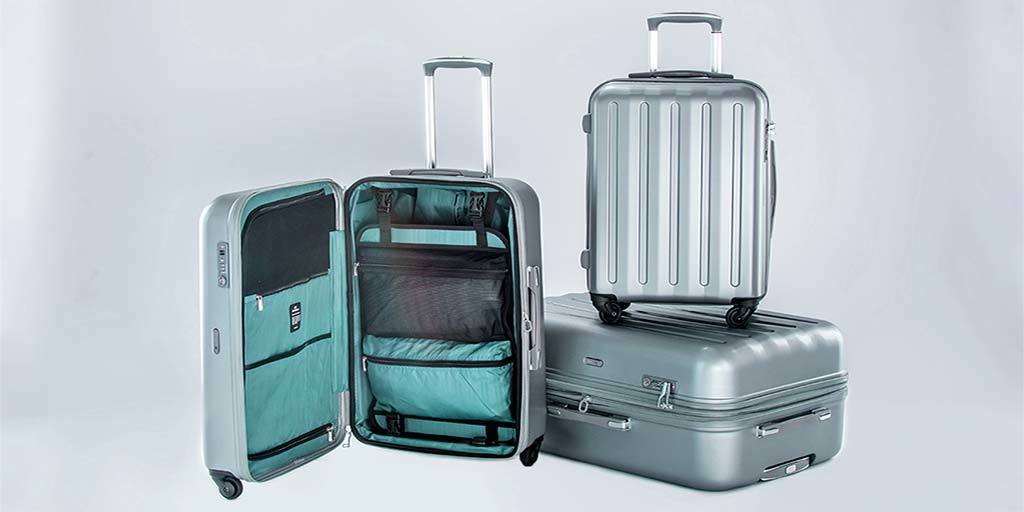
How you pack for Ecuador depends a lot on how comfortable you are with travel. My family travels with carry-on bags almost everywhere with our trusty Patagonia Black Hole bags. For most Ecuador itineraries, though, we recommend one mid-size rolling suitcase or soft-sided bag per adult. Aim at staying under 15kg for domestic flights, a smaller bag or backpack for teens, and a daypack per person for daily excursions. Wheels do not work on jungle trails. If your Amazon leg is significant, consider a soft duffel instead of a hard-sided roller.
Before You Pack: Understanding Ecuador’s Geography and Climate
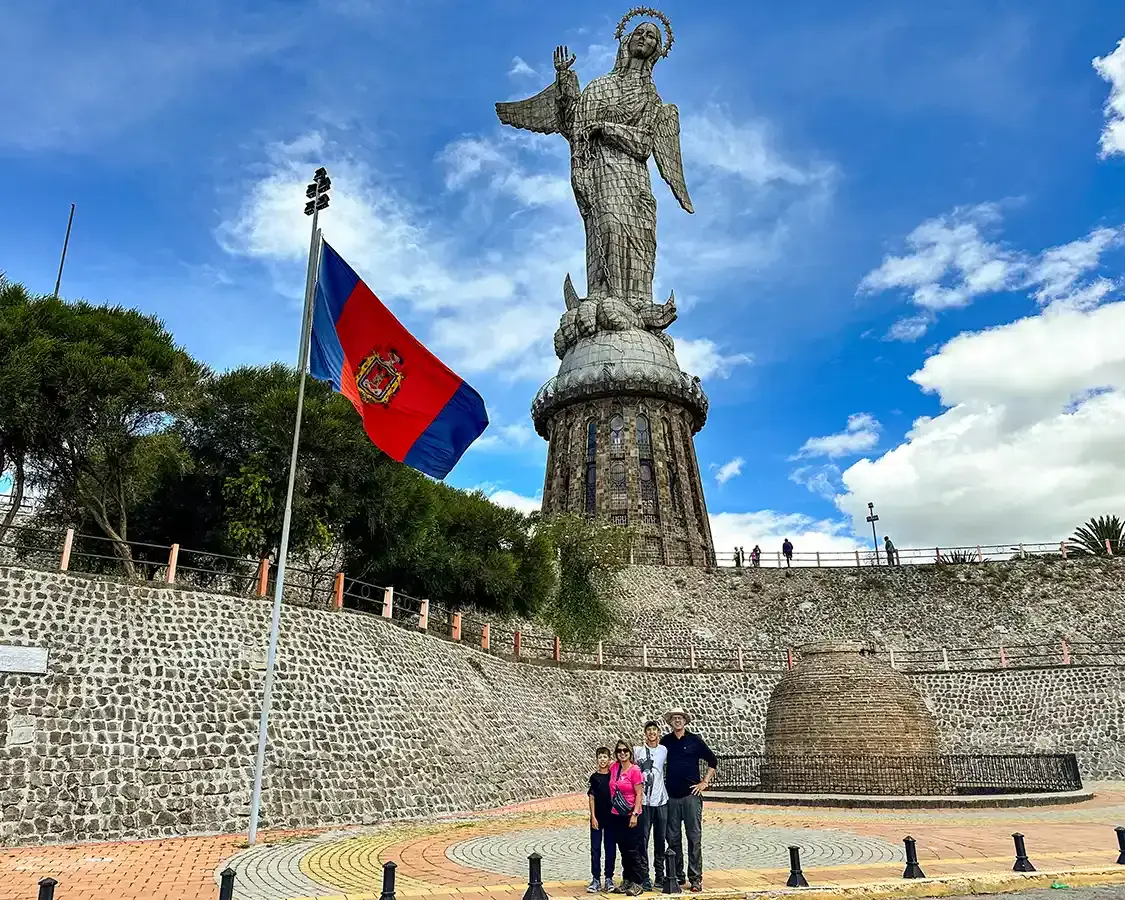
Ecuador sits directly on the equator, hence the name, but equatorial does not mean uniformly hot and sunny. The country’s dramatic topography creates four distinct climate zones, three of which are relevant to most family itineraries.
The Andes and the Mainland Highlands
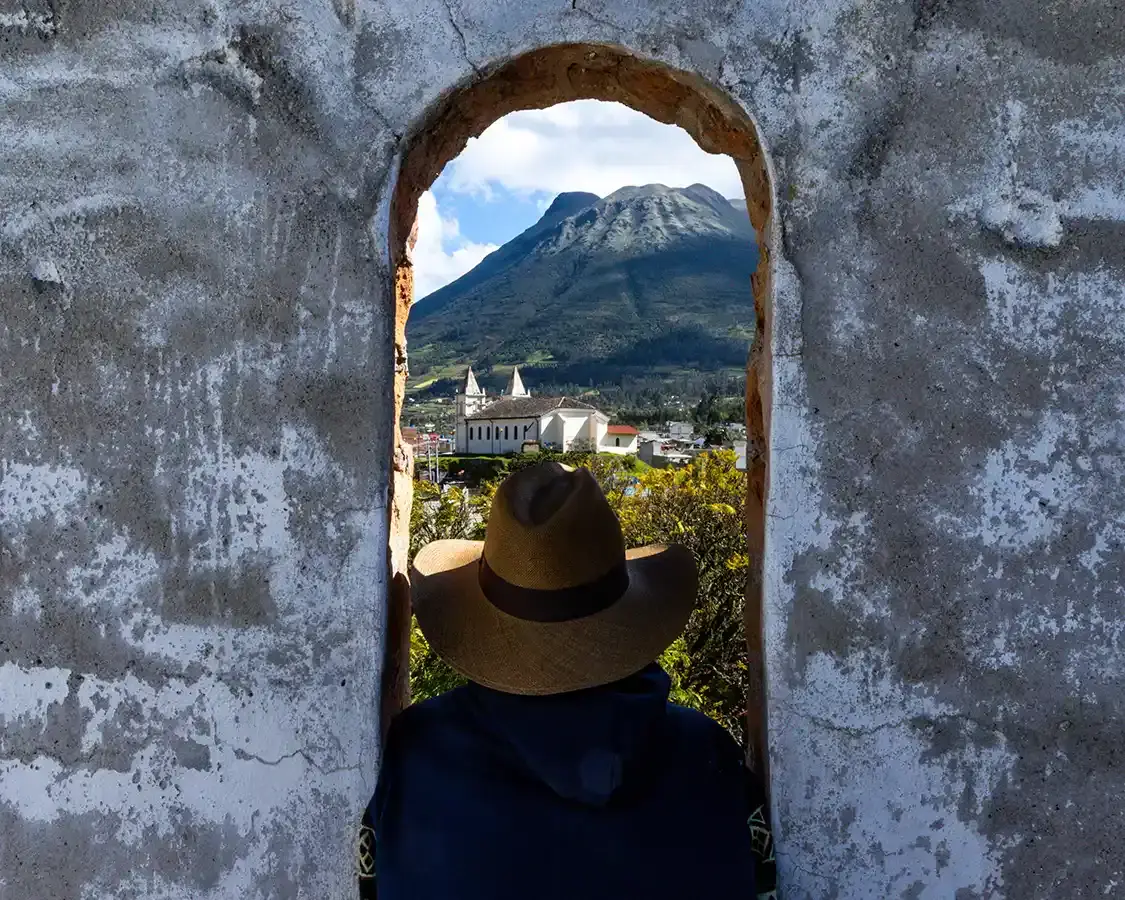
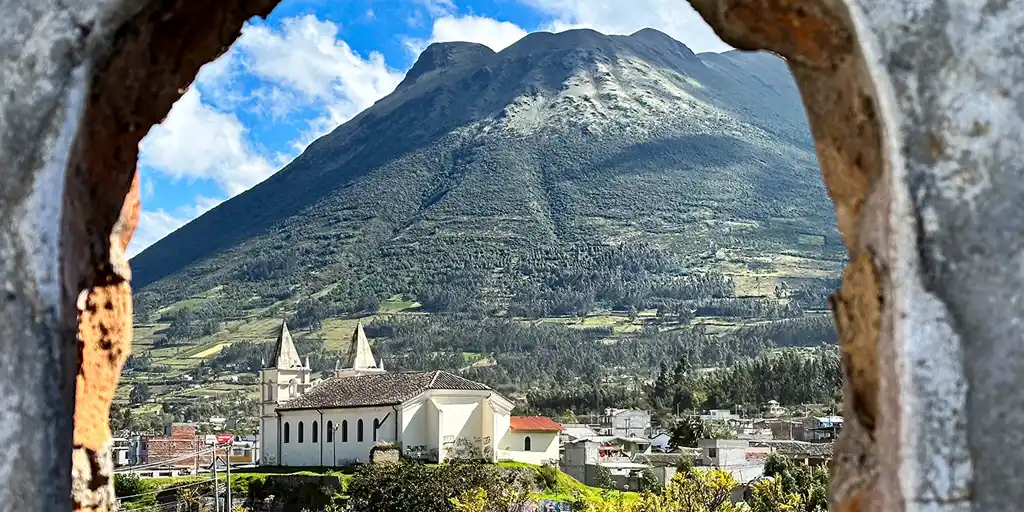
Quito, Otavalo, Cuenca, Cotopaxi. Quito sits at 9,350 feet, making it the second-highest capital city in the world. Daytime temperatures hover around 60 to 70 degrees Fahrenheit (15-21 degrees Celsius) year-round, spring-like and mild, and deceptively comfortable. Mornings and evenings drop into the low 50s (10 degrees Celsius). The higher you push into the Andes, the colder it gets, fast.
Rain in the highlands comes in two seasons: a wetter stretch from October through May, and a drier window from June through September. Even in the dry season, expect afternoon clouds and short, sharp downpours. Layers and a rain shell are important regardless of when you visit.
Altitude sickness, known locally as soroche, is a real consideration for families. Quito’s elevation is enough to cause headaches, fatigue, and shortness of breath in many adults, and children are no more immune than their parents. In fact, young children often have a hard time conveying the effects of altitude sickness, so pay close attention.
Take the first day easy, drink far more water than you think you need, skip the welcome beer, and talk to your doctor before traveling about acetazolamide if you plan to push to higher elevations.
The Amazon Basin
Napo, Cuyabeno, Yasuni. Drop from the Andes into the Amazon, and the world transforms completely. Temperatures sit at a sticky 75 to 90 degrees Fahrenheit (24 to 32 degrees Celsius) year-round, with humidity that makes every degree feel like more. Rain arrives almost daily in brief, violent downpours that soak everything within minutes, then pass. Most Amazon lodges are accessed by motorized canoe after a short domestic flight to gateway cities like Coca or Lago Agrio.
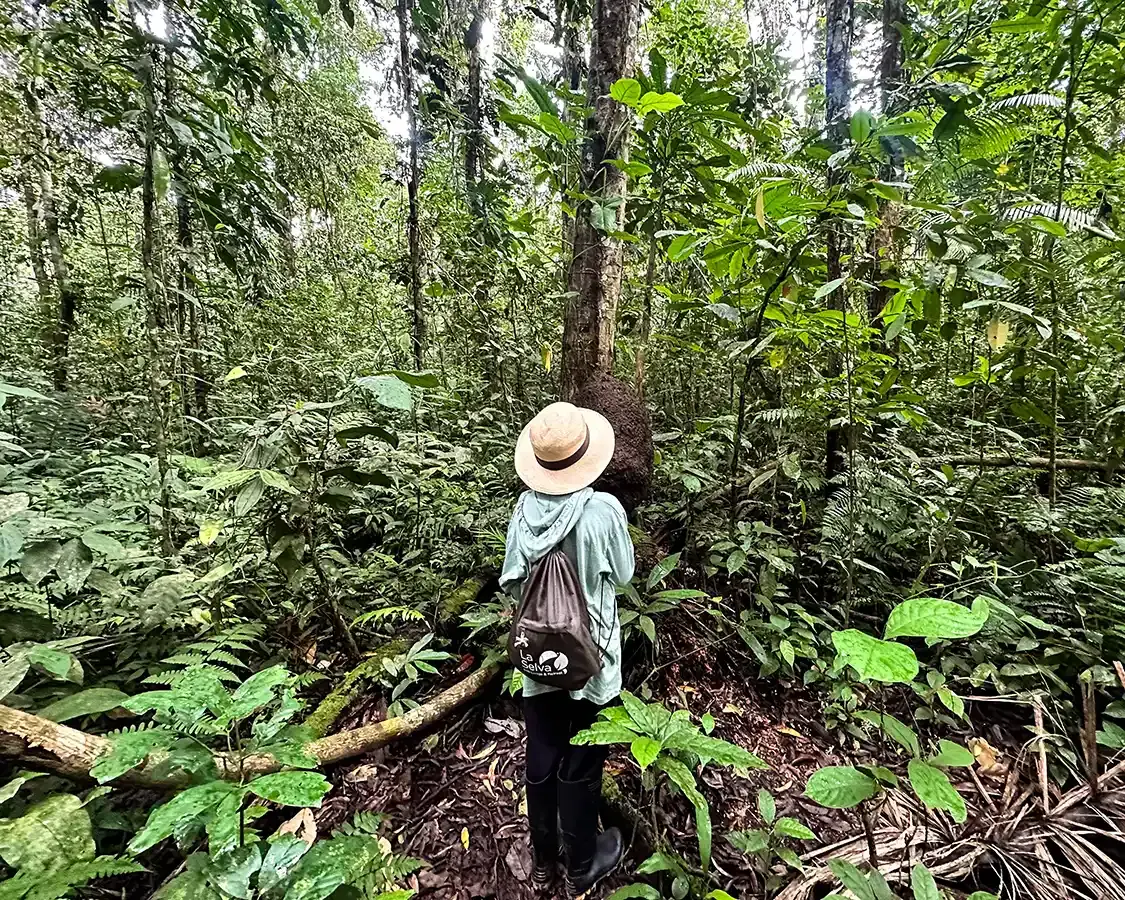
The Amazon has firm packing rules: long sleeves and pants after dark for insect protection, light or natural colors because dark fabrics attract mosquitoes, quick-dry fabrics for everything, and a genuine commitment to insect repellent. Most lodges provide rubber boots for jungle trail walks. You need good moisture-wicking socks to wear inside them.
The Galapagos Islands
The Galapagos Islands sit roughly 600 miles off Ecuador’s coast, straddling the equator, and the climate is shaped more by ocean currents than latitude. Two seasons: a warm, sunny stretch from December through May with air temperatures around 80 to 85 degrees Fahrenheit (26 to 29 degrees Celsius) and calm seas, and a cooler, drier Garua season from June through November with temperatures around 70 to 75 degrees (15 to 20 degrees Celsius), rougher seas, and misty mornings.
The Galapagos is the most activity-heavy of Ecuador’s three zones. Every day involves hiking over lava fields, snorkeling in cold Pacific water, boarding and exiting Zodiac dinghies via wet landings where you walk through shallow water to reach shore, and hours of direct sun exposure on open decks. Your footwear and sun protection choices here matter more than anywhere else on this trip.
One critical point for families: the Galapagos enforces some of the strictest biosecurity rules of any destination on earth. We have a dedicated section on what you can and cannot bring.
Read it before you pack.
Domestic Flight Luggage Limits in Ecuador
Flights from Quito or Guayaquil to the Galapagos and Amazon gateway cities typically cap checked bags at 15 to 20kg and carry-ons at 8 to 10kg, depending on the carrier. LATAM and Avianca are the main domestic operators. Check your specific booking. Overage fees on these routes are typically on the high side.
How This Guide Works
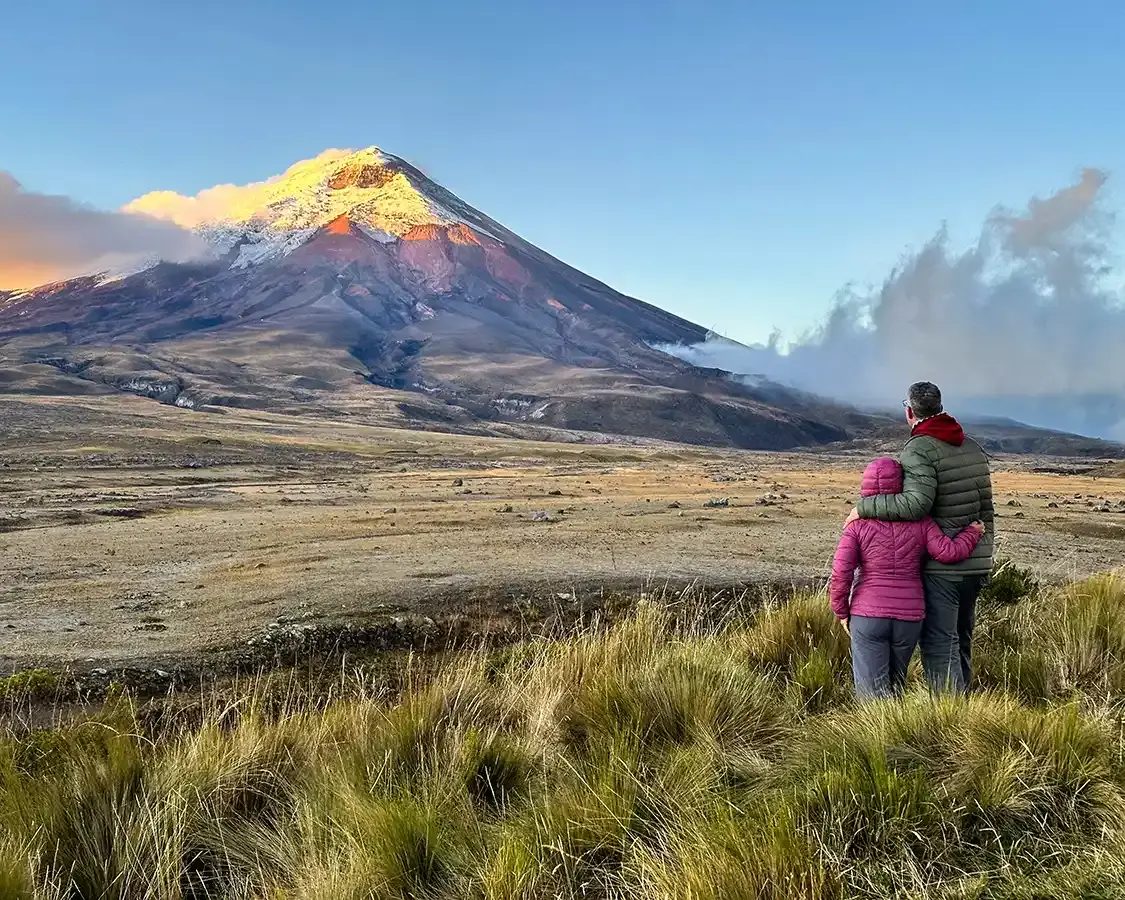
Most Ecuador itineraries cover two or three of the country’s distinct regions: the Andes and mainland highlands, the Amazon Basin, and the Galapagos Islands. Each of these regions has its own climate, terrain, and packing requirements. So this guide is structured in two parts.
Part one is the general Ecuador packing list: the clothing, footwear, gear, toiletries, and documents that go on every leg of the trip, regardless of where you are headed.
Part two is the regional kits: short, focused top-up lists for each Ecuadorian region covering only the items that are specific to that environment. Pack the general list first, then layer in whichever regional kits apply to your itinerary.
If you are only visiting one region, skip the other regional kits entirely. If you are doing all three, you know exactly what to add for each leg without hunting through repeated product recommendations.
The General Ecuador Packing List for Families
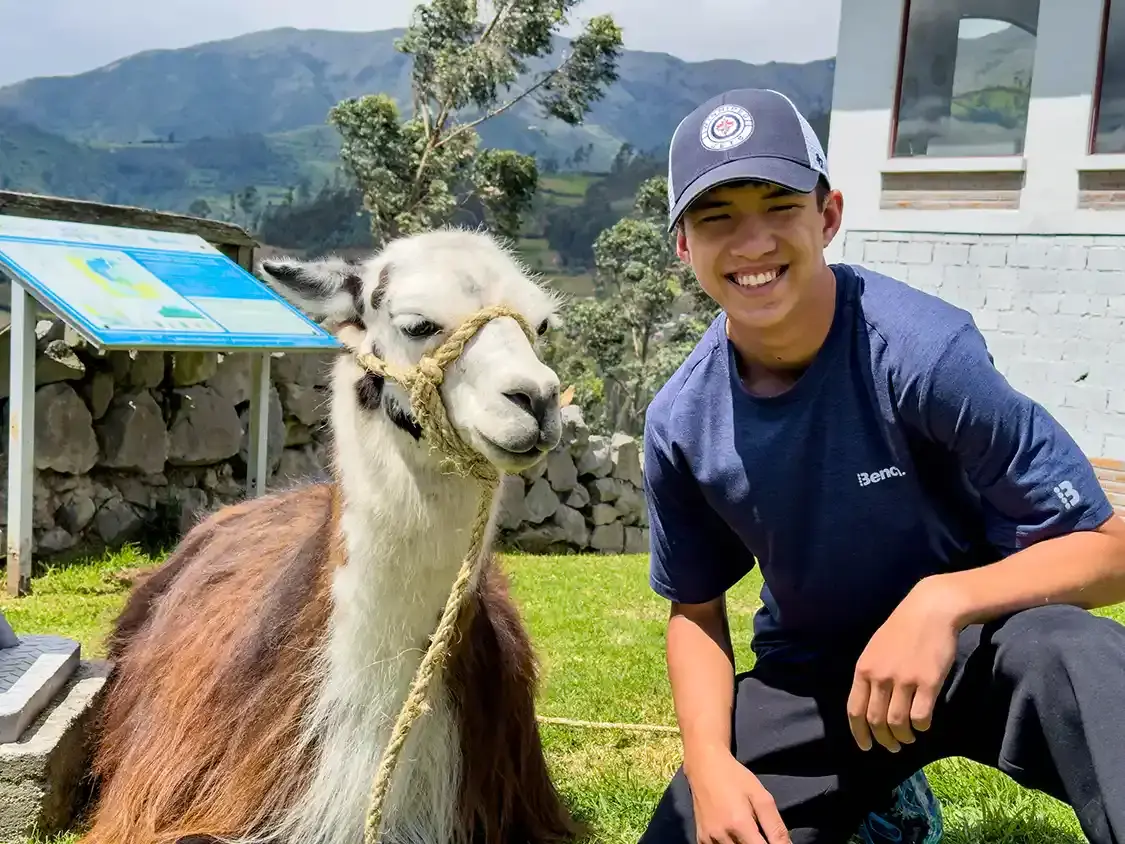
Ecuador is not stuck on fashion. Sure, people in big cities like Quito love to look great, flashing bright fabrics and patterns that harken back to Indigenous traditions. But compared to a lot of countries, Ecuador lives comfortably casual. Rather than style, it asks something different of your suitcase. You need layers that work across extreme altitude swings, serious insect protection for the jungle, and enough discipline to meet Galapagos biosecurity rules without getting your granola bars confiscated at the airport.
Linen shirts, the light pants, Teva sandals, good hikers, or trail runners. These are legitimately versatile travel items, and they earn their place in an Ecuador packing list. These are the items that belong in every Ecuador suitcase, regardless of your itinerary. Pack this list first, then add from the regional kits that follow.
Quick-Dry Is Not Optional in Ecuador
The Amazon is permanently humid. The Galapagos involves wet landings, snorkeling, and afternoon rain on open decks. Quito showers arrive with zero warning. Anything that cannot dry overnight becomes a mildewed problem by day three. Linen and cotton are fine for Quito.
For the Amazon and Galapagos legs, go full quick-dry: travel nylon, merino wool, moisture-wicking synthetics, technical fabrics. Leave the regular cotton t-shirts at the hotel for those legs of the trip.
Clothing Men and Teens Should Pack for Travel in Ecuador
- 3–4 lightweight short-sleeve shirts (linen or moisture-wicking): Columbia Utilizer Short Sleeve Shirt can dry overnight, packs small, and doesn’t wrinkle.
- 1–2 lightweight long-sleeve shirts: These ones from PJ Paul Jones are excellent and at a great price.
- 3 pairs of lightweight travel pants: No jeans. Sailwind Men’s Linen Pants are a great choice. Jeans are heavy, slow to dry in mountain air, and genuinely miserable when damp at altitude. For more intensive experiences, consider a more multi-purpose pant like this.
- 1 fleece or insulating midlayer: The Columbia Steen Fleece is a great mid-layer that stays dry and keeps the cold and wind out.
- 1 waterproof rain shell: Because you will get rained on: Columbia Men’s Watertight II Jacket. You can check out my guide to the best travel jackets this year for more inspiration.
- Underwear ×7: I like lightweight, quick-dry underwear that I can wash on the go to pack lighter.
- Socks x7: Think lightweight, merino wool or wool-blend socks that resist odors and wick moisture away from your body.
Clothing Women and Teens Should Pack for Travel in Ecuador
- 3–4 lightweight linen or cotton tops
- 3 pairs of lightweight travel trousers or linen pants: Rekucci Women’s Wide-Leg Linen Pants. For more intensive hiking or exploring, consider something like this.
- 1 to 2 midi or maxi dresses: Beautiful for Quito’s historic center and Otavalo market days. Layer with a cardigan for cooler hours: Maxi Dress
- 1 warm cardigan or knit sweater: Make sure it’s one that will keep the cold evening air at bay, like this Women’s Heavyweight Cardigan
- 1 waterproof rain shell: This will double as an outer layer on cold nights and mornings. Christina recommends this style.
- Underwear ×7: Choose lightweight, quick-dry underwear that I can wash on the go to pack lighter.
- Socks x7: Think lightweight, merino wool or wool-blend socks that resist odors and wick moisture away from your body
Clothing Kids Should Pack for Travel in Ecuador
- 4–5 lightweight t-shirts: Columbia Kids’ Tamiami Short Sleeve Shirt (UPF 40+) and a few t-shirts as well. Mid-tones rather than white. Ecuador’s markets are dusty, and Quito’s streets find every pale fabric you own.
- 2 to 3 pairs of lightweight pants or joggers: The Andes runs cooler than kids expect, and the shock of a temperature drop hits fast. These pants are tough, lightweight, and versatile.
- 1 insulating midlayer (fleece or puffer): Columbia Steen Fleece is my choice.
- 1 waterproof rain shell: Marmot Precipic Jacket is what we use right now.
- Underwear ×7–8: Add one. Just add one extra, just in case. Quick dry is always best.
- Socks x7-8: You’ll also want an extra couple of these. Merino blend is ideal.
Footwear for Ecuador Travel
Men, Women, and Teens
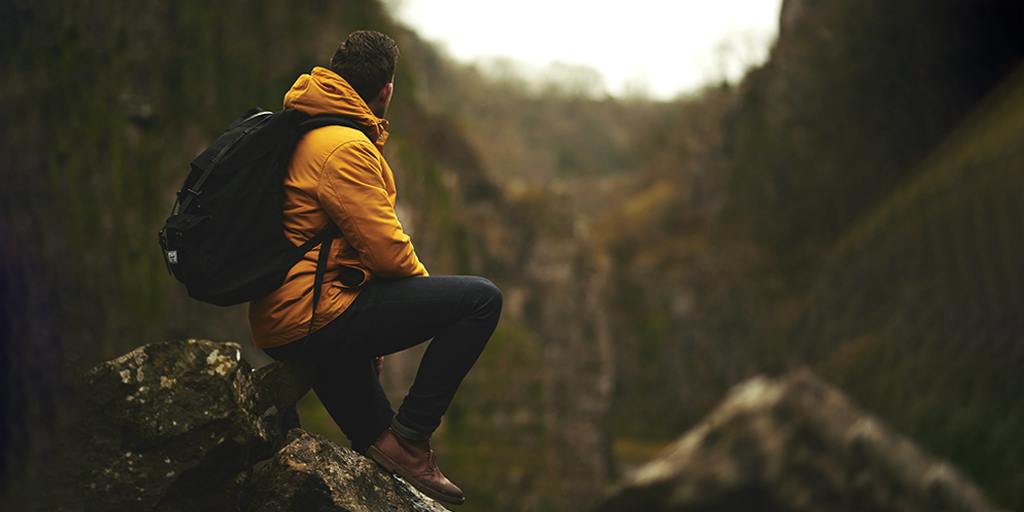
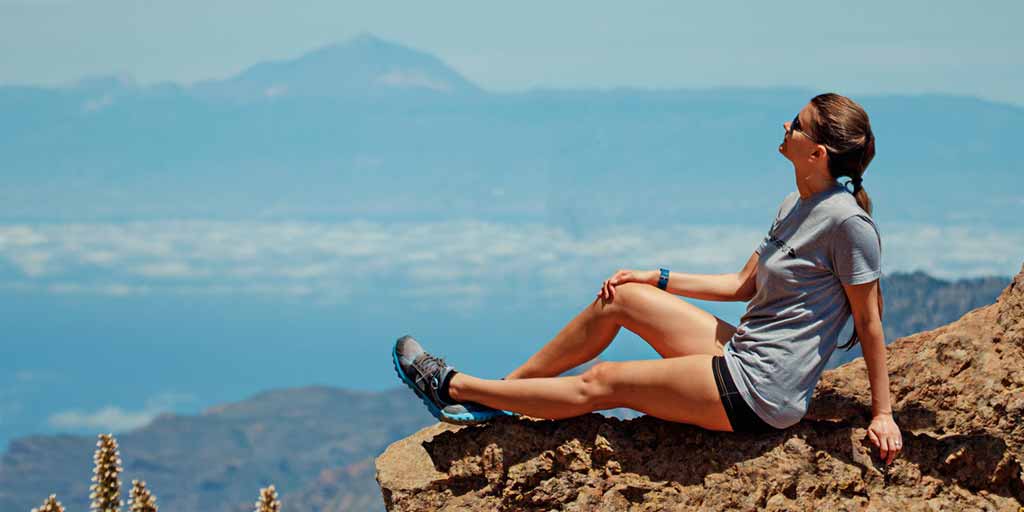
- Supportive hiking or trail shoes: This is the most important footwear call for the Andes. Salomon Women’s OUTPulse and Altra Lone Peak 8 for men. Quito’s cobblestones demand real grip. These also handle light trail work on volcano day hikes without complaint.
- Walking sandals with arch support for warmer market days and casual city exploring: Teva Hurricane Drift (here’s a link to the same brand of women’s hiking sandals). They travel everywhere with us because they genuinely earn their place.
- Flip-flops or slip-ons for guesthouse use and hot spring visits.
Kids
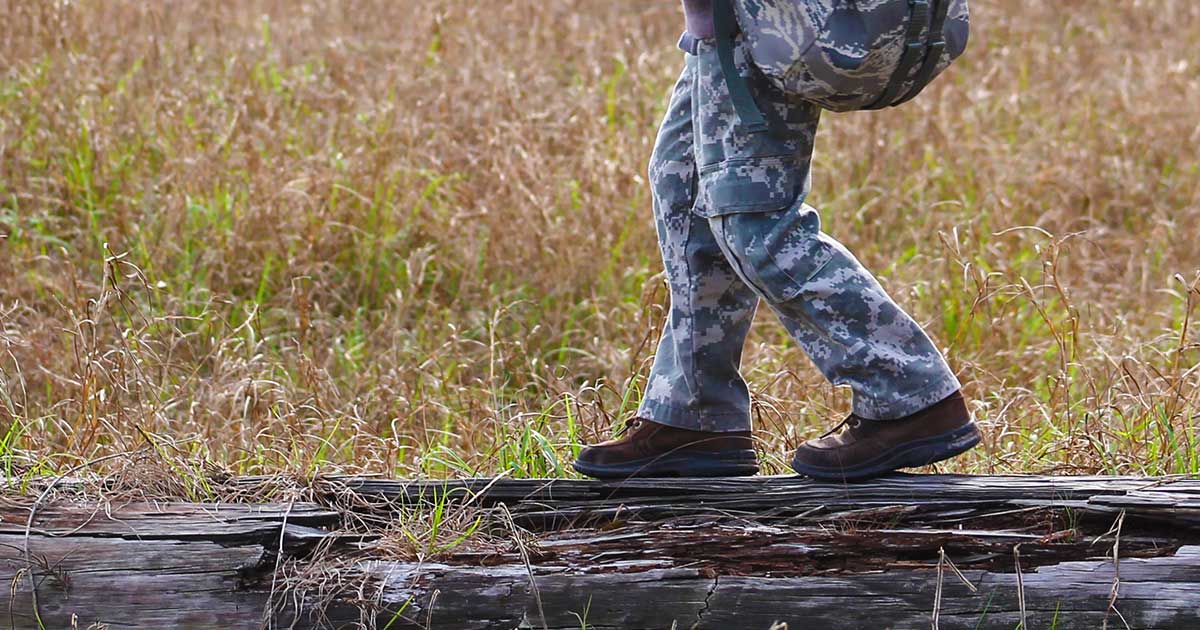
- Closed-toe trail runners or hiking shoes: Salomon Kids’ Speedcross. Grip, durability, and machine-washable. Good for Andean trail days and Quito’s cobblestone streets.
- Waterproof walking sandals for warmer days: Teva Kids’ Hurricane Drift
Sun Protection
Ecuador sits directly on the equator. The UV index is not a metaphor; you are closer to the sun here than almost anywhere else on earth, and the altitude in the Andes makes it more acute, not less.
- SPF 50+ sunscreen: For anyone over 6 months of age, ThinkSport Everyday is my go-to. It’s reef-safe, broad-spectrum, and water-resistant. Reef-safe is required in the Galapagos and is worth using everywhere. Buy a large supply in Quito before heading to the islands. Quality sunscreen on the Galapagos costs three times what it does at home.
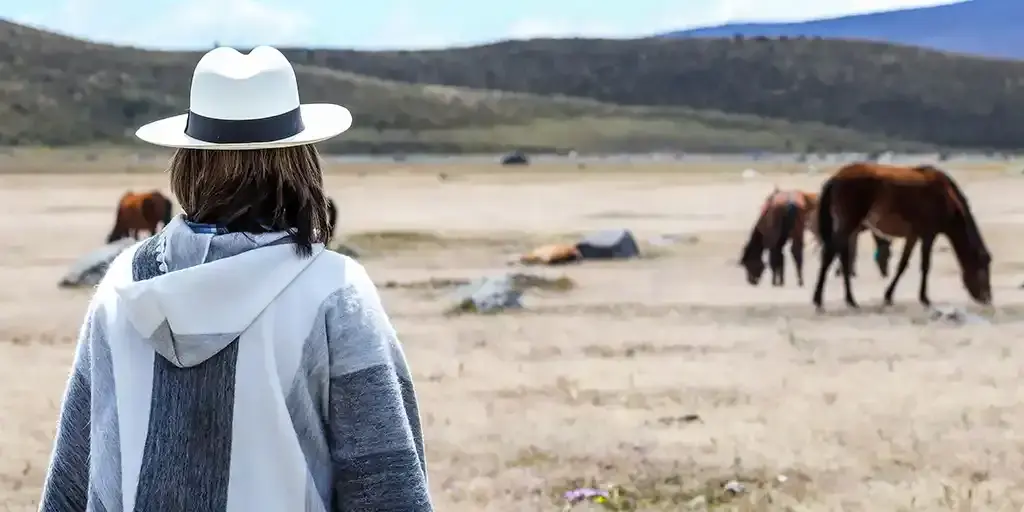
- Wide-brim sun hat for men (UPF 50+): Tilley LTM6 Broad Brim is ventilated, packable, and doesn’t scream tourist. You can also skip this and buy a Panama hat locally. They might have Panama in their name, but these hats actually originate from Ecuador.
- Wide-brim sun hat for women (UPF 50+): Dorfman Pacific DPC is packable, with excellent coverage, or you can choose whatever fits your personal style.
- Kids’ hat (UPF 50+): Outdoor Research Kids’ Helios Sun Hat is a long-time favorite of ours.
- Polarized sunglasses for everyone. These protect against the high Andes sun as well as the relentless glare of the ocean in the Galapagos.
Bags
Having a good travel bag is essential, no matter what kind of travel you’re doing. At the beach, you need somewhere to keep the sand out of everything. On the trail, you’re going to want to store cameras and water somewhere, and in the city, it becomes your catch-all for souvenirs and leftovers.
You can check out my guide to the best hiking daypacks here. For travel in Ecuador, I suggest:
- Packable daypack: The Sea To Summit Ultra Sil compresses to nothing, holds everything. One per family is usually enough.
- Sling bag: A sling bag is my go-to packing source for short hikes and urban travel. They’re light, small, and subtle. The Alpaka Metro is excellent for crowded market days, both hands free, and valuables close.
- Packing cubes: Shacke Premium packing cubes can make the difference between sanity and chaos when packing for a family of four. We never travel without them.

Camera Gear
Ecuador is stunningly beautiful. And its dramatic diversity means there are endless new angles and scenes to capture. The wildlife in the Galapagos, the colors of the Otavalo markets, the fast-moving birds of the Amazon. You will regret not having a capable camera.
I’m a bit of a photography snob. You can check out some of my best photos on my personal site here. I won’t sit here and tell you what camera to bring, but I will say that if you bring a point and shoot, make sure it’s a durable one like the Olympus Tough Series (kids can use it without fear of breaking, and it’s waterproof). Or you can bring a great mirrorless or DSLR for some truly spectacular shots. This is what I have been using for a few years, and it’s always served me well, paired with great lenses.
Essential Gear
- Packable quick-dry towel: Bring one per person. Sea to Summit is what we use. Spas and hot springs often include towels, but a packable one is invaluable for beaches, pools, or drying off after a sweaty hike.
- Reusable water bottles: I like to travel with a filtered one, so I always have access to water. One per person: Gayle Geopress is our go-to.
- Portable phone charger: Nitecore 10000 is reliable, lightweight, and you can get a couple of good charges out of it. Bring at least one per two devices.
- Universal travel adapter (Ecuador uses Type A and Type B): I like this travel adapter one because of the extra USB-C ports.
Toiletries
Bring From Home
- Insect repellent: Adults: DEET-based repellent
- Insect repellent: Kids (DEET-free): Sawyer Kids Picaridin
- Prescription medications: Make sure you have a doctor’s note for anything that might be controlled.
- Children’s paracetamol/ibuprofen: Familiar brands are reassuring when a kid spikes a fever at 10 pm in a small town.
- Allergy meds: Insect bites, food, pollen, you never know when something might strike.
- Hand sanitizer ×2
- Motion sickness medication: Winding roads, bumpy cart rides, bring it even if you do not expect to need it. Galapagos seas in the Garua season will sort out who is right.
- Hand sanitizer x2.
Buy on Arrival
- Shampoo, conditioner, body wash, toothpaste. Supermaxi and Mi Comisariato are well-stocked supermarkets in Quito. Stock up here before heading to the Amazon or the Galapagos, where options shrink, and prices rise.
- Diapers if needed. Available in Quito. Bring enough for the first couple of days.
- Basic medications. Quito pharmacies are excellent, and pharmacists are knowledgeable and helpful.
Documents, Money, and Admin
- Valid passports for all family members: Ensure they all have a minimum 6 months validity beyond your travel dates.
- No Ecuador visa is required for US, Canadian, UK, EU, and Australian passport holders for stays up to 90 days.
- US Dollars in cash: Ecuador uses the US dollar as its official currency. Cash is essential for markets, taxis, smaller restaurants, Amazon lodges, and all Galapagos fees. ATMs in Quito are reliable. Outside the capital, do not count on them.
- Travel insurance documents: Bring copies, both printed and digital. I recommend either Safetywing or World Nomads for international travel insurance for families.
- Yellow fever vaccination certificate: Recommended for the Amazon and sometimes required. Consult your doctor and Ecuadorian travel advisories well in advance of travel.
- Printed and digital copies of accommodation confirmations and emergency contacts.
Regional Packing Recommendations for Ecuador
The general packing list above covers the bulk of what you’re going to need while you’re in the country. These regional kits are the additions and adjustments specific to each environment. Add the relevant kits to your suitcase based on your itinerary.
The Andes and the Mainland Highlands
Quito, Otavalo, Cuenca, Cotopaxi. Most of what you need for the highlands is already in the general list. The Andes kit is short because the general list was designed with the mainland in mind. A few additions for altitude and cooler conditions:
- Merino wool base layer for men and women if pushing above 10,000 feet. Day hikes toward volcano summits are cold. A thin merino layer under a shirt makes a genuine difference. I recommend a base layer for kids, too. This is the one my kids use.
- Comfortable walking shoes with real grip. Quito’s cobblestone streets are beautiful and unforgiving. The trail runners in the general footwear list work well here.
- A light scarf or buff. Andean mornings at altitude call for one, and it packs to nothing.
- Altitude sickness medication if your doctor has recommended it. Take it easy on day one, regardless. The altitude is real, and it catches people off guard.
- Small backpack or daypack for volcano and market day excursions. The packable one in the general gear list works.
Altitude Tip for Families
Soroche, or altitude sickness, can affect anyone regardless of fitness level. Kids often struggle to describe what they are feeling, so watch for unusual tiredness, headache, or loss of appetite on day one in Quito. Hydrate aggressively, rest in the afternoon, and hold off on serious exertion until day two. Most families feel completely normal by day three.
The Amazon Basin
The Amazon is unlike anything else on this planet. It is humid, relentlessly alive, and it has its own specific rules about what you wear and what you bring. The kits below are what you add on top of the general list for your jungle leg.
Amazon Ground Rules
Pack light and natural colors only. Dark clothing attracts more mosquitoes. Pack khaki, white, tan, beige, and light grey for the Amazon leg specifically. Long sleeves and long pants every evening without exception. This is not overcaution. Mosquitoes in parts of Ecuador’s Amazon can carry dengue fever.
Do not pack bulky rubber boots to pack. Most lodges provide them for guided trail walks. Contact them ahead of time, be sure. Pack good moisture-wicking mid-height socks to wear inside them instead.
- 2 to 3 lightweight long-sleeve shirts: Pack light or natural colors for evening insect protection. The long-sleeve shirts in the general list work if they are light-colored. Dark tones need to stay in the bag.
- Mid-height moisture-wicking socks: 3 to 4 extra pairs. These go inside the lodge-provided rubber boots on trail walks. Cotton socks inside rubber boots for four hours is a special kind of misery. Bring the good ones.
- 1 lightweight fleece or midlayer: Even in the Amazon, lodges often run air conditioning hard and cold fronts called friajes can sweep in from the south overnight.
Additional Gear for the Amazon
- Dry bag for electronics on canoe rides: Sea to Summit Ultra-Sil Dry Bag. Canoes splash. Electronics do not recover from saltwater or river water. This bag pays for itself on day one.
- Headlamp for each person: Petzl TACTIKKA is what I use. They’re good for night walks, power outages at remote lodges, and spotting caiman in the water after dark.
- Filtered reusable water bottle: Grayl GeoPress. Tap water quality varies at Amazon lodges. A filter bottle removes the guesswork.
- Permethrin clothing spray to treat shirts and pants before packing. Apply at home, let dry fully, then pack. Do not apply to the skin.
- Mosquito head nets, one per person: Useful for night walks and river excursions at dusk.
- Zip-lock bags in large and small sizes: Bring more than you think you need. Your phone, passport, camera cards, snacks, and anything that cannot get wet. The Amazon will test everything.
The Galapagos Islands
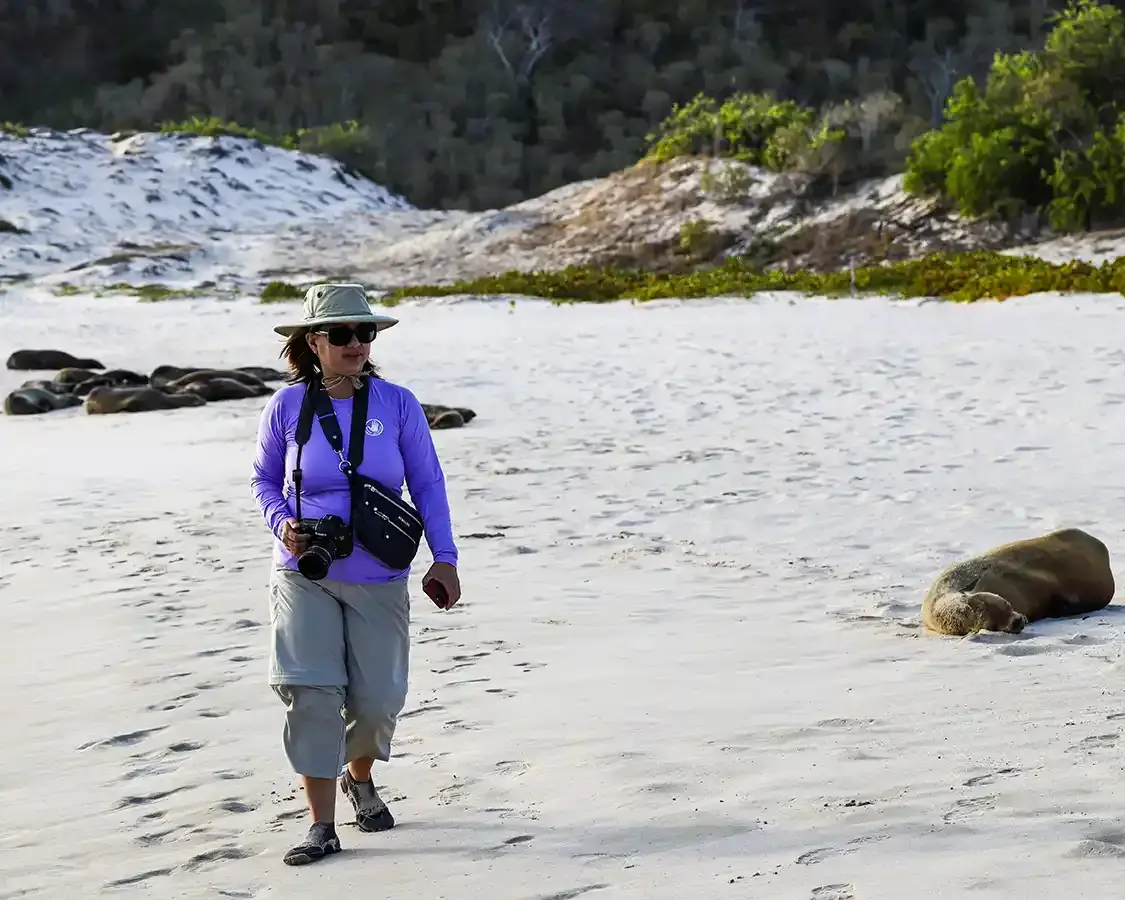
Arriving in the Galapagos for the first time is genuinely disorienting. You step off the plane onto a volcanic island, and within an hour, there is a marine iguana crawling past your feet on a path that also has a sea lion sleeping across it. The wildlife has no fear of humans, none at all, and you are required to maintain six feet of distance from animals that are actively ignoring the instruction.
Before you add anything to your bag for the Galapagos, read what you cannot bring.
Galapagos Biosecruity: Read This Before You Pack
The Galapagos enforces strict biosecurity rules to protect one of the most intact ecosystems on earth. Violations can mean confiscation, fines, or removal from the islands.
DO NOT BRING:
- Fresh or unpackaged food of any kind (fruit, vegetables, granola bars, nuts, etc.)
- Factory-sealed snacks in small quantities may be permitted. When in doubt, leave it out.
- Plants, seeds, flowers, or soil of any kind.
- Animals or animal products.
- Single-use plastic bags, straws, or disposable bottles. These are banned on the islands.
REQUIRED BEFORE YOUR GALAPAGOS FLIGHT:
- Galapagos Biosafety Sworn Declaration: complete online within 48 hours of departure at declaracion.abgalapagos.gob.ec. You will receive a QR code to present on arrival.
- Transit Control Card (TCT): $20 USD per person, purchased online before your flight.
- Galapagos National Park entrance fee: $200 USD per international visitor age 12 and over, $100 for children under 12. Paid in CASH on arrival. Bring exact amounts.
Clean your hiking boots before flying from the mainland. Boot soles can carry seeds. Inspectors may check them at the airport.
- 1 to 2 UPF 50+ rash guards. You are on the equator and will likely be in the water every day. Two rash guards per person means you are never pulling on a soaking one. Rash guards pull double duty by helping you stay warm in the cold water and protecting you from the sun. This one by Amazon Essentials is exactly the simple, beach top I use.
- 1 to 2 swimsuits for the same reason.
- 1 light fleece or midlayer for early morning excursions, especially June through November during Garua season, when mornings on the water are genuinely cold.
- 1 to 2 lightweight long-sleeve UPF shirts for long deck days when a rash guard is too warm but bare arms are not an option.
Additional Footwear for the Galapagos
Footwear is the most consequential packing decision you make for the Galapagos. Wet landings mean wading through shallow surf. Lava fields are brutally uneven. You are on your feet for hours every day.
- The walking and hiking sandals from the general footwear list are the right choices for the Galapagos. Foam flip-flops as primary footwear on lava terrain will last you approximately one morning before falling apart. Water shoes are also a great option, and arguably more versatile for use in the Galapagos.
- Your own snorkel mask, if you can fit it in your luggage. Rental masks from lodges and cruise boats are often ill-fitting and foggy at the worst moments. A mask you have tested at home is worth the suitcase space for a Galapagos trip.
Additional Gear for the Galapagos
- Dry bag for Zodiac excursions: Sea to Summit Ultra-Sil Dry Bag. Anything you bring on a Zodiac dinghy should go in one of these.
- Reusable water bottle, one per person: Single-use plastic is banned on the islands. The Grayl GeoPress from the general list works here.
- Motion sickness medication: The open Pacific is not the calm equatorial waters people imagine, particularly June through November. Bring it and keep it accessible on excursion days.
What NOT to Pack for Ecuador
- Denim jeans. Heavy, slow to dry at altitude and in humidity, uncomfortable when damp. Leave them.
- Dark or brightly-colored clothing is discouraged for both the Amazon and the Galapagos. In the Amazon, these colors attract mosquitoes. In the Galapagos, they can startle wildlife.
- Dress heels or dress shoes. Quito’s cobblestones will ruin them, and neither the Amazon nor the Galapagos has a use for them.
- Single-use plastic bags, straws, or disposable bottles. Banned in the Galapagos and increasingly restricted across Ecuador.
- Fresh food or unpackaged snacks for your Galapagos flight. Subject to biosecurity confiscation. Eat before you board.
- Seeds, plants, or anything organic picked up on a hike before flying to the Galapagos. Inspectors check boot soles.
- Expensive jewelry. Ecuador’s markets and highland cities do not call for it, and it draws unwanted attention in cities.
- Full-size toiletries. Quito’s Supermaxi is a genuinely good supermarket. Decant what you need or stock up on arrival.
- Too many bags. The 15kg domestic flight limit is enforced, and overage fees are not trivial. More than two mid-size bags per adult is asking for a bill at the check-in counter.
Quick Reference: Clothing Quantities per Person
Use this as a final cross-check before you zip up the suitcase. This list is based on a one-week trip to Ecuador.
| Item | Men | Women | Teens | Kids |
| T-shirts | 3-4 | 3-4 | 3-4 | 4-5 |
| Long-sleeve shirt | 2-3 | 2-3 | 2-3 | 2-3 |
| Pants | 3 | 3 | 3 | 3 |
| Shorts | 1 | 1 | 1 | 1 |
| Mid-layer Fleece | 1 | 1 | 1 | 1 |
| Dress/Skirt | — | 1 (optional) | 1 (optional) | 1 (optional) |
| Rain jacket | 1 | 1 | 1 | 1 |
| Swimsuit | 2 | 2 | 2 | 2 |
| Rash guard | 2 | 2 | 2 | 2 |
| Underwear | 7 | 7 | 7 | 8 |
| Socks | 7 | 7 | 7 | 8-9 |
Frequently Asked Questions
Quito residents dress smartly, and the city has a European colonial elegance to it. Smart-casual is the right register: fitted shirts, clean pants, shoes that are not trail runners if you are going somewhere nice for dinner. Catholic churches appreciate covered shoulders and knees, though requirements are rarely enforced for tourists. In the Amazon and Galapagos, the dress code is purely functional and nobody is paying attention to what you are wearing.
Flights from Quito or Guayaquil to the Galapagos and Amazon gateway cities typically allow 15 to 20kg checked and 8 to 10kg carry-on, depending on the carrier. LATAM and Avianca are the main domestic operators. Check your specific booking. Exceeding limits on these routes is a common and expensive mistake.
The Galapagos Islands are among the safest destinations on earth. Crime is virtually nonexistent. Amazon lodges operate in controlled, guided environments. Quito requires the same street awareness you would exercise in any major Latin American city: avoid the historic center alone late at night and check current government travel advisories before visiting. Guayaquil and the Pacific Coast require more caution. Check advisories before planning those areas.
Quito sits at 9,350 feet, and many visitors experience mild soroche symptoms in the first 24 to 48 hours: headache, fatigue, and shortness of breath. Children are not more or less susceptible than adults, but they may have difficulty describing what they are feeling. Speak with your doctor before travel. Acetazolamide is commonly prescribed preventively. Take it easy on arrival day, drink far more water than normal, and most visitors feel completely fine within 48 hours.
The online Sworn Declaration is required for travelers aged 18 and over. The Transit Control Card (TCT) is required for all travelers, including children. The National Park entrance fee is $200 USD for international visitors aged 12 and over, and $100 for children under 12. All fees are cash only on arrival.
June through September is the dry season in the Andes, with the clearest skies and best volcano views. For the Galapagos, December through May brings warmer water and calmer seas, better for families with kids prone to seasickness. The Amazon is accessible year-round. For a multi-region itinerary, June through August balances well across all three.
Quito has excellent supermarkets (Supermaxi, Mi Comisariato) and the Galeria Ecuador mall for gear and clothing. Once you are in the Amazon or on the Galapagos, shopping options shrink dramatically, and prices jump. Buy anything you are unsure about in Quito before heading to the other regions. Sunscreen and insect repellent, especially.
Travel Resources for Families Visiting Ecuador
For practical planning, safety considerations, and logistics, these dedicated guides provide deeper support:
Final Word on Packing for Ecuador
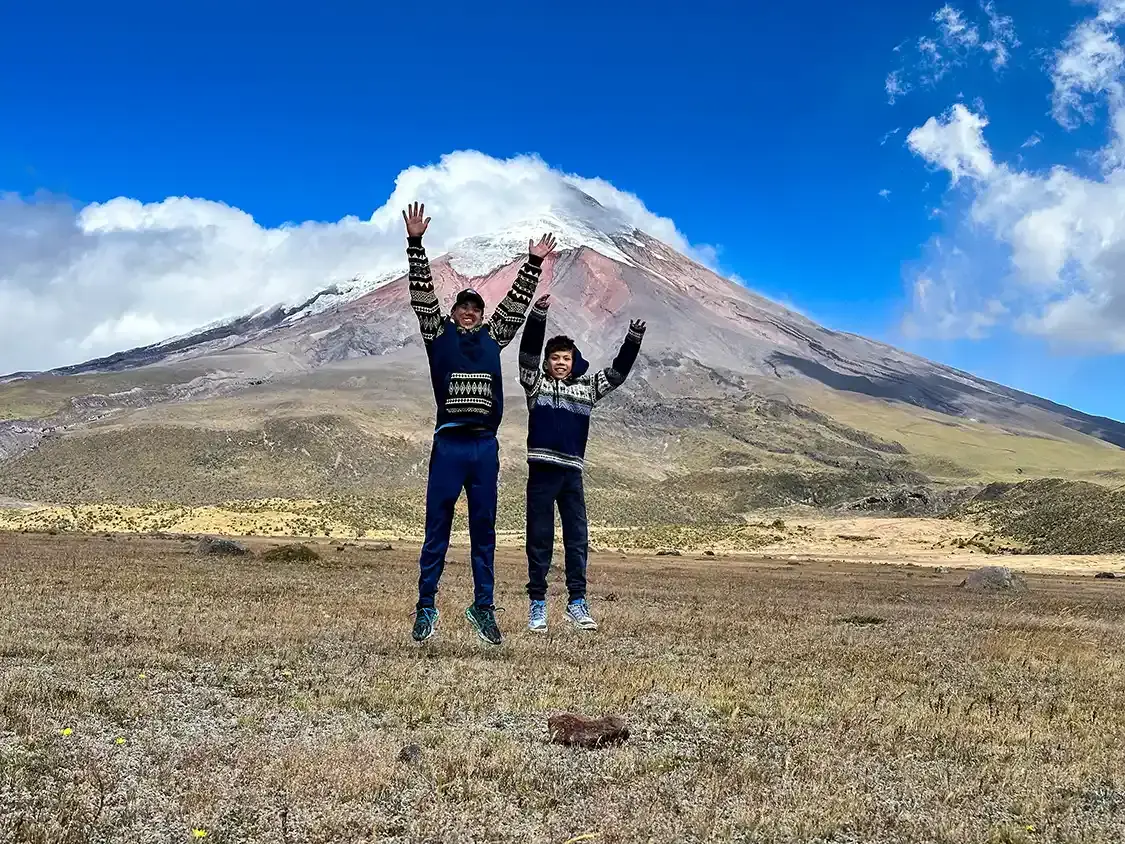
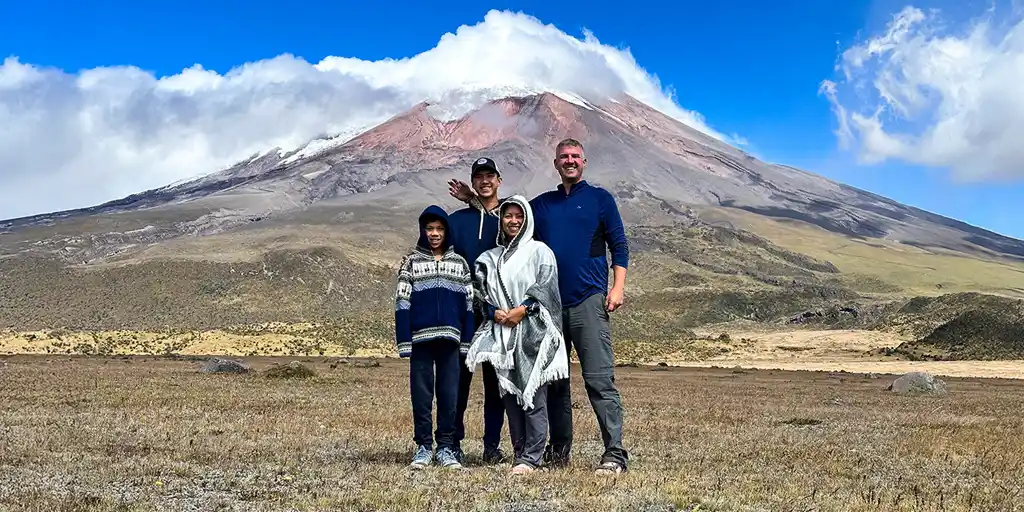
Ecuador is the kind of destination that quietly recalibrates what incredible means. It is hard to stand at the rim of the Cotopaxi volcano and not feel the scale of the planet differently. It is hard to snorkel with a sea turtle in the Galapagos and go back to your normal frame of reference. And it is nearly impossible to sit in a canoe in the Amazon Basin at dawn, watching the mist lift off the water while a scarlet macaw crosses overhead, and not immediately start planning your return trip.
The families who show up prepared, with the right layers, the right bug protection, the right shoes, and the right paperwork, get to be fully present for all of it. The families who do not spend a surprising amount of their Amazon evenings scratching.
Pack smart, pack light, and leave room in the suitcase. You will buy things at the Otavalo market. You will want to.
You May Also Like To Read:
Affiliate Disclosure: Some links in this article are Amazon affiliate links. If you purchase through these links, we may earn a small commission at no extra cost to you. We only recommend products we’ve used, tested, or researched thoroughly. Quality always comes before commission.