Wide boulevards, Art Deco facades, and the second-largest mosque on earth. Casablanca is the Morocco nobody warns you about, and it deserves far better than its reputation.
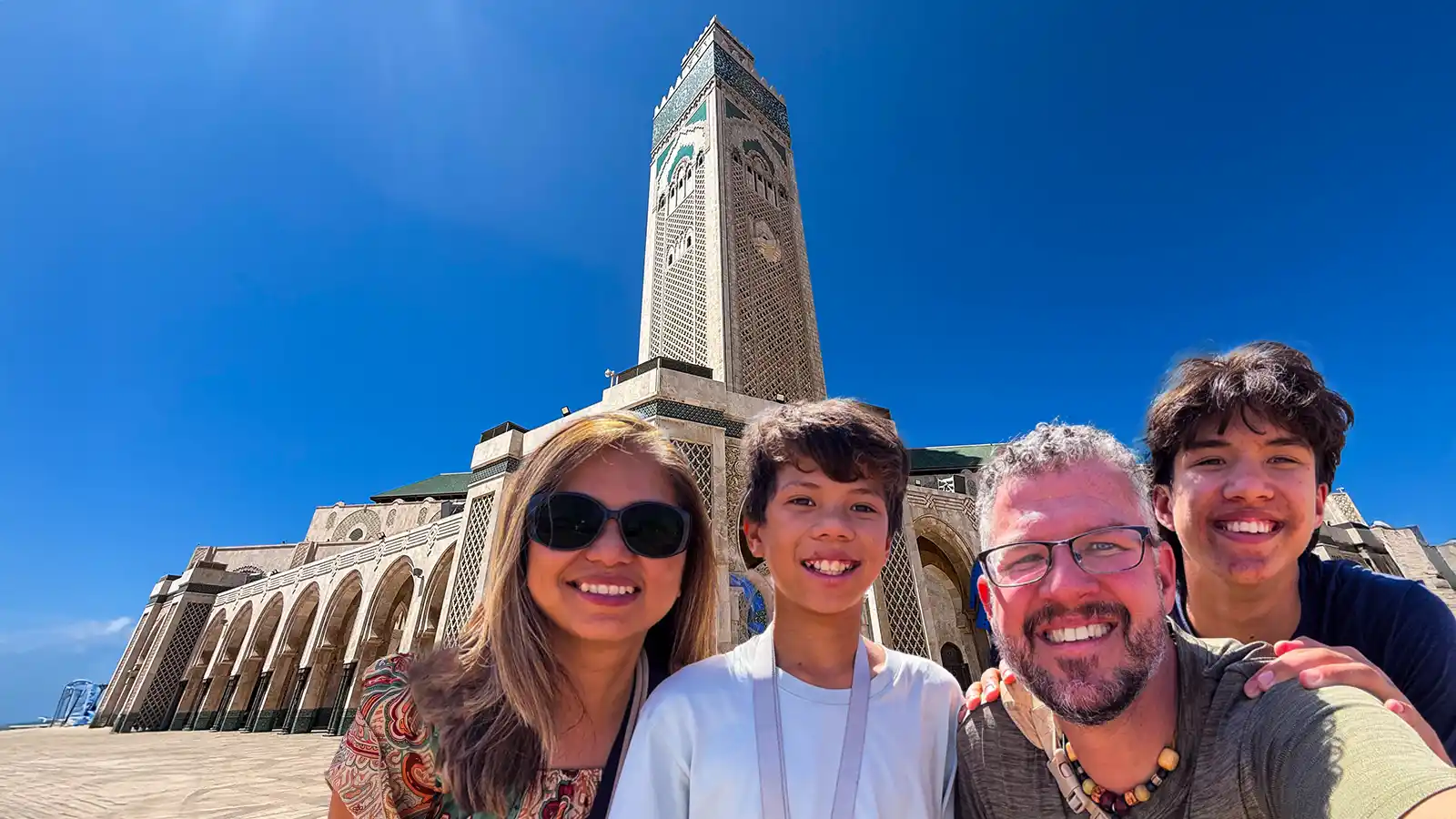
The first time my family landed in Casablanca, we left the city before we had a chance to see anything. This wasn’t a mistake I was willing to make a second time. When that moment came, my family had been traveling through Africa for the better part of a month, and touring Casablanca would be the very last stop on that epic journey.
We’d spent the past month overlanding through Egypt’s Western Desert, camping among ghostly white wind-carved rock that made us feel like we were living on another planet. We’d stood soaked to the skin beside the thunder of Victoria Falls, on both the Zambian and Zimbabwean sides of the Zambezi River. We’d spent eight days on safari in Tanzania, watching lions from a Land Cruiser and floating over the Serengeti in a hot air balloon at dawn. We’d sandboarded the dunes of Bazaruto Island in Mozambique and spent a day catching tuna offshore.
Six countries, five timezone changes, and a lot of dust.
At the very end of all of that travel, we had set aside a very special two days to explore Casablanca. A Moroccan city that we’d missed on our previous 10-day itinerary through the country. The strangest thing is, we had landed in Casablanca at the start of that journey. And instead of visiting, we bolted. Headed straight for Rabat and Salé, leaving one of the most famous cities in all of Africa untouched.
When we arrived on our second visit, we weren’t going to make that same mistake. We were tired, dusty, and didn’t have a single piece of clean clothing between the four of us. After having experienced Fes, Rabat, Marrakech, Ouarzazate, and Merzouga, I thought that we’d fit right into the dusty medinas and markets of this Moroccan city.
I was wrong. You see, there’s something about the city that I didn’t expect. Casablanca doesn’t feel like the rest of Morocco. Not even slightly.
Most of Morocco shares a specific feel. Labyrinthine medinas, riads built around hidden courtyards, mosques where the call to prayer bounces off stone walls. Casablanca didn’t get the memo.
Casablanca has wide boulevards. The modern streets feature Art Deco apartment blocks with wrought-iron balconies fronting tree-lined avenues and grand civic squares that would be at home in just about any European city. These city plans were laid out by French architects in the 1920s and 30s. Walking through downtown Casablanca, I kept thinking of my visit to Thessaloniki, Greece of all places, another port city with the same sweeping boulevards and the same slightly faded grandeur that, similarly, seems to stick out like a fashionable tie that doesn’t quite match the rest of the outfit.
This unique city design wasn’t by accident. Casablanca is where the French protectorate poured its money and its ambition during the French colonization process. The city that emerged is fundamentally a French colonial creation wrapped around an older Moroccan core. That combination is exactly what makes it one of the most unique places to visit in Morocco.
We only had two days. Here’s how to spend them, and everything else worth knowing if you have longer.
Why Casablanca Feels Like a Different Morocco
Casablanca is a city of roughly 3.5 million people, the largest city in all of Morocco and the economic engine of the entire country. It is bright, it’s clean, it’s like nowhere else in the country
Plenty of Morocco travel guides might suggest skipping Casablanca. It’s a major city. It’s urban, it’s a business hub, and it doesn’t feel like the typical Moroccan postcard of camels in the dunes of Merzouga at sunset or the late-day sky reflecting off of the stone walls of Ait Benhaddou. Most guides suggest that you fly in, get out, and head for Marrakech. I understand why people say that. It’s what my family did on our first visit, and I think it’s a mistake.
Sure, there’s no vast medina to lose yourself in for three days like there is in Fes. You won’t find snake charmers working the historic squares like in Marrakech. You won’t find the same historic riads hidden in the back corners of sun-drenched alleys. Instead, Casablanca offers a genuine working city where Moroccans actually live, and an architectural story you won’t find anywhere else in the country.
The unique look comes from when the French arrived in force in 1912, and over the following decades they used Casablanca as a canvas. Architects who couldn’t get permission to experiment in Paris came here and built whatever they could get funding for. The result is one of the largest concentrations of Art Deco and Mauresque architecture anywhere in the world, with thousands of buildings blending European modernism with Moroccan geometric detail. Some of it is immaculate. A lot of it is crumbling. All of it is fascinating.
For families, this makes Casablanca an easier entry point into Morocco than many of the older imperial cities. The streets are wider, the layout is less likely to get you lost, the traffic follows recognizable rules, and there’s far less of the intense souk pressure that can overwhelm kids in cities like Marrakech or Fes. If Morocco is new to your family, starting in Casablanca is a gentler on-ramp.
The Best Things to Do in Casablanca For Families
Walk Through The Hassan II Mosque
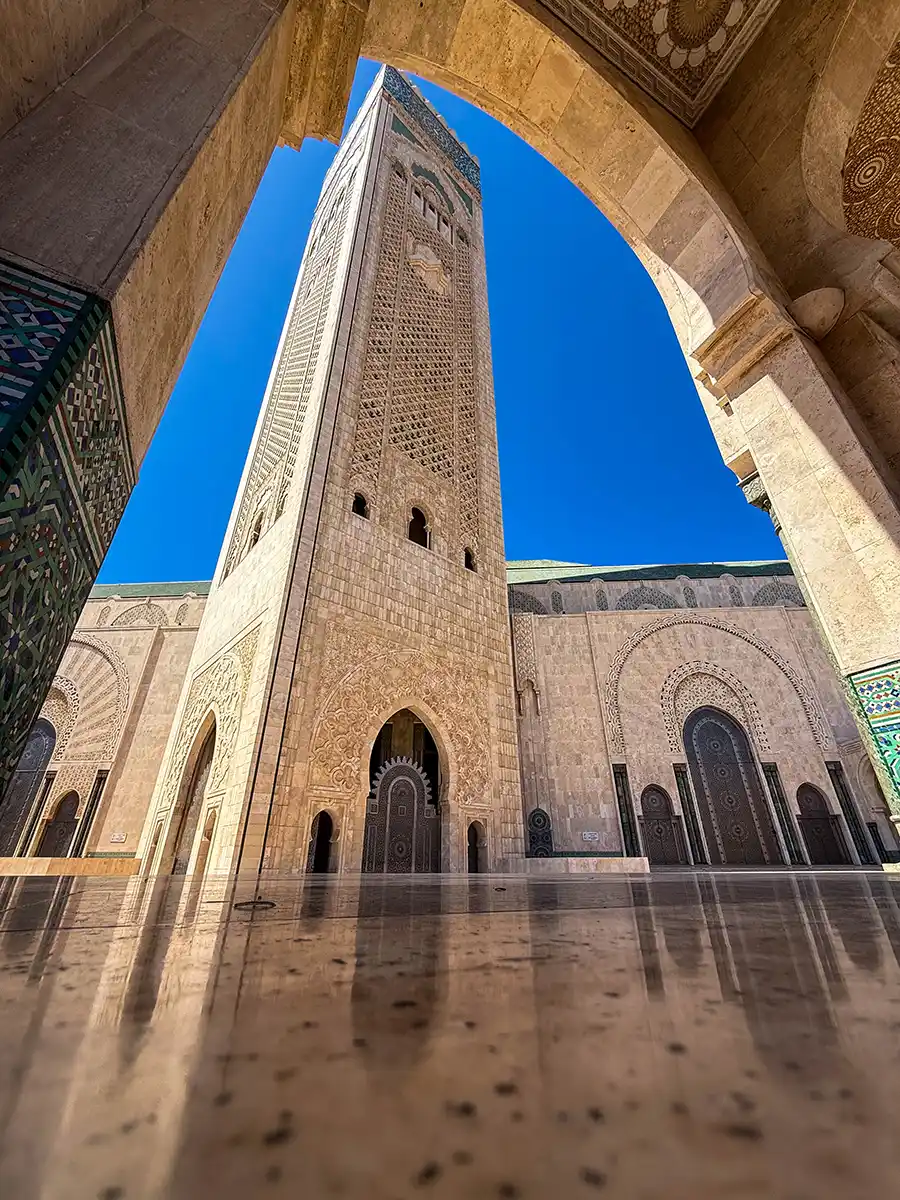
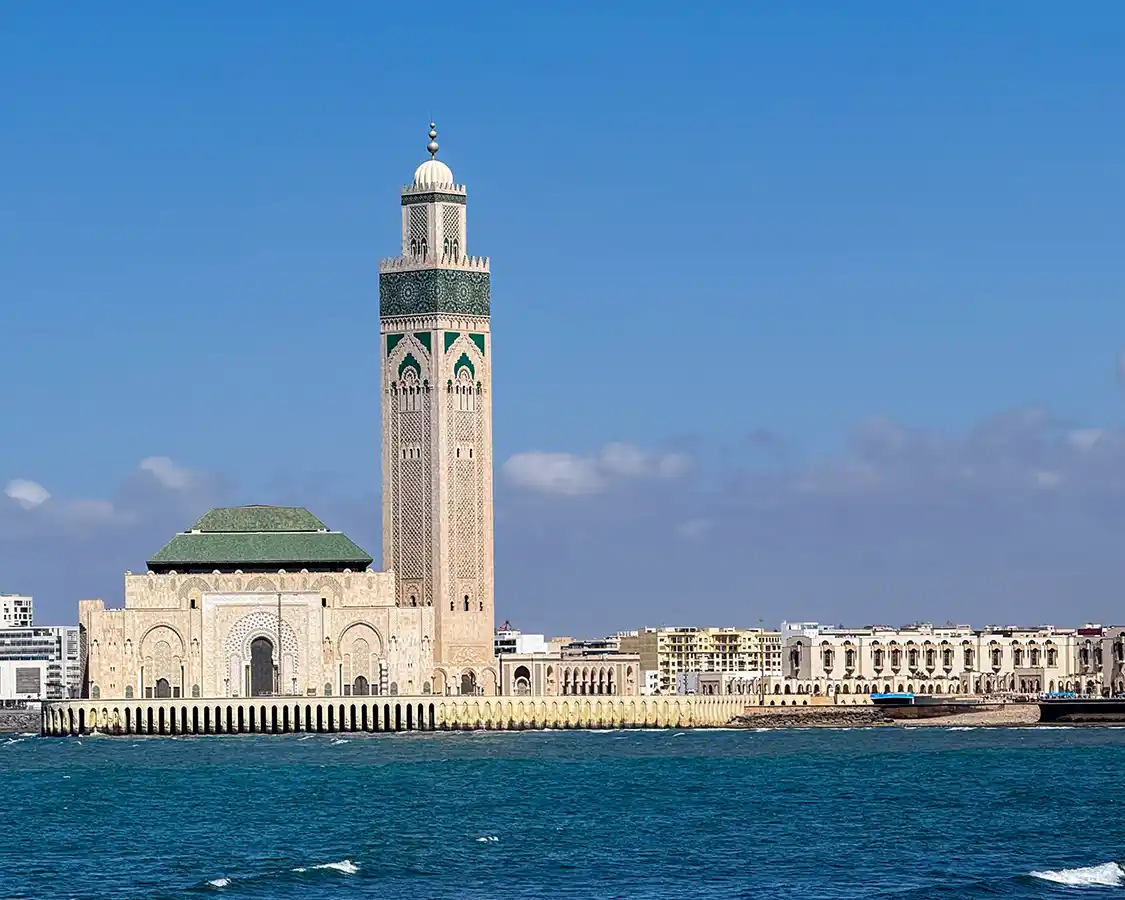
The Hassan II Mosque sits on a promontory at the northwestern edge of the city, and roughly half of it is built on reclaimed land out over the Atlantic Ocean. The architect was drawing on a verse of the Qur’an describing the throne of God as being built upon water, and standing on the plaza with waves breaking against the sea wall below, that purpose hits pretty hard.
This mosque was finished in 1993 and stood as the largest in Africa until Algeria’s Djamaa el Djazair opened, which pushed it to second on the continent. Its minaret stands at a jaw-dropping 690 feet (210 m) and held the record as the tallest in the world for three decades until the mosque in Algiers took that title too.
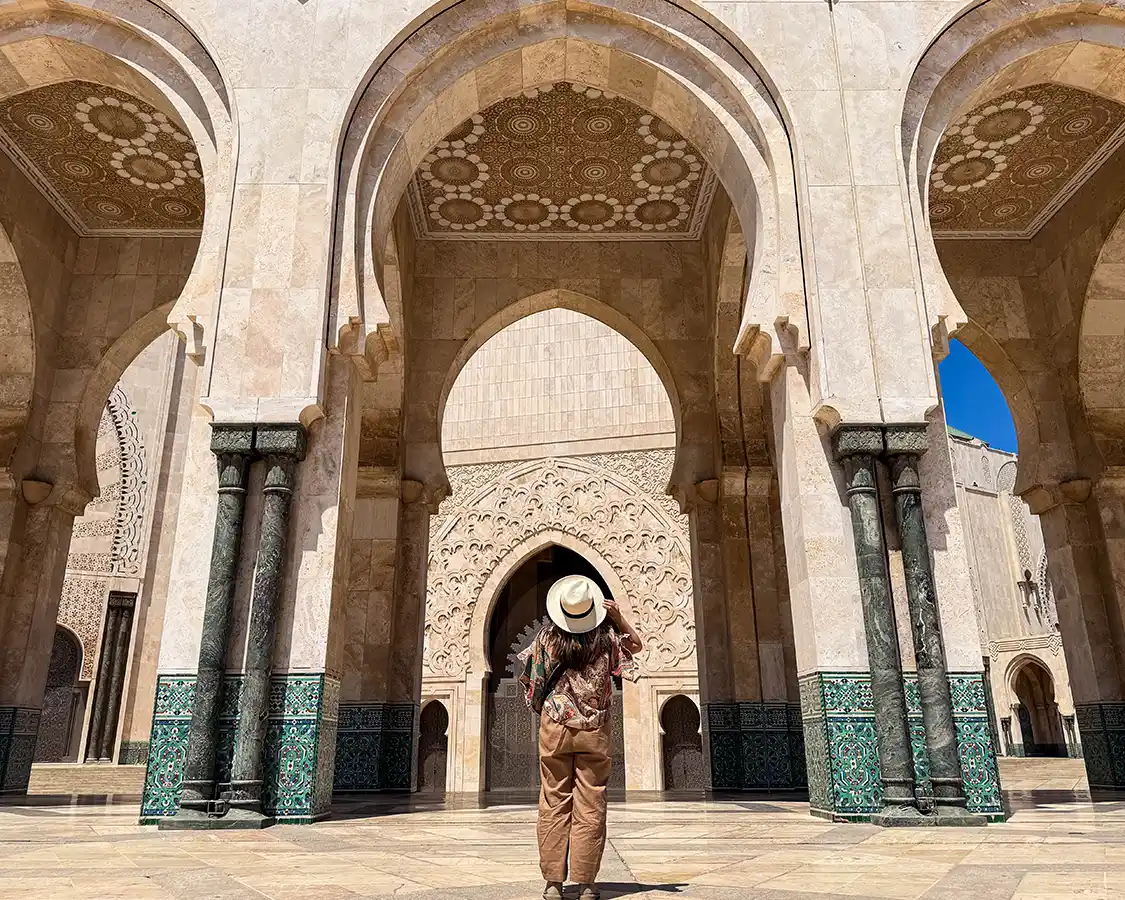
The Hassan II mosque may have lost its titles, but it remains one of the most exquisite and artistic mosques on the planet. And it’s huge. In fact, the scale can be tough to process. The prayer hall alone holds 25,000 people. The courtyard outside holds another 80,000. The minaret is the height of a 60-story building, and at night it projects a laser beam toward Mecca that carries for 19 miles (30 km).
King Hassan II commissioned the mosque as the most ambitious building project in Moroccan history. It took seven years and around 10,000 craftsmen drawn from every corner of the kingdom. They hand-carved over 570,000 square feet (53,000 sq m) of cedar and set more than 107,000 square feet (10,000 sq m) of traditional zellige tilework. The cedar came from the Middle Atlas, the marble from Agadir, and the granite from Tafraoute. It was funded largely by public subscription, meaning a significant portion of the country contributed to paying for it.
One of the mosque’s wildest features is a 1,100-ton retractable cedar roof that opens the prayer hall to the sky, heated floors, and engineering designed to withstand both Atlantic storms and earthquakes. Cohen kept referring to it as the ‘Skydome,’ in honor of our hometown Toronto Blue Jays back in Canada.
This is one of the very few mosques in Morocco that non-Muslims are allowed to enter, and you can do it on a guided tour lasting roughly an hour. Watching daylight pour through that roof onto acres of hand-set tile is something truly exceptional.
Practical notes for families: Hassan II mosque tours run several times daily, generally Saturday through Thursday in the morning and mid-afternoon, with a reduced Friday schedule, and times shift during Ramadan, so check ahead. Shoulders and knees must be covered for everyone, though head coverings are not required, even for women, but they are appreciated. You will need to remove your shoes and are given a bag to carry them. And the enormous plaza outside is a treat for those traveling with kids, because it is one of the few wide-open spaces in Casablanca where kids can simply run without a car anywhere in sight.
The Habous Quarter Where Cookies Have Been Made The Same Way Since 1930
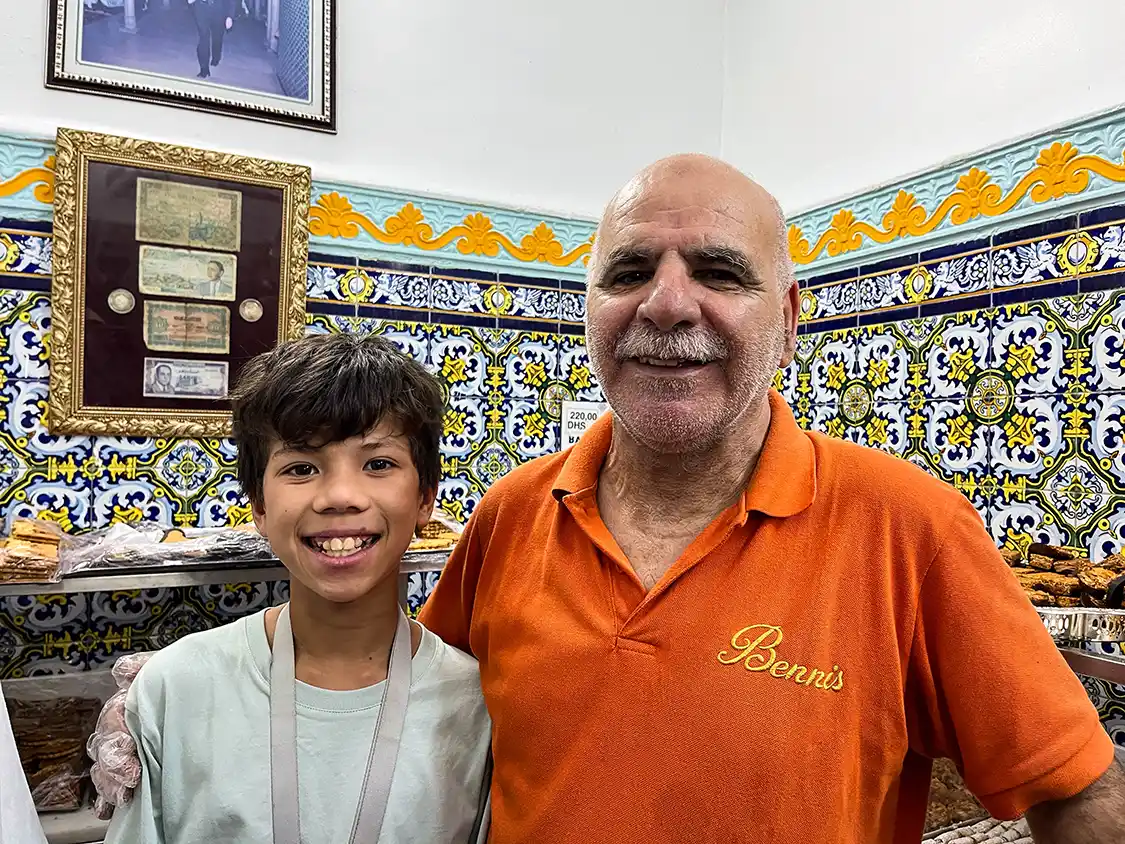
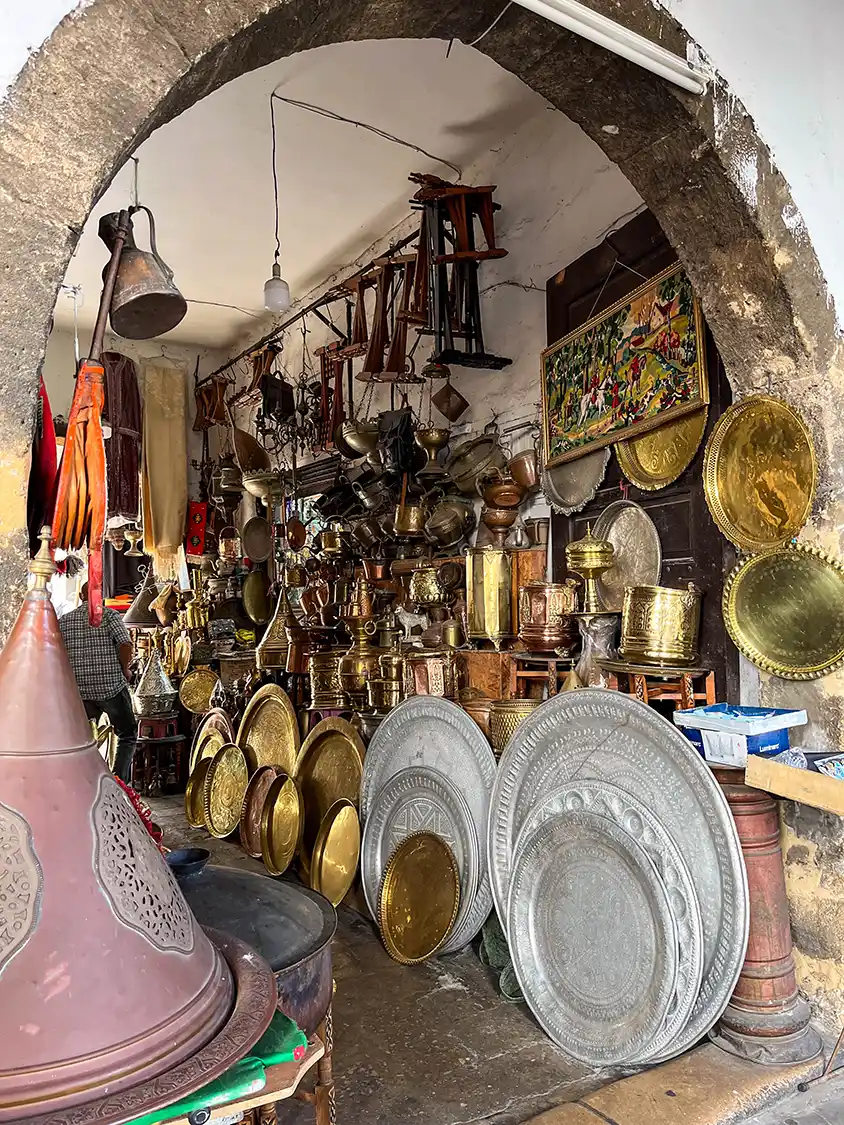
The Habous Quarter, also called the New Medina, is my favorite corner of Casablanca and the place I’d send any family who has a limited amount of time to spend in the city.
During the French building craze of the 1930s, the population of Casablanca boomed. Under the pressure of that growth, the old medina was bursting at the seams. The colonial administration opted to build an entirely new Moroccan quarter, complete with souks, arched walkways, and mosques, but laid out with that signature French urban planning. The result is a medina with straight lines and breathing room. Some purists call it inauthentic, and I’ll be honest, compared with the medinas in Fes and Marrakech, it’s different. With my kids in tow, I found it a relief.
You still get the spice piles, the olive stalls stacked into towering pyramids, the leather workers and the carpet sellers and the babouche slippers in every color, but the alleys are wide enough that nobody feels swallowed, and the pressure from vendors is a fraction of what you’ll experience in Marrakech. I also didn’t have to dodge a single scooter or motorbike the entire time I was there. That was nice.
Aside from the shopping and the vibes, though, we came for Patisserie Bennis Habous.
This tiny bakery has been operating from the same tiled shopfront since 1930, and it’s now run by the fourth generation of the Bennis family. There’s no seating and barely room to turn around. What there is, instead, is the best cornes de gazelle in Morocco: crescent-shaped almond paste pastries scented with orange blossom water, made by hand every morning. Pick up a box, get the mlewza almond macaroons, and get more than you think you need, because they will not survive the walk back to your hotel.
Also in the Habous Quarter, don’t miss the Mahkama du Pacha, a 1950s Moorish courthouse with extraordinary carved cedar and stucco work, and the gates of the Royal Palace, which you can’t enter but can admire from outside.
Casablanca’s Musical Fountain
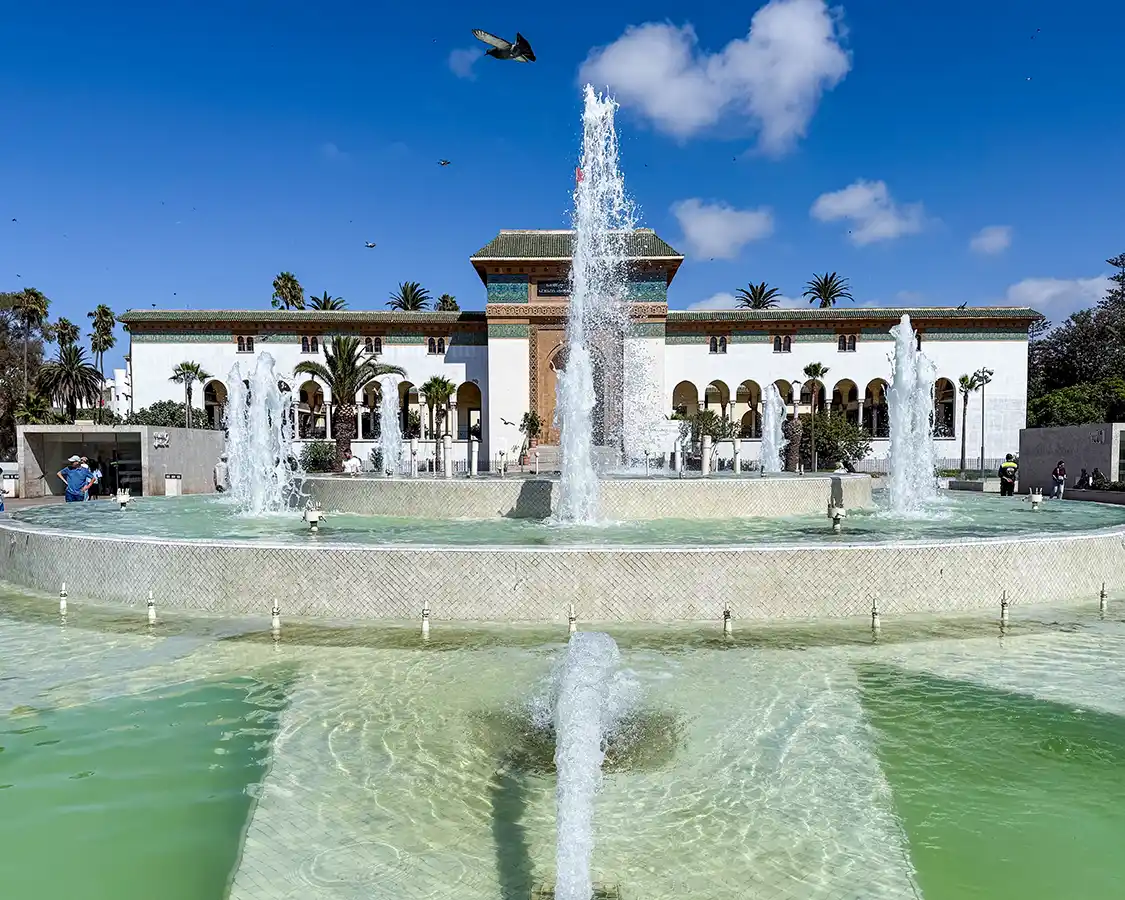
Place Mohammed V is the civic heart of Casablanca and the best introduction to the city’s architectural split personality.
The square is ringed by grand white-and-gold buildings from the 1920s, blending Art Deco geometry with Moorish arches and detail. The Palais de Justice sits on one side, the Wilaya with its clock tower on another, and an Art Nouveau central post office that is still a working post office.
In the middle is a large circular musical fountain that puts on choreographed shows with lights and music in the evenings. Our kids, who had by that point spent a month looking at deserts, waterfalls, and wildlife, thought this was a blast. Sometimes that’s just how it goes. The pigeons are an added bonus if your children are of pigeon-chasing age. They flock here in numbers greater than nearly any plaza I’ve seen before.
Nearby, Parc de la Ligue Arabe has 75 acres (30 ha) of palm-lined paths, fountains, and shade, which, if you’re visiting during the hot afternoon, is a perfect escape.
The Atlantic and a Lighthouse at La Corniche
La Corniche is a gorgeous promenade that runs along Casablanca’s Atlantic shore in the Ain Diab district, and it’s where locals in the city go to breathe.
The promenade stretches past cafes, ice cream stands, beach clubs, and public beaches, with the ocean crashing on one side and a constant stream of Casablancais strolling on the other. In the evening, La Corniche fills with families, street performers, and the smell of grilled corn. It’s the most relaxed that Casablanca gets, and after the intensity of the city center it’s a welcome change of pace.
At the western end stands Phare El Hank, a lighthouse that has been guiding ships into the local harbor since 1919; its beam reaches 30 nautical miles out to sea from a 167-foot (51 m) tower. Access to climb it has been unreliable in recent years, so check before you make a special trip just to visit.
For families who want a little beach time, the public beaches along Ain Diab are free but can be crowded and are not always clean. The private beach clubs, including the long-established Tahiti Beach Club, charge an entry fee but offer pools, loungers, playgrounds, and food service. With young kids, the fee is usually worth it.
Grab Lunch Inside La Sqala, an 18th-Century Fortress
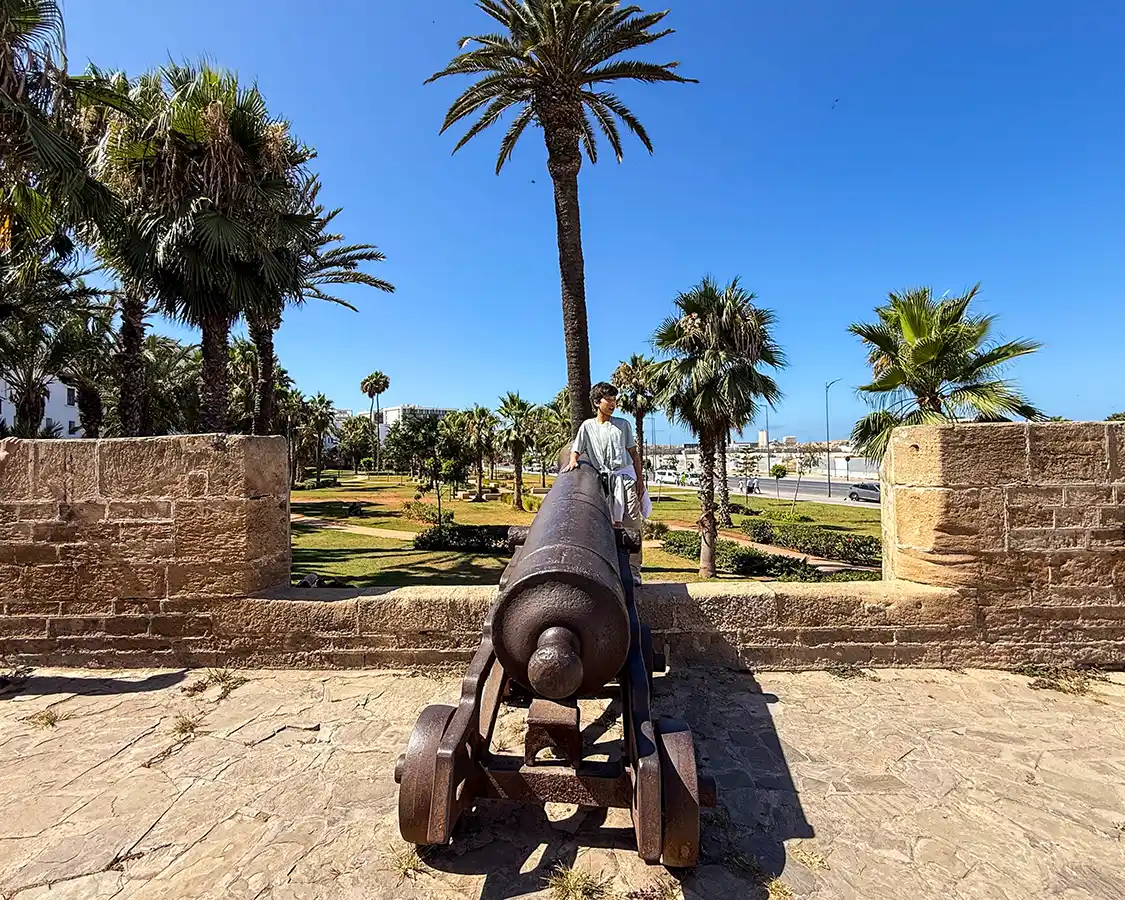
La Sqala sits inside the walls of an old Portuguese-era bastion at the edge of the Casablanca medina, and it’s one of the more atmospheric places to eat in the city.
You pass through a gate in the fortification wall into an Andalusian garden courtyard: fountains, bougainvillea, orange trees, painted tile, and shaded seating. The old cannons still point out toward the sea. Inside are restaurants serving proper Moroccan cooking, like tagines, couscous, and tangia.
The walls and gardens give kids somewhere to explore between courses. The ramparts and lookouts around La Sqala offer excellent views out over the water and back toward the medina, and it’s a natural place to pause before or after exploring the old city.
Experience The Old Medina
Casablanca’s original medina dates to the 1800s and sits between the port and the Place des Nations Unies. It’s smaller and considerably less polished than the medinas of Fes or Marrakech, and it sees far fewer tourists. That’s one of the reasons that it’s so great. It’s local, and it feels that way.
This is a working neighborhood with whitewashed walls, laundry strung overhead, kids playing football in the alleys, and tiny shops selling everything from phone chargers to fresh mint. There’s an open-air market and artisan workshops tucked into old stone buildings with beautifully painted doors.
It’s compact and reasonably easy to navigate, but it’s also a genuine residential area rather than a tourist attraction, so go with respect, keep valuables secure, and be prepared for it to feel less curated than you might expect.
Marche Central
The Central Market on Boulevard Mohammed V is a proper working food market, and it’s one of the better sensory experiences in the city for kids who are old enough not to be overwhelmed.
The fresh seafood section is the star, with the morning’s catch from the nearby port laid out on ice, and several small restaurants around the edges will cook whatever you buy. Beyond seafood, there are flower stalls, spice vendors, olives, and amlou, the Moroccan almond and argan butter that most kids fall for instantly. If you have a few days in the city, this is a great place to get that local connection that so many families crave.
Rick’s Cafe, and the Movie That Wasn’t Actually Filmed Here
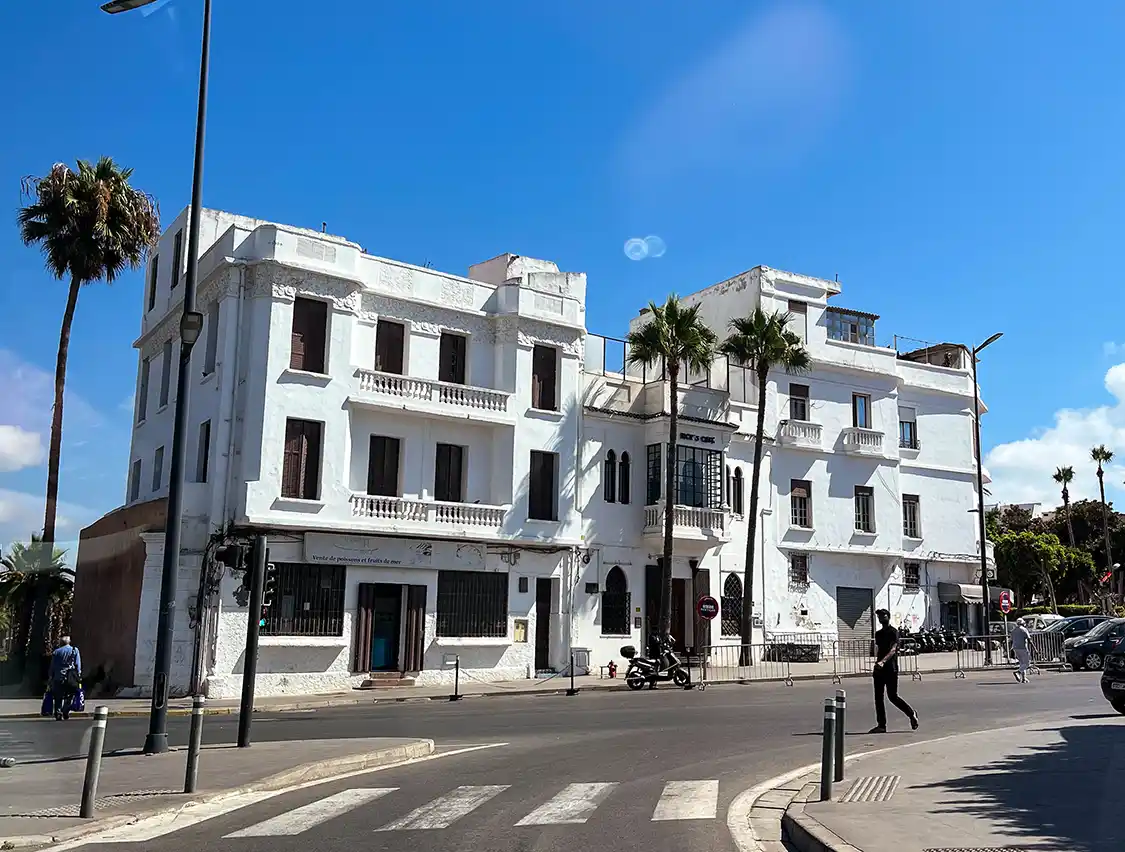
The iconic 1942 film Casablanca was shot entirely on studio lots in Los Angeles. Not one frame was filmed in Morocco. Humphrey Bogart never set foot in the city.
Which makes Rick’s Cafe, a painstaking recreation of the film’s nightclub built inside a genuine Casablanca riad in 2004, an odd piece of fiction made real. The cafe features arched doorways, brass lanterns, a grand piano, and a pianist playing ‘As Time Goes By’ on request. It’s a restaurant built entirely on a movie that only pretended to be here.
Is Rick’s Cafe touristy? Enormously. Is it worth doing once, especially if you or your kids have any interest in classic films? I’d say yes, if only for the story. Book ahead, dress reasonably well, and know you’re paying for the atmosphere rather than the cooking.
Morocco Mall and the Rainy Day Option
If you want an escape from the heat, Morocco Mall on the western edge of the Corniche is the largest shopping center in Africa, and it’s built for families. This place is a “Mall of America” type of place that features a full aquarium with a cylindrical tank you can descend through, an indoor ice rink (we forgot our hockey skates), a musical fountain, and a 6D cinema alongside the usual retail. I don’t know what 6D means, but it does sound cool.
It is a shopping mall, and I’m aware that recommending a mall in a guide to a Moroccan city is a slightly deflating thing to do. But sometimes you need a rainy-day option, especially if you’re in the city for an extended stay.
Art Deco Hunting
The best free activity in Casablanca is simply walking and looking up. The downtown core between Place Mohammed V and Boulevard Mohammed V is dense with 1920s and 30s architecture: curved balconies, geometric friezes, stained glass, and facades that fuse European Art Deco with Moroccan zellige and carved plaster. Look for the Bendahan Building, Cinema Rialto, and the Wilaya clock tower to start.
Turn it into a game with your kids. Give them a phone and a target number of interesting doorways, or ask them to find the strangest balcony. It costs nothing, it gets everyone walking through the real city, and it’s the single best way to understand what makes Casablanca different from anywhere else in Morocco.
Two churches are worth adding to the walk. The Cathedral of the Sacred Heart, a startling white Gothic and Art Deco hybrid from the 1930s, no longer functions as a church but hosts cultural events. Notre Dame de Lourdes, from 1954, is a modernist concrete church with enormous stained glass windows that flood the interior with color.
Practical Tips for Visiting Casablanca With Kids
When you’re planning your Casablanca itinerary, it’s good to know how long you should set aside to do the city properly. One to two days is enough for the highlights. Three is comfortable. Casablanca is not a city that requires a week, and there’s so much more to Morocco than just this city. Casablanca works well as either a soft landing at the start of a Morocco trip or a final stop before flying home, which is how we used it.
To help you plan, here are a few tips that’ll make your Casablanca travel experience even more memorable.
- Use the tram. Casablanca’s tramway is modern, clean, cheap, and covers most of what you’ll want to see. It’s also an easy way to get around with kids compared to negotiating taxis in traffic.
- Understand the taxis. The small red petits taxis work within the city and are metered, though you may need to remind the driver to use the meter. They’re shared, so a driver may pick up other passengers going the same direction. Larger white grands taxis handle longer routes and airport runs, and you agree the fare before you get in.
- Dress a little more conservatively than you might elsewhere in Morocco. Casablanca is the most liberal city in Morocco, and you’ll see a wide range of dress, but covered shoulders and knees will make everyone more comfortable, particularly at the mosque and in the medina.
- Fridays are quiet. Many shops close for midday prayers, and the Habous in particular winds down. Plan accordingly.
- Carry small change. For taxis, tips, market purchases, and the attendants at public toilets, small dirham notes and coins are essential.
- The airport is well connected. Mohammed V International is about 20 miles (30 km) south of the city, with a direct train to Casa Voyageurs and Casa Port stations taking around 45 minutes. It’s cheaper and often faster than a taxi in traffic.
For more on traveling in the country with children, see our Morocco family travel tips and our Morocco packing list.
Travel Resources for Families Visiting Morocco
For practical planning, safety considerations, and logistics, these dedicated guides provide deeper support for families interested in travel to Morocco.
Casablanca With Kids: Frequently Asked Questions
They’re not really competing. Marrakech is the sensory overload, the labyrinthine medina, the riads and the souks and the snake charmers. Casablanca is boulevards, Art Deco, ocean air, and a city that goes to work in the morning. If you only see one, see Marrakech. If you want to understand modern Morocco rather than its greatest hits, Casablanca has more to say. Ideally, see both, since they’re a three-hour train ride apart.
Two days cover the highlights comfortably. Three lets you slow down, add the Corniche and a beach afternoon, and wander the Art Deco districts properly. We had two and didn’t feel cheated. More than four and you’ll start running out of city.
Broadly, yes. Casablanca is a large city with the usual big-city considerations: keep an eye on valuables, use registered taxis after dark, and stay aware in crowded markets and around the port. Violent crime against tourists is rare. The most common annoyances are persistent touts and taxi drivers who forget the meter exists. We traveled with our kids without any issues, and Moroccans are, as a rule, extraordinarily welcoming toward children.
Yes, and this is unusual in Morocco. The Hassan II Mosque is one of the very few in the country that admits non-Muslims, and you visit on a guided tour of roughly 45 minutes rather than wandering independently. Tours run several times daily outside prayer times, with a reduced Friday schedule and adjusted hours during Ramadan. Shoulders and knees should be covered, head coverings aren’t required, and you’ll remove your shoes at the entrance.
You don’t need it, but it helps more than Arabic will. French is the working language of business, signage, restaurants, and daily life in Casablanca in a way it simply isn’t in Fes or Marrakech, which is a direct legacy of the protectorate era that built the modern city. Menus are frequently French-only. A handful of French phrases will carry you further here than anywhere else in the country. English is common in hotels and tourist-facing businesses but thins out quickly beyond them.
The Hassan II Mosque and its record-setting minaret, its extraordinary Art Deco and Mauresque architecture, being Morocco’s economic and business capital, and a 1942 Hollywood film that was shot entirely in Los Angeles and never came anywhere near the place.
The tram is modern, clean, cheap, and covers most of what visitors want to see, which makes it the easiest option with kids. Small red petits taxis handle short hops within the city and are metered, though you may need to prompt the driver. Larger white grands taxis cover longer distances and airport runs at an agreed fare. The downtown core is also walkable, which is the best way to appreciate the architecture.
Is Casablanca Worth Visiting?
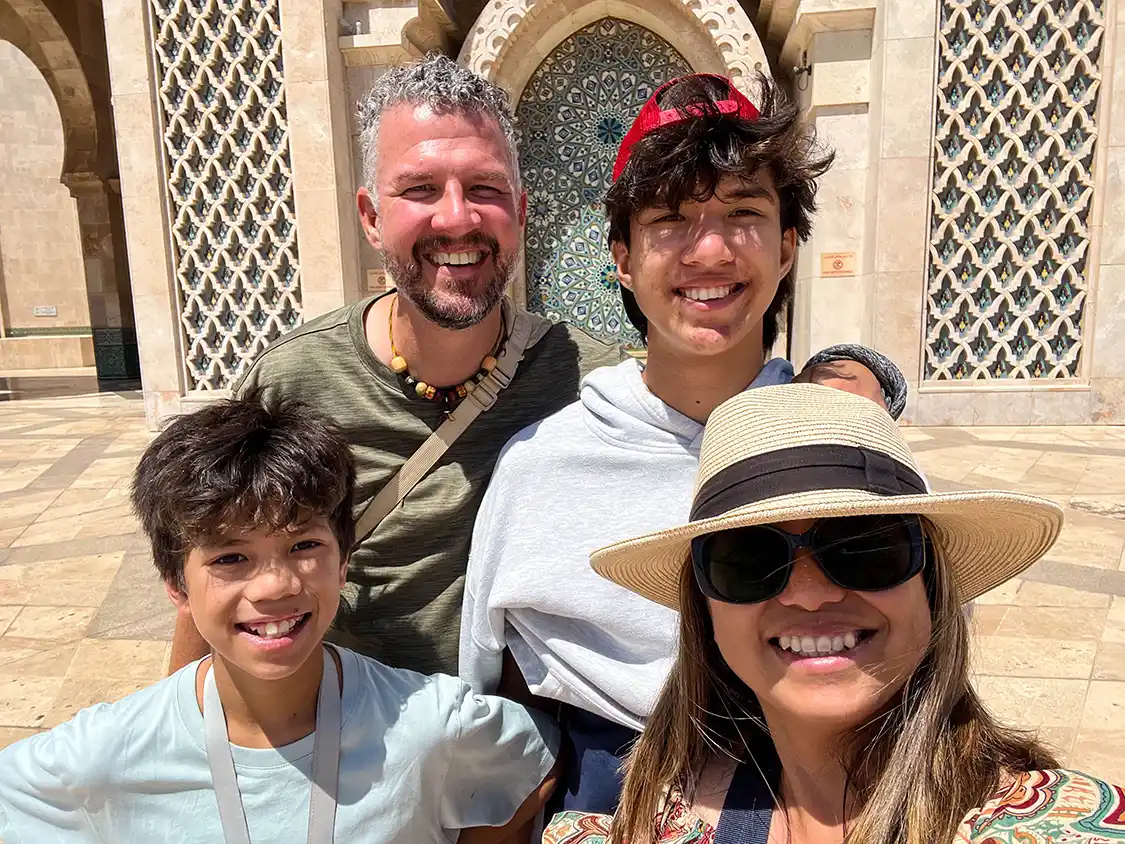
Yes, Casablanca is worth visiting. Not for as long as you’d give Fes or Marrakech, but it’s a fascinating and beautiful city.
Casablanca is the city that most Morocco itineraries treat as an airport with a mosque attached, and that’s a genuine shame. This is where modern Morocco actually happens: the business, the traffic, the money, the ambition, the enormous architectural experiment the French left behind and the Moroccans have been living inside ever since.
Coming here at the end of a six-country African journey, and at the end of our second trip through Morocco, Casablanca gave us something the rest of the country hadn’t: a Morocco that felt contemporary rather than preserved. A city that isn’t performing for anyone.
Give it two days. Stand under that mosque. Eat the cookies. Walk the boulevards and look up at the balconies. Then decide for yourself whether the people telling you to skip it knew what they were talking about.
You Mauy Also Like To Read: