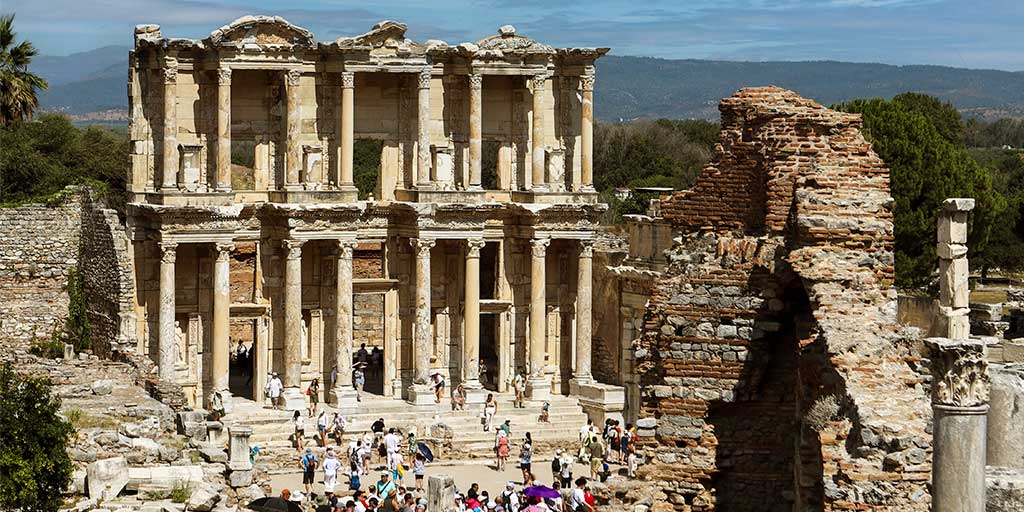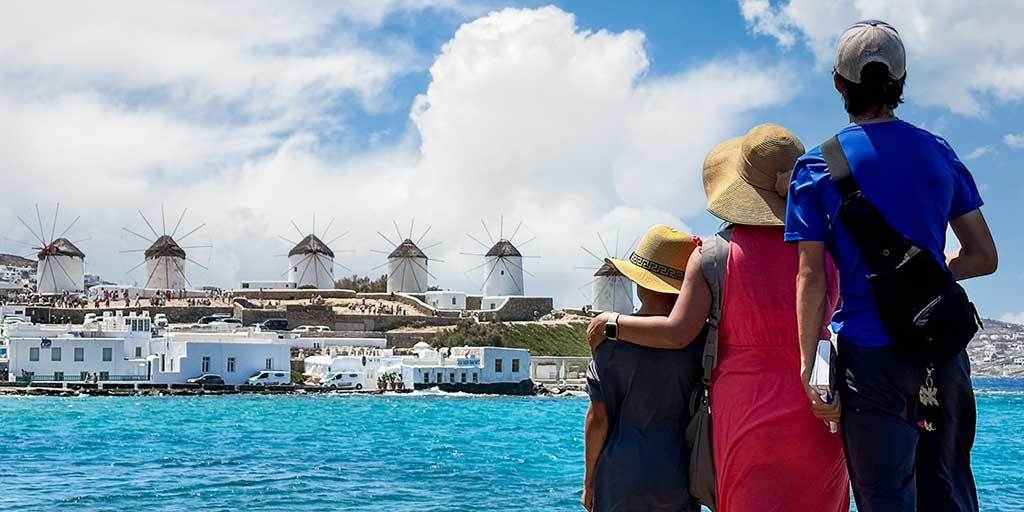
From the ancient ruins of the mainland to the sun-soaked beaches of the Cyclades, these are the best places to visit in Greece with your family, and how to choose the ones that fit your trip.
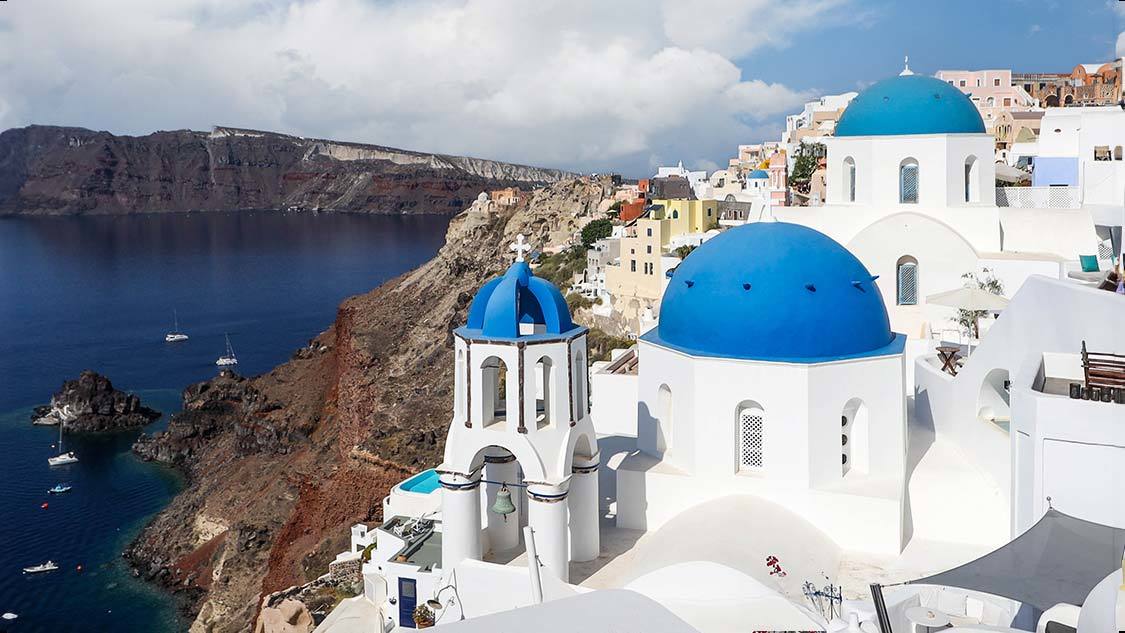
My family’s obsession with travel in Greece started with a book. My boys, Dylan and Cohen, were deep into Rick Riordan’s Percy Jackson series, tearing through pages filled with the stories of demigods and Olympians, when they decided the one place they had to see was Greece. So, as any travel-loving parents would do, we planned out a road trip that would show them the best experiences from the stories that they loved.
But the trip was more than I had ever hoped for. Instead of being a one-time jaunt, we kept going back. The first trip back was just three months later. We’ve traveled through Greece in very different ways: a self-drive road trip through the mainland’s ancient heart, from Athens down through the Peloponnese and up to the monasteries of Meteora, and a Greek islands cruise hopping the Cyclades. Between them, my family and I have stood in more ancient theatres, wandered more whitewashed villages, and eaten more gyros than I can count.
Here’s the honest truth about Greece: it is almost too much country for one trip. Five thousand years of history, thousands of islands, mountains, gorges, and some of the best food and friendliest people anywhere make for a lot of experiences for one trip. So this guide does two things. It walks you through 22 of the best places in Greece that I’d send any family, grouped into the mainland and the islands, each with a quick read on who it suits and what not to miss.
And before that, it helps you actually choose, because you cannot do all of Greece at once without a near-limitless travel schedule, and the right Greece travel experience for a family with toddlers is not the right Greece for one with teens. For the full planning picture, pair this with my Greece family travel guide.
Quick Planner: Visiting Greece With Kids
Two sides to Greece: The mainland is history, mountains, and road trips. The islands are beaches, whitewashed villages, and slow days. Know which Greece you’re signing up for before you go.
Getting around: Rent a car for the mainland, and hop the islands by ferry or on a cruise. Athens itself is walkable.
How long: A week to do one region well, or ten to fourteen days to combine the mainland and a few islands.
Best time: Late spring (April to June) and early autumn (September to October) for warm weather and thinner crowds. July and August are hot and busy.
Best for first-timers: Athens, Delphi, and Santorini.
Don’t miss: Sunset over the monasteries of Meteora, and the moonscape beach of Sarakiniko on Milos.
Choosing Where To Visit In Greece
In my guide to Greece family travel, I’ve listed out the 22 best places to visit in the country. Unless you’re planning a one-month visit to the country, you aren’t likely to see all 22 in one trip. Rather than jamming all of these Greek travel experiences into one trip, I recommend choosing what kind of Greece trip you want to experience.
- For first-timers: Athens, Delphi, and Santorini for the historic icons from epic odysseys.
- For history and mythology: Delphi, Mycenae, Olympia, Epidaurus, and Mystras.
- For beaches and relaxation: Milos, Crete, Kefalonia, Kalamata, and Halkidiki.
- For families with young kids: Naxos and Crete for shallow beaches and an easy pace, plus Milos for its calm swimming coves.
- For teens and adventures: Meteora for rock climbing, Kefalonia for sea caves and snorkeling, and Milos for its rock arches.
- For escaping the crowds: Sifnos, Monemvasia, Naxos, and Mystras.
- For a first island-hopping experience: the Cyclades loop of Milos, Mykonos, Naxos, and Santorini.
How To Plan Your Family Trip To Greece
The biggest choice that most families make when planning travel to Greece is where to visit. And the big choice comes down to whether your travels should be focused on the Mainland or the islands.
The mainland is where much of Greece’s ancient history lives, and it’s best explored on a road trip beginning in Athens. The islands have their own unique history. But most visitors come for the beaches, sunsets, and a much-needed slow down,/ from the rigors of everyday life back home.
The islands are typically reached by ferry or, as we did, on a cruise. If you have the time, combine them: a week of mainland driving followed by a few days island-hopping is a dream family trip. See my Greek road trip itinerary and Greek islands cruise itinerary for the routes I’d actually follow.
As for the big question of “How many days?” Well, a lot of that depends on how much you have available to give. I recommend each region gets a week to 10 days. If you want to do the whole route through both the mainland and the islands. 14 days is about the minimum I’d recommend setting aside.
You’ve figured out how much time you have, and where you want to hit. The next big question is “When to go?”
I’ve visited in both late spring and high summer, and the difference is astonishing. The shoulder seasons (April to June and September to October) bring warm weather, open sites, and far fewer crowds. July and August are peak: hot, gorgeous, and packed. Winter is cold, and many island services and some sites close, especially on the islands.
Why Should You Travel To Greece
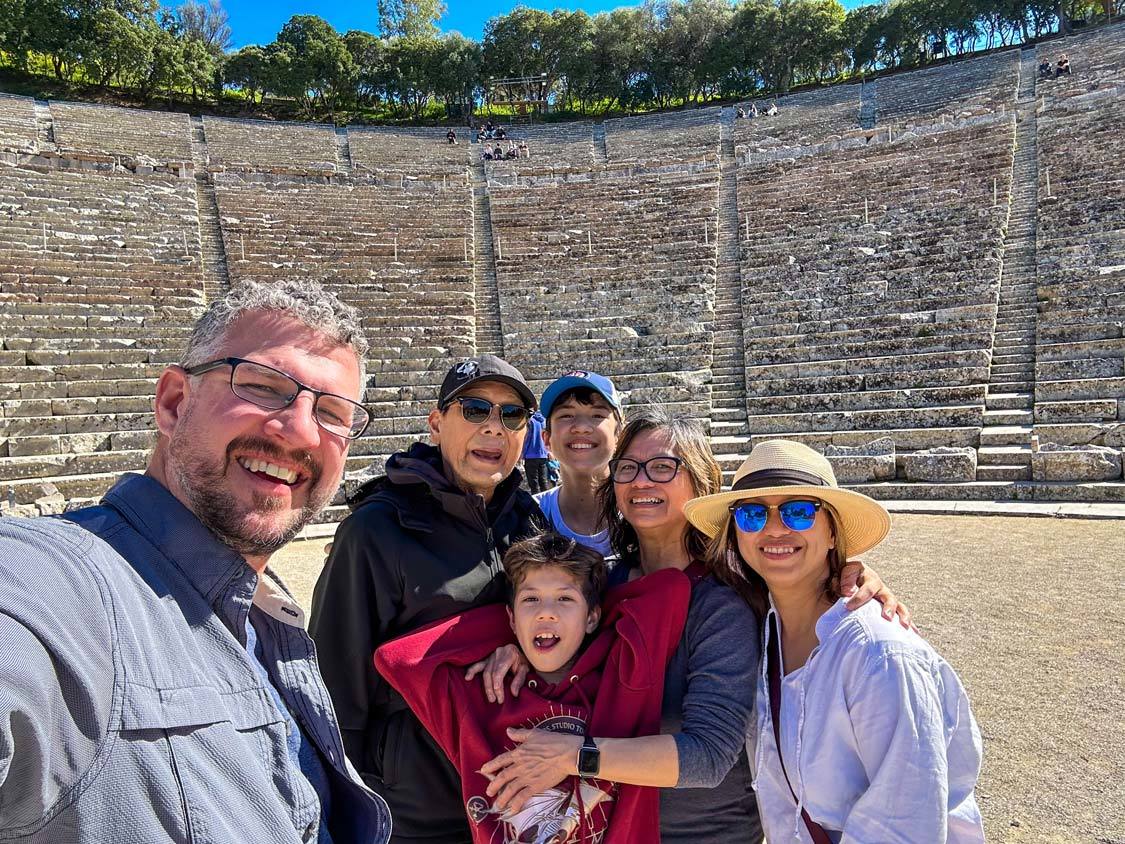
We knew before we even left home that Greece was going to be incredible. It is, after all, one of the top destinations for family travel in the world. And with good reason. Greece, as a country, can trace its history back a stunning 5,000 years. That’s a date that puts it on par with the building of the famous Step Pyramid in Egypt. Unlike many countries, the history of this incredible Mediterranean nation is recorded in detail.
The famous stories of Greek Gods on Mount Olympus can be tracked through some of the country’s most famous ruins, such as the Acropolis in Athens, the ruins of Delphi, and the Palace of Knossos on the island of Crete.
Greece helped to shape the world as we know it today.
But the allure of Greece goes far beyond its history. The country’s culture and culinary scene manage to cast its spell on travelers to this day, and with a vast coastline, stunning mountains, and some of the world’s best beaches, the natural beauty of Greece alone makes it a destination worthy of family travel.
Best Places To Visit On The Greek Mainland
If you’re planning your travels and are wondering where to visit on the Greek mainland, you’ve come to the right place. Below, I lay out all of the best places to visit in the country and what makes each one so special.
Athens
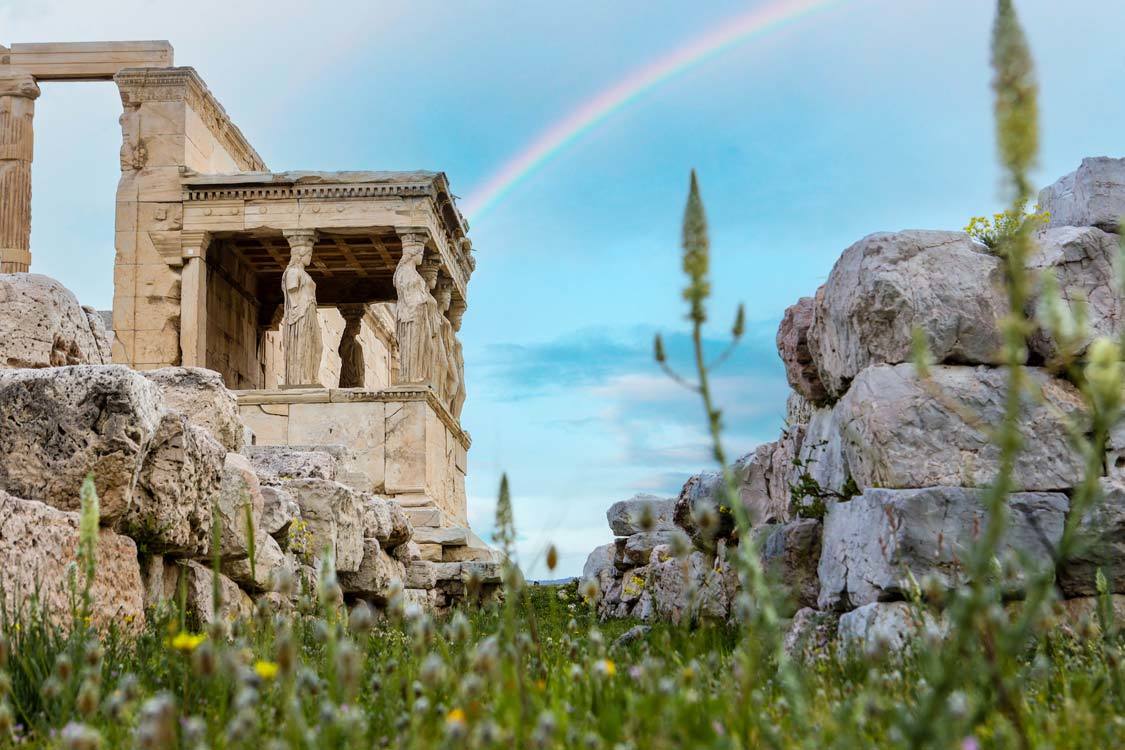
Let’s face it: all roads through Greece begin in Athens. This is the country’s capital and its largest city. Athens has been at the heart of Greece for millennia, and it’s home to some of the country’s most famous attractions, the Acropolis and the Parthenon.
We visited Athens for the first time in March 2023. We spent two days in Athens exploring the city’s most incredible attractions. We loved it so much that we returned to the city on our Greek Island cruise with Celestyal to lay out an additional one-day Athens itinerary. Both trips were totally unique and let us experience a wide range of the city’s attractions.
Athens is Europe’s oldest capital city, and it’s also home to the oldest street in Europe, Tripodon Street, in the city center. While the city’s history is its biggest draw, it is also a modern cosmopolitan hub. As you venture out from the historic center, with its narrow cobblestone streets and ancient monuments, you’ll find incredible museums and art galleries, amazing shopping, and some of the country’s best restaurants.
Central Athens is very family-friendly and easy to travel on foot. You’ll want to spend about two days exploring famous spots such as the Plaka, the Monastiraki shopping district, and the first modern Olympic stadium.
- Best for: first-timers and mythology-loving kids.
- Don’t miss: the Acropolis and Parthenon, the Plaka and Monastiraki districts, and the first modern Olympic stadium.
- Good to know: give it two days to do it justice.
- Read more: Two Days in Athens or the tighter one-day Athens itinerary.
Delphi
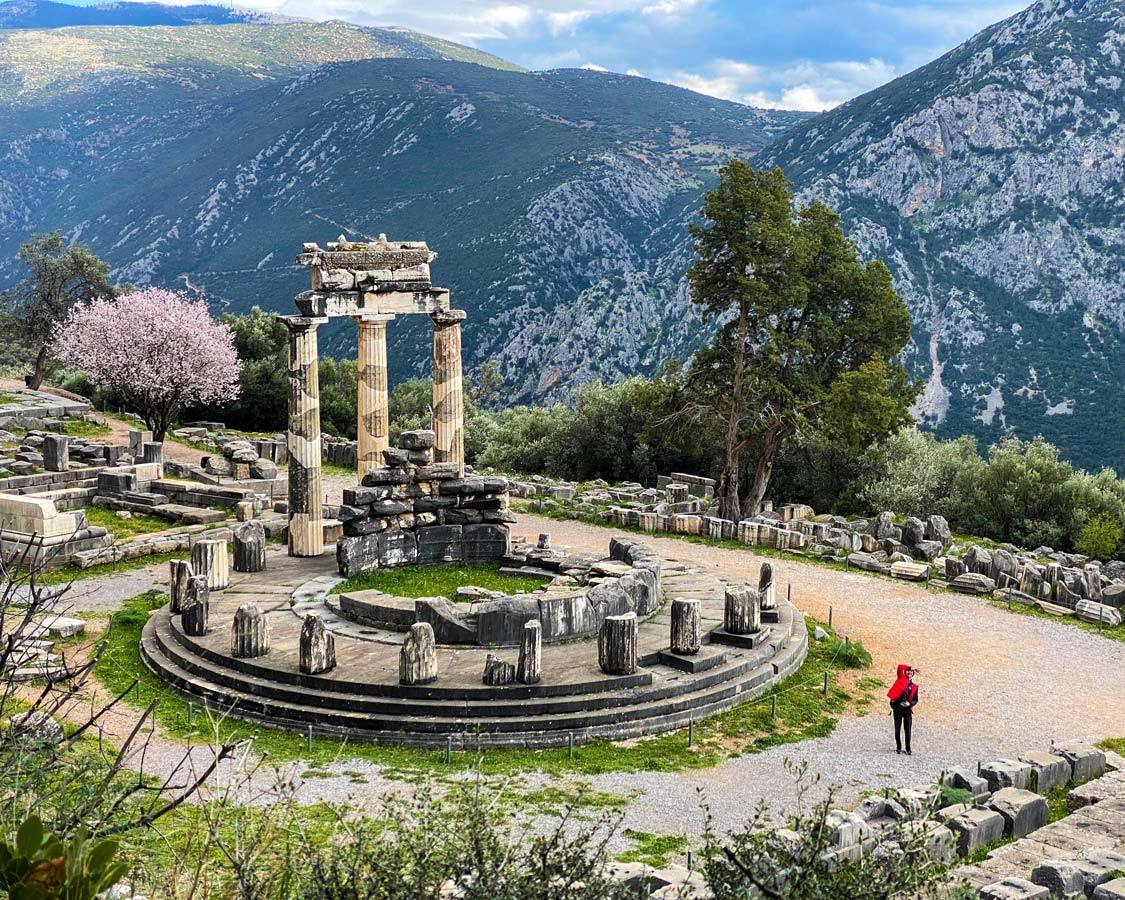
If you’re a fan of Greek mythology, Delphi is likely near the top of your list of places to go in Greece. This ancient mountaintop temple was home to the Oracle of Delphi, who was believed to have delivered prophecies from the God Apollo from atop a rock.
On this temple complex on the Mountain of Parnassus, the Temple of Apollo is still standing, along with the rock from which the prophecies were delivered. Along with many temples and buildings, you’ll also find an ancient Olympic oval and the beautiful Athena Treasury.
We spent about three hours exploring the ruins of Delphi. We could have easily spent another hour or more. The visit involves a lot of steep walks on slippery marble, so make sure you wear grippy shoes.
Delphi is located about two and a half hours from Athens and makes a popular day tour from the city. This is one of the most popular tour options from Viator.
- Best for: mythology and history.
- Don’t miss: the Temple of Apollo, the prophecy rock, and the Athena treasury.
- Good to know: it’s a lot of steep walking on slippery marble, so wear grippy shoes; budget about three hours, roughly two and a half hours from Athens.
- Popular tour: Delphi tour from Athens.
- Read more: You can read my complete guide to visiting Delphi here.
Halkidiki
Located on a series of narrow peninsulas jutting out into the Aegean Sea in northern Greece, not too far from the city of Thessaloniki, Halkidiki is an off-the-beaten-path Greek destination that families will love for its impossibly blue water and soft, sandy beaches.
While we didn’t get to Halkidiki on our visit to Greece, it’s high on our list of places to visit when we return.
The region is known for its crystal-clear waters and exciting beach scene that draws families from across Europe and the world to high-end resorts such as Ikos Olivia. Each of the Halkidiki peninsulas offers a unique charm that ranges from the energetic to the laid-back. The region isn’t without its own history either. Nearby is the historical Mount Athos, a monastic city dating back 1,200 years.
- Best for: beaches and relaxation.
- Don’t miss: the beaches themselves, and a glimpse of nearby Mount Athos, a 1,200-year-old monastic city.
- Good to know: it’s on my family’s return list, an easy add-on to a northern Greece trip.
Epidaurus
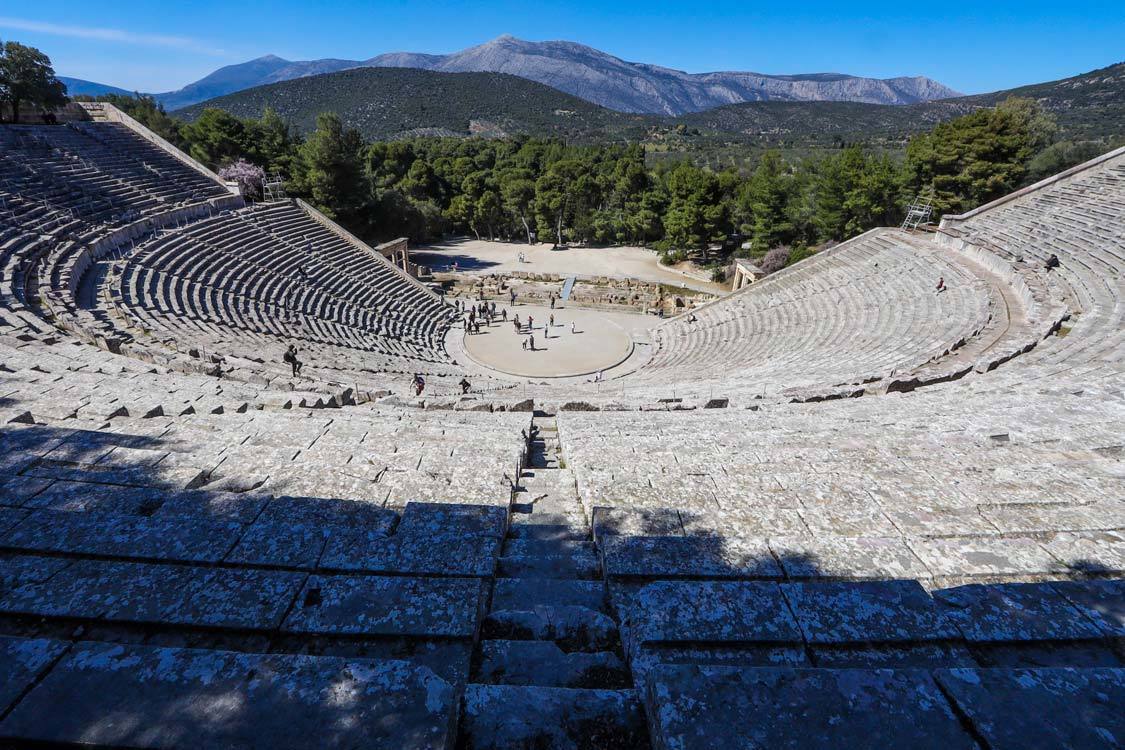
Located south of Athens in the northeast of the Peloponnese, Epidaurus is one of the most popular archaeological destinations in Greece. What makes it so famous is the incredible quality of the ruins of this ancient city that was built around 400 BCE.
While you’ll find amazing buildings throughout this UNESCO World Heritage Site, the most famous is the remarkable ancient theater, which still hosts concerts and performances to this day. Tickets to the Greek dramas, concerts, and festivals at Epidaurus sell out incredibly fast. If you have a chance to book one, I highly recommend it.
- Best for: history and a jaw-dropping acoustics demo.
- Don’t miss: standing on the stage marker and testing the sound for yourself.
- Good to know: it pairs naturally with Mycenae and Nafplio on a Peloponnese loop.
- Read more: You can read all about our visit to Epidaurus, Greece, here.
Meteora
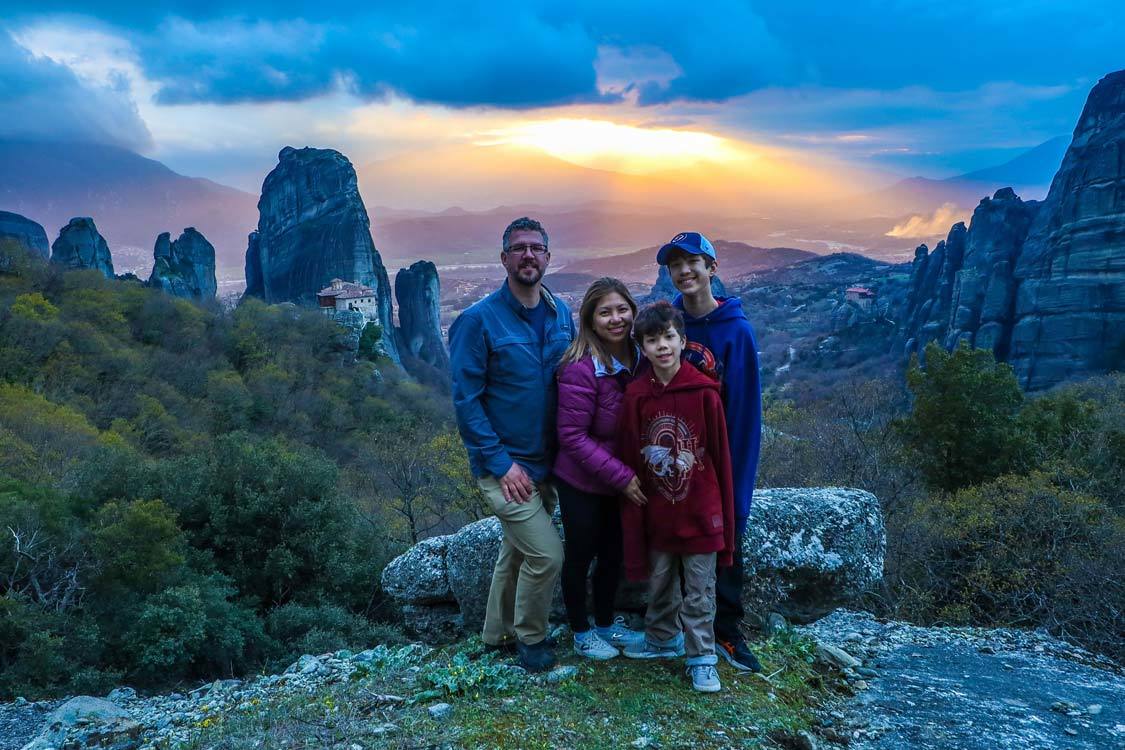
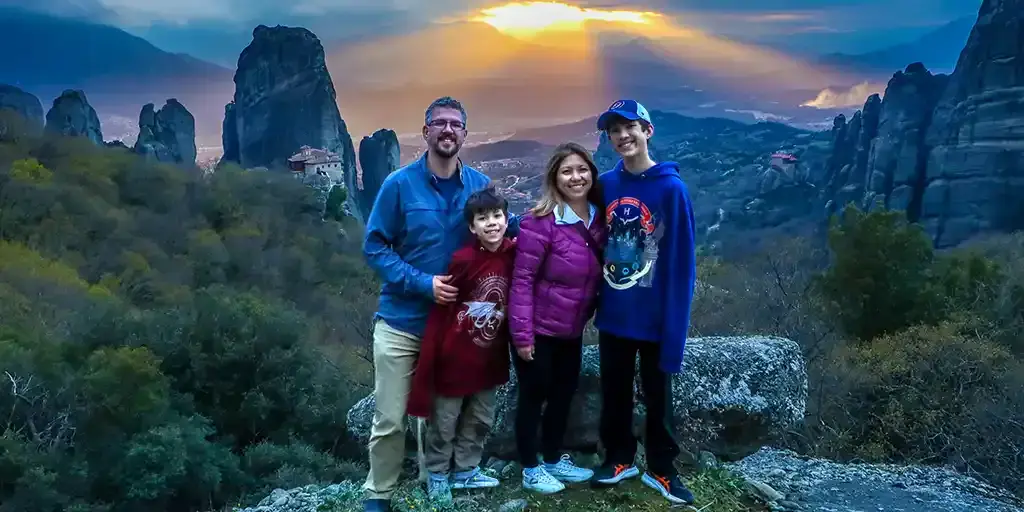
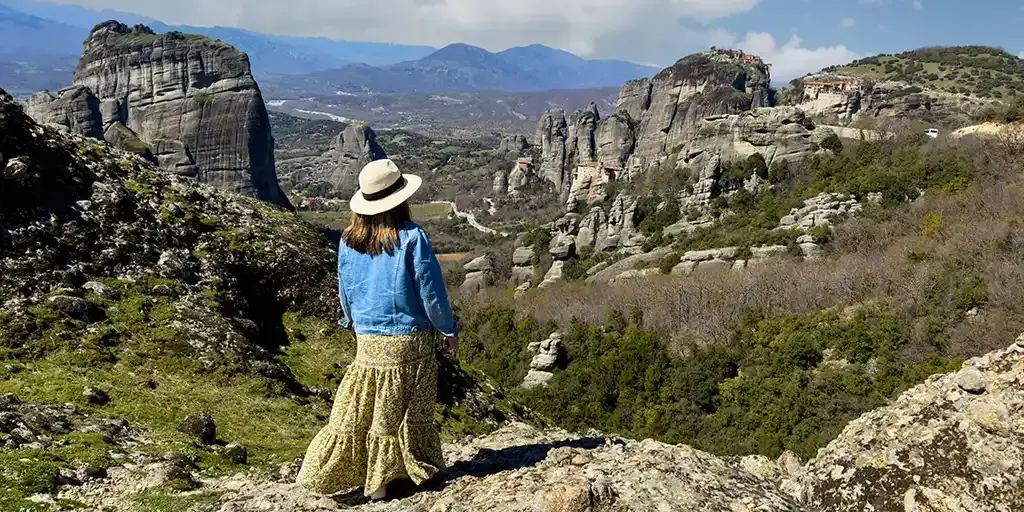
Wow, just wow. Meteora may be one of the most beautiful places that I have ever visited. Do not miss the sunset over this magical landscape.
Located in the region of Thessaly, just outside the town of Kalabaka, right in the center of Greece, Meteora is made up of many vertical mountaintops that have been carved out by fault lines and erosion to create one of the most unique and awe-inspiring landscapes in the world, comparable to Cappadocia, Turkiye, but far more lush and green.
Located at the top of many of these mountains is a collection of beautiful hermit-like monasteries and nunneries, as well as cave churches that can be traced back to the 11th century CE. If you love hiking and climbing, Meteora is an absolute paradise. You’ll find plenty of outdoor tours that can take you into some of the hidden areas of these mountains. This tour is the perfect introduction to rock climbing.
- Best for: jaw-dropping scenery and families who love hiking and climbing.
- Don’t miss: sunset over the monasteries.
- Good to know: if your family loves to hike and climb, this is paradise.
- Cool tour: introduction to rock climbing in Meteora.
- Read more: My complete guide to Meteora, Greece.
Thessaloniki
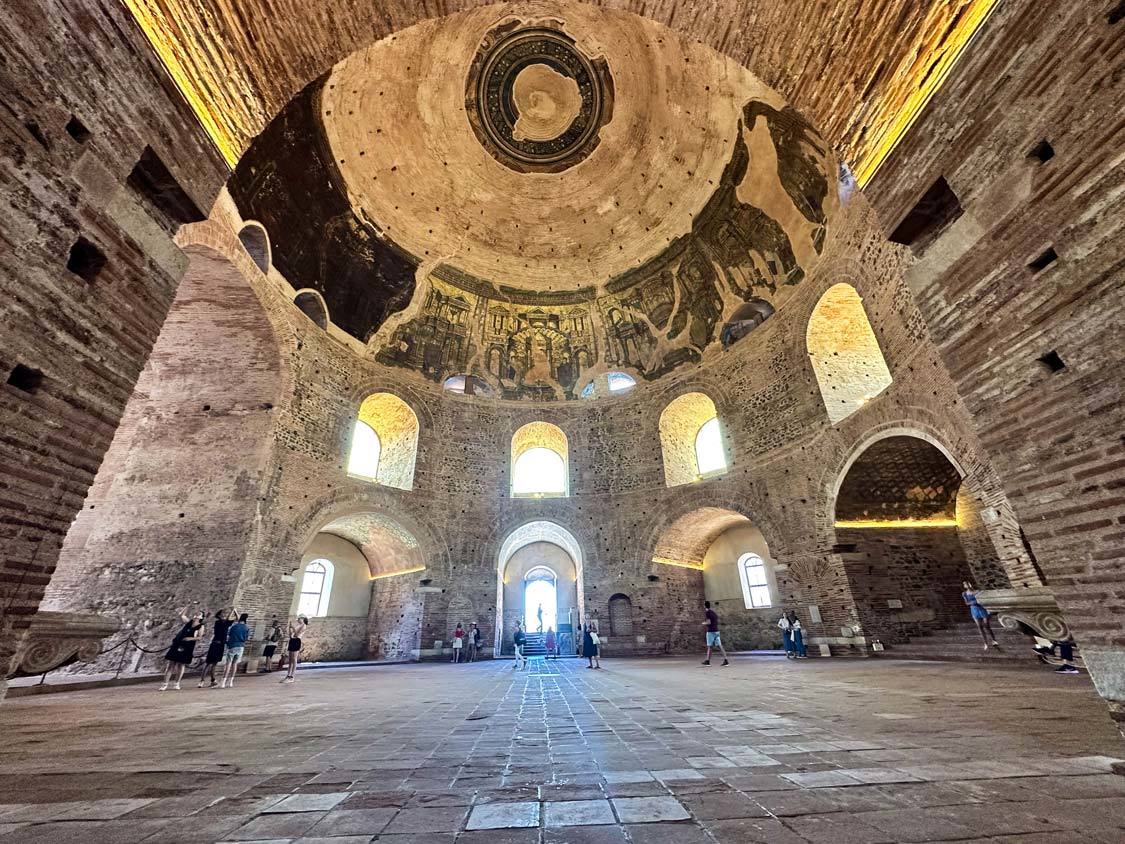
The city of Thessaloniki is the second-largest city in Greece. It was the last stop on our Aegean Cruise through the Greek Islands before heading back to Turkiye.
At first glance, you’d be hard-pressed not to mistake the streets of Thessaloniki for Paris. That’s because the architect who was charged with designing the city’s layout was Parisian, and he wanted to model the city after his home.
While we were in Thessaloniki, we took in the views from the beautiful “White Tower” along the waterfront before strolling through the town to see Hadrian’s Wall, before making a stop at the Hagia Sophia. No, not THAT Hagia Sophia, which we had seen while exploring Istanbul with our kids. This Hagia Sophia is much smaller and less intricately adorned, but its history uniquely parallels that of its more famous sister in Istanbul.
Thessaloniki is known for its lively atmosphere, vibrant street life, and thriving culinary scene. The city’s waterfront promenade, stretching along the Aegean Sea, is a popular spot for leisurely strolls, offering panoramic views of the sea and the cityscape. Meanwhile, Thessaloniki’s diverse neighborhoods boast an array of trendy cafes, traditional tavernas, and chic boutiques, creating a dynamic urban experience.
- Best for: urban energy, food, and older kids.
- Don’t miss: the White Tower, the waterfront promenade, and the city’s own Hagia Sophia.
- Good to know: it’s the natural base for exploring northern Greece and Halkidiki.
- Read more: My complete guide to spending one day in Thessaloniki.
Messolonghi
Messolonghi is another of the places on my Greece bucket list for when my family returns. Located on the edge of the Kilsova Lagoon along the Ionian Sea in the west of Greece, this beautiful fishing town played a crucial role in the Greek Revolution in the early 1800s. The town’s defense against Ottoman forces is celebrated across the country every year.
This is one of the country’s hidden gems. Few tourists have had the luck of stumbling upon it yet. Those who do are welcomed with some spectacular attractions, such as the Garden of Heroes, which commemorates the fallen soldiers from the Greek Revolution and the country’s struggle for independence.
The unique lagoon that the city sits on the shores of spans over 160 kilometers and is a protected wetland renowned for its biodiversity and birdlife. It’s a fantastic spot for outdoor lovers and those who enjoy kayaking, hiking, and boating.
- Best for: history buffs and nature lovers who want to go where tourists don’t.
- Don’t miss: the Garden of Heroes and kayaking or boating in the protected lagoon wetlands.
- Good to know: it’s a bucket-list stop for my family rather than one we’ve reached yet.
Olympia
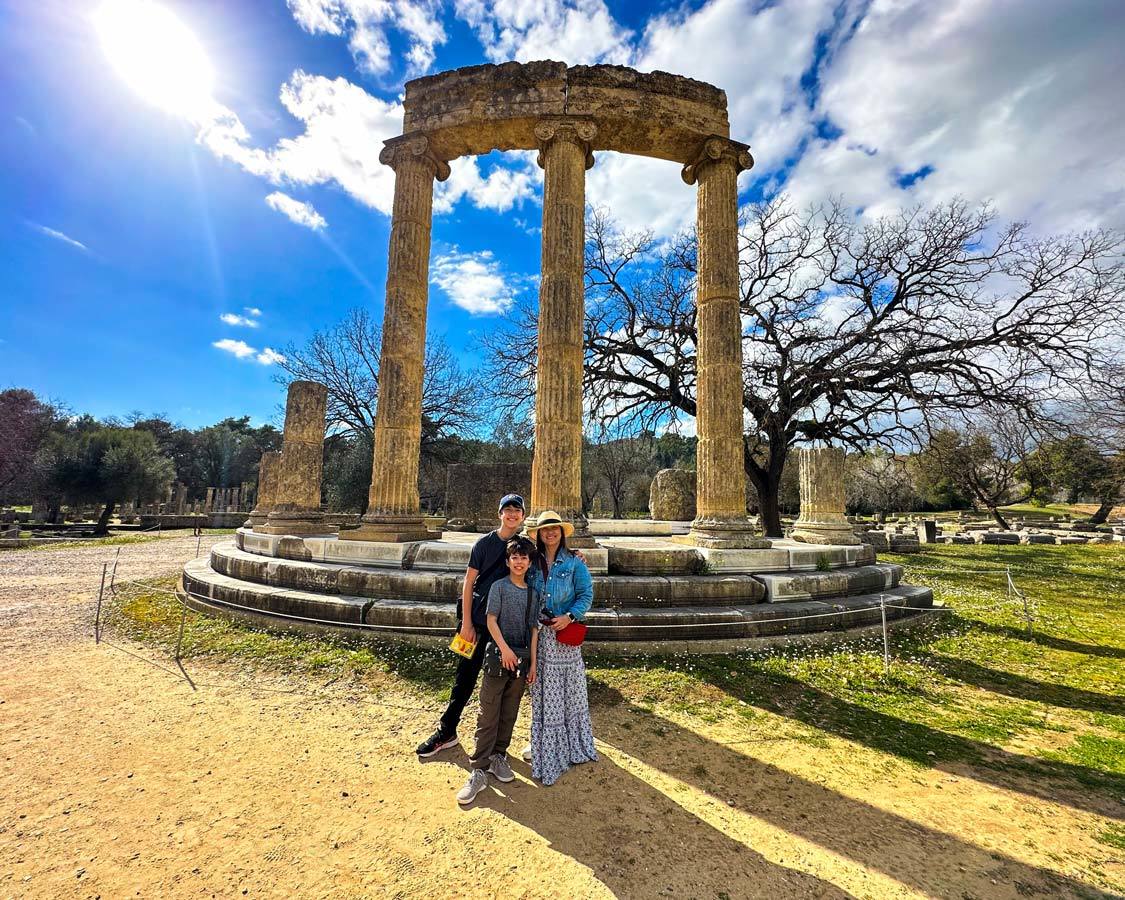
Sports have always been a big part of my family. My kids both play high-level hockey and are involved in track and field. I was a swimmer and competed in track and field in my youth. So when we had the chance to visit the place where it all got started, there was nothing that was going to stand in our way.
Olympia is one of the top places to visit in Greece for history and sports enthusiasts. After all, this former urban powerhouse was the location of the very first Olympic Games over 3,000 years ago. While the site is mostly in ruins, you can still visit the ancient stadium as well as the very first Olympic Oval. If you look closely, you can still make out the starting lines. Olympia also has two stunning temples, the temples of Zeus and Hera.
We only had a very short time to visit, as we were coming to Olympia after visiting Delphi. But I’d recommend giving yourself at least a couple of hours to see Olympia thoroughly.
- Best for: sporty families and history lovers.
- Don’t miss: the original stadium with its ancient starting lines still visible, and the temples of Zeus and Hera.
- Good to know: give yourself at least a couple of hours to see it properly.
Sounion
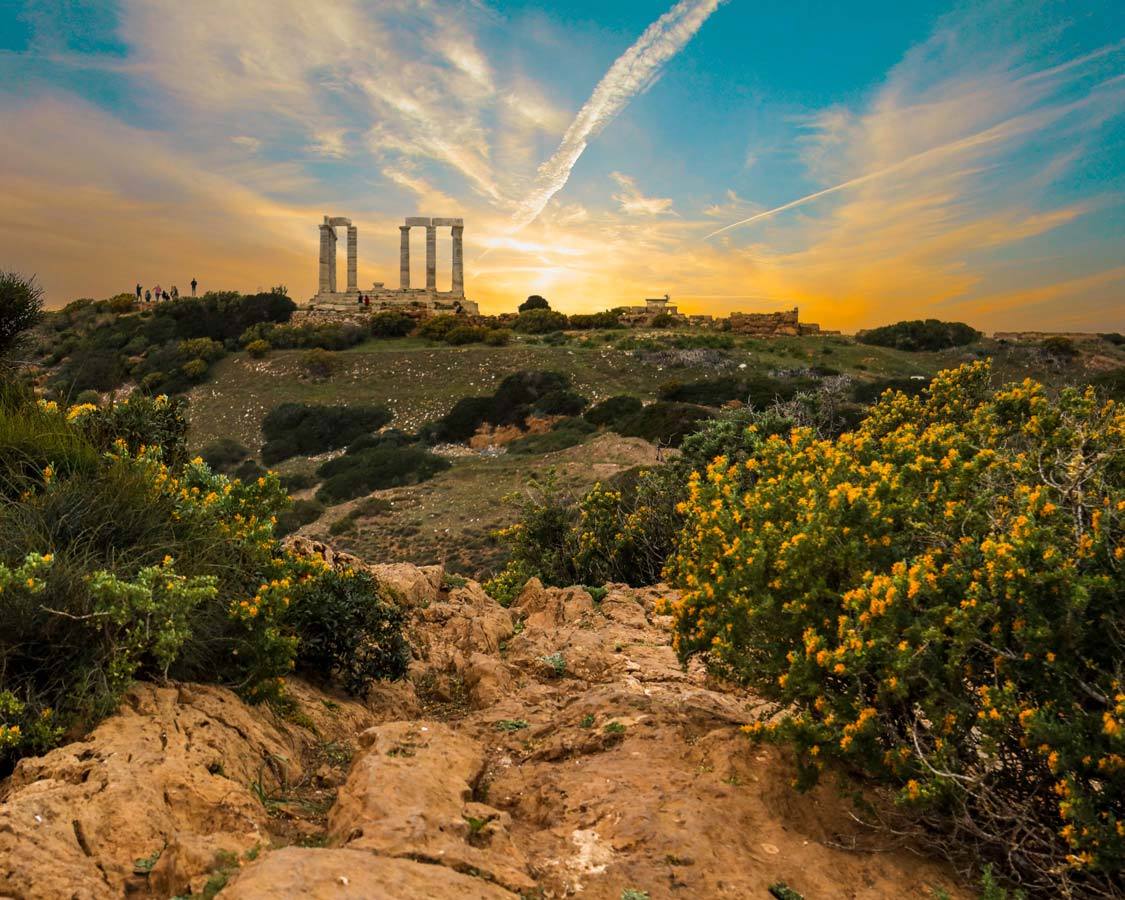
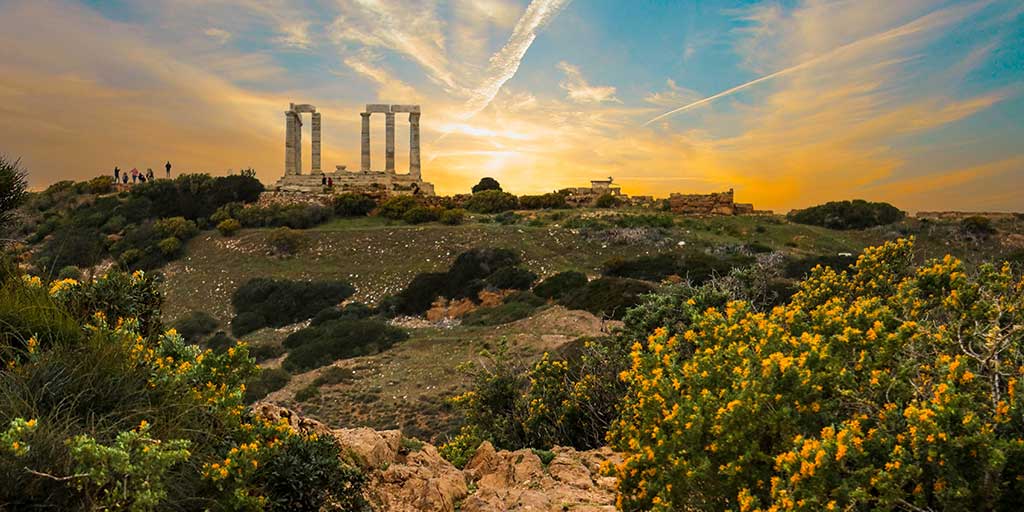
The town of Sounion on the southern tip of the Attica Peninsula, about an hour from Athens, was my family’s first stop in Greece. As I mentioned earlier, my boys’ love of the story series Percy Jackson and the Olympians fueled our desire to visit this country. And Percy Jackson himself was the son of Poseidon.
Well, Sounion is home to the Temple of Poseidon, so there was no better place to start our family travels in Greece than this historic destination. This historic temple was built between 444 and 440 BCE and was dedicated to the famous God of the Sea. It’s perched dramatically atop a cliff overlooking the Aegean Sea, and there are breathtaking views from around it, especially at sunset.
The Temple of Poseidon isn’t Sounion’s only claim to fame, though. This quaint fishing town is surrounded by gorgeous landscapes and beautiful beaches. It’s a popular summer getaway known for swimming, snorkeling, and its coastal hiking trails.
- Best for: a sunset day trip from Athens and mythology fans.
- Don’t miss: the temple at sunset, and a swim at the beaches below.
- Good to know: an easy hour from Athens, with gorgeous coastline for swimming, snorkeling, and a coastal hike.
- Read more: You can read all about our visit to the Temple of Poseidon right here.
Nafplio
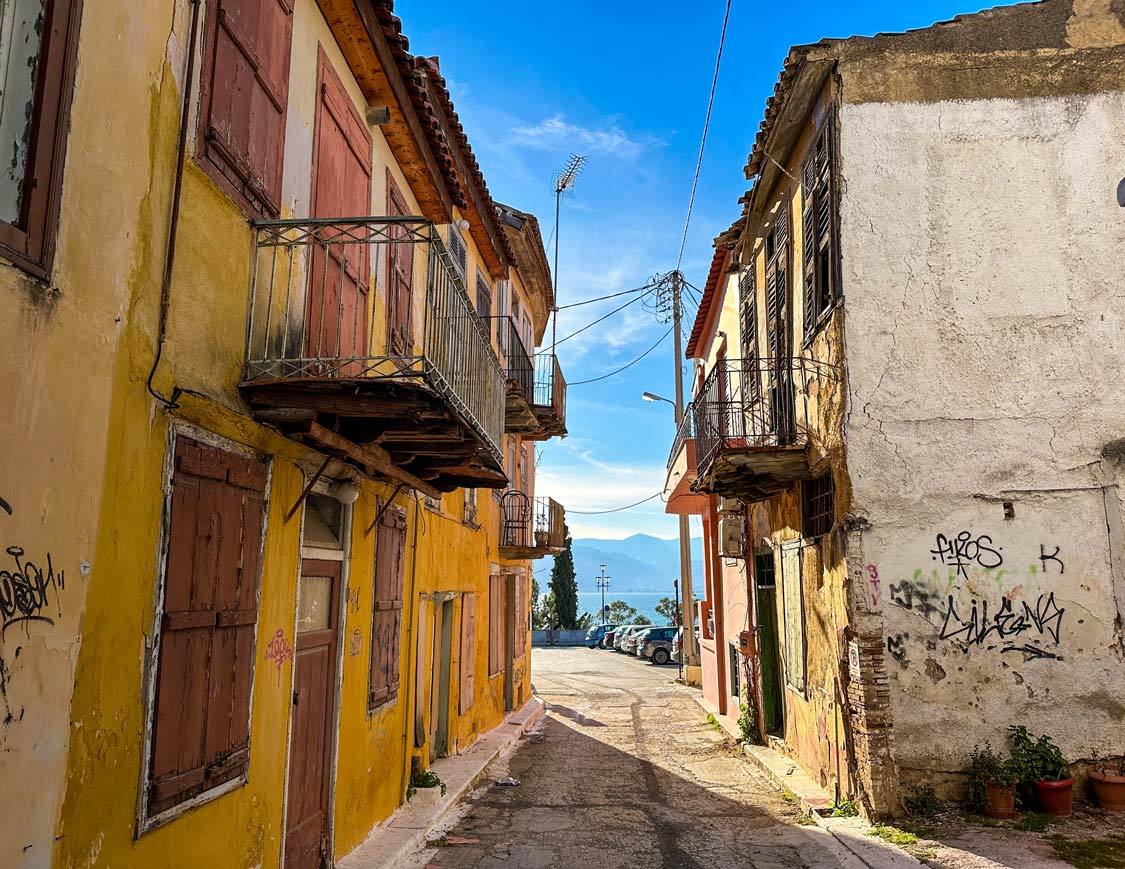
As we were following in the footsteps of Poseidon through Greece, the next stop after the Temple of Poseidon in Sounion was the town founded by Poseidon’s son, Nafplios. The town of Nafplio.
The city was first founded under the name Argolis around 1600 BCE. It fell into disrepair for over a thousand years around 1000 BCE, but its rise began around 129 CE, and it’s now one of the most popular places to go in Greece. Nafplio’s Old Town is a labyrinth of narrow cobblestone streets and waterfront plazas. The streets are lined with historic buildings, and while many of them are in need of repair, that simply adds to the city’s authentic charm.
Don’t miss a stop at Palamidi Fortress, a historic Venetian fortress. You can either climb the 999 steps to the castle or do what we did, which was drive up and save our legs. The castle offers a tremendous overlook of the city and the unique Bourtzi Fortress, a distinctive fortress and former prison located on an island just a short distance from land.
- Best for: wandering pretty towns and a gentler pace.
- Don’t miss: the Palamidi Fortress high above town (999 steps, or you can drive), and the little Bourtzi fortress on its island.
- Good to know: we chose to drive up to the fortress rather than climb, and I have no regrets.
- Read more: You can see all the best things to do in Nafplio here.
Kalamata
Far south in the Peloponnese is the city of Kalamata, home to the famous olives and the ancient ruins of Messenia. This is a quiet region of Greece that doesn’t see too many tourists, even during peak season, which is a shock as it is home to one of the most beautiful beaches in Greece.
Navarino Lagoon Beach is a pristine stretch of coastline along the waters of Navarino Bay. It’s known for its idyllic horseshoe shape, soft golden sands, and crystal-clear turquoise water set amidst a backdrop of lush vegetation and rugged cliffs.
- Best for: beaches and a slower, less touristy Greece.
- Don’t miss: the soft golden sands of Navarino Lagoon Beach, and the ruins scattered across ancient Messenia.
- Good to know: it rewards travelers willing to drive a little farther south.
Mycenae
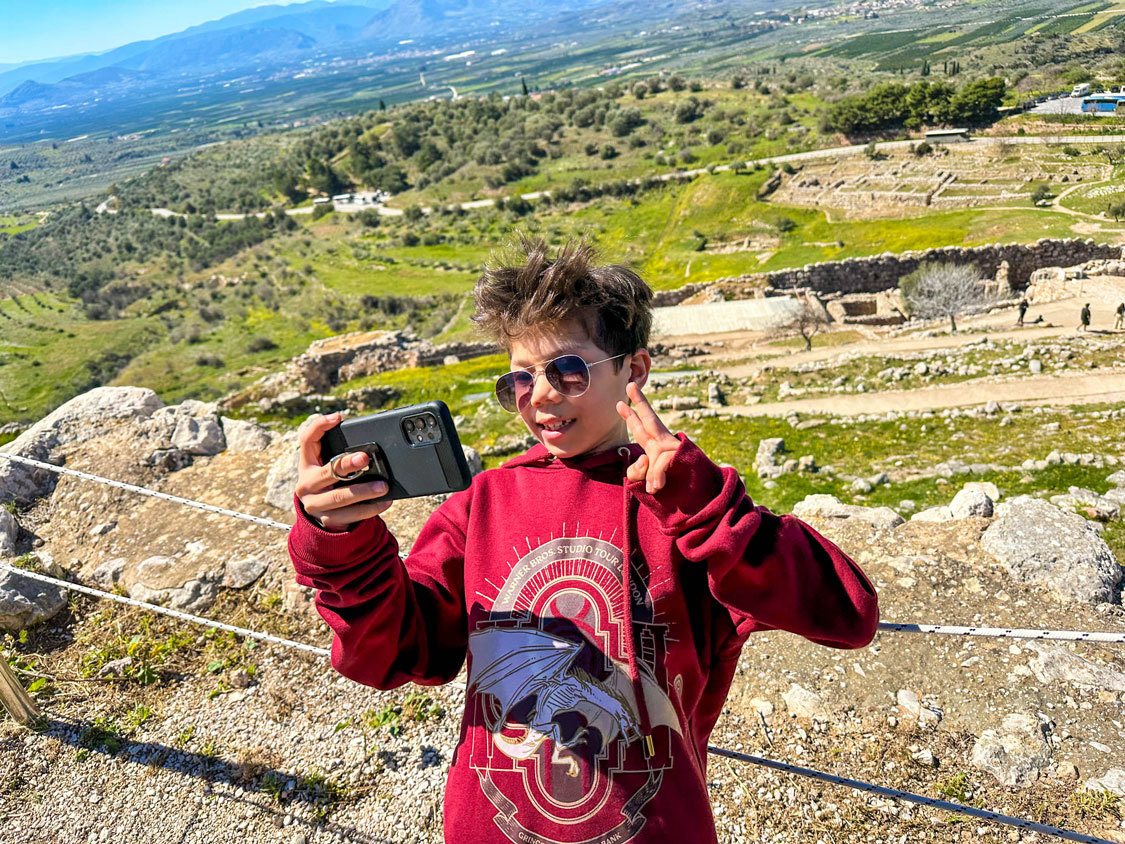
One of the coolest attractions that we visited in Greece was the ruins of Mycenae and the Lion Gate. This famous archaeological site dates back to the Bronze Age and was an important location in the epic poems of Homer and a crucial location during the Trojan War. It’s even believed that the famous Agamemnon was buried here in the Treasury of Atreus.
Wandering around Mycenae, you’ll find plenty of places to explore and a few places that might seem hidden. Don’t miss the gorgeous underground beehive tombs. These were traditionally used for storage, but one is the famous Treasury of Atreus.
Another notable site is the Lion Gate. This beautiful cornerstone is the sole surviving monumental piece of Mycenaean sculpture. When the light hits the Lion Gate just right, everything within it gets a beautiful golden glow.
- Best for: history and kids who love myths and legends.
- Don’t miss: the Lion Gate (when the light hits it right, everything inside glows gold), the underground beehive tombs, and the Treasury of Atreus.
- Good to know: it sits within easy reach of Epidaurus and Nafplio.
- Read more: You can read all about our visit to the Mycenae Lion Gate here.
Mystras
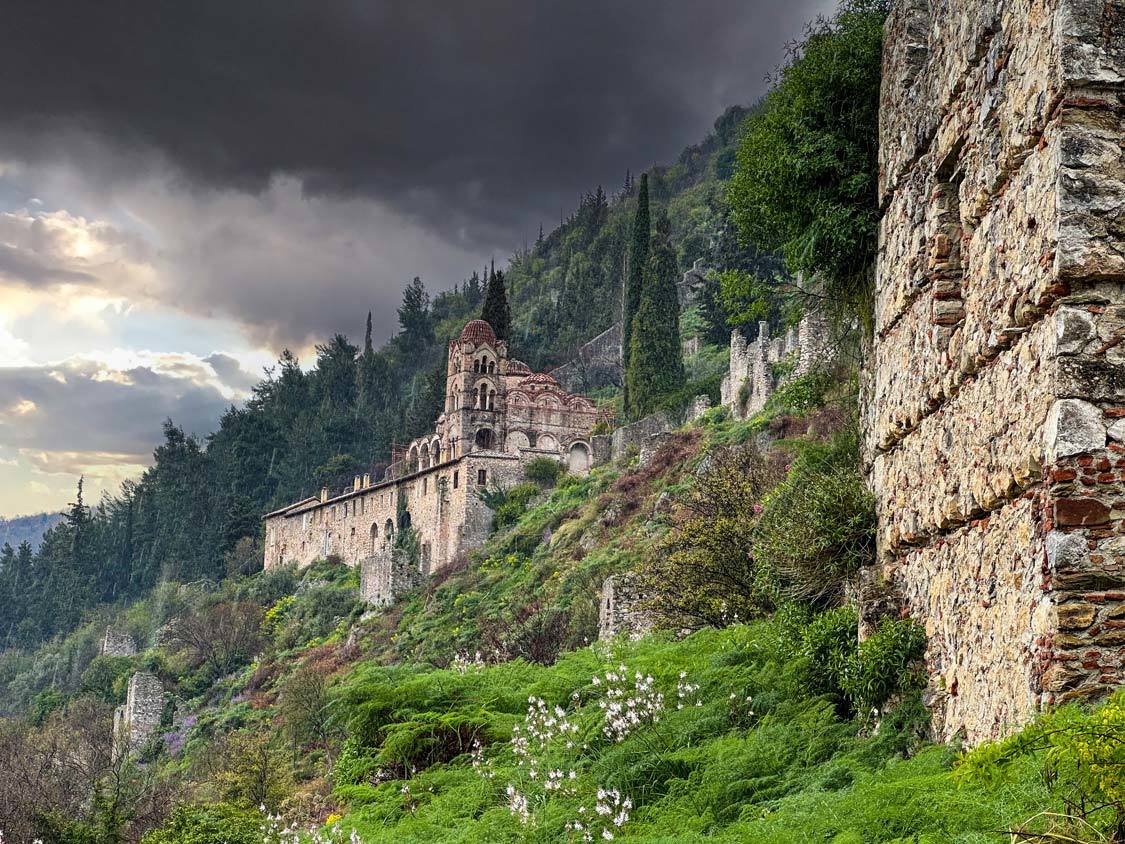
Oh, Mystras, you are so beautiful. We had planned for at least three hours to explore this incredible historic city sitting above the remains of Ancient Sparta. Unfortunately, the weather had other things in store. After just an hour, torrential rain came down, causing the entire site to close.
Located on the slopes of Tagetos Mountain, Mystras was the capital of this region of Morea during the Byzantine Empire, around the 14th and 15th centuries. It was a destination for artists, scholars, and theologians of the highest caliber. The remains of this city are incredible. There are historic churches, houses, schools, and shops uniquely located in a way that conforms to the steep verticals of the mountain slope.
Getting to Mystras can be a challenge, and it’s a tough place to explore for those who are not in good physical condition. But I highly recommend a visit here. It’s remarkably beautiful, and I can’t wait to get back.
- Best for: history lovers and hilltop explorers.
- Don’t miss: the frescoed Byzantine churches staggered up the slope.
- Good to know: we made it in an hour before torrential rain closed the site, and I cannot wait to get back for longer.
- Read more: You can read all about our visit to Mystras, Greece, here.
Monemvasia
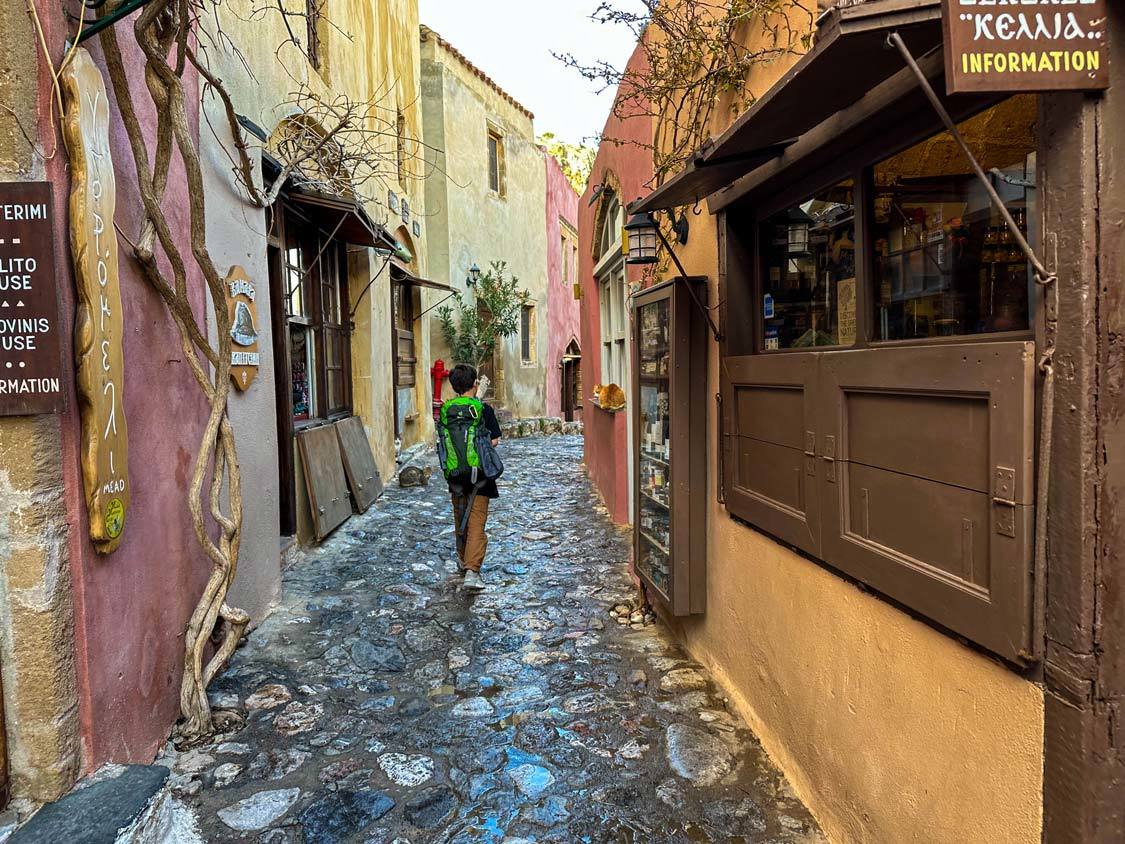
The tied-off island city of Monemvasia was our last stop in the Peloponnese before heading west toward Delphi and Olympia. The walled city was once a medieval fortress town and is perched dramatically on a steep rocky incline overlooking the turquoise waters of the Aegean Sea.
What I loved most about Monemvasia is that its ancient charm has not been washed away by modern renovations. The city’s narrow, cobblestone alleys are a labyrinthine mess. One where you may find yourself walking on roofs or balconies as you try to zig-zag your way to your hotel or restaurant. It’s beautifully authentic.
Monemvasia has been called the “Gibraltar of Greece” due to its stunning location overlooking the water. And more than any of the other places that we visited in Greece, it was here that my whole family felt like we had been transported back in time.
We spent hours wandering the town’s imposing walls, ancient churches, and quaint squares. The town is also home to some gorgeous restaurants serving up ancient family recipes. One of our most unforgettable moments came from a visit to Tsimbidi.
This shop has been attempting to recreate the family’s original wine that first brought Monemvasia to fame hundreds of years ago. Ships were sent here from across Europe to pick up the island’s famous nectar and return it for the enjoyment of the elite and royalty.
- Best for: stepping into the Middle Ages and travelers who love atmosphere over polish.
- Don’t miss: getting lost in the labyrinth of alleys (you’ll sometimes walk along rooftops and balconies), and a taste of the region’s legendary Malvasia wine at Tsimbidi.
- Good to know: locals call it the Gibraltar of Greece, and it earns the name.
- Read more: You can read all about our travels in Monemvasia here.
Best Places To Visit On The Greek Islands
Many families who travel to Greece may forget that the country even has a mainland. That’s because the Greek Islands are the premier draw for those looking for a beautiful island getaway.
Greek island cruises and vacations are extremely popular. These islands pack as much history, natural beauty, great food, and well-being as the mainland. But the experience out on the islands is completely unique.
Here are our top places to visit within the Greek islands.
Milos
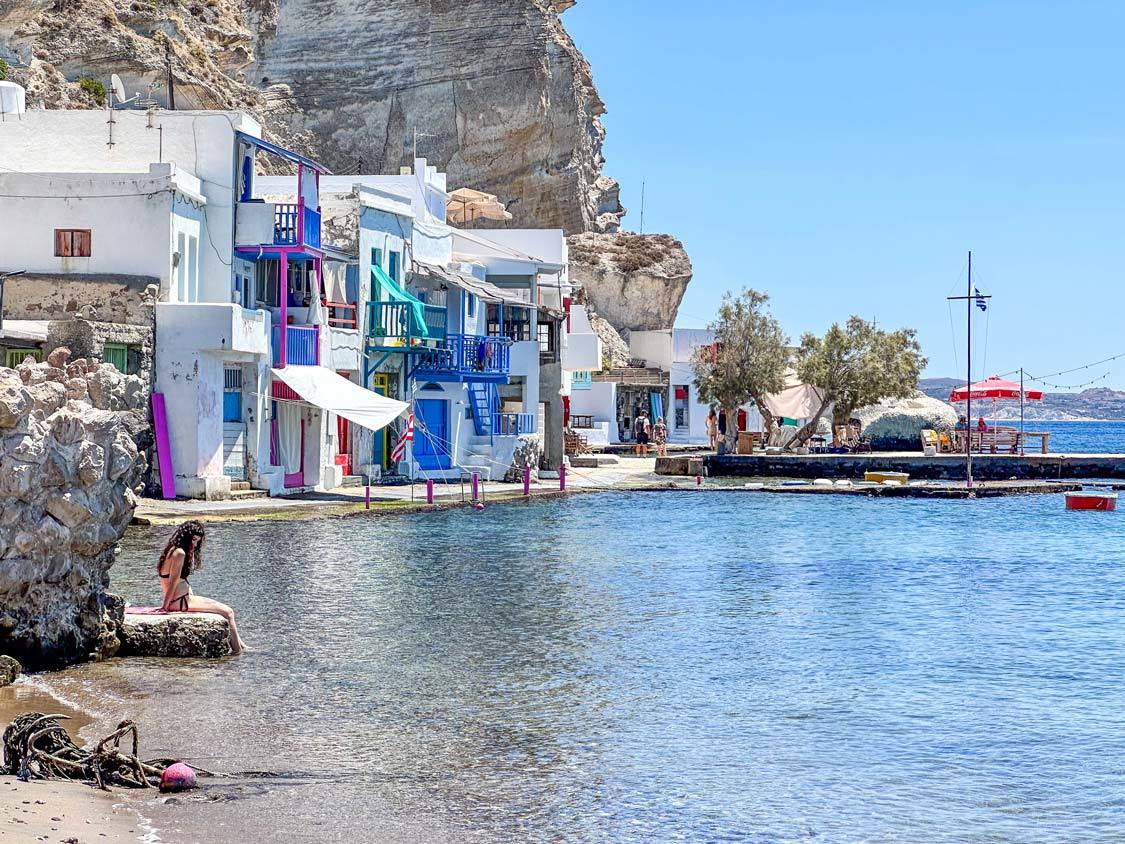
Until recently, the island of Milos has sailed relatively unnoticed among the more than 6,000 islands in Greece. But in the past few years, this quiet island in the Aegean Sea has started popping up on the travel radar. And with good reason. After all, Milos was our favorite stop on our Celestyal Cruise of the Greek islands.
Milos was made famous by the discovery of the famed Venus de Milo, also known as the Aphrodite of Milos, which has been on display in the Louver Museum in Paris since 1821.
You can find a replica of this famous statue on a cliff overlooking an ancient Greek theater and the adorable fishing village of Klima. This tiny town is the perfect spot for a swim, and combining it with the hilltop town of Trypiti allows you to check out some of the island’s history, including the ancient Catacombs of Milos, among the oldest Christian catacombs in the world.
This laid-back island is a perfect destination for those who love to relax. And it’s home to one of the most beautiful beaches in the world, right up there with Horseshoe Beach in Bermuda and Boracay in the Philippines.
Walking along Sarakiniko Beach might feel a bit like walking on the moon. The shockingly white sandstone has been polished smooth by rain and waves, creating an otherworldly landscape that contrasts breathtakingly with the blue waters of the Aegean.
You’ll find family-friendly narrows where shallow water swimming is ideal, as well as towering rock arches where adrenaline junkies launch themselves into the waves below. It’s a must-stop for any visit. If you look carefully, you’ll also find a series of old mining tunnels that make for a perfect escape from the hot summer sun.
- Best for: unique scenery and families who want calm swimming.
- Don’t miss: the surreal white moonscape of Sarakiniko Beach, the fishing village of Klima, and the ancient catacombs.
- Good to know: shallow coves make for easy family swims, while rock arches and old mining tunnels give bigger kids a thrill and a break from the sun.
- Read more: You can read all about our one day in Milos here.
Mykonos
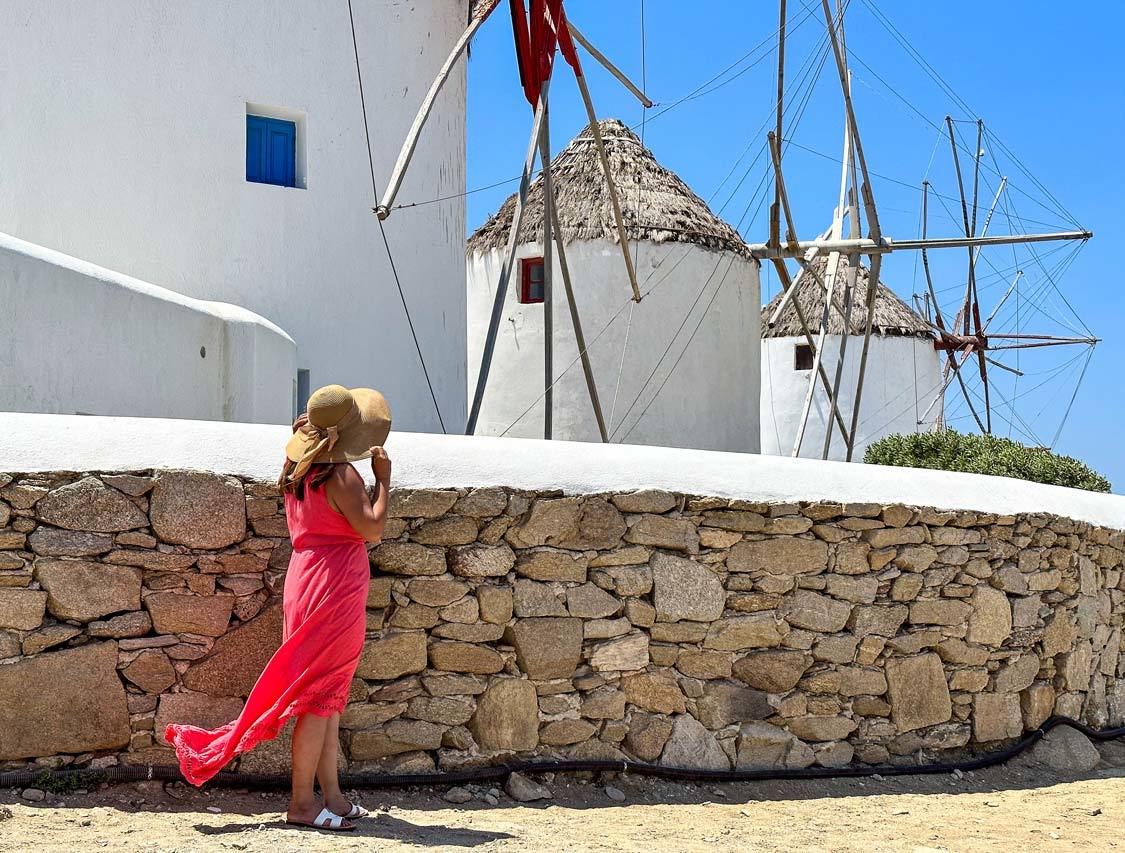
After Milos, the island of Mykonos was our second most cherished destination on our Greek Islands cruise. This energetic island is busy but not nearly as packed as its famous sister, Santorini. Yet despite its popularity, it was surprisingly easy to wander off the beaten track and escape the crowds.
The main stretch of Mykonos is where all of the bustling tourist crowds gather on a walk along the waterfront through the Old Port to the picturesque “Little Venice,” where whitewashed buildings stand shoulder to shoulder, overlooking the blue waters.
But as we passed this area with its wall-to-wall revelers and continued along to the island’s famous windmills, the crowds gave way, and we were welcomed into the mazelike streets of a beautiful and welcoming city. As we strolled along, we discovered a century-old bakery, an outdoor movie theater, and a beautiful view of daily life in one of Greece’s biggest tourist destinations.
The draw of Mykonos goes far beyond Mykonos Town, though. This island is known for having some of the most beautiful beaches in the Mediterranean. Some of the more notable beaches include Platys Gialos, Psarou, Ornos, and Elia. However, the names that caught my attention were Paradise Beach and “SUPER” Paradise Beach.
I mean, that’s a pretty bold statement. They’re known for their crystal-clear waters and lively beach bars. But they are pretty touristy, so expect some umbrella-to-umbrella crowds.
For history lovers, the island of Delos is just a short boat ride away from the main town. The Ancient ruins here are said to be the birthplace of both Apollo and Artemis. This UNESCO World Heritage Site has highlights that include the Terrace of the Lions and the Temple of Apollo. You can also visit the island’s Archaeological Museum, which has loads of artifacts from the site.
- Best for: iconic island looks with room to wander.
- Don’t miss: Little Venice and the famous windmills, and a day trip to the UNESCO ruins of nearby Delos.
- Good to know: for beaches, Platys Gialos, Psarou, Ornos, and Elia are lovely; Paradise and Super Paradise are fun but touristy.
- Read more: You can read more about our one day in Mykonos here.
Sifnos
The Island of Sifnos is a tiny island just a short distance from Athens. This relaxing getaway is a popular destination for those vacationing in Athens. It offers a quiet, relaxing escape from the tourist-heavy big city, where you can find large stretches of sandy shore with very few crowds.
The island is popular for its beautiful landscapes, charming whitewashed villages, and laid-back atmosphere. You’ll also find some excellent food here. There is a wide range of tavernas and local eateries serving excellent Greek cuisine. Don’t miss the island’s specialty. A chickpea soup topped with sweet almonds.
- Best for: quiet beaches and food lovers.
- Don’t miss: the whitewashed hilltop villages and the island’s signature chickpea soup topped with sweet almonds.
- Good to know: come here to slow right down.
Crete
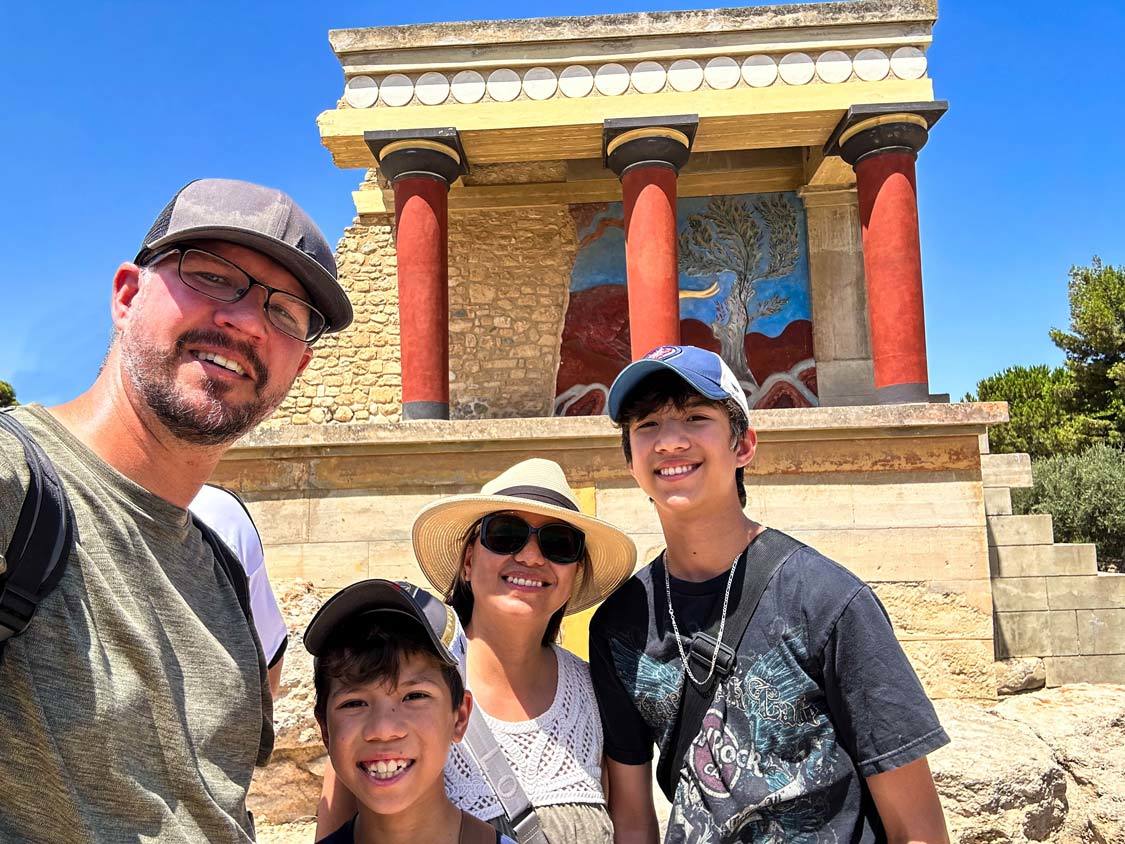
As the largest of all the Greek Islands, Crete is, without a doubt, one of the most popular destinations in Greece. The island’s history dates back an astounding 9,000 years. It’s on this incredible island that the Minoan Civilization, the first civilization in Europe, came to be about 5,000 years ago.
The Minoan civilization flourished on the island, and some of its art and culture can be viewed on a visit to the popular Palace of Knossos, which was once the center of Minoan culture.
Beyond its history, Crete’s dramatic landscapes make it a paradise for hiking and outdoor lovers. The rugged gorges of Samaria and the soft sand beaches of Elafonissi and Balos are especially popular. Among its outdoor attractions is a wide range of SCUBA diving playgrounds along the island’s rugged coast.
Crete is a popular destination for small resorts and homestays. Take your time and slow travel the island to experience sipping a glass of raki with locals in a mountain village or wandering the narrow alleys of Chania’s old town.
- Best for: families who want a bit of everything in one place.
- Don’t miss: the Palace of Knossos, the hike through Samaria Gorge, and the dreamy beaches of Elafonissi and Balos.
- Good to know: small resorts and homestays make it ideal for slow, village-based travel.
- Read more: You can read all about our one-day visit to Crete here.
Kefalonia
Not far from the Gulf of Patras and the beautiful shores of Messolonghi sits the island of Kefalonia. I’ve been dying to visit here ever since I first heard about it from an Italian friend who visits every year.
The island’s rugged coastline and hilltop villages make for postcard-perfect scenery. But it also adds to the allure of an island known for beaches that you need to hike a bit to reach. Myrtos Beach, with its dazzling white pebbles and electric blue water, is one of the island’s most popular.
Kefalonia is a haven for snorkeling. The waters off its shores are lush with marine life and colorful corals. There are countless coves and sea caves that are accessible only by boat, and there are abundant marine reserves.
One of the island’s most unique features is the underground Melissani Lake, a lake that lies inside the cave, with trees and forests surrounding it.
- Best for: beaches, snorkeling, and nature-loving families.
- Don’t miss: the dazzling white pebbles and electric-blue water of Myrtos Beach, the underground Melissani cave lake, and the sea caves reachable only by boat.
- Good to know: it’s a haven for snorkeling, with marine reserves and coves galore.
Corfu
North of Kefalonia in the Ionian Sea is the large island of Corfu. Corfu is known as the Emerald Isle, thanks to its lush vegetation topping towering cliffs and azure coves. The island is a popular destination for sunbathing, swimming, boating, and snorkeling. But the rolling hills, olive groves, and beautiful villages of the island’s interior are truly what make it one of the best places to visit in Greece.
This is an island that is best explored. Rent a car and drive through the small towns, stopping to talk with locals at tavernas and cafes. Ride a bike through hills dotted with olive trees and explore the historic monasteries hidden among cypress trees in lush valleys.
- Best for: road-tripping a green island.
- Don’t miss: the hidden coves, the olive-grove drives, and the historic monasteries tucked among cypress-filled valleys.
- Good to know: rent a car and give yourself room to stumble onto tavernas and beaches.
Santorini
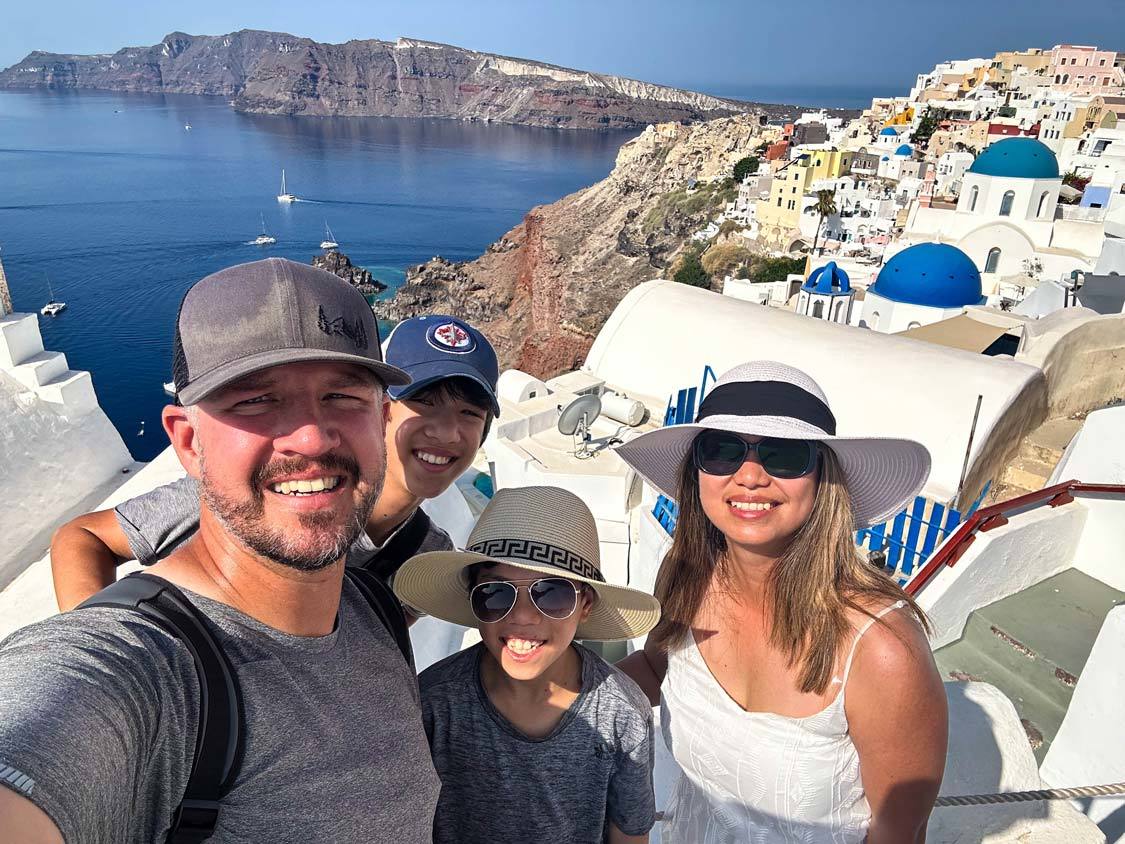
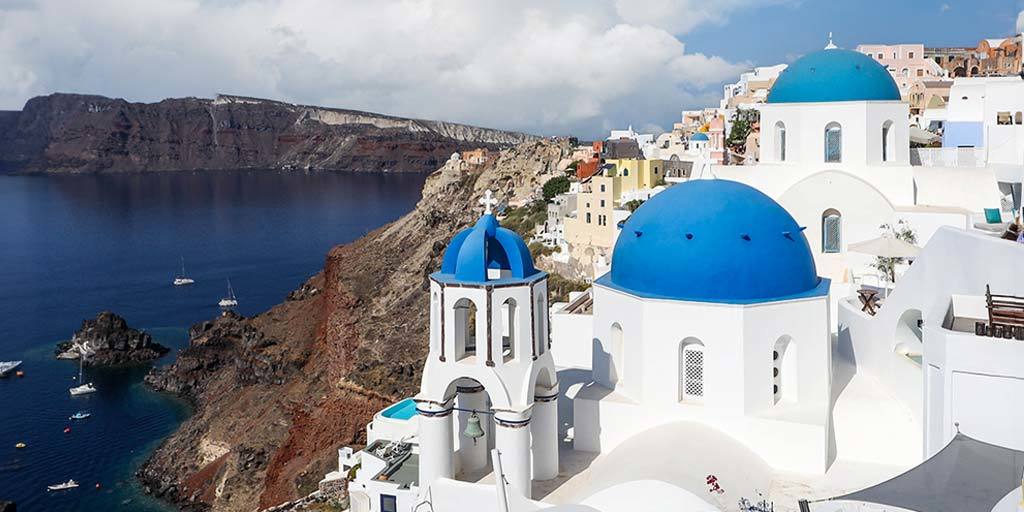
There are few places in Greece that epitomize the Mediterranean life more than the island of Santorini. This popular island, known for its white-washed buildings topped with brilliantly blue roofs, is picturesque. And it’s also one of the busiest places to visit in the Greek Islands.
During the high season, Santorini is loaded with tourists packed like sardines in search of the perfect photo of the island’s scenic skyline. But it’s possible to see another side of this island with a fraction of the crowds.
Head away from the tourist crowds in Oia and wander the maze of narrow alleys lined with quiet shops and cafes. Once you leave the main drag behind, the crowds drop away dramatically.
For something even better, head south to the town of Megalachori. This postcard-perfect city gets a fraction of the tourists as its sister in the north. It’s an authentic look at life on the island and my family’s favorite stop in Santorini.
- Best for: the iconic view, with quiet corners if you know where to look.
- Don’t miss: slipping into the maze-like alleys away from Oia, and heading south to Megalochori, which was my family’s favorite stop on the island and sees a fraction of the crowds.
- Good to know: go in shoulder season if you can, and get up early for the famous views.
- Read more: You can read all about our visit to Santorini here.
Naxos
Naxos is the largest of the Cyclades islands. The island is known for its gorgeous beaches, including Agios Prokopios and Plaka Beach. But like Corfu, the real magic of this island lies inland with its quaint villages, where time seems to slow to a crawl.
Picturesque towns are connected by rolling hills and fertile valleys lined with wildflowers and citrus groves. The lush greenery seems almost surreal beneath the towering Mount Zas, the highest peak in the Cyclades Archipelago. The views from the summit over the shimmering waters below are spectacular.
The island’s capital, Naxos Town, features Venetian-style mansions centered around a massive marble doorway where the remains of the Temple of Apollo lie. Dotted around it are wonderful artisan shops, tavernas, and cafes serving up thick iced coffee.
- Best for: families who want authentic island life alongside easy beaches.
- Don’t miss: the giant marble Portara doorway that’s all that remains of a Temple of Apollo, a hike up Mount Zas (the highest peak in the Cyclades), and the artisan shops and cafes of Naxos Town.
- Good to know: order the thick Greek iced coffee and watch the harbor go by.
Travel Resources For Families Visiting Greece
For practical planning, safety considerations, and logistics, these dedicated guides provide all of the resources you need for family travel in Greece
Frequently Asked Questions About Travel in Greece
Wonderfully so. Greeks adore children, the food is kid-friendly, and the mix of myth-soaked ruins, easy beaches, and short travel legs suits every age. The main choice is matching the destination to your family, which the “how to choose” section above is built for.
Give one region a solid week. To combine the mainland’s history with a few islands, plan on ten to fourteen days.
Late spring (April to June) and early autumn (September to October) offer warm weather, open sites, and thinner crowds. July and August are hot and busy; winter brings cold weather and some closures.
The mainland is for ancient history, mountains, and road trips; the islands are for beaches and slowing down. If you can, do both, mainland first by car, then the islands by ferry or cruise.
Crete and Naxos are top picks for their shallow beaches, easy pace, and range of activities, while Milos is unbeatable for unique landscapes and calm swimming coves.
Athens for the ancient icons, Delphi for the mythology, and Santorini for the classic island postcard. Add Meteora if you have time; it’s unforgettable.
Rent a car to explore the mainland at your own pace, and travel between islands by ferry or on a cruise. Athens itself is very walkable.
Are You Ready To Visit These Incredible Places in Greece For Yourself?
Greece is a wonderful destination that offers a little something for everyone. There is a range of incredible landscapes, relaxing beaches, adorable towns, unforgettable food, and history that dates back as long as civilization itself. If you’re looking for an incredible family travel destination, this country might just be the perfect fit.
If you love family travel as much as we do, read our Greece Family Travel guide, and please join our Family Travel Support Group on Facebook. You can connect with more family travelers just like you who love to explore the world.
Wandering Wagars is a participant in the Amazon Services LLC Associates Program, an affiliate advertising program designed to provide a means for sites to earn advertising fees by advertising and linking to amazon.com, amazon.co.uk, amazon.ca. Amazon and the Amazon logo are trademarks of Amazon.com, Inc., or its affiliates.
You May Also Like To Read: