
Thailand travel tips for families covering visas, health, ethical wildlife, and regional guides – from a family who traveled from Bangkok to Phuket, Kanchanaburi to Chiang Mai
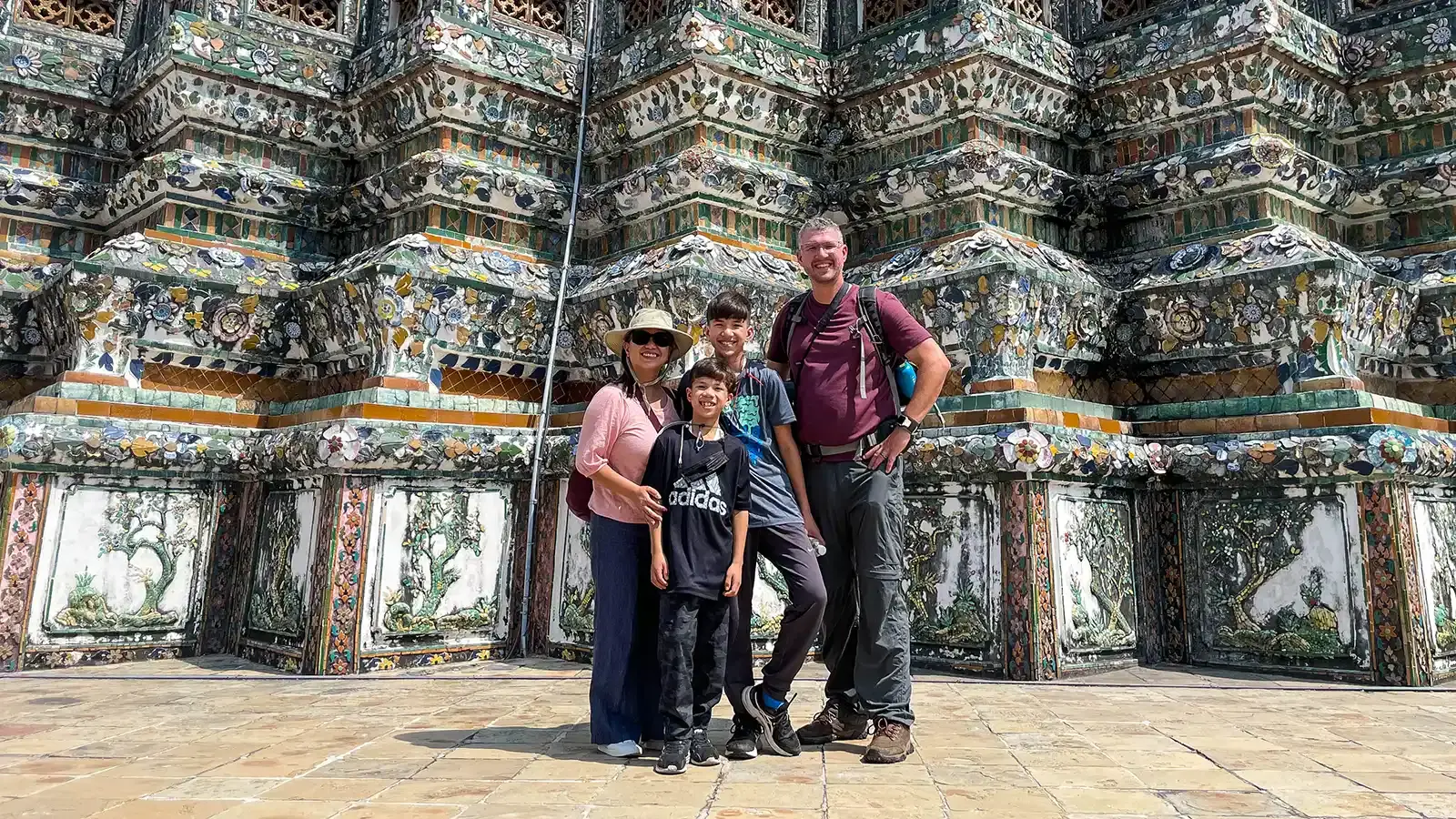
It was just after sunrise in Chiang Mai when we truly started to understand Thailand and what we’d gotten ourselves into by traveling here. This was a discovery that hit us in the best possible way.
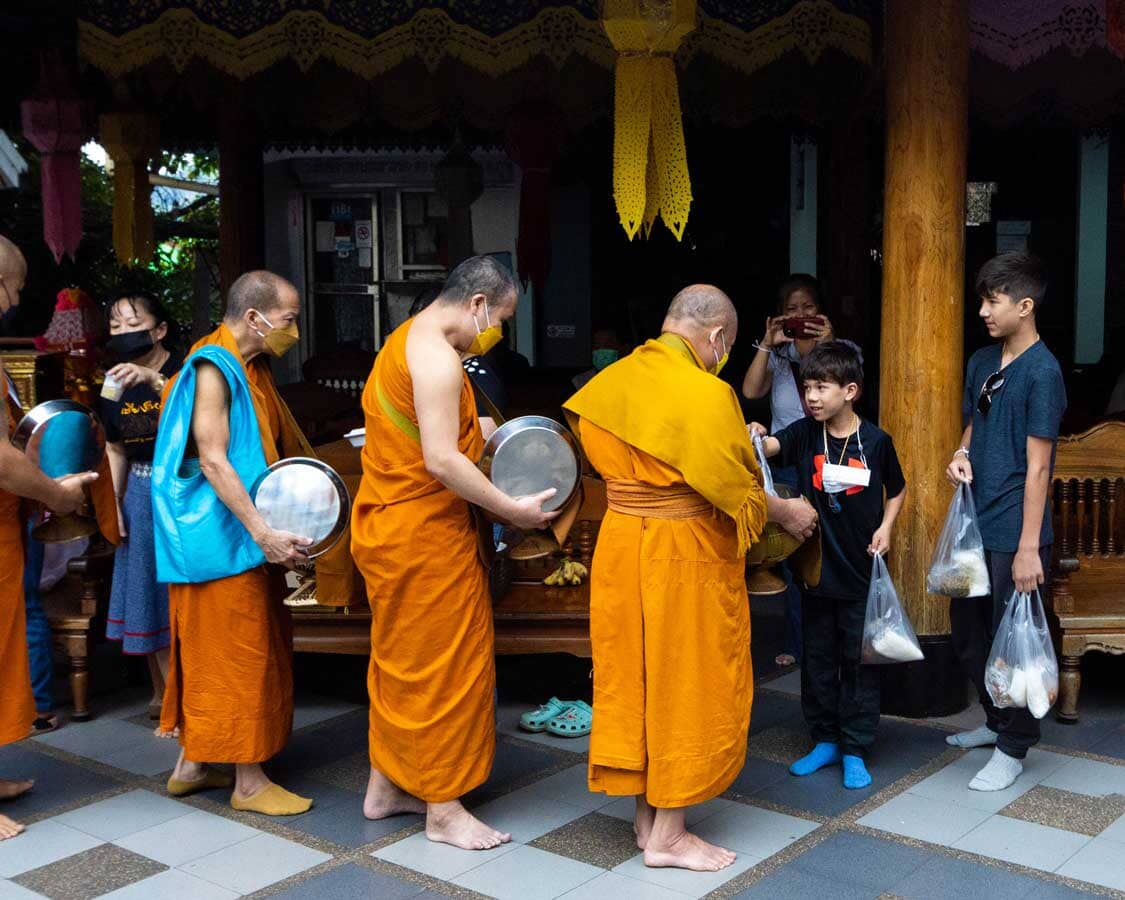
The boys were standing at the edge of the street, paper bags of rice, fruit, and dried fish clenched in their hands, watching a line of saffron-robed monks move quietly through the morning mist in complete silence. No one was talking. Not even Dylan, who at 8-years-old, could narrate a grocery store trip like a sports commentator. Instead, he just stood there taking it all in.
That moment didn’t appear on any planned itinerary. This was an experience that came naturally. One that we’d stumbled upon in the way you only do when you surrender yourself to the whims of a country that still does things like this on an ordinary Tuesday.
That is family travel in Thailand. And that is why families who go there rarely come home with the same attitude toward life as when they’d arrived.
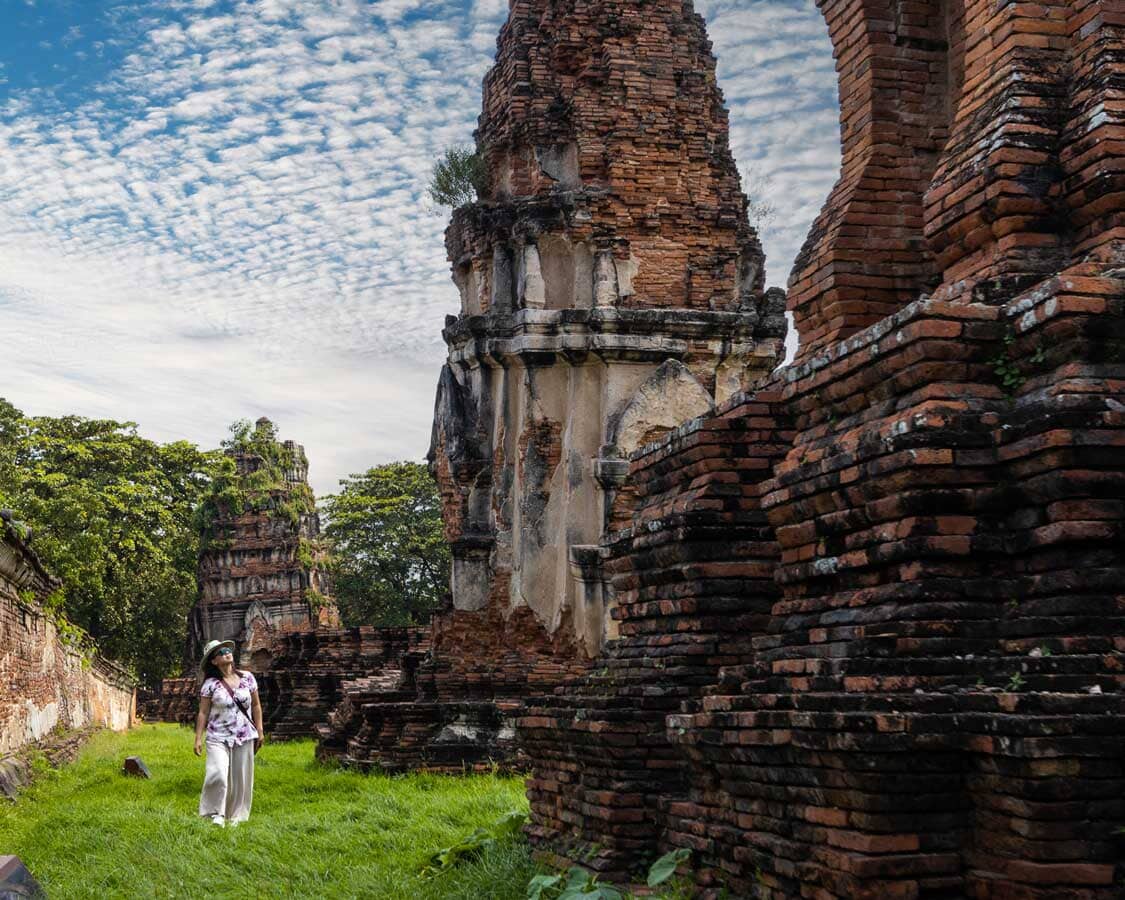
I’ve been to countries that look beautiful in photos and deliver something different in person. Thailand is not one of them. Family travel in Thailand over-delivers on every level: the food, the temples, the warmth of the people, the variety of what’s on offer for a family willing to move through it with intention. We visited Bangkok, Ayutthaya, Kanchanaburi, Chiang Mai, and Phuket across three incredible weeks. I left wanting more time in every single place that we visited.
This Thailand family travel guide is built on that experience. Where it covers ground we didn’t personally walk, I’ll tell you. Thailand is a large country, and no single family trip can cover it all. But the foundation, like how to get in, how to move around, where to put your energy, and what the country expects of you, those I can give you directly.
Thailand Family Travel: At a Glance Quick Facts
🗣Language: Thai. English is widely spoken in tourist areas; less so in rural regions and small towns.
💰Currency: Thai Baht (THB). Major credit cards are accepted in cities; carry cash for markets, temples, and rural areas.
🔌Power Adapter: Type A and B (same as North America). UK and European families will need an adapter. 220V.
🚗Driving: Left-hand side. Road quality varies; motorcycle traffic is heavy. High fatality rate for two-wheeled vehicles. Drive carefully.
🆘Emergency: Police: 191 | Ambulance: 1669 | Tourist Police: 1155
💧Water Safety: Not safe to drink from the tap anywhere. Bottled water is cheap and everywhere. Bring a filtered bottle.
🛂Visas: Canada, the US, the UK, and most EU countries offer visa-free entry. Duration varies – check before you depart.
🌤Culture Note: Predominantly Buddhist. The monarchy is legally protected. Both require respectful awareness from visitors.
Do You Need a Visa to Visit Thailand? Entry Requirements for Families
Most Western families arrive in Thailand without significant paperwork, which is one of the things that makes it such an accessible destination. Canadian and American passport holders currently receive visa-free entry for up to 60 days, with the option to extend once in-country. UK and most EU citizens are similarly situated.
That said, Thailand has revised its visa policies in recent years. The current 60-day exemption is an improvement from the previous 30-day window and makes Thailand genuinely practical for families who want to stay long enough to actually get to know the country.
Check the current rules before you book. Policies change, and nothing in travel ages faster than visa information. The Thai Embassy or consulate for your country is the authoritative source.
A few things unlikely to change:
- Passport validity: Your passport must be valid for at least six months beyond your date of entry. Check this early – children’s passports expire faster than adult ones.
- Children traveling with parents under a standard tourist exemption do not require separate visas.
- Overstay fines: 500 Baht per day, plus potential issues re-entering Thailand in the future.
For families traveling in and out of Thailand as part of a broader Southeast Asia itinerary, pay attention to the entry count rules. Thailand has historically flagged travelers who repeatedly enter on visa exemptions, interpreting it as an attempt to live in the country rather than visit. If that’s your situation, get the appropriate visa in advance from the consulate at home.
Health Preparation and Vaccination Requirements for Families Visiting Thailand
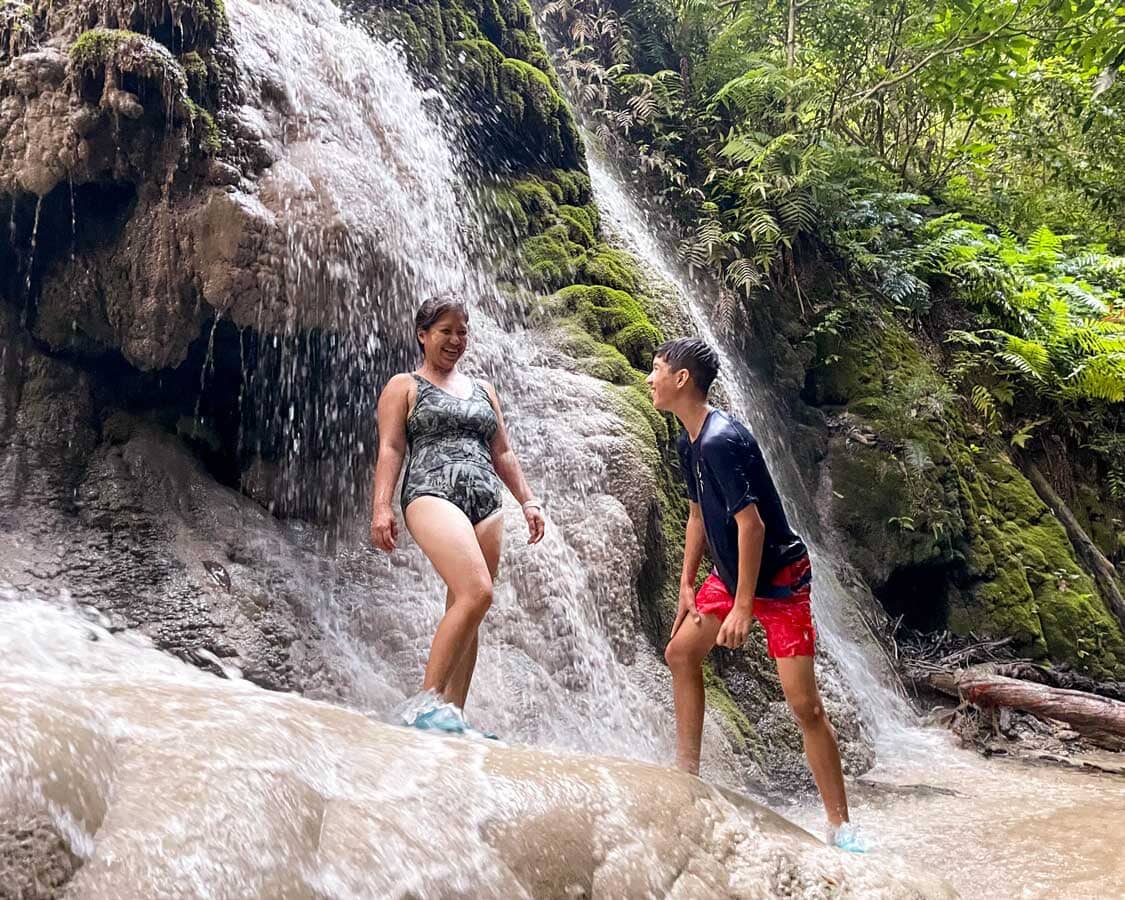
Thailand requires no vaccinations for entry, but the list that travel health clinics recommend is worth taking seriously, especially when you’re traveling to Thailand with children.
Visit your family doctor or a travel health clinic at least six weeks before departure. That gives you time to complete any multi-dose vaccine series and let any reactions pass before you arrive.
Recommended Vaccinations
- Routine vaccinations (MMR, DTaP, polio) should be fully up to date. The global measles situation in recent years makes this more important than it may have seemed in the past.
- Hepatitis A is strongly recommended for all travelers. This is a food and water-borne illness, and no matter how careful you are, your children are going to eat street food. That’s not a problem, it’s a highlight. But make sure they’re protected.
- Hepatitis B is recommended for longer stays and for anyone who may need medical care during the trip.
- Typhoid is worth discussing, particularly if you plan to eat extensively from street markets or travel into rural areas.
Malaria and Dengue
Malaria is where health recommendations in Thailand get nuanced. The main tourist regions, such as Bangkok, Chiang Mai, Phuket, and the Gulf Coast, carry no meaningful malaria risk. But jungle border regions, including areas around Kanchanaburi and national parks near the Myanmar border, do. At Elephant Hills in Khao Sok, we were deep in legitimate jungle for several days. We took precautions ahead of time. Talk to your doctor about whether anti-malaria medication is appropriate given your specific itinerary.
Dengue fever is the more consistent concern throughout the country. Dengue is transmitted by mosquitoes active during the day, not just at dusk, so standard evening-only repellent advice isn’t sufficient. We used DEET-based repellent consistently, covered the kids’ arms and legs during morning and evening hours, and treated our clothing before travel. Dengue ranges from unpleasant to serious. Don’t take it lightly.
If you’re traveling with younger children, use a child-safe, DEET-free insect repellent such as this.
Water, Food, and Getting Sick
The tap water in Thailand is not safe to drink. Full stop. Bottled water is inexpensive and available everywhere. Ice in established restaurants is typically made from purified water, but use your judgment at small street stalls. We always travel with a filtered water bottle, which helps in remote areas and cuts down significantly on plastic waste.
Street food in Thailand is generally safe if it’s hot, fresh, and busy. A stall with high turnover is almost always safer than an empty restaurant with dishes sitting out. We ate everywhere, from market stalls to food trucks throughout the country, and never had a serious issue. That said, bring a basic pharmaceutical kit that includes rehydration salts, antidiarrheal medication, children’s fever reducers, antihistamine, and a solid first aid kit. Pharmacies in Thai cities are excellent, and pharmacists typically speak enough English to be genuinely helpful.
Travel insurance is not optional for a trip to Thailand with children. Make sure your policy covers emergency medical evacuation. Medical care in Bangkok is excellent and affordable, but in rural areas, you want to be able to reach that care quickly if something goes wrong. I recommend either Safetywing or World Nomads for family travel insurance.
Getting Around Thailand With Kids
Transportation is where Thailand earns its reputation as an easy country for family travel. The infrastructure is solid. The roads are generally in good condition. Locals have a general respect for the rules of the road. There’s solid public transport as well.
Families have real options throughout the country. Here’s how we moved around and what we learned along the way.
Domestic Flights
For a country this size, domestic flights are often the easiest and most time-efficient forms of transportation. Bangkok, Chiang Mai, Phuket, Krabi, and Koh Samui are all connected by frequent, affordable domestic flights. Airlines like AirAsia, Nok Air, and Bangkok Airways regularly come in under $50 USD per person if booked in advance. We flew from Bangkok to Chiang Mai and from Chiang Mai to Surat Thani on our way to Khao Sok National Park. It’s fast, reliable, and saves your family hours on the road.
The Bangkok to Chiang Mai Sleeper Train
I’ll be honest: I was tempted to travel this route by train. The overnight sleeper from Bangkok to Chiang Mai is one of those experiences that many travel writers describe lovingly, and from everything I’ve seen and heard from families who’ve done it, it delivers exactly what it promises. Bunk beds, a dining car, and falling asleep with the countryside moving past the window.
For families with older kids who can handle the setup, it’s a genuine adventure worth the longer travel time. We didn’t do it because, like many families traveling in Thailand, time was a factor that we had to consider. But it’s on the list for our next visit. Book through the State Railway of Thailand website or a reputable third-party service. Second-class bunk beds are the most common move for families.
Buses and Minivans
Long-distance VIP buses in Thailand are comfortable, air-conditioned, and connect most major routes efficiently. For shorter runs, minivans are the common option. Both work well. Both are significantly better in daylight hours. Road safety at night in Thailand can be a legitimate concern, primarily because of motorcycle density and the unpredictability of late-night traffic. Plan your bus travel during the day whenever possible.
Grab
Download Grab before you leave home. It’s the dominant rideshare app across Southeast Asia, and it works exceptionally well in Bangkok and Chiang Mai. Fixed prices, no negotiation, no meter disputes.
For a family hauling luggage and navigating an unfamiliar city, Grab is one of the most practical tools you’ll have on the trip.
Tuk-Tuks
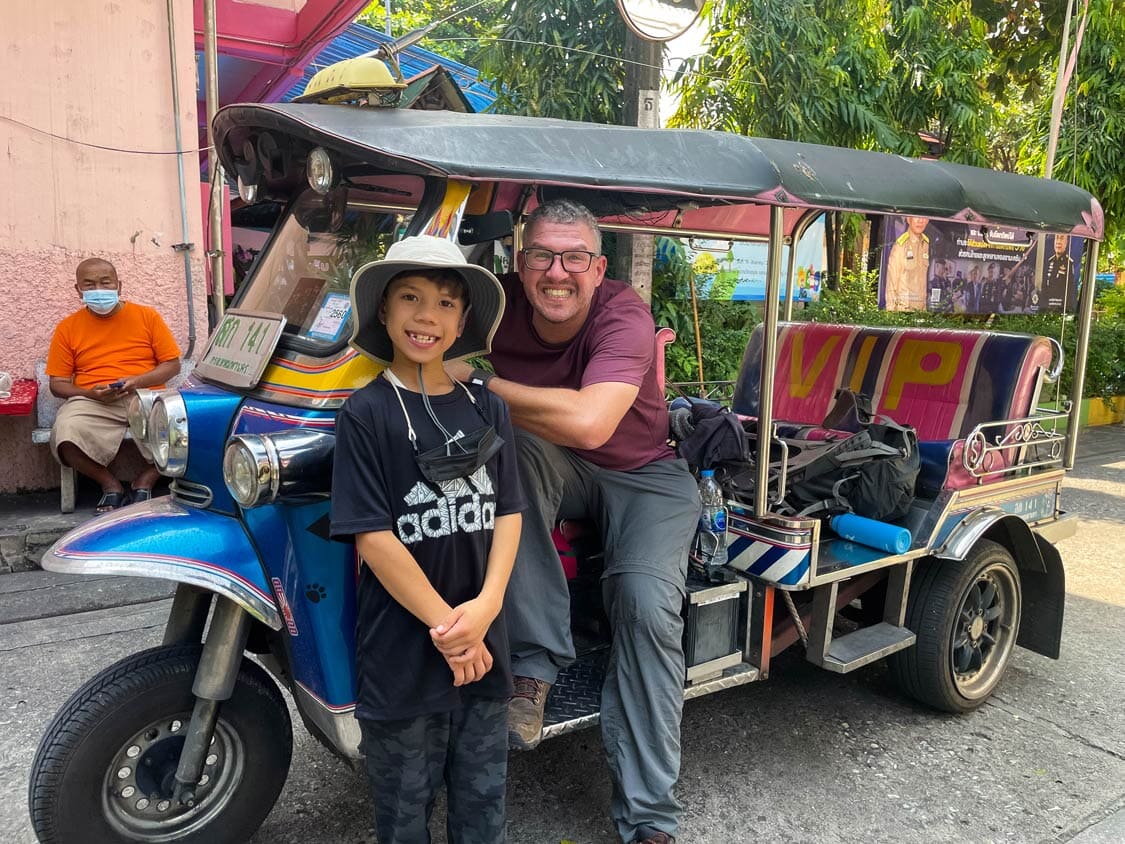
You will ride a tuk-tuk. You almost certainly have to ride a tuk-tuk. They’re iconic, they’re entertaining, and your children will talk about them for months after you get home. Go in with eyes open: tuk-tuks are unmetered, exposed to traffic, and drivers are often incentivized to take you to shops and restaurants that pay them commission rather than to the destination of your choice.
Use them for short, agreed-upon trips with a price established before you sit down (or squeeze into whatever space is available). They are not the most efficient way to move around a city. They are, however, excellent for a five-minute ride that your kids will describe to everyone that they know.
Driving Yourself
In Thailand, traffic drives on the left. Road quality varies dramatically: highways are typically excellent; rural and mountain roads are less predictable. The real challenge is the local motorcycle culture.
Thailand has one of the highest road fatality rates in the world, driven almost entirely by motorcycle volume combined with relaxed helmet enforcement. I would only suggest driving in Bangkok to those who have Buddhist monk-level patience. I would suggest driving for specific regional trips in the north, but it requires full attention and a meaningful recalibration of what normal traffic looks like.
Getting Around Bangkok Specifically
Bangkok’s BTS Skytrain and MRT metro are air-conditioned, reliable, and cover most of the city’s most popular areas for visitors. The Chao Phraya river boats are practical and spectacular in equal measure – they’re how locals commute, they’re cheap, and they put you on the water. Download the MRT and BTS apps before you arrive and load a Rabbit Card for easy tap-and-go transit.
Money, Costs, and How Much Thailand Really Costs

Thailand is an affordable destination by Western standards. It is not free, and the experiences worth doing with a family are not always cheap.
The Thai Baht (THB) is the currency. As of writing this, approximately 33 to 35 Baht equals one USD. Cards are accepted at major hotels, shopping malls, and established restaurants in cities. Cash is essential at markets, food trucks, temples, and many local restaurants. Cash is also key anywhere outside the main tourist corridors.
ATMs are widely available in cities and tourist areas. Most charge a fee of around 200 Baht per withdrawal – roughly $6 USD. Minimize this by withdrawing larger amounts less frequently. Notify your bank before departure to prevent fraud flags on international transactions.
Street food is astonishingly affordable in Thailand. A full family meal can run under $10 USD without much effort. The expenses that add up are the quality experiences: ethical elephant sanctuaries, jungle lodges, cultural cooking classes, and boat days from Phuket. These are not cheap, nor should they be.
Budget for them as line items, not afterthoughts. Tipping is not a mandatory cultural expectation in Thailand, the way it is in North America, but a bill round-up is always appreciated. Round up at sit-down restaurants. Leave something for hotel housekeeping. Tip guides who gave you genuine time and knowledge. Massage therapists working for an hour at rates that are too low by any global standard also deserve a tip.
Connectivity and Staying in Touch
Thailand is well-connected, and getting online should be one of your first moves after landing.
Local Thai SIM cards are available at the airport at every major entry point, typically costing 300 to 500 Baht for a data plan that covers a standard family visit. Major providers include AIS, DTAC, and True Move. Airport kiosks cost marginally more than in-city shops, but the convenience is worth it on arrival day with tired kids.
If your phone supports eSIM, I use Airalo and recommend it consistently. You can purchase and activate a Thailand plan before departure, which means you step off the plane already connected. For a family managing children in a new country, starting the trip without connectivity gaps is meaningfully less stressful.
Coverage is excellent in Bangkok, Chiang Mai, Phuket, and all major tourist corridors. Jungle environments and smaller islands will have big gaps. At River Kwai Jungle Rafts, we were deliberately offline. There was no signal and no WiFi, which was entirely the point. Know which parts of your itinerary will be off-grid and plan accordingly.
Where to Go in Thailand With Kids: A Family’s Regional Guide
Thailand is a surprisingly large country with dramatically different personalities by region. The mistake most first-time visitors make is trying to cover too much in one visit.
Pick a rhythm. Choose the best places to visit in Thailand based on what your family actually wants to get out of their travels. Whether your goal is history, nature, beaches, culture, or some combination of these, give each place enough time to reveal itself.
Bangkok and Central Thailand
Bangkok is an enormous city. It’s loud, hot, and one of the greatest cities for family travel in Southeast Asia. The transit system is excellent, the food is extraordinary, and the temples alone can fill three days or more.
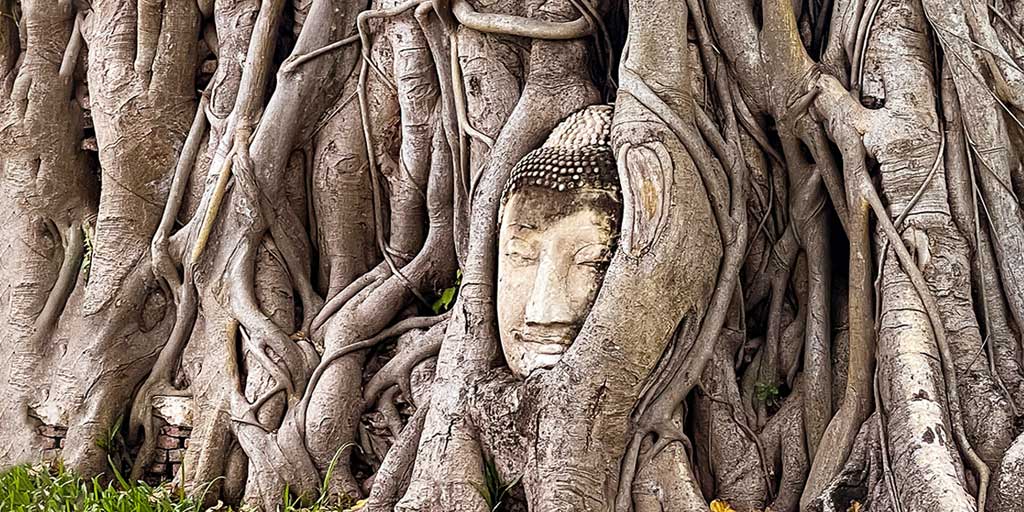
Ayutthaya, the ancient capital destroyed by the Burmese in 1767, makes for a profound and visually striking day trip that lands differently with children than any classroom history lesson. My full guide to Bangkok with Kids covers the city in depth, and my Ayutthaya family guide handles the ruins.
Kanchanaburi and Western Thailand
Kanchanaburi demands more from visitors than most destinations in Thailand. The Death Railway and Kanchanaburi War Cemetery carry a weight that families with older children should not bypass. It’s one of those places that makes history real in ways that nothing else can.
Outside of the war history, the River Kwai valley is genuinely beautiful, and River Kwai Jungle Rafts offers one of the most extraordinary nights our family has spent anywhere in the world. See my full Kanchanaburi guide and River Kwai Jungle Rafts review for everything you need.
Chiang Mai and Northern Thailand
Chiang Mai moves at a different pace than Bangkok. Life here is slower, more relaxed, and rich with temples, markets, cooking classes, and wildlife encounters that give families something to think about long after they’ve left.
This is the region that arguably rewards intentional family travel most directly. My full Chiang Mai guide covers it thoroughly, and my piece on the Karen Hill Tribes near Chiang Mai addresses one of the harder ethical questions the north raises.
Phuket and the South
Phuket is the most visited part of Thailand. It’s earned its reputation thanks to its wealth of beaches, incredible day trips, and the sheer variety of what’s available to visitors to the region. It’s a genuinely rewarding destination for families who prefer to stay away from the nightlife crowds.
The Andaman coast beyond Phuket – Krabi, Koh Lanta, Railay Beach – is widely regarded as extraordinary, though I haven’t explored it personally. The Gulf coast islands (Koh Samui, Koh Tao) operate on a different weather system and suit a different timing, which means that there are regions of southern Thailand that are ideal almost year-round. My Phuket family guide covers the island adventures in detail.
Eating in Thailand With Kids
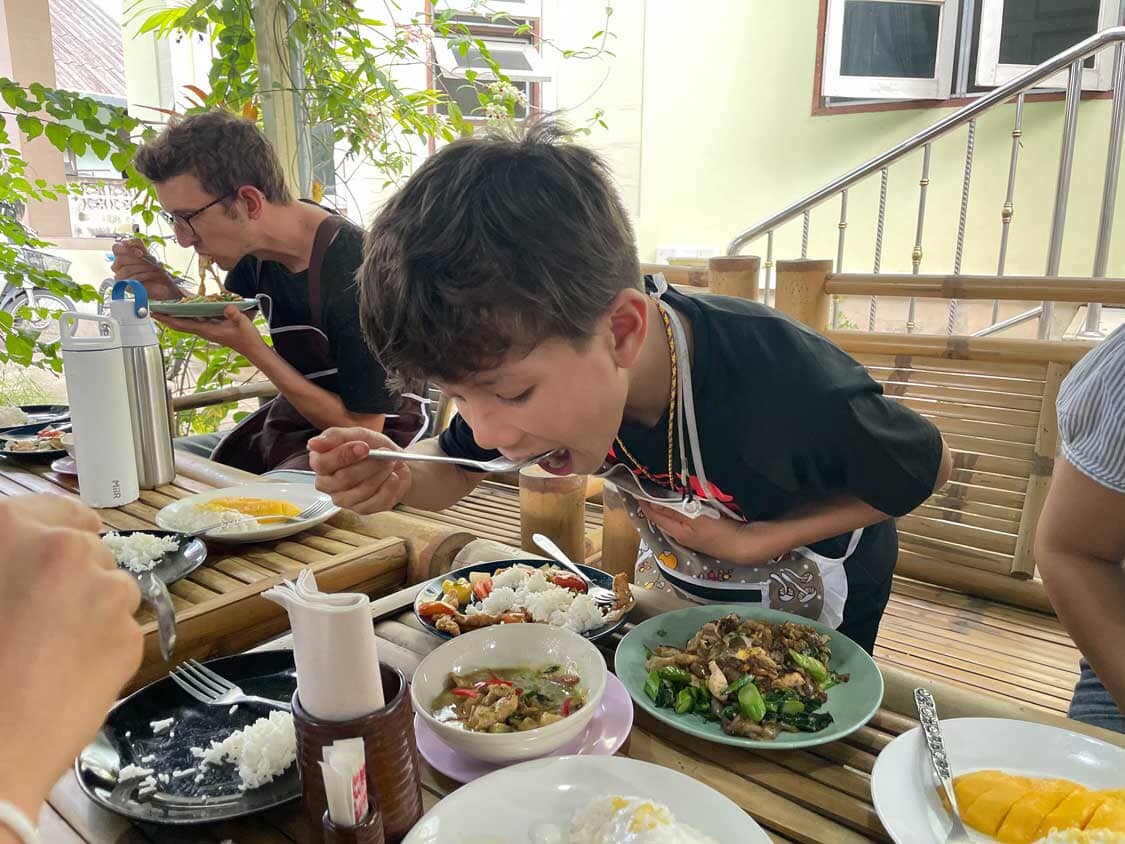
Thai food is some of the best in the world. I say that as someone who has eaten his way through Morocco, Turkey, Peru, and a good chunk of Southeast Asia. The balance of fresh herbs, coconut milk, fish sauce, chili, lime, and lemongrass produces a cuisine that is simultaneously complex and immediate. You understand it the first time you taste it.
The question for families is not whether food in Thailand is remarkable. It’s whether your children will eat it. In my experience: some of it, yes. And the parts they don’t take to at first, they often come around to.
Pad Thai is almost universally accessible. Noodles, egg, bean sprouts, peanuts, and a squeeze of lime. It’s mild, it’s familiar enough in structure to land with children, and it’s everywhere. Mango sticky rice is a dessert that kids tend to fall for immediately. Fried rice is ubiquitous and easy to order mild. Thai omelets are quick and non-threatening.
The spice management issue is real. When ordering for children, “mai pet” (not spicy) is essential, and even then, you may get something with more heat than some kids are ready for. Start mild. Increase gradually. Do not order your children a bowl of tom yum soup without asking about the heat level first.
Night markets are the best possible way to introduce children to Thai food because of one specific dynamic: they can see exactly what they’re getting before they commit. Nothing mystery-wrapped. Everything on display, hot, fresh, and immediate. Let them point. Let them try. Don’t force the silk worm larvae conversation on the first night.
7-Eleven in Thailand is not a joke. It is a functioning part of the food ecosystem. Like this chain everywhere, expect decent, pre-packaged meals, reasonably nutritious, available at all hours, and air-conditioned. On long drives and when the angry side of hunger hits, 7-Eleven is your friend. Embrace it without embarrassment.
Wildlife and Cultural Experiences: Choosing Well
Thailand has a long and complicated relationship with wildlife tourism, and families visiting with an interest in animal encounters need to navigate this with an open mind and the intention to do it properly.
The Thai elephant situation is the most visible example. Thailand has a significant captive elephant population, and for decades, dominant forms of elephant tourism involved riding, performances, and subjecting these intelligent animals to conditions that caused ongoing harm. Although it has shrunk, that industry still exists. But a better alternative exists, and it’s genuinely extraordinary.
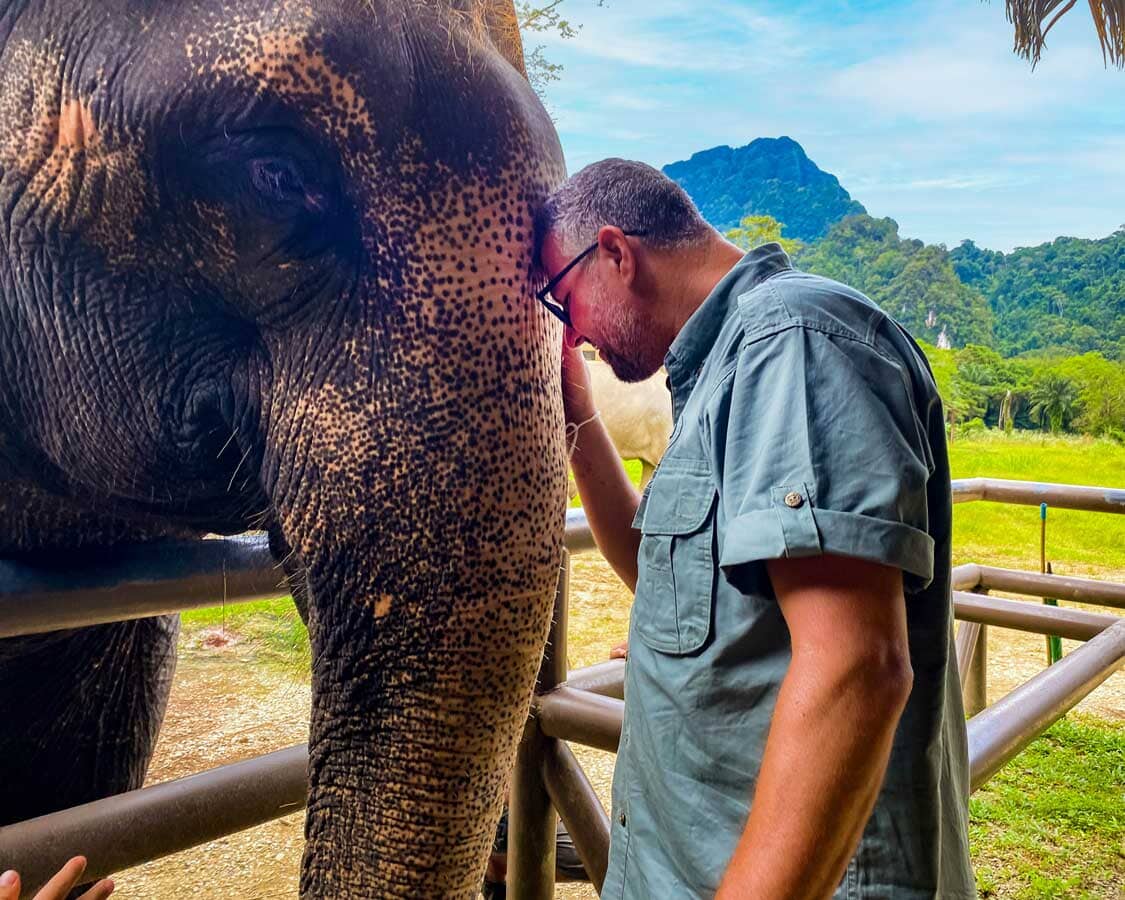
We spent time at Elephant Hills in Khao Sok National Park, which operates as an ethical elephant sanctuary and jungle eco-resort combined. The elephants are rescued animals. They are not ridden, not made to perform, and not subjected to negative reinforcement. You observe them. You walk alongside them. You watch them interact with each other in a setting that reflects something close to natural behavior.
What we came away with was not a photo of us sitting on an elephant’s back. It was something harder to photograph and more difficult to forget: the experience of connecting with these animals in an environment of respect.
If you are looking for ethical animal experiences in Thailand, this is the model to look for. The clearest signal that a wildlife experience is ethical: the animals are not ridden, there are no performances or tricks, the facility is transparent about its practices, and the animals’ behavior looks relaxed and engaged. If you see a chained elephant, tiger, leopard, a performing elephant, or an animal that looks lethargic and dull-eyed, walk away immediately; they are likely being abused.
Read my Elephant Hills review and my Karen Hill Tribes ethical tourism piece before you make decisions in this area. Both experiences shaped how our family thinks about what it means to travel well.
Cultural Conduct: What Thailand Expects From Your Family
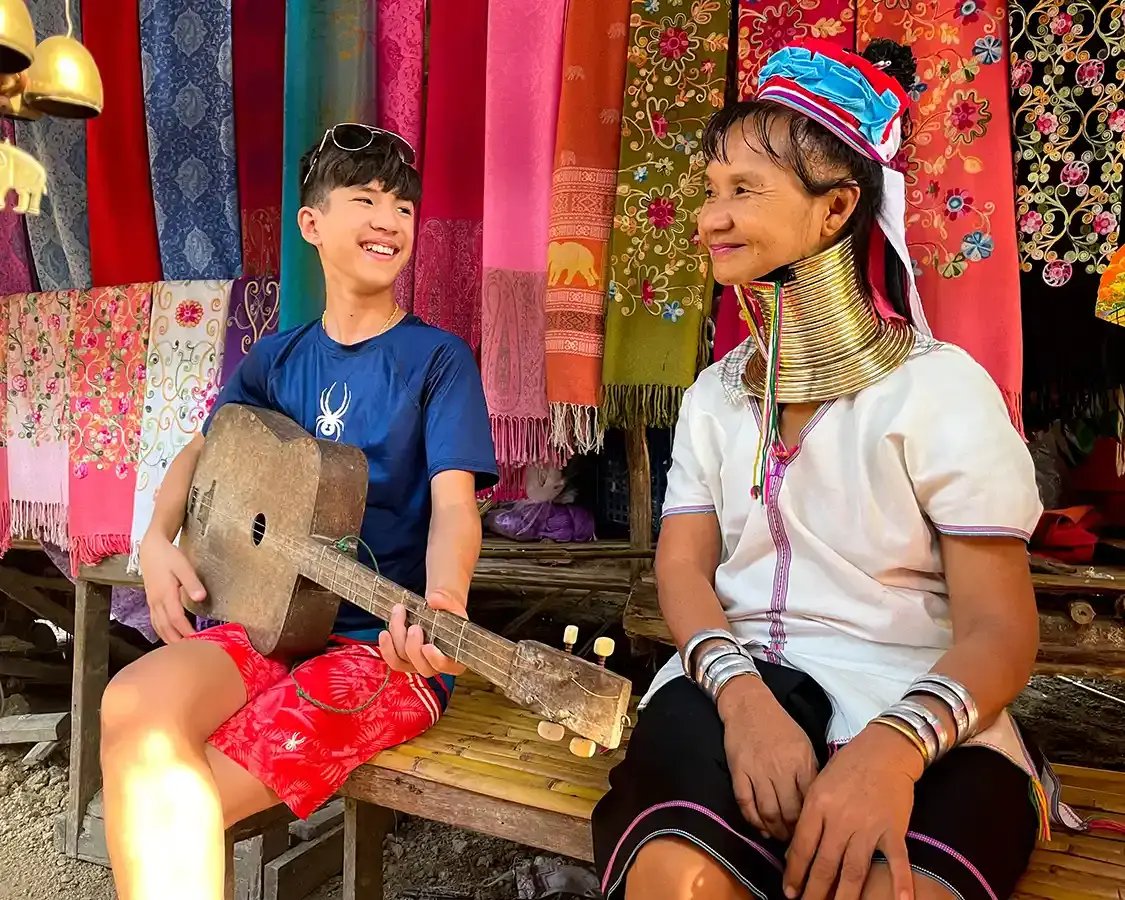
Thailand has genuine cultural expectations that are not difficult to meet if you know about them before you arrive. Getting this right matters – not just for your experience, but as a basic act of respect toward the country you’re visiting.
Temples
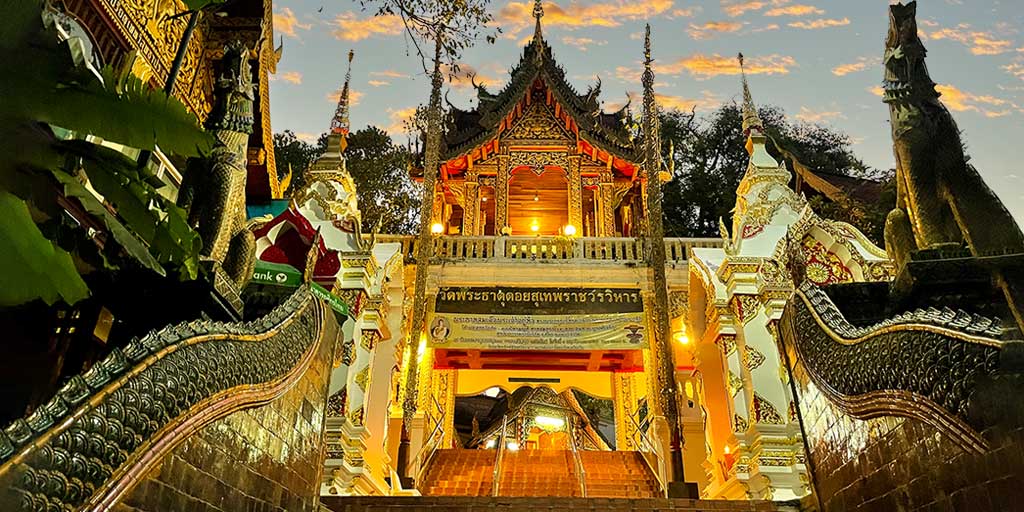
Thailand has over 40,000 Buddhist temples, and you will, inevitably, visit a handful of them. The dress code at these religious sites is universal: covered shoulders, covered knees, and no shoes inside temple buildings. This applies to every member of your family, children included. A light scarf or wrap carried in your day bag solves this problem entirely.
Speak quietly inside the temple grounds. Talk to your children about not running or shouting before you enter. Sit with your feet pointed away from Buddha images. Pointing your feet at religious icons is considered deeply disrespectful in Thai culture.
The Monarchy
The Thai monarchy is something families need to discuss before arriving in Thailand, not after. The Thai monarchy is not simply a cultural institution; it is protected by law. The lèse-majesté statute makes it illegal to criticize, insult, or defame the king, the queen, or the heir apparent. This is enforced. The penalties are severe.
Do not speak critically about the royal family in public spaces. Ensure that your children understand not to make careless remarks. This is not a situation where the law is theoretical or occasionally applied. It is real, and it applies to visitors.
Children and Thai Culture
Thai culture places enormous value on children and family life. Traveling with kids will earn your family warmth from locals that solo travelers and couples don’t always receive. Our boys received endless kindness, interest, and small acts of generosity throughout our visits.
That said, Thai people may want to touch or hold your young children. This is an expression of affection, not aggression. If your child is uncomfortable with it, a gentle, apologetic explanation will usually be understood without offense. The head is considered the most sacred part of the body in Thai culture – don’t casually pat children or adults on the head. The feet are considered the least sacred – never point them at people or at religious objects.
The Wai
The wai, the traditional Thai greeting performed by pressing the palms together at chest level and bowing slightly, is something your children will pick up immediately and probably practice on everything within arm’s reach. Let them. Returning a wai is always appropriate, and children who do it earn immediate delight from many of the Thai locals that they encounter.
When to Visit Thailand With Kids
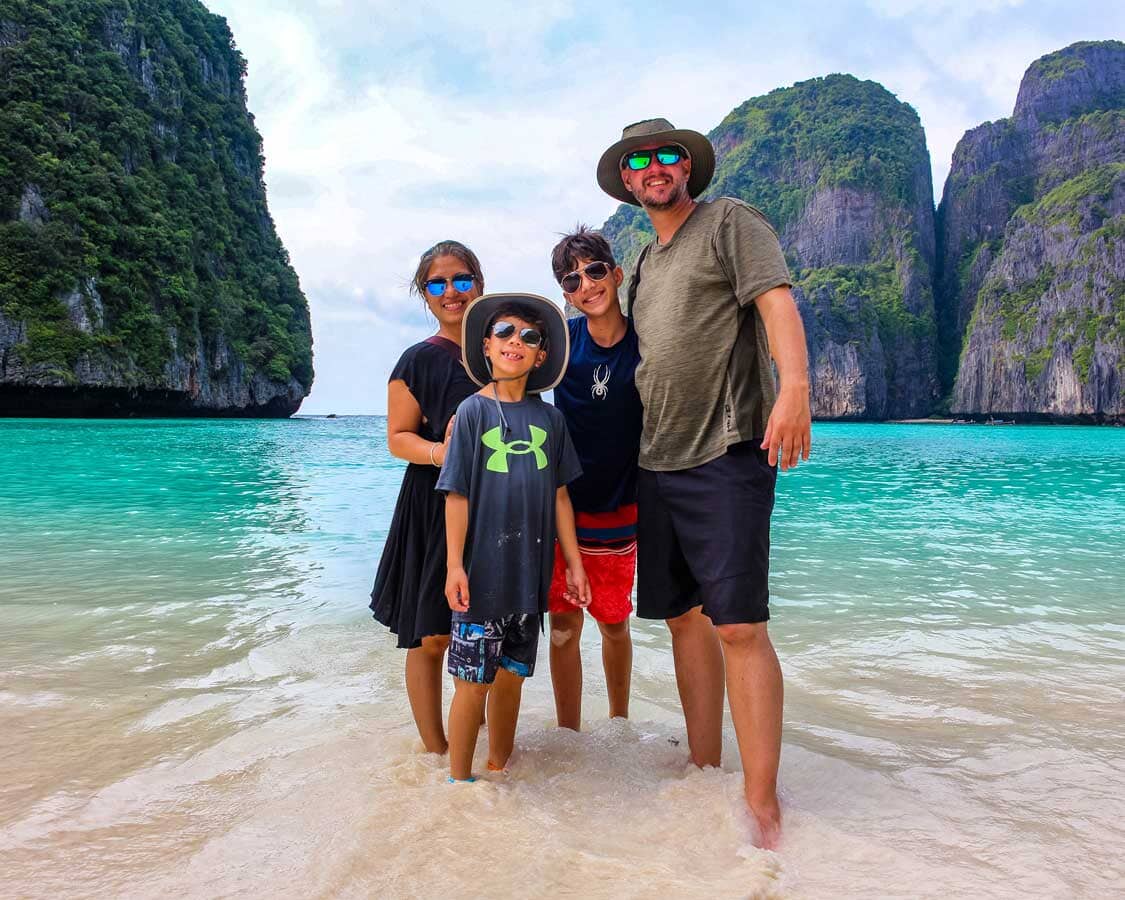
Thailand’s weather operates on two systems simultaneously, which is one of the things that makes the country navigable year-round. But these differences need to be understood before you plan your trip.
The north and central regions, Bangkok, Chiang Mai, Kanchanaburi, and Ayutthaya, have a distinct dry season roughly from November through April and a wet season from May through October. November through February is the most comfortable window, with temperatures in the north cooling significantly at night. March and April are the hottest months in the country. Songkran (Thai New Year) falls in April and involves city-wide water fights that children find magnificent and adults find genuinely exhausting.
The South of Thailand operates differently. Phuket and the Andaman coast are at their best from November through April. The Gulf of Thailand coast, Koh Samui, Koh Phangan, Koh Tao, has an opposite pattern, often dry from January through September, while the Andaman side is wet. This is the reason some travelers split a southern trip between both coasts, following the weather.
In practical terms, for families:
- November to February is the prime window for a multi-region Thailand visit covering Bangkok, the north, and the Andaman coast. Comfortable temperatures, reliable skies.
- July and August are peak season for Western families following school holidays. Everything costs more and is more crowded. The Andaman coast is often rainy during this period; the Gulf coast is generally fine. Plan your coasts accordingly.
- March and April are hot everywhere. Manageable with shade, pools, and air conditioning, but not the most comfortable window for temple-heavy itineraries with young children.
- May through October is the shoulder to low season in most regions. Rates drop, crowds thin, and rain is genuinely present but usually falls in intense afternoon bursts rather than all-day downpours. Many families have excellent experiences in this window. Know what you’re getting and have indoor alternatives ready.
Thailand Travel Tips for Families: What We Wish We Had Known
Some of these Thailand family travel tips are practical. Some of them are the kind of thing you only understand after you’ve been there and come back.
Pace is Everything
Thailand rewards families who slow down and devastates those who rush. The natural instinct for many travelers is to cover as much ground as possible. The reality is that the best moments, monks chanting at dawn in Chiang Mai, the fireflies over the Kwai River, strolling through a hilltribe village with no other tourists in sight, are not things you find by moving fast. Build more time into fewer places. You can always return for what you missed. You can’t recreate the time you had.
Don’t Overlook the Heat
Thailand is seriously, genuinely, midday-hot. The adjustment is to build your mornings early and your afternoons slow. We were out by 7:00 a.m. every day, visiting temples and markets before the crowds as the sun crept above the horizon. By noon, we were seeking cooler temperatures in larger temples or cafes. By 3:00 or 4:00, as the heat lifted, we went back out. This is how local Thai people live. Match the rhythm, and everything becomes easier.
Kids Will Eat Things They Can’t Identify. And That’s Good
Don’t try to control every meal while you’re in Thailand. The best food experiences in the country happen at tables with plastic chairs and fans overhead and menus that may or may not have English on them. Point at what the person next to you is eating. Say “mai pet” if you need to. Eat it. You will be fed well.
Ethical Tourism Requires Research. Be Part of the Solution
I’ve mentioned elephant encounters and hill tribe visits, but the broader principle applies throughout your travels in Thailand. The tourist economy in Thailand is large, complicated, and not always organized around the benefit of local people or animals. Spend time before you arrive understanding what you’re supporting before you book. It doesn’t have to be paralyzing. It does have to be a conscious choice.
Pack Light and Use the Laundry Services
Thailand has affordable, fast, reliable laundry services in every city and most towns. We’ve learned lessons through the 40+ countries of family travel that we’ve experienced. Two or three days of clothing each, light layers for air-conditioned transport, temple-appropriate cover-ups, and one pair of shoes per person that can handle streets and light hiking. Everything else can be washed and back by morning. You can check out our Thailand packing list here.
Travel Resources for Families Visiting Thailand
For practical planning, safety considerations, and logistics, these dedicated guides provide deeper support for families interested in travel to Thailand.

Frequently Asked Questions
Yes. Thailand is consistently rated among the safer destinations in Southeast Asia for family travel. Crime against tourists is low, children are welcomed warmly throughout the country, and the tourism infrastructure is well-developed. The main safety considerations are road traffic (high motorcycle density and a significant national fatality rate), food and water hygiene, and mosquito-borne illness in jungle regions. None of these are reasons to avoid Thailand – they are reasons to prepare. Take travel insurance, stay hydrated with bottled water, use DEET repellent, and exercise the same traffic awareness you’d use anywhere.
November through February is the prime window for most families. Temperatures are manageable, skies are reliable across most regions, and the north cools significantly at night. July and August work for Gulf Coast destinations, but can bring heavy rain to the Andaman side. March and April are the hottest months anywhere in the country – doable, but demanding with young children on temple-heavy itineraries. For a full regional breakdown, see the When to Visit section above.
Most Western families – Canadian, American, British, and most EU nationalities – currently receive visa-free entry for stays of up to 60 days. No advance application is required. Your passport must be valid for at least six months from your date of entry. Children traveling with their parents do not require separate visas under the tourist exemption. Always confirm current rules with the Thai Embassy for your country before departure, as visa policies are subject to change.
No vaccinations are required for entry, but several are strongly recommended by travel health clinics: Hepatitis A, Hepatitis B, Typhoid, and all routine vaccinations, including MMR and DTaP. Dengue fever risk is present throughout the country; malaria risk is low in tourist areas but present in jungle border regions. See a travel health clinic at least six weeks before departure to allow time for the multi-dose series to complete.
Domestic flights are the most practical option for covering large distances quickly – routes between Bangkok, Chiang Mai, and Phuket are frequent, affordable, and reliable. The Bangkok to Chiang Mai overnight sleeper train is a well-regarded family adventure for those with time and older children. Grab (the dominant rideshare app) works excellently in Bangkok and Chiang Mai. Tuk-tuks are fun for short trips with agreed-upon prices. Driving is possible outside Bangkok, but requires full attention, given the motorcycle density on Thai roads.
Many elements of Thai food work very well for children – pad Thai, fried rice, mango sticky rice, grilled proteins, and most noodle dishes are mild and accessible. The challenge is spice management: Thai cooking can be very hot, and even ordering “not spicy” (mai pet) doesn’t always guarantee a child-friendly result. Night markets are ideal for introducing children to Thai food because every dish is visible before you order. Start mild, build gradually, and don’t force the durian on night one.
The clearest indicators of an ethical elephant experience: animals are not ridden, there are no performances or tricks, the facility is transparent about its rescue and care practices, and the elephants appear relaxed and engaged rather than lethargic. Elephant Hills in Khao Sok National Park is the sanctuary our family visited and the standard we’d recommend families use as a benchmark. Avoid any facility that offers elephant rides, shows, or painting demonstrations – these practices require training methods that cause harm.
Final Thoughts On Family Travel in Thailand
Thailand is a country that asks very little of you on the surface. It is visually extraordinary from the moment you land. The food is unforgettable. The people are warm. The logistics, as I’ve laid out in this guide, are genuinely manageable for families willing to do a bit of preparation.
What it gives back in return for those who are visiting for more than a beach vacation is a journey that reaches into the history, culture, harder conversations, and moments of stillness in a jungle, an ancient temple, or a pre-dawn street in Chiang Mai. These are things that I can’t fully describe, because they will be unique for each person lucky enough to encounter them.
These are experiences that accumulate over the course of a trip through Thailand and then sit with you afterward, like a friendly hand on your shoulder, reminding you to return.
This guide is updated as new regional articles and planning resources are published. Looking beyond Thailand? Explore the International Family Travel Guide.