
Peru family travel tips covering altitude, Machu Picchu tickets, getting around, the Amazon, safety, and hard-won lessons from a family who traveled Lima to the Sacred Valley, Colca Canyon, and the Sahara of South America
Peru is legendary. I know that sounds like the kind of thing travel writers say about every country, but Peru earns it.
My family had been planning our first trip to Peru for years. We had talked about it over kitchen tables, priced it out, talked ourselves out of it twice, and finally just booked it before we could find another reason not to. Then we were there, landing in Lima at night with two boys aged three and six, and I remember thinking: Two weeks in Peru with kids. What exactly are we doing?
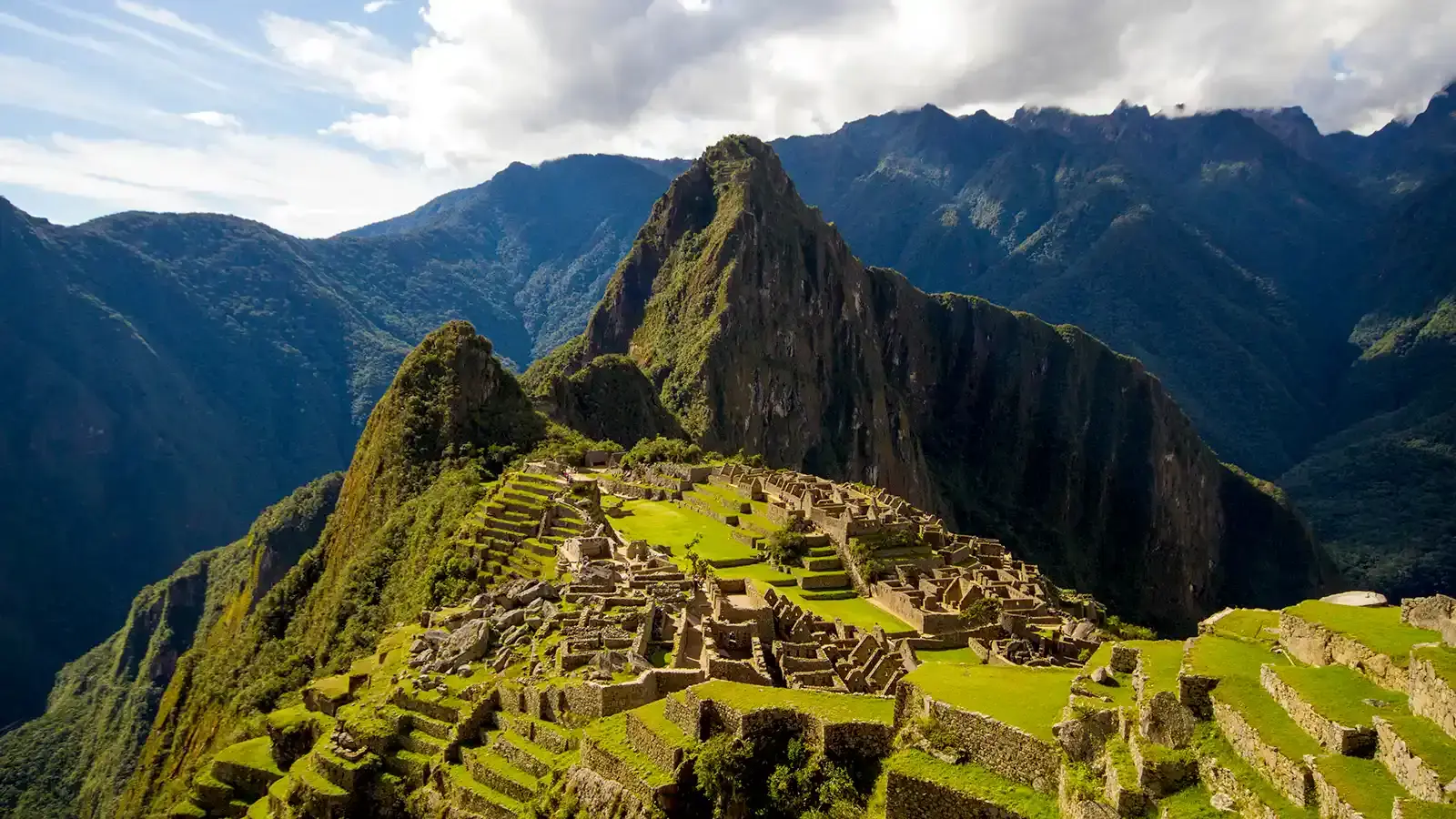
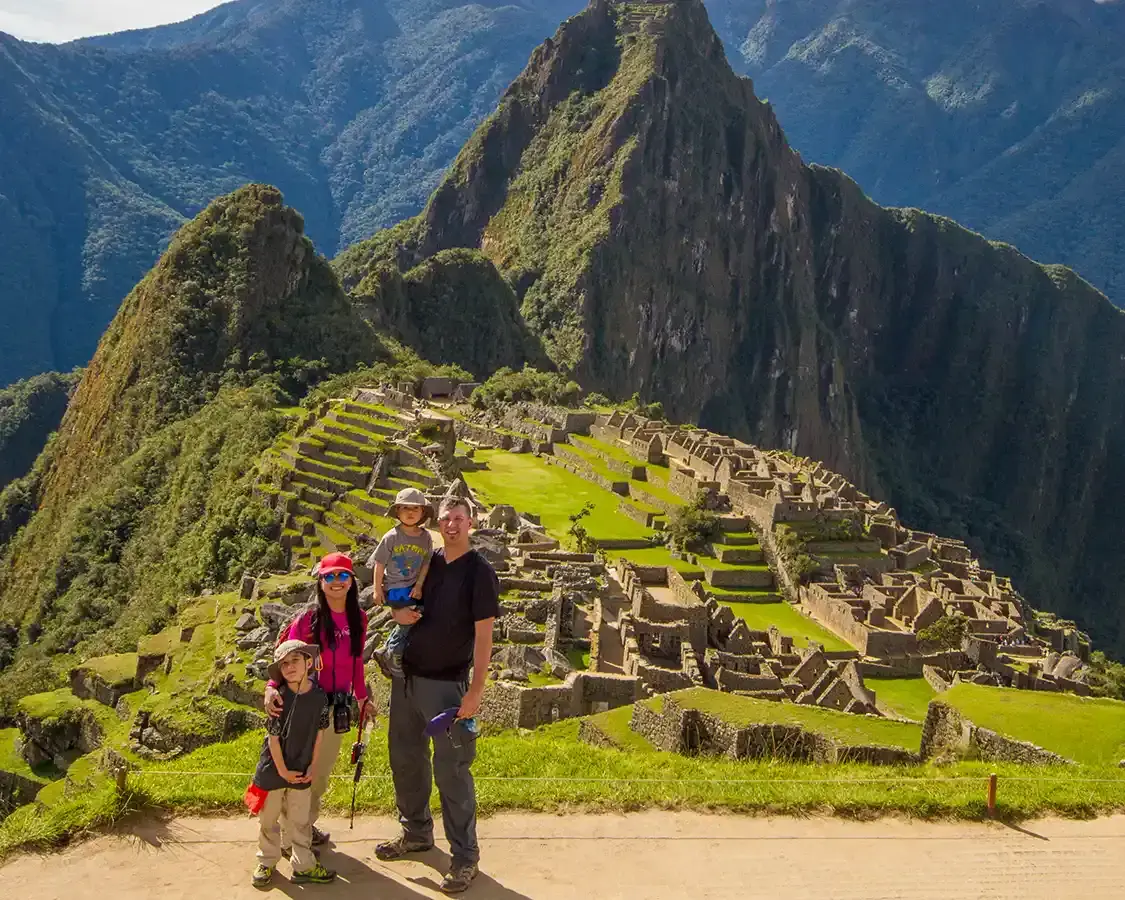
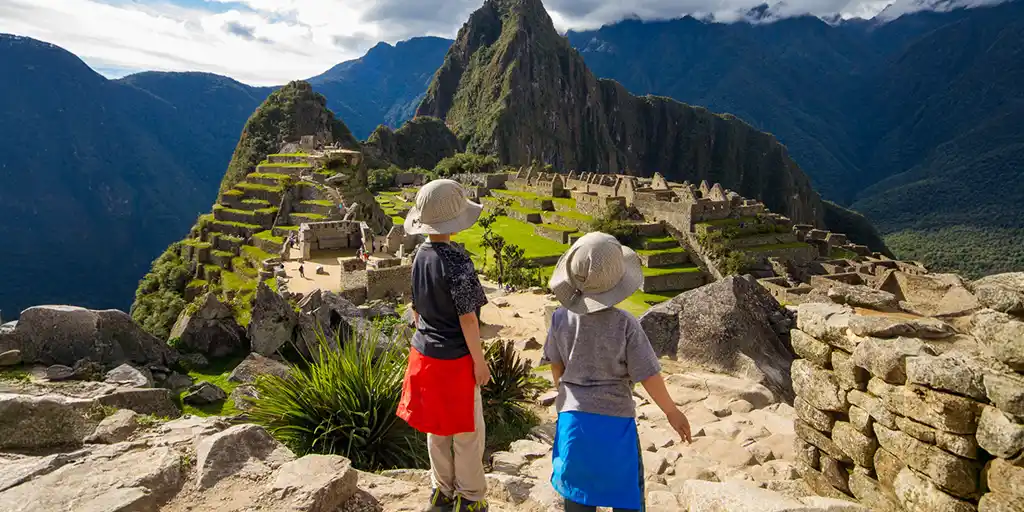
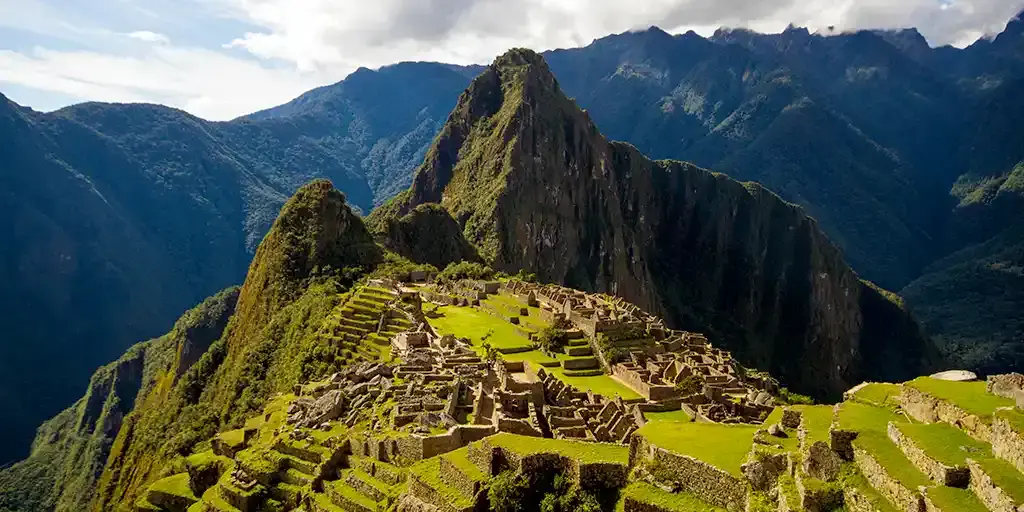
I got the answer about a week later. We were standing at the guardhouse entrance to Machu Picchu in the mid-afternoon. Our guide, Edward, pointed ahead and said to keep walking. We came through the last gate and the citadel appeared below us, the entire thing, stone terraces dropping down the mountainside and the peak of Huayna Picchu rising behind it through the clouds.
Cohen went quiet and stared. Dylan, who had not stopped talking since approximately 2013, grabbed my hand and pointed. Christina and I looked at each other. That was it. That was the answer.
We spent two weeks traveling in Peru on that first trip, through Lima, Paracas, Huacachina, the Sacred Valley, Machu Picchu, Cusco, Lake Titicaca, and Colca Canyon. We stumbled through more acclimatization, stomach incidents, and transcendent moments than any two weeks of travel we had done before or have done since. Here is what you actually need to know before you travel to Peru with kids.
It was that trip that helped to set the tone for this entire website.
At a Glance: Quick Facts for Family Travel in Peru
🗣Language: Spanish (official). Quechua is widely spoken in the highlands. English in hotels and tour agencies; rarely elsewhere.
💰Currency: Peruvian Sol (PEN). Cards work in cities and major hotels. Cash essential for markets, rural areas, and smaller restaurants.
🔌Power Adapter: Type A and B (North American). Some older properties also use Type C (European). Bring a universal hub to cover all bases (get one here).
🚗Driving: Right-hand side. Lima coastal driving: manageable. Mountain roads: hire a local driver. Do not self-drive Cusco city.
🆘Emergency: Police: 105 | Fire: 116 | Ambulance: 117 | Tourist Police: 01-460-1060
💧Tap Water: Not safe to drink from the tap anywhere in Peru. Bottled water everywhere. Bring a filtered bottle for remote areas.
⛰️ Altitude: Cusco: 11,152 ft (3,399m). Lake Titicaca: 12,507 ft (3,812m). Colca Pass: 15,091 ft (4,600m). Plan two rest days before any activity.
🛂Visas: Canada, US, UK, and most EU nationalities receive 90-day visa-free entry. No advance application required.
Do You Need a Visa to Visit Peru? Entry Requirements
Table of Contents
Entry into Peru is straightforward for most Western families. Citizens of the United States, Canada, the United Kingdom, and most EU countries can enter visa-free for stays of up to 90 days. No paperwork, no pre-arrival registration. You arrive, you get a stamp.
Your passport must be valid for at least six months from your date of entry and have at least one blank page for stamps. Check every family member’s passport well in advance – children’s passports expire faster than adults’.
Solo parents and non-biological guardians: Carry notarized proof of guardianship and copies of birth certificates for all children. Peruvian immigration officers take family documentation seriously and can ask for it at any entry point.
If your nationality requires advance authorization, the process is handled through Peru’s immigration authority and is worth sorting out well before travel. A quick check of your specific situation before booking avoids the kind of stress that airport immigration desks produce on arrival day.
💡 PRO TIP: Book Airport Transfers in Advance
Lima’s Jorge Chavez International Airport sits about 45 minutes from Miraflores under normal traffic, and considerably longer during rush hour. Book your airport transfer through your hotel or a vetted service before you arrive. Do not negotiate transport on the curbside at 11 pm with two tired kids and four bags.
Getting Connected: Mobile and Data in Peru
Peru’s two dominant carriers are Claro and Movistar. Physical SIM cards for either are available at the airport and in shops throughout Lima and Cusco. If your phone supports eSIM, I use the Airalo app for international travel and recommend purchasing and activating a Peru plan before you board – arriving in a new country already connected is meaningfully less stressful than hunting for a SIM after a long-haul flight.
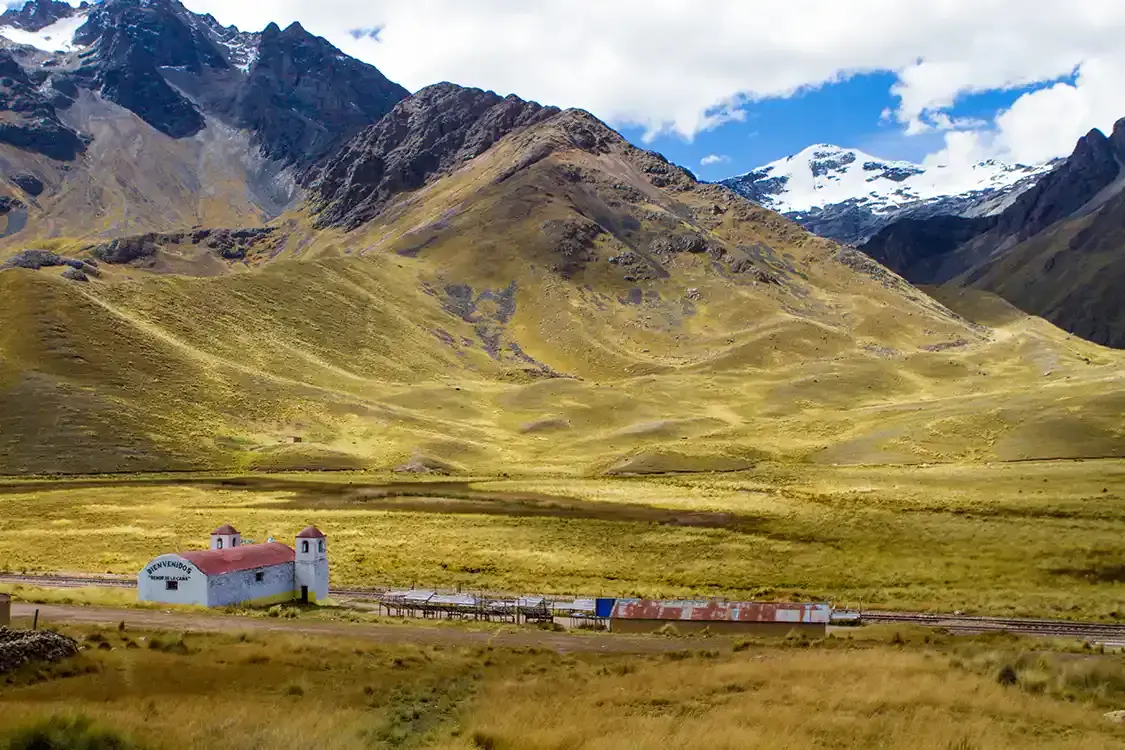
Coverage in Lima, Cusco, Arequipa, and along the main highland routes is solid. Aguas Calientes – the town at the base of Machu Picchu – has limited connectivity. Remote areas such as Colca Canyon, the shores of Lake Titicaca, and the drive from Cusco to Puno will have gaps. Plan accordingly: download offline maps for every region you’re visiting before you leave your hotel’s WiFi.
👀 HEADS UP: The Data-Free Areas in Peru are HUGE
The Inka Express tourist bus from Cusco to Puno takes roughly 10 hours with stops. Connectivity along this route is unreliable. So are drives through the highlands to areas such as Colca and Arequipa. Download everything before you board – Netflix shows for the kids, offline maps, any boarding passes or hotel confirmations you’ll need on arrival. We learned this by not doing it.
Getting Around Peru With Kids
Peru’s geography makes getting between regions a challenging experience. The Andes mountain range runs straight through the country, the coast is separate from the highlands, and distances that look manageable on a map are serious travel days in practice. Build this into your planning from the start.
Domestic Flights
Lima to Cusco is almost always done by domestic flight. The overland alternative is 22+ hours through mountain roads. With children, there are very few versions of that drive that make sense. LATAM, Sky Airlines, and Star Peru all operate the Lima-Cusco flight route with multiple daily departures. Book early – June through August fills fast, and prices climb significantly.
Lima to Arequipa is a 90-minute flight versus a 12-hour overnight bus. For families doing the full southern circuit, flying into Arequipa and connecting to Colca Canyon makes the itinerary manageable without sacrificing two days of children in a bus.
The Train to Machu Picchu
The train is the only way to reach Aguas Calientes and Machu Picchu without embarking on a multi-day trek. Two operators run the route: Peru Rail and Inca Rail. Both operate from Ollantaytambo in the Sacred Valley – most families board here rather than Cusco, having spent their acclimatization days in the Valley first.
💡 PRO TIP: Book the Vistadome Train
Both Inca Rail and Peru Rail offer economy and premium classes. The Vistadome has panoramic roof windows and larger glass side windows. The scenery on the descent from Ollantaytambo into the cloud forest of Aguas Calientes – the valley walls closing in, the vegetation thickening, the Urubamba River appearing below – is worth every extra dollar.
Our guide Edward gave up his left-side seat to us. That side is considered the better view. He was not wrong.
Tour Operators vs. Independent Travel
Most families doing the full highlands circuit – Sacred Valley, Machu Picchu, Cusco, Colca Canyon, Lake Titicaca – use a tour operator, and for good reason. The logistics are genuinely complex: altitude management, train bookings, timed entry permits, hotel sequencing, and long driving days that benefit from a local who knows when to stop.
We traveled with Kuoda Travel and would make the same decision again without hesitation. You can check out their website here. They managed everything, and on the days when Cohen had a stomach bug and the itinerary needed to flex, having a local team to call made an enormous difference.
Self-driving works well on the coast – Lima to Paracas to Huacachina is straightforward on the Panamericana. Anywhere above 10,000 feet with mountain roads and children in the car is where a professional driver earns their fee.
Buses in Peru
Peru’s long-distance tourist bus network is genuinely excellent, and for families covering significant ground between cities, it is often the right call over flying – particularly when the route passes through landscapes worth watching.
Tourist-class buses are comfortable, air-conditioned, and a significant step above the standard public bus experience. Some routes operate as guided day trips with scheduled stops at archaeological sites and viewpoints, which turns a long transfer into part of the itinerary rather than dead time.
The important distinction is between tourist buses and standard public buses. Standard public buses are cheap and reach everywhere, but comfort, reliability, and adherence to schedules vary considerably. For families, the premium tourist bus operators are worth the price difference on any route over three hours. Book in advance on popular routes and confirm what is included – some services provide meals and English-speaking guides, others do not.
Taxis and Rideshare
Uber and InDrive operate reliably in Lima and Cusco and are the safer option over street taxis. When using a standard taxi anywhere in Peru, agree on the price before you get in. Do not use street taxis late at night in Lima – book through your hotel or use an app. In smaller cities like Arequipa and Puno, your hotel can arrange reliable drivers for day trips and transfers.
Language in Peru
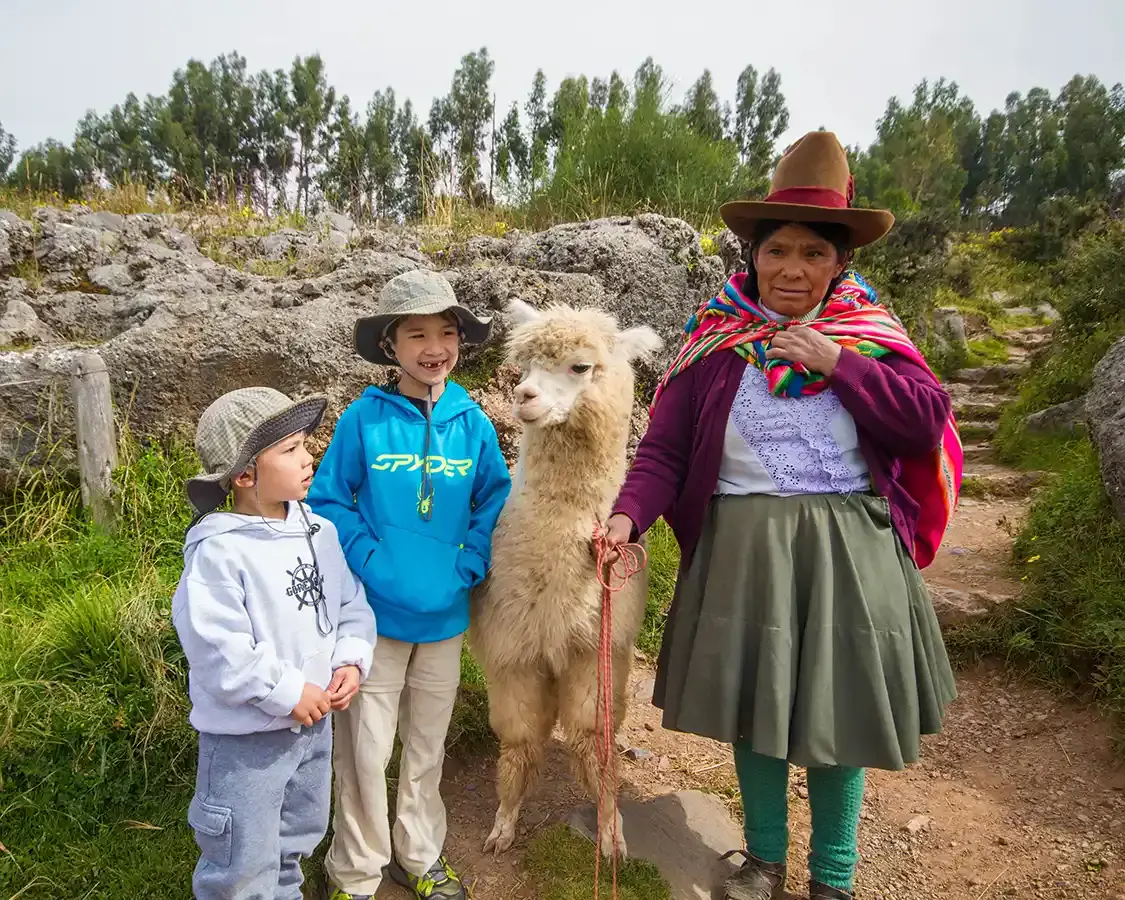
Peru’s official language is Spanish, and Peruvian Spanish has a reputation for being among the clearest in Latin America – relatively neutral accent, unhurried pace. If you speak any Spanish at all, Peru is a comfortable place to use it.
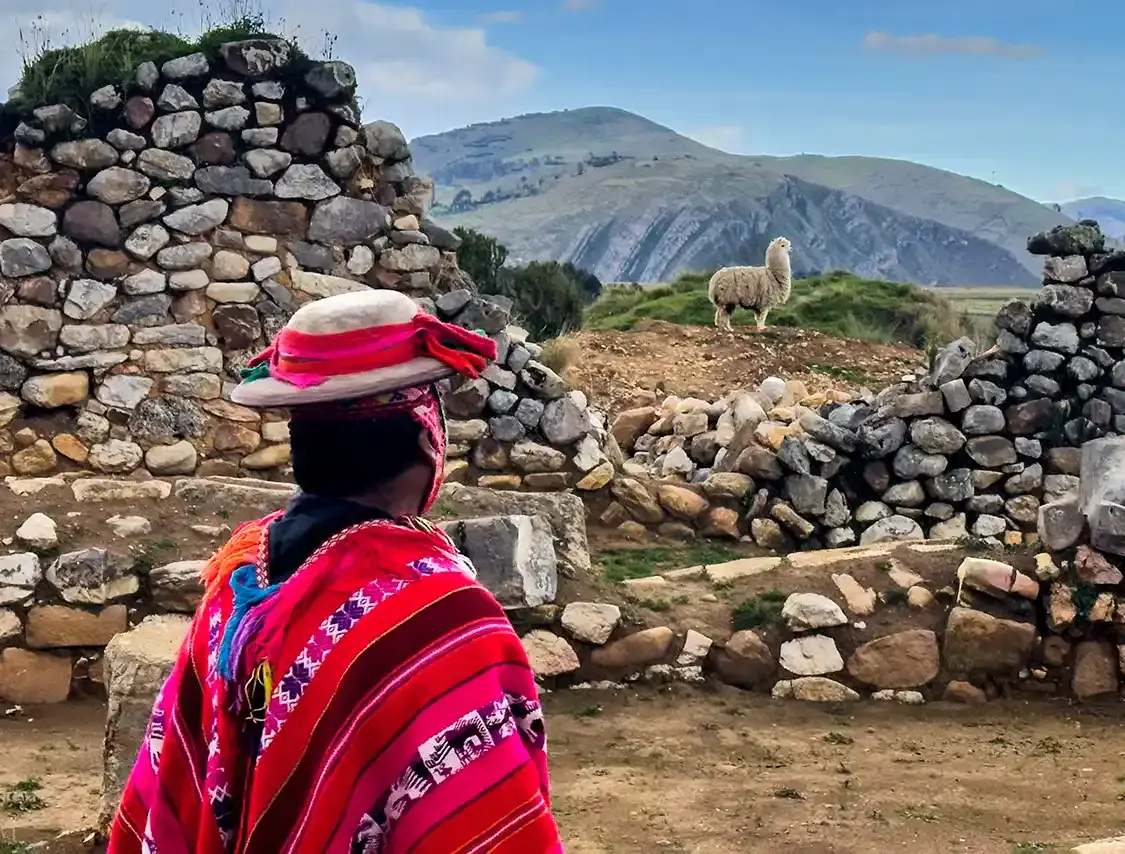
What most first-time visitors to the highlands don’t expect is how present Quechua is. The language of the Inca Empire is still spoken by millions of Peruvians in the Andes, and around Cusco, the Sacred Valley, and Lake Titicaca, you will hear it constantly – in markets, in conversations between locals, on community radio.
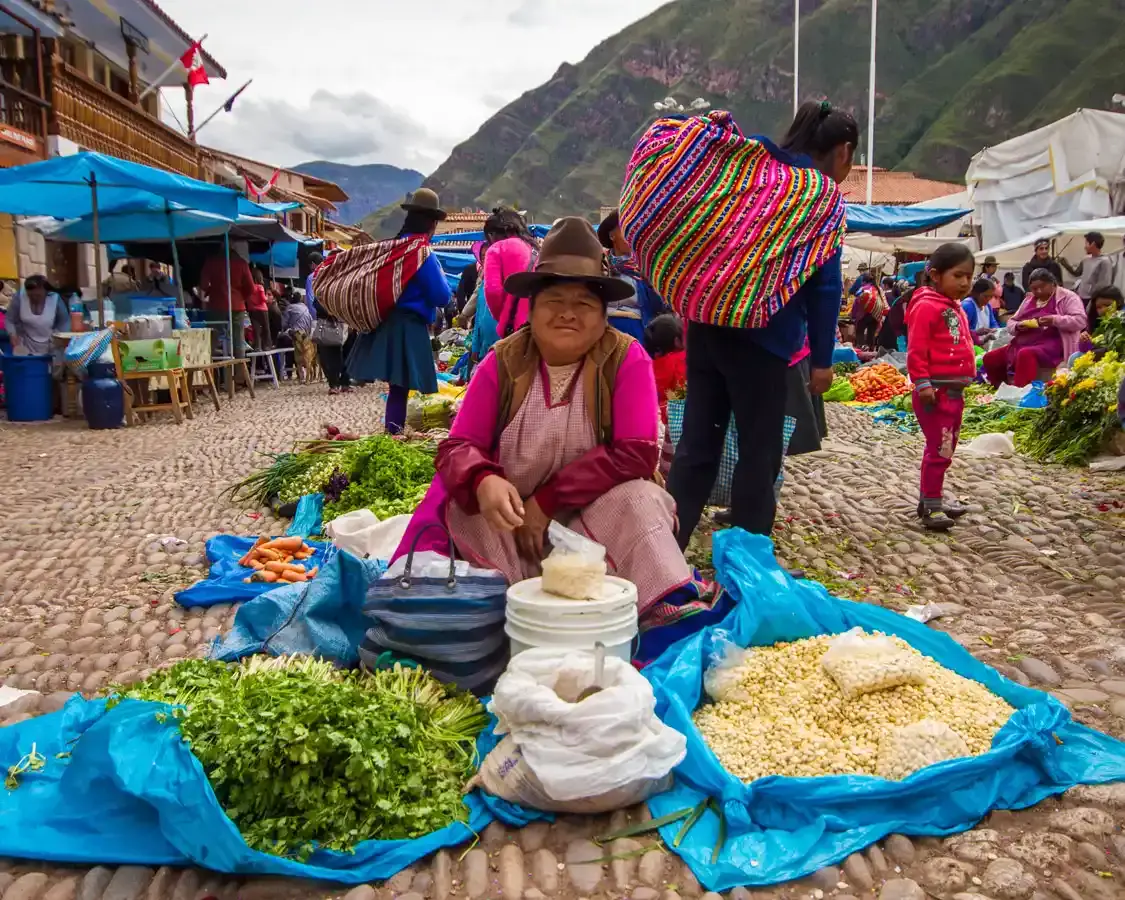
It appears on signs. You will hear Quechua at the Pisac market on a Sunday when Quechua-speaking communities from surrounding villages bring their goods in. You are not required to learn it, but recognizing what you are hearing adds a layer to the experience that generic Peru guides skip entirely.
English is spoken in hotels, tour agencies, and upscale restaurants in Lima and Cusco. Outside those contexts, assume Spanish only. Download Google Translate with both Spanish and Quechua offline language packs before you leave.
Phrase | Spanish | Quechua | Pronounciation |
|---|---|---|---|
Hello | Hola | Rimaykullayki | Oh-la / Ree-my-koo-YAY-kee |
Thank you | Gracias | Sulpayki | GRAH-see-as / Sul-PIE-kee |
Please | Por favor | Ama hina kaspa | Por fah-VOR |
Where is…? | Donde esta…? | Maypin kashan…? | DON-day es-TA |
How much? | Cuanto cuesta? | Hayk’am kan? | KWAN-toh KWES-tah |
My child is sick | Mi hijo/a esta enfermo | Wawayqa onqon | Mee EE-ho es-TA en-FER-mo |
Help! | Ayuda! | Yanapaway! | ah-YOO-dah / Ya-na-PA-why |
Bathroom | Bano | Aychanka | BAN-yo |
Yes | Si | Arí | See |
No | No | Mana | N-OH / Mah-nah |
What Power Adapter Do You Need for Travel in Peru?
Peru officially uses Type A and B sockets at 220V/60Hz – the same plug shape as North America, but at twice the voltage. Most modern devices (phones, laptops, camera chargers) are dual-voltage and handle 100-240V automatically; check the label on your charger brick before plugging in. If it says 100-240V, a plug adapter alone works. If it says 110V only, you need a voltage converter.
The additional complication: many older properties in Peru, particularly in Cusco and the Sacred Valley, also have Type C (European two-round-pin) sockets. A universal multi-port USB hub covers every scenario and means one adapter serves the whole family, regardless of the property.
UK travelers: Your plugs are incompatible with both Type A and Type C sockets. You need an adapter. Your devices will handle the voltage.
Australian and European travelers: You need a Type A/B adapter for newer sockets; your devices will handle the voltage.
💡 PRO TIP: Pack a Multi-Port USB Charging Hub
A universal adapter with multiple USB and USB-C ports is one of the most practical items for a family trip to Peru. One adapter handles all socket types across the whole country, and you can charge every device simultaneously overnight without juggling plugs. We never travel without one.
Altitude in Peru: The Most Important Section in This Guide
All of the tips in this article are useful. This section is essential. Altitude sickness is the single thing most likely to damage a Peru family trip, and it catches families off guard precisely because they did not take it seriously enough before arriving.
The Altitude In Numbers:
Cusco sits at 11,152 feet (3,399 meters). Lake Titicaca at 12,507 feet (3,812 meters). The Patapampa Pass on the road to Colca Canyon reaches 15,091 feet (4,600 meters) – the boys and I stood there and watched seven volcanoes in a single view while our lungs worked harder than at any point in our lives. For reference, Machu Picchu itself is at 7,972 feet (2,430 meters), which is why most itineraries use it as a gentler acclimatization point relative to Cusco.
Altitude sickness, called soroche in Peru, does not care how fit you are or how old you are. Our boys were fine on this trip, but I’ve been hit a few times, including on a hiking trip through the Peruvian Andes. What would normally be effortless jaunts had us huffing and puffing – Hauling both boys on shoulder rides when they needed bathroom stops, which were always located at the top of every site, while the emergency was announced at the bottom.
Tips for Managing Altitude in Peru
- Fly into Lima first and spend at least one day there before flying to Cusco. Sea level gives your body a baseline.
- Do not fly directly from Lima to Cusco and immediately start sightseeing. Plan the first Cusco day as a rest day – horizontal if possible, or better yet, head down to the Sacred Valley, which sits at a lower altitude.
- Move to the Sacred Valley immediately after arriving in Cusco. The valley sits lower (around 9,000 feet), and in two days there, you can acclimate your family more gently than staying in Cusco.
- Hydrate aggressively. More than you think necessary. Altitude accelerates dehydration.
- Avoid alcohol for the first 48 hours at altitude. It makes soroche significantly worse.
- Coca leaf tea is sold everywhere in the highlands and is genuinely helpful for mild altitude effects. It is traditional, legal in Peru, and the boys accepted it far more willingly than we expected.
- Talk to your family doctor before departure about acetazolamide (Diamox) for altitude. It is a prescription medication that helps the body adjust faster. Whether it is right for your family and your specific itinerary is a conversation worth having before you land.
🚫 DON’T OVERLOOK: The Acclimatization Days Are Not Optional
Every Peru itinerary should build in two slow days in the Sacred Valley before Machu Picchu and before any major highland activity. Families who fly to Cusco and immediately try to do a full day of ruins are the ones who end up lying in a dark hotel room, their head pounding, while their family carries on without them. The view will still be there after you’ve rested. The itinerary can wait. The altitude cannot be argued with.
Is Peru Safe for Family Travel? What We Found
Peru is safe; in the main tourist regions, it’s a very safe country for families. Machu Picchu, the Sacred Valley, Colca Canyon, and Lake Titicaca are not places where security is a meaningful daily concern. Cusco is a busy tourist city where standard awareness applies. Arequipa is relaxed and walkable. We moved through all of these places with two small children and felt comfortable throughout.
Lima is the city that gets the most cautionary commentary, and some of that commentary is warranted. Miraflores and Barranco – where most families stay and eat – are genuinely safe and well-patrolled. The historic center has improved significantly. The standard travel safety advice stands firm: keep bags close, do not display expensive camera equipment in crowds, use Uber or InDrive or pre-booked transfers rather than street taxis after dark, and stay in well-reviewed neighborhoods. We arrived in Lima braced for difficulty and found a vibrant, beautiful, and welcoming city.
Government travel advisories periodically flag specific regions – certain northern jungle areas and some border zones. Read your government’s current advisory before booking and focus on what it says about the specific regions on your itinerary rather than the headline level. The southern circuit that most families travel is consistently rated safe.
👀 HEADS UP: Traffic Is the Most Consistent Safety Hazard
Lima’s traffic is genuinely heavy, and the pedestrian right-of-way is a more theoretical concept than it is at home. Hold children firmly at road crossings in cities. Use Uber or InDrive after dark rather than street taxis. Mountain roads require the alertness of either a professional local driver or a very experienced traveler – It’s not the place to be tired behind the wheel
Health and Vaccination Recommendations for Family Travel in Peru

See a travel health clinic or family doctor at least six weeks before your departure to Peru. Some recommended vaccines require multiple doses spread over weeks.
- Routine vaccinations (MMR, DTaP, polio) should be fully current for every family member before international travel.
- Hepatitis A is strongly recommended for all travelers. Peru’s markets and street food culture is one of the great pleasures of the trip. Make sure your family is protected before they start enjoying it.
- Hepatitis B is recommended for longer stays and for anyone who may require medical care in-country.
- Typhoid is worth discussing with your travel doctor, particularly if your itinerary includes markets, street food, or rural areas. Ours did all three.
- Yellow Fever is required documentation for entry into the Amazon Basin. If your itinerary includes the Amazon (Puerto Maldonado, Iquitos), get vaccinated at least 10 days before departure and carry your yellow vaccination card. The Galapagos requirement for Ecuador applies here, too, for any cross-border itinerary.
- Malaria prophylaxis is worth discussing with your doctor if the Amazon is on your itinerary. Risk exists in rural lowland areas. The highland circuit (Cusco, Sacred Valley, Lake Titicaca) carries no malaria risk.
👀 HEADS UP: Traveler’s Diarrhea Is Real
Tap water is not safe to drink anywhere in Peru. Bottled water is cheap and available everywhere. At altitude, dehydration from stomach illness hits faster and harder – pack oral rehydration salts for every family member. One of our boys had a food-related stomach incident during our Sacred Valley days, and the rehydration salts we had packed were one of the most useful things in our bags. Peruvian pharmacies in cities are well-stocked, and pharmacists are genuinely helpful.
Peru’s private hospitals in Lima, Arequipa, and Cusco are well-equipped and often staffed by English-speaking professionals. Medical facilities are increasingly limited in remote areas. Travel insurance with emergency medical evacuation coverage is not optional on a trip that includes altitudes above 12,000 feet. I use SafetyWing or World Nomads for family travel insurance on trips like this.
The Regions of Peru: What Families Need to Know
Peru is a large country with dramatically different regions – coastal stretches, Andean highlands, and Amazon rainforest – that each require different preparation and produce entirely different experiences. The families who have the best trips here are the ones who choose carefully rather than trying to cover everything all at once. Below is the full picture of every Peruvian region we experienced firsthand, along with tips for those we have yet to visit.
For the complete destination-by-destination breakdown, see our two-week Peru family itinerary, which covers the full logistics and daily sequencing.
Lima
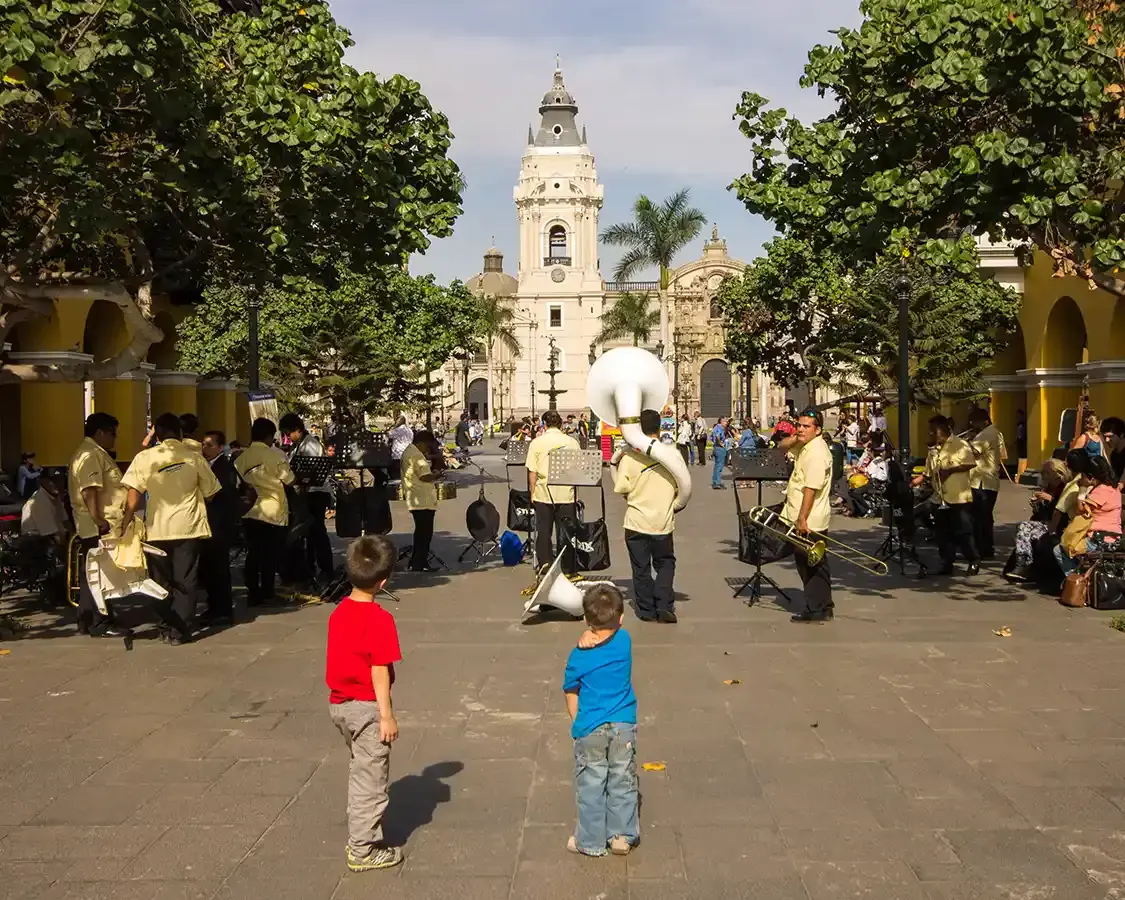
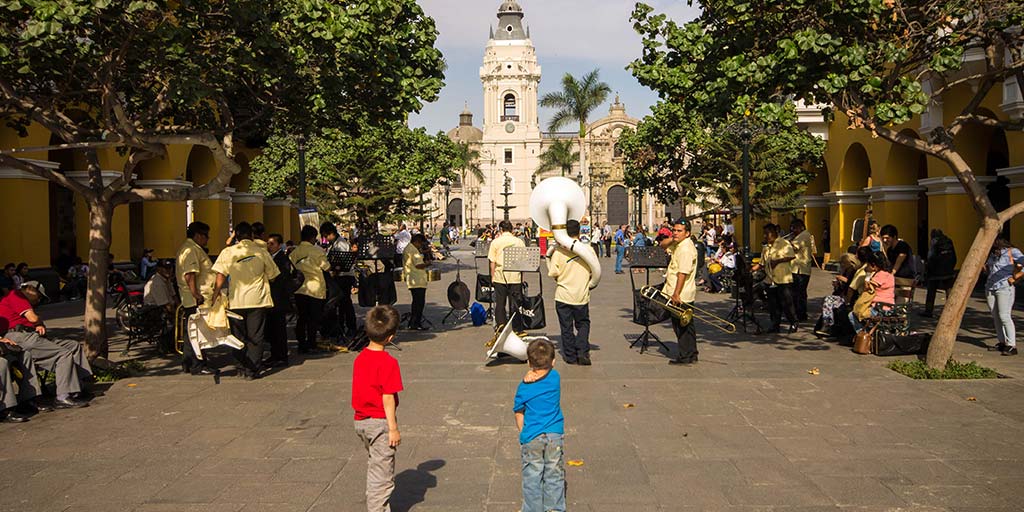
Most trips to Peru start in Lima. Most first-time visitors underestimate this city. The Miraflores district – where families typically stay – sits on Pacific cliffs above a coastline with paragliders and sunset crowds. The Larco Museum houses one of the most significant pre-Columbian artifact collections in the world.
Barranco is the artists’ quarter, full of colored houses and cafes. And Lima’s food scene is genuinely world-class – two of the top ten restaurants in the world are here, and the street-level cevicherias, chifas, and market stalls that feed the city are equally extraordinary. Give Lima at least one full day. We packed it into 24 hours and came home wishing we had three. Luckily, I’ve had the chance to return and experience Lima in more detail.
The Southern Coast: Paracas, Ballestas Islands, Ica, and Huacachina
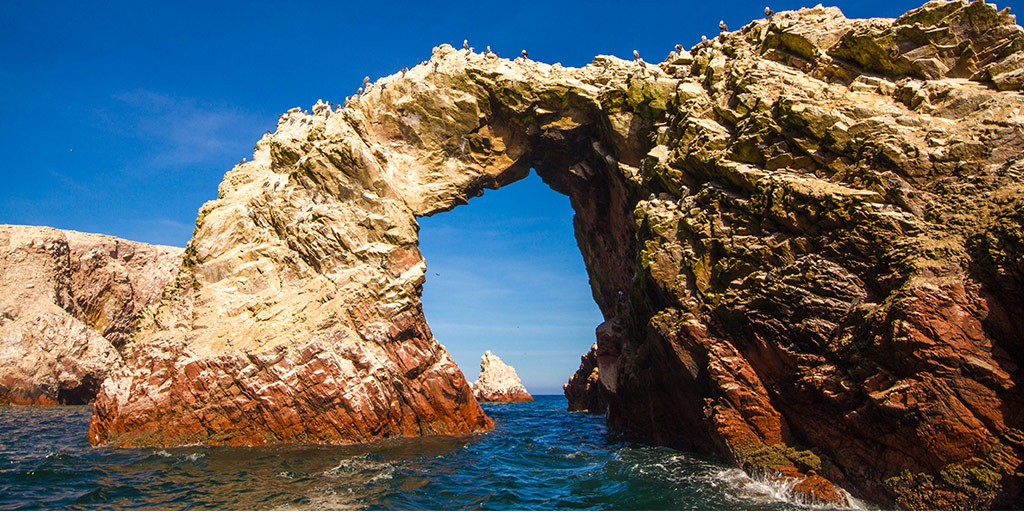
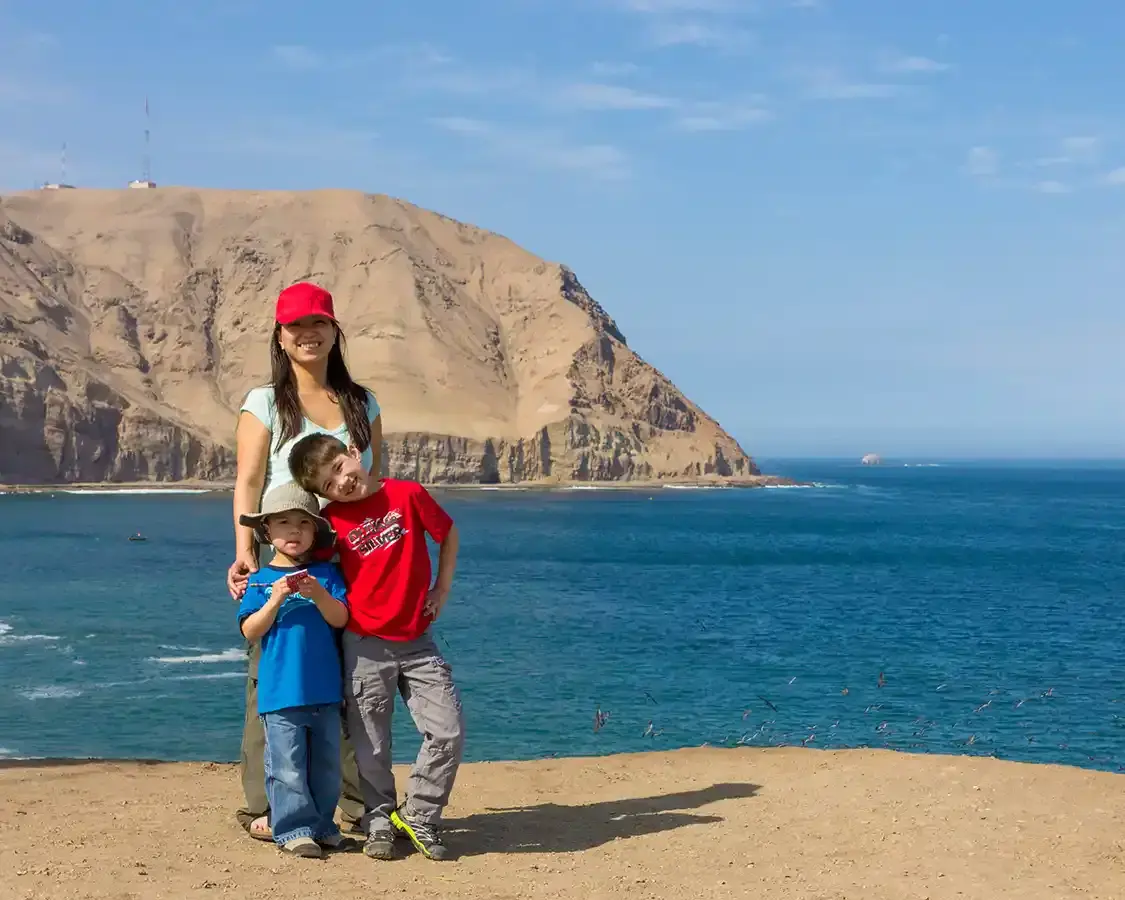
Four hours south of Lima, Peru’s southern coast delivers one of the most varied single-day circuits in the country. Paracas National Reserve and the Ballestas Islands place you alongside Humboldt penguins, sea lions, and pelicans at close enough range that families regularly call it Peru’s Galapagos (you can read about our tour through the actual Galapagos here and compare for yourself).
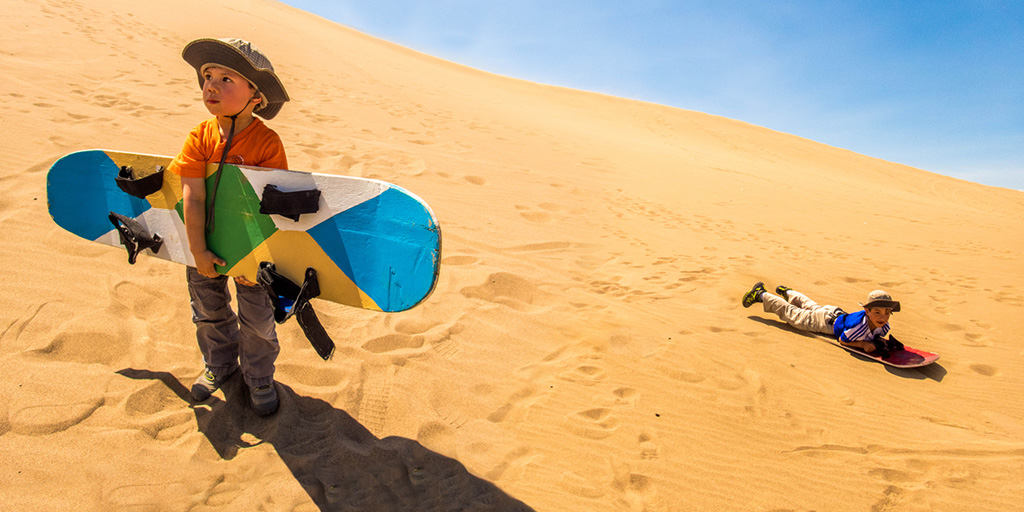
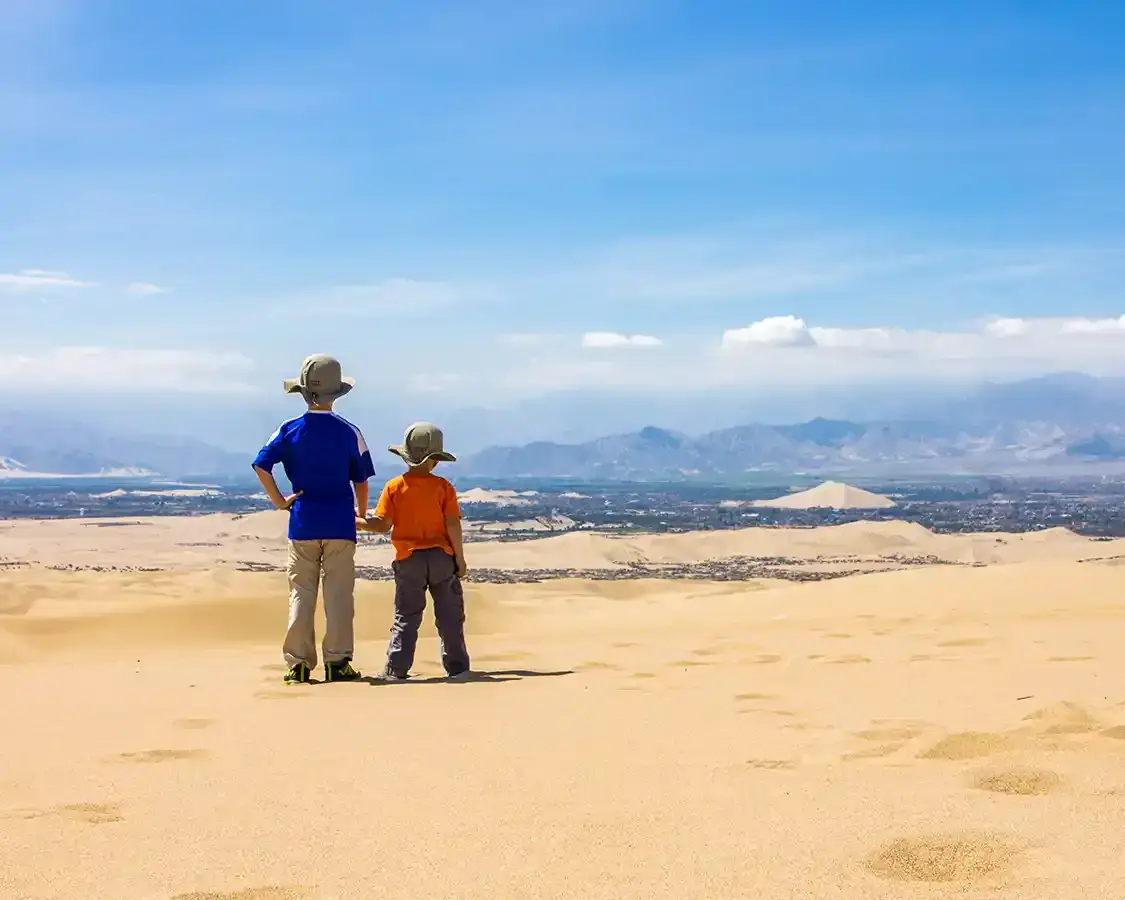
From Paracas, the route continues inland to the famous sand dunes of Huacachina: a natural desert oasis ringed by palm trees, surrounded by dunes climbing 100 meters on all sides. Dune buggies and sandboarding at sunset are the main events. The view of Ica from the top of those dunes, with the oasis sitting impossibly green in the middle of all that sand, is one of those Peru moments that arrives before you’re ready for it.
Most families cover this as a long day trip, or a two-day side trip from Lima, or as a first stop heading south toward Arequipa.
Arequipa
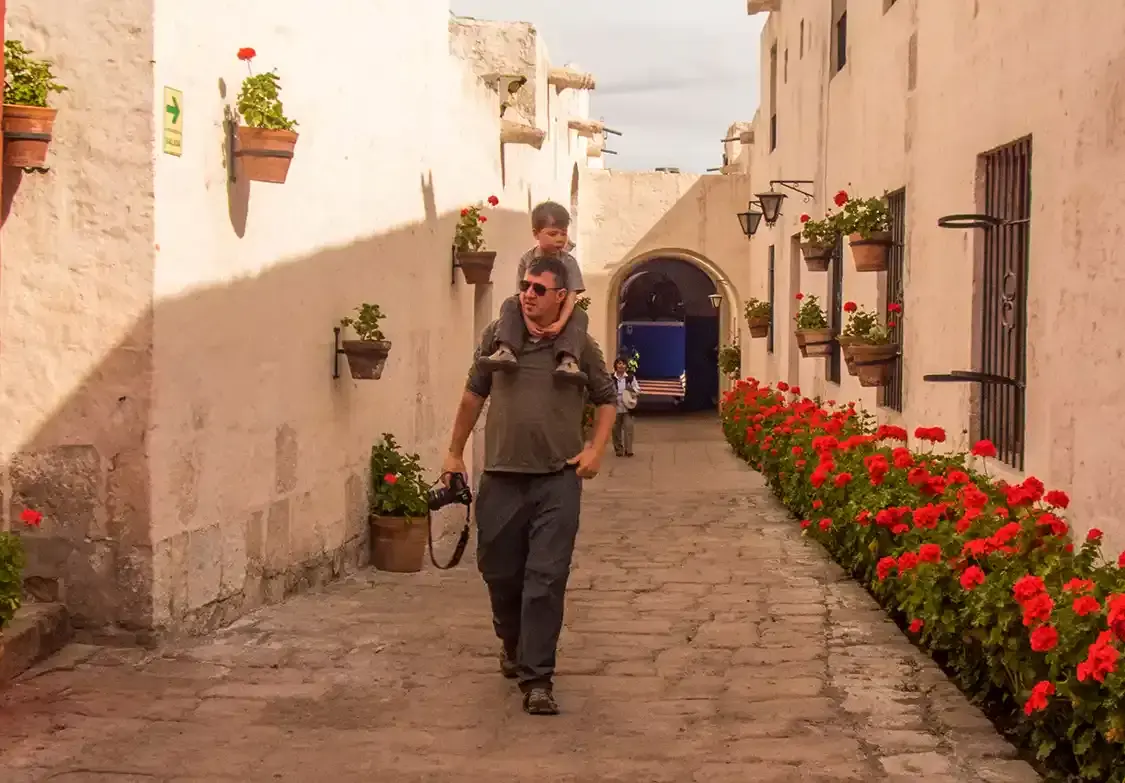
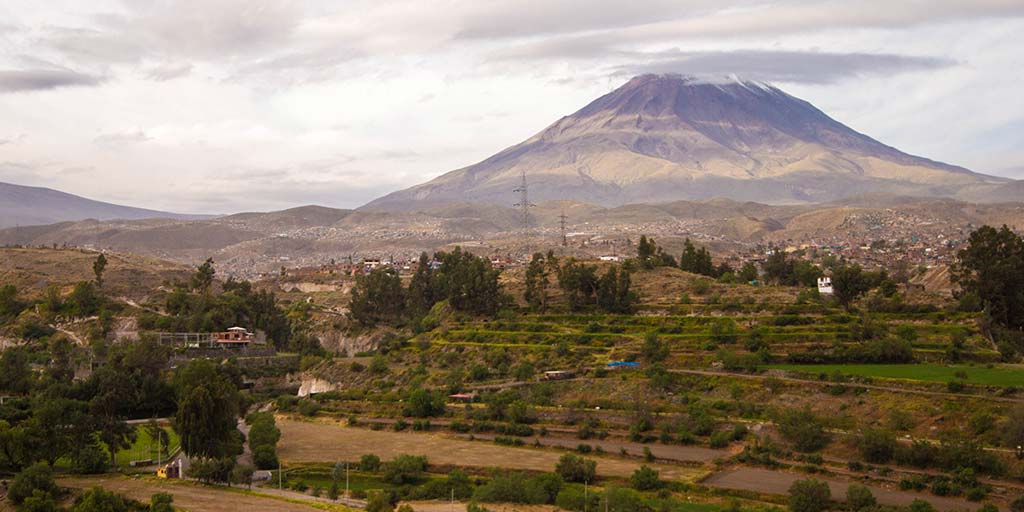
Peru’s second-largest city sits in a valley at the foot of El Misti volcano, built from white volcanic sillar stone that glows white in the afternoon sun. The Monasterio de Santa Catalina – a walled city within a city, a labyrinth of cobblestone lanes and painted courtyards that operated as a private enclosure for centuries – is one of the most extraordinary single attractions in Peru.
Arequipa is calmer and more manageable than Lima, with truly excellent restaurants and a genuinely beautiful plaza. For families doing the southern circuit, it is the base for tours to Colca Canyon and a useful decompression point between the coast and the highlands.
Colca Canyon
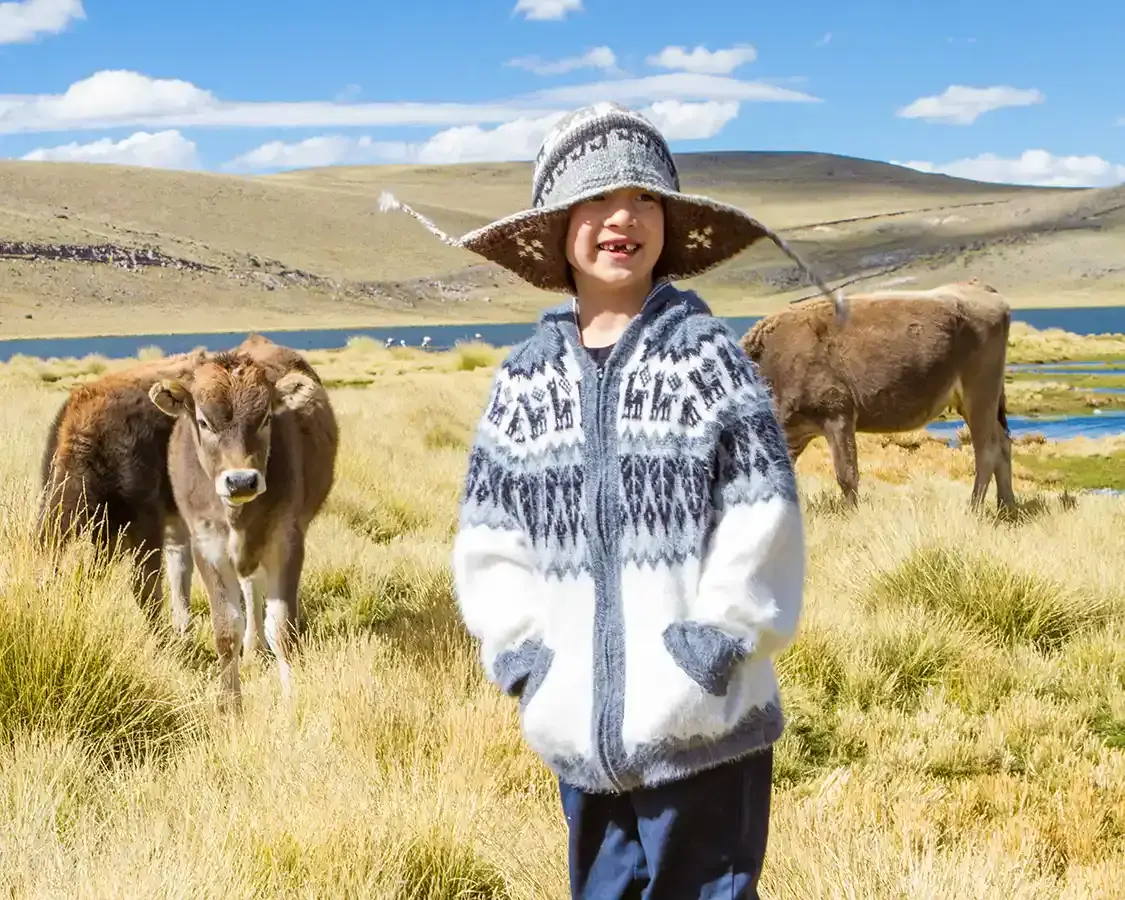
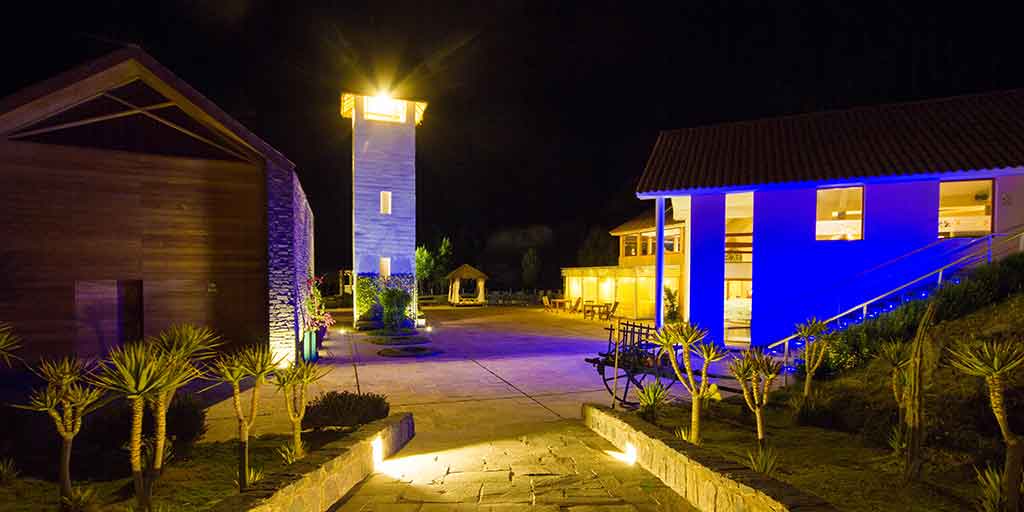
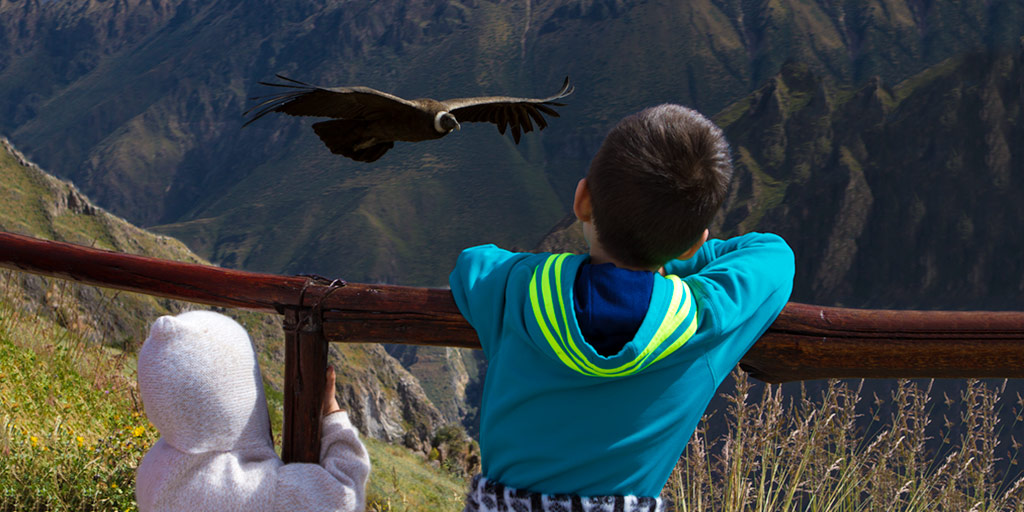
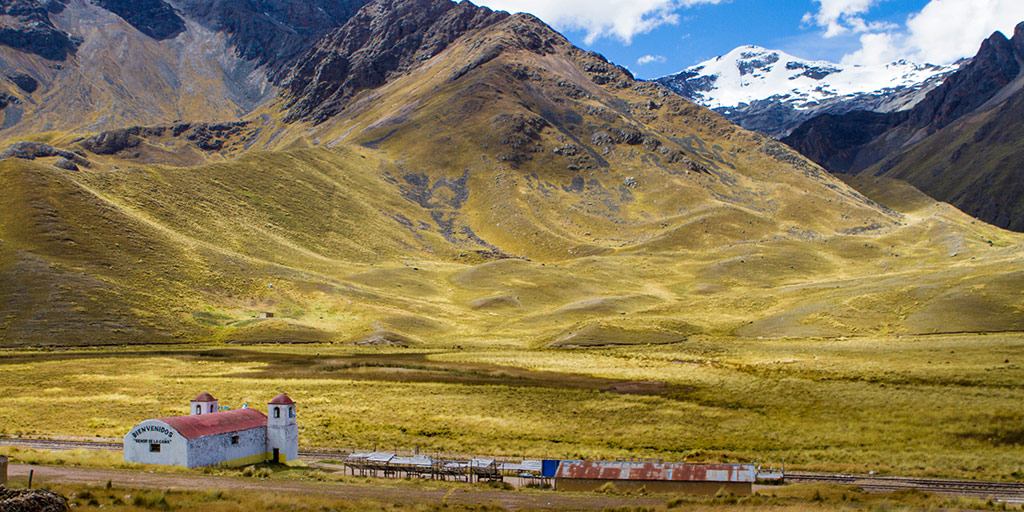
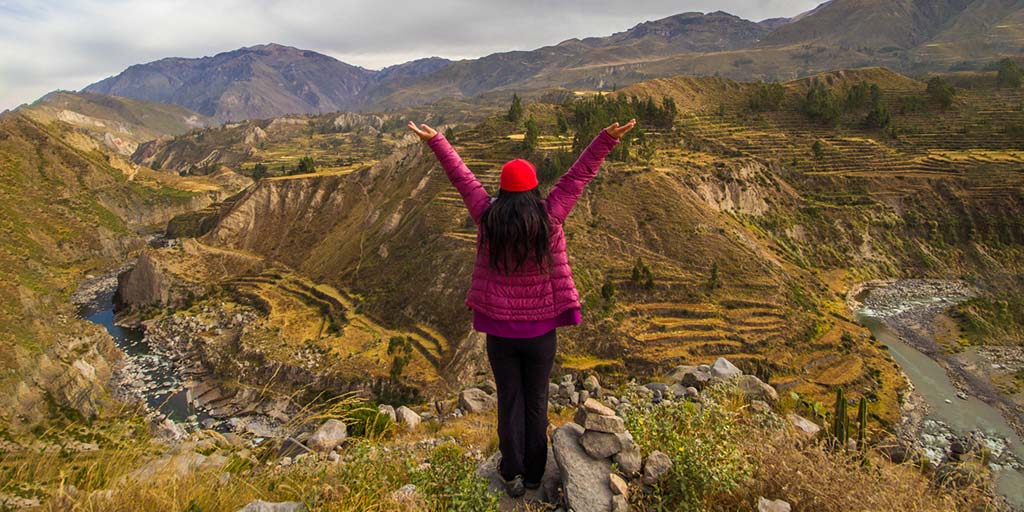
Twice the depth of the Grand Canyon. A skyline dotted with Andean condors – the world’s largest flying birds, with wingspans over 10 feet (3 meters). The road from Puno to Colca Canyon crosses the Patapampa Pass at 16,109 feet (4,910 meters) above sea level – the boys and I counted seven volcanoes from that viewpoint while a flock of Chilean flamingos moved across an emerald lake below.
We stopped at a local family’s home on the way, tried clay-and-potato as a local remedy for Cohen’s rumbly stomach, and came home with llama wool hats the boys refused to take off for the rest of the trip. Colca is not the easiest day. It is one of the best, though.
Cusco
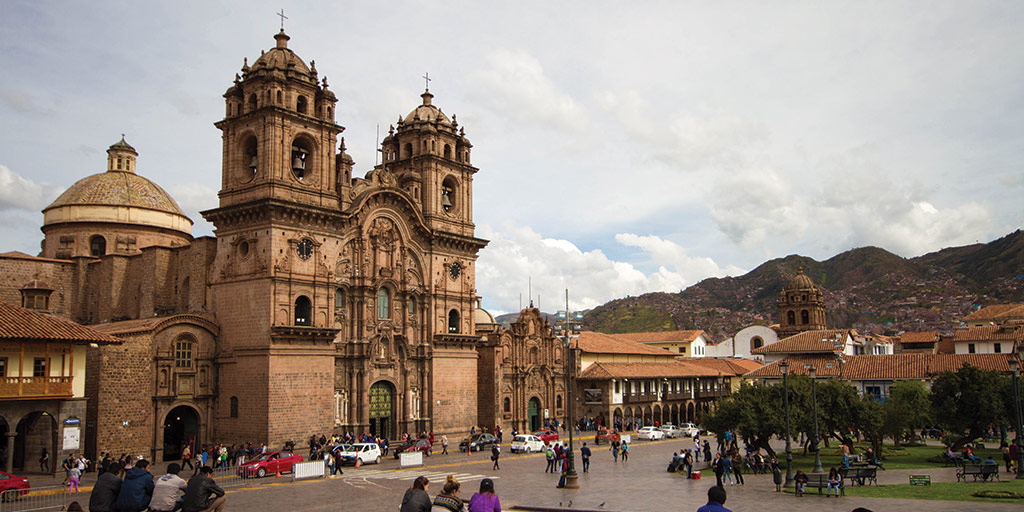
Cusco is legendary. After all, this was (and still is, in many ways), the capital of the Incan Empire. A city where Inca stone walls form the foundations of colonial Spanish buildings, where the Plaza de Armas is ringed by baroque churches built on top of Inca temples, and where the altitude hits you the moment you step off the plane.
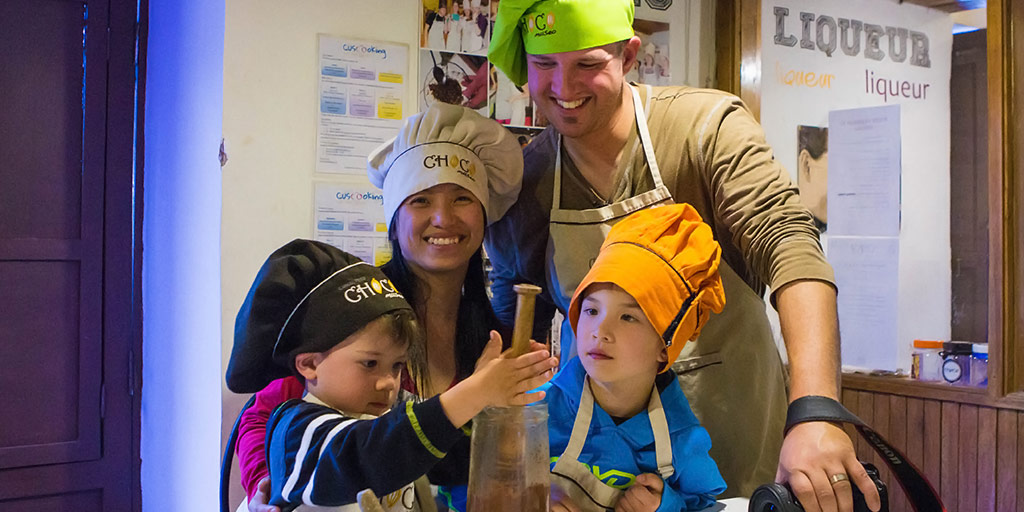
Give Cusco proper time – arrive, rest (or retreat to the Sacred Valley), and let your family adjust before doing anything ambitious. The ChocoMuseo is a legitimate highlight for children: bean-to-bar chocolate-making in an interactive workshop that manages to be educational and delicious simultaneously.
Sacsayhuaman, the massive Inca fortress located above the city, is worth a morning once you can breathe properly.
The Sacred Valley
The valley between Cusco and Ollantaytambo is where the Inca built the infrastructure that grew their empire – agricultural terraces, sacred sites, market towns – and where most families spend their acclimatization days before Machu Picchu.
At 9,000 feet, the Sacred Valley sits lower than Cusco, the air is thicker, and the pace is gentler. The Pisac Sunday market is worth timing your arrival around – indigenous Quechua communities from surrounding villages fill the main square with produce, livestock, and goods in a scene that has operated continuously for centuries.
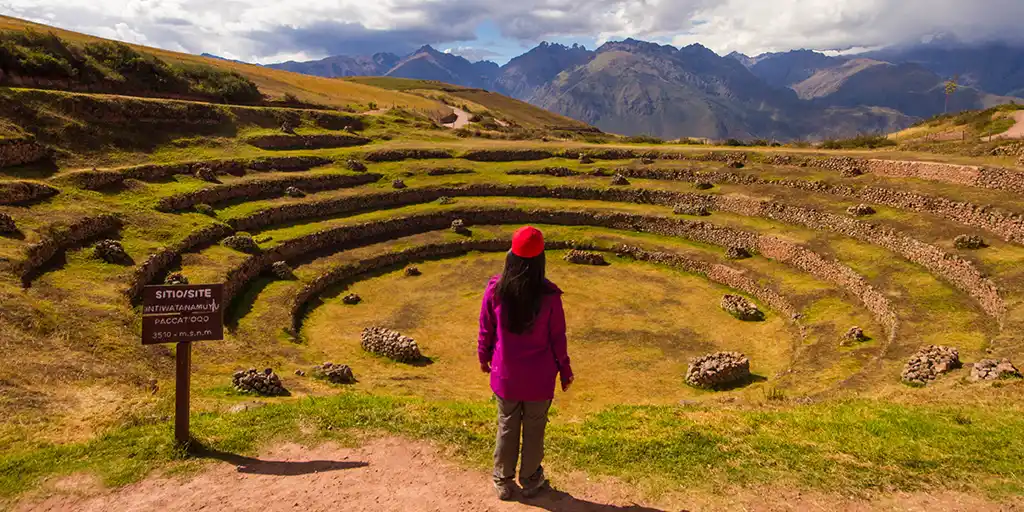
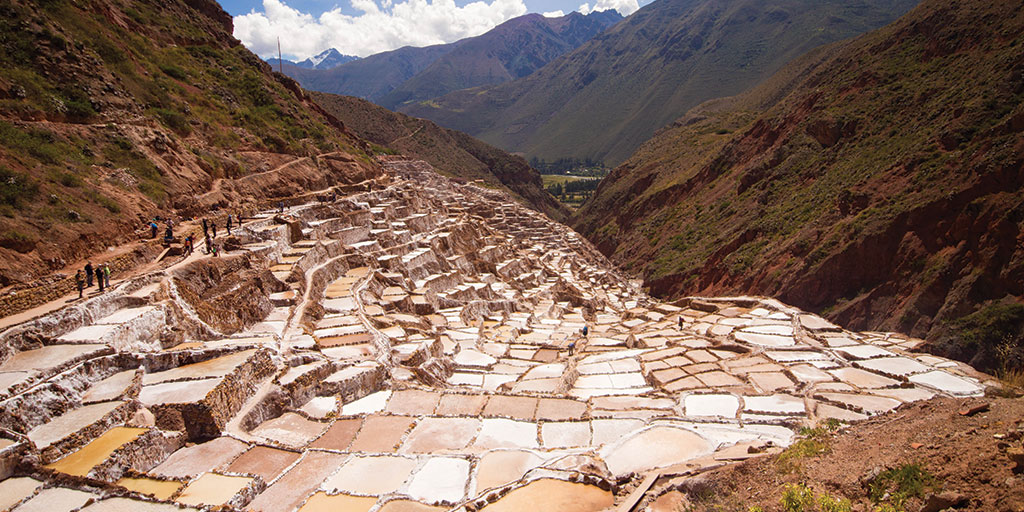
Maras salt pans, the circular experimental terraces of Moray, the fortress at Ollantaytambo – each is a half-day that earns its place without competing with Machu Picchu. The ceramic painting workshop in Urubamba that our tour operator arranged at famed Peruvian artist Pablo Seminario’s studio gave both boys a level of focus and seriousness I had never seen from them in any classroom.
Machu Picchu
I have nothing to add to what has already been written about Machu Picchu except this: bring your children. The citadel is most alive when experienced by someone who has never been conditioned to expect it.
When the ruins appeared below us through the guardhouse gate on that first morning, my boys went quiet. Not because I told them to. Because 600-year-old Inca stonework in a cloud forest valley at 8,000 feet made words feel inadequate.
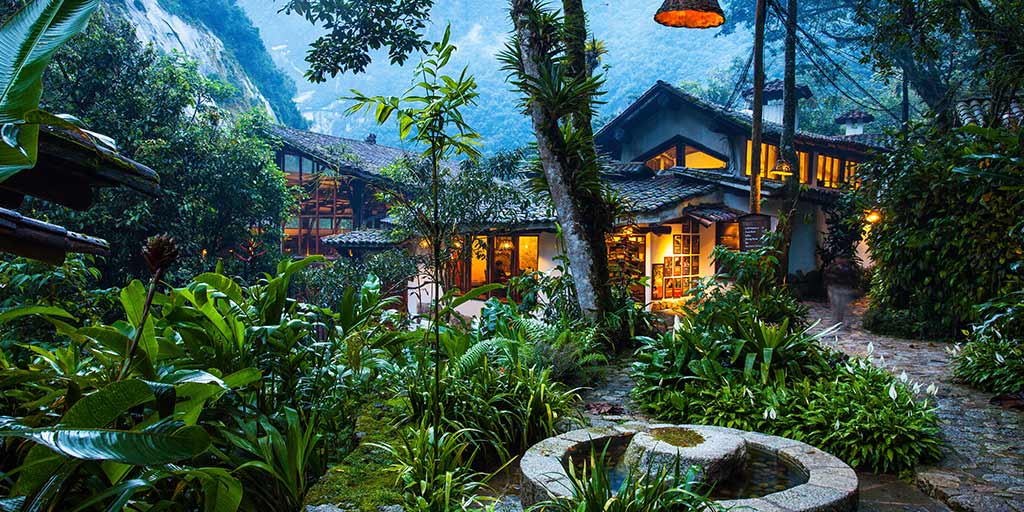
We stayed at the Inkaterra Machu Picchu Pueblo Hotel in Aguas Calientes – a place with a spectacled bear sanctuary, an in-house tea farm, the world’s most diverse orchid garden, and rooms where rocks jut through the walls. Three hours in the ruins is the right amount with young children. The only toilets are at the main entrance gate. Come back after lunch if your children have the energy.
Lake Titicaca and Puno
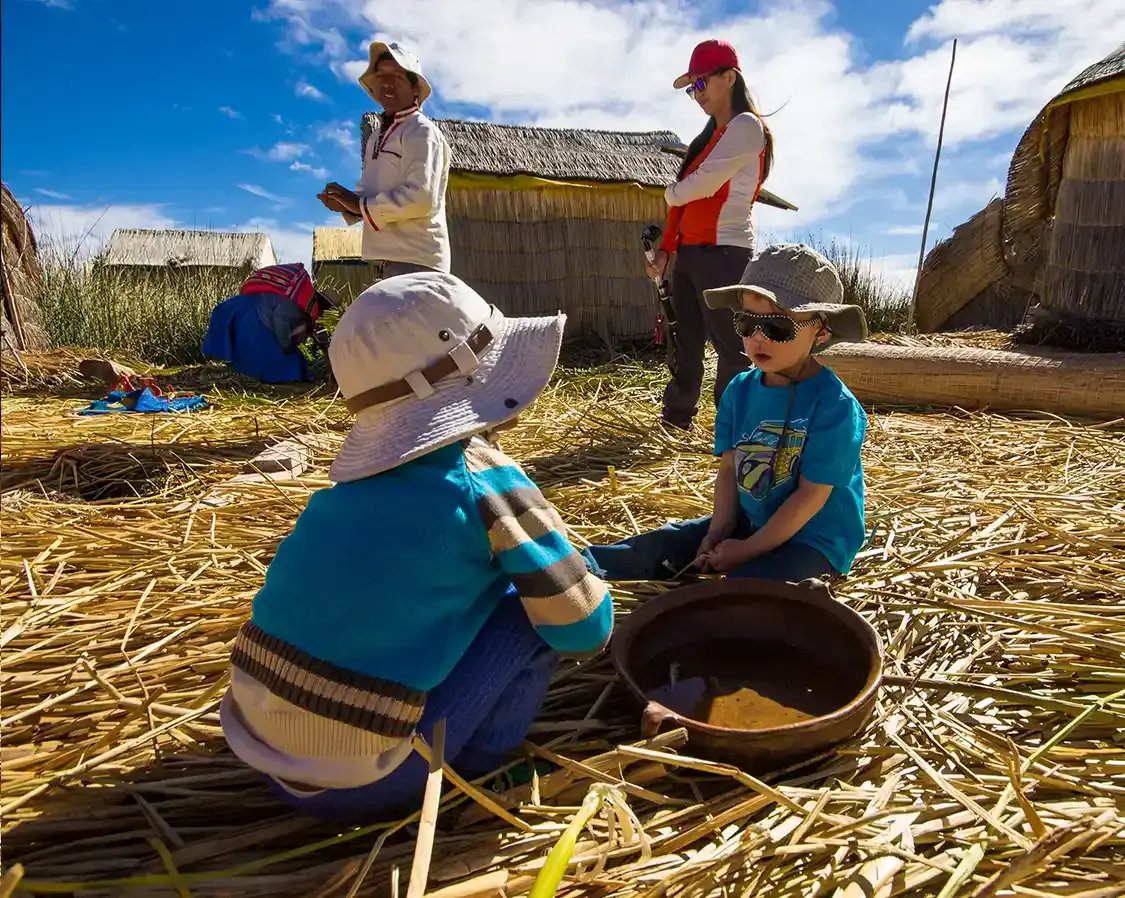
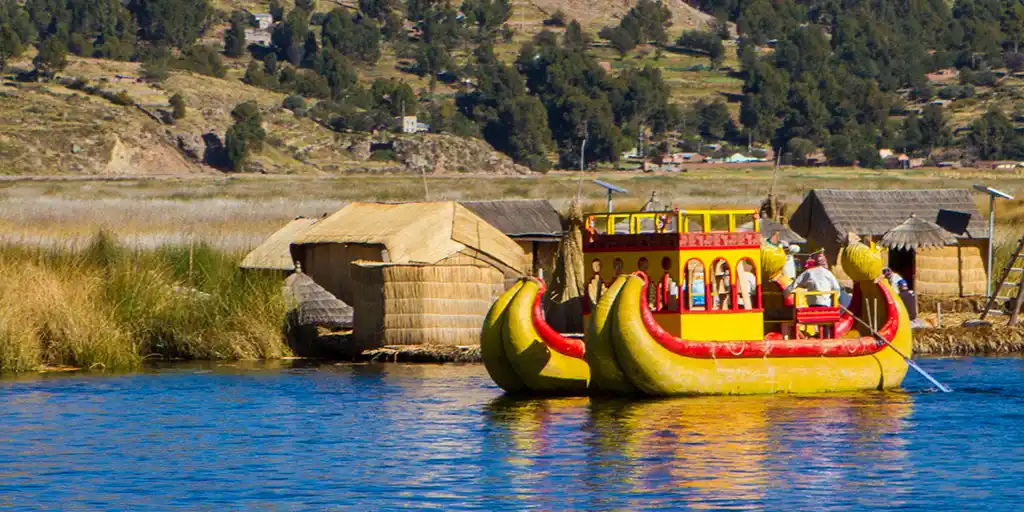
The highest navigable lake on earth, sitting at 12,507 feet (3,812 meters) on the Peru-Bolivia border. The floating islands of the Uros people – platforms woven from totora reeds, rebuilt and maintained continuously for centuries – are the main visitor attraction and genuinely extraordinary. But they are by no means the only experiences here worthy of your time.
What makes the visit worthwhile, rather than merely being incredibly photogenic, is a guide who explains what you are looking at: how the islands are constructed, how they float, and how the Uros and the many other Indigenous communities on the lake live. The altitude is serious here – more serious than Cusco.
The Inka Express bus arriving from Cusco means you have already been at altitude for days, which helps. Allow a full day on the water.
The Peruvian Amazon (What We Haven’t Explored)
Peru contains roughly 60 percent of the Amazon Basin, and the Peruvian jungle is one of the most biodiverse environments on earth. We have yet to experience the Peruvian Amazon, but we did take a trip to the Ecuadorian Amazon.
The main family-accessible entry points are Puerto Maldonado in the south – a short flight from Cusco, followed by a motorized canoe transfer into the jungle – and Iquitos in the north, a city reachable only by air or river. Lodges like Inkaterra Reserva Amazonica and the highly regarded Refugio Amazonas operate multi-day programs built around wildlife observation, guided forest walks, and canopy experiences that are structured specifically for families.
I want to be direct: we have not traveled the Peruvian Amazon personally. What families consistently report from those who have is that it delivers on its reputation entirely – giant river otters, caimans, hundreds of bird species, and a scale of wilderness that recalibrates children’s understanding of the natural world in ways that stay with them.
If your itinerary includes a Cusco-based highland circuit, tacking on a three-to-four-night Amazon lodge stay via Puerto Maldonado adds minimal travel complexity and maximum contrast. It is on our list for the next Peru trip.
🚫 DON’T OVERLOOK: Machu Picchu Tickets Require Advance Booking
Machu Picchu is the single most operationally complex step in a Peru family trip and the one most likely to cause a crisis if left until late.
Machu Picchu now operates a timed-entry circuit system with a strict daily visitor cap. Tickets sell out weeks or months in advance during peak season (June through August) and cannot be purchased at the gate.
Book through the official Peruvian government ticketing platform. Select your date, your entry time, and your circuit before you finalize any other bookings around Machu Picchu. Then book your train ticket. Not the other way around. Many families using a reputable tour operator have this handled for them – confirm with your operator explicitly.
Money and Budgeting for Family Travel in Peru
The Peruvian Sol (PEN) is the official currency. Cards are accepted at established hotels, upscale restaurants, and larger shops in Lima and Cusco. Outside those contexts – market stalls, smaller restaurants, rural accommodations, transport between towns – assume cash. Carry more than you think necessary before heading into the highlands.
ATMs are widely available in Lima, Cusco, and Arequipa. In Puno, Aguas Calientes, and remote areas, ATMs are less reliable and sometimes out of service. Withdraw adequate cash before leaving a major city for a multi-day highland excursion.
Tipping is an important part of the local economy for guides, drivers, and porters. Guides who spent a full day managing your family’s experience deserve a meaningful tip. Porters on trekking routes work extraordinarily hard under difficult conditions – tip them generously. Ask your tour operator for current guidance on appropriate amounts.
💡 PRO TIP: The Country’s Best Restaurants Need Reservations
Peru’s food scene is one of the best in the world – this is not an exaggeration, not a travel writer’s hyperbole. Two of the world’s top ten restaurants operate in Lima. The city’s mid-range cevicherias, Nikkei restaurants, and market eateries are equally extraordinary.
Book the restaurants you most want to experience before you arrive. The best ones fill up fast, and you do not want to land in Lima and find that the meal you’d been thinking about for six months is unavailable.
Peru’s travel cost range is diverse. Lima sits at the top end and is genuinely expensive by South American standards. The highlands are affordable. Street food throughout the country is remarkably cheap. Hiring a tour operator for the full highland circuit can be pricey but delivers value that independent travel at this complexity level rarely matches – particularly when traveling with children who need flexibility built into every day.
What to Pack for Peru
Peru requires the same multi-climate packing logic as Ecuador, concentrated into a country where you can move from the Pacific coast to the cloud forest to the altiplano within a single itinerary. The key challenges: temperature swings of 8-10 degrees Fahrenheit (15 to 20 degrees Celsius) within a single day at altitude, rain at Machu Picchu regardless of season, serious UV exposure above 10,000 feet, and cobblestone terrain throughout Cusco and the Sacred Valley that rewards proper footwear.
- Layers for the highlands: Mornings and evenings at altitude are cold even in the dry season. A warm fleece or down jacket per person is not optional.
- Rain gear for Machu Picchu and the Sacred Valley. The cloud forest environment means rain arrives regardless of the forecast. A packable poncho per person takes up almost no space.
- High-SPF sunscreen and sun protective clothing. The UV index at altitude is serious. Reapply constantly.
- Sturdy walking shoes with real grip. Cusco’s cobblestones and uneven Inca stone surfaces are beautiful and genuinely hard on inadequate footwear.
- A filtered water bottle. Essential throughout the country. Reduces plastic waste significantly in a country where plastic pollution is a real problem.
- A full family medical kit: rehydration salts, children’s pain relief and antidiarrheal medication, antihistamine, altitude medication if prescribed, high-altitude sunscreen, insect repellent for lower-altitude regions.
- Altitude medication if your doctor has recommended it. Fill the prescription at home. Do not plan to find it in Peru.
- Small gifts for local children and guides – pencils, notebooks, small art supplies. Not candy, as access to dental care in remote communities is limited.
For the complete breakdown, see our Peru Family Packing List.
Travel Resources for Families Visiting Peru
For practical planning, safety considerations, and logistics, these dedicated guides provide deeper support for families interested in travel to Peru.
A Few Things Peru Will Teach Your Family
Peru is one of those countries that recalibrates your sense of scale. It does this to adults. It does something even more lasting to children who experience it young enough that it becomes part of their baseline.
- That human beings are capable of extraordinary things. Standing in front of the Inca stonework at Sacsayhuaman – stones the size of small houses fitted together without mortar with a precision that modern engineers still cannot fully explain – produces a specific kind of silence in children. The question Cohen asked, standing in front of one of those stones at age six, was: how? We still don’t have a satisfying answer. He is still thinking about it.
- That wildlife belongs to itself. The Andean condor riding a thermal above Colca Canyon is not performing for you. The sea lions on the Ballestas Islands are not there for the boats. The flamingos in the highland lakes are doing exactly what flamingos do. Peru offers wildlife encounters that are genuinely wild, and children who experience that distinction early carry it forward.
- That altitude is a great equalizer. Every person in our family – fit adults, energetic children, our 3-year-old who had been running circles around all of us – was humbled by the altitude at different points. It is one of the few forces in travel that does not respond to willpower, preparation, or experience. Learning to respect a limit that cannot be argued with is not a bad lesson for any of us.
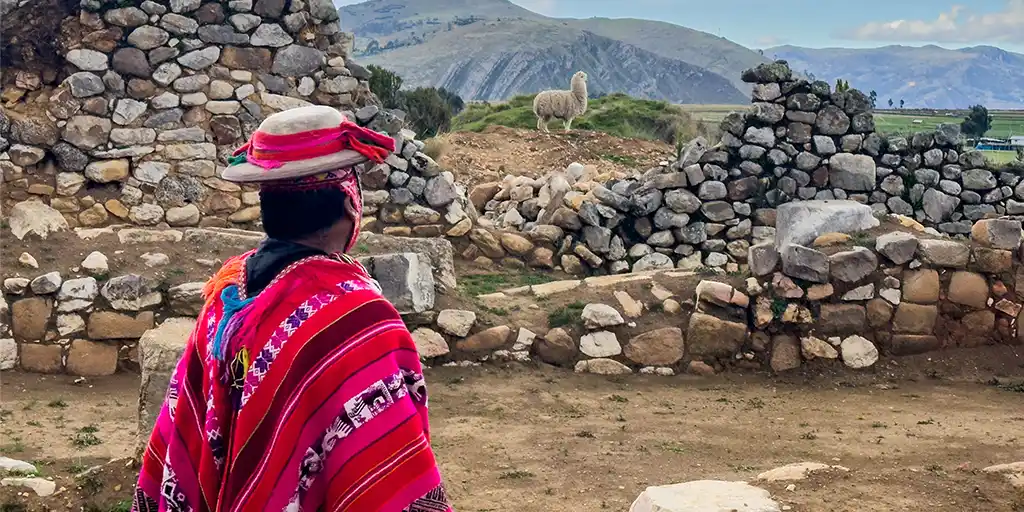
- That history is not finished. Quechua is not a dead language. The markets at Pisac are not a recreation. The communities around Lake Titicaca are not a performance. The Incas’ descendants are still here, still speaking the language, still farming the terraces. Peru makes history feel unfinished in the best possible way – a story still in progress that your family stepped briefly into and then carried home.
Final Thoughts on Family Travel in Peru
Peru is not an easy country for family travel. The altitude requires respect. The distances can feel astronomical. The logistics for the full highland circuit are more complex than most destinations on this website. And the rewards are proportional to that effort.
We came home from that first trip changed in the specific way that only certain trips produce – not just with photographs and stories, but with a new understanding of what our family was capable of and a new set of reference points that we have been returning to ever since.
Cohen still talks about Machu Picchu. Dylan still talks about the condors. Christina still talks about the food. I still think about standing at Patapampa Pass at 16,000 feet, seven volcanoes visible from a single viewpoint, and feeling that particular combination of awe and exhaustion that Peru specializes in.
Travel to Peru. Take the acclimatization days seriously. Book the Machu Picchu tickets early. Get the Vistadome seats. Let Peru be exactly what it is.
This guide is updated as new regional articles and planning resources are published. Looking beyond Peru? Explore the International Family Travel Guide.