Exploding with vibrant history, culture, and natural beauty, these are the best places to visit in Thailand for families and first-timers, plus how to choose the ones that fit your trip.
It was still dark when the monks came down the lane in Chiang Mai, a slow river of saffron robes, barefoot, bowls held out for the morning alms. No one was talking. Not even Dylan, who at eight years old could narrate a trip to the grocery store like a sports commentator. He just stood there, completely still, taking it all in. That was the moment Thailand stopped being a destination on our family travel bucket list and became one of our family’s favorite travel experiences ever.
Thailand is a Southeast Asian nation renowned for its stunning beauty, magical history, and rich cultural traditions, and it has become hugely popular with family travelers thanks to its safety, affordability, and sheer variety. We traveled the country end to end: the markets and temples of Bangkok, the ancient ruins of Ayutthaya, the wartime history and floating jungle rafts of Kanchanaburi, the temples and mountain villages around Chiang Mai, the ethical elephant sanctuary and floating lodges of Khao Sok National Park, and the beaches and islands of Phuket and Koh Phi Phi. Everywhere we went, we were won over by the warmth of the local people, the incredible food, and how easy Thailand is to travel with kids.
This guide to the best places to visit in Thailand for families walks you through 18 of my favorite places in the country grouped by region, each with the story of what makes it special and a quick read on who it suits. But first, it helps you choose, because Thailand is far too big to do in one trip, and the right Thailand for a family chasing beaches is not the right Thailand for one chasing temples and elephants. For the full planning picture, pair this with my Thailand family travel guide.
Quick Planner: Visiting Thailand With Kids
The Four Sides of Thailand: Bangkok and the central plains for temples and history, the north for mountains and culture, the Gulf islands for easy beaches, and the Andaman coast for limestone cliffs and island-hopping.
Getting around: Cheap domestic flights link the regions; trains, buses, and private drivers fill the gaps; longtail boats and ferries handle the islands.
How long: Two weeks gives you Bangkok, one northern or western region, and a beach. Three weeks lets you do it properly.
Best time: November to February for the coolest, driest weather across most of the country. The Gulf islands have their own wet season later in the year.
Best for first-timers: Bangkok, Chiang Mai, and Phuket.
Don’t miss: Sunrise alms-giving in Chiang Mai, a night on the River Kwai Jungle Rafts, and the elephants of Elephant Hills in Khao Sok.
Where To Go In Thailand
Table of Contents
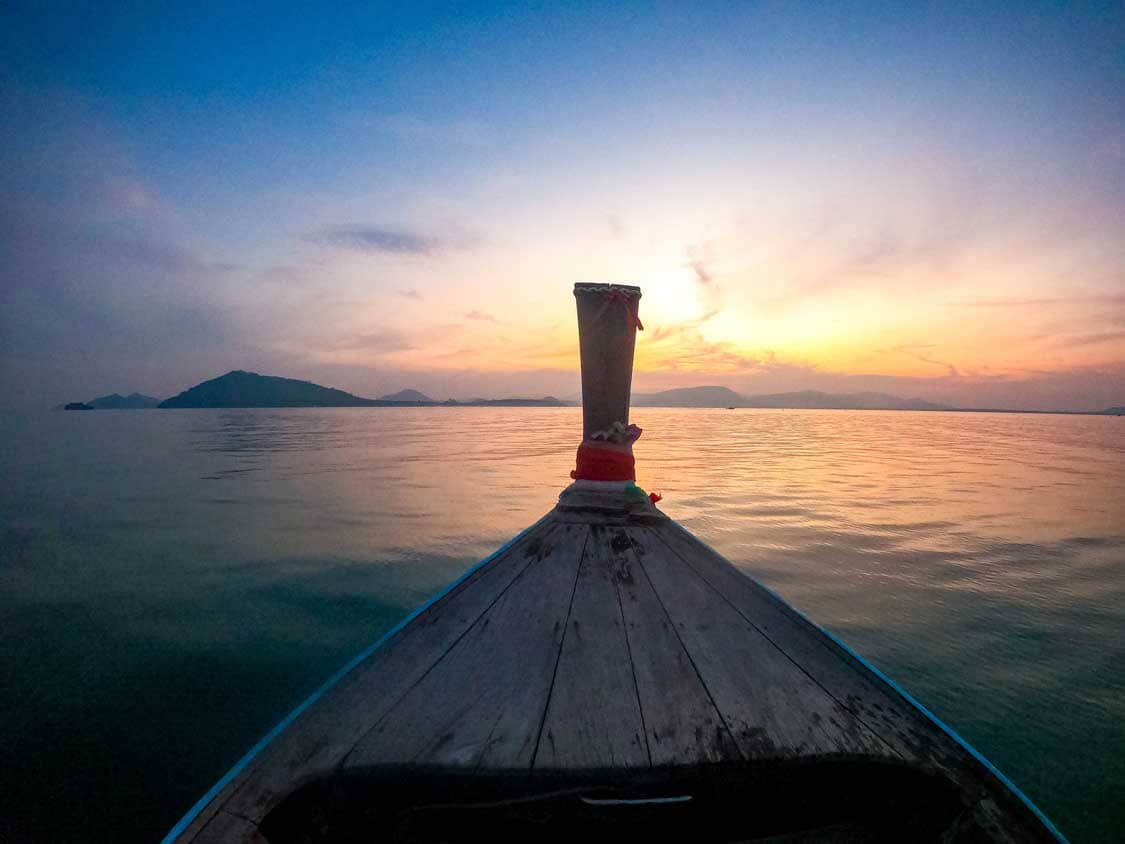
Unless you have a month or more to spend in the country, it’s unlikely that you’ll see all of the 18 places on this list in a single trip. Rather than zipping through destinations and checking off lists, I recommend deciding what kind of Thailand trip you want to experience before you go:
- Thailand at a glance: Bangkok, Chiang Mai, and Phuket give you the capital, the culture, and the beaches in one classic loop.
- History and temples: Ayutthaya, Sukhothai, Kanchanaburi, and Chiang Mai.
- Ethical wildlife encounters: Khao Sok National Park and Khao Yai National Park.
- Beaches and relaxation: Koh Samui, Koh Lanta, Krabi, and Hua Hin.
- Families with young kids: Hua Hin, Koh Samui, and Koh Lanta for gentle beaches and short travel legs.
- Teens and adventure-lovers: Krabi for rock climbing, Koh Tao for diving, and Pai for canyons and hot springs.
- Escaping the crowds: Pai, Sukhothai, Koh Lanta, and Khao Sam Roi Yot National Park.
- Island-hopping: the Andaman loop of Phuket, Koh Phi Phi, Krabi, and Koh Lanta.
How To Plan Your Family Trip To Thailand
The biggest decision most families face when planning their Thailand travels is which regions to include in their itinerary. Thailand breaks naturally into four unique regions:
- Bangkok and the central plains
- The mountainous north around Chiang Mai
- The Gulf of Thailand islands like Koh Samui and Koh Tao
- The Andaman coast around Phuket and Krabi.
Most great family itineraries start in Bangkok, add one or two regions, and finish on a beach. As for how many days, two weeks in Thailand lets you do Bangkok, one region inland, and a stretch of beach without rushing. Three weeks is ideal if you want to add the north and the islands. Domestic flights are cheap and quick, so don’t be afraid to hop between regions rather than spending whole days on buses.
The one lesson I’d pass on above all others is about the heat. The natural instinct for a lot of families is to cover as much ground as possible each day, but Thailand will treat you better if you slow down. Start your mornings early and ease into your afternoons slowly. Do the temples and markets at dawn, retreat to a pool or an air-conditioned lunch in the heat of the day, and head back out in the evening when the night markets come alive. Your kids (and you) will be far happier for it.
What’s The Best Time To Visit Thailand?
Thailand offers world-class travel experiences year-round, but timing your visit to the right season makes a real difference. And where you go, when, is as important as what you plan to see while you’re there.
For the best weather, November through May is the dry season across most of Thailand. The exception is the Gulf of Thailand islands, including Koh Samui and Koh Tao, where the heaviest rains tend to fall from October through December, while Phuket and the Andaman coast get their wet season through the middle of the year.
Thailand is notoriously hot and humid. For the coolest temperatures, visit between November and February, when the highs sit in the low 80s (26 to 28°C) with little rain and gentler humidity. The hottest months are March and April, which bring smaller crowds, lower prices, and some of the country’s best festivals, including the famous Songkran water festival in April.
Important note for the north: late in the dry season, agricultural burning can badly affect air quality around Chiang Mai, Chiang Rai, and Chiang Pai, so if you’re planning a northern trip with kids, aim for the cooler months earlier in the season.
Why Should You Travel To Thailand?
Thailand shocked us. It became one of our family’s all-time favorite family travel destinations, right up there with the Philippines, Iceland, and Peru. Part of that was the warmth of the welcome. With Christina being Filipina, our boys are what Thais affectionately call luk krung, children of mixed heritage, and everywhere we went, they drew smiles, questions, and the occasional fascinated crowd.
The north is a land of stunning forests, mountainous landscapes, and unique cultures, from ancient Buddhist temples and mountaintop monasteries to communities like the long-neck Karen hill tribes. Central Thailand holds Bangkok, the country’s beating heart, with award-winning food, shopping, and crowded markets, while off the beaten path lie treasures like the Bridge on the River Kwai, the Death Railway, beautiful national parks, and river lodges. And the south is a showcase of pristine beaches, beautiful islands, and fascinating communities with their own distinctive cuisine.
More than anything, Thailand is a country of warm, wonderful people, inspiring stories, and those precious moments that lead to memories that last a lifetime.
Best Places To Visit In Bangkok And Central Thailand
If you’re planning your travels and are wondering where to visit in Thailand, you’ve come to the right place. Below, I lay out all of the best places to visit in the country and what makes each one so special. I’ll do it by region to help make your Thailand itinerary planning easier.
Bangkok
The sprawling capital of Thailand is the start and end point for most families visiting Thailand. A lot of people try to skip the big city, but it deserves several days of its own if you can handle the crowds. This fast-moving city of more than eight million people is home to some of the best hotels in Thailand and a staggering number of things to do.
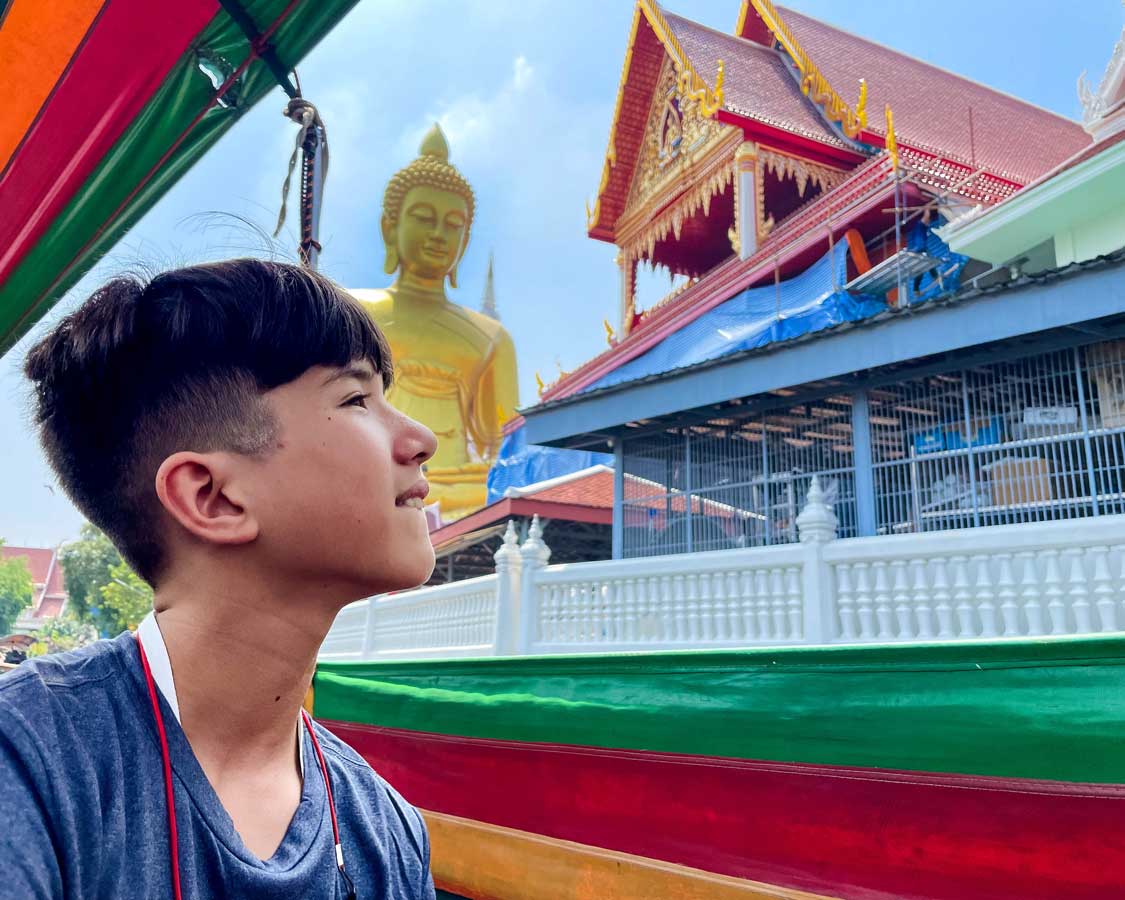
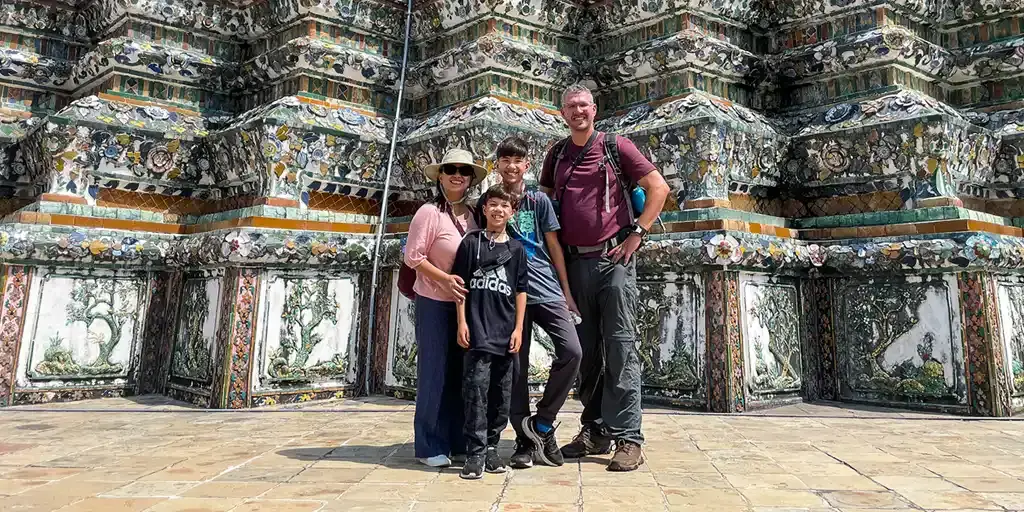
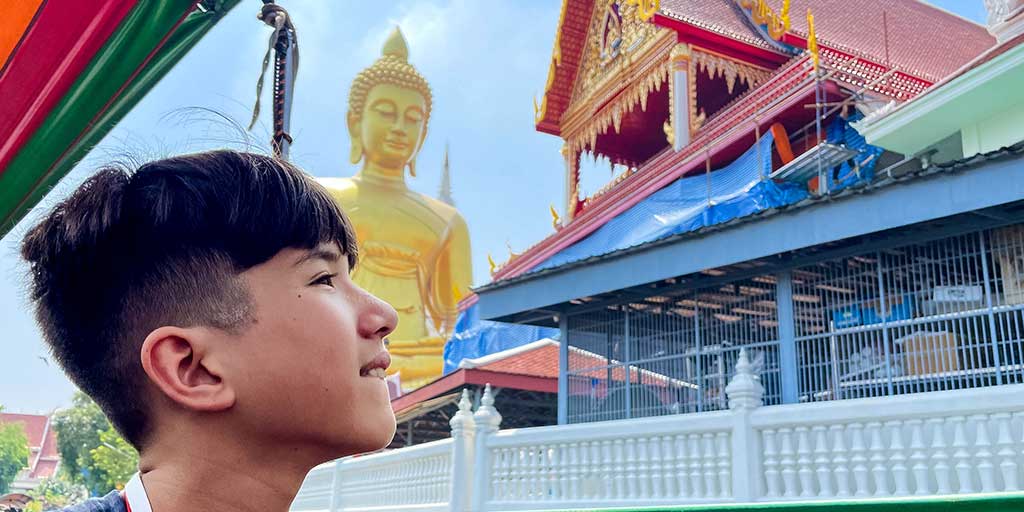
Bangkok is stitched together by canals and rivers that meander through neighborhoods and past golden temples, and one of our favorite ways to see it was from a longtail boat, zipping along the khlongs past floating markets, royal palaces, and awe-inspiring temples like Wat Paknam. Amid the glass skyscrapers, you’ll find food markets, green parks, and mesmerizing Buddhist temples. We toured the temples with our wonderful guide, Apple, whose stories brought the Grand Palace and Wat Phra Kaew, the Temple of the Emerald Buddha, vividly to life.
The best street food in Thailand can be found in Bangkok, and eating quickly became our favorite thing to do in the city. We headed to a night market every single evening we were in town, and every time it was an absolute buffet of awesome: grilled meats, noodle soups, scrumptious desserts, and ultra-fresh seafood. Khao San Road and Chinatown make excellent starting points, and the epic Chatuchak Weekend Market, with its labyrinth of more than 8,000 stalls, is a shopping adventure in its own right. On the floating markets, the boys loved haggling and chatting with the vendors paddling past. Fair warning: even the hotels can spoil you. After a breakfast buffet at the Hyatt Regency, the boys spent the rest of the trip asking, “Why can’t we go back for that buffet?”
- Best for: first-timers, foodies, and families who love city energy.
- Don’t miss: the Grand Palace and the Temple of the Emerald Buddha, a longtail boat ride through the khlongs, and an evening at a night market.
- Good to know: give it at least three days, and plan temple visits for the cooler early morning.
- Popular tour: Bangkok canal and floating market tour. You can book that here.
- Read more: You can read my complete guide to visiting Bangkok with kids here.
Ayutthaya
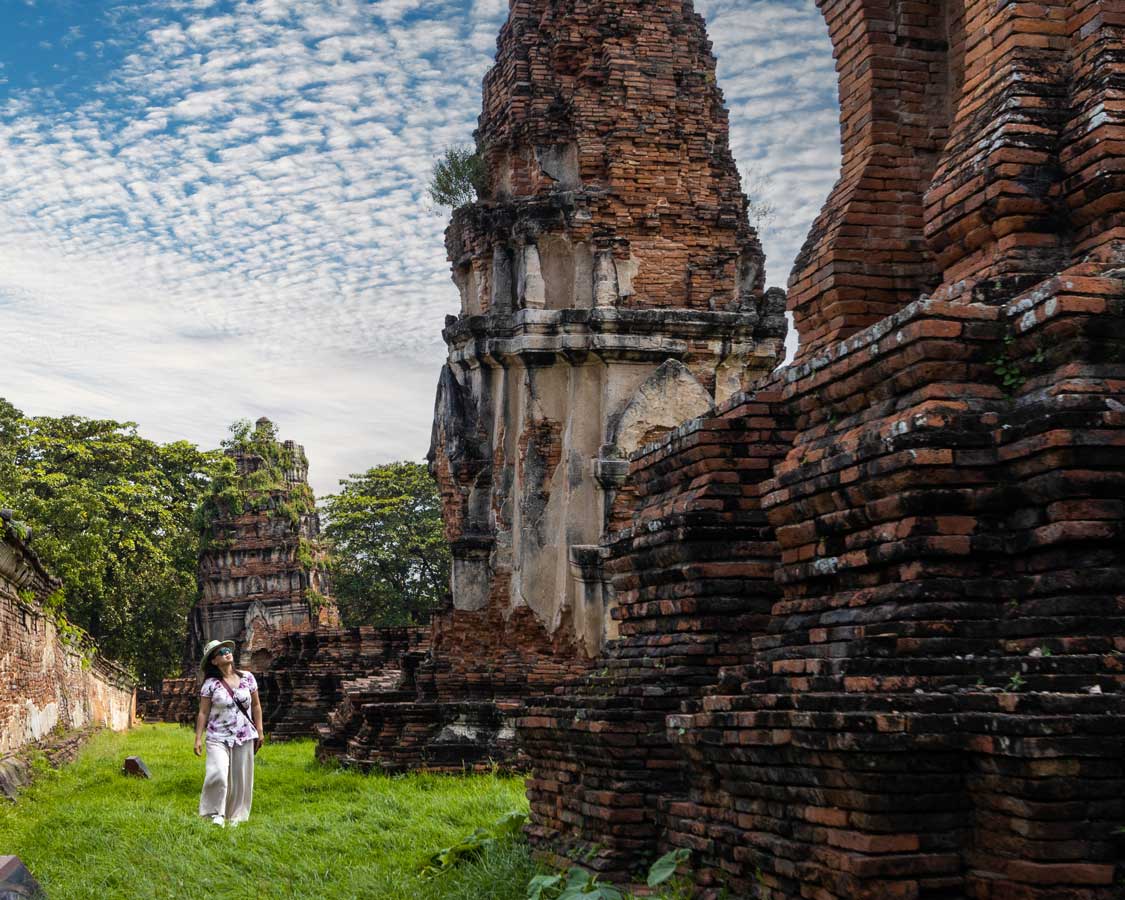
The ancient city of Ayutthaya, about 50 miles (80 km) north of Bangkok, was once the capital of the Kingdom of Siam, and today it’s home to some of the most magnificent temples in Thailand. At its heart sits Ayutthaya Historical Park, a UNESCO World Heritage Site packed with temples, reliquary towers, and wats.
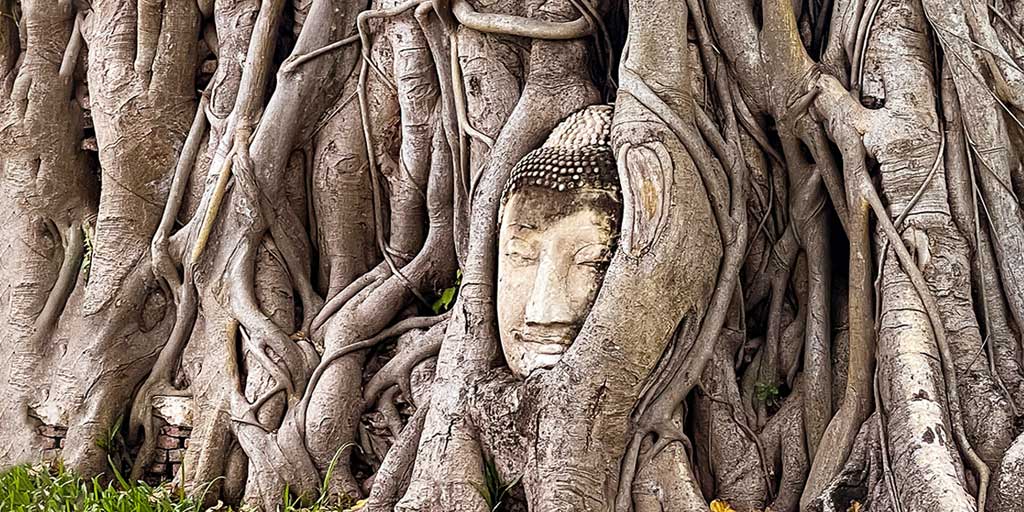
I visited with my family on a day trip from Bangkok, and it was one of the most memorable days of our Thailand itinerary. The most famous sight is at Wat Mahathat, where the serene stone head of a Buddha peeks out from a nest of tree roots that nature has wrapped around it over the centuries. But our family’s favorite was Wat Ratchaburana, where we climbed the central tower for sweeping views of the ancient city and found mesmerizing murals and towering prangs telling royal stories. Don’t miss Wat Yai Chai Mongkol either, home to a giant reclining Buddha and dozens of seated Buddhas draped in golden sashes.
Our visit also came just after major flooding, and some neighborhoods were still underwater. Local families were paddling visitors through the flooded streets by boat to see the submerged temples, and it was incredible to see the smiles and resilience on the faces of people who had lost so much. It’s a day that has stayed with me.
- Best for: history lovers and an easy day trip from Bangkok.
- Don’t miss: the Buddha head in the tree roots at Wat Mahathat, and the view from the tower at Wat Ratchaburana.
- Good to know: it’s hot and spread out, so on a sweltering day, hire a tuk-tuk for the day to hop between temples.
- Popular tour: Ayutthaya day tour from Bangkok – You can book that here.
- Read more: You can read my complete guide to Ayutthaya here.
Kanchanaburi
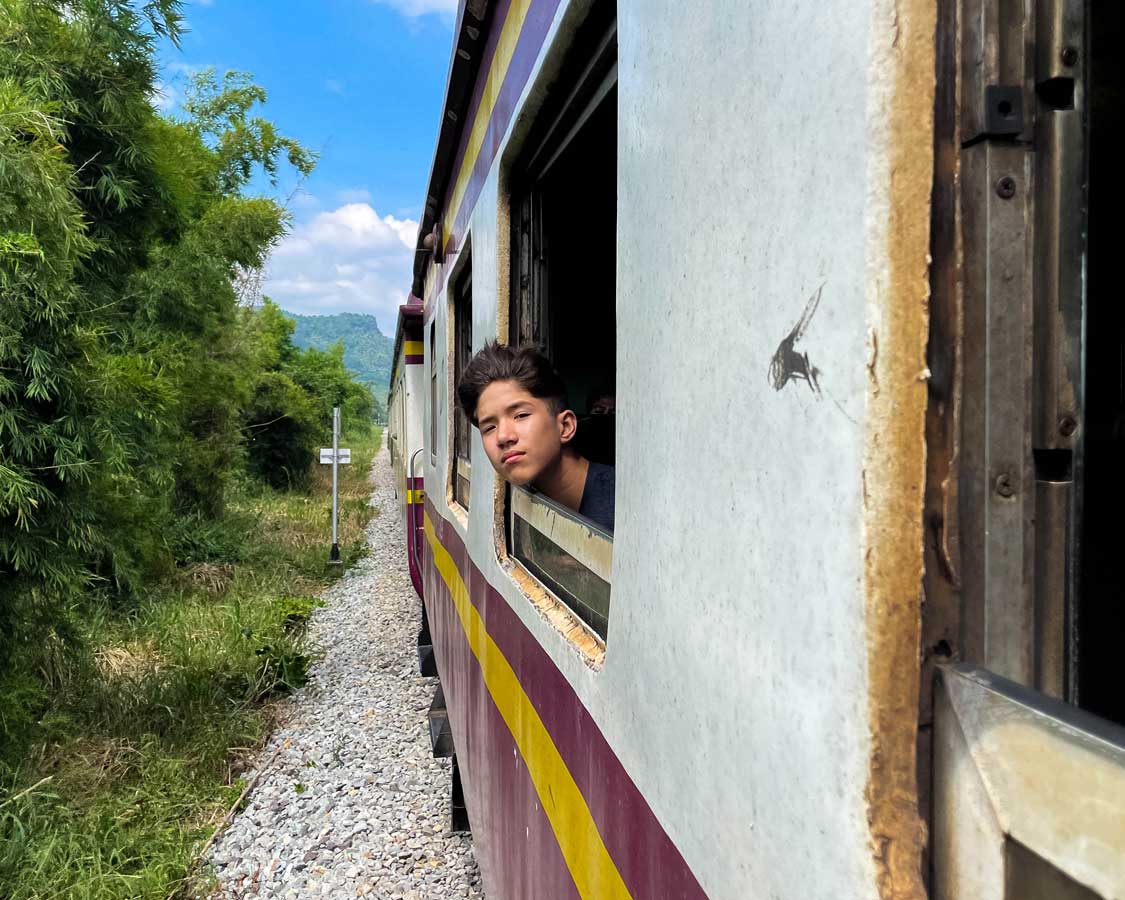
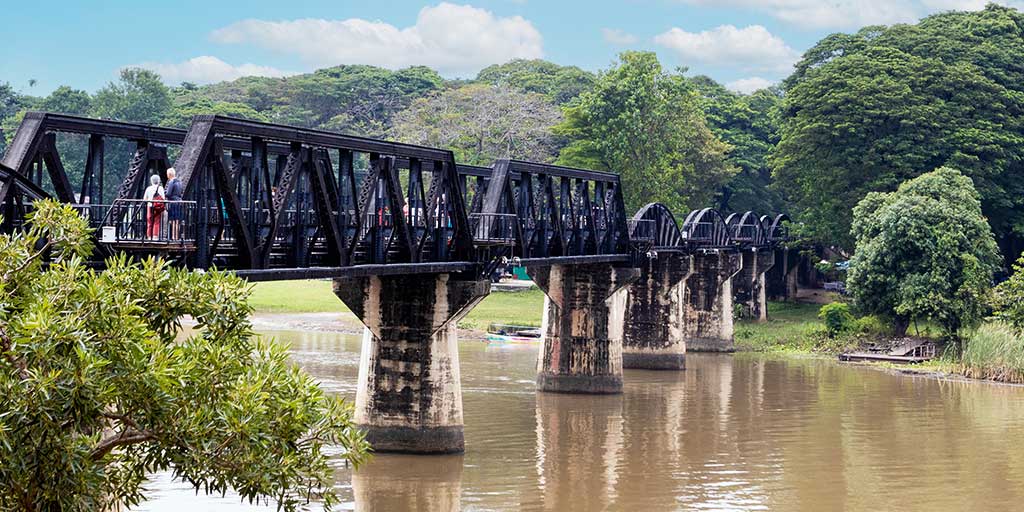
For history and nature lovers, Kanchanaburi is one of the best places to visit in Thailand. The region rose to fame for the wrong reasons. It was the stage for one of the darkest chapters of Thailand’s modern history: during the Japanese occupation in World War II, Allied prisoners of war and forced laborers built the infamous “Death Railway” linking Thailand to Myanmar (Burma). Tens of thousands of prisoners and prisoners of war died in brutal conditions.
To say that the Kanchanaburi War Cemetery hit us hard is an understatement. The boys walked the rows reading the plaques, and when they came across the story of a chaplain, Alexander Dean, they made it their mission to find his headstone and pay their respects. It was a powerful, quiet moment of reflection. By contrast, the atmosphere around the famous Bridge on the River Kwai is downright festive, with crowds strolling across the narrow span made famous by Hollywood. We rode the Death Railway itself, rattling slowly past farmland and along cliff edges, with Cohen hanging his head out the window the whole way. Hellfire Pass, one of the railway’s most tragic sections, is a sobering but important stop.
Kanchanaburi offers far more than its dark tourism roots might lead you to believe, though. Erawan and Sai Yok National Parks are home to magnificent waterfalls, including Erawan Falls, a seven-tiered wonder deep in the rainforest, and the boys waded in the emerald pools above Sai Yok. The highlight of all was our stay at the River Kwai Jungle Rafts, a floating lodge with no electricity where the boys spent hours jumping into the fast-moving river and floating down to the ladders in front of our rooms. (One guest missed the last ladder and went sailing around the bend until staff fetched him by boat.) We toured the neighboring Mon village with its schoolteacher, explored the bat-filled Lawa Cave behind the lodge, and spent three nights off the grid. I wish it could have been more.
- Best for: history buffs, nature lovers, and families who want an unplugged adventure.
- Don’t miss: the War Cemetery, a ride on the Death Railway, and a night on the River Kwai Jungle Rafts.
- Good to know: it’s an easy two to three hours west of Bangkok, and it rewards at least two or three nights.
- Popular tour: Kanchanaburi, River Kwai, and Death Railway tour – You can book that here.
- Read more: You can read my complete guide to Kanchanaburi here.
Khao Yai National Park
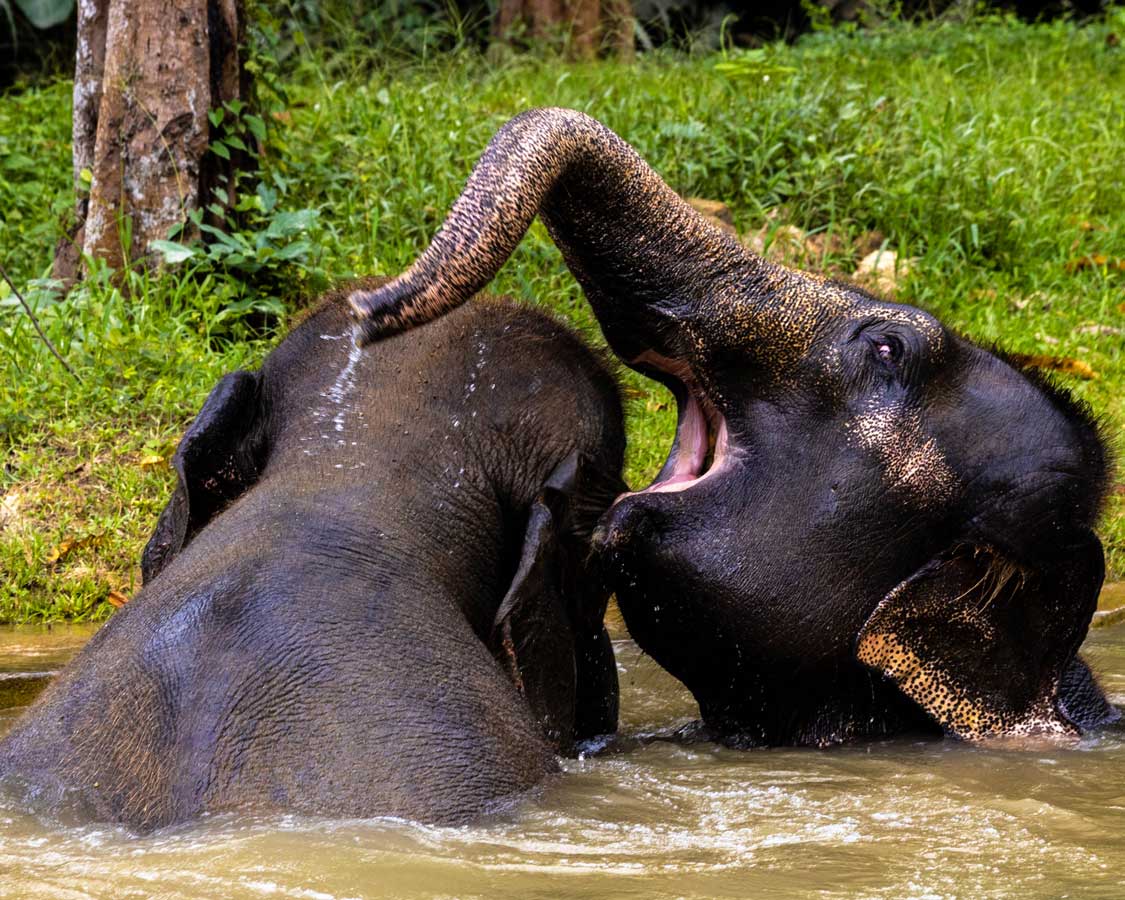
Located about three hours northeast of Bangkok, Khao Yai is one of Thailand’s great wild places and home to one of the country’s largest populations of wild elephants. The park covers a massive 1,250 square miles (3,240 square km) of mountains, rainforest, and grassland, and it’s part of a UNESCO-listed forest complex.
Somewhere between 140 and 200 elephants roam free here, alongside gibbons, jackals, Malayan sun bears, and Asiatic black bears. Hiking and mountain biking are popular ways to explore, and you can hire park rangers to guide you to rarely visited corners and watering holes where wildlife gathers. Movie buffs will recognize the Haew Suwat Waterfall from The Beach.
- Best for: wildlife lovers and families who want to see elephants in the wild.
- Don’t miss: a ranger-guided walk and Haew Suwat Waterfall.
- Good to know: early morning and late afternoon are best for spotting wildlife on the park roads.
- Popular Tour: Khao Yai full-day with waterfalls from Bangkok – You can book this tour here.
Pattaya
The small city of Pattaya is Bangkok’s beach getaway, about ninety minutes south of the capital. Visit on a weekday, and you’ll have room to breathe; on weekends and holidays, the city pours down to the coast.
Beyond its beaches, Pattaya offers nearby islands, glass-bottom boat tours, and plenty of family-friendly attractions. Kids love Mini Siam, an outdoor park filled with miniature versions of world monuments like London Bridge, the Statue of Liberty, Angkor Wat, and the Bridge on the River Kwai. There’s also a Ripley’s Believe It or Not museum and “Art in Paradise,” a 3D illusion museum, and the extraordinary Sanctuary of Truth, an enormous hand-carved wooden temple by the sea. Families with a day to spare can head east to Chanthaburi’s gem mines.
- Best for: a quick beach break from Bangkok.
- Don’t miss: the Sanctuary of Truth and Mini Siam with younger kids.
- Good to know: go midweek to avoid the weekend crowds from the city.
- Popular tour: Pattaya discovery tour with floating markets, viewpoints, and lunch – You can book that tour here.
Hua Hin
A few hours south of Bangkok on the western shore of the Gulf, Hua Hin has been the Thai royal family’s seaside retreat for generations, and it’s one of the most relaxed, family-friendly beach towns in the country. It’s a place I’d point families with young kids toward, and it’s high on my list for our next trip.
Long, gentle beaches, a lively night market, big family resorts, and water parks make Hua Hin an easy win with little ones, and the town is close enough to Bangkok to reach without a flight. It also makes the perfect base for exploring Khao Sam Roi Yot National Park, just to the south.
- Best for: families with young kids and a low-stress beach stay.
- Don’t miss: the night market and a day trip to Khao Sam Roi Yot.
- Good to know: it’s reachable by road or train from Bangkok, no flight required.
- Popular Tour: Scenic River Trip on the Pranburi River – You can book that tour here.
Kao Sam Roi Yot National Park
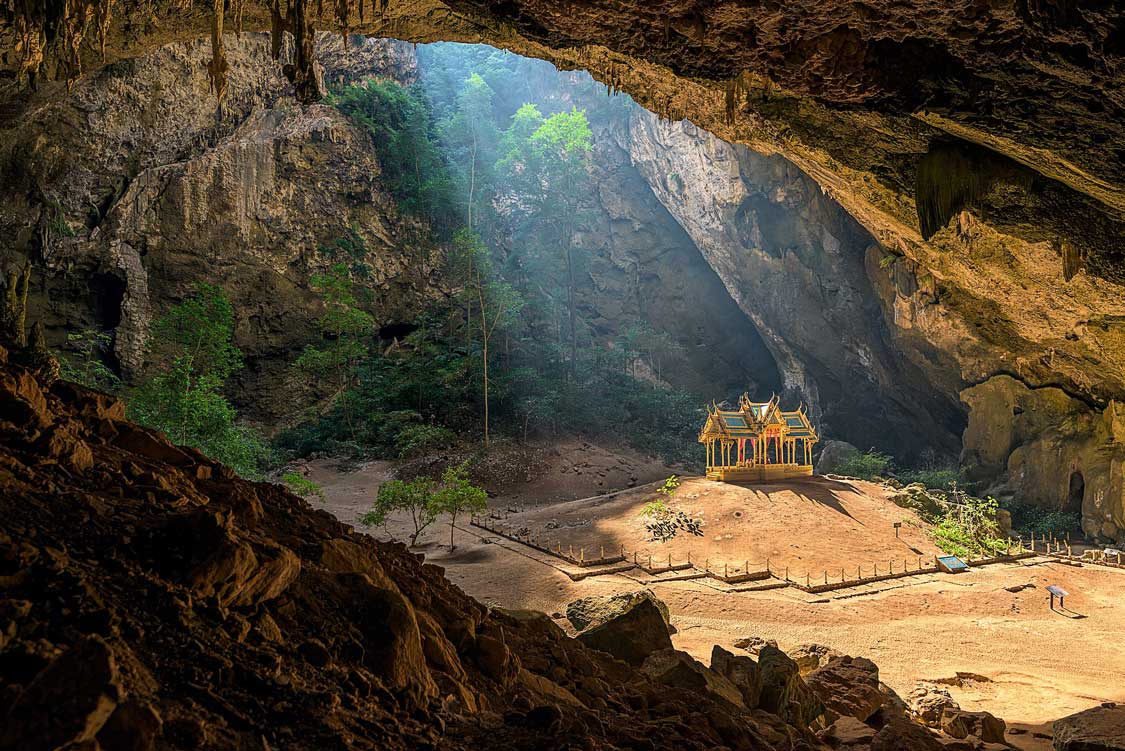
The name Kao Sam Roi Yot means “Mountain of 300 Peaks,” and this Thai national park is packed with pristine beaches, impressive caves, and the largest freshwater marsh in Thailand. It’s a wonderful place for families who like their adventures a little wilder.
You can camp near the Thung Sam Roi Yot Freshwater Marsh, hike to swimming holes and epic mountain views, and take boat tours along the Khao Daeng Canal through dense mangrove forest out to the coast. The star attraction is Phraya Nakhon Cave, an immense cavern with a royal pavilion that’s often bathed in beams of light from the collapsed roof above.
- Best for: adventurous families and escaping the crowds.
- Don’t miss: the light shafts over the royal pavilion in Phraya Nakhon Cave.
- Good to know: the climb to Phraya Nakhon is steep, so bring water and go in the morning for the best light.
Best Places To Visit In Northern Thailand
Chiang Mai
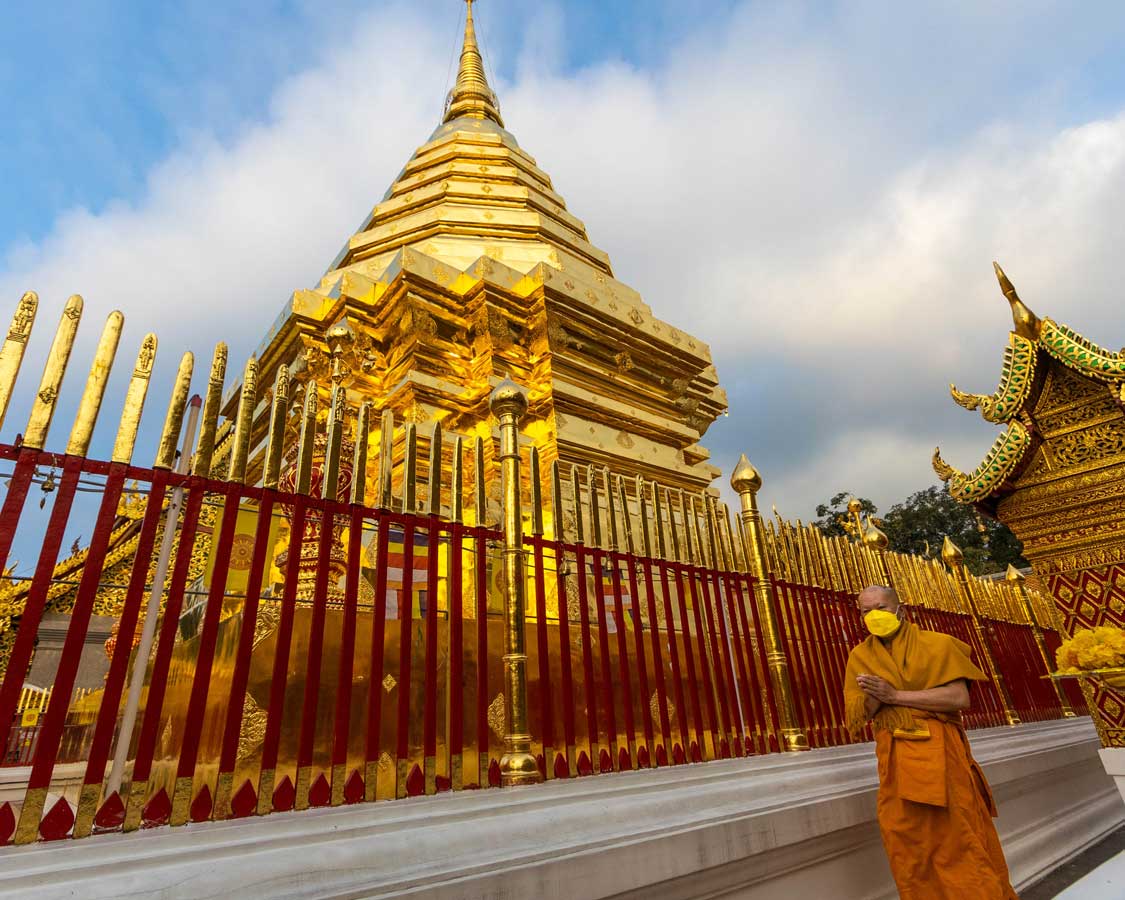
Chiang Mai is one of the most popular places to visit in Thailand, and it gave us some of the most incredible memories of our entire family trip. This stunning northern city is built around an old town ringed by moats and walls that date back more than seven centuries, packed with ancient temples like Wat Phra Singh and Wat Chedi Luang, wonderful food, and unique shops tucked along its narrow lanes.
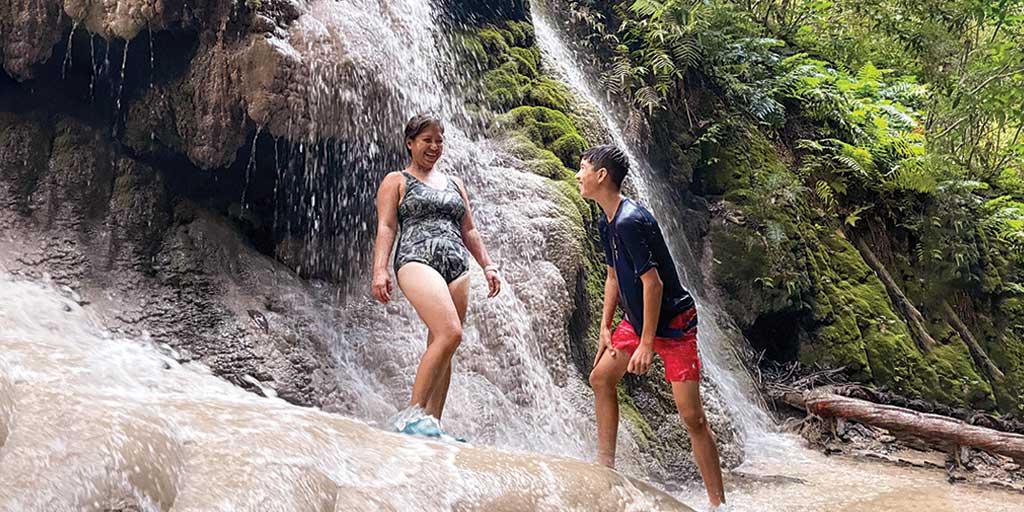
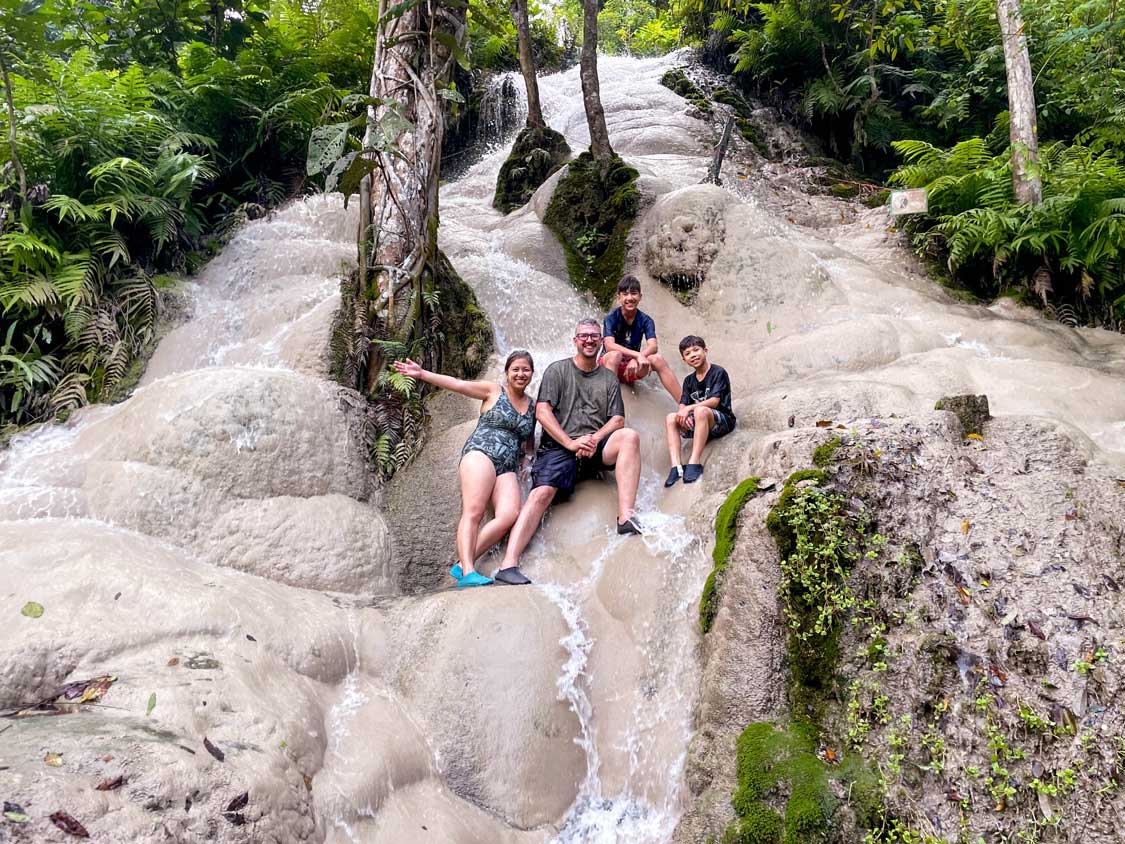
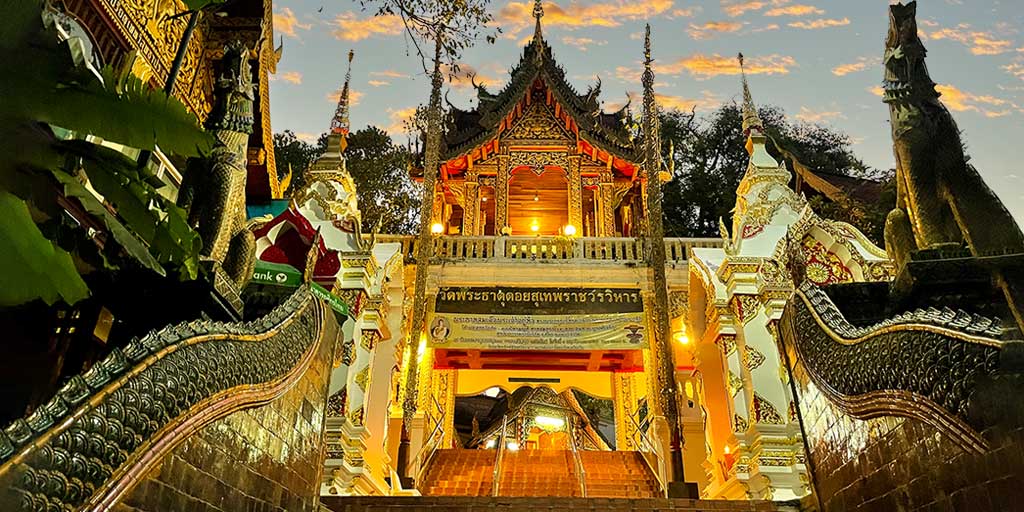
If you have time for just one major cultural experience in Chiang Mai, make it a sunrise visit to the mountaintop monastery of Wat Phra That Doi Suthep and the morning alms-giving that follows, the moment that silenced even Dylan. We also joined a Thai cooking class that started with a trip through one of the city’s largest markets to choose our ingredients, then had us cooking six different Thai dishes; Dylan chopped and stirred and ate everything in sight. Just outside the city, the Bua Tong Sticky Waterfall was a total surprise. At first glance, it looks like a small 20-foot fall, but as we descended, we discovered twist after twist, and the mineral-crusted rock is so grippy you can climb straight up the cascade in water shoes. We stayed at the gorgeous Inside House, a colonial-style boutique hotel in the old town that made a perfect, peaceful base.
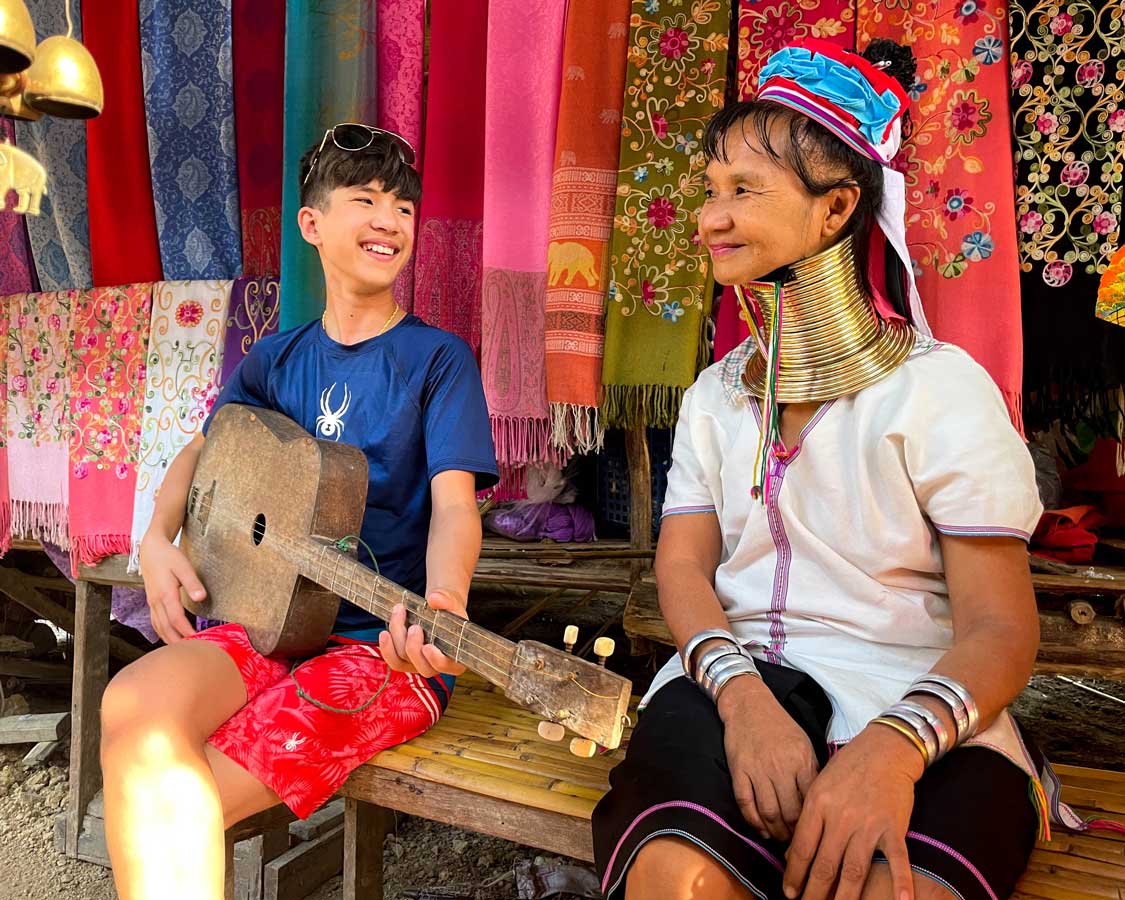
Chiang Mai is also the base for visiting the hilltop Karen communities, many founded by refugees from nearby Myanmar. Our visit to a Karen hill tribe village near Chiang Mai raised hard questions about the ethics of tourism. The village had all the hallmarks of a tourist trap, and yet the day brought some of the trip’s warmest moments: Dylan started a game of hide-and-seek with a village boy that quickly drew in half the kids in the village, and Cohen asked a long-neck Karen woman if he could try her handmade four-string guitar. Working through our interpreter, she taught him the notes, and soon the two of them were strumming together. If you go, I’d strongly recommend a small-group tour with a village homestay, which puts money directly into families’ hands in a way a two-dollar trinket never could.
- Best for: culture, food, and families who want a slower, softer side of Thailand.
- Don’t miss: sunrise at Doi Suthep and the alms-giving, a cooking class, and climbing the Sticky Waterfall.
- Good to know: avoid the late dry season if you can, when smoke from agricultural burning can hang over the city.
- Popular tour: Chiang Mai cooking class with market tour – You can book that here.
- Read more: You can read my complete guide to Chiang Mai here.
Chiang Rai
The northernmost major city in Thailand sits close to the borders of Myanmar (Burma) and Laos, surrounded by lush national parks and historic Buddhist temples. It’s also home to some of the most striking modern temples in the country.
The dazzling, all-white Wat Rong Khun, better known as the White Temple, looks like it was carved from ice and glass, and the sapphire-blue Wat Rong Suea Ten, the Blue Temple, is just as surreal. About 30 minutes from the city, Lam Nam Kok National Park is home to cascading waterfalls including the 230-foot (70 m) Khun Korn Falls. Chiang Rai is also a gateway to vibrant hilltop communities, including the Karen, Akha, Hmong, Lahu, Lisu, Palong, and Mien (Yao) peoples, some of whose villages can only be reached by long hikes. An hour north lies the Golden Triangle, where Thailand, Laos, and Myanmar meet on the Mekong River.
- Best for: jaw-dropping temples and mountain culture.
- Don’t miss: the White Temple, the Blue Temple, and the view over the Golden Triangle.
- Good to know: it’s an easy day trip from Chiang Mai, but worth a night or two on its own.
- Popular tour: Chiang Rai 7-stop highlight tour with lunch – You can book that tour here.
Pai
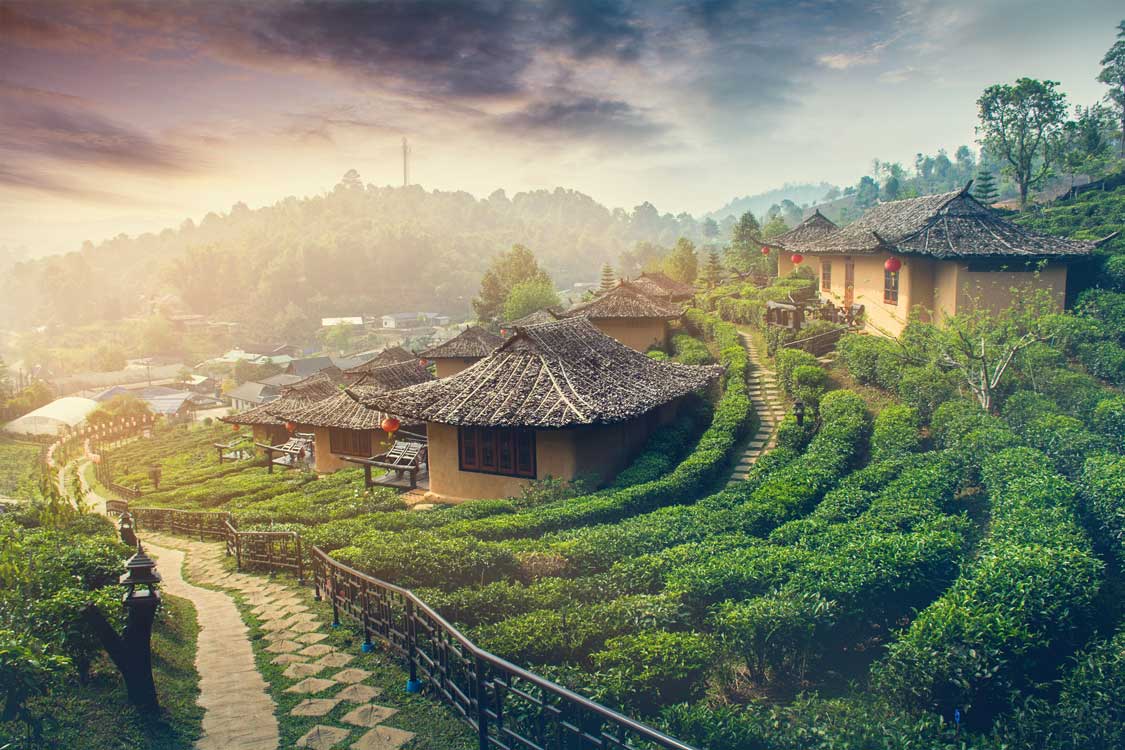
In the far northwest of Thailand, a short distance from the Myanmar border, the little town of Pai is loved for its relaxed pace and a far less touristy side of the country. It’s about three hours from Chiang Mai, surrounded by lush hills, waterfalls, and scenic hiking trails.
Pai Canyon offers a 3.7-mile (6 km) network of ridge trails with mind-blowing views and unbeatable sunsets. Around town you’ll find scenic rice terraces, the towering Wat Phra That Mae Yen temple on its hilltop, the immense Tham Lod limestone caves, and soothing hot springs for tired legs. Just outside town, the Chinese settlement of Santichon, home to the Lee Wine Rak Thai village and its Yunnanese tea houses, brings a taste of southern China to the hills.
- Best for: teens, adventurers, and families who want to slow down.
- Don’t miss: sunset at Pai Canyon and a soak in the hot springs.
- Good to know: the mountain road from Chiang Mai has hundreds of hairpin curves, so pack motion-sickness remedies for the kids.
Sukhothai
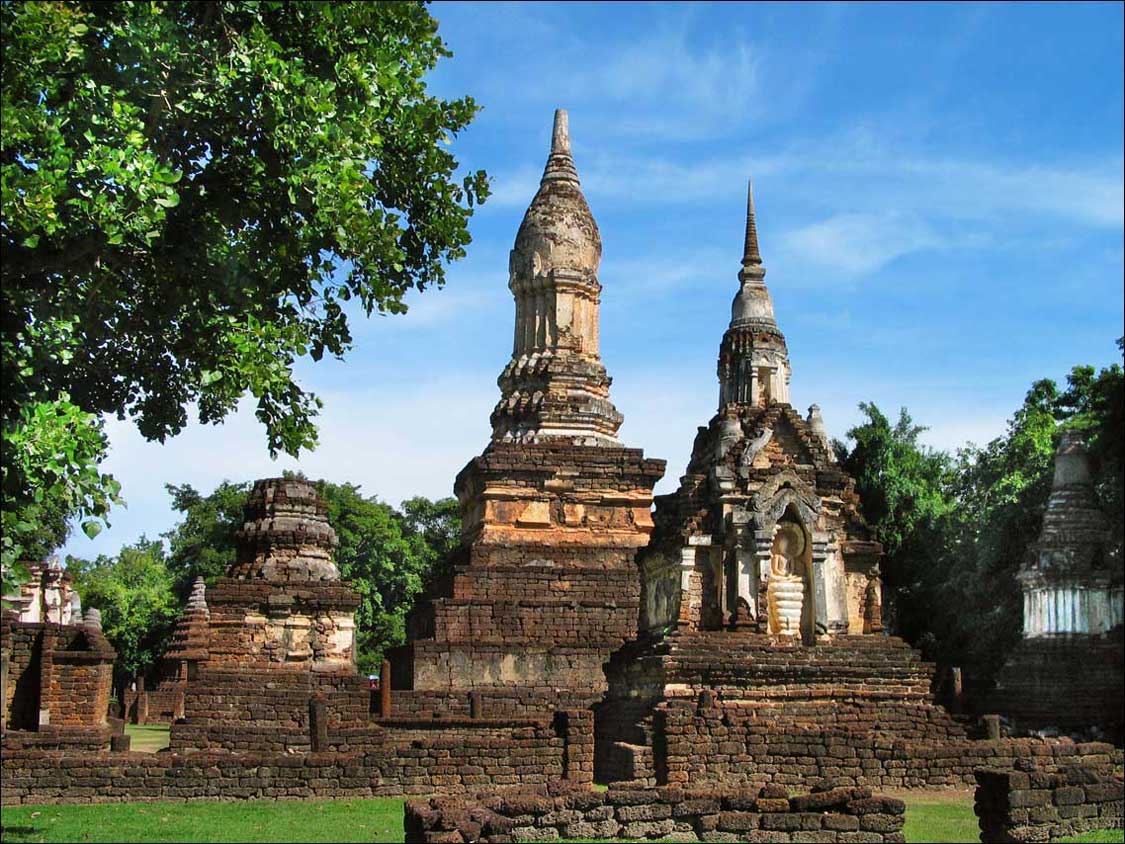
Sukhothai Historical Park preserves the 13th-century ruins of the Sukhothai Kingdom, often called the birthplace of Thai civilization, and it’s a UNESCO World Heritage Site that sees a fraction of Ayutthaya’s crowds. The park holds 193 ruins, including 26 Buddhist temples, the remains of a royal palace, and dramatic stupas.
Wat Mahathat is the centerpiece, its pillared pavilion anchored by two nine-meter-tall standing Buddhas. Wat Sa Si, the park’s photogenic island temple, sits in the middle of a lotus-filled pond, and nearby Noen Prasat was once the royal palace. Farther afield, the sister site of Si Satchanalai holds gems like the lotus-bud towers of Wat Chedi Chet Thaeo.
- Best for: history lovers who want ancient ruins without the crowds.
- Don’t miss: Wat Mahathat at sunrise, and the island temple of Wat Sa Si.
- Good to know: rent bicycles to explore the flat, shaded park, a hit with kids.
- Popular tour: Full Day Sukhothai Thailand Historical Park Tour by Bike – You can book that tour here.
Best Places To Visit On The Gulf Of Thailand
Koh Samui
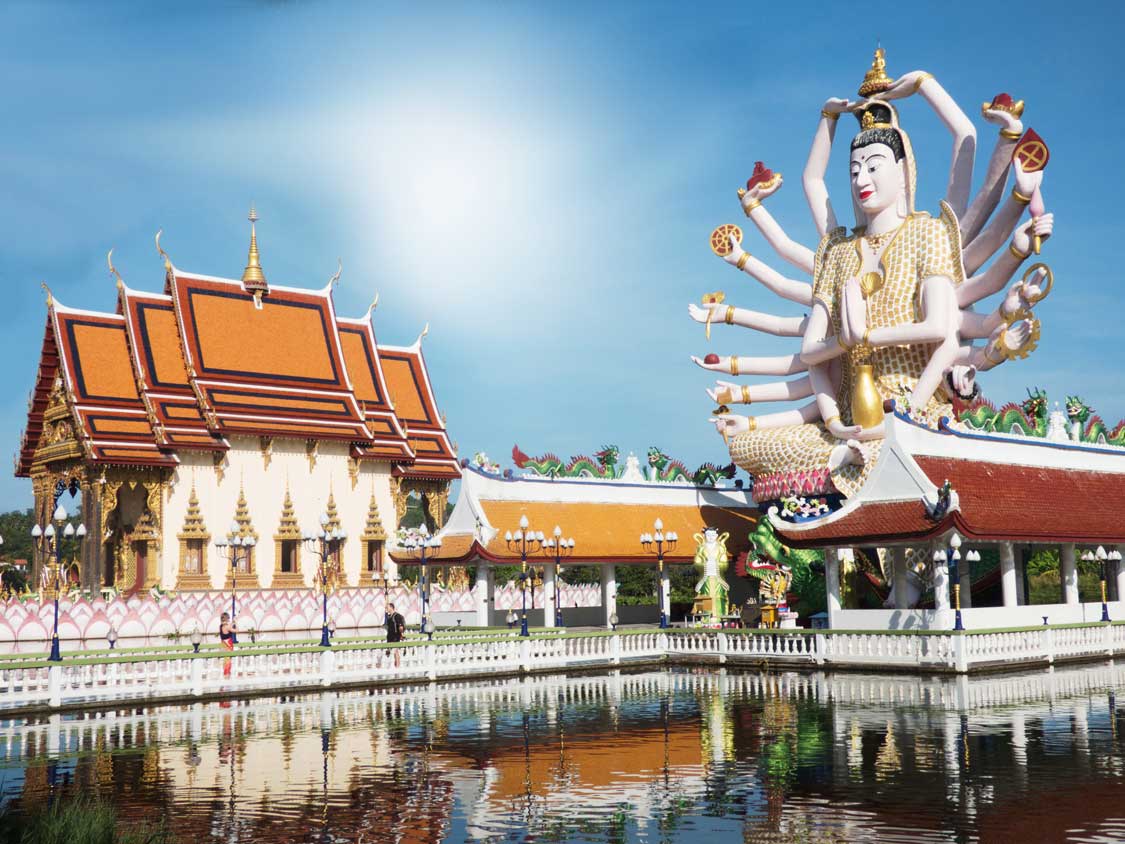
Koh Samui, an island off the coast of Surat Thani in southern Thailand, is famous for its beaches. This resort island is wrapped in lush green mountains, rainforest, and soft white sand, with some of the best sunsets in the world.
Samui is one of Thailand’s most popular family vacation destinations, with some of the finest spas in the country and stunning temples like Wat Phra Yai, home to a nearly 40-foot (12 m) golden Buddha, and the colorful Wat Plai Laem. No visit is complete without exploring the islands nearby: Ang Thong National Marine Park spans 42 islands and shelters sharks, rays, turtles, and countless birds. If animal encounters are on your list, choose carefully; there are genuinely ethical options on the island, and some that are not.
- Best for: families with young kids and a resort-style beach stay.
- Don’t miss: a boat trip to Ang Thong National Marine Park, and Wat Phra Yai.
- Good to know: the Gulf’s heaviest rains usually fall late in the year, the opposite of the Andaman side.
- Popular tour: Semi-private yacht tour to Ang Thong Marine Park – You can book that tour here.
- Read more: You can read my guide to ethical animal experiences in Koh Samui here.
Koh Tao
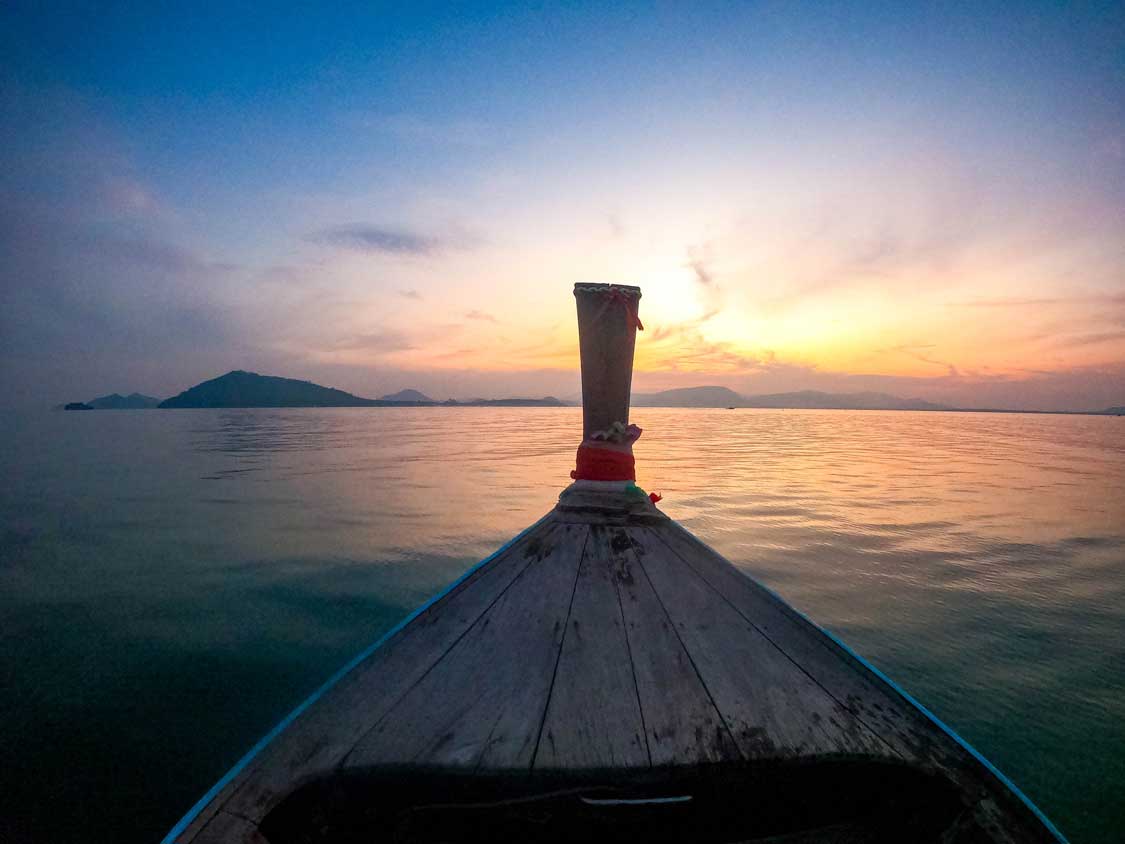
North of Koh Samui in the Gulf of Thailand sits little Koh Tao, part of the same archipelago as its bigger neighbor but far smaller and more laid-back. You can explore it in under a day, yet travelers happily linger for days, especially those who need a breather from a jam-packed itinerary.
Koh Tao is one of Thailand’s premier scuba diving destinations, with endless visibility, bright corals, and fascinating shipwrecks. Divers meet massive groupers, barracuda, eagle rays, black-tipped reef sharks, and, if they’re lucky, gentle whale sharks. It’s also one of the most popular places in the world to earn a dive certification, which makes it a great spot for teens ready to take the plunge.
- Best for: teens, divers, and snorkelers.
- Don’t miss: a snorkel or dive trip around the island.
- Good to know: it’s reached by ferry from Koh Samui or the mainland, so check sea conditions in the wet season.
- Popular tour: Full-day five island snorkeling trip – You can book that tour here.
Best Places To Visit On The Andaman Coast
Phuket
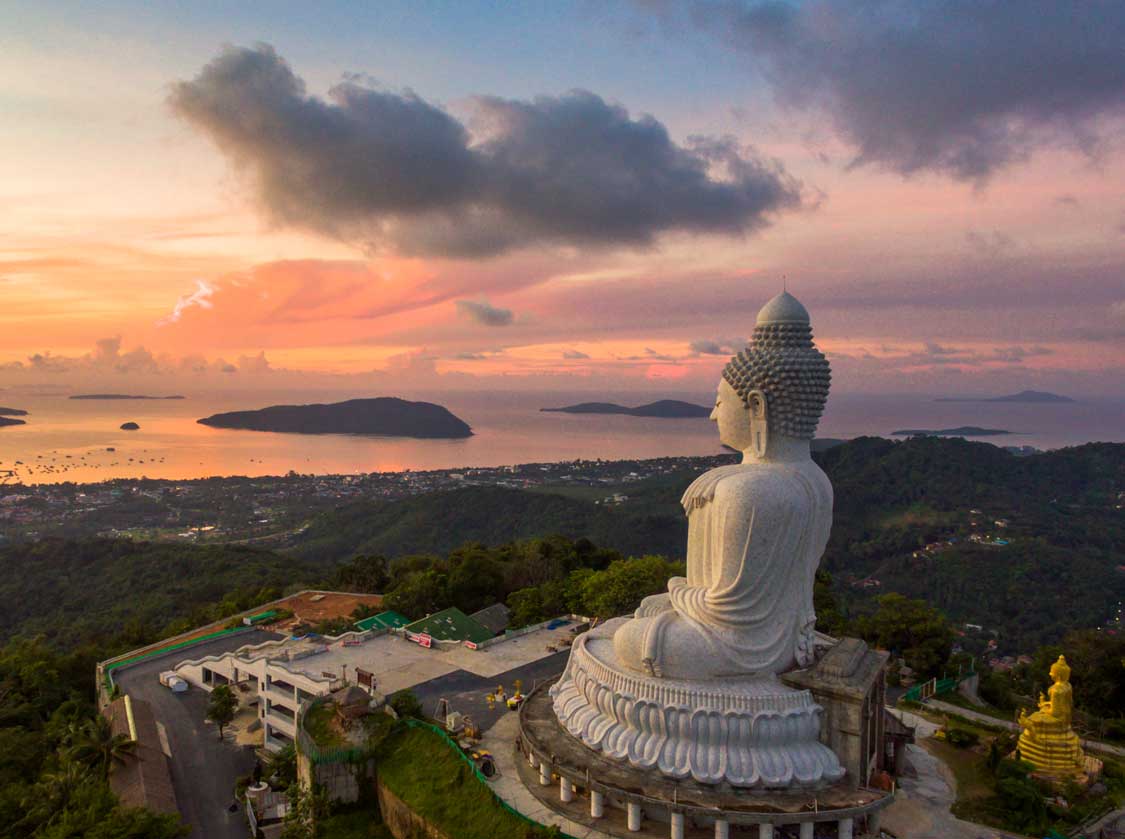
Phuket is one of Thailand’s most famous destinations and home to the country’s most popular beaches. Its landmark is the nearly 150-foot (45 m) Big Buddha on Nakkerd Hill, gazing out over the island.
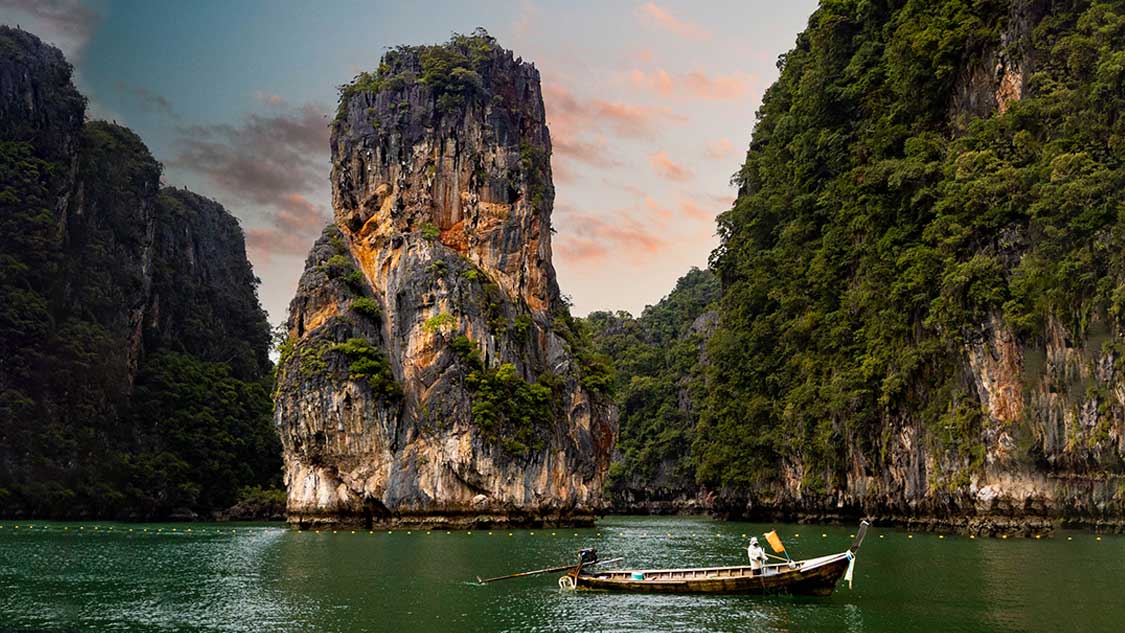
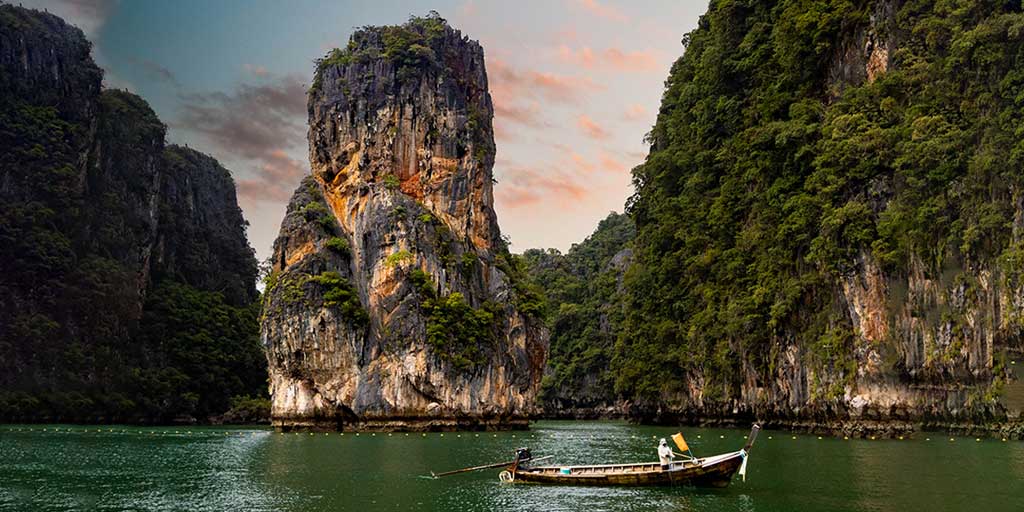
Phuket draws visitors from around the world thanks to scenery made famous in Hollywood, including Khao Phing Kan, better known as “James Bond Island,” and Phi Phi Leh, the star of Leonardo DiCaprio’s The Beach. We took a speedboat tour through the limestone towers of Phang Nga Bay to Monkey Beach and the floating Muslim village of Koh Panyee, learned about conservation at the Gibbon Rehabilitation Project, and hopped between beaches. The highlight for Cohen, a lifelong fishing fanatic, was a freshwater fishing trip where he hauled in giant stingrays and Mekong catfish. Don’t skip the town itself either, where Phuket Old Town’s colorful shophouses, temples, restaurants, and markets are well worth an afternoon.
- Best for: first-timers and families who want beaches plus plenty to do.
- Don’t miss: a boat trip through Phang Nga Bay and the Big Buddha at sunrise.
- Good to know: Phuket is big, so choose a beach base that fits your family (quieter Kata and Karon for kids, busy Patong for nightlife).
- Popular tour: Phang Nga Bay and James Bond Island tour – You can book that tour here.
- Read more: You can read my guide to the best things to do in Phuket here.
Koh Phi Phi
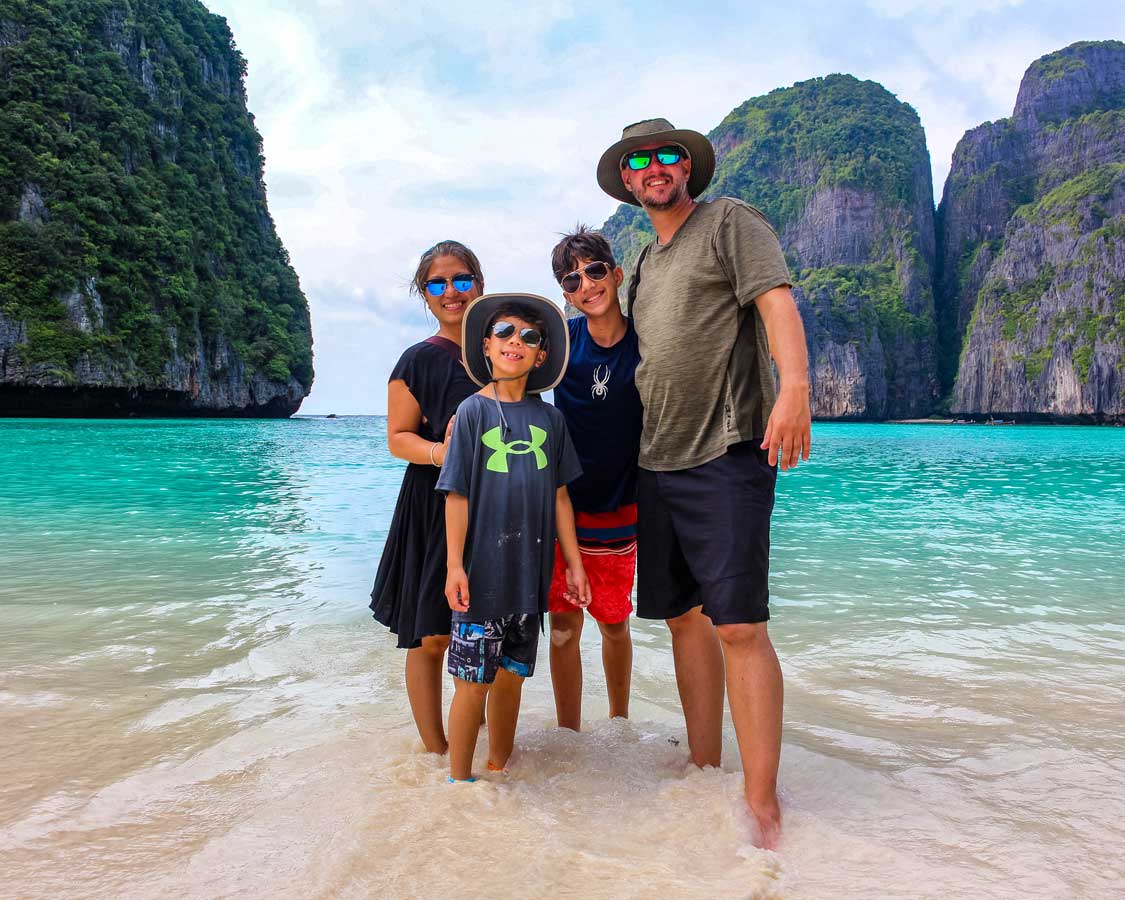
Just a boat ride from Phuket and Krabi, the Phi Phi Islands are the Andaman Sea at its most cinematic: sheer limestone cliffs, turquoise lagoons, and some of the clearest water in Thailand. For our family, simply sitting on the sand at Maya Bay as the sun went down was one of those pinch-me moments.
Maya Bay, the beach made famous by The Beach, was closed for years to let its reefs and sand recover from overtourism, and today it’s carefully managed, with a new boardwalk, no swimming in the bay, and a seasonal closure each year to let it rest. The payoff is a beach that looks much the way it must have before the crowds arrived. Around the islands you’ll find superb snorkeling at spots like Pileh Lagoon and Bamboo Island, and the lively village of Tonsai on Phi Phi Don.
- Best for: snorkeling, scenery, and a first taste of Thai island-hopping.
- Don’t miss: Maya Bay and a snorkel stop at Pileh Lagoon.
- Good to know: go early or late in the day to beat the day-trip boats, and check Maya Bay’s seasonal closure before you book.
- Popular tour: Phi Phi Islands and Maya Bay tour from Krabi – You can book that tour here.
Krabi
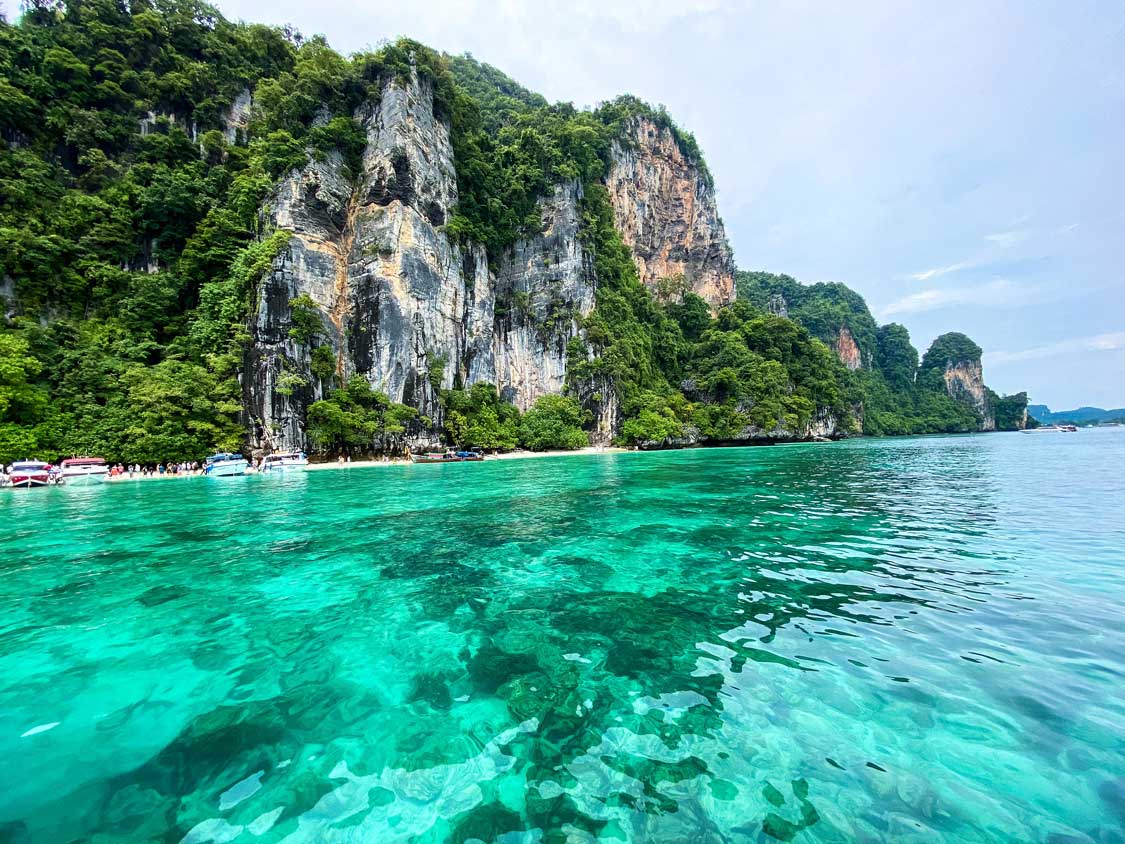
Across Phang Nga Bay from Phuket, Krabi is a province of some 200 islands and vast forests, famous for luxurious beaches backed by dramatic scenery. Its rugged limestone cliffs plunge straight into the sea, drawing rock climbers from around the world.
The most famous spot is Railay, a peninsula of stunning beaches cut off from the mainland by cliffs and reachable only by boat. Krabi is also a gateway to the Phi Phi Islands and to Koh Panyee, the floating Muslim fishing village in Phang Nga Bay. Inland, Thung Teao Forest Natural Park protects virgin rainforest and the famous Emerald Pool, with warm spring-fed pools, a 1.7-mile (2.7 km) hiking trail, and crystal-clear ponds.
- Best for: teens, climbers, and dramatic island scenery.
- Don’t miss: a longtail boat to Railay and a swim in the Emerald Pool.
- Good to know: Krabi town and Ao Nang make easy bases for day trips by boat.
- Popular tour: Krabi four islands tour by longtail boat – You can book that tour here.
Koh Lanta
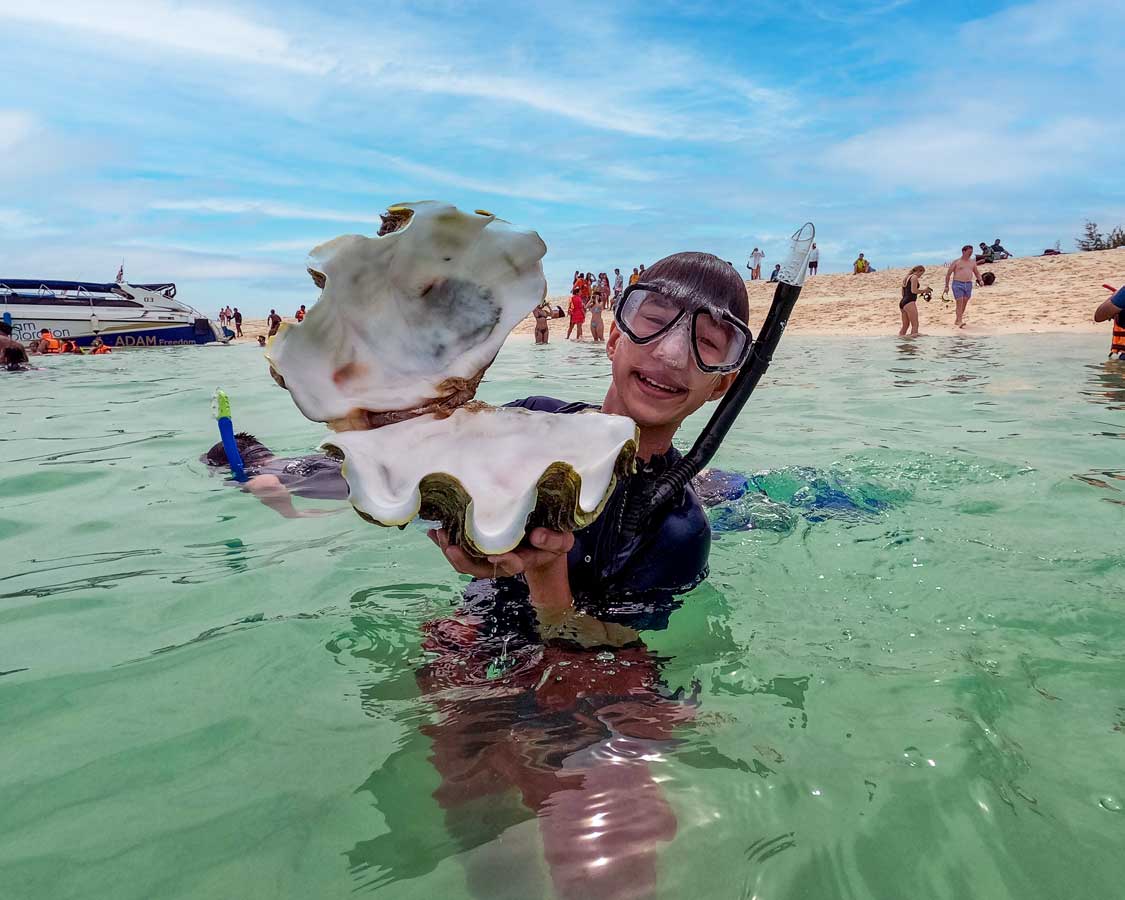
Off the coast of Krabi province, Koh Lanta is an often overlooked island of magical beaches, wonderful parks, and pretty little towns. It’s far more peaceful than Phuket or Krabi, and it’s linked to the mainland by bridges and a short car ferry.
The island is more than 18 miles (30 km) long, with lovely small resorts, locally run restaurants, and quaint shops and markets, and it’s popular with long-stay expats for good reason. Mu Koh Lanta National Park spans 16 major islands and many smaller ones, nearly half of it cloaked in rainforest and mangroves, and the snorkeling is superb; one of the boys surfaced here triumphantly holding a giant clam.
- Best for: families with young kids and a quieter beach escape.
- Don’t miss: a boat trip into Mu Koh Lanta National Park, and a sunset on the west-coast beaches.
- Good to know: it’s the ideal slow-down stop at the end of a busy itinerary.
- Popular tour: Koh Lanta Thai cooking class- you can book that tour here.
Koh Sok National Park
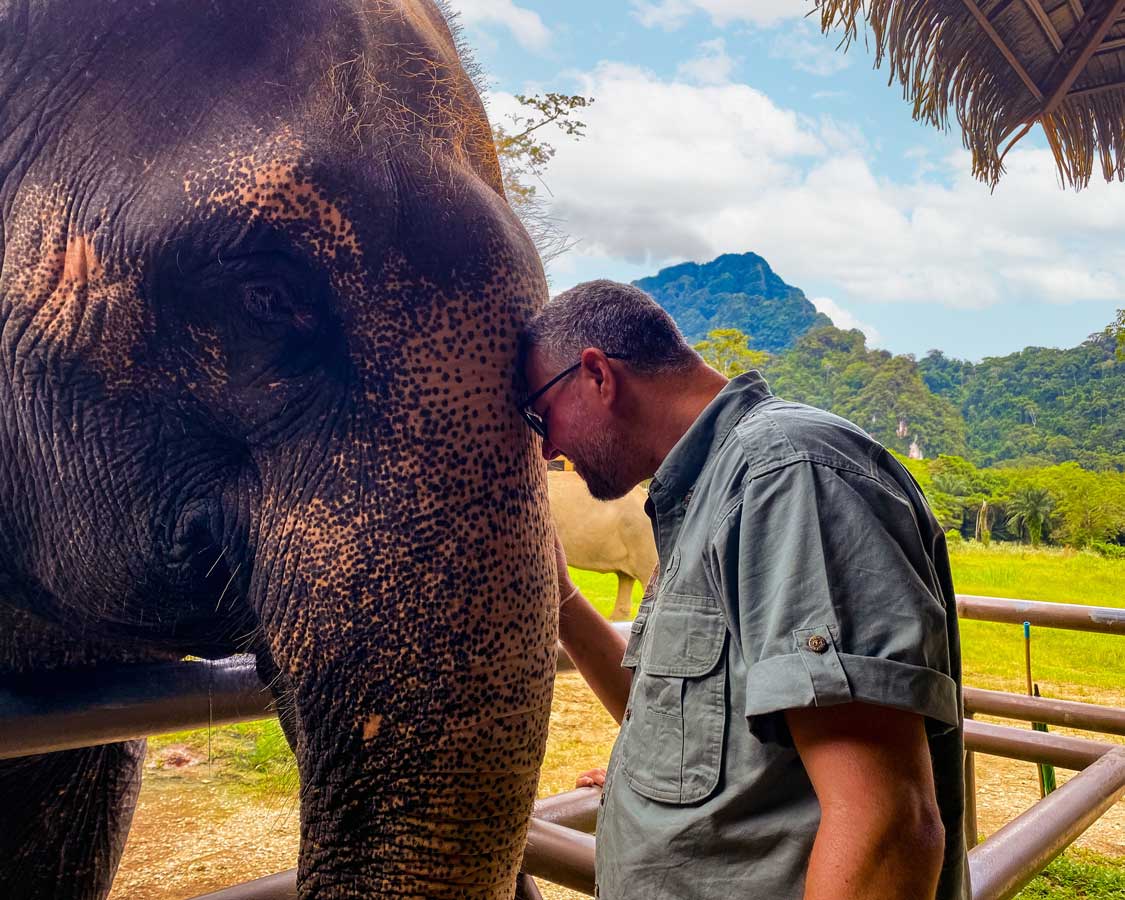
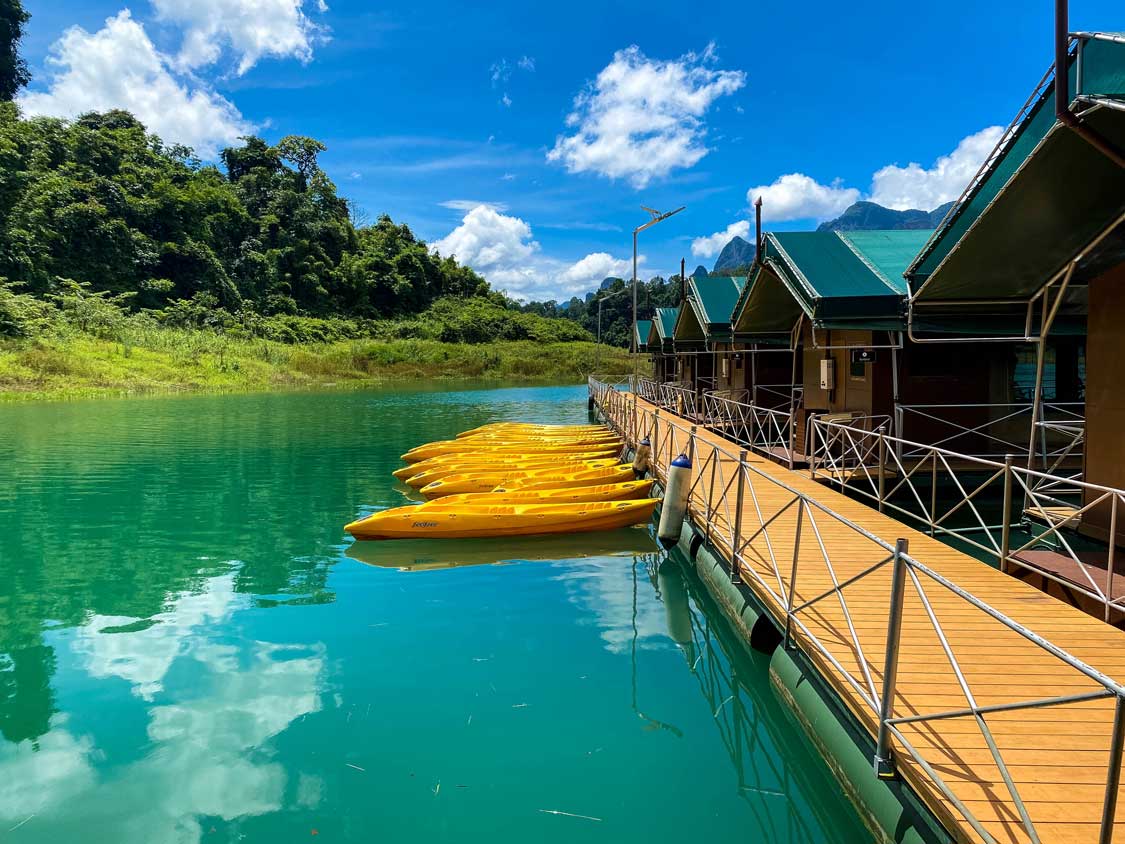
Situated about an hour and a half from Surat Thani, Khao Sok is a massive, ancient rainforest packed with incredible plants and animals, including a small population of wild elephants, limestone peaks, waterfalls, and hiking trails. At its heart lies Cheow Lan Lake, dotted with jaw-dropping floating lodges where you can kayak, walk jungle trails, and take guided boat rides through the flooded wilderness.
This is where we found the most meaningful animal experience of our entire trip, at Elephant Hills, a jungle tented camp and ethical elephant sanctuary that rehabilitates former working elephants alongside their mahouts. There are no rides and no bathing with the elephants; instead, you prepare their food, feed them, and learn about their lives. My favorite moment was feeding the oldest elephant at the sanctuary, an 87-year-old cow who is blind and has no teeth left, and who is gently guided to the feeding areas by the other elephants. What we came away with wasn’t a photo of us sitting on an elephant’s back. It was something harder to photograph and far harder to forget: the experience of connecting with these animals in an environment of respect.
We finished with a night at Elephant Hills’ floating Rainforest Camp on Cheow Lan Lake. Unlike our raft on the River Kwai, which rested on a shallow riverbed, this one truly floated out on open water, and swimming required a life jacket (I discovered you can flip one over and wear it like a pair of shorts). The boys, then nine and eleven, loved every second.
- Best for: ethical wildlife encounters and unforgettable jungle stays.
- Don’t miss: the Elephant Hills sanctuary and a night on the floating lodges of Cheow Lan Lake.
- Good to know: the floating lodges have few family rooms, and the popular dishes at camp meals run out, so get there early.
- Read more: You can read all about our stay at Elephant Hills here.
Travel Resources for Families Visiting Thailand
For practical planning, safety considerations, and logistics, these dedicated guides provide deeper support for families interested in travel to Thailand.

Frequently Asked Questions About Visiting Thailand
Wonderfully so. Thai people adore children, the food is fresh and easy to love, travel is affordable, and there’s everything from temples and elephants to gentle beaches. The key is matching regions to your family’s interests and pacing your days around the heat.
Two weeks lets you see Bangkok, one region inland like Chiang Mai or Kanchanaburi, and a beach. Three weeks allows you to add both the north and the islands.
November to February offers the coolest, driest weather across most of the country. The Gulf islands get their heaviest rains late in the year, while the Andaman coast around Phuket is wettest in the middle of the year.
Bangkok for the temples, markets, and food, Chiang Mai for culture and the mountains, and Phuket or Krabi for the beaches and island scenery.
Hua Hin, Koh Samui, and Koh Lanta are the easiest, with gentle beaches, family resorts, and short transfers.
Choose sanctuaries that don’t offer rides or bathing and focus on feeding, observation, and education, like Elephant Hills in Khao Sok National Park. You can also see wild elephants in Khao Yai National Park.
Cheap domestic flights connect the regions quickly. Trains, buses, and private drivers cover shorter hops, and ferries and longtail boats handle the islands.
Are You Ready To Visit These Incredible Places in Thailand For Yourself?
Thailand is a country that gives far more than it asks. There are golden temples and ancient ruins, jungles and elephants, islands and beaches, and some of the most delicious food on the planet, all wrapped in a welcome that makes families feel right at home. Whether you come for the history, the wildlife, or the beaches, the hardest part is choosing where to begin.
For more, explore my Thailand family travel guide, and please join the Family Travel Support Group on Facebook, where you can connect with more families who love to explore the world.
Wandering Wagars is a participant in the Amazon Services LLC Associates Program, an affiliate advertising program designed to provide a means for sites to earn advertising fees by advertising and linking to amazon.com, amazon.co.uk, amazon.ca. Amazon and the Amazon logo are trademarks of Amazon.com, Inc., or its affiliates.
You May Also Like To Read: