The complete family packing list for Morocco, covering men, women, teens, and kids for summer and winter travel. Built from firsthand family experience across Marrakech, Fes, the High Atlas Mountains, the Sahara Desert, and the Draa Valley.
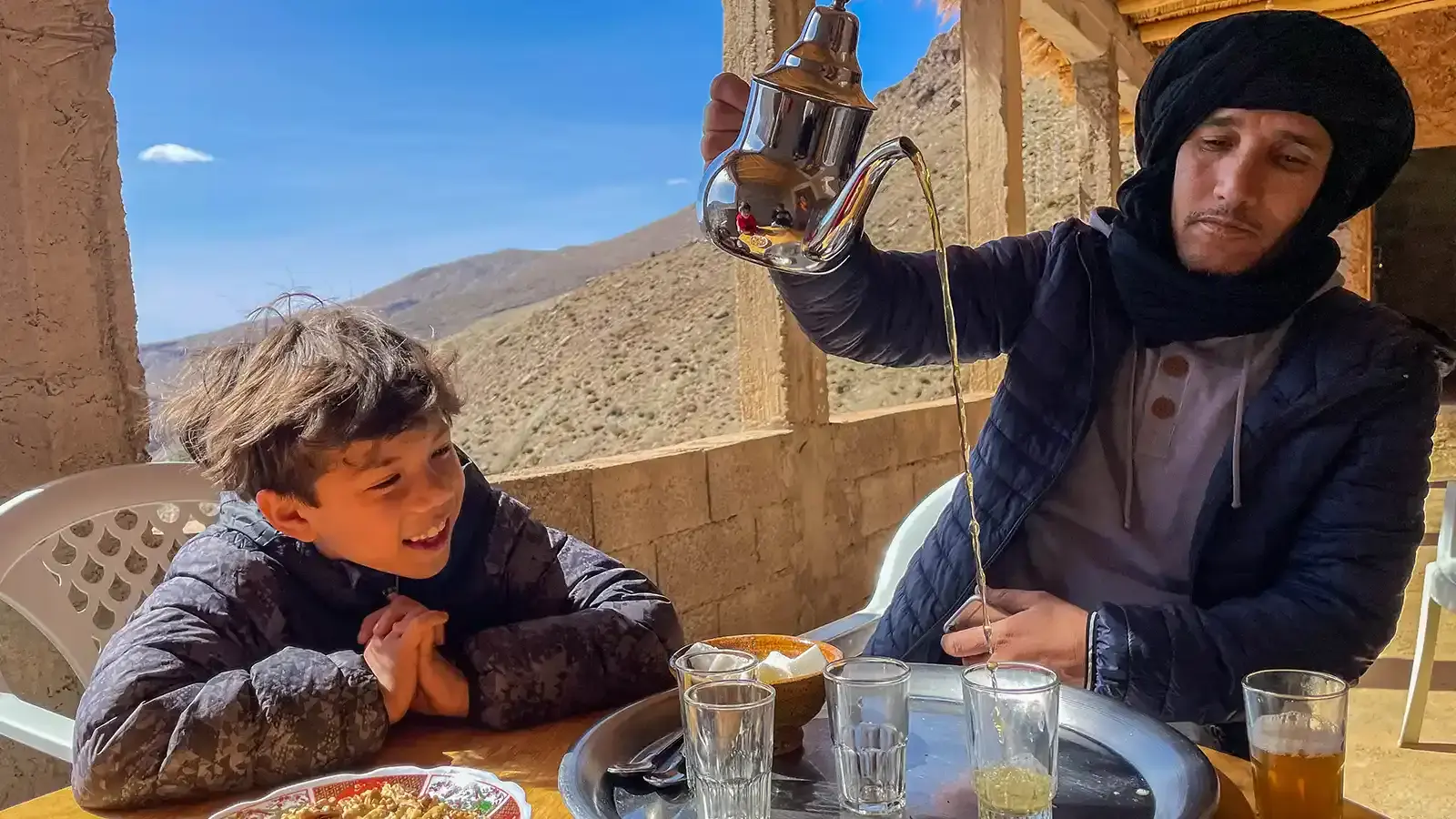
There’s a photograph from our trip to Merzouga that sits on the wall in our house.
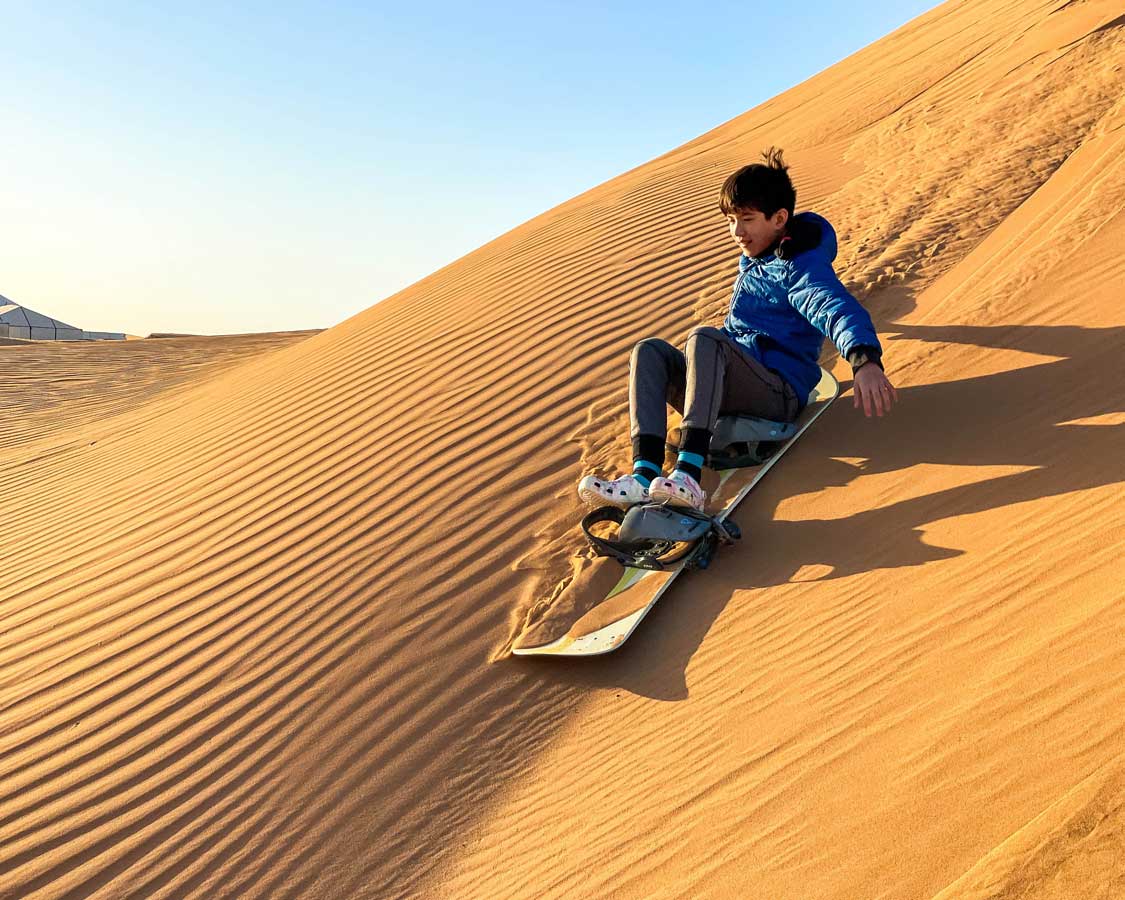
The boys are at the top of the Erg Chebbi dunes in Merzouga, the late-afternoon light painting the landscape in gold. Cohen, who was 10 at the time, is wide-eyed, hanging on for dear life as he tries desperately to stay on top of his sandboard as he shreds down the hillside into the soft, Sahara sand below. In that moment, I understood why people say that Morocco changes everyone who visits the country.
What the photograph does not show is what we packed for our Morocco trip. The linen shirts that survived three medinas and a camel ride without complaint. The sandals that handled the cobblestones of the Fes medina and the gangways of the desert camp in equal measure. The light layers that made the temperature swing from 50 degrees Fahrenheit (13 degrees Celsius) in the High Atlas to 77 degrees (25 degrees Celsius) in Marrakech feel manageable rather than chaotic.
Morocco demands more from a family suitcase than many destinations. Each day can bring families through a medieval city, an epic mountain range, a desert, and a pristine coastal beach, all within a few days of each other, and each one has different requirements. The Fes medina in July is a furnace. The Sahara in January drops below freezing overnight. The High Atlas passes in spring still carry snow. Marrakech in December needs a proper coat after sundown.
We have traveled Morocco as a family across multiple trips: getting lost on purpose in the thousand-year-old lanes of the Fes medina, watching the boys dance to Berber music around a fire in Merzouga, finding 150-million-year-old fossils in the desert sand outside Ouarzazate, and navigating the organized chaos of Jemaa el-Fna at night with kids who could not decide what to eat first. This packing list is built from all of it.
What You’ll Find in This Packing Guide for Morocco
Table of Contents
Morocco is not a one-size-fits-all packing destination. Most families underestimate the range of climates when packing and overestimate how casual the dress code is outside of the resort areas. Here is what this packing guide specifically addresses:
- Extreme temperature swings by region and season. On our last trip in late March, we experienced 50 degrees Fahrenheit (10°C) in the High Atlas and 77°F (25°C) in Marrakech on the same day. Summer often pushes Marrakech past 100°F (38°C). The Sahara in winter regularly drops below freezing at night. This Morocco packing guide covers both summer and winter with the specifics each season demands.
- Cultural dress expectations. Morocco is a Muslim-majority country, and while it is considerably more relaxed about tourist dress than some of its neighbors, covering up respectfully earns most visitors a better experience in medinas, religious sites, and smaller towns. This guide tells you exactly what to pack and how to use it.
- Terrain variety. Cobblestone medina alleys, rough mountain passes, desert sand, and coastal towns all call for different footwear. Getting this right, without overpacking, is one of the most important planning strategies for making the most of your trip in the country.
- Family logistics. What works for adults in a Moroccan medina in July heat is often completely wrong for kids. This guide accounts for both ages and builds in practical notes for managing the heat, the distance, and the chaos with children in tow.
This guide is organized by season: summer from April through October, and winter from November through March. Specific callouts for men, women, teens, and kids throughout.
Before You Pack: Understanding Morocco’s Climate
Spend even a short time in Morocco, and you’ll quickly discover that it is a country of dramatic contrasts. These contrasts aren’t just cultural or historical, but climatic as well. Where you are going and when you are going will shape your packing list as much as anything else.
Marrakech and the Imperial Cities
Marrakech, Fes, Meknes, Rabat, Casablanca. The imperial cities are the heart of most Morocco itineraries, and they run hot in summer. Marrakech in July and August regularly hits 100 to 104 degrees Fahrenheit (38 to 40°C) with low humidity, dry heat, and afternoon sun that bounces off the red ochre walls of the medina with particular ferocity.
Spring from March through May and autumn from September through November are the sweet spots for travel in Morocco: warm, manageable, and beautiful. Winter brings cool days in the mid-50s to low 60s Fahrenheit (10 to 20°C) and cold nights that genuinely require a jacket.
The High Atlas Mountains
The mountain passes between Marrakech and the south can carry snow as late as April. In fact, Oukaïmeden, located 43 miles (70km) from Marrakech in the High Atlas, is a pretty decent ski resort. Even in summer, the Atlas runs significantly cooler than the cities below, and mornings at altitude can be genuinely cold. If your itinerary crosses the mountains, which most do on the way to the desert, a proper midlayer is worth every gram of suitcase weight.
The Sahara Desert and the South
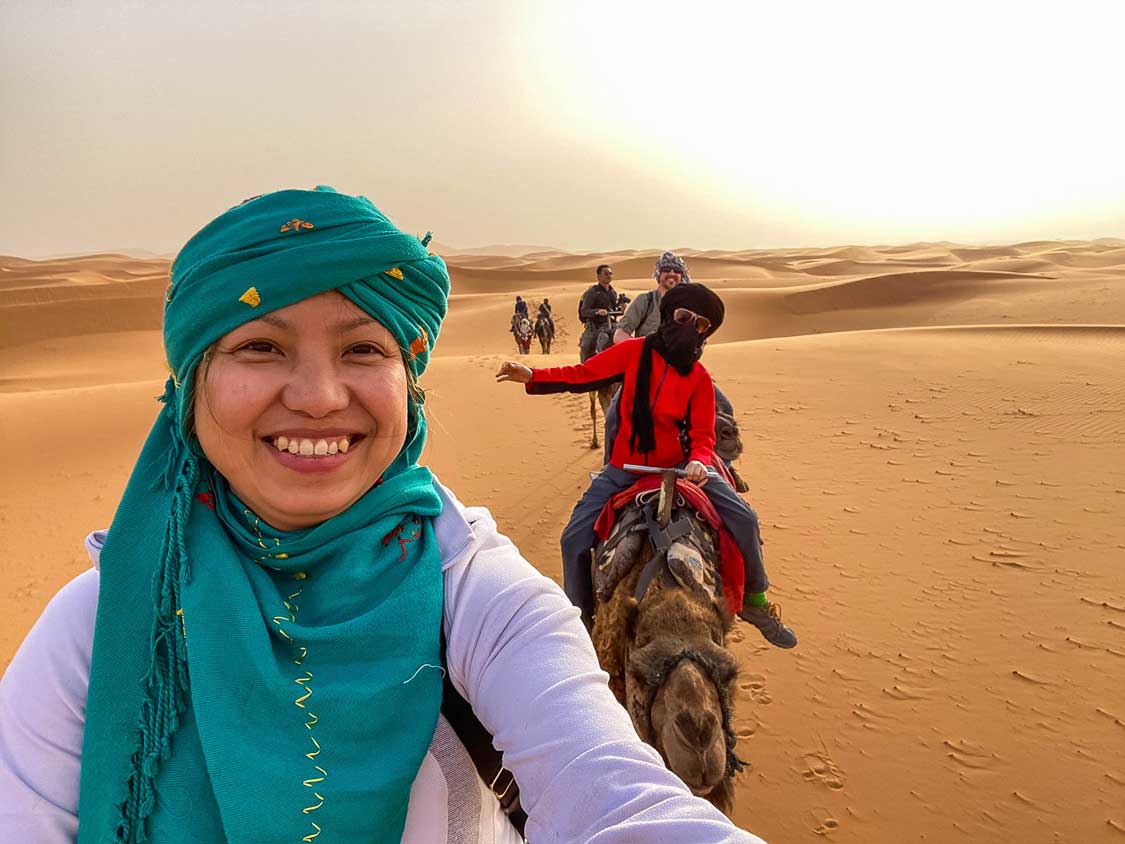
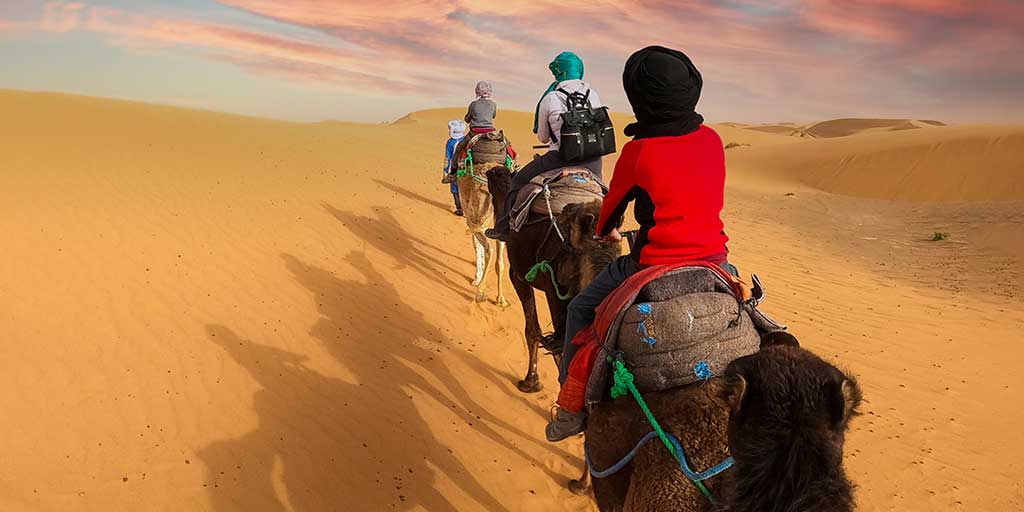
Merzouga, Zagora, Ouarzazate, the Draa Valley, the Todra Gorge. The south of Morocco is where the temperature extremes are most dramatic. Summer days in the desert push past 110 degrees Fahrenheit (43°C). Winter nights in Merzouga drop below freezing. The camel ride out to the desert camps happens at sunset, when the temperature has already started falling sharply. If you are doing the Sahara in any season outside of the summer peak, pack for cold evenings. You will use that layer.
The Atlantic and Mediterranean Coasts
Casablanca, Rabat, Essaouira, Agadir. The coasts are cooled by sea breezes that make summer far more pleasant than the interior. Essaouira in summer is famously breezy to the point of requiring a light layer most evenings. The Atlantic coast is genuinely mild year-round and the most forgiving packing environment in Morocco.
The Packing Truth Most Morocco Guides Skip
Summer packing for Morocco is not just about planning for the heat. Most families forget that the medinas are partially covered by souks and narrow lanes that provide shade, but the open squares like Jemaa el-Fna in Marrakech offer zero cover at midday.
The mountain drives between cities that seem like a summer detail become genuine cold-weather passages after dark. A light packable puffer jacket belongs in every Morocco bag, regardless of season.
Understanding Dress Culture in Morocco
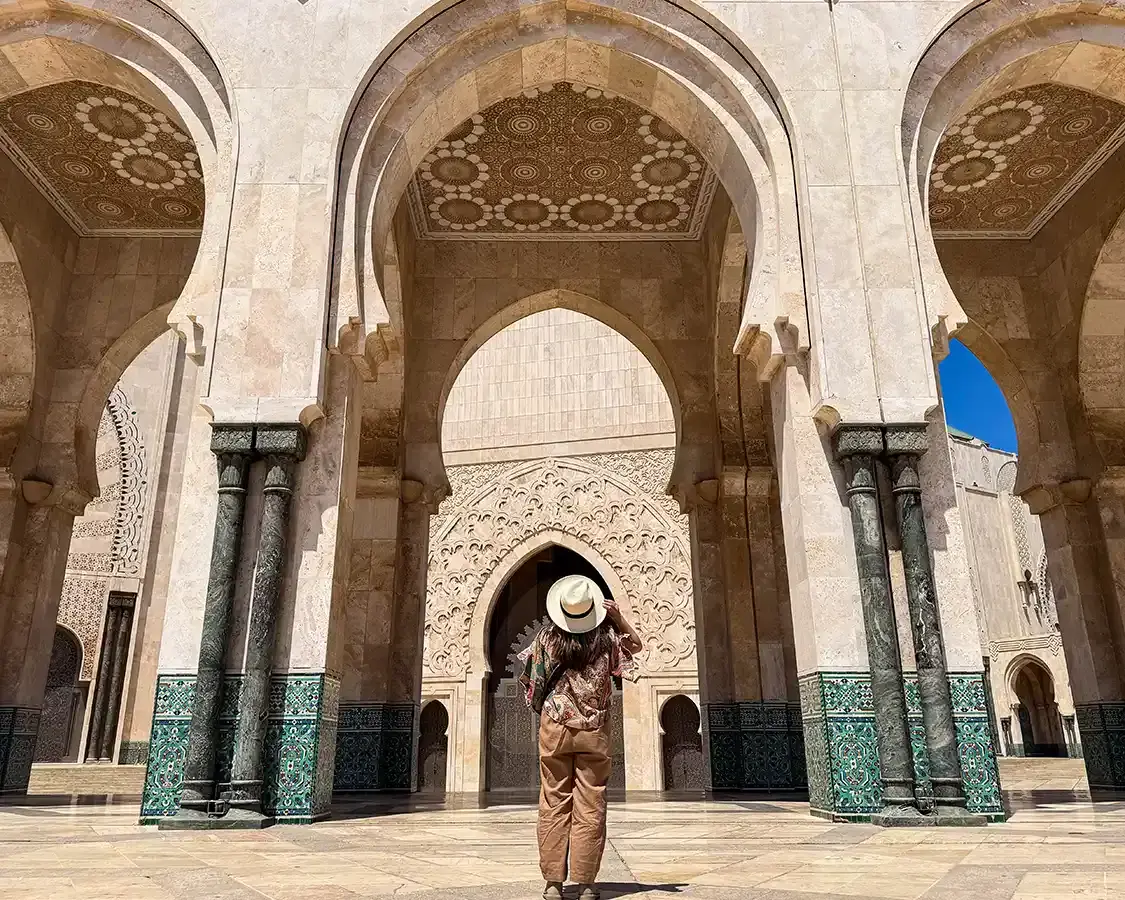
The often-raised question about dress code while in Morocco generates more confusion than almost any other question about what to pack. Here is the honest version from a family that has traveled throughout the country.
Morocco is considerably more relaxed about tourist dress than its reputation sometimes suggests, particularly in Marrakech and the major tourist destinations. That said, dressing thoughtfully is not just about respecting local culture; it is about having a better experience.
Families who dress modestly in the medinas generally attract less aggressive vendor attention, receive warmer welcomes from locals, and are generally more comfortable in the heat than those in minimal clothing.
Marrakech and Major Tourist Destinations
Marrakech sees millions of tourists a year and is well-accustomed to a full range of dress. Shorts and sleeveless tops are common, and nobody will say anything. That said, in the souks and medina lanes, covered shoulders and trousers tend to generate a calmer, less vendor-focused experience. Christina’s approach: a lightweight linen maxi dress handles everything in Marrakech from morning market to evening rooftop dinner.
Fes, Meknes, and the More Traditional Cities
Fes, in particular, is a more conservative city than Marrakech. The medina is an active living community, not a tourist set piece, and dressing with a bit more coverage is both respectful and practically useful. Men in lightweight linen pants and a shirt are perfectly comfortable and more comfortable in the heat than shorts anyway. Women in a maxi dress or linen trousers and a loose top move through the Fes medina with far less friction than in shorts and a tank top.
For teens and younger children, dressing comfortably and for the temperature is what matters most. Unlike adults, it’s very rare for a child or teenager to be judged on their clothing while in Morocco.
Mosques and Religious Sites
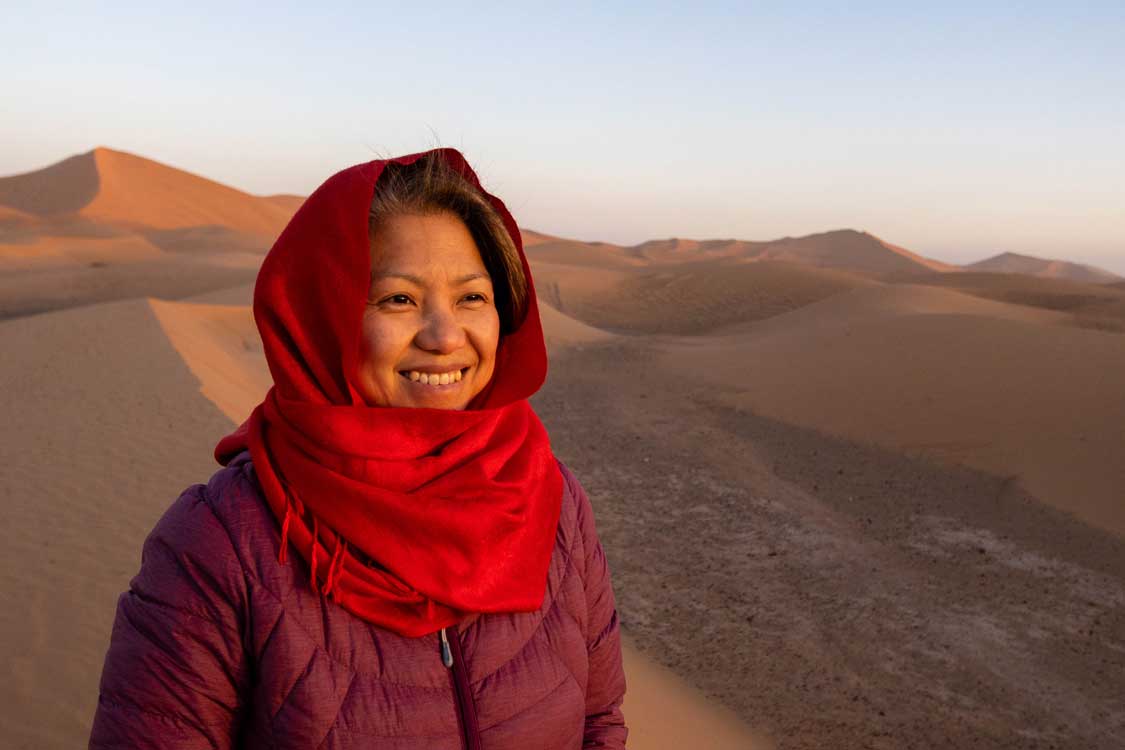
Non-Muslims cannot enter most mosques in Morocco, with a few exceptions. At the Hassan II Mosque in Casablanca and the exterior of other religious sites, covered shoulders and knees are expected and appreciated. A lightweight scarf packed in a daypack handles this for women without adding meaningful weight to the bag.
The Desert and Rural Areas
The Sahara camps, the Draa Valley, and the villages around the Todra Gorge. Rural Morocco tends to offer the most conservative environments in the country. Loose, light, covering clothing is both culturally appropriate and practically sensible: long sleeves protect against sun during the day and provide a layer against the cold that arrives fast after sunset in the desert.
Morocco Summer Packing List for Families (April through October)
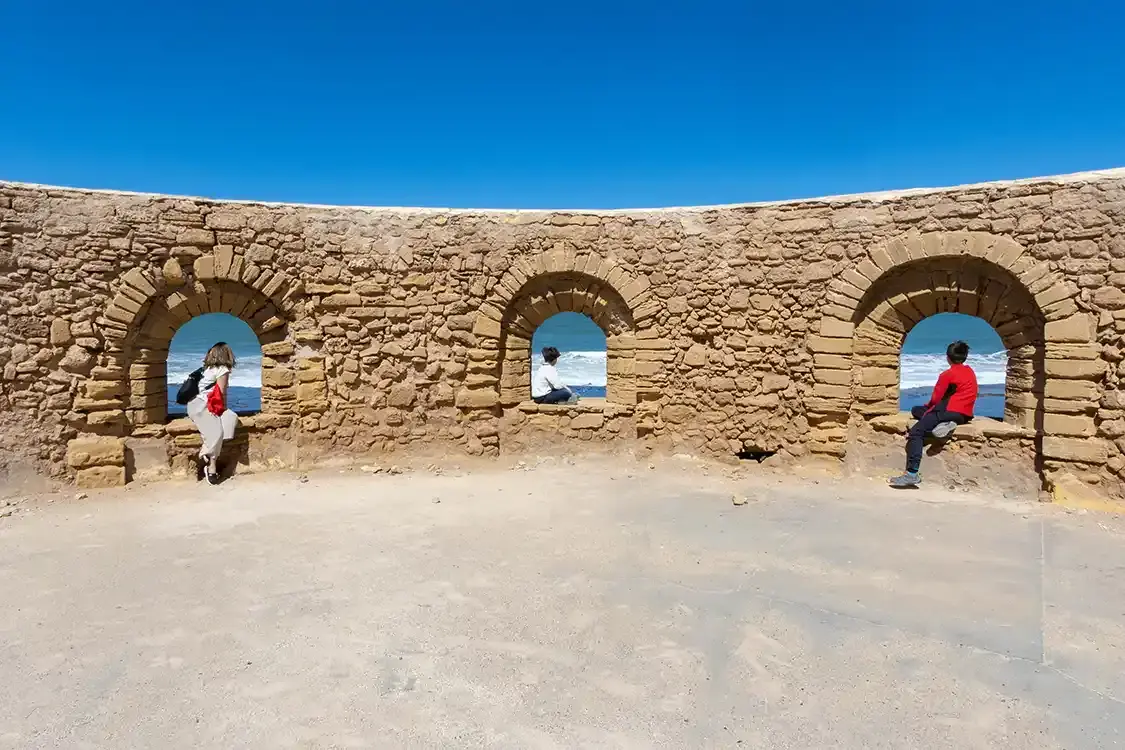
The blazing Moroccan summer features serious, sustained heat. The medinas trap warmth and the afternoon sun in the open squares is relentless. The packing goal is the same as any hot-country trip: lightweight, breathable, quick-dry fabrics that keep you comfortable from a morning in the souks to an evening on a riad rooftop. Linens and light cotton earn every trip they make.
Quick-Dry Clothing Is Not Optional in Moroccan Summer
Most Moroccan riads and guesthouses do not have dryers. Anything that cannot be hand-washed and air-dried overnight becomes a problem by day three in a ten-day itinerary. Linen, travel nylon, and moisture-wicking fabrics are your friends. Denim is not. Not in July in the medina. Not anywhere in Morocco in summer.
Summer: Clothing for Men and Teens
Moroccan men in the cities dress with a relaxed elegance. Think lightweight linen shirts, loose trousers, and clean footwear. You do not need to match them, but a well-chosen linen shirt and travel trousers will get you considerably further than cargo shorts and a branded t-shirt in most situations.
- 3 to 4 lightweight short-sleeve shirts (linen or moisture-wicking): Columbia Utilizer Short Sleeve Shirt. Dries overnight, does not wrinkle, handles Medina heat and Riad dinners with equal credibility.
- 1 to 2 lightweight long-sleeve shirts for conservative areas, mosque exteriors, and desert evenings: PJ Paul Jones Long Sleeve Linen Shirt. Also, the layer that saves you when the Atlas Mountain passes get cold after dark.
- 2 pairs of lightweight linen or cotton travel pants. Leave denim at home: Sailwind Men’s Linen Pants. These are the right calls for the medinas, the desert, and every rural area. Jeans in Moroccan summer heat are self-inflicted suffering.
- 1 to 2 pairs of light shorts for coastal towns and resort areas: Columbia Silver Ridge Shorts. Perfectly acceptable in Agadir or Essaouira. Less practical for serious days exploring the medinas.
- 1 to 2 swimsuits. Riad pools are one of Morocco’s great pleasures. Coastal stays call for them too.
- 2 rash guards (UPF 50+) for coastal and beach days: Amazon Essentials Men’s Rash Guard.
- 1 packable insulating layer for the Atlas crossing and desert evenings: Columbia Men’s Delta Ridge Down Jacket. This is the item that catches most families off guard in summer in Morocco. The desert cools sharply after sunset, regardless of how hot the day was. Pack it.
- Underwear x7: lightweight, quick-dry.
- Socks x7: lightweight merino wool or wool-blend. Merino handles the heat-cold swing of a Morocco itinerary better than any synthetic alternative.
Summer: Clothing for Women and Teens
Christina’s approach to Morocco packing has evolved over our travels to the country: one good linen maxi dress does more work per gram than any other item in the bag. It covers medinas, mosque exteriors, riad dinners, and desert evenings without requiring you to think about what is appropriate. Pack it in a neutral or earth tone, and it goes everywhere.
- 3 to 4 lightweight linen or cotton tops: Amazon Essentials Women’s Linen Blend Top
- 2 pairs of lightweight travel trousers or linen pants: Rekucci Women’s Wide-Leg Linen Pants
- 1 to 2 midi or maxi dresses: Women’s Maxi Travel Dress. The most versatile item in a Morocco suitcase. Covers the Medina dress code, works for dinner, handles the heat, and moves through conservative areas without attracting friction.
- 1 pair of lightweight shorts for coastal towns and riad pool days: Women’s Everyday Shorts
- 1 lightweight cardigan or wrap for mosque exteriors, conservative areas, and cooler evenings: Amazon Essentials Women’s Lightweight Cardigan. Doubles as a shoulder cover at religious sites and a layer on cool Atlas Mountain evenings.
- 1 long skirt or wide-leg trousers: Women’s Wide-Leg Travel Trousers. For more conservative city days and rural areas where trousers read better than a dress.
- 1 lightweight scarf. The single most versatile item in a Morocco bag. Shoulder cover at religious sites, head cover when useful, dust cover in the desert, extra layer in the evening. One good linen or cotton scarf does all of it. You can usually find beautiful and inexpensive ones throughout the markets in Morocco.
- 2 swimsuits for days in your Riad pool and coastal beach visits.
- 2 rash guards (UPF 50+) for beach days: Kanu Surf Women’s Rash Guard
- 1 packable jacket or puffer for Atlas Mountain crossings and Sahara evenings: Columbia Women’s Heavenly Long Hooded Jacket
- Underwear x7: lightweight, quick-dry.
- Socks x7: lightweight merino wool or wool-blend.
Summer: Clothing for Kids Under 12
For kids in Morocco, pack for comfort. Moroccan culture is very relaxed towards children.
- 4 to 5 lightweight, quick-dry t-shirts. Earth tones and mid-range colors rather than white. The medinas and desert will find every pale garment within forty-eight hours. Bring 2-3 long-sleeve travel-friendly shirts as well for cooler nights.
- 2 to 3 pairs of lightweight pants or joggers. Long legs are practical and appropriate for days in the medina and the desert.
- 2 pairs of shorts for coastal and riad days.
- 2 swimsuits.
- 2 rash guards (UPF 50+): O’Neill Wetshirt UPF Shirt. The Moroccan sun on open desert and coastal days is intense. A UPF layer is the simplest sun protection decision you can make for kids.
- 1 packable light jacket for Atlas Mountain crossings and desert evenings.
- Underwear x7 to 8, socks x7 to 8.
Morocco Winter Packing List (November through March)
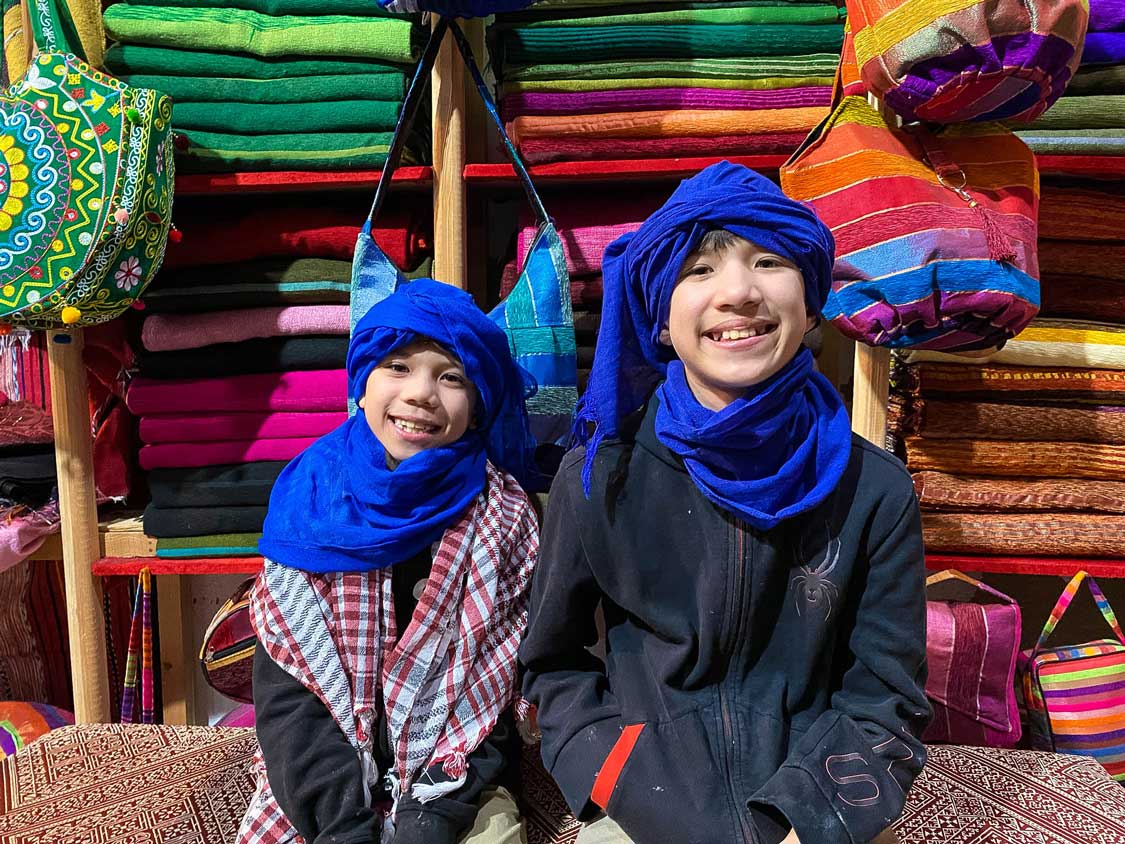
Winter in Morocco: What Changes from the Summer List
The summer packing list is the foundation for travel in Morocco. These are the winter additions and swaps:
- Upgrade your insulating layer by layering your packable puffer with a proper mid-weight or heavyweight fleece. The Delta Ridge is fine for cool summer evenings. For December in Fes or a January night in the Sahara, you want something with real warmth. Alternatively, a mid-weight travel jacket like this one will keep you warmer.
- Women’s heavyweight insulated jacket: Columbia Women’s Heavenly Long Hooded Jacket. The full-length version earns its place when Marrakech evenings drop into the 40s.
- Add a waterproof rain shell for both men and women. Moroccan winter brings rain to the cities and the Atlantic coast. A waterproof outer layer over a fleece handles most winter Morocco conditions without needing anything more elaborate.
- Add merino base layers for the Atlas and the Sahara: This is the one I use, and this is the one Christina swears by. A thin merino base layer under a shirt under a fleece handles every winter Morocco scenario from a cold city morning to a desert night.
- Swap lightweight travel trousers for heavier-weight versions or add a pair of jeans if preferred. Jeans are acceptable in winter in Morocco, but are useless during the summer.
- Add heavier socks, a wool hat, and gloves for desert nights and mountain crossings. The Sahara at 2 a.m., when you step outside to look at the stars, is genuinely cold.
Winter: Kids and Teens
- Add a properly insulated jacket per child. A packable puffer is the minimum. For Sahara nights and Atlas crossings in winter, a heavier insulated coat is the right call. The Columbia Arctic Blast is a solid option.
- Kids’ rain shell: Marmot Precipice Rain Jacket
- Kids’ merino base layers for the desert and mountain nights: Spyder’s Merino Base Layer
- Heavier trousers or lined pants for each child. The cold in the desert and the Atlas hits kids faster than adults.
- Wool hats and gloves for each child for Sahara nights. Bring them. You will use them.
- Thicker socks and light gloves
Choosing The Right Footwear for Morocco
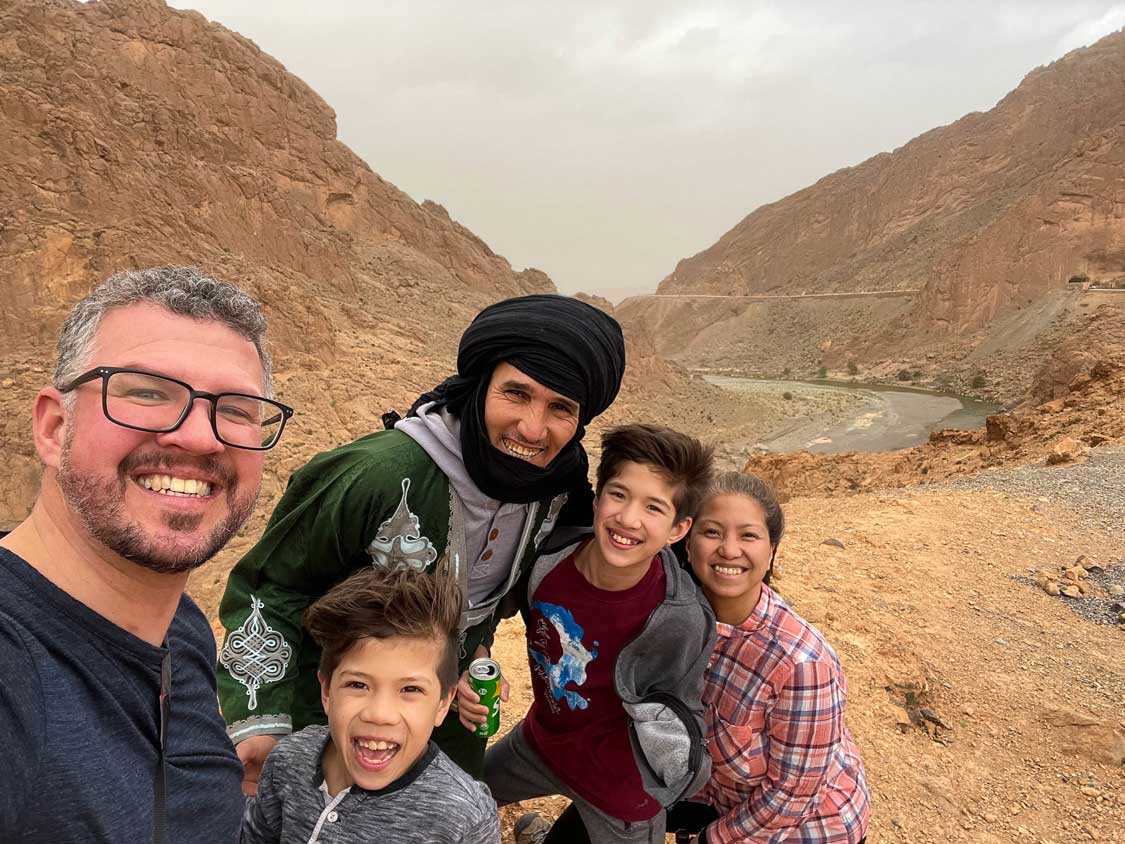
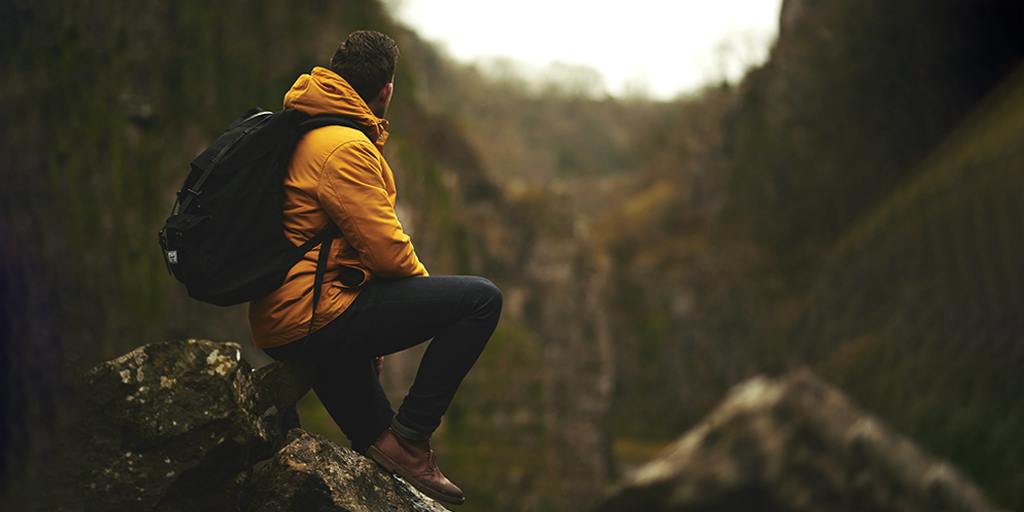
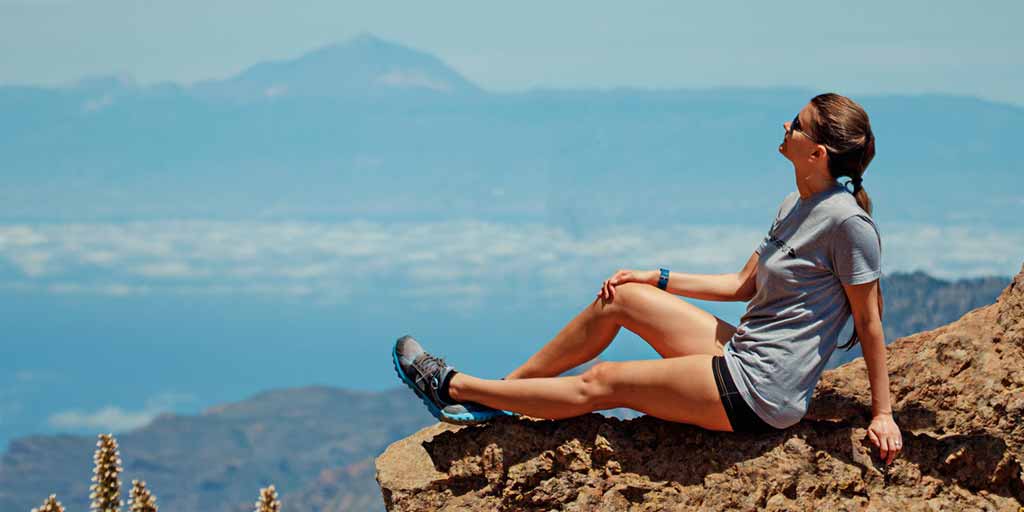
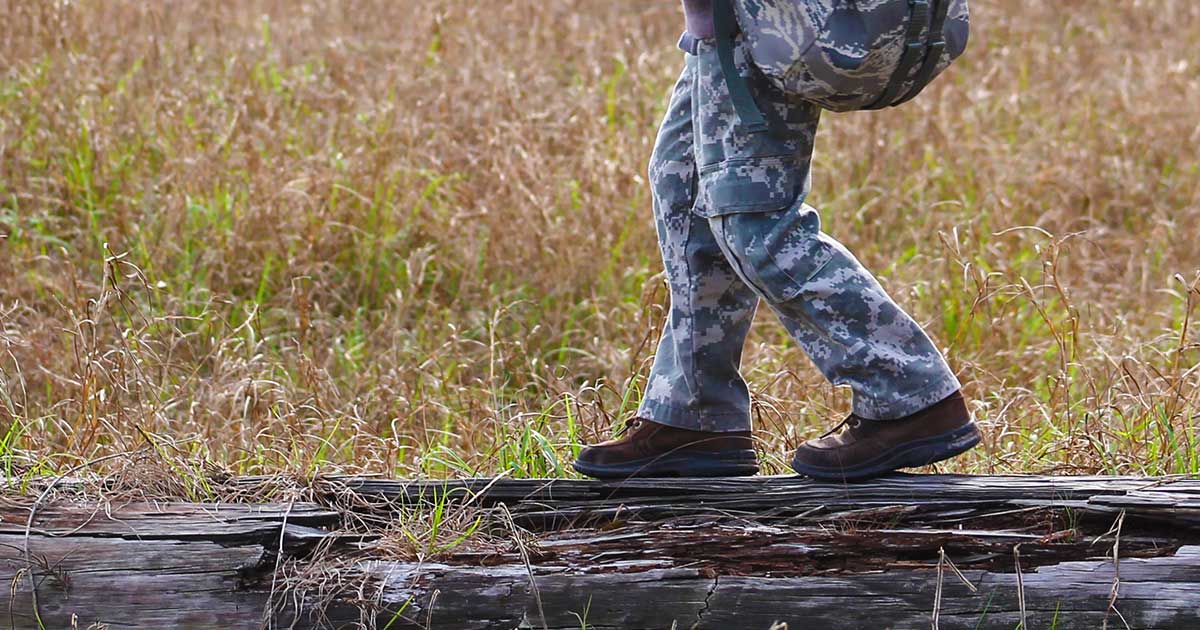
Footwear in Morocco is one of the most consequential packing decisions you will make and one of the most commonly underprepared. The medinas of Fes and Marrakech are networks of narrow, uneven, occasionally wet, and scooter-dodged lanes that demand grip and durability. The desert requires something that handles sand and does not fill up with it. The mountain passes benefit from real ankle support for any walking beyond the car park.
And you need to be able to take your shoes off quickly. Many riads, guesthouses, and some traditional spaces ask you to remove your shoes at the entrance. Shoes that require untying and lacing in a narrow medina doorway with kids waiting behind you are a daily inconvenience that compounds quickly over ten days.
Men, Women, and Teens
- Comfortable walking sandals with real ankle support: Teva Hurricane Drift. The primary Moroccan shoe for summer and shoulder season. Slips on and off easily, handles Medina cobblestones and desert camp gangways, and dries fast after an unexpected rainstorm. This is the shoe that earns its suitcase weight on a Morocco trip.
- Supportive walking shoes or trail runners for mountain day hikes and longer days wandering th Medinas. Ankle support matters on the Todra Gorge trails and the rougher reaches of the Fes medina, where the stone is uneven and steep. These are the ones that I recommend for men, and these are the ones Christina recommends. You can also check out my hiking shoe guides below.
- For winter travel: a waterproof boot or hiking shoe for the Atlas and rainy city days. A lightweight waterproof hiking boot handles every winter in Morocco scenario.
- Flip-flops or slip-ons for use in the riad or on pool or beach days.
Kids Footwear
- Closed-toe water sandals: TEVA Hurricane Drift. The best Morocco shoe for kids by a significant margin. Protects toes in medina lanes, handles riad pool surrounds, slips on and off quickly at guesthouse entrances, and is machine-washable when the desert sand situation gets out of hand. Bring these and a pair of trail runners, and the kids are equipped for every Moroccan scenario.
- Trail runners for longer hikes and mountain days: Salomon Kids’ Speedcross
Sun Protection for Morocco
The Moroccan sun is serious, and the desert amplifies it. The combination of high altitude, clear skies, and reflective sand in the south creates UV conditions that catch families off guard, particularly those arriving from European winters expecting something gentler. Ancient ruins like Volubilis and the open desert are completely exposed.
- Broad-spectrum sunscreen SPF 50+, and bring more than you think you need: ThinkSport Everyday SPF 50+. Moroccan pharmacies in cities are good, but smaller towns have limited stock. Buy enough at home or stock up in Marrakech before heading south.
- Wide-brim sun hat (UPF 50+) for men: Tilley LTM6 Broad Brim Hat. Ventilated and packable. A full day at the Roman ruins of Volubilis or the open desert without a hat is asking for trouble. Wide-brim sun hat (UPF 50+) for women: Dorfman Pacific Women’s Sun Hat. Kids’ sun hat with neck flap (UPF 50+): Outdoor Research Kids’ Helios Sun Hat. The neck flap is the part that matters for kids on open desert and ruins days.
- Polarized sunglasses for all family members. Desert sun reflected off sand, and the ochre walls are sustained and intense.
Gear and Accessories
Bags
- Packable daypack: Sea to Summit Ultra Sil Pack. Essential for days in the Medinas, desert excursions, and Atlas hikes. Compresses to nothing in your main bag. You can also check out my guide to hiking backpacks here.
- Small crossbody or sling bag for Medina days: Alpaka Metro Sling Bag. The medinas of Fes and Marrakech are not the place for a dangling backpack. A compact crossbody keeps your hands free and your valuables close in crowded souk lanes.
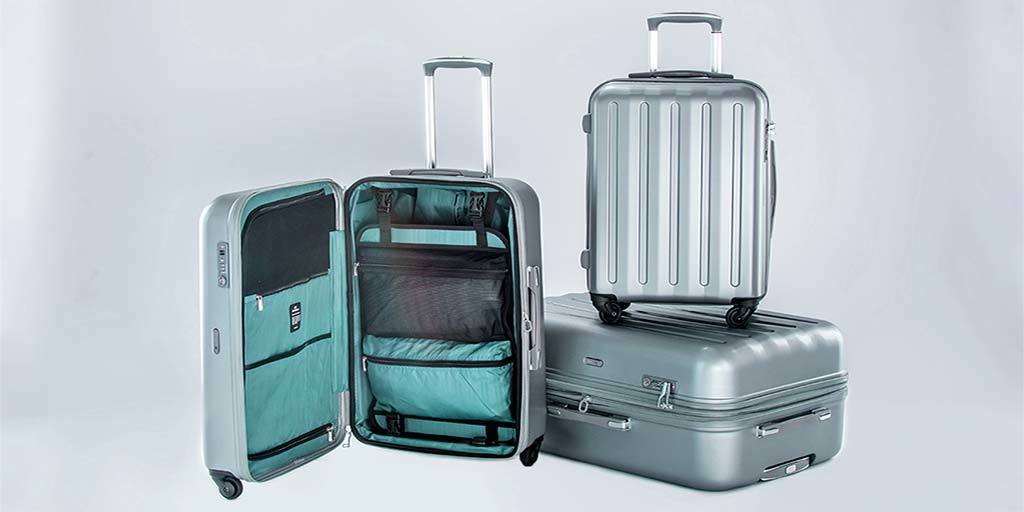
- Packing cubes: Shacke Peak Packing Cubes. A ten-day Morocco itinerary moves through multiple riads and accommodation types. Organized bags save real time and frustration.

Tech and Power
- Portable power bank: Nitecore NB10000Power Bank. Long Medina days and desert excursions drain phones fast. Lightweight, two full charges per device.
- Morocco uses Type C and E European two-pin outlets at 220V/50Hz. North American travelers need a universal adapter. Most modern electronics handle dual voltage with just a standard travel power adapter.
- Compact camera for Medina lanes, desert landscapes, and Atlas scenery: The Olympus Tough Series takes great photos, and it’s drop-resistant and waterproof, perfect for family travel in Morocco. Morocco is one of the most photogenic countries on earth. A pocket camera with real zoom captures the detail in tiled courtyards and the scale of the Erg Chebbi dunes in a way a phone cannot match.
- eSIM for connectivity: Airalo Africa eSIM. Pre-load before departure. Morocco has solid mobile coverage in cities and on main routes. Rural areas and the deep desert are less reliable.
Reusable Water Bottles
- One per person, insulated for the desert: Grayl GeoPress Water Purifier Bottle. Tap water in Morocco is technically safe in cities, but the taste varies, and in smaller towns, it is inconsistent. A filter bottle removes all uncertainty and saves real money and plastic over a ten-day trip.
Toiletries for Morocco
Bring From Home
- Sunscreen SPF 50+ and bring enough for the full trip: ThinkSport Everyday SPF 50+. City pharmacies in Marrakech and Fes are good. Outside the cities, options shrink. Stock up before heading south.
- Insect repellent for adults: Sawyer Premium Picaridin Spray (20%). Morocco is not a high-risk destination for insect-borne illness, but the Sahara at dusk and the rural south have mosquitoes. Worth having. DEET-free insect repellent for kids (DEET-free): Sawyer Kids Picaridin
- Prescription medications with a doctor’s note for anything controlled.
- Children’s paracetamol and ibuprofen in familiar brands.
- Oral rehydration salts for hot-season travel and long desert days. Dehydration in the Moroccan summer heat catches kids before they notice it.
- Allergy medications.
- Basic first aid: blister plasters for Medina days are the most-used item.
- Hand sanitizer x2. Street food and medina exploring involve a lot of hands-on experiences.
- Wet wipes, multiple packs. Invaluable for desert days, market food, and kids in general.
Buy in Morocco
- Shampoo, conditioner, body wash, toothpaste. Marrakech and Fes both have good pharmacies and supermarkets. Stock up in a city before heading into the rural south, where options thin considerably.
- Moroccan argan oil products. Far better and cheaper to buy locally than anywhere else. A bonus purchase rather than a packing item.
Basic medications. Moroccan pharmacists are well-trained, often speak French and sometimes English, and antibiotics are available over the counter for common ailments.
Documents, Money, and Admin Needs For Travel in Morocco
- Valid passports for all family members, with a minimum of 6 months’ validity beyond your travel dates.
- No visa required for US, Canadian, UK, EU, and Australian passport holders for stays up to 90 days.
- Moroccan Dirhams in cash. Morocco is a significantly cash-based economy outside of major hotels and tourist restaurants. Markets, street food, smaller riads, and rural accommodation all prefer or require cash. ATMs in cities are reliable. Outside cities, withdraw before you go.
- Travel insurance documents, printed and digital. Medical care in Marrakech and Casablanca is reasonable. Outside the major cities, it is limited.
- Printed and digital copies of accommodation confirmations, tour booking references, and emergency contacts.
- If traveling by rental car: international driver’s license, rental agreement, and insurance documents. Police checkpoints throughout Morocco check paperwork routinely.
What to Leave at Home
- Denim jeans for summer travel. Heavy, brutally slow to dry, and genuinely miserable in Marrakech summer heat. Acceptable for winter travel.
- White clothing. The medinas, the desert, and the general business of Morocco will ruin white garments with extraordinary efficiency. Pack earth tones and mid-range colors.
- Anything impractical for uneven cobblestones. Heels and flat-soled dress shoes on the medina lanes of Fes are a structural hazard. Leave them at home.
- Expensive jewelry and obvious valuables. Morocco is generally safe, but medinas are crowded, and pickpocketing happens. Attracting attention with valuables in the souks is unnecessary.
- Revealing clothing for the interior cities and rural areas. Nobody will stop you, but you will have a measurably worse experience in Fes, the Todra Gorge villages, and the Draa Valley in minimal clothing than in modest coverage. The clothing on this list handles it without effort.
- Full-size toiletries. Marrakech and Fes both have good pharmacies. Decant what you need for the flight and restock on arrival.
- Too much luggage. A Morocco road trip or guided tour involves loading and unloading vehicles multiple times. One mid-size bag per adult and one small bag per child is the right configuration.
Quick Reference: Clothing Quantities per Person
Based on a ten-day Morocco itinerary covering one or two imperial cities, a mountain crossing, and a desert leg in summer or shoulder season.
| Item | Men | Women | Teens | Kids |
|---|---|---|---|---|
| T-shirts | 3-4 | 3-4 | 3-4 | 4-5 |
| Long-sleeve shirt | 1-2 | 1-2 | 1-2 | 1-2 |
| Pants | 2-3 | 2-3 | 2-3 | 2-3 |
| Shorts | 1-2 | 1-2 | 1-2 | 2 |
| Dress/Skirt | — | 1-2 | 1-2 | 1 |
| Rain jacket | 1 | 1 | 1 | 1 |
| Swimsuit | 2 | 2 | 2 | 2 |
| Rash guard | 2 | 2 | 2 | 2 |
| Underwear | 7 | 7 | 7 | 8 |
| Socks | 7 | 7 | 7 | 8-9 |
* A lightweight scarf for men is useful for desert sun and conservative rural areas. ** Rain shell required for winter travel and Atlas Mountain crossings in any season. Optional for summer coastal itineraries.
Travel Resources for Families Visiting Morocco
For practical planning, safety considerations, and logistics, these dedicated guides provide deeper support for families interested in travel to Morocco.
Frequently Asked Questions
Morocco does not have a legally enforced dress code for tourists, but dressing thoughtfully makes a real practical difference to your experience. In Marrakech, most tourist dress is tolerated without comment. In Fes, Meknes, and the rural south, covered shoulders and knees for both men and women generate a warmer, less vendor-pressured experience. At mosque exteriors and religious sites, covered shoulders are expected. A lightweight scarf for women and linen trousers for men handle every situation on this list without adding meaningful weight to the bag.
March through May and September through November are the sweet spots. Spring brings wildflowers, comfortable temperatures, and manageable crowds at major sites. Autumn has the same advantages, plus warm coastal water. The Sahara is best visited in spring or autumn when the temperature swings between day and night are dramatic but not extreme. Peak summer from June through August is manageable on the Atlantic coast but punishing in Marrakech, Fes, and the desert interior.
Morocco is a safe family destination by regional and global standards. We never felt threatened across multiple family trips covering cities, rural areas, and the desert. The main practical concerns are traffic in cities (aggressive and pedestrian-unfriendly), scooters in medina lanes (faster than the space suggests), and persistent vendor attention in tourist areas. None of these are safety issues but they require awareness, particularly with children. Families traveling with kids are generally treated with warmth and patience by Moroccan locals.
Morocco uses the Moroccan Dirham. It is a significantly cash-based economy in practice. Markets, street food stalls, petit taxis, smaller riads, and rural accommodation all prefer or require cash. ATMs are widely available in cities and are reliable. Outside major cities, particularly in the south and on desert routes, ATMs are rare and sometimes out of service. Withdraw a meaningful amount before leaving each city heading south.
Two things that catch families by surprise. First, the camel ride out to the desert camp happens at or after sunset, and the temperature drops sharply from the moment the sun goes below the dune line. A warm layer is essential regardless of how hot the day is. Second, the desert at night in winter is genuinely cold, dropping below freezing in January and February. Wool hats, gloves, and a proper insulated layer are worth packing for a winter Sahara night. The stars are extraordinary. You will want to be outside looking at them.
Not required, but we would recommend it for a first visit, particularly with children. A good local guide transforms the medinas from overwhelming to fascinating, handles the logistics of remote areas, and gives your family access to experiences that independent travelers simply do not reach. We worked with Sun Trails Morocco on our family trips, and Daoud, our guide, became practically a member of the family by the end. The investment in a quality local guide pays dividends in every area of the trip.
Final Word on Packing for Morocco
That photograph from the top of the Merzouga dune still gets me when I walk past it. The Cohens’ rapt excitement, the Sahara gold and endless behind him, the joy that only happens when a kid realizes the world is bigger and stranger and more extraordinary than anything they have been told.
Morocco does that to families. The Fes medina does it. The moment in Merzouga when the Berber musicians started playing around the fire, and the boys, without any prompting, got up and started dancing with the other kids at camp. The fossil Dylan found in the desert outside Ouarzazate, 150 million years old, was lying on the surface like it had been waiting.
Families who arrive prepared, with the right layers for the temperature swings, the right shoes for the medinas, the right clothes for the conservative areas, get to be fully present for all of it. The families who do not spend the first afternoon in Marrakech looking for a pharmacy.
Pack smart. Pack light. Leave room for what you are going to buy in the souks. You will definitely buy something in the souks.
This post may contain compensated links. Find more info on our disclaimer. Wandering Wagars is a participant in the Amazon Services LLC Associates Program, an affiliate advertising program designed to provide a means for sites to earn advertising fees by advertising and linking to amazon.com, amazon.co.uk, amazon.ca. Amazon and the Amazon logo are trademarks of Amazon.com, Inc. or its affiliates.
You May Also Like To Read:
Kelly
Wednesday 23rd of November 2022
Helpful, thanks. A few mentions of Peru, which was confusing at first...