
The complete family packing list for Turkey covering men, women, teens,and kids for both summer and winter travel.
Let me tell you about the moment I realized I’d packed completely wrong for Turkey.
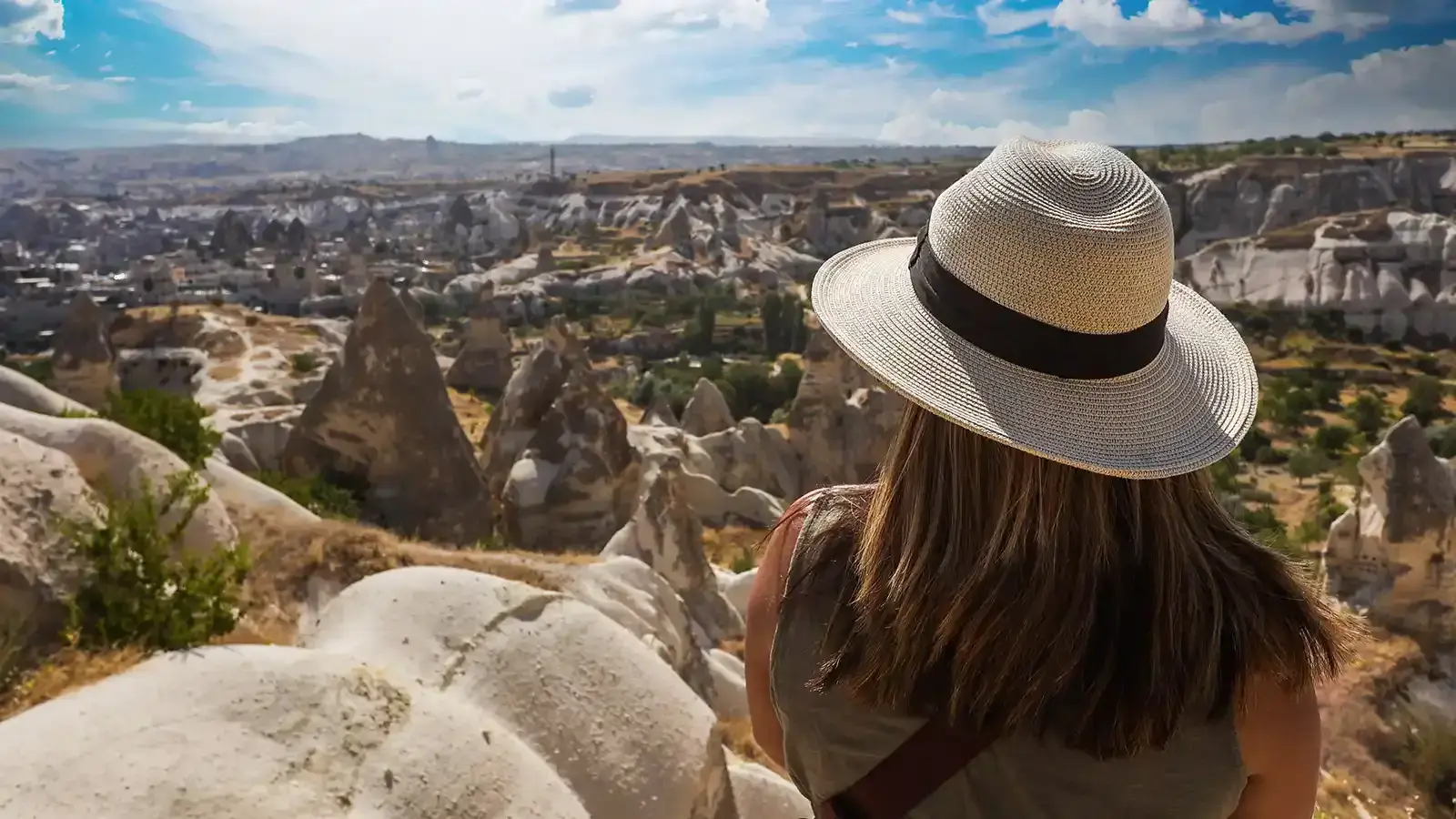
We were standing in the middle of Göreme at 5:00 in the morning, waiting for our hot air balloon to be inflated, and Dylan was shivering like a Chihuahua in a snowstorm. It was August. It was Cappadocia. And because I’d looked at the forecast and seen “32°C high,” I had packed precisely zero warm layers for the kids.
What the forecast didn’t tell me, what no one tells you until you’re standing on a high-altitude plateau in the pre-dawn dark, is that Cappadocia sits at nearly 3,300 feet above sea level. The morning temperatures, even in peak summer, can drop into the low 50s°F. Factor in the wind chill at altitude in an open-air balloon basket, and there’s a chance that you might get genuinely cold.
We made it work. The boys wore every t-shirt they’d packed, layered, but it didn’t have to be that way. That’s exactly why I built this Turkey family packing list.
After four weeks traveling through Turkey (the country’s official name is now Turkiye), as a family, exploring Istanbul’s layered history, Cappadocia’s surreal landscapes, Selcuk, and the ancient ruins of Ephesus, the geothermal terraces of Pamukkale, and the turquoise-blue waters of Fethiye, I can tell you with complete confidence exactly what your family needs in that suitcase. And, just as importantly, what to leave at home.
What You’ll Find in This Packing Guide for Turkey
This isn’t a generic travel packing list. Turkey presents a specific set of packing challenges that most travel guides don’t address properly:
- Extreme climate variation – the same trip can take you from 100°F heat on Iztuzu Beach to the near-freezing waters of Saklikent Gorge.
- Cultural dress requirements – Islamic mosques and historic Christian churches require covered shoulders, knees, and head for women.
- Terrain variety -cobblestoned Istanbul streets are torture if navigated with improper footwear; historic ruins, like the ghost town of Kayakoy, are ankle-twisting territory; beaches are bliss, but can range from rock-strewn stretches to pillow-soft sand.
- Family logistics – what works for adults is often completely wrong for kids. This guide takes both kids and teens into consideration.
This Turkey packing guide is organized by category: clothing, footwear, sun protection, gear, toiletries, and documents, with specific callouts for men, women, teens, and kids throughout. There’s a summer edition and a winter edition, because Turkey in July and Turkey in January are genuinely different trips.
Before You Pack: Understanding Turkey’s Geography and Climate
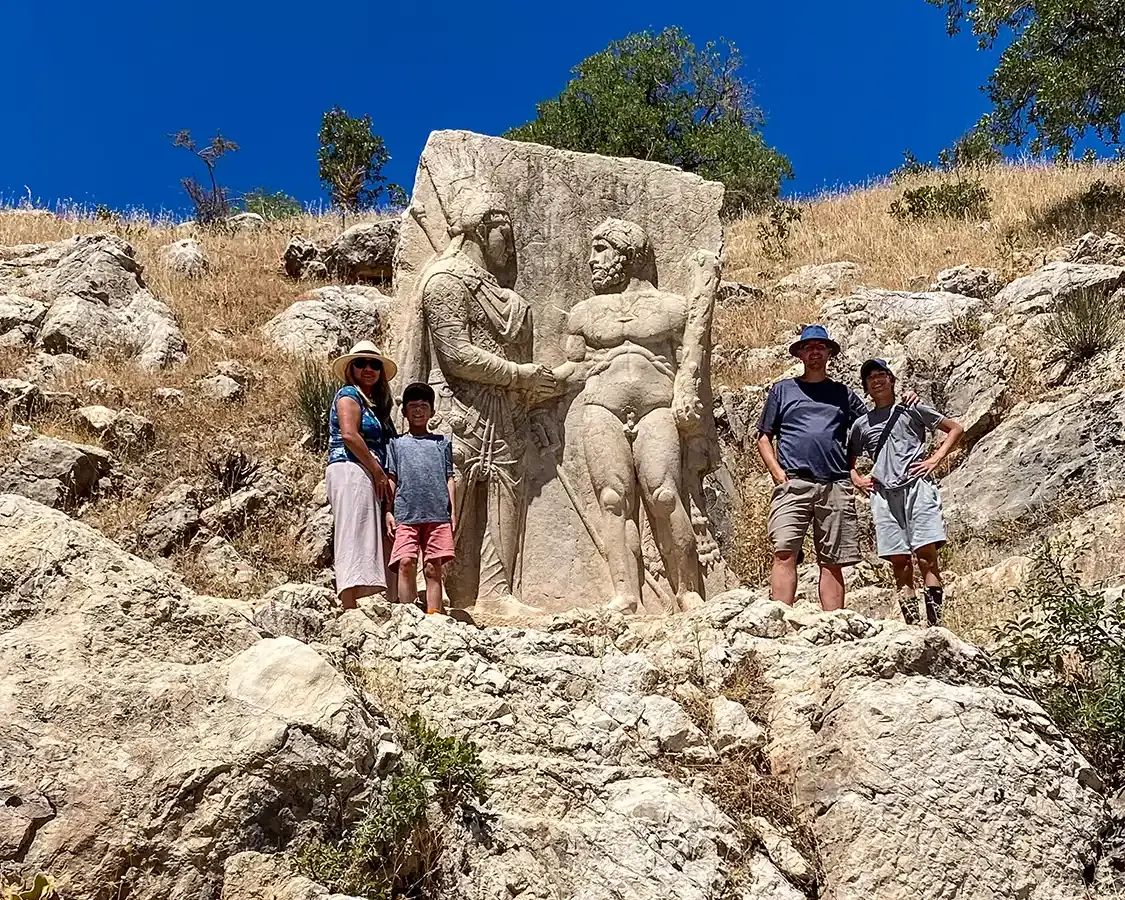
Turkey is a big country, roughly the size of Texas, and the climate swings wildly depending on where you are.
Istanbul
Four proper seasons. Summers are hot and humid (85–95°F / 30–35°C) with occasional fierce thunderstorms. Winters are cold, grey, and damp; temperatures regularly drop below 40°F (5°C) from December through February, with occasional snow.
Cappadocia
High-altitude Central Anatolia, expect blazing hot afternoons and genuinely cool mornings in summer, and legitimate winter conditions from November through March. Hot air balloon rides launch as early as 4:30 am, regardless of the season. Pack accordingly.
Aegean and Mediterranean Coasts
Demre, Fethiye, Kas, Antalya, and the Turquoise Coast. From May through October, conditions are near-perfect — sunny, hot, and dry. Winters are mild but rainy, and a layer or two is needed.
Eastern Turkey
Blistering summers and severe winters. The most conservative dress expectations of any of the places to visit in Turkey. This is Turkey at its most raw and traditional. Mount Nemrut, Sanliurfa, Göbekli Tepe. Turkey’s remote east hides some of its greatest wonders. Check your government’s travel advisory before heading east.
Understanding Turkey’s Dress Culture
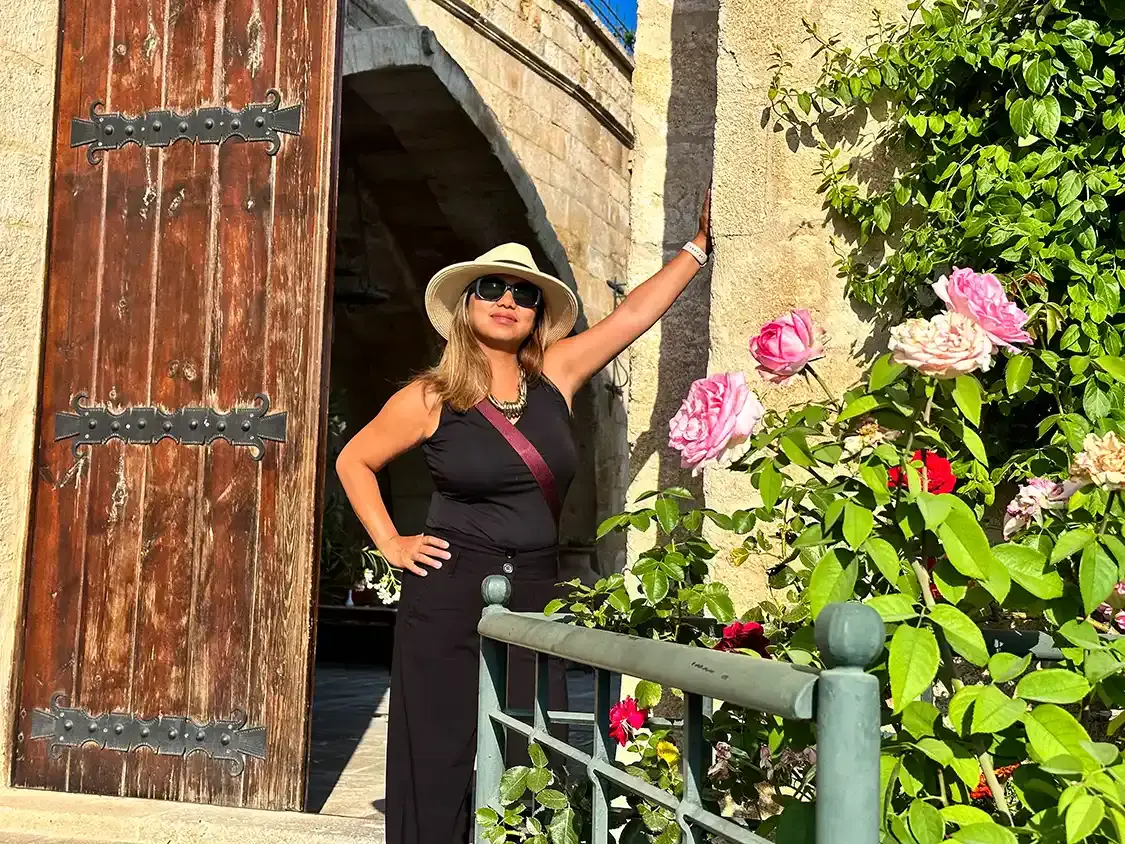
You’ll read a lot of contradictory advice about what the dress code for families in Turkey is. Here’s the clear version, from someone who’s actually traveled throughout Turkey as a family.
Istanbul and Major Western Cities
Major cities in the west of Turkey are typically multicultural, cosmopolitan, and liberal. Wear what you’d wear in any European city. You’ll see the full gamut of society here, after all, Istanbul is where the West meets the East. There will be women walking around in Burqa’s, men in traditional Islamic clothing, but also lots of people in jeans and t-shirts.
Generally, shorts aren’t really a style here. You can wear them, and no one will judge you. But you’ll stick out like a sore thumb. In the historic Sultanahmet district, a bit more coverage earns you more comfort and less unwanted attention.
Beach Resorts (Bodrum, Alanya, Antalya)
The vibe in the beach communities along the Turquoise coast is completely relaxed, both at the beach and by the pool. Bikinis aren’t unusual. Just don’t wander the main shopping street in a swimsuit. A cover-up costs next to nothing and earns a lot of goodwill from locals.
Cappadocia and Major Tourist Attractions
Popular destinations throughout Turkey, like Cappadocia, Dalyan, and Pamukkale, are perfect for tourists. Here, Brits, Americans, Russians, and Filipinos all mash together in the crowds gazing at some of the most famous sites in the country. Wear what’s comfortable for you. One thing worth knowing, however: Cappadocia mornings are cold enough to require a layer even in August, and the dusty volcanic terrain is rough on white clothing.
You may also find yourself in important religious locations like the Ihlara Valley. Always keep a cover-up for your head and shoulders with you, just in case.
Conservative Interior Cities
Konya, Kayseri, and Eastern Turkey require more thoughtful packing. Men will usually be expected to cover their knees and shoulders. Women will be expected to cover their knees and shoulders and have a scarf ready to cover their heads in religious sites.
A headscarf for women is not required outside of mosques.
Religious Sites Throughout Turkey
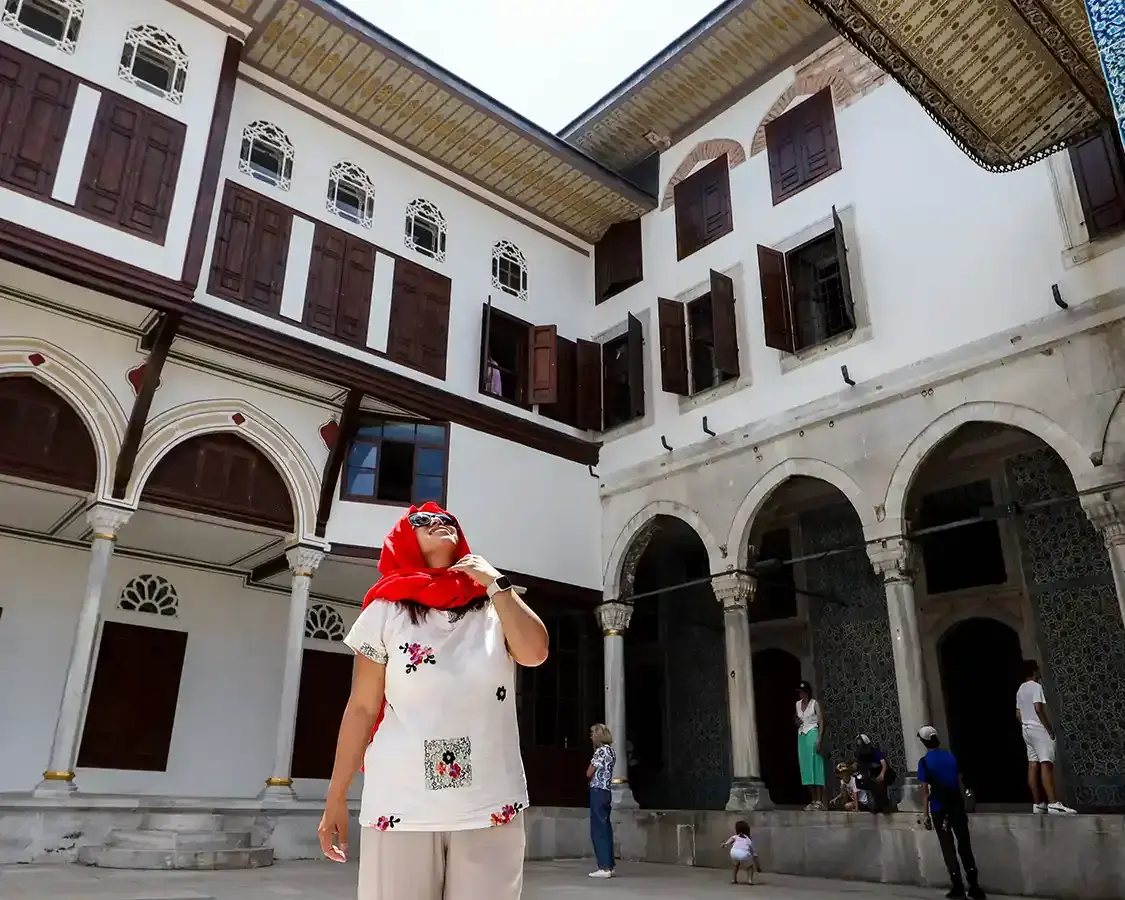
In mosques, churches, and synagogues, women will be expected to cover their hair, shoulders, and knees. Men will be expected to cover their knees and shoulders. Everyone removes their shoes at the entrance of mosques.
The Blue Mosque and Hagia Sophia, some of the most famous places to visit in Istanbul, provide loaner covers at the door, but it’s good practice to bring your own scarf (Here’s a link to a great one, but buying a scarf locally also makes for a nice and useful souvenir). Christina packs one in her purse nearly everywhere we go. With kids in tow, you do not want to be managing borrowed cover-ups while wrangling excited small humans through a sacred space.
Turkey Summer Packing List (May-October)
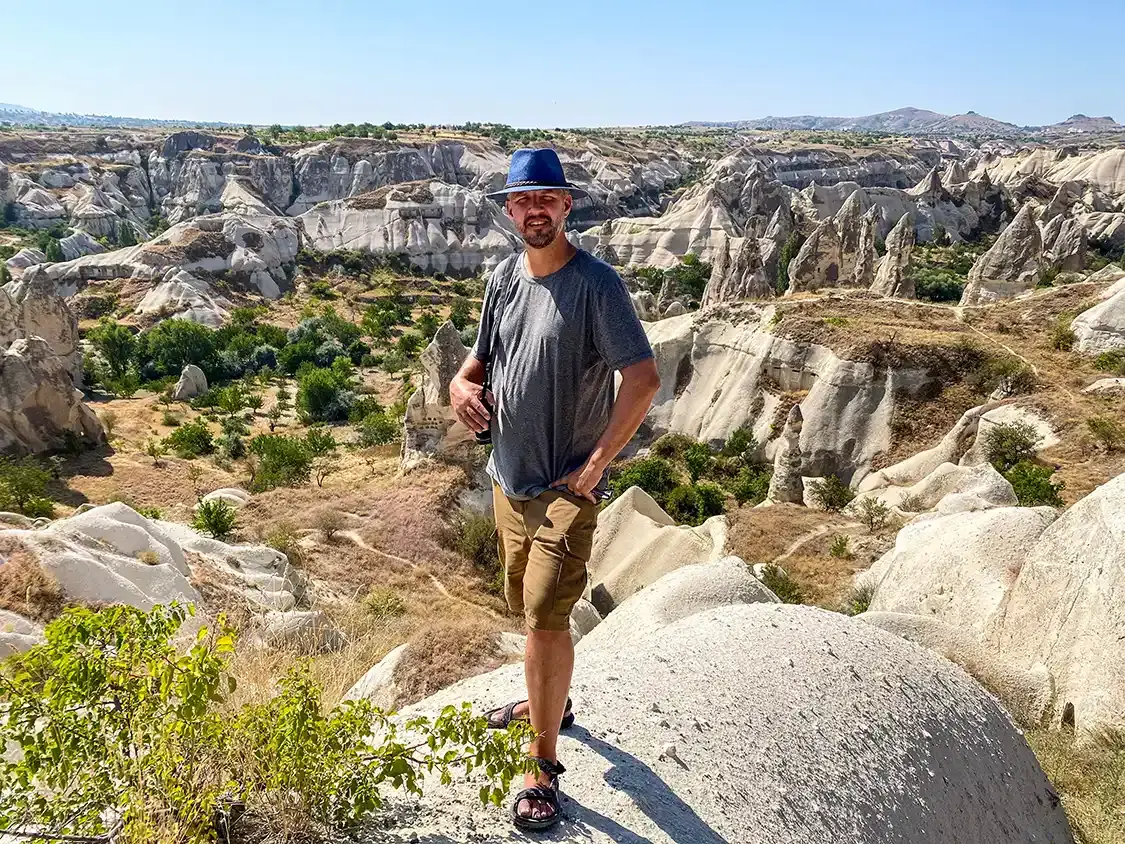
Turkey, during the summer months, is hot. Seriously hot. The coastal regions regularly hit 95–104°F (35–40°C), and urban centers like Istanbul can feel like a furnace in July and August. The packing goal for Turkey in summer is lightweight, breathable, and versatile clothing. Think clothes that take you from a morning at Topkapı Palace to an afternoon hammam to a rooftop dinner without missing a beat.
Linens, light cotton, breathable.
💡 Quick-Dry Matters More Than You Think
Most Turkish hotels and guesthouses don’t have dryers. Anything that can’t be hand-washed
and air-dried overnight becomes a logistical problem by day three. Linen, travel nylon, and
moisture-wicking blends are your friends. Denim is not.
Clothing Men Should Pack for Travel in Turkey
In Istanbul, Turkish men dress sharply. Think smart-casual: fitted linen shirts, light pants, clean sneakers. You don’t need to match them, but it’s worth knowing the local standard is higher than cargo shorts and a baseball cap.
- 3–4 lightweight short-sleeve shirts (linen or moisture-wicking): Columbia Utilizer Short Sleeve Shirt can dry overnight, packs small, and doesn’t wrinkle.
- 1–2 lightweight long-sleeve shirts (conservative areas, cool evenings, mosque days): These ones from PJ Paul Jones are excellent and at a great price.
- 2 pairs of lightweight, linen or cotton travel pants. No jeans: These ones by Sailwind are great quality at an excellent price. Remember, jeans are heavy, slow to dry, and brutal in 95°F heat.
- 1–2 pairs of light shorts: Think knee-length or close to it. Very short shorts outside beach areas can attract unwanted attention. I like Silver Ridge by Columbia. Like most dads, I’m a sucker for extra pockets.
- 1-2 pairs of swimsuits or board shorts: If you’re planning to do a lot of swimming, bring two; that way, you’re not pulling on a wet pair all the time.
- 2 rash guards or swim top (UPF 50+): Good for beach days, boat trips, snorkeling: This one by Amazon Essentials is exactly the simple, beach top I use.
- 1 light overshirt or packable puff jacket: Good for Cappadocia mornings, arctic-level restaurant A/C, and evenings. The Delta Ridge from Columbia will last you long after you return home from Turkey. You can check out my guide to the best travel jackets this year for more inspiration.
- Underwear ×7: I like lightweight, quick-dry underwear that I can wash on the go to pack lighter.
- Socks x7: Think lightweight, merino wool or wool-blend socks that resist odors and wick moisture away from your body.
Clothing Women Should Pack for Travel in Turkey
Turkey is a fantastic destination for women’s fashion. Stroll through the narrow streets of Istanbul’s Grand Bazaar, and you’ll be overwhelmed by the high-end brands represented (very few of whom, I could recognize, but Christina sure did). Istanbul’s boutiques are the best of the best, and the local style leans toward flowy, light, and elegant. Use that as your packing inspiration.
Now I’m not going to sit here and tell you that I’m an expert on women’s packing. But my wife, Christina, is. This Turkey packing list for women comes directly from her.
- 3–4 lightweight linen or cotton tops
- 2 pairs of lightweight travel trousers or linen pants: Rekucci Women’s Wide-Leg Linen Pants
- 1–2 midi or maxi dresses: The single most versatile item a woman can pack for Turkey. Works for sightseeing, dinner, beach cover-up, and conservative areas. One flowing linen maxi does more work than anything else in the suitcase: Maxi Dress
- 1 pair of shorts: Good for resort and beach days: Everyday shorts
- 1 lightweight cardigan or knit sweater: This is non-negotiable, even in summer: Amazon Essentials Women’s Lightweight Cardigan. Cappadocia mornings, A/C restaurants, Istanbul evenings in September. You will use this constantly.
- 1 long skirt or wide-leg trousers: Flagged as your mosque day item.
- 2 swimsuits + cover-up or sarong: One piece with cover-up
- 2 rash guard/swim top (UPF 50+): Kanu Surf Women’s Rash Guard
- 1 rain jacket or puffer: Columbia Women’s Heavenly Long Hooded Jacket. Essential for Cappadocia evenings.
- Underwear ×7: Choose lightweight, quick-dry underwear that I can wash on the go to pack lighter.
- Socks x7: Think lightweight, merino wool or wool-blend socks that resist odors and wick moisture away from your body
Clothing Teens Should Pack for Travel in Ecuador
Quito’s historic center is worth exploring properly, and teens who are dressed reasonably will get more out of it than those in board shorts. The non-negotiables are a real midlayer and a rain shell. Everything else is standard.
- 3–4 lightweight t-shirts
- 2 pairs of shorts
- 2 pairs of lightweight joggers or linen-blend trousers: These double for cool evenings and mosque days.
- 1 light hoodie or cardigan: Good for cool evenings, A/C, mosque coverage.
- 2 swimsuits
- 2 rash guards: Good for water activities and long beach days: O’Neill Youth Skins Rash Guard
- 2 lightweight dresses or long skirts: They’re useful for mosque visits and nicer evenings, regardless of preference
- Underwear ×7: Choose lightweight, quick-dry underwear that I can wash on the go to pack lighter.
- Socks x7: Think lightweight, merino wool or wool-blend socks that resist odors and wick moisture away from your body
Clothing Kids Under 12 Should Pack for Travel in Turkey
Kids move fast, sweat immediately, and find every piece of red dirt in Cappadocia. Pack light colors at your peril (I aim for natural colors like brown, grey, reds, etc). Quick-dry fabrics, elastic waistbands, and one more set than you think you need.
- 4–5 lightweight t-shirts: UPF 50+ rated is a real bonus: Columbia Kids’ Tamiami Short Sleeve Shirt (UPF 40+) and a few t-shirts as well.
- 2–3 pairs of lightweight shorts
- 2 lightweight long-sleeve layers: Ones that can act as a sun cover on the boat, A/C restaurants, and Cappadocia mornings
- 1–2 rash guards (UPF 50+): Essential for beach, boat, and water park days: Oneill makes excellent rash guards.
- 2 swimsuits
- 1 outfit covering knees and shoulders for mosque visits: A simple dress or long-sleeve top with lightweight trousers. Don’t overthink it. Girls who have not yet reached puberty do not need to cover their heads in religious sites.
- 1 sweater or packable puffer jacket: Good for cool evenings and mornings. This puffer from Mountain Warehouse is of great quality.
- Underwear ×7–8: Add one. Just add one extra, just in case.
- Socks x7-8: You’ll also want an extra couple of these.
Choosing the Right Footwear for Travel in Turkey
I cannot overstate how important footwear is in Turkey. Istanbul’s cobblestones are uneven and slippery when wet. Cappadocia’s trails are dusty and rocky. Ancient ruins require real grip. And beach towns demand something you can kick off in two seconds.
Men, Women, and Teens
- Walking sandals with real arch support: These are the most important purchase on this list: Teva Hurricane Drift are excellent. They’re adjustable, water-safe, and cushioned. I walked 25,000 steps through Istanbul in these without a single blister. These are the women’s version, and these are the men’s version. Birkenstocks are also excellent and a bit more stylish, but they’re not waterproof, so that can be a downfall for those who are more adventurous.
- Lightweight hikers or trail shoes: Important for rugged terrain and long sightseeing days. You can find my guide to the best hikers for women here, and my guide to the best hikers for men here, or just jump straight to my top choices, the Women’s Salomon OUTPulse and the Men‘s Altra Lonepeak 8.
- Flip-flops: These are key for hammams, pools, and the beach. Havaianas are sold everywhere in Turkey for a couple of dollars. Pack light or buy there.
- Thin socks ×2–3 pairs: You’ll remove your shoes at every mosque. On hot marble, thin socks are far better than bare feet.
- Water shoes: These are key if you’re going to rocky beaches or if you want to explore river valleys like Ilhara Gorge or Saklikent Gorge. The water in places like these is very cold, and the bottom is packed with small pebbles that are torture on bare feet (trust me on this one). These are the men’s water shoes that I always recommend. These are the women’s water shoes that Christina recommends.
Kids
- Everyday sneakers or trail runners: Here’s my guide to the best kids’ hiking and trail shoes. Or you can jump to my top choice, the Salomon Speedcross. Closed-toe, water-safe, machine-washable: protects toes on rocky trails, wades into rock pools, rinses clean in a hotel sink. I consider these essential for kids in Turkey.
- Flip-flops or waterproof sandals: Key to protecting against hot sand on the beach and relaxing by the pool.
- A good pair of hiking/walking sandals: I like the TEVA Hurricanes for kids as well. They’re waterproof, comfortable, and have great arch support.
Sun Protection
☀️ Turkey Sun Warning
Turkey’s UV index hits 9–11 (extreme) across most of the country in summer. I’ve watched people get second-degree burns on a Turkish beach in two hours. Buy your sunscreen BEFORE you travel. Finding quality SPF 50+ is expensive and hard to find in quantity in Turkish pharmacies and resorts. This is not the line item to economize on.
- SPF 50+ sunscreen: For anyone over 6 months of age, ThinkSport Everyday is my go-to. It’s reef-safe, broad-spectrum, and water-resistant.
- Wide-brim sun hat for men (UPF 50+): Tilley LTM6 Broad Brim is ventilated, packable, and doesn’t scream tourist.
- Wide-brim sun hat for women (UPF 50+): Dorfman Pacific DPC is packable, with excellent coverage, or you can choose whatever fits your personal style.
- Kids’ hat (UPF 50+): Outdoor Research Kids’ Helios Sun Hat is a long-time favorite of ours.
- Polarized sunglasses for everyone.
Gear and Accessories
The Mosque Kit
Get this together before you leave home and keep it in a small pouch in your daypack. Every time you visit a mosque. In Istanbul, you’ll visit at least two. Women will want this within easy reach.
- Lightweight scarf or shawl for women and girls (covers head and shoulders): You can bring one like this with you, but there are many beautiful ones you can pick up locally.
- Long trousers or a long skirt for women: These are already in your clothing list; flag these as mosque-day items before you travel
- Thin socks: Good for everyone, and are already in your footwear list.
Camera Gear
Turkey is relentlessly photogenic. The fairy chimneys of Göreme at sunrise. The turquoise geometry of the Blue Mosque’s interior. A balloon-filled Cappadocian sky at dawn. You will regret not having a capable camera.
I’m a bit of a photography snob. You can check out some of my best photos on my personal site here. I won’t sit here and tell you what camera to bring, but I will say that if you bring a point and shoot, make sure it’s a durable one like the Olympus Tough Series (kids can use it without fear of breaking, and it’s waterproof). Or you can bring a great mirrorless or DSLR for some truly spectacular shots. This is what I have been using for a few years and it’s always served me well paired with great lenses.
Bags
Having a good travel bag is essential, no matter what kind of travel you’re doing. At the beach, you need somewhere to keep the sand out of everything. On the trail, you’re going to want to store cameras and water somewhere, and in the city, it becomes your catch-all for souvenirs and leftovers.
You can check out my guide to the best hiking daypacks here. For travel in Turkey, I suggest:
- Packable daypack: The Sea To Summit Ultra Sil compresses to nothing, holds everything. One per family is usually enough.
- Sling bag: A sling bag is my go-to packing source for short hikes and urban travel. They’re light, small, and subtle. The Alpaka Metro is excellent for crowded market days, both hands free, and valuables close.
- Packing cubes: Shacke Premium packing cubes can make the difference between sanity and chaos when packing for a family of four. We never travel without them.
- Luggage: Use what you have, or you can check out my guides to the best luggage for families this year and the best carry-ons for families this year.
Essential Gear
- Packable quick-dry towel: Bring one per person. Sea to Summit is what we use. Turkish hammams sometimes include a towel; smaller guesthouses often don’t. Also invaluable for beaches, pools, or drying off after a sweaty hike.
- Light rain jacket: summer Istanbul thunderstorms come out of nowhere: For men, this is my go-to. This is the rain jacket Christina depends on, and this is the one that my kids use.
- Reusable water bottles: I like to travel with a filtered one, so I always have access to water. One per person: Gayle Geopress is our go-to.
- Portable phone charger: Nitecore 10000 is reliable, lightweight, and you can get a couple of good charges out of it. Bring at least one per two devices.
- Universal travel adapter (Turkey uses Type F / European plugs): I like this one because of the extra USB-C ports.
Toiletries
Turkish pharmacies (eczane) are well-stocked and easy to find in every city. Pharmacists generally speak enough English to be genuinely helpful. That said, a few things are worth bringing from home.
Bring From Home
- Sunscreen SPF 50+ in quantity: See Sun Protection section above
- Insect repellent: Adults: DEET-based repellent
- Insect repellent: Kids (DEET-free): Sawyer Kids Picaridin
- Prescription medications: Make sure you have a doctor’s note for anything that might be controlled.
- Children’s paracetamol/ibuprofen: Familiar brands are reassuring when a kid spikes a fever at 10 pm in a small town.
- Allergy meds: Insect bites, food, pollen, you never know when something might strike.
- Hand sanitizer ×2
Buy in Turkey
- Shampoo, conditioner, body wash, toothpaste: All major brands available in Migros, BIM, and CarrefourSA supermarkets
- Diapers: Bring what you need for the first couple of days. Locally, Bebek is a solid local brand, widely available
Documents, Tech, and Money
- Valid passports for all family members: Make sure there is a minimum of 6 months’ validity beyond your travel dates. Turkey enforces this.
- Turkish e-visa for all family members: Apply before arrival at evisa.gov.tr. Do not use third-party sites; they charge inflated fees for a process that costs $50–100.
- Printed and digital copies of travel insurance, accommodation confirmations, and emergency contacts.
- Cash in Turkish Lira (TRY): Excellent card acceptance in cities, but small market stalls and rural guesthouses are still cash-preferred. ATMs from Akbank and Garanti BBVA give fair exchange rates; airport booths do not. Personally, I always have money tucked into an International bank account through Wise that I can access without excessive fees wherever I travel.
- Unlocked phone: Turkcell and Vodafone Turkey sell affordable tourist SIM packages at the airport. Cell phone coverage is good across most of the country. However, I like to be prepared with service the moment the plane lands. So I always pre-install an eSIM from Airalo.
- Printed and digital copies of accommodation confirmations and emergency contacts.
Packing List For Winter in Turkey (November – April)
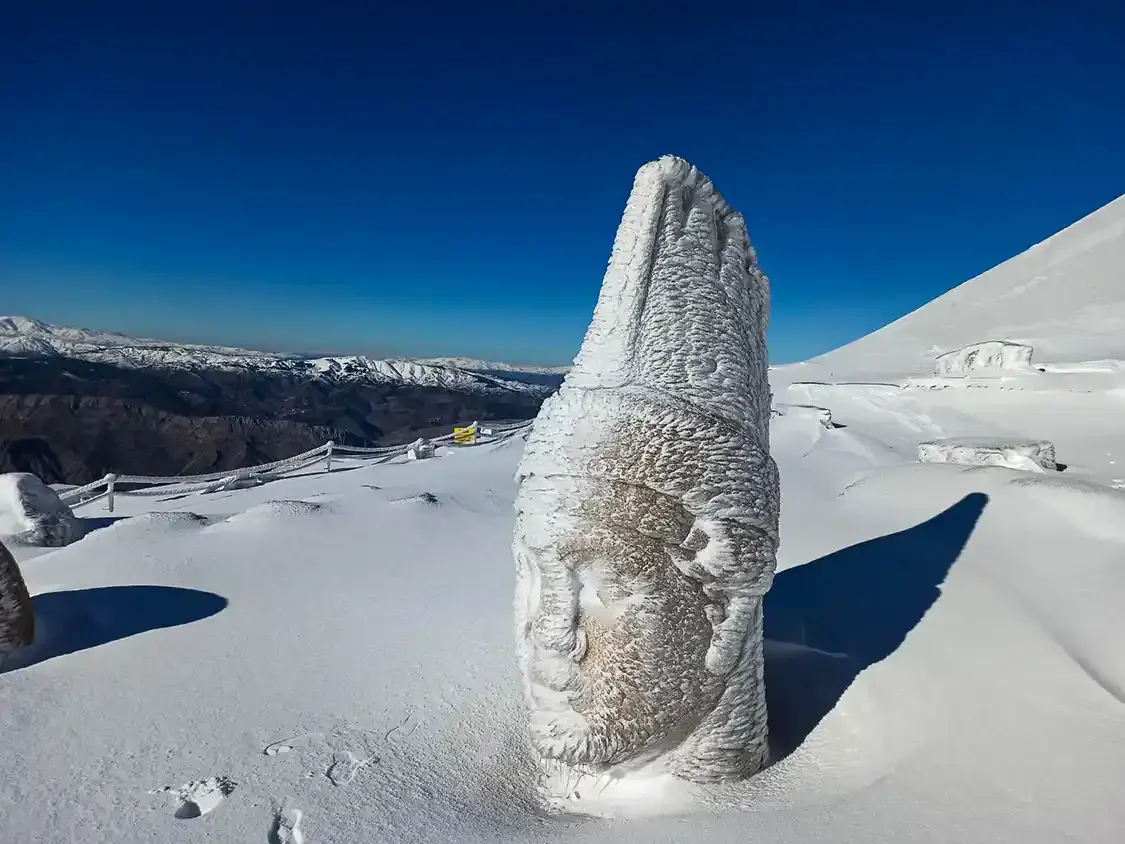
Winter Turkey is a completely different trip from the summer, and a genuinely underrated one. Istanbul in the snow is atmospheric in a way it simply isn’t in July. Cappadocia, under a blanket of white, with fairy chimneys dusted in frost and fewer tourists, is arguably more beautiful than its summer counterpart. But you have to pack for it properly.
❄️ Turkish Winter Quick-Reference by Region
Istanbul (Dec–Feb): 37–46°F / 3–8°C. Rain, wind, occasional snow. A waterproof jacket is essential.
Cappadocia (Nov–Mar): Can drop below freezing. Balloon rides launch at pre-dawn regardless. A full thermal layer system is non-negotiable.
Aegean Coast / Antalya: 50–59°F / 10–15°C. Rainy. Mid-weight layers.
Eastern Turkey: Severe cold. Pack for genuine alpine conditions.
Forget single heavy coats. Turkey’s winter demands a proper three-layer system: base (moisture management), mid (insulation), outer (weather protection). This is true for adults, teens, and kids alike.
Winter in Turkey Packing for Men and Teens
Base Layer
- Merino wool top and bottoms: Thermal base layer with merino wool insulates, manages moisture, and doesn’t smell after multiple days of wear.
Mid Layer
- The Columbia Stee Fleece is solid, affordable, and packable.
Outer Shell
- A rain-proof outer shell: This is key to good layering. This one is reliable, waterproof/windproof, and at a reasonable price.
Other Men’s Winter Items
- 2–3 warm long-sleeve tops or Henleys
- 2 pairs warm, non-denim trousers: Choosing water-resistant travel pants works well
- Waterproof gloves
- Merino beanie
- Neck gaiter: Versatile, warm, and useful.
- 1 smart casual outfit: Istanbul restaurants don’t relax their standards just because it’s January
- Underwear ×7: Choose lightweight, quick-dry underwear that I can wash on the go to pack lighter.
- Socks x7: Think lightweight, merino wool or wool-blend socks that resist odors and wick moisture away from your body
Winter in Turkey Packing for Women and Teens
Base Layer
- Merino wool all-season base is key. Good quality will last you for years.
Mid Layer
- The Columbia Benton Fleece is solid, affordable, and packable.
Outer Shell
- Marmot Cascade Rain Jacket doubles as an outer shell.
Other Women’s Winter Items
- 2–3 warm long-sleeve tops or turtlenecks: Neutral long sleeve shirts
- 2 pairs of warm trousers or thick leggings worn over thermal base: Comfortable but dressy
- 1 warm dress or skirt with thick tights: Istanbul’s restaurant scene doesn’t slow down in winter, and this earns you serious style points: Sweater dresses
- Waterproof gloves: Keep your hands warm and dry with these.
- Warm beanie + oversized scarf: Matching set
- Underwear ×7: Choose lightweight, quick-dry underwear that I can wash on the go to pack lighter.
- Socks x7: Thinklightweight, merino wool or wool-blend socks that resist odors and wick moisture away from your body
Winter in Turkey Packing for Kids
Full three-layer system. No compromises, especially if Cappadocia is on the itinerary. A balloon ride at pre-dawn in November at altitude is genuinely cold, not just “a bit chilly,” but “your six-year-old’s face hurts” cold, if unprepared.
- Base layer (top and bottom): Synthetic blends or merino manages the huge temperature swings of an active day (hot while hiking, cold the moment they stop)
- Mid layer: A zippable fleece is ideal for all conditions.
- Outer shell: A great outer shell like this doubles as a versatile four-season rain jacket.
- Waterproof pant shells double as snow pants and an extra layer. It’s essential for travel to Cappadocia during winter
- Waterproof insulated boots: We love the Bogs brand for this. Comfortable, warm, waterproof, easy for kids to get on and off themselves
- Waterproof gloves ×1 pair + backup pair (they will be lost)
- Balaclava or neck warmer — specifically for early morning balloon rides
- Warm beanie ×1–2
Winter Footwear for Turkey
Men, Women, and Teens
- Waterproof ankle boots with a proper grip sole. Istanbul cobblestones in the rain are treacherous: Salomon X Ultra4 for women and Salomon X Ultra Mid’s for men.
- Warm wool-blend socks ×5–6 pairs
- Packable indoor slippers: Many Turkish guesthouses ask you to remove shoes at the door.
Kids
- Waterproof insulated boot: Bogs Kids’ Classic Winter Waterproof Boot — warm, fully waterproof, genuinely bombproof
- Thermal socks ×5 pairs
Additional Winter-Specific Gear
Everything from the summer gear section still applies. You’ll need that daypack, camera kit, quick-dry towel, charger, and adapter. Add these to cover your bases:
- Compact umbrella: Istanbul’s winter rain is persistent and sideways. One per adult.
- Pocket hand warmers: For outdoor sites, balloon rides, and any Cappadocia morning
- Lip balm + intensive hand cream: Dry winter air strips moisture fast
What to Leave at Home
Some lessons from people who’ve already made these mistakes:
- Denim jeans: They’re heavy, slow to dry, hot in summer, cold when wet in winter. Unless you’re only hanging out in the big cities, leave them at home.
- Dress heels: Istanbul’s cobblestones are specifically designed to destroy ankles. Stylish but comfortable flats or ankle boots are the right move.
- More than 2–3 pairs of shoes per person: Turkey’s markets and LC Waikiki stores are everywhere, and inexpensive
- Full-size toiletries: Decant or buy on arrival
- Bulky beach towels: Most beach hotels include them; your quick-dry towel handles everything else
- Expensive jewelry: Wear it to dinner in Istanbul, not through the Grand Bazaar on a Tuesday
- Too many “just in case” items: Turkish bazaars are one of the best shopping environments on earth. You’ll replace it, probably at a better price, and with a better story to tell.
Quick Reference: Clothing Quantities per Person
Use this as a final cross-check before you zip up the suitcase. This list is based on a one-week trip to Turkey.
| Item | Men | Women | Teens | Kids |
| T-shirts | 3-4 | 3-4 | 3-4 | 4-5 |
| Long-sleeve shirt | 1-2 | 1-2 | 1 | 1 |
| Pants | 2 | 2 | 2 | 2 |
| Shorts | 1-2 | 1-2 | 2 | 2 |
| Dress/Skirt | — | 1-2 | 1-2 | 1 |
| Light jacket | 1 | 1 | 1 | 1 |
| Swimsuit | 2 | 2 | 2 | 2 |
| Rash guard | 2 | 2 | 2 | 2 |
| Underwear | 7 | 7 | 7 | 8 |
| Socks | 7 | 7 | 7 | 8-9 |
It depends entirely on where you’re going. Istanbul, Cappadocia, and the Aegean coast are very relaxed about tourist dress. Conservative dress is expected in Central and Eastern Turkey. For mosques everywhere, covered shoulders, knees, and hair (for women) are required. A lightweight scarf handles all of it.
Absolutely. Turkish supermarkets (Migros, CarrefourSA), bazaars, and chain stores like LC Waikiki carry most basics at reasonable prices. The exception: quality sunscreen and specialty outdoor gear. Bring those from home.
One rolling suitcase per adult, a smaller rolling bag or backpack for teens, and a small backpack for kids to carry their own items. For daily use: one family daypack for shared supplies, one sling bag per adult for valuables.
Western Turkey, the coast, and the major tourist regions (Istanbul, Cappadocia, Bodrum, Antalya, Pamukkale, Ephesus) are all very safe for families. Eastern Turkey is prone to political instability, and requires checking your government’s current travel advisory.
April–May and September–October are the sweet spots: comfortable temperatures, lighter crowds, and lower prices. Summer is great for the coast, but can be brutal in Istanbul. Winter is significantly cheaper and has its own charm. Just pack accordingly.
Yes. Every passport holder requires their own e-visa, including infants and children. Apply for all family members at evisa.gov.tr before departure.
Final Word on Packing for Travel in Turkey
Turkey rewards families who show up prepared. The country has everything you could ask for: history, landscape, food, adventure, beaches, culture, and it delivers all of it in a way that works for kids at every age. We’ve done it with kids and with teenagers, and I’d go back tomorrow if I could.
Pack smart, pack light, and leave room in that suitcase. You will buy things in Turkey. You’ll want to. For everything else you need to plan your trip, head to our full Turkiye family travel content:
- Turkiye Family Travel Blog — everything you need to plan the trip
- Best Places to Visit in Turkey for Families
- Guide to Istanbul with Kids
- Things to Do in Cappadocia for Families
Safe travels.
You May Also Like To Read:
Affiliate Disclosure: Some links in this article are Amazon affiliate links. If you purchase through these links, we may earn a small commission at no extra cost to you. We only recommend products we’ve used, tested, or researched thoroughly. Quality always comes before commission.