
Everything worth doing in Yellowknife in winter, from a family who flew north in February with two small boys and a grandmother and experienced it first-hand.

Growing up in Canada, we walk a very fine tightrope between the Imperial and Metric systems. Whether you measure temperature in Fahrenheit or Celsius, there’s a temperature where both stop arguing with each other, and it’s forty below. It’s also a temperature where, if you breathe in too deeply, your nostrils can freeze shut. I know it now because I’ve stood in it, on a frozen lake, holding kit with a string I couldn’t feel, while my three-year-old looked up and calmly reported that his face hurt.
What’s weird is that, if it gets cold enough, snow stops crunching. It squeaks. It goes dry, styrofoam-hard, and the sound your boots make is closer to walking on packing peanuts than on anything that came out of the sky. Your nostrils stick together when you breathe in. The inside of your nose freezes (an experience I can recommend exactly once), and the air carries woodsmoke from half a mile away because nothing else in it is moving.
The Northwest Territories are famous for three things: diamonds, the gold rush, and being catastrophically cold. We went for a fourth. Yellowknife sits almost directly under the auroral oval, the ring around the magnetic pole where the northern lights do most of their work, and that accident of geography has turned a town of twenty thousand people on a frozen lake into one of the best places on earth to stand outside in the dark and watch the sky come apart.
So I bundled up the family and flew north from Ontario in the middle of February. Cohen was five. Dylan was three. My mom came too, which turned the whole thing into a three-generation expedition where somebody is always cold and somebody is always delighted, and it’s rarely the same person at the same time.
And here’s the thing that nobody puts in an article about winter travel to Yellowknife: we barely saw the Northern Lights. The sky was full of clouds for most of the week; one gap on one night gave us a handful of photos and a lot of pointing. Which should have ruined the trip, but it didn’t, because it turned out there were far more things to do in Yellowknife than simply standing on a frozen lake shaking our fists at the weather. That’s really what this guide is about.
Yellowknife Winter Travel: Quick Planner
Where: Yellowknife, Northwest Territories, on the north shore of Great Slave Lake, about 280 miles (455 km) south of the Arctic Circle.
Getting there: Direct flights from Edmonton and Calgary, with seasonal service from elsewhere. There is one road in, Highway 3, and it is a long way from anywhere. Most visitors fly.
How long: Three nights is the working minimum if the aurora is your reason for coming, and four or five is better. Operators quote high success rates over three or more nights, and those rates assume clear skies, which is the part that bit us.
Best time: Mid-December through early April for winter activities, with the aurora visible roughly from late November to early April and again from mid-August to mid-October. February and March give you the best combination of dark skies, reliable ice and lengthening daylight.
Weather: Average January highs sit near -15°F (-26°C), and it drops below -40°F (-40°C) more often than you would like. The two scales cross at minus forty, which is a fact you will find yourself repeating.
Don’t miss: Driving the Dettah ice road. It is free, it takes twenty minutes, and you will not forget steering a car across a frozen lake.
Good to know: Yellowknife has had an accommodation shortage for years. Book rooms well before you book anything else.
About Yellowknife
Table of Contents
Yellowknife is a city of 20,000 people on the north shore of Great Slave Lake, the fourth largest lake in Canada. It can be reached via a direct flight from Edmonton or Calgary, and it’s built for winter in a way almost nowhere else in Canada can match.
The Aurora Borealis is the headline, and the odds of seeing the Northern Lights in Yellowknife really are the best in the world, but they’re odds and not a promise. For those times you’re not chasing the lights, you get an ice road you can drive on, a dog team that’ll haul your kids across a frozen lake, a free territorial museum, a waterfall locked in ice, and an old town full of float plane hangars and prospector shacks.
Give it three nights minimum if the Northern Lights are why you’re coming. Dress far more warmly than you think you might need to. And book your room before you book anything else, because this city does run out of them.
What’s Changed Since We Visited

We made our first trip to Yellowknife in February 2017, and the city we flew into is not quite the city you will land in. If you’ve read this guide before, these are the parts that are new, and some of them matter quite a bit.
The Diamond Era has Ended
For thirty years, Yellowknife was a diamond town. That’s done. The Diavik mine closed in March 2026 after Rio Tinto wound it down. The Ekati mine stopped production in August 2026 after its owner failed to find a buyer and went into receivership, taking roughly 340 remaining jobs with it, down from 700 employees and 542 contractors two years earlier. Gahcho Kue is now the only working diamond mine left in Canada, with a planned life to around 2031. We can give a big thanks to the growth of the manufactured diamond industry for that.
This guide used to call Yellowknife a booming mining hub, and for a long stretch that was exactly what it was. What it means for you now is that tourism matters more to this city than it ever has, and the people showing you their town have real money riding on whether you turn up. Treat that as a reason to spend locally rather than a reason to stay home.
The Whole Cty was Evacuated in 2023
In August 2023, wildfires closed in, and the entire population, all twenty thousand of them, was ordered out by noon on the eighteenth. Most drove hundreds of miles south into Alberta on the single highway that leads out of town. The rest went by air, about 1,500 people on ten flights in one day with another 1,800 planned for the next. Then the city sat empty for three weeks.
The brave wildfire crews held the line. The fire never reached the city, and everybody came home.
That incident led to two things. The first is that tourism took a beating that outlasted the fire by a long way, because people kept canceling into seasons when there was nothing left to cancel for. The second, and the one that matters to you: wildfire is a summer and early-autumn problem. If you’re coming in February, this is history rather than a planning concern. Worth knowing anyway, because you’ll hear about it, and because everyone you meet lived through it.
The Visitor Centre moved, and the old one is gone
The Northern Frontier Visitors Centre, which this guide once sent you to as a first stop, closed in 2017 when an inspection found the building was sinking. It was demolished in 2020. The Yellowknife Visitor Centre now lives downtown in Centre Square Mall, run by the City, and has been there since September 2022. Some guides are still cheerfully recommending the old one.
The Long John Jamboree is No Longer Running
Yellowknife’s second-largest winter festival hasn’t run since 2020. Organizers put it into what they called ‘hibernation’ in 2022, with a board down to three people and roughly 400 volunteers needed every year to make it happen. The president said at the time it wasn’t going away permanently, just being put to bed for a bit, and the equipment is still in storage. Nothing’s been announced since. Several travel guides still list it as an annual event, which is why you may have seen it on somebody’s Yellowknife itinerary.
The Ice Road has Got Moody
The Dettah Ice Road still gets built every winter, and it’s never once failed to open. But the opening date now swings by about seven weeks, which makes planning around it a gamble in a way it didn’t used to be. The 2022-23 road opened January 10. The 2023-24 road didn’t open until roughly January 28, the latest in thirty years of records. Then 2024-25 opened December 21 and 2025-26 opened December 22, the earliest in a decade.
What that means in practice: come in February or March, and you’ll almost certainly find it open, since the twenty-year average closing date is around April 16 and the 2026 road hung on until the 24th. Come over the holidays and don’t build a day around it until you’ve checked drivenwt.ca, the territorial government’s road conditions site. Mild Decembers hold it up, and so does heavy early snow, which insulates the ice and slows the freeze. Snow, it turns out, is a blanket.
What Do You Need To Know Before Visiting Yellowknife in Winter

Yellowknife is genuinely remote, and it’s also a real city with coffee shops, traffic, and a shopping mall. It’s tough to get to, but once you’re there, you can find everything you need.
The population was 20,340 at the 2021 census, up almost four percent in five years while the territory around it shrank by nearly two percent. This means Yellowknife now holds just about half of everybody in the Northwest Territories, a remarkable thing for a city that would be considered a small town just about anywhere else in Canada. It also explains why so much of the territory’s government, business, and air traffic funnels through here.
On the flight north, you’re as likely to sit beside a group of aurora tourists as a geologist, a nurse flying in to a community clinic, or a tradesperson with a toolbox tucked between their knees. There’s a serious art scene. There’s a food scene well beyond what twenty thousand people ought to be able to sustain. And there’s a wilderness tourism industry that’s now load-bearing rather than a sideline.
How Much Daylight Does Yellowknife Actually Get In Winter?
Here’s a key planning detail a lot of people don’t think about when considering travel to Yellowknife in the winter. In late December, Yellowknife gets about five hours of daylight, and the sun barely clears the rooftops before heading back to bed. By mid-February, it’s up to roughly nine hours. By late March, it’s close to even with the rest of the country.
That matters more than it sounds, especially for those traveling in Yellowknife with kids, because daylight is when you do things and darkness is when you chase the aurora, and in December those two needs are fighting over a very short day. February and March win for exactly that reason: enough dark for the lights, enough light to get out on the lake.
What To Wear In Yellowknife for Winter Activities

Yellowknife can be brutally cold, and it can be windy, and almost everything worth doing here happens outdoors. This goes double with children, who stop being able to tell you they’re cold at roughly the moment it starts to matter. The good news is that dressing for it isn’t complicated. It’s a few more steps than you’re used to, and it’s far more about layers than about any one heroically expensive purchase.
You can always take a layer off. You cannot put on something you left in Ontario.
It’s also important to remember that for some activities, like Aurora chasing, you won’t be moving around much. When you’re standing still, your body isn’t generating heat. Activities like that require more layers, especially for your head, feet, and hands.
- Thermal base layer. Synthetic or merino wool, top and bottom. This is the layer that does the most work and the one people most often skip. This is the set that I use.
- Wool socks. One good warm pair beats two thin ones, because cramming your feet into a boot kills the air gap that keeps them warm. We like Wigwam for being warm without being bulky. This is my favorite pair for winter travel.
- Normal clothes in the middle. Pants, shirt, sweater, over the base layer. Avoid cotton anywhere in the stack. Cotton holds moisture, from melted snow or from your own sweat, and wet fabric against skin at these temperatures is the whole problem in one sentence.
- Snow pants or Rain pants. Insulated and windproof, over everything. Not optional for sitting on a dog sled or standing on a frozen lake. I tend to run hot, so I prefer an extra layer with rain pants like these ones.
- A parka rated to -40. This is the one piece worth getting right. You do not need a luxury brand, and plenty of mid-priced parkas are rated to -40 and perform. What you need is the rating, a hood, and a length that covers your backside when you sit down on something frozen.
- Winter boots. Rubber soles for grip, waterproof, and rated properly. Toes are what you lose first. These are my go-to winter boots for all of my travels.
- Hat, mittens, and a neck gaiter. A wool blend toque, and mittens rather than gloves once it drops below about -20°F (-29°C), because separating your fingers costs you warmth. Gloves with touchscreen pads are handy for photography, but they are not a cold-weather solution on their own. A gaiter or balaclava beats a scarf, because it stays put.
You May Be Able To Rent Winter Gear
Several Yellowknife operators rent serious winter gear, and many aurora tour companies include a full parka, boots, snow pants and mittens with the tour precisely because visitors arrive underdressed. If you are coming from a warm place and cannot justify buying a -40 parka for one trip, this is the sensible route. Call ahead, though, because rental stock does sell out in the busy months.
Seeing The Northern Lights In Yellowknife
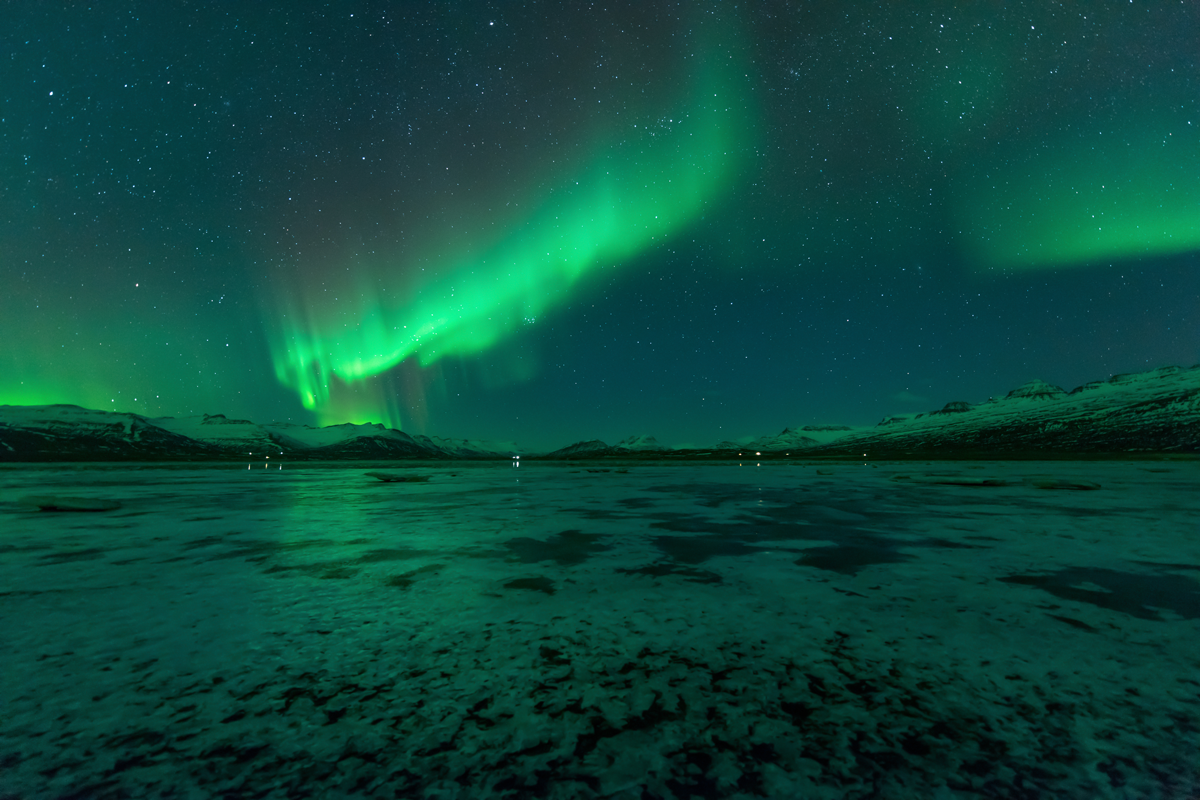
Yellowknife sits almost directly beneath the auroral oval, the ring around the magnetic pole where aurora activity concentrates. That isn’t marketing; it’s geomagnetism, and it’s the reason a small city on a subarctic lake gets charter flights from Asia in the dead of winter. For sheer frequency of activity directly overhead, this beats Iceland, Tromsø, Norway, or Fairbanks, Alaska, for sheer frequency of Aurora activity overhead.
What the Aurora Percentages Mean
You’ll see a number everywhere you look. Ninety percent over three nights. Ninety-five. Aurora Village’s own FAQ goes with 98 percent across three to four nights and calls it the best odds in the world. Here’s what nobody explains, and it’s the single most useful thing in this guide. Those figures describe aurora activity on a clear, dark night with the moon down. They’re conditional on clear skies. They are not a forecast of what you’ll see from the ground through whatever the weather happens to be doing. The aurora can be absolutely tearing it up overhead and be completely invisible to you because there’s a cloud deck in the way.
Which is exactly what happened to us. Heavy cloud for most of a week in February, one gap on one night, and home with a handful of frames. The lights were almost certainly up there on the other nights. I just couldn’t see them. Nobody refunds you for that, and nobody should, but it would have been nice to understand the terms of the bet before I placed it.
For the record, the gap we got was worth the week. Twenty minutes of green dragged across the sky like someone pulling a curtain sideways, and a silence out there so complete that I could hear Cohen breathing six feet away. Then cloud again.
This isn’t a reason to be pessimistic, and it’s definitely not a reason to skip winter travel in Yellowknife. The reason those odds hold up is that Yellowknife’s winter weather genuinely favors Northern Lights viewing.
The region experiences a subarctic high that usually suppresses cloud formation, sometimes for weeks at a stretch. Clear skies are the norm in deep winter in a way they are not in places like Iceland or Norway. We got unlucky in a place where luck is usually on your side. But always know that nature dictates the experience. Booking a flight doesn’t guarantee clear skies.

Should You Do an Aurora Tour or Do It Yourself?
Honestly, both work, and the right answer depends almost entirely on who is in your group. We did it ourselves, and with a five-year-old, a three-year-old, and my mom along for the ride, I would make the same call again with one caveat I will get to in a moment.
- Doing it yourself: Rent a car and drive out of the city until the light pollution drops away (you don’t have to go far). The Ingraham Trail, Highway 4, runs east out of town and is the standard route for this. You stop where you like, you stay as long as you like, you leave when the kids have had enough, and it costs you a tank of gas. For a family on a schedule nobody else controls, that flexibility is worth a great deal.
- Taking a tour: You get a guide who knows where the clear sky is tonight, a heated structure to retreat into, usually a full parka and boots included, and somebody else driving on winter roads in the dark. The heated shelter is the part that matters most with small children and older travelers, because the limiting factor on an aurora night is never enthusiasm; it is how long a three-year-old can stand still at -30. This is one of the top-rated Aurora tours in Yellowknife.
The caveat on doing it yourself: you are driving unfamiliar winter roads at night, in the cold, possibly tired, with no cell service once you are out of town. Tell someone where you are going, keep the tank full, carry blankets and a shovel, and do not go further than you are willing to walk back from. That advice sounds dramatic until you have stood on the Ingraham Trail in February and understood how completely alone you are out there.
Aurora lodges and Viewing Operations
There are several purpose-built aurora operations outside the city, with heated structures, photography help, and gear included. Aurora Village is the best known and the most recommended, running heated teepees on a site about twelve miles out near Cassidy Point, with two seasons: late November to early April, and mid-August to mid-October. There are fly-in lodges further out too, for anyone who wants to be entirely in the middle of nowhere, which up here is an achievable goal rather than a figure of speech.
Use the Aurora Forecast, then Ignore It
Yellowknife’s aurora is tracked well enough that you can check nightly activity forecasts and cloud cover before committing to a drive. Check both, because activity without clear sky gets you precisely nothing, which is the entire point of this section. And then go anyway on a marginal night, if you’ve got the energy, because the sky up here changes faster than any model keeps up with. Our one good gap wasn’t predicted by anything.
What To Do If The Aurora Doesn’t Show
This is the section I most wanted to write, because not one guide to Yellowknife addresses it, and it’s the most predictable anxiety a first-time visitor to the city has. You’ve flown a very long way and spent good money to experience a natural phenomenon that owes you absolutely nothing and knows it.
So here’s the honest answer: build the trip so the lights are a bonus rather than the point. If I’d gone to Yellowknife purely to see the aurora, that week would have been a failure, and this would be a very short article. I didn’t, so it wasn’t. Everything in the next section happened in daylight and happened regardless of what the sky did after dark.
To help with that, there are three things to consider.
- Book enough nights that one clouded-out evening doesn’t eat your whole chance.
- Fill the days with activities like the ice road, dog sledding, the museum, and Old Town, so the trip stands on its own legs.
- Keep one indoor fallback in your pocket for the night you finally give up on the weather, which in our case was a long dinner and two boys asleep before nine.
One small thing that worked better than it had any right to. I told the boys from the start that the northern lights were shy and might not come out at all, and that we were flying to the Northwest Territories to drive on a frozen lake and ride on a sled behind huskies. So when the sky stayed gray, nobody was disappointed, because nobody had been promised anything. With young kids, how you frame a trip beforehand does more work than any forecast model ever will.
The Best Things To Do In Yellowknife In Winter
Everything below I did myself in February, with my wife, Christina, five-year-old Cohen, three-year-old Dylan, and my 75-year-old mother in tow, except where I’ve said otherwise. I’ve flagged what’s changed since I first wrote this, because a fair bit has.
Drive the Dettah Ice Road
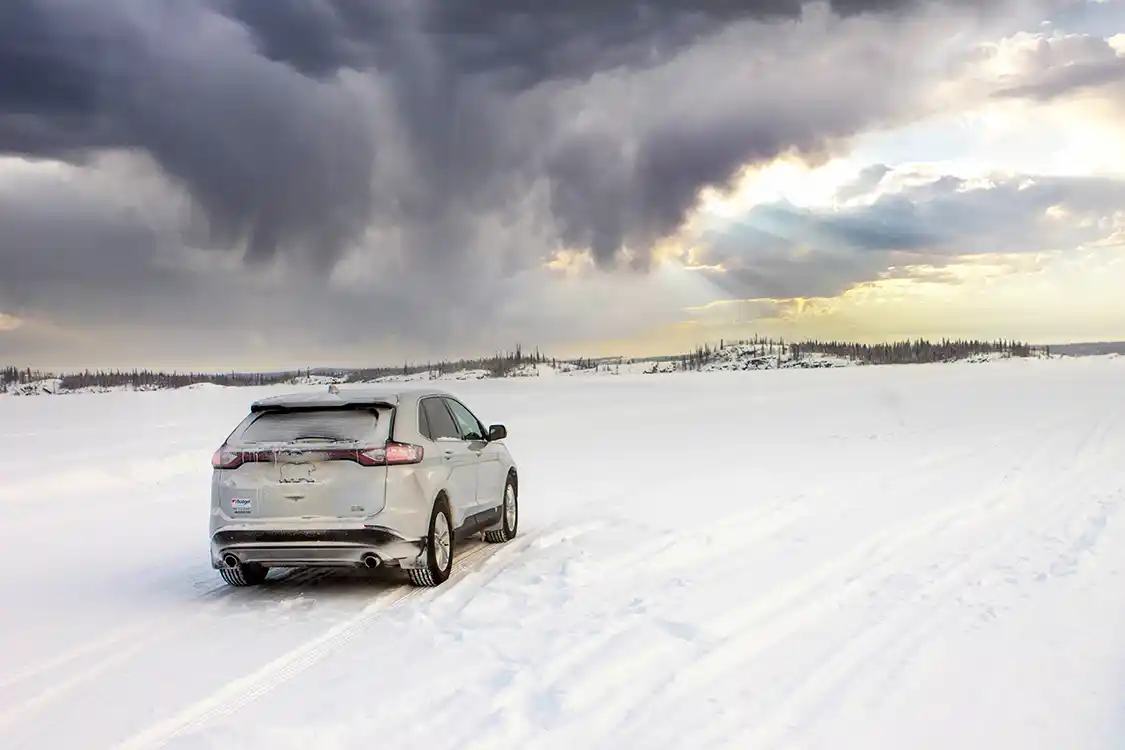
If you do one thing in Yellowknife that doesn’t involve staring at the sky, do this one. When winter puts its icy grip on Yellowknife, the territorial government builds a road across the frozen surface of Great Slave Lake, connecting the city to the community of Dettah. This is not a trail; it is a proper road, with signs and a speed limit, on top of a lake.
You can drive your own rental car onto it. Nobody stops you. There’s a ramp, and then there’s the lake, and then you’re on it, and the ice under your tires makes a low groaning noise that your brain files immediately under things to worry about, and your host files under a typical Tuesday in the Northwest Territories. It’s free, it takes about twenty minutes each way, and it remains one of the strangest and best things I’ve done with my kids anywhere on earth.
The road opens first to vehicles under 5,000 kg, which covers whatever you’ve rented unless you’ve made some unusual choices, and it generally runs from somewhere around Christmas to mid-April. Check drivenwt.ca for current status before you go. We loved it enough that it made our list of favorite Canadian road trips.
Here’s the thing that reorganized how I think about the north. Without the ice road, Dettah is more than an hour away, the long way around the bay. With it, it’s twenty minutes. In a territory with almost no highways, winter is the season when places become reachable, not the season when they stop being. That’s the exact opposite of how the rest of Canada experiences January, and once you’ve grasped it, you understand why nobody up here talks about winter the way southerners do.
Important Note: The ice road you’ll drive is a short community road to Dettah. The ice roads from Ice Road Truckers are a completely different animal: the Tibbitt to Contwoyto winter road, a several-hundred-mile haul route rebuilt every winter to supply the diamond mines, closed to the public and absolutely not something you can take a Toyota Corolla down. With the mines now closing, that road’s future is genuinely in doubt. You get the Dettah road. It’s plenty, but to be honest. Drive around, and you’ll find many lakes with cars parked on them. Usually for an afternoon of ice fishing.
Explore Old Town

Old Town sits on a rocky point shoved out into Great Slave Lake, and it’s where the whole city of Yellowknife was born. Float plane hangars, prospector shacks left over from the gold rush, modern houses bolted straight onto bedrock because there’s no soil to dig into, and a cluster of the best galleries and restaurants in the territory. In winter it’s quiet and absurdly photogenic, and you can walk all of it if you’re dressed as you meant it.
The Bush Pilots Monument
For a 360-degree view over the city, the lake and the Canadian Shield rolling away in every direction, climb the Bush Pilots Monument on the rock in the middle of Old Town. It’s roughly a hundred steps, which is a number worth knowing before you set off with a stroller or a grandmother, both of which I had.
It’s the best free thing in Yellowknife, and the orientation is genuinely useful on a first day: from up there you can see the houseboats, the ice road, the float plane base and the entire shape of the town at once, and the place stops being a map and becomes somewhere you understand.
The Great Slave Lake Houseboats
Out on Yellowknife Bay, visible from Old Town and plainly from the monument, is a scattered community of houseboats frozen solid into the lake. People live out there. Year-round. They haul water, fuel, groceries, everything, across the ice in winter and by boat in summer, and during freeze-up and break-up they’re in a strange limbo where the ice won’t take a skidoo, and the water won’t take a boat.
I stood on that rock for a while trying to work out the logistics of a Tuesday out there and failed. It’s the most distinctive sight in the city; it costs nothing, and the fact that permanent homes are sitting in a frozen lake explains more about this place than any museum panel manages.
Ragged Ass Road
A real residential street in Old Town with a sign that gets photographed more than anything else in town, named during the gold rush era by residents who were, by the generally agreed account, flat broke. The local brewery named a beer after it. Two minutes of your time, one good photograph, and a street name that no city planning committee in the south would survive proposing.
Make your own Glass Souvenirs at Old Town Glassworks

Old Town Glassworks was the boys’ favorite thing in all of Yellowknife, and is still going after more than thirty years under Matthew Grogono at 3510 McDonald Drive. You take a reclaimed bottle, stick designs onto it, and have it sandblasted into something you can carry home. You can check out their website here.
It’s hands-on in the way kids actually mean it, rather than the way a museum means it when it puts up a sign saying hands-on and then glues everything down. Cohen and Dylan talked about the sticker stage for weeks, which is longer than they talked about the northern lights. If you’ve enjoyed this sort of thing elsewhere, it has the same pull as our pottery making in Peru and the glassblowing at the Corning Museum of Glass in New York. This is the same operation that runs Bikeworks, if you’re ever back in summer.
Go Dog Sledding

You smell the kennels before you see them, and then you hear them, because 150 huskies who suspect they might be going somewhere (and they are never wrong about this) make a noise you feel in your chest. The moment the handler clips the last dog in, all of it stops. Total silence. Then they go.
There’s no better way to be outside in the north than behind a sled dog team, and it scales neatly to whatever energy your group has left. Cohen and Dylan, and my Mom were perfectly happy buried in blankets watching the world zip past, while Christina and I took turns on the runners trying to look like people who knew what they were doing. We went to Beck’s Kennels on Curry Drive, which has been hosting visitors since 1989 and runs more than 150 huskies, with tours in English and Japanese.
A handler led us out on a snowmobile, pointed to the sled, and let us go. We had about 1 minute of instruction and were told that “the dogs know what they’re doing.” The second we hit the frozen lake, the dogs needed no direction whatsoever. They simply ran, as fast as they could. The only sounds out there were one dog barking somewhere up the line and two small boys screaming mush at the top of their lungs in the belief that volume is a throttle. Silent white lakeshores in every direction. Nothing else at all.
Worth knowing now: Beck’s isn’t the only sled dog operation in Yellowknife anymore. Enodah Kennels out on Highway 3 is the newest operator and explicitly offers a 45-minute drive-your-own-team run, and both Aurora Village and Tugah keep dog teams. If driving the sled yourself is the bit you care about, ask specifically when you book rather than assuming, because that’s the detail most likely to shift between operators and seasons. We’ve also been dog sledding in Mont Tremblant, and the Yellowknife version is the wilder of the two by an Alaskan mile.
You smell the kennels before you see them, and then you hear them, because 150 huskies who suspect they might be going somewhere (and they are never wrong about this) make a noise you feel in your chest. The moment the handler clips the last dog in, all of it stops. Total silence. Then they go.
Hike to a Frozen Waterfall at Cameron Falls

Technically not in Yellowknife, but absolutely worth the drive. Cameron Falls sits in Hidden Lake Territorial Park, about 34 miles (54 km) east along the Ingraham Trail, Highway 4. The trail runs roughly a mile (1.5 km) and is normally a twenty-minute walk, finishing at a waterfall stopped dead in its tracks and locked in ice. Like our hike in Gros Morne in Newfoundland, my mom came along under formal protest and was glad about it afterward, which is becoming a pattern.
We went two days after heavy snowfall, and the trail was far harder to follow than anyone had led me to believe. Which is the thing to understand about this hike in winter: the park is open year-round, but it isn’t maintained in the off-season, so there may be no broken trail ahead of you, and the route can vanish entirely under fresh snow. Go in proper boots. Tell someone where you’re going. Turn back without guilt if it isn’t working, which is advice I’d have taken sooner if my mother hadn’t been watching. Snowshoes would have transformed the whole day.
If a 34-mile drive each way is more than your group has in it, the Frame Lake Trail starts downtown at Somba K’e Civic Plaza or beside the Prince of Wales museum, and the first half of the loop is paved and easy. The Niven Lake Trail, across the highway from downtown, is now fully passable with a stroller, which makes it quietly the most useful walk in the city for anyone pushing a small child around at twenty below. Cold-weather hiking with kids is well-trodden ground for us; we’ve written up our favorite family hikes in Iceland too.
The Yellowknife Historical Museum
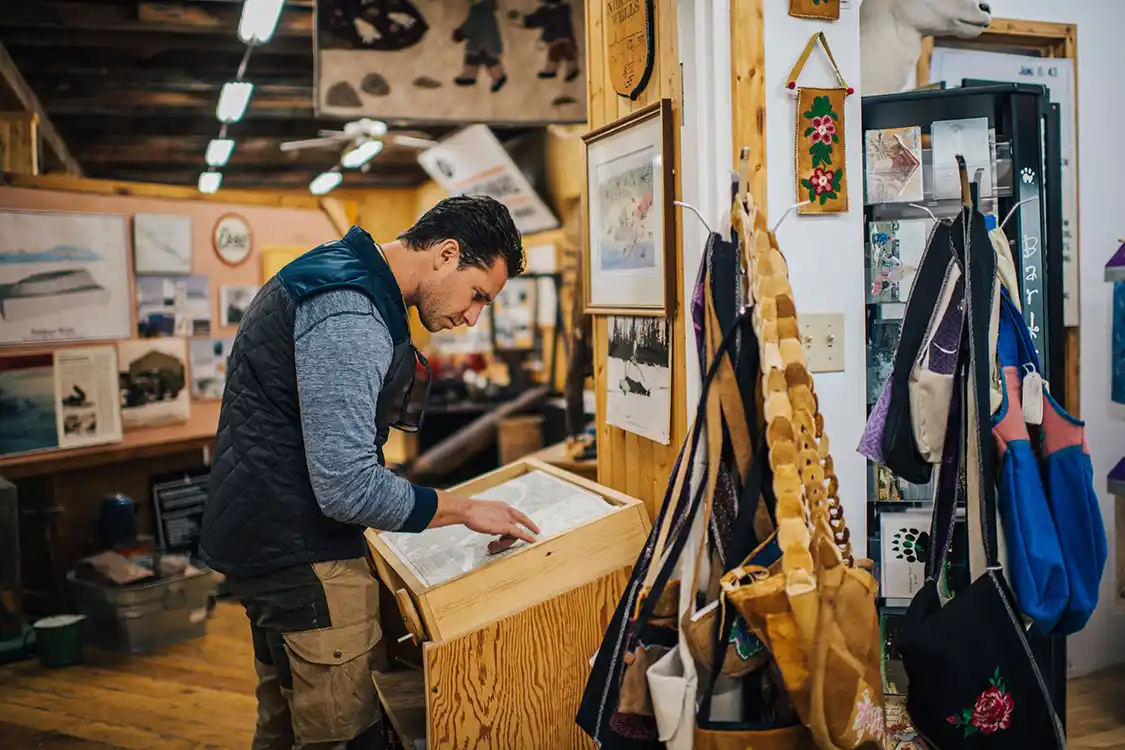
Entirely new since this guide was written, and the most significant change to tourism in this city in years. The Yellowknife Historical Museum opened in March 2024 in the old Giant Mine Recreation Hall, a 1953 building at 510 Yellowknife Access Road, run by the Yellowknife Historical Society. Indoor and outdoor exhibits cover how the city grew, the Giant Mine, and the mine’s impact on local Indigenous peoples. There’s an archive and a gift shop, and it opens Tuesday through Sunday, 10am to 5pm.
Admission was free by donation for its first eight months and has been paid since December 2024. The on-site Miner’s Mess restaurant is closed, and the Society was still advertising for an operator as recently as late 2026, so once again: don’t come hungry. Yellowknife’s museums are magnificent and will not feed you.
Go even if museums usually aren’t your thing. Giant Mine is the hardest story this city has, and the arsenic it left behind is something Yellowknife will be managing long after everyone currently alive has stopped worrying about it. A town that puts its own worst chapter in a museum, in the actual building where the miners used to drink, is telling you something about itself that a visitor center brochure never will. If you’ve ever been to the Dynamic Earth museum in Sudbury, Ontario, you’ll know exactly what I’m talking about.
Visit the Legislative Assembly
The best thing in Yellowknife that nobody writes about. The Legislative Assembly of the Northwest Territories runs free public tours, and in winter there’s one English tour each weekday morning at 10:30. You turn up in the Great Hall and tell the security guard you’re there for the tour, which feels like it shouldn’t work and does. Groups of ten or more should book ahead.
Three reasons this belongs on a family itinerary, and they’re all unglamorous and all true. It’s warm. It’s free. And it’s fully wheelchair accessible with free parking and public washrooms, which makes it the single easiest outing in the city if you’re traveling with somebody who can’t do a hundred steps up a frozen rock.
The building is also genuinely beautiful, and it’s built as a circle rather than two sets of benches glaring at each other. Your guide will explain why: the Northwest Territories runs consensus government and has no political parties at all. Members get elected as individuals and then pick a premier from among themselves. Explaining that to a nine-year-old takes about four minutes, and watching them work out that the grown-ups down south have arranged things rather badly is worth the trip on its own.
Open weekdays 8 am to 6 pm and weekends 10 am to 6 pm, closed December 25 and 26 and January 1.
Experience Indigenous Culture, Properly

The population of the Northwest Territories is roughly half Indigenous, and Yellowknife sits on Yellowknives Dene territory. The two communities closest to the city are Dettah, across the bay and twenty minutes away by ice road in winter, and Ndilǫ, pronounced dee-low, at the far end of Latham Island just past Old Town. Both are Yellowknives Dene First Nation communities.
When we visited, I drove the ice road to Dettah and had a look around, which in hindsight is the shallowest possible version of this and not something I’d repeat. What’s changed since, and changed significantly, is that there are now well-established Indigenous-owned operators selling authentic cultural experiences rather than simply the opportunity to drive slowly past somebody’s house.
- B. Dene Adventures. Run by Bobby Drygeese of the Yellowknives Dene First Nation, with a cultural camp at Dettah: drumming, storytelling, local food, and aurora viewing from a cabin and a teepee. This is the one I’d book if we went back, and it’s the one that would have given the boys something to think about rather than something to look at through a window. You can check out their website here.
- North Star Adventures. One hundred percent Indigenous-owned, run by Joe Bailey, best known for aurora chase tours that follow live geomagnetic data rather than parking you in one field and hoping, with Dene knowledge threaded through the whole thing. You can check out their website here.
This is the biggest single upgrade available to a Yellowknife itinerary since we were there, and it’s the thing I got most wrong when I visited the first time. If you want a sense of why it matters to me, I’ve since written a great deal about Indigenous tourism both in Canada and around the world, including a First Nations road trip through Quebec, and a similar one through Ontario, and a deep dive into Indigenous tourism in Saskatchewan. These stories matter, because Indigenous culture is the bedrock of the Canadian story.
The SnowKing Winter Festival and the Yellowknife Snow Castle
Every winter, a crew builds a full-size castle out of snow on the frozen surface of Yellowknife Bay on Great Slave Lake, complete with towers, tunnels, slides, and carvings, and then runs a solid month of concerts, films, art shows, and competitions inside it. Inside a building made of snow, on a lake. The SnowKing Winter Festival has been doing this for over three decades, and if your dates line up, it’s the single best reason to be in Yellowknife in late winter.
The good news is that it’s still running, and running well. The 2026 edition was Snowking XXXI, March 1 to 28, with an Art Deco theme, slides and tunnels and a climbing structure, a snow carving competition, a Yellowknives Dene drum dance at the opening, and a free admission day paid for by MLA donations.
Dates for 2027 are set for February 27 to March 27, which is earlier in the calendar than recent years. If you’ve read anywhere that this is a March festival, check before you book, because a trip planned for late March 2027 would catch the tail end of it at best.
One thing to remember about the SnowKing Festival. It’s a castle made of snow sitting on a lake, and warm spells have forced daytime closures before, most memorably in 2019 when the thing started sinking. It’s in good health today. It isn’t guaranteed forever, and I wouldn’t build an entire trip around it without checking the current schedule first.
Kite flying on Great Slave Lake, and what became of it

This one was Cohen’s idea. He’d flown a kite at a festival in Bermuda and loved it, so when he found out you could go kite flying out on a frozen lake, he campaigned for it with the single-mindedness only a five-year-old can. We spent a day on the ice with Greg Robertson, a local outfitter and a genuine Yellowknife character with a Canadian Tourism lifetime achievement award to his name, riding out onto Great Slave Lake in his snowmobile-bus hybrid, which is exactly as improbable as it sounds and twice as good.
He made it look effortless. I did not. We’d been handed a beautiful, still, sunlit day, which is lovely weather and absolutely useless kite weather, and I have rarely worked so hard for so little lift in my life. Cohen flew it better than I did. He has mentioned this since.
Here’s the honest update, because this used to be a recommendation and can’t be one now. Greg Robertson is alive, well, and still guiding, but the business operates as Bluefish Outfitting rather than Bluefish Services, and what he sells today is guided fishing on Great Slave Lake, summer boat tours, and winter runs out to the fishing spots in a tracked Sno-Cat. No kites. I couldn’t find a commercial snowkiting operator anywhere in Yellowknife. So treat this as a story about a good day rather than something you can book. If you want a day on the ice with a man who’s been doing this for thirty years, he’s still absolutely the person to call. Just about fish.
Tour the Buffalo Airways hangar

Ice Road Truckers isn’t the only show filmed up here. Yellowknife is home to Buffalo Airways, the airline behind Ice Pilots NWT, and you can tour the hangar for free and stand next to Douglas DC-3s built in the 1940s that are not museum pieces. They fly. Commercially. In an era where my phone is obsolete in three years, there are aircraft up here older than my mother still earning a living, and the boys learned how water bombers work, what it takes to fly in the far north, and what a bush pilot’s day actually looks like. For a certain kind of kid, and a certain kind of father pretending the tour is for the kid, this is the highlight of the trip.
Important change since we visited: tours are now by appointment only, Monday to Friday between 10 am and 3 pm, no weekends and no statutory holidays. Book by phone at 867-765-6023 or email [email protected], and head to 108 Berry Street. Which aircraft you’ll see isn’t guaranteed, access to the outdoor ramp depends on weather and flight operations, and tours can be canceled at short notice, because this is a working airline and not an attraction.
Other Winter Activities In Yellowknife Worth Knowing About

- Ice fishing. Ice fishing is enormously popular here, available through several operators, and the obvious thing to do with a day on the lake now that kites are off the table. Heated huts exist, which matters more than you’d think with children.
- Snowmobiling. Available, and the one thing we couldn’t all do because Dylan was too small. If you’ve got older kids, this is one of the great ways to cover ground up here. We’d been snowmobiling in Iceland before this, and it’s the same thrill on a substantially larger canvas.
- Snowshoeing and cross-country skiing. Tours run with gear included, and rental kits are easy to find in town if you’d rather go it alone. Cheapest way to get properly out of the city. You can read my adventures snowshoeing along the Trans Canada Trail here.
- Skating. There’s an outdoor skating trail by City Hall, plus rinks if you want to combine skating with the most aggressively Canadian activity available to you.
- Downhill skiing. There’s a small hill on the edge of town that locals use at weekends. We never got to it, and with two kids who were still working out which end of a ski goes forward, we weren’t in a position to compare it to British Columbia anyway.
- The Yellowknife Aquatic Centre. New since we visited: a 72-million-dollar city facility that opened in September 2025. A swimming pool is not why anybody flies to the Arctic. But after three days at thirty below with small children, a warm pool stops being a consolation prize and becomes a strategic asset.
- Somba K’e Civic Plaza. Downtown green space with local art and an evening lights display through the winter. Five minutes, free, and genuinely pretty.
Warm, Free And Indoor Activities in Yellowknife

At some point on a Yellowknife winter trip, the weather will beat you, or a child will reach the absolute end of their tolerance for being cold, or you’ll simply want ninety minutes where nobody has to put boots on. Here’s the list. All indoors, most of it free.
- The Prince of Wales Northern Heritage Centre. Free, warm, hours of material, dedicated kids’ zone. Closed Mondays.
- The Legislative Assembly. Free tours at 10:30 on weekday mornings, fully wheelchair accessible, and the building’s open to wander 8 am to 6 pm on weekdays.
- The Yellowknife Visitor Center in Center Square Mall, open daily from 10 am to 6 pm, which also houses a real art gallery with a rotating exhibition program rather than just racks of brochures.
- The Yellowknife Historical Museum, Tuesday to Sunday, paid admission.
- The Old Town galleries, which are warm, small, quick, and where the art is the real thing rather than souvenirs with a moose on.
- The Aquatic Centre, for when what everybody needs is to be warm and wet and loud.
- Old Town Glassworks, which is indoors and the best ninety minutes in the city for a child who has had enough of scenery for one lifetime.
Yellowknife’s Art Galleries
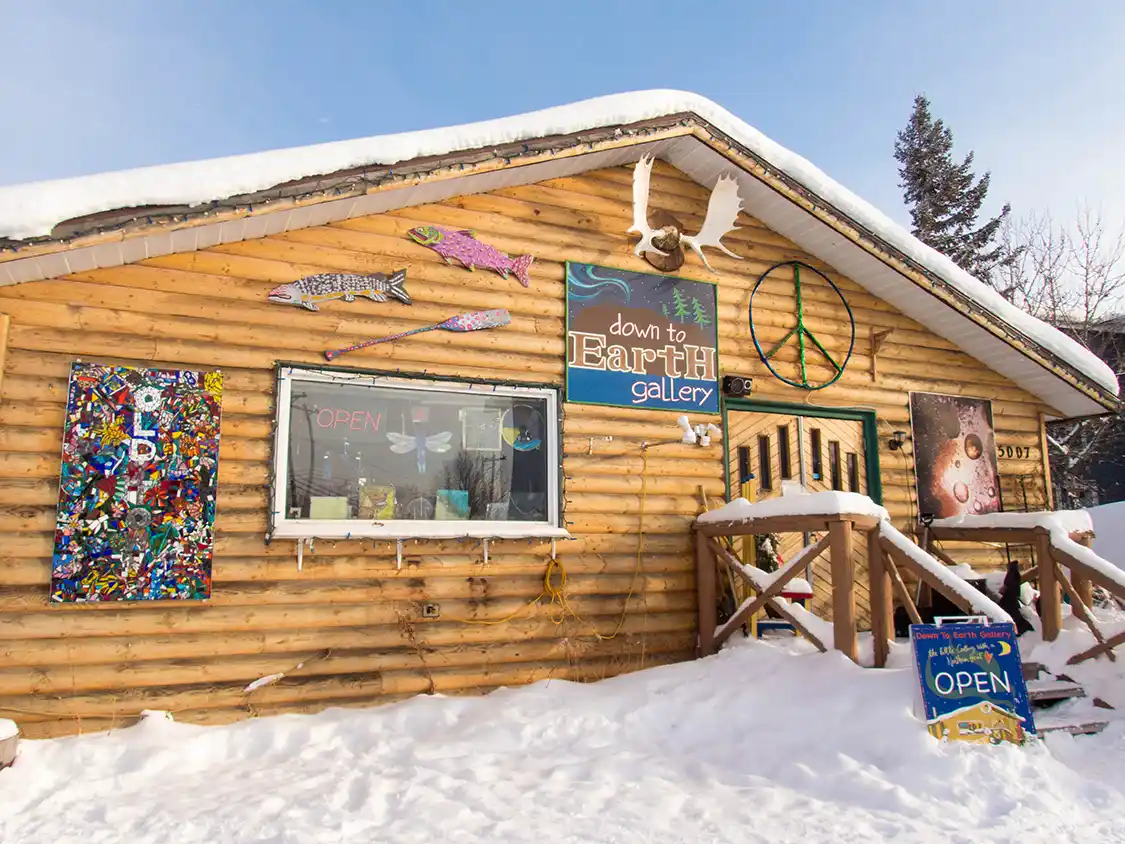
Old Town is where most of the galleries are, and touring them was one of the best afternoons we spent in the city. It also produced the most interesting conversation of the whole trip. The boys had way too many questions to ask about the hides, the furs, and the carvings made from animal parts, and those questions went somewhere more useful than I’d expected, about hunting and sustenance and whose land we were standing on. Five-year-olds ask the questions adults have trained themselves out of asking.
The Gallery of the Midnight Sun on Bryson Drive is the anchor, running since 1989 and still the largest gallery and gift shop in the territory, with Northern art, carvings, and Canadian diamonds. Down to Earth Gallery is the artist-run option, selling work by Northwest Territories artists.
Newer additions worth your time: Gallery on 47th, open Friday evenings and Saturday afternoons. The Aurora Emporium in the Discovery Inn, which focuses on Indigenous arts and crafts. And the gallery inside the Visitor Centre, which runs a real exhibition program and not a rack of postcards.
Where To Eat In Yellowknife

For a city of twenty thousand people a very long way from the nearest farm, the food here is startlingly good. It’s also had a rough few years. The 2023 evacuation emptied the place for three weeks in peak season, tourism was slow to come back, and a few rooms have opened and closed since. This list is current as of late 2026.
Bullocks Bistro
Still the one. A cramped, loud, gloriously shambolic diner on Weaver Drive with scrawled-on walls, serving fish that came out of Great Slave Lake rather than out of a freight container, and stews that do the job a stew is supposed to do after a day on the ice. It isn’t cheap. You’ll leave full and happy and smelling faintly of fried whitefish, which in February is close enough to a compliment.
One change worth knowing: Bullocks now takes online reservations, which for a place whose entire reputation was built on walk-ins and cash is roughly as surprising as the ice road having a speed limit.
Woodyard Brewhouse and Eatery
NWT Brewing Co’s brewpub on Franklin Avenue, cabin-styled and relaxed, doing pizza and mac and cheese and the general category of food that works when you’ve spent the day being cold on purpose. The beer names tell you everything about this town’s sense of humor, Ragged Ass Road included.
A small correction while we’re here: earlier versions of this guide said great breweries were popping up in Yellowknife, plural. They weren’t, and they haven’t. NWT Brewing is the territory’s only brewery of note and there’s no distillery. So if you’ve read that Yellowknife has a booming craft scene, this is that scene. It’s one very good pub, and one very good pub in a city this remote is a minor miracle rather than a disappointment.
The Underground
New since we were there and the best thing to happen to Yellowknife’s nights in years. It opened in late 2024 in the old Surly Bob’s space on 50 Avenue and has turned into the city’s art bar: live music, comedy, burlesque, drag, and opera brought in through the Northern Arts and Cultural Centre, which is a sentence I did not expect to write about a town of twenty thousand people. Not a family dinner. Very much worth knowing about on the evening the aurora is a write-off and the kids are finally asleep.
Te Adoro Cafe and Bar
Opened downtown in autumn 2024 in the old Hungry Wolf space, which itself moved uptown. Good for coffee and sitting still indoors, which on day four becomes its own activity.
The Wildcat Cafe, But You Probably Can’t Eat There
This is the restaurant everyone’s heard of. A log cabin from 1937, the oldest in Yellowknife, where the tradition is to pick up a marker and sign the walls. We did, and somewhere in there is our business card, which we know because readers have called us after finding it. Unfortunately, a kitchen fire and a few unfortunate incidents have led the Wildcat Cafe to be seasonal only. So, unless you’re visiting Yellowknife during the summer. You’re out of luck.
Where To Stay In Yellowknife

Read this section before you book any hotel, because accommodation is a proper challenge on a Yellowknife winter trip and over the years it’s gotten tighter rather than easier. The city has had a bed shortage for years. In September 2026, the territorial government formally warned medical travelers that availability in Yellowknife would be significantly reduced through September and October, citing exceptionally high seasonal demand and limited lodging capacity, and advised some patients to postpone non-urgent appointments.
When a government is telling its own patients they might not find a bed, a tourist should probably take the hint.
Two new hotels have been approved, but none have opened. A 150-room extension beside the Explorer, informally Explorer 2.0, cleared planning in 2026, and a 90-room place on Old Airport Road was approved the same year. Both are years out from completion. Supply today is what it always was, minus the rooms that have left the market entirely.
Super 8 by Wyndham
This was our base, out on Old Airport Road and handy for both downtown and the airport. It is not fancy and makes no claim to be. It’s clean, affordable by Yellowknife standards, the staff were kind to us, and it includes a hot breakfast, which with two small children in that kind of cold is worth considerably more than a nicer lobby. We’d stay again without thinking about it.
Yellowknife fills up in aurora season and over the SnowKing festival in particular, and there is no overflow. Check current rates and availability at the Super 8, and lock your dates down before you book flights rather than after.
The Explorer Hotel
The city’s business-class option, right in the downtown core and within walking distance of both the Legislative Assembly and the Visitor Center, with a hot breakfast and free wifi. Still owned and run under the Explorer name by Nunastar Properties, and still the most reliable full-service hotel in town.
The Explorer is the first hotel in Yellowknife to sell out on festival and peak aurora dates. See what is left for your dates before somebody else does.
Aurora lodges and out-of-town options
If the lights are your entire reason for coming, think about basing yourself at a dedicated aurora operation outside the city, where the viewing is better, and there’s a heated building to bolt into when your feet give up. Aurora Village is the best known, about twelve miles out near Cassidy Point, running heated teepees with a shuttle from town.
Aurora lodges run limited capacity on multi-night packages, and the fall and late-winter dates go first. Compare aurora tours and lodge availability while your dates are still there to compare.
Frequently Asked Questions About Winter Travel In Yellowknife, NWT
Three at the absolute minimum, four or five if you can swing it. Operators quote success rates of 90 to 98 percent over three nights, but those figures assume clear skies. Cloud is the variable nobody’s percentage accounts for, and if you’ve only booked three nights, then a single clouded-out evening has just cost you a third of your chances.
February or March. You get enough darkness for the aurora, enough daylight to actually do things outdoors, reliable ice for the ice road and the lake activities, and the SnowKing festival in late winter. December gives you barely five hours of daylight and an ice road that might not be open yet.
No, if you dress them properly and plan in short outdoor blocks with somewhere warm at the end of each one. Our boys were five and three and did fine. The thing you’re managing isn’t temperature; it’s duration. Small children stop being able to tell you they’re cold at roughly the point it starts to matter, which means you decide when the outdoor portion ends, not them.
If you want to drive the ice road or chase the aurora yourself, yes. If you’re booking tours for everything, then probably not, because operators shuttle you around and the downtown core is walkable. We rented, and the freedom to drive out of town on a clear night was the best single decision of the trip.
It varies far more than it used to. The twenty-year average opening is around December 24, but two of the last four seasons didn’t open until January, one of them as late as January 28, which was the latest in thirty years of records. It typically closes mid-to-late April. Check drivenwt.ca for live status rather than trusting any article’s dates, including this one.
Sometimes, on a strong night. But city light washes out everything except the brightest displays, so the view improves dramatically once you’re fifteen or twenty minutes out of town. That’s the entire reason the tour operations are where they are.
No. Summer only, roughly June to early September, and its recent seasons have been badly disrupted. Go and look at the building, then eat somewhere else.
It hasn’t run since 2020. Organizers put it into hibernation in 2022 after the volunteer board shrank to three people, and nothing’s been announced since. Several travel guides still list it as an annual event, which is why you may have seen it on an itinerary. SnowKing is the one still running, and the Yellowknives Dene First Nation Spring Carnival in early April is the other one worth planning around.
Yes, and you should budget for it honestly rather than find out in week one. Everything up here arrives by plane or along one highway, and that shows up in the price of food, fuel and rooms. Accommodation will be your biggest line, aurora tours are a real expense per head, and a rental car adds up fast. The free things are genuinely excellent though: the ice road, the museum, the Legislative Assembly, the Bush Pilots Monument, the houseboats and the Buffalo Airways hangar cost nothing at all between them, which is a better free list than most cities ten times the size can manage.
We based ourselves in town the whole week and drove out for the aurora, which a reader asked about in the comments years ago and which I’d still recommend. It’s easy to get out of town with a car, and the places outside the city are mostly resorts with very little around them. Base in town, drive out at night.
A thermal base layer, wool socks, no cotton anywhere, snow pants, a parka rated to -40, properly rated winter boots, mittens rather than gloves, a toque and a neck gaiter. If you’re coming from somewhere warm and can’t justify buying all of it, several Yellowknife operators rent winter gear, and plenty of aurora tours include a parka and boots. Call ahead, because rental stock sells out in the busy months.
Is Yellowknife Worth Visiting In Winter?

I flew to the edge of the Arctic to see the northern lights, and I barely saw them. And I’ve thought about that week more than many more dramatic trips I’ve taken.
What stayed with me wasn’t the sky. It was driving a rental car out onto a frozen lake with my mother in the passenger seat telling me, with enormous restraint, that she trusted me. It was two boys screaming at a team of huskies on a lake with no other human sound anywhere on it. It was a glass workshop in a shack in Old Town, and a museum that puts the hardest chapter of the city’s own history up on the wall in the building where the miners used to drink, and a legislature built as a circle because nobody up here could see the point of a government with sides.
Yellowknife has had a hard few years. The city burned around the edges in 2023 and emptied out entirely. The diamond mines that built the modern town have closed one after another, and the territory is now openly working out what comes next. More of that answer runs through tourism than ever before, which means the people showing you their town have genuine stakes in whether you show up.
So come for the aurora. The odds really are the best in the world, and if the sky cooperates, you’ll never forget it. But build the trip so it stands up whether or not the lights bother turning out, because then you can’t lose, and because the rest of it turns out to be the part you talk about afterward anyway.
If you’re planning a northern trip, we’ve also written the ultimate guide to Churchill, Manitoba, and if you want more cold-weather family travel, our Newfoundland trip and the Northern Lights cruise in Norway are the closest companions to this one.
Have you been to Yellowknife in winter? Tell us in the comments. And if you got the sky we didn’t, I’d genuinely like to see the photos, in the same spirit in which I’d like to be told about a party I missed.
Wandering Wagars is a participant in the Amazon Services LLC Associates Program, an affiliate advertising program designed to provide a means for sites to earn advertising fees by advertising and linking to amazon.com, amazon.co.uk, amazon.ca. Amazon and the Amazon logo are trademarks of Amazon.com, Inc. or its affiliates.
You May Also Like To Read:


Pin This Post For Later:

rudi mouthaan
Tuesday 12th of November 2019
There is an official cross-country ski track at the Yellowknife ski club: http://skiyellowknife.com Or, as we do, go to the Yellowknife golf club and make some ski trails yourself. You can rent ski's at Overlanders.
Kevin Wagar
Tuesday 12th of November 2019
Hi Rudi,
Thanks so much for the great tip on skiing in Yellowknife. I know many people will find this useful.
Lora
Monday 4th of November 2019
Hi Kevin! My friend just asked to housesit for her this winter in Yellowknife, so of course I googled it immediately and was happy to see your post come up on the first page (yay SEO). You’ve definitely inspired me to say yes - seems like an amazing winter adventure destination.
Kevin Wagar
Monday 4th of November 2019
Hi Lora! Enjoy you winter in Yellowknife! It's a very special place. You may not want to come back!
Wes
Saturday 26th of October 2019
Kevin, what dates did you visit Yellowknife?
Kevin Wagar
Sunday 27th of October 2019
Hi Wes, We were in Yellowknife in mid-February.
Greg H.
Wednesday 19th of June 2019
I stumbled across your page (web posting) almost by accident, I'm researching the far north which I am fascinated with. I live in South East Tennessee and have recently retired, the information that you've posted is wonderful with beautiful pics as well. I was just wondering if you knew about what kind of expense one individual might expect on a ten day to two week visit to Yellowknife? I have never traveled this far north and from reading your post it looks as if you may have traveled extensively. I know the options may vary a lot but for modest accommodations and eats , I would appreciate your first hand knowledge. Thank you for your time And may you and your family have safe Travels. God Bless
Kevin Wagar
Thursday 20th of June 2019
Hello Greg! You'll love Yellowknife. It's a fascinating city with a lot to offer travelers of all types. A standard room at a hotel like the Super 8 within Yellowknife will run you about $175 CAD/per night taxes included (https://bit.ly/2Rv1LWu). Food prices might be slightly higher than what you're used to, but not outrageous. If you plan on exploring the city yourself you'll likely want to rent a car. Car rentals start at around $100/day + fees. Although Yellowknife is a pretty walkable city. If you're planning on focusing mostly on tours, you can likely skip the rental. I hope that helps.
Amy G
Friday 15th of March 2019
Your recommendations were amazing...we had the best time at Old Town Glassworks. Totally recommend this activity to anyone travelling to Yellowknife...very informative and hands on experience
Kevin Wagar
Friday 15th of March 2019
I'm so happy to hear that you enjoyed your visit to Yellowknife! Old Town Glassworks is a treat, and Yellowknife is one of those cities that should be on every radar.